
Test marina services
A second test advert so the classified page can be checked with the standard four advert layout.
+44 0000 000000 / info@1uk.com / 24boatbuilders.gold@24group.uk

 Subscribe
Approved articles for this 24YachtCrew issue.
Approved articles for this 24YachtCrew issue.
Approved articles for this 24YachtCrew issue.
Approved articles for this 24YachtCrew issue.
Approved articles for this 24YachtCrew issue.
Approved articles for this 24YachtCrew issue.
Approved articles for this 24YachtCrew issue.
Approved articles for this 24YachtCrew issue.
Approved articles for this 24YachtCrew issue.
Approved articles for this 24YachtCrew issue.
Approved articles for this 24YachtCrew issue.
Editor's comments for this issue will be added shortly.
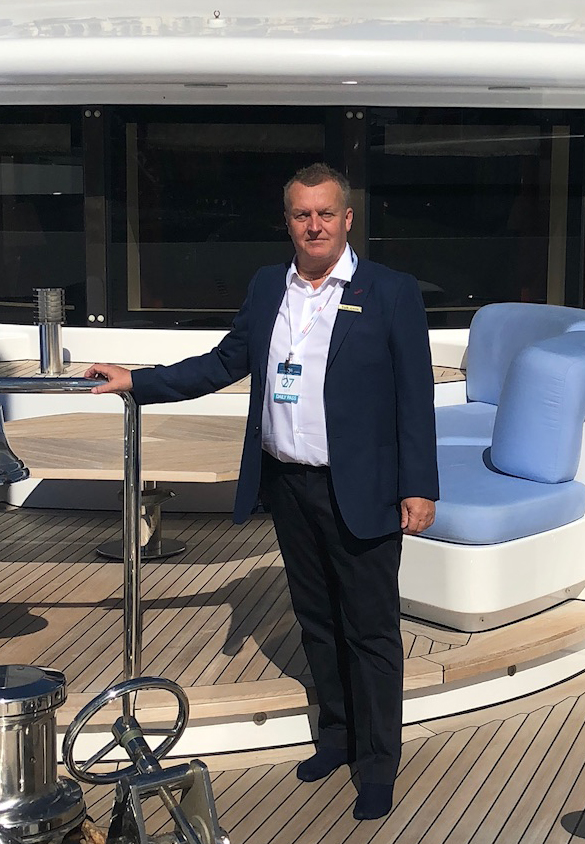
Why We Built 24Synergy — and Why the Magazines Matter

When we started developing 24Synergy, the objective was never simply to build another business directory, advertising website or collection of industry portals. There are already plenty of those, and creating another one would have achieved very little.
The question I kept coming back to was much simpler: **what should 24Synergy actually do for the businesses that use it?**
For me, the answer has always been about creating opportunity through collaboration.
We are constantly told that competition is healthy, and of course it is. Competition drives standards, innovation and better service. But I became interested in a slightly different question. What happens if competitors can also work together?
I don't mean sharing commercially sensitive information or pretending that companies aren't competing for the same customers. I mean recognising that every business already has its own clients, contacts, audience, knowledge and reach. If those individual networks can be connected intelligently, everybody potentially reaches considerably further than they could alone.
That principle became the foundation of 24Synergy.
The network is designed to grow through the businesses using it. Companies introduce their clients and contacts, other businesses do the same, and gradually those separate audiences become part of something much larger. Everybody contributes something to the network and everybody has the opportunity to benefit from the network that results.
There is also a perfectly sensible commercial reason for getting involved early. Your customers are already doing business with other companies and receiving marketing from other suppliers. It therefore makes sense to introduce them to a useful industry network yourself rather than waiting for somebody else to do it first.
That is why I think the early-adopter stage is particularly interesting. I am not going to pretend that a network during its launch period can offer the same volume of activity it should offer when thousands of companies and industry professionals are using it. Networks need people. They need participation and they need time to develop.
But eventually there is a tipping point. More companies join, more buyers arrive, more enquiries circulate, more RFQs are submitted, more people read the newsletters and magazines and more conversations take place through 24live. At that point, the companies that supported the network early aren't arriving and trying to establish themselves in an already busy marketplace. They are already there, with their accounts, listings, content, contacts and presence established.
Some of the mechanisms we have built become much more significant at that stage. Priority access to an RFQ, for example, might seem relatively unimportant when there are only a handful moving through the system. When substantial numbers of genuine opportunities are being generated, seeing something 48 hours before other users can make a considerable difference. The value of the network should therefore increase as the network itself grows.
That same thinking is ultimately what led us to create the magazines.
As 24Synergy developed, I increasingly felt that something was missing. We had created ways for businesses to list themselves, communicate, publish information, distribute newsletters, generate enquiries, respond to opportunities and reach audiences across different specialist sectors, but if we were genuinely trying to build a comprehensive marketing network, those businesses also needed somewhere to advertise.
So we built it.
The 24 Magazines aren't intended to sit separately from 24Synergy. They are another part of the same ecosystem, giving companies another route to market while giving readers useful specialist information in an accessible format. They are global publications, but with regional editions and regional editorial because the businesses and people using 24Synergy are global too.
A company shouldn't be disadvantaged because it happens to be based in Britain, France, the United States, Dubai, Singapore, Spain or somewhere else entirely. Nor should a reader have to wade through endless irrelevant information before finding something applicable to where they live, work, sail, charter, fly or conduct business.
That brings me to something else that is probably worth addressing openly.
Some readers will look through these magazines and ask: **“Have they used AI to produce some of this?”**
The answer is yes.
We have.
There are thousands of pieces of editorial involved across these publications and their regional editions, and it would be rather ridiculous for me to pretend that artificial intelligence hasn't helped us create them. AI exists, it is an extraordinarily useful tool when used properly, and I don't see any reason to hide the fact that we have used it.
What matters to me is **how** we have used it.
We haven't simply asked a machine to fill hundreds of pages with words so that the magazines look busy. We have chosen the subjects we believe are worth covering, identified the questions we think readers actually want answered and, in many cases, started the articles ourselves before using AI to help develop the research, structure and additional information around them.
The objective has always been usefulness.
If you're reading one of our sailing magazines, I want you to discover something that helps you sail, plan a passage, choose equipment, understand a destination or avoid a problem. If you're involved with private aviation, I want the information to answer questions relevant to flying, ownership, charter or operations. If you're in commercial shipping, brokerage, boat building, property, charter or another sector, the same principle applies.
I don't want pages of disposable editorial written simply because a magazine needs another article.
We have tried to identify subjects where somebody would otherwise have to spend time searching around the internet, opening numerous websites and piecing the information together themselves. We can do some of that background work instead, ask the questions and bring the useful information together in one place.
There is an environmental argument for that approach too. Endless searching, loading websites, serving adverts and repeatedly retrieving information all require digital infrastructure and energy. A magazine can be downloaded once, kept and read offline.
I wouldn't pretend that this somehow makes digital publishing impact-free, because it doesn't, but if we can save readers unnecessary searching while creating something useful enough to keep and refer back to, I think that is a better use of the technology available to us.
So yes, some of what you are reading has involved AI, and some of it has involved people. Increasingly it will involve more people as well.
As early adopters, journalists, specialists and other contributors become involved, their voices will naturally become part of these pages. We are also inviting other magazines and media organisations to contribute, which should introduce completely different editorial voices and areas of expertise. They may use AI themselves, of course, and I have no intention of telling another publisher or journalist which tools they are permitted to use.
The test is much simpler than that: **does the article give the reader something worthwhile?**
If it doesn't, it shouldn't be here.
That philosophy also explains something rather unusual we are now introducing. We are going to allow other independent magazines to promote themselves through our magazines.
At first that might sound counter-intuitive. Why would one magazine deliberately introduce its readers to another magazine?
My answer is: why wouldn't we?
If another specialist publication produces good material that our readers would appreciate, discovering it doesn't make our own magazine less useful. Quite the opposite. If we can become somewhere readers come to discover worthwhile information, including information and publications produced by other people, then I think we become more useful.
A participating publication will be able to contribute a genuine editorial article, tell readers where they can find more of its work and promote its magazine within our pages. We can potentially take that relationship considerably further as well. There may be opportunities to work with other publishers commercially, including arrangements where advertising from their own clients can reach our publications and both parties share in the resulting revenue.
Again, it comes back to the original idea behind 24Synergy. Competition doesn't have to prevent collaboration.
The scale of the network comes from the same philosophy. Historically, the industries we have worked with have never existed neatly inside individual boxes. A superyacht depends upon builders, suppliers, engineering companies, crew, brokers, charter businesses, marinas and countless specialist services. Those same owners and clients may use private aviation and own international property. Boat builders need suppliers. Charter companies need customers. Brokers need buyers and sellers. Employers need crew.
Exhibitors need boat shows, and boat shows need exhibitors and visitors.
Commercial ships and cruise ships sit alongside superyachts, motor yachts and sailing yachts. There are crew and employment services, boat and ship builders, ports, yacht services and suppliers, aviation, empty legs, property and specialist luxury markets. Each sector has its own identity, but there are countless points where they intersect.
That is why 24Synergy has become such a large collection of connected websites. It is deliberately not centred on one country or one type of business. A company with branches in several countries can bring those offices together through the same network, while a small specialist supplier can concentrate on the particular market that matters to it. Everything can still be managed centrally through the same account and dashboard.
24live takes that idea in another direction again. I sometimes describe it as sitting somewhere between the professional nature of LinkedIn and the immediacy of a social network such as Facebook, although I don't really want it to become either of those things. The purpose is business.
Members can publish their own material, interact with other users, promote their businesses and place appropriate content across relevant parts of the 24 Network. If somebody wants to be proactive, there is considerable freedom to put themselves in front of the industries they want to reach rather than simply creating a listing and waiting for somebody to find them.
That is an important distinction for me. **24Synergy isn't designed to do your marketing while you sit and watch. It is designed to give you the tools to do considerably more with your marketing yourself.**
There is another, deliberately different part of the ecosystem too.
Within the superyacht sector, 1UK.com is being developed around recognition rather than conventional paid placement. Companies cannot simply buy their way into recognition. They can request consideration, but that request can be declined. As the concept develops, I want appropriate industry leaders themselves to help determine the standards that businesses should achieve to be recognised at different levels.
That connects directly with where I would like 24Synergy itself eventually to go.
The intention is for 24Synergy to develop into a cooperative structure with industry leaders and board members helping to determine its future direction. The industry changes constantly, and the technology serving it needs to change with it. Electric propulsion is an obvious example today, but tomorrow there will be something else. The people actually working within these sectors will often identify what is needed long before a software developer sitting outside the industry ever could.
We have built the infrastructure, but I don't believe that means we should dictate indefinitely what it becomes. I would much rather create a structure where the people using the network have a meaningful voice in deciding which features should be developed next and where the network should go as their industries evolve.
There is a personal reason behind all of this as well.
I've always enjoyed helping businesses develop. I enjoy looking at a new company, understanding what it is trying to achieve and asking what could be done differently. Sometimes it is marketing, sometimes positioning, sometimes making an introduction or simply giving somebody the confidence and advice they need when they're trying to get something started.
I suppose 24Synergy is my attempt to do that on a much larger scale.
Rather than helping one company find another route to market, we have tried to build the infrastructure through which thousands of businesses can create those routes for themselves and for each other. It gives a small specialist company access to many of the same marketing mechanisms available to a much larger international organisation, while allowing a multinational business to connect offices, people and sectors through one global hub.
And that is probably the simplest answer to the question I started with: **what is 24Synergy actually for?**
It is there to create connections and opportunities that would otherwise be harder to create individually. The websites, magazines, newsletters, RFQs, publishing tools, 24live and everything else we develop are simply different ways of achieving that.
We've done the difficult part of bringing that infrastructure together. Now I want businesses to use it, challenge it and help us improve it. I want people to tell us what works, what doesn't and what their particular part of the industry needs next. As more businesses participate, the network should become more useful to everybody already inside it.
We have built 24Synergy, but I don't want it to feel as though it belongs to a small team sitting somewhere deciding what everybody else needs.
**We've built it for you. Now make use of it, make it work for your business, and help us decide what it becomes next.**
**Paul Thompson** *Editor*
Contributor: Paul Thompson / 24Synergy

Be the first reader to react to this article.

I have always found that the useful part of professional yacht crew, careers, training and operations starts once the brochure language has been stripped away.
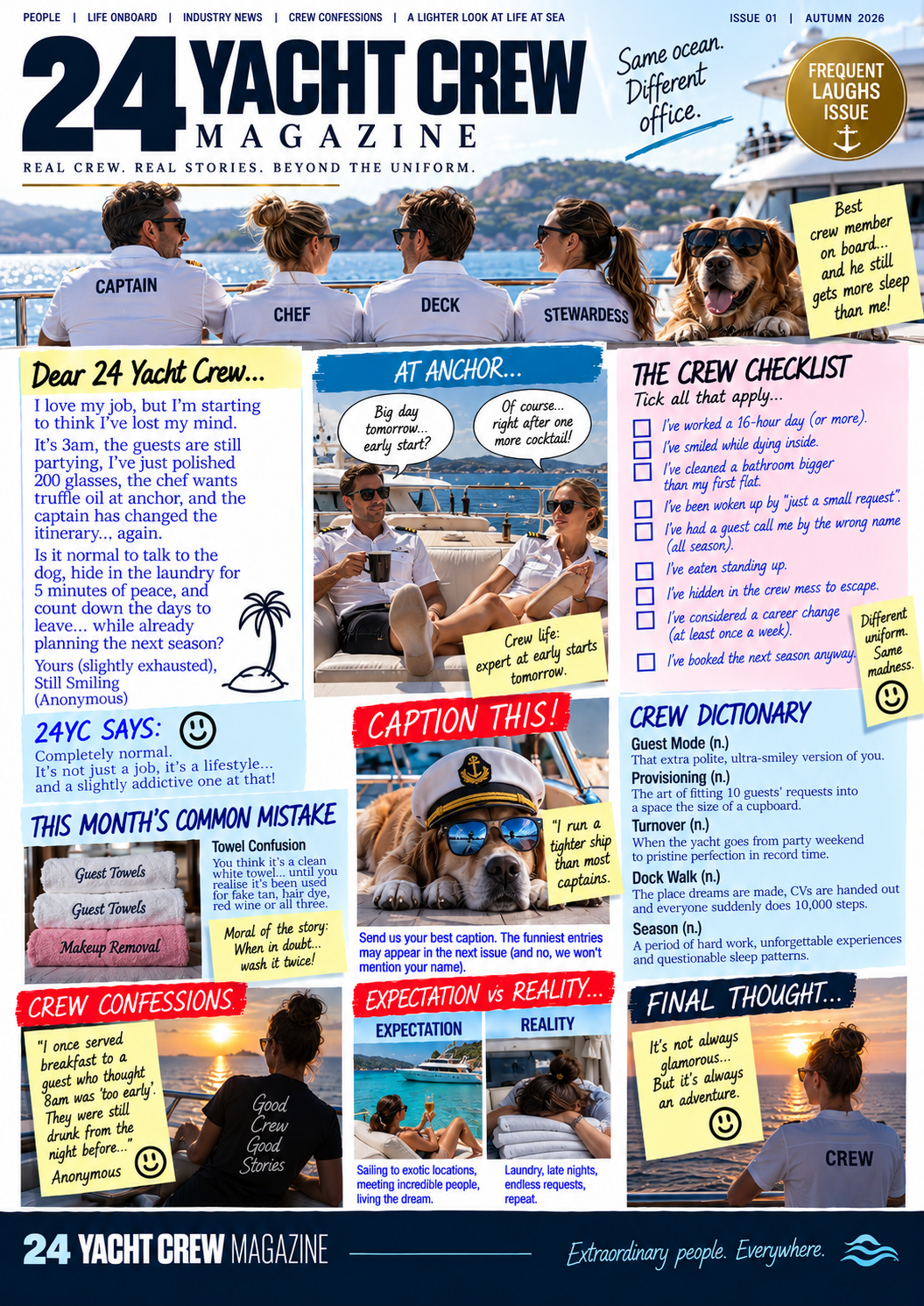

I have always found that the useful part of professional yacht crew, careers, training and operations starts once the brochure language has been stripped away.
Cost also needs to be separated into purchase cost and ownership cost. The second figure is usually less visible. Consumables, routine servicing, insurance, finance, berthing or storage, professional fees, software subscriptions, inspections and eventual replacement items can materially change the economics. A useful quotation is therefore one that makes exclusions obvious.
If a supplier cannot explain what normally falls outside the quoted figure, ask for that clarification before treating two prices as comparable.
After-sales support can be more important than the original specification. A component that is excellent on paper is less attractive if parts take months to arrive or there is no competent service agent where the equipment will be used. The same applies to software-led products: ownership now includes updates, access rights, data and sometimes recurring subscriptions. Find out who supports the system, for how long, and what happens if the original supplier changes hands.
Timing matters. Buying or commissioning under deadline pressure weakens the buyer's position because there is less time to inspect, compare and walk away. Where possible, build the timetable backwards from the date the asset or service is genuinely required. Include survey or inspection time, corrections, training, delivery and a contingency. A realistic programme often reveals that the cheapest-looking option is not the one with the lowest overall cost.
The starting point is use. In professional yacht crew, careers, training and operations, two apparently similar products or services can be right for completely different owners because their operating pattern is different. Frequency of use, geography, crew or staffing, storage, servicing access and the length of time you expect to keep the asset all change the answer. Before comparing brands or quotations, write down those constraints.
It sounds basic, but it prevents a specification being chosen for a lifestyle that exists only in the sales material.
Technical claims deserve context. Range, output, capacity, speed, efficiency and performance figures are normally produced under stated conditions. Real use adds weather, load, temperature, fouling, route, operator behaviour and reserve margins. Rather than arguing over a headline number, ask what assumptions sit behind it and what happens when those assumptions change. That produces a much more useful comparison.

Sustainability claims are increasingly part of the decision as well. The useful question is not whether a product is described as green, but what has actually changed: energy use, fuel consumption, material choice, repairability, service life, emissions, waste or end-of-life handling. Improvements in one area can create compromises in another. Evidence and measured performance are more valuable than broad environmental language.
Finally, insist on a proper handover. Familiarisation, emergency procedures, maintenance intervals, passwords, spare parts, warranty contacts and operating limitations should all be understood before the supplier disappears over the horizon. A surprising number of early problems are not failures at all but gaps in handover. Thirty minutes spent recording the right information can save days later.
My own shorthand for professional yacht crewing: buying used: the checks that matter before money changes hands is simple: verify the condition, verify the paperwork, understand the support network and calculate the cost on a realistic pattern of use. If any one of those four is unclear, there is still work to do before committing.


When money is about to change hands, the sequence matters. Establish identity and authority to sell, agree exactly what is included, record known defects and make any deposit terms clear. Where a survey, valuation or finance approval is part of the transaction, the contract should reflect that process rather than relying on a verbal understanding. Buyers should also know when risk and title transfer, particularly if the asset is moving between jurisdictions.
Market value is evidence, not aspiration. Advertised prices show what sellers hope to achieve; completed transactions, condition, specification, location and time on market give a better picture. A well-presented example can deserve a premium, but a premium still needs a reason. The strongest negotiating position comes from knowing which defects are merely cosmetic, which affect usability and which could lead to immediate capital expenditure.
The practical test for professional yacht crew, careers, training and operations is whether the decision still makes sense when circumstances are less than ideal. Weather changes, schedules move, components fail and people use equipment differently from the designer's neat assumptions. Building a little resilience into the choice usually costs less than trying to recover it afterwards.
For most readers, that is enough to narrow the field considerably before serious money or time is committed.
Contributor: Paul Thompson / Editorial / 24YachtCrew
Be the first reader to react to this article.

The market has become very good at presenting why running costs deserve more attention than the headline price in professional yacht crewing as simple.
The market has become very good at presenting why running costs deserve more attention than the headline price in professional yacht crewing as simple. In practice, the details still determine whether it works.
Documentation is another practical test. Service records, manuals, certificates, invoices, warranties, software licences and evidence of previous work are not administrative clutter; they are part of the asset. Good records make troubleshooting easier and can support resale. Missing records do not automatically mean there is a problem, but they increase uncertainty, and uncertainty should be reflected in the questions asked, the inspection undertaken and sometimes the price.
Risk is best dealt with before commitment. That means independent inspection where appropriate, clear written scope, confirmation of insurance implications and an agreed process for defects or incomplete work. In higher-value transactions, legal, tax and regulatory advice should come from qualified advisers in the relevant jurisdiction. The purpose is not to make every transaction defensive; it is to stop assumptions becoming expensive surprises.
Resale should be considered even by people who intend to keep something for years. Highly personal specifications can be perfectly sensible, but buyers should understand the trade-off. Widely supported equipment, sensible layouts, complete records and recognised maintenance tend to be easier for the next owner to understand. The objective is not to design everything for an unknown future buyer; it is simply to avoid destroying flexibility without a good reason.
Cost also needs to be separated into purchase cost and ownership cost. The second figure is usually less visible. Consumables, routine servicing, insurance, finance, berthing or storage, professional fees, software subscriptions, inspections and eventual replacement items can materially change the economics. A useful quotation is therefore one that makes exclusions obvious.
If a supplier cannot explain what normally falls outside the quoted figure, ask for that clarification before treating two prices as comparable.
After-sales support can be more important than the original specification. A component that is excellent on paper is less attractive if parts take months to arrive or there is no competent service agent where the equipment will be used. The same applies to software-led products: ownership now includes updates, access rights, data and sometimes recurring subscriptions. Find out who supports the system, for how long, and what happens if the original supplier changes hands.
Timing matters. Buying or commissioning under deadline pressure weakens the buyer's position because there is less time to inspect, compare and walk away. Where possible, build the timetable backwards from the date the asset or service is genuinely required. Include survey or inspection time, corrections, training, delivery and a contingency. A realistic programme often reveals that the cheapest-looking option is not the one with the lowest overall cost.
The starting point is use. In professional yacht crew, careers, training and operations, two apparently similar products or services can be right for completely different owners because their operating pattern is different. Frequency of use, geography, crew or staffing, storage, servicing access and the length of time you expect to keep the asset all change the answer. Before comparing brands or quotations, write down those constraints.
It sounds basic, but it prevents a specification being chosen for a lifestyle that exists only in the sales material.
When money is about to change hands, the sequence matters. Establish identity and authority to sell, agree exactly what is included, record known defects and make any deposit terms clear. Where a survey, valuation or finance approval is part of the transaction, the contract should reflect that process rather than relying on a verbal understanding. Buyers should also know when risk and title transfer, particularly if the asset is moving between jurisdictions.
Market value is evidence, not aspiration. Advertised prices show what sellers hope to achieve; completed transactions, condition, specification, location and time on market give a better picture. A well-presented example can deserve a premium, but a premium still needs a reason. The strongest negotiating position comes from knowing which defects are merely cosmetic, which affect usability and which could lead to immediate capital expenditure.
The practical test for professional yacht crew, careers, training and operations is whether the decision still makes sense when circumstances are less than ideal. Weather changes, schedules move, components fail and people use equipment differently from the designer's neat assumptions. Building a little resilience into the choice usually costs less than trying to recover it afterwards.
For most readers, that is enough to narrow the field considerably before serious money or time is committed.
Contributor: Paul Thompson / Editorial / 24YachtCrew


Be the first reader to react to this article.

The market has become very good at presenting choosing professional yacht crewing suppliers: why response time can matter as much as price as simple.
The market has become very good at presenting choosing professional yacht crewing suppliers: why response time can matter as much as price as simple. In practice, the details still determine whether it works.
Finally, insist on a proper handover. Familiarisation, emergency procedures, maintenance intervals, passwords, spare parts, warranty contacts and operating limitations should all be understood before the supplier disappears over the horizon. A surprising number of early problems are not failures at all but gaps in handover. Thirty minutes spent recording the right information can save days later.
Documentation is another practical test. Service records, manuals, certificates, invoices, warranties, software licences and evidence of previous work are not administrative clutter; they are part of the asset. Good records make troubleshooting easier and can support resale. Missing records do not automatically mean there is a problem, but they increase uncertainty, and uncertainty should be reflected in the questions asked, the inspection undertaken and sometimes the price.
Risk is best dealt with before commitment. That means independent inspection where appropriate, clear written scope, confirmation of insurance implications and an agreed process for defects or incomplete work. In higher-value transactions, legal, tax and regulatory advice should come from qualified advisers in the relevant jurisdiction. The purpose is not to make every transaction defensive; it is to stop assumptions becoming expensive surprises.
Resale should be considered even by people who intend to keep something for years. Highly personal specifications can be perfectly sensible, but buyers should understand the trade-off. Widely supported equipment, sensible layouts, complete records and recognised maintenance tend to be easier for the next owner to understand. The objective is not to design everything for an unknown future buyer; it is simply to avoid destroying flexibility without a good reason.
Cost also needs to be separated into purchase cost and ownership cost. The second figure is usually less visible. Consumables, routine servicing, insurance, finance, berthing or storage, professional fees, software subscriptions, inspections and eventual replacement items can materially change the economics. A useful quotation is therefore one that makes exclusions obvious.
If a supplier cannot explain what normally falls outside the quoted figure, ask for that clarification before treating two prices as comparable.
After-sales support can be more important than the original specification. A component that is excellent on paper is less attractive if parts take months to arrive or there is no competent service agent where the equipment will be used. The same applies to software-led products: ownership now includes updates, access rights, data and sometimes recurring subscriptions. Find out who supports the system, for how long, and what happens if the original supplier changes hands.
Timing matters. Buying or commissioning under deadline pressure weakens the buyer's position because there is less time to inspect, compare and walk away. Where possible, build the timetable backwards from the date the asset or service is genuinely required. Include survey or inspection time, corrections, training, delivery and a contingency. A realistic programme often reveals that the cheapest-looking option is not the one with the lowest overall cost.
My own shorthand for choosing professional yacht crewing suppliers: why response time can matter as much as price is simple: verify the condition, verify the paperwork, understand the support network and calculate the cost on a realistic pattern of use. If any one of those four is unclear, there is still work to do before committing.

When money is about to change hands, the sequence matters. Establish identity and authority to sell, agree exactly what is included, record known defects and make any deposit terms clear. Where a survey, valuation or finance approval is part of the transaction, the contract should reflect that process rather than relying on a verbal understanding. Buyers should also know when risk and title transfer, particularly if the asset is moving between jurisdictions.
Market value is evidence, not aspiration. Advertised prices show what sellers hope to achieve; completed transactions, condition, specification, location and time on market give a better picture. A well-presented example can deserve a premium, but a premium still needs a reason. The strongest negotiating position comes from knowing which defects are merely cosmetic, which affect usability and which could lead to immediate capital expenditure.
The practical test for professional yacht crew, careers, training and operations is whether the decision still makes sense when circumstances are less than ideal. Weather changes, schedules move, components fail and people use equipment differently from the designer's neat assumptions. Building a little resilience into the choice usually costs less than trying to recover it afterwards.
The sensible approach is therefore quite conventional: define the job, verify the evidence, price the whole commitment and keep enough margin for the things that never appear in the brochure.
Contributor: Paul Thompson / Editorial / 24YachtCrew
Be the first reader to react to this article.
This is one of those subjects where a little preparation is worth far more than a long list of features.
This is one of those subjects where a little preparation is worth far more than a long list of features.
Technical claims deserve context. Range, output, capacity, speed, efficiency and performance figures are normally produced under stated conditions. Real use adds weather, load, temperature, fouling, route, operator behaviour and reserve margins. Rather than arguing over a headline number, ask what assumptions sit behind it and what happens when those assumptions change. That produces a much more useful comparison.
Sustainability claims are increasingly part of the decision as well. The useful question is not whether a product is described as green, but what has actually changed: energy use, fuel consumption, material choice, repairability, service life, emissions, waste or end-of-life handling. Improvements in one area can create compromises in another. Evidence and measured performance are more valuable than broad environmental language.
Finally, insist on a proper handover. Familiarisation, emergency procedures, maintenance intervals, passwords, spare parts, warranty contacts and operating limitations should all be understood before the supplier disappears over the horizon. A surprising number of early problems are not failures at all but gaps in handover. Thirty minutes spent recording the right information can save days later.
Documentation is another practical test. Service records, manuals, certificates, invoices, warranties, software licences and evidence of previous work are not administrative clutter; they are part of the asset. Good records make troubleshooting easier and can support resale. Missing records do not automatically mean there is a problem, but they increase uncertainty, and uncertainty should be reflected in the questions asked, the inspection undertaken and sometimes the price.
Risk is best dealt with before commitment. That means independent inspection where appropriate, clear written scope, confirmation of insurance implications and an agreed process for defects or incomplete work. In higher-value transactions, legal, tax and regulatory advice should come from qualified advisers in the relevant jurisdiction. The purpose is not to make every transaction defensive; it is to stop assumptions becoming expensive surprises.
Resale should be considered even by people who intend to keep something for years. Highly personal specifications can be perfectly sensible, but buyers should understand the trade-off. Widely supported equipment, sensible layouts, complete records and recognised maintenance tend to be easier for the next owner to understand. The objective is not to design everything for an unknown future buyer; it is simply to avoid destroying flexibility without a good reason.
Cost also needs to be separated into purchase cost and ownership cost. The second figure is usually less visible. Consumables, routine servicing, insurance, finance, berthing or storage, professional fees, software subscriptions, inspections and eventual replacement items can materially change the economics. A useful quotation is therefore one that makes exclusions obvious.
If a supplier cannot explain what normally falls outside the quoted figure, ask for that clarification before treating two prices as comparable.
Comparison becomes easier if every contender is put through the same questions. Ask for the same operating assumptions, the same delivery point, the same warranty period and the same list of included equipment or services. That turns a collection of sales conversations into something closer to a procurement exercise and exposes the areas where one quotation has quietly omitted an expensive item.
References are useful when they are relevant. A supplier's biggest or most prestigious project may tell you very little about how it handles an ordinary job in your region. Ask instead for examples with a similar scale, operating pattern and timetable. The most useful reference is often the customer who has lived with the product for two or three years and has already needed after-sales support.
The practical test for professional yacht crew, careers, training and operations is whether the decision still makes sense when circumstances are less than ideal. Weather changes, schedules move, components fail and people use equipment differently from the designer's neat assumptions. Building a little resilience into the choice usually costs less than trying to recover it afterwards.
The best outcome is not necessarily the newest or most sophisticated option. It is the one that remains practical after the first season, the first service bill and the first change of plan.
Contributor: Paul Thompson / Editorial / 24YachtCrew

Be the first reader to react to this article.
I have always found that the useful part of professional yacht crew, careers, training and operations starts once the brochure language has been stripped away.
I have always found that the useful part of professional yacht crew, careers, training and operations starts once the brochure language has been stripped away.
After-sales support can be more important than the original specification. A component that is excellent on paper is less attractive if parts take months to arrive or there is no competent service agent where the equipment will be used. The same applies to software-led products: ownership now includes updates, access rights, data and sometimes recurring subscriptions. Find out who supports the system, for how long, and what happens if the original supplier changes hands.
Timing matters. Buying or commissioning under deadline pressure weakens the buyer's position because there is less time to inspect, compare and walk away. Where possible, build the timetable backwards from the date the asset or service is genuinely required. Include survey or inspection time, corrections, training, delivery and a contingency. A realistic programme often reveals that the cheapest-looking option is not the one with the lowest overall cost.
The starting point is use. In professional yacht crew, careers, training and operations, two apparently similar products or services can be right for completely different owners because their operating pattern is different. Frequency of use, geography, crew or staffing, storage, servicing access and the length of time you expect to keep the asset all change the answer. Before comparing brands or quotations, write down those constraints.
It sounds basic, but it prevents a specification being chosen for a lifestyle that exists only in the sales material.
Technical claims deserve context. Range, output, capacity, speed, efficiency and performance figures are normally produced under stated conditions. Real use adds weather, load, temperature, fouling, route, operator behaviour and reserve margins. Rather than arguing over a headline number, ask what assumptions sit behind it and what happens when those assumptions change. That produces a much more useful comparison.
Sustainability claims are increasingly part of the decision as well. The useful question is not whether a product is described as green, but what has actually changed: energy use, fuel consumption, material choice, repairability, service life, emissions, waste or end-of-life handling. Improvements in one area can create compromises in another. Evidence and measured performance are more valuable than broad environmental language.
Finally, insist on a proper handover. Familiarisation, emergency procedures, maintenance intervals, passwords, spare parts, warranty contacts and operating limitations should all be understood before the supplier disappears over the horizon. A surprising number of early problems are not failures at all but gaps in handover. Thirty minutes spent recording the right information can save days later.
Documentation is another practical test. Service records, manuals, certificates, invoices, warranties, software licences and evidence of previous work are not administrative clutter; they are part of the asset. Good records make troubleshooting easier and can support resale. Missing records do not automatically mean there is a problem, but they increase uncertainty, and uncertainty should be reflected in the questions asked, the inspection undertaken and sometimes the price.
When money is about to change hands, the sequence matters. Establish identity and authority to sell, agree exactly what is included, record known defects and make any deposit terms clear. Where a survey, valuation or finance approval is part of the transaction, the contract should reflect that process rather than relying on a verbal understanding. Buyers should also know when risk and title transfer, particularly if the asset is moving between jurisdictions.
Market value is evidence, not aspiration. Advertised prices show what sellers hope to achieve; completed transactions, condition, specification, location and time on market give a better picture. A well-presented example can deserve a premium, but a premium still needs a reason. The strongest negotiating position comes from knowing which defects are merely cosmetic, which affect usability and which could lead to immediate capital expenditure.
The practical test for professional yacht crew, careers, training and operations is whether the decision still makes sense when circumstances are less than ideal. Weather changes, schedules move, components fail and people use equipment differently from the designer's neat assumptions. Building a little resilience into the choice usually costs less than trying to recover it afterwards.
The sensible approach is therefore quite conventional: define the job, verify the evidence, price the whole commitment and keep enough margin for the things that never appear in the brochure.
Contributor: Paul Thompson / Editorial / 24YachtCrew
Be the first reader to react to this article.
For anyone looking at insurance questions worth answering before you commit, the first job is not to decide what looks best.

For anyone looking at insurance questions worth answering before you commit, the first job is not to decide what looks best. It is to establish what problem actually needs solving.
Risk is best dealt with before commitment. That means independent inspection where appropriate, clear written scope, confirmation of insurance implications and an agreed process for defects or incomplete work. In higher-value transactions, legal, tax and regulatory advice should come from qualified advisers in the relevant jurisdiction. The purpose is not to make every transaction defensive; it is to stop assumptions becoming expensive surprises.
Resale should be considered even by people who intend to keep something for years. Highly personal specifications can be perfectly sensible, but buyers should understand the trade-off. Widely supported equipment, sensible layouts, complete records and recognised maintenance tend to be easier for the next owner to understand. The objective is not to design everything for an unknown future buyer; it is simply to avoid destroying flexibility without a good reason.
Cost also needs to be separated into purchase cost and ownership cost. The second figure is usually less visible. Consumables, routine servicing, insurance, finance, berthing or storage, professional fees, software subscriptions, inspections and eventual replacement items can materially change the economics. A useful quotation is therefore one that makes exclusions obvious.
If a supplier cannot explain what normally falls outside the quoted figure, ask for that clarification before treating two prices as comparable.
After-sales support can be more important than the original specification. A component that is excellent on paper is less attractive if parts take months to arrive or there is no competent service agent where the equipment will be used. The same applies to software-led products: ownership now includes updates, access rights, data and sometimes recurring subscriptions. Find out who supports the system, for how long, and what happens if the original supplier changes hands.
Timing matters. Buying or commissioning under deadline pressure weakens the buyer's position because there is less time to inspect, compare and walk away. Where possible, build the timetable backwards from the date the asset or service is genuinely required. Include survey or inspection time, corrections, training, delivery and a contingency. A realistic programme often reveals that the cheapest-looking option is not the one with the lowest overall cost.
The starting point is use. In professional yacht crew, careers, training and operations, two apparently similar products or services can be right for completely different owners because their operating pattern is different. Frequency of use, geography, crew or staffing, storage, servicing access and the length of time you expect to keep the asset all change the answer. Before comparing brands or quotations, write down those constraints.
It sounds basic, but it prevents a specification being chosen for a lifestyle that exists only in the sales material.
Technical claims deserve context. Range, output, capacity, speed, efficiency and performance figures are normally produced under stated conditions. Real use adds weather, load, temperature, fouling, route, operator behaviour and reserve margins. Rather than arguing over a headline number, ask what assumptions sit behind it and what happens when those assumptions change. That produces a much more useful comparison.
My own shorthand for insurance questions worth answering before you commit is simple: verify the condition, verify the paperwork, understand the support network and calculate the cost on a realistic pattern of use. If any one of those four is unclear, there is still work to do before committing.
Comparison becomes easier if every contender is put through the same questions. Ask for the same operating assumptions, the same delivery point, the same warranty period and the same list of included equipment or services. That turns a collection of sales conversations into something closer to a procurement exercise and exposes the areas where one quotation has quietly omitted an expensive item.
References are useful when they are relevant. A supplier's biggest or most prestigious project may tell you very little about how it handles an ordinary job in your region. Ask instead for examples with a similar scale, operating pattern and timetable. The most useful reference is often the customer who has lived with the product for two or three years and has already needed after-sales support.
The practical test for professional yacht crew, careers, training and operations is whether the decision still makes sense when circumstances are less than ideal. Weather changes, schedules move, components fail and people use equipment differently from the designer's neat assumptions. Building a little resilience into the choice usually costs less than trying to recover it afterwards.
A measured decision now generally costs less than correcting an enthusiastic one later.
Contributor: Paul Thompson / Editorial / 24YachtCrew

Be the first reader to react to this article.
There is nothing particularly complicated about the maintenance jobs that are cheapest when planned early, but there are several ways to make it unnecessarily expensive.
There is nothing particularly complicated about the maintenance jobs that are cheapest when planned early, but there are several ways to make it unnecessarily expensive.
Sustainability claims are increasingly part of the decision as well. The useful question is not whether a product is described as green, but what has actually changed: energy use, fuel consumption, material choice, repairability, service life, emissions, waste or end-of-life handling. Improvements in one area can create compromises in another. Evidence and measured performance are more valuable than broad environmental language.
Finally, insist on a proper handover. Familiarisation, emergency procedures, maintenance intervals, passwords, spare parts, warranty contacts and operating limitations should all be understood before the supplier disappears over the horizon. A surprising number of early problems are not failures at all but gaps in handover. Thirty minutes spent recording the right information can save days later.
Documentation is another practical test. Service records, manuals, certificates, invoices, warranties, software licences and evidence of previous work are not administrative clutter; they are part of the asset. Good records make troubleshooting easier and can support resale. Missing records do not automatically mean there is a problem, but they increase uncertainty, and uncertainty should be reflected in the questions asked, the inspection undertaken and sometimes the price.
Risk is best dealt with before commitment. That means independent inspection where appropriate, clear written scope, confirmation of insurance implications and an agreed process for defects or incomplete work. In higher-value transactions, legal, tax and regulatory advice should come from qualified advisers in the relevant jurisdiction. The purpose is not to make every transaction defensive; it is to stop assumptions becoming expensive surprises.
Resale should be considered even by people who intend to keep something for years. Highly personal specifications can be perfectly sensible, but buyers should understand the trade-off. Widely supported equipment, sensible layouts, complete records and recognised maintenance tend to be easier for the next owner to understand. The objective is not to design everything for an unknown future buyer; it is simply to avoid destroying flexibility without a good reason.
Cost also needs to be separated into purchase cost and ownership cost. The second figure is usually less visible. Consumables, routine servicing, insurance, finance, berthing or storage, professional fees, software subscriptions, inspections and eventual replacement items can materially change the economics. A useful quotation is therefore one that makes exclusions obvious.
If a supplier cannot explain what normally falls outside the quoted figure, ask for that clarification before treating two prices as comparable.
After-sales support can be more important than the original specification. A component that is excellent on paper is less attractive if parts take months to arrive or there is no competent service agent where the equipment will be used. The same applies to software-led products: ownership now includes updates, access rights, data and sometimes recurring subscriptions. Find out who supports the system, for how long, and what happens if the original supplier changes hands.
Preventive work is most effective when it is recorded rather than remembered. A simple calendar of hours, dates, consumables, inspections and recurring tasks gives owners and managers an early warning before maintenance becomes urgent. It also allows jobs to be grouped sensibly, reducing repeated access costs and downtime. The discipline is not glamorous, but it is one of the clearest ways to protect reliability.
Scope control matters on any refit or repair. Once equipment is opened up, additional work is common, so the original quotation should distinguish fixed items, provisional sums and work that requires further authorisation. Photographing condition before and after the job and retaining replaced-part details can prevent disputes and gives the next technician a useful history.
The practical test for professional yacht crew, careers, training and operations is whether the decision still makes sense when circumstances are less than ideal. Weather changes, schedules move, components fail and people use equipment differently from the designer's neat assumptions. Building a little resilience into the choice usually costs less than trying to recover it afterwards.
That is the point worth carrying into the next conversation with a broker, builder, supplier or adviser: ask what the choice will be like to own and operate, not merely what it is like to buy.
Contributor: Paul Thompson / Editorial / 24YachtCrew


Be the first reader to react to this article.
The market has become very good at presenting professional yacht crewing: how digital systems are changing the ownership experience as simple.
The market has become very good at presenting professional yacht crewing: how digital systems are changing the ownership experience as simple. In practice, the details still determine whether it works.
Timing matters. Buying or commissioning under deadline pressure weakens the buyer's position because there is less time to inspect, compare and walk away. Where possible, build the timetable backwards from the date the asset or service is genuinely required. Include survey or inspection time, corrections, training, delivery and a contingency. A realistic programme often reveals that the cheapest-looking option is not the one with the lowest overall cost.
The starting point is use. In professional yacht crew, careers, training and operations, two apparently similar products or services can be right for completely different owners because their operating pattern is different. Frequency of use, geography, crew or staffing, storage, servicing access and the length of time you expect to keep the asset all change the answer. Before comparing brands or quotations, write down those constraints.
It sounds basic, but it prevents a specification being chosen for a lifestyle that exists only in the sales material.
Technical claims deserve context. Range, output, capacity, speed, efficiency and performance figures are normally produced under stated conditions. Real use adds weather, load, temperature, fouling, route, operator behaviour and reserve margins. Rather than arguing over a headline number, ask what assumptions sit behind it and what happens when those assumptions change. That produces a much more useful comparison.
Sustainability claims are increasingly part of the decision as well. The useful question is not whether a product is described as green, but what has actually changed: energy use, fuel consumption, material choice, repairability, service life, emissions, waste or end-of-life handling. Improvements in one area can create compromises in another. Evidence and measured performance are more valuable than broad environmental language.
Finally, insist on a proper handover. Familiarisation, emergency procedures, maintenance intervals, passwords, spare parts, warranty contacts and operating limitations should all be understood before the supplier disappears over the horizon. A surprising number of early problems are not failures at all but gaps in handover. Thirty minutes spent recording the right information can save days later.
Documentation is another practical test. Service records, manuals, certificates, invoices, warranties, software licences and evidence of previous work are not administrative clutter; they are part of the asset. Good records make troubleshooting easier and can support resale. Missing records do not automatically mean there is a problem, but they increase uncertainty, and uncertainty should be reflected in the questions asked, the inspection undertaken and sometimes the price.
Risk is best dealt with before commitment. That means independent inspection where appropriate, clear written scope, confirmation of insurance implications and an agreed process for defects or incomplete work. In higher-value transactions, legal, tax and regulatory advice should come from qualified advisers in the relevant jurisdiction. The purpose is not to make every transaction defensive; it is to stop assumptions becoming expensive surprises.
Connected equipment creates a second maintenance schedule: passwords, access permissions, firmware, backups and subscriptions. Owners should know which systems can be updated remotely, which data leaves the asset and whether loss of an online service affects core operation. A paper or offline record of critical settings is still useful when the problem being diagnosed is the network itself.
Cybersecurity does not need to become a specialist exercise for every user. Basic separation of guest and operational networks, unique credentials, prompt updates and controlled administrator access remove a large proportion of avoidable risk. The more important question for a supplier is whether security has been designed into the product and whether updates will continue throughout its realistic service life.
The practical test for professional yacht crew, careers, training and operations is whether the decision still makes sense when circumstances are less than ideal. Weather changes, schedules move, components fail and people use equipment differently from the designer's neat assumptions. Building a little resilience into the choice usually costs less than trying to recover it afterwards.
The sensible approach is therefore quite conventional: define the job, verify the evidence, price the whole commitment and keep enough margin for the things that never appear in the brochure.
Contributor: Paul Thompson / Editorial / 24YachtCrew

Be the first reader to react to this article.
One of the easiest mistakes in professional yacht crew, careers, training and operations is to concentrate on the headline and leave the awkward questions until later.
One of the easiest mistakes in professional yacht crew, careers, training and operations is to concentrate on the headline and leave the awkward questions until later.
Resale should be considered even by people who intend to keep something for years. Highly personal specifications can be perfectly sensible, but buyers should understand the trade-off. Widely supported equipment, sensible layouts, complete records and recognised maintenance tend to be easier for the next owner to understand. The objective is not to design everything for an unknown future buyer; it is simply to avoid destroying flexibility without a good reason.
Cost also needs to be separated into purchase cost and ownership cost. The second figure is usually less visible. Consumables, routine servicing, insurance, finance, berthing or storage, professional fees, software subscriptions, inspections and eventual replacement items can materially change the economics. A useful quotation is therefore one that makes exclusions obvious.
If a supplier cannot explain what normally falls outside the quoted figure, ask for that clarification before treating two prices as comparable.
After-sales support can be more important than the original specification. A component that is excellent on paper is less attractive if parts take months to arrive or there is no competent service agent where the equipment will be used. The same applies to software-led products: ownership now includes updates, access rights, data and sometimes recurring subscriptions. Find out who supports the system, for how long, and what happens if the original supplier changes hands.
Timing matters. Buying or commissioning under deadline pressure weakens the buyer's position because there is less time to inspect, compare and walk away. Where possible, build the timetable backwards from the date the asset or service is genuinely required. Include survey or inspection time, corrections, training, delivery and a contingency. A realistic programme often reveals that the cheapest-looking option is not the one with the lowest overall cost.
The starting point is use. In professional yacht crew, careers, training and operations, two apparently similar products or services can be right for completely different owners because their operating pattern is different. Frequency of use, geography, crew or staffing, storage, servicing access and the length of time you expect to keep the asset all change the answer. Before comparing brands or quotations, write down those constraints.
It sounds basic, but it prevents a specification being chosen for a lifestyle that exists only in the sales material.
Technical claims deserve context. Range, output, capacity, speed, efficiency and performance figures are normally produced under stated conditions. Real use adds weather, load, temperature, fouling, route, operator behaviour and reserve margins. Rather than arguing over a headline number, ask what assumptions sit behind it and what happens when those assumptions change. That produces a much more useful comparison.
Sustainability claims are increasingly part of the decision as well. The useful question is not whether a product is described as green, but what has actually changed: energy use, fuel consumption, material choice, repairability, service life, emissions, waste or end-of-life handling. Improvements in one area can create compromises in another. Evidence and measured performance are more valuable than broad environmental language.
Energy decisions need a duty-cycle calculation. Average use is less important than the difficult day: the longest passage, the coldest morning, the heaviest load, the remote berth or the turnaround with the least charging time. Design around that case with a sensible reserve and the everyday operation normally becomes straightforward. Design around the brochure average and the owner may spend years managing around the system.
Infrastructure should be checked before hardware is ordered. Available electrical supply, connector type, grid capacity, bunkering arrangements, ventilation, fire protection and local operating rules can all dictate what is practical. In many projects the limiting factor is not the motor, battery or fuel technology; it is the place where the asset has to recharge, refuel or be maintained.
The practical test for professional yacht crew, careers, training and operations is whether the decision still makes sense when circumstances are less than ideal. Weather changes, schedules move, components fail and people use equipment differently from the designer's neat assumptions. Building a little resilience into the choice usually costs less than trying to recover it afterwards.
A measured decision now generally costs less than correcting an enthusiastic one later.
Contributor: Paul Thompson / Editorial / 24YachtCrew

Be the first reader to react to this article.
The conversation around professional yacht crewing: resale value: the features future buyers are likely to notice has moved quickly this year, yet the practical decision is still built on fairly ordinary questions.
The conversation around professional yacht crewing: resale value: the features future buyers are likely to notice has moved quickly this year, yet the practical decision is still built on fairly ordinary questions.
The starting point is use. In professional yacht crew, careers, training and operations, two apparently similar products or services can be right for completely different owners because their operating pattern is different. Frequency of use, geography, crew or staffing, storage, servicing access and the length of time you expect to keep the asset all change the answer. Before comparing brands or quotations, write down those constraints.
It sounds basic, but it prevents a specification being chosen for a lifestyle that exists only in the sales material.
Technical claims deserve context. Range, output, capacity, speed, efficiency and performance figures are normally produced under stated conditions. Real use adds weather, load, temperature, fouling, route, operator behaviour and reserve margins. Rather than arguing over a headline number, ask what assumptions sit behind it and what happens when those assumptions change. That produces a much more useful comparison.
Sustainability claims are increasingly part of the decision as well. The useful question is not whether a product is described as green, but what has actually changed: energy use, fuel consumption, material choice, repairability, service life, emissions, waste or end-of-life handling. Improvements in one area can create compromises in another. Evidence and measured performance are more valuable than broad environmental language.
Finally, insist on a proper handover. Familiarisation, emergency procedures, maintenance intervals, passwords, spare parts, warranty contacts and operating limitations should all be understood before the supplier disappears over the horizon. A surprising number of early problems are not failures at all but gaps in handover. Thirty minutes spent recording the right information can save days later.
Documentation is another practical test. Service records, manuals, certificates, invoices, warranties, software licences and evidence of previous work are not administrative clutter; they are part of the asset. Good records make troubleshooting easier and can support resale. Missing records do not automatically mean there is a problem, but they increase uncertainty, and uncertainty should be reflected in the questions asked, the inspection undertaken and sometimes the price.
Risk is best dealt with before commitment. That means independent inspection where appropriate, clear written scope, confirmation of insurance implications and an agreed process for defects or incomplete work. In higher-value transactions, legal, tax and regulatory advice should come from qualified advisers in the relevant jurisdiction. The purpose is not to make every transaction defensive; it is to stop assumptions becoming expensive surprises.
Resale should be considered even by people who intend to keep something for years. Highly personal specifications can be perfectly sensible, but buyers should understand the trade-off. Widely supported equipment, sensible layouts, complete records and recognised maintenance tend to be easier for the next owner to understand. The objective is not to design everything for an unknown future buyer; it is simply to avoid destroying flexibility without a good reason.
When money is about to change hands, the sequence matters. Establish identity and authority to sell, agree exactly what is included, record known defects and make any deposit terms clear. Where a survey, valuation or finance approval is part of the transaction, the contract should reflect that process rather than relying on a verbal understanding. Buyers should also know when risk and title transfer, particularly if the asset is moving between jurisdictions.
Market value is evidence, not aspiration. Advertised prices show what sellers hope to achieve; completed transactions, condition, specification, location and time on market give a better picture. A well-presented example can deserve a premium, but a premium still needs a reason. The strongest negotiating position comes from knowing which defects are merely cosmetic, which affect usability and which could lead to immediate capital expenditure.
The practical test for professional yacht crew, careers, training and operations is whether the decision still makes sense when circumstances are less than ideal. Weather changes, schedules move, components fail and people use equipment differently from the designer's neat assumptions. Building a little resilience into the choice usually costs less than trying to recover it afterwards.
That is the point worth carrying into the next conversation with a broker, builder, supplier or adviser: ask what the choice will be like to own and operate, not merely what it is like to buy.
Contributor: Paul Thompson / Editorial / 24YachtCrew

Be the first reader to react to this article.
There is nothing particularly complicated about planning for winter: the work that prevents expensive spring surprises, but there are several ways to make it unnecessarily expensive.
There is nothing particularly complicated about planning for winter: the work that prevents expensive spring surprises, but there are several ways to make it unnecessarily expensive.
Cost also needs to be separated into purchase cost and ownership cost. The second figure is usually less visible. Consumables, routine servicing, insurance, finance, berthing or storage, professional fees, software subscriptions, inspections and eventual replacement items can materially change the economics. A useful quotation is therefore one that makes exclusions obvious.
If a supplier cannot explain what normally falls outside the quoted figure, ask for that clarification before treating two prices as comparable.
After-sales support can be more important than the original specification. A component that is excellent on paper is less attractive if parts take months to arrive or there is no competent service agent where the equipment will be used. The same applies to software-led products: ownership now includes updates, access rights, data and sometimes recurring subscriptions. Find out who supports the system, for how long, and what happens if the original supplier changes hands.
Timing matters. Buying or commissioning under deadline pressure weakens the buyer's position because there is less time to inspect, compare and walk away. Where possible, build the timetable backwards from the date the asset or service is genuinely required. Include survey or inspection time, corrections, training, delivery and a contingency. A realistic programme often reveals that the cheapest-looking option is not the one with the lowest overall cost.
The starting point is use. In professional yacht crew, careers, training and operations, two apparently similar products or services can be right for completely different owners because their operating pattern is different. Frequency of use, geography, crew or staffing, storage, servicing access and the length of time you expect to keep the asset all change the answer. Before comparing brands or quotations, write down those constraints.
It sounds basic, but it prevents a specification being chosen for a lifestyle that exists only in the sales material.
Technical claims deserve context. Range, output, capacity, speed, efficiency and performance figures are normally produced under stated conditions. Real use adds weather, load, temperature, fouling, route, operator behaviour and reserve margins. Rather than arguing over a headline number, ask what assumptions sit behind it and what happens when those assumptions change. That produces a much more useful comparison.
Sustainability claims are increasingly part of the decision as well. The useful question is not whether a product is described as green, but what has actually changed: energy use, fuel consumption, material choice, repairability, service life, emissions, waste or end-of-life handling. Improvements in one area can create compromises in another. Evidence and measured performance are more valuable than broad environmental language.
Finally, insist on a proper handover. Familiarisation, emergency procedures, maintenance intervals, passwords, spare parts, warranty contacts and operating limitations should all be understood before the supplier disappears over the horizon. A surprising number of early problems are not failures at all but gaps in handover. Thirty minutes spent recording the right information can save days later.
Preventive work is most effective when it is recorded rather than remembered. A simple calendar of hours, dates, consumables, inspections and recurring tasks gives owners and managers an early warning before maintenance becomes urgent. It also allows jobs to be grouped sensibly, reducing repeated access costs and downtime. The discipline is not glamorous, but it is one of the clearest ways to protect reliability.
Scope control matters on any refit or repair. Once equipment is opened up, additional work is common, so the original quotation should distinguish fixed items, provisional sums and work that requires further authorisation. Photographing condition before and after the job and retaining replaced-part details can prevent disputes and gives the next technician a useful history.
The practical test for professional yacht crew, careers, training and operations is whether the decision still makes sense when circumstances are less than ideal. Weather changes, schedules move, components fail and people use equipment differently from the designer's neat assumptions. Building a little resilience into the choice usually costs less than trying to recover it afterwards.
The best outcome is not necessarily the newest or most sophisticated option. It is the one that remains practical after the first season, the first service bill and the first change of plan.
Contributor: Paul Thompson / Editorial / 24YachtCrew

Be the first reader to react to this article.
One of the easiest mistakes in professional yacht crew, careers, training and operations is to concentrate on the headline and leave the awkward questions until later.
One of the easiest mistakes in professional yacht crew, careers, training and operations is to concentrate on the headline and leave the awkward questions until later.
Documentation is another practical test. Service records, manuals, certificates, invoices, warranties, software licences and evidence of previous work are not administrative clutter; they are part of the asset. Good records make troubleshooting easier and can support resale. Missing records do not automatically mean there is a problem, but they increase uncertainty, and uncertainty should be reflected in the questions asked, the inspection undertaken and sometimes the price.
Risk is best dealt with before commitment. That means independent inspection where appropriate, clear written scope, confirmation of insurance implications and an agreed process for defects or incomplete work. In higher-value transactions, legal, tax and regulatory advice should come from qualified advisers in the relevant jurisdiction. The purpose is not to make every transaction defensive; it is to stop assumptions becoming expensive surprises.
Resale should be considered even by people who intend to keep something for years. Highly personal specifications can be perfectly sensible, but buyers should understand the trade-off. Widely supported equipment, sensible layouts, complete records and recognised maintenance tend to be easier for the next owner to understand. The objective is not to design everything for an unknown future buyer; it is simply to avoid destroying flexibility without a good reason.
Cost also needs to be separated into purchase cost and ownership cost. The second figure is usually less visible. Consumables, routine servicing, insurance, finance, berthing or storage, professional fees, software subscriptions, inspections and eventual replacement items can materially change the economics. A useful quotation is therefore one that makes exclusions obvious.
If a supplier cannot explain what normally falls outside the quoted figure, ask for that clarification before treating two prices as comparable.
After-sales support can be more important than the original specification. A component that is excellent on paper is less attractive if parts take months to arrive or there is no competent service agent where the equipment will be used. The same applies to software-led products: ownership now includes updates, access rights, data and sometimes recurring subscriptions. Find out who supports the system, for how long, and what happens if the original supplier changes hands.
Timing matters. Buying or commissioning under deadline pressure weakens the buyer's position because there is less time to inspect, compare and walk away. Where possible, build the timetable backwards from the date the asset or service is genuinely required. Include survey or inspection time, corrections, training, delivery and a contingency. A realistic programme often reveals that the cheapest-looking option is not the one with the lowest overall cost.
The starting point is use. In professional yacht crew, careers, training and operations, two apparently similar products or services can be right for completely different owners because their operating pattern is different. Frequency of use, geography, crew or staffing, storage, servicing access and the length of time you expect to keep the asset all change the answer. Before comparing brands or quotations, write down those constraints.
It sounds basic, but it prevents a specification being chosen for a lifestyle that exists only in the sales material.
Comparison becomes easier if every contender is put through the same questions. Ask for the same operating assumptions, the same delivery point, the same warranty period and the same list of included equipment or services. That turns a collection of sales conversations into something closer to a procurement exercise and exposes the areas where one quotation has quietly omitted an expensive item.
References are useful when they are relevant. A supplier's biggest or most prestigious project may tell you very little about how it handles an ordinary job in your region. Ask instead for examples with a similar scale, operating pattern and timetable. The most useful reference is often the customer who has lived with the product for two or three years and has already needed after-sales support.
The practical test for professional yacht crew, careers, training and operations is whether the decision still makes sense when circumstances are less than ideal. Weather changes, schedules move, components fail and people use equipment differently from the designer's neat assumptions. Building a little resilience into the choice usually costs less than trying to recover it afterwards.
A measured decision now generally costs less than correcting an enthusiastic one later.
Contributor: Paul Thompson / Editorial / 24YachtCrew

Be the first reader to react to this article.
For anyone looking at professional yacht crewing: refit or replace?
For anyone looking at professional yacht crewing: refit or replace? a practical way to make the decision, the first job is not to decide what looks best. It is to establish what problem actually needs solving.
Technical claims deserve context. Range, output, capacity, speed, efficiency and performance figures are normally produced under stated conditions. Real use adds weather, load, temperature, fouling, route, operator behaviour and reserve margins. Rather than arguing over a headline number, ask what assumptions sit behind it and what happens when those assumptions change. That produces a much more useful comparison.
Sustainability claims are increasingly part of the decision as well. The useful question is not whether a product is described as green, but what has actually changed: energy use, fuel consumption, material choice, repairability, service life, emissions, waste or end-of-life handling. Improvements in one area can create compromises in another. Evidence and measured performance are more valuable than broad environmental language.
Finally, insist on a proper handover. Familiarisation, emergency procedures, maintenance intervals, passwords, spare parts, warranty contacts and operating limitations should all be understood before the supplier disappears over the horizon. A surprising number of early problems are not failures at all but gaps in handover. Thirty minutes spent recording the right information can save days later.
Documentation is another practical test. Service records, manuals, certificates, invoices, warranties, software licences and evidence of previous work are not administrative clutter; they are part of the asset. Good records make troubleshooting easier and can support resale. Missing records do not automatically mean there is a problem, but they increase uncertainty, and uncertainty should be reflected in the questions asked, the inspection undertaken and sometimes the price.
Risk is best dealt with before commitment. That means independent inspection where appropriate, clear written scope, confirmation of insurance implications and an agreed process for defects or incomplete work. In higher-value transactions, legal, tax and regulatory advice should come from qualified advisers in the relevant jurisdiction. The purpose is not to make every transaction defensive; it is to stop assumptions becoming expensive surprises.
Resale should be considered even by people who intend to keep something for years. Highly personal specifications can be perfectly sensible, but buyers should understand the trade-off. Widely supported equipment, sensible layouts, complete records and recognised maintenance tend to be easier for the next owner to understand. The objective is not to design everything for an unknown future buyer; it is simply to avoid destroying flexibility without a good reason.
Cost also needs to be separated into purchase cost and ownership cost. The second figure is usually less visible. Consumables, routine servicing, insurance, finance, berthing or storage, professional fees, software subscriptions, inspections and eventual replacement items can materially change the economics. A useful quotation is therefore one that makes exclusions obvious.
If a supplier cannot explain what normally falls outside the quoted figure, ask for that clarification before treating two prices as comparable.
My own shorthand for professional yacht crewing: refit or replace? a practical way to make the decision is simple: verify the condition, verify the paperwork, understand the support network and calculate the cost on a realistic pattern of use. If any one of those four is unclear, there is still work to do before committing.
Preventive work is most effective when it is recorded rather than remembered. A simple calendar of hours, dates, consumables, inspections and recurring tasks gives owners and managers an early warning before maintenance becomes urgent. It also allows jobs to be grouped sensibly, reducing repeated access costs and downtime. The discipline is not glamorous, but it is one of the clearest ways to protect reliability.
Scope control matters on any refit or repair. Once equipment is opened up, additional work is common, so the original quotation should distinguish fixed items, provisional sums and work that requires further authorisation. Photographing condition before and after the job and retaining replaced-part details can prevent disputes and gives the next technician a useful history.
The practical test for professional yacht crew, careers, training and operations is whether the decision still makes sense when circumstances are less than ideal. Weather changes, schedules move, components fail and people use equipment differently from the designer's neat assumptions. Building a little resilience into the choice usually costs less than trying to recover it afterwards.
A measured decision now generally costs less than correcting an enthusiastic one later.
Contributor: Paul Thompson / Editorial / 24YachtCrew

Be the first reader to react to this article.
This is one of those subjects where a little preparation is worth far more than a long list of features.
This is one of those subjects where a little preparation is worth far more than a long list of features.
After-sales support can be more important than the original specification. A component that is excellent on paper is less attractive if parts take months to arrive or there is no competent service agent where the equipment will be used. The same applies to software-led products: ownership now includes updates, access rights, data and sometimes recurring subscriptions. Find out who supports the system, for how long, and what happens if the original supplier changes hands.
Timing matters. Buying or commissioning under deadline pressure weakens the buyer's position because there is less time to inspect, compare and walk away. Where possible, build the timetable backwards from the date the asset or service is genuinely required. Include survey or inspection time, corrections, training, delivery and a contingency. A realistic programme often reveals that the cheapest-looking option is not the one with the lowest overall cost.
The starting point is use. In professional yacht crew, careers, training and operations, two apparently similar products or services can be right for completely different owners because their operating pattern is different. Frequency of use, geography, crew or staffing, storage, servicing access and the length of time you expect to keep the asset all change the answer. Before comparing brands or quotations, write down those constraints.
It sounds basic, but it prevents a specification being chosen for a lifestyle that exists only in the sales material.
Technical claims deserve context. Range, output, capacity, speed, efficiency and performance figures are normally produced under stated conditions. Real use adds weather, load, temperature, fouling, route, operator behaviour and reserve margins. Rather than arguing over a headline number, ask what assumptions sit behind it and what happens when those assumptions change. That produces a much more useful comparison.
Sustainability claims are increasingly part of the decision as well. The useful question is not whether a product is described as green, but what has actually changed: energy use, fuel consumption, material choice, repairability, service life, emissions, waste or end-of-life handling. Improvements in one area can create compromises in another. Evidence and measured performance are more valuable than broad environmental language.
Finally, insist on a proper handover. Familiarisation, emergency procedures, maintenance intervals, passwords, spare parts, warranty contacts and operating limitations should all be understood before the supplier disappears over the horizon. A surprising number of early problems are not failures at all but gaps in handover. Thirty minutes spent recording the right information can save days later.
Documentation is another practical test. Service records, manuals, certificates, invoices, warranties, software licences and evidence of previous work are not administrative clutter; they are part of the asset. Good records make troubleshooting easier and can support resale. Missing records do not automatically mean there is a problem, but they increase uncertainty, and uncertainty should be reflected in the questions asked, the inspection undertaken and sometimes the price.
Comparison becomes easier if every contender is put through the same questions. Ask for the same operating assumptions, the same delivery point, the same warranty period and the same list of included equipment or services. That turns a collection of sales conversations into something closer to a procurement exercise and exposes the areas where one quotation has quietly omitted an expensive item.
References are useful when they are relevant. A supplier's biggest or most prestigious project may tell you very little about how it handles an ordinary job in your region. Ask instead for examples with a similar scale, operating pattern and timetable. The most useful reference is often the customer who has lived with the product for two or three years and has already needed after-sales support.
The practical test for professional yacht crew, careers, training and operations is whether the decision still makes sense when circumstances are less than ideal. Weather changes, schedules move, components fail and people use equipment differently from the designer's neat assumptions. Building a little resilience into the choice usually costs less than trying to recover it afterwards.
For most readers, that is enough to narrow the field considerably before serious money or time is committed.
Contributor: Paul Thompson / Editorial / 24YachtCrew

Be the first reader to react to this article.
One of the easiest mistakes in professional yacht crew, careers, training and operations is to concentrate on the headline and leave the awkward questions until later.
One of the easiest mistakes in professional yacht crew, careers, training and operations is to concentrate on the headline and leave the awkward questions until later.
Risk is best dealt with before commitment. That means independent inspection where appropriate, clear written scope, confirmation of insurance implications and an agreed process for defects or incomplete work. In higher-value transactions, legal, tax and regulatory advice should come from qualified advisers in the relevant jurisdiction. The purpose is not to make every transaction defensive; it is to stop assumptions becoming expensive surprises.
Resale should be considered even by people who intend to keep something for years. Highly personal specifications can be perfectly sensible, but buyers should understand the trade-off. Widely supported equipment, sensible layouts, complete records and recognised maintenance tend to be easier for the next owner to understand. The objective is not to design everything for an unknown future buyer; it is simply to avoid destroying flexibility without a good reason.
Cost also needs to be separated into purchase cost and ownership cost. The second figure is usually less visible. Consumables, routine servicing, insurance, finance, berthing or storage, professional fees, software subscriptions, inspections and eventual replacement items can materially change the economics. A useful quotation is therefore one that makes exclusions obvious.
If a supplier cannot explain what normally falls outside the quoted figure, ask for that clarification before treating two prices as comparable.
After-sales support can be more important than the original specification. A component that is excellent on paper is less attractive if parts take months to arrive or there is no competent service agent where the equipment will be used. The same applies to software-led products: ownership now includes updates, access rights, data and sometimes recurring subscriptions. Find out who supports the system, for how long, and what happens if the original supplier changes hands.
Timing matters. Buying or commissioning under deadline pressure weakens the buyer's position because there is less time to inspect, compare and walk away. Where possible, build the timetable backwards from the date the asset or service is genuinely required. Include survey or inspection time, corrections, training, delivery and a contingency. A realistic programme often reveals that the cheapest-looking option is not the one with the lowest overall cost.
The starting point is use. In professional yacht crew, careers, training and operations, two apparently similar products or services can be right for completely different owners because their operating pattern is different. Frequency of use, geography, crew or staffing, storage, servicing access and the length of time you expect to keep the asset all change the answer. Before comparing brands or quotations, write down those constraints.
It sounds basic, but it prevents a specification being chosen for a lifestyle that exists only in the sales material.
Technical claims deserve context. Range, output, capacity, speed, efficiency and performance figures are normally produced under stated conditions. Real use adds weather, load, temperature, fouling, route, operator behaviour and reserve margins. Rather than arguing over a headline number, ask what assumptions sit behind it and what happens when those assumptions change. That produces a much more useful comparison.
Comparison becomes easier if every contender is put through the same questions. Ask for the same operating assumptions, the same delivery point, the same warranty period and the same list of included equipment or services. That turns a collection of sales conversations into something closer to a procurement exercise and exposes the areas where one quotation has quietly omitted an expensive item.
References are useful when they are relevant. A supplier's biggest or most prestigious project may tell you very little about how it handles an ordinary job in your region. Ask instead for examples with a similar scale, operating pattern and timetable. The most useful reference is often the customer who has lived with the product for two or three years and has already needed after-sales support.
The practical test for professional yacht crew, careers, training and operations is whether the decision still makes sense when circumstances are less than ideal. Weather changes, schedules move, components fail and people use equipment differently from the designer's neat assumptions. Building a little resilience into the choice usually costs less than trying to recover it afterwards.
None of this makes the decision difficult. It simply moves attention from presentation to evidence, which is usually where the better value sits.
Contributor: Paul Thompson / Editorial / 24YachtCrew

Be the first reader to react to this article.
A good decision in professional yacht crew, careers, training and operations rarely comes from one impressive specification.
A good decision in professional yacht crew, careers, training and operations rarely comes from one impressive specification. It comes from understanding how the whole package will be used.
Sustainability claims are increasingly part of the decision as well. The useful question is not whether a product is described as green, but what has actually changed: energy use, fuel consumption, material choice, repairability, service life, emissions, waste or end-of-life handling. Improvements in one area can create compromises in another. Evidence and measured performance are more valuable than broad environmental language.
Finally, insist on a proper handover. Familiarisation, emergency procedures, maintenance intervals, passwords, spare parts, warranty contacts and operating limitations should all be understood before the supplier disappears over the horizon. A surprising number of early problems are not failures at all but gaps in handover. Thirty minutes spent recording the right information can save days later.
Documentation is another practical test. Service records, manuals, certificates, invoices, warranties, software licences and evidence of previous work are not administrative clutter; they are part of the asset. Good records make troubleshooting easier and can support resale. Missing records do not automatically mean there is a problem, but they increase uncertainty, and uncertainty should be reflected in the questions asked, the inspection undertaken and sometimes the price.
Risk is best dealt with before commitment. That means independent inspection where appropriate, clear written scope, confirmation of insurance implications and an agreed process for defects or incomplete work. In higher-value transactions, legal, tax and regulatory advice should come from qualified advisers in the relevant jurisdiction. The purpose is not to make every transaction defensive; it is to stop assumptions becoming expensive surprises.
Resale should be considered even by people who intend to keep something for years. Highly personal specifications can be perfectly sensible, but buyers should understand the trade-off. Widely supported equipment, sensible layouts, complete records and recognised maintenance tend to be easier for the next owner to understand. The objective is not to design everything for an unknown future buyer; it is simply to avoid destroying flexibility without a good reason.
Cost also needs to be separated into purchase cost and ownership cost. The second figure is usually less visible. Consumables, routine servicing, insurance, finance, berthing or storage, professional fees, software subscriptions, inspections and eventual replacement items can materially change the economics. A useful quotation is therefore one that makes exclusions obvious.
If a supplier cannot explain what normally falls outside the quoted figure, ask for that clarification before treating two prices as comparable.
After-sales support can be more important than the original specification. A component that is excellent on paper is less attractive if parts take months to arrive or there is no competent service agent where the equipment will be used. The same applies to software-led products: ownership now includes updates, access rights, data and sometimes recurring subscriptions. Find out who supports the system, for how long, and what happens if the original supplier changes hands.
When money is about to change hands, the sequence matters. Establish identity and authority to sell, agree exactly what is included, record known defects and make any deposit terms clear. Where a survey, valuation or finance approval is part of the transaction, the contract should reflect that process rather than relying on a verbal understanding. Buyers should also know when risk and title transfer, particularly if the asset is moving between jurisdictions.
Market value is evidence, not aspiration. Advertised prices show what sellers hope to achieve; completed transactions, condition, specification, location and time on market give a better picture. A well-presented example can deserve a premium, but a premium still needs a reason. The strongest negotiating position comes from knowing which defects are merely cosmetic, which affect usability and which could lead to immediate capital expenditure.
The practical test for professional yacht crew, careers, training and operations is whether the decision still makes sense when circumstances are less than ideal. Weather changes, schedules move, components fail and people use equipment differently from the designer's neat assumptions. Building a little resilience into the choice usually costs less than trying to recover it afterwards.
The sensible approach is therefore quite conventional: define the job, verify the evidence, price the whole commitment and keep enough margin for the things that never appear in the brochure.
Contributor: Paul Thompson / Editorial / 24YachtCrew

Be the first reader to react to this article.
There is nothing particularly complicated about how to judge claims about sustainability without accepting the marketing, but there are several ways to make it unnecessarily expensive.
There is nothing particularly complicated about how to judge claims about sustainability without accepting the marketing, but there are several ways to make it unnecessarily expensive.
Timing matters. Buying or commissioning under deadline pressure weakens the buyer's position because there is less time to inspect, compare and walk away. Where possible, build the timetable backwards from the date the asset or service is genuinely required. Include survey or inspection time, corrections, training, delivery and a contingency. A realistic programme often reveals that the cheapest-looking option is not the one with the lowest overall cost.
The starting point is use. In professional yacht crew, careers, training and operations, two apparently similar products or services can be right for completely different owners because their operating pattern is different. Frequency of use, geography, crew or staffing, storage, servicing access and the length of time you expect to keep the asset all change the answer. Before comparing brands or quotations, write down those constraints.
It sounds basic, but it prevents a specification being chosen for a lifestyle that exists only in the sales material.
Technical claims deserve context. Range, output, capacity, speed, efficiency and performance figures are normally produced under stated conditions. Real use adds weather, load, temperature, fouling, route, operator behaviour and reserve margins. Rather than arguing over a headline number, ask what assumptions sit behind it and what happens when those assumptions change. That produces a much more useful comparison.
Sustainability claims are increasingly part of the decision as well. The useful question is not whether a product is described as green, but what has actually changed: energy use, fuel consumption, material choice, repairability, service life, emissions, waste or end-of-life handling. Improvements in one area can create compromises in another. Evidence and measured performance are more valuable than broad environmental language.
Finally, insist on a proper handover. Familiarisation, emergency procedures, maintenance intervals, passwords, spare parts, warranty contacts and operating limitations should all be understood before the supplier disappears over the horizon. A surprising number of early problems are not failures at all but gaps in handover. Thirty minutes spent recording the right information can save days later.
Documentation is another practical test. Service records, manuals, certificates, invoices, warranties, software licences and evidence of previous work are not administrative clutter; they are part of the asset. Good records make troubleshooting easier and can support resale. Missing records do not automatically mean there is a problem, but they increase uncertainty, and uncertainty should be reflected in the questions asked, the inspection undertaken and sometimes the price.
Risk is best dealt with before commitment. That means independent inspection where appropriate, clear written scope, confirmation of insurance implications and an agreed process for defects or incomplete work. In higher-value transactions, legal, tax and regulatory advice should come from qualified advisers in the relevant jurisdiction. The purpose is not to make every transaction defensive; it is to stop assumptions becoming expensive surprises.
My own shorthand for how to judge claims about sustainability without accepting the marketing is simple: verify the condition, verify the paperwork, understand the support network and calculate the cost on a realistic pattern of use. If any one of those four is unclear, there is still work to do before committing.
Energy decisions need a duty-cycle calculation. Average use is less important than the difficult day: the longest passage, the coldest morning, the heaviest load, the remote berth or the turnaround with the least charging time. Design around that case with a sensible reserve and the everyday operation normally becomes straightforward. Design around the brochure average and the owner may spend years managing around the system.
Infrastructure should be checked before hardware is ordered. Available electrical supply, connector type, grid capacity, bunkering arrangements, ventilation, fire protection and local operating rules can all dictate what is practical. In many projects the limiting factor is not the motor, battery or fuel technology; it is the place where the asset has to recharge, refuel or be maintained.
The practical test for professional yacht crew, careers, training and operations is whether the decision still makes sense when circumstances are less than ideal. Weather changes, schedules move, components fail and people use equipment differently from the designer's neat assumptions. Building a little resilience into the choice usually costs less than trying to recover it afterwards.
The sensible approach is therefore quite conventional: define the job, verify the evidence, price the whole commitment and keep enough margin for the things that never appear in the brochure.
Contributor: Paul Thompson / Editorial / 24YachtCrew

Be the first reader to react to this article.
There is nothing particularly complicated about cybersecurity and connected equipment: a growing operational issue, but there are several ways to make it unnecessarily expensive.
There is nothing particularly complicated about cybersecurity and connected equipment: a growing operational issue, but there are several ways to make it unnecessarily expensive.
Resale should be considered even by people who intend to keep something for years. Highly personal specifications can be perfectly sensible, but buyers should understand the trade-off. Widely supported equipment, sensible layouts, complete records and recognised maintenance tend to be easier for the next owner to understand. The objective is not to design everything for an unknown future buyer; it is simply to avoid destroying flexibility without a good reason.
Cost also needs to be separated into purchase cost and ownership cost. The second figure is usually less visible. Consumables, routine servicing, insurance, finance, berthing or storage, professional fees, software subscriptions, inspections and eventual replacement items can materially change the economics. A useful quotation is therefore one that makes exclusions obvious.
If a supplier cannot explain what normally falls outside the quoted figure, ask for that clarification before treating two prices as comparable.
After-sales support can be more important than the original specification. A component that is excellent on paper is less attractive if parts take months to arrive or there is no competent service agent where the equipment will be used. The same applies to software-led products: ownership now includes updates, access rights, data and sometimes recurring subscriptions. Find out who supports the system, for how long, and what happens if the original supplier changes hands.
Timing matters. Buying or commissioning under deadline pressure weakens the buyer's position because there is less time to inspect, compare and walk away. Where possible, build the timetable backwards from the date the asset or service is genuinely required. Include survey or inspection time, corrections, training, delivery and a contingency. A realistic programme often reveals that the cheapest-looking option is not the one with the lowest overall cost.
The starting point is use. In professional yacht crew, careers, training and operations, two apparently similar products or services can be right for completely different owners because their operating pattern is different. Frequency of use, geography, crew or staffing, storage, servicing access and the length of time you expect to keep the asset all change the answer. Before comparing brands or quotations, write down those constraints.
It sounds basic, but it prevents a specification being chosen for a lifestyle that exists only in the sales material.
Technical claims deserve context. Range, output, capacity, speed, efficiency and performance figures are normally produced under stated conditions. Real use adds weather, load, temperature, fouling, route, operator behaviour and reserve margins. Rather than arguing over a headline number, ask what assumptions sit behind it and what happens when those assumptions change. That produces a much more useful comparison.
Sustainability claims are increasingly part of the decision as well. The useful question is not whether a product is described as green, but what has actually changed: energy use, fuel consumption, material choice, repairability, service life, emissions, waste or end-of-life handling. Improvements in one area can create compromises in another. Evidence and measured performance are more valuable than broad environmental language.
Connected equipment creates a second maintenance schedule: passwords, access permissions, firmware, backups and subscriptions. Owners should know which systems can be updated remotely, which data leaves the asset and whether loss of an online service affects core operation. A paper or offline record of critical settings is still useful when the problem being diagnosed is the network itself.
Cybersecurity does not need to become a specialist exercise for every user. Basic separation of guest and operational networks, unique credentials, prompt updates and controlled administrator access remove a large proportion of avoidable risk. The more important question for a supplier is whether security has been designed into the product and whether updates will continue throughout its realistic service life.
The practical test for professional yacht crew, careers, training and operations is whether the decision still makes sense when circumstances are less than ideal. Weather changes, schedules move, components fail and people use equipment differently from the designer's neat assumptions. Building a little resilience into the choice usually costs less than trying to recover it afterwards.
For most readers, that is enough to narrow the field considerably before serious money or time is committed.
Contributor: Paul Thompson / Editorial / 24YachtCrew
Be the first reader to react to this article.
A good decision in professional yacht crew, careers, training and operations rarely comes from one impressive specification.
A good decision in professional yacht crew, careers, training and operations rarely comes from one impressive specification. It comes from understanding how the whole package will be used.
Finally, insist on a proper handover. Familiarisation, emergency procedures, maintenance intervals, passwords, spare parts, warranty contacts and operating limitations should all be understood before the supplier disappears over the horizon. A surprising number of early problems are not failures at all but gaps in handover. Thirty minutes spent recording the right information can save days later.
Documentation is another practical test. Service records, manuals, certificates, invoices, warranties, software licences and evidence of previous work are not administrative clutter; they are part of the asset. Good records make troubleshooting easier and can support resale. Missing records do not automatically mean there is a problem, but they increase uncertainty, and uncertainty should be reflected in the questions asked, the inspection undertaken and sometimes the price.
Risk is best dealt with before commitment. That means independent inspection where appropriate, clear written scope, confirmation of insurance implications and an agreed process for defects or incomplete work. In higher-value transactions, legal, tax and regulatory advice should come from qualified advisers in the relevant jurisdiction. The purpose is not to make every transaction defensive; it is to stop assumptions becoming expensive surprises.
Resale should be considered even by people who intend to keep something for years. Highly personal specifications can be perfectly sensible, but buyers should understand the trade-off. Widely supported equipment, sensible layouts, complete records and recognised maintenance tend to be easier for the next owner to understand. The objective is not to design everything for an unknown future buyer; it is simply to avoid destroying flexibility without a good reason.
Cost also needs to be separated into purchase cost and ownership cost. The second figure is usually less visible. Consumables, routine servicing, insurance, finance, berthing or storage, professional fees, software subscriptions, inspections and eventual replacement items can materially change the economics. A useful quotation is therefore one that makes exclusions obvious.
If a supplier cannot explain what normally falls outside the quoted figure, ask for that clarification before treating two prices as comparable.
After-sales support can be more important than the original specification. A component that is excellent on paper is less attractive if parts take months to arrive or there is no competent service agent where the equipment will be used. The same applies to software-led products: ownership now includes updates, access rights, data and sometimes recurring subscriptions. Find out who supports the system, for how long, and what happens if the original supplier changes hands.
Timing matters. Buying or commissioning under deadline pressure weakens the buyer's position because there is less time to inspect, compare and walk away. Where possible, build the timetable backwards from the date the asset or service is genuinely required. Include survey or inspection time, corrections, training, delivery and a contingency. A realistic programme often reveals that the cheapest-looking option is not the one with the lowest overall cost.
Connected equipment creates a second maintenance schedule: passwords, access permissions, firmware, backups and subscriptions. Owners should know which systems can be updated remotely, which data leaves the asset and whether loss of an online service affects core operation. A paper or offline record of critical settings is still useful when the problem being diagnosed is the network itself.
Cybersecurity does not need to become a specialist exercise for every user. Basic separation of guest and operational networks, unique credentials, prompt updates and controlled administrator access remove a large proportion of avoidable risk. The more important question for a supplier is whether security has been designed into the product and whether updates will continue throughout its realistic service life.
The practical test for professional yacht crew, careers, training and operations is whether the decision still makes sense when circumstances are less than ideal. Weather changes, schedules move, components fail and people use equipment differently from the designer's neat assumptions. Building a little resilience into the choice usually costs less than trying to recover it afterwards.
None of this makes the decision difficult. It simply moves attention from presentation to evidence, which is usually where the better value sits.
Contributor: Paul Thompson / Editorial / 24YachtCrew
Be the first reader to react to this article.
The conversation around five-year thinking: decisions today that affect cost, usability and value later has moved quickly this year, yet the practical decision is still built on fairly ordinary questions.
The conversation around five-year thinking: decisions today that affect cost, usability and value later has moved quickly this year, yet the practical decision is still built on fairly ordinary questions.
The starting point is use. In professional yacht crew, careers, training and operations, two apparently similar products or services can be right for completely different owners because their operating pattern is different. Frequency of use, geography, crew or staffing, storage, servicing access and the length of time you expect to keep the asset all change the answer. Before comparing brands or quotations, write down those constraints.
It sounds basic, but it prevents a specification being chosen for a lifestyle that exists only in the sales material.
Technical claims deserve context. Range, output, capacity, speed, efficiency and performance figures are normally produced under stated conditions. Real use adds weather, load, temperature, fouling, route, operator behaviour and reserve margins. Rather than arguing over a headline number, ask what assumptions sit behind it and what happens when those assumptions change. That produces a much more useful comparison.
Sustainability claims are increasingly part of the decision as well. The useful question is not whether a product is described as green, but what has actually changed: energy use, fuel consumption, material choice, repairability, service life, emissions, waste or end-of-life handling. Improvements in one area can create compromises in another. Evidence and measured performance are more valuable than broad environmental language.
Finally, insist on a proper handover. Familiarisation, emergency procedures, maintenance intervals, passwords, spare parts, warranty contacts and operating limitations should all be understood before the supplier disappears over the horizon. A surprising number of early problems are not failures at all but gaps in handover. Thirty minutes spent recording the right information can save days later.
Documentation is another practical test. Service records, manuals, certificates, invoices, warranties, software licences and evidence of previous work are not administrative clutter; they are part of the asset. Good records make troubleshooting easier and can support resale. Missing records do not automatically mean there is a problem, but they increase uncertainty, and uncertainty should be reflected in the questions asked, the inspection undertaken and sometimes the price.
Risk is best dealt with before commitment. That means independent inspection where appropriate, clear written scope, confirmation of insurance implications and an agreed process for defects or incomplete work. In higher-value transactions, legal, tax and regulatory advice should come from qualified advisers in the relevant jurisdiction. The purpose is not to make every transaction defensive; it is to stop assumptions becoming expensive surprises.
Resale should be considered even by people who intend to keep something for years. Highly personal specifications can be perfectly sensible, but buyers should understand the trade-off. Widely supported equipment, sensible layouts, complete records and recognised maintenance tend to be easier for the next owner to understand. The objective is not to design everything for an unknown future buyer; it is simply to avoid destroying flexibility without a good reason.
Comparison becomes easier if every contender is put through the same questions. Ask for the same operating assumptions, the same delivery point, the same warranty period and the same list of included equipment or services. That turns a collection of sales conversations into something closer to a procurement exercise and exposes the areas where one quotation has quietly omitted an expensive item.
References are useful when they are relevant. A supplier's biggest or most prestigious project may tell you very little about how it handles an ordinary job in your region. Ask instead for examples with a similar scale, operating pattern and timetable. The most useful reference is often the customer who has lived with the product for two or three years and has already needed after-sales support.
The practical test for professional yacht crew, careers, training and operations is whether the decision still makes sense when circumstances are less than ideal. Weather changes, schedules move, components fail and people use equipment differently from the designer's neat assumptions. Building a little resilience into the choice usually costs less than trying to recover it afterwards.
None of this makes the decision difficult. It simply moves attention from presentation to evidence, which is usually where the better value sits.
Contributor: Paul Thompson / Editorial / 24YachtCrew
Be the first reader to react to this article.
Every quarter produces plenty of announcements in professional yacht crew, careers, recruitment, training, welfare and onboard operations, but the useful story is usually not the loudest one. I am more interested in the changes that alter what somebody buys, what it costs to operate, how quickly support arrives and whether the decision still makes sense several years later.
Every quarter produces plenty of announcements in professional yacht crew, careers, recruitment, training, welfare and onboard operations, but the useful story is usually not the loudest one. I am more interested in the changes that alter what somebody buys, what it costs to operate, how quickly support arrives and whether the decision still makes sense several years later.
What is changing
Start by defining the job in plain language. What does the buyer, owner, operator or guest actually need to achieve, and under what conditions? That immediately makes comparison easier. A specification that is excellent for one use can be unnecessarily expensive or actively inconvenient for another. I would write down the non-negotiables, the desirable extras and the things that merely look attractive in a sales presentation.
Then verify the basics. Ask for documents, dimensions, service intervals, exclusions, lead times, warranties, references or operating data where they are relevant. If a claim materially affects the decision, it should be capable of being explained without resorting to vague phrases. This is particularly important where two offers appear similar but include different levels of preparation, support or responsibility.
Why it matters in practice
Price needs context. The cheapest quotation can become the expensive option once delivery, installation, travel, consumables, finance, insurance, maintenance, downtime or replacement are included. Equally, paying more is not evidence of quality. The useful comparison is total cost against the benefit that will actually be used.
Support deserves the same scrutiny as the initial product or service. Who answers the telephone when something goes wrong? Is technical knowledge held in-house or passed elsewhere? Are parts, people or replacements readily available? A realistic response time can be more valuable than an impressive feature that becomes unusable for weeks when a minor component fails.
There is also a human factor. Complicated systems and elaborate processes are often sold on capability, but somebody has to live with them. Training, handover, documentation and ease of use should therefore be part of the buying decision, not an afterthought.
What readers should watch next
Before committing, I would reduce the decision to a short written comparison. What problem does each option solve, what evidence supports the claims, what is excluded, what are the likely running costs, and what happens if circumstances change? That final question is important because resale, upgrade, relocation, regulation and changing patterns of use can alter the economics surprisingly quickly.
The strongest decisions in professional yacht crew, careers, recruitment, training, welfare and onboard operations are rarely the ones with the longest specification or the most fashionable name attached. They are the ones where the requirement was understood at the beginning, the evidence was checked, the inconvenient questions were asked and the owner or customer knew exactly what would happen after the deal was done.
That is also the standard I would apply to this category in the magazine. It should help a reader make a better decision, not simply give another supplier somewhere to repeat a brochure.
Contributor: Paul Thompson / Editorial / 24YachtCrew
Be the first reader to react to this article.
The expensive mistakes in professional yacht crew, careers, recruitment, training, welfare and onboard operations are rarely caused by one spectacular failure. More often they begin with a small assumption that nobody checked. That is why I would start with the detail that sits behind the brochure, quotation or listing rather than the headline promise.
The expensive mistakes in professional yacht crew, careers, recruitment, training, welfare and onboard operations are rarely caused by one spectacular failure. More often they begin with a small assumption that nobody checked. That is why I would start with the detail that sits behind the brochure, quotation or listing rather than the headline promise.
The overlooked detail
Start by defining the job in plain language. What does the buyer, owner, operator or guest actually need to achieve, and under what conditions? That immediately makes comparison easier. A specification that is excellent for one use can be unnecessarily expensive or actively inconvenient for another. I would write down the non-negotiables, the desirable extras and the things that merely look attractive in a sales presentation.
Then verify the basics. Ask for documents, dimensions, service intervals, exclusions, lead times, warranties, references or operating data where they are relevant. If a claim materially affects the decision, it should be capable of being explained without resorting to vague phrases. This is particularly important where two offers appear similar but include different levels of preparation, support or responsibility.
Where cost and risk appear
Price needs context. The cheapest quotation can become the expensive option once delivery, installation, travel, consumables, finance, insurance, maintenance, downtime or replacement are included. Equally, paying more is not evidence of quality. The useful comparison is total cost against the benefit that will actually be used.
Support deserves the same scrutiny as the initial product or service. Who answers the telephone when something goes wrong? Is technical knowledge held in-house or passed elsewhere? Are parts, people or replacements readily available? A realistic response time can be more valuable than an impressive feature that becomes unusable for weeks when a minor component fails.
There is also a human factor. Complicated systems and elaborate processes are often sold on capability, but somebody has to live with them. Training, handover, documentation and ease of use should therefore be part of the buying decision, not an afterthought.
Questions to ask before committing
Before committing, I would reduce the decision to a short written comparison. What problem does each option solve, what evidence supports the claims, what is excluded, what are the likely running costs, and what happens if circumstances change? That final question is important because resale, upgrade, relocation, regulation and changing patterns of use can alter the economics surprisingly quickly.
The strongest decisions in professional yacht crew, careers, recruitment, training, welfare and onboard operations are rarely the ones with the longest specification or the most fashionable name attached. They are the ones where the requirement was understood at the beginning, the evidence was checked, the inconvenient questions were asked and the owner or customer knew exactly what would happen after the deal was done.
That is also the standard I would apply to this category in the magazine. It should help a reader make a better decision, not simply give another supplier somewhere to repeat a brochure.
Contributor: Paul Thompson / Editorial / 24YachtCrew
Be the first reader to react to this article.
New does not automatically mean better. In professional yacht crew, careers, recruitment, training, welfare and onboard operations, a launch is worth attention when it removes a genuine inconvenience, reduces operating burden, improves safety or gives the buyer more useful choice. Everything else can wait until the excitement has settled.
New does not automatically mean better. In professional yacht crew, careers, recruitment, training, welfare and onboard operations, a launch is worth attention when it removes a genuine inconvenience, reduces operating burden, improves safety or gives the buyer more useful choice. Everything else can wait until the excitement has settled.
What is actually new
Start by defining the job in plain language. What does the buyer, owner, operator or guest actually need to achieve, and under what conditions? That immediately makes comparison easier. A specification that is excellent for one use can be unnecessarily expensive or actively inconvenient for another. I would write down the non-negotiables, the desirable extras and the things that merely look attractive in a sales presentation.
Then verify the basics. Ask for documents, dimensions, service intervals, exclusions, lead times, warranties, references or operating data where they are relevant. If a claim materially affects the decision, it should be capable of being explained without resorting to vague phrases. This is particularly important where two offers appear similar but include different levels of preparation, support or responsibility.
Separating substance from launch noise
Price needs context. The cheapest quotation can become the expensive option once delivery, installation, travel, consumables, finance, insurance, maintenance, downtime or replacement are included. Equally, paying more is not evidence of quality. The useful comparison is total cost against the benefit that will actually be used.
Support deserves the same scrutiny as the initial product or service. Who answers the telephone when something goes wrong? Is technical knowledge held in-house or passed elsewhere? Are parts, people or replacements readily available? A realistic response time can be more valuable than an impressive feature that becomes unusable for weeks when a minor component fails.
There is also a human factor. Complicated systems and elaborate processes are often sold on capability, but somebody has to live with them. Training, handover, documentation and ease of use should therefore be part of the buying decision, not an afterthought.
Where it could prove useful
Before committing, I would reduce the decision to a short written comparison. What problem does each option solve, what evidence supports the claims, what is excluded, what are the likely running costs, and what happens if circumstances change? That final question is important because resale, upgrade, relocation, regulation and changing patterns of use can alter the economics surprisingly quickly.
The strongest decisions in professional yacht crew, careers, recruitment, training, welfare and onboard operations are rarely the ones with the longest specification or the most fashionable name attached. They are the ones where the requirement was understood at the beginning, the evidence was checked, the inconvenient questions were asked and the owner or customer knew exactly what would happen after the deal was done.
That is also the standard I would apply to this category in the magazine. It should help a reader make a better decision, not simply give another supplier somewhere to repeat a brochure.
Contributor: Paul Thompson / Editorial / 24YachtCrew
Be the first reader to react to this article.
A useful professional contribution should leave the reader with something they can apply. For professional yacht crew, careers, recruitment, training, welfare and onboard operations, that means concentrating on the requirement, the evidence and the consequences of the decision rather than turning the page into a sales pitch.
A useful professional contribution should leave the reader with something they can apply. For professional yacht crew, careers, recruitment, training, welfare and onboard operations, that means concentrating on the requirement, the evidence and the consequences of the decision rather than turning the page into a sales pitch.
Start with the requirement
Start by defining the job in plain language. What does the buyer, owner, operator or guest actually need to achieve, and under what conditions? That immediately makes comparison easier. A specification that is excellent for one use can be unnecessarily expensive or actively inconvenient for another. I would write down the non-negotiables, the desirable extras and the things that merely look attractive in a sales presentation.
Then verify the basics. Ask for documents, dimensions, service intervals, exclusions, lead times, warranties, references or operating data where they are relevant. If a claim materially affects the decision, it should be capable of being explained without resorting to vague phrases. This is particularly important where two offers appear similar but include different levels of preparation, support or responsibility.
Check the evidence
Price needs context. The cheapest quotation can become the expensive option once delivery, installation, travel, consumables, finance, insurance, maintenance, downtime or replacement are included. Equally, paying more is not evidence of quality. The useful comparison is total cost against the benefit that will actually be used.
Support deserves the same scrutiny as the initial product or service. Who answers the telephone when something goes wrong? Is technical knowledge held in-house or passed elsewhere? Are parts, people or replacements readily available? A realistic response time can be more valuable than an impressive feature that becomes unusable for weeks when a minor component fails.
There is also a human factor. Complicated systems and elaborate processes are often sold on capability, but somebody has to live with them. Training, handover, documentation and ease of use should therefore be part of the buying decision, not an afterthought.
Keep the decision commercially grounded
Before committing, I would reduce the decision to a short written comparison. What problem does each option solve, what evidence supports the claims, what is excluded, what are the likely running costs, and what happens if circumstances change? That final question is important because resale, upgrade, relocation, regulation and changing patterns of use can alter the economics surprisingly quickly.
The strongest decisions in professional yacht crew, careers, recruitment, training, welfare and onboard operations are rarely the ones with the longest specification or the most fashionable name attached. They are the ones where the requirement was understood at the beginning, the evidence was checked, the inconvenient questions were asked and the owner or customer knew exactly what would happen after the deal was done.
That is also the standard I would apply to this category in the magazine. It should help a reader make a better decision, not simply give another supplier somewhere to repeat a brochure.
Contributor: Editorial Desk / Guest Contributor Brief / 24YachtCrew
Be the first reader to react to this article.
If I had an hour with a specialist in professional yacht crew, careers, recruitment, training, welfare and onboard operations, I would spend surprisingly little of it asking what they sell. The more revealing questions concern what they refuse to recommend, what commonly goes wrong, how they deal with delays and what happens after the invoice has been paid.
If I had an hour with a specialist in professional yacht crew, careers, recruitment, training, welfare and onboard operations, I would spend surprisingly little of it asking what they sell. The more revealing questions concern what they refuse to recommend, what commonly goes wrong, how they deal with delays and what happens after the invoice has been paid.
Questions about capability
Start by defining the job in plain language. What does the buyer, owner, operator or guest actually need to achieve, and under what conditions? That immediately makes comparison easier. A specification that is excellent for one use can be unnecessarily expensive or actively inconvenient for another. I would write down the non-negotiables, the desirable extras and the things that merely look attractive in a sales presentation.
Then verify the basics. Ask for documents, dimensions, service intervals, exclusions, lead times, warranties, references or operating data where they are relevant. If a claim materially affects the decision, it should be capable of being explained without resorting to vague phrases. This is particularly important where two offers appear similar but include different levels of preparation, support or responsibility.
Questions about delivery
Price needs context. The cheapest quotation can become the expensive option once delivery, installation, travel, consumables, finance, insurance, maintenance, downtime or replacement are included. Equally, paying more is not evidence of quality. The useful comparison is total cost against the benefit that will actually be used.
Support deserves the same scrutiny as the initial product or service. Who answers the telephone when something goes wrong? Is technical knowledge held in-house or passed elsewhere? Are parts, people or replacements readily available? A realistic response time can be more valuable than an impressive feature that becomes unusable for weeks when a minor component fails.
There is also a human factor. Complicated systems and elaborate processes are often sold on capability, but somebody has to live with them. Training, handover, documentation and ease of use should therefore be part of the buying decision, not an afterthought.
Questions about support after the sale
Before committing, I would reduce the decision to a short written comparison. What problem does each option solve, what evidence supports the claims, what is excluded, what are the likely running costs, and what happens if circumstances change? That final question is important because resale, upgrade, relocation, regulation and changing patterns of use can alter the economics surprisingly quickly.
The strongest decisions in professional yacht crew, careers, recruitment, training, welfare and onboard operations are rarely the ones with the longest specification or the most fashionable name attached. They are the ones where the requirement was understood at the beginning, the evidence was checked, the inconvenient questions were asked and the owner or customer knew exactly what would happen after the deal was done.
That is also the standard I would apply to this category in the magazine. It should help a reader make a better decision, not simply give another supplier somewhere to repeat a brochure.
Contributor: Paul Thompson / Editorial / 24YachtCrew
Be the first reader to react to this article.
There is no shortage of confident language around professional yacht crew, careers, recruitment, training, welfare and onboard operations. The difficulty is that confidence is not evidence. Buyers and operators are better served by information that can be checked: specifications, service commitments, operating limits, references, documentation and a clear explanation of cost.
There is no shortage of confident language around professional yacht crew, careers, recruitment, training, welfare and onboard operations. The difficulty is that confidence is not evidence. Buyers and operators are better served by information that can be checked: specifications, service commitments, operating limits, references, documentation and a clear explanation of cost.
The problem with easy claims
Start by defining the job in plain language. What does the buyer, owner, operator or guest actually need to achieve, and under what conditions? That immediately makes comparison easier. A specification that is excellent for one use can be unnecessarily expensive or actively inconvenient for another. I would write down the non-negotiables, the desirable extras and the things that merely look attractive in a sales presentation.
Then verify the basics. Ask for documents, dimensions, service intervals, exclusions, lead times, warranties, references or operating data where they are relevant. If a claim materially affects the decision, it should be capable of being explained without resorting to vague phrases. This is particularly important where two offers appear similar but include different levels of preparation, support or responsibility.
What better evidence looks like
Price needs context. The cheapest quotation can become the expensive option once delivery, installation, travel, consumables, finance, insurance, maintenance, downtime or replacement are included. Equally, paying more is not evidence of quality. The useful comparison is total cost against the benefit that will actually be used.
Support deserves the same scrutiny as the initial product or service. Who answers the telephone when something goes wrong? Is technical knowledge held in-house or passed elsewhere? Are parts, people or replacements readily available? A realistic response time can be more valuable than an impressive feature that becomes unusable for weeks when a minor component fails.
There is also a human factor. Complicated systems and elaborate processes are often sold on capability, but somebody has to live with them. Training, handover, documentation and ease of use should therefore be part of the buying decision, not an afterthought.
A more useful way to decide
Before committing, I would reduce the decision to a short written comparison. What problem does each option solve, what evidence supports the claims, what is excluded, what are the likely running costs, and what happens if circumstances change? That final question is important because resale, upgrade, relocation, regulation and changing patterns of use can alter the economics surprisingly quickly.
The strongest decisions in professional yacht crew, careers, recruitment, training, welfare and onboard operations are rarely the ones with the longest specification or the most fashionable name attached. They are the ones where the requirement was understood at the beginning, the evidence was checked, the inconvenient questions were asked and the owner or customer knew exactly what would happen after the deal was done.
That is also the standard I would apply to this category in the magazine. It should help a reader make a better decision, not simply give another supplier somewhere to repeat a brochure.
Contributor: Paul Thompson / Editorial / 24YachtCrew
Be the first reader to react to this article.
One recurring argument in professional yacht crew, careers, recruitment, training, welfare and onboard operations is whether the safest route is a proven standard package or a solution tailored closely to the individual user. Both approaches can be right, and both can become expensive when chosen for the wrong reason.
One recurring argument in professional yacht crew, careers, recruitment, training, welfare and onboard operations is whether the safest route is a proven standard package or a solution tailored closely to the individual user. Both approaches can be right, and both can become expensive when chosen for the wrong reason.
The case for standardisation
Start by defining the job in plain language. What does the buyer, owner, operator or guest actually need to achieve, and under what conditions? That immediately makes comparison easier. A specification that is excellent for one use can be unnecessarily expensive or actively inconvenient for another. I would write down the non-negotiables, the desirable extras and the things that merely look attractive in a sales presentation.
Then verify the basics. Ask for documents, dimensions, service intervals, exclusions, lead times, warranties, references or operating data where they are relevant. If a claim materially affects the decision, it should be capable of being explained without resorting to vague phrases. This is particularly important where two offers appear similar but include different levels of preparation, support or responsibility.
The case for customisation
Price needs context. The cheapest quotation can become the expensive option once delivery, installation, travel, consumables, finance, insurance, maintenance, downtime or replacement are included. Equally, paying more is not evidence of quality. The useful comparison is total cost against the benefit that will actually be used.
Support deserves the same scrutiny as the initial product or service. Who answers the telephone when something goes wrong? Is technical knowledge held in-house or passed elsewhere? Are parts, people or replacements readily available? A realistic response time can be more valuable than an impressive feature that becomes unusable for weeks when a minor component fails.
There is also a human factor. Complicated systems and elaborate processes are often sold on capability, but somebody has to live with them. Training, handover, documentation and ease of use should therefore be part of the buying decision, not an afterthought.
Where the sensible middle ground sits
Before committing, I would reduce the decision to a short written comparison. What problem does each option solve, what evidence supports the claims, what is excluded, what are the likely running costs, and what happens if circumstances change? That final question is important because resale, upgrade, relocation, regulation and changing patterns of use can alter the economics surprisingly quickly.
The strongest decisions in professional yacht crew, careers, recruitment, training, welfare and onboard operations are rarely the ones with the longest specification or the most fashionable name attached. They are the ones where the requirement was understood at the beginning, the evidence was checked, the inconvenient questions were asked and the owner or customer knew exactly what would happen after the deal was done.
That is also the standard I would apply to this category in the magazine. It should help a reader make a better decision, not simply give another supplier somewhere to repeat a brochure.
Contributor: Paul Thompson / Editorial / 24YachtCrew
Be the first reader to react to this article.
People who work around professional yacht crew, careers, recruitment, training, welfare and onboard operations every day tend to notice different things from a first-time buyer. They look past presentation and start with the awkward details: access, records, response times, condition, exclusions, compatibility and who is actually responsible when something stops working.
People who work around professional yacht crew, careers, recruitment, training, welfare and onboard operations every day tend to notice different things from a first-time buyer. They look past presentation and start with the awkward details: access, records, response times, condition, exclusions, compatibility and who is actually responsible when something stops working.
The first five minutes
Start by defining the job in plain language. What does the buyer, owner, operator or guest actually need to achieve, and under what conditions? That immediately makes comparison easier. A specification that is excellent for one use can be unnecessarily expensive or actively inconvenient for another. I would write down the non-negotiables, the desirable extras and the things that merely look attractive in a sales presentation.
Then verify the basics. Ask for documents, dimensions, service intervals, exclusions, lead times, warranties, references or operating data where they are relevant. If a claim materially affects the decision, it should be capable of being explained without resorting to vague phrases. This is particularly important where two offers appear similar but include different levels of preparation, support or responsibility.
The paperwork and detail
Price needs context. The cheapest quotation can become the expensive option once delivery, installation, travel, consumables, finance, insurance, maintenance, downtime or replacement are included. Equally, paying more is not evidence of quality. The useful comparison is total cost against the benefit that will actually be used.
Support deserves the same scrutiny as the initial product or service. Who answers the telephone when something goes wrong? Is technical knowledge held in-house or passed elsewhere? Are parts, people or replacements readily available? A realistic response time can be more valuable than an impressive feature that becomes unusable for weeks when a minor component fails.
There is also a human factor. Complicated systems and elaborate processes are often sold on capability, but somebody has to live with them. Training, handover, documentation and ease of use should therefore be part of the buying decision, not an afterthought.
The clues that justify a second look
Before committing, I would reduce the decision to a short written comparison. What problem does each option solve, what evidence supports the claims, what is excluded, what are the likely running costs, and what happens if circumstances change? That final question is important because resale, upgrade, relocation, regulation and changing patterns of use can alter the economics surprisingly quickly.
The strongest decisions in professional yacht crew, careers, recruitment, training, welfare and onboard operations are rarely the ones with the longest specification or the most fashionable name attached. They are the ones where the requirement was understood at the beginning, the evidence was checked, the inconvenient questions were asked and the owner or customer knew exactly what would happen after the deal was done.
That is also the standard I would apply to this category in the magazine. It should help a reader make a better decision, not simply give another supplier somewhere to repeat a brochure.
Contributor: Paul Thompson / Editorial / 24YachtCrew
Be the first reader to react to this article.
The best way to understand professional yacht crew, careers, recruitment, training, welfare and onboard operations is to experience it under conditions that resemble real use. A polished demonstration can be useful, but it should not prevent straightforward questions about inconvenience, noise, waiting time, staffing, storage, maintenance or the parts of the experience that happen after the photograph.
The best way to understand professional yacht crew, careers, recruitment, training, welfare and onboard operations is to experience it under conditions that resemble real use. A polished demonstration can be useful, but it should not prevent straightforward questions about inconvenience, noise, waiting time, staffing, storage, maintenance or the parts of the experience that happen after the photograph.
Before you arrive
Start by defining the job in plain language. What does the buyer, owner, operator or guest actually need to achieve, and under what conditions? That immediately makes comparison easier. A specification that is excellent for one use can be unnecessarily expensive or actively inconvenient for another. I would write down the non-negotiables, the desirable extras and the things that merely look attractive in a sales presentation.
Then verify the basics. Ask for documents, dimensions, service intervals, exclusions, lead times, warranties, references or operating data where they are relevant. If a claim materially affects the decision, it should be capable of being explained without resorting to vague phrases. This is particularly important where two offers appear similar but include different levels of preparation, support or responsibility.
During the experience
Price needs context. The cheapest quotation can become the expensive option once delivery, installation, travel, consumables, finance, insurance, maintenance, downtime or replacement are included. Equally, paying more is not evidence of quality. The useful comparison is total cost against the benefit that will actually be used.
Support deserves the same scrutiny as the initial product or service. Who answers the telephone when something goes wrong? Is technical knowledge held in-house or passed elsewhere? Are parts, people or replacements readily available? A realistic response time can be more valuable than an impressive feature that becomes unusable for weeks when a minor component fails.
There is also a human factor. Complicated systems and elaborate processes are often sold on capability, but somebody has to live with them. Training, handover, documentation and ease of use should therefore be part of the buying decision, not an afterthought.
What to assess afterwards
Before committing, I would reduce the decision to a short written comparison. What problem does each option solve, what evidence supports the claims, what is excluded, what are the likely running costs, and what happens if circumstances change? That final question is important because resale, upgrade, relocation, regulation and changing patterns of use can alter the economics surprisingly quickly.
The strongest decisions in professional yacht crew, careers, recruitment, training, welfare and onboard operations are rarely the ones with the longest specification or the most fashionable name attached. They are the ones where the requirement was understood at the beginning, the evidence was checked, the inconvenient questions were asked and the owner or customer knew exactly what would happen after the deal was done.
That is also the standard I would apply to this category in the magazine. It should help a reader make a better decision, not simply give another supplier somewhere to repeat a brochure.
Contributor: Paul Thompson / Editorial / 24YachtCrew
Be the first reader to react to this article.
A review of anything connected with professional yacht crew, careers, recruitment, training, welfare and onboard operations should begin before the reviewer sees the product. Decide what matters first. Otherwise the most impressive feature in the room has a habit of becoming the most important feature in the review, whether it deserves to or not.
A review of anything connected with professional yacht crew, careers, recruitment, training, welfare and onboard operations should begin before the reviewer sees the product. Decide what matters first. Otherwise the most impressive feature in the room has a habit of becoming the most important feature in the review, whether it deserves to or not.
Set the test before the product
Start by defining the job in plain language. What does the buyer, owner, operator or guest actually need to achieve, and under what conditions? That immediately makes comparison easier. A specification that is excellent for one use can be unnecessarily expensive or actively inconvenient for another. I would write down the non-negotiables, the desirable extras and the things that merely look attractive in a sales presentation.
Then verify the basics. Ask for documents, dimensions, service intervals, exclusions, lead times, warranties, references or operating data where they are relevant. If a claim materially affects the decision, it should be capable of being explained without resorting to vague phrases. This is particularly important where two offers appear similar but include different levels of preparation, support or responsibility.
Use realistic conditions
Price needs context. The cheapest quotation can become the expensive option once delivery, installation, travel, consumables, finance, insurance, maintenance, downtime or replacement are included. Equally, paying more is not evidence of quality. The useful comparison is total cost against the benefit that will actually be used.
Support deserves the same scrutiny as the initial product or service. Who answers the telephone when something goes wrong? Is technical knowledge held in-house or passed elsewhere? Are parts, people or replacements readily available? A realistic response time can be more valuable than an impressive feature that becomes unusable for weeks when a minor component fails.
There is also a human factor. Complicated systems and elaborate processes are often sold on capability, but somebody has to live with them. Training, handover, documentation and ease of use should therefore be part of the buying decision, not an afterthought.
Judge ownership as well as performance
Before committing, I would reduce the decision to a short written comparison. What problem does each option solve, what evidence supports the claims, what is excluded, what are the likely running costs, and what happens if circumstances change? That final question is important because resale, upgrade, relocation, regulation and changing patterns of use can alter the economics surprisingly quickly.
The strongest decisions in professional yacht crew, careers, recruitment, training, welfare and onboard operations are rarely the ones with the longest specification or the most fashionable name attached. They are the ones where the requirement was understood at the beginning, the evidence was checked, the inconvenient questions were asked and the owner or customer knew exactly what would happen after the deal was done.
That is also the standard I would apply to this category in the magazine. It should help a reader make a better decision, not simply give another supplier somewhere to repeat a brochure.
Contributor: Paul Thompson / Editorial / 24YachtCrew
Be the first reader to react to this article.
A classified advertisement in professional yacht crew, careers, recruitment, training, welfare and onboard operations is an invitation to investigate, not proof of condition or value. Good listings make that investigation easier; weak ones often reveal themselves through what they omit.
A classified advertisement in professional yacht crew, careers, recruitment, training, welfare and onboard operations is an invitation to investigate, not proof of condition or value. Good listings make that investigation easier; weak ones often reveal themselves through what they omit.
Read between the lines
Start by defining the job in plain language. What does the buyer, owner, operator or guest actually need to achieve, and under what conditions? That immediately makes comparison easier. A specification that is excellent for one use can be unnecessarily expensive or actively inconvenient for another. I would write down the non-negotiables, the desirable extras and the things that merely look attractive in a sales presentation.
Then verify the basics. Ask for documents, dimensions, service intervals, exclusions, lead times, warranties, references or operating data where they are relevant. If a claim materially affects the decision, it should be capable of being explained without resorting to vague phrases. This is particularly important where two offers appear similar but include different levels of preparation, support or responsibility.
Verify before travelling or paying
Price needs context. The cheapest quotation can become the expensive option once delivery, installation, travel, consumables, finance, insurance, maintenance, downtime or replacement are included. Equally, paying more is not evidence of quality. The useful comparison is total cost against the benefit that will actually be used.
Support deserves the same scrutiny as the initial product or service. Who answers the telephone when something goes wrong? Is technical knowledge held in-house or passed elsewhere? Are parts, people or replacements readily available? A realistic response time can be more valuable than an impressive feature that becomes unusable for weeks when a minor component fails.
There is also a human factor. Complicated systems and elaborate processes are often sold on capability, but somebody has to live with them. Training, handover, documentation and ease of use should therefore be part of the buying decision, not an afterthought.
Compare total proposition, not asking price
Before committing, I would reduce the decision to a short written comparison. What problem does each option solve, what evidence supports the claims, what is excluded, what are the likely running costs, and what happens if circumstances change? That final question is important because resale, upgrade, relocation, regulation and changing patterns of use can alter the economics surprisingly quickly.
The strongest decisions in professional yacht crew, careers, recruitment, training, welfare and onboard operations are rarely the ones with the longest specification or the most fashionable name attached. They are the ones where the requirement was understood at the beginning, the evidence was checked, the inconvenient questions were asked and the owner or customer knew exactly what would happen after the deal was done.
That is also the standard I would apply to this category in the magazine. It should help a reader make a better decision, not simply give another supplier somewhere to repeat a brochure.
Contributor: Paul Thompson / Editorial / 24YachtCrew
Be the first reader to react to this article.
The most useful reader questions about professional yacht crew, careers, recruitment, training, welfare and onboard operations are usually practical rather than glamorous. What will it cost after purchase? Who supports it? What happens when plans change? Which claims can be verified? Those questions deserve more space than another page of adjectives.
The most useful reader questions about professional yacht crew, careers, recruitment, training, welfare and onboard operations are usually practical rather than glamorous. What will it cost after purchase? Who supports it? What happens when plans change? Which claims can be verified? Those questions deserve more space than another page of adjectives.
Cost and value
Start by defining the job in plain language. What does the buyer, owner, operator or guest actually need to achieve, and under what conditions? That immediately makes comparison easier. A specification that is excellent for one use can be unnecessarily expensive or actively inconvenient for another. I would write down the non-negotiables, the desirable extras and the things that merely look attractive in a sales presentation.
Then verify the basics. Ask for documents, dimensions, service intervals, exclusions, lead times, warranties, references or operating data where they are relevant. If a claim materially affects the decision, it should be capable of being explained without resorting to vague phrases. This is particularly important where two offers appear similar but include different levels of preparation, support or responsibility.
Service and accountability
Price needs context. The cheapest quotation can become the expensive option once delivery, installation, travel, consumables, finance, insurance, maintenance, downtime or replacement are included. Equally, paying more is not evidence of quality. The useful comparison is total cost against the benefit that will actually be used.
Support deserves the same scrutiny as the initial product or service. Who answers the telephone when something goes wrong? Is technical knowledge held in-house or passed elsewhere? Are parts, people or replacements readily available? A realistic response time can be more valuable than an impressive feature that becomes unusable for weeks when a minor component fails.
There is also a human factor. Complicated systems and elaborate processes are often sold on capability, but somebody has to live with them. Training, handover, documentation and ease of use should therefore be part of the buying decision, not an afterthought.
The questions that deserve clearer answers
Before committing, I would reduce the decision to a short written comparison. What problem does each option solve, what evidence supports the claims, what is excluded, what are the likely running costs, and what happens if circumstances change? That final question is important because resale, upgrade, relocation, regulation and changing patterns of use can alter the economics surprisingly quickly.
The strongest decisions in professional yacht crew, careers, recruitment, training, welfare and onboard operations are rarely the ones with the longest specification or the most fashionable name attached. They are the ones where the requirement was understood at the beginning, the evidence was checked, the inconvenient questions were asked and the owner or customer knew exactly what would happen after the deal was done.
That is also the standard I would apply to this category in the magazine. It should help a reader make a better decision, not simply give another supplier somewhere to repeat a brochure.
Contributor: Editorial Desk / Reader Questions / 24YachtCrew
Be the first reader to react to this article.
Forecasting professional yacht crew, careers, recruitment, training, welfare and onboard operations is easy if the aim is to sound futuristic. It is harder, and more useful, to identify changes that have a realistic route into everyday use. Cost, infrastructure, regulation, skills and customer behaviour usually decide the pace long before technology reaches its theoretical limit.
Forecasting professional yacht crew, careers, recruitment, training, welfare and onboard operations is easy if the aim is to sound futuristic. It is harder, and more useful, to identify changes that have a realistic route into everyday use. Cost, infrastructure, regulation, skills and customer behaviour usually decide the pace long before technology reaches its theoretical limit.
Technology with a purpose
Start by defining the job in plain language. What does the buyer, owner, operator or guest actually need to achieve, and under what conditions? That immediately makes comparison easier. A specification that is excellent for one use can be unnecessarily expensive or actively inconvenient for another. I would write down the non-negotiables, the desirable extras and the things that merely look attractive in a sales presentation.
Then verify the basics. Ask for documents, dimensions, service intervals, exclusions, lead times, warranties, references or operating data where they are relevant. If a claim materially affects the decision, it should be capable of being explained without resorting to vague phrases. This is particularly important where two offers appear similar but include different levels of preparation, support or responsibility.
Infrastructure and skills
Price needs context. The cheapest quotation can become the expensive option once delivery, installation, travel, consumables, finance, insurance, maintenance, downtime or replacement are included. Equally, paying more is not evidence of quality. The useful comparison is total cost against the benefit that will actually be used.
Support deserves the same scrutiny as the initial product or service. Who answers the telephone when something goes wrong? Is technical knowledge held in-house or passed elsewhere? Are parts, people or replacements readily available? A realistic response time can be more valuable than an impressive feature that becomes unusable for weeks when a minor component fails.
There is also a human factor. Complicated systems and elaborate processes are often sold on capability, but somebody has to live with them. Training, handover, documentation and ease of use should therefore be part of the buying decision, not an afterthought.
What is likely to remain stubbornly familiar
Before committing, I would reduce the decision to a short written comparison. What problem does each option solve, what evidence supports the claims, what is excluded, what are the likely running costs, and what happens if circumstances change? That final question is important because resale, upgrade, relocation, regulation and changing patterns of use can alter the economics surprisingly quickly.
The strongest decisions in professional yacht crew, careers, recruitment, training, welfare and onboard operations are rarely the ones with the longest specification or the most fashionable name attached. They are the ones where the requirement was understood at the beginning, the evidence was checked, the inconvenient questions were asked and the owner or customer knew exactly what would happen after the deal was done.
That is also the standard I would apply to this category in the magazine. It should help a reader make a better decision, not simply give another supplier somewhere to repeat a brochure.
Contributor: Paul Thompson / Editorial / 24YachtCrew
Be the first reader to react to this article.
Some ideas in professional yacht crew, careers, recruitment, training, welfare and onboard operations sound ridiculous until the problem they are trying to solve is understood. Others remain ridiculous after closer inspection. The useful exercise is working out which is which before paying to find out.
Some ideas in professional yacht crew, careers, recruitment, training, welfare and onboard operations sound ridiculous until the problem they are trying to solve is understood. Others remain ridiculous after closer inspection. The useful exercise is working out which is which before paying to find out.
Why it sounds odd
Start by defining the job in plain language. What does the buyer, owner, operator or guest actually need to achieve, and under what conditions? That immediately makes comparison easier. A specification that is excellent for one use can be unnecessarily expensive or actively inconvenient for another. I would write down the non-negotiables, the desirable extras and the things that merely look attractive in a sales presentation.
Then verify the basics. Ask for documents, dimensions, service intervals, exclusions, lead times, warranties, references or operating data where they are relevant. If a claim materially affects the decision, it should be capable of being explained without resorting to vague phrases. This is particularly important where two offers appear similar but include different levels of preparation, support or responsibility.
Where it can actually work
Price needs context. The cheapest quotation can become the expensive option once delivery, installation, travel, consumables, finance, insurance, maintenance, downtime or replacement are included. Equally, paying more is not evidence of quality. The useful comparison is total cost against the benefit that will actually be used.
Support deserves the same scrutiny as the initial product or service. Who answers the telephone when something goes wrong? Is technical knowledge held in-house or passed elsewhere? Are parts, people or replacements readily available? A realistic response time can be more valuable than an impressive feature that becomes unusable for weeks when a minor component fails.
There is also a human factor. Complicated systems and elaborate processes are often sold on capability, but somebody has to live with them. Training, handover, documentation and ease of use should therefore be part of the buying decision, not an afterthought.
The limitations nobody should ignore
Before committing, I would reduce the decision to a short written comparison. What problem does each option solve, what evidence supports the claims, what is excluded, what are the likely running costs, and what happens if circumstances change? That final question is important because resale, upgrade, relocation, regulation and changing patterns of use can alter the economics surprisingly quickly.
The strongest decisions in professional yacht crew, careers, recruitment, training, welfare and onboard operations are rarely the ones with the longest specification or the most fashionable name attached. They are the ones where the requirement was understood at the beginning, the evidence was checked, the inconvenient questions were asked and the owner or customer knew exactly what would happen after the deal was done.
That is also the standard I would apply to this category in the magazine. It should help a reader make a better decision, not simply give another supplier somewhere to repeat a brochure.
Contributor: Paul Thompson / Editorial / 24YachtCrew
Be the first reader to react to this article.
No single supplier, adviser or operator covers every part of professional yacht crew, careers, recruitment, training, welfare and onboard operations. Outcomes improve when the right specialists can be found quickly, information moves cleanly between them and everybody understands where their responsibility starts and finishes.
No single supplier, adviser or operator covers every part of professional yacht crew, careers, recruitment, training, welfare and onboard operations. Outcomes improve when the right specialists can be found quickly, information moves cleanly between them and everybody understands where their responsibility starts and finishes.
The information gap
Start by defining the job in plain language. What does the buyer, owner, operator or guest actually need to achieve, and under what conditions? That immediately makes comparison easier. A specification that is excellent for one use can be unnecessarily expensive or actively inconvenient for another. I would write down the non-negotiables, the desirable extras and the things that merely look attractive in a sales presentation.
Then verify the basics. Ask for documents, dimensions, service intervals, exclusions, lead times, warranties, references or operating data where they are relevant. If a claim materially affects the decision, it should be capable of being explained without resorting to vague phrases. This is particularly important where two offers appear similar but include different levels of preparation, support or responsibility.
Why trusted specialists matter
Price needs context. The cheapest quotation can become the expensive option once delivery, installation, travel, consumables, finance, insurance, maintenance, downtime or replacement are included. Equally, paying more is not evidence of quality. The useful comparison is total cost against the benefit that will actually be used.
Support deserves the same scrutiny as the initial product or service. Who answers the telephone when something goes wrong? Is technical knowledge held in-house or passed elsewhere? Are parts, people or replacements readily available? A realistic response time can be more valuable than an impressive feature that becomes unusable for weeks when a minor component fails.
There is also a human factor. Complicated systems and elaborate processes are often sold on capability, but somebody has to live with them. Training, handover, documentation and ease of use should therefore be part of the buying decision, not an afterthought.
Turning contacts into measurable value
Before committing, I would reduce the decision to a short written comparison. What problem does each option solve, what evidence supports the claims, what is excluded, what are the likely running costs, and what happens if circumstances change? That final question is important because resale, upgrade, relocation, regulation and changing patterns of use can alter the economics surprisingly quickly.
The strongest decisions in professional yacht crew, careers, recruitment, training, welfare and onboard operations are rarely the ones with the longest specification or the most fashionable name attached. They are the ones where the requirement was understood at the beginning, the evidence was checked, the inconvenient questions were asked and the owner or customer knew exactly what would happen after the deal was done.
That is also the standard I would apply to this category in the magazine. It should help a reader make a better decision, not simply give another supplier somewhere to repeat a brochure.
Contributor: Paul Thompson / Editorial / 24YachtCrew
Be the first reader to react to this article.
A course badge on a website is not the whole story. The MCA’s September 2025 guidance sets out how a provider seeks approval, how the Agency checks delivery and what a seafarer can do when the course falls short. Since then, the guidance has been updated, including a prioritisation framework for some new applications. For crew choosing a course, the practical task is to verify the provider, course, location and delivery method together. For providers, approval means maintaining a quality system that works beyond the application file: tutors, facilities, records and complaints all matter.

A course can look convincing from a phone screen: familiar acronyms, a tidy timetable, a price, perhaps a photograph of a classroom with immaculate charts. The part that matters most to a working seafarer is less photogenic. Is this provider approved to deliver this course, at this location, in this format, on the dates being offered?
The Maritime and Coastguard Agency’s short-course guidance, first published on 23 September 2025, gives providers a route through approval and gives candidates a way to check what they are buying. Its value lies in treating approval as a continuing system rather than a logo to paste beside a booking button.
The MCA approves and monitors training providers to run STCW short courses. Such certificates can be required for a UK Certificate of Competency or for employment aboard ship. The Agency’s guidance describes a sequence: request approval, prepare course and supporting documents, undergo a desktop review, host an on-site audit and receive a decision. The order matters. Approval is not merely a syllabus sent by email and accepted at face value.
The provider must show that it can deliver the standard in practice and sustain the conditions that support it.
For an applicant, the paperwork begins with the course itself. The MCA says providers must meet course criteria developed with the Merchant Navy Training Board. Relevant criteria booklets have to be obtained from the MNTB before application; some syllabuses are published by the MCA.
A sound application therefore starts with scope: which exact course is being proposed, what outcomes are required, what equipment and facilities are needed, who will teach and assess, and how the provider will show that learners have met the standard. A vague promise to deliver “STCW training” cannot substitute for a course-specific case.
The quality management system is the spine of that case. The guidance directs applicants to sections A to J of MSN 1865, as amended, and the detailed approval and monitoring process in Annex F. In practical terms, a provider needs controlled procedures that connect the written course plan with the work in the room or afloat. A timetable, lesson plan and assessment record need to agree with one another. Staff qualifications and authorisations need to be current and relevant.
Equipment needs to be available, maintained and suitable for the exercise. A student’s result should be traceable to an assessment, not simply a box ticked at the end of a busy day.

This sounds administrative until something changes. A tutor is ill, a practical facility is unavailable, a class is larger than planned or an exercise has to be stopped because of weather. A quality system should help a centre make a safe, transparent decision, record it and protect the learner’s outcome. If a substitution or relocation changes the conditions under which an approved course is delivered, the provider must know whether that remains within its approval.
The candidate should ask directly where the course will take place and who will deliver it, rather than assume the name on an invoice identifies the training organisation.
That distinction is not theoretical. The MCA’s approved-provider listing warns that the company advertising an MCA-approved course may be a commercial partner rather than the actual provider. The course page may identify the delivering centre; if it does not, ask. Then check the Agency’s current list, which is updated monthly.
A listing confirms a defined approval status; it does not tell a candidate whether the teaching style suits them, whether accommodation is included, whether a course date is guaranteed or whether the provider has a convenient cancellation policy. Those are separate consumer questions, and the MCA says it does not regulate pricing.
A useful check takes a few minutes before paying a deposit. Match the provider’s legal or trading name to the MCA list. Match the course title and, where relevant, the course category. Confirm the delivery address and dates with the actual provider. If some learning is online and some practical, establish which elements are face to face and how the practical requirement is met. The Agency’s provider guidance says it does not accept online courses where the STCW Code requires face-to-face practical training.
A polished online portal cannot replace a practical assessment that the standard requires to be done in person.
There is a further wrinkle for candidates considering overseas or travelling delivery. The MCA’s 2025 guidance says local Marine Offices generally oversee mandatory STCW courses delivered in person at UK training centres. MCA Headquarters oversees courses delivered online, peripatetically or overseas, as well as voluntary approvals and certain specialist courses. “Peripatetic” matters to a mobile industry: a trainer may travel to a vessel, employer or temporary venue.
But the fact that a course is delivered away from a fixed school does not make the approval question disappear. The candidate needs to know what is approved and where, and the provider needs a system capable of controlling delivery beyond its own classroom.
The guidance page was updated on 2 June 2026 to explain how MCA Headquarters prioritises some new short-course approval requests. The Agency cites the volume of applications and the need to audit existing overseas providers. It assigns priority levels, with high priority for urgent safety, regulatory or UK Government needs, and medium priority for requests supporting strategic UK interests; the page gives BML Fire Safety as a normal example of the latter.
This is a resource-management framework, not a promise of a quick decision for every applicant. A provider planning a launch should not sell places on the assumption that an application will be approved by a hoped-for date.
The process continues after approval. Monitoring and audits test whether the provider still meets the approved standard. That can involve checking records, staff, premises, facilities and actual delivery. Providers should treat audit readiness as ordinary housekeeping: keep records legible and retrievable, control versions of course materials, track corrective actions, and make sure personnel know what to do when a learner raises a concern. The best evidence is not a binder assembled the week before an audit.
It is a system in which normal work leaves a reliable record.
Complaints are part of that system. The MCA guidance says providers must have a complaints process as a QMS condition and retain complaint records for audit. A candidate should know how to complain before the course begins, particularly when the concern is about the provider’s own service. The Agency considers allegations of poor training standards, serious health and safety issues, delivery at a location or by a person not approved by it, and fraud or illegal activity.
It asks complainants to email its short-course team with supporting evidence. Other matters should first be raised with the provider; the MCA does not handle pricing disputes.
That division of responsibility is useful if understood early. A disagreement over a refund or an advertised accommodation package is not the same as a claim that an approved practical course was delivered without required equipment. Keep booking terms, receipts, course joining instructions and messages. If a concern relates to delivery, write down dates, the course and location, what happened, who was responsible and what response the provider gave.
For a safety issue, act immediately through the appropriate onboard or site procedures; a later complaint form is not an emergency measure.
The Agency’s list is not a consumer-review site. It can establish whether a provider appears on the current approved list, but candidates must still assess whether the course fits their certificate route, their sea-time plan and their practical readiness. A short course may be mandatory at one stage and useful but not mandatory at another. Ask the employer, college or certification adviser to confirm the course is the right one before booking.
Check the exact spelling of the course on the relevant MCA materials and ask whether the certificate will be issued in the required form.
Candidates should also make a realistic assessment of course conditions. What clothing and personal protective equipment are required? Is there pre-course study? What language is used for teaching and assessment? How are missed sessions handled? What happens if the candidate fails an assessment, becomes unwell or cannot attend a practical day? These questions are not signs of distrust. They are part of making training useful.
A certificate gained by rushing through an unsuitable timetable can leave a new crew member technically qualified but uncertain in the situation the course was meant to prepare them for.
For providers, the harder work is alignment. Approval criteria, lesson materials, staff competence, premises and the learner experience need to point in the same direction. If the syllabus specifies practical demonstration, assessment must capture the demonstration, not just attendance. If a course is delivered in more than one place, each delivery arrangement needs to be controlled. If a provider uses subcontractors or partner brands, responsibilities should be clear to the candidate and to the MCA.
The commercial front door must not obscure who holds the training responsibility.
The same discipline applies when a course changes. A revision to equipment, assessment, duration or teaching method can affect whether the course still matches its approved basis. Staff need a way to identify when a proposed change is routine and when it requires consultation or approval. The safer approach is to ask the MCA before implementing a material change, then preserve the answer.
That protects the provider from promising something outside its scope and protects seafarers from discovering after the fact that their certificate or training was not what they expected.
The September 2025 guidance also helps separate an approval question from a quality question. A provider can be approved and still give an individual a poor experience; an unhappy student’s account alone does not establish that a course was unapproved or below standard. The route is to gather concrete detail. Was the advertised course the one delivered? Were required activities completed? Did staff follow the approved timetable and assessment? Was a safety concern recorded? Did the complaints procedure work?
Specific evidence gives the provider a chance to resolve an issue and gives the Agency something it can assess if the complaint is within its remit.
A course certificate is a small document with large consequences: employment eligibility, a next step in a qualification pathway, sometimes a start date on a vessel that will not wait. That makes the booking check worth doing before travel is arranged. Look up the current MCA provider list, confirm the actual delivering organisation, verify the course and venue, and keep the written response.
For a training centre, the equivalent check is internal: can a learner, auditor or regulator follow the chain from approval criteria to teaching, assessment and certificate without having to take anyone’s word for it?
Approval is not a guarantee of career success, and a course does not replace judgement gained at sea. It is a public assurance that a provider has met a defined training standard and remains subject to monitoring. Candidates who treat that status as one important piece of evidence, rather than a decorative phrase, are better placed to spend their time and money well. Providers who build their operation around the evidence will find the approval file is not a separate performance for the auditor.
It is simply the written record of how they teach.
Contributor: Paul Thompson / 24YachtCrew
Be the first reader to react to this article.
Southampton’s airport-to-port journey looks simple on a map: the airport railway station is just 99 steps from the terminal, and the cruise terminals sit around the city’s waterfront. A joining crew member may nevertheless face a chain of separate hand-offs: airline baggage, rail, taxi, marina or berth access, agent instructions and the vessel’s own joining formalities. Southampton’s official port information concerns ship movements and port safety, not a universal crew shuttle or open terminal access. The reliable change is therefore built by confirming the berth, access route, transfer and contingency before the flight is booked.
A crew change is often measured in the few hours between a flight landing and a gangway closing. On a chart it can look almost effortless: fly into Southampton, take a short train, cross town and join the yacht. On the day, the plan is only as strong as its least certain hand-off. A checked bag misses the carousel, the vessel is at a different berth from the one a crew member expected, or the final access point requires a pass that nobody has arranged. The geography is forgiving; the sequence needs management.
Southampton Airport’s own travel information makes the first connection unusually clear. The airport says Southampton Airport Parkway railway station is 99 steps from the terminal, with a footbridge and lift for passengers carrying luggage or needing step-free access. That is a useful fact, but it describes the airport-to-station link, not an end-to-end journey to a yacht.
A crew member still needs to know the vessel’s exact berth, where the taxi can stop, whether a port or marina gate is controlled and who will meet them at the other end.
The first document in the change should be the joining message, not the ticket. It should identify the vessel, berth or marina, the local contact, a working telephone number, the expected arrival time, the agreed transfer and the procedure if the plan slips. “Southampton” is too broad to hand to a driver. The port includes multiple terminals and facilities; a cruise terminal address is not interchangeable with a marina address or a commercial berth.
The master or agent should state what access is authorised and what identification is needed.
That precision matters because the Port of Southampton is a working harbour as well as a passenger gateway. Southampton VTS says it manages vessel traffic, safety of navigation and environmental protection across its area. ABP Southampton’s planning information says agents submit voyage information through ABP Notify and that vessel movements are planned by the Port Planning Department, with VTS monitoring movements in the near term. These are vessel-management systems.
They do not constitute a public crew-transfer service, and a passenger arriving at an airport should not assume that being in the port city gives them access to every quay or terminal.
For the crew member, the practical chain begins before departure. Ask the vessel whether it is alongside at a marina, a commercial quay, a cruise facility or another berth, and whether the location could change. Get a pin or written address, but do not rely on a map pin alone: a port entrance can be separate from the berth, and a vehicle may not be allowed to approach the gangway. Confirm where the driver should go, where the crew member should wait and who will take responsibility for the last stretch.
A message that says “call the agent when you land” is less useful if the arriving crew member has no UK mobile service or battery power.
The second hand-off is from aircraft to ground transport. A flight arrival time is not the time the person is ready to leave the airport. Immigration, baggage, a delayed stand, a long taxiway and a queue for transport all consume margin. The crew member should send the flight number and airline to the agent or vessel, then report actual landing and baggage status.
If a crew change involves checked personal effects, uniform or specialist equipment, split essential kit between hand luggage and hold baggage where airline rules allow. Keep joining documents, medication, chargers and a change of clothes accessible. Do not put every item needed to board in a single checked case.
Southampton Airport recommends rail for reaching the city, noting its close station connection. That can be an efficient option for a light traveller with time and a berth near the centre. The final leg still needs planning: Southampton Airport’s cruise guidance describes a taxi to Southampton Central station for people travelling from the cruise terminals to the airport, then a train to Parkway.
That is advice for cruise passengers and illustrates the transfer geometry; it should not be mistaken for a yacht crew procedure. A crew member’s berth and access conditions determine whether rail or a direct vehicle transfer is sensible.
For a yacht alongside at a marina, the transfer may end at a reception or security gate rather than the vessel. Ask whether the crew member can enter independently, whether a visitor code or pass is required and whether the marina has specific access hours. If an agent is arranging transport, confirm whether the driver is expected to wait until the passenger clears baggage. A pre-booked car that leaves after a fixed waiting period can create a second problem if the first flight is late.
The instruction should include the late-arrival contact and what to do if the driver is not there.
The agent’s role is often to make those boundaries legible. The agent may coordinate the vessel’s local arrangements, but the division of responsibility should be stated rather than assumed. Is the agent arranging only a taxi, or also port access? Is the master sending someone to the gate? Who has authority to approve a berth change? Who will deal with a case that arrives after the crew member?
A simple allocation of tasks prevents a tired person from being passed between an airline desk, a driver and a security office.
A documented call should preserve the sequence. The ship or agent can record the intended arrival, flight details, transfer booking, handover point, berth and person responsible for receiving the crew member. If the vessel has to move or the flight changes, update that one record and send the revised instruction to the joining crew member. Avoid parallel versions scattered between text messages, email and a crew group chat.
At minimum, the joining person should have the current plan offline, because roaming data and airport Wi-Fi are conveniences, not operational assumptions.
The timing should be built around failure, not the advertised journey time. Ask what the vessel’s actual joining deadline is and what tasks must happen before the person is considered aboard: safety induction, document check, medical or payroll paperwork, uniform, cabin assignment, watch handover and familiarisation. A crew member who arrives just before a departure may physically reach the gangway but have no time for a proper handover. Conversely, a vessel alongside overnight may allow a more forgiving arrival.
The master’s operational schedule, not the flight’s convenience, sets the acceptable margin.
Luggage deserves its own plan. If the bag is delayed, the crew member should know whether the airline can deliver to the vessel, whether the agent can receive it, and what address and contact details to put on the baggage report. The bag tag and claim reference should be photographed. If the case is essential for work, tell the vessel immediately and agree whether the crew member can join without it.
This is a practical judgement: safety equipment and required documents cannot be replaced by optimism, while ordinary clothing may be borrowed or bought locally. The case should not be sent to an unstaffed terminal or a berth with restricted access without explicit acceptance.
When a joining person is travelling internationally, build in the possibility of immigration questions and document checks. The vessel should tell the crew member which documents are relevant to the proposed employment and travel arrangement. The crew member should carry joining details and a contact who can confirm the purpose of travel, while avoiding assumptions that a transit or visitor status automatically permits work.
The requirements depend on nationality, employment and vessel circumstances; these should be settled with the employer or appropriate adviser before travel, not improvised at arrivals.
The Southampton port information is useful for understanding why an agent’s details matter. ABP’s VTS pages distinguish port planning from the service that monitors vessel traffic; vessel booking and voyage data flow through the port’s established channels. A yacht crew transfer is not the same thing as a ship’s pre-arrival notification, but the port’s controlled environment means marine movements and landside access can intersect.
Where the yacht is at a commercial facility, the master or agent should identify the specific facility rules and ensure the arriving crew member is expected. Never tailgate through a controlled gate or try a convenient entrance that has not been authorised.
A captain planning the outbound side should work backwards from the flight. Allow enough time for the crew member to leave the vessel, clear the relevant gate, reach the airport and check in with the airline. A city traffic delay or a change in terminal operations can eat into a short connection. Confirm whether the transport booking accounts for luggage and whether the driver knows the correct airport terminal.
For a connecting flight, consider whether Southampton is the right airport at all; the cheapest or shortest-looking itinerary is not necessarily robust if an international connection has little recovery time.
The arrival plan also needs an owner. A common weakness in crew changes is that every party assumes another party has confirmed the last detail. The departing crew member believes the agent is collecting the joiner; the agent thinks the vessel is sending a tender; the joiner has a taxi booking to a gate that is closed. Put one named person in charge of the transfer and one named backup. The joiner should know when to call, not merely whom they hope to find.
If a flight is delayed, the response should be obvious. The crew member sends the airline’s revised estimate; the agent or captain confirms whether the transfer changes; the vessel decides whether the late arrival remains workable. If the flight is cancelled, the crew member should not travel to the port on a stale plan. If the baggage is missing, report it before leaving the airport and tell the vessel whether the essentials are in hand.
If the berth changes, the receiving contact sends the new address and access instructions directly, preferably with a map and a written description.
There is a human element to this apparently mundane logistics. A crew member arriving after a long journey is tired, carrying bags and trying to make a good first impression. Clear directions are part of a professional welcome. They also reduce the chance that an exhausted new joiner gets lost around a working port, misses a safety briefing or boards without the documents the employer needs. The task is not to eliminate every delay; it is to make sure a delay does not become a search for the person responsible.
For a useful Southampton crew-change brief, the vessel should provide the precise berth and access point, the joining deadline, an arrival contact with a working number, the transfer arrangement, baggage instructions, document requirements and a fallback if the flight or transport fails. The crew member should acknowledge the plan, share flight details, keep key documents and essentials in hand luggage and report changes promptly.
The agent should confirm the access and handover with the port or marina where required. None of this requires a complicated system. It requires that the same current plan reaches everyone who will touch the journey.
Southampton’s 99-step airport-to-railway link is a genuine convenience. It is also a reminder that the easiest segment is not the whole journey. A crew change works when the flight, ground transfer, berth and joining formalities are treated as one operation, with a person accountable at each hand-off. On a vessel’s timetable, “nearly there” is not the same as aboard and ready for duty.
Contributor: Paul Thompson / 24YachtCrew
Be the first reader to react to this article.
A crew agreement is easiest to notice when it has expired, a crew list is out of date or the yacht is between flags and ports. The UK government’s current hiring guidance sets out the core document, its maximum 12-month run, the contractual particulars and the filing steps. For a captain, the annual review is more than a diary reminder: it is a check that the people aboard, their terms and the agreement’s voyage scope still match the operation. International cruising adds practical complications, so the document must be read alongside the yacht’s flag and employment arrangements.
The most awkward time to discover that a crew agreement has run out is when somebody asks to see it. The yacht may be alongside in a foreign port, the crew list may have changed twice since the last printout, and the captain may be trying to reconcile a crew member’s signed terms with a payroll record that uses different dates. The paperwork is not difficult because it is obscure.
It becomes difficult because it sits at the intersection of employment, vessel operation and flag-state administration, while the yacht keeps moving.
The UK government describes a crew agreement as an employment contract between the owners of a ship or yacht and its crew. Its current guidance gives a useful working baseline: a cover identifying vessel and owners; an up-to-date crew list, including names, dates of birth and addresses; a list of anyone aboard who is under 18 or exempt; and contractual clauses for each crew member. An agreement can last up to 12 months, after which a new one must be drawn up.
Those are not details to leave until a quiet winter morning. They are the framework for an annual check.
For the captain, the first task is to establish which regime and document are being used. The UK guidance links to MGN 149 for yachts, while older material and general merchant-ship guidance can appear in searches beside it. The Agency’s published material has changed over time, and notices may be withdrawn or replaced. Use the live GOV.UK crew-agreements page and confirm the current status of any marine guidance note before adopting an old template.
A form found in a shared drive is not necessarily the form the yacht should use today.
The familiar annual date is the first signature date. The government says the agreement cannot run beyond 12 months and a new agreement must be drawn up after that period. A captain can make the date visible in the vessel’s compliance calendar and set reminders well before expiry, perhaps at 90, 60 and 30 days. The point is not to create a bureaucratic ritual. It is to leave time to resolve changes in ownership, flag, itinerary or employment terms before the document becomes stale.
The agreement needs to describe the journey or journeys it covers. That can be less straightforward for a yacht that crosses oceans, changes its planned itinerary and spends months outside UK waters. The UK guidance says the clause must describe the relevant journey or journeys. MGN 149’s yacht-specific material recognises that many UK-registered yachts do not operate to or from UK ports, and its standard agreement allows geographical limits to be stated.
For a captain, the operational lesson is to describe the intended scope with enough clarity that the agreement does not become detached from the real voyage. If the vessel’s programme changes materially, seek advice on whether the agreement remains appropriate rather than assuming that “worldwide” solves every question.
The individual clauses need to identify each crew member, job description, pay, hours and leave, along with notice and termination arrangements. These terms should match the employment contract and payroll setup. A title such as “deckhand” may be sufficient for a role label in one context, but a crew member’s actual duties and pay arrangements should be clear in the employment documentation.
If accommodation, leave accrual, rotation, overtime or other benefits are set out elsewhere, the agreement should refer to the relevant separate contract where appropriate and the documents should not contradict one another.
The annual drill begins with the crew list. Compare it against who is physically aboard and who is employed under the relevant arrangement. Joiners, leavers, temporary relief, day workers and people whose roles may be exempt need to be considered against the applicable requirements. The government page notes that most people aboard must sign, while some personnel—such as captains, bodyguards, nannies and entertainment staff—may have separate employment contracts and need not sign the crew agreement.
Do not treat examples as a universal exemption list: check the status of each role and the governing rules.
Signatures are another place where a casual habit can cause confusion. The published guidance instructs that every crew member sign when joining and at the end of the journey. A vessel with staggered rotations must therefore keep the sign-on and sign-off record current rather than relying on a single signature page compiled when the agreement was first opened. The master or designated administrator should make the timing and responsibility clear.
If electronic signatures are used, confirm that the process meets the relevant requirements and leaves a reliable, accessible record; do not assume that a photograph of a paper page is automatically equivalent to a proper electronic record.
Filing is tied to the flag state. GOV.UK instructs owners to file the agreement with the shipping registry in the ship’s flag state, display a copy aboard and send a copy, with the official log book for a merchant ship, to a superintendent or proper officer within three days of expiry. The details can differ depending on vessel status and registry. A yacht under the UK flag should follow the current MCA and Registry instructions; a yacht on another register must establish that administration’s procedure.
A captain cannot safely infer from UK employment guidance that every yacht worldwide files the same way.
That is where international operations complicate a simple annual task. The yacht may be UK-owned, foreign-flagged, employing UK and non-UK crew, and operating under contracts governed by different national laws. The agreement’s crew list may interact with the registry’s records, while each crew member’s employment terms may be documented separately. A yacht crossing jurisdictions must keep the flag administration’s requirements distinct from the employer’s contractual duties and any applicable employment law.
The best starting point is to identify the legal employer, flag, crew categories and document in force, then ask the registry, maritime adviser or employment specialist a specific question rather than treating “UK crew agreement” as a universal label.
The captain should not try to settle a complex conflict-of-laws problem alone. The annual review can identify the issue and route it to the owner’s representative, yacht manager, payroll provider or maritime lawyer. What the captain can do is keep the facts accurate: dates, names, roles, the agreement’s voyage limits, the flag, the crew’s sign-on status and the documents each person has signed. A clean factual file allows an adviser to give useful advice.
A folder containing several contradictory versions forces everyone to start over.
Version control is essential. The current agreement should be easy to identify, with a record of approval where required and a clear indication of which crew list belongs to it. Superseded versions should be retained according to the yacht’s document-retention policy, but not left in circulation beside the live copy. A printed copy aboard should be legible and accessible to the people who need it.
If a new crew list is issued, record the date and remove the previous operational copy so that a port inspection does not begin with uncertainty over which one is current.
A good captain’s annual check can be done in stages. First confirm the agreement’s expiry date and the legal entity named as owner or employer. Then compare its scope with the current operating programme. Review each person’s name, date of birth, address, role and sign-on status. Reconcile pay, hours, leave, notice and termination clauses against individual contracts and payroll. Check whether any personnel are treated as exempt and verify the basis.
Finally confirm filing, onboard display, signature and expiry-submission steps against the flag administration’s current instructions. That sequence turns a daunting folder into a manageable set of decisions.
The agreement should also be checked when a triggering event occurs, not only at the annual review. A change of owner, flag, captain, crew structure or voyage plan may affect information on the cover, list or terms. A crew member promoted to a different role may need new contractual terms. A new joiner must be entered and sign at the correct time. A departure needs to be reflected promptly. The annual reminder is the backstop; it does not replace routine maintenance of the document through the year.
The owner’s side of the arrangement must be represented properly. GOV.UK describes the contract as between owners and crew, and the agreement cover calls for ship and owner details. The captain may administer the document, but should know who has authority to sign for the employer. If a management company handles payroll or HR, clarify whether it acts as agent and what authority it holds. A captain who signs in the wrong capacity can create a question about who actually undertook the contractual obligations.
The crew member’s perspective is equally practical. A signed agreement should be available to them, and the terms should be understandable. Crew should be able to see what work and voyage the agreement covers, what they will be paid, their hours and leave arrangements, and how notice or termination works. The captain should provide the document before the crew member signs, explain how it fits with the individual employment contract and give them a contact for questions.
Signing a document in a rush on the day of departure is poor administration and an avoidable source of later dispute.
Pay and leave deserve careful attention because apparently small mismatches can accumulate. If the payroll system calculates leave differently from the written contract, somebody will eventually notice. If a rotation pattern is promised orally but the signed terms say something else, the crew member may reasonably rely on the written terms. The captain should not improvise legal wording to solve a disagreement.
Identify the mismatch, preserve the records and refer it to the employer or adviser who can amend the contract properly.
For the annual cycle, the captain can build a simple status sheet without turning it into a second contract: current agreement title and version, first-signature date, expiry date, flag-state filing evidence, onboard location, crew-list issue date, and any open changes requiring review. Keep personal data secure and limit access to people who need it. Names, birth dates and addresses are sensitive information.
The government’s requirement to keep these details does not make them casual material for an unrestricted group chat or personal device.
The expiry step is easy to overlook because it happens after the agreement’s substantive period. GOV.UK says a copy must be sent with the official log book, where relevant, to a superintendent or proper officer within three days of expiry. Put that deadline in the same calendar as the renewal date and identify the person responsible. If a registry uses a different system or timetable, obtain its current written instructions and file the evidence of submission. “We normally send it” is not a record.
A paperwork drill should be calm enough to expose inconsistencies. Ask someone other than the person who assembled the current file to locate the live agreement, identify the expiry date, find the crew list, and explain how a new joiner is added and an outgoing member signed off. If the answer depends on a captain’s memory or a laptop that is ashore, the system needs attention.
A useful drill is not a test of whether people can recite regulations; it is a test of whether the vessel can produce the correct document quickly and explain its status.
There is a temptation to view the crew agreement as a registry formality, completed once and forgotten. It is closer to the vessel’s working map of employment: who is covered, what journey is contemplated, what terms apply and when those terms end. That map needs to agree with the reality aboard. The MCA’s yacht guidance and the government’s current crew-agreement page provide the starting point, but the captain must connect them to the yacht’s flag, employer, contracts and operating pattern.
The best time to fix a date discrepancy is before the agreement expires. The best time to reconcile the crew list is before a port asks for it. And the best time to discover that an overseas rotation falls outside the template’s assumptions is while there is still time to get proper advice. A captain’s annual paperwork drill is not glamorous seamanship, but it is part of running a vessel competently: a clear document, current signatures, terms that match, and a filing trail that can be followed without guesswork.
Contributor: Paul Thompson / 24YachtCrew
Be the first reader to react to this article.
On Cowes’s waterfront, the classroom has an unusually short route to the water. UKSA’s residential campus brings teaching spaces, equipment and an on-the-water training fleet together, and its three-week Superyacht Deckhand Training course combines entry-level qualifications with practical seamanship and an introduction to life aboard. That setting can make the link between instruction and action immediate, though it cannot reproduce the pace or judgement of a working yacht. The useful question for an entrant is what the course prepares them to do on day one, and what they still need to learn from a vessel’s crew.
A shore-based lesson about life at sea has an obvious limitation: the water is somewhere else. At UKSA’s Cowes campus, that distance is shorter. The academy describes its base as a waterfront campus on the Isle of Wight, with training facilities and access to a fleet and on-the-water training. The arrangement does not make a training day the same as a day aboard a yacht, but it does allow a student to move between explanation, equipment and practical work without treating seamanship as an abstract subject.
That distinction is the point of this feature. UKSA’s site and course material establish what the provider offers and how it describes its programme. They do not establish a particular visit or a witnessed training day, so the account here follows the published course structure and the learning logic of an afloat campus rather than inventing scenes or attributing comments to students.
For a prospective crew member, that evidence is still useful: it shows what is taught, what is learned in a practical setting, and what must wait until the first job.
The Superyacht Deckhand Training course is presented as a three-week introduction to working on deck. UKSA says it covers safety, seamanship and industry certifications, while its course page describes equipment and support, hands-on instruction, professional behaviour, teamwork and guidance on CVs and interviews. The course combines a set of qualifications with preparation for the routines and expectations of an entry-level role. In a crowded market, the two parts are related but not interchangeable.
A certificate demonstrates completion of a standard; conduct, awareness and reliability are judged over time aboard.
The Cowes setting gives the practical side a natural emphasis. UKSA’s current material describes its campus as a waterfront base with a fleet and extensive on-the-water facilities. The academy also lists purpose-built classrooms and specialist training spaces. That proximity can make a teaching sequence more coherent: explain a task, prepare for it, go afloat or use the relevant equipment, then review what happened.
It is a sensible structure for skills that depend on seeing, handling and repeating, whether the subject is safe movement around a vessel, seamanship or a practical qualification.
A training boat is not a yacht in miniature. The instructor controls the exercise, the learning objectives are known and the student is expected to practise. A working yacht has guests, a schedule, maintenance tasks, weather, hierarchy and a captain responsible for the whole operation. Crew members may have to interrupt one job to support another.
The useful bridge between the two environments is not the claim that a course makes a novice fully formed; it is the habit of approaching a task methodically, listening carefully, asking when uncertain and noticing what is happening around them.
The first weeks aboard are often a test of basic reliability. Can the new deckhand arrive ready, keep kit organised, understand instructions the first time, maintain a safe lookout and work without turning every task into a performance? Can they clean thoroughly, handle lines safely, use tools properly, respect guest privacy and remain useful when the plan changes? Those expectations are not a formal syllabus in a single course.
They are the ordinary work through which a vessel decides whether a new entrant is dependable.
UKSA says its deckhand programme covers essential safety and seamanship alongside industry certifications. Its course description also points to professional behaviour, teamwork, attitude and personal traits expected on a yacht. This is an important inclusion. Technical competence matters, but a new crew member is joining a team in close quarters. Communication, punctuality, care for shared spaces and willingness to receive correction affect how well even simple tasks are done.
A training centre can introduce these behaviours and help students practise them; the vessel will test whether they hold under pressure.
A prospective student should ask what each course element actually involves. Which qualifications are included, who issues them, and what prerequisites apply? Which sessions take place afloat or in practical facilities? What equipment is supplied, and what should the student bring? What is assessed, and what is attendance-based? Does the course prepare for a specific role or provide a broad entry route?
These questions help distinguish course marketing from a clear learning plan, and they make it easier to compare a residential programme with piecemeal training elsewhere.
The residential format has its own educational effect. UKSA’s published material describes accommodation and meals as included on selected career programmes, and presents the campus as a place where students live, learn and train. For many entrants, living alongside fellow trainees means that training does not stop at the classroom door: timekeeping, shared facilities, teamwork and fatigue management become part of the routine. It can also make the experience more demanding.
A student should check exactly what is included in the fee, how accommodation is allocated, what support is available and what happens if illness or personal circumstances interrupt training.
The campus is in Cowes, a town with a long and visible relationship to sailing. The setting is not a substitute for a career network, but it places maritime training within a working island context rather than an inland classroom. The Isle of Wight’s waters, local marinas and sailing activity offer a real environment for learning about conditions and conduct on the water. Students should still understand that a training exercise is controlled and bounded.
A yacht crew member may later work in ports, anchorages and sea states that are unfamiliar; the course is a foundation for learning, not a passport to every situation.
UKSA’s Superyacht Cadetship illustrates the difference between an entry course and a longer development pathway. The academy describes an initial academic and practical phase at Cowes, followed by paid employment and further training, with much of the experience gained at sea. Its course material frames training as a combination of academic study, practical seamanship and placements.
For a young entrant weighing options, this is a different proposition from a short deckhand course: it takes longer and is designed toward officer-level progression. A student should compare the eventual role, prerequisites, cost, funding, sea-time requirements and employer support, not just the number of weeks spent at the training centre.
The same campus also serves other maritime routes, including engineering and workboat training. UKSA’s published course pages describe an engineering crew programme involving workshop practice, tools and equipment, engine training and safety courses. The overlap matters because a deckhand’s work is not sealed off from the engineering department. New crew need enough respect for machinery and systems to work safely around them, even when they are not engineers.
The right entry route depends on aptitude and intended role; an applicant who enjoys tools and troubleshooting should ask about engineering pathways rather than assuming every yacht career begins on deck.
The practical value of training is most visible in what a student can do safely and explain accurately. An entry-level crew member should be able to follow instructions, understand basic safety expectations and use training as a basis for learning the vessel’s procedures. They should not claim to have yacht experience simply because a course included boats. An employer will still want to know what the person has actually handled, what qualifications they hold and how they behave in a team.
Honest CVs make for better matches and safer first jobs.
Candidates can use the course as a structured introduction to the industry’s vocabulary. A student arriving with no maritime background may hear terms, roles and routines that initially feel opaque. A course provides a place to ask questions before the stakes are high. What is expected during a watch? Which tasks are supervised? How should a concern be raised? What does a professional standard of deck maintenance look like?
An instructor can explain the principles, but the first vessel will have its own procedures, equipment and expectations. The new joiner needs to be ready to learn those rather than insist that the course’s method is the only method.
The first job search is part of the learning process. UKSA says its deckhand course includes career support, including interview and CV preparation and continuing guidance. That can help an entrant present experience honestly and prepare for an employer’s questions. The candidate should ask how the support works: whether it is individual or group-based, when it is available and whether it includes introductions to employers or only general advice.
No training provider can guarantee a suitable berth for every graduate. A well-prepared application, realistic expectations and willingness to start in an appropriate role remain the candidate’s responsibility.
Finances deserve sober attention. A short residential programme may concentrate training, accommodation and meals into a defined period, but the total commitment can include travel to the island, personal equipment, medicals, certification fees, time away from paid work and the cost of later qualifications. Applicants should ask for a full written fee breakdown, payment schedule, cancellation terms and details of grants or bursaries for which they may be eligible.
UKSA’s own material refers to funding and payment options on some courses; eligibility and availability should be confirmed directly, not assumed from a headline.
A useful training day should include repetition and feedback. One attempt at a task can reveal a misunderstanding; a second attempt after correction shows whether the student has taken it in. A good learner is not simply the person who performs confidently. They are the person who can slow down, ask for clarification and improve. At sea, that approach is safer than bluffing.
Students can prepare by arriving with curiosity and discipline: learn the terminology, keep a notebook, ask what a safe completion looks like and take care of their equipment.
The instructor’s role is to set boundaries that make practice productive. A student needs to know which equipment can be handled, what personal protective equipment is required, what the emergency arrangements are and when an activity is to stop. The academy’s published emphasis on safety and practical instruction fits this responsibility. A training environment should make safe habits visible rather than treating safety as a pre-course lecture.
For the future crew member, the lesson is to carry that attention aboard: identify hazards, follow the vessel’s instructions and speak up if a task is unclear or conditions have changed.
A campus built around water has practical advantages, but it cannot give a student every kind of exposure. A vessel may be much larger or smaller than the training craft. The equipment, deck layout, line-handling arrangements, tender procedures and watch routine will differ. Guests may be aboard, and privacy becomes part of the work. A crew member may encounter fatigue, a sudden change in the schedule, a maintenance problem or a colleague who communicates very differently from an instructor.
Those are not failures in the course; they are reasons that induction and supervised experience remain essential.
Captains hiring entry-level crew can help close the gap between course and vessel by making the first week deliberate. Show the new person the safety plan, muster arrangements, personal protective equipment, restricted areas, machinery hazards and reporting lines. Demonstrate the vessel’s standards for cleaning, fendering, lines, tender checks and guest interaction. Pair the joiner with an experienced crew member for tasks that require local knowledge. Ask them to repeat instructions back where consequences matter.
A certificate may say what training has been completed; it cannot tell the new hire where this yacht keeps its emergency equipment.
The learner can make that first week easier by asking good questions. What is the order of the task? Who checks it? What can be done alone, and what requires a second person? Which parts are safety-critical? What does finished look like on this vessel? These are practical questions, not admissions of incompetence. A new crew member who pretends to know a system can create work for the whole team. One who asks once, listens and remembers quickly becomes more useful.
UKSA’s waterside model is therefore best understood as a bridge. It connects structured teaching to physical practice, and gives entrants an early chance to learn the pace and discipline of maritime work. It does not erase the difference between training and employment. The academy’s own longer cadet route makes that point by combining college phases with paid service at sea.
For the short-course student, the same principle applies on a smaller scale: learn the fundamentals, earn the qualification, then keep learning aboard.
The Isle of Wight classroom is unusual because water is part of its everyday geography. Its strongest promise is not that every student leaves ready for every yacht, but that practical instruction can be woven into a residential learning environment where seamanship is done as well as discussed. Prospective crew should inspect the course content, ask precise questions about practical work and costs, and arrive ready to be corrected.
Captains should value the preparation while still providing a proper vessel induction. Between those two responsibilities lies the real transition from trainee to crew.
Contributor: Paul Thompson / 24YachtCrew
Be the first reader to react to this article.
A battery removed during a refit is not automatically ready for recycling, and “recyclable” does not describe the yard’s job. The Environment Agency’s current guidance distinguishes battery chemistries, waste classifications and the responsibilities of collectors, treatment operators and exporters. Lithium-ion units also bring a transport and fire-risk problem, especially when damaged. For a yard, the defensible route starts with identification, safe isolation, waste classification and a documented chain to an authorised destination. That is sound waste management; claims of circularity require evidence about what was actually recovered and where it went.
The battery comes out of the yacht, but the job is not finished when it clears the machinery space. It is now a waste item with a chemistry, a condition, a transport risk and a destination to establish. A lead-acid bank and a lithium-ion propulsion pack do not share the same handling assumptions. Nor does a collection receipt, by itself, prove that valuable material has been recovered. For a refit yard, the responsible answer begins well before the battery is lifted off its foundations.
The Environment Agency’s waste-battery guidance makes a useful distinction between the types of batteries and the businesses that handle them. In England, lead-acid, nickel-cadmium and mercury batteries are classified as hazardous waste under relevant List of Waste codes. Lithium and alkaline batteries can be classified under non-hazardous codes when collected separately, but the Agency warns that they may contain substances with hazardous properties.
Lithium-ion batteries are also dangerous goods for transport and present a significant fire risk. Classification must reflect the actual waste and condition; a yard should not assume that every battery pack fits a single convenient category.
The yacht’s equipment register is the first practical tool. Before disconnection, identify the battery chemistry, manufacturer, model, rated capacity, number of modules and any available safety data. Record where the pack came from and why it is being removed: scheduled replacement, end of service life, damage, fault or conversion to another system. If labels are missing, consult the manufacturer or specialist who installed the system.
A label that says “lithium” may not be enough for a transporter or treatment operator to make the right arrangements.
Condition changes the handling plan. A pack with impact damage, swelling, leakage, overheating history or fault alarms demands assessment by competent personnel before it is moved. The yard should follow the manufacturer’s instructions and its own emergency arrangements, keeping potentially compromised batteries away from routine waste streams. No one should improvise a discharge, dismantling or repair operation because a pack is inconvenient to store.
The Environment Agency’s 2026 guidance explains lithium-ion chemistry and notes that electrolytes can be flammable and may generate harmful substances if they contact water. That is a sound reason to use trained specialists and a clear escalation route.
Before removal, the yacht’s chief engineer and the yard’s project lead should agree who controls isolation, lifting and temporary storage. De-energising a system is not the same as making a battery harmless. Electrical isolation should follow vessel documentation and manufacturer instructions; terminals need protection against short circuit, and lifting arrangements must account for mass and geometry.
If a pack is made up of modules, do not separate them unless the task is authorised and the responsible technical specialist has confirmed the process. A clean refit schedule is not a justification for rushing a high-energy system.
The waste classification step should happen before collection. The Environment Agency says a business must classify waste before it is collected, disposed of or recovered, to identify whether it is hazardous and which controls apply to its movement. The yard should retain the rationale for the classification, including chemistry and condition, and use the applicable code.
If the battery is part of waste electrical and electronic equipment or is mixed with other components, the classification may need to account for those materials as well. A mixed container of batteries and general electrical waste can obscure the specific controls and create avoidable disputes at collection.
There is a legal and operational difference between collecting batteries and treating them. The Agency says a business that only collects batteries and does not sort or treat them need not be an approved battery treatment operator or approved battery exporter, but it must comply with waste duty-of-care requirements.
An approved battery treatment operator (ABTO) is required for treatment and recycling of industrial and automotive batteries, and an approved battery exporter (ABE) is needed for export of industrial or automotive batteries. A yacht battery may fall into the industrial category, depending on design and use. The yard should confirm the applicable category and the receiving operator’s status rather than relying on a general statement that the contractor “recycles batteries.”
The duty of care is the paper trail behind the physical movement. The yard should establish who is taking possession, what waste is being transferred, under which description and to what authorised destination. Keep the waste transfer or hazardous-waste documentation required for the jurisdiction, together with collection details, weights where available, battery chemistry, photographs, carrier information and acceptance records.
If an exporter or treatment operator issues evidence of treatment, recycling or export, link it to the original refit work order. A record that cannot be matched to the batteries removed from the yacht is weak evidence.
Storage is a technical control, not a forgotten corner of the yard. Lithium batteries need a designated area and a documented inspection and emergency plan appropriate to the packs being held. Protect terminals, prevent physical damage, segregate damaged units in accordance with expert advice, and maintain separation from ignition sources and incompatible waste. The area should be accessible to trained personnel and emergency responders, not blocked by scaffold boards or other project materials.
Yard teams should know what a battery fault looks like, whom to notify and which emergency procedure applies. The specifics should come from the battery manufacturer, fire-risk assessment and competent safety advice rather than a generic sign taped to a container.
The Agency’s guidance for permitted battery facilities, published in 2026, is principally aimed at regulated operators treating or transferring waste batteries, not as a complete yard manual. It describes the standards that apply to facilities with environmental permits and covers battery types, classification and recycling. A refit yard should not mistake that guidance for permission to conduct treatment on site.
Breaking down modules, sorting battery waste or preparing material for recovery may cross into regulated activities. The yard needs to know where its role ends and the authorised operator’s role begins.
That boundary is especially important when a yard talks about circularity. A collection company may aggregate batteries and send them to a permitted treatment operator. An exporter may ship batteries or battery materials to an overseas facility that must meet relevant requirements. A recycling process may recover some metals while other materials are treated, neutralised or disposed of. “Recycled” does not necessarily mean every component becomes a new battery.
To make a credible environmental claim, the yard should know the final destination, the operator’s approvals and the treatment evidence available for that specific consignment.
The Environment Agency says approved battery treatment operators and exporters have obligations, including reporting information such as quantities and chemistry accepted for treatment and recycling. It also explains that evidence notes can prove treatment, recycling or export in defined circumstances. A refit yard can ask its contractor what documentation it will receive, whether the destination is in the UK or overseas, and what proportion of the battery stream is actually recovered.
If a contractor cannot provide basic evidence, the yard should be cautious about presenting the collection as a circular outcome.
The project quotation should make the battery route visible. Specify whether the yard’s scope includes isolation, removal, packaging, temporary storage, transport, classification, fees and paperwork. Identify who pays for specialist packaging or dangerous-goods handling. State how damaged or unidentified batteries will be managed, because those can require a different contractor or schedule.
If the owner retains a serviceable battery for reuse, document the change of ownership and condition; do not place a used pack into the waste stream and then expect it to be treated as a saleable asset.
Reuse and recycling are separate decisions. A battery removed because the yacht is being repowered may still have useful capacity, but reuse needs a competent assessment of state of health, safety and suitability for the new application. The buyer or recipient must understand history and limits. A yacht operator may decide a pack no longer meets the vessel’s requirements while it remains functional in a less demanding application.
That does not mean the yard should make that engineering judgement without the manufacturer or qualified specialist. Second life can extend useful service, but only where the technical and legal basis is clear.
For owners, the removal decision can also be improved upstream. Battery chemistry, manufacturer support, serviceability, monitoring access and end-of-life arrangements all affect the eventual refit. Keep the installation manual, wiring diagrams, serial numbers and warranty details with the yacht’s technical file. Record replacement history and any fault events.
When a pack is commissioned, ask the supplier how it should be isolated and transported at end of life, whether modules can be assessed individually and which approved treatment route is available. Those questions are easier to answer while the supplier relationship is active than years later in a yard office.
A yard’s internal workflow can be modest but effective. Open a waste stream record when the battery is identified for removal. Add chemistry, condition, source equipment and responsible engineer. Confirm isolation and removal competence. Assign a classification and storage location. Verify the transporter and receiving contractor. Close the record only when transfer documentation and destination evidence have been filed.
For projects with several battery types, keep separate streams unless the specialist contractor has explicitly confirmed that combining them is permitted and safe.
The distinction between battery categories matters. The Agency’s guidance says industrial batteries are designed exclusively for professional or industrial use, used for propulsion in electric vehicles or hybrid vehicles, unsealed and not automotive, or sealed and not portable. A large yacht service bank is unlikely to be a hand-carried portable battery, but the precise legal categorisation should be made against the definitions and use.
A battery being physically small does not automatically make it portable if it is designed for professional use. This is why classification should be documented rather than guessed from weight alone.
Transport adds another layer. Lithium batteries are regulated as dangerous goods under road carriage rules, and damaged or defective batteries can be subject to additional packaging and movement controls. The person arranging collection should confirm with a competent dangerous-goods specialist what applies to the battery’s chemistry, capacity and condition. A standard waste van may be suitable for one stream and wholly unsuitable for another.
The refit schedule should accommodate packaging, collection windows and any required specialist vehicle, instead of leaving a battery on the quay until a convenient driver appears.
The yard should also plan for unexpected discoveries. An old battery may be buried behind panels or fitted without complete records. A refit can uncover corrosion, water ingress or undocumented modifications. If the condition differs from the pre-removal assumption, stop and reassess. Update the risk assessment, classification and contractor instructions. Do not allow the original waste booking to dictate what happens to a battery that has turned out to be damaged or of an unknown type.
The people doing the work need clear information. Electrical technicians should know which system is being isolated and who has authority to re-energise it. Yard operatives moving the pack need its weight, lifting points and hazard information. Stores personnel need to know what can be placed nearby and what cannot. The waste contractor needs accurate documentation before arrival. A toolbox talk can connect those responsibilities without overwhelming the crew with chemistry.
The essential instruction is simple: do not improvise around an unidentified or damaged battery; stop, isolate the area and call the designated specialist.
For the owner, the handover should include more than a line item marked “battery disposal.” Ask for the battery inventory, condition notes, isolation record, classification, transfer documentation and the receiving operator’s details. Where the battery has been reused, request the technical assessment and transfer terms. Where it has been recycled or exported, ask for the evidence available from the treatment chain.
These records help the owner demonstrate responsible management and give the next engineer a useful history of the yacht’s electrical system.
A UK yard’s contribution is often less dramatic than recovering lithium, nickel or cobalt itself. Its strongest contribution is to identify the battery, prevent damage and fire, keep it out of the wrong waste stream, and transfer it through a lawful and traceable route. Specialist treatment operators perform the recovery. The yard makes that recovery possible by doing the first stage correctly. Confusing those roles inflates environmental claims and obscures operational accountability.
The battery at the end of its yacht life is not automatically worthless, but neither is it automatically a resource. Its next use or treatment depends on what it is, what condition it is in and whether a competent organisation can handle it safely. A credible refit file answers those questions. It identifies the pack, records its journey off the vessel and names the authorised destination. That is the difference between a sustainability promise and a waste route that can be checked.
Contributor: Paul Thompson / 24YachtCrew
Be the first reader to react to this article.
An STCW certificate can be valid, genuine and professionally hard-won, yet still fail to authorise service on a particular EU-flagged yacht. The missing piece is often an endorsement issued by the flag administration, and before that can come a separate decision about whether the certificate’s issuing country is recognised at EU level. Those are different checks, controlled by different bodies, with different paperwork and timing. For officers weighing up a move, the useful question is not simply whether a certificate is “international”, but whether the exact document, capacity and flag fit together. Here is how to work through that sequence before a joining date turns paperwork into a crisis.
A certificate can cross an ocean in a document wallet and still stop at the gangway. For an officer who has trained outside the European Union and is offered a berth on an EU-flagged yacht, that gap between holding a qualification and being authorised to use it is not academic. It is a question of which administration issued the document, what capacity it covers, whether that issuing country is recognised for the purpose, and whether the yacht’s flag state has endorsed it for service.
The language around the process can make it sound simpler than it is. An STCW certificate is often described as “international”, and the convention does establish common standards for training, certification and watchkeeping. But international standards do not create one universal licence accepted automatically by every flag. The European Commission’s rules establish a common method for recognising certificates issued by third countries.
An individual Member State then issues an endorsement attesting recognition for service on ships flying its flag. Both stages matter.
That distinction is the first useful correction to make before accepting a job. A certificate may be authentic and compliant with STCW, while the country that issued it is not currently recognised under the EU system. Or the issuing country may be recognised, but the certificate may not match the rank, department or function required aboard the particular yacht. Recognition is not a general declaration that every paper held by every seafarer from that country will be accepted for every role.
Start with the flag, not the crew member’s passport. Nationality and training country are separate questions. A Filipino officer with a certificate issued by the Philippines, for example, does not use the same recognition pathway as a New Zealand officer holding a New Zealand certificate merely because both are non-EU nationals. Nor does the yacht’s itinerary decide the matter. The key question is whether the vessel flies an EU Member State’s flag and what that administration requires for the intended position.
The legal framework is Directive (EU) 2022/993, which sets the minimum level of training for seafarers and carries the EU system for recognition of third-country certificates. The Commission assesses third countries with assistance from the European Maritime Safety Agency, or EMSA. That country-level assessment looks at whether the state gives full effect to STCW, including the standards of competence, training, certification and quality assurance.
EMSA’s own description is clear: its inspections examine a country’s national provisions and how they are implemented, not the individual career history of the officer applying for a job.
For a crew member, the practical first move is therefore to check the live EU recognition position for the certificate’s issuing country, using the European Commission and EMSA material rather than relying on an old agency checklist or a recruiter’s recollection. EMSA’s STCW Information System gathers information on certificates and endorsements for participating EU states, Iceland and Norway, and links to the list of third countries recognised at EU level. That list is versioned and can change.
One list currently accessible through the system was last updated in April 2023; that publication date alone is a reason to confirm the current position with the flag administration before treating it as decisive.
The French international register provides a telling example of how flag-specific the final step is. Its guidance says that a seafarer serving on a French-flagged commercial yacht must hold the professional certificate appropriate to the position. France endorses STCW certificates issued by another EU or EEA state, or by a recognised third country, subject to its rules. The register also publishes national decisions naming states whose certificates it will endorse.
Its page records a decision dated 16 June 2026, showing that the practical recognition question can be updated at national level as well as through EU-wide assessment.
That is not a shortcut around the common framework. It is a reminder that a country’s recognition at EU level does not remove the flag state’s own endorsement procedure. Nor should France’s particular list be applied to a yacht on another EU register. Germany, the Netherlands, Malta, Cyprus, Denmark or another flag administration may provide its own application route, documentary requirements and processing time. Each administration is implementing a shared legal structure through its own certification machinery.
Once the issuing country passes the recognition check, assemble the actual application around the certificate, not around a vague claim that the crew member is “STCW qualified”. The administration needs to see what the certificate says, who issued it, the capacity and limitations attached to it, its validity dates and whether it is a certificate of competency, proficiency or another form of evidence.
A deck officer applying for recognition for an officer-of-the-watch capacity is not presenting the same case as an engineer seeking an endorsement for an engine-room function. A master’s certificate with tonnage, voyage-area or vessel-type limitations must be read as written.
The details matter because yachts often operate at the edges of familiar merchant-shipping categories. A vessel may be commercially registered, privately operated for part of the year, or fall under a code and tonnage threshold that affects manning requirements. The certificate needed for a post depends on the vessel’s legal status and the flag’s safe-manning and certification rules. The word “yacht” does not cancel those requirements.
A recruiter’s job title may also be looser than the legal capacity in which the person will actually serve. Before applying, ask the management company or captain to confirm the role’s official capacity and the flag-state requirement against the yacht’s certificates and manning document.
The application pack commonly involves the original or certified certificate, proof of identity, evidence that the certificate remains valid, medical fitness documentation, and supporting proof of training or sea service if the administration requests it. But that is a working outline, not a universal checklist. Requirements vary by state, and the administration may request a verification directly from the issuing authority.
The sensible practice is to use the flag administration’s current form and ask in writing whether a scan is enough to open the file or whether certified copies, translations or a direct verification are required.
Name matching is a small administrative detail with an outsize ability to delay a file. Passport, certificate and medical documents should use consistent spellings and dates. Where the certificate records a former name or a different transliteration, include the evidence linking the two identities. If a certificate is available only in a language the reviewing office cannot process, confirm the translation standard it accepts before paying for one.
An apostille may authenticate a document’s origin in some circumstances, but it does not itself establish STCW recognition or authorise service; do not assume it substitutes for the administration’s verification step.
A second complication is that a certificate’s issuing country and the country where the training took place may not be the same. A national administration can authorise or supervise training providers abroad, and the document may be issued under its authority. The relevant questions are who legally issued the certificate, which administration is responsible for it, and whether the issuing system is recognised.
The EU Directive’s criteria refer to a country that is party to STCW and has demonstrated compliance; the certificate must be tied to that system, not simply to the location of the classroom.
Certificates of proficiency deserve separate attention. A recognition endorsement for an officer’s certificate of competency does not necessarily settle every ancillary requirement aboard the yacht. Radio qualifications, medical certificates, security training and safety courses may have their own validity or acceptance conditions. A captain may need to verify that each document is accepted by the flag state and suitable for the shipboard duties assigned.
Keep a document matrix showing each certificate, issuing authority, expiry date, required flag endorsement and the administration’s confirmation. This is more useful than a single folder labelled “STCW”.
There is a narrow provision for temporary service before the endorsement is complete. Directive 2022/993 allows a Member State, where circumstances require, to let a seafarer serve for up to three months on a ship flying its flag while holding an appropriate, valid certificate issued and endorsed as required by a third country, but not yet endorsed for recognition by that Member State. The provision excludes radio officers and radio operators from that allowance, subject to the Radio Regulations.
It is an exception for the administration to apply, not a general grace period a crew member can claim. Do not board on the assumption that a pending application automatically permits work. Obtain explicit written confirmation from the flag authority and employer for the vessel and capacity concerned.
Timing should be treated as part of the job offer. A last-minute appointment, yacht delivery or crew change can be disrupted if the endorsement has not arrived. Even where an administration offers electronic processing, verification with a foreign issuing authority can add steps beyond the crew member’s control. Begin as soon as the likely flag and position are known.
Ask the employer whether it expects a completed endorsement before embarkation, whether it will submit the application on the seafarer’s behalf, and who will pay for certification, postage or translation. Record the answer. A verbal “we’ll sort it” is not a status update.
The captain and management company have work to do here too. Keep a role-by-role record of the legal capacity required, the flag’s application checklist and the date each endorsement is due. Do not treat a candidate’s certificate scan as proof that the flag has recognised it. Where the administration’s website is unclear, send a focused query with the issuing country, certificate type, capacity, validity date and yacht flag.
That makes it easier for the authority to give a useful answer and creates a traceable record for the crew file.
There is also a basic distinction between endorsement and immigration permission. An STCW recognition endorsement establishes that the flag administration accepts a certificate for service aboard a vessel flying its flag. It does not grant a visa, right of residence or permission to work ashore. A crew member may satisfy maritime certification requirements and still need separate travel and employment permissions for a joining port or a particular period in the Schengen area.
Keep those files separate and check them with the relevant authorities and employer.
The reward for getting the paperwork right is not merely avoiding a delay. A correctly matched certificate and endorsement make it easier for a new captain, crewing manager or inspector to understand what the officer is authorised to do. They also make career planning more rational. If an officer is considering a move between flags, the useful comparison is not just salary or rotation.
It includes whether the target administration recognises the issuing country, what documentary evidence it requires, and how much time it normally takes to endorse the certificate.
A good application begins with four exact answers: which flag the yacht flies; which capacity the job requires; which administration issued the certificate; and whether that country and certificate are recognised for the intended service. Then confirm the current national process directly with the flag authority. If one answer remains uncertain, resolve it before flights are booked. The paper may travel readily. The authority to use it travels only when the flag says so.
Contributor: Paul Thompson / 24YachtCrew
Be the first reader to react to this article.
A winter berth in the Baltic can make the watch bill look deceptively simple: fewer arrivals, fewer guests, fewer hours of daylight. Yet cold-weather maintenance, ice information, night work and a vessel’s quiet periods can combine to make fatigue harder to spot, not easier. There is no single Baltic roster that suits every yacht or workboat, and the research brief does not supply access to a particular crew or vessel. This feature therefore works from the operational conditions and international guidance that can be verified, offering captains a practical way to review rest, handovers, cold exposure and winter routines before the long dark stretch begins.
At 1500 in December, a Baltic port can already feel like the end of the working day. For the crew on a yacht or workboat wintering there, the clock does not agree. Lines still need checking, machinery needs exercise, access ways need clearing and somebody must remain available if the weather or the vessel’s condition changes. A short day is a visual fact; the demands of the watch are a separate calculation.
There is no first-hand report from a named vessel in this feature, so no roster or crew anecdote should be mistaken for one. The conditions themselves are well documented. The Finnish Meteorological Institute says ice occurs in the Baltic every winter, though its extent varies substantially. In normal winters it can reach beyond the Bay of Bothnia to the rest of the Sea of Bothnia, the Archipelago Sea, the Gulf of Finland and parts of the Baltic Proper. In a severe winter, southern areas can also see ice.
That variability is exactly why “Baltic winter” cannot be translated into one fixed watch plan.
A yacht sitting at a sheltered berth may have no commercial ice-navigation obligation. It can still be affected by freezing rain, snow, icing on deck, frozen lines, reduced visibility, cold starts, shore-side access and delayed services. If it has to move, the operational picture changes again: the latest ice chart, local port instructions, restrictions, pilotage, tug availability and the vessel’s own capability become part of the departure decision.
The crew who have been enjoying a quiet lay-up can be asked to switch quickly into a high-attention task.
That switch is where fatigue planning begins. The International Maritime Organization defines fitness for duty as more than a number recorded in a form. Under STCW, administrations must establish and enforce rest periods for watchkeepers and personnel with designated safety, security and pollution-prevention duties. They must also require that watch systems are arranged so that fatigue does not impair efficiency and that the first and relieving watches are sufficiently rested.
A roster that meets a minimum hours rule on paper can still fail if sleep is broken repeatedly by alarms, interruptions, noisy accommodation or an unrealistic run of call-outs.
The familiar minimums are a useful compliance floor: at least ten hours of rest in any 24-hour period and 77 hours in any seven-day period under the STCW framework, with prescribed ways to divide rest and limits on the number of interruptions. The precise applicable rules should be checked against the vessel’s flag, operating status and any relevant collective agreement. The captain must not assume that a commercial yacht is outside a requirement simply because it is not carrying guests at the time.
A ship’s status, flag rules and crew arrangements all matter.
The trick is to make those figures describe real rest. If the engineer is listed as off duty from 1900 but is called at 2030, 2300 and 0330 to investigate alarms, the record may show a tidy block while the body experiences fragments. The IMO fatigue guidance recognises multiple contributors: workload, sleep quantity and quality, circadian rhythms, environmental conditions, stress and operational design. In a winter berth, cold and darkness are not just atmosphere.
They can make ordinary tasks slower, increase physical demand and change the pattern of sleep and alertness.
A useful review starts with the duty that is actually being covered. “Night watch” might mean a continuous security round, a single person available in the crew area, a manned control-room watch, or a call-out arrangement with response times. Each has different demands. List the tasks, their frequency, the time they tend to arrive, the physical location and the likely duration. Then ask whether the person on duty can recover if a call-out runs into the next scheduled watch.
A vessel’s routine should be based on observed work, not on the comforting phrase “it is quiet in winter”.
A two-person rotation may look generous when no work is happening and become fragile as soon as one person is sick, travelling or occupied with a maintenance job. Cross-cover is practical, but it should be explicit: which role can be covered by whom, for which functions, and with what limitations? A deck officer who has been helping with snow clearing may not be the right person to take over an engineering watch immediately.
A crew member who has just completed a long maintenance task may need a recovery period before being considered fit for a night duty.
One adjustment is to schedule routine work around sleep rather than the other way round. If the vessel uses a night watch, protect a predictable core sleep period for the person due to take it. Avoid planning noisy maintenance, deliveries or drills in the hours that crew have been told to use for recovery. When a job must interrupt rest, record the actual interruption and arrange compensatory rest or a changed duty sequence in accordance with applicable rules.
The schedule should show when a person can reasonably sleep, not merely when they are not formally assigned work.
Handovers deserve more attention in winter because a reduced crew can create a false impression that there is less to communicate. A useful handover records weather and forecast changes, icing or snow accumulation, the status of heating and ventilation, battery condition, bilge levels, shore-power state, alarms, access arrangements and the next forecast operational decision. Include who has been called, which alarms were investigated, what remains deferred and who owns the next action.
A brief but precise log prevents the incoming watch from repeating checks or assuming that an unresolved issue has been dealt with.
Cold-weather procedures should be concrete. Identify which external areas are likely to ice first, where grit or other approved treatment is stored, how crew will carry tools while retaining handholds, and what protective clothing is required for a short inspection versus prolonged work outside. Plan safe routes between accommodation and the gangway. A crew member sent to check a mooring line should have a working light, communications and a clear return route.
If the job cannot be done safely by one person, the procedure should say so. The short time between a routine line check and a cold-water emergency is not a useful place to improvise.
Keep the warming and drying arrangements as carefully as the protective gear. Wet gloves and socks can undermine the second half of a watch. Work clothing should be able to dry between duties, and the crew should know how to report cold stress early rather than treating it as proof of resilience. A warm mess room is not a substitute for limiting exposure or rotating people out of prolonged deck work. Nor should a “quick” outside task be planned as if wind and wet surfaces have no effect on dexterity.
For vessels in or near Finnish ports, the official winter-navigation system adds another operational layer. Traficom explains that ice-class rules and assistance restrictions are used to ensure ships engaged in trade can navigate safely to Finnish and Swedish ports, with restrictions set according to conditions and the vessel’s class and deadweight. Those rules are aimed at ships in trade and should not be casually applied to a yacht as if it were a cargo vessel.
But a yacht master should understand which information is relevant to a contemplated movement and ask the port, agent or competent authority rather than relying on a screenshot from an earlier season.
The Finnish Meteorological Institute publishes daily ice charts in cooperation with Sweden’s meteorological service. Those charts are tools for situational awareness, not a substitute for local navigation instructions. The chart can tell a master where ice is reported; it does not by itself confirm that a vessel may transit a particular fairway, that assistance is available or that a yacht’s hull and propulsion are suitable.
For a movement in ice-affected water, confirm the current restrictions and advice with the relevant port and national winter-navigation service.
The same distinction is useful in the watch bill. A person may be assigned to monitor a chart or weather service, but responsibility for deciding what information is current and what action it calls for must be clear. If the ice information changes overnight, does the watchkeeper have authority to call the master? What threshold triggers that call? Is there a backup route to the port or agent if mobile data fails? Define those triggers before the forecast deteriorates.
Darkness itself changes how a crew member reads the world. A crew member stepping from a lit saloon onto a dark deck may need time for eyes to adapt. Bright phone screens and interior lights can impair night vision. Deck lighting needs to be sufficient for safe work without blinding the watchkeeper or confusing a vessel’s visibility. Keep torches and headlamps charged, and make sure there is a procedure for reporting a light failure.
These details sound modest until the job involves identifying a line, checking a fender or moving safely beside an icy quay.
Mental alertness is harder to measure than a thermometer reading. Managers can nevertheless create a setting in which fatigue is easier to disclose. Crew need a clear way to say they are not fit for a task without fearing that the admission will be treated as poor attitude.
The master should ask specific questions at handover—how long uninterrupted sleep was achieved, whether the watch was disturbed, and what work was completed—rather than asking only, “All fine?” A record of interruptions can reveal a pattern before a near miss does.
Use the seven-day view as well as the daily one. The winter work list often bunches jobs into periods when vendors, crane operators, surveyors or weather windows are available. A crew member may appear to have enough rest each day while a run of early starts, late finishes and one overnight alarm steadily erodes recovery. The company should review the pattern across the week and adjust the job schedule, add temporary cover or defer a non-urgent task. A winter maintenance window does not make every task urgent.
The first response to a fatigue concern is usually operational: redistribute duties, protect a recovery period, change the watch, call in relief, or suspend a task until the crew member is fit. Documentation follows the real event. The hours-of-rest record should not be reconstructed to make the schedule look compliant. The IMO notes the importance of work and rest records and the ability of administrations to inspect them.
A truthful record is both a compliance tool and a diagnostic one: if rest keeps breaking, the roster or workload needs changing.
For a master reviewing the season, a short pre-winter exercise can expose assumptions. Walk through a 0200 shore-power alarm during sleet; a frozen gangway after a crew member’s planned sleep begins; a request to move before a weather window closes; and an engineer who has already been called twice. Who is awakened? Who remains rested? Who takes the call? What can wait until daylight? If there is no clear answer, the procedure needs work.
A vessel laid up for winter can feel inactive, but the human system remains live. The watch bill should reflect actual risk, the day’s work and the rest people truly receive. In a season when dawn comes late and dusk early, the best measure of a good watch is not that the log stayed blank. It is that the crew remained alert enough to notice the one change that mattered.
Contributor: Paul Thompson / 24YachtCrew
Be the first reader to react to this article.
A foreign-flagged yacht is alongside in an EU port. A crew member says wages are overdue and the onboard complaint process has gone nowhere. Which authority is responsible? The short answer is that more than one route may be open, but each has a different purpose: the vessel’s flag state retains its obligations, while the port state can receive a complaint and investigate alleged Maritime Labour Convention breaches during the call. This hypothetical case follows the sequence in the Convention and EU law, explains what a port inspector can and cannot do, and sets out the records a responsible operator should already have aboard.
The crew member waits until the yacht is alongside before raising the issue. Their wages are late, they say; they have already spoken to a superior and received no answer. The yacht is foreign-flagged, its owner’s company is based elsewhere, and the port is in an EU Member State. The captain asks a fair question: who takes the complaint?
This is a hypothetical case, not a report of a particular vessel or crew interview. Its route can be traced in the Maritime Labour Convention, 2006, and EU port-state rules. The important point is that jurisdiction is not a single switch. The ship’s flag state has responsibility for ensuring compliance aboard its vessels. The port state has authority to receive a complaint from a seafarer on a ship calling at its port and to take an initial look at an alleged breach of the Convention.
Depending on what is found, the flag state may be asked to respond and provide a corrective plan.
That gives the crew member more than one possible door. It does not mean every office can decide every part of the dispute. A port inspector examining a complaint about unpaid wages may assess whether the matter falls within MLC requirements, whether onboard procedures have been pursued where appropriate, whether other crew members may be affected and whether a more detailed inspection is justified.
Questions about a contract claim, national employment law, an owner’s insolvency or damages may involve other authorities and legal processes. The seafarer should not mistake an inspection route for a guaranteed judgment or payment order.
The first step in the Convention’s onboard procedure is meant to be accessible. Under MLC Regulation 5.1.5, a ship flying a ratifying state’s flag must have procedures for fair, effective and expeditious handling of seafarer complaints about alleged breaches of the Convention, including seafarers’ rights. The procedures should seek to resolve issues at the lowest level possible.
The crew member must nevertheless retain the right to complain directly to the master and, where considered necessary, to appropriate external authorities.
A copy of the procedure should be given to the seafarer, together with the seafarer’s employment agreement. The Convention’s standard calls for contact information for the competent flag-state authority and, where different, the seafarer’s country of residence. It also calls for the name of a person or persons aboard who can offer confidential, impartial advice and assistance.
The crew member has a right to be accompanied or represented during the process, and safeguards against victimisation are part of the design.
For an operator, this is not a paragraph to keep in the safety-management manual without checking the crew’s access to it. Put the procedure where crew can actually find it, in a language they can understand, and make sure it reflects the flag administration’s current contacts. Include the nominated adviser’s role and how to reach them confidentially. The crew member should not need to ask the person complained against for permission to locate the complaint form.
Onboard escalation can be sensible where it is safe and likely to work. In the usual sequence, a complaint may go first to the head of department or superior officer, then to the master if the matter cannot be resolved to the seafarer’s satisfaction. The master should handle it personally. If it remains unresolved onboard, the process can refer it ashore to the shipowner. But the order is not a trap that extinguishes the right to complain externally.
Where the complaint concerns the master, the owner or the person nominated to advise, an internal route may be compromised from the outset. The Convention preserves the ability to approach appropriate external authorities.
What should the crew member keep? A concise chronology is more useful than an unstructured folder of angry messages. Record the date and amount of each missed payment, the contractual due date, any explanation offered, the date and recipient of each internal complaint, and the response or lack of response. Keep copies of the employment agreement, wage account, payslips or allotment records, bank statements where relevant, and any written repayment promise.
Store them somewhere the seafarer can access if the vessel’s devices or accounts become unavailable. The records should be factual; a complaint does not become stronger by exaggerating what is known.
The operator’s records should be equally clear. The Convention’s guidance recommends that complaints and decisions be recorded and that a copy be provided to the seafarer. The file should show when the complaint was received, who handled it, what information was considered, what interim action was taken, when the seafarer was updated and whether the issue was resolved. If the complaint relates to several crew members or a wider payroll failure, note the scope and the steps to identify others affected.
Preserve wage records, remittance evidence, timesheets where relevant, and the communications that explain any delay.
Privacy deserves deliberate handling. The crew member may fear retaliation, including loss of future work or an abrupt change to the roster. The internal process should limit access to those who need to act and should not turn a complaint into a topic for the mess-room.
The EU Port State Control Directive explicitly requires steps to safeguard confidentiality in the onshore complaint process; its provisions protect the complainant’s identity from disclosure to the master or shipowner in the circumstances set out there. That protection belongs to the port-state handling, not necessarily to every informal conversation beforehand, which is another reason to ask an authority how it receives confidential reports.
If onboard resolution fails, a seafarer on a ship calling at an EU port may report an alleged MLC breach to an inspector in that port. Article 18a of Directive 2009/16/EC, as amended, sets out the onshore handling route. The inspector undertakes an initial investigation. Where appropriate, the inquiry considers whether the onboard procedure has been used and may include a more detailed inspection under the Directive. The inspector may seek a shipboard resolution if that is suitable to the nature of the complaint.
There is a practical reason the inspector asks about the shipboard procedure: it may resolve a problem quickly, and the person best placed to fix a payroll error may be the employer. But that is not a rule that the seafarer must exhaust every internal stage before speaking to the port. The Convention says external authorities remain an option, and EU law requires an onshore reporting route for ships calling at a port in a Member State.
A crew member facing serious or urgent issues should not delay seeking appropriate help simply to complete a tidy escalation chart.
The port state’s role is bounded. If an inspection identifies a serious non-conformity within the applicable enforcement provisions, the authority can take further action under the port-state regime. If the issue remains unresolved at shipboard level and the more serious enforcement route does not apply, the Directive says the inspector notifies the flag state, seeking its advice and a corrective action plan within a prescribed deadline.
The port authority may also communicate information through the Convention’s reporting structure. In ordinary language, the port state can investigate and press for a response; the flag state remains central to enforcing its standards aboard its vessel.
The flag state has its own duties. EU Member States that are flag states are required to discharge their obligations under the MLC. The European Commission explains that Directive 2013/54/EU addresses flag-state responsibilities for compliance and enforcement, while Directive 2013/38/EU amended the EU port-state inspection framework to cover MLC requirements. The two approaches are complementary: one follows the flag, the other gives a port authority a route when a foreign vessel calls.
Where does the yacht’s management company fit? It is often the party with the practical power to correct a wage issue, but the legal responsibility depends on the employment arrangement, flag and applicable law. A crew member may have a contract with a shipowner, a management company or another employer. The name on the payslip is not automatically the only relevant party, and the captain should not give confident legal advice based on assumptions about corporate structure.
The crew member should be given the employer’s full details and a copy of their agreement. The company should maintain a clear chain of responsibility for receiving and escalating complaints.
There can be another layer if the yacht’s flag is not party to the Convention. EU port-state rules include a “no more favourable treatment” principle in the relevant inspection context: a ship and crew of a non-ratifying flag should not receive more favourable treatment than a ship and crew of a ratifying state. That does not mean every detail of the flag state’s complaint procedure applies identically.
It does mean that a foreign flag does not by itself place a vessel beyond an EU port inspector’s attention when the ship calls.
For the captain, the best response to a complaint is operational, not defensive. Acknowledge receipt; establish whether there is an immediate risk to the crew member’s welfare; preserve relevant records; identify the person authorised to resolve the issue; give a realistic timetable; and prevent retaliation while the facts are checked. If the dispute concerns wages, verify the actual payment chain rather than relying on an accounting system’s “sent” status.
A bank transfer instruction is not proof that money reached the seafarer’s account.
Where several crew share a problem, avoid forcing them to submit identical group statements. Each person may have different amounts, dates or contract terms. The operator can investigate common causes while recording individual outcomes. That is more reliable for correcting errors and more defensible if an inspector later asks what was done. If a complaint raises a wider safety or health issue—fatigue caused by a persistent roster, for example—treat it as a safety matter as well as a labour matter.
A useful onboard procedure says who can receive a confidential complaint if the master is implicated, how quickly the recipient acknowledges it, what happens when the ship is at sea, and how the seafarer can reach the flag authority. It should explain how an external port-state complaint can be made and where the relevant contact details are kept.
Companies should test the process before a complaint arrives: are contact numbers current, do crew know the location of the procedure, and can the nominated adviser be reached without passing through the person complained against?
The hypothetical crew member in the opening has two immediate choices: use the internal route if it is safe and meaningful, and contact the competent authority in the port if the complaint remains unresolved or needs external attention. They should keep their agreement and a dated record of the issue, protect copies of evidence, and ask the authority how to submit material confidentially. The operator should preserve the same evidence, investigate promptly and communicate the next step in writing.
The system is not a promise that a complaint will be resolved before the yacht sails. It is a chain of responsibility with different links: onboard handling, the flag state’s oversight and the port state’s investigation when the ship calls. Good paperwork cannot make an unpaid wage acceptable. It can make clear who knew about it, what they did next and which authority should now be asked to act.
Contributor: Paul Thompson / 24YachtCrew
Be the first reader to react to this article.
A crew transfer vessel approaches an offshore turbine with its bow held against the landing point. The technicians are not passengers on a leisure trip; the transfer is the start of their work, and every movement depends on the vessel, structure, people and weather being treated as one system. This feature uses published safety and training material to explain the routine behind offshore wind access, while making clear that it is not an eyewitness account of a particular crossing. Yacht crew will recognise the seamanship: preparation, communication, decision authority and the discipline to call a transfer off. They should also recognise what does not transfer directly into yacht employment.
The transfer begins before the vessel reaches the turbine. The crew have already checked the plan, the people have been briefed, equipment has been secured, and somebody has to be ready to say that the landing should not happen. Offshore wind access is often described in terms of a short boat journey. The harder part is managing the transition from vessel motion to fixed structure without treating either side as predictable.
This is not a ride-along report from a particular North Sea crew transfer vessel. No specific operator, wind farm or crew interview has been supplied. The routine described here draws on published material from the Global Wind Organisation, the offshore-wind safety framework and government technical sources. That distinction matters because sea state limits, vessel procedures, turbine designs and company rules vary.
A generic description is useful for understanding the work; it cannot replace a vessel’s own operating manual or site-specific transfer procedure.
A crew transfer vessel, or CTV, is a working platform designed to carry technicians and equipment between port and an offshore wind farm. A common type is a twin-hulled craft with a bow arrangement that can make controlled contact with a turbine’s boat landing. The British government’s review of North Sea offshore-wind operations describes CTVs as a frequently used means of carrying operations and maintenance personnel and materials to and from turbines.
Vessel type and design influence fuel use, seakeeping and the conditions in which access is possible.
The boat landing is not a gangway. The vessel’s bow is brought into contact with fendering on the turbine’s transition piece, the structure between the tower and its foundation. Personnel move from the bow to the ladder or landing arrangement, then climb to the turbine platform. The gap may be small, but the relative movement is not. The CTV can rise, fall and yaw against the structure. Wind, current, swell, wake and the vessel’s approach all matter.
The technician must transfer at a moment when the movement is acceptable, with the correct personal protective equipment and a working connection to fall protection where required by the site procedure.
That is why the vessel master and the person transferring have separate responsibilities. A captain can judge the vessel’s approach and hold position, but the person making the transfer must be prepared to decline if the movement feels unsafe. GWO’s current training material sets out the importance of transfer procedure and assigns responsibility to the participant for their own safe transfer between CTV and turbine.
The vessel master does not get to turn a marginal movement into a safe one by being confident on the radio.
There is a sequence behind what a passenger might see as a quick step. The vessel approaches in accordance with its operating procedure. The master confirms position and contact; the deck crew and technicians check the transfer area and equipment. The person transferring waits for the agreed cue, uses the specified handholds and fall-protection system, moves across the vessel-to-structure interface and climbs. Gear is stowed or passed according to the task plan.
A second person follows only when the procedure permits. On return, the same discipline applies in reverse. If the vessel’s position changes, a wave catches the bow or somebody loses a secure connection, the transfer pauses.
The crucial skill is not climbing. It is recognising the safe moment, communicating it and stopping when the conditions no longer support it. A yacht deckhand will recognise this principle from tender operations, boarding ladders and transfers between vessels. The offshore wind setting makes the consequence of a poor decision especially visible: the ladder is high, the water is cold, the people are wearing specialist equipment and there may be no immediate alternative access route.
Global Wind Organisation training reflects those hazards. Its Basic Safety Training includes a Sea Survival module with practical elements on personal and collective survival equipment, cold-water exposure, man-overboard procedures and transfer between a CTV and turbine transition piece. The organisation’s updates have placed greater emphasis on transfer procedure, safe evacuation and responsibility for the individual transfer.
The published standard describes both theory and practical transfer learning, including a staged sequence that begins with instruction and proceeds to practice.
The training is not a substitute for company familiarisation. A wind technician may hold a GWO certificate and still need vessel-specific induction, site rules, equipment checks and task-specific competence. The vessel crew have their own competencies and maritime certifications, and the operating company has its own safety management system. A course proves that a defined learning outcome was assessed; it does not prove that every person has mastered every vessel, landing arrangement or weather situation.
Before leaving port, the routine is built from a work plan. The company knows which turbines are to be visited, the task at each one, the expected personnel and equipment, and the time available. The crew need the manifest, load details and any access or medical information necessary for the voyage. Tools must be restrained; heavy components need a suitable lift or handling method; nothing should be carried in a way that compromises a person’s hands during the transfer.
Clothing and personal protective equipment need to be suitable for the weather and the task. The departure check is not only about whether the vessel will start. It is about whether the planned operation can be carried out safely once offshore.
Weather assessment is continuous rather than a single glance at a forecast. The significant wave height may be one input, but operators also consider wave period and direction, wind, current, visibility, vessel motion, turbine exposure and the specific transfer method. Conditions can differ between the port approach and the turbine site. The vessel may be comfortable in open water yet experience an awkward relative motion at one structure.
A forecasted limit is not an entitlement to proceed at that limit; it is a boundary within an operator’s approved method, often subject to a more conservative decision by the master.
The schedule should include room to wait or abort. A turbine may be inaccessible even when the vessel is capable of reaching the wind farm. The master needs authority to stand off, move to another task or return to port. If commercial pressure encourages a crew to “make the window”, that pressure becomes a human-factors hazard. An operation that is safe only if every movement goes perfectly is not robust.
A sensible plan includes contingencies for a failed transfer, a medical issue, a change in forecast or a turbine that cannot be safely approached.
Communication is deliberately plain. People need to know who is in charge of vessel movement, who gives the transfer instruction, which radio channel is in use, and what signal means stop. Short, standard phrases reduce ambiguity over engine noise and wind. The technician should not have to infer whether “hold” means hold position, hold the ladder or wait before stepping. Before the operation, the group should agree the call for an immediate halt and how that call is acknowledged.
The deck crew’s role sits between navigation and passenger care. They check that the transfer area is clear, that the bow is configured correctly, that equipment is secure and that the person has the required PPE. They watch for a change in vessel contact, damage to fendering, a loose item or a person who is hesitant. The person responsible for the transfer should not be distracted by a tool bag or a phone.
The vessel must keep an effective lookout, and the master needs enough attention available to control the boat rather than manage every detail of the technician’s work.
A man overboard response is part of the operating picture even when the aim is to prevent anyone entering the water. A CTV crew should know who raises the alarm, who maintains visual contact, who manoeuvres, where rescue equipment is located and how the wind-farm control room is alerted. The distance between prevention and recovery can collapse in seconds. The sea-survival training material teaches cold-water hazards and survival actions, but the actual recovery plan must suit the vessel, sea conditions and site.
The weather decision also has a human component. A person may be cold, seasick, tired or uncertain about the ladder even when the vessel’s limits have not been exceeded. The transfer is not made safer by treating reluctance as weakness. The GWO training standard places individual responsibility on the worker conducting the transfer. That principle only works if the employer and vessel crew support an honest stop decision.
The technician must be able to withdraw without being branded difficult or causing an avoidable safety conversation to be suppressed.
The difference between wind-service work and yacht employment should remain clear. CTV masters and deck crew work in a defined offshore operations system, often with specialised vessel designs, crew certifications, turbine access procedures, site control and client rules. Yacht crew may bring valuable seamanship and passenger-handling experience, but a yacht ticket does not automatically qualify someone for a CTV role. Conversely, GWO training is not a replacement for STCW certificates or a yacht endorsement.
The transferable value lies in habits and skills—briefing, lookout, movement awareness, deck organisation and stop-work judgment—not in assuming one industry credential transfers wholesale into the other.
A yacht crew member considering offshore work should read job requirements carefully. Ask whether the position is vessel crew or wind-turbine technician; those jobs have different duties and training paths. A CTV deckhand’s work can include line handling, passenger safety, cargo restraint, cleaning and maintenance, and operating under a company safety management system. Technician work involves turbine-specific competencies and site safety training. The title “offshore crew” can obscure the distinction.
Confirm the required certificates, medical standard, rotation, employer and whether travel to the port is part of the contract.
There are useful lessons for yacht operations. Tender runs benefit from a departure brief that covers people, equipment, weather, communications, arrival method, recovery and abort criteria. A deck transfer should have a clearly assigned decision-maker and a person who can call a stop. The crew should know how to secure equipment without tying up hands needed for safe movement.
For guest boarding, the captain should explain that the vessel can wait for a safe moment rather than promise a transfer at a precise minute.
The same planning discipline applies to yacht-to-yacht transfers, boarding at exposed anchorages and crew changes from small boats. A good plan names the person in charge, defines the acceptable conditions, confirms that the receiving platform is ready and includes a safe alternative. If the passenger is inexperienced, seasick or carrying bags, the plan changes. If the tide, swell or wind shifts, the plan changes again. There is no seamanship prize for forcing the first approach to work.
The North Sea’s wind farms have made the routine more visible, but it is an old maritime problem in a new configuration: joining a moving vessel to a fixed object and moving people across the interface. Offshore technicians and vessel crews work within a system that makes the transfer a planned task, rather than an incidental step. Yacht crew can recognise the judgment behind it and apply the parts that fit their own operation. The rest belongs to the wind industry’s vessel, training and site rules.
By the time a CTV noses against a turbine, the decisive choices have already been made: who goes, what they carry, how they will transfer, who controls the approach and what conditions cancel the attempt. The visible step lasts seconds. The seamanship is in building a routine where nobody has to pretend those seconds are routine.
Contributor: Paul Thompson / 24YachtCrew
Be the first reader to react to this article.
The shore-power socket is the last item in a long engineering conversation. Before a large yacht can shut down its generators at a northern European berth, the vessel and port have to agree on voltage, frequency, connection equipment, available power, protection and a safe switching sequence. Even then, the yacht’s hotel load may exceed what the berth can deliver, or the vessel may need to retain a generator for redundancy. This guide follows the decisions an engineering team should make before arrival, using published guidance from EMSA and port information from Kiel to show why a shore connection is a system, not simply a cable.
The connection is made at the quay, but the planning starts in the engine room. A shore-power cable is of little use if the berth cannot supply the yacht’s voltage and frequency, if the onboard load exceeds the available capacity, or if the vessel has no safe way to synchronise and transfer the electrical load.
In winter, when heating, ventilation, water treatment and machinery services can all be running for long periods, the difference between “shore power available” and “generators off” becomes especially important.
This is a planning feature, not a report from a named yacht or engineering team. The examples use the European Maritime Safety Agency’s shore-side electricity guidance and the Port of Kiel’s published information. Facilities and connection procedures change, and a port’s general capacity should never be treated as a confirmation for a particular berth. The yacht’s chief engineer or electrical officer should verify each point with the port and the vessel’s technical documentation before booking the winter stay.
Start by describing the yacht’s electrical system in terms a shore operator can use. Give the port the vessel’s length, draft and berth requirements, but also the nominal voltage, frequency, phase arrangement, maximum demand, connector type and cable reach. Clarify whether the yacht can accept shore supply directly or uses a transformer or frequency converter. If the vessel is fitted for a high-voltage shore connection, identify the exact system and protection arrangements.
If it normally uses low voltage, give the required supply rating rather than asking only for “a shore-power plug”.
Voltage and frequency are not interchangeable labels. A ship designed around 60 hertz cannot simply assume that a 50-hertz supply will run all connected equipment correctly. Motors, pumps, transformers, navigation systems and timing-dependent equipment may behave differently. Voltage incompatibility can damage equipment or create an unsafe condition. A transformer can alter voltage, but it does not necessarily change frequency.
A frequency converter may solve the latter problem, but it introduces its own capacity, harmonic, cooling and protection considerations. The engineering team must know which conversion is onboard, what it can supply, and whether it is rated for the yacht’s actual continuous load.
The Port of Kiel makes the issue unusually visible in its published shore-power notes. It explains that only a small number of ships use the European 50-hertz mains frequency onboard and that its shore arrangements adjust voltage to 11 or 6.6 kilovolts as required. Kiel also describes its provision of shore power at multiple terminals and states that its electricity in 2023 came from German wind power and solar generation on port areas.
Those details are useful, but they do not establish compatibility with every yacht or berth. The port’s commercial and passenger-shipping installations do not automatically offer the voltage, connector or capacity that a private yacht needs.
EMSA’s guidance separates shore-side electricity into technical and governance questions. It is intended to help port authorities and administrations plan infrastructure, define responsibilities and develop operational control measures. On the vessel side, the equivalent discipline is to identify who is responsible for each stage: port operator, electrician, ship’s engineering officer, shore contractor and master.
A connection should not begin with one person assuming that another has verified isolation or earthing.
The first port enquiry should be specific. Ask whether the proposed berth has a dedicated shore-power point, what voltage and frequency are available, how much power can be guaranteed continuously, which connector standard and cable arrangement are used, and whether the berth has a transformer or converter. Ask about the maximum current, protection settings, earthing arrangement, short-circuit rating and any limitations on simultaneous services.
Clarify whether the quotation is for power supplied, connection labour, equipment hire, metering or a minimum-use charge. If the port cannot answer the technical questions, request the contact for its electrical engineer rather than treating a sales description as an engineering specification.
Capacity is the next hard limit. A large yacht’s demand is not a fixed number. It varies with occupancy, outside temperature, the use of air-conditioning or heating, galley and laundry activity, pool systems, pumps, charging, entertainment systems and maintenance work. A wintering yacht may have fewer guests and lower galley demand, but heating and dehumidification can remain substantial. The load profile should be measured or calculated for the actual operating mode.
A nameplate total is not the same as simultaneous demand, while an optimistic estimate based on a quiet week may fail when several systems start together.
Build a load schedule. Divide consumers into essential, routinely required and deferrable loads. Identify starting currents, peak demand and any equipment that should not operate during a transfer. Note which systems can be shed automatically and which require a manual decision. Then compare the result with the berth’s guaranteed capacity, leaving a practical margin for variation and safe operation.
If the supply is insufficient, decide in advance which loads will be limited and whether a generator will remain online. An engineer who has to discover the yacht’s load hierarchy while the breaker is tripping is already behind.
The shore-power connection itself demands a written switching sequence. Depending on the yacht’s design, it may involve confirming the shore supply’s characteristics, checking earthing and protection, testing interlocks, connecting the cable while isolated, energising the shore supply, checking phase sequence and voltage, synchronising where required, transferring load, and monitoring the system. The exact order must follow the manufacturer’s instructions, the vessel’s electrical drawings and the port’s rules.
This article cannot substitute for the yacht’s approved procedure. High-voltage connection and disconnection should be performed only by personnel trained and authorised for that system.
Cable management is a physical operation, not an afterthought. The cable must reach the yacht without being stretched, kinked, exposed to crushing by vehicles or placed where it creates a trip hazard. Its weight and bend radius may make handling a multi-person job. The route should avoid hot exhausts, moving machinery, sharp edges and water pooling. Protect the connector from contamination and weather in accordance with its rating.
If the berth arrangement changes, do not extend a high-voltage cable with improvised equipment. Confirm the approved extension or cable configuration with the port and manufacturer.
At the interface, protection must be coordinated. The shore supply and vessel system need compatible fault protection and earthing. The connection team should understand which protective device will trip for a fault and who can reset it. A breaker that trips repeatedly is information, not an inconvenience to be defeated with a higher rating. Do not bypass interlocks or protective devices to keep the yacht supplied. Stop, isolate and diagnose the cause before re-energising.
There is a human-factor issue in a multi-party connection. The shore electrician may consider the shore installation ready; the vessel engineer may believe the yacht remains isolated; a deck crew member may be moving a cable. Use an agreed “hold” state in which no one energises or disconnects until both sides confirm. Identify one person on the yacht who controls the vessel-side sequence and one port contact who confirms the shore-side state.
A brief toolbox talk should cover the cable route, exclusion zone, communications, emergency stop and who is authorised to end the operation.
Once connected, monitor the transition rather than declaring success because the lights stayed on. Check voltage, frequency, current balance, temperature at connectors and transformer, and the behaviour of sensitive equipment. Confirm that the shore connection is carrying the intended load and that onboard generators have entered the planned standby state. Keep any required emergency source available and confirm that automatic transfer arrangements behave as designed.
If the yacht retains a generator for peak shaving or redundancy, record why and how it will be used.
The engineering team should also test what happens when shore supply is lost. A winter storm, port fault or maintenance isolation can interrupt the connection. The yacht needs a controlled transfer back to its own generation, with essential loads identified and personnel clear of hazardous equipment. Test alarms and agree who informs the master. If shore power is the sole source for a critical service during a long lay-up, consider whether the arrangement has enough resilience.
A vessel should not be left with a single unmonitored external supply and no workable response to a trip.
The term “shore power” covers different scales. EMSA notes that onshore power supply has long been used at low voltage, while higher-demand ships may need high-voltage shore connection. Its guidance describes 6.6 kV and 11 kV arrangements on the shore side as options for high-voltage systems. A superyacht may have a large hotel load, but that alone does not prove that a high-voltage installation is appropriate. The vessel’s design, power demand, connection standard and operational profile determine what is needed.
Some yachts rely on low-voltage shore supply with onboard conversion; others require specialised equipment. Confirm the engineered arrangement rather than selecting a solution by vessel length alone.
The EU regulatory context is sometimes overread. Regulation (EU) 2023/1804, the Alternative Fuels Infrastructure Regulation, sets shore-side electricity requirements for specified categories of ships and ports, with obligations tied to vessel type, port status and call thresholds. The European Commission’s guidance on FuelEU Maritime explains that the berth connection obligation from 2030 applies to covered container and passenger ships in relevant ports, with further detail and exceptions.
That does not amount to a universal rule that every marina or yacht berth must provide shore power, nor that a yacht may arrive expecting an available connection. A commercial port target is not an individual vessel booking confirmation.
For a yacht choosing a northern winter berth, practical due diligence starts months ahead. Send the vessel’s technical data sheet and load profile; request a written response for the particular berth; ask what installation is available during the planned dates; and confirm whether the port requires its own contractor.
Find out whether connection equipment must be supplied by the vessel or rented locally, whether the port’s socket is on a fixed pedestal or mobile unit, and whether the arrangement can remain connected continuously. Request drawings or photographs of the berth-side equipment if the system is unfamiliar.
Then arrange a technical conference between the port electrician and the yacht’s chief engineer. Walk through the connection from shore transformer to vessel switchboard. Confirm connector type, voltage, frequency, phase sequence, earthing, protective relays, cable length, maximum demand, converter arrangements and transfer procedure. List the limits in writing. If an adaptor or transformer is proposed, confirm who supplies it, who has approved it and whether it can carry the expected load continuously.
The word “compatible” should be backed by those specifics.
Plan around the yacht’s operating profile for the whole stay. Will crew be aboard overnight? Will the galley be in use? Are there contractors using welding equipment or high-load tools? Will batteries be charged, and can their chargers be programmed to limit demand? Are ventilation or dehumidification systems essential to protecting the interior? Make a winter mode schedule, not simply a guest mode and a “nothing running” mode.
Record the resulting loads and put the operating limits where the duty engineer can see them.
A shore-power diary can make the arrangement more useful. Record supply interruptions, measured demand, trips, voltage or frequency excursions and any periods when the generator had to run. Those observations help the team assess whether the berth genuinely displaced generator hours and whether a different load plan is needed next season.
If the connection frequently trips because of a short peak, the problem may be solved through sequencing and load management rather than a larger supply—but only after the electrical engineer has identified the cause.
Environmental claims should be tied to the electricity actually supplied. Kiel’s published statement about renewable generation is specific to the port’s electricity mix in 2023. Other ports may source power differently, and a renewable electricity tariff does not erase the emissions associated with construction of the infrastructure or upstream grid generation.
For the yacht’s operational decision, the relevant comparison is usually local: what generator fuel and emissions are avoided during the hours shore supply is used, and what source mix the port provides? Keep that accounting separate from broader marketing language.
When shore power works, the benefit is tangible: generators can be stopped or run less while the yacht is alongside, reducing local exhaust and noise. But the benefit depends on actual connection and use. A yacht can boast a shore-power inlet and still run a generator because the supply is too small, incompatible or unreliable. The useful record is not that the yacht was technically capable of connecting. It is how many hours it connected, what load it carried, and why the generators remained online when they did.
The final pre-arrival check should be short enough to use and detailed enough to matter. Confirm the berth and port contact; repeat the voltage, frequency, capacity and connector data; verify cable reach and equipment availability; agree the switching authority and procedure; ensure the load plan is understood; and confirm the response if the shore supply fails. If any answer has changed since the booking was made, update the vessel’s plan before arrival.
A shore-power berth is a negotiated electrical interface between two systems, with people responsible on both sides. The cable only makes that interface visible. Compatibility, capacity, protection and control determine whether the generator can actually stop—and whether the yacht can keep its lights, heat and essential services on when it does.
Contributor: Paul Thompson / 24YachtCrew
Be the first reader to react to this article.
Antibes can put a newcomer within walking distance of a crowded fleet, but a day spent polishing teak does not automatically move a Yacht Rating application forward. The MCA’s requirements turn on what kind of service was performed, on what vessel, and how clearly it can be proved. For green crew, the gap between being busy and building qualifying sea service can be costly. This feature unpacks the evidence trail, from the first short contract to the testimonial, and sets out a practical system for protecting the value of each day worked.
A day’s work can disappear twice. First it ends when the yacht leaves the quay; later, it can vanish again from a candidate’s career if nobody can establish what the work involved, where the vessel went or who is prepared to certify it. For a newcomer in Antibes, that distinction is easy to miss.
A day of dockside cleaning may be a useful introduction to the job market, and a short trip aboard may be a valuable first taste of life underway, but neither should be assumed to count in the same way towards an MCA Yacht Rating Certificate.
The certificate is an entry-level professional qualification for yacht ratings. It matters because it puts a formal marker on a person’s standing in the deck or engine department and can support progression into a more structured career. The route is governed by MCA requirements, not by how many names appear on a CV or how many weeks someone has slept in a crew house.
A candidate needs to understand the difference between yacht service and actual sea service before accepting work on the strength of a verbal promise that “it will count”.
The MCA’s April 2025 guidance is the place to start. For an application without exemptions, it calls for at least six months of yacht service, including two months of actual sea service on vessels over 15 metres in load line length, alongside a completed Yacht Rating Training Record Book. The guidance describes a separate route where exemptions apply, with at least two months of actual sea service on vessels over 15 metres plus one of the specified alternatives.
The details matter: the application form and current guidance should be checked at the time of applying, rather than relying on a colleague’s recollection or a forum post written for an earlier version of the rules.
That six-month figure is not a simple calendar tally. The candidate is compiling evidence of service in a particular capacity, on qualifying vessels, with enough detail to make the record intelligible to the MCA. Actual sea service means time at sea; time spent alongside, even while working hard, is not the same thing. A refit period may provide substantial yacht service, depending on the work and evidence, but it cannot be relabelled as sea service merely because the yacht has an engine and a crew list.
A day worker who cleans a passerelle, polishes stainless steel or helps prepare a yacht for the season may be gaining experience and contacts, but should not assume that this is the same as service at sea.
This is where the Antibes labour market creates both opportunity and confusion. The town is close to marinas, agencies, training providers and a large seasonal workforce. A newcomer can find short jobs, replacements and temporary cover; a yacht can need extra hands at short notice. That makes the port a useful place to begin, but it also creates a stream of informal arrangements. A day’s work might be paid in cash, arranged through a crew contact, or run across several yachts during a week.
If the candidate wants some of that experience recognised later, the records should be made while the facts are fresh.
The first question to ask before accepting a short placement is not only “What will I be doing?” but “Who will be able to confirm it afterwards?” Ask for the vessel’s name, flag if known, length, your department and duties, the dates, and whether it will be at sea or alongside. Clarify who the signatory will be. The PYA’s sea-service verification system accepts testimonials signed by a captain, chief officer, chief engineer, owner or manager, then checks the submitted record.
Its process is digital, but digital submission does not rescue vague information: an incomplete testimonial may be returned for more detail.
A useful record separates service from movement. For each contract or period, note the yacht’s name, official number if available, flag, length, gross tonnage where known, dates joined and left, department, rank or role, and the nature of the service. Keep a copy of the signed contract, crew list or discharge book entry, joining and leaving paperwork, and any certificates or letters the yacht issues.
If the vessel sails, maintain a contemporaneous log of departures, arrivals and passages, including the days underway. Do not embellish a passage or round up time. A clear record of a short trip is stronger than an impressive total that cannot be reconciled with the yacht’s itinerary.
The MCA application guidance asks applicants to supply two forms of sea-service evidence. The current list includes discharge books or certificates of discharge; candidates should read the full guidance and use the evidence categories applicable to their circumstances. A testimonial is not a casual reference. It needs to give the authority a basis for accepting the dates and character of the service. If the yacht’s office issues a discharge certificate, keep the original or a good scan.
If the employment was brief and no formal document is routinely issued, ask the captain or manager promptly for a properly completed testimonial, and keep supporting material that independently anchors the dates.
A common failure is to treat the end of a job as the right time to begin assembling its evidence. By then, the captain may have moved to another yacht, the manager may have changed, the yacht may be in another country, and the candidate may no longer have access to its paperwork. A better habit is to create a small service file on the first day. Save the signed agreement and contact details for the person who will sign the testimonial. At the end of each hitch, request the record before leaving the vessel.
Check the dates and vessel particulars while the people who know them are still available. A friendly “I’ll sort it later” can become weeks of chasing.
PYA verification offers one practical route through that paperwork. The association says it is authorised by the MCA and Transport Malta to verify yacht sea-service testimonials for crew worldwide. Candidates upload their details and certified passport copy, complete a testimonial for a signatory, and then wait for review. The PYA advises allowing up to 25 working days for the process, which can include a request for more information and a further review.
This is useful context for planning: verification is not a last-minute errand to start when an application deadline is already pressing. Nor does verification mean that every period must qualify under every MCA route; it means the testimonial has gone through the verifier’s process.
Day work belongs in the career picture even when it does not belong in the qualifying sea-time total. It can demonstrate punctuality, safe habits, familiarity with yacht standards and the ability to work under pressure. It can put a newcomer in front of a captain who later needs a temporary deckhand. But the CV should label it accurately. “Day work, dockside preparation” is more credible than a block of supposed sea service that cannot be supported.
If a day-work job includes a genuine sea passage, record the passage separately and ask the responsible officer to confirm exactly which dates were underway. The distinctions are not pedantic; they protect the applicant from overstating the case and help the decision-maker understand it.
The training record book deserves the same attention as the service record. The MCA specifies a Yacht Rating Training Record Book for the standard route. Candidates should obtain the correct current version, read its instructions, and make sure the required tasks are signed by people authorised to do so. A half-filled book kept in a locker until the end of a season invites missing signatures and vague recollection. Treat each task as an item to complete and have witnessed in context.
If a task cannot be completed on a particular yacht, identify that early and discuss a realistic way to finish it on the next placement.
For the newcomer, there is an uncomfortable practical calculation. Time in Antibes costs money, whether or not it produces qualifying service. Accommodation, food, travel and training expenses continue through quiet weeks. That is why it is sensible to separate three questions when evaluating an offer: will it pay; will it teach; and will it create evidence towards the next step? A job can be worthwhile on one or two of those measures without satisfying all three.
The problem is not taking a dockside role; it is spending months believing it has solved a sea-service requirement when nobody has checked.
A first contract should be approached with the same basic discipline as a later one. Confirm the department and reporting line, ask how the yacht will operate, and understand whether the position is permanent, seasonal, temporary or day work. If the recruiter or captain says that service will count, ask them to identify the relevant evidence and the person who can sign it. A sensible professional will not be offended by a candidate wanting a clear record.
A vague answer does not prove bad faith, but it is a signal to keep the candidate’s own documents carefully.
The vessel’s particulars matter. The MCA’s threshold in the standard route refers to vessels over 15 metres in load line length, not an informal estimate of overall length. An advert may describe a yacht as “50 feet” or “over 15 metres”; the candidate should verify the relevant figure from reliable vessel documentation. If the boat is close to the threshold, do not rely on a broker’s listing or a quick conversion from feet. Ask the manager for the load line length or other authoritative particulars.
A few centimetres can be important when a rule sets a hard boundary.
The time at sea also needs careful treatment. Service at sea is not synonymous with time employed on a vessel that happens to make occasional passages. Keep a log that records actual movement, and make sure the testimonial describes the sea service clearly. Where the schedule involves a long period alongside followed by several days underway, do not submit the entire contract as though every day had been spent at sea.
Instead, keep the overall period of yacht service distinct from the days qualifying as actual sea service, and let the relevant authority assess the evidence against its requirements.
Crew changing between yachts can make the paperwork harder. A deckhand might cover a week on one vessel, undertake three days’ work on another, then join a third for a passage. Each period has different dates, duties and signatories. It is tempting to bundle them into a single CV line, but the application file should preserve each period separately. If a captain leaves before signing, use the management company’s records to identify another appropriate signatory.
Keep names and professional contact details, and ask for a clear explanation if a testimonial must be issued by someone other than the person who directly supervised the work.
Candidates should also be realistic about what evidence can prove. A photograph on deck shows presence, not necessarily dates, duties or time underway. A bank transfer shows payment, not the vessel’s length or the character of service. A social-media post may help jog memory, but it is not a substitute for a formal record.
Supporting documents work best as a coherent set: a contract establishes the engagement; vessel particulars establish the relevant dimensions; a discharge entry or testimonial describes the service; and a passage log supports the claimed time at sea. Contradictions between documents are more damaging than a modest total honestly presented.
There is a useful way to manage this without turning early yacht work into an accounting exercise. Keep a simple spreadsheet with one row per vessel and columns for dates, department, vessel particulars, service type, time at sea, signatory, evidence held and action required. Update it weekly. At month-end, compare it with the contract, payslip or rota. When a period ends, get the signature and file the finished copy in two places.
That ten-minute habit is easier than reconstructing a season from messages and calendar entries a year later.
For captains and managers, the system can be made less burdensome without lowering standards. A standard departure checklist for junior crew can include a testimonial request, confirmed dates and vessel particulars, and the name of the person who will answer later questions. A short contract that ends at a port should still be documented properly. The crew member is not asking for a favour by requesting an accurate certificate of service; they are asking the employer to confirm the facts of their employment.
Signing only what is known is fair to both sides.
The PYA process also offers a chance to catch gaps before a formal application goes in. Its instructions point crew to official MCA sea-service definitions and allow the service team to return a testimonial for additional information. Candidates who are uncertain about how a period should be classified can seek clarification before relying on it. They should not assume that a membership organisation can waive MCA criteria, and they should not treat a verified entry as a guarantee of certificate issue.
The MCA decides whether the application meets the current requirements.
That last point is why authoritative sources matter. Rules and forms change. The 2025 guidance supersedes old advice circulating among crew houses and online groups. The current application route, the current form, and the specific applicant’s circumstances should be checked directly with the MCA. Exemptions, accepted courses and evidence requirements are not details to infer from somebody else’s successful application.
If a candidate’s service is unusual—such as repeated short placements, mixed departments or a vessel near the size threshold—it is sensible to ask the MCA or an authorised verifier how to present it before submitting.
Antibes is most useful as a launch point when the newcomer treats access as a resource rather than a guarantee. A crowded harbour can supply introductions, training and short work. It cannot make an undocumented day count. The first job may be cleaning a deck at the quay; the next may be a genuine passage; later, a longer contract may provide the accumulated service and a completed record book. Each can have value, but the value differs.
The bottleneck is often not simply a shortage of days. It is the delay between doing the work and proving it. A candidate who records each vessel, checks length, distinguishes alongside service from time underway and gets signatures before leaving will reach the application stage with a file that can be understood. The alternative is a memory-based CV, a trail of unanswered messages and a season that felt full but cannot be counted with confidence.
In a career built one contract at a time, the paperwork is part of the seamanship.
Contributor: Paul Thompson / 24YachtCrew
Be the first reader to react to this article.
A Greek island itinerary looks effortless from the aft deck. In the galley, it is a moving inventory problem shaped by ferry timetables, small shops, heat, storage capacity and guests who may need a particular ingredient tonight. The sound plan is neither to buy everything in Athens nor to assume every harbour has a full-service supplier. It is to decide what must travel, what can be bought locally, and what can be replaced without compromising safety or service. Here is a practical method for building that plan around real contingencies.
At 16:40 the ferry is still visible beyond the breakwater, but the delivery van is not. The guests expect dinner at seven; the fish order was meant to arrive with the afternoon connection; and the small cold room has already taken the dairy for breakfast. This is the moment when island provisioning stops being a shopping exercise and becomes an operational decision. A chef can change the menu. A purser can reorganise the delivery. Neither can create a safe cold chain by wishing a late box into the refrigerator.
Greece’s geography makes the issue unusually legible. A yacht can leave a large mainland supply base and spend several days among islands where deliveries depend on road access, a boat, a local agent or a ferry connection. Some islands have a well-developed tourist supply trade; others have a handful of shops whose range changes with the season and the day’s arrivals. There is no single “Greek island” provisioning model.
The right plan depends on the route, the yacht’s storage, the guest brief and the supplier network available at each call.
That is why provisioning should begin with the itinerary rather than the menu. Mark every likely delivery point against the yacht’s actual arrival window, then ask what can physically reach the berth or anchorage. Ferry timetables are useful, but they are not delivery guarantees. A public passenger schedule may show a route and departure time; it does not promise that a particular supplier will load chilled goods, that a road transfer will meet the vessel, or that the ferry will keep to the published time.
Treat the schedule as one link in the chain and confirm the supplier’s arrangement directly.
For 2026, official routes and timetables should be checked with the relevant operator or port authority as the date approaches. Greek ferry schedules are seasonal and can change; connections that appear attractive on a planning map may involve a transfer, a different vessel or a crossing that does not line up with a yacht’s ETA. A purser should keep a copy of the confirmed sailing and contact number with the order, then check again on the day.
A ferry is public transport, not a refrigerated courier booked exclusively for the yacht.
The first useful split is between the provisions that must be exact and those that can flex. Exact items include medically necessary or religiously important foods, infant formula, specialist dietary products, particular wines already promised, and ingredients for a fixed celebration or tasting. These need confirmation, correct labelling and a backup source.
Flexible items might include salad leaves, fruit, local bread, herbs or the fish species, provided the guest’s preferences permit substitution and the chef agrees. Write down substitutions in advance. A “similar” cheese or a different white fish is not automatically acceptable to a guest with an allergy, a dietary restriction or a strongly stated preference.
Before the first island stop, the chef and purser should agree which stores travel from the mainland and which will be sourced locally. A useful long-range list has three tiers: non-perishable and difficult-to-find goods; chilled essentials needed during the first days; and fresh produce that is better bought near service. This limits the amount of warm-weather stock packed into the yacht at once and avoids filling the cold room with items that are readily available in port.
It also makes the delivery plan more resilient: if a fresh delivery fails, the yacht still has a workable baseline rather than a menu built around one late crate.
The baseline should be honest about capacity. A yacht may have more refrigeration than a private home, but space is still finite and shaped by the vessel’s systems. Cold stores are divided among meat, fish, dairy, produce and crew food; there may be separate temperature requirements, access patterns and loading constraints. A beautiful market order is no use if the boxes block circulation or leave no room to close a door properly.
Before ordering, the chef should know usable shelf space, the expected guest count, the crew’s separate requirement and the time until the next reliable resupply.
Temperature control starts at the supplier, not at the yacht’s cold room. Ask how perishable goods are packed, how long they will be in transit, whether ice or insulated packaging is used, and who will receive them if the yacht is delayed. On arrival, check temperatures where appropriate, packaging integrity and product condition. Record problems and reject goods that have not been kept safely.
The European Commission’s food hygiene rules place responsibility across the food chain, and yacht operators should follow their own food-safety management procedures. A supplier’s promise that an item was “kept cold” is not a measurement.
The most fragile part of an island delivery is often the handover. A parcel may pass from a wholesaler to a van, from a van to a ferry, from a ferry to a local agent and then by tender to the yacht. Every transfer creates a chance for delay, heat exposure, damage or confusion over who is paying port charges. Ask for the chain of custody in plain terms: who collects, who carries, who pays, where the goods are held and what happens if the yacht is not there.
For chilled and frozen goods, ask specifically about temperature protection at every stage, not only the final drive.
A supplier who serves yachts across Greece may be able to coordinate deliveries through a network. Supplyways describes service across marinas, ports, islands and mainland, including round-the-clock assistance. Zeus Provisions, based in Athens, says it works with wholesalers and a network of suppliers to deliver across Greece. These are first-party service descriptions rather than independent performance audits, so the purser should verify coverage and lead times for the exact island and date.
“All Greece” can mean a useful network, but the actual delivery method still needs to be named.
Local buying has a different strength. A bakery, fishmonger or market stall can provide freshness and a sense of place that a central warehouse cannot. It can also answer a last-minute need when a guest changes plans. Local sourcing works best when there is a known contact and a defined purchasing procedure: agree the product standard, quantity, price approval, delivery time and receipt process.
A market run is not a reliable contingency if the chef is also preparing lunch, the tender is unavailable and the nearest shop closes before the yacht arrives.
The chef should keep the menu modular. A grilled fish dish can be specified by family and size, with a second method ready if the catch is unsuitable. A salad can rely on robust vegetables while delicate leaves are treated as a near-service purchase. A Greek table can use local staples—olives, pulses, yoghurt, citrus, greens and excellent bread—without making the whole charter dependent on a single specialist delivery. Menu flexibility does not mean lowering standards.
It means choosing dishes whose quality is not destroyed by a late ferry.
Dietary requirements demand a separate track. A guest’s allergy information should be recorded in the yacht’s approved format, shared only with the people who need it, and checked against every purchased item. Do not assume a market vendor can reliably interpret a complex allergy in English, French or another language. Translate the critical requirement, keep product labels, and buy packaged substitutes with legible ingredient information when the risk warrants it.
If a substitute is not safe or cannot be verified, it is better to explain the limitation and serve a different dish than to improvise.
The purser’s role is more than placing orders. It is to translate guest requests into quantities, timing, delivery instructions and approvals, while protecting the yacht from duplicate or untraceable spending. Each order should carry the vessel name, contact number, delivery point, berth or tender plan, requested arrival window and a person to call if the yacht moves. Confirm whether the supplier requires payment before delivery, whether local taxes or port handling are included and how an invoice will be issued.
For cash purchases, retain a receipt and note the exchange or reimbursement arrangement in line with the yacht’s accounts procedure.
On an island-hopping charter, the next delivery should be planned before the current one is consumed. Maintain a par level for key goods: drinking water, coffee, breakfast basics, cooking oil, flour, rice, pasta, tinned goods, cleaning products and crew staples. The exact par depends on the vessel and service style. It should cover the delay the yacht can reasonably face, not an imagined total shutdown of the archipelago.
If the next likely supply point is uncertain, calculate the days of cover and the storage cost of holding extra stock. Over-ordering can be as operationally awkward as running short, particularly where cold space and waste management are limited.
Fresh fish is the classic test. Greek islands offer strong seafood traditions, but landing and supply vary by location and season. A yacht should not assume a particular species or quantity will be available on a specific afternoon. The chef can specify acceptable alternatives and minimum quality in advance, then make the final menu decision after inspection. Keep a reliable frozen or shelf-stable fallback for the main protein if the guest programme makes a particular dinner non-negotiable.
A planned change from grilled catch to a beautifully prepared alternative is a mark of control, not a failure of local sourcing.
The same rule applies to ice. It is bulky, melts, and may be required for drinks, fish handling or both. Confirm food-grade supply, quantity, packaging and delivery time; do not count on finding a machine at every quay. If the yacht needs ice for the beach set-up, calculate that separately from galley use. Keep it in a clean dedicated container and avoid using decorative ice as a substitute for safe storage.
Small details like this become visible when a late delivery lands during a turn-around and everyone wants the tender at once.
Ferry delays should be addressed in the written contingency plan, not only in the chef’s head. Name the trigger: for example, if the order has not been confirmed loaded by a certain time, the yacht switches to its onboard reserve or asks a local agent to purchase from a second source. Assign who authorises extra spend and who updates the guests or charter representative. Identify an alternative menu that meets the dietary brief.
Know whether the next ferry provides a second chance or whether the yacht will have left. The decision has to be made early enough to use the fallback.
Weather changes the equation. A meltemi or other adverse conditions can alter a yacht’s anchorage, tender operations and arrival time; it can also disrupt ferry services. A delivery planned for a quay is not useful if the yacht is forced to remain outside or cannot safely bring the tender alongside. The itinerary should have a land-side plan and a yacht-side plan: the supplier can deliver to the original port, to a revised port with notice, or hold the goods under agreed conditions.
For high-risk perishables, do not accept an open-ended promise to “keep them until you call”. Ask where they will be stored and at what temperature.
The crew should be able to reconstruct the order after the charter. Keep order confirmations, amendments, receipts, delivery notes and temperature checks in one place, digital or paper, according to the yacht’s procedures. Record shortages and substitutions. This is not bureaucracy for its own sake; it helps the next crew understand which supplier performed well, what the realistic lead time was and whether the stock count was accurate.
A short post-trip note can prevent the next chef from repeating the same error at the same island.
There is also a worthwhile relationship to build with the local supplier. Give realistic lead times, consolidate orders where possible, communicate changes promptly and pay according to the agreed terms. A yacht that arrives with an unannounced list and expects immediate delivery is likely to receive a hurried service. A supplier who knows the boat’s routine can help identify local produce, explain seasonal availability and arrange a sensible handover.
The relationship should not depend on one crew member’s private messaging history; the purser should record the proper business contact and the terms.
For the guests, the smoothest provisioning is invisible. They notice the tomatoes that taste of somewhere, the correct oat milk, the chilled water on a hot afternoon and the dish that appears on time. They do not see the ferry timetable, the contact at the quay or the chef quietly switching the fish. That invisibility is achieved by making the back-up plan specific. “We can buy it locally” is not a plan.
“The island agent has confirmed a 10:30 delivery of the requested item; if that is not aboard by 11:00, the chef will use the approved substitute from the reserve and the purser will cancel the delayed order” is one.
Before leaving a mainland hub, run a simple check: which goods are essential; which are bulky; which need cold-chain attention; which can be sourced locally; how long each delivery takes; who can receive it; and what will happen if the ferry is missed. Confirm the schedule again with the operator and supplier as close to the date as practical. Do not let an online timetable stand in for a direct delivery confirmation.
The yacht is not simply following ferries; it is using a transport network designed for people, cars and freight in a region where service patterns shift with season and demand.
The islands reward a lighter touch. Carrying every conceivable item from Athens may protect the menu but fill the stores, increase waste and deprive the crew of useful local options. Relying on a daily local purchase may feel authentic but leaves little room for delays, dietary needs or a closed shop. The working answer is a layered one: critical goods secured early, robust staples held aboard, fresh local purchases made when the route permits, and a fallback menu the chef actually wants to cook.
A ferry away is not the same as out of reach. It means the handover needs to be planned, the timetable treated as one moving part, and the menu designed to tolerate a change in ingredients. When those pieces are in place, island provisioning becomes less a race against the next sailing and more a disciplined use of the supply chain already there.
Contributor: Paul Thompson / 24YachtCrew
Be the first reader to react to this article.
The anchorage that was legal last season may not be the anchorage a captain can use today. Along the French coast, broad rules sit alongside local prefectural orders, protected areas and temporary restrictions. The chart is part of the answer, but the brief should also identify the latest decree, the vessel’s length and the conditions attached to a particular bay. This guide turns that layered system into a pre-arrival routine: what to check, how to brief the bridge and deck teams, and how to make a calm alternative plan before the guests are waiting to go ashore.
The anchorage is selected on the chart the night before. In the morning, the captain checks the coordinates again and finds a new exclusion zone drawn across the approach. There is no drama in the discovery if it happens at the desk; it becomes a problem if it happens after the yacht has committed to a bay, guests are dressed for lunch ashore and the wind is building along the coast.
French Riviera anchoring is not governed by one convenient list of coves. The national maritime framework, prefectural orders, local measures and temporary notices interact. Restrictions may protect Posidonia oceanica, regulate large vessels, separate users or respond to a particular event. A captain needs a repeatable method for finding the applicable rule for the intended position, not a favourite anchorage inherited from last season’s plotter.
The starting point is the Préfecture maritime de la Méditerranée, which publishes its orders and notices. Its 2020 communication on the regional anchoring framework explains the policy behind restrictions for vessels of 20 or 24 metres and above in parts of the Alpes-Maritimes, and says that prohibited zones are represented on SHOM charts. The same material emphasises that these orders are intended both to protect seagrass and to improve safety in crowded coastal areas.
It also points to local mooring zones as an alternative to conventional anchoring.
That communication is useful context, but it is not a current position report. Orders are amended, abrogated and replaced. An official 2025 order for Beaulieu Bay, for example, created a zone where anchoring was prohibited for all vessels, tied to Posidonia restoration. The coordinates are expressed in WGS 84 and the order lists penalties under French law. This is the sort of detail that can be missed if the bridge relies on a broad statement such as “the large-yacht restrictions start at 24 metres”.
Local orders can apply to all vessels and to a precisely drawn polygon.
The first job in the pre-arrival brief is therefore to identify the yacht’s relevant dimensions and status. Record length overall, load line length if relevant to the particular order, gross tonnage where the rule uses it, flag and whether the yacht falls into a defined category. Do not assume that the length shown in a charter brochure answers every regulatory threshold. Some French orders refer to length overall; others use a different metric or add a tonnage threshold.
Copy the wording from the order and compare it with the vessel’s official particulars.
The next job is to find the rule for the specific location and date. Search the Prefecture maritime’s order database by department, year, subject and keyword; then open the actual signed order and its annexes. A search result may show the title but not the coordinate table, maps or amendments. Check whether the order is in force, whether it has been modified or abrogated, and whether another authority has issued a local provision.
For a summer arrival, repeat that search close to the call rather than treating the passage plan’s early research as definitive.
SHOM’s nautical charts are a key operational layer. The maritime prefecture says the prohibited anchoring zones are shown on SHOM charts, which are the official nautical publications for French waters. The chart should be current, corrected and displayed at a useful scale. A general chart is not enough to judge a narrow polygon or a boundary close to a safe swinging circle.
Confirm that the electronic chart system is using the latest available data and that the paper or digital publication required by the yacht’s operating regime is up to date. A screenshot from an old planning app is not a regulatory source.
A captain should compare three things on the chart: the legal boundary, the seabed and the yacht’s actual swing geometry. The position of the anchor alone does not tell the whole story. A long chain can sweep a broad arc as wind and current shift. Large yachts may have substantial chain scope; an anchoring point that appears outside a meadow or exclusion zone can still put the anchor or chain within the protected area.
The brief should account for depth, scope, expected wind shift and the footprint of the vessel, not just the displayed bow coordinate.
Posidonia is not simply an obstacle to avoid on the day. It is a slow-growing seagrass that forms important habitat and stabilises the seabed. The French maritime authority identifies anchor damage as a major pressure: the anchor can uproot plants, while the chain can scour the meadow as the yacht swings. WWF France describes the vulnerability of these meadows and supports the use of official cartography to help mariners position outside sensitive habitat.
That ecological function explains why rules are increasingly explicit, but the captain’s practical responsibility is to navigate using the legal data and the actual seabed information available.
The pre-arrival brief should name the source, not merely show a coloured overlay. Record the order number and date, the chart edition or update status, and the coordinates or marked boundary relevant to the planned position. If an app displays a restriction, trace it back to an official chart or order. If the chart and decree appear to differ, pause and resolve the discrepancy through the relevant authority or agent. Do not assume that one depiction cancels the other.
A discrepancy discovered before the yacht arrives is an administrative task; discovered at anchor it becomes an operational and reputational risk.
The choice of anchorage also needs a plan B and a plan C. A legal location may be untenable because of wind, swell, traffic or a failed tender route. A mooring field may have size limits or no available buoy. A nearby port may be full. The alternative should be checked against its own restrictions rather than selected on the assumption that moving a mile solves the issue.
Mark a safe holding area, a second legal anchorage and a port option, then define the triggers for moving: forecast wind direction, actual gusts, swell, visibility, congestion and tender exposure.
This is particularly important when the anchorage is part of the guest programme. A lunch reservation ashore, swim platform deployment or beach set-up can create pressure to hold a position. The captain should make clear in the brief that the anchorage remains conditional on legal status and safe conditions. The charter team can prepare a shore alternative or a different bay.
Guests rarely see the planning that keeps an itinerary flexible, but they can understand a straightforward explanation that a protected zone or a wind shift makes another location the responsible choice.
The crew brief should divide the work. The officer planning the position confirms the order and chart layer. The deck team prepares the anchor and establishes a position-monitoring method. The watchkeeper verifies the vessel is not dragging towards a restricted boundary. The tender crew understands the permitted transit route and any no-go areas. The chief officer should be able to explain the anchoring limits without relying on a single captain’s memory.
If the master changes, the information should stay in the passage plan and yacht’s management system.
Local agents can help interpret practical details, especially where a buoy field, port authority or municipal rule applies. Their advice should be recorded with the source and checked against the formal requirement. An agent’s message saying “this bay is usually fine” is not enough to override a prefectural order. Likewise, a marina booking team’s confirmation of a berth does not automatically authorise anchoring outside the port.
The captain remains responsible for the vessel’s position and should know which authority controls the waters in question.
Temporary restrictions deserve their own check. Regattas, swimming events, works, public celebrations, emergency responses and military activity can generate short-term navigation or anchoring controls. The Prefecture maritime order database includes event-related restrictions, and the regional site’s listings show how frequently such provisions can arise during the busy season. A captain planning a familiar coast should still check Notices to Mariners and local port or prefecture updates for the particular dates.
Familiarity is not a substitute for checking a temporary notice.
French coastal rules also distinguish between an anchorage and a designated mooring installation. A Zone de Mouillage et d’Équipement Léger, or ZMEL, may provide an organised alternative, but its conditions will vary. Check the permitted vessel size, reservation process, seasonal dates, fees and whether the buoy is suitable for the yacht’s displacement and wind exposure. Do not assume a public buoy is sized for a large yacht just because it is visible on the chart.
If the field is full, ask the managing authority what the lawful alternative is; do not improvise a second row over sensitive ground.
For a yacht above the threshold in a particular order, the brief should quote the threshold and the applicable rule in simple language. “Over 24 metres” may be relevant in one area; “20 metres and above” may apply in another; a local polygon may ban anchoring for every vessel. The crew needs to know whether the restriction is absolute, whether it applies to anchoring only or also stopping, whether there is a defined exception, and which authority can authorise any derogation.
Never infer an exemption from customary practice or a commercial arrangement.
Where a derogation exists, handle it as a formal approval, not a verbal courtesy. An order may cite an authorisation issued by a prefect, or set specific conditions for an event, restoration work or safety requirement. Keep the written approval aboard and brief the exact limits: time, coordinates, vessel, purpose, conditions and reporting requirements. A permission for one yacht or one date is not a general precedent. If the planned operation changes, confirm whether the approval still applies.
A clear record is valuable after arrival. Save a copy of the signed decree, annex map and relevant chart extract in the voyage file. Record the planned and actual anchor positions, weather conditions and any movement. If the yacht relocates, note the reason and the new check. For an incident or inspection, the crew can show not only where the vessel was, but the information used to choose the location. That file also helps the next captain prepare a similar call without depending on an informal handover.
Technology helps, but introduces its own failure modes. Digital overlays may be out of date, coordinate formats can be confused, and a boundary can be hidden beneath a route line or chart symbol. WGS 84 coordinates in a decree should be entered carefully and independently checked. If the order uses degrees and decimal minutes, do not paste them into a system expecting decimal degrees without conversion. A plotted polygon should be checked against the printed or official annex.
A prudent navigator uses the electronic display for situational awareness and the formal publication for the legal definition.
The bridge should also consider anchor watch alarms in relation to the boundary. A conventional drag alarm centred on the vessel may alert only when the yacht has already crossed a legal limit. Set an alarm radius that accounts for the yacht’s swing circle and a margin to the restricted edge, then have a watchkeeper monitor position against the polygon. In a bay with shifting wind, update the expected swing and ensure that the anchor does not sweep into protected ground.
Do not let an alarm replace a proper watch or a well-chosen position.
Mooring and anchoring have different risk profiles. A buoy may reduce seabed contact, but it does not remove the need to assess load, chafe, weather exposure, vessel compatibility and the condition of the installation. Verify the buoy’s authorised use, inspect the pickup arrangement and follow the operator’s instructions. If the system is not designed for the yacht, the presence of a buoy is not a reason to use it.
Equally, a yacht’s own ground tackle should not be treated as a universal alternative where anchoring is prohibited.
Enforcement is not merely a theoretical backdrop. The Prefecture maritime states that authorised state agents conduct controls, and local orders specify the legal basis for penalties. A breach can affect the captain and vessel, interrupt a guest itinerary, trigger an administrative process and damage a yacht’s standing with local authorities. The exact consequences depend on the applicable law and facts, which is another reason not to give the crew a vague rule-of-thumb in place of a precise brief.
For a practical pre-arrival note, keep the sequence short enough to be used under pressure. Identify the date and geographic area; confirm the yacht’s relevant dimensions; locate the current order and amendments; verify the SHOM chart and any temporary notices; plot the legal boundary and yacht swing; check buoy or port alternatives; set the weather and movement triggers; assign monitoring duties; and save the source documents.
The captain can then give the team a concise operational instruction rather than asking everyone to interpret a collection of links while the guests are on deck.
The most important judgement is to make the legal limit part of the passage plan before the aesthetic decision. The Riviera’s most appealing coves often sit close to shallow, ecologically sensitive water and heavy seasonal traffic. There may be less room to manoeuvre than the photograph suggests. Choosing a deeper, less famous position can be the better call for the seabed, the yacht’s security and the comfort of everyone aboard.
A sound anchoring brief does not make the coastline static. Orders change, weather moves, buoys fill and local operations evolve. It gives the captain a way to recognise what has changed and the team a shared basis for acting. The anchor should go down only after the chart, decree and real conditions tell the same story.
Contributor: Paul Thompson / 24YachtCrew
Be the first reader to react to this article.
A winter berth gives a yacht a secure place to stay. It does not, by itself, give the crew somewhere to meet, exercise or feel part of the port around them. Monaco’s M/Y Crew Lounge was designed to address that gap for crews wintering in Fontvieille and Port Hercule. Opened in October 2024, the space has developed beyond a room with sofas: port material describes fitness facilities, events and a growing programme. The useful question is what makes a welfare facility work through a long season, and what a lounge can—and cannot—do for life aboard.
A winter berth is a practical achievement. The yacht is secure, the gangway is in place and the engineering list can be tackled without a rolling sea beneath the tools. For the crew, though, the same berth can become a small world bounded by a deckhouse, a crew mess and the walk between the passerelle and the nearest shop. In Monaco, a new port facility has tried to alter that rhythm by giving wintering crew a place to go that is not their vessel.
The M/Y Crew Lounge opened on 8 October 2024, according to Ports de Monaco’s own publication. It serves crews aboard yachts over 18 metres wintering in Fontvieille and Port Hercule. The port describes a modern social space with a fitness room, areas for professional exchange and a table-tennis setup. The space is at the end of Quai Rainier III in Port Hercule, a detail that makes it feel part of the working harbour rather than a distant amenity requiring another transport plan.
That location matters. A facility can be beautifully equipped and still fail to become part of crew life if it is inconvenient to reach, difficult to access or open at the wrong hours. Wintering crews do not all keep the same watch pattern. Some are working through major maintenance; others have lighter days while the yacht is laid up. A useful lounge has to accommodate both the person finishing a late shift and the crew member whose day ends before the shops open.
The port’s 2025 “Best of Yachting” review gives an early account of how the project has developed. It says more than 500 access cards had been issued in the first months, and that events such as a quiz in December 2024 helped establish it as a meeting place. Weekly yoga and fitness classes were added through port partners, with an expanded 2025–26 programme planned.
These are the authority’s reported figures and programme details; they show the facility’s intended role, though they do not tell us how every crew member uses it or whether access suits every roster.
A lounge’s value is easier to understand in daily terms than in floor area. It gives crew a neutral place to sit without being on duty, meet colleagues from another vessel, do a workout without negotiating a compact onboard gym, or attend an organised activity. A crew member who has spent a day in a machinery space may want a clean, warm place to move around and talk. Someone new to Monaco may want a low-pressure way to meet people beyond the yacht.
The port’s social events provide a reason to cross the gangway when the weather is poor and the season’s work has narrowed social life.
Winter yacht work can be intense and uneven. Refit tasks arrive in bursts, specialist contractors come aboard, and crew may be asked to stand by or work long days according to a yard schedule. The boat is simultaneously a workplace and, for many crew, home. That dual role can erode the boundary between work and rest. A separate welfare space cannot solve fatigue, staffing or management problems, but it offers a physical change of scene.
The simple act of leaving the vessel to exercise or talk in a communal room can help mark a real break.
There is a second function: professional exchange. Crews wintering in two ports within the same principality may face similar suppliers, local procedures and seasonal arrangements. A meeting place can make it easier for people to swap practical information, learn about local services and form relationships that last beyond one berth. The port’s description of zones for exchange among professionals recognises this.
It is not a substitute for formal training or a technical seminar, but a familiar room can lower the barrier to a useful conversation.
Monaco has a particular concentration of yacht activity and a port system that manages both Port Hercule and Fontvieille. The lounge’s eligibility is tied to yachts over 18 metres wintering in those ports, a defined population rather than every visiting crew member. That boundary may help keep access manageable and ensure the space is used by its intended audience.
It also means a crew member on a smaller yacht or a vessel on a short stopover should check eligibility rather than assume the lounge is open to all seafarers in the Principality.
The access card is not a trivial detail. A welfare facility needs a clear route from eligibility to entry. Crew should know how the card is requested, which documents are required, whether access is individual or vessel-based, and what hours apply. A new joiner arriving after the captain has registered the rest of the crew should not be left to guess.
Port staff and yacht management can make the process easy by including access in the wintering arrival brief, alongside berth rules, waste arrangements, shore power, security and emergency contacts.
The port’s published account notes that the lounge can be hired from June to September, outside cruise calls, by companies under specific conditions. That dual use might help keep a facility active through the year, but it also makes operating rules important. Crew need to know when the space is reserved, whether normal access changes, and how notice will be given. A welfare room that unpredictably becomes unavailable during the one evening a crew member can use it can undermine the sense that it belongs to them.
A lounge also has to feel welcoming without forcing sociability. Not everyone wants a quiz after a long day. Some crew prefer a quiet seat, a shower or a workout; others will come for a class but not a networking event. The best programmes provide options rather than prescribing a social life. A practical calendar should mix scheduled activities with open access, and the room should still be worthwhile on an ordinary Tuesday with no event planned.
Equipment needs regular attention. A fitness room is useful only if machines are maintained and the space is clean. A table-tennis table is a modest amenity, but it creates an easy invitation to play. Seating, lighting, ventilation, water access and changing arrangements are less glamorous but determine whether people return. Port managers can learn a great deal from simple usage patterns: when access peaks, which classes fill, what facilities remain unused and what requests recur.
Those observations can guide changes more reliably than a launch-day impression.
The crew themselves can help make the space useful. On arrival, designate one person to establish the lounge details for the yacht: access cards, opening hours, contact information and event notices. Add the facility to the crew handbook, and include it in handover for new crew. If a class is organised, share the time without turning participation into an obligation. For people who are not comfortable in a group, identify quieter periods or spaces.
For anyone with an injury or medical restriction, exercise choices should follow professional advice rather than the enthusiasm of a colleague.
It is tempting to treat welfare as a recreational extra. In reality it sits alongside rest, food, health and safe work. The Maritime Labour Convention sets obligations for ships within its scope concerning accommodation, recreational facilities and seafarer welfare. A shore-based port lounge does not replace vessel obligations, and access to it should never be used to excuse poor onboard accommodation or inadequate rest.
It can complement the yacht’s own provision by adding room and social contact that a vessel cannot readily supply.
This distinction is important for captains and managers. The lounge may be a good addition to the winter programme, but it does not alter hours-of-rest rules, remove the need for a safe working environment or make the crew responsible for finding their own support. A manager should still assess the vessel’s crew mess, gym or exercise access, internet connectivity, shore leave and medical arrangements. The port facility is most valuable when it expands a sound welfare plan rather than stands in for one.
The winter berth itself can intensify isolation. In summer, the yacht moves, guests bring a schedule and crew meet people through a constant flow of operations. In winter, one port and one work list can dominate for months. Some crew take leave; others stay aboard to supervise work. People may be separated from family, face expensive local housing or remain on the vessel between shifts.
A shared shore space gives them a modest social anchor, but broader wellbeing depends on how the yacht organises work and leave and whether the crew can reach support when needed.
Ports and employers can make the lounge more inclusive by thinking beyond the most visible users. Is it accessible for crew with mobility needs? Are class instructions clear to people who speak different first languages? Is there a safe way to store belongings? Is the space suitable for a quiet conversation or a call home? Can a crew member who is off duty but on call use it without becoming unreachable? These are not abstract design questions.
They determine whether the facility fits the lives of the people it is meant to serve.
A practical welcome pack for a wintering crew could include a map showing the lounge relative to each berth, the access procedure, the current timetable, contact details, transport or walking guidance and a short explanation of what is available. The captain should verify those details with the port because programmes and opening arrangements can change seasonally. Information should reach the crew in a form they can keep, not only in a welcome email buried under contractor updates.
There is also a value in ordinary repetition. A weekly yoga class can create a routine; a recurring quiz or casual tournament can make it easier for a shy newcomer to join. The port’s report of weekly classes and events indicates a shift from providing a room to programming it. That is often the difference between a facility that looks good in a brochure and one that becomes part of the local calendar. Still, the programme needs to be shaped by feedback.
Crew should have a clear way to suggest an activity, report an issue or say that a timing does not work.
For a port authority, the lounge can strengthen the wintering proposition. A berth is judged on more than water depth and power supply; crew conditions influence a yacht’s willingness to return. A dedicated space signals that the harbour has considered the people who maintain the vessel, not only the vessel itself. It can support the wider port community by giving crew a more direct relationship with local staff and services.
This is a useful model for other ports, provided it is adapted to the scale and needs of their fleets rather than copied as a branded room.
The financial and operational details remain relevant. A facility has staffing, cleaning, maintenance and programme costs. Access arrangements need to balance openness with security. Events require booking and safe capacity. The port’s report says the lounge has been tested and adjusted after its first year, with use increasing and a fuller 2025–26 programme planned. That willingness to refine is more encouraging than treating the initial design as finished.
Welfare spaces should evolve from actual use, just as a yacht’s procedures do.
Crew can help their employers evaluate the facility without turning it into a complaint list. At the end of a winter, ask whether people used it, what prevented them from going, which hours would fit their shifts and what would make the room more useful. Keep the questions concrete. “We need better wellbeing” is hard to act on. “The gym closes before the deck team finishes, and there is no quiet place to take a family call” points to a decision.
Port and yacht managers can then distinguish problems the lounge can address from issues that belong to staffing or onboard policy.
The result is not likely to be dramatic. A crew lounge will not make a long winter refit short, nor will a table-tennis match resolve a conflict between departments. Its effect is cumulative and practical: a different room, a chance to exercise, an event in the calendar, an introduction that leads to a local contact. In a working port, those small amenities can change whether a crew member feels that the months between seasons are merely endured or reasonably lived.
Monaco’s M/Y Crew Lounge offers a case study in treating shore welfare as part of port infrastructure. The port’s published account sets out the access group, the equipment and the early programme; the next measure of success is whether the facility remains useful across different rosters, nationalities and kinds of winter work. For a crew arriving to a berth, the immediate question is simple: how do I get in, when can I go, and what can I use?
A well-run lounge answers those questions clearly—and gives people a reason to return after the first visit.
Contributor: Paul Thompson / 24YachtCrew
Be the first reader to react to this article.
The cove a charter guest remembers may sit above a living meadow that recovers slowly from anchor damage. In the Balearics, the answer is not to abandon the islands, but to plan the stop with current habitat maps, buoy availability, vessel limits and a credible alternative. Protected seagrass rules have practical consequences for itinerary design, particularly in peak season when the most attractive bays are also the most pressured. This feature follows the decisions a captain and charter planner can make before the tender is launched—and the trade-offs they should explain honestly.
The cove looks empty from the flybridge. The water is clear, the beach is close and the guest itinerary has promised a swim stop where the day can slow down. Then the chart overlay shows a seagrass meadow beneath the pale water, and the anchoring point that looks obvious is no longer an option. The decision is not between a perfect holiday and an environmental lecture. It is between planning for the place as it exists and treating the seabed as invisible.
In the Balearics, Posidonia oceanica is protected by regional rules, and the government provides official information on regulated buoy fields and mapping. The broad principle is clear: uncontrolled anchoring over Posidonia is prohibited, with authorised low-impact mooring systems recognised under the applicable framework. Within some protected areas and designated fields, skippers must use the installed buoys rather than drop an anchor. The exact rule depends on the site, its management plan and the vessel.
The first operational mistake is to assume “blue water” means sand. Posidonia can grow in water that appears bright and inviting from above. A visual assessment from the bridge is not reliable enough to identify every patch, especially with glare, depth, swell or poor visibility. The skipper should use the latest official mapping and the relevant local rules, then choose a position that is demonstrably clear.
In doubt, move to a verified sandy area or a designated mooring field rather than trying to judge a meadow from the surface.
The Balearic government’s Posidonia site explains the legal framework under Decree 25/2018 and related protected-area plans. It states that general anchoring over the plant is prohibited, and describes regulated buoy fields where vessels must tie to authorised moorings and not place the anchor on the seabed. The site points users to the regional mapping viewer for meadow distribution and field boundaries.
That is the correct starting point for itinerary work; a screenshot saved years ago or a chart layer from an unverified app should not be treated as current authority.
The map does not answer every question. The crew must check whether the selected buoy field is open on the planned date, which authority manages it, what reservation or payment process applies, and what vessel lengths each buoy accepts. In 2025, PortsIB announced 331 buoys across eight ecological fields on Mallorca, Menorca, Ibiza and Formentera, with maximum vessel sizes ranging from 8 to 25 metres and an initial operating period from June to September, potentially extended if demand allowed.
Those figures are season-specific and should not be assumed for 2026 or later. The important operational lesson is to confirm the current field, dates, availability and limits before writing the stop into the charter plan.
A yacht larger than the maximum buoy size cannot solve the problem by arriving early and hoping for a spare. The captain should identify a suitable port, another legal anchorage or a different bay before the itinerary is promised. If the vessel is too large for the authorised mooring, the field is not a usable option. Nor is it safe to interpret a buoy field as blanket permission to anchor anywhere nearby. The anchorage rules and mapped habitats still govern the surrounding water.
This can create a real trade-off for charter planners. The guest’s preferred cove may be one of the most familiar locations on the itinerary, while a permitted alternative is farther away, less sheltered or less convenient for a shore visit. The planner’s job is to make that choice early and communicate it in language that respects the guest’s interest. “We cannot anchor there” is accurate but thin.
“That bay is protected, the available moorings are not suitable for this yacht, and we have planned a sheltered alternative with a safe swim stop” gives the guest a route into the decision.
Posidonia is a seagrass, not seaweed. It forms meadows that provide habitat and nursery areas, help stabilise sediment and contribute to water clarity and coastal protection. Its leaves may be seasonal and its meadow can look patchy from above, but the plant’s slow growth makes physical damage difficult to repair quickly. Anchors can tear plants and chains can scour the seabed as a vessel swings. Repeated anchoring can leave scars that persist.
The environmental rationale is not simply that a meadow looks attractive; it is that the habitat performs functions that support the coast and marine life.
The pressure is concentrated where clear water, sheltered coves and large seasonal fleets coincide. Balearic official material has described monitoring and enforcement activity, including a 2025 campaign with surveillance craft and improved technological tools. An August 2025 government report on Talamanca Bay in Ibiza described a coordinated inspection operation and seven reports for anchoring over Posidonia.
Enforcement information should be treated as context, not as a prediction that every yacht will be inspected. A captain’s duty does not change with the probability of being seen.
A practical route plan starts with the guest experience and then tests it against the marine conditions. Take a familiar sequence—say, a morning departure from Mallorca, a swim stop near a protected cove and an afternoon arrival on Ibiza. Before the charter begins, plot the proposed stopping position against the official meadow viewer and the current buoy field information. Check water depth, exposure, vessel length limits, wind forecast, tender landing points and the time required to reach the next port.
Then choose a second stop that meets the same broad guest purpose if the preferred option is full or conditions change.
The alternative should be designed, not improvised. If the primary stop is a quiet swim in clear water, the backup might be a different bay with a safe sandy patch and less convenient shore access. If the guest wants a beach lunch, the backup could be a booked berth or a tender landing in an approved area. A route built around only one famous cove puts the captain under pressure to bend the plan when it is crowded.
A route with several credible options gives the captain room to comply without making the day feel like a cancellation.
The charter brief should distinguish an anchorage, a buoy and a berth. Each offers a different experience and constraint. A buoy may provide a low-impact mooring but require a reservation and a particular length range. A marina offers predictable access and services but changes the sense of seclusion. An open anchorage may be possible outside the mapped meadow, yet expose the yacht to swell or traffic.
Guests are often willing to accept the alternative if it is explained as part of the itinerary rather than as a last-minute rejection.
Buoy reservations need to be made by the person who can supply accurate vessel details. PortsIB’s 2025 platform allowed users to reserve ecological buoys and offered yacht charter companies specific functionality, including centralised vessel registration and unique codes for clients. It also described support and the ability to modify dates or cancel through a user account.
These features show how digital booking can assist planning, but the crew should verify the current platform and terms for the relevant season. A reservation reference belongs in the passage plan and the daily brief, not just in a planner’s email.
On the day, the watchkeeper should confirm that the yacht has the correct field and buoy, and that the approach complies with local instructions. The buoy’s condition, load rating and suitability for the yacht matter; a position on the map does not guarantee a secure mooring. Follow the managing authority’s instructions, inspect the pickup and lines, and monitor weather exposure. If the field is full, do not move to an unauthorised buoy or assume that a second yacht can raft safely.
Call the managing authority or local agent and activate the planned alternative.
The tender deserves its own environmental brief. Avoid running over shallow meadow in a way that risks propeller contact, and use permitted routes to shore. Do not let guests drag anchors, use small craft to moor on vegetation or treat a no-anchoring rule as applying only to the mothership. If the tender is used for a beach landing, check local access restrictions and avoid trampling dune or coastal vegetation. The yacht’s low-impact plan should cover the whole excursion, not stop at the anchor locker.
The deck team can help by making the ecological requirement visible in routine procedures. Add the map and local rule to the chart briefing, put the selected position and exclusion boundary on the bridge display, and have the anchor party confirm the intended drop point before deployment. If the captain chooses to anchor, the team should verify that the seabed is appropriate and that the vessel’s swing circle remains clear as the wind shifts.
This is ordinary good navigation, but it becomes easier to perform consistently when the environmental constraint is stated explicitly.
There is no need to turn every guest conversation into a lecture on plant biology. A short explanation is sufficient: the bay contains a protected meadow; anchoring can damage it; the yacht will use a designated buoy or a verified alternative. If guests ask more, the crew can explain that the habitat is slow to recover and important to the local marine environment. A crew member should avoid exaggerated claims or invented local statistics. The authority’s maps and rules give the yacht a sound factual basis.
The captain should also be alert to the difference between a protected meadow and an area in which anchoring is prohibited for another reason. Some French Riviera rules, for example, apply to large yachts in designated zones and may be represented on SHOM charts; local orders can prohibit anchoring for all vessels in a particular polygon. That broader Mediterranean context reinforces the value of checking local rules rather than relying on a generic “Posidonia” layer.
In the Balearics, the decree, protected-area plans and field-specific rules must be read together.
A route change can have commercial implications. The charter agreement may set an itinerary subject to weather, safety and local regulations, while the guest may have booked around a particular destination. The captain and charter manager should understand the contractual language and agree who communicates changes. If a location is unavailable due to a protected-area restriction, the explanation should be clear and factual.
Avoid promising that a different cove will provide an identical experience; describe its actual advantages and limitations.
The real challenge is not simply identifying a meadow but managing peak-season demand. Even an authorised buoy field has finite capacity. A reservation system distributes access, but does not create more moorings when demand exceeds supply. Planners may need to schedule popular bays at quieter times, shorten a stop, spend the night in a port or choose a less pressured destination.
Those choices may reduce the familiar postcard element of a charter but can improve the quality of the day: less crowding, less competition for tender space, and a more reliable departure window.
The yacht’s own data can help. Maintain a record of chosen positions, buoy availability, weather, arrival times and any problems with local access. At the end of the season, review which alternatives worked. That creates a practical route library grounded in the vessel’s draft, size and service style. It also prevents a future crew from relying on a captain’s memory of a bay that may have changed in regulation or seabed condition.
Suppliers and agents can contribute to the plan, but their information must be current. A local agent may know whether a field is operating, whether a booking has been confirmed or which port has space. Ask them to identify the source and date of the information. An agent’s good local knowledge is valuable, but the captain should still retain the relevant official order or authority page. If the data conflicts, resolve the discrepancy before arrival.
For owners and charter managers, the itinerary can be marketed around the experience rather than a named anchorage. Describe a swim in clear water, a walk ashore, a quiet lunch or a sunset in a sheltered bay, with destinations subject to weather and local restrictions. This gives the captain legitimate room to choose a suitable location. The promise should be vivid but not geographically rigid where protected areas and mooring capacity are part of the operating reality.
A useful pre-charter review can be completed in a few minutes once the route is known: confirm the yacht’s length and draft; check the official Posidonia viewer; identify protected fields and local plans; verify current buoy season, limits and reservations; check forecast and holding conditions; confirm port alternatives; and write a guest-facing explanation for any likely change. Recheck the field and forecast shortly before the stop.
Keep the map and confirmation aboard, and make sure the watch team knows where the boundary lies.
The best result is not a yacht that never visits a protected coast. It is a yacht that can visit without treating the seabed as a disposable part of the guest experience. A favourite cove may still belong in the itinerary, but only if the vessel can use it lawfully and with a suitable mooring plan. When it cannot, the captain should have a better answer ready than “we will see when we get there”.
The Balearics reward preparation because the useful choice is often made before the yacht leaves port. A current map, a confirmed buoy and a credible second bay do not diminish the charter. They remove avoidable uncertainty from it. The guests still get the water, the light and the swim; the captain retains control of the vessel’s position; and a fragile meadow is spared the weight of an anchor and chain.
Contributor: Paul Thompson / 24YachtCrew
Be the first reader to react to this article.
For yacht crew, a credential application tends to become urgent when a joining date is already on the calendar. The Coast Guard’s Application Submission and Additional Information Portal (ASAP), launched on 26 January 2026, gives mariners one online route to submit Merchant Mariner Credential and medical certificate applications, upload supporting documents and follow status changes. That is useful, but it does not decide which endorsement you need, reconcile gaps in sea service or make an incomplete medical file complete. Here is how to prepare the application, work through the portal and avoid mistaking a cleaner digital process for a shortcut through the underlying requirements.
A joining date is a poor time to discover that the sea-service form is missing a signature, a medical application has gone to the wrong place, or an endorsement requires evidence nobody has assembled. The United States Coast Guard’s new Application Submission and Additional Information Portal, known as ASAP, is intended to make the handling of Merchant Mariner Credential and medical certificate applications simpler. It cannot remove the preparation that makes an application evaluable.
The Coast Guard launched ASAP on 26 January 2026. It is now the primary route for submitting new applications and additional information to the National Maritime Center (NMC), which evaluates and issues mariner credentials. The redesigned system allows applicants to submit Merchant Mariner Credential (MMC) and medical certificate applications, upload supporting material and monitor status in one place.
The launch notice said older submission routes, including email and fax, would be significantly limited and eventually discontinued. Treat that as an operational change: an old saved email address or a previous employer’s procedure may no longer be the right way to file.
ASAP is a submission and tracking system. It is not a credential adviser, an automated finding that a mariner qualifies for a particular endorsement, or a promise that a file will be processed by a particular date. The distinction matters for yacht crew, whose sea time may span foreign flags, private and commercial use, varying vessel sizes and jobs whose titles do not neatly describe their duties. The portal can make a document visible to the Coast Guard.
It cannot make that document count as service that satisfies a regulatory requirement.
Start by deciding what transaction you are actually making. An original MMC, a renewal, a raise of grade, a new endorsement, a replacement credential and an application for a medical certificate each have their own documentation needs. The NMC’s current application pages direct mariners to select the appropriate checklist and forms. The core MMC application form is CG-719B.
Depending on the application, a mariner may also need CG-719C for disclosures, CG-719S for sea service, training records, examination evidence, a Transportation Worker Identification Credential (TWIC) or an applicable exemption, and payment documentation. The medical certificate uses CG-719K, or CG-719K/E for entry-level applicants in the circumstances described by the Coast Guard.
That is the first useful discipline: do not begin by opening a blank online form and hoping the questions will reveal the right credential. Begin with the NMC checklist for the endorsement and transaction. A deckhand working towards an entry-level rating has a different file from a mate renewing an officer endorsement, even if both are employed aboard yachts and both use the same portal. A job title aboard a yacht is not itself a Coast Guard endorsement.
Nor does an MMC automatically substitute for any flag-state or STCW certification required for a particular vessel or role.
For an original or amended credential, gather the evidence before logging in. Check the current CG-719B and the relevant NMC checklist rather than relying on a form downloaded years ago. Official Coast Guard forms are revised; the agency’s forms index lists recent publication dates for core forms. Use the version linked from the current NMC guidance. Ensure that the name and identifying details agree across forms and supporting records. If you have previously held a credential, locate your mariner reference number.
If your legal name has changed, make the supporting record legible and include it where required.
Sea service usually takes more thought than the online fields. The NMC’s CG-719S and supporting guidance explain how service is documented. Before filing, build a private chronology: vessel name, official number if available, flag, gross tonnage, propulsion, dates aboard, days underway or service claimed, capacity and the work performed. Then compare each period with the particular endorsement’s requirements.
An owner’s letter or employer statement should identify the vessel and dates and provide the details required by the Coast Guard; a bare sentence saying “worked as deckhand for six months” may leave the evaluator unable to establish what matters.
Yacht crew should be especially careful about translating foreign records. A crew list, discharge book, sea-service letter, yacht log extract or employment contract can help establish a period aboard, but no one document necessarily proves every element. Keep scans complete, in colour where stamps or signatures matter, with every page in the right order. If a document is not in English, check the Coast Guard’s current translation requirements and provide a reliable translation where required.
Do not alter an original record to make dates appear consistent. Explain a genuine discrepancy in a short covering note and provide the evidence that resolves it.
Training certificates should be checked for more than a course title. Confirm that the certificate identifies the candidate, course and provider; that it is current where validity periods apply; and that it corresponds to a Coast Guard-approved course or required STCW training, if that is what the checklist calls for. A course that sounds similar is not necessarily an acceptable substitute.
If the endorsement relies on an assessment, examination or approved training, locate the specific requirement and match your evidence to it. A credential adviser can help identify gaps, but the NMC remains the evaluator.
The medical application deserves its own pass. Read the current instructions for CG-719K or CG-719K/E, and make sure the medical provider has completed all required sections. A mariner’s own answers and the provider’s evaluation are different parts of the file. Missing dates, unanswered questions, illegible entries or omitted supporting reports can prompt a request for additional information.
If a condition needs an explanatory report, check the Coast Guard’s medical guidance rather than guessing what will satisfy it. Disclose what the form asks for and keep a copy of what you submit. A medical certificate has its own application and review path; it is not simply an attachment that disappears into an MMC file.
Once the paperwork is ready, create or access the portal account using the sign-in route specified by the Coast Guard. The NMC’s ASAP tutorial walks through account access, starting an MMC or medical certificate application, completing sections, saving progress, fees, uploads and submission. The practical advantage is that a mariner can prepare a draft and return to it, rather than having to complete a single long sitting. The tutorial also sets expectations about the order of work.
Read it before opening the application, especially if your only prior experience was submitting by email or through a Regional Examination Center.
Select the correct application type and work through each section carefully. Use the same spelling and identifying details throughout. Answer every question that applies; where the portal presents branching questions, do not click through simply because the prompt seems designed for a different kind of vessel. Save as you progress. Keep a separate local folder containing the exact PDFs and completed forms you intend to upload, with clear filenames such as “719S sea service” or “medical provider report”.
That simple housekeeping makes it easier to identify what was filed if the NMC later asks a question.
The portal’s requirements checklist is a useful navigation aid, but it is not a substitute for the endorsement checklist or the regulations. Read each requested item and compare it against your local file. Upload the document that answers the request, not a bundle of loosely related records. Avoid tiny phone photographs, cropped page edges and scans rotated in different directions. Check that a PDF opens, that the page count is right and that all signatures and dates are visible. Keep the original.
A clear scan is not the same as an original document where the agency requests one, and the portal should not be assumed to accept every format or file size without limits; follow the instructions shown at the time of submission.
Fees are another place where older advice can mislead. The NMC says required mariner fees must be paid through Pay.gov and the payment receipt included with the application. The fee depends on the transaction; some applications, including medical certificate applications, do not require a fee, and the NMC publishes the current fee information. Pay only the exact amount applicable to your application. Save the Pay.gov receipt as a PDF and include it with the relevant application.
A screenshot of a bank transaction is not necessarily the receipt the agency asks for.
Before pressing submit, do a final check as if another person will evaluate the file without knowing you. Is the correct application type selected? Does the checklist match the endorsement sought? Are all required forms present and signed? Do claimed sea-service dates agree across the CG-719B, CG-719S and supporting letters? Is the medical form complete where applicable? Are training records readable and relevant? Is the receipt attached if a fee applies?
Have you included the required TWIC information or exemption evidence? If something is genuinely not applicable, follow the form’s instructions; do not leave a required field blank without explanation.
After submission, save the confirmation and reference number, and retain the exact submitted file. ASAP provides a way to monitor status, but status is not the same as approval. If the Coast Guard requests additional information, read the notice closely: it identifies what is needed and may specify how to provide it. Submit the response through the portal’s additional-information function for the existing application, not as a fresh application that could create confusion.
Combine and label the requested material carefully. If the request is unclear, ask the NMC before sending a large collection of unrelated documents. The Coast Guard lists its Customer Service Center contact details and opening hours on its site.
A request for more information is not necessarily evidence that the application has failed. It may mean that the evaluator cannot verify a particular fact, that an answer needs clarification, or that a supporting record is missing. The NMC publishes common reasons for additional-information requests and performance information. Use those resources to improve the response, not to infer a decision from a general processing statistic.
A cleanly presented answer to the specific question is more useful than repeating the entire application.
There is also a limit to what ASAP can resolve. It does not decide whether an applicant’s yacht service qualifies for a specific endorsement, convert a foreign certificate into an American one, waive a training prerequisite, correct an inaccurate employer letter, or guarantee that an application will be processed before a planned joining date. It does not make a medical condition irrelevant. The underlying rules and evidence remain.
The NMC’s checklists, forms, regulatory guidance and Customer Service Center still matter, as does sound advice from a credential specialist when the service history is unusual.
For working yacht crew, timing is part of the preparation. Begin well before the employer’s requested date, especially if sea-service letters must come from a former vessel, medical records need to be assembled or training is still outstanding. Make the application a task with an owner and a deadline: the mariner is responsible for the evidence, while a captain, management office or credential adviser may help identify documents and track the schedule.
Do not assume that the office which employed you has filed anything until you have a submission confirmation in hand.
A sensible final routine is deliberately unexciting. Check current NMC instructions; identify the exact credential or medical transaction; assemble the evidence; scan and label it; complete the portal slowly; save the confirmation; and monitor requests. Keep your reference number accessible while travelling, and maintain a copy of the current credential and medical certificate in the records expected by your employer.
If the portal is unavailable, consult the NMC’s current announcement for service status and approved alternatives rather than reverting automatically to an old address.
ASAP makes the filing part more visible and gives mariners a better place to follow what has happened to their papers. That is progress. The best use of the system, though, begins before the login screen: know what you are applying for, know why each document belongs in the file, and leave the evaluator as little detective work as possible.
Contributor: Paul Thompson / 24YachtCrew
Be the first reader to react to this article.
The Gulf Stream is not a weather forecast and it is not one fixed line on the chart. It is a strong current whose position and interaction with wind and swell can make a passage more uncomfortable and more demanding than the forecast alone suggests. A yacht travelling between Florida and the Bahamas, or north along the coast, needs a plan that responds to the actual route, vessel and crew. This feature follows a clearly labelled planning scenario rather than an invented voyage log: what to review before departure, how to adjust watches as conditions worsen, and why the captain, engineer and cook all belong in the same conversation.
A passage plan can look tidy at the chart table and become untidy at the point where opposing water meets wind. On an eastbound run from Florida towards the Bahamas, or a northbound leg along the Atlantic seaboard, the Gulf Stream is one of the features that deserves attention before the lines come off. It is not a wall, nor a single predictable seam. It is a moving current system, and its effect on sea state depends on the wind, the waves, the current’s position and the route the yacht actually takes.
There is no real voyage log offered here, and no crew interview to claim. Instead, take a practical planning case: a yacht leaving South Florida for the northern Bahamas, with a forecast that begins manageable and then develops a period of stronger opposing wind. The useful question is not whether the crossing will be dramatic. It is what a captain changes when the forecast or observed conditions no longer support the original watch, rest and deck-work plan.
First, use the right language. The National Weather Service in Melbourne points out that the warm northward current off east-central Florida is properly the Florida Current, part of the larger Gulf Stream system. In ordinary boating speech, people often call it the Gulf Stream. That distinction does not change the bridge decision, but it discourages the idea that a single line called “the Stream” has a constant position and behaviour all the way up the coast.
Official forecast products and current guidance are regional; the chart plotter’s one coloured overlay is not a substitute for understanding the zone you are entering.
The Ocean Prediction Center issues offshore waters forecasts for the western North Atlantic, while local Weather Forecast Offices publish coastal forecasts and relevant regional information. NWS products explain that sea heights are significant wave heights: the average height of the highest third of waves. Individual waves may be more than twice the stated significant height. That is a useful sentence to remember when someone reads “four feet” as a promise that every crest will be four feet high.
A yacht’s response also depends on period, direction, hull form, speed, loading and the angle at which the sea meets it.
The current matters most when the wind and waves run against it. NWS forecast discussions sometimes explicitly warn that strong counterflow to the Gulf Stream can produce large, steep and potentially breaking waves. That is an official hazard statement, not a guarantee that every crossing becomes unsafe. It does tell the watchkeeper not to treat a moderate wind number in isolation. A modest sea with a long period and a short, steep sea in opposing current can produce very different motion aboard.
Before leaving, the captain should convert forecast data into a decision brief. Identify the route and the expected crossing area; note the forecast zones and the times that matter; compare wind direction with the current; and check more than one forecast cycle for trend. Use the latest NWS marine forecast, relevant offshore zone forecast, observations and the available current model products.
The NWS East Coast Gulf Stream page links to current guidance, while local offices publish information such as the approximate current position. Those products are estimates and model guidance. The forecast itself remains subject to change.
A good brief has thresholds, not only a weather description. At what wind, wave period, sea direction or observed motion will the yacht reduce speed, alter course, delay departure or turn back? What does the captain need to see before committing to the crossing? The answer depends on the yacht and its limitations, and the person making it must have the relevant command authority and operational information.
A threshold written in a passage plan is only useful if the watch understands it and can call the captain before conditions pass it.
Route alternatives should be considered while there is still room to use them. On some routes the question is whether to wait for a better window, choose a different crossing point, or remain in protected water. A short change of course can alter the angle of encounter and the time spent in an uncomfortable sector; it does not make a severe forecast disappear. The schedule pressure of a guest itinerary is not a meteorological instrument.
The captain should communicate early with management and guests where a departure is being held or an itinerary changed, rather than allowing the crew to work to an assumed fixed arrival time.
The watch plan changes before the boat feels rough. On a passage with forecast deterioration, the captain can shorten the interval between bridge updates, maintain a defined call threshold, and ensure that the person on watch has a clear picture of traffic, navigation and weather. A watch rotation that works in calm conditions may not work when one crew member is repeatedly called to the deck or when the motion makes routine duties harder.
The plan should account for the available competent watchkeepers, not assume an unlimited pool of rested people.
Fatigue is a safety issue, not a mark of toughness. Before the crossing, the captain and chief engineer should discuss what work must be completed and what can wait. Secure loose equipment, check watertight closures, confirm that bilge alarms and communications are functioning, and make sure the crew understand which spaces or deck areas are off-limits if the motion rises. Do not schedule nonessential maintenance for the period most likely to be uncomfortable.
If the forecast deteriorates, avoid making an exhausted person choose between keeping to a nominal schedule and taking a rest that the plan should already protect.
For the deck team, the useful routine starts with a short briefing: the expected change, the route, who is on watch, who can be called, and what work is suspended if motion worsens. Check that lifejackets, tethers and suitable footwear are available and that everyone knows the agreed way of moving on deck. Stow gear that could become a projectile. Secure hatches and loose furnishings. Keep access to emergency equipment clear.
A yacht is not made safe by telling people to “be careful”; safety comes from reducing exposure and making the working arrangement fit the conditions.
The engineer should be part of the weather discussion because a rough crossing can turn a small machinery concern into an operational one. Check fuel and water status, charging and generator arrangements, engine-room bilges, alarms and critical spares before sailing. Confirm how the vessel will operate if speed is reduced or if one engine or a generator becomes unavailable.
Where machinery access could be hazardous in heavy motion, plan inspections for a safer moment rather than sending someone below simply because the routine says so. A check that cannot be performed safely can be deferred or reorganised; it should not be hidden from the captain.
A useful engine-room report is specific: what was checked, what is normal, what is not, and what requires a decision. “All good” is less helpful than noting a change in temperature, pressure, vibration or leakage against the normal baseline. Agree how the bridge will be alerted if an alarm sounds or a parameter moves outside limits. On a yacht with remote monitoring, remember that a screen is an aid, not a replacement for a watchkeeper who knows what the equipment sounds and smells like.
The galley is an early indicator of how well the passage plan has considered people. If motion is expected, plan simple meals, prepare what can be done safely in advance and secure stores and utensils. Keep hot liquids and heavy pans away from a crew member who is likely to brace awkwardly. The captain and chef should discuss when the galley will close to routine service and what food will be available to the watch. Nobody should need to choose between eating and working safely around a hot stove.
Cold or ready-to-eat options are sensible provisions for a period when the galley cannot operate normally.
Rest matters as much as watch coverage. Tell crew when the expected rougher period is likely, give them an opportunity to sleep beforehand, and protect rest after a night watch. Avoid creating a false sense that a crew member is “off” while routinely asking them to respond to nonurgent tasks. If a person becomes seasick or is impaired by fatigue, treat that as a change in the available watch bill. The captain should reassess the plan rather than quietly expecting another crew member to absorb the work indefinitely.
As the yacht approaches the current, compare actual conditions with the briefing. Wind direction and speed, swell direction, period, visibility, current estimate and vessel motion should be considered together. Forecasts are not observations; a buoy report or updated marine forecast may sharpen the picture, but neither removes uncertainty. The watchkeeper should report deviations promptly, particularly a shorter, steeper sea or a rapid change in wind.
Agree a simple report format so the bridge receives useful information: time, position, wind, sea direction and period if known, visibility, vessel response, and any machinery or crew issue.
If conditions worsen, the captain has several levers, none of them magical. Reduce speed to a value that keeps the vessel controllable and reduces damaging slamming; alter course to improve the angle of encounter if the route and traffic permit; secure people and equipment; suspend exposed deck work; change the watch arrangement; and consider turning away or seeking shelter. Speed reductions change arrival time and may affect steerage, so the vessel’s characteristics and the captain’s judgement matter.
A yacht should not make a broad course change without considering traffic, depth, route and the forecast ahead.
This is also where a departure decision can be revisited. A boat already at sea is not obliged to press on simply because it has committed fuel and time. A captain can use the latest NWS products, the yacht’s observations and the condition of the crew to decide whether to continue, divert or return. The right answer may be inconvenient; a safe decision often is. A passage plan that contains no contingency because the itinerary is fixed is not a plan that has accounted for weather.
The bridge needs to keep the rest of the yacht informed. A concise announcement can tell crew that speed or course is changing, that deck access is restricted, or that service will be adjusted. Guests need not be given a lecture on current dynamics, but they should receive timely information about a delay or changed programme. A captain who communicates early gives the crew room to work safely and the management team room to manage expectations.
After the difficult section, resist the urge to declare the problem over before checking the vessel and people. Inspect for movement, leaks, damaged lashings, alarm events and machinery changes. Ask whether crew are fit to resume the planned watch. Record the conditions and decisions in the vessel’s log in the normal manner, distinguishing observed facts from forecast information. That record is useful for the next passage and for understanding how the yacht behaved, not as a dramatic story for its own sake.
The point of the Gulf Stream brief is not to make every passage feel like a special operation. It is to put the current in its proper place in a broader decision: a moving feature that can make opposing wind and sea more severe, combined with a forecast that has defined limits and a crew whose rest and duties must adjust to what is actually happening. Check the current NWS marine products, agree what will trigger a change and make sure the engineer and galley team know the plan.
Then let the passage be governed by the conditions outside the window, not by an arrival time written days earlier.
Contributor: Paul Thompson / 24YachtCrew
Be the first reader to react to this article.
A yacht charter itinerary can cross a legal boundary without crossing a national one. The Passenger Vessel Services Act restricts the transportation of passengers between US coastwise points aboard vessels that do not meet the coastwise requirements; the Jones Act governs merchandise, a separate but related coastwise rule. The practical issue is how a particular vessel, passenger arrangement and itinerary fit those rules. This feature uses a hypothetical Florida charter to show what an operator should verify before taking a deposit, advertising an itinerary or moving guests between ports, and why an ownership structure, foreign stop or “private yacht” label cannot answer the question alone.
A charter planner draws a neat line from Miami to Key West. The commercial file may be much less neat. What flag does the yacht carry? Who owns and documents it? Where do guests board and leave? Is the vessel carrying passengers for hire, and what is the charterer actually buying? Those questions belong on the desk before the itinerary is advertised or a deposit accepted.
The phrase “Jones Act” is often used as shorthand for all the coastwise rules. That can blur two statutes. The Jones Act, in its usual coastwise sense, concerns transportation of merchandise between US coastwise points. Passenger movement is addressed by the Passenger Vessel Services Act (PVSA), codified at 46 USC §55103.
That provision generally bars a vessel from transporting passengers between US ports or places to which the coastwise laws apply, directly or via a foreign port, unless the vessel is wholly owned by US citizens for engaging in coastwise trade and holds a Coast Guard coastwise endorsement, or is exempt from documentation but would otherwise qualify.
That is the legal starting point, not a substitute for advice on a specific charter. A yacht’s flag, documentation, ownership, passenger count, vessel status, contractual arrangement, route and facts of the service all matter. CBP administers and enforces the coastwise laws in this area, while the Coast Guard has roles involving vessel documentation and inspection. An operator should not treat a broker’s shorthand, a charter platform’s description or a previous itinerary as a legal determination.
Consider a hypothetical foreign-flagged yacht chartering in Florida. Guests embark in Miami, cruise to Key West and disembark there. The vessel and charter have been arranged as a single package. The simple point-to-point movement raises a direct PVSA question: has the vessel transported passengers between two US coastwise points? The fact that the yacht is privately owned, that the guests have hired the whole vessel, or that the crew is small does not by itself answer the question.
Under the statute, the relevant issue is passenger transportation between coastwise points by a vessel that is not coastwise qualified.
The label “charter” is not an exemption. Nor does “private yacht” settle whether a voyage constitutes coastwise passenger service. CBP’s regulations define who is a passenger for coastwise purposes, and the details can matter: a crew member engaged in the vessel’s business is treated differently from a guest, while a person carried for consideration may be a passenger. A charter party can allocate responsibilities, but it cannot rewrite the route or turn a guest into a crew member merely by changing the paperwork.
The usual first questions for an operator are therefore factual. Who is on board? Which people are genuinely members of the crew or connected to the operation, ownership or business of the vessel? Who has paid or contributed consideration for carriage? Where do those people embark and disembark? Is the yacht transporting them from one coastwise point to another, or is it operating in a way that does not involve that kind of movement? Do not rely on a marketing description of a “day charter” to answer those points.
Lay out the passenger manifest and the actual sequence of the trip.
For the Miami–Key West example, an itinerary that carries guests from one US point and lands them at another is different from a round-trip cruise in which guests embark and disembark at the same point. Even then, an operator should not convert that distinction into a blanket approval. CBP rulings show that passenger transportation questions are fact specific, and the route, stops, service and passenger circumstances must be assessed.
A foreign call does not automatically cure a coastwise issue: the statute expressly includes movement via a foreign port. A short stop in the Bahamas may have immigration, customs, safety and itinerary consequences, but it is not a universal reset button for passenger carriage.
Likewise, a yacht that begins or ends its voyage abroad must be analysed on those actual facts. The operator should not assume that any embarkation in the Bahamas permits later carriage between two US ports, or that a foreign port call erases the prior movement. The statutory wording “either directly or via a foreign port” makes that shortcut particularly hazardous.
CBP’s published guidance and rulings are the place to check how the agency has treated analogous itineraries, with maritime counsel reviewing the specific contract and route.
A separate issue is whether the vessel is coastwise qualified. Under §55103, qualification requires US citizen ownership for the purpose of coastwise trade and a Coast Guard certificate of documentation with a coastwise endorsement, subject to the statutory alternative for certain exempt vessels that would otherwise be eligible. A US flag by itself is not enough if the required endorsement is absent. Foreign build and foreign ownership can carry significant implications for eligibility.
The documentation record and endorsement must be checked; a registration certificate from another jurisdiction or a recreational-use label does not establish eligibility for US coastwise passenger service.
This is one reason the ownership file belongs in the charter review, even when the operator did not acquire the yacht. The owner, holding company, beneficial ownership arrangements and documentation status may bear on whether the vessel could qualify. A management company should ask for copies of the relevant Coast Guard documentation and endorsements, then have counsel confirm how they apply.
It should not infer qualification from the yacht’s previous presence in a US marina, its flag, or a broker’s statement that it has worked in the Caribbean.
The Jones Act merchandise rule should be considered separately. 46 USC §55102 prohibits the transportation of merchandise between coastwise points in a vessel that does not meet the coastwise requirements. “Merchandise” is broad, and CBP’s informed compliance publication explains the framework for determining what has been transported, between which points and by what vessel.
For a typical yacht charter, passengers are the obvious issue, but supplies, equipment, goods carried between ports or commercial activity can prompt separate questions. Do not assume that solving the passenger itinerary automatically resolves merchandise carriage.
A manager building the file should map the full commercial transaction: charter agreement, advertising, inclusions, invoice, passenger list, embarkation and disembarkation points, proposed stops, and any repositioning legs before or after the guest voyage. Identify who supplies the yacht and crew, who makes operational decisions and whether guests are paying for carriage or a broader experience.
Repositioning a yacht without guests may present a different question from transporting paying passengers, yet goods and other rules may remain relevant. Any change to the itinerary should trigger a fresh review, not a casual amendment to a spreadsheet.
The legal review should begin before the charter is sold. If the route depends on an exemption, a foreign-port call or an unusual contractual arrangement, obtain advice in writing from a US maritime lawyer familiar with coastwise trade, based on the documents and exact route. For complex operations, counsel may advise whether to seek a CBP ruling. CBP’s CROSS database publishes ruling letters, which are helpful for understanding the agency’s reasoning but do not automatically decide a different yacht’s facts.
A ruling concerning a film crew, a bareboat charter or a particular passenger service may turn on details that are absent from the next transaction.
That caveat matters for bareboat arrangements. A true demise or bareboat charter transfers possession and operational control to the charterer, who supplies the crew and operates the vessel. A crewed yacht charter is not made bareboat simply by inserting the term into the contract while the owner or manager continues to provide crew and retain control. CBP has considered bareboat and recreational yacht facts in rulings.
An operator should have counsel assess the substance of the arrangement, including who employs and directs crew, controls navigation, provides services and bears operational responsibility. A document title is a poor proxy for how the vessel is actually run.
Passenger status also deserves a careful manifest review. In broad terms, CBP regulations distinguish passengers from people connected with the operation, navigation, ownership or business of a vessel. A crew member who performs duties for the vessel and is paid for those services is not simply a guest. But a person cannot be reclassified as crew because they attend a safety briefing, carry a nominal title or help occasionally. The facts should support the role.
Keep crew agreements, payroll records, duty descriptions and the manifest consistent. If a person’s status is uncertain, ask counsel rather than inventing a job description after the itinerary has been challenged.
The consequences are not merely theoretical. The statute provides a penalty for violation, and CBP describes the passenger rule and enforcement framework in its published material. The figure in the current statute is $300 for each passenger transported and landed; CBP’s regulatory materials and official guidance should be checked for the applicable penalty and any adjustments or related consequences at the time of operation.
More broadly, a compliance problem can disrupt a charter, affect insurance and damage the operator’s relationship with guests and owners. That operational exposure is reason enough to resolve the issue before embarkation.
The captain needs a usable document, not a legal memorandum too long to consult at the dock. After counsel has reviewed the operation, the manager should prepare a concise voyage note setting out the approved route, passenger embarkation and disembarkation points, relevant constraints, and the person to call if the itinerary changes. The captain should understand that an unscheduled port change, guest transfer or added stop can have legal significance.
The note should make clear that only an authorised manager can approve a changed itinerary after checking the issue.
The charter agreement should be aligned with that operational note. If the route is limited, the contract and guest-facing itinerary should reflect it. If the vessel cannot carry guests between certain coastwise points, do not make a sales promise that assumes it can. Avoid language that implies a foreign stop is being inserted solely to evade a restriction unless counsel has determined the exact legal treatment and the service is lawful.
Contractual disclaimers do not make an unlawful voyage lawful, and a “subject to captain’s discretion” clause does not replace the route analysis.
The same discipline applies when a charter is arranged through a broker or another operator. Ask who is responsible for verifying coastwise compliance and what documents support that conclusion. Put the responsibility into the service workflow rather than leaving it as an assumption that each party believes the other has checked. The yacht manager should retain the final route, counsel’s advice or other basis for the decision, passenger manifest, contract and any approvals.
Records should show which itinerary was actually operated, not merely the original proposal.
The captain’s day-of-departure check is then straightforward. Confirm the actual passenger list against the approved plan; confirm each person’s status; verify that embarkation and planned disembarkation points have not changed; and check that the yacht’s documentation and endorsements are current and aboard as required. If guests request an extra landing, or weather forces a diversion, call the designated manager and obtain advice before treating it as an ordinary itinerary adjustment.
Safety may require an emergency deviation; that is a different operational situation from making a discretionary port change for convenience. Record the circumstances and actions accurately.
A route from Miami to Key West may look like a simple holiday to the guest. For the operator, it is a transport service involving a particular vessel, people, contract and set of ports. The PVSA question is whether that service transports passengers between coastwise points on a vessel that is not qualified. The Jones Act raises a separate merchandise question. Those rules are not answered by the yacht’s luxury status, a foreign flag or a clever itinerary description.
Establish the facts, check the vessel’s status, obtain route-specific advice and make sure the captain, charter team and contract are working from the same approved plan before anyone steps aboard.
Contributor: Paul Thompson / 24YachtCrew
Be the first reader to react to this article.
During FLIBS, a yacht at the dock is both a working vessel and a public-facing exhibit. Guests arrive in waves, access is controlled by the exhibitor, and the gangway, deck routes and private spaces all need to function without interrupting the crew’s normal responsibilities. The show organiser’s information gives a useful framework: multiple waterfront sites, set opening hours, exhibitor control over boarding and detailed resource guidance. From that, we can map a realistic show day without pretending to have watched one particular yacht’s crew at work. The real craft lies in preparation, clear roles and the ability to keep a polished walkthrough safe and orderly.
At a boat show, the yacht is not merely tied up. It has become an exhibit, a workplace and, for a few days, a route through which unfamiliar people will move. The crew must protect the vessel, preserve privacy and help visitors find their way without allowing the day’s traffic to dictate how the boat operates.
This feature does not claim to follow a named crew or reproduce an observed shift. It uses the published arrangements for the Fort Lauderdale International Boat Show (FLIBS) and standard onboard practice to examine the work behind a controlled yacht walkthrough. The organiser’s current information says the 2026 show runs from 28 October to 1 November, across several waterfront sites, with different daily opening hours. It also states that boarding is at the discretion of the exhibitor, manufacturer or broker.
That detail sets the tone: access is granted and managed; it is not an automatic right attached to a ticket.
The sites are spread across Fort Lauderdale, from the Broward County Convention Center to Bahia Mar, Hall of Fame Marina, Las Olas Marina, Pier Sixty-Six and Superyacht Village. The organiser describes a network of water and ground transport linking the locations. That geography is useful context for a crew setting appointment times. A visitor arriving at one marina may not be at the next in five minutes, and a broker’s meeting schedule should account for the walk, shuttle or water taxi.
A yacht team cannot control show-wide movement, but it can insist on realistic appointment slots and a clear meeting point.
Preparation begins before the first guest boards. The captain or designated show lead should know the published opening and closing hours, the show’s exhibitor guidance, the vessel’s berth conditions and which staff members are authorised to bring people aboard. The exhibitor resource guide is the first reference for current policies and deadlines. FLIBS has separate guidance for different exhibit areas, and its official manuals set out matters such as access, credentials, traffic flow and show-ground rules.
A yacht’s own access procedure must fit within those requirements.
The crew should agree the day’s roles. One person may manage appointments and greet visitors; another may control the gangway and count people aboard; a broker or representative may lead the walkthrough; and a crew member may remain available to answer agreed technical questions. On a smaller team, people will combine roles, but no task should be left unowned. The captain remains responsible for the vessel’s safe operation.
The crew should be able to pause a tour if a safety, privacy or operational issue arises, regardless of how important the visitor appears to be.
A short pre-opening briefing is more valuable than a complicated script. It should cover who is expected, the order of appointments, the areas open to visitors, the route through the yacht, the location of restricted spaces, photography expectations, the gangway plan and the signal for stopping a tour. Agree what to do if a visitor arrives early, brings an unregistered guest, is unable to use the gangway comfortably, or asks to see an area that is closed.
A consistent answer prevents the crew from negotiating access at every doorway.
The gangway is the first point where hospitality and safety meet. It should be secured according to the yacht’s procedure, inspected for stability and positioned for the tide and berth arrangement. The crew member stationed there should be able to welcome people without losing sight of their footing, the water and the edge of the vessel. Keep the landing area clear of bags, cleaning gear and loose lines. If weather, wake or water level changes the gangway’s angle, reassess before continuing.
Do not leave a guest to climb aboard unattended while the person supposed to receive them is inside answering a phone.
A sign-in process makes the movement countable. Use the exhibitor or yacht procedure to record visitors and appointments, and agree how many people may be aboard at once. A large party may need to be divided into manageable groups. The visitor count is not only a hospitality detail: it helps the team know who is aboard, where the tour is and whether anyone has been left behind in a restricted area. At the end of each visit, the host should confirm that the group has left before opening the next appointment slot.
A walkthrough should be designed as a route, not improvised as a series of open doors. Choose a path that avoids crew work zones and unnecessary backtracking. Decide where the group will pause, where the host can explain a feature without blocking a passage, and how people will move through narrow companionways. If the yacht has more than one staircase or deck route, use one as the normal route and keep the other available for crew and emergency movement where practicable.
Visitors should not be invited to roam while the guide answers a question elsewhere.
The route is also a privacy boundary. Crew cabins, personal effects, operational paperwork, screens showing sensitive information and areas where crew are resting should be excluded unless access has been specifically agreed. Close doors, remove personal belongings from view and check drawers or lockers that might be opened accidentally. Cover or secure displays that show names, itineraries, contact details, security arrangements or vessel-system information.
Do not rely on a visitor to understand that a half-open door means “private”. The boundary should be explicit and reinforced by the escort.
Photography needs a clear rule. The organiser’s ticket information says that access to vessels is controlled by the exhibitor, so the yacht can set conditions for its own spaces, consistent with the show rules and any contractual arrangements. Tell visitors what may be photographed before the tour begins. If photography is restricted in crew or technical areas, say so plainly. Crew should not assume that a camera pointed at the salon is harmless if it also captures a screen or a crew member’s personal belongings.
A polite, consistent instruction avoids an awkward confrontation later.
The team should distinguish an open house from a technical inspection. A show visitor may want a broad impression of the yacht; a serious buyer or surveyor may need a planned appointment, additional time and access to particular systems. Treat those as different visits. A short public walkthrough should not become an impromptu machinery inspection simply because a guest asks to lift a hatch.
The captain or representative can arrange a follow-up with the right people present, ensuring that access is safe and that the vessel’s operational condition is not misrepresented.
The order of the day matters. The opening hour is a last chance to check the boarding route, remove cleaning equipment, test lighting, confirm the guest list and make sure the yacht is presentable. It is also a period when crew may still need to complete operational checks. Schedule those jobs before visitors arrive and do not assume that a show berth makes the yacht a static display. A vessel may still require routine checks, stores, fuel, waste handling or coordination with marina staff.
The show plan has to leave room for those necessities.
At opening, the welcome should be calm and brief. Confirm the appointment, explain the route and set any access or photography conditions. Keep the gangway host focused on arrivals rather than attempting to sell the yacht or answer every engineering question. If there is a wait, give visitors a realistic time and a place to stand that does not obstruct neighbouring exhibits. At a busy dock, queue management is part of safety.
Crowding at the head of a gangway makes boarding less controlled and can block other people moving along the pier.
The host should use a pace that suits the group. A walkthrough that races through five decks may impress no one and create unnecessary hazards. Allow visitors to hold handrails, keep one person moving at a time through narrow points and pause at landings. Warn people about changes in level and headroom. Do not allow a group to bunch on a stair or gangway.
If a visitor needs assistance, the crew should follow the yacht’s procedure and avoid assuming that a person can safely be lifted or physically guided without consent and suitable support.
Shoes are a practical matter with a social edge. The yacht should establish a policy in advance and communicate it before the visitor boards. If footwear must be removed or covers provided, have the arrangement ready, with a place for shoes that will not create a tripping hazard. The crew member should not have to improvise a pile of shoes in the entrance while a group is waiting behind. A clear policy protects surfaces and keeps the boarding area orderly.
During the tour, the crew’s attention is divided. One person leads, another keeps an eye on the gangway and visitor count, and the captain remains aware of the vessel’s overall operation. It is easy to let a polished explanation become a distraction from a door left open, a visitor wandering into a private area or a line of people blocking an exit. The tour leader should know the stop signal and be comfortable using it.
If a guest goes beyond the route, the nearest crew member should redirect them calmly and report it to the host.
Questions deserve honest answers. A crew member should not improvise a technical specification or make a promise about maintenance, range, performance or compliance. The answer can be “I will confirm that with the captain or representative” and then be checked. If the question concerns a defect, refit history or system limitation, it should be directed to the authorised person and answered accurately.
Show pressure can reward confidence, but an invented assurance can create a contractual and reputational problem long after the display closes.
The same applies to operational status. A yacht may be polished and staged while still being a working vessel, but the crew should not describe a system as functioning if it is isolated, under maintenance or awaiting repair. If a feature is not available to demonstrate, explain that access is not part of the walkthrough and arrange a suitable follow-up. Keep the distinction clear between the vessel’s display condition and its operational readiness for sea.
Between appointments, reset the route. Check that doors are closed, restricted spaces remain secure, the visitor log is complete, and no one has left a bag or water bottle aboard. Restore cushions and remove fingerprints if that is part of the crew plan, but do not let repeated polishing displace rest or essential vessel duties. A schedule with no breathing space will fail as soon as one meeting runs late. Include recovery intervals for the crew and time for cleaning, operational checks and a proper meal.
The show’s published hours are long enough to make crew fatigue a management issue. FLIBS lists opening from midday to 7pm on the first day, 10am to 7pm on the following three days, and 10am to 5pm on Sunday. Setup and preparation begin before visitors arrive, while close-down tasks continue after they leave. The yacht’s schedule should therefore divide the workload, allow breaks and avoid expecting the same person to handle the gangway continuously for the entire day.
The crew who are welcoming guests still need to remain fit for their normal duties.
At closing, the team should not simply shut the door and leave. Reconcile the visitor list, check each accessible area, collect temporary signs or protective materials, secure personal and technical spaces, and restore the yacht to its agreed state. Note any damage, missing item, safety concern or request for a follow-up. If an incident occurred, record it through the yacht’s normal reporting process.
A useful handover tells the next watch what happened and what remains to be done, rather than relying on memory after a long day.
The show itself provides a lesson in crowd movement. The organiser publishes maps, shuttle routes, water taxi details and transport information because a multi-site waterfront event is not a single hall. Crew should use the current map when directing guests and should never promise a transfer time they cannot control. If a visitor is late because of transport, that is a reason to adjust an appointment politely, not to hurry them aboard a moving gangway or push the next group into a congested space.
The strongest show teams make the experience feel unforced because they have made the decisions in advance. They know where guests may go, who is responsible at each threshold, when the tour stops and how the vessel returns to its working rhythm. The yacht’s polished surfaces are the visible part. Behind them is a simple system: controlled access, a clear route, realistic timing, protected privacy and a crew member who can say “not now” when safety or operations require it.
At FLIBS, the public sees the yacht’s design and finish. The crew’s achievement is less visible: a steady flow through a complicated environment, with no visitor confused at the gangway, no private space casually exposed and no essential onboard task forgotten. That is what turns a berth into a professional exhibit and lets the vessel make its impression on its own terms.
Contributor: Paul Thompson / 24YachtCrew
Be the first reader to react to this article.
On Florida’s Intracoastal Waterway, a manatee-zone sign is an operational instruction, not waterfront decoration. Speed and access rules vary by place, some areas have seasonal changes, and local or federal restrictions can overlap with state rules. The Florida Fish and Wildlife Conservation Commission advises operators to follow posted signs and consult its county and waterway maps, while also explaining what the signs mean and why zones exist. For visiting yacht crew, a reliable passage routine pairs route research with a deliberate lookout, sensible speed management and a clear response if a manatee is sighted or struck.
The sign appears at the edge of the channel, often just when the helm is occupied with traffic, a turn or a marina entrance. Its wording is short. The work behind obeying it is less so: know which rule applies here, reduce speed in time, keep the lookout effective and make sure the vessel’s routine can accommodate a slower leg.
Florida’s Intracoastal Waterway is not governed by one statewide manatee speed limit. The Florida Fish and Wildlife Conservation Commission (FWC) establishes manatee protection rules under state law, and local governments may establish approved zones in some waters. Rules can restrict speed, vessel operation or access. The location and season matter. That makes a county map and a pre-arrival brief more useful than a general assumption that the same speed applies from one inlet to the next.
The FWC’s manatee protection zone page explains that the rules are adopted where needed to reduce harmful collisions and harassment. The zones may limit entry or activities as well as speed. Their boundaries are defined in rules and marked by regulatory signs on the water. New rules are not enforceable until the markers are posted, and where a zone is also subject to another, more restrictive regulation, the most restrictive rule applies and is what should be posted.
For a yacht crew, the practical instruction is to treat the sign as the immediate authority on the water and verify the current charted and regulatory information before arriving.
A sensible passage plan starts with the route. Identify the waterways and county boundaries the yacht will enter. Consult the FWC data and maps page for the relevant county and waterway, then compare the route with the posted markers and any official chart or navigation data used aboard. The FWC cautions that its maps show its own protection zones and certain federal protection areas, but other local, state or federal zones may also exist. It advises boaters to abide by regulations posted on the water.
In other words, the digital map is a planning tool, not permission to ignore a sign that is different or newly installed.
This is especially important because rules can change. FWC’s rulemaking page lists recent amendments, proposed changes and their status. For example, its information on Indian River County notes amendments approved and adopted in 2026, with new zones taking effect on the water when regulatory markers are posted. A crew working from a passage note prepared months earlier should check the current page and the route’s signs rather than assuming last season’s information still applies.
The same principle applies to seasonal zones: confirm the dates and locations in the current rule and on the water.
A speed sign is not simply a number to put into the autopilot. Florida’s common zone language includes “Idle Speed”, “Slow Speed” and “Slow Speed/Minimum Wake”, each describing how the vessel must be operated. The FWC’s materials and marker guidance explain that speed restrictions are meant to control both speed and vessel behaviour. In a slow-speed/minimum-wake area, the vessel should be settled in the water and produce little or no wake; the exact safe speed varies with hull and conditions.
A yacht whose displacement, trim and engine response differ from a small runabout cannot assume a fixed miles-per-hour figure makes it compliant.
The helmsman should be able to recognise the zone before the bow reaches it. Include sign locations in the briefing and identify who will monitor for the next marker. On a larger yacht, the person conning and the person navigating may not be the same, but one person should have explicit responsibility for calling the transition. Reduce speed early enough that the yacht is already settled by the time it passes the sign.
A last-second throttle reduction may still leave a large wake and can cause an uncomfortable change in motion for people aboard.
Posted signs can be easier to miss than the chart makes them look. They may be low, partly obscured by vegetation or competing with navigation marks, bridges and traffic. The crew should not crowd the helm with unrelated requests as the vessel approaches a restricted area. A useful pre-arrival call is plain: “Manatee zone ahead; posted Slow Speed; reduce now; next marker on starboard.” The phrase should reflect the actual sign and the vessel’s established bridge procedure.
Avoid inventing shorthand that another watchkeeper could mistake for a different instruction.
Speed compliance and lookout are linked. Slower speed gives the operator more time to see and respond, while a deliberate lookout can identify signs of a manatee before the animal is directly ahead. FWC tells boaters that manatees may be difficult to see and recommends polarized sunglasses to reduce glare, remaining in deeper channels where possible, avoiding seagrass beds and shallow areas, and keeping distance from an animal. A “footprint”, swirl, snout, back or tail at the surface can indicate an animal nearby.
These observations are useful, but no lookout method makes an animal easy to detect in every light, sea state or water clarity.
A yacht should assign the lookout rather than assume the helm can see everything. The lookout needs a clear view, a role that is not diluted by guest service or phone use, and a way to communicate promptly with the person conning. On a broad bow, flybridge or high-sided vessel, blind spots may be significant. The team should know how a manatee sighting will be called and what immediate action the captain expects.
That action will depend on the vessel’s speed, position, traffic and ability to manoeuvre; a sudden turn can create a collision risk of its own. The priority is a controlled response that avoids harm and complies with the applicable rule.
For a vessel transiting at reduced speed, the crew should think about wake as well as the log’s speed readout. The FWC’s operator guidance emphasises compliance with posted zone signs, and its materials distinguish the operating conditions expected in different types of zone. If the yacht is still climbing onto the plane or leaving a conspicuous wake, the helmsman must reduce further or adjust the vessel’s operation to meet the posted requirement.
In restricted waters, the most impressive display of seamanship may be a long, patient, almost uneventful transit.
The schedule must reflect that. A yacht that has calculated a tight run between an anchorage and a marina using open-water speed will arrive late if much of the route is idle or slow speed. The captain should build that into the passage estimate before a guest itinerary is promised. Allow margin for bridges, traffic, tide, no-wake zones and any local restrictions. Do not ask the helmsman to “make up time” after a protected stretch by exceeding a limit later.
The schedule is an administrative convenience; the sign is a regulatory instruction.
Local rules can differ even on connected waterways. The FWC notes that local government zones must be approved, and that local zones cannot include waters within the main marked channel of the Florida Intracoastal Waterway or within 100 feet of it. That detail can be misunderstood as a blanket exemption for the ICW. It is not: state manatee protection rules and federal designations can still apply, and the main channel boundary does not excuse an operator from posted requirements.
The crew should not infer the status of a stretch from one rule’s scope without checking which authority established the zone.
Seasonal designations require special care. FWC publishes information on warm-weather and cold-weather zone changes, and its public notices describe periods in which particular seasonal restrictions operate. These changes are geographically specific. Do not use a statewide calendar as a substitute for the county map and the posted marker. If the yacht is transiting in spring or autumn, the watch brief should explicitly confirm whether seasonal zones apply on that date and location.
Add the source and date of the check to the passage notes so the next watch can see that it was verified.
New rules can have a gap between adoption and physical implementation. FWC explains that rules become effective after adoption but are not enforceable until signs are posted to notify boaters. That does not mean a crew should disregard an adopted rule while markers are being installed; it means the official status and what is posted should be understood together. In a changing area, check FWC notices before the trip and follow current regulatory signage.
If a marker appears missing or damaged, do not guess that the zone has vanished. The FWC provides a channel for reporting marker issues and can clarify the applicable information.
The captain’s brief should include more than “watch for manatees”. It should state the planned route through known zones, the applicable posted speed or access restriction, who is calling signs, how speed will be reduced, where the next open-water section begins and how to report an animal sighting.
For a vessel with a bridge team, the person on watch should know when to call the captain—for example, if the required speed cannot be maintained safely due to traffic, visibility or manoeuvring demands, or if a manatee is sighted in the yacht’s path. The captain should decide how to manage the conflict without compromising safety or ignoring the zone.
Traffic makes the decision more complicated. On the ICW, a large yacht may be overtaken by faster small craft, meet a vessel in a narrow reach or need to hold position near a bridge. Keeping to a prescribed speed does not remove the need to navigate safely, maintain a proper lookout and avoid collision. If another vessel creates a hazardous situation, the captain should make the safest manoeuvre available and communicate clearly. Record unusual circumstances through the normal log and incident process.
Do not use another boat’s speed as evidence that the yacht may exceed its own restriction.
The route may also include shallow water and seagrass. FWC advises operators to stay in deeper channels where possible and avoid boating over seagrass beds and shallow areas. That guidance aligns with good passage planning: use the marked channel, maintain a safe depth margin and avoid unnecessary shortcuts through sensitive habitat. The exact route must account for the yacht’s draught, tide, chart reliability and local conditions.
A manatee zone is not the only reason to avoid a shallow patch, but reducing speed and staying in deeper water can support both safe navigation and habitat protection.
If a manatee is struck, the response is immediate and practical. FWC says operators should obtain help for the animal as soon as possible and report injured, distressed, orphaned, sick or dead manatees to the Wildlife Alert Hotline. Do not attempt to handle a distressed animal; trained responders should assess it. The yacht should note the time, position and circumstances, preserve relevant information and follow its incident reporting procedure.
The crew’s duty is to provide accurate information and help arrange response, not to decide from a distance that the animal is uninjured.
A sighting without contact is also worth communicating. The captain may choose to slow further, stop if safe, or alter course, depending on the circumstances. FWC’s viewing guidance favours passive observation and keeping distance. Guests should not be encouraged to approach, feed or touch an animal. A yacht’s tender or swim platform can bring people closer than the main vessel, but the same wildlife protections apply.
Brief guests before an excursion and ensure tender drivers understand that the operator’s role is not to create a close encounter.
Crew familiarity matters. A visiting deckhand may understand “no wake” but not the distinction between an idle-speed zone and a slow-speed/minimum-wake zone. Walk through the signs, explain where the current route crosses them and practise the call-and-response used on the bridge. The helmsman should confirm the instruction. A short toolbox talk before leaving the marina can prevent an avoidable misunderstanding later, particularly on a yacht whose usual operating area is outside Florida.
The management office can make compliance easier by including a route-specific page in the yacht’s local operating pack. It should link to the current FWC county maps and rulemaking page, identify any federal or local restrictions relevant to the route, and explain how to check for recent changes. Store a dated copy of the route brief, but make the source links live and assign someone to confirm them before each passage. A laminated chart alone ages quietly; a process to recheck the information does not.
There is a broader environmental point, but it is best made in practical terms. Manatees use Florida’s rivers, lagoons, bays and coastal waters, and boat strikes remain a serious source of injury and mortality. Slow operation gives the crew more opportunity to detect an animal and reduces the force and wake associated with higher speed. Those benefits do not eliminate risk, which is why rules, lookout practice and route choices work together.
Compliance is not a guarantee that a collision cannot happen; it is a way to reduce avoidable exposure.
When the sign finally passes astern, the watch should not immediately return to the previous pace. Confirm the end of the restricted area, continue looking for animals and traffic, and increase speed only when it is safe and lawful. Record any unusual sighting or operational decision. For the next passage, update the route note if a marker has moved, a seasonal restriction has changed or the crew found a blind spot in the briefing.
Florida’s manatee zones reward a particular kind of watchkeeping: attentive, local and unhurried. Check the map, trust the posted marker, understand what the wording requires, and give one person the job of calling the change. The result may look modest from the flybridge—less speed, a smaller wake, a quiet look ahead. On a busy waterway shared with wildlife, that is useful seamanship.
Contributor: Paul Thompson / 24YachtCrew
Be the first reader to react to this article.

The six-month yacht-crew entry permit is real, and Dubai’s immigration authority sets out a short list of requirements. But an entry document is only one part of joining a yacht. The shipping agent submits the application; the vessel’s itinerary, crew status and local operating rules still matter; and permission to enter the country should never be read as blanket permission to take any job. Here is how to follow the application from an offer letter to the gangway, where the public guidance is clear, where it leaves questions unanswered, and what a crew member and captain should check before travel is booked.
A job offer can arrive with a deceptively simple instruction: send your passport, photograph and flight details, and the agent will take care of the visa. For a yacht crew member joining in Dubai, that may be the beginning of a straightforward process. It is not, by itself, proof that every part of the crew member’s arrival and work status has been dealt with.
Dubai’s General Directorate of Residency and Foreigners Affairs (GDRFA) lists a service called “Multiple Entry Permit / Yacht Crew for 180 days”. Its public description says the permit is granted to yacht crew and is provided through the shipping agent. The listed requirements are a white-background personal photograph and a passport copy. The stated condition is that the applicant must be a yacht-crew member and apply through the shipping agent. The same page gives a 180-day consecutive stay grace period.
That is the clearest direct answer to the question behind the widely used shorthand “six-month crew visa”.
The words matter. This is a GDRFA service for a yacht-crew entry permit, not a general employment visa advertised to anyone with a maritime CV. It is multiple-entry, and the page describes a stay period of 180 consecutive days.
It does not publicly spell out every operational detail a crew member might want to know: how a particular employer establishes crew status, what happens if the yacht’s plan changes, how long before travel the agent needs the papers, or how the permit interacts with other permissions required to work aboard a vessel in UAE waters.
That gap is where careful joining preparation begins. The permit answers an immigration question: can this person enter under the crew-specific route? It does not remove the need to check that the vessel, job, documents and local operating permissions align. Nor should a crew member infer that because GDRFA calls it a yacht-crew permit, it automatically substitutes for any separate work authorisation that might apply to the person’s role, the vessel’s category or the waters in which the yacht operates.
There is an important distinction between a visa or entry permit and permission to work. Entry permission governs arrival and stay under the terms of that immigration document. Work permission is a separate legal and regulatory matter.
In Dubai, the distinction is not theoretical: the Dubai Maritime Authority’s 2024 resolution on vessel crew licensing says that a person working continuously aboard a vessel in an operational, service, security or other capacity must obtain a Vessel Crew Member work permit, whether or not that person’s role appears in the vessel’s Minimum Safe Manning Document. The resolution describes the permit as authorising a person to work on board a vessel.
It also allows for a temporary permit, for up to three months, subject to the specified requirements; for a non-national or non-resident applicant, the resolution calls for a UAE visit visa or entry permit.
That Dubai rule is not a universal summary of every UAE employment arrangement. It does, however, make a useful point for anyone joining a yacht in Dubai waters: do not collapse immigration status and maritime crew permission into one word. A crew member joining a vessel that will operate in the emirate should ask the captain or agent which permissions apply to that vessel and role, who will obtain them, and what document confirms the application is complete.
GDRFA’s yacht-crew permit and the maritime crew work permit address different parts of the picture.
For the crew member, the process should start with a written offer that identifies the employing or managing entity, the vessel, the proposed joining date and place, the job title, and the name of the agent handling arrival formalities. A vague promise that “the visa is sorted” is difficult to act on. A named agent and a service type are useful. Ask the agent directly whether they are applying for the GDRFA 180-day yacht-crew multiple-entry permit, and whether another entry or residence route is being used instead.
The answer should match the crew member’s actual employment and travel plan.
The public GDRFA service page asks for a passport copy and a white-background photograph. Those are the minimum published requirements for that service, not a guarantee that the agent will need nothing else to establish the application or make the joining arrangements. In practice, an agent may ask for additional information to match the application to a vessel and itinerary.
A crew list, vessel particulars, joining date, contact details and travel plan are sensible items to have ready, but the public GDRFA page does not list them as formal requirements for the 180-day service. That difference should be kept clear: provide what the agent reasonably needs, while asking what is required by the authority and what is an administrative request from the agent or employer.
Send passport material through the channel the agent designates, and confirm receipt. Check that the scan shows the full data page, is legible and corresponds to the passport the crew member will actually travel on. If a passport is renewed after the application begins, tell the agent before booking or travelling; the permit cannot safely be assumed to match a different travel document.
Likewise, check that the photograph meets the stated background requirement and that the name in the application follows the passport spelling. Small mismatches can turn into airport questions at the worst possible time.
The service page’s quick expected-completion figure should not be treated as a promise that a crew member can arrive minutes after sending documents. The number describes the service’s expected processing time as presented on the page; it does not encompass a crew member’s preparation, the agent’s checks, incomplete submissions, airline arrangements, port formalities or any delay outside the online service.
A prudent joining plan works backwards from the actual embarkation deadline, leaving room for document correction and an agent’s confirmation. Do not buy a non-refundable itinerary on the strength of a submitted application alone. Ask for confirmation that the permit has been issued and that the name and passport details are correct before travelling.
The agent’s role deserves attention. GDRFA explicitly says this permit is provided through the shipping agent and that the application must be made through one. That makes the agent more than a courier for a passport scan. The agent is the link between the crew member’s immigration application and the vessel’s local arrival or departure formalities. The crew member should know the agent’s business name, the contact responsible for the file, and a second contact for out-of-hours changes.
If the yacht changes berth, arrival date or port, the crew member should tell the captain and agent rather than assume the old plan remains valid.
For a vessel calling Abu Dhabi, Abu Dhabi Maritime’s foreign-yacht clearance process gives a useful illustration of why itinerary and immigration cannot be considered in isolation.
The published process tells foreign yachts to appoint an agent, submit requested documents seven days before arrival, have the agent check documents and apply for six-month crew visas, create a voyage in MAQTA Gateway and enter data in the API system 48 hours before arrival, then call at a designated port for immigration, customs and coastguard clearance. It separately lists a cruising or navigation permit for a yacht’s first entry into Abu Dhabi.
These are Abu Dhabi procedures; they should not be presented as the Dubai process. They demonstrate, though, that a crew member’s visa is one item within a larger vessel-clearance sequence.
That difference is practical for crew who fly into Dubai to join a yacht that is due to sail elsewhere. The crew member should ask where the vessel is located, which emirate’s waters it will operate in, whether the yacht is already cleared, and whether the joining point is a marina, port or anchorage. If the itinerary crosses emirate boundaries or involves a foreign-flagged yacht, the captain or agent should confirm which authority’s procedures apply at each stage.
The address on the flight booking does not decide which maritime permissions the yacht needs.
At offer stage, ask for three confirmations in writing. First, which immigration route is being used, and who is submitting the application? Second, which maritime or vessel-crew permission is needed for the job and operating area, and who is responsible for it? Third, what must the crew member carry on arrival, in addition to the passport and issued permit? The answers may be simple; writing them down is still useful when a flight is delayed, an agent changes shift or the yacht moves.
The captain or management company has a parallel task. Before inviting a crew member to travel, confirm that the vessel’s arrival status, crew list and joining location are settled enough to support the application. Check the seafarer’s passport validity and the exact name used on all records. Make sure the crew member knows whether they are joining as a visitor under the yacht-crew permit, as a resident, or under another status, and that the relevant work permission has been addressed.
If the crew member is already in the UAE, ask the agent whether the process differs from an overseas application; the public service page does not answer every case-specific scenario.
The term “multiple entry” also needs practical interpretation. It indicates that the permit is not simply a one-time border crossing, but the public page does not explain every condition on repeated entries, whether each entry is linked to a particular yacht or agent, or how extended time outside the UAE affects the 180-day period. The page says the grace period for staying is 180 consecutive days.
A crew member planning to leave and re-enter should ask the agent how the permit is to be used and verify the current status before each trip. Do not assume that multiple-entry means unrestricted work, unlimited stays, or applicability to a different employer or vessel.
If the job changes before embarkation, pause and check. A replacement yacht, new employer, different joining emirate or substantially changed itinerary may require the agent to amend, withdraw or make a fresh submission. The GDRFA description establishes the category and channel, but does not publish a change-of-employer procedure. The responsible agent should confirm what must be done with GDRFA and the vessel authority.
A crew member should not try to cure a mismatch by describing the job differently at the border.
There is a human side to this paperwork. A crew member may be coordinating notice at home, flights, medicals, references, uniform, travel insurance and the end of another contract. The employer can reduce avoidable stress by setting out a single joining checklist and naming the person who owns each task. The checklist need not be elaborate.
It should show the current version of the passport, photograph, application status, issued permit, flight details, vessel contact, agent contact and any separate maritime permit or licence relevant to the role. Keep electronic copies available offline as well as in email, but retain the originals and follow the agent’s instructions on what to present.
A captain should also think about the point of arrival. If the crew member is meeting a driver or agent, send a clear contact name and an out-of-hours number. State whether the crew member is expected to go directly to the yacht or first to an office or port. Avoid sending someone to a berth with luggage if immigration or customs clearance is still pending. The crew member should know the vessel’s name as registered, not only the name used in casual messages, and have a copy of the joining instructions.
These steps are ordinary, but they bridge the gap between a valid document and an orderly embarkation.
The key questions for an immigration or crew agent are specific: Is this the GDRFA Yacht Crew 180-day multiple-entry service? Is the application being made in the crew member’s current passport? What evidence is needed to establish yacht-crew status? When will the agent confirm issuance? What should happen if the joining date changes? Does the vessel’s planned operating area require a separate crew permit, skipper licence or vessel clearance?
Which document should the crew member show at the border, and who should be called if airline staff cannot read the permit? An agent who can distinguish these questions is doing more than forwarding a form.
For a crew member, the best protection is an unbroken chain of confirmation: a written offer, a named sponsor or employing company, a named shipping agent, the correct entry permit issued against the travel passport, and clarity about any separate permission to work aboard the vessel. Keep the chain current if the vessel moves or the job changes. For an employer, the equivalent discipline is to avoid treating a visa application as the last item on a recruitment checklist.
The person may be legally able to enter yet still be waiting on a local crew credential or vessel-side clearance.
Dubai’s published 180-day route is refreshingly legible at its core: yacht crew; application through the shipping agent; passport copy and white-background photograph; multiple entry; a 180-consecutive-day stay period. That is a solid starting point for the conversation. It is not the entire joining file, nor is the word “visa” a substitute for checking the crew member’s authority to work. Confirm the exact permit, ask who owns each related document, and wait for issuance before travel.
Then the final step, walking aboard, can be about the job rather than discovering that two different permissions were treated as one.
Contributor: Paul Thompson / 24YachtCrew
Be the first reader to react to this article.
In a Gulf summer galley, the refrigeration plant and the chef share a job: keep time and temperature under control while heat presses on the vessel, the delivery and the service itself. The World Health Organization’s basic controls remain useful—keep cold food cold, separate raw from ready-to-eat, cook thoroughly, clean, and use safe water—but the routine has to fit a working yacht. This feature turns those principles into a practical service-day sequence, from receiving chilled stores to managing a delay at anchor, with clear limits on what published guidance can and cannot tell a vessel’s crew.
At forty-five degrees outside, the first food-safety decision of the day may be made before the galley lights come on: where will the delivery wait? A carton left in the sun beside a passerelle is already losing the argument with the weather. The chef can have a spotless refrigerator and still inherit warm seafood, softened frozen goods or a crate of produce that has sat in a hot vehicle while the yacht’s team finished a guest transfer.
A Gulf summer service day should therefore be designed around the weakest hand-off, not the most impressive appliance. Refrigeration matters, but so do the route from supplier to quay, the time a box spends on deck, the order in which stores are unloaded, and the few minutes a prepared dish waits for a tender. Without a recorded yacht-specific log or a supplied interview, no account can honestly claim to follow a particular chef and engineer through an actual day.
What can be done is more useful than invented colour: build a routine from recognised food-safety guidance and apply it to the environmental and operational pressures that are predictable aboard a yacht.
The World Health Organization’s Five Keys to Safer Food give the foundation: keep clean; separate raw and cooked food; cook thoroughly; keep food at safe temperatures; and use safe water and raw materials. The WHO poster advises refrigeration preferably below 5°C, keeping cooked food hot above 60°C before serving, and not leaving cooked food at room temperature for more than two hours. It identifies 5°C to 60°C as the range in which food hazards can multiply quickly.
Those are general public-health messages, not a substitute for local rules, a vessel’s food-safety plan or a product’s label. They are still a strong common language for chef, engineer and management.
The critical shift is from asking whether a refrigerator feels cold to asking whether the food has remained within the controls set for it. A dial, a digital display and a hand on a shelf are not equivalent to a calibrated probe placed at the right point. The chef needs reliable readings for the refrigerator and freezer, but also needs to know whether those readings reflect the food.
Air temperature can rebound after a door is opened; a tightly loaded cabinet may have warm pockets; a faulty door seal may reveal itself only after a busy service. The engineer can help by checking alarms, door closure, ventilation clearances, condenser condition and power supply, while the chef controls loading, segregation and door discipline.
Before the first delivery, the engineer should confirm that cold rooms and refrigerators are operating normally and that the monitoring equipment is functional. A high ambient temperature raises the load on the plant: warm air enters whenever a door is opened, hot machinery spaces can affect adjacent compartments, and poor circulation around a condenser can reduce performance. The solution is not simply to turn a thermostat to its lowest setting.
Overloading can block airflow, rapid cycling can mask faults, and a refrigerator packed to the ceiling may cool unevenly. The operating manual and service history matter. If the unit’s performance is marginal, alert the captain before taking on a large volume of high-risk provisions.
A useful opening check records the time and temperature of each relevant cold store, notes any alarm or abnormal noise, and verifies that the thermometers are working. If a cabinet is outside the vessel’s set limits, do not make the entry disappear by resetting the alarm. Identify what food is inside, how long the condition may have existed, whether a second reliable measurement is available and who has authority to decide on use or disposal. The record is a control tool, not a performance score.
The delivery plan should make the cold chain as short as practical. Ask suppliers to confirm a delivery window rather than an approximate morning. If the yacht is at anchor or access requires a tender, factor that transfer into the order and keep chilled items for the last stage of loading. Organise a clear receiving point out of direct sun, with enough staff to move products promptly.
If several suppliers arrive together, nominate one person to check the order while another moves cold goods; nobody benefits from a queue of perishable items waiting for signatures.
At receipt, check packaging, condition, dates and the temperature controls required for the products. Look for damaged seals, leaking packages, signs of thawing and any discrepancy between the order and the label. If a supplier’s vehicle is delayed or a chilled delivery arrives warm, isolate the affected goods and contact the supplier and chef in charge before accepting them into storage. Do not guess that an item is safe because it smells normal. Some hazards cannot be detected by appearance or odour.
The WHO places safe raw materials and temperature control alongside cleanliness for precisely this reason.
Make a short path from landing to storage. Put frozen goods away first, then chilled products, then ambient stock. Keep raw meat, poultry and seafood below or physically separate from ready-to-eat food, so drips cannot contaminate items that will not be cooked. Use lidded, clearly labelled containers and follow the vessel’s date rotation system. The point of first-in, first-out is not merely tidy shelves; it helps prevent forgotten food from remaining in a warm corner or being served past its safe use date.
Keep allergen and special-diet information legible through repacking, and retain traceability details where the yacht’s procedures require them.
The galley’s temperature challenge is not confined to cold stores. A hot deck can make a cool room feel like a sanctuary, but preparation takes place at room temperature and service adds repeated door openings, plating and movement. Work in sensible batches. Keep ingredients chilled until needed, prepare only what the next stage requires, and return unused perishable ingredients promptly under the vessel’s procedures. Avoid leaving a large tray of cooked food on a counter while the team prepares the next course.
The WHO’s two-hour advice is a broad maximum for cooked food at room temperature, not an allowance to leave food exposed for that long in a hot galley. In severe heat, reduce exposure and follow stricter local or vessel controls.
Time and temperature need to travel together. A probe reading without a timestamp or a record without a food identity tells little. At minimum, the chef’s routine should make clear what was checked, when it was checked, what action followed a result outside the limit, and who was told. Build the log around the vessel’s actual equipment and menu, not an arbitrary pile of forms. A compact record that the team uses beats a detailed sheet no one completes during service.
Cooking is a separate control, not a repair for careless storage. WHO guidance says to cook thoroughly, and cites 70°C as a temperature that can help ensure food safety. Its poster recommends using a thermometer, particularly for foods that need careful attention. Follow the applicable recipe, product instructions and local requirements for the food being served; use a clean, sanitised probe and insert it where the reading is meaningful. Do not rely on colour alone for thick cuts or poultry.
If a dish is reheated, heat it thoroughly rather than warming it until it looks acceptable.
Cross-contamination can happen quickly in a small galley. A raw-chicken board, a knife placed beside salad, a cloth used across several surfaces, or a hand moving from waste to garnish can undo careful cooking. Keep raw and ready-to-eat preparation physically separated where possible, and separate equipment by task. If limited workspace forces sequential work, clean and sanitise before changing from raw to ready-to-eat food.
Wash hands often, especially after handling raw food, waste, phone, face or cleaning materials. The WHO emphasises clean hands and surfaces because microorganisms can transfer through hands, wiping cloths and utensils with little visible evidence.
Water and ice deserve the same attention as ingredients. Use potable water for food preparation, washing produce, making ice and cleaning food-contact surfaces, in line with the vessel’s water-management arrangements. If potable supply is taken on from shore, follow the vessel’s established source and treatment procedures. Keep ice scoops clean and stored so the handle does not sit in the ice. Do not use a drinking glass to scoop ice, and do not assume that a clear cube is safe.
Check ice-maker hygiene and the condition of filters under the manufacturer’s maintenance schedule. If there is uncertainty about water quality, stop using it for food and drink until the responsible officer confirms the safe alternative.
The chef and engineer make a particularly useful pair during a Gulf summer. The engineer understands the plant’s operating signs: compressor cycles, condenser airflow, alarm history, leaks, power changes and unusual heat around a cabinet. The chef understands the food’s vulnerability: which ingredients are high risk, what is ready to eat, what can be discarded, and which service decisions cannot wait. Neither should make the other’s domain invisible.
A brief daily handover can flag a planned defrost, maintenance interruption, generator changeover or a temperature drift before it becomes a meal-service emergency.
If a refrigerator fails, keep its door shut while the team assesses the problem. Move food only to a verified alternative, and record how long the unit has been out of range if that can be established. Avoid transferring products repeatedly between cabinets. The responsible food-safety lead should decide what can be retained under the vessel’s documented limits and local rules. If those facts cannot be established, do not serve the food.
A well-stocked yacht may have a replacement compressor in the technical store, but no repair creates a reliable temperature history after the fact.
A power interruption creates a similar problem. The engineer should tell the chef when it began, which circuits were affected and when stable refrigeration returned. The chef should identify the contents at risk, preserve the records and assess them against the actual duration and temperatures. A refrigerator thermometer that records the high point can be more helpful than a single reading taken after power returns.
If the yacht does not have that capability, management can consider whether continuous logging is worthwhile for critical stores. The point is to improve evidence and response, not to install technology for its own sake.
Service is another hand-off. Hot dishes should be held hot above the relevant control threshold until service, and cold dishes should remain cold until needed. The WHO’s general poster states more than 60°C for cooked food before serving and below 5°C as the preferred refrigerator temperature. A buffet or long tasting menu can leave food exposed in ways a plated service does not.
Reduce the time between finishing and serving; replenish small portions rather than putting out the full quantity; and use suitable equipment to hold temperature. If a guest’s arrival is delayed, make a fresh decision about a dish instead of allowing the pass to become a holding cabinet.
A tender transfer requires its own plan. Food may leave the galley in insulated carriers or temperature-controlled containers, but the crew should know how long the trip and guest service are expected to take and how the food will be protected. Keep raw and ready-to-eat items separate during transport. Secure lids against spray and handling, and identify which items must be served immediately. If the trip is delayed, tell the chef rather than trying to conceal the delay with a quick re-plate.
A Gulf breeze can make a deck feel cooler while the food remains in an unsafe environment.
Cleaning must keep pace with heat and tempo. Damp cloths and dirty sponges can spread contamination; use the galley’s approved cleaning and sanitising method, with the correct concentration and contact time for the product. Store chemicals away from food and utensils. Clean spills as they happen, particularly raw juices, and assign responsibility for the less visible places: refrigerator handles, seals, drawers, ice machine, drains, probes and reusable containers.
End-of-day cleaning should leave the next watch with a safe starting point, not simply a polished worktop.
Waste management also affects food safety. Empty bins before they overflow, keep lids on where fitted, and remove waste promptly from food-preparation areas. Heat accelerates odours and attracts pests; an open waste bag beside a delivery staging area invites contamination. Use the vessel’s waste separation and shore-disposal arrangements, and do not store waste where it can contact clean stores or food-contact equipment.
The kitchen should have an easy way for the crew to report a pest sighting or damaged packaging without blame.
A strong routine is specific enough to be followed through an interruption. Before a busy charter day, the chef can list the menu’s high-risk items, delivery times, preparation steps, hot and cold holding points, and any transfer away from the yacht. The engineer can identify refrigeration or power work that could affect those steps. The captain can confirm the vessel’s operating plan and ensure enough crew are assigned to receive and move stores. If a guest schedule changes, the team revisits the plan.
This is the practical value of food-safety controls: they make the operation adaptable without pretending every day will run to the itinerary.
The final test is not whether the galley stayed immaculate in a photograph. It is whether the team could answer, later, what temperature the food reached, how long it was outside control, what the crew did when a limit was missed, and who made the service decision. That standard is useful in any climate. Under Gulf summer conditions, it is harder to meet because heat shortens the margin for delays, makes refrigeration work harder and turns small organisational failures into meaningful risks.
Start with the cold store, but do not end there. Set delivery windows; minimise time on the quay; measure, record and respond; separate raw from ready-to-eat food; probe cooking and reheating; keep clean water and ice; and coordinate chef and engineer before plant or itinerary changes. Follow the vessel’s documented food-safety plan and current local requirements, using WHO guidance as a foundation rather than a substitute. The weather will not make exceptions for a late supplier or a full guest schedule.
A good routine gives the crew fewer reasons to ask it to.
Contributor: Paul Thompson / 24YachtCrew
Be the first reader to react to this article.
A yacht can have a valid registry and a complete crew list yet still be waiting on a local clearance or a crew credential. Abu Dhabi’s published material makes clear that several processes intersect: the foreign-yacht arrival sequence, voyage data, immigration and customs clearance, a cruising or navigation permit, and the qualifications of people working aboard. This feature maps those responsibilities into a pre-departure file and separates vessel registration from individual crew permission and immigration status. It also identifies where public guidance is clear—and where the captain should obtain case-specific confirmation from the appointed agent or authority.
The file is open on a screen, the yacht is fuelled, and the crew are aboard. The question that stops departure is not always dramatic. It may be a missing passport copy, an unclear permit category, a crew member whose local work authorisation has not been confirmed, or a vessel clearance that belongs to a different stage of the call.
In Abu Dhabi, the phrase “yacht crew permit” can refer to several different things. A vessel’s registration identifies the yacht under its flag and establishes its particulars. A cruising or navigation permit authorises the yacht’s activity in local waters under the relevant process. A crew member’s certificate shows training or competence; a local work permit may be required for the person to work aboard under the applicable rules.
Immigration status addresses the individual’s ability to enter or remain in the UAE. Those papers relate to one operation, but none is a substitute for all the others.
Abu Dhabi Maritime’s published Foreign Yachts Clearance Formalities Process is a useful starting point for a foreign-flagged yacht. It says to appoint an agent, submit requested documents seven days before arrival, have the agent check the documents and apply for a six-month crew visa, create the voyage in MAQTA Gateway and insert data in the API system 48 hours before arrival, then arrive at Mina Zayed, Khalifa Port or Mugharraq port for inbound immigration, customs and coastguard clearance.
After the yacht moves to a marina, mooring or anchoring facility, the agent is to apply for a cruising or navigation permit if it is the yacht’s first entry in Abu Dhabi. The process then describes outbound clearance if the yacht is leaving UAE waters.
That sequence is about a foreign yacht’s arrival and clearance; it should not be mislabelled as a universal permit checklist for every locally based vessel. It does, however, expose the central management problem: documents are checked by different parties at different moments. A complete folder is not the same as a cleared voyage, and a crew visa does not certify that the vessel is permitted to sail.
The first page of a practical departure file should identify the vessel’s status. Record the flag, registration, class, tonnage, insurance, planned route, port of entry or departure, operating purpose and the exact permit category being sought. The Abu Dhabi foreign-yacht document lists a certificate of registry, class certificate and International Tonnage Certificate among required vessel documents. Its process also calls for the agent to manage the clearance workflow.
The crew should not be asked to guess which certificates are relevant: the agent should provide the current list for the yacht’s flag, size, status and intended operation.
Next comes the people file. Maintain the crew list in the same form used by the vessel and agent, with names matching passports. Keep copies of passports and relevant visas or entry permits, and make sure the crew count agrees across the manifest, voyage data and onboard numbers. For professional crew, include the certificates and medical documents appropriate to the vessel and role, while checking whether local licensing or work authorisation is required.
A document can be valid in its issuing country and still require recognition, endorsement or a local permit for the job being done in UAE waters.
Abu Dhabi Maritime’s clearance sheet specifically mentions that an agent checks documents and applies for a six-month crew visa. The public sheet includes crew lists, passports and visas in the clearance materials, and it notes that crew travel on a six-month issued visa by air or sea. That makes immigration documentation one necessary stream.
The precise visa route and eligibility should be confirmed with the agent and immigration authority for each crew member; do not infer that a six-month document automatically authorises every work arrangement or that all crew have the same status.
A second stream is individual maritime permission. UAE-wide seafarer licensing is offered through the Ministry of Energy and Infrastructure (MOEI), whose service page describes an application for seafarers working onboard ships and lists seafarer certificates, seaman ID, medical fitness, and passport plus residence documentation for those working on ships operated in UAE territorial waters. The MOEI page also notes the service has been temporarily suspended and advises contacting its call centre.
That status matters: a page that describes a service is not proof that an application can be completed today. The captain or agent should verify the current channel and status before relying on it.
For Dubai, a 2024 Dubai Maritime Authority resolution sets out a local vessel crew work-permit regime, including the requirement that a person continuously working aboard in operational, service, security or other capacity obtain the relevant permit. That is a Dubai rule, not an Abu Dhabi rule. It is useful context because it underlines how emirate-specific maritime controls can sit alongside federal immigration and seafarer frameworks.
For an Abu Dhabi operation, confirm the current requirements with Abu Dhabi Maritime, MOEI and the appointed agent rather than importing another emirate’s checklist.
The vessel’s own operating permit is a third stream. Abu Dhabi Maritime’s services page describes local processes for licensing and registering marine craft, including required documents that can include the owner’s Emirates ID, trade licence for commercial craft, statement of purpose, vessel certificates, insurance and skipper’s licence, depending on the request.
Its safe maritime activities guidance for operations such as anchorage asks for vessel particulars, number of crew, agent and owner or manager details, identification for persons onboard, the captain’s certificate of competence, and insurance covering removal of oil or fuel spills or debris. These are activity-specific requirements. They illustrate why the captain should name the exact operation—cruising, anchoring, commercial charter, transit or another activity—when asking what permit is required.
A useful file is organised by decision, not by the order in which PDFs arrived. Put the vessel’s identity and certificates together; the voyage and port clearance records together; the crew list, passports and immigration status together; each person’s qualifications, medicals and applicable work permits together; and the local operating permit and insurance approvals together. A one-page index records the document owner, expiry date, issuing body, current status and the person responsible for follow-up.
If a file is shared electronically, use consistent names and a single current version so an old crew list cannot be mistaken for the final one.
The voyage data deserves its own check. The foreign-yacht process says the agent creates a voyage in MAQTA Gateway and inserts data into the API system 48 hours before arrival. Make sure the voyage dates, port, vessel identity and crew details match the actual plan. If a late crew change occurs, notify the agent immediately and ask whether the system record, port declaration and immigration file need amendment. Do not rely on a verbal update passed between shifts.
A departure may be delayed because the data has become inconsistent even when every underlying person and certificate is valid.
Who checks what? The vessel’s management company or owner supplies current vessel documents and authorises the agent. The agent submits the relevant clearance, voyage and visa applications and advises which authority or port process applies. The captain validates the vessel’s actual condition, route, crew list, certificates and readiness to sail. Each crew member supplies accurate personal documents and confirms their own status.
The authority reviews the material within its jurisdiction and may inspect or require corrections. These roles overlap in practice, but the file should show who has action and who has approval; otherwise “the agent has it” can mean no one has checked whether it was issued.
Before a crew member joins, the captain should verify the passport name against the crew list, visa or entry permit, ticket and employment records. Confirm the person’s role and the certificates required for that role. If the crew member is joining from overseas, clarify who arranges the entry document and whether the planned arrival point matches the yacht’s clearance. If already in the UAE, confirm what status they hold and whether it is valid for the intended work. Keep the confirmation with the file.
A passport stamp or residence card may demonstrate a status, but it does not answer every maritime permission question.
Before sailing, conduct a document-to-deck check. Is every person physically aboard included on the final crew list? Has anyone left or joined since the last submission? Do the certificates correspond to the vessel type and role? Is the captain’s licence or certificate appropriate to the operation? Is the local cruising or navigation permit issued and valid for the intended movement? Has inbound port clearance been completed where required?
Have customs, immigration and coastguard formalities been closed or updated for departure? Is the vessel’s insurance current and relevant to the operating area? The responsible authority may impose further conditions; the point is to surface mismatches before cast-off.
The distinction between a permit application and an issued permit is basic but often blurred in correspondence. Save the submission receipt, but also obtain the approval document, reference number or official status that confirms issuance. Check the validity dates, vessel identity, permitted activity, geographical scope and any conditions. If the document is issued electronically, confirm that the crew know where it is stored and how to retrieve it without connectivity.
Printed copies can help at a port call, but they do not replace checking whether the digital record is current.
A foreign yacht’s first call is a particular moment for close coordination. The published clearance process sequences the port call before movement to the marina or anchorage and places the cruising or navigation permit after arrival where it is the first Abu Dhabi entry. Do not assume a yacht may proceed directly to its berth or start a commercial operation because it has cleared a different stage. The agent should confirm the route permitted at each point, including any VTS notification or port instruction.
When the yacht shifts berth or anchors, find out whether the operation requires separate approval. Abu Dhabi Maritime’s safe-operations material treats anchorage as a documented activity, with details about vessel, purpose, duration, people onboard and competence.
Commercial work calls for particular care. A privately registered yacht used for a paid charter, event or service may trigger different licensing, insurance and operating requirements from a private visit. The word “yacht” does not itself determine which legal category applies. State the actual use to the agent and authority, including whether guests are paying, the charter area, voyage duration and whether the yacht is carrying passengers for hire.
If the business model changes after the permit application, ask for a fresh determination before sailing.
The same applies to crew substitutions. A sick crew member, last-minute relief or specialist contractor can affect the crew list, immigration file, qualifications and safe manning. Keep a standard change procedure: stop relying on the previous version, notify the captain and agent, collect the replacement’s documents, check competence and medical status, update relevant systems, and obtain confirmation of any required approval.
A person’s ability to board the vessel physically is not evidence that all records have been amended.
Expiry control should begin well before the departure week. Track passport expiry, visas or residence status, certificates of competency, medical fitness, insurance, registry and class documents, and permits. Each item should have a responsible owner and a reminder date that allows time for renewal or an alternative. A spreadsheet is adequate if it is current and accessible. For a vessel making multiple regional calls, build a port-specific matrix and review it before each passage.
Requirements can differ between Abu Dhabi, Dubai, Qatar, Bahrain, Oman and Saudi Arabia, and can change; a previous successful call is not a guarantee that the next one follows the same process.
When authorities ask for a correction, keep the response controlled. Record the question, responsible person, revised document, date submitted and confirmation received. Avoid parallel versions sent by different departments. If a document is amended, replace the outdated copy in the working file and tell the captain. Maintain an audit trail rather than deleting the original, so the team can understand what changed if a port official asks.
There is also a safety reason to keep documents accurate. A crew list is not merely a border record; it helps authorities understand who is aboard in an emergency. A vessel’s certificate and operating permit define the use and limits for which it has been assessed. Competence records and medical fitness support safe manning. Insurance and spill-response cover matter if a casualty affects other users or the marine environment. Treating paperwork as clerical clutter misses its connection to the actual operation.
The most useful question at the end of a pre-departure brief is not “Do we have the papers?” It is “Which authority has accepted which part of the operation, and what evidence proves that?” The answer should name the vessel registration, the exact local permit, the crew’s immigration documents, relevant qualifications and work permissions, the voyage record and port clearance.
If a category is uncertain, contact the agent or authority with the facts of the vessel and activity rather than asking a generic question about a “yacht permit”.
Abu Dhabi’s published material shows a process in which the agent is central, but the captain remains accountable for knowing what is aboard and what has been authorised. The owner or manager must supply reliable records; the crew must provide accurate personal documents; authorities decide within their mandates. Keep those responsibilities visible in the file.
Then the last review before sailing is a confirmation of a coherent operation, rather than a search through email for a document someone thought somebody else had.
Contributor: Paul Thompson / 24YachtCrew
Be the first reader to react to this article.
A yacht displayed at a boat show is still a working vessel, but its daily priorities change. Access, housekeeping, safety, presentation and guest movement have to coexist with a berth full of neighbouring exhibits and a public event schedule. The 2026 Dubai International Boat Show has moved from its original spring dates to 25–29 November at Dubai Harbour, so crew and exhibitors must work to the revised timetable and the organiser’s current instructions. This is a field guide to the practical rhythm of set-up and opening, based on published event information and established onboard responsibilities rather than invented crew testimony.
The day begins before the doors open, and the first decision is often whether the gangway is ready. On a yacht presented to the public, access is not a casual invitation. Crew need to know who is expected, what areas are available, where the visitor flow begins and who is watching the vessel when attention moves to the next group.
That discipline matters particularly at a show. The yacht is simultaneously a vessel, a display and a workplace. The crew must maintain the standards expected aboard, protect equipment and personal spaces, and help guests understand the boat without making promises on behalf of the broker or shipyard. A public walkthrough is not a private charter, and a yacht tied up among exhibits is not simply a showroom with a galley.
There is a current scheduling detail to establish before anyone books a shift or delivery. The 2026 Dubai International Boat Show was initially promoted for April, but the organiser later announced that the edition would move to 25–29 November at Dubai Harbour. Its public event information lists show hours for the November dates, with afternoon and evening opening times. Any older April calendar, supplier booking or crew roster should be checked against the latest organiser communication.
This feature describes the operational shape of a show day; access passes, exhibitor hours, loading windows and berth-specific procedures must come from the organiser and the vessel’s exhibitor contact.
The call time for crew is not necessarily the time the public arrives. Before opening, the captain or display manager should run a short brief that covers the day’s visitor schedule, access route, gangway watch, emergency arrangements, restricted spaces, photography policy, sales contact and the person authorised to answer technical questions. The brief should also state what happens if a guest arrives early, an appointment runs late or a visitor wants to see a space that is not part of the tour.
Polite consistency is easier when the whole team has the same answer.
The deck team’s first job is to make the vessel safe to approach. Confirm the gangway arrangement, non-slip surfaces, handrails, lighting and any line or fender changes required by the berth. A boat-show berth may bring unfamiliar foot traffic and different neighbouring vessels; keep lines clear of the access path and make sure the tender, if present, does not obstruct the visitors’ route. Ask the marina or organiser who controls the pontoon and what clearance is required before shifting anything.
Never improvise a berth change because the display would look better from another angle.
Then comes the familiar visual inspection with a different purpose. A private yacht is prepared for its owner and guests; an exhibit must look inviting while remaining honest and secure. Polish fingerprints from stainless steel and glass, remove cleaning gear, check cushions and covers, and inspect the passerelle and deck for marks that can become slip hazards. Do not leave buckets, hoses, ladders or tools in a display area. Tidy does not mean hiding defects.
If an item is damaged or cannot be made safe, tell the captain and sales representative so the tour can be adjusted.
Interior crew face a narrower operating window. A yacht may need deep cleaning, ventilation, linen changes and provisioning before the show, then must be kept ready through repeated tours. The doors open, shoes and bags come aboard, and several groups may pass through cabins or saloons in quick succession. Agree a route that protects private accommodation and avoids sending visitors through service areas.
Close doors to spaces that are not part of the display, and ensure personal effects, documents, medication and valuables are secured out of sight. The vessel’s privacy obligations remain even when its interior is being shown.
The most useful crew member at a tour entrance is often the one who can set expectations without creating friction. “Please wait here while the group clears the companionway” is clearer than a hurried gesture. If the yacht is being shown by a broker, the crew should know who leads the commercial conversation and who answers operational questions.
A steward may explain how a cabin is arranged; a deckhand may describe a tender’s safe handling; neither should speculate about price, delivery schedule, warranty or construction history if those details are outside their remit.
A show is also a security exercise. Confirm the exhibitor’s process for visitor credentials and whether crew are expected to check passes or simply direct people to the organiser’s control point. Keep an eye on doors, companionways, machinery spaces and removable equipment. Do not leave a visitor alone in a technical space. A discreet host can remain welcoming while ensuring that no one wanders into a crew cabin or reaches for a control.
If the yacht’s alarm or access system is altered for the event, the captain should identify which functions remain active and who has authority to change them.
Crew should agree how to handle photography. Some yachts are happy to be photographed; others restrict images in particular areas or have owner privacy concerns. The organiser’s public visitor rules may establish event-wide terms, but the vessel’s own policy can be stricter. Post a clear, courteous instruction if required and make sure the team applies it consistently. A crew member should not confiscate a phone or argue about a visitor’s social post. Escalate concerns to the display manager or event security.
The day’s rhythm is shaped by the published opening hours, but there is work at both ends. Before opening, the team checks the vessel, briefs, secures crew-only areas, stocks guest water if approved, verifies climate control and confirms the appointments list. During the show, crew rotate through the gangway, tour support, guest hosting and routine vessel checks. After closing, the yacht still needs a secure walk-through, waste removal, linen and surface reset, and a check that no visitor has left an item behind.
If the vessel remains in the marina overnight, confirm the agreed watch or security arrangement and the person to call in an incident.
Rotation matters. A crew member who spends hours standing at the gangway in warm weather becomes less attentive as the day wears on. Schedule short breaks, water and a place to sit away from the display. The boat show is not a reason to suspend normal working-hour, rest and safety requirements. If the roster cannot support safe coverage, the captain should raise it with the yacht’s management and exhibitor contact rather than leave one person to manage the entire visitor flow.
Food and drink aboard require a decision too. Open cups, sticky fingers and hot drinks near polished surfaces can create avoidable damage. If the yacht offers hospitality, assign the service point, use stable glassware or approved alternatives, and clear items promptly. Keep food away from machinery or guest routes. Visitors should not be encouraged to eat in cabins. A simple policy communicated at the gangway protects both the vessel and the guest experience.
A show yacht also has to manage air, noise and power. Shore-power connections should be in the condition required by the vessel and marina, and the engineering team should know who can reconnect or reset equipment. If the air-conditioning system is running while doors are repeatedly opened, monitor the temperature and avoid leaving the yacht cold enough to cause condensation or uncomfortable guests. Keep generators off unless the marina rules and captain’s plan permit their use.
A display schedule can make regular machinery checks more important, not less, because the vessel is operating outside its ordinary private routine.
The engineer’s role is largely invisible when things work. Before the public arrives, check that bilge alarms, fire detection, emergency lighting and other relevant systems remain available; know which systems are in demonstration mode; and brief the crew on the location of emergency stops. Avoid demonstrations that involve starting machinery, operating thrusters or activating equipment without a clear plan and permission. The boat show’s visual theatre should never invite a safety risk.
If a system is not to be operated by visitors, state that plainly.
There is a difference between an appointment tour and open access. Appointment groups can be paced, introduced and accompanied. A busy public period may bring walk-up interest and queues. The display manager should set a limit on group size based on the yacht’s layout and safe movement, not on a desire to maximise throughput. Narrow stairs, low headroom and delicate finishes all slow people down. If a group is too large, split it before it boards.
That is more courteous than crowding people into a saloon and asking them not to touch anything.
Accessibility deserves direct attention. A yacht’s steps, companionways and thresholds may not be suitable for every visitor. Make no assurance about access before checking the route. If a visitor cannot safely board, offer an alternative such as an exterior explanation or a meeting ashore, if the event and exhibitor can accommodate it. Crew should avoid lifting a person or mobility equipment unless trained and authorised.
Clear information is more respectful than leaving a guest to discover a barrier at the gangway.
The public-facing crew need a compact knowledge brief. It should cover the yacht’s principal dimensions and layout only if confirmed by the owner or sales team, the vessel’s intended use, the names of key spaces and equipment, and the subjects that must be referred to a broker, builder or captain. Avoid repeating unverified claims overheard on the pontoon. The crew can be knowledgeable without performing as sales staff.
A short factual answer followed by a handover to the correct specialist gives visitors better information and reduces the chance of a commitment being implied.
Set-up and breakdown may involve deliveries, contractors, decorators and temporary signage. The captain should know what work is permitted, who approved it and whether it affects fire routes, mooring arrangements, electrical connections or surfaces. Keep a record of items brought aboard and removed. Contractors should not be given unsupervised access to the vessel’s technical spaces. A shipyard or exhibitor may have its own insurance and access rules; obtain them before work begins.
When an event ends, return the yacht to its normal safe configuration and check for damage, missing equipment or forgotten fittings.
The timetable change in 2026 is a good reminder that event planning is an operational risk in its own right. A date change can affect crew leave, maintenance, flights, deliveries, berth reservations and the movement of a yacht from another port or show. One person should maintain the master schedule and circulate updates. Check the organiser’s current exhibitor portal or direct communication for load-in, badges and marina instructions; do not use a third-party listing as the authority for access times.
Public show hours are not the same thing as the period when crew can enter or work on a display yacht.
At the end of each day, the brief should be repeated in reverse. Which areas had heavy traffic? Did any guest concern or technical question recur? Was there an access or security incident? Did equipment behave differently under continuous air-conditioning or shore power? Did the roster provide enough relief? Record the points while they are fresh and adjust the next day’s plan. This is not a corporate debrief; it is a way to prevent the same small problem from becoming a daily routine.
For the crew, a boat show can sharpen skills that are less visible at sea: reading people, protecting privacy, explaining a complicated space clearly, and noticing how a vessel changes when it is open to strangers. It also exposes how much preparation lies beneath a polished display. An orderly route through a yacht depends on good line handling, a clean deck, a controlled visitor list, reliable systems, confident hosts and an agreed boundary between hospitality and sales.
The day succeeds when a visitor leaves with a clear impression of the yacht and the crew can return to normal work without finding a door unsecured, a system altered or a promise made in their name. Treat the vessel as both workplace and exhibit. Confirm the revised event schedule, get access procedures from the organiser, brief who leads each tour, secure private spaces, rotate the team and preserve the safety systems. The guests may only see the gangway and the saloon.
The crew know how much has to be right before either one is ready.
Contributor: Paul Thompson / 24YachtCrew
Be the first reader to react to this article.
A hose can make a yacht look clean while sending the residue of that cleaning job somewhere the crew never sees. In Dubai, the legal framework distinguishes rainwater drainage from wastewater, and the emirate’s vessel rules prohibit discharging harmful substances and waste into its waters. Individual marina rules may add practical controls, including limits on hose use and permitted cleaning products. This feature follows washdown from deck to drain, explains why “biodegradable” is not a blanket permission, and gives crews a simple berth-side audit to establish what is allowed at their own marina before the tap is opened.
The water disappears first. A deckhand rinses the toe rail, the runoff slips through a scupper, and the hose is coiled away. From the pontoon, the job appears finished. What happens to the water afterwards depends on where the yacht is berthed, how the marina’s drainage is built, and what was in the runoff before it left the deck.
That is the useful question behind a yacht washdown in Dubai Marina: not simply which soap is gentlest, but where the wash water goes and what the crew are permitted to send there. A yacht’s scuppers may discharge directly overboard; a berth may have separate drainage arrangements; a dockside surface may drain to a network intended for rainwater. A crew should not assume that every visible grate is a sewer, or that a product labelled biodegradable is harmless in every concentration and setting.
Dubai’s legal sources point to a cautious approach. The emirate’s 2013 vessel-licensing bylaw says vessels are prohibited from disposing of oils, liquid toxic or harmful substances, sewage water or waste into Dubai waters. It also directs the Dubai Maritime Authority to establish rules to prevent marine pollution from substances including hazardous materials, sewage, bilge and waste.
Separately, Dubai’s Local Order concerning sewerage, irrigation and water drainage prohibits discharging wastewater into the rainwater drainage network. Together, those rules make it clear that washdown water should not be treated as an innocuous stream simply because it is mostly water.
The route is not always obvious at a berth. A scupper is designed to move water off the deck; it does not tell the crew whether a detergent-laden rinse is acceptable. A marina’s land-side drains may connect to a rainwater network or another system, and the operator’s instructions should establish which activities are allowed. The yacht’s own drainage layout may carry runoff directly to the sea.
If the crew cannot trace the route, they should ask the marina manager before washing, not test it with a bucket of soapy water.
A Dubai marina’s published rules offer one concrete example, though they do not automatically apply to every marina in the emirate. The D-Marin Dubai Marina and Marsa Al Arab regulations require hoses used for cleaning to have a trigger-gun diffuser or closure system to avoid spilling water while idle. They also say only minimum quantities of biodegradable soap may be used for cleaning.
The same regulations treat discharge or spillage of industrial waste, oils, bilge water and other polluting elements as matters for marina-provided containers. That is a meaningful operational rule: reduce water use, control the flow, use as little approved soap as possible, and keep pollutants out of the water.
The phrase “minimum quantities” is as important as “biodegradable”. Biodegradability describes how a substance can break down under particular conditions; it does not mean immediate disappearance, safe discharge at any concentration, or permission to release a cleaner into the harbour. A concentrated product can still be harmful, and some ingredients may affect aquatic life before degradation occurs.
The manufacturer’s label and safety data sheet can clarify hazards, dilution and handling, but marina approval and local law determine where and how it may be used.
A practical washdown begins with a dry clean. Remove loose grit, salt and debris with a soft brush or cloth before applying water. Sweep material into an onboard waste container rather than pushing it through scuppers. Salt crystals can be loosened with a damp microfibre cloth and a controlled rinse; a continuously running hose is rarely necessary for routine surfaces. Use a nozzle that shuts off when released, as the marina rules specify, and keep the flow directed on the yacht rather than the pontoon.
When the work is over, close the tap and check that no hose is leaking.
Before selecting a product, read the label and ask the marina which cleaners it permits. Keep the product in its original labelled container, use the lowest effective dilution and avoid mixing chemicals. Do not pour leftover solution overboard or into a dockside grate. Collect it using the vessel’s approved procedure and dispose of it through the route the marina or local waste operator specifies.
If a cleaning product has a warning about aquatic toxicity, use a different method or obtain explicit guidance for the intended work. A claim about plant-based ingredients is not equivalent to an environmental approval.
The type of job matters. A quick freshwater rinse after a day at sea is not the same as removing oil, antifouling residue, paint dust or heavy maintenance deposits. Solvents, degreasers, polishes and compounds can make runoff more hazardous. Hull work can generate flakes, microplastics or contaminated residue; a washdown after maintenance may need to be carried out in an authorised work area with containment, not at a visitor berth.
The crew should check with the marina and yard before any job that strips, sands, degreases or uses a chemical treatment. Never wash maintenance waste into a scupper in order to make the deck look tidy.
Dubai’s 2024 waste-management law adds another relevant boundary. It prohibits dumping waste into seawater, creek water, ports or beaches and restricts discharge of used oils, vehicle-washing water and other water onto roads or pavements. The law does not, by itself, answer every question about a yacht’s wash water at every berth, but it reinforces that disposal routes are controlled rather than interchangeable. Follow the marina’s designated system and ask for written instructions when the route is unclear.
The boat-side audit takes less time than an improvised wash. First, identify the source of water: marina supply, onboard tank or another source. Second, identify where deck runoff goes: overboard through scuppers, into a contained collection arrangement, or onto the pontoon. Third, locate the dockside drains and ask the marina what each one receives. Fourth, check the marina’s cleaning rules, including permitted products, hose fittings, wash hours and any restrictions during maintenance.
Fifth, identify the correct place for leftover cleaning solution and contaminated wipes. Write the answers in the yacht’s berth notes so a relief crew member can follow them.
Ask the marina manager direct questions: Are routine deck rinses allowed at this berth? Which products are approved? Is there a maximum or preferred flow arrangement? Does the berth have any collection or containment system? What should be done with wash water after polishing or maintenance? Which drain is intended for what? Is there a designated washdown area? If the operator gives only a general answer, ask whether it applies to all vessels and all cleaning work or only to routine freshwater rinsing.
Keep the name of the person who gave the instruction and the date, particularly where different departments manage berths and maintenance.
Captains can make the policy easy to follow by including it in the vessel’s standing orders and induction. Specify a default of dry removal first, minimum water, approved soap only, trigger nozzle, no discharge of maintenance residues, and escalation to the marina before unusual cleaning. Put the permitted product list beside the cleaning locker and keep the safety data sheets accessible. Crew are more likely to comply when the approved equipment and product are actually stocked, not merely mentioned in a manual.
The crew’s observations can help locate a problem. Watch where water exits the hull and whether the pontoon drains toward a channel. Look for sheen, persistent foam, unusual colour or odour, and visible debris. Stop work if any of those appear; contain the source if safe, inform the captain and marina, and follow the spill or pollution reporting procedure. Do not continue rinsing in the hope that more water will dilute the evidence.
A small release can be contained; a continuing discharge can spread it across the berth.
Pressure washers deserve separate scrutiny. Their speed can turn a small maintenance residue into a wide spray, send particles airborne and force material into seams or neighbouring vessels. They also use a higher rate of water than a low-flow nozzle. Before using one, check that the marina permits it, confirm the work area and containment, and assess whether the surface or fittings can withstand the pressure. A tool that removes dirt quickly may also dislodge coatings and send them into the water.
The same care applies to bilges and deck drains. Bilge water can contain oil, fuel, detergents and other contaminants; it should never be pumped overboard as part of cleaning. If a washdown sends water into an internal drain, know whether it leads to a greywater tank, bilge or other holding arrangement. Do not use a scupper or floor drain as a convenient route for chemical disposal. If a yacht has a collection tank, monitor its capacity and arrange authorised disposal rather than allowing overflow.
A marina’s instructions are not an inconvenience separate from environmental care. They reflect infrastructure that the crew cannot inspect from the deck and operational conditions that differ between sites. Some marinas may permit a small amount of biodegradable soap for routine cleaning; another may prohibit detergents altogether or require work to be done in a designated area. Even within one marina, berth type and maintenance status may change what is acceptable.
The vessel’s own policy should therefore be a floor, not an assumption that overrides local rules.
Water efficiency also has a practical side. Every unnecessary hose minute means extra freshwater consumption and more runoff to manage. A trigger nozzle, pre-rinse dry brushing and use of a bucket for small jobs reduce water without leaving salt to damage fittings. Freshwater can be scarce or costly at some ports, and a controlled rinse is often easier to fit into a busy deck routine. If the work is merely to remove dust or fingerprints before guests arrive, a damp cloth may do the job with far less water.
The person handling the hose should also protect people and property. Keep runoff away from electrical connections, shore-power pedestals and neighbouring vessels. Coil hoses so they do not create a trip hazard, and avoid spraying pedestrians or crew working on nearby boats. Use suitable footwear and eye protection where a product or pressure washer creates splash. Keep chemicals secured so they cannot fall overboard. These are ordinary deck practices, but they are part of preventing pollution as well as injury.
At the end of cleaning, check the deck, scuppers and waterline for residue. Remove foam or visible particles with absorbent material where safe and dispose of that material through the approved waste stream. Close and stow the hose, return chemicals to secure storage, and note any spill, drain blockage or unusual runoff in the vessel log. If the marina requires a report after a spill, make it promptly. A written record is useful for the next shift and can help distinguish routine cleaning from an incident.
The wider principle applies beyond Dubai Marina. The yacht’s environmental footprint at berth is shaped by small choices repeated daily: what the crew wash off, what products they use, where the runoff travels and whether a maintenance job is contained. The route from deck to sea may be a few seconds; the effect of an unsuitable discharge can outlast a clean pontoon. A crew that knows the route can choose a method that meets the actual conditions rather than relying on a label or habit.
So where does yacht washdown water go in Dubai Marina? There is no responsible universal answer without knowing the berth’s drainage and the vessel’s scuppers. Dubai’s rules prohibit harmful vessel discharges and wastewater entering rainwater drainage; marina-specific rules require controlled hose use and minimum biodegradable soap in the D-Marin facilities cited here. Ask the operator to identify the route and approved method at your own berth.
Start dry, use less water, use only permitted products, contain maintenance residue and stop if runoff looks wrong. The water will still disappear. The difference is that the crew will know where it went and why the method was acceptable.
Contributor: Paul Thompson / 24YachtCrew
Be the first reader to react to this article.
A Singapore flag does not restrict a ship to Singaporean crew, but an officer’s national certificate must sit within a current recognition framework and be matched by the flag-state endorsement. That distinction is easy to miss when a joining date is close and a recruiter’s checklist has been saved for years. The Maritime and Port Authority’s 2026 circular gives operators a current reference point; its crewing guidance explains what must be valid, carried and checked. For crew, the useful habit is to distinguish nationality, certificate recognition, endorsement and immigration clearance before a flight is booked.
The first question is often the wrong one. A foreign officer offered a berth on a Singapore-registered ship may ask whether their nationality is acceptable. The Maritime and Port Authority of Singapore (MPA) says there are no restrictions on the nationality of crew working aboard a Singapore ship. That is helpful, but it does not settle whether a particular officer may perform a particular role with a particular certificate. The flag is open to nationalities; the certification system is not a free-for-all.
The distinction matters because a crew member can be entirely employable in principle and still not be ready to join. An officer’s certificate of competency (COC) has to be issued by an administration recognised by Singapore, and the officer must also hold a certificate of endorsement (COE) issued by MPA. The COC establishes the underlying professional qualification. The COE is Singapore’s recognition of that qualification for service on a Singapore-registered vessel. One document does not substitute for the other.
MPA Shipping Circular No. 1 of 2026, dated 11 February, is the current list to consult for recognition of foreign STCW certificates. The circular explains that MPA evaluates foreign administrations’ training, certification and quality standards under STCW regulation I/10 before making recognition arrangements. It also retains the right to reject certificates that do not meet its requirements.
An old PDF saved by a crewing office or a list circulated in a group chat can therefore mislead even if it was once accurate. The date and issuing authority are part of the check, not administrative decoration.
For an officer, the practical starting point is to identify the issuing administration of the actual COC, not the passport held, the location of the training school or the country where the seafarer currently lives. Compare that administration with the current circular’s annex. Then check the qualification level, capacity and limitations against the job and the vessel’s requirements. A recognised issuing country is a necessary gateway; it does not make every certificate issued there suitable for every post.
The next step is the COE. MPA’s online crewing overview says officers must hold a valid COC and COE before working aboard the ship. The COE is valid for five years from issue, but it ceases to be valid if the underlying COC expires. That dependency is easy to overlook when two documents have different expiry dates. A COE that appears current in isolation may no longer be usable because the national certificate it recognises has expired, been superseded or become invalid for another reason.
This is why a competent document review checks both sides of the relationship. Confirm the name, certificate number, capacity, restrictions and expiry on the COC. Confirm the corresponding details and expiry on the COE. If a renewal, revalidation or name change has recently taken place, make sure the records reconcile. Do not rely on a photograph cropped to show only the date or on a scan that hides a limitation printed on the reverse.
Where the online process issues a receipt of acknowledgement for a COE application, MPA says that receipt can be used for signing on officers for a limited period, not exceeding three months from issue. It is a defined interim mechanism, not a general waiver from checking the case.
The original COC and COE must be placed aboard the ship, according to MPA’s guidance. This creates two separate jobs: the company needs to establish before embarkation that the person is eligible, and the ship needs to have the required originals available for inspection after joining. A digital folder on a manager’s laptop does not meet the onboard document requirement. Nor does a person’s claim that an original is at home, with an agent or at a previous vessel help when a check takes place.
A useful joining file has more in it than the two headline certificates. MPA requires all seafarers on Singapore-registered ships to hold a valid medical fitness certificate for their duties. It recognises certificates from specified medical practitioners, including practitioners recognised by an STCW white-list administration or a country party to the Maritime Labour Convention, subject to the stated conditions.
A familiar-looking medical form is not enough if the issuing practitioner or its validity does not meet the applicable route. Check the certificate’s expiry and any limits relevant to the work, and make sure the person joining is the person named.
Other role-specific requirements need to be treated separately. An electro-technical officer must hold an appropriate COC-ETO from a recognised administration and an MPA COE; an electro-technical rating’s proficiency certificate is treated differently and does not require a COE. Tanker service brings its own certificate and flag-state tanker endorsement requirements for specified duties.
The ship’s minimum safe manning document identifies the vessel’s accepted minimum composition, while the company must assess whether the actual operation needs more people or specialist roles. A basic STCW package or a valid officer COE cannot answer those distinct questions.
The paper check should begin with the ship, not simply the candidate. Confirm its flag, trading pattern, type, tonnage and role requirements. A superyacht operated privately, a commercial yacht, a passenger vessel and a cargo ship can trigger different operational, labour and certification regimes. The employer should identify the legal status and intended use of the vessel before telling a candidate that a document is sufficient.
The word “yacht” on a job advert is not a flag-state category that overrides the vessel’s statutory obligations.
The vessel’s Safe Manning Document is another practical anchor. MPA says every Singapore-registered ship must have one. The proposal for minimum safe manning should consider the IMO principles of minimum safe manning and fatigue guidance; MPA reviews the proposal and issues the document when satisfied.
A manager who is recruiting to fill a roster should compare the candidate’s qualifications with the position actually specified in that document and with the ship’s safe operation, rather than treating the minimum as a target regardless of voyage pattern.
For crew, ask the crewing manager for the exact capacity in which the vessel intends to employ you and whether the ship’s flag-state endorsement has been issued. Ask which certificate list was used, and when it was checked. Those are reasonable questions, not signs of distrust. A professional operator should be able to identify the current MPA circular and show that the COC and COE details have been cross-checked.
If the answer is that “Singapore accepts everyone,” the correct response is to distinguish nationality from certificate recognition.
A crewing manager should maintain a controlled reference rather than relying on memory. Record the circular number and date used for each review, the issuing administration, certificate type, capacity, number, expiry and any limitation. Record the COE number and expiry separately. Set reminders far enough ahead to resolve a renewal, and repeat the check when a new circular appears, when a certificate is replaced, or when the role changes.
A single spreadsheet can be effective if it has an owner, version control and an auditable source; an uncontrolled photocopy folder cannot.
That process matters because recognition is between administrations, not a blanket guarantee about an individual certificate. MPA’s circular says it evaluates the issuing administrations and retains discretion to reject certificates that fail its requirements. A certificate might be genuine yet still present a mismatch in rank, limitation, format or validity. Authentication is not the same as recognition, and recognition is not the same as endorsement. Keep those stages distinct in the workflow.
MPA provides an online service for verifying certificates issued by MPA. That is useful for checking a Singapore-issued COE, but it should not be confused with checking the validity of every foreign COC through the same service. The employing company must establish that the foreign document is valid with its issuer and that the flag-state recognition and endorsement requirements have been met.
When a detail does not reconcile, the practical response is to contact the relevant administration or MPA through its published channel, not to infer the answer from a search-engine snippet.
Recruitment teams also need to separate flag-state qualification from permission to enter Singapore. A joining officer may need travel documentation, immigration clearance and a timely crew-change process, but those are not the same thing as MPA’s professional endorsement. ICA’s sea-crew clearance information directs applications for arrival or departure immigration clearance through DigitalPORT@SG. A valid COE does not grant entry permission; an immigration pass does not prove professional qualification.
Build both tracks into the joining plan, with a responsible person and realistic lead time for each.
There is another easy source of confusion: the Singapore Seaman Discharge Book. MPA states that the book records sea time and is not required for seafarers to join a ship. It is not intended as the primary document for identification, border clearance or job placement. Foreign seafarers may use a certificate of discharge and seek MPA endorsement to record service on Singapore ships.
A recruiter who treats a discharge book as a substitute for a COC, COE or passport is mixing functions that MPA expressly distinguishes.
The same care applies to ratings. MPA says ratings do not need an MPA flag-state endorsement. That does not mean they require no certificates, training or evidence of competence. STCW basic training, proficiency requirements, medical fitness and the duties assigned aboard may all matter. Ratings assigned particular tanker cargo-related work, for example, face requirements different from the blanket endorsement rule.
A company must match the actual job to the applicable training and certification provisions, not take “no COE” to mean “no checks”.
For an operator, the most efficient moment to resolve a mismatch is before travel is booked. Ask for clear scans of both sides of certificates, the issuing administration and current expiry dates at the offer stage. Verify the certificates, record the current circular, and set an internal deadline for originals to be physically available on board. If anything is pending, put the precise status in writing: what is missing, who is responsible, what interim document applies and when it expires.
“Paperwork in progress” has no operational meaning unless it is tied to a valid route and date.
The 2026 circular should prompt a wider review of document-control habits. Does the agency’s recruitment system flag certificate expiry automatically? Does a replacement COC trigger a fresh check of the COE? Can the master retrieve the shipboard originals and crew list without depending on shore staff? Are agency staff working from the same current source? These questions are especially useful where crewing is outsourced across jurisdictions.
Under MPA’s published requirements, recruitment and placement services operating in or provided from Singapore are themselves subject to authorisation requirements. The company remains responsible for ensuring its ship is properly manned.
None of this is a reason to make joining needlessly bureaucratic. A concise, repeatable check reduces last-minute surprises and protects the crew member as much as the operator. It gives the candidate a chance to correct a name discrepancy, renew a certificate or obtain a necessary endorsement before leaving home. It gives the master a file that can stand up to inspection. It also prevents recruiters from discovering at the gangway that an old list was treated as current policy.
The sensible question, then, is not whether a Singapore-flagged ship can employ foreign crew. MPA’s answer on nationality is clear. The useful questions are narrower: does this person’s issuing administration appear on the current recognition list; does the precise certificate cover the intended capacity; is the MPA COE valid and linked to a valid COC; are the medical and role-specific documents current; and are originals and immigration arrangements ready for the right moment?
Check those in order, keep evidence of the check, and the joining process becomes less dependent on last-minute assurances.
Contributor: Paul Thompson / 24YachtCrew
Be the first reader to react to this article.
A short tender passage can end at a landing point with a longer checklist than the voyage itself. Singapore’s 2025 advisory on resident sea crew and passengers sets out a controlled process for people leaving coastal installations, including advance requests, identity checks and a verification letter. It is a narrow, specific procedure, not a universal rule for every transfer. Knowing whether a person is resident or foreign, how they arrived, which installation they will use and what clearance they hold changes the handover. The practical lesson is to treat the passenger record and the landing-point confirmation as part of the passage plan.
A tender can make a transfer look deceptively simple. The distance may be short, the weather benign and the landing stage visible from the yacht. Yet the part that needs careful planning may begin before the engine is started: who is aboard, what status they hold, how they arrived in Singapore, what has been recorded, and whether the person at the destination is authorised to leave the coastal installation.
That detail is unusually important in Singapore because a coastal installation is not simply a convenient quay. Offshore and shoreline facilities operate within a tightly managed port and border environment. A crew transfer that involves disembarking into Singapore can engage immigration clearance as well as vessel safety and port procedures. The tender’s job is to move people safely. It does not itself confer permission to enter or leave the country.
The key reference for the assignment is MPA Port Marine Notice No. 143 of 2025, issued on 24 October. It relays an Immigration and Checkpoints Authority (ICA) advisory on mandatory immigration-status verification for resident sea crew members and passengers departing from coastal installations. The notice is directed to shipping, harbour-craft and pleasure-craft communities. Its scope is specific: it addresses verification when people depart from certain coastal installations.
It should not be stretched into a claim that every yacht-to-shore tender movement everywhere follows the same form.
For resident crew or passengers, the published process puts advance work with the shipping agent or owner. If the person arrived by vessel from outside Singapore territorial waters and needs to exit from a covered coastal installation, the agent must submit a request to ICA through FormSG at least six hours before the intended exit. The individual must already have completed arrival immigration clearance and be included on a valid arrival application while the vessel remains in port.
When ICA approves the request, it sends a verification letter to the agent or owner, who must provide it to the installation’s security personnel before the person exits.
That six-hour minimum is a floor, not a sensible planning target for a busy operation. A yacht manager should make the request as soon as the transfer is confirmed and leave room for corrections. If a passport number is wrong, a name is misspelled or the passenger was not correctly included in the arrival application, the tender cannot repair the administrative defect. Late changes should be escalated to the agent and dealt with through the proper channel.
The master should not assume that a call to the security gate will substitute for an ICA approval.
At the landing point, security staff carry out verification rather than merely count heads. The notice directs them to establish whether the person arrived by vessel from outside Singapore territorial waters, check the relevant documentation and verify identity against the passport. For a resident, the person must be listed in the verification letter or hold an Ad-Hoc Land Transfer approval letter from ICA. The letter’s details must match the passport.
If valid documentation is absent, the person should not be allowed to exit and should be directed to return to the vessel and contact the agent for arrangements.
This creates a handover with three distinct checks: the agent secures the approval, the vessel manifests the correct individual, and installation security matches the person and document. Each party sees only part of the operation. If the captain assumes the agent has sent the letter and the agent assumes the crew member carries it, responsibility falls between them. A robust plan identifies who has the current letter, how it will reach the landing point and who will confirm receipt before the tender departs.
Foreign sea crew and passengers use a different verification path in the advisory. Security personnel are instructed to check the validity of the individual’s electronic pass through ICA’s ePass Enquiry Portal using a document number or passport details, or the e-Pass notification issued by email. The identity check against the passport still matters.
The master or agent should not treat “foreign crew” as one uniform status: the e-Pass has to be valid for the person and the intended movement, while any permission to land or transfer must be confirmed against the relevant clearance.
A sensible crew brief begins with the categories, in plain language. Is the person a Singapore citizen, permanent resident or long-term pass holder? Is the person a foreign seafarer with an e-Pass? Did they arrive aboard this vessel from outside territorial waters, or were they already in Singapore? Is the proposed exit from one of the coastal installations covered by the notice? Which approval or verification applies?
These questions should be answered before the tender is loaded, rather than at the gate with a waiting driver or shore party.
The brief should include passport and pass details only through the company’s approved, secure process. Crew lists and arrival applications contain personal information; sending passport scans through informal messaging channels creates an unnecessary exposure. The operational aim is not to duplicate sensitive material among every person in the chain.
It is to ensure that the designated agent and vessel representatives can confirm the right details, and that the required document reaches installation security in the required form.
The passenger manifest is the centrepiece of a safe transfer as well as a compliance record. The master needs the correct names, identities and numbers of persons in the tender, the point of departure, the destination, the person receiving them and the time of departure and arrival. Update the manifest if a late substitution occurs; do not let an original list continue circulating after the transfer changes. Keep the vessel’s copy accessible, with a shore contact able to locate the matching immigration documents.
The manifest cannot replace ICA’s approval, but an accurate manifest allows the operational parties to work from the same facts.
Tender safety remains its own discipline. A short route can involve wakes, commercial traffic, restricted waters, poor visibility, rain squalls and a difficult landing stage. Confirm the tender’s load limit, seating, communications, fuel reserve, lifejackets and recovery arrangements. Account for luggage and work equipment as well as people. A passenger who arrives with a large suitcase or tool case changes both the loading and transfer plan.
A person stepping between a moving tender and a fixed ladder needs instruction and a clear handhold, especially after dark or in wet conditions.
The route must also be checked against current navigational and port information. A captain should use the relevant official notices and directions for the facility, not a chart plotter route saved from an earlier visit. The approach may be governed by local traffic arrangements, facility permissions and security instructions. A coastal installation’s operator may have its own booking or access process alongside immigration verification.
The fact that ICA approval exists does not imply that the vessel has permission to berth wherever it likes or that the facility expects an unannounced arrival.
There is a particular operational distinction between a tender transfer and a land transfer. MPA and ICA notices address land transfers through a separate approval process in relevant circumstances. If the crew member is to be moved by road between a vessel and another location, the shipping agent must obtain the appropriate ICA approval before making transport arrangements. Approval is case by case and not guaranteed.
A captain should therefore not improvise a van journey when a tender landing is delayed; the fallback has to be a lawful and pre-agreed plan.
Medical emergencies are also not a loophole to ignore the process. The 2026 version of the advisory reiterated in later notices says immediate medical attention takes priority, with ICA to be informed promptly to regularise entry and maintain compliance. This is a useful distinction for the master: act to protect life and obtain urgent care, then notify the relevant authorities without delay.
An emergency response should be documented, including the person’s identity, circumstances, time and notifications, so the agent and authority can resolve the immigration record.
A crew manager can make the process easier by putting the relevant information in one movement order. The order should identify each passenger’s status category, vessel, arrival record, departure point, intended time, destination and assigned agent contact. For a resident departure, it should include the submission time and the returned ICA verification letter. For a foreign national, it should state how pass validity will be checked and by whom. Mark unresolved items visibly.
A line that simply says “shore leave approved” is too vague to tell the tender crew what to do.
The tender coxswain needs a concise version of the plan: passenger count, identities checked, destination confirmed, landing contact, communication channel and instruction to hold if clearance is not confirmed. The coxswain may not be the person who prepared the immigration request, so briefing should not assume institutional memory. A laminated checklist can help, but it should point to the current notice and procedure, not freeze a one-off interpretation into permanent policy.
The operator should retain evidence of the movement in a form that can be retrieved after the event. That can include the submitted request, approval or verification letter, e-Pass verification record where appropriate, vessel manifest, tender log, and confirmation of handover. Keep only what is necessary and follow the company’s retention and privacy rules. The point is to show who was moved, under which process and when, rather than to collect passport data indefinitely.
For a yacht arriving from overseas, planning starts before entry into port. ICA’s public guidance on sea-crew clearance directs foreign sea crew and pleasure-craft owners to submit specified arrival and departure applications through DigitalPORT@SG. The agent should establish which application and clearance route applies to the vessel and each person. A coastal installation’s exit-verification request then sits within that wider record.
If the arrival was never cleared or the person was omitted from the valid arrival application, the later verification letter cannot be treated as a way to retrospectively make the original movement compliant.
The small size of a yacht’s crew can make a process feel informal. In practice, small teams are more vulnerable to a single assumption: the captain thinks the agent filed the request; the agent thinks the captain submitted the final passenger list; the security staff expect the verification letter; the crew member believes a passport is enough. Make one person accountable for the paperwork, another for the onboard passenger check and one for confirmation with the receiving point.
The same individual can hold more than one role on a small vessel, but each task must still be explicit.
There is also a human element to the briefing. Crew who understand why the procedure exists are less likely to step away from the group, hand their passport to an unknown person or walk ashore before security has completed the check. Tell them what to expect: they may be asked to show the passport, the names will be checked against a letter or electronic record, and they must remain with the designated group until the landing is authorised.
Give them the agent’s number and a clear instruction to return to the tender if the process stops.
For managers, the 2025 notice is a prompt to review templates. Do old crew-transfer forms distinguish resident from foreign passengers? Is the six-hour lead time visible? Does the company’s agent know the requirement for a verification letter? Are tenders dispatched before confirmation is received? Do arrival and departure applications match the people actually aboard? A form that asks only for “name and destination” will not capture the information needed to execute this procedure reliably.
The most useful operational rule is uncomplicated: do not cast off until the receiving point, the passenger list and the documentation are aligned. The tender’s short run may be the visible part of the transfer, but the safe and lawful handover is built in advance, through accurate applications, an accountable agent and a manifest that matches the people in the boat. In Singapore, the passport check at the landing point is not a formality to be hurried through.
It is the moment when the paperwork and the person are expected to agree.
Contributor: Paul Thompson / 24YachtCrew
Be the first reader to react to this article.
Marine Order 504 is often treated as a certificate-renewal exercise. Since the revised instrument commenced on 1 June 2025, an Australian domestic commercial vessel’s operation requirements and safety-management evidence deserve a closer read. AMSA’s Marine Notice 2025/03 adds a practical test: hours of rest alone may not show that a crew is fit for duty, especially where a six-on, six-off pattern fragments sleep and weakens handovers. For a small operator, the useful review is not a paperwork sweep for its own sake; it is a check that the approved minimum, real workload, watch plan and records describe the same vessel.
A safe-manning file can look tidy right up to the moment it is compared with a real week aboard. The certificate says the vessel may operate with a stated crew; the roster shows the names; the hours-of-rest sheets are complete. Then a surveyor or investigator asks who was on watch during a late return, how the handover worked after a repair, or whether the master’s rest period was interrupted by a passenger transfer. The question is no longer whether the folder exists.
It is whether it describes the operation honestly.
That is a useful way to read Australia’s updated Marine Order 504. The revised Marine Order 504 (Certificates of operation – national law) 2024 took effect on 1 June 2025. The Australian Maritime Safety Authority (AMSA) describes the instrument as covering applications and conditions for certificates of operation, crewing, safety management systems, operational requirements, fatigue management and temporary crewing arrangements.
It applies to domestic commercial vessels regulated under the national law framework, not automatically to every yacht in Australian waters. The operator must first establish whether the vessel is a regulated Australian vessel and what category, exemptions and certificate conditions apply.
That scope check matters for yacht companies. A vessel described commercially as a yacht may be privately operated, foreign flagged, used for domestic charter, or fall under another regulatory regime depending on ownership, use, voyage and statutory definitions. Do not take the word “yacht” as a shortcut to a conclusion about Marine Order 504. Identify the vessel’s legal status and the operation being conducted; then examine the relevant certificate of operation and the instrument’s actual application.
Where classification is uncertain, obtain competent advice from AMSA or a qualified maritime professional before revising the file.
For the small Australian operator envisaged here, the review begins with the certificate itself. Check the vessel name and identifiers, operating area, limits, conditions and any relevant crewing or operational approvals. Confirm the certificate is current, and that the safety management system and procedures correspond to the vessel’s present configuration and work.
If equipment, passenger capacity, routes or operating hours have changed, ask whether the existing certificate and safety documentation still represent the operation. A crewing file cannot compensate for an operation that has drifted outside its authorised terms.
The order’s revised framework puts the certificate of operation alongside documented operational controls. AMSA’s explanatory material highlights responsibilities and authority, safety management, risk management, crew fatigue and temporary crewing. That means a review should not stop at counting the people named in an old roster.
The relevant question is whether the operator has identified the work the vessel actually undertakes and provided a crew arrangement capable of doing it safely, within the conditions that apply.
A minimum crew figure is a boundary, not a staffing plan for every circumstance. An operator may meet a formal minimum while still exposing a master or deckhand to an unrealistic sequence of departures, guest duties, maintenance and watchkeeping. The crew needed for a short daylight trip can differ from a long passage or a run of back-to-back charters.
The safe-manning assessment should consider the vessel’s size and equipment, navigation area, voyage pattern, machinery, passenger operations, emergency duties, and the amount of time needed for work before and after a voyage.
The authority to make that assessment is not a paperwork loophole. Marine Order 504 expects the owner or operator to establish that the vessel is appropriately crewed and operated. AMSA’s guidance for domestic commercial vessels points operators towards the vessel’s operation, risk profile and competency needs. The file should explain why the chosen arrangement works for this vessel.
If the operating pattern becomes more demanding, the company should review it instead of treating a once-approved crew complement as permanently adequate.
AMSA Marine Notice 2025/03, “Watchkeeping and crewing standards”, published in 2025, makes the fatigue issue harder to ignore. It outlines AMSA’s expectations for regulated Australian vessels as well as foreign-flagged vessels operating in Australian waters. The notice directs operators to meet Marine Order 28’s watchkeeping and operations requirements and to take account of the IMO’s Principles of Minimum Safe Manning. It also says minimum statutory rest periods, by themselves, may not prevent fatigue.
Sleep quality, circadian rhythms, environmental conditions and task demands affect whether a person is fit for duty.
That is not abstract advice. A deckhand can have a nominal rest period on paper while being woken by an alarm, asked to load stores or called to assist a guest. A master can complete an arrival, hand over the helm, then manage an incident report and crew issue during the supposed rest window. The records may add up to the required number of hours but fail to capture whether those hours were available as genuine rest.
A credible review asks whether the schedule enables sleep and recovery, not only whether the total can be written into a box.
The notice pays particular attention to the six-hours-on, six-hours-off watch schedule. AMSA reports research associating that pattern with less daily sleep, fragmented sleep, greater likelihood of microsleeps and sleepiness in early morning hours. It says the pattern may make it difficult to obtain the minimum six-hour uninterrupted rest block and can affect the quality of watch handovers.
AMSA encourages operators using the arrangement to assess whether another schedule would better support adequate sleep and rest.
A yacht operator should not convert that warning into a blanket claim that every six-on/six-off roster is automatically unlawful. The notice’s point is that the arrangement raises a known fatigue concern and requires demonstrable controls. For a particular vessel, the working pattern, voyage, crew complement and emergency duties matter. But “we have always done it this way” is not a fatigue assessment.
The master and operator should be able to explain how the watch handover works, how rest is protected, how additional jobs are controlled and what happens when the planned schedule is disrupted.
A useful review can be conducted as a tabletop exercise around one demanding operating week. Map the scheduled work from pre-departure through recovery, including guest embarkation, safety briefings, manoeuvring, watchkeeping, refuelling, cleaning, maintenance, provisioning and any shore transfers. Mark who is responsible for each task and when. Put rest periods alongside those demands. Add a realistic disruption: a delayed departure, a squall, a machinery alarm or an extended guest programme.
If one person is expected to perform incompatible duties, or the rest period disappears with the first delay, the schedule needs more than a neater spreadsheet.
The master’s watch handover is an especially revealing point. A handover should be a transfer of situational understanding, not a signature exchange. The relieving person needs relevant information about position, traffic, weather, machinery, alarms, standing orders, planned alterations and any condition affecting safe navigation. The outgoing watchkeeper needs enough time to pass that information without being hurried into another task.
If the master is also the only person who knows the itinerary, guest requirements and machinery defects, the company should ask what happens when that person is off watch or unfit.
AMSA says owners and operators should be able to demonstrate how they meet watchkeeping and rest standards, including under six-on/six-off arrangements. It warns that altered rest records or records that do not reflect actual rest can lead to serious enforcement consequences, including detention in relevant circumstances. Compensatory rest should not be used to cover routine activities that could have been planned, such as bunkering, arrivals and departures.
The document must therefore be a truthful record, not a retrospective reconstruction designed to make an impossible roster appear compliant.
For a small business, evidence can be straightforward. Keep the approved certificate and its conditions; the risk assessment and safe operating procedures; crew qualifications and inductions; the roster; actual hours-of-work and rest records; the master’s handover or watch log; training records; maintenance and defect logs; and records of deviations and corrective action. The precise records required depend on the vessel and its regulatory setting.
A useful file is controlled, current and linked to the actual operation. More paper is not automatically stronger evidence if nobody can explain it.
A mismatch between planned and actual operations deserves its own note. Record why the plan changed, who authorised it, what risk controls were used and whether the change affects future staffing. If a crew member’s rest was interrupted, record the interruption and how the schedule was adjusted. If a temporary crew member is brought aboard, document their competency, familiarisation, responsibilities and applicable approval.
Marine Order 504 includes a process for temporary crewing permits and appropriate crewing determinations for certain larger vessels; those procedures should not be assumed to apply to every domestic yacht. Check the actual eligibility and conditions before relying on them.
Competence is another part of the safe-manning picture. Holders of a qualification need to be qualified for the capacity and the work assigned, and the operator should verify validity and any limitations. A certificate alone does not demonstrate that a new crew member understands the vessel’s procedures, emergency equipment and local operating conditions. Familiarisation is operational evidence: who briefed the person, what was covered, and whether the person could perform their assigned tasks.
The record should be concise enough to use and specific enough to mean something.
Small crews often combine roles. A deckhand may assist guests, handle lines, tend machinery and participate in emergency response. Combination can be efficient, but the risk assessment must consider simultaneous demands. During arrival, the person needed on the foredeck may also be expected to supervise passengers; during a medical incident, the only trained first-aider may be at the helm. The operator should identify these pinch points and decide how tasks are prioritised or additional help is arranged.
A safe-maning review that treats each role in isolation will miss the moments when the jobs collide.
A second, separate record set concerns the vessel’s safety management system. Marine Order 504 includes safety-management requirements. The operator should be able to show that hazards are identified, controls are understood, incidents and near misses are reviewed, and procedures are updated when the operation changes.
The safe-manning question connects directly to that system: fatigue, insufficient personnel and rushed handovers are hazards, while crew allocation, scheduling, operational limits and rest protections are controls. If the risk register says fatigue is controlled but the roster repeatedly removes meaningful rest, the documents contradict one another.
The review should also test what the master can produce during an inspection without calling the office. The current certificate, crew details, qualifications, safety procedures and actual rest records should be readily accessible in the format accepted for the vessel. The master needs to know where they are and who controls updates. A cloud folder can help if connectivity is reliable and access is understood, but a backup is sensible where the vessel operates beyond dependable coverage.
The important thing is that the evidence onboard is legible, current and consistent.
AMSA’s 2025 notice reaches beyond Australian-flagged regulated domestic vessels by setting out expectations for foreign-flagged ships operating in Australian waters. This is a useful reminder that a yacht’s flag does not insulate its operator from local port-state oversight or general safety obligations while in Australian waters.
The precise conventions and rules that apply differ by ship and activity, so captains should distinguish flag-state certification from the standards relevant to the vessel’s operations in the jurisdiction they are visiting.
A practical annual drill is to compare four things side by side: the certificate of operation and conditions; the written safe-manning and risk assessment; the planned roster; and records from actual operations. Pick a busy period, not the easiest week. Ask whether the named crew were present, whether rest was achieved, whether duties were covered, and what changed when plans slipped. Then check the same against the master’s account and onboard logs.
Gaps are signals to investigate, not reasons to alter the record after the fact.
Where the file reveals a problem, corrections should be proportionate. A minor documentation gap may need a controlled update and crew briefing. A roster that cannot sustain safe watchkeeping may require a different pattern, more crew or a narrower operating schedule. A vessel that has changed use may need its certificate or safety-management arrangements reviewed.
AMSA’s published material includes application and change processes; the operator should use the applicable route and not assume a certificate can simply be annotated informally.
The phrase “safe manning” can sound like a static number printed on a certificate. The daily work aboard makes clear that it is a relationship between the vessel, its duties and the people expected to perform them. Marine Order 504’s updated framework and AMSA’s fatigue guidance give operators a reason to test that relationship in real conditions. A good file is not a stack of forms assembled for the inspector.
It is a clear account of who is aboard, what they are qualified to do, how the watch is sustained and what the master will do when the planned day stops going to plan.
Contributor: Paul Thompson / 24YachtCrew
Be the first reader to react to this article.
A seven-day introduction cannot turn a beginner into the person who quietly runs a demanding yacht galley. It can, however, reveal whether a candidate understands that cooking aboard begins well before the pan is hot: with provisioning, menu choices, storage, hygiene, timing and the limitations of a compact working space. Crew Pacific’s published course outline describes a week of yacht-focused cheffing and industry preparation. Read closely, it offers a useful way to assess what short training can teach, what it cannot certify and which habits a new galley hand should keep practising after the classroom closes.
A yacht galley is often photographed at its best: spotless stainless steel, a neat row of knives, a bowl of citrus in the light. The job is more interesting before that photograph. Stores are arriving; a delivery is incomplete; the fridge has to be packed around tomorrow’s menu; a guest has changed their mind; and the chef is trying to make a good meal without allowing the galley to become a dangerous place to work.
That is the practical territory a short introductory course has to address. Crew Pacific advertises a seven-day Super Yacht Cheffing on Yachts Introduction Course in Australia. Its published course description says it covers provisioning before going to sea, global menu planning, galley storage, the superyacht industry and how a student can pursue a yacht job. Those are the school’s stated aims, not a guarantee that seven days creates a job-ready chef.
The sensible question for a prospective student is what the course lets them practise and what they will still need to learn aboard.
The course is unusual because it frames cooking as an operational role rather than a set of recipes. A chef is not simply asked to reproduce a dish. The food must fit the guests, the itinerary, the vessel’s storage and equipment, the service schedule, the crew’s needs and the budget. At sea, an ingredient that is easy to buy in a city may be unavailable for days. A recipe that requires a large oven may not suit the galley.
A delicate garnish can become a poor use of time if the boat is moving or the service is already under pressure.
The first exercise worth imagining is a provisioning brief. Suppose the yacht leaves a port for a week, with several guests, dietary information supplied in advance, a small crew and a limited chance to replenish. The student must translate a schedule into meals, then into quantities and storage choices. A menu should use products in a sensible sequence: fragile greens early, hardy vegetables later, opened ingredients planned into more than one meal. Fresh fish depends on reliable supply and handling.
Pantry items offer resilience, but do not excuse repetitive cooking. The job is to create variety while keeping waste and spoilage under control.
This exercise tests judgement more than culinary ambition. A menu that looks impressive on paper can be operationally weak if it relies on too many one-use ingredients, demands simultaneous preparation of dishes requiring the same piece of equipment, or leaves no alternative when a delivery fails. A good plan has a hierarchy: what must be fresh, what can be substituted, what can be prepared ahead, and which meal can flex if the day changes.
Students should be encouraged to explain their decisions rather than merely submit a polished menu.
Provisioning also starts with information. The chef needs to know guest numbers, allergies, intolerances, preferences and any medical or cultural restrictions that affect food. “No dairy” and “I prefer lighter food” are not equivalent instructions. The chef should clarify ambiguous requests through the appropriate person, record confirmed requirements and keep the information accessible to those who need it.
A training environment can teach a candidate to ask precise questions and to distinguish a preference from a potentially serious allergy, while recognising that onboard protocols and medical advice govern the response to an actual allergy risk.
Then comes receiving. The student must check that the delivered goods correspond to the order, are in acceptable condition and can be stored promptly. A torn chilled package, warm seafood or a missing allergen-free product should be noted immediately, not hidden in the fridge with a promise to sort it later. Stock rotation is a practical discipline: date, label, arrange and use products in a sequence that protects quality.
The labels should be legible to another person covering the galley, not written in shorthand only the chef understands.
The galley itself is a constraint. A yacht kitchen can be compact, and its usable space changes with movement, service demands and the number of people aboard. A student who learns to work neatly around a fixed bench is only part-way there.
They also need to see traffic: where someone opens a fridge while another is carrying a hot pan; how a sharp knife is placed; whether a cupboard can swing open underway; whether the clean and dirty sides of the sink are separated; where a person can stand without blocking the exit. The basic safety question is not whether the equipment looks professional but whether the layout supports safe work.
The course description’s reference to galley storage is therefore important. Storage is food safety, efficiency and motion management all at once. Heavy items should be secured; frequently used tools should be reachable without climbing over another person; raw products need suitable separation from ready-to-eat food; and cold storage should not be packed so tightly that airflow or access is compromised.
A useful student exercise would be to plan the stowage of a realistic delivery, identify temperature-sensitive items and explain what must be used first. The instructor can then test the plan by removing one shelf or substituting an ingredient, which is closer to the improvisation a working galley demands.
Food safety should be taught as repeated habits, not an isolated lecture. The Australia New Zealand Food Standards Code sets requirements for food businesses, including temperature control and safe food handling. The exact regulatory obligations depend on the business and vessel context, but a chef working professionally needs a working understanding of contamination, handwashing, cleaning, separation, temperature monitoring and traceability.
Training should teach students to consult authoritative guidance and the vessel’s own procedures rather than rely on a remembered rule detached from the situation.
A practical food-safety drill might begin with a delivery of mixed chilled goods and a raw protein. The student takes the temperature as required by the exercise, checks packaging and condition, stores goods without contaminating ready-to-eat items, then prepares a meal with separate equipment or properly controlled cleaning. The trainer can introduce a late service change and see whether the student maintains the same standards under pressure. The visible test is not a perfect plate.
It is whether the student notices risks and controls them before they become incidents.
Timing is another skill that transfers directly aboard. A meal involves a sequence: preparation, cooking, holding, plating and service. Different dishes finish at different speeds, and the plan must account for the galley’s equipment and the people available to help. A single oven, two burners and limited bench space require a different menu from a shore kitchen with several stations. Students should learn to write a workable prep list and use time in stages. They should also learn when to simplify.
A chef who can remove a decorative element and serve a properly cooked, safe meal on time is demonstrating judgement, not failure.
A useful seven-day course can make the difference between arriving with no frame of reference and arriving able to contribute. It can introduce provisioning, menu planning, storage and industry expectations, all named in the provider’s outline. The limits are just as important. A short introduction is not equivalent to a professional culinary qualification, sea service, role-specific safety training, or competence gained across different vessels.
It cannot reproduce every sea state, guest profile, equipment failure or provisioning market. Students should ask the provider what is practical, what is assessed, what equipment is used, who teaches, and what qualification or certificate the course awards.
Those questions are sensible because “internationally recognised” is a broad phrase and can mean different things in different contexts. A candidate should ask which body recognises the course, whether that recognition is relevant to employers, and whether the course satisfies any legal or vessel-specific requirement.
A course completion certificate may demonstrate attendance or training, but it does not automatically qualify someone to serve as a ship’s cook under a particular flag or meet all requirements for food handling. MPA’s Singapore guidance, for example, sets separate ship’s cook requirements for certain Singapore-registered ships. The applicable flag and vessel rules must be checked independently.
The candidate should also consider what they bring already. A trained restaurant cook may have strong knife work, food safety and service habits but little understanding of yacht provisioning or compact galley workflows. A stewardess who cooks at home may know the basics but need technical development and experience. A course can help bridge a gap, but the starting point affects what is useful.
The best value often comes from choosing training that fills a defined need rather than collecting certificates because they sound attractive on a CV.
The course’s industry component matters for the same reason. Yacht employers are hiring into a working environment with long days, close quarters, changing routines and a strong expectation of discretion. A prospective chef needs to understand the difference between cooking for a restaurant service and being responsible for food throughout a voyage. Guest service may involve anticipating preferences, communicating calmly with interior staff and adjusting timing around itineraries.
Crew meals are also part of the job; they need to be nourishing, varied and planned around the same inventory without becoming an afterthought.
Waste handling is part of that competence. Provisioning too much can create spoiled food and packaging volume; provisioning too little can leave the galley unable to respond to changes. A student should learn to use trim appropriately where safe, plan leftovers into a later meal, separate waste according to the vessel’s procedures and keep food waste away from contaminated material.
A yacht’s garbage management rules depend on its operation and applicable requirements, but a chef should never assume that all galley waste can be disposed of in the same way or at the same time. The log and onboard plan matter.
There is a useful exercise in designing a seven-day menu that ends with a near-empty fresh store but does not feel as though it was planned to run out. Students can track each ingredient from receipt to use, then identify avoidable waste. They can compare a menu built around imported specialty products with one based on locally available seasonal ingredients.
The latter may be more resilient and can make a stronger connection to the cruising area, provided the chef verifies provenance and handles the products safely. Good yacht cooking is often local without being careless.
The student should leave a course able to speak clearly about these decisions. In an interview, it is more convincing to explain how they would manage a delayed delivery, a changed guest count or a refrigerator failure than to recite a list of luxury ingredients. A chef who can describe a substitution that preserves the meal’s character, identify what must be discarded and explain who needs to be informed shows operational awareness.
The course can supply vocabulary and practice; the candidate must continue to build judgement through supervised work.
For employers, an introductory course is a starting signal, not a substitute for a trial or reference. Ask the candidate how they would plan a week of meals, what information they need before provisioning and how they manage cold-chain concerns. Give a realistic brief with budget, storage and equipment constraints. Observe their organisation, hygiene, communication and response to change. A competent entry-level candidate should be able to say when they do not know something and ask for the vessel’s procedure.
Overconfidence in a confined, high-pressure workplace is less valuable than sound habits and willingness to learn.
For training providers, the distinctive challenge is to keep the week practical without implying that it compresses years of professional experience. Assessment can be concrete: a provisioning plan, a menu adapted to constraints, a correctly arranged cold store, a safe work sequence, a prep list and a debrief on waste. Students should receive feedback on the reasoning behind their choices.
The value of the exercise lies in making the invisible work of a galley visible: ordering, checking, prioritising, communicating and cleaning, as well as cooking.
The candidate should use the seven days as a diagnostic as much as a qualification. Which task felt natural? Which demanded more preparation than expected? Was the appeal of yacht cooking the food itself, or the broader responsibility of organising a galley and serving people at sea? A course that makes those questions sharper has done useful work, even if it cannot make a novice fully job-ready in a week.
A compact training kitchen can teach the beginnings of a professional method: plan for the voyage, know what has arrived, store it intelligently, keep the workspace safe, cook to the constraints and leave the next service in better order. The real test comes after the course, when the student applies those habits aboard a particular vessel and learns from experienced colleagues. Seven days can open the galley door. It should leave the student curious enough to keep earning their place inside it.
Contributor: Paul Thompson / 24YachtCrew
Be the first reader to react to this article.
A refit can produce paint residue, oily rags, batteries, solvents, metal, packaging and ordinary rubbish within the same work area. Calling it all “yard waste” obscures what matters: each stream needs suitable containment, a known destination and a record that survives the handover from subcontractor to vessel manager. Auckland’s Westhaven rules prohibit repair materials, including dust, from entering the marine environment, while New Zealand’s EPA sets disposal controls for hazardous substances. The practical audit starts at the workface and follows each container to its authorised receiver, with particular care around antifouling debris, used oil and batteries.
The first sign of a weak waste plan is often an innocent-looking bin. A painter tips used masking, a deckhand adds oily absorbents, a contractor drops a battery nearby and somebody leaves an open tin on the hardstand. Each decision seems small. Together they create a mixed load whose contents are hard to identify, difficult to recover and potentially capable of reaching the harbour through wind, rain, a spill or a careless clean-up.
Auckland is an apt place to examine the problem. Westhaven Marina’s published boatwork rules allow only limited maintenance at a berth and prohibit materials or substances created by repair and maintenance from entering the marine environment, including dust. They also restrict where materials may be stored and require protective measures when transporting oils, paints, resins and epoxies. The rules are direct, local and operational.
They apply at the point where a refit is happening, before any discussion about the eventual waste contractor.
A waste audit should therefore begin at the workface, not at the skip. Walk the vessel, yard area and staging zone before work starts. List the expected materials and tasks: antifouling removal, hull preparation, painting, engine service, electrical work, battery replacement, joinery, packaging and general clean-up. For each task, identify the waste that could be produced, whether it is hazardous or potentially contaminated, what container it needs, where it will be kept and who is authorised to remove it.
If a contractor cannot explain the route, resolve it before work begins.
The word “waste” conceals important differences. Clean cardboard, scrap metal, used oil, solvent, antifouling paint debris and damaged batteries cannot responsibly be treated as one stream. Some materials may be reusable or recyclable; others require controlled hazardous-waste management.
The New Zealand Environmental Protection Authority’s Hazardous Substances (Disposal) Notice sets national minimum standards for disposal of hazardous substances, and the EPA directs people to check with local councils because acceptance rules vary. A yacht manager should not assume that a household transfer station accepts commercial quantities or a particular waste from a refit.
Antifouling is the most conspicuous example. The EPA describes antifouling paint as ecotoxic and requires careful management of paint and associated waste. Waste includes used cans, rollers, trays, gloves and overalls. The authority says never to put it in general landfill or drains, or release it into the environment; it advises following manufacturer instructions, contacting the regional council about hazardous-waste facilities or arranging collection by a hazardous-waste treatment company.
Those directions apply to residue and contaminated consumables as well as the obvious tin of leftover coating.
Auckland’s marina rules and the EPA’s product guidance reinforce the same control: contain the work. The controlled area needs a suitable ground cover and a way to stop dust, chips and overspray spreading. Dry sanding or blasting can produce fine debris that travels beyond the boat; a tarp that is loose at the edges is not much protection. The work method should be matched to the material and tool, and the crew should understand how extraction and collection will be checked.
If the containment fails, stop, collect what can be safely recovered and report the incident through the yard’s process.
The yard or marina may define what work is permitted in each location. Westhaven’s guidance, for example, restricts spray painting at a berth and permits only limited brush painting and sanding under stated conditions. It says contracted trades must follow relevant rules and provide the required insurance information before work starts. These are Westhaven rules, not a universal specification for every Auckland yard.
The point for a manager is to obtain the actual site conditions and work permissions for the selected facility, then build the waste plan around them.
A useful refit file identifies a person responsible for environmental controls on each shift. That person does not need to personally handle every container, but should know what is being generated and confirm that subcontractors follow the agreed method. Assigning responsibility avoids the familiar gap in which the yacht assumes the yard is handling a stream and the yard assumes the subcontractor is.
The written work order should say who supplies containers, labels them, arranges collection, pays the disposal charge and retains the transfer record.
Used oil needs a container that is sound, compatible and clearly labelled. It should be stored in secondary containment where a leak could otherwise reach a drain or harbour. Keep it separate from solvents, coolant, fuel and bilge mixtures unless the authorised contractor has specifically directed otherwise. Mixing streams can reduce recycling options and complicate disposal.
A crew member topping up a drum without knowing what is already in it can turn a recoverable material into a more difficult hazardous mixture.
Oily rags and absorbents deserve separate attention. A rag used to wipe a small oil smear is not clean general rubbish. Store contaminated materials in a suitable closed container and follow the site’s fire and waste procedures. Do not leave them in an open bucket beside hot work or a battery charger. If the material is soaked with a flammable solvent, it may have additional handling hazards.
The product safety data sheet and the receiving contractor’s requirements should guide the specific container and collection route.
Batteries create another chain of responsibility. A refit may remove lead-acid starting batteries, domestic banks or lithium-based equipment. Do not treat them as interchangeable waste. Identify the chemistry and condition, protect terminals against short circuits where appropriate, keep damaged units isolated under the site’s emergency procedures and confirm the receiver accepts that type.
The EPA’s current register of hazardous-waste permits shows that some battery streams are exported under specific permits; that is a reminder that “recycling” can involve a regulated chain beyond the marina gate. It is not enough to say that a battery was taken away.
The crew can ask the yard or contractor for the receiving facility and the documentation they will provide. Depending on the stream, a useful record may show the material description, quantity or weight, date, carrier, receiving company and treatment or recovery destination. Retain the collection docket, waste transfer note, invoice or certificate that applies. Check that the company named on the paperwork is the actual collector or receiver.
A handwritten note saying “disposed responsibly” is not evidence of where the waste went.
Paint is not one uniform material either. Antifouling debris has a clear environmental hazard profile, while coatings, primers, solvents and adhesives vary by composition. Keep the original product labels and safety data sheets accessible. Ask the supplier or waste company about any unidentified or old coating before combining it with another material. The EPA warns against mixing certain old antifouling paints before disposal.
Separate containers preserve the ability to identify the contents and help the receiving contractor choose an appropriate treatment route.
The same principle applies to washwater and cleaning. Do not wash sanding dust, paint flakes or oily grime from the work area into a stormwater drain. Auckland Council guidance for paint pollution advises containing paint and preventing it from reaching waterways. At Westhaven, maintenance materials and dust must not enter the marine environment. Use the yard’s approved washdown system, capture solids and arrange disposal as required.
A hose can make a surface look clean while exporting the contamination to the harbour; appearance is not proof of control.
A refit can also create waste that is not obviously hazardous but still needs sorting. Clean metals, timber, plastics, cardboard and removed fittings may have reuse or recycling value. Separate them early, keep them dry and uncontaminated, and identify whether the yard has a designated recovery route. If an item is still usable, record its condition and owner before it disappears into a scrap pile. Valuable fixtures and spare parts can be confused with waste when several trades are working quickly.
Tag items to retain and store them away from the disposal area.
A useful daily inspection follows the material outward. Are all containers covered and labelled? Are they stored away from stormwater drains and vehicle routes? Is secondary containment intact? Has a skip been contaminated by a hazardous stream? Are the work area and covers still effective after wind or rain? Has a contractor moved a container without telling the supervisor? The inspection should record defects and closure, not simply tick “area clean”.
Photographs can help establish condition and show that a corrective action was completed.
The audit should also ask how the waste contractor is authorised and suited to the job. New Zealand’s EPA sets disposal rules for hazardous substances and has a permit system for certain imports and exports of hazardous waste under international controls. The EPA’s current permits list is useful for understanding that some materials move across borders under specified permissions.
For a yacht manager, the practical task is to confirm that the contracted provider accepts the actual waste, has an appropriate destination, and supplies records. A contractor’s marketing description is not a substitute for a clear scope and receiving route.
Auckland Council’s local information matters as well. The EPA says councils determine which substances local waste facilities accept and may provide guidance about local companies. Auckland Council has published a hazardous-waste category and industrial pollution material that can help operators find local disposal information. A commercial refit should confirm acceptance directly with the council or specialist contractor rather than infer that a household drop-off service covers a shipyard load.
Rules and facilities change, so check current instructions for the planned collection date.
The first cost comparison should be made before work is priced. Separate collection may cost more than putting everything in one skip, but mixed waste can attract rejection, sorting charges and delays. It can also destroy a recycling route for clean material and create a greater risk of contamination. The yard should itemise waste handling in the quotation: containers, collection frequency, transport, hazardous-stream charges and documentation.
If the cost is unclear, ask what quantity and classification the estimate assumes.
Subcontractor induction is a practical control. Before work starts, explain the designated containers, labels, storage location, spill kit, washdown rules and reporting contact. Show the contractor where the drains are and which tasks require containment. Do not assume that a trade professional familiar with another yard understands Auckland’s local restrictions. Keep the induction record with the job file, and repeat it when the scope changes or a new team arrives.
Crew need a simple way to report spills and near misses without fear that a prompt report will automatically stop the refit. A leaking oil drum, torn dust sheet, paint spill or damaged battery should trigger a known response: protect people, stop the source if safe, prevent material reaching water, notify the site contact and document what happened. The vessel’s emergency procedures and the facility’s rules govern the response.
Do not improvise chemical clean-up with materials that may react or spread the contaminant. Safety data sheets and trained personnel matter.
At the end of a work package, reconcile the expected waste with the records received. If the project generated three battery units, can the docket account for three? If the painter collected antifouling debris and contaminated PPE, does the record describe the stream and destination? If a contractor took containers away, is there evidence of receipt? Differences may have innocent explanations, but they should be resolved while the people and documents are still easy to reach.
This reconciliation is especially useful when the yacht changes managers, returns to service or is sold. A clear refit record helps the next operator understand what was removed, which materials were treated, what remains aboard and whether any follow-up is required. It also shows the owner that environmental controls were part of the work specification, not an afterthought once the invoice arrived. Good records reduce uncertainty; they do not need to claim a project had zero impact.
Auckland’s harbour is close enough to make the consequence of poor containment obvious, but the controls are mostly ordinary. Identify the stream, keep it separate, contain it, use a receiver that accepts it, and retain evidence of the handover. The difficult part is consistency across a shifting cast of crew, contractors and suppliers. Make the person responsible clear, check the work area every day and close the loop at collection.
By the time a waste load reaches the gate, the crucial decisions have already been made beside the hull.
Contributor: Paul Thompson / 24YachtCrew
Be the first reader to react to this article.
A second test advert so the classified page can be checked with the standard four advert layout.
+44 0000 000000 / info@1uk.com / 24boatbuilders.gold@24group.uk

A compact test advert for yacht tenders, water toys and marina-side services.
+44 0000 000000 / info@1uk.com / 24boatbuilders.gold@24group.uk

sadfsafdsadvere ergew wergew rg
+44 0000 000000 / info@1uk.com / https://1uk.com

Test classified advert for the forthcoming issue layout. Includes image, company details and contact information.
+44 0000 000000 / info@1uk.com / https://1uk.com
Cont. Cont.
 Cont.
 Cont.
 Cont.
 Cont.
 Cont.
 Cont.
 Cont.
 Cont.
 Cont.
 Cont.
 Cont.
 Cont.
 Cont.
 Cont.
 Cont.
 Cont.
 Cont.
 Cont.
 Cont.
 Cont.
