
Test marina services
A second test advert so the classified page can be checked with the standard four advert layout.
+44 0000 000000 / info@1uk.com / 24boatbuilders.gold@24group.uk

 Subscribe
Approved articles for this 24ShipBuilders issue.
Approved articles for this 24ShipBuilders issue.
Approved articles for this 24ShipBuilders issue.
Approved articles for this 24ShipBuilders issue.
Approved articles for this 24ShipBuilders issue.
Approved articles for this 24ShipBuilders issue.
Approved articles for this 24ShipBuilders issue.
Approved articles for this 24ShipBuilders issue.
Approved articles for this 24ShipBuilders issue.
Approved articles for this 24ShipBuilders issue.
Approved articles for this 24ShipBuilders issue.
Editor's comments for this issue will be added shortly.
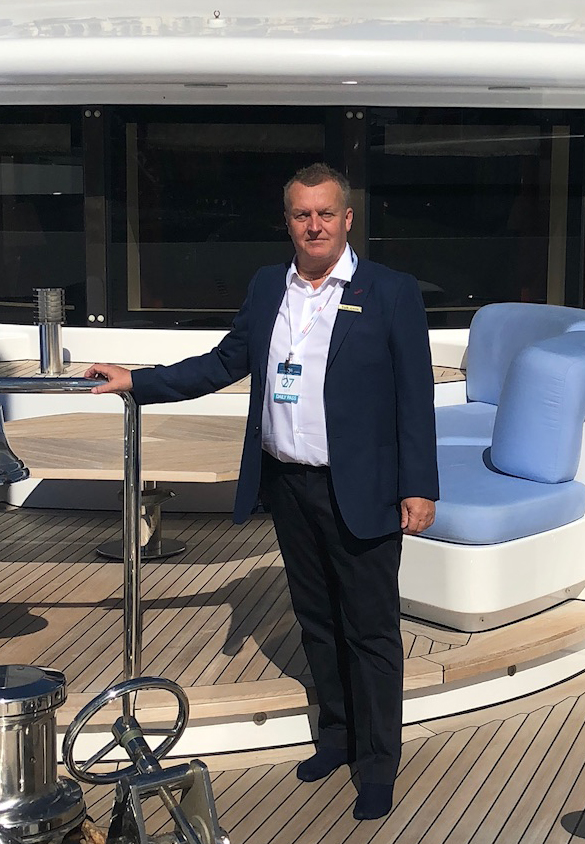
Why We Built 24Synergy — and Why the Magazines Matter

When we started developing 24Synergy, the objective was never simply to build another business directory, advertising website or collection of industry portals. There are already plenty of those, and creating another one would have achieved very little.
The question I kept coming back to was much simpler: **what should 24Synergy actually do for the businesses that use it?**
For me, the answer has always been about creating opportunity through collaboration.
We are constantly told that competition is healthy, and of course it is. Competition drives standards, innovation and better service. But I became interested in a slightly different question. What happens if competitors can also work together?
I don't mean sharing commercially sensitive information or pretending that companies aren't competing for the same customers. I mean recognising that every business already has its own clients, contacts, audience, knowledge and reach. If those individual networks can be connected intelligently, everybody potentially reaches considerably further than they could alone.
That principle became the foundation of 24Synergy.
The network is designed to grow through the businesses using it. Companies introduce their clients and contacts, other businesses do the same, and gradually those separate audiences become part of something much larger. Everybody contributes something to the network and everybody has the opportunity to benefit from the network that results.
There is also a perfectly sensible commercial reason for getting involved early. Your customers are already doing business with other companies and receiving marketing from other suppliers. It therefore makes sense to introduce them to a useful industry network yourself rather than waiting for somebody else to do it first.
That is why I think the early-adopter stage is particularly interesting. I am not going to pretend that a network during its launch period can offer the same volume of activity it should offer when thousands of companies and industry professionals are using it. Networks need people. They need participation and they need time to develop.
But eventually there is a tipping point. More companies join, more buyers arrive, more enquiries circulate, more RFQs are submitted, more people read the newsletters and magazines and more conversations take place through 24live. At that point, the companies that supported the network early aren't arriving and trying to establish themselves in an already busy marketplace. They are already there, with their accounts, listings, content, contacts and presence established.
Some of the mechanisms we have built become much more significant at that stage. Priority access to an RFQ, for example, might seem relatively unimportant when there are only a handful moving through the system. When substantial numbers of genuine opportunities are being generated, seeing something 48 hours before other users can make a considerable difference. The value of the network should therefore increase as the network itself grows.
That same thinking is ultimately what led us to create the magazines.
As 24Synergy developed, I increasingly felt that something was missing. We had created ways for businesses to list themselves, communicate, publish information, distribute newsletters, generate enquiries, respond to opportunities and reach audiences across different specialist sectors, but if we were genuinely trying to build a comprehensive marketing network, those businesses also needed somewhere to advertise.
So we built it.
The 24 Magazines aren't intended to sit separately from 24Synergy. They are another part of the same ecosystem, giving companies another route to market while giving readers useful specialist information in an accessible format. They are global publications, but with regional editions and regional editorial because the businesses and people using 24Synergy are global too.
A company shouldn't be disadvantaged because it happens to be based in Britain, France, the United States, Dubai, Singapore, Spain or somewhere else entirely. Nor should a reader have to wade through endless irrelevant information before finding something applicable to where they live, work, sail, charter, fly or conduct business.
That brings me to something else that is probably worth addressing openly.
Some readers will look through these magazines and ask: **“Have they used AI to produce some of this?”**
The answer is yes.
We have.
There are thousands of pieces of editorial involved across these publications and their regional editions, and it would be rather ridiculous for me to pretend that artificial intelligence hasn't helped us create them. AI exists, it is an extraordinarily useful tool when used properly, and I don't see any reason to hide the fact that we have used it.
What matters to me is **how** we have used it.
We haven't simply asked a machine to fill hundreds of pages with words so that the magazines look busy. We have chosen the subjects we believe are worth covering, identified the questions we think readers actually want answered and, in many cases, started the articles ourselves before using AI to help develop the research, structure and additional information around them.
The objective has always been usefulness.
If you're reading one of our sailing magazines, I want you to discover something that helps you sail, plan a passage, choose equipment, understand a destination or avoid a problem. If you're involved with private aviation, I want the information to answer questions relevant to flying, ownership, charter or operations. If you're in commercial shipping, brokerage, boat building, property, charter or another sector, the same principle applies.
I don't want pages of disposable editorial written simply because a magazine needs another article.
We have tried to identify subjects where somebody would otherwise have to spend time searching around the internet, opening numerous websites and piecing the information together themselves. We can do some of that background work instead, ask the questions and bring the useful information together in one place.
There is an environmental argument for that approach too. Endless searching, loading websites, serving adverts and repeatedly retrieving information all require digital infrastructure and energy. A magazine can be downloaded once, kept and read offline.
I wouldn't pretend that this somehow makes digital publishing impact-free, because it doesn't, but if we can save readers unnecessary searching while creating something useful enough to keep and refer back to, I think that is a better use of the technology available to us.
So yes, some of what you are reading has involved AI, and some of it has involved people. Increasingly it will involve more people as well.
As early adopters, journalists, specialists and other contributors become involved, their voices will naturally become part of these pages. We are also inviting other magazines and media organisations to contribute, which should introduce completely different editorial voices and areas of expertise. They may use AI themselves, of course, and I have no intention of telling another publisher or journalist which tools they are permitted to use.
The test is much simpler than that: **does the article give the reader something worthwhile?**
If it doesn't, it shouldn't be here.
That philosophy also explains something rather unusual we are now introducing. We are going to allow other independent magazines to promote themselves through our magazines.
At first that might sound counter-intuitive. Why would one magazine deliberately introduce its readers to another magazine?
My answer is: why wouldn't we?
If another specialist publication produces good material that our readers would appreciate, discovering it doesn't make our own magazine less useful. Quite the opposite. If we can become somewhere readers come to discover worthwhile information, including information and publications produced by other people, then I think we become more useful.
A participating publication will be able to contribute a genuine editorial article, tell readers where they can find more of its work and promote its magazine within our pages. We can potentially take that relationship considerably further as well. There may be opportunities to work with other publishers commercially, including arrangements where advertising from their own clients can reach our publications and both parties share in the resulting revenue.
Again, it comes back to the original idea behind 24Synergy. Competition doesn't have to prevent collaboration.
The scale of the network comes from the same philosophy. Historically, the industries we have worked with have never existed neatly inside individual boxes. A superyacht depends upon builders, suppliers, engineering companies, crew, brokers, charter businesses, marinas and countless specialist services. Those same owners and clients may use private aviation and own international property. Boat builders need suppliers. Charter companies need customers. Brokers need buyers and sellers. Employers need crew.
Exhibitors need boat shows, and boat shows need exhibitors and visitors.
Commercial ships and cruise ships sit alongside superyachts, motor yachts and sailing yachts. There are crew and employment services, boat and ship builders, ports, yacht services and suppliers, aviation, empty legs, property and specialist luxury markets. Each sector has its own identity, but there are countless points where they intersect.
That is why 24Synergy has become such a large collection of connected websites. It is deliberately not centred on one country or one type of business. A company with branches in several countries can bring those offices together through the same network, while a small specialist supplier can concentrate on the particular market that matters to it. Everything can still be managed centrally through the same account and dashboard.
24live takes that idea in another direction again. I sometimes describe it as sitting somewhere between the professional nature of LinkedIn and the immediacy of a social network such as Facebook, although I don't really want it to become either of those things. The purpose is business.
Members can publish their own material, interact with other users, promote their businesses and place appropriate content across relevant parts of the 24 Network. If somebody wants to be proactive, there is considerable freedom to put themselves in front of the industries they want to reach rather than simply creating a listing and waiting for somebody to find them.
That is an important distinction for me. **24Synergy isn't designed to do your marketing while you sit and watch. It is designed to give you the tools to do considerably more with your marketing yourself.**
There is another, deliberately different part of the ecosystem too.
Within the superyacht sector, 1UK.com is being developed around recognition rather than conventional paid placement. Companies cannot simply buy their way into recognition. They can request consideration, but that request can be declined. As the concept develops, I want appropriate industry leaders themselves to help determine the standards that businesses should achieve to be recognised at different levels.
That connects directly with where I would like 24Synergy itself eventually to go.
The intention is for 24Synergy to develop into a cooperative structure with industry leaders and board members helping to determine its future direction. The industry changes constantly, and the technology serving it needs to change with it. Electric propulsion is an obvious example today, but tomorrow there will be something else. The people actually working within these sectors will often identify what is needed long before a software developer sitting outside the industry ever could.
We have built the infrastructure, but I don't believe that means we should dictate indefinitely what it becomes. I would much rather create a structure where the people using the network have a meaningful voice in deciding which features should be developed next and where the network should go as their industries evolve.
There is a personal reason behind all of this as well.
I've always enjoyed helping businesses develop. I enjoy looking at a new company, understanding what it is trying to achieve and asking what could be done differently. Sometimes it is marketing, sometimes positioning, sometimes making an introduction or simply giving somebody the confidence and advice they need when they're trying to get something started.
I suppose 24Synergy is my attempt to do that on a much larger scale.
Rather than helping one company find another route to market, we have tried to build the infrastructure through which thousands of businesses can create those routes for themselves and for each other. It gives a small specialist company access to many of the same marketing mechanisms available to a much larger international organisation, while allowing a multinational business to connect offices, people and sectors through one global hub.
And that is probably the simplest answer to the question I started with: **what is 24Synergy actually for?**
It is there to create connections and opportunities that would otherwise be harder to create individually. The websites, magazines, newsletters, RFQs, publishing tools, 24live and everything else we develop are simply different ways of achieving that.
We've done the difficult part of bringing that infrastructure together. Now I want businesses to use it, challenge it and help us improve it. I want people to tell us what works, what doesn't and what their particular part of the industry needs next. As more businesses participate, the network should become more useful to everybody already inside it.
We have built 24Synergy, but I don't want it to feel as though it belongs to a small team sitting somewhere deciding what everybody else needs.
**We've built it for you. Now make use of it, make it work for your business, and help us decide what it becomes next.**
**Paul Thompson** *Editor*
Contributor: Paul Thompson / 24Synergy

Be the first reader to react to this article.

The conversation around shipbuilding: buying used: the checks that matter before money changes hands has moved quickly this year, yet the practical decision is still built on fairly ordinary questions.
The conversation around shipbuilding: buying used: the checks that matter before money changes hands has moved quickly this year, yet the practical decision is still built on fairly ordinary questions.
Cost also needs to be separated into purchase cost and ownership cost. The second figure is usually less visible. Consumables, routine servicing, insurance, finance, berthing or storage, professional fees, software subscriptions, inspections and eventual replacement items can materially change the economics. A useful quotation is therefore one that makes exclusions obvious.
If a supplier cannot explain what normally falls outside the quoted figure, ask for that clarification before treating two prices as comparable.
After-sales support can be more important than the original specification. A component that is excellent on paper is less attractive if parts take months to arrive or there is no competent service agent where the equipment will be used. The same applies to software-led products: ownership now includes updates, access rights, data and sometimes recurring subscriptions. Find out who supports the system, for how long, and what happens if the original supplier changes hands.
The regulatory backdrop is also moving. IMO work in 2026 has continued to focus on the infrastructure needed for renewable fuels and on the different levels of regulatory readiness for methanol, ammonia, hydrogen and other alternatives. That does not create one obvious fuel choice. It reinforces the need to match vessel type, route, bunkering availability, safety case and expected operating life before committing capital.
Timing matters. Buying or commissioning under deadline pressure weakens the buyer's position because there is less time to inspect, compare and walk away. Where possible, build the timetable backwards from the date the asset or service is genuinely required. Include survey or inspection time, corrections, training, delivery and a contingency. A realistic programme often reveals that the cheapest-looking option is not the one with the lowest overall cost.
The starting point is use. In commercial shipbuilding, yards, propulsion and regulation, two apparently similar products or services can be right for completely different owners because their operating pattern is different. Frequency of use, geography, crew or staffing, storage, servicing access and the length of time you expect to keep the asset all change the answer. Before comparing brands or quotations, write down those constraints.

It sounds basic, but it prevents a specification being chosen for a lifestyle that exists only in the sales material.
Technical claims deserve context. Range, output, capacity, speed, efficiency and performance figures are normally produced under stated conditions. Real use adds weather, load, temperature, fouling, route, operator behaviour and reserve margins. Rather than arguing over a headline number, ask what assumptions sit behind it and what happens when those assumptions change. That produces a much more useful comparison.
Sustainability claims are increasingly part of the decision as well. The useful question is not whether a product is described as green, but what has actually changed: energy use, fuel consumption, material choice, repairability, service life, emissions, waste or end-of-life handling. Improvements in one area can create compromises in another. Evidence and measured performance are more valuable than broad environmental language.
Finally, insist on a proper handover. Familiarisation, emergency procedures, maintenance intervals, passwords, spare parts, warranty contacts and operating limitations should all be understood before the supplier disappears over the horizon. A surprising number of early problems are not failures at all but gaps in handover. Thirty minutes spent recording the right information can save days later.


My own shorthand for shipbuilding: buying used: the checks that matter before money changes hands is simple: verify the condition, verify the paperwork, understand the support network and calculate the cost on a realistic pattern of use. If any one of those four is unclear, there is still work to do before committing.
When money is about to change hands, the sequence matters. Establish identity and authority to sell, agree exactly what is included, record known defects and make any deposit terms clear. Where a survey, valuation or finance approval is part of the transaction, the contract should reflect that process rather than relying on a verbal understanding. Buyers should also know when risk and title transfer, particularly if the asset is moving between jurisdictions.
Market value is evidence, not aspiration. Advertised prices show what sellers hope to achieve; completed transactions, condition, specification, location and time on market give a better picture. A well-presented example can deserve a premium, but a premium still needs a reason. The strongest negotiating position comes from knowing which defects are merely cosmetic, which affect usability and which could lead to immediate capital expenditure.
The practical test for commercial shipbuilding, yards, propulsion and regulation is whether the decision still makes sense when circumstances are less than ideal. Weather changes, schedules move, components fail and people use equipment differently from the designer's neat assumptions. Building a little resilience into the choice usually costs less than trying to recover it afterwards.
That is the point worth carrying into the next conversation with a broker, builder, supplier or adviser: ask what the choice will be like to own and operate, not merely what it is like to buy.
Contributor: Paul Thompson / Editorial / 24ShipBuilders
Be the first reader to react to this article.
For anyone looking at why running costs deserve more attention than the headline price in shipbuilding, the first job is not to decide what looks best.
For anyone looking at why running costs deserve more attention than the headline price in shipbuilding, the first job is not to decide what looks best. It is to establish what problem actually needs solving.
Documentation is another practical test. Service records, manuals, certificates, invoices, warranties, software licences and evidence of previous work are not administrative clutter; they are part of the asset. Good records make troubleshooting easier and can support resale. Missing records do not automatically mean there is a problem, but they increase uncertainty, and uncertainty should be reflected in the questions asked, the inspection undertaken and sometimes the price.
Risk is best dealt with before commitment. That means independent inspection where appropriate, clear written scope, confirmation of insurance implications and an agreed process for defects or incomplete work. In higher-value transactions, legal, tax and regulatory advice should come from qualified advisers in the relevant jurisdiction. The purpose is not to make every transaction defensive; it is to stop assumptions becoming expensive surprises.
The regulatory backdrop is also moving. IMO work in 2026 has continued to focus on the infrastructure needed for renewable fuels and on the different levels of regulatory readiness for methanol, ammonia, hydrogen and other alternatives. That does not create one obvious fuel choice. It reinforces the need to match vessel type, route, bunkering availability, safety case and expected operating life before committing capital.
Resale should be considered even by people who intend to keep something for years. Highly personal specifications can be perfectly sensible, but buyers should understand the trade-off. Widely supported equipment, sensible layouts, complete records and recognised maintenance tend to be easier for the next owner to understand. The objective is not to design everything for an unknown future buyer; it is simply to avoid destroying flexibility without a good reason.
Cost also needs to be separated into purchase cost and ownership cost. The second figure is usually less visible. Consumables, routine servicing, insurance, finance, berthing or storage, professional fees, software subscriptions, inspections and eventual replacement items can materially change the economics. A useful quotation is therefore one that makes exclusions obvious.
If a supplier cannot explain what normally falls outside the quoted figure, ask for that clarification before treating two prices as comparable.
After-sales support can be more important than the original specification. A component that is excellent on paper is less attractive if parts take months to arrive or there is no competent service agent where the equipment will be used. The same applies to software-led products: ownership now includes updates, access rights, data and sometimes recurring subscriptions. Find out who supports the system, for how long, and what happens if the original supplier changes hands.
Timing matters. Buying or commissioning under deadline pressure weakens the buyer's position because there is less time to inspect, compare and walk away. Where possible, build the timetable backwards from the date the asset or service is genuinely required. Include survey or inspection time, corrections, training, delivery and a contingency. A realistic programme often reveals that the cheapest-looking option is not the one with the lowest overall cost.
The starting point is use. In commercial shipbuilding, yards, propulsion and regulation, two apparently similar products or services can be right for completely different owners because their operating pattern is different. Frequency of use, geography, crew or staffing, storage, servicing access and the length of time you expect to keep the asset all change the answer. Before comparing brands or quotations, write down those constraints.
It sounds basic, but it prevents a specification being chosen for a lifestyle that exists only in the sales material.

When money is about to change hands, the sequence matters. Establish identity and authority to sell, agree exactly what is included, record known defects and make any deposit terms clear. Where a survey, valuation or finance approval is part of the transaction, the contract should reflect that process rather than relying on a verbal understanding. Buyers should also know when risk and title transfer, particularly if the asset is moving between jurisdictions.
Market value is evidence, not aspiration. Advertised prices show what sellers hope to achieve; completed transactions, condition, specification, location and time on market give a better picture. A well-presented example can deserve a premium, but a premium still needs a reason. The strongest negotiating position comes from knowing which defects are merely cosmetic, which affect usability and which could lead to immediate capital expenditure.
The practical test for commercial shipbuilding, yards, propulsion and regulation is whether the decision still makes sense when circumstances are less than ideal. Weather changes, schedules move, components fail and people use equipment differently from the designer's neat assumptions. Building a little resilience into the choice usually costs less than trying to recover it afterwards.
None of this makes the decision difficult. It simply moves attention from presentation to evidence, which is usually where the better value sits.
Contributor: Paul Thompson / Editorial / 24ShipBuilders
Be the first reader to react to this article.

One of the easiest mistakes in commercial shipbuilding, yards, propulsion and regulation is to concentrate on the headline and leave the awkward questions until later.
One of the easiest mistakes in commercial shipbuilding, yards, propulsion and regulation is to concentrate on the headline and leave the awkward questions until later.
Finally, insist on a proper handover. Familiarisation, emergency procedures, maintenance intervals, passwords, spare parts, warranty contacts and operating limitations should all be understood before the supplier disappears over the horizon. A surprising number of early problems are not failures at all but gaps in handover. Thirty minutes spent recording the right information can save days later.
Documentation is another practical test. Service records, manuals, certificates, invoices, warranties, software licences and evidence of previous work are not administrative clutter; they are part of the asset. Good records make troubleshooting easier and can support resale. Missing records do not automatically mean there is a problem, but they increase uncertainty, and uncertainty should be reflected in the questions asked, the inspection undertaken and sometimes the price.
The regulatory backdrop is also moving. IMO work in 2026 has continued to focus on the infrastructure needed for renewable fuels and on the different levels of regulatory readiness for methanol, ammonia, hydrogen and other alternatives. That does not create one obvious fuel choice. It reinforces the need to match vessel type, route, bunkering availability, safety case and expected operating life before committing capital.
Risk is best dealt with before commitment. That means independent inspection where appropriate, clear written scope, confirmation of insurance implications and an agreed process for defects or incomplete work. In higher-value transactions, legal, tax and regulatory advice should come from qualified advisers in the relevant jurisdiction. The purpose is not to make every transaction defensive; it is to stop assumptions becoming expensive surprises.
Resale should be considered even by people who intend to keep something for years. Highly personal specifications can be perfectly sensible, but buyers should understand the trade-off. Widely supported equipment, sensible layouts, complete records and recognised maintenance tend to be easier for the next owner to understand. The objective is not to design everything for an unknown future buyer; it is simply to avoid destroying flexibility without a good reason.
Cost also needs to be separated into purchase cost and ownership cost. The second figure is usually less visible. Consumables, routine servicing, insurance, finance, berthing or storage, professional fees, software subscriptions, inspections and eventual replacement items can materially change the economics. A useful quotation is therefore one that makes exclusions obvious.
If a supplier cannot explain what normally falls outside the quoted figure, ask for that clarification before treating two prices as comparable.
After-sales support can be more important than the original specification. A component that is excellent on paper is less attractive if parts take months to arrive or there is no competent service agent where the equipment will be used. The same applies to software-led products: ownership now includes updates, access rights, data and sometimes recurring subscriptions. Find out who supports the system, for how long, and what happens if the original supplier changes hands.
Timing matters. Buying or commissioning under deadline pressure weakens the buyer's position because there is less time to inspect, compare and walk away. Where possible, build the timetable backwards from the date the asset or service is genuinely required. Include survey or inspection time, corrections, training, delivery and a contingency. A realistic programme often reveals that the cheapest-looking option is not the one with the lowest overall cost.

My own shorthand for choosing shipbuilding suppliers: why response time can matter as much as price is simple: verify the condition, verify the paperwork, understand the support network and calculate the cost on a realistic pattern of use. If any one of those four is unclear, there is still work to do before committing.
When money is about to change hands, the sequence matters. Establish identity and authority to sell, agree exactly what is included, record known defects and make any deposit terms clear. Where a survey, valuation or finance approval is part of the transaction, the contract should reflect that process rather than relying on a verbal understanding. Buyers should also know when risk and title transfer, particularly if the asset is moving between jurisdictions.
Market value is evidence, not aspiration. Advertised prices show what sellers hope to achieve; completed transactions, condition, specification, location and time on market give a better picture. A well-presented example can deserve a premium, but a premium still needs a reason. The strongest negotiating position comes from knowing which defects are merely cosmetic, which affect usability and which could lead to immediate capital expenditure.
The practical test for commercial shipbuilding, yards, propulsion and regulation is whether the decision still makes sense when circumstances are less than ideal. Weather changes, schedules move, components fail and people use equipment differently from the designer's neat assumptions. Building a little resilience into the choice usually costs less than trying to recover it afterwards.
The best outcome is not necessarily the newest or most sophisticated option. It is the one that remains practical after the first season, the first service bill and the first change of plan.
Contributor: Paul Thompson / Editorial / 24ShipBuilders
Be the first reader to react to this article.
The conversation around how to compare competing specifications without being distracted by headline numbers has moved quickly this year, yet the practical decision is still built on fairly ordinary questions.
The conversation around how to compare competing specifications without being distracted by headline numbers has moved quickly this year, yet the practical decision is still built on fairly ordinary questions.
Technical claims deserve context. Range, output, capacity, speed, efficiency and performance figures are normally produced under stated conditions. Real use adds weather, load, temperature, fouling, route, operator behaviour and reserve margins. Rather than arguing over a headline number, ask what assumptions sit behind it and what happens when those assumptions change. That produces a much more useful comparison.
Sustainability claims are increasingly part of the decision as well. The useful question is not whether a product is described as green, but what has actually changed: energy use, fuel consumption, material choice, repairability, service life, emissions, waste or end-of-life handling. Improvements in one area can create compromises in another. Evidence and measured performance are more valuable than broad environmental language.
The regulatory backdrop is also moving. IMO work in 2026 has continued to focus on the infrastructure needed for renewable fuels and on the different levels of regulatory readiness for methanol, ammonia, hydrogen and other alternatives. That does not create one obvious fuel choice. It reinforces the need to match vessel type, route, bunkering availability, safety case and expected operating life before committing capital.
Finally, insist on a proper handover. Familiarisation, emergency procedures, maintenance intervals, passwords, spare parts, warranty contacts and operating limitations should all be understood before the supplier disappears over the horizon. A surprising number of early problems are not failures at all but gaps in handover. Thirty minutes spent recording the right information can save days later.
Documentation is another practical test. Service records, manuals, certificates, invoices, warranties, software licences and evidence of previous work are not administrative clutter; they are part of the asset. Good records make troubleshooting easier and can support resale. Missing records do not automatically mean there is a problem, but they increase uncertainty, and uncertainty should be reflected in the questions asked, the inspection undertaken and sometimes the price.
Risk is best dealt with before commitment. That means independent inspection where appropriate, clear written scope, confirmation of insurance implications and an agreed process for defects or incomplete work. In higher-value transactions, legal, tax and regulatory advice should come from qualified advisers in the relevant jurisdiction. The purpose is not to make every transaction defensive; it is to stop assumptions becoming expensive surprises.
Resale should be considered even by people who intend to keep something for years. Highly personal specifications can be perfectly sensible, but buyers should understand the trade-off. Widely supported equipment, sensible layouts, complete records and recognised maintenance tend to be easier for the next owner to understand. The objective is not to design everything for an unknown future buyer; it is simply to avoid destroying flexibility without a good reason.
Cost also needs to be separated into purchase cost and ownership cost. The second figure is usually less visible. Consumables, routine servicing, insurance, finance, berthing or storage, professional fees, software subscriptions, inspections and eventual replacement items can materially change the economics. A useful quotation is therefore one that makes exclusions obvious.
If a supplier cannot explain what normally falls outside the quoted figure, ask for that clarification before treating two prices as comparable.


Comparison becomes easier if every contender is put through the same questions. Ask for the same operating assumptions, the same delivery point, the same warranty period and the same list of included equipment or services. That turns a collection of sales conversations into something closer to a procurement exercise and exposes the areas where one quotation has quietly omitted an expensive item.
References are useful when they are relevant. A supplier's biggest or most prestigious project may tell you very little about how it handles an ordinary job in your region. Ask instead for examples with a similar scale, operating pattern and timetable. The most useful reference is often the customer who has lived with the product for two or three years and has already needed after-sales support.
The practical test for commercial shipbuilding, yards, propulsion and regulation is whether the decision still makes sense when circumstances are less than ideal. Weather changes, schedules move, components fail and people use equipment differently from the designer's neat assumptions. Building a little resilience into the choice usually costs less than trying to recover it afterwards.
The best outcome is not necessarily the newest or most sophisticated option. It is the one that remains practical after the first season, the first service bill and the first change of plan.
Contributor: Paul Thompson / Editorial / 24ShipBuilders
Be the first reader to react to this article.
The market has become very good at presenting shipbuilding: what a proper pre-purchase inspection should actually cover as simple.
The market has become very good at presenting shipbuilding: what a proper pre-purchase inspection should actually cover as simple. In practice, the details still determine whether it works.
After-sales support can be more important than the original specification. A component that is excellent on paper is less attractive if parts take months to arrive or there is no competent service agent where the equipment will be used. The same applies to software-led products: ownership now includes updates, access rights, data and sometimes recurring subscriptions. Find out who supports the system, for how long, and what happens if the original supplier changes hands.
Timing matters. Buying or commissioning under deadline pressure weakens the buyer's position because there is less time to inspect, compare and walk away. Where possible, build the timetable backwards from the date the asset or service is genuinely required. Include survey or inspection time, corrections, training, delivery and a contingency. A realistic programme often reveals that the cheapest-looking option is not the one with the lowest overall cost.
The regulatory backdrop is also moving. IMO work in 2026 has continued to focus on the infrastructure needed for renewable fuels and on the different levels of regulatory readiness for methanol, ammonia, hydrogen and other alternatives. That does not create one obvious fuel choice. It reinforces the need to match vessel type, route, bunkering availability, safety case and expected operating life before committing capital.
The starting point is use. In commercial shipbuilding, yards, propulsion and regulation, two apparently similar products or services can be right for completely different owners because their operating pattern is different. Frequency of use, geography, crew or staffing, storage, servicing access and the length of time you expect to keep the asset all change the answer. Before comparing brands or quotations, write down those constraints.
It sounds basic, but it prevents a specification being chosen for a lifestyle that exists only in the sales material.
Technical claims deserve context. Range, output, capacity, speed, efficiency and performance figures are normally produced under stated conditions. Real use adds weather, load, temperature, fouling, route, operator behaviour and reserve margins. Rather than arguing over a headline number, ask what assumptions sit behind it and what happens when those assumptions change. That produces a much more useful comparison.
Sustainability claims are increasingly part of the decision as well. The useful question is not whether a product is described as green, but what has actually changed: energy use, fuel consumption, material choice, repairability, service life, emissions, waste or end-of-life handling. Improvements in one area can create compromises in another. Evidence and measured performance are more valuable than broad environmental language.
Finally, insist on a proper handover. Familiarisation, emergency procedures, maintenance intervals, passwords, spare parts, warranty contacts and operating limitations should all be understood before the supplier disappears over the horizon. A surprising number of early problems are not failures at all but gaps in handover. Thirty minutes spent recording the right information can save days later.
Documentation is another practical test. Service records, manuals, certificates, invoices, warranties, software licences and evidence of previous work are not administrative clutter; they are part of the asset. Good records make troubleshooting easier and can support resale. Missing records do not automatically mean there is a problem, but they increase uncertainty, and uncertainty should be reflected in the questions asked, the inspection undertaken and sometimes the price.


When money is about to change hands, the sequence matters. Establish identity and authority to sell, agree exactly what is included, record known defects and make any deposit terms clear. Where a survey, valuation or finance approval is part of the transaction, the contract should reflect that process rather than relying on a verbal understanding. Buyers should also know when risk and title transfer, particularly if the asset is moving between jurisdictions.
Market value is evidence, not aspiration. Advertised prices show what sellers hope to achieve; completed transactions, condition, specification, location and time on market give a better picture. A well-presented example can deserve a premium, but a premium still needs a reason. The strongest negotiating position comes from knowing which defects are merely cosmetic, which affect usability and which could lead to immediate capital expenditure.
The practical test for commercial shipbuilding, yards, propulsion and regulation is whether the decision still makes sense when circumstances are less than ideal. Weather changes, schedules move, components fail and people use equipment differently from the designer's neat assumptions. Building a little resilience into the choice usually costs less than trying to recover it afterwards.
A measured decision now generally costs less than correcting an enthusiastic one later.
Contributor: Paul Thompson / Editorial / 24ShipBuilders
Be the first reader to react to this article.
The market has become very good at presenting insurance questions worth answering before you commit as simple.
The market has become very good at presenting insurance questions worth answering before you commit as simple. In practice, the details still determine whether it works.
Risk is best dealt with before commitment. That means independent inspection where appropriate, clear written scope, confirmation of insurance implications and an agreed process for defects or incomplete work. In higher-value transactions, legal, tax and regulatory advice should come from qualified advisers in the relevant jurisdiction. The purpose is not to make every transaction defensive; it is to stop assumptions becoming expensive surprises.
Resale should be considered even by people who intend to keep something for years. Highly personal specifications can be perfectly sensible, but buyers should understand the trade-off. Widely supported equipment, sensible layouts, complete records and recognised maintenance tend to be easier for the next owner to understand. The objective is not to design everything for an unknown future buyer; it is simply to avoid destroying flexibility without a good reason.
The regulatory backdrop is also moving. IMO work in 2026 has continued to focus on the infrastructure needed for renewable fuels and on the different levels of regulatory readiness for methanol, ammonia, hydrogen and other alternatives. That does not create one obvious fuel choice. It reinforces the need to match vessel type, route, bunkering availability, safety case and expected operating life before committing capital.
Cost also needs to be separated into purchase cost and ownership cost. The second figure is usually less visible. Consumables, routine servicing, insurance, finance, berthing or storage, professional fees, software subscriptions, inspections and eventual replacement items can materially change the economics. A useful quotation is therefore one that makes exclusions obvious.
If a supplier cannot explain what normally falls outside the quoted figure, ask for that clarification before treating two prices as comparable.
After-sales support can be more important than the original specification. A component that is excellent on paper is less attractive if parts take months to arrive or there is no competent service agent where the equipment will be used. The same applies to software-led products: ownership now includes updates, access rights, data and sometimes recurring subscriptions. Find out who supports the system, for how long, and what happens if the original supplier changes hands.
Timing matters. Buying or commissioning under deadline pressure weakens the buyer's position because there is less time to inspect, compare and walk away. Where possible, build the timetable backwards from the date the asset or service is genuinely required. Include survey or inspection time, corrections, training, delivery and a contingency. A realistic programme often reveals that the cheapest-looking option is not the one with the lowest overall cost.
The starting point is use. In commercial shipbuilding, yards, propulsion and regulation, two apparently similar products or services can be right for completely different owners because their operating pattern is different. Frequency of use, geography, crew or staffing, storage, servicing access and the length of time you expect to keep the asset all change the answer. Before comparing brands or quotations, write down those constraints.
It sounds basic, but it prevents a specification being chosen for a lifestyle that exists only in the sales material.
Technical claims deserve context. Range, output, capacity, speed, efficiency and performance figures are normally produced under stated conditions. Real use adds weather, load, temperature, fouling, route, operator behaviour and reserve margins. Rather than arguing over a headline number, ask what assumptions sit behind it and what happens when those assumptions change. That produces a much more useful comparison.
My own shorthand for insurance questions worth answering before you commit is simple: verify the condition, verify the paperwork, understand the support network and calculate the cost on a realistic pattern of use. If any one of those four is unclear, there is still work to do before committing.
Comparison becomes easier if every contender is put through the same questions. Ask for the same operating assumptions, the same delivery point, the same warranty period and the same list of included equipment or services. That turns a collection of sales conversations into something closer to a procurement exercise and exposes the areas where one quotation has quietly omitted an expensive item.
References are useful when they are relevant. A supplier's biggest or most prestigious project may tell you very little about how it handles an ordinary job in your region. Ask instead for examples with a similar scale, operating pattern and timetable. The most useful reference is often the customer who has lived with the product for two or three years and has already needed after-sales support.
The practical test for commercial shipbuilding, yards, propulsion and regulation is whether the decision still makes sense when circumstances are less than ideal. Weather changes, schedules move, components fail and people use equipment differently from the designer's neat assumptions. Building a little resilience into the choice usually costs less than trying to recover it afterwards.
A measured decision now generally costs less than correcting an enthusiastic one later.
Contributor: Paul Thompson / Editorial / 24ShipBuilders
Be the first reader to react to this article.
I have always found that the useful part of commercial shipbuilding, yards, propulsion and regulation starts once the brochure language has been stripped away.
I have always found that the useful part of commercial shipbuilding, yards, propulsion and regulation starts once the brochure language has been stripped away.
Sustainability claims are increasingly part of the decision as well. The useful question is not whether a product is described as green, but what has actually changed: energy use, fuel consumption, material choice, repairability, service life, emissions, waste or end-of-life handling. Improvements in one area can create compromises in another. Evidence and measured performance are more valuable than broad environmental language.
Finally, insist on a proper handover. Familiarisation, emergency procedures, maintenance intervals, passwords, spare parts, warranty contacts and operating limitations should all be understood before the supplier disappears over the horizon. A surprising number of early problems are not failures at all but gaps in handover. Thirty minutes spent recording the right information can save days later.
The regulatory backdrop is also moving. IMO work in 2026 has continued to focus on the infrastructure needed for renewable fuels and on the different levels of regulatory readiness for methanol, ammonia, hydrogen and other alternatives. That does not create one obvious fuel choice. It reinforces the need to match vessel type, route, bunkering availability, safety case and expected operating life before committing capital.
Documentation is another practical test. Service records, manuals, certificates, invoices, warranties, software licences and evidence of previous work are not administrative clutter; they are part of the asset. Good records make troubleshooting easier and can support resale. Missing records do not automatically mean there is a problem, but they increase uncertainty, and uncertainty should be reflected in the questions asked, the inspection undertaken and sometimes the price.
Risk is best dealt with before commitment. That means independent inspection where appropriate, clear written scope, confirmation of insurance implications and an agreed process for defects or incomplete work. In higher-value transactions, legal, tax and regulatory advice should come from qualified advisers in the relevant jurisdiction. The purpose is not to make every transaction defensive; it is to stop assumptions becoming expensive surprises.
Resale should be considered even by people who intend to keep something for years. Highly personal specifications can be perfectly sensible, but buyers should understand the trade-off. Widely supported equipment, sensible layouts, complete records and recognised maintenance tend to be easier for the next owner to understand. The objective is not to design everything for an unknown future buyer; it is simply to avoid destroying flexibility without a good reason.
Cost also needs to be separated into purchase cost and ownership cost. The second figure is usually less visible. Consumables, routine servicing, insurance, finance, berthing or storage, professional fees, software subscriptions, inspections and eventual replacement items can materially change the economics. A useful quotation is therefore one that makes exclusions obvious.
If a supplier cannot explain what normally falls outside the quoted figure, ask for that clarification before treating two prices as comparable.
After-sales support can be more important than the original specification. A component that is excellent on paper is less attractive if parts take months to arrive or there is no competent service agent where the equipment will be used. The same applies to software-led products: ownership now includes updates, access rights, data and sometimes recurring subscriptions. Find out who supports the system, for how long, and what happens if the original supplier changes hands.
Preventive work is most effective when it is recorded rather than remembered. A simple calendar of hours, dates, consumables, inspections and recurring tasks gives owners and managers an early warning before maintenance becomes urgent. It also allows jobs to be grouped sensibly, reducing repeated access costs and downtime. The discipline is not glamorous, but it is one of the clearest ways to protect reliability.
Scope control matters on any refit or repair. Once equipment is opened up, additional work is common, so the original quotation should distinguish fixed items, provisional sums and work that requires further authorisation. Photographing condition before and after the job and retaining replaced-part details can prevent disputes and gives the next technician a useful history.
The practical test for commercial shipbuilding, yards, propulsion and regulation is whether the decision still makes sense when circumstances are less than ideal. Weather changes, schedules move, components fail and people use equipment differently from the designer's neat assumptions. Building a little resilience into the choice usually costs less than trying to recover it afterwards.
A measured decision now generally costs less than correcting an enthusiastic one later.
Contributor: Paul Thompson / Editorial / 24ShipBuilders

Be the first reader to react to this article.
The market has become very good at presenting shipbuilding: how digital systems are changing the ownership experience as simple.
The market has become very good at presenting shipbuilding: how digital systems are changing the ownership experience as simple. In practice, the details still determine whether it works.
Timing matters. Buying or commissioning under deadline pressure weakens the buyer's position because there is less time to inspect, compare and walk away. Where possible, build the timetable backwards from the date the asset or service is genuinely required. Include survey or inspection time, corrections, training, delivery and a contingency. A realistic programme often reveals that the cheapest-looking option is not the one with the lowest overall cost.
The starting point is use. In commercial shipbuilding, yards, propulsion and regulation, two apparently similar products or services can be right for completely different owners because their operating pattern is different. Frequency of use, geography, crew or staffing, storage, servicing access and the length of time you expect to keep the asset all change the answer. Before comparing brands or quotations, write down those constraints.
It sounds basic, but it prevents a specification being chosen for a lifestyle that exists only in the sales material.
The regulatory backdrop is also moving. IMO work in 2026 has continued to focus on the infrastructure needed for renewable fuels and on the different levels of regulatory readiness for methanol, ammonia, hydrogen and other alternatives. That does not create one obvious fuel choice. It reinforces the need to match vessel type, route, bunkering availability, safety case and expected operating life before committing capital.
Technical claims deserve context. Range, output, capacity, speed, efficiency and performance figures are normally produced under stated conditions. Real use adds weather, load, temperature, fouling, route, operator behaviour and reserve margins. Rather than arguing over a headline number, ask what assumptions sit behind it and what happens when those assumptions change. That produces a much more useful comparison.
Sustainability claims are increasingly part of the decision as well. The useful question is not whether a product is described as green, but what has actually changed: energy use, fuel consumption, material choice, repairability, service life, emissions, waste or end-of-life handling. Improvements in one area can create compromises in another. Evidence and measured performance are more valuable than broad environmental language.
Finally, insist on a proper handover. Familiarisation, emergency procedures, maintenance intervals, passwords, spare parts, warranty contacts and operating limitations should all be understood before the supplier disappears over the horizon. A surprising number of early problems are not failures at all but gaps in handover. Thirty minutes spent recording the right information can save days later.
Documentation is another practical test. Service records, manuals, certificates, invoices, warranties, software licences and evidence of previous work are not administrative clutter; they are part of the asset. Good records make troubleshooting easier and can support resale. Missing records do not automatically mean there is a problem, but they increase uncertainty, and uncertainty should be reflected in the questions asked, the inspection undertaken and sometimes the price.
Risk is best dealt with before commitment. That means independent inspection where appropriate, clear written scope, confirmation of insurance implications and an agreed process for defects or incomplete work. In higher-value transactions, legal, tax and regulatory advice should come from qualified advisers in the relevant jurisdiction. The purpose is not to make every transaction defensive; it is to stop assumptions becoming expensive surprises.
Connected equipment creates a second maintenance schedule: passwords, access permissions, firmware, backups and subscriptions. Owners should know which systems can be updated remotely, which data leaves the asset and whether loss of an online service affects core operation. A paper or offline record of critical settings is still useful when the problem being diagnosed is the network itself.
Cybersecurity does not need to become a specialist exercise for every user. Basic separation of guest and operational networks, unique credentials, prompt updates and controlled administrator access remove a large proportion of avoidable risk. The more important question for a supplier is whether security has been designed into the product and whether updates will continue throughout its realistic service life.
The practical test for commercial shipbuilding, yards, propulsion and regulation is whether the decision still makes sense when circumstances are less than ideal. Weather changes, schedules move, components fail and people use equipment differently from the designer's neat assumptions. Building a little resilience into the choice usually costs less than trying to recover it afterwards.
The sensible approach is therefore quite conventional: define the job, verify the evidence, price the whole commitment and keep enough margin for the things that never appear in the brochure.
Contributor: Paul Thompson / Editorial / 24ShipBuilders
Be the first reader to react to this article.
There is nothing particularly complicated about where energy efficiency now makes a practical difference, but there are several ways to make it unnecessarily expensive.
There is nothing particularly complicated about where energy efficiency now makes a practical difference, but there are several ways to make it unnecessarily expensive.
Resale should be considered even by people who intend to keep something for years. Highly personal specifications can be perfectly sensible, but buyers should understand the trade-off. Widely supported equipment, sensible layouts, complete records and recognised maintenance tend to be easier for the next owner to understand. The objective is not to design everything for an unknown future buyer; it is simply to avoid destroying flexibility without a good reason.
Cost also needs to be separated into purchase cost and ownership cost. The second figure is usually less visible. Consumables, routine servicing, insurance, finance, berthing or storage, professional fees, software subscriptions, inspections and eventual replacement items can materially change the economics. A useful quotation is therefore one that makes exclusions obvious.
If a supplier cannot explain what normally falls outside the quoted figure, ask for that clarification before treating two prices as comparable.
The regulatory backdrop is also moving. IMO work in 2026 has continued to focus on the infrastructure needed for renewable fuels and on the different levels of regulatory readiness for methanol, ammonia, hydrogen and other alternatives. That does not create one obvious fuel choice. It reinforces the need to match vessel type, route, bunkering availability, safety case and expected operating life before committing capital.
After-sales support can be more important than the original specification. A component that is excellent on paper is less attractive if parts take months to arrive or there is no competent service agent where the equipment will be used. The same applies to software-led products: ownership now includes updates, access rights, data and sometimes recurring subscriptions. Find out who supports the system, for how long, and what happens if the original supplier changes hands.
Timing matters. Buying or commissioning under deadline pressure weakens the buyer's position because there is less time to inspect, compare and walk away. Where possible, build the timetable backwards from the date the asset or service is genuinely required. Include survey or inspection time, corrections, training, delivery and a contingency. A realistic programme often reveals that the cheapest-looking option is not the one with the lowest overall cost.
The starting point is use. In commercial shipbuilding, yards, propulsion and regulation, two apparently similar products or services can be right for completely different owners because their operating pattern is different. Frequency of use, geography, crew or staffing, storage, servicing access and the length of time you expect to keep the asset all change the answer. Before comparing brands or quotations, write down those constraints.
It sounds basic, but it prevents a specification being chosen for a lifestyle that exists only in the sales material.
Technical claims deserve context. Range, output, capacity, speed, efficiency and performance figures are normally produced under stated conditions. Real use adds weather, load, temperature, fouling, route, operator behaviour and reserve margins. Rather than arguing over a headline number, ask what assumptions sit behind it and what happens when those assumptions change. That produces a much more useful comparison.
Sustainability claims are increasingly part of the decision as well. The useful question is not whether a product is described as green, but what has actually changed: energy use, fuel consumption, material choice, repairability, service life, emissions, waste or end-of-life handling. Improvements in one area can create compromises in another. Evidence and measured performance are more valuable than broad environmental language.

Energy decisions need a duty-cycle calculation. Average use is less important than the difficult day: the longest passage, the coldest morning, the heaviest load, the remote berth or the turnaround with the least charging time. Design around that case with a sensible reserve and the everyday operation normally becomes straightforward. Design around the brochure average and the owner may spend years managing around the system.
Infrastructure should be checked before hardware is ordered. Available electrical supply, connector type, grid capacity, bunkering arrangements, ventilation, fire protection and local operating rules can all dictate what is practical. In many projects the limiting factor is not the motor, battery or fuel technology; it is the place where the asset has to recharge, refuel or be maintained.
The practical test for commercial shipbuilding, yards, propulsion and regulation is whether the decision still makes sense when circumstances are less than ideal. Weather changes, schedules move, components fail and people use equipment differently from the designer's neat assumptions. Building a little resilience into the choice usually costs less than trying to recover it afterwards.
None of this makes the decision difficult. It simply moves attention from presentation to evidence, which is usually where the better value sits.
Contributor: Paul Thompson / Editorial / 24ShipBuilders
Be the first reader to react to this article.
A good decision in commercial shipbuilding, yards, propulsion and regulation rarely comes from one impressive specification.
A good decision in commercial shipbuilding, yards, propulsion and regulation rarely comes from one impressive specification. It comes from understanding how the whole package will be used.
The starting point is use. In commercial shipbuilding, yards, propulsion and regulation, two apparently similar products or services can be right for completely different owners because their operating pattern is different. Frequency of use, geography, crew or staffing, storage, servicing access and the length of time you expect to keep the asset all change the answer. Before comparing brands or quotations, write down those constraints.
It sounds basic, but it prevents a specification being chosen for a lifestyle that exists only in the sales material.
Technical claims deserve context. Range, output, capacity, speed, efficiency and performance figures are normally produced under stated conditions. Real use adds weather, load, temperature, fouling, route, operator behaviour and reserve margins. Rather than arguing over a headline number, ask what assumptions sit behind it and what happens when those assumptions change. That produces a much more useful comparison.
The regulatory backdrop is also moving. IMO work in 2026 has continued to focus on the infrastructure needed for renewable fuels and on the different levels of regulatory readiness for methanol, ammonia, hydrogen and other alternatives. That does not create one obvious fuel choice. It reinforces the need to match vessel type, route, bunkering availability, safety case and expected operating life before committing capital.
Sustainability claims are increasingly part of the decision as well. The useful question is not whether a product is described as green, but what has actually changed: energy use, fuel consumption, material choice, repairability, service life, emissions, waste or end-of-life handling. Improvements in one area can create compromises in another. Evidence and measured performance are more valuable than broad environmental language.
Finally, insist on a proper handover. Familiarisation, emergency procedures, maintenance intervals, passwords, spare parts, warranty contacts and operating limitations should all be understood before the supplier disappears over the horizon. A surprising number of early problems are not failures at all but gaps in handover. Thirty minutes spent recording the right information can save days later.
Documentation is another practical test. Service records, manuals, certificates, invoices, warranties, software licences and evidence of previous work are not administrative clutter; they are part of the asset. Good records make troubleshooting easier and can support resale. Missing records do not automatically mean there is a problem, but they increase uncertainty, and uncertainty should be reflected in the questions asked, the inspection undertaken and sometimes the price.
Risk is best dealt with before commitment. That means independent inspection where appropriate, clear written scope, confirmation of insurance implications and an agreed process for defects or incomplete work. In higher-value transactions, legal, tax and regulatory advice should come from qualified advisers in the relevant jurisdiction. The purpose is not to make every transaction defensive; it is to stop assumptions becoming expensive surprises.
Resale should be considered even by people who intend to keep something for years. Highly personal specifications can be perfectly sensible, but buyers should understand the trade-off. Widely supported equipment, sensible layouts, complete records and recognised maintenance tend to be easier for the next owner to understand. The objective is not to design everything for an unknown future buyer; it is simply to avoid destroying flexibility without a good reason.

When money is about to change hands, the sequence matters. Establish identity and authority to sell, agree exactly what is included, record known defects and make any deposit terms clear. Where a survey, valuation or finance approval is part of the transaction, the contract should reflect that process rather than relying on a verbal understanding. Buyers should also know when risk and title transfer, particularly if the asset is moving between jurisdictions.
Market value is evidence, not aspiration. Advertised prices show what sellers hope to achieve; completed transactions, condition, specification, location and time on market give a better picture. A well-presented example can deserve a premium, but a premium still needs a reason. The strongest negotiating position comes from knowing which defects are merely cosmetic, which affect usability and which could lead to immediate capital expenditure.
The practical test for commercial shipbuilding, yards, propulsion and regulation is whether the decision still makes sense when circumstances are less than ideal. Weather changes, schedules move, components fail and people use equipment differently from the designer's neat assumptions. Building a little resilience into the choice usually costs less than trying to recover it afterwards.
A measured decision now generally costs less than correcting an enthusiastic one later.
Contributor: Paul Thompson / Editorial / 24ShipBuilders
Be the first reader to react to this article.
One of the easiest mistakes in commercial shipbuilding, yards, propulsion and regulation is to concentrate on the headline and leave the awkward questions until later.
One of the easiest mistakes in commercial shipbuilding, yards, propulsion and regulation is to concentrate on the headline and leave the awkward questions until later.
Cost also needs to be separated into purchase cost and ownership cost. The second figure is usually less visible. Consumables, routine servicing, insurance, finance, berthing or storage, professional fees, software subscriptions, inspections and eventual replacement items can materially change the economics. A useful quotation is therefore one that makes exclusions obvious.
If a supplier cannot explain what normally falls outside the quoted figure, ask for that clarification before treating two prices as comparable.
After-sales support can be more important than the original specification. A component that is excellent on paper is less attractive if parts take months to arrive or there is no competent service agent where the equipment will be used. The same applies to software-led products: ownership now includes updates, access rights, data and sometimes recurring subscriptions. Find out who supports the system, for how long, and what happens if the original supplier changes hands.
The regulatory backdrop is also moving. IMO work in 2026 has continued to focus on the infrastructure needed for renewable fuels and on the different levels of regulatory readiness for methanol, ammonia, hydrogen and other alternatives. That does not create one obvious fuel choice. It reinforces the need to match vessel type, route, bunkering availability, safety case and expected operating life before committing capital.
Timing matters. Buying or commissioning under deadline pressure weakens the buyer's position because there is less time to inspect, compare and walk away. Where possible, build the timetable backwards from the date the asset or service is genuinely required. Include survey or inspection time, corrections, training, delivery and a contingency. A realistic programme often reveals that the cheapest-looking option is not the one with the lowest overall cost.
The starting point is use. In commercial shipbuilding, yards, propulsion and regulation, two apparently similar products or services can be right for completely different owners because their operating pattern is different. Frequency of use, geography, crew or staffing, storage, servicing access and the length of time you expect to keep the asset all change the answer. Before comparing brands or quotations, write down those constraints.
It sounds basic, but it prevents a specification being chosen for a lifestyle that exists only in the sales material.
Technical claims deserve context. Range, output, capacity, speed, efficiency and performance figures are normally produced under stated conditions. Real use adds weather, load, temperature, fouling, route, operator behaviour and reserve margins. Rather than arguing over a headline number, ask what assumptions sit behind it and what happens when those assumptions change. That produces a much more useful comparison.
Sustainability claims are increasingly part of the decision as well. The useful question is not whether a product is described as green, but what has actually changed: energy use, fuel consumption, material choice, repairability, service life, emissions, waste or end-of-life handling. Improvements in one area can create compromises in another. Evidence and measured performance are more valuable than broad environmental language.
Finally, insist on a proper handover. Familiarisation, emergency procedures, maintenance intervals, passwords, spare parts, warranty contacts and operating limitations should all be understood before the supplier disappears over the horizon. A surprising number of early problems are not failures at all but gaps in handover. Thirty minutes spent recording the right information can save days later.

Preventive work is most effective when it is recorded rather than remembered. A simple calendar of hours, dates, consumables, inspections and recurring tasks gives owners and managers an early warning before maintenance becomes urgent. It also allows jobs to be grouped sensibly, reducing repeated access costs and downtime. The discipline is not glamorous, but it is one of the clearest ways to protect reliability.
Scope control matters on any refit or repair. Once equipment is opened up, additional work is common, so the original quotation should distinguish fixed items, provisional sums and work that requires further authorisation. Photographing condition before and after the job and retaining replaced-part details can prevent disputes and gives the next technician a useful history.
The practical test for commercial shipbuilding, yards, propulsion and regulation is whether the decision still makes sense when circumstances are less than ideal. Weather changes, schedules move, components fail and people use equipment differently from the designer's neat assumptions. Building a little resilience into the choice usually costs less than trying to recover it afterwards.
The sensible approach is therefore quite conventional: define the job, verify the evidence, price the whole commitment and keep enough margin for the things that never appear in the brochure.
Contributor: Paul Thompson / Editorial / 24ShipBuilders
Be the first reader to react to this article.
The market has become very good at presenting documentation: the paperwork that protects value and avoids delays as simple.
The market has become very good at presenting documentation: the paperwork that protects value and avoids delays as simple. In practice, the details still determine whether it works.
Documentation is another practical test. Service records, manuals, certificates, invoices, warranties, software licences and evidence of previous work are not administrative clutter; they are part of the asset. Good records make troubleshooting easier and can support resale. Missing records do not automatically mean there is a problem, but they increase uncertainty, and uncertainty should be reflected in the questions asked, the inspection undertaken and sometimes the price.
Risk is best dealt with before commitment. That means independent inspection where appropriate, clear written scope, confirmation of insurance implications and an agreed process for defects or incomplete work. In higher-value transactions, legal, tax and regulatory advice should come from qualified advisers in the relevant jurisdiction. The purpose is not to make every transaction defensive; it is to stop assumptions becoming expensive surprises.
The regulatory backdrop is also moving. IMO work in 2026 has continued to focus on the infrastructure needed for renewable fuels and on the different levels of regulatory readiness for methanol, ammonia, hydrogen and other alternatives. That does not create one obvious fuel choice. It reinforces the need to match vessel type, route, bunkering availability, safety case and expected operating life before committing capital.
Resale should be considered even by people who intend to keep something for years. Highly personal specifications can be perfectly sensible, but buyers should understand the trade-off. Widely supported equipment, sensible layouts, complete records and recognised maintenance tend to be easier for the next owner to understand. The objective is not to design everything for an unknown future buyer; it is simply to avoid destroying flexibility without a good reason.
Cost also needs to be separated into purchase cost and ownership cost. The second figure is usually less visible. Consumables, routine servicing, insurance, finance, berthing or storage, professional fees, software subscriptions, inspections and eventual replacement items can materially change the economics. A useful quotation is therefore one that makes exclusions obvious.
If a supplier cannot explain what normally falls outside the quoted figure, ask for that clarification before treating two prices as comparable.
After-sales support can be more important than the original specification. A component that is excellent on paper is less attractive if parts take months to arrive or there is no competent service agent where the equipment will be used. The same applies to software-led products: ownership now includes updates, access rights, data and sometimes recurring subscriptions. Find out who supports the system, for how long, and what happens if the original supplier changes hands.
Timing matters. Buying or commissioning under deadline pressure weakens the buyer's position because there is less time to inspect, compare and walk away. Where possible, build the timetable backwards from the date the asset or service is genuinely required. Include survey or inspection time, corrections, training, delivery and a contingency. A realistic programme often reveals that the cheapest-looking option is not the one with the lowest overall cost.
The starting point is use. In commercial shipbuilding, yards, propulsion and regulation, two apparently similar products or services can be right for completely different owners because their operating pattern is different. Frequency of use, geography, crew or staffing, storage, servicing access and the length of time you expect to keep the asset all change the answer. Before comparing brands or quotations, write down those constraints.
It sounds basic, but it prevents a specification being chosen for a lifestyle that exists only in the sales material.

Comparison becomes easier if every contender is put through the same questions. Ask for the same operating assumptions, the same delivery point, the same warranty period and the same list of included equipment or services. That turns a collection of sales conversations into something closer to a procurement exercise and exposes the areas where one quotation has quietly omitted an expensive item.
References are useful when they are relevant. A supplier's biggest or most prestigious project may tell you very little about how it handles an ordinary job in your region. Ask instead for examples with a similar scale, operating pattern and timetable. The most useful reference is often the customer who has lived with the product for two or three years and has already needed after-sales support.
The practical test for commercial shipbuilding, yards, propulsion and regulation is whether the decision still makes sense when circumstances are less than ideal. Weather changes, schedules move, components fail and people use equipment differently from the designer's neat assumptions. Building a little resilience into the choice usually costs less than trying to recover it afterwards.
That is the point worth carrying into the next conversation with a broker, builder, supplier or adviser: ask what the choice will be like to own and operate, not merely what it is like to buy.
Contributor: Paul Thompson / Editorial / 24ShipBuilders
Be the first reader to react to this article.
I have always found that the useful part of commercial shipbuilding, yards, propulsion and regulation starts once the brochure language has been stripped away.
I have always found that the useful part of commercial shipbuilding, yards, propulsion and regulation starts once the brochure language has been stripped away.
Technical claims deserve context. Range, output, capacity, speed, efficiency and performance figures are normally produced under stated conditions. Real use adds weather, load, temperature, fouling, route, operator behaviour and reserve margins. Rather than arguing over a headline number, ask what assumptions sit behind it and what happens when those assumptions change. That produces a much more useful comparison.
Sustainability claims are increasingly part of the decision as well. The useful question is not whether a product is described as green, but what has actually changed: energy use, fuel consumption, material choice, repairability, service life, emissions, waste or end-of-life handling. Improvements in one area can create compromises in another. Evidence and measured performance are more valuable than broad environmental language.
The regulatory backdrop is also moving. IMO work in 2026 has continued to focus on the infrastructure needed for renewable fuels and on the different levels of regulatory readiness for methanol, ammonia, hydrogen and other alternatives. That does not create one obvious fuel choice. It reinforces the need to match vessel type, route, bunkering availability, safety case and expected operating life before committing capital.
Finally, insist on a proper handover. Familiarisation, emergency procedures, maintenance intervals, passwords, spare parts, warranty contacts and operating limitations should all be understood before the supplier disappears over the horizon. A surprising number of early problems are not failures at all but gaps in handover. Thirty minutes spent recording the right information can save days later.
Documentation is another practical test. Service records, manuals, certificates, invoices, warranties, software licences and evidence of previous work are not administrative clutter; they are part of the asset. Good records make troubleshooting easier and can support resale. Missing records do not automatically mean there is a problem, but they increase uncertainty, and uncertainty should be reflected in the questions asked, the inspection undertaken and sometimes the price.
Risk is best dealt with before commitment. That means independent inspection where appropriate, clear written scope, confirmation of insurance implications and an agreed process for defects or incomplete work. In higher-value transactions, legal, tax and regulatory advice should come from qualified advisers in the relevant jurisdiction. The purpose is not to make every transaction defensive; it is to stop assumptions becoming expensive surprises.
Resale should be considered even by people who intend to keep something for years. Highly personal specifications can be perfectly sensible, but buyers should understand the trade-off. Widely supported equipment, sensible layouts, complete records and recognised maintenance tend to be easier for the next owner to understand. The objective is not to design everything for an unknown future buyer; it is simply to avoid destroying flexibility without a good reason.
Cost also needs to be separated into purchase cost and ownership cost. The second figure is usually less visible. Consumables, routine servicing, insurance, finance, berthing or storage, professional fees, software subscriptions, inspections and eventual replacement items can materially change the economics. A useful quotation is therefore one that makes exclusions obvious.
If a supplier cannot explain what normally falls outside the quoted figure, ask for that clarification before treating two prices as comparable.
My own shorthand for shipbuilding: refit or replace? a practical way to make the decision is simple: verify the condition, verify the paperwork, understand the support network and calculate the cost on a realistic pattern of use. If any one of those four is unclear, there is still work to do before committing.

Preventive work is most effective when it is recorded rather than remembered. A simple calendar of hours, dates, consumables, inspections and recurring tasks gives owners and managers an early warning before maintenance becomes urgent. It also allows jobs to be grouped sensibly, reducing repeated access costs and downtime. The discipline is not glamorous, but it is one of the clearest ways to protect reliability.
Scope control matters on any refit or repair. Once equipment is opened up, additional work is common, so the original quotation should distinguish fixed items, provisional sums and work that requires further authorisation. Photographing condition before and after the job and retaining replaced-part details can prevent disputes and gives the next technician a useful history.
The practical test for commercial shipbuilding, yards, propulsion and regulation is whether the decision still makes sense when circumstances are less than ideal. Weather changes, schedules move, components fail and people use equipment differently from the designer's neat assumptions. Building a little resilience into the choice usually costs less than trying to recover it afterwards.
That is the point worth carrying into the next conversation with a broker, builder, supplier or adviser: ask what the choice will be like to own and operate, not merely what it is like to buy.
Contributor: Paul Thompson / Editorial / 24ShipBuilders
Be the first reader to react to this article.
A good decision in commercial shipbuilding, yards, propulsion and regulation rarely comes from one impressive specification.
A good decision in commercial shipbuilding, yards, propulsion and regulation rarely comes from one impressive specification. It comes from understanding how the whole package will be used.
After-sales support can be more important than the original specification. A component that is excellent on paper is less attractive if parts take months to arrive or there is no competent service agent where the equipment will be used. The same applies to software-led products: ownership now includes updates, access rights, data and sometimes recurring subscriptions. Find out who supports the system, for how long, and what happens if the original supplier changes hands.
Timing matters. Buying or commissioning under deadline pressure weakens the buyer's position because there is less time to inspect, compare and walk away. Where possible, build the timetable backwards from the date the asset or service is genuinely required. Include survey or inspection time, corrections, training, delivery and a contingency. A realistic programme often reveals that the cheapest-looking option is not the one with the lowest overall cost.
The regulatory backdrop is also moving. IMO work in 2026 has continued to focus on the infrastructure needed for renewable fuels and on the different levels of regulatory readiness for methanol, ammonia, hydrogen and other alternatives. That does not create one obvious fuel choice. It reinforces the need to match vessel type, route, bunkering availability, safety case and expected operating life before committing capital.
The starting point is use. In commercial shipbuilding, yards, propulsion and regulation, two apparently similar products or services can be right for completely different owners because their operating pattern is different. Frequency of use, geography, crew or staffing, storage, servicing access and the length of time you expect to keep the asset all change the answer. Before comparing brands or quotations, write down those constraints.
It sounds basic, but it prevents a specification being chosen for a lifestyle that exists only in the sales material.
Technical claims deserve context. Range, output, capacity, speed, efficiency and performance figures are normally produced under stated conditions. Real use adds weather, load, temperature, fouling, route, operator behaviour and reserve margins. Rather than arguing over a headline number, ask what assumptions sit behind it and what happens when those assumptions change. That produces a much more useful comparison.
Sustainability claims are increasingly part of the decision as well. The useful question is not whether a product is described as green, but what has actually changed: energy use, fuel consumption, material choice, repairability, service life, emissions, waste or end-of-life handling. Improvements in one area can create compromises in another. Evidence and measured performance are more valuable than broad environmental language.
Finally, insist on a proper handover. Familiarisation, emergency procedures, maintenance intervals, passwords, spare parts, warranty contacts and operating limitations should all be understood before the supplier disappears over the horizon. A surprising number of early problems are not failures at all but gaps in handover. Thirty minutes spent recording the right information can save days later.
Documentation is another practical test. Service records, manuals, certificates, invoices, warranties, software licences and evidence of previous work are not administrative clutter; they are part of the asset. Good records make troubleshooting easier and can support resale. Missing records do not automatically mean there is a problem, but they increase uncertainty, and uncertainty should be reflected in the questions asked, the inspection undertaken and sometimes the price.
Comparison becomes easier if every contender is put through the same questions. Ask for the same operating assumptions, the same delivery point, the same warranty period and the same list of included equipment or services. That turns a collection of sales conversations into something closer to a procurement exercise and exposes the areas where one quotation has quietly omitted an expensive item.
References are useful when they are relevant. A supplier's biggest or most prestigious project may tell you very little about how it handles an ordinary job in your region. Ask instead for examples with a similar scale, operating pattern and timetable. The most useful reference is often the customer who has lived with the product for two or three years and has already needed after-sales support.
The practical test for commercial shipbuilding, yards, propulsion and regulation is whether the decision still makes sense when circumstances are less than ideal. Weather changes, schedules move, components fail and people use equipment differently from the designer's neat assumptions. Building a little resilience into the choice usually costs less than trying to recover it afterwards.
A measured decision now generally costs less than correcting an enthusiastic one later.
Contributor: Paul Thompson / Editorial / 24ShipBuilders

Be the first reader to react to this article.
The conversation around common specification upgrades that solve real problems has moved quickly this year, yet the practical decision is still built on fairly ordinary questions.
The conversation around common specification upgrades that solve real problems has moved quickly this year, yet the practical decision is still built on fairly ordinary questions.
Risk is best dealt with before commitment. That means independent inspection where appropriate, clear written scope, confirmation of insurance implications and an agreed process for defects or incomplete work. In higher-value transactions, legal, tax and regulatory advice should come from qualified advisers in the relevant jurisdiction. The purpose is not to make every transaction defensive; it is to stop assumptions becoming expensive surprises.
Resale should be considered even by people who intend to keep something for years. Highly personal specifications can be perfectly sensible, but buyers should understand the trade-off. Widely supported equipment, sensible layouts, complete records and recognised maintenance tend to be easier for the next owner to understand. The objective is not to design everything for an unknown future buyer; it is simply to avoid destroying flexibility without a good reason.
The regulatory backdrop is also moving. IMO work in 2026 has continued to focus on the infrastructure needed for renewable fuels and on the different levels of regulatory readiness for methanol, ammonia, hydrogen and other alternatives. That does not create one obvious fuel choice. It reinforces the need to match vessel type, route, bunkering availability, safety case and expected operating life before committing capital.
Cost also needs to be separated into purchase cost and ownership cost. The second figure is usually less visible. Consumables, routine servicing, insurance, finance, berthing or storage, professional fees, software subscriptions, inspections and eventual replacement items can materially change the economics. A useful quotation is therefore one that makes exclusions obvious.
If a supplier cannot explain what normally falls outside the quoted figure, ask for that clarification before treating two prices as comparable.
After-sales support can be more important than the original specification. A component that is excellent on paper is less attractive if parts take months to arrive or there is no competent service agent where the equipment will be used. The same applies to software-led products: ownership now includes updates, access rights, data and sometimes recurring subscriptions. Find out who supports the system, for how long, and what happens if the original supplier changes hands.
Timing matters. Buying or commissioning under deadline pressure weakens the buyer's position because there is less time to inspect, compare and walk away. Where possible, build the timetable backwards from the date the asset or service is genuinely required. Include survey or inspection time, corrections, training, delivery and a contingency. A realistic programme often reveals that the cheapest-looking option is not the one with the lowest overall cost.
The starting point is use. In commercial shipbuilding, yards, propulsion and regulation, two apparently similar products or services can be right for completely different owners because their operating pattern is different. Frequency of use, geography, crew or staffing, storage, servicing access and the length of time you expect to keep the asset all change the answer. Before comparing brands or quotations, write down those constraints.
It sounds basic, but it prevents a specification being chosen for a lifestyle that exists only in the sales material.
Technical claims deserve context. Range, output, capacity, speed, efficiency and performance figures are normally produced under stated conditions. Real use adds weather, load, temperature, fouling, route, operator behaviour and reserve margins. Rather than arguing over a headline number, ask what assumptions sit behind it and what happens when those assumptions change. That produces a much more useful comparison.

Comparison becomes easier if every contender is put through the same questions. Ask for the same operating assumptions, the same delivery point, the same warranty period and the same list of included equipment or services. That turns a collection of sales conversations into something closer to a procurement exercise and exposes the areas where one quotation has quietly omitted an expensive item.
References are useful when they are relevant. A supplier's biggest or most prestigious project may tell you very little about how it handles an ordinary job in your region. Ask instead for examples with a similar scale, operating pattern and timetable. The most useful reference is often the customer who has lived with the product for two or three years and has already needed after-sales support.
The practical test for commercial shipbuilding, yards, propulsion and regulation is whether the decision still makes sense when circumstances are less than ideal. Weather changes, schedules move, components fail and people use equipment differently from the designer's neat assumptions. Building a little resilience into the choice usually costs less than trying to recover it afterwards.
The best outcome is not necessarily the newest or most sophisticated option. It is the one that remains practical after the first season, the first service bill and the first change of plan.
Contributor: Paul Thompson / Editorial / 24ShipBuilders
Be the first reader to react to this article.
I have always found that the useful part of commercial shipbuilding, yards, propulsion and regulation starts once the brochure language has been stripped away.
I have always found that the useful part of commercial shipbuilding, yards, propulsion and regulation starts once the brochure language has been stripped away.
Sustainability claims are increasingly part of the decision as well. The useful question is not whether a product is described as green, but what has actually changed: energy use, fuel consumption, material choice, repairability, service life, emissions, waste or end-of-life handling. Improvements in one area can create compromises in another. Evidence and measured performance are more valuable than broad environmental language.
Finally, insist on a proper handover. Familiarisation, emergency procedures, maintenance intervals, passwords, spare parts, warranty contacts and operating limitations should all be understood before the supplier disappears over the horizon. A surprising number of early problems are not failures at all but gaps in handover. Thirty minutes spent recording the right information can save days later.
The regulatory backdrop is also moving. IMO work in 2026 has continued to focus on the infrastructure needed for renewable fuels and on the different levels of regulatory readiness for methanol, ammonia, hydrogen and other alternatives. That does not create one obvious fuel choice. It reinforces the need to match vessel type, route, bunkering availability, safety case and expected operating life before committing capital.
Documentation is another practical test. Service records, manuals, certificates, invoices, warranties, software licences and evidence of previous work are not administrative clutter; they are part of the asset. Good records make troubleshooting easier and can support resale. Missing records do not automatically mean there is a problem, but they increase uncertainty, and uncertainty should be reflected in the questions asked, the inspection undertaken and sometimes the price.
Risk is best dealt with before commitment. That means independent inspection where appropriate, clear written scope, confirmation of insurance implications and an agreed process for defects or incomplete work. In higher-value transactions, legal, tax and regulatory advice should come from qualified advisers in the relevant jurisdiction. The purpose is not to make every transaction defensive; it is to stop assumptions becoming expensive surprises.
Resale should be considered even by people who intend to keep something for years. Highly personal specifications can be perfectly sensible, but buyers should understand the trade-off. Widely supported equipment, sensible layouts, complete records and recognised maintenance tend to be easier for the next owner to understand. The objective is not to design everything for an unknown future buyer; it is simply to avoid destroying flexibility without a good reason.
Cost also needs to be separated into purchase cost and ownership cost. The second figure is usually less visible. Consumables, routine servicing, insurance, finance, berthing or storage, professional fees, software subscriptions, inspections and eventual replacement items can materially change the economics. A useful quotation is therefore one that makes exclusions obvious.
If a supplier cannot explain what normally falls outside the quoted figure, ask for that clarification before treating two prices as comparable.
After-sales support can be more important than the original specification. A component that is excellent on paper is less attractive if parts take months to arrive or there is no competent service agent where the equipment will be used. The same applies to software-led products: ownership now includes updates, access rights, data and sometimes recurring subscriptions. Find out who supports the system, for how long, and what happens if the original supplier changes hands.

When money is about to change hands, the sequence matters. Establish identity and authority to sell, agree exactly what is included, record known defects and make any deposit terms clear. Where a survey, valuation or finance approval is part of the transaction, the contract should reflect that process rather than relying on a verbal understanding. Buyers should also know when risk and title transfer, particularly if the asset is moving between jurisdictions.
Market value is evidence, not aspiration. Advertised prices show what sellers hope to achieve; completed transactions, condition, specification, location and time on market give a better picture. A well-presented example can deserve a premium, but a premium still needs a reason. The strongest negotiating position comes from knowing which defects are merely cosmetic, which affect usability and which could lead to immediate capital expenditure.
The practical test for commercial shipbuilding, yards, propulsion and regulation is whether the decision still makes sense when circumstances are less than ideal. Weather changes, schedules move, components fail and people use equipment differently from the designer's neat assumptions. Building a little resilience into the choice usually costs less than trying to recover it afterwards.
The sensible approach is therefore quite conventional: define the job, verify the evidence, price the whole commitment and keep enough margin for the things that never appear in the brochure.
Contributor: Paul Thompson / Editorial / 24ShipBuilders
Be the first reader to react to this article.
The market has become very good at presenting how to judge claims about sustainability without accepting the marketing as simple.
The market has become very good at presenting how to judge claims about sustainability without accepting the marketing as simple. In practice, the details still determine whether it works.
Timing matters. Buying or commissioning under deadline pressure weakens the buyer's position because there is less time to inspect, compare and walk away. Where possible, build the timetable backwards from the date the asset or service is genuinely required. Include survey or inspection time, corrections, training, delivery and a contingency. A realistic programme often reveals that the cheapest-looking option is not the one with the lowest overall cost.
The starting point is use. In commercial shipbuilding, yards, propulsion and regulation, two apparently similar products or services can be right for completely different owners because their operating pattern is different. Frequency of use, geography, crew or staffing, storage, servicing access and the length of time you expect to keep the asset all change the answer. Before comparing brands or quotations, write down those constraints.
It sounds basic, but it prevents a specification being chosen for a lifestyle that exists only in the sales material.
The regulatory backdrop is also moving. IMO work in 2026 has continued to focus on the infrastructure needed for renewable fuels and on the different levels of regulatory readiness for methanol, ammonia, hydrogen and other alternatives. That does not create one obvious fuel choice. It reinforces the need to match vessel type, route, bunkering availability, safety case and expected operating life before committing capital.
Technical claims deserve context. Range, output, capacity, speed, efficiency and performance figures are normally produced under stated conditions. Real use adds weather, load, temperature, fouling, route, operator behaviour and reserve margins. Rather than arguing over a headline number, ask what assumptions sit behind it and what happens when those assumptions change. That produces a much more useful comparison.
Sustainability claims are increasingly part of the decision as well. The useful question is not whether a product is described as green, but what has actually changed: energy use, fuel consumption, material choice, repairability, service life, emissions, waste or end-of-life handling. Improvements in one area can create compromises in another. Evidence and measured performance are more valuable than broad environmental language.
Finally, insist on a proper handover. Familiarisation, emergency procedures, maintenance intervals, passwords, spare parts, warranty contacts and operating limitations should all be understood before the supplier disappears over the horizon. A surprising number of early problems are not failures at all but gaps in handover. Thirty minutes spent recording the right information can save days later.
Documentation is another practical test. Service records, manuals, certificates, invoices, warranties, software licences and evidence of previous work are not administrative clutter; they are part of the asset. Good records make troubleshooting easier and can support resale. Missing records do not automatically mean there is a problem, but they increase uncertainty, and uncertainty should be reflected in the questions asked, the inspection undertaken and sometimes the price.
Risk is best dealt with before commitment. That means independent inspection where appropriate, clear written scope, confirmation of insurance implications and an agreed process for defects or incomplete work. In higher-value transactions, legal, tax and regulatory advice should come from qualified advisers in the relevant jurisdiction. The purpose is not to make every transaction defensive; it is to stop assumptions becoming expensive surprises.
My own shorthand for how to judge claims about sustainability without accepting the marketing is simple: verify the condition, verify the paperwork, understand the support network and calculate the cost on a realistic pattern of use. If any one of those four is unclear, there is still work to do before committing.
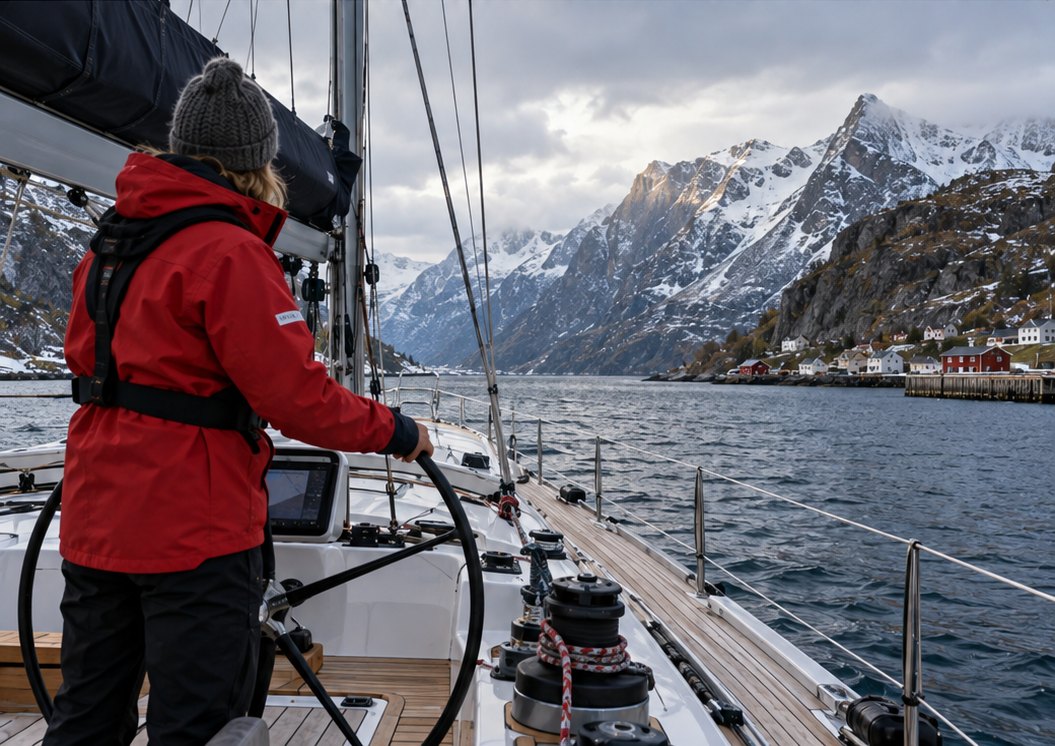
Energy decisions need a duty-cycle calculation. Average use is less important than the difficult day: the longest passage, the coldest morning, the heaviest load, the remote berth or the turnaround with the least charging time. Design around that case with a sensible reserve and the everyday operation normally becomes straightforward. Design around the brochure average and the owner may spend years managing around the system.
Infrastructure should be checked before hardware is ordered. Available electrical supply, connector type, grid capacity, bunkering arrangements, ventilation, fire protection and local operating rules can all dictate what is practical. In many projects the limiting factor is not the motor, battery or fuel technology; it is the place where the asset has to recharge, refuel or be maintained.
The practical test for commercial shipbuilding, yards, propulsion and regulation is whether the decision still makes sense when circumstances are less than ideal. Weather changes, schedules move, components fail and people use equipment differently from the designer's neat assumptions. Building a little resilience into the choice usually costs less than trying to recover it afterwards.
The sensible approach is therefore quite conventional: define the job, verify the evidence, price the whole commitment and keep enough margin for the things that never appear in the brochure.
Contributor: Paul Thompson / Editorial / 24ShipBuilders
Be the first reader to react to this article.
The conversation around cybersecurity and connected equipment: a growing operational issue has moved quickly this year, yet the practical decision is still built on fairly ordinary questions.
The conversation around cybersecurity and connected equipment: a growing operational issue has moved quickly this year, yet the practical decision is still built on fairly ordinary questions.
Resale should be considered even by people who intend to keep something for years. Highly personal specifications can be perfectly sensible, but buyers should understand the trade-off. Widely supported equipment, sensible layouts, complete records and recognised maintenance tend to be easier for the next owner to understand. The objective is not to design everything for an unknown future buyer; it is simply to avoid destroying flexibility without a good reason.
Cost also needs to be separated into purchase cost and ownership cost. The second figure is usually less visible. Consumables, routine servicing, insurance, finance, berthing or storage, professional fees, software subscriptions, inspections and eventual replacement items can materially change the economics. A useful quotation is therefore one that makes exclusions obvious.
If a supplier cannot explain what normally falls outside the quoted figure, ask for that clarification before treating two prices as comparable.
The regulatory backdrop is also moving. IMO work in 2026 has continued to focus on the infrastructure needed for renewable fuels and on the different levels of regulatory readiness for methanol, ammonia, hydrogen and other alternatives. That does not create one obvious fuel choice. It reinforces the need to match vessel type, route, bunkering availability, safety case and expected operating life before committing capital.
After-sales support can be more important than the original specification. A component that is excellent on paper is less attractive if parts take months to arrive or there is no competent service agent where the equipment will be used. The same applies to software-led products: ownership now includes updates, access rights, data and sometimes recurring subscriptions. Find out who supports the system, for how long, and what happens if the original supplier changes hands.
Timing matters. Buying or commissioning under deadline pressure weakens the buyer's position because there is less time to inspect, compare and walk away. Where possible, build the timetable backwards from the date the asset or service is genuinely required. Include survey or inspection time, corrections, training, delivery and a contingency. A realistic programme often reveals that the cheapest-looking option is not the one with the lowest overall cost.
The starting point is use. In commercial shipbuilding, yards, propulsion and regulation, two apparently similar products or services can be right for completely different owners because their operating pattern is different. Frequency of use, geography, crew or staffing, storage, servicing access and the length of time you expect to keep the asset all change the answer. Before comparing brands or quotations, write down those constraints.
It sounds basic, but it prevents a specification being chosen for a lifestyle that exists only in the sales material.
Technical claims deserve context. Range, output, capacity, speed, efficiency and performance figures are normally produced under stated conditions. Real use adds weather, load, temperature, fouling, route, operator behaviour and reserve margins. Rather than arguing over a headline number, ask what assumptions sit behind it and what happens when those assumptions change. That produces a much more useful comparison.
Sustainability claims are increasingly part of the decision as well. The useful question is not whether a product is described as green, but what has actually changed: energy use, fuel consumption, material choice, repairability, service life, emissions, waste or end-of-life handling. Improvements in one area can create compromises in another. Evidence and measured performance are more valuable than broad environmental language.
Connected equipment creates a second maintenance schedule: passwords, access permissions, firmware, backups and subscriptions. Owners should know which systems can be updated remotely, which data leaves the asset and whether loss of an online service affects core operation. A paper or offline record of critical settings is still useful when the problem being diagnosed is the network itself.
Cybersecurity does not need to become a specialist exercise for every user. Basic separation of guest and operational networks, unique credentials, prompt updates and controlled administrator access remove a large proportion of avoidable risk. The more important question for a supplier is whether security has been designed into the product and whether updates will continue throughout its realistic service life.
The practical test for commercial shipbuilding, yards, propulsion and regulation is whether the decision still makes sense when circumstances are less than ideal. Weather changes, schedules move, components fail and people use equipment differently from the designer's neat assumptions. Building a little resilience into the choice usually costs less than trying to recover it afterwards.
That is the point worth carrying into the next conversation with a broker, builder, supplier or adviser: ask what the choice will be like to own and operate, not merely what it is like to buy.
Contributor: Paul Thompson / Editorial / 24ShipBuilders
Be the first reader to react to this article.
For anyone looking at shipbuilding: training and familiarisation: the overlooked part of taking delivery, the first job is not to decide what looks best.
For anyone looking at shipbuilding: training and familiarisation: the overlooked part of taking delivery, the first job is not to decide what looks best. It is to establish what problem actually needs solving.
Finally, insist on a proper handover. Familiarisation, emergency procedures, maintenance intervals, passwords, spare parts, warranty contacts and operating limitations should all be understood before the supplier disappears over the horizon. A surprising number of early problems are not failures at all but gaps in handover. Thirty minutes spent recording the right information can save days later.
Documentation is another practical test. Service records, manuals, certificates, invoices, warranties, software licences and evidence of previous work are not administrative clutter; they are part of the asset. Good records make troubleshooting easier and can support resale. Missing records do not automatically mean there is a problem, but they increase uncertainty, and uncertainty should be reflected in the questions asked, the inspection undertaken and sometimes the price.
The regulatory backdrop is also moving. IMO work in 2026 has continued to focus on the infrastructure needed for renewable fuels and on the different levels of regulatory readiness for methanol, ammonia, hydrogen and other alternatives. That does not create one obvious fuel choice. It reinforces the need to match vessel type, route, bunkering availability, safety case and expected operating life before committing capital.
Risk is best dealt with before commitment. That means independent inspection where appropriate, clear written scope, confirmation of insurance implications and an agreed process for defects or incomplete work. In higher-value transactions, legal, tax and regulatory advice should come from qualified advisers in the relevant jurisdiction. The purpose is not to make every transaction defensive; it is to stop assumptions becoming expensive surprises.
Resale should be considered even by people who intend to keep something for years. Highly personal specifications can be perfectly sensible, but buyers should understand the trade-off. Widely supported equipment, sensible layouts, complete records and recognised maintenance tend to be easier for the next owner to understand. The objective is not to design everything for an unknown future buyer; it is simply to avoid destroying flexibility without a good reason.
Cost also needs to be separated into purchase cost and ownership cost. The second figure is usually less visible. Consumables, routine servicing, insurance, finance, berthing or storage, professional fees, software subscriptions, inspections and eventual replacement items can materially change the economics. A useful quotation is therefore one that makes exclusions obvious.
If a supplier cannot explain what normally falls outside the quoted figure, ask for that clarification before treating two prices as comparable.
After-sales support can be more important than the original specification. A component that is excellent on paper is less attractive if parts take months to arrive or there is no competent service agent where the equipment will be used. The same applies to software-led products: ownership now includes updates, access rights, data and sometimes recurring subscriptions. Find out who supports the system, for how long, and what happens if the original supplier changes hands.
Timing matters. Buying or commissioning under deadline pressure weakens the buyer's position because there is less time to inspect, compare and walk away. Where possible, build the timetable backwards from the date the asset or service is genuinely required. Include survey or inspection time, corrections, training, delivery and a contingency. A realistic programme often reveals that the cheapest-looking option is not the one with the lowest overall cost.
Connected equipment creates a second maintenance schedule: passwords, access permissions, firmware, backups and subscriptions. Owners should know which systems can be updated remotely, which data leaves the asset and whether loss of an online service affects core operation. A paper or offline record of critical settings is still useful when the problem being diagnosed is the network itself.
Cybersecurity does not need to become a specialist exercise for every user. Basic separation of guest and operational networks, unique credentials, prompt updates and controlled administrator access remove a large proportion of avoidable risk. The more important question for a supplier is whether security has been designed into the product and whether updates will continue throughout its realistic service life.
The practical test for commercial shipbuilding, yards, propulsion and regulation is whether the decision still makes sense when circumstances are less than ideal. Weather changes, schedules move, components fail and people use equipment differently from the designer's neat assumptions. Building a little resilience into the choice usually costs less than trying to recover it afterwards.
For most readers, that is enough to narrow the field considerably before serious money or time is committed.
Contributor: Paul Thompson / Editorial / 24ShipBuilders
Be the first reader to react to this article.
This is one of those subjects where a little preparation is worth far more than a long list of features.
This is one of those subjects where a little preparation is worth far more than a long list of features.
The starting point is use. In commercial shipbuilding, yards, propulsion and regulation, two apparently similar products or services can be right for completely different owners because their operating pattern is different. Frequency of use, geography, crew or staffing, storage, servicing access and the length of time you expect to keep the asset all change the answer. Before comparing brands or quotations, write down those constraints.
It sounds basic, but it prevents a specification being chosen for a lifestyle that exists only in the sales material.
Technical claims deserve context. Range, output, capacity, speed, efficiency and performance figures are normally produced under stated conditions. Real use adds weather, load, temperature, fouling, route, operator behaviour and reserve margins. Rather than arguing over a headline number, ask what assumptions sit behind it and what happens when those assumptions change. That produces a much more useful comparison.
The regulatory backdrop is also moving. IMO work in 2026 has continued to focus on the infrastructure needed for renewable fuels and on the different levels of regulatory readiness for methanol, ammonia, hydrogen and other alternatives. That does not create one obvious fuel choice. It reinforces the need to match vessel type, route, bunkering availability, safety case and expected operating life before committing capital.
Sustainability claims are increasingly part of the decision as well. The useful question is not whether a product is described as green, but what has actually changed: energy use, fuel consumption, material choice, repairability, service life, emissions, waste or end-of-life handling. Improvements in one area can create compromises in another. Evidence and measured performance are more valuable than broad environmental language.
Finally, insist on a proper handover. Familiarisation, emergency procedures, maintenance intervals, passwords, spare parts, warranty contacts and operating limitations should all be understood before the supplier disappears over the horizon. A surprising number of early problems are not failures at all but gaps in handover. Thirty minutes spent recording the right information can save days later.
Documentation is another practical test. Service records, manuals, certificates, invoices, warranties, software licences and evidence of previous work are not administrative clutter; they are part of the asset. Good records make troubleshooting easier and can support resale. Missing records do not automatically mean there is a problem, but they increase uncertainty, and uncertainty should be reflected in the questions asked, the inspection undertaken and sometimes the price.
Risk is best dealt with before commitment. That means independent inspection where appropriate, clear written scope, confirmation of insurance implications and an agreed process for defects or incomplete work. In higher-value transactions, legal, tax and regulatory advice should come from qualified advisers in the relevant jurisdiction. The purpose is not to make every transaction defensive; it is to stop assumptions becoming expensive surprises.
Resale should be considered even by people who intend to keep something for years. Highly personal specifications can be perfectly sensible, but buyers should understand the trade-off. Widely supported equipment, sensible layouts, complete records and recognised maintenance tend to be easier for the next owner to understand. The objective is not to design everything for an unknown future buyer; it is simply to avoid destroying flexibility without a good reason.
Comparison becomes easier if every contender is put through the same questions. Ask for the same operating assumptions, the same delivery point, the same warranty period and the same list of included equipment or services. That turns a collection of sales conversations into something closer to a procurement exercise and exposes the areas where one quotation has quietly omitted an expensive item.
References are useful when they are relevant. A supplier's biggest or most prestigious project may tell you very little about how it handles an ordinary job in your region. Ask instead for examples with a similar scale, operating pattern and timetable. The most useful reference is often the customer who has lived with the product for two or three years and has already needed after-sales support.
The practical test for commercial shipbuilding, yards, propulsion and regulation is whether the decision still makes sense when circumstances are less than ideal. Weather changes, schedules move, components fail and people use equipment differently from the designer's neat assumptions. Building a little resilience into the choice usually costs less than trying to recover it afterwards.
That is the point worth carrying into the next conversation with a broker, builder, supplier or adviser: ask what the choice will be like to own and operate, not merely what it is like to buy.
Contributor: Paul Thompson / Editorial / 24ShipBuilders
Be the first reader to react to this article.
Every quarter produces plenty of announcements in commercial shipbuilding, yards, construction programmes, engineering and delivery, but the useful story is usually not the loudest one. I am more interested in the changes that alter what somebody buys, what it costs to operate, how quickly support arrives and whether the decision still makes sense several years later.
Every quarter produces plenty of announcements in commercial shipbuilding, yards, construction programmes, engineering and delivery, but the useful story is usually not the loudest one. I am more interested in the changes that alter what somebody buys, what it costs to operate, how quickly support arrives and whether the decision still makes sense several years later.
What is changing
Start by defining the job in plain language. What does the buyer, owner, operator or guest actually need to achieve, and under what conditions? That immediately makes comparison easier. A specification that is excellent for one use can be unnecessarily expensive or actively inconvenient for another. I would write down the non-negotiables, the desirable extras and the things that merely look attractive in a sales presentation.
Then verify the basics. Ask for documents, dimensions, service intervals, exclusions, lead times, warranties, references or operating data where they are relevant. If a claim materially affects the decision, it should be capable of being explained without resorting to vague phrases. This is particularly important where two offers appear similar but include different levels of preparation, support or responsibility.
Why it matters in practice
Price needs context. The cheapest quotation can become the expensive option once delivery, installation, travel, consumables, finance, insurance, maintenance, downtime or replacement are included. Equally, paying more is not evidence of quality. The useful comparison is total cost against the benefit that will actually be used.
Support deserves the same scrutiny as the initial product or service. Who answers the telephone when something goes wrong? Is technical knowledge held in-house or passed elsewhere? Are parts, people or replacements readily available? A realistic response time can be more valuable than an impressive feature that becomes unusable for weeks when a minor component fails.
There is also a human factor. Complicated systems and elaborate processes are often sold on capability, but somebody has to live with them. Training, handover, documentation and ease of use should therefore be part of the buying decision, not an afterthought.
What readers should watch next
Before committing, I would reduce the decision to a short written comparison. What problem does each option solve, what evidence supports the claims, what is excluded, what are the likely running costs, and what happens if circumstances change? That final question is important because resale, upgrade, relocation, regulation and changing patterns of use can alter the economics surprisingly quickly.
The strongest decisions in commercial shipbuilding, yards, construction programmes, engineering and delivery are rarely the ones with the longest specification or the most fashionable name attached. They are the ones where the requirement was understood at the beginning, the evidence was checked, the inconvenient questions were asked and the owner or customer knew exactly what would happen after the deal was done.
That is also the standard I would apply to this category in the magazine. It should help a reader make a better decision, not simply give another supplier somewhere to repeat a brochure.
Contributor: Paul Thompson / Editorial / 24ShipBuilders
Be the first reader to react to this article.
The expensive mistakes in commercial shipbuilding, yards, construction programmes, engineering and delivery are rarely caused by one spectacular failure. More often they begin with a small assumption that nobody checked. That is why I would start with the detail that sits behind the brochure, quotation or listing rather than the headline promise.
The expensive mistakes in commercial shipbuilding, yards, construction programmes, engineering and delivery are rarely caused by one spectacular failure. More often they begin with a small assumption that nobody checked. That is why I would start with the detail that sits behind the brochure, quotation or listing rather than the headline promise.
The overlooked detail
Start by defining the job in plain language. What does the buyer, owner, operator or guest actually need to achieve, and under what conditions? That immediately makes comparison easier. A specification that is excellent for one use can be unnecessarily expensive or actively inconvenient for another. I would write down the non-negotiables, the desirable extras and the things that merely look attractive in a sales presentation.
Then verify the basics. Ask for documents, dimensions, service intervals, exclusions, lead times, warranties, references or operating data where they are relevant. If a claim materially affects the decision, it should be capable of being explained without resorting to vague phrases. This is particularly important where two offers appear similar but include different levels of preparation, support or responsibility.
Where cost and risk appear
Price needs context. The cheapest quotation can become the expensive option once delivery, installation, travel, consumables, finance, insurance, maintenance, downtime or replacement are included. Equally, paying more is not evidence of quality. The useful comparison is total cost against the benefit that will actually be used.
Support deserves the same scrutiny as the initial product or service. Who answers the telephone when something goes wrong? Is technical knowledge held in-house or passed elsewhere? Are parts, people or replacements readily available? A realistic response time can be more valuable than an impressive feature that becomes unusable for weeks when a minor component fails.
There is also a human factor. Complicated systems and elaborate processes are often sold on capability, but somebody has to live with them. Training, handover, documentation and ease of use should therefore be part of the buying decision, not an afterthought.
Questions to ask before committing
Before committing, I would reduce the decision to a short written comparison. What problem does each option solve, what evidence supports the claims, what is excluded, what are the likely running costs, and what happens if circumstances change? That final question is important because resale, upgrade, relocation, regulation and changing patterns of use can alter the economics surprisingly quickly.
The strongest decisions in commercial shipbuilding, yards, construction programmes, engineering and delivery are rarely the ones with the longest specification or the most fashionable name attached. They are the ones where the requirement was understood at the beginning, the evidence was checked, the inconvenient questions were asked and the owner or customer knew exactly what would happen after the deal was done.
That is also the standard I would apply to this category in the magazine. It should help a reader make a better decision, not simply give another supplier somewhere to repeat a brochure.
Contributor: Paul Thompson / Editorial / 24ShipBuilders
Be the first reader to react to this article.
New does not automatically mean better. In commercial shipbuilding, yards, construction programmes, engineering and delivery, a launch is worth attention when it removes a genuine inconvenience, reduces operating burden, improves safety or gives the buyer more useful choice. Everything else can wait until the excitement has settled.
New does not automatically mean better. In commercial shipbuilding, yards, construction programmes, engineering and delivery, a launch is worth attention when it removes a genuine inconvenience, reduces operating burden, improves safety or gives the buyer more useful choice. Everything else can wait until the excitement has settled.
What is actually new
Start by defining the job in plain language. What does the buyer, owner, operator or guest actually need to achieve, and under what conditions? That immediately makes comparison easier. A specification that is excellent for one use can be unnecessarily expensive or actively inconvenient for another. I would write down the non-negotiables, the desirable extras and the things that merely look attractive in a sales presentation.
Then verify the basics. Ask for documents, dimensions, service intervals, exclusions, lead times, warranties, references or operating data where they are relevant. If a claim materially affects the decision, it should be capable of being explained without resorting to vague phrases. This is particularly important where two offers appear similar but include different levels of preparation, support or responsibility.
Separating substance from launch noise
Price needs context. The cheapest quotation can become the expensive option once delivery, installation, travel, consumables, finance, insurance, maintenance, downtime or replacement are included. Equally, paying more is not evidence of quality. The useful comparison is total cost against the benefit that will actually be used.
Support deserves the same scrutiny as the initial product or service. Who answers the telephone when something goes wrong? Is technical knowledge held in-house or passed elsewhere? Are parts, people or replacements readily available? A realistic response time can be more valuable than an impressive feature that becomes unusable for weeks when a minor component fails.
There is also a human factor. Complicated systems and elaborate processes are often sold on capability, but somebody has to live with them. Training, handover, documentation and ease of use should therefore be part of the buying decision, not an afterthought.
Where it could prove useful
Before committing, I would reduce the decision to a short written comparison. What problem does each option solve, what evidence supports the claims, what is excluded, what are the likely running costs, and what happens if circumstances change? That final question is important because resale, upgrade, relocation, regulation and changing patterns of use can alter the economics surprisingly quickly.
The strongest decisions in commercial shipbuilding, yards, construction programmes, engineering and delivery are rarely the ones with the longest specification or the most fashionable name attached. They are the ones where the requirement was understood at the beginning, the evidence was checked, the inconvenient questions were asked and the owner or customer knew exactly what would happen after the deal was done.
That is also the standard I would apply to this category in the magazine. It should help a reader make a better decision, not simply give another supplier somewhere to repeat a brochure.
Contributor: Paul Thompson / Editorial / 24ShipBuilders
Be the first reader to react to this article.
A useful professional contribution should leave the reader with something they can apply. For commercial shipbuilding, yards, construction programmes, engineering and delivery, that means concentrating on the requirement, the evidence and the consequences of the decision rather than turning the page into a sales pitch.
A useful professional contribution should leave the reader with something they can apply. For commercial shipbuilding, yards, construction programmes, engineering and delivery, that means concentrating on the requirement, the evidence and the consequences of the decision rather than turning the page into a sales pitch.
Start with the requirement
Start by defining the job in plain language. What does the buyer, owner, operator or guest actually need to achieve, and under what conditions? That immediately makes comparison easier. A specification that is excellent for one use can be unnecessarily expensive or actively inconvenient for another. I would write down the non-negotiables, the desirable extras and the things that merely look attractive in a sales presentation.
Then verify the basics. Ask for documents, dimensions, service intervals, exclusions, lead times, warranties, references or operating data where they are relevant. If a claim materially affects the decision, it should be capable of being explained without resorting to vague phrases. This is particularly important where two offers appear similar but include different levels of preparation, support or responsibility.
Check the evidence
Price needs context. The cheapest quotation can become the expensive option once delivery, installation, travel, consumables, finance, insurance, maintenance, downtime or replacement are included. Equally, paying more is not evidence of quality. The useful comparison is total cost against the benefit that will actually be used.
Support deserves the same scrutiny as the initial product or service. Who answers the telephone when something goes wrong? Is technical knowledge held in-house or passed elsewhere? Are parts, people or replacements readily available? A realistic response time can be more valuable than an impressive feature that becomes unusable for weeks when a minor component fails.
There is also a human factor. Complicated systems and elaborate processes are often sold on capability, but somebody has to live with them. Training, handover, documentation and ease of use should therefore be part of the buying decision, not an afterthought.
Keep the decision commercially grounded
Before committing, I would reduce the decision to a short written comparison. What problem does each option solve, what evidence supports the claims, what is excluded, what are the likely running costs, and what happens if circumstances change? That final question is important because resale, upgrade, relocation, regulation and changing patterns of use can alter the economics surprisingly quickly.
The strongest decisions in commercial shipbuilding, yards, construction programmes, engineering and delivery are rarely the ones with the longest specification or the most fashionable name attached. They are the ones where the requirement was understood at the beginning, the evidence was checked, the inconvenient questions were asked and the owner or customer knew exactly what would happen after the deal was done.
That is also the standard I would apply to this category in the magazine. It should help a reader make a better decision, not simply give another supplier somewhere to repeat a brochure.
Contributor: Editorial Desk / Guest Contributor Brief / 24ShipBuilders
Be the first reader to react to this article.
If I had an hour with a specialist in commercial shipbuilding, yards, construction programmes, engineering and delivery, I would spend surprisingly little of it asking what they sell. The more revealing questions concern what they refuse to recommend, what commonly goes wrong, how they deal with delays and what happens after the invoice has been paid.
If I had an hour with a specialist in commercial shipbuilding, yards, construction programmes, engineering and delivery, I would spend surprisingly little of it asking what they sell. The more revealing questions concern what they refuse to recommend, what commonly goes wrong, how they deal with delays and what happens after the invoice has been paid.
Questions about capability
Start by defining the job in plain language. What does the buyer, owner, operator or guest actually need to achieve, and under what conditions? That immediately makes comparison easier. A specification that is excellent for one use can be unnecessarily expensive or actively inconvenient for another. I would write down the non-negotiables, the desirable extras and the things that merely look attractive in a sales presentation.
Then verify the basics. Ask for documents, dimensions, service intervals, exclusions, lead times, warranties, references or operating data where they are relevant. If a claim materially affects the decision, it should be capable of being explained without resorting to vague phrases. This is particularly important where two offers appear similar but include different levels of preparation, support or responsibility.
Questions about delivery
Price needs context. The cheapest quotation can become the expensive option once delivery, installation, travel, consumables, finance, insurance, maintenance, downtime or replacement are included. Equally, paying more is not evidence of quality. The useful comparison is total cost against the benefit that will actually be used.
Support deserves the same scrutiny as the initial product or service. Who answers the telephone when something goes wrong? Is technical knowledge held in-house or passed elsewhere? Are parts, people or replacements readily available? A realistic response time can be more valuable than an impressive feature that becomes unusable for weeks when a minor component fails.
There is also a human factor. Complicated systems and elaborate processes are often sold on capability, but somebody has to live with them. Training, handover, documentation and ease of use should therefore be part of the buying decision, not an afterthought.
Questions about support after the sale
Before committing, I would reduce the decision to a short written comparison. What problem does each option solve, what evidence supports the claims, what is excluded, what are the likely running costs, and what happens if circumstances change? That final question is important because resale, upgrade, relocation, regulation and changing patterns of use can alter the economics surprisingly quickly.
The strongest decisions in commercial shipbuilding, yards, construction programmes, engineering and delivery are rarely the ones with the longest specification or the most fashionable name attached. They are the ones where the requirement was understood at the beginning, the evidence was checked, the inconvenient questions were asked and the owner or customer knew exactly what would happen after the deal was done.
That is also the standard I would apply to this category in the magazine. It should help a reader make a better decision, not simply give another supplier somewhere to repeat a brochure.
Contributor: Paul Thompson / Editorial / 24ShipBuilders
Be the first reader to react to this article.
There is no shortage of confident language around commercial shipbuilding, yards, construction programmes, engineering and delivery. The difficulty is that confidence is not evidence. Buyers and operators are better served by information that can be checked: specifications, service commitments, operating limits, references, documentation and a clear explanation of cost.
There is no shortage of confident language around commercial shipbuilding, yards, construction programmes, engineering and delivery. The difficulty is that confidence is not evidence. Buyers and operators are better served by information that can be checked: specifications, service commitments, operating limits, references, documentation and a clear explanation of cost.
The problem with easy claims
Start by defining the job in plain language. What does the buyer, owner, operator or guest actually need to achieve, and under what conditions? That immediately makes comparison easier. A specification that is excellent for one use can be unnecessarily expensive or actively inconvenient for another. I would write down the non-negotiables, the desirable extras and the things that merely look attractive in a sales presentation.
Then verify the basics. Ask for documents, dimensions, service intervals, exclusions, lead times, warranties, references or operating data where they are relevant. If a claim materially affects the decision, it should be capable of being explained without resorting to vague phrases. This is particularly important where two offers appear similar but include different levels of preparation, support or responsibility.
What better evidence looks like
Price needs context. The cheapest quotation can become the expensive option once delivery, installation, travel, consumables, finance, insurance, maintenance, downtime or replacement are included. Equally, paying more is not evidence of quality. The useful comparison is total cost against the benefit that will actually be used.
Support deserves the same scrutiny as the initial product or service. Who answers the telephone when something goes wrong? Is technical knowledge held in-house or passed elsewhere? Are parts, people or replacements readily available? A realistic response time can be more valuable than an impressive feature that becomes unusable for weeks when a minor component fails.
There is also a human factor. Complicated systems and elaborate processes are often sold on capability, but somebody has to live with them. Training, handover, documentation and ease of use should therefore be part of the buying decision, not an afterthought.
A more useful way to decide
Before committing, I would reduce the decision to a short written comparison. What problem does each option solve, what evidence supports the claims, what is excluded, what are the likely running costs, and what happens if circumstances change? That final question is important because resale, upgrade, relocation, regulation and changing patterns of use can alter the economics surprisingly quickly.
The strongest decisions in commercial shipbuilding, yards, construction programmes, engineering and delivery are rarely the ones with the longest specification or the most fashionable name attached. They are the ones where the requirement was understood at the beginning, the evidence was checked, the inconvenient questions were asked and the owner or customer knew exactly what would happen after the deal was done.
That is also the standard I would apply to this category in the magazine. It should help a reader make a better decision, not simply give another supplier somewhere to repeat a brochure.
Contributor: Paul Thompson / Editorial / 24ShipBuilders
Be the first reader to react to this article.
One recurring argument in commercial shipbuilding, yards, construction programmes, engineering and delivery is whether the safest route is a proven standard package or a solution tailored closely to the individual user. Both approaches can be right, and both can become expensive when chosen for the wrong reason.
One recurring argument in commercial shipbuilding, yards, construction programmes, engineering and delivery is whether the safest route is a proven standard package or a solution tailored closely to the individual user. Both approaches can be right, and both can become expensive when chosen for the wrong reason.
The case for standardisation
Start by defining the job in plain language. What does the buyer, owner, operator or guest actually need to achieve, and under what conditions? That immediately makes comparison easier. A specification that is excellent for one use can be unnecessarily expensive or actively inconvenient for another. I would write down the non-negotiables, the desirable extras and the things that merely look attractive in a sales presentation.
Then verify the basics. Ask for documents, dimensions, service intervals, exclusions, lead times, warranties, references or operating data where they are relevant. If a claim materially affects the decision, it should be capable of being explained without resorting to vague phrases. This is particularly important where two offers appear similar but include different levels of preparation, support or responsibility.
The case for customisation
Price needs context. The cheapest quotation can become the expensive option once delivery, installation, travel, consumables, finance, insurance, maintenance, downtime or replacement are included. Equally, paying more is not evidence of quality. The useful comparison is total cost against the benefit that will actually be used.
Support deserves the same scrutiny as the initial product or service. Who answers the telephone when something goes wrong? Is technical knowledge held in-house or passed elsewhere? Are parts, people or replacements readily available? A realistic response time can be more valuable than an impressive feature that becomes unusable for weeks when a minor component fails.
There is also a human factor. Complicated systems and elaborate processes are often sold on capability, but somebody has to live with them. Training, handover, documentation and ease of use should therefore be part of the buying decision, not an afterthought.
Where the sensible middle ground sits
Before committing, I would reduce the decision to a short written comparison. What problem does each option solve, what evidence supports the claims, what is excluded, what are the likely running costs, and what happens if circumstances change? That final question is important because resale, upgrade, relocation, regulation and changing patterns of use can alter the economics surprisingly quickly.
The strongest decisions in commercial shipbuilding, yards, construction programmes, engineering and delivery are rarely the ones with the longest specification or the most fashionable name attached. They are the ones where the requirement was understood at the beginning, the evidence was checked, the inconvenient questions were asked and the owner or customer knew exactly what would happen after the deal was done.
That is also the standard I would apply to this category in the magazine. It should help a reader make a better decision, not simply give another supplier somewhere to repeat a brochure.
Contributor: Paul Thompson / Editorial / 24ShipBuilders
Be the first reader to react to this article.
People who work around commercial shipbuilding, yards, construction programmes, engineering and delivery every day tend to notice different things from a first-time buyer. They look past presentation and start with the awkward details: access, records, response times, condition, exclusions, compatibility and who is actually responsible when something stops working.
People who work around commercial shipbuilding, yards, construction programmes, engineering and delivery every day tend to notice different things from a first-time buyer. They look past presentation and start with the awkward details: access, records, response times, condition, exclusions, compatibility and who is actually responsible when something stops working.
The first five minutes
Start by defining the job in plain language. What does the buyer, owner, operator or guest actually need to achieve, and under what conditions? That immediately makes comparison easier. A specification that is excellent for one use can be unnecessarily expensive or actively inconvenient for another. I would write down the non-negotiables, the desirable extras and the things that merely look attractive in a sales presentation.
Then verify the basics. Ask for documents, dimensions, service intervals, exclusions, lead times, warranties, references or operating data where they are relevant. If a claim materially affects the decision, it should be capable of being explained without resorting to vague phrases. This is particularly important where two offers appear similar but include different levels of preparation, support or responsibility.
The paperwork and detail
Price needs context. The cheapest quotation can become the expensive option once delivery, installation, travel, consumables, finance, insurance, maintenance, downtime or replacement are included. Equally, paying more is not evidence of quality. The useful comparison is total cost against the benefit that will actually be used.
Support deserves the same scrutiny as the initial product or service. Who answers the telephone when something goes wrong? Is technical knowledge held in-house or passed elsewhere? Are parts, people or replacements readily available? A realistic response time can be more valuable than an impressive feature that becomes unusable for weeks when a minor component fails.
There is also a human factor. Complicated systems and elaborate processes are often sold on capability, but somebody has to live with them. Training, handover, documentation and ease of use should therefore be part of the buying decision, not an afterthought.
The clues that justify a second look
Before committing, I would reduce the decision to a short written comparison. What problem does each option solve, what evidence supports the claims, what is excluded, what are the likely running costs, and what happens if circumstances change? That final question is important because resale, upgrade, relocation, regulation and changing patterns of use can alter the economics surprisingly quickly.
The strongest decisions in commercial shipbuilding, yards, construction programmes, engineering and delivery are rarely the ones with the longest specification or the most fashionable name attached. They are the ones where the requirement was understood at the beginning, the evidence was checked, the inconvenient questions were asked and the owner or customer knew exactly what would happen after the deal was done.
That is also the standard I would apply to this category in the magazine. It should help a reader make a better decision, not simply give another supplier somewhere to repeat a brochure.
Contributor: Paul Thompson / Editorial / 24ShipBuilders
Be the first reader to react to this article.
The best way to understand commercial shipbuilding, yards, construction programmes, engineering and delivery is to experience it under conditions that resemble real use. A polished demonstration can be useful, but it should not prevent straightforward questions about inconvenience, noise, waiting time, staffing, storage, maintenance or the parts of the experience that happen after the photograph.
The best way to understand commercial shipbuilding, yards, construction programmes, engineering and delivery is to experience it under conditions that resemble real use. A polished demonstration can be useful, but it should not prevent straightforward questions about inconvenience, noise, waiting time, staffing, storage, maintenance or the parts of the experience that happen after the photograph.
Before you arrive
Start by defining the job in plain language. What does the buyer, owner, operator or guest actually need to achieve, and under what conditions? That immediately makes comparison easier. A specification that is excellent for one use can be unnecessarily expensive or actively inconvenient for another. I would write down the non-negotiables, the desirable extras and the things that merely look attractive in a sales presentation.
Then verify the basics. Ask for documents, dimensions, service intervals, exclusions, lead times, warranties, references or operating data where they are relevant. If a claim materially affects the decision, it should be capable of being explained without resorting to vague phrases. This is particularly important where two offers appear similar but include different levels of preparation, support or responsibility.
During the experience
Price needs context. The cheapest quotation can become the expensive option once delivery, installation, travel, consumables, finance, insurance, maintenance, downtime or replacement are included. Equally, paying more is not evidence of quality. The useful comparison is total cost against the benefit that will actually be used.
Support deserves the same scrutiny as the initial product or service. Who answers the telephone when something goes wrong? Is technical knowledge held in-house or passed elsewhere? Are parts, people or replacements readily available? A realistic response time can be more valuable than an impressive feature that becomes unusable for weeks when a minor component fails.
There is also a human factor. Complicated systems and elaborate processes are often sold on capability, but somebody has to live with them. Training, handover, documentation and ease of use should therefore be part of the buying decision, not an afterthought.
What to assess afterwards
Before committing, I would reduce the decision to a short written comparison. What problem does each option solve, what evidence supports the claims, what is excluded, what are the likely running costs, and what happens if circumstances change? That final question is important because resale, upgrade, relocation, regulation and changing patterns of use can alter the economics surprisingly quickly.
The strongest decisions in commercial shipbuilding, yards, construction programmes, engineering and delivery are rarely the ones with the longest specification or the most fashionable name attached. They are the ones where the requirement was understood at the beginning, the evidence was checked, the inconvenient questions were asked and the owner or customer knew exactly what would happen after the deal was done.
That is also the standard I would apply to this category in the magazine. It should help a reader make a better decision, not simply give another supplier somewhere to repeat a brochure.
Contributor: Paul Thompson / Editorial / 24ShipBuilders
Be the first reader to react to this article.
A review of anything connected with commercial shipbuilding, yards, construction programmes, engineering and delivery should begin before the reviewer sees the product. Decide what matters first. Otherwise the most impressive feature in the room has a habit of becoming the most important feature in the review, whether it deserves to or not.
A review of anything connected with commercial shipbuilding, yards, construction programmes, engineering and delivery should begin before the reviewer sees the product. Decide what matters first. Otherwise the most impressive feature in the room has a habit of becoming the most important feature in the review, whether it deserves to or not.
Set the test before the product
Start by defining the job in plain language. What does the buyer, owner, operator or guest actually need to achieve, and under what conditions? That immediately makes comparison easier. A specification that is excellent for one use can be unnecessarily expensive or actively inconvenient for another. I would write down the non-negotiables, the desirable extras and the things that merely look attractive in a sales presentation.
Then verify the basics. Ask for documents, dimensions, service intervals, exclusions, lead times, warranties, references or operating data where they are relevant. If a claim materially affects the decision, it should be capable of being explained without resorting to vague phrases. This is particularly important where two offers appear similar but include different levels of preparation, support or responsibility.
Use realistic conditions
Price needs context. The cheapest quotation can become the expensive option once delivery, installation, travel, consumables, finance, insurance, maintenance, downtime or replacement are included. Equally, paying more is not evidence of quality. The useful comparison is total cost against the benefit that will actually be used.
Support deserves the same scrutiny as the initial product or service. Who answers the telephone when something goes wrong? Is technical knowledge held in-house or passed elsewhere? Are parts, people or replacements readily available? A realistic response time can be more valuable than an impressive feature that becomes unusable for weeks when a minor component fails.
There is also a human factor. Complicated systems and elaborate processes are often sold on capability, but somebody has to live with them. Training, handover, documentation and ease of use should therefore be part of the buying decision, not an afterthought.
Judge ownership as well as performance
Before committing, I would reduce the decision to a short written comparison. What problem does each option solve, what evidence supports the claims, what is excluded, what are the likely running costs, and what happens if circumstances change? That final question is important because resale, upgrade, relocation, regulation and changing patterns of use can alter the economics surprisingly quickly.
The strongest decisions in commercial shipbuilding, yards, construction programmes, engineering and delivery are rarely the ones with the longest specification or the most fashionable name attached. They are the ones where the requirement was understood at the beginning, the evidence was checked, the inconvenient questions were asked and the owner or customer knew exactly what would happen after the deal was done.
That is also the standard I would apply to this category in the magazine. It should help a reader make a better decision, not simply give another supplier somewhere to repeat a brochure.
Contributor: Paul Thompson / Editorial / 24ShipBuilders
Be the first reader to react to this article.
A classified advertisement in commercial shipbuilding, yards, construction programmes, engineering and delivery is an invitation to investigate, not proof of condition or value. Good listings make that investigation easier; weak ones often reveal themselves through what they omit.
A classified advertisement in commercial shipbuilding, yards, construction programmes, engineering and delivery is an invitation to investigate, not proof of condition or value. Good listings make that investigation easier; weak ones often reveal themselves through what they omit.
Read between the lines
Start by defining the job in plain language. What does the buyer, owner, operator or guest actually need to achieve, and under what conditions? That immediately makes comparison easier. A specification that is excellent for one use can be unnecessarily expensive or actively inconvenient for another. I would write down the non-negotiables, the desirable extras and the things that merely look attractive in a sales presentation.
Then verify the basics. Ask for documents, dimensions, service intervals, exclusions, lead times, warranties, references or operating data where they are relevant. If a claim materially affects the decision, it should be capable of being explained without resorting to vague phrases. This is particularly important where two offers appear similar but include different levels of preparation, support or responsibility.
Verify before travelling or paying
Price needs context. The cheapest quotation can become the expensive option once delivery, installation, travel, consumables, finance, insurance, maintenance, downtime or replacement are included. Equally, paying more is not evidence of quality. The useful comparison is total cost against the benefit that will actually be used.
Support deserves the same scrutiny as the initial product or service. Who answers the telephone when something goes wrong? Is technical knowledge held in-house or passed elsewhere? Are parts, people or replacements readily available? A realistic response time can be more valuable than an impressive feature that becomes unusable for weeks when a minor component fails.
There is also a human factor. Complicated systems and elaborate processes are often sold on capability, but somebody has to live with them. Training, handover, documentation and ease of use should therefore be part of the buying decision, not an afterthought.
Compare total proposition, not asking price
Before committing, I would reduce the decision to a short written comparison. What problem does each option solve, what evidence supports the claims, what is excluded, what are the likely running costs, and what happens if circumstances change? That final question is important because resale, upgrade, relocation, regulation and changing patterns of use can alter the economics surprisingly quickly.
The strongest decisions in commercial shipbuilding, yards, construction programmes, engineering and delivery are rarely the ones with the longest specification or the most fashionable name attached. They are the ones where the requirement was understood at the beginning, the evidence was checked, the inconvenient questions were asked and the owner or customer knew exactly what would happen after the deal was done.
That is also the standard I would apply to this category in the magazine. It should help a reader make a better decision, not simply give another supplier somewhere to repeat a brochure.
Contributor: Paul Thompson / Editorial / 24ShipBuilders
Be the first reader to react to this article.
The most useful reader questions about commercial shipbuilding, yards, construction programmes, engineering and delivery are usually practical rather than glamorous. What will it cost after purchase? Who supports it? What happens when plans change? Which claims can be verified? Those questions deserve more space than another page of adjectives.
The most useful reader questions about commercial shipbuilding, yards, construction programmes, engineering and delivery are usually practical rather than glamorous. What will it cost after purchase? Who supports it? What happens when plans change? Which claims can be verified? Those questions deserve more space than another page of adjectives.
Cost and value
Start by defining the job in plain language. What does the buyer, owner, operator or guest actually need to achieve, and under what conditions? That immediately makes comparison easier. A specification that is excellent for one use can be unnecessarily expensive or actively inconvenient for another. I would write down the non-negotiables, the desirable extras and the things that merely look attractive in a sales presentation.
Then verify the basics. Ask for documents, dimensions, service intervals, exclusions, lead times, warranties, references or operating data where they are relevant. If a claim materially affects the decision, it should be capable of being explained without resorting to vague phrases. This is particularly important where two offers appear similar but include different levels of preparation, support or responsibility.
Service and accountability
Price needs context. The cheapest quotation can become the expensive option once delivery, installation, travel, consumables, finance, insurance, maintenance, downtime or replacement are included. Equally, paying more is not evidence of quality. The useful comparison is total cost against the benefit that will actually be used.
Support deserves the same scrutiny as the initial product or service. Who answers the telephone when something goes wrong? Is technical knowledge held in-house or passed elsewhere? Are parts, people or replacements readily available? A realistic response time can be more valuable than an impressive feature that becomes unusable for weeks when a minor component fails.
There is also a human factor. Complicated systems and elaborate processes are often sold on capability, but somebody has to live with them. Training, handover, documentation and ease of use should therefore be part of the buying decision, not an afterthought.
The questions that deserve clearer answers
Before committing, I would reduce the decision to a short written comparison. What problem does each option solve, what evidence supports the claims, what is excluded, what are the likely running costs, and what happens if circumstances change? That final question is important because resale, upgrade, relocation, regulation and changing patterns of use can alter the economics surprisingly quickly.
The strongest decisions in commercial shipbuilding, yards, construction programmes, engineering and delivery are rarely the ones with the longest specification or the most fashionable name attached. They are the ones where the requirement was understood at the beginning, the evidence was checked, the inconvenient questions were asked and the owner or customer knew exactly what would happen after the deal was done.
That is also the standard I would apply to this category in the magazine. It should help a reader make a better decision, not simply give another supplier somewhere to repeat a brochure.
Contributor: Editorial Desk / Reader Questions / 24ShipBuilders
Be the first reader to react to this article.
Forecasting commercial shipbuilding, yards, construction programmes, engineering and delivery is easy if the aim is to sound futuristic. It is harder, and more useful, to identify changes that have a realistic route into everyday use. Cost, infrastructure, regulation, skills and customer behaviour usually decide the pace long before technology reaches its theoretical limit.
Forecasting commercial shipbuilding, yards, construction programmes, engineering and delivery is easy if the aim is to sound futuristic. It is harder, and more useful, to identify changes that have a realistic route into everyday use. Cost, infrastructure, regulation, skills and customer behaviour usually decide the pace long before technology reaches its theoretical limit.
Technology with a purpose
Start by defining the job in plain language. What does the buyer, owner, operator or guest actually need to achieve, and under what conditions? That immediately makes comparison easier. A specification that is excellent for one use can be unnecessarily expensive or actively inconvenient for another. I would write down the non-negotiables, the desirable extras and the things that merely look attractive in a sales presentation.
Then verify the basics. Ask for documents, dimensions, service intervals, exclusions, lead times, warranties, references or operating data where they are relevant. If a claim materially affects the decision, it should be capable of being explained without resorting to vague phrases. This is particularly important where two offers appear similar but include different levels of preparation, support or responsibility.
Infrastructure and skills
Price needs context. The cheapest quotation can become the expensive option once delivery, installation, travel, consumables, finance, insurance, maintenance, downtime or replacement are included. Equally, paying more is not evidence of quality. The useful comparison is total cost against the benefit that will actually be used.
Support deserves the same scrutiny as the initial product or service. Who answers the telephone when something goes wrong? Is technical knowledge held in-house or passed elsewhere? Are parts, people or replacements readily available? A realistic response time can be more valuable than an impressive feature that becomes unusable for weeks when a minor component fails.
There is also a human factor. Complicated systems and elaborate processes are often sold on capability, but somebody has to live with them. Training, handover, documentation and ease of use should therefore be part of the buying decision, not an afterthought.
What is likely to remain stubbornly familiar
Before committing, I would reduce the decision to a short written comparison. What problem does each option solve, what evidence supports the claims, what is excluded, what are the likely running costs, and what happens if circumstances change? That final question is important because resale, upgrade, relocation, regulation and changing patterns of use can alter the economics surprisingly quickly.
The strongest decisions in commercial shipbuilding, yards, construction programmes, engineering and delivery are rarely the ones with the longest specification or the most fashionable name attached. They are the ones where the requirement was understood at the beginning, the evidence was checked, the inconvenient questions were asked and the owner or customer knew exactly what would happen after the deal was done.
That is also the standard I would apply to this category in the magazine. It should help a reader make a better decision, not simply give another supplier somewhere to repeat a brochure.
Contributor: Paul Thompson / Editorial / 24ShipBuilders
Be the first reader to react to this article.
Some ideas in commercial shipbuilding, yards, construction programmes, engineering and delivery sound ridiculous until the problem they are trying to solve is understood. Others remain ridiculous after closer inspection. The useful exercise is working out which is which before paying to find out.
Some ideas in commercial shipbuilding, yards, construction programmes, engineering and delivery sound ridiculous until the problem they are trying to solve is understood. Others remain ridiculous after closer inspection. The useful exercise is working out which is which before paying to find out.
Why it sounds odd
Start by defining the job in plain language. What does the buyer, owner, operator or guest actually need to achieve, and under what conditions? That immediately makes comparison easier. A specification that is excellent for one use can be unnecessarily expensive or actively inconvenient for another. I would write down the non-negotiables, the desirable extras and the things that merely look attractive in a sales presentation.
Then verify the basics. Ask for documents, dimensions, service intervals, exclusions, lead times, warranties, references or operating data where they are relevant. If a claim materially affects the decision, it should be capable of being explained without resorting to vague phrases. This is particularly important where two offers appear similar but include different levels of preparation, support or responsibility.
Where it can actually work
Price needs context. The cheapest quotation can become the expensive option once delivery, installation, travel, consumables, finance, insurance, maintenance, downtime or replacement are included. Equally, paying more is not evidence of quality. The useful comparison is total cost against the benefit that will actually be used.
Support deserves the same scrutiny as the initial product or service. Who answers the telephone when something goes wrong? Is technical knowledge held in-house or passed elsewhere? Are parts, people or replacements readily available? A realistic response time can be more valuable than an impressive feature that becomes unusable for weeks when a minor component fails.
There is also a human factor. Complicated systems and elaborate processes are often sold on capability, but somebody has to live with them. Training, handover, documentation and ease of use should therefore be part of the buying decision, not an afterthought.
The limitations nobody should ignore
Before committing, I would reduce the decision to a short written comparison. What problem does each option solve, what evidence supports the claims, what is excluded, what are the likely running costs, and what happens if circumstances change? That final question is important because resale, upgrade, relocation, regulation and changing patterns of use can alter the economics surprisingly quickly.
The strongest decisions in commercial shipbuilding, yards, construction programmes, engineering and delivery are rarely the ones with the longest specification or the most fashionable name attached. They are the ones where the requirement was understood at the beginning, the evidence was checked, the inconvenient questions were asked and the owner or customer knew exactly what would happen after the deal was done.
That is also the standard I would apply to this category in the magazine. It should help a reader make a better decision, not simply give another supplier somewhere to repeat a brochure.
Contributor: Paul Thompson / Editorial / 24ShipBuilders
Be the first reader to react to this article.
No single supplier, adviser or operator covers every part of commercial shipbuilding, yards, construction programmes, engineering and delivery. Outcomes improve when the right specialists can be found quickly, information moves cleanly between them and everybody understands where their responsibility starts and finishes.
No single supplier, adviser or operator covers every part of commercial shipbuilding, yards, construction programmes, engineering and delivery. Outcomes improve when the right specialists can be found quickly, information moves cleanly between them and everybody understands where their responsibility starts and finishes.
The information gap
Start by defining the job in plain language. What does the buyer, owner, operator or guest actually need to achieve, and under what conditions? That immediately makes comparison easier. A specification that is excellent for one use can be unnecessarily expensive or actively inconvenient for another. I would write down the non-negotiables, the desirable extras and the things that merely look attractive in a sales presentation.
Then verify the basics. Ask for documents, dimensions, service intervals, exclusions, lead times, warranties, references or operating data where they are relevant. If a claim materially affects the decision, it should be capable of being explained without resorting to vague phrases. This is particularly important where two offers appear similar but include different levels of preparation, support or responsibility.
Why trusted specialists matter
Price needs context. The cheapest quotation can become the expensive option once delivery, installation, travel, consumables, finance, insurance, maintenance, downtime or replacement are included. Equally, paying more is not evidence of quality. The useful comparison is total cost against the benefit that will actually be used.
Support deserves the same scrutiny as the initial product or service. Who answers the telephone when something goes wrong? Is technical knowledge held in-house or passed elsewhere? Are parts, people or replacements readily available? A realistic response time can be more valuable than an impressive feature that becomes unusable for weeks when a minor component fails.
There is also a human factor. Complicated systems and elaborate processes are often sold on capability, but somebody has to live with them. Training, handover, documentation and ease of use should therefore be part of the buying decision, not an afterthought.
Turning contacts into measurable value
Before committing, I would reduce the decision to a short written comparison. What problem does each option solve, what evidence supports the claims, what is excluded, what are the likely running costs, and what happens if circumstances change? That final question is important because resale, upgrade, relocation, regulation and changing patterns of use can alter the economics surprisingly quickly.
The strongest decisions in commercial shipbuilding, yards, construction programmes, engineering and delivery are rarely the ones with the longest specification or the most fashionable name attached. They are the ones where the requirement was understood at the beginning, the evidence was checked, the inconvenient questions were asked and the owner or customer knew exactly what would happen after the deal was done.
That is also the standard I would apply to this category in the magazine. It should help a reader make a better decision, not simply give another supplier somewhere to repeat a brochure.
Contributor: Paul Thompson / Editorial / 24ShipBuilders
Be the first reader to react to this article.
The Fleet Solid Support programme is a test of more than steelwork. Appledore, Belfast and the Navantia yards in Spain must turn one design into blocks that can be built in different places, moved safely and joined without expensive correction. The first ship, RFA Resurgent, moved from steel cutting at Appledore in December 2025 to keel laying there in September 2026; final assembly, integration and trials are planned for Belfast. That sequence makes the handovers themselves a central part of the build. The useful question is not simply where each section is made, but how its dimensions, services, records and readiness travel with it.

A ship assembled in one yard is difficult enough to keep true to its drawings. A ship whose sections are made in several yards has to preserve that truth across different buildings, workforces, equipment and transport legs. The challenge is less glamorous than the keel-laying photograph, but it is where a distributed build either earns its logic or spends its contingency.
The Fleet Solid Support programme makes that problem unusually visible. Navantia UK is delivering three new logistics ships for the Royal Fleet Auxiliary. The first, RFA Resurgent, had its first steel cut at Appledore in December 2025. The keel was laid at the Devon yard on 3 September 2026, when the first block, a bow section, was lowered onto the Seahorse barge. Navantia says completed blocks will travel from Appledore to Belfast, where final assembly, integration and trials are planned.
Module construction is also taking place at Belfast and at Navantia yards in Spain. These are not separate ships being built to a common theme. They are components of a single production system.
The vessels are substantial: around 216 metres long and 39,000 tonnes, according to Navantia UK. They are intended to carry supplies that allow Royal Navy task groups to remain at sea, including solid stores, ammunition, food and spares. Their operational purpose makes the production question concrete. A logistics ship needs large cargo spaces, replenishment arrangements and the supporting machinery and services to work as an integrated whole.
A module can be structurally complete and still be far from ready to become part of that whole.
Navantia has described the programme as a collaboration between its UK yards at Appledore and Belfast and its Spanish shipyards. That arrangement has an industrial rationale: distribute work across available facilities and skills, then bring the results together at the site equipped for final assembly. But distance and organisational boundaries create interfaces.
The schedule depends on design information arriving in a usable state, production teams interpreting the same revision, modules being built to compatible datums and the receiving yard knowing exactly what has been completed inside each block.
A useful way to picture the process is to follow a block rather than the whole ship. Its journey begins not at the plasma cutter, but in the approved design model and the production information issued to the shop floor. The production team needs stable geometry, material grades, weld details, allowances and the location of penetrations, foundations and attachments.
If one yard is working from a superseded model or an incomplete package, the discrepancy can be hidden in a local drawing until another block arrives and the two fail to meet cleanly.
That is why a multi-yard programme needs disciplined configuration control. Each block has to be tied to a defined design baseline, and revisions need to be traceable: what changed, when it changed, which parts are affected and whether work already completed must be inspected or altered. In a single-yard build, people can sometimes resolve a minor clash by walking over to the adjacent team. In a distributed build, the same decision crosses a formal boundary.
A vague instruction such as “make it fit” is not a harmless shop-floor adjustment if it changes a pipe route, access opening or structural detail that another yard will later depend on.
The critical geometric reference is often a datum system: agreed points, planes and axes from which positions are measured. The practical purpose is simple. If Appledore and Belfast set out a foundation or bulkhead from different references, each item may satisfy its local drawing and still miss its counterpart at assembly. Precision is not achieved merely by specifying a tight tolerance.
The receiving process must understand how the measurement was taken, which surface was used, how welding distortion was managed and what inspection records demonstrate the result.
Welded structures move as heat is introduced and released. Skilled builders anticipate distortion, sequence welds and allow for correction, but the accumulated effect matters when blocks are joined. A module can be within the tolerance for its own fabrication and yet leave too little adjustment at an interface if the tolerance stack has not been considered.
This is one reason to define interface control documents early: they identify which dimensions are critical, which party owns each connection and where the allowable variation sits. The question is not whether every dimension is exact. It is whether the combination of real dimensions remains assemblable.
The same care applies to outfitting. A block may contain cableways, pipework, supports, access routes and equipment foundations installed before it is closed up. That early installation can save time later, when access to the ship becomes crowded. It also increases the cost of a late change. A pipe that crosses a structural seam, a cable tray that blocks a lifting point, or a valve that cannot be reached after installation can turn a seemingly small design issue into cut-out and reinstatement work.
The construction sequence therefore needs to make decisions about access and maintainability before the physical block makes them difficult to revisit.
For the travelling block, “complete” needs a precise meaning. Is the structure welded and inspected? Have coatings been applied? Are embedded services installed and pressure-tested? Are temporary shipping braces fitted? Are openings protected? Are loose items tagged and secured? A handover dossier should record the state of the work rather than imply it through a percentage.
Photographs, weld maps, inspection reports, material certificates and non-conformance records let the receiving team judge what it is taking on. This is ordinary production discipline, but the distance between yards makes it more valuable.
Transport is another design interface, not an afterthought. Navantia UK says the Seahorse barge, built at its Methil yard in Fife, will carry completed blocks from Appledore to Belfast. The first keel block was lowered onto that barge at Appledore. The route links a Devon yard to Northern Ireland by water and places lifting, sea-fastening, weather exposure and arrival sequencing inside the production plan.
A block designed to fit the ship still has to fit the route: lifting capacity, barge deck loading, stability, clearance and securement all constrain its dimensions and configuration.
The transport plan can reach back into the design. A section that is too tall for a route or too heavy for the available lifting arrangement may need to be divided differently. That creates more joints, more welding and potentially more outfitting work at the final site. Conversely, making blocks larger can reduce the number of assembly seams but increase lift and transport risk. The optimum is rarely “as large as possible”.
It is the size that works with the whole chain of fabrication, handling, shipping and final joining.
Sequencing matters just as much as geometry. Belfast’s assembly hall or dock cannot usefully receive every block whenever it is convenient for the sending yard. Blocks need to arrive in the order that supports assembly and leaves room for lifting operations, inspection and access. If an early block occupies a staging area while a later one is missing, the receiving yard can lose productive space. If a critical block arrives late, downstream teams may wait even while other work appears abundant.
A shared programme schedule therefore needs more than milestone dates: it needs the readiness conditions and dependencies behind each transfer.
Those conditions should be visible to both sides. A joint readiness review before dispatch can check the revision status, dimensional survey, completed inspections, loose equipment, preservation, lifting points and transport restraint. The receiver can identify missing information before the block is on the water. The sender can close out punch-list items while the block is still accessible. This is not bureaucracy for its own sake.
It is cheaper to resolve an undocumented penetration or a missing certificate at the origin yard than to discover it after the block has been positioned in an assembly sequence.
There is also a human interface. Production engineers, weld inspectors, planners, logistics staff and design authorities may work for different organisations. If queries are routed through too many layers, minor uncertainties can sit unanswered until they become schedule issues. Clear ownership helps: one team responsible for model configuration, one authority for accepting deviations, named contacts for transport and lifting, and a practical route to escalate a conflict.
A multi-yard project benefits when the people resolving a problem can see the same current model and understand the effect of a proposed change on work elsewhere.
The programme has a useful staging point in the test block. Navantia says test-block construction at Appledore began in August 2025, before the first ship’s steel-cutting ceremony. Such early work can test production methods, shop arrangements and procedures without the full schedule pressure of a production block. The value lies in what is learned and then standardised: how plates are handled, how welding sequences behave, how measurements are recorded and how information reaches operators.
A test article that merely proves a machine can cut steel is less useful than one that exercises the real handover and inspection routine.
There is a further distinction between production progress and integrated readiness. A structure can be built, transported and joined while its systems remain incomplete. The ship’s final assembly is only one phase; integration means bringing electrical, mechanical, control and operational systems together and proving that they function as intended. A cable installed in a block may be correct, but its termination, labelling and connection to equipment elsewhere still need verification.
A pipe run may be complete locally, but flushing, pressure testing and commissioning depend on the assembled system. The closer the build comes to trials, the more valuable clean records from earlier stages become.
This is where data continuity matters. A digital model can provide a shared reference, but it does not automatically guarantee agreement. The model must have ownership, revision rules and a process for recording deviations made during fabrication. As-built information needs to capture what was actually installed, not just what was originally designed.
If a support is shifted to clear an obstruction, the change should be assessed and recorded so later maintenance teams are not sent to a location that exists only on an old drawing. Production data becomes operational data once the ship enters service.
The risk is not confined to a dramatic mismatch between two hull sections. Small defects accumulate: a bracket installed on the wrong side, an access opening left uncut, a coating damaged during lifting, a cable route altered without updating the record. Individually, each can be fixed. Together, they create rework, obscure responsibility and consume the time needed for testing. Good interface management tries to catch small errors while they are visible and before the next activity hides them.
The first questions a buyer, supplier or observer should ask about a distributed build are therefore quite practical. What is the agreed design baseline for each block? Who controls changes? Which dimensions are checked at the sending yard and repeated at receipt? What evidence travels with the steel? How is a deviation approved? What does the programme call “ready to ship”? Who accepts the block, and how are open items tracked to closure?
The answers reveal more about schedule resilience than a broad claim that the project is “digitally integrated”.
It is too early to judge the programme’s final performance from the early milestones alone. Navantia has reported progress through design review, test-block work, steel cutting and the September 2026 keel laying; the company says the programme has remained on schedule and on budget. That is a first-party programme statement, not an independent forecast of future risk.
The harder test comes as block production, transport and final assembly overlap, and as the ships move from structural completion into systems integration and trials.
The programme’s real industrial achievement will be measured in the quietness of those transitions. A block should arrive with its dimensions known, its records legible and its remaining work understood. The receiving yard should be able to plan around it rather than rediscover it. If the three-country production map functions that way, the ship is not simply being built in several places. It is being built as one coherent product, with the interfaces designed and managed as carefully as the steel itself.
Contributor: Paul Thompson / 24ShipBuilders
Be the first reader to react to this article.
The Ministry of Defence has described the planned Common Combat Vessel as the Royal Navy’s first “hybrid” warship, coordinating uncrewed systems in the air, on the surface and underwater. That phrase points to a demanding design brief, but it does not yet provide a ship specification. Launch and recovery arrangements, control links, power, data security, crew workload and maintenance all have to meet at the physical ship. Recent Royal Navy trials and mothership adaptations offer clues to the problems the programme must solve. They do not settle them. The most useful way to assess the concept is to follow each interface from a drone’s storage position to its mission, recovery and next sortie.
A drone is easiest to integrate when it is treated as someone else’s problem. Buy the vehicle, hand it a mission and let the ship provide a patch of deck. That approach works until the sea is rough, the link drops, the vehicle needs recovering, a battery must be changed or a crew member discovers that the equipment blocks access to something essential.
The Common Combat Vessel (CCV), announced by the Ministry of Defence on 29 June 2026, makes that shortcut hard to sustain. The government says the Royal Navy will procure at least six vessels as part of the system intended to replace the Type 45 destroyers. It describes the CCV as the Navy’s first “hybrid” warship, coordinating uncrewed systems in the air, on the surface and under the sea to deliver more resilient air defence. The public announcement gives a role and a direction of travel.
It is not a released general arrangement, a systems specification or a settled procurement design.
That distinction matters. “Hybrid” can sound like a label for a finished architecture; at this stage it is more useful as a demanding integration question. What must a crewed warship carry, control and support so that uncrewed systems contribute reliably? The answers begin in the hull and the working spaces, not in a promotional rendering.
Start with the mission system. A ship coordinating aircraft, surface craft and underwater vehicles needs to receive information from unlike platforms, assess it and pass orders or tasking back. Each vehicle may have its own control software, communications equipment, autonomy level and data formats. The ship’s combat management and command systems have to display the right information without burying operators under feeds they cannot interpret.
If two systems use different time references, coordinate conventions or contact classifications, a target track can become confusing before it becomes useful.
The design task is not to force every vehicle into a single universal interface. Some systems may be remotely piloted; others may perform a bounded task autonomously and report when a decision is needed. The ship must know which mode applies, what authority the operator has, what happens after lost communications and how the platform behaves if the mission changes.
A safe, testable interface describes not only normal command traffic but degraded conditions: intermittent links, corrupted data, conflicting commands, failed sensors and a vehicle that cannot be recovered on schedule.
Communications create a physical and operational footprint. Antennas need clear fields of view and electromagnetic compatibility with the ship’s own radars and radios. Cables, processing equipment, cooling and power supplies need real space, weight allowance and routes. A platform that transmits successfully in a quiet shore trial may face interference, masking or network congestion at sea.
The design needs to account for the limits of bandwidth and the value of local processing: send information that supports a decision, not every raw sensor stream simply because it can be transmitted.
Air, surface and underwater vehicles pose different handling problems. An aerial system may need a landing area, a clear approach path, tie-downs and protected storage. Its recovery method could involve a deck landing, net, winch or another arrangement, depending on size and type. A small uncrewed surface vessel needs a route to the water and a means of bringing it back aboard without exposing people to a crushing or line-handling hazard.
An underwater vehicle requires launch and recovery equipment, a way to manage umbilicals if used, and space for cleaning, inspection and battery work. The same crane or mission bay cannot be assumed to solve every problem at once.
The Royal Navy already has practical examples of the mothership idea. In March 2026 it said RFA Lyme Bay was being equipped to store, prepare, deploy and recover a variety of autonomous systems, from underwater drones to minehunting boats. That is an adaptation of an existing crewed vessel, not a design disclosure for the CCV.
It nevertheless shows the range of functions hidden behind the word “mothership”: storage, preparation, deployment and recovery are distinct activities, each requiring people, equipment and safe routes through the ship.
A ship designer has to decide where those activities happen. A mission bay close to the waterline may simplify handling a surface craft but expose equipment to spray and seawater. A hangar protects an aircraft but uses volume and imposes constraints on height, fire protection and ventilation. Moving a vehicle from storage to its launch point requires sufficient clearance, lifting capacity and a route that remains available while other work continues.
If the ship’s primary combat systems require the same space, power or personnel, the operating concept needs to explain how the conflict is resolved.
Recovery is usually the more demanding half. Launch can be scheduled in calm water, with a prepared team and an empty handling area. Recovery may happen after a long mission, in poorer weather, with a damaged vehicle and a ship that must continue manoeuvring. A surface vehicle can arrive with a fouled propeller, leaking hull or failed propulsion. An aerial vehicle may return with a low battery or an uncertain landing system. A subsea vehicle can surface away from the expected position.
Designing for routine recovery means designing for variation, not simply drawing a clean line from stern to water.
Safe handling should be part of the naval architecture from the outset. Designers need to know where the ship will be relative to wind and waves during launch, how the vessel will protect a working party, where lines and lifting slings run, and whether the operation can be aborted. Human factors deserve the same rigour as equipment selection. Operators need clear views, predictable controls and a way to stop a launch if the deck is unsafe.
The ship also needs space to isolate a damaged lithium battery, deal with fuel or hydraulic leaks and quarantine equipment that may carry hazardous material.
Power is not a single number on a data sheet. Uncrewed craft can use batteries, liquid fuels or other energy stores; their support systems may need charging, conditioning, ventilation and fire containment. A ship can have spare generating capacity on paper yet lack the distribution equipment, conversion electronics or cooling to deliver it where needed. Charging several batteries quickly can create a peak demand that differs from the steady load used in a general electrical balance.
Battery rooms and charging points need clear separation from escape routes and accommodation, plus monitoring suited to the chemistry and operating procedure.
The same distinction applies to cooling. More processors and communications equipment mean more heat to remove. A mission system with high computing demand can create hot spots in spaces that were adequate for traditional equipment. Air conditioning is not a universal fix if filters, heat exchangers and ventilation paths are difficult to maintain at sea. Designers should consider access to replace modules, clear airflow and how equipment behaves when part of the cooling plant is unavailable.
Weight and stability are another moving target. A ship may enter service with a modest set of uncrewed systems and acquire larger payloads during its life. Lifting gear, antennas, batteries, spare parts and mission containers all contribute to weight and high-level moments. The ship must preserve stability, reserve buoyancy and safe handling margins as configurations change. “Adaptable” cannot mean an unlimited ability to bolt equipment wherever there is deck space.
A useful design defines payload zones, structural capacity, service connections and the evidence required before a new load is accepted.
Maintainability is where a technically clever arrangement can become operationally fragile. A vehicle needs inspection between sorties; components wear, seals degrade and software changes. Ship staff may need to clean salt deposits, change filters, replace a propeller or test a navigation sensor without sending the equipment ashore. If the relevant parts are buried behind fixed structure or share access with critical ship systems, routine maintenance becomes a schedule conflict.
Designers should ask what can be repaired at sea, what must be swapped as a line-replaceable unit and what level of specialist support must be available in port.
The Royal Navy’s March purchase of 20 uncrewed surface vessels from Kraken Technology Group was described as a testbed for operations, training and development. That kind of procurement can generate operational knowledge before a larger class is finalised. The Navy also reported a 2026 demonstration involving surface and underwater technologies, remote operation centres and AI integrations for anti-submarine warfare, and a Royal Navy-supported trial that airdropped an uncrewed surface vessel from an A400M.
These efforts show experimentation across the wider force. They do not prove that every system will be carried by the CCV, or that a trial configuration is suitable for routine warship operations.
Trials are valuable precisely because they expose awkward details. Can the operator maintain situational awareness while also running shipboard duties? How much training does a new vehicle require? Does the control station fit into the watchkeeping routine, or does it need a dedicated team? Can a single operator supervise several systems without missing a safety-critical warning? A successful demonstration may establish that a platform can fly, sail or dive.
Integration evidence must establish that the ship can employ it without compromising its own navigation, combat system, damage control or maintenance routine.
That is why the command relationship should be made explicit. Who assigns a mission? Who can change it? Who is responsible when the uncrewed platform’s sensor report conflicts with a crewed ship’s? How is a return-to-base order prioritised over a mission objective? In a contested environment, a lost link is not an edge case. The system needs predictable behaviour, and the crew needs to understand it.
Rules for autonomy, human approval and abort authority should be reflected in software, training and operating procedures, not left as assumptions in an interface diagram.
Cybersecurity runs through every connection. A vehicle brought aboard for charging or maintenance can connect to ship networks, intentionally or by accident. Mission planning systems, update tools and data-transfer media all need controls. The design should separate safety-critical ship functions from mission payload networks where appropriate, authenticate equipment and updates, log access and provide a way to restore a known-good configuration.
Software supply-chain assurance matters as much as the physical connector: operators need to know which build is running and what changes it contains.
The ship’s combat systems also have to cope with information quality. Uncrewed platforms can extend a sensor horizon or place a sensor in a dangerous location, but their reports may be delayed, incomplete or uncertain. A tactical display that renders every track with identical confidence invites bad decisions. Information needs provenance, time stamps and confidence indicators that operators can interpret under pressure.
There must be a controlled way to fuse remote data with onboard sensors, and to identify when an apparently useful report has become stale.
There is an industrial question underneath the technical one. The CCV is expected to be adaptable, according to the government announcement, and intended to sustain jobs and skills across UK shipyards. Adaptability has production consequences. Equipment foundations, cableways, cooling connections and software interfaces may need to be designed as common standards even when payloads vary.
A shipyard can install a flexible mission bay, but flexibility creates a requirement for precise interface definitions and configuration management. Without them, every new payload becomes a bespoke integration project with a fresh structural, electrical and safety review.
Buyers should look for evidence of this discipline in design reviews. A general arrangement should show handling routes and maintenance clearances, not just vehicle silhouettes. A weight report should include growth margins and plausible mission configurations. Electrical and cooling analyses should examine peak loads as well as average loads. A system architecture should identify network boundaries, time synchronisation and failure behaviour.
A recovery demonstration should include an aborted operation and a degraded vehicle, not only a calm-weather launch. Those are concrete markers of readiness, even before the final ship is built.
The public record does not yet provide those details for the Common Combat Vessel. It would be premature to claim that its launch systems, mission bay, power architecture or control model have been selected. What can be said is that the Royal Navy is actively testing uncrewed platforms and mothership arrangements, while the Ministry of Defence has stated a role for the CCV as a hybrid warship coordinating systems across three domains. The design work must turn that strategic idea into repeatable operations.
The measure of success will not be how many types of drone can be shown beside the ship at a launch. It will be whether the crew can prepare, deploy, command, recover, repair and redeploy them without turning the warship into a fragile collection of incompatible equipment. The most persuasive hybrid design will make those routines ordinary: a system checked, a route kept clear, a link understood, a battery safely charged and a vehicle brought back aboard when conditions are worse than planned.
Contributor: Paul Thompson / 24ShipBuilders
Be the first reader to react to this article.
At Rosyth in February 2026, HMS Active rolled out of the Venturer Building on the same day that steel was cut for HMS Bulldog. The pairing makes the Type 31 production line easy to misread: one hull had left its assembly hall, another had only just entered the build sequence. Roll-out is a change of workplace and production conditions, not the end of the ship. The next work brings outfit, integration, testing and access problems into sharper focus. Understanding what changes after the hall means following the constraints—weather, lifting, trade access and system commissioning—that shape the route from a recognisable hull to a working frigate.
The most revealing thing about a ship leaving a build hall may be the empty space it leaves behind. It is easy to treat roll-out as a near-finish line: the hull looks complete, the name is visible and the ship can be photographed in daylight. In production terms, however, it is a handover between environments. The structure is moving from a controlled assembly space into a later phase in which fitting, connection and test work have their own sequence and constraints.
Rosyth offered a neat illustration on 24 February 2026. Babcock marked two milestones on the same day: HMS Active rolled out of the purpose-built Venturer Building, while steel was cut for HMS Bulldog, the fourth of five Type 31, or Inspiration-class, frigates. One ship was leaving the hall; another was entering the programme. That is the rhythm of a production line: activities overlap, resources are shared and the progress of one hull cannot be understood in isolation from the work happening around it.
The Venturer Building is a substantial industrial asset. Babcock describes it as 147 metres long, 62 metres wide and 42 metres high, with capacity for two Type 31 frigates to be assembled in parallel. The company’s stated purpose for the covered facility includes uninterrupted assembly, improved access and digital connectivity. Those advantages matter before roll-out.
Under cover, teams can work around a large hull with more predictable protection from weather, stable lighting and lifting equipment suited to moving major sections.
A hull emerging from that setting is not necessarily complete in the ordinary sense. The roll-out marks the end of one sequence of structural assembly and enables the ship to move to its next stage, which may include work at a fitting-out berth, further outfitting and testing. The ship can still require substantial machinery, electrical, combat-system and accommodation work.
What changes first is access: teams must now reach the vessel from outside, often using temporary platforms, cranes, staging and carefully planned routes.
Access sounds mundane until it has to be shared. Shipbuilding trades need clear working areas and a safe route to the equipment they are installing. A pipefitter may need a run through a compartment while electricians are completing cable work nearby. A team rigging heavy machinery needs lifting space and exclusion zones. Inspectors need access to welds, joints and equipment labels before they are covered.
When multiple trades work in a confined area, production depends on sequencing, not just the number of people assigned.
The covered hall can support this choreography, but its space is not infinite. Babcock says it can house two ships in parallel, which allows activities at different stages to proceed under one roof. That arrangement creates a planning problem: crane access, work platforms, logistics routes and teams must be allocated without obstructing the adjacent hull. A component delivered at the wrong time can occupy floor space or block a route.
A late design change may require removal of work that was installed to make the hall schedule. The production line is a physical system whose bottlenecks include people and access as much as equipment.
Roll-out shifts some of those constraints. The ship is exposed to weather and its working envelope changes. Temporary access systems need to be installed, moved or removed as work progresses. Some large equipment or structures may be easier to fit before the hull leaves the hall; other installations may be scheduled later because they need specialist testing or because they would be vulnerable to movement. The order is not simply “build hull, then fit everything”.
A sound sequence asks what must be installed while access is open, what can be safely deferred and what later activity could damage completed work.
The principle is familiar in any complex build: close a space only after inspections and hidden services are complete. On a ship, the consequences of getting the order wrong are amplified by tight compartments, interconnected systems and the cost of reopening finished structure. A cable tray can be installed before neighbouring pipes, but its route must leave room for both. A valve needs reach for operation and maintenance. A junction box should not be stranded behind equipment that will later be fixed in place.
The production plan must reserve access for tests and future service, not merely for initial installation.
There is also a difference between equipment being physically present and being commissioned. A pump can be installed on its foundation yet lack electrical supply, control logic or a completed pipe system. A radar mast can be erected while its sensors still require alignment and integration. A cable can be pulled but not terminated or tested.
The transition out of the hall tends to make these dependencies more visible because the ship’s systems are being brought together across boundaries that earlier work could treat separately.
Testing begins well before sea trials. Individual components undergo checks; subsystems are inspected and proved; integrated systems are run under controlled conditions. Test records provide a trail from installation to acceptance. If equipment does not pass, the team needs to identify whether the issue is a faulty component, incorrect wiring, software configuration, a test procedure or an upstream interface.
That diagnosis is faster when installation records, cable schedules, configuration documents and non-conformance logs are current.
Babcock’s description of the Type 31 programme highlights a modular construction approach and a modern manufacturing facility. Modular construction offers a way to build major sections efficiently and to divide work into manageable packages. But modules only help if interfaces remain controlled. At roll-out, the ship’s modules have become a single structure; the remaining outfit and systems must be joined into an operational platform.
A missing service connection or poorly documented change can surface late, when repair access is awkward and the programme has less float.
The trade sequence also has a human dimension. A shipyard does not simply move “the workforce” from one ship to another. Teams specialise, shift patterns and work packages differ, and experience has to be retained across hulls. The same day that one ship rolls out and another begins construction can sharpen the need to balance new-build skills: plate preparation and welding, outfit installation, quality inspection, systems engineering and commissioning all have different peaks.
If the flow is disrupted, the impact can be a bottleneck rather than a simple delay in one department.
The production line gains from repeatability. Five ships of a class provide opportunities to standardise work methods, learn from first-of-class issues and improve the installation sequence on later vessels. That learning is most useful when captured and acted on. A clash found on HMS Active should trigger a review of the design and work instructions for the later ships, where relevant. A test failure should inform the next installation and inspection plan.
The programme can reduce rework over time only if lessons are translated into controlled changes rather than passed on informally.
The same discipline applies to configuration. A ship that looks like its sister vessel may not have identical equipment or software at every point in build. If a change is approved, the project needs to know which ship receives it, what drawings and procedures are affected and whether the change alters training or support requirements.
This matters as a class enters service: maintainers need to know the actual arrangement aboard the ship they are working on, not a generic class drawing that glosses over modifications.
HMS Active’s roll-out should therefore be read as a milestone with practical consequences, not a verdict on readiness. Babcock said the second frigate emerged from the assembly hall ahead of entering the water for the first time. There is a meaningful distinction between roll-out and float-off. A ship can be moved from the hall onto a transport system or out to a launch position before it enters the water.
Float-off itself is another carefully engineered operation, involving support, stability and the controlled transfer of the vessel’s weight to the water. Each step must be planned around the ship’s structure and the yard’s facilities.
After that, water access changes the character of work again. The hull can be afloat, but the ship still needs its systems completed and proved. Some work can continue alongside; other tests require specialist conditions, safe operating limits or a controlled sequence. Yard teams must manage services supplied from shore, access for contractors and the boundary between ship work and harbour operations. The move to water does not remove production constraints; it exchanges some for others.
A useful way to assess a ship’s progress is to ask what has been demonstrated, rather than which milestone has been reached. Has the structure been inspected and accepted? Are the main machinery systems installed, connected and tested? Have electrical distribution and controls been energised? Are alarms and safety systems verified? Have defects from subsystem tests been closed? Which systems remain dependent on integration with equipment elsewhere?
These questions avoid treating visible completion as proof of functional maturity.
For a yard, the interval between roll-out and delivery can be vulnerable to congestion. Several teams may require access to the same spaces while equipment, scaffolding and temporary services crowd the deck. Delivery dates and commissioning windows add pressure. The solution is not to rush each trade independently. The plan has to protect the order of work, define who owns access, keep inspection gates visible and avoid hiding unfinished work behind the next installation.
Early coordination of contractors and suppliers can prevent the ship becoming a series of competing work zones.
The Type 31’s use of equipment with an established service history on the Arrowhead 140 design is one way the programme can reduce some design and integration uncertainty, as Babcock has noted in programme material. It does not make integration automatic. A system that has operated elsewhere still has to be installed in the actual ship, connected to the selected equipment, configured for the Royal Navy and tested in its intended environment.
Proven components can reduce technical novelty while leaving plenty of production work to do.
The milestones also expose the value of the yard’s infrastructure beyond the assembly hall. Heavy lifts, staging areas, access to the water, transport routes and secure storage all shape the work after the hull is recognisable. A large hall is useful only as part of a production system. If a ship cannot move safely to the next work area, or if the fitting-out berth cannot support the planned labour and shore services, a fast assembly phase can simply shift the queue downstream.
That is why the parallel start of HMS Bulldog is more than a ceremonial coincidence. It indicates that Rosyth has to keep the pipeline moving across different levels of completion. Planning for a new hull competes for some of the same design, procurement and specialist resources required to finish its predecessors. The yard has to preserve the benefits of repetition without assuming every vessel will follow an identical path. Lessons, changes and supply availability all alter the sequence.
For readers following a ship programme, the practical questions are straightforward: what does the milestone mean physically; what work remains; where will it happen; which systems are still unproven; and what evidence marks completion of the next phase? In Rosyth’s case, the headline event was easy to see. The more consequential work is the less photogenic progression through outfit, connection, test and correction.
A frigate does not become ready because it has left a building. It becomes ready through a succession of checks that establish that structure, machinery, electrical systems, software and crew procedures work together. Roll-out opens the next chapter of that proof. The quality of the production line will show in how calmly the ship moves through it—and in how much of the work is already right before anyone has to go back and open it up again.
Contributor: Paul Thompson / 24ShipBuilders
Be the first reader to react to this article.
Appledore’s part in Fleet Solid Support is a step change in the kind of work the North Devon yard is being asked to deliver. Its role is not to build a complete 216-metre ship on its own, but to produce blocks that must leave the yard ready for a larger assembly sequence in Belfast. That shifts attention to workshops, plate handling, lifting routes, digital production information and the way people check work before it disappears inside a module. The yard’s return to steel cutting is real progress; the harder measure will be whether its local production routines can meet the precision and handover demands of a multi-site naval build.
A shipyard can look busy and still be preparing for a different kind of work. A vessel under repair brings an existing hull, known dimensions and a defined set of defects or upgrades. A newbuild block begins with design information and has to emerge as a controlled piece of a ship that does not yet exist as a whole. The shift is not simply from old steel to new steel. It changes how the yard plans space, moves material, measures accuracy and proves that the work is ready to leave.
Appledore is making that shift through the Fleet Solid Support programme. Navantia UK’s North Devon yard cut steel for the first ship, RFA Resurgent, in December 2025. It had begun test-block construction in August 2025, and on 3 September 2026 the keel-laying milestone was marked by lowering the first bow block onto the Seahorse barge. Navantia says that barge will carry completed blocks from Appledore to Belfast, where final assembly, integration and trials are planned.
Appledore’s work is therefore both local fabrication and a production handover into a much larger system.
That distinction is useful because it stops the story being reduced to a simple claim that the yard is “building a ship”. The ship is being built across Appledore, Belfast and Navantia’s Spanish yards. Appledore is responsible for blocks, and the quality of those blocks will be judged by whether they fit, arrive in known condition and carry a complete record of what has been done to them. The yard’s value will be measured in repeatable production, not in whether one can photograph a hull alongside its quay.
The scale of the project is significant. The FSS vessels are planned at around 216 metres and 39,000 tonnes. Their large dimensions make logistics as important as workshop capacity. Plate and sections must arrive, be stored and moved without damaging them or obstructing other work. Fabricated parts need to reach the correct assembly location. Completed blocks must be lifted and prepared for transport. Every stage places a demand on floor area, access, cranes, staging and the yard’s connection to the water.
The first visible adaptation at a yard returning to newbuild is often the material flow. In repair work, equipment and components can be ordered against a specific job and delivered to a vessel or work area. In block production, steel enters a controlled sequence of cutting, forming, fit-up, welding, inspection, coating and outfitting. Material identification has to remain intact as pieces are separated from stock and become assemblies.
If traceability disappears during cutting or movement, the issue may only surface later when certification or inspection is needed.
Navantia UK has said its modernisation investment across its UK sites includes new lifting cranes, robotic plasma-cutting systems and automated quality-control processes. The company also reported that Appledore had cut steel for the first time in years, supported by commissioning a new plasma cutter and restarting production activity. The technology matters, but the cutter alone does not create a production line.
Its output has to align with approved nesting data, material records, downstream fit-up and inspection. A fast, accurate cut can still produce rework if the part is mislabelled, moved to the wrong work package or assembled against an outdated drawing.
A mechanised cutting process changes the relationship between design and workshop. Geometry can move more directly from digital production information to machine control, reducing manual marking and supporting repeatability. That makes version control particularly important. The file sent to a cutter needs to be the authorised one, with a clear link to the part’s identity, material and revision. A physical label or digital tracking record then needs to follow the piece through fabrication.
The point is not digital for its own sake; it is to stop a correct component becoming untraceable or a superseded part entering an assembly.
A block begins to take shape on a bed or jig that holds parts in the intended relationship. Here, precision is made through a series of practical checks: are the edges prepared correctly, are stiffeners in the right orientation, do openings and penetrations match the model, and has the assembly been measured before welding locks in distortion? The correct process depends on the design, but the general principle is constant.
A module must be accurate at the interfaces that join it to the next section, and the yard needs reliable evidence of those dimensions.
Welding is both a joining method and a source of movement. Heat causes local expansion and contraction; the sequence and balance of welds affect the final shape. Experienced welders and planners manage that movement through procedure, restraint and staged inspection. Automated or mechanised equipment can improve consistency for repeatable work, but it cannot remove the need to design the sequence or verify the result.
Quality assurance should be built into the work package, with inspection points set before access is lost or coatings conceal the joint.
The effect becomes especially important in a distributed build. A block may be dimensionally acceptable within the tolerance for its own fabrication but still create difficulty at the assembly yard if adjoining blocks have accumulated variation in the same direction. That is why interface dimensions deserve special treatment. The receiving yard needs to know which measurements matter most, how they were taken and what adjustment remains available.
A late discrepancy can mean cutting and re-welding, with knock-on effects to coating, inspection, outfitting and the assembly sequence.
Workshop layout is another part of the engineering. A plate or large subassembly needs a route through the yard that avoids unnecessary turns, lifts and crossings with other work. Lifting plans require known weights, approved lifting points and clear zones. Temporary supports must protect the structure and leave access for welders and inspectors. A route that works for an empty module may not work once it contains installed equipment or temporary transport bracing.
Planning the movement early helps avoid building a block that is technically sound but awkward to handle.
The Seahorse barge makes that movement more than an internal yard issue. Navantia UK says the barge was built at its Methil yard and will transport completed Appledore blocks to Belfast. That brings marine transport and sea fastening into the production design. The block must be suitable for lifting onto the barge, restrained for the voyage and protected against weather and movement. Openings and exposed surfaces may need temporary covers; loose parts and equipment need secure storage.
The transport condition must be reflected in the receiving plan so that arrival does not become a second, improvised engineering exercise.
A block’s handover should be documented as carefully as its geometry. The receiving team should be able to see the design revision, material certificates, weld inspection results, dimensional surveys, coating records and any open items. The package should identify what is complete, what is deferred and what requires attention after arrival. Photographs of closed compartments, signed inspection records and accurate as-built data are useful because they preserve evidence of work that may soon be inaccessible.
“Nearly finished” is not a useful status if nobody knows which tasks remain.
This is where Appledore’s workforce routines have to adapt. Production teams need to understand that the block is not an end product in itself. The shape, labels and records must serve a later team working at another site. An installer might be tempted to make a sensible local adjustment to clear a clash; in a multi-yard build, that decision can affect a mating block, a pipe route or a system installation elsewhere.
A controlled query process lets the yard raise issues and receive an authorised answer without hiding a change in the steelwork.
Refit experience remains relevant. Ship repair demands disciplined isolation, safe work in confined spaces, quality control, coordination of trades and an ability to solve problems when the actual condition differs from the record. Those habits transfer well to newbuild. But repair work commonly begins with uncertainty in the vessel’s condition; block production begins with the expectation that the product can be made to a defined baseline.
The yard must add production planning, repeatable work packages and rigorous configuration control to its existing practical skills.
The change is visible in the way access is planned. A refit team may open a space to inspect, remove or replace equipment. A block team needs to decide what to install before a compartment is closed, what must remain accessible for test and what can only be fitted at the assembly site. The assembly sequence should not trap an unfinished service behind a bulkhead or leave a valve inaccessible.
This requires coordination among structural, mechanical, electrical and outfit disciplines before work reaches the shop floor.
Test blocks are valuable because they provide a low-risk place to practise that sequence. Navantia says work on a test block began in August 2025, before the first ship’s steel cutting. A test block can expose questions about fabrication methods, fixtures, cutting data, welding access and inspection points. If the exercise includes outfitting and transport, it can also test how the yard records concealed work and prepares a module for the next site.
The lesson is strongest when it changes procedures before multiple production blocks are under way.
Quality control needs to be proportionate and timely. Too little inspection allows defects to travel downstream; too much uncoordinated inspection can interrupt production without adding useful assurance. Inspection plans should define hold points, witness points and the records that must be completed before work continues. Non-conformances should be recorded with a clear disposition: repair, accept under concession, or replace.
The important thing is that a deviation is not silently normalised because production is under pressure.
There is a practical limit to what automation can do. A plasma cutter can repeat a programmed path; a machine cannot decide whether a drawing revision is approved or whether a part should be cut today rather than after a pending design query. Automated quality checks can flag measurements, but skilled people still interpret results and resolve exceptions.
A modern yard combines mechanisation with clear work instructions, trained operators, reliable maintenance and the authority to stop when the information is wrong.
The same applies to workforce development. Returning a yard to production requires more than hiring for a headline number of roles. New and returning workers need training in the specific equipment, procedures, documentation and safety rules of the programme. Apprenticeships help build a pipeline, while experienced staff transfer judgment that is difficult to codify.
A production environment needs enough trained capacity at the right times: cutting, welding, inspection, lifting, coating, planning and quality engineering do not peak together.
The local supply chain is part of the yard’s adaptation, too. Navantia has identified suppliers supporting steel, material handling, plant hire, waste services and site works. In a multi-site build, local suppliers must understand the programme’s documentation and quality requirements as well as deliver goods on time. A component with the right nominal specification can still cause delay if certification, traceability or packaging is missing.
Early supplier engagement helps yards plan delivery sequences and resolve questions before a part becomes critical.
A useful observer should look for evidence beyond newly installed machinery. Are work areas laid out for a clear flow from plate to subassembly to block? Are parts identified through each stage? Does the yard have a dimensional inspection method suited to large assemblies? Are lifting points and transport frames designed and approved? Do work packages show inspection gates and preservation requirements? Can supervisors see the current design revision at the point of work?
These small operational details tell more about production readiness than a catalogue of equipment.
Appledore’s September keel milestone underlines the yard’s place in the programme, but one block cannot by itself prove a sustained production rate. Repetition will test whether the process can absorb design changes, supply fluctuations and the normal variability of fabrication while keeping quality consistent. The interface with Belfast will be especially revealing: does a block arrive with the condition and data the receiving team expects, and can it be integrated without disproportionate correction?
The distinction between refit and newbuild should not be framed as a hierarchy. Repair yards contain deep skills in metalwork, access, safety and problem solving. The challenge at Appledore is to reorganise those capabilities around a different product and a different definition of completion. The block has to be right in its own workshop, but also ready for the next yard’s work.
That is what makes Appledore’s return to the production map interesting. The test is not whether the yard can cut steel; it has done so. It is whether its workshop, workforce and information systems can send a dependable piece of a much larger ship down the coast and across the Irish Sea, with no mystery left for the next team to discover.
Contributor: Paul Thompson / 24ShipBuilders
Be the first reader to react to this article.
The £30 million announced in July 2025 under the sixth round of the Clean Maritime Demonstration Competition is aimed at clean maritime technologies, feasibility work and pre-deployment trials. It is not a single shipbuilding fund, and its headline value does not tell us how much will change work inside a yard. One useful thread is the earlier MariLight work, where Malin Marine and partners explored advanced manufacturing for shipbuilding and reported potential gains in lead time, carbon and localised production. The next test is evidence: measured material use, repeatable build time and lifecycle emissions, compared with a credible baseline rather than a promising demonstration alone.
A cleaner shipyard is not necessarily one with the most conspicuous technology. A new fuel system or electric demonstrator may draw attention, while a less visible change in how hull panels are designed, cut, joined and transported could alter thousands of production decisions. The difficult question is not whether innovation is happening. It is whether the evidence shows that a change improves the whole build rather than moving its impacts somewhere harder to see.
The UK’s £30 million Clean Maritime Demonstration Competition announcement in July 2025 needs to be read with that care. The Department for Transport said the sixth round would support the development of clean maritime fuels and technologies, including ammonia, hydrogen, methanol, solar and electric solutions. The competition material describes funding for pre-deployment trials and feasibility studies between September 2025 and March 2026.
These awards are not all ship-construction projects, and the sum is not a dedicated grant to modernise shipyards. Its relevance to shipbuilding lies in what funded work can prove about technologies, processes and their route towards commercial use.
The competition sits within UK SHORE, the government programme focused on maritime decarbonisation. The government has reported that CMDC funding to date has supported a wide range of organisations, including small and medium-sized enterprises. Round six should therefore be understood as part of a portfolio: projects test or develop specific solutions, while a larger industrial transition depends on adoption by ship operators, ports, suppliers and builders.
One strand with direct relevance to construction is MariLight. In its July 2025 announcement, the government cited work led by Glasgow-based Malin Marine Consultants, part of Malin Group, with industry partners. It said the projects demonstrated how advanced manufacturing could cut lead times, lower carbon and enable localised production in shipbuilding. That statement is encouraging, but it needs unpacking. What was manufactured? Against which conventional process was it compared?
Were the carbon figures measured, modelled or inferred? Did the demonstration cover a component, a vessel or an entire production route?
The answers determine what can fairly be claimed. A prototype that uses less material than a traditional equivalent is valuable evidence, but it does not by itself prove lower lifecycle emissions. The materials may have different embodied carbon; tooling and energy use may shift; transport could rise or fall; and repairs or end-of-life recovery may differ.
Similarly, a shorter production time can reduce overhead and rework, but it does not automatically reduce emissions if the new process uses energy-intensive equipment or requires specialist components shipped over long distances.
Advanced manufacturing is a broad label. In shipbuilding it can include digital design and production information, automated or robotic cutting, additive manufacturing of selected parts, modular construction, improved nesting of plate, and more precise process control. The common promise is to reduce the gap between design intent and physical work. A cut part that fits first time avoids scrap and rework. A repeatable process can make local production viable where a conventional supply chain would centralise work.
A digital record can improve traceability and make later maintenance easier.
The most immediate environmental gains often come from avoiding waste. Steel is energy- and carbon-intensive to produce, and ship construction involves substantial cutting, forming and welding. Better nesting can increase the proportion of a plate that becomes useful parts; improved design can reduce unnecessary mass; accurate cutting can reduce remedial work. Yet scrap is not automatically waste if it is recycled, and recycling does not erase the impacts of producing, transporting and processing material.
A fair measurement should report both material purchased and material incorporated, identify scrap destinations and account for quality requirements that limit reuse.
Time matters, but it needs a baseline. If an advanced process shortens the fabrication of one component, that is not necessarily a reduction in total yard time. The bottleneck may move to outfitting, inspection or delivery of another part. A project should distinguish machine time, labour hours, elapsed lead time and total production duration. The answer to “was it faster?” depends on which clock is being read and whether the same scope was compared.
This is especially important for shipyards, where a small component may be only one part of a complex critical path. A bracket produced additively in a day will not accelerate delivery if the ship is waiting for a long-lead engine or a design approval. But local production may still have value if it avoids a fragile overseas supply chain or enables a repair during an operational window. The business case can be resilience or availability as well as carbon reduction.
Each claim should be stated plainly rather than folded into a general promise of sustainability.
Localised production also requires scrutiny. Bringing manufacturing closer to the yard can reduce transport distance and make lead times more predictable. It can support regional skills and suppliers. But “local” is a location, not an environmental metric. A local process may consume more energy, use imported feedstock or produce a less durable part. Conversely, a centralised specialist facility may operate efficiently at scale.
Comparison should use the same functional unit: for example, a component meeting the same load, life, certification and maintenance requirements, delivered to the same shipyard.
The funding round’s mix of fuel and technology projects reinforces the need to separate the vessel’s operational emissions from the yard’s construction footprint. A ship powered by low-carbon fuel may emit less while operating, but construction impacts remain. Shore power can lower emissions from vessels in port, but it does not directly reduce a yard’s welding or crane demand.
A clean shipyard strategy has to account for both embodied impacts in the vessel and emissions from the production process, as well as any operational benefits of the final design.
For a yard evaluating a funded technology, the first step is to establish a credible baseline. Record material quantities, energy use, travel and rework for a clearly defined build task. Note the production rate, quality acceptance and labour hours. Then trial the new method on a comparable task, documenting any differences in design, material, equipment or operating conditions.
Without that baseline, a post-project claim may confuse the effect of the technology with changes in vessel size, specification, production team or supplier availability.
The second step is to measure the whole process boundary. If a new cutting method uses less steel, include the energy and consumables it requires. If components are made locally, count transport of raw material and any new equipment. If a digital workflow reduces mistakes, record the number and type of defects prevented or corrected. If the process enables lighter structure, verify structural performance and the resulting weight change rather than assume a thinner part is equivalent.
Environmental performance is meaningful only when the product still meets its engineering duty.
Third, test repeatability. A demonstration can benefit from extra attention, expert support and a one-off prototype budget. Production needs a process that works on an ordinary shift, with trained operators, routine maintenance, quality controls and supply continuity. The yard should ask whether the method can be repeated across a meaningful range of parts and whether its gains persist when production volume rises.
A process that saves time once but depends on a specialist team travelling to the site may not be ready for routine deployment.
Fourth, look at the downstream interface. A component designed for additive manufacturing may have different inspection needs, material properties or certification evidence than a conventional part. A digitally fabricated module still has to fit its adjoining structure and be lifted, transported and joined. The yard needs an accepted route for approving materials, recording build parameters and demonstrating conformity.
If classification, customer or regulatory requirements are unclear, a technically successful trial may remain an isolated experiment.
The government’s public description of MariLight says the project work showed potential to cut lead times, lower carbon and enable localised ship production. To move from “demonstrated” to “adopted”, project reporting should disclose enough information to test those claims. Useful evidence includes the component scope, comparator, material and energy data, production duration, scrap rate, rework, quality acceptance, transport assumptions and whether results were independently verified.
Commercial confidentiality may limit disclosure, but the core method and boundary can still be made clear.
There is an important difference between emissions per component and total emissions across the programme. A more efficient method may reduce the footprint of each part, yet a higher build rate can increase total energy use. That does not make efficiency pointless; it means both intensity and absolute totals matter. Buyers and yards should track emissions per agreed functional unit and the aggregate footprint over a defined period, explaining how production volume and specification changes affect the numbers.
The carbon accounting should also distinguish direct and indirect emissions. Yard fuel use and purchased electricity are relatively straightforward to track, though electricity factors change over time and equipment allocation can be complex. Upstream steel production, material processing and transport may dominate the embodied footprint of components. If a project reports only the electricity saved at the machine, it may omit the largest part of the product impact.
If it reports a lifecycle figure, readers need to know its assumptions and data sources.
Energy demand can be a practical obstacle to scaling. A yard may have cranes, plasma cutters, welding systems, ventilation, compressors and digital equipment all drawing power at once. An advanced manufacturing line may require a higher or more variable load than the existing connection supports. Electrification can reduce local combustion emissions while shifting the challenge to grid capacity and timing.
A useful trial reports peak demand as well as total consumption and identifies whether changes to site infrastructure are needed.
There is also a skills question. Automation can reduce repetitive manual tasks, improve consistency and make certain production methods viable. It does not remove the need for people who understand material behaviour, weld quality, data control, machine maintenance and exception handling. Training is a cost and a potential long-term gain. If a project measures only equipment output while ignoring setup and training time, its productivity result will be incomplete.
A successful deployment should show how knowledge is retained at the yard after the grant-funded specialists leave.
Grant funding can help bridge the gap between research and deployment, but it does not ensure a market. Yards and suppliers need a commercial reason to adopt the process after the project closes: lower cost, shorter lead time, reduced risk, a required environmental performance or a client prepared to pay for it. Demonstration funding is best judged by whether it reduces technical and commercial uncertainty. Did the trial identify the operating envelope, reliability limits, certification route and costs?
A negative result can still be useful if it prevents a larger investment on weak assumptions.
The competition itself should not be confused with a single “£30 million shipbuilding award”. It supports multiple projects in clean maritime solutions; successful applicants receive shares of the round’s funding. The distinction matters for anyone trying to follow public money. A funding announcement states the maximum allocation and purpose, while project-level awards establish the actual work and partners.
The CMDC winners page publishes round-six winner information, allowing readers to see the range of projects rather than attribute the whole pot to one manufacturing initiative.
For shipbuilders, the sensible response is selective curiosity. Ask suppliers for measured results and the conditions under which they were obtained. Ask whether the test used the same material, quality criteria and inspection regime as a production part. Ask how defects, scrap and rework were counted. Ask whether the equipment is available for a production run and who services it. Ask what information the yard must provide and what certification evidence the supplier will return.
These questions turn a sustainability claim into a production conversation.
A buyer can make similar demands in procurement. Specify the functional outcome and evidence required, not a fashionable process label. If the environmental advantage depends on lower material use, require a mass balance. If the claim rests on reduced emissions, require a defined boundary, baseline and calculation method. If local production is presented as resilient, ask about supply continuity, capacity and lead-time performance.
This avoids rewarding a claim that cannot be checked once the part is inside the ship.
The strongest opportunity may be the link between digital production and physical efficiency. A well-managed digital model can support accurate cutting, avoid clashes and preserve as-built information. But the model is only useful if revisions reach the shop floor, deviations are recorded and data is accessible to the next team. Digital connectivity can reduce waste when it changes decisions; a dashboard alone does not.
As the 2025 round moves through its funded period, the useful public story will be the evidence emerging from individual projects. Which technologies reached pre-deployment trials? Which required changes to yard infrastructure? Which could be replicated by another builder? Where did measured savings survive the move from prototype to routine work? Those answers will matter more than the aggregate amount announced.
The cleanest build is not necessarily the one with the newest machine or the boldest fuel claim. It is the one whose material, energy, production time and quality can be accounted for from the first cut through delivery. The CMDC awards can help establish that evidence. For shipyards, the test is whether a demonstrator becomes a reliable method of work—and whether the numbers still look convincing after the demonstration team has gone home.
Contributor: Paul Thompson / 24ShipBuilders
Be the first reader to react to this article.
Brussels’ Industrial Maritime Strategy promises to strengthen shipbuilding through investment, skills, cleaner technology and European supply chains. The hard question for a working yard is more specific: which constraint is actually holding production back, and which measures can shift it? Papenburg offers a useful test. Meyer Werft’s recovery combines state-backed finance with a deep orderbook, but a guarantee cannot itself create a qualified welder, a delivery slot for a critical component or room in a crowded production sequence. Reading the strategy against the realities of a complex northern European yard shows both where European action could help and where the decisive work remains close to the shop floor.
At Papenburg, a cruise ship is not simply assembled beside the river. It is built inside a production system that has to coordinate thousands of suppliers, specialist trades, immense prefabricated blocks and a delivery timetable that can stretch years into the future. When one link slips, the effect travels. A late component can hold up a block; a block can disrupt a sequence; a disrupted sequence can turn a financing problem into a factory problem.
That is why a new European industrial strategy should be judged against the bottleneck it can actually move.
The European Commission presented its Industrial Maritime Strategy on 4 March 2026, alongside a separate Ports Strategy. The strategy frames shipbuilding, shipping and ports as connected parts of Europe’s economic security, industrial capacity and energy transition. It proposes action on competitiveness, innovation, skills, supply chains and investment, including an EU Industrial Maritime Value Chains Alliance.
The Commission’s communication also points to support through existing programmes, including the Innovation Fund and Connecting Europe Facility. This is a broad industrial agenda. A yard’s test is narrower: can it secure the people, finance, equipment and predictable demand needed to keep production flowing?
Papenburg is an unusually revealing place to ask. Meyer Werft is a major specialist builder of large cruise ships, with a production model in which customer requirements, ship systems and interior outfitting converge at enormous scale. The yard’s financial crisis was not evidence that it had forgotten how to build ships. It exposed the vulnerability of a capital-intensive business in which most of the construction price is commonly paid at delivery, leaving the yard to finance much of the build in the meantime.
Meyer Werft itself cited pandemic disruption, the war in Ukraine and sharply higher material costs among the pressures behind its emergency in 2024.
The rescue package was therefore more than a change in share ownership. In September 2024, the German federal government and Lower Saxony agreed to acquire around 80 per cent of the company and inject €400 million. They also planned guarantees of roughly €1 billion each to support financing of existing firm orders. The federal government’s announcement described a total credit framework of €2.6 billion.
Following European Commission antitrust approval, the two governments’ stakes, each around 40 per cent, were completed on 19 December 2024. A new co-determined supervisory board began work in January 2025.
Those sums address the first bottleneck: access to finance. A cruise ship is a huge working asset before it is a saleable one. Steel, engines, electrical equipment, cabins and labour must be paid for while the vessel remains incomplete and the final payment has not arrived. A yard can have strong engineering and a firm orderbook and still be exposed if lenders will not carry the work in progress. Guarantees can restore confidence among banks and suppliers; public capital can give the company time to restructure.
Without that bridge, production itself can stop for reasons unrelated to the competence of the workforce.
But rescue finance is not the same thing as an industrial policy for the next decade. The state’s stake stabilises Meyer Werft and makes it possible to continue agreed work. It does not automatically resolve the recurring challenge of financing large export orders, nor does it create a reliable pipeline of new contracts after the current ships. The European Commission’s strategy recognises that shipbuilding competes internationally and is exposed to dependencies.
Its proposed alliance is intended to identify investment priorities and strengthen links across maritime value chains. The useful question is whether that coordination can turn into bankable orders and available suppliers rather than another forum for describing the problem.
Order certainty is the second bottleneck. Yards invest in cranes, facilities, software and training on the assumption that demand will continue. Suppliers make similar decisions, often with less financial headroom. If an order arrives late, is cancelled or is poorly financed, the effects cascade down a chain of small and medium-sized firms. A credible production horizon matters because specialist equipment and skills cannot be summoned at short notice.
Yet an orderbook is not automatically a guarantee of healthy production: ships can be delayed, re-scoped or exposed to cost escalation, and a yard may have contracts without adequate protection against volatile inputs.
Meyer Werft’s recovery makes the connection between orderbook and finance plain. Public guarantees were designed to finance existing firm orders; they were not a blanket subsidy for every possible future ship. That distinction is important. The state can reduce the financing risk attached to work already contracted, but a commercial customer still has to decide to order.
The Commission’s strategy discusses supporting fleet renewal and decarbonisation, particularly ferries and coastal vessels, through a Connecting Europe Facility call in 2026. That may create demand in segments where public-service vessels need replacing. It does not, on its own, provide the multi-year sequence of complex export contracts that a large cruise shipyard needs.
A strategy becomes operational when it identifies the right kind of demand. Public procurement can help if buyers specify performance, whole-life operation and credible delivery requirements while leaving room for European yards to compete. It can also become a poor substitute for demand if an order is announced before the funding, approvals or operating case is ready. A yard benefits from a contract that can be built, financed and delivered; headline ambition is not a production plan.
Skills are the third bottleneck, and the one least amenable to a quick Brussels fix. Meyer Werft’s company information lists a workforce of about 3,200 and reports long average employee tenure. That is a valuable base of accumulated knowledge, but the existence of a large workforce does not tell us how many workers are available in each trade at a particular point in the schedule.
Cruise ship construction brings together steelwork, pipefitting, electrical installation, control systems, insulation and interior trades. Demand rises and falls unevenly across the build. A shortage in one narrow craft can be more disruptive than a general shortage of labour.
The Commission’s strategy gives skills and training a place in its wider response. That is sensible, but the practical challenge is to make training match real production demand. A yard needs routes into skilled work, enough apprentices and instructors, and suppliers able to retain experienced people between contracts. Training only pays back if workers can find a sequence of jobs that uses what they learned.
For Papenburg, that means a stable pipeline across the yard and its suppliers, not only recruitment at the prime contractor.
There is also a geographic dimension. Meyer Werft’s build system depends on a regional and international supply base, while the yard itself sits inland on the Ems. Its famous transfer of completed ships through the river to the North Sea is a reminder that production is connected to infrastructure beyond the gate. A worker can be trained and a vessel financed, yet a delayed component, constrained transport route or unavailable test service still has consequences.
The Ports Strategy and Industrial Maritime Strategy are linked for a reason: vessels, ports, logistics and manufacturing share dependencies. But a ports measure is not a substitute for a yard-level supplier plan.
Equipment suppliers are the fourth constraint, and they are easy to overlook when the policy discussion centres on ownership and workforce numbers. Modern passenger ships contain propulsion, power generation, automation, navigation, safety, communications, ventilation, water and waste systems, all of which must be integrated with the ship’s structure and with one another.
A supplier’s nominal production capacity is not the same as its ability to deliver a certified, tested component to the correct revision, at the time the yard is ready to install it. The problem is particularly acute where a product has only a small number of qualified manufacturers or depends on scarce electronic parts.
The strategy’s value-chain approach could help by making such dependencies visible across borders and encouraging coordinated investment. But the alliance will have to distinguish between a genuine supply-chain choke point and a wish list of sectors seeking support. Yard planners need practical information: what item is at risk, how many alternatives exist, what lead time is realistic, and whether a substitute can be integrated without redesign.
A dashboard of European capacity would be useful only if it improved procurement decisions and reduced the cost of late surprises.
The clean transition makes that task more complex. A shipyard is asked to build vessels that meet changing emissions expectations while relying on technologies and fuels whose availability, price and infrastructure are still evolving. The strategy’s support for demonstration and pre-deployment projects matters because a new system is a production risk as well as an environmental proposition.
An alternative-fuel package has to fit into the ship, satisfy safety and class requirements, be supported by trained operators and connect to a credible supply chain. The yard cannot solve all those conditions through design alone.
Meyer Werft’s business also illustrates why one generic definition of shipbuilding capacity is inadequate. A cruise ship’s value lies in a dense mix of engineering, passenger systems and interior construction. A ferry has a different duty cycle and commercial model; a naval vessel has different security, procurement and integration demands.
If public support is allocated without reference to the production characteristics of each segment, it may favour the most visible investment rather than the one that removes the binding constraint. A new programme for a small coastal fleet may be valuable, but it cannot be assumed to sustain a cruise ship production line.
What, then, should a yard ask of the strategy? First, make financing instruments fit the cash profile of shipbuilding. Guarantees and export finance should be predictable, timely and usable for viable orders, with the risks and responsibilities clearly allocated. Meyer Werft’s rescue shows the scale of intervention that can be required when a major yard’s financing structure breaks.
A durable system should reduce the chance that every downturn becomes an emergency negotiation between a company, its banks and governments.
Second, connect skills policy to contracted work and regional supply chains. Training plans should be built with yards, vocational institutions, unions and suppliers, and should measure whether people can enter, complete and remain in the relevant trades. Worker mobility can help distribute expertise, but it cannot replace the effort to maintain a skilled local base. The yard is not a generic employer: its peaks in pipe, electrical and outfitting work follow the build sequence.
Third, map the components that can stop production. The Commission’s alliance can provide a useful venue for firms and Member States to compare needs, but the test is whether it leads to shared qualification pathways, more resilient sourcing, investment in capacity or better visibility of lead times. A list of strategic technologies is not enough. Procurement teams need options that are approved for the vessel and available when required.
Fourth, create order certainty where public policy has a legitimate role. Ferry and coastal fleet renewal is a plausible place to combine climate, mobility and industrial objectives, but public buyers must prepare projects to the point where a yard can price and schedule them. Stable technical requirements and realistic delivery windows are more valuable than frequent redesign. For export work, the EU can support access to finance and trade, while recognising that customer decisions remain central.
Finally, judge success through production outcomes. Are schedules more reliable? Are late supplier changes declining? Can a yard plan investment and hiring across several years? Are financing costs compatible with the long construction cycle? These are hard questions, but they are closer to industrial capacity than the number of strategy meetings or alliances launched.
Papenburg’s recovery has a clear first chapter: public ownership and guarantees restored a financial basis for fulfilling existing orders. The next chapter is more difficult. The yard must translate financial stability into dependable production, while Europe has to make its policy instruments relevant to the people and components that determine whether a ship moves from block assembly to delivery on time.
The Industrial Maritime Strategy recognises that maritime manufacturing is strategic. Its success will be measured less by the breadth of its language than by its ability to align money, skills, suppliers and demand around real production schedules. For Meyer Werft, and for the network around it, the binding constraint may change from one year to the next. Good policy will make that change visible early enough for a yard to act.
Contributor: Paul Thompson / 24ShipBuilders
Be the first reader to react to this article.
A new EU regulation has replaced the marine equipment standards list that yards were using only months earlier. The change is easy to misread as a wholesale reset; it is better understood as a revised link between equipment items and the international requirements that apply to them, with specific transitional provisions for certain newly listed products. For a shipyard, the practical work sits in procurement and configuration control: establish which rule applies to the ship, identify the exact item and approval basis, preserve traceable evidence, and decide early whether existing stock qualifies for a transition. The dates matter, but so do the item descriptions and the vessel’s approval route.
A certificate can look perfectly tidy in a purchasing file and still be the wrong certificate for the ship being built. The mismatch may be subtle: a type approval issued against an older standard, an equipment designation that does not match the regulation’s annex, or a transition provision misunderstood as permission to fit any stock already in the warehouse. For a yard, the risk is not theoretical.
Marine equipment sits inside a vessel’s safety case, and once it is installed, replacing it can mean opening up completed work and disturbing the delivery sequence.
Commission Implementing Regulation (EU) 2026/1434 is the current reference point for the design, construction, performance and testing requirements of marine equipment covered by the Marine Equipment Directive. Adopted on 30 June 2026 and published in the Official Journal on 22 July, it repeals Implementing Regulation (EU) 2025/1533. It entered into force 40 days after publication. The regulation is directly applicable and carries EEA relevance.
The change follows a familiar pattern in this area. The Marine Equipment Directive 2014/90/EU provides the framework, while implementing regulations update the detailed equipment list and the international instruments or standards relevant to each item. The Commission explains that the list must keep pace with changes to international instruments and must explicitly include equipment that has newly come within harmonised Union requirements.
The 2026 regulation therefore replaces the prior list rather than creating a completely independent equipment regime.
That distinction is important for a builder. The core task is not to ask whether a product has a generic “EU certificate”. It is to confirm the vessel’s applicable requirements, determine whether the specific product is covered by the directive and regulation, and trace its approval against the relevant item and standard. A wheelhouse display, fire-extinguishing appliance, navigation light or life-saving device does not become interchangeable merely because all are supplied with documentation.
Their approval routes, applicable instruments and installation conditions differ.
The regulation’s Article 1 ties the requirements and testing standards in the international instruments named by the directive to each equipment item listed in its annex. The annex is thus the operative working document. Procurement and engineering teams should use the item description, the references and the status notes together.
A quick keyword search can miss that an item was newly inserted by an earlier regulation and has a defined transition; a broad product family name can hide differences in configuration or use.
The transition provisions are unusually concrete. Article 3(1) allows marine equipment identified in the annex as a “new item inserted by Implementing Regulation (EU) 2024/1975”, if it complies with national type-approval requirements in force before 4 September 2024 in a Member State, to continue to be placed on the market and on board an EU ship until 4 September 2027.
Article 3(2) applies a separate date to equipment identified as a “new item inserted by Implementing Regulation (EU) 2025/1533”: if compliant with the relevant national type-approval requirements in force before 23 September 2025, it may continue to be placed on the market and on board an EU ship until 23 September 2028.
These are not one general grace period. They depend on the item’s classification in the annex and on the stated prior national type-approval basis. A yard cannot assume that stock purchased before the new regulation’s entry into force is automatically grandfathered. Nor should the team assume that a certificate issued under one earlier national regime can be used without checking the relevant date and conditions.
The regulation specifies what can continue to be placed on the market and installed on board; the evidence needs to show that the equipment actually falls within the applicable class.
The first practical step is to freeze the right regulatory baseline for each project. The ship’s contract, flag, class, construction status and approval plan determine which requirements must be considered. The applicable rules should be recorded in a controlled register with the regulation revision and the relevant annex entry, rather than left implicit in a purchase specification copied from a previous vessel.
For a series build, commonality is helpful, but it can also spread an incorrect assumption across several hulls.
The second step is to match equipment to the exact annex item. Use the manufacturer, model, variant and intended function—not just a supplier’s catalogue category. Check whether the item has been newly introduced by one of the earlier regulations mentioned in Article 3, and whether the annex marks it accordingly. The equipment description on a delivery note may be abbreviated; the type approval and technical file should make the correspondence clear.
If the name differs, request a written explanation from the manufacturer and submit the question through the project’s approval process before installation.
The third step is to validate the approval evidence. The Marine Equipment Directive framework uses the wheel mark to identify covered equipment that meets applicable requirements and has completed the required conformity assessment. A yard’s check should look beyond the presence of a mark. It should establish that the mark and accompanying documentation identify the right product, that the approval is valid for the intended application, and that any conditions or limitations are compatible with the vessel design.
The vessel’s notified body, flag administration and classification society may have distinct roles; the project should define who accepts what evidence.
For equipment that may rely on a transition, assemble the proof before the item is issued to the installation team. That means preserving the approval certificate, its scope and expiry or validity status, the manufacturer’s identification, the applicable national type-approval basis and evidence that the item meets the transition’s date condition. Keep the procurement trail: purchase order, manufacturing or batch records where relevant, delivery receipt and the equipment’s eventual location on the vessel.
If a regulator or surveyor asks why a non-current approval basis is acceptable, a complete file is much better than an email thread reconstructed during commissioning.
The fourth step is to separate stock by status. Warehouses often contain items bought for different projects, options and delivery windows. Put a project and regulatory status against each relevant line in the inventory system: current approval confirmed; transition potentially applicable pending evidence; or hold for review. Use physical segregation or clear labels where installation risk is high. The goal is not bureaucratic neatness.
It is to stop a stores issue from turning a legacy item into an undocumented installation.
Do not treat the date of purchase as the date that decides everything. The regulation’s transitional language focuses on the equipment’s compliance with specified national type-approval requirements and the last date through which it may continue to be placed on the market and on board an EU ship. A yard should ask its compliance lead and approval bodies how those terms apply to the particular transaction and vessel.
Where a product is delivered close to a cut-off, the project file should show when it was placed on the market and when installation occurred, using the evidence relevant to that item and the regulatory interpretation agreed for the ship.
The fifth step is to manage long-lead procurement against the dates. A product with a transition ending in September 2027 or September 2028 may be available today but difficult to source later. The safest response is not necessarily to reject it automatically; it is to determine whether the transition genuinely fits the product and build programme, then make an informed commercial decision.
A ship due for delivery well before a deadline may have a different risk profile from a hull whose equipment will be installed or replaced near the end of the transition window. Even where use is lawful, service support and spare parts may become the larger practical concern.
That is where lifecycle planning matters. An item accepted under a transitional route may remain in service for decades. The yard should consider whether its supplier will support repairs, software updates, calibration, replacement parts and documentation for the ship’s expected operating life. The regulation’s transitional allowance is not a guarantee of commercial support.
An operator may reasonably prefer a current approval even where older stock could legally be used, particularly for equipment that is difficult to access or has a short replacement path.
The sixth step is to review substitutions. If an approved model becomes unavailable, a supplier may propose an apparently equivalent alternative. Engineering should check interfaces, capacity, environmental ratings, power supply, alarm logic, software revisions and installation constraints. Compliance should separately check approval status and applicable standards.
A substitute can be technically compatible yet fail to meet the vessel’s documented approval basis; conversely, a certified product may require design changes before it can be safely installed. The change process needs both disciplines.
Configuration control is the quiet centre of this work. Maintain a record linking each installed item to its type approval, manufacturer and model, serial or batch identification where relevant, location, and any approved deviation. Keep the drawing and equipment list aligned with what was actually installed. This is particularly important on vessels built in modules or at more than one yard, where package suppliers may issue their own documentation.
The final onboard inventory should not depend on someone remembering which version arrived in a particular crate.
The rule change also has a timing lesson for purchasing teams. Since the Commission can update the annex as international instruments change, a multi-year build cannot assume that the list consulted at concept design will remain sufficient through delivery. Establish a formal regulatory review point at design freeze, at purchase release for safety-critical equipment, and before installation for items with a changing approval basis. For long builds, repeat the check when the applicable list changes.
The work is manageable if it is planned; it becomes disruptive when discovered at survey.
There are limits to what a yard can infer from the regulation alone. The annex is long and item-specific. Whether an individual certificate is acceptable depends on its scope, the equipment identity, the approval body and the ship’s applicable requirements. The transition clauses also refer to national type-approval requirements in force before specified dates. A general article cannot decide whether a particular stock item qualifies.
That determination belongs in the project’s compliance process, with the relevant authorities and approval organisations where needed.
A sensible internal checklist is therefore built around questions, not slogans. What is the ship’s applicable regulatory baseline? Is this product in the regulation’s annex? Which exact item and international standard apply? Does the manufacturer’s approval identify this model and configuration? Is it a newly inserted item with a transition? If so, which of the two transition categories, which national approval requirements and which final date? What evidence will remain in the vessel file?
Who signs off an alternative or deviation?
Those questions should be answered before the purchase order is released, not only when a surveyor asks. Procurement can place approval evidence in the tender package; engineering can flag items with a narrow supplier base; quality can check delivered equipment against the order and certificate; and document control can retain a traceable record. The same structure helps with non-EU equipment intended for an EU ship, where the supplier may be accustomed to another approval system.
Regulatory updates are often described as paperwork. In shipbuilding, paperwork is the visible edge of a design decision. An incorrect fire-system component, navigation device or lifesaving appliance can create a safety and approval issue; replacing it late can also mean rework, delay and additional testing. A good transition process prevents the legal question and production question from becoming one expensive surprise.
Regulation 2026/1434 does not demand panic, but it does demand precision. It replaces the 2025 list, preserves two defined transition routes for particular classes of newly inserted equipment, and places the applicable standards against each listed item. For a builder, the dependable method is straightforward: identify the item, establish its approval route, confirm the relevant dates and retain the evidence through delivery.
The hull may be built from steel and systems, but its compliance rests on being able to show exactly what went into it—and why that equipment belonged there.
Contributor: Paul Thompson / 24ShipBuilders
Be the first reader to react to this article.
The German state rescue of Meyer Werft was designed to keep firm orders moving through Papenburg, not simply to change the name on the share register. Federal and Lower Saxony ownership, capital and guarantees gave the cruise shipbuilder a financing bridge after a period of extraordinary cost and cash pressure. Two years on, the test is what that intervention has made possible on the floor: steady work, supplier confidence, delivery discipline and a credible future order pipeline. Public announcements reveal important milestones, but they do not provide a worker’s account of daily production. The evidence still shows how the deal’s commitments connect to the yard’s schedule—and where recovery remains unfinished.
A shipyard rescue is easiest to describe in euros and percentages. At the factory gate, it is measured in a different currency: whether the next block has a clear place in the sequence, whether a supplier believes the invoice will be paid, whether a team can plan beyond the next few months. Meyer Werft’s rescue was designed to restore those conditions at Papenburg, where the company builds some of the most complex passenger ships in the world.
In September 2024, Germany’s federal government and the state of Lower Saxony announced that they would jointly acquire around 80 per cent of Meyer Werft and invest €400 million. They also planned guarantees of approximately €1 billion each for the financing of existing firm orders. The company had reached agreements with the state, federal government and banks. Following European Commission antitrust approval, the governments’ participation was completed on 19 December 2024, each taking roughly 40 per cent.
A co-determined supervisory board was constituted the following January.
It was a striking intervention in a shipyard that had remained in family ownership for generations. But the mechanics matter more than the symbolism. Cruise ships require enormous spending long before they are delivered. Meyer Werft has explained that roughly 80 per cent of a ship’s construction price is typically paid at delivery, so the builder must carry the financing burden as the vessel takes shape.
When costs rise and lenders become cautious, a strong technical orderbook can coexist with a severe liquidity crisis.
The company’s own account of the crisis points to the pandemic, the war in Ukraine and soaring commodity prices. Those shocks affected the yard through different channels: disruption to schedules and supply, higher input costs and a changed financing environment. Such pressures are especially difficult when contracts were priced years earlier and delivery payments remain distant.
The rescue therefore aimed to stabilise the business and enable the financing of existing orders, rather than erase the commercial risks of cruise shipbuilding.
The federal economics ministry’s announcement described a total credit framework of €2.6 billion. For production, the critical word is framework. A guarantee does not build a section of hull; it gives banks a basis to lend against work that must be completed. The state investment strengthened the ownership balance sheet, while guarantees supported access to the credit needed to carry contracted ships through construction. Together, these measures sought to keep the orderbook connected to the production line.
That connection runs through the entire yard. A cruise ship is divided into large blocks, built and outfitted in parallel, then assembled and completed through a carefully managed sequence. The work reaches far beyond the shipyard’s own employees. Specialist suppliers provide propulsion and power equipment, cabling, automation, passenger systems, furnishings and countless components.
A financing shock at the prime contractor can quickly become a confidence shock among suppliers, who may delay deliveries or demand different payment terms if they doubt the yard’s ability to pay.
Meyer Werft’s 2025 reporting gives a view of the business after the ownership change. Preparatory work for production of the fifth Icon-class ship, scheduled for delivery in 2028, was completed during 2025; construction formally began in early 2026. The company also continued work on two multipurpose patrol vessels for the Finnish Border Guard, although those vessels are being built in Gdansk by Baltic Operator under Meyer Turku’s leadership and quality requirements.
That detail matters: recovery at the Meyer group is not confined to one Papenburg building hall, and the group’s production network includes partner yards.
The public stake also came with governance commitments. The January 2025 announcement described a supervisory board including representatives of shareholders, employees and external experts. A co-determined board offers a formal way to bring workforce representation into oversight, but it is not the same as evidence of any particular shop-floor change.
The public record establishes a new structure and a stabilisation plan; it does not provide a set of worker interviews about shifts, workload or supplier relationships. A responsible account has to keep that distinction clear.
What can be judged from outside is whether the rescue has enabled a more credible production cadence. The move from preparation to construction on Icon 5 is a concrete milestone. So is the existence of ongoing work across the group. Neither fact alone demonstrates that the yard has solved productivity, cost control or financing for the long term. A construction start is not a delivery; an order announcement is not cash flow; and a government guarantee is not a substitute for managing the build.
The next important signal is whether new demand is contracted and financed. In late 2025, Meyer Werft and MSC Cruises announced a major agreement in principle for four next-generation cruise ships, with options for two further vessels, subject to final contracts. By June 2026, the companies were still describing negotiations on the large contract. That distinction—announcement versus executed contract—is essential when evaluating the yard’s outlook.
The potential order could provide a longer runway for production, but until terms are final, it is not equivalent to a firm work package.
Order certainty has more than one dimension. A shipyard wants a sufficient volume of orders to maintain capacity, but a manageable sequence matters too. A dense orderbook can strain specialist trades and suppliers if several vessels reach the same stage simultaneously. Conversely, gaps between programmes make it harder to retain experienced workers and keep suppliers invested.
The best pipeline is not just large; it has a cadence that the yard can execute without overloading particular workshops or creating unmanageable peaks in subcontracted work.
For a cruise shipbuilder, the interior phase presents a particular scheduling challenge. Cabins, public spaces, restaurants, entertainment venues and hotel systems add enormous complexity after much of the steelwork is complete. A delay in a system integration test or a late interior package can affect commissioning and delivery even if the hull has taken shape on time.
A financing rescue can protect the broad build, but the yard still has to coordinate engineering changes, installation access, supplier readiness and testing. Those production disciplines are the less visible commitments behind a successful delivery.
Suppliers will look for practical evidence that the new structure has reduced risk. Does the yard issue stable specifications early enough? Are invoices and change orders handled predictably? Can suppliers invest in capacity against a realistic programme? Does the project team resolve interface questions before work reaches installation? These are reasonable indicators, but answers require first-hand supplier testimony or published data.
The official materials consulted for this feature establish the financial and governance milestones; they do not support invented claims about particular workers or firms. The questions are therefore a guide to what should be examined, not a report of undocumented interviews.
Workers face an equally concrete test. A long production horizon can support apprenticeship and retention, while uncertain scheduling can produce overtime peaks and interruptions. The yard’s company profile says it employs around 3,200 people and reports long average tenure. Those figures point to a substantial skills base, but do not show whether each trade is adequately staffed or how the rescue changed working patterns.
The technical knowledge accumulated by experienced steelworkers, outfitters and commissioning specialists is part of the yard’s productive capital. A recovery that protects financing but loses those people would be incomplete.
The public stake also raises a question about what the yard is expected to deliver for its owners. The stated purpose was to secure the company’s economic future and stabilise existing firm orders. That is not a promise that the state will underwrite every future commercial risk. Governments will expect the business to return to viability, and the company must compete for customers in a global market.
The policy challenge is to give a strategically important industrial employer time to recover without turning temporary stabilisation into an assumption of permanent public support.
Meyer Werft is important beyond its workforce. Its supplier network supports specialised manufacturing in Germany and elsewhere; its design and engineering capabilities form part of Europe’s high-end shipbuilding base. A large yard also provides a place where suppliers can develop and validate new systems at scale. Yet the claim that a yard is strategically important must be tied to performance.
A public rescue can preserve capacity, but capacity is useful only if the company can convert it into ships customers finance and operators can run.
That is where the European Industrial Maritime Strategy, launched in March 2026, becomes relevant. It recognises shipbuilding as part of industrial sovereignty and proposes a maritime value-chain alliance, along with support for innovation, decarbonisation and skills. Meyer Werft’s rescue is a national case, not a direct consequence of that later strategy. Still, it illustrates the financing and supply-chain problems that a European approach must confront.
The strategy can help coordinate investment and demand, but it cannot replace firm commercial orders or project-level discipline.
The company’s production choices are also shaped by decarbonisation. Customers increasingly ask for ships prepared for future energy systems, while the availability of fuels and infrastructure remains uncertain. Integrating new technologies requires design coordination, space, weight allowance, safety analysis and supplier capacity. A yard cannot take credit for an emissions outcome that depends on the fuel a ship will actually use.
It can, however, demonstrate whether the ship’s systems are installed, tested and capable of meeting the specified operating profile. That evidence belongs in commissioning data and operating performance, not in a launch-day description alone.
For workers and suppliers, the most helpful sign of recovery may be a calmer planning environment. It is not necessarily a dramatic change in machinery or process. A stable work sequence lets teams plan procurement and labour; a reliable finance structure reduces the risk of sudden disruption; clear governance can make accountability more legible. Those are conditions for improvement rather than proof of it.
The next stage should be judged against delivery performance, cost discipline, safety and the retention of specialist capacity.
There is a temptation to treat the rescue as a completed event, dated 19 December 2024 when the governments’ ownership was finalised. In production, the relevant period is longer. Existing ships still have to be delivered; the new order pipeline still has to be made firm; and the company must restore confidence across lenders, suppliers and its own workforce. Each vessel is a test of whether the financial bridge led back to commercial footing.
Meyer Werft has moved from emergency stabilisation into a phase of visible production commitments: work on contracted ships, the start of Icon 5 construction and negotiations over a major possible cruise programme. Those facts indicate a yard operating with a horizon again. They do not settle the question of long-term viability.
The most meaningful verdict will arrive in the ordinary evidence of shipbuilding: work packages released on time, critical parts arriving when needed, systems passing tests and vessels handed over as contracted.
A state rescue can buy that opportunity. It cannot manufacture the trust of a supplier or the craft knowledge in a worker’s hands. At Papenburg, the public deal will have done its job when the yard can finance and deliver its production without requiring another emergency bargain. Until then, every block moving through the hall is both a shipbuilding task and a measure of whether the rescue is taking hold.
Contributor: Paul Thompson / 24ShipBuilders
Be the first reader to react to this article.
The Baltic’s small patrol and workboats have to earn their keep in conditions that change sharply with season and location. A shallow-draught hull can reach a harbour or channel that excludes a deeper vessel; ice capability and robust fittings matter when the operating window is cold; and a tight service season leaves little time for a failure to be fixed. Estonian builder Baltic Workboats offers a useful design case, from compact patrol craft to its 45-metre hybrid patrol vessel. Its published specifications show how multifunctionality, hull form and access compete for space. They also show what a specification cannot tell you: whether the chosen compromises suit the operator’s actual routes and maintenance capacity.
A patrol boat designed for the Baltic has to think about the bottom as much as the horizon. In a shallow channel, draught determines where the vessel can go. In winter, ice changes how the hull meets water and how equipment is protected. Then the operating season compresses the maintenance calendar: a fault in the wrong month can mean a missed window for patrol, survey or public service.
That is a different design brief from simply asking for a smaller version of an offshore patrol vessel. The Baltic includes open water, archipelagos, narrow approaches, ports with variable depths and routes where seasonal ice can be a serious operational factor. A vessel expected to patrol, respond to incidents, fight pollution or support navigation services has to balance reach against access and capability against the limited volume of a compact hull.
Estonia’s Baltic Workboats (BWB), based at Nasva on Saaremaa, provides a useful view of how regional builders approach that challenge. Its published portfolio ranges from pilot and patrol craft to larger multipurpose vessels. The company describes a wave-piercing hull concept and says its vessels are customised around end-user requirements.
Those are manufacturer claims, but the range itself is informative: the same yard works across different mission sizes rather than treating every patrol requirement as a single standard type.
The Patrol 45 WP Hybrid is a 45-metre multifunctional design. BWB lists offshore patrol, search and rescue, pollution response, firefighting and hydrographic tasks among its intended roles. The specification identifies ice class and gives maximum draught as a key dimension. That pairing points to the design tension. Adding structure for ice service can add weight and affect displacement; fitting mission systems takes space; keeping draught low can constrain machinery, fuel capacity and endurance.
A vessel that can do many jobs still has to be optimised around which jobs occur most often.
A smaller boat makes the shallow-water question more visible. BWB’s patrol and pilot craft series includes compact designs intended for harbour, coastal and patrol work. The company’s product pages give principal dimensions and mission configurations, but the operating context has to come from the customer. A maximum draught figure on a sales sheet cannot, by itself, settle whether a boat can work in a particular channel at low water, with the necessary fuel and crew aboard.
Operators should compare the vessel’s loaded draught, squat at working speed, under-keel clearance policy and local hydrographic data.
The word “loaded” is important. A boat’s lightship condition is rarely the condition in which it conducts a mission. Add fuel, crew, stores, rescue equipment, a daughter craft or temporary pollution gear, and the waterline changes. Equipment mounted high affects stability; equipment placed below affects access and service. An operator selecting a shallow-draught craft should demand mission-specific loading cases from the designer and ensure the quoted figure is not being read without its reference condition.
Ice capability needs the same discipline. “Ice class” is not an all-purpose assurance that a vessel can operate in any ice, at any speed, or without assistance. The relevant class notation, structural reinforcement and operating limitations must be understood in relation to expected ice conditions and the vessel’s role. A small patrol craft may need to transit through brash ice or operate close to ice edges; an icebreaker has a different purpose.
The Baltic’s seasonal ice can vary markedly by year and location, so the design brief should define the service case rather than rely on a general label.
Estonia’s Transport Administration offers a useful illustration of how Baltic work profiles differ even within one country. It describes IB Tarmo, an ice-capable vessel built in Finland in 1963 and used for Gulf of Finland services, and EVA-316, a multipurpose vessel operating in the Gulf of Riga and Pärnu Bay.
EVA-316 began life as a Finnish buoy tender; a 2004 conversion lengthened its hull, rebuilt the bow as an icebreaker form, added oil-response equipment and tanks, a towing notch and powerful firefighting systems, and replaced the engines. Its published draught is 3.8 metres, compared with Tarmo’s 7.4 metres.
The contrast is not a controlled comparison between new patrol craft, but it demonstrates the central design problem. An operator may need icebreaking, buoy tending, towing, firefighting and pollution response, yet no vessel can be equally good at all of them. EVA-316’s conversion shows how capabilities accumulate through structural and systems changes. A newbuild offers the opportunity to integrate them from the beginning, but each system still competes for space, weight, power and crew attention.
For a modern patrol boat, the likely operational compromises are concrete. A very shallow hull can improve access and reduce grounding risk but may be more sensitive to sea state or payload. A wave-piercing bow may improve motion and efficiency in a particular range of conditions, while requiring careful consideration of green water and deck protection. A hybrid propulsion system can reduce noise and fuel use at low speeds, but introduces batteries, power management, cooling and maintenance demands.
An ice-capable structure adds weight that has to be carried in the stability and propulsion calculations.
BWB’s Patrol 45 WP Hybrid is particularly interesting because the company presents it as a multi-mission vessel with hybrid propulsion and ice-class capability. A buyer should look beyond the word “hybrid”. What is the battery capacity and usable state-of-charge window? Which operating modes are available? Can the boat maintain the required low-speed patrol profile on electric power, and for how long? What charging infrastructure does the home port need? How is propulsion redundancy arranged?
What happens to the mission profile when the batteries are depleted or unavailable? These questions turn a technology label into a procurement specification.
The same logic applies to mission modularity. A patrol craft may be asked to support rescue, pollution response, firefighting and hydrographic work. Each function brings equipment, hoses, storage, sensors or deployment arrangements. Modular gear can preserve flexibility, but only if the vessel has defined interfaces, lifting capacity, stowage, power and crew procedures.
If a module blocks access to a service panel or displaces safety equipment, the supposed flexibility becomes a compromise that operators pay for every time they change roles.
Access is often the difference between a vessel that can be maintained and one that is merely compact. Machinery spaces on a small craft are crowded. Pumps, filters, batteries and pipe runs need enough clearance for inspection and removal. A service engineer should be able to reach components without dismantling adjacent systems. The owner should ask the yard to show replacement paths for major equipment, not only arrangement drawings.
Where a system can be removed only by lifting a deck plate or cutting a permanent installation, the repair plan should state that explicitly.
Short operating seasons sharpen that requirement. If the craft is assigned to winter patrol, ice monitoring or seasonal traffic management, an avoidable maintenance delay can consume a meaningful portion of the service window. Local service capacity, spare parts and training should therefore be treated as part of the vessel specification. A highly capable design may be a poor operational choice if the nearest support is far away or critical parts have long lead times.
Buyers should map the availability of technicians and spares at the home port before finalising equipment choices.
Operator feedback is essential, but it must be gathered honestly. The published BWB material describes product capability and company approach; it does not supply independent operator testimony for every vessel. A buyer considering a design should request references from customers with similar routes, seasonal conditions and mission loads. Ask about actual loaded draught, fuel consumption at patrol speed, performance in short steep seas, ice limitations, equipment downtime and access during routine servicing.
If possible, observe the vessel at work rather than relying only on a demonstration run in favourable weather.
A useful trial programme should match the mission. For a shallow-water boat, measure draught at representative loading and confirm manoeuvring at the speeds used in restricted approaches. For winter work, establish the ice-operating envelope with the designer and classification society, then ensure the operator’s instructions reflect it. For a hybrid craft, log energy use, engine starts, charging time and acoustic conditions across a real patrol cycle.
For a multipurpose vessel, test deployment and recovery of each major piece of equipment with the crew who will use it.
Baltic conditions also reward attention to crew workload. A vessel asked to shift rapidly between patrol, rescue and pollution response may carry many systems, but the crew remains small. Controls should be intuitive; equipment stowage should be accessible; alarms should be prioritised; and deck operations should be designed for cold-weather gloves and limited daylight. A specification can list a firefighting monitor or recovery winch without explaining how many people are needed to operate it safely.
Crewing assumptions belong in the design review.
The compressed season is sometimes described as a climate challenge, but it is also a scheduling challenge for the shipyard and operator. A vessel that has to be ready for a particular period needs clear delivery, commissioning and training milestones. If a new craft arrives just before the operating season, acceptance trials, crew familiarisation and defects may be squeezed into the same narrow interval. Contract documents should allow enough time for realistic trials and follow-up corrections.
A delivery date is not equivalent to operational readiness.
For builders, the market rewards a particular kind of restraint. It is tempting to maximise the mission list because a multifunctional craft appears to offer better value. Yet adding every conceivable system can produce a boat that is heavier, more expensive and less efficient at its core task. The design conversation should begin with frequency and consequence: what does the vessel do every week, what must it do occasionally, and what can be supplied by another asset?
A patrol craft that is excellent at its main role and adequately prepared for a secondary one may outperform a compromise that tries to do everything.
Buyers should also make the maintenance regime explicit. Ask which items require inspection after ice exposure, how corrosion protection is arranged, and whether sacrificial components can be replaced locally. Examine how sea chests, intakes and sensors are protected from debris and ice. Specify access to bilges and tanks, drainage from exposed working areas, and the means of cleaning or inspecting spaces where contamination may collect.
For pollution-response duties, ensure that containment and recovery equipment can be cleaned and stored without compromising other systems.
The procurement route can influence the result. An operator who supplies a detailed mission profile, payload schedule and port infrastructure plan early gives the yard a better basis for design. Late additions tend to land as weight growth or equipment congestion. The owner should appoint an operational representative who can make decisions about trade-offs, and should require a weight and space-control process throughout design and construction.
For a compact vessel, a few unplanned tonnes or a displaced service route can matter more than the raw length of the boat.
Baltic Workboats’ portfolio shows the depth of the regional niche: patrol, pilot, search and rescue, hybrid and multipurpose designs built around end-user needs. Estonia’s public fleet provides a complementary reminder that old vessels can remain useful through substantial conversion, but that each added capability has structural and operational consequences. Neither source proves that one design is best for every Baltic operator.
Together they help define the questions that should be asked before a contract is signed.
A Baltic patrol craft is judged by more than its top speed or ice notation. The telling details are how much water it needs beneath the keel at working load, what its limits are in ice, how the crew reaches the equipment that fails, and how quickly the boat can return to service after a fault. In this region, access and availability are not secondary virtues. They are the reason the vessel exists.
The best design brief is therefore a map of real operations: routes, depths, payloads, weather, ice, port support and seasonal deadlines. Put those conditions on the table and the compromises become visible while they are still design decisions. Leave them until after delivery and the patrol boat may be perfectly capable on paper, yet awkward where it matters most—in the narrow water, in the cold, and on the day the crew needs it ready.
Contributor: Paul Thompson / 24ShipBuilders
Be the first reader to react to this article.
Methanol is often presented as a fuel choice, but for a shipyard it is first a spatial, safety and systems-integration problem. Finland’s Meyer Turku provides a useful newbuild lens: the yard’s Mein Schiff 7 was designed as methanol-ready, while the harder engineering questions remain applicable to any conversion. Where can fuel be stored, how are leaks detected and contained, what machinery can use it, and can a port supply it safely and reliably? The article follows those questions from tank arrangement to operating evidence. It also separates a vessel’s technical readiness from a verified emissions result, which depends on the fuel actually bunkered and its production pathway.
The first sign that a ship is being rebuilt around methanol may not be an engine at all. It may be a tank space that has been reserved, a pipe route kept clear, a ventilation boundary drawn differently or an access path that allows fuel equipment to be inspected without dismantling half a machinery room. A conversion makes those choices visible because the ship’s original arrangement has already spent its available space.
Finland’s Meyer Turku offers a relevant newbuild reference. Its Mein Schiff 7, delivered in 2024, was described by the yard and operator as methanol-ready. That phrase is not the same as proof that the ship is routinely operating on methanol, nor does it establish the emissions performance of a future fuel supply. It means the design was prepared for the possibility of using methanol, subject to the scope of readiness, equipment, approvals and fuel availability.
For a retrofit, the same distinction is vital: readiness is an engineering condition; emissions reduction is an operational result.
A conversion begins with a question that sounds simple and quickly becomes architectural: where does the fuel go? Methanol is a liquid at ambient conditions, avoiding the cryogenic storage systems required for liquefied gases, but it has a low flashpoint and presents toxicity and fire hazards. The ship needs tanks, cofferdams or other protective arrangements as required by the approved design, fuel preparation and supply equipment, ventilation, detection and shutdown systems.
Those systems occupy space and create separation requirements that must be reconciled with passenger spaces, escape routes, machinery and the vessel’s existing structure.
On a newbuild, designers can reserve tank volume and route pipes before the accommodation and machinery arrangements are fixed. A retrofit team has a narrower menu. Existing fuel tanks may be repurposed only after structural, material, coating and arrangement review. Tanks placed low can affect trim and stability; tanks located elsewhere can consume cargo, vehicle or hotel space. A new tank may require structural reinforcement and introduce access or venting constraints.
Before choosing a solution, the yard must survey the actual vessel and establish which arrangement can meet the regulatory and operating requirements without creating an unacceptable compromise.
Tank capacity is not a direct proxy for range. Methanol has a lower energy content by volume than conventional marine fuel oils, so an equal volume does not deliver equal energy. The design team must calculate the required voyage profile, engine efficiency, reserve policy and fuel availability, then size the tanks accordingly. The operator should provide real duty-cycle data: route length, speed, port stays, weather margins, hotel loads and contingency requirements.
If a ferry spends long periods alongside or routinely operates at variable speeds, its fuel demand pattern will differ from a vessel on a fixed high-speed passage.
A further question is whether the vessel will use methanol as its main fuel, as one fuel in a dual-fuel arrangement or as a future option. This decision affects engine selection, fuel treatment, power management and fallback capability. A dual-fuel engine can provide operational flexibility, but the fuel system becomes more complex and the ship needs clear procedures for changeover, purging and fault response. A methanol-only arrangement may simplify some aspects while increasing dependence on supply.
The contract should define precisely what operating modes are included and what “methanol-ready” means in terms of installed equipment, reserved space, approvals and conversion work still to come.
The International Maritime Organization’s interim guidelines for ships using methyl or ethyl alcohol as fuel provide the principal international safety framework. MSC.1/Circ.1621 addresses the arrangement, installation, control and monitoring of machinery, equipment and systems, with the aim of minimising risk to the ship, crew and environment. Its goal-based structure requires designers to consider the fuel’s specific hazards and demonstrate that the arrangement meets functional safety objectives.
It is not a recipe that makes every layout acceptable; the design must be assessed for the ship and approved through the relevant process.
Methanol’s toxicity makes leak detection and containment central. A fuel leak cannot be treated like an ordinary machinery drip. The design needs appropriate detection in relevant spaces, alarm and shutdown logic, ventilation and drainage arrangements, and procedures to prevent fuel from reaching occupied or poorly ventilated areas. The engineering review should trace credible leak paths, identify where vapour or liquid could accumulate, and establish how the crew can isolate the system.
The exact measures depend on the ship’s arrangement and the approved design, so generic statements about a “safe fuel system” are not enough.
Fire protection demands equally specific thinking. Methanol flames can be difficult to see in daylight, and conventional assumptions about visual fire detection may not be adequate. Fire detection and extinguishing strategies must match the fuel and the spaces involved. The crew needs to know what an alarm means, where isolation points are, how firefighting media are applied and what boundaries must be maintained.
A conversion project should include realistic emergency drills in the acceptance plan, not leave them as a training item after delivery.
The fuel supply system itself reaches from the bunker connection to the engine. That chain includes transfer equipment, filters, pumps, valves, double-wall or otherwise protected pipe arrangements as required, instrumentation and controls. Bunkering connections need to be positioned so that hoses can be connected and monitored safely, with adequate access for the crew and shore team.
The transfer operation depends on agreed communications, emergency-stop functions, spill response, bonding or electrical controls where applicable, and a compatible interface between vessel and terminal. A ship can be technically capable of burning methanol but unable to use it in a port that lacks the right equipment or procedures.
That port interface is not a footnote. Ferry routes are geographically fixed, so the operator has to assess fuel availability at the ports the vessel actually visits. Is methanol available at both ends, or will the vessel bunker at one port and carry enough for the return and reserves? What product specification will be supplied? How will quality be sampled and documented? Who owns the transfer equipment and emergency response? Are local permits and terminal procedures aligned with the ship’s design?
These questions should be answered before the business case counts on fuel savings or emissions reductions.
A newbuild has the advantage of designing the ship and its bunkering interface in parallel. A retrofit may inherit a berth, ramp, passenger flow and port operating pattern that cannot easily change. The yard can design safe connections and shipboard controls; it cannot guarantee that each terminal will be ready. The owner, port authority, fuel supplier and emergency services need to develop the interface together.
Contract milestones should include evidence of port readiness, not merely completion of the ship’s fuel system.
Engine integration is another decision with consequences beyond the machinery room. The selected engine must be suited to the intended methanol quality and operating modes. Its controls need to communicate with the vessel’s power management, alarm, safety and automation systems. Fuel consumption and emissions behaviour vary with load and mode, so trials must cover representative operation rather than one demonstration point.
A retrofit also needs to account for the condition of the existing engine room, foundations, exhaust, cooling and electrical capacity. Converting the fuel supply without understanding the rest of the plant is a recipe for unexpected scope growth.
The wider machinery arrangement may need modification. Additional pumps and treatment equipment require power and cooling; ventilation and extraction may need new ducts; hazardous-area boundaries can affect electrical equipment; new alarms and interlocks require integration and testing. The yard should carry out a 3D space review early, using verified survey data rather than old drawings alone. Cable routes, pipe supports, access for maintenance and removal clearances should be checked before steel is cut.
A physically possible arrangement is not necessarily one that can be installed, inspected and serviced efficiently.
The conversion schedule should include design approval, procurement, class and flag engagement, fabrication, installation, commissioning, bunkering trials and crew familiarisation. Long-lead engines or fuel-system components can dominate the critical path. If the vessel has a seasonal operating window, the owner must decide whether to carry out work in one extended lay-up or divide it into stages. A staged conversion may preserve service but can duplicate work and introduce interface risk.
The yard’s quotation should identify assumptions about surveys, steel condition, cable replacement, tank treatment and port infrastructure; these are common sources of uncertainty in an older vessel.
A sound pre-conversion study should compare at least three options: a full methanol installation, a defined readiness package for later conversion, and retention of the existing fuel system with other efficiency measures. The study should use the vessel’s actual route and operating profile, include space and weight consequences, and disclose what equipment or infrastructure is outside the yard’s scope.
“Future-proofing” can become expensive if the future fuel supply never materialises or if the reserved space proves inadequate for a later system. Readiness should be described in verifiable terms, such as tank volume reserved, structural provisions installed, pipe routes prepared and approval documentation completed.
For a methanol-ready vessel, the owner should ask what conversion would still require. Would new tanks have to be installed? Are the foundations and containment spaces already built? Are penetrations and pipe routes reserved? Is the engine capable of conversion, or would it need replacement? Have the hazardous areas and ventilation been designed to accommodate the final fuel system? Has the class society accepted the design basis? The answers define the gap between a marketing label and a useful technical option.
Commissioning should verify the entire system under controlled conditions. Pressure and leak tests, instrument calibration, alarm testing, shutdown logic, ventilation performance and engine operation must be documented. The fuel transfer interface should be tested with the port or bunkering provider, including emergency communications and stop functions. Trials should demonstrate the intended operating modes and capture fuel consumption, load response and emissions data.
The vessel’s operating manual and maintenance plan need to reflect the new fuel, including materials compatibility and inspection intervals.
Crew training is a safety system in its own right. The IMO has issued interim training guidance for seafarers on ships using methyl or ethyl alcohol as fuel, in addition to generic guidance for alternative-fuel ships. Training needs to cover normal bunkering, leak recognition, emergency isolation, toxic exposure, fire response and safe maintenance. A crew familiar with conventional marine diesel should not be expected to infer the correct response to methanol hazards.
The training package should be scheduled before trials and repeated when procedures or equipment change.
Environmental claims require a separate evidence chain. Methanol is not inherently low-carbon simply because it is an alternative to fuel oil. The result depends on how the methanol is produced, transported and used, and on the vessel’s efficiency. Fossil methanol can have a very different lifecycle footprint from renewable methanol made using low-carbon hydrogen and captured carbon. The operator should obtain certified fuel-origin information and calculate emissions using an agreed lifecycle method.
Tailpipe measurements alone do not establish the full climate benefit.
The shipyard can substantiate what it controls: installed equipment, tested performance, fuel consumption at defined loads, and compliance with the approved safety design. The shipowner controls route, speed, maintenance and fuel purchasing. The fuel producer controls the production pathway; the port controls much of the transfer infrastructure. Any public emissions claim should state the system boundary and fuel assumption.
If the vessel is methanol-ready but still burns conventional fuel, it is misleading to attribute the future fuel’s potential reduction to current operations.
Turku’s Mein Schiff 7 offers a practical reminder that “ready” is an intermediate state. It records a shipyard’s design preparation for a changing fuel landscape, not a completed transition by itself. For retrofit projects, that lesson is even sharper. Existing ships have constraints that a newbuild can avoid, while ports and fuel suppliers may develop more slowly than an engine package.
The conversion only succeeds when the shipboard design, operating case, fuel supply, safety approval and crew capability meet at the same time.
A yard considering a methanol project should begin with a survey and a fuel-use case, then reserve the space, weight and interfaces that make the arrangement possible. It should invite the operator and port into the design review early, involve the approval bodies before equipment is ordered, and insist on measurable trial criteria. It should also agree how lifecycle emissions will be demonstrated before the marketing language is drafted.
The decisive work is hidden in the spaces between the tank and the engine: safe transfer, controlled ventilation, reachable isolation valves, reliable detection, room for maintenance and a port connection that works in practice. Methanol can be part of a lower-emissions pathway, but the fuel name on a specification is only the starting point. The ship must be designed around it, the crew must be prepared for it, and the evidence must follow it from production to voyage.
Contributor: Paul Thompson / 24ShipBuilders
Be the first reader to react to this article.
RMK Yachts is preparing to move its yacht production from Tuzla to a new waterfront campus in Yalova, with relocation due to begin in late 2026 and full operations targeted for 2027. The change is more than a change of address: the company says Tuzla will concentrate on commercial and military work while Yalova is dedicated to yacht building. The published facility plan gives a useful picture of what that separation may make possible, from large covered halls to heavy boat-moving equipment. It also leaves practical questions about commissioning, workforce transfer and how quickly the new site can establish its intended production rhythm.
A shipyard move is usually described in the language of square metres, cranes and investment. For an owner commissioning a yacht, the more useful question is what changes on the workbench: how many jobs can proceed at once, which trades can stay under cover, and whether the yard can move a hull through the process without repeatedly stopping one team so another can get access.
RMK Yachts has put a date against that change. In its February 2026 announcement, the company said construction had begun on a new yacht-only shipyard in Yalova, on the eastern shore of the Sea of Marmara, and that relocation was planned to start in the final quarter of 2026. Full operational capacity is targeted for 2027. The company says its existing Tuzla facilities will then focus on commercial and military projects.
These are plans and targets, not proof that every production line will be working at full pace on a particular date. The distinction matters: a building can be complete while its lifting gear, services, material routes and workforce are still being brought into productive use.
The idea behind the split is straightforward. Commercial and naval contracts have their own rhythms, security requirements and inspection regimes. Yacht construction brings another set of demands: individual interior schemes, frequent owner and design-team input, changing selections and a finishing standard in which a small defect can consume a disproportionate amount of time. Putting the two activities on separate sites could let each use its own circulation, stores, production halls and management routines.
That may make capacity easier to plan. It does not, by itself, guarantee shorter schedules or more simultaneous projects; those depend on people, suppliers and sequencing as much as buildings.
RMK’s published figures let a reader begin to test the proposition. The Yalova campus is described as covering 70,000 square metres. Its listed facilities include three mega-hangars, each 120 metres long, 30 metres wide and 26 metres high; a four-floor new-building warehouse measuring 90 by 30 metres; and two refit hangars, one 75 by 40 metres and the other 55 by 30 metres.
The company also lists a two-floor refit warehouse, two travel lifts rated at 720 and 320 tonnes, a 700-tonne boat mover, a 180-metre floating dock, a 150-metre quay and three 50-metre piers.
The significance lies in the relationship between those elements. A long hangar can shelter a large hull and permit work above and around it, but the building’s usefulness depends on the crane coverage, access doors, ventilation, extraction and service distribution installed within it. A warehouse close to a production hall can reduce the distance travelled by bulky components. A boat mover and travel lift can shift completed or refit vessels between water and land without relying on a single narrow route.
A quay and floating dock provide different forms of waterfront access, although the company’s public information does not yet explain the exact operating arrangements or how many vessels the site expects to handle in parallel.
For a project manager, the first practical question is not simply whether the hall is long enough. It is whether the hull, lifting plan and work sequence fit the whole route. A yacht arriving at the yard may need to be hauled, supported, moved into a shed and positioned so that trades can work safely around it. Later, it may need to return to the water for commissioning or trials. Each transition requires compatible dimensions, suitable ground capacity and properly planned clearances.
RMK lists substantial lifting capacities, but the public specification does not give a maximum yacht length or beam for every handling method. Buyers should ask for the operating envelope applicable to their particular project, including the limitations imposed by cradles, rig, appendages and transfer route.
The three large hangars suggest a deliberate effort to create room for work in parallel. One possible arrangement is to keep new-build projects in the mega-hangars while refit work occupies separate halls. That is an inference from the published facility layout, not a confirmed production schedule. The distinction could still prove useful. New construction and refit often compete for the same labour, but they do not always need the same space.
A refit can involve stripping, surface preparation, repairs and access to installed systems, while a new build is moving through a planned sequence from structure to outfitting. Separate halls can reduce interference and make it easier to control dust and finish protection, provided the yard maintains separate material flows and sufficient specialist teams.
The warehouse figures raise another useful point. Yacht construction does not move only as steel, aluminium or composite structure. It also moves as engines, generators, pipework, cabling, joinery, glass, stone, appliances and thousands of smaller components. Some are long-lead items with very little tolerance for damage or loss. A warehouse designed to serve production must support traceability and controlled release, not merely storage volume.
Owners and project teams should establish how the new site will track owner-supplied equipment, protect finished goods and manage late design changes. A well-organised store can prevent a missing component from holding up a whole compartment; an oversized store without disciplined issue control can simply hide the problem.
Yalova’s location is relevant to this operating picture. It sits on a major inland sea linked to the Black Sea through the Bosphorus and to the Aegean through the Dardanelles. The setting offers waterfront access within the wider Marmara industrial region, though a yard’s geography alone does not settle delivery logistics.
Project teams will want to understand road access for oversized cargo, port handling for imported equipment, customs procedures, and the movement of staff and subcontractors between the new campus and existing supplier networks. A relocation can shorten some journeys and lengthen others. The operational gain comes when the material plan reflects the real supply chain rather than the map.
The company says the new facility has been planned with production flow and material logistics in mind. It also describes offices, production halls and hangars alongside training and relaxation areas, guest suites and hospitality spaces. Those amenities are not just decorative in a business that brings owners, naval architects, surveyors and suppliers into the yard. A client making repeated visits needs a place to review drawings and finishes; a commissioning team needs access to the people doing the work.
Still, hospitality is secondary to a reliable project-control system. The useful test will be whether decisions made during visits are recorded, costed and fed into the right work package without introducing ambiguity on the shop floor.
The published process list runs from surface treatment to production, joinery, mechanical and electrical services, deck hardware and rigging, and design engineering. That sequence is recognisable, but yacht projects rarely move in a tidy straight line. A late change to a cabin layout can affect cable runs, ventilation, furniture and finish details. A design office close to production may speed up clarification, but only if there is a clear method for drawing revision and approval.
Owners should ask who controls the current drawing set, how a change is authorised, how its effect on schedule is calculated, and how the yard prevents superseded information from reaching trades.
The new yard is described by RMK as dedicated exclusively to yacht building. That makes its relationship with Tuzla an important part of the story. Separation allows RMK to give yacht production its own site while reserving the existing facilities for commercial and military work. It may also change how contracts are allocated across the wider business.
Commercial vessels and defence projects can carry security boundaries and different access controls; yachts have privacy requirements and owner-specific expectations. Distinct campuses can make those boundaries easier to manage. They can also require duplicated services and management. The company’s public announcement says both capacities will increase, but does not provide a project count, annual output target or staffing plan with which to measure that increase.
For customers, the move raises a set of questions worth resolving before a contract depends on the new site. Which production stages will be completed at Yalova from the start, and which will continue at Tuzla during transition? How will the yard protect schedule commitments if a project changes site mid-build? Will contracts identify the location where work is performed, and who carries responsibility for transport, insurance and temporary storage?
What happens to jigs, tooling, project records and vendor agreements? These are not reasons to avoid a new facility. They are normal transition questions whose answers should be written into project planning rather than left to assumptions.
The transition of people may be more consequential than the transition of machinery. Experienced tradespeople know how a particular production team handles fairing, alignment, system installation and finishing. Moving their workplace can preserve that capability, but it can also disrupt established commutes, subcontractor routines and the informal communication that helps a complex build recover from small setbacks. A new hall does not automatically recreate a skilled team.
Buyers will want to know how the yard intends to transfer technical knowledge, train new staff and maintain supervisory continuity while moving production. RMK’s public material includes training facilities among the campus amenities, but does not set out a hiring or workforce-transfer timetable.
The company’s sustainability language should also be translated into operational questions. RMK describes the facility as following LEED-oriented design principles, with attention to energy efficiency, renewable energy use and lower-carbon operations. The wording signals design intent. It is not a published energy balance or a quantified production-emissions result.
A useful commissioning conversation would ask what systems will be installed, how energy use will be metered by building or process, and whether renewable generation is intended to supply the workshops directly or export to the grid. In a yacht yard, extraction, compressed air, climate control, lighting and surface-treatment equipment can all shape energy demand. Measurement makes later efficiency improvements possible.
The site’s marina and docking services, planned in partnership with Setur Marina and described as covering around 5,000 square metres, add a customer-facing dimension to the production campus. The company also says a yachting museum is planned with the Rahmi M. Koç Museum. Those facilities may strengthen the visitor experience and connect the yard to Turkey’s maritime heritage.
For the build itself, the key questions remain practical: how vessels enter and leave, which water depths are maintained, what services are available alongside, and how customer access is separated from active production areas.
The boat mover’s 700-tonne rating and the two travel lifts at 720 and 320 tonnes are among the more concrete clues to the scale of work the yard expects to manage. But rated capacity is only one part of a lift plan. The load must be distributed safely, lifting points and slings must be compatible with the vessel, and the chosen route must accommodate length, beam, keel depth and overhang. A yacht’s lightship weight, displacement at lift and actual condition are not interchangeable figures.
Owners should provide current weight data and drawings early, then ask the yard to confirm the exact handling method in writing. This becomes especially important when a vessel has been modified or carries equipment not reflected in its original weight estimate.
A 180-metre floating dock and a 150-metre quay suggest substantial waterfront infrastructure, but the public information does not say whether the dock is intended primarily for refit, launching or a mix of duties. Nor does it detail berth depth, crane coverage or the number of projects that can be supported at once. For a customer, those omissions are prompts for a technical conversation, not grounds for speculation.
The more precisely the yard can describe its capacity by vessel size, work type and handling route, the easier it is to judge whether the facility matches a proposed project.
The first year of operation will reveal more than the ribbon-cutting. A new campus must prove that its systems work together under production load: that stores deliver components on time, halls are commissioned for the right trades, surface-treatment work is adequately contained, and vessel movements do not interrupt one another. A sensible early measure is not a headline number of square metres but the reliability of the project sequence. Are work packages being released when promised?
Are design changes closed quickly? Do owners receive accurate progress information? Are specialist subcontractors arriving when the workfront is ready? These are the indicators that distinguish usable capacity from installed capacity.
RMK’s expansion is therefore best understood as a wager on specialisation. Yalova is designed to give yacht construction dedicated buildings, waterfront access and handling equipment, while Tuzla concentrates on ship and defence work. The plan is credible in its physical logic: separate production environments can reduce competing demands and allow each site to organise itself around its customers. The hard part is execution.
A move beginning in late 2026 and a target of full operations in 2027 leave a compressed transition period in which facilities, people and live projects must meet on a common timetable.
For the buyer, the practical opportunity is to ask better questions early. Request the vessel-specific handling envelope, the proposed hall and berth allocation, the transition plan for existing projects and the way design changes will be controlled across sites. Ask what “full operational capacity” means in project terms. If those answers are clear, Yalova’s scale may translate into more predictable work and a better fit between yacht building and the infrastructure that supports it.
If they remain general, the most impressive facility figures will still need to earn their value one completed work package at a time.
Contributor: Paul Thompson / 24ShipBuilders
Be the first reader to react to this article.
A shiplift is an engineering system and a production bottleneck in the same package. ONEX says the Syncrolift at Neorion on Syros returned to service in February 2026 after 15 years out of use, with a maximum lifting capacity of 2,500 tonnes and published vessel limits of 100 metres by 20 metres by 4.8 metres draft. Those figures invite a closer look at what has to happen before a ship can be hauled, transferred and repaired. The system’s value will depend on more than its rated capacity: the vessel, cradle arrangement, land route, work scope and yard timetable all have to fit.
The first constraint on a shiplift is visible before anyone presses a control: the ship has to be in the right place, at the right level, with a support plan that matches its shape and weight. A Syncrolift’s platform can lower into the water, receive a vessel, then raise it to land level. After that, a transfer system carries the hull to a working position. The lift is the dramatic moment, but the survey, preparation and movement that surround it decide whether the job runs smoothly.
ONEX said in February 2026 that the Syncrolift at Neorion Shipyards on Syros had returned to service after 15 years. The company gives its lifting capacity as 37 tonnes per metre, approximately 2,500 tonnes, and lists maximum vessel dimensions of 100 metres long, 20 metres wide and 4.8 metres draft. The platform is 84.35 metres by 22.2 metres, with maximum effective draft above the cradles of 5.1 metres.
ONEX also says the lift is integrated with TTS’s land-to-water transport system and rail system, allowing two or more vessels to be lifted or repaired simultaneously depending on their dimensions.
The specifications describe an envelope, not a promise that every vessel under the headline tonnage can be lifted. The stated length, beam, draft and mass limits have to be considered together. A vessel may be within the overall length limit but incompatible with the platform or its support arrangement. Another may fit the dimensions but exceed the permitted load, or have a weight distribution that requires careful support design.
A lightship figure is not the same as the actual lift weight on the day: fuel, stores, water, machinery, temporary scaffolding and equipment can all alter the load.
The right starting point is a vessel data pack. The yard needs a current general arrangement, docking plan, docking load information, weight and centre-of-gravity data, keel and appendage details, and an accurate account of anything added or removed since the last haul-out. The ship’s owner or manager should also disclose structural repairs, unusual hull forms and areas where support must be avoided. If the drawings are old, the yard may need an onboard survey before accepting the lift.
The earlier this information is supplied, the earlier the engineers can identify a mismatch between ship, cradle and platform.
The cradle is the interface between the ship and the lift. It has to support the hull at appropriate positions and carry the load without damaging plating, appendages or coatings. A vessel designed for a dry dock may have a known docking plan, but that does not remove the need to check its condition and configuration. The yard must account for the keel, bilge shape, propellers, rudders, sonar domes, stabilisers and other projections.
On some ships, an apparently simple change such as a new appendage or a repaired keel can alter where blocks may safely be placed.
A shiplift differs from a floating dock in how the vessel reaches its repair position. A floating dock is itself a buoyant structure; it submerges to receive the vessel and is then deballasted. The shiplift raises the vessel on a platform and transfers it horizontally on a land system. Neither method wins in every case. A floating dock can offer a familiar docking arrangement and may suit a vessel when available dock dimensions and local depth match.
A shiplift can make repeated hauling and movement to several land positions efficient, particularly where the transfer system is designed for multiple work bays. The deciding questions are availability, vessel fit, work scope, weather and the total time from arrival to release.
At Syros, the integrated transport system is a central feature because lifting and repair need not happen on the platform itself. Once raised, the vessel can be moved to a repair area. That creates potential for the Syncrolift to keep working while a previously lifted ship occupies a bay, though the company’s simultaneous-vessel capability is explicitly conditional on dimensions.
The yard has to coordinate not only the lift but also rail occupancy, lane clearance, support positions and the order in which vessels enter or leave. A blockage on land can be as consequential as a problem at the platform.
A well-run lift begins with a schedule built backwards from the vessel’s departure requirement. The ship arrives with tanks and systems in agreed condition; the yard verifies the data and prepares the cradle. The platform and rails are inspected, the lift area is cleared, and the vessel is guided into position. The yard confirms that supports are correctly placed and personnel are clear before raising. Once the hull is at transfer height, the land system moves it to the designated berth or repair bay.
The sequence sounds linear. In practice, it depends on weather, tide and access, tug or pilot availability, the vessel’s readiness and the completion of safety checks.
Owners should treat the docking plan as a production document, not a drawing attached to a quotation. It should identify where the vessel will sit, what support is required, which parts of the hull are accessible, and what restrictions apply to work below or around the ship.
It should be checked against the proposed scope: an inspection of sea valves may require access different from a propeller job; a full hull coating programme may require careful control of dust and overspray; steel renewal may demand lifting capacity for removed sections and a defined hot-work plan. The work specification and the support arrangement should be reviewed together.
Capacity is not solely a question of tonnes. The published 37-tonnes-per-metre figure indicates how the lift’s rated capacity is expressed, but actual acceptance should be confirmed against the manufacturer’s operating data and the yard’s engineering assessment. The public ONEX announcement does not provide a full load chart, operating tolerances or the range of vessel-specific restrictions.
A ship manager should ask the yard for the approved technical documentation applicable to the planned lift, including any limits arising from load distribution and support geometry. If the vessel is close to any stated dimension or weight ceiling, assume that a detailed assessment is needed before agreeing the schedule.
The 4.8-metre maximum draft is another figure that needs to be read in context. It concerns the vessel’s approach to the lifting platform, but real access depends on water depth at the relevant location, tide, trim, squat and the vessel’s arrival condition. An approach draft measured in still water is not always the draft experienced during manoeuvring. The port and yard should confirm the usable depth, channel restrictions and any tide window that affects entry.
The owner should also check whether the stated limit accounts for keel projections or temporary equipment below the baseline.
For repair planning, the shiplift can change the order in which work is done. A vessel can be lifted, transferred and supported in a land bay, where access to the hull may be easier than alongside. The work team can arrange staging, equipment and materials around the hull, and in some cases different parts of the ship can be serviced in parallel. Yet this depends on the bay layout, the capacity of cranes and utilities, and the separation of work hazards.
Hull cleaning, coating removal, welding, electrical work and machinery maintenance have different controls. A repair plan should define which operations can overlap and which must be sequenced to prevent contamination or unsafe conditions.
A coating job illustrates why the facility is only part of the answer. The ship must be washed and prepared; the yard needs to collect or control residues and manage abrasive or paint waste; environmental conditions affect application and curing; and access equipment must reach the full hull. A vessel on land may provide better working access, but the yard still needs a method to prevent debris and wash water from entering the harbour.
The scope should name surface-preparation standards, coating products, environmental conditions, inspection hold points and waste routes. A general line saying “repaint hull” is too vague to support a reliable price or schedule.
Maintenance windows also have a logistics dimension. A scheduled haul-out is easier to plan than an emergency repair, but the vessel can still arrive with overdue work or a defect discovered during inspection. Managers should identify contingency time and decide who can approve additional work when the vessel is out of the water. It is useful to agree rates, authorisation limits and reporting expectations before arrival.
Otherwise, a technically straightforward repair can become a commercial delay while the owner, manager and yard decide who has authority to proceed.
The Syncrolift’s history at Neorion adds perspective. ONEX says the system was installed in the early 2000s as part of an upgrade intended to support a superyacht production line. The yard used it for launching new builds and hauling existing vessels for maintenance and repair. The company says that between 2003 and 2016 the facility launched two 85.22-metre superyachts and three 28.6-metre fireboats, and was used for routine maintenance of more than 60 commercial and naval vessels.
That track record establishes that the facility has served a range of vessel types. It does not establish the condition of every component after a 15-year idle period, which makes recommissioning and operational evidence important.
A returned-to-service system should be judged by its inspection and maintenance regime. Ship managers can reasonably ask what testing was completed before operational use, which components were replaced or refurbished, what load testing was performed and what inspection intervals now apply. These are normal technical questions for lifting equipment. The public announcement confirms reactivation and states capacity, but it does not publish a detailed commissioning report.
The yard’s answer should be specific to the lift equipment, transfer rails, controls, safety systems and emergency procedures.
For a vessel operator, the practical comparison between shiplift and floating dock should include the complete job, not simply the quoted docking charge. Compare the time required to reach the repair berth, how the hull will be supported, which trades can work simultaneously, and whether the facility can accommodate the vessel’s actual dimensions. Include services, access equipment, waste management, power, security, inspection access and the likely effect of weather.
Ask what happens if the vessel arrives late or the prior job overruns. A lower day rate can be outweighed by a constrained workfront or a missed sailing date.
The island setting brings its own planning considerations. Syros is central enough to serve traffic moving through the Aegean, but a vessel sent there still depends on parts, personnel and specialist contractors reaching the island. For a repair involving proprietary equipment or a manufacturer’s technician, confirm travel and shipping lead times before fixing the docking window. If a critical part has to come from mainland Greece or abroad, check its dimensions, customs status and transport method.
The yard’s ability to lift a ship is only useful if the repair package can reach the ship while it is in the bay.
There is also a difference between a facility being available and a suitable slot being available. The lift may handle a vessel in theory, but the yard’s current workload, vessel mix and transfer lanes determine whether it can take the job when required. Ask for a proposed calendar with milestones: data submission, survey, docking-plan approval, arrival, lift, work start, inspection, relaunch or transfer and departure.
The more dependencies the ship has, the more important it is to build margin around the critical path.
Syros’s reactivated Syncrolift provides a useful case study because its published figures are clear enough to test against a real vessel. Start with displacement and dimensions, then confirm the lift and support plan, water access, transfer geometry, work bay and schedule. A shiplift is compelling when those pieces align and the land system can keep the repair sequence moving. It is less compelling when an owner treats the 2,500-tonne rating as a universal admission ticket.
The vessel’s journey from water to worksite is a chain of engineered decisions. A reliable yard makes that chain visible: it asks for the right data, explains the limits, commits to a docking arrangement and connects the lift slot to a realistic repair plan. ONEX has returned a significant piece of infrastructure to operation. The next measure of its value will be the quality of the jobs that pass through it and the discipline with which the yard turns the rated capacity into safe, predictable access to the hull.
Contributor: Paul Thompson / 24ShipBuilders
Be the first reader to react to this article.
The June 2026 float-out of HMS AlMadinah moved the first ship in Saudi Arabia’s second Sarawat batch from hull construction into systems installation, integration and test. That change of phase is easy to mistake for the finish line. In reality, a corvette must still become a coherent fighting ship, pass port and sea acceptance, and enter a support system that follows it beyond delivery. Navantia’s San Fernando yard is building the first of three Avante 2200 vessels in Spain; the second and third are due to be completed in Saudi Arabia. The split makes integration and transfer of know-how central to the programme.
A hull afloat can look finished from the quay. In production terms, it is a threshold. The steelwork has reached a point where the vessel can leave the building position, but the ship still has to acquire and prove the systems that make it operational. That is the stage HMS AlMadinah entered when it was floated out at Navantia’s San Fernando yard in June 2026.
Saudi Arabia’s Press Agency reported the event on 19 June, describing AlMadinah as the first ship of the second phase of the Sarawat programme. The report says the hull’s construction and assembly were complete, and that installation and integration of systems would follow, before port acceptance tests and sea trials. Navantia’s own announcement gives the float-out date as 18 June. The difference is a matter of reporting date and local timing, not a disagreement over the milestone.
AlMadinah is one of three multi-mission Avante 2200 corvettes ordered under a contract signed in December 2024. The other two are HMS Neom and HMS AlUla. Saudi Arabia’s official announcement said the third ship was scheduled for delivery by 2028. Navantia’s July 2026 keel-laying announcement subsequently said delivery of all three would be completed by 2029, so the programme’s public timetable has moved or been refined.
The latest dated statement is the more useful planning reference, while actual delivery dates remain subject to programme execution.
Float-out changes access and workflow. Before launch, many trades can work with the hull in a stable construction position and with access arranged around the structure. Once afloat, work moves to quay-side completion, where the ship is supported by its own systems and temporary services. Electrical power, cooling water, compressed air, communications, lifting access, safety arrangements and logistics all have to be organised around a vessel that is now in the water.
Outfitting can continue at a pier, but it is no longer the same work environment as a covered production bay.
The first challenge is completion of the platform systems. Propulsion and electrical generation must be connected and checked. Piping systems need flushing, pressure testing and verification. Machinery controls need to communicate correctly with local panels and the ship’s wider control architecture. The bridge needs its navigation and communications equipment installed and configured. Access, ventilation, fire protection, damage-control arrangements and habitability all require inspection.
Each system has its own records and test procedures; the ship’s readiness depends on those systems behaving together.
On a warship, integration is especially demanding because mission systems share the ship’s physical and information infrastructure. Sensors, communications, command systems, weapons, navigation, power supply and cooling have to fit within the same platform without interfering with one another. The interfaces are both technical and organisational. Equipment may come from different suppliers, use different software baselines and have different acceptance requirements.
A component that passes its own bench test may still fail to perform as expected once connected to the ship’s network or paired with another system.
Navantia’s second Sarawat batch builds on the earlier five-ship programme, but the new contract also provides for a change in where completion work takes place. Saudi Arabia’s December 2024 announcement said Navantia would deliver the first ship, while systems for the second and third would be completed in the Kingdom. Navantia’s July 2026 statement specifies that the second and third vessels will be completed there with installation, integration and testing of the combat system.
The distinction is important: the hulls are being built at San Fernando, but the programme is deliberately transferring a substantial integration role to Saudi Arabia.
That arrangement shapes the work at the Spanish yard. AlMadinah must be completed to a standard that supports acceptance in Spain, while the production experience from the first vessel can inform the later ships. The yard has to capture configuration information, test results, installation details and lessons in a form that can be used by teams thousands of kilometres away. A transfer of capability is not simply a crate of technical manuals.
It requires trained people, controlled drawings, agreed interfaces, specialist tools, test rigs, software access and a route for resolving discrepancies.
The role of the Saudi industrial partner is also evolving. Saudi Press Agency said in June 2026 that Saudi Arabian Military Industries, or SAMI, was playing a key part in developing the Hazm naval Combat Management System and integrating it with weapons systems. Earlier programme material from the first batch described the SAMI–Navantia joint venture’s planned role in combat-system installation and integration.
This is a practical kind of localisation: not a claim that every part of the vessel is made domestically, but an effort to establish systems engineering and integration competence in the Kingdom.
For a shipbuilder, system integration begins long before a ship reaches the quay. Cable routes, equipment foundations, cooling capacity, electromagnetic compatibility, access for maintenance and the distribution of weight have to be addressed in design and production. A late change to a radar or combat-management component can affect power loads, cooling, cable pathways and software configuration. A change in one system can create a test dependency elsewhere.
The project’s configuration-control process therefore has to keep the ship’s drawings, installed equipment and software baselines aligned.
The public information does not set out a detailed equipment list or the acceptance criteria for AlMadinah. It is possible, however, to identify the kinds of evidence a serious completion phase needs. Equipment installation records show what was fitted and where. Cable and pipe test documents confirm continuity and integrity. Software baselines identify the versions configured aboard. Harbour trials verify that equipment operates while the ship is tied up, without the full demands of underway operation.
Sea trials then test propulsion, manoeuvring, navigation and mission-system behaviour in motion, with a defined programme and acceptance authority.
Port acceptance tests are not a single grand switch-on. They are a series of checks, often conducted system by system and then in combinations. A generator may be tested alone, then under load; propulsion controls may be checked locally and from the bridge; alarms may be verified at sensors and control stations. The challenge is to ensure that test conditions are repeatable and that defects are logged, prioritised and closed.
A ship’s completion team must distinguish a minor punch-list item from a defect that compromises safety, performance or later trials.
Sea trials carry a different exposure. The ship must demonstrate performance away from the berth, with the sea and operating conditions influencing what can be tested. Speed and endurance, steering, vibration, machinery response, communications and navigation are among the broad categories that normally require examination, though the exact programme is contract-specific. Trials are planned around weather, safety and availability of support craft.
If a defect is found, engineers need access to the ship, spares and technical authorities to diagnose it, then a way to repeat the test after correction.
A first ship in a new batch can expose issues that are expensive to discover later. Its installation sequence helps validate production assumptions. It can show whether equipment can be installed through the planned access routes, whether cable fill assumptions are correct, and whether maintenance access is adequate once adjacent systems are in place. The record of first-of-class or first-of-batch learning should be transferred to the following vessels.
This does not mean the ships are experimental; it means that complex production benefits from treating early work as a source of controlled lessons.
San Fernando’s role is therefore broader than fabricating a hull. Navantia said in July 2026 that the yard had the three second-batch units out of the workshops after AlMadinah’s launch, and that the keel for AlUla had been laid. The same announcement described the shipyard as operating at full capacity on the series. A yard handling overlapping stages across three ships must coordinate labour, equipment, subcontractors, inspections and material release.
The timing of one vessel’s launch does not free every person for the next task; teams may be needed simultaneously for work in the yard and on the quay.
The programme also includes support beyond construction. The 2024 contract announcement described an integrated logistics support package and crew training, along with operational evaluation services at Spain’s Rota naval base. Navantia’s corporate reporting on the earlier Sarawat work refers to training Saudi officers and through-life support. These elements matter because a vessel can pass acceptance and still be difficult to operate if its crew, maintainers and supply arrangements are not ready.
Training should be tied to the equipment and procedures actually delivered, and should include enough time for crews to practise routine operations and fault response.
The division of work between Spain and Saudi Arabia makes that training and support especially consequential. The ships will not merely be built in one country and used in another; the later units will receive a different completion pathway. People in both locations need a common understanding of configuration, quality records and acceptance evidence. If one team installs a system and another tests it, responsibilities must be explicit.
If a software or equipment version changes during the sequence, the revised baseline must be reflected in the documentation held by each party.
A buyer evaluating such a programme should look beyond the percentage of local content. Useful questions include: which engineering activities are performed locally; what equipment is installed and tested there; who approves configuration changes; what facilities are available for integration and verification; and how domestic suppliers are qualified for quality-critical work. Those answers reveal whether localisation is building a durable industrial function or simply shifting a discrete package of tasks.
The successful completion of the first batch provides a foundation, but a second contract still has its own risks. Equipment lead times can shift. A supplier’s product revision can alter interface requirements. A particular test may need specialist support that is available only at one location. Transfer of work creates handover points where assumptions can diverge.
Programme managers reduce those risks with configuration baselines, common document control, joint design reviews, interface registers, structured training and escalation routes that reach the people authorised to make technical decisions.
The float-out itself is a useful visual marker because it is unambiguous: the hull is afloat. The work after it is less photogenic and more revealing. It is where shipyard discipline is tested against the complexity of installed systems, and where a customer can see whether the build records, test plans and support arrangements are keeping pace with the hardware. A ship that looks complete may still carry open defects, unfinished integration and trials ahead.
For AlMadinah, the next public milestones will help show how the programme is progressing from construction into delivery. The June reports set out the expected sequence—systems installation and integration, port acceptance tests, then sea trials—and Saudi officials said the programme was proceeding to schedule at that point. The later keel-laying announcement adjusted the stated overall completion horizon to 2029 for the three vessels.
Those are the available reference points; they should not be turned into an assumption about an unannounced delivery date for the lead ship.
San Fernando’s test is to deliver a vessel that is not only structurally complete but also integrated, accepted and supportable, while preserving the knowledge needed for the two ships that will be completed in Saudi Arabia. That is a demanding combination of production and transfer. The clearest evidence of success will be the quality of AlMadinah’s test and acceptance record, and whether the following ships can use the first vessel’s production experience without inheriting its unresolved problems.
In shipbuilding, the steel gives a programme its shape. Integration is what turns that shape into a ship the crew can trust.
Contributor: Paul Thompson / 24ShipBuilders
Be the first reader to react to this article.
At Marina di Carrara, a superyacht yard’s continuity is tested in the spaces between a financial announcement and a working production line. The Italian Sea Group said in May 2026 that it was moving towards full operations and that major projects were progressing, including 82- and 85-metre yachts in executive design and an 88-metre yacht expected to transfer to Italy in October. Subsequent court and market notices make clear that the company’s financial process remained unsettled. The useful question is how a yard protects work, people and supplier confidence while plans shift. Public disclosures offer clues, but they do not justify assuming every project milestone was achieved.
A half-built yacht does not wait politely while a company works through a financial crisis. Steel continues to corrode if protection fails. Equipment suppliers need decisions. Specialist tradespeople need a clear workfront. A project schedule is made of dependencies that keep moving whether management has a settled plan or not.
That is the industrial problem behind The Italian Sea Group’s 2026 story at Marina di Carrara. In a market notice dated 27 May, the company said the yard was moving towards full operations, with a target of reaching full capacity during the first ten days of June. It also reported that orders were progressing. The same update referred to 82- and 85-metre yachts acquired at the end of 2025, then in executive design, with keel laying planned between July and September at group facilities in Turkey.
An additional 88-metre yacht was under construction and expected to transfer to Italy in October for completion.
Those details are specific enough to describe a production plan, but not to establish what happened later. The distinction is important. The company’s optimism in May must be read beside its later disclosures: TISG’s investor-relations site records protective measures, a court process directed towards business continuity, and ongoing corporate and financial actions through the summer of 2026.
The available public notices do not provide a complete project-by-project status report for the 82-, 85- and 88-metre yachts. A careful account can examine how continuity should be managed without claiming that an announced transfer or restart occurred exactly as planned.
A superyacht project is particularly exposed to interruption because so much value accumulates before the vessel is finished. The hull is only one layer. There may be custom machinery, long-lead generators, propulsion equipment, glass, stone, specialist joinery, bespoke furniture and owner-selected systems in production or storage. Some elements are made to a specific design and cannot be redirected easily to another build. Others require a sequence of approvals before manufacture.
If the yard’s cash flow, authority to order or ability to certify payments becomes uncertain, the schedule can be affected long before a visible halt appears in the hall.
The first continuity task is to establish the status of each project at a precise date. That means separating what is physically installed, what is being fabricated, what has been ordered, what is complete but unpaid, and what remains only a design commitment. Each category has a different risk. Installed equipment needs protection and controlled access. Completed parts in storage need identification, insurance and preservation records.
Supplier orders need confirmation of ownership, delivery terms and payment status. Design work needs a clear record of approved revisions so that work does not proceed from drawings that are no longer valid.
The 82- and 85-metre projects were described in May as being in the executive design phase. That stage is where a yacht’s concept becomes a coordinated package for production. General arrangements are resolved into detailed drawings for structure, systems and interiors. The naval architect, engineering office, interior designer, owner’s representatives and suppliers need to converge on interfaces.
For a vessel of this size, changing a room arrangement can affect ducting, cable routes, pipework, structural boundaries and equipment spaces. A pause at this stage may avoid rework if decisions are incomplete; a pause after fabrication begins can strand costly work.
The reported plan to lay keels between July and September at Turkish facilities highlights the group’s cross-border production model. The public update did not specify which facilities or the complete scope of work at each location. In general, moving a project between sites creates a handover problem: drawings, material specifications, inspection records, tooling, approved suppliers and responsibilities must travel with the hull.
If the receiving yard is expected to continue production, it needs more than a vessel and a design package. It needs a reliable configuration baseline and clear authority to resolve technical questions.
The 88-metre project was described differently: construction was under way, with transfer to Italy expected in October for completion. A hull moving between production locations is a substantial logistical operation. The method depends on hull dimensions, weight, structural support, transport route, weather window and the receiving facility. If transported by water, the hull must be prepared for the voyage, supported and protected, with towing arrangements and insurance in place.
The destination yard needs a berth or hall ready to receive it, along with lifting arrangements, power, services and a work plan that can take over without losing weeks to re-survey and re-planning.
The difference between “expected to transfer” and “transferred” is more than cautious wording. It marks the boundary between a corporate plan and an evidenced event. A project’s public status should be reported in the same terms as the source: planned, under construction, in design, or completed. When the business environment is unsettled, those distinctions protect readers from turning a schedule forecast into a fact.
They also protect the credibility of the company’s own communications, because precise status updates are essential to suppliers and customers deciding what to do next.
Continuity begins with control of the site. A yard must know which areas are active, which are closed, who has authority to enter, and what temporary services remain safe to use. Hulls and machinery need preservation procedures appropriate to their material and stage. Openings should be protected from water ingress; temporary coatings and inhibitors need inspection; electrical equipment may require controlled storage; rotating machinery may have preservation requirements.
A vessel that is stationary can still degrade if preservation is not assigned and documented.
The second layer is people. Large custom yachts depend on knowledge held by production engineers, designers, welders, pipefitters, electricians, joiners, painters and commissioning specialists. A restart cannot assume that every person returns to the same task. If subcontractors have been unpaid or uncertain about future work, their crews may move elsewhere. A yard needs to identify critical skills, maintain contact with suppliers and agree a credible sequence of work before requesting a full mobilisation.
Otherwise, the project may restart on paper while essential trades remain unavailable.
TISG’s own September 2026 communication, reported by Press Mare, emphasised the company’s stated priorities of industrial continuity and employment, and described the workforce and local supplier network as part of the industrial value at stake. The report reproduced company figures about the group’s economic relationship with the territory; those are the company’s claims, not independent measurements. The industrial point is nevertheless plain: a shipyard’s capability is distributed beyond its gates.
If specialist subcontractors lose staff or working capital, reopening a hall does not restore the previous production capacity overnight.
For a project owner, the supply chain needs to be mapped by criticality. Long-lead items, single-source suppliers, certification-dependent components and equipment with proprietary interfaces deserve early attention. Owners can ask whether orders are placed, whether deposits have been paid, where the goods are, who owns them and whether warranties remain valid if delivery is delayed. If a supplier has built a custom component, drawings and manufacturing records must be recoverable.
An inventory that says “engine ordered” is not enough; the project needs the manufacturer’s confirmed production status, serial or build reference, shipping plan and contractual responsibility.
Financial distress can complicate ownership and access to goods. The yard may have paid for equipment, a supplier may retain title until payment, or a lender may have security over assets. The contractual position depends on the agreements and applicable law. Owners should have their project counsel and technical representatives review title, insurance and access before a disruption becomes a dispute.
The operational aim is straightforward: know which party can authorise preservation, movement, inspection or redelivery of each significant component.
A yacht’s classification and statutory documentation also need continuity. Survey records, approved plans, material certificates, test reports and equipment documents accumulate throughout construction. If work stops, the record must identify the exact configuration and the status of each inspection. The class society or other relevant authority should be kept informed through formal channels; approvals cannot be reconstructed reliably from memory after teams change.
Every outstanding survey item should be listed, with its location, responsible party and evidence needed for closure.
The project schedule should then be rebuilt from the actual condition of the vessel, not copied from the last optimistic baseline. The critical path may have changed because a supplier slipped, a team dispersed or an inspection window was missed. A credible recovery plan identifies the work packages needed to regain momentum, the resources required, decision dates and the contingencies that remain.
It also distinguishes work that can proceed in parallel from work that depends on design approval or delivery of a specific item.
A restart is often less like turning on a switch than conducting a fresh mobilisation. The yard needs to inspect the vessel, verify the condition of completed work, check temporary systems, reconcile drawings with what is installed and confirm the availability of tools and materials. A new team cannot safely assume that an earlier team completed every hold point. Inspections may need repeating, especially where records are incomplete or conditions have changed.
That costs time, but it is cheaper than concealing uncertainty inside the schedule.
For the 88-metre yacht described in May, the planned movement to Italy created a natural continuity test. If the move took place as expected, a receiving team would need a baseline survey, transport condition report, component inventory and a list of outstanding work. It would also need to know which original suppliers remain engaged and whether the design authority continues to control changes.
The company’s May notice alone does not confirm that the transfer took place, so the responsible question is what public evidence later establishes its status. The principle applies to any transferred hull: the handover must transfer knowledge as well as mass.
A company’s financial restructuring and its production restart are connected but not identical processes. Court protections can provide room for negotiations or preserve options, while production continuity depends on money being available to pay workers and suppliers, approve orders and maintain facilities. Investors may focus on debt and capital; project teams need answers about purchasing authority, payment controls, subcontractor commitments and the treatment of customer funds.
The wider market needs to know whether there is a viable operating plan behind statements of intent.
Customers can ask for a project-specific continuity plan without demanding confidential financial detail. It should state the project’s current physical status, the next authorised work packages, the responsible managers, critical suppliers and the schedule assumptions. It should identify preservation duties during any pause, procedures for site access, insurance arrangements and how changes will be approved.
It should set a reporting cadence that gives owners timely information without flooding them with unverified speculation. The plan should be updated when a milestone slips, not only when good news is available.
A supplier should ask similarly practical questions. Is there a purchase order that remains valid? Who approves delivery? Where will goods be received and stored? What evidence is required for payment? Who bears the risk of loss while goods are at the yard? A supplier that continues work without a clear contractual and payment position may be extending unsecured credit. A yard seeking continuity has to recognise that confidence depends on credible terms and accurate information, not merely an appeal to loyalty.
The location at Marina di Carrara is part of the industrial context. TISG developed a cluster there that includes its own brands and facilities, with a supplier and skills base extending into the surrounding regions. A cluster can be resilient because specialist businesses know the yard and each other; it can also be vulnerable when one major customer or employer reduces orders.
Continuity measures should therefore include transparent contact with local contractors, clear timing for restart decisions and a realistic workload sequence. The most valuable capability may be a team of people who know the vessel, not a piece of fixed equipment.
The published record in 2026 contains both operational commitments and signs of serious financial pressure. TISG’s investor-relations notices record a May statement about the yard moving towards full operations and projects advancing; later notices describe court procedures and corporate developments. That record should be read chronologically.
It would be misleading to use the May statement as a final confirmation of recovery, just as it would be misleading to assume that every project stopped permanently because the company entered a restructuring process. The public evidence supports a more careful account: the yard faced a continuity challenge, announced a production path, and remained within an unsettled financial process through the summer.
That uncertainty has a practical cost. Each month of delay can mean revalidation of supplier quotations, rebooking of specialist labour, renewed preservation checks and re-planning of tests. A vessel may lose the availability of a preferred engine technician or interior subcontractor. An owner may face choices about keeping a project at its original yard, transferring it or pausing to clarify rights and funding.
Those choices should be based on verified information and an independent assessment of the hull and contract, not on rumour or the age of the last progress photograph.
The test for any restart is evidence at work-package level. Can the yard show the current drawing revision, the materials released, the team assigned, the inspection points and the next date on which progress can be verified? Can it demonstrate that the critical equipment is under contract and accessible? Is there a funded sequence that reaches a meaningful milestone, such as completion of a section, installation of a major system or a documented trial?
These indicators matter more than a broad statement that the site is returning to normal.
A superyacht hull in limbo is an industrial problem because the vessel embodies commitments shared by owner, yard, designer, supplier, subcontractor and financier. Protecting it requires careful status control, preservation, records, people and a plan that can survive changes in location or ownership. TISG’s 2026 disclosures make those mechanics visible without resolving every project’s eventual outcome.
For the industry, the lesson is not that a large yard is inherently unsafe or that a financial shock inevitably destroys a build. It is that continuity has to be designed into the contract and the production record. Keep the configuration current, make supplier and title status traceable, define preservation responsibility, and plan how a project could be safely handed to another team or site if necessary. A hull can wait.
The knowledge and trust around it are harder to preserve unless someone is explicitly responsible for doing so.
Contributor: Paul Thompson / 24ShipBuilders
Be the first reader to react to this article.
A repair yard can extend the useful life of a ship, but that alone does not make the work clean. Hauling a vessel ashore may improve access and control, yet surface preparation, coatings, wash water, scrap, solvents and energy use can shift pollution from the waterline into the yard. ONEX’s reactivated 2,500-tonne Syncrolift on Syros offers a practical lens: the lift can bring vessels to land, but public information about the system does not amount to evidence of environmental performance. Local records show that the yard’s environmental terms have been under review. The real test is what the site measures, collects and reports during repair.
The environmental case for repair begins with a comparison that is easy to state and difficult to prove. If a ship can be kept in service safely and efficiently through maintenance or conversion, the owner may avoid some of the material and energy demand associated with replacing it. But repair is not automatically low-impact. The work can produce contaminated wash water, paint flakes, blasting media, solvents, welding fumes, scrap and noise.
The question is whether the yard manages those impacts with evidence, not whether the vessel is out of the water.
Syros offers a useful place to examine that distinction. ONEX said in February 2026 that the Syncrolift at Neorion Shipyards had returned to service after 15 years. The company gives a maximum lifting capacity of approximately 2,500 tonnes and says the system can be used for maintenance, repair, conversion and new construction. Its land-to-water transfer system can move lifted vessels to repair areas. That physical change—from ship afloat to ship supported ashore—can make inspection and access easier.
It also creates an opportunity to contain some work. Whether that opportunity becomes an environmental gain depends on the controls installed and used around the hull.
A shiplift is not an environmental treatment plant. It raises a vessel and transfers it; it does not by itself capture paint debris, filter water, segregate waste or account for electricity. Those tasks need dedicated infrastructure and operating procedures. A yard’s environmental performance depends on the entire repair cycle: arrival, cleaning, surface preparation, repair, coating, waste storage, inspection and return to water. The lift is one point in that chain.
There is a sound practical reason to haul a vessel ashore. The hull can be inspected over a greater area, defects are easier to access, and work can be carried out without relying on divers or underwater tools for every task. A dry work position can make steel renewal, propeller inspection, valve servicing and coating work more controlled.
Proper access can also improve job quality: a coating system applied to a suitably prepared hull and checked under controlled conditions is more likely to last than a rushed application in poor conditions. A durable repair may reduce the frequency of future interventions, though the scale of that benefit must be measured against the work actually performed.
The environmental balance changes with the job. A routine inspection and localised repair have a different footprint from full abrasive blasting, extensive steel replacement or the removal of an old coating system. Some coatings contain substances requiring careful handling. Paint residues and spent abrasive can carry metals and other contaminants. Wash water can contain detergents, oil or sediment. Scrap may be clean steel, mixed material or contaminated waste.
The yard needs to identify waste streams at the point of generation and keep them separate so that material suitable for recycling is not made more difficult to handle.
The most revealing site question is often deceptively simple: where does the water go? Before a vessel is coated or cleaned, the yard should be able to explain how rainwater, wash water and process water are collected, whether work areas are bunded or drained to controlled points, what treatment is applied and how discharge is monitored. If the answer depends on the task, the yard should show the task-specific procedure.
A catchment system that works for a clean hull wash may not be adequate for paint removal or equipment cleaning.
Surface preparation deserves particular scrutiny because it can generate a large volume of solid residue. Mechanical blasting and power-tool cleaning loosen old coating, corrosion and substrate. The resulting debris may mix with abrasive and contamination. Effective containment can include enclosure or screening around the work, local extraction, ground protection, controlled collection and covered storage. The right method depends on the vessel, coating and repair location.
A repair quotation that names a surface-preparation standard but says nothing about collection and disposal leaves a key part of the environmental job unstated.
Coating application has a different set of controls. The yard should manage overspray, vapour, mixing waste and contaminated containers. Temperature and humidity affect curing and the finish; ventilation and extraction protect both the workforce and the surrounding area. Coating products should be specified, with safety data available and application records retained.
For a vessel with a large underwater area, a coating system can influence maintenance intervals and fuel performance, but environmental claims about those benefits require evidence from the product and the vessel’s operating profile. A “green” coating label does not show how much fuel a particular ship will save.
The lift can help create a stable work area, but not every vessel that fits the headline capacity can use the system. ONEX publishes maximum vessel dimensions of 100 metres long, 20 metres wide and 4.8 metres draft, and lists an 84.35-by-22.2-metre platform. Actual suitability depends on weight, support layout and the ship’s approach condition. For the repair plan, those engineering constraints influence where containment equipment can be installed and how work teams can reach the hull.
The yard should include environmental arrangements in its docking plan, not add them after the vessel is already on the rails.
A vessel manager can ask for a work-area map showing the hull position, drainage points, collection areas, waste skips and routes for materials. That map helps identify whether clean and dirty operations are separated. It also makes a contractor’s method statement easier to assess. If blasting is planned, for example, the map can show how the work zone will be enclosed, how waste is removed and whether other activities nearby could contaminate clean components or create an exposure risk.
The location matters. Neorion is a working shipyard at the edge of a populated island port, with the harbour and town close to industrial activity. The Environmental Quality Observatory of Syros has published material about the permitting process for Neorion. It reports that an environmental study seeking amendment and renewal of the yard’s environmental conditions was submitted to the competent service on 31 October 2023 and was under completeness review at the time of its account.
That source is a local environmental organisation, not the regulator’s final decision. Its record is a reason to seek current permit documents and monitoring information, not a basis for claiming a particular violation or outcome.
A responsible operator should be able to provide its current environmental approval and explain the conditions relevant to repair activity. Those conditions may address air emissions, wastewater, waste storage, noise, monitoring, incident response and reporting. The precise requirements depend on the permit and applicable Greek and European law. The yard should identify which conditions govern each task and how it demonstrates compliance.
A generic policy statement cannot substitute for a permit schedule or monitoring record.
Waste documentation is one of the most practical forms of evidence available. Ask how the yard classifies the waste generated by the vessel, where it is stored, which licensed carrier removes it, and what documents confirm treatment or recovery. The records should distinguish hazardous and non-hazardous streams and give quantities where required. If the yard says abrasive and paint waste are recycled, ask who receives it and what the receiving route is.
“Recycled” should be a traceable destination, not simply a label on a skip.
The same principle applies to scrap metal. Clean steel offcuts can have a clear recovery route, but mixed scrap can include insulation, coatings, wiring and residues. Segregation at source improves the chance of recovery and reduces the volume requiring more costly treatment. For a large steel renewal, the project should estimate the expected waste streams and identify how they will be weighed or recorded. That allows the owner to compare the plan with the actual outcome after the work.
Repair also consumes energy. Surface preparation, compressors, extraction, welding, lighting, cranes, pumps and temporary climate control all draw power. A yard can reduce demand by using efficient equipment, avoiding idle operation, scheduling work to reduce repeated movements and monitoring energy use by project or process. The Syncrolift’s public reactivation announcement does not publish its electricity demand, the source of power or a carbon figure for a vessel lift.
The appropriate conclusion is that those data remain a question for the operator, not that the facility is inherently efficient or inefficient.
A useful project-level measure would record the energy and material used per defined work scope. Comparing two jobs only makes sense if the vessels, repair areas and work packages are comparable. A full repaint cannot be fairly compared with a local patch repair by looking at total electricity alone. Yard managers can track energy per workday or per square metre treated, while recording the scope and conditions that influence the result.
Such metrics do not need to be perfect to be useful; they need to be consistent and auditable.
The wider life-extension argument also needs care. Repair can defer replacement, but a ship’s total emissions depend on its remaining operational life, efficiency, utilisation, fuel and the energy and materials required for repair. A heavily fuel-consuming vessel kept in service indefinitely may not be an environmental success simply because its hull was repaired. Conversely, a targeted conversion or efficiency upgrade can extend useful life while improving performance.
The owner should define the counterfactual: what would happen without the repair? Would the vessel be scrapped, replaced, laid up or continue operating with worsening efficiency? Without that comparison, claims about avoided construction emissions are rhetorical.
A shipyard can help make the comparison by preserving records of the work and the vessel’s condition. Record the quantities of steel removed and installed, coating area, materials used, waste generated, energy consumed and any efficiency modifications. Where the repair replaces a component, keep the specification and test results. If the vessel’s fuel consumption or operational performance is measured before and after a conversion, use comparable routes, loads and operating conditions where possible.
The yard may not control vessel operations, but it can supply the evidence needed for a credible assessment.
Procurement can embed these requirements. A repair contract can specify waste segregation, containment, approved treatment routes, reporting of quantities, spill response and verification of coating application. It can require the yard to notify the owner of an incident and provide the corrective-action record. The contract should identify who supplies materials and who is responsible for waste produced by subcontractors.
This is particularly important when surface-preparation work is subcontracted, because the owner needs one clear chain of responsibility at the site.
The yard’s own subcontractor controls matter as much as the policy printed at reception. Before work starts, the yard should brief contractors on drainage, storage, emergency response and movement routes. It should inspect containment and housekeeping during the job, not only at close-out. A contractor’s method statement can be sound on paper and poorly followed under schedule pressure. Clear supervision and recorded inspections help close that gap.
The repair sequence itself can be made cleaner by reducing rework. Accurate inspection before lifting allows the yard to prepare the right materials and access equipment. A condition survey can identify coating failure, corrosion or damaged fittings before surface preparation begins. Work packages can be arranged so that a completed area is protected from later trades. Components can be refurbished where safe and technically appropriate rather than automatically replaced.
Rework consumes labour, consumables and energy; preventing it is both a production and environmental gain.
The Syncrolift may support this discipline by enabling vessels to be moved to different work positions. ONEX says the land rail system can allow simultaneous lifting or repair of two or more vessels depending on dimensions. If the layout allows separate work zones, one ship’s coating job could be isolated from another ship’s mechanical work. That potential must be verified against actual bay arrangements, ventilation and waste systems.
Parallel work can improve throughput, but it can also multiply environmental exposure if controls are not scaled to the number of vessels.
Owners can assess the yard through a focused pre-start review. Ask for the current permit and relevant conditions; the environmental plan for the specific work; the surface-preparation and coating method; drainage and containment details; waste contractors and documentation; energy data if a footprint claim is made; and the person responsible for incident reporting. Then walk the work area and compare what is present with what the documents describe. A practical review is not an audit of every aspect of the yard.
It is a check that the environmental controls match the job about to begin.
After completion, the yard should provide a close-out pack. It can include waste transfer records, material data, coating inspection results, photographs of repaired areas, energy figures if tracked, incident records and outstanding environmental actions. The owner can use those documents to maintain the vessel’s records and plan the next service interval. They also allow the yard to improve estimates for future work.
If a project generated much more waste than expected, the cause may be a poor initial condition estimate, an inadequate method or simply a larger scope; the record helps distinguish among them.
What public evidence is available for Syros today? ONEX has stated that the Syncrolift is back in service, provided its principal capacity and dimensions, and described the yard’s repair and conversion role. The local environmental observatory documents an environmental-terms renewal process initiated in 2023.
The sources available for this feature do not establish the current permit outcome, publish site-wide waste quantities, or provide a measured emissions comparison between repair at Syros and replacement construction. Those gaps should remain visible. They are precisely the data a yard pursuing environmental credibility could publish.
There is a worthwhile opportunity here. A repair yard that can lift a vessel safely, provide controlled access, capture wastes and document what it does can offer owners a credible route to maintain ships and extend useful service. Syros’s restored lift is a piece of enabling infrastructure. Its contribution to a cleaner repair cycle will be determined by the details around it: the hull survey, work method, containment, treatment route, energy use and close-out record.
The practical test is not whether repair is automatically greener than replacement. It is whether a particular repair preserves a vessel that remains useful, whether the work is well executed, and whether the environmental impacts are controlled and recorded. Owners can insist on that evidence in the contract and in the handover pack. Yards can make it easier by publishing permit status, waste routes and project-level measures. A hull hauled ashore gives the yard better access to the job.
It should also give it a better chance to account for the consequences.
Contributor: Paul Thompson / 24ShipBuilders
Be the first reader to react to this article.
Washington’s February 2026 plan puts dry docks, cranes, panel lines and pier utilities on the same strategic page. The hard test begins at the yard gate: which bottleneck is actually stopping a job, how long will the replacement take to procure and install, and what vessel can the yard then build or repair that it cannot handle today? The plan’s infrastructure language is broad; translating it into capacity requires a precise view of water depth, load paths, electrical service, workforce and customer demand. For owners and operators, that distinction separates a credible expansion from a shopping list.
A shipyard’s capacity is easiest to overstate from a distance. A map shows waterfront, a photograph shows a crane, and a government plan says “modernise”. On the ground, the job may be blocked by something less photogenic: a dry dock that cannot accept a longer hull, a crane that cannot lift a completed block across a transfer route, or a pier whose electrical supply is already spoken for by essential plant.
The federal Maritime Action Plan published in February 2026 is useful because it names several of these physical constraints. Its value will depend on whether investment follows the bottleneck all the way through the yard, rather than stopping at the purchase order for one conspicuous machine.
The plan calls for upgrades at commercial shipyards to meet anticipated demand for construction and repair of the US-flagged fleet. Its list includes modernised dry docks, heavy-lift and gantry cranes, panel lines, automated material-handling systems and pier utilities: shore power, high-capacity electrical distribution, potable water, sewage and high-bandwidth communications. These are not interchangeable assets.
A crane can move steel faster only if there is somewhere to put the steel, a route to move it, a panel line feeding it and a berth or dock capable of receiving the assembled section. The plan is a statement of priorities, not a yard-by-yard engineering design or a funded construction schedule.
That distinction matters in a market where the same facilities serve very different work. A repair yard may earn its living on vessels that arrive unexpectedly, need a fast docking window and leave with little change to their principal dimensions. A newbuild facility needs repeatable access to plate, fabrication, assembly, launch and commissioning spaces. A yard capable of one does not become capable of the other merely because it has acquired a larger crane.
Owners considering US construction or repair should begin with the vessel’s dimensions and the yard’s demonstrated handling envelope, then ask how the proposed works change that envelope.
The plan’s language makes the scale challenge explicit. It describes the domestic repair base for vessels over 400 feet as 22 shipyards with dry-docking capability and 25 more with topside-repair capability. Those figures are a useful starting point, but they do not mean that any one facility is available, compatible or commercially suited to a particular hull.
“Can dry-dock” is not the same as “can dock this vessel at the date required, with the services and certified trades needed, and complete the work within the charter window”. The difference is operational, and operators pay for it in schedule risk.
Take the dry dock. Its rated length and breadth are only the first questions. The dock sill depth, approach channel, tide range, caisson condition and keel-block arrangement shape which vessels can enter and how they can be supported. A large ship may fit on paper and still be unsuitable if the dock cannot set up the blocks for its hull form, or if the approach is constrained by draft. A dock extension can alter the answer, but so may dredging, new pumps, a new gate, stronger foundations or changed access rules.
None is a quick procurement. Civil work beside active waterfront operations commonly has to be sequenced around vessels, environmental windows, buried services and the yard’s own revenue work.
For a commercial yard, a dry dock is not simply a hole full of water. It is a production asset with a throughput rate. The useful measure is not only the maximum vessel size but the number of dockings it can complete in a year, the length of each occupation, the time needed to prepare and flood it, and the extent to which work can be performed alongside other jobs. A second dock may increase capacity more than a larger one if the existing dock is routinely occupied by long refits.
Conversely, adding another dock without expanding shops, crane reach or skilled labour can shift the queue rather than shorten it.
Cranes offer a similar lesson. Buyers should ask for safe working load at the radius that matters, not a headline maximum at the hook. A crane rated for a high lift close to its tower may have markedly less capacity at full outreach. The yard must also have a suitable foundation, unobstructed travel, sufficient hook height and an assembly route that does not conflict with shops or live traffic. Large ship sections are often designed around the available lifting and turning envelope.
A crane can therefore make a new block strategy possible, or it can remain underused because the rest of the site cannot feed it.
Panel lines and automated handling are less visible than a gantry, but may change output more directly. A panel line combines fit-up, welding, inspection and movement through a controlled sequence. Its productivity depends on standardised inputs, reliable material supply, available floor area and the downstream flow of completed panels. Automation does not remove the need for skilled judgement; it raises the value of accurate drawings, consistent plate preparation and disciplined quality records.
If a yard has irregular work, a machine optimised for repetition can be the wrong capital choice. For a small repair shop, versatile equipment and mobile handling may serve more customers than a dedicated production cell.
The most revealing part of an infrastructure proposal is often the material route. Trace a plate from delivery to cutting, edge preparation, panel assembly, block construction and final erection. Count the number of times it is lifted, turned, stored and moved through a narrow passage. Every unnecessary move takes time and creates handling risk. An automated material-handling system can reduce both, but only if the yard has a defined flow, compatible stock dimensions and a surface that can carry the loads.
Sensors and routing software cannot make a congested aisle wider or clear a route blocked by a temporary repair job.
Utilities determine whether new equipment can operate at its intended rate. A modern crane, welding cell or shore-side vessel service may require a stronger electrical connection than the yard has today. The plan specifically calls out high-capacity electrical distribution and shore power, as well as water, sewage and communications. Before selecting equipment, a yard needs a load study covering simultaneous peak demand, not just the nameplate rating of each machine.
It must consider transformers, switchgear, cable routes, protection, redundancy and the utility company’s available capacity. A substation upgrade can have a lead time that outlasts the crane contract. If the service connection is late, expensive new kit waits idle.
Power demand is also changing at the quay. A repair vessel may need to run pumps, ventilation, hotel loads, testing equipment and sensitive electronics while alongside. Supplying that load from the yard can reduce dependence on onboard auxiliary engines, but shore power is not a socket on the wall. Voltage and frequency compatibility, connectors, protection, metering, cable handling and safe operating procedures all matter. Yard teams need to coordinate temporary supplies with the vessel’s own electrical staff.
A pier upgrade can make a yard more attractive for complex work, but it must be sized to the actual fleet and operating profile rather than a generic promise of “electrification”.
This is where procurement lead times enter the capacity calculation. Large cranes, dry-dock gates, pumps, transformers and switchgear are engineered products, often configured to site conditions. Delivery times, approvals and installation windows should be tested with suppliers early, and contingencies allowed for design changes and factory slots.
A yard that announces a new capacity target before confirming utility connection, structural works and equipment delivery dates has published an aspiration, not an operating plan. For vessel owners, a commercially useful question is: what date will the first ship be able to use the completed asset, and what commissioning tests stand between installation and productive work?
The plan sits alongside existing federal mechanisms. MARAD’s Small Shipyard Grant Program supports capital improvements and training at qualifying small yards. Its 2026 awards page lists $35.18 million for 45 shipyards in 24 states and one territory, including equipment such as presses, handling systems and welding machinery. That is meaningful for individual businesses, but it should not be mistaken for a nationwide programme to build large dry docks or industrial utilities.
The award descriptions show the practical scale of many interventions: a machine, a rail extension, a new cradle, training. Small improvements can unlock local productivity, though the capital needs of a large dock project are of a different order.
MARAD’s Title XI programme also has a shipyard-modernisation route, with applicants expected to establish public-policy benefits and show how investment enhances productivity and quality. The application process is detailed and transaction-specific; MARAD advises a pre-application meeting. This points to a wider financing problem. Yard infrastructure is expensive, site-bound and difficult to redeploy.
Its business case depends on a credible pipeline of work over many years, while commercial ship demand can be volatile. Public support may reduce risk, but it cannot substitute for a customer, a vessel programme or a plan to staff the facility.
For a yard to decide what to build, it needs to identify the limiting operation by operation. Is annual output limited by dock availability, fabrication hours, crane time, design release, weld inspection, material arrival, waterfront access, or skilled labour? The answer may be several constraints, but they are not equal. A time study and production map can show where work actually waits. Build a schedule from recent jobs, not a notional vessel moving smoothly through ideal conditions.
Include rework, weather exposure, shift patterns, inspections and the overlap between jobs. A simulation can help compare layouts and sequences, but only if the input data reflect the shop floor.
There is a particular risk in treating infrastructure as a standalone construction project. A yard must continue earning while it is rebuilt. Contractors need access, heavy components need staging areas, safety zones must be maintained, and temporary routes may displace work. At naval yards, the Government Accountability Office has described construction and ship maintenance occurring in the same active facilities, with projects affecting one another through shared space, utilities and sequencing.
Commercial yards have their own version of this problem: a dock closed for renovation generates no repair revenue, while nearby jobs can be disrupted by piling, excavation or crane installation. Phasing and temporary capacity are part of the business case, not afterthoughts.
Vessel type should determine the upgrade, not the other way round. A yard targeting coastal ferries may prioritise a repeatable panel line, indoor fit-out space and a launch arrangement suitable for shallow-draught craft. A tug and barge facility might need fast-turn dry-docking, robust rail systems and flexible lifting rather than a giant gantry. A yard pursuing offshore support vessels may need deepwater access, high-capacity cranes and large assembly areas.
A future large commercial ship requires a complete chain from steel arrival to outfitting and trials, and the market must justify the investment. Specifying equipment before defining the target vessel classes risks creating impressive assets without a viable production sequence.
Owners and operators can make their own assessment by requesting a yard capability statement with dimensions and dates attached. Ask for the dock’s usable length and width, approach depth assumptions, lift capacity at the required radius, berth services, available electrical supply, shop capabilities and current utilisation. Ask how the proposed project changes each figure and when that change becomes available.
Seek evidence from completed work: comparable hulls, repair scopes, block weights and real docking durations. Where a yard is expanding, distinguish the asset already in service from the asset under construction, and the funded package from the concept design.
For procurement teams, the difficult question is not “does this yard have a crane?” It is whether the facility can handle the particular vessel safely, at the required pace, while completing the inspection and certification work that gives the ship back to service. The project schedule should include access to the dock, surveyor availability, spare parts, specialist subcontractors and the time needed to test systems after installation.
A larger dock can be commercially irrelevant if it is booked years ahead or lacks a specialist workforce. A modest yard with a well-matched dock and reliable supply chain may deliver better value.
The Maritime Action Plan is most consequential when it is read as a prompt to connect infrastructure to a defined production case. Dry docks, cranes, lines and utilities are necessary capacity; none is capacity by itself. Each upgrade must remove a documented constraint, suit a clear vessel market and arrive with the people and work systems needed to use it. The yard floor has a way of exposing vague promises. Steel either moves through the shop or it does not; a ship either fits the dock or it does not.
The measure of the plan will be the number of jobs a yard can accept, complete and hand back reliably after the construction barriers have come down.
Contributor: Paul Thompson / 24ShipBuilders
Be the first reader to react to this article.
The Navy’s December 2025 Shipbuilding Operating System announcement put a striking figure, $448 million, beside an old industrial problem: the information needed to build and repair ships is scattered across yards, suppliers and incompatible tools. The proposed system’s promise is a clearer picture of work, parts and schedule risk. Its test is less glamorous. Can the data be trusted, updated at the pace of production and translated into a decision a foreman can use? A digital view may expose a blocked job; it cannot make a late casting arrive or replace sound engineering judgement.
A shipyard schedule is a story told in fragments. One system knows that a drawing has been released. Another records the purchase order. A supplier has a spreadsheet showing that a casting is still awaiting inspection. The shop-floor planner knows that the work package has changed, while the master schedule assumes the original sequence. The vessel exists in all these records, but no single view reliably shows what can happen next.
That is the problem the US Navy says it wants to address with Ship OS, the Shipbuilding Operating System announced in December 2025. The Navy described a $448 million strategic investment to adopt artificial intelligence and autonomy technologies across the maritime industrial base, using Palantir software. Its public description presents a system intended to connect shipbuilders, shipyards and suppliers and help improve schedules, capacity and cost.
The announcement is a programme commitment, not evidence that a universal production platform is already operating across every yard.
The name invites an inflated expectation. A shipyard is not a laptop waiting for a better operating system. It is a collection of trades, facilities, contracts, safety rules and physical processes spread across large sites and hundreds or thousands of suppliers. The software can bring records together and help identify conflicts. It cannot move a blocked hull section, qualify a new welder, approve a design change or persuade a supplier to manufacture an item faster than its equipment allows.
Its worth depends on the quality of the underlying records and on whether the people responsible for the work use the output.
To understand what such a system might track, start with the production unit: a work package. A package may cover a defined installation, weld, machinery foundation, cable run or test. It has prerequisites. Drawings must be current; materials must be on hand and traceable; access must be available; workers must have the right qualifications; safety controls must be in place; and inspection points must be planned. If any one is missing, the package may be “scheduled” but not ready to execute.
A tool that links the package to its drawings, material status, labour plan and work area could distinguish a genuine start opportunity from a date on a chart.
That is more useful than a dashboard of coloured milestones. The dashboard may show a task slipping by two days, but the production manager needs to know why and what follows. Is the late start caused by a design question, a supplier item, an inaccessible compartment or a competing job for the same crane? Does the affected activity sit on the critical path, or is there float? Could another task be moved into the opening without creating rework? A good system supports those questions with traceable facts.
An attractive interface that cannot expose the source and age of each fact simply gives uncertainty a polished screen.
Supplier information is one of the hardest pieces to join. A ship may contain long-lead propulsion, electrical, combat or auxiliary systems made by firms whose own work depends on sub-tier suppliers. The Navy’s industrial base programme has described using data-driven risk assessment and supplier recovery actions to improve throughput and reduce schedule risk.
For a yard, an integrated view could identify that several production milestones depend on the same late component, or that a supplier’s delivery has moved beyond the date assumed by the build plan. This would allow procurement and engineering teams to focus on dependencies before they become missed installation windows.
But supplier data is not automatically comparable. One company may report a component as “complete” when it has passed internal assembly; another may mean it has completed customer acceptance testing. A shipyard may record the promised delivery date, while the supplier’s sub-tier has changed the forecast. Dates need definitions, owners and update rules. Data-sharing agreements must establish who can see commercial information, what is protected and how errors are corrected.
If a small supplier faces a complicated reporting burden without seeing any benefit, its updates may become late or perfunctory. The programme’s reach depends on making participation workable for firms with different digital maturity.
A practical integration begins with common identifiers. The same item may appear under a vendor part number, a contract line item, an internal stock code and a drawing reference. Without a mapping between them, a data platform can mistakenly show a part as absent when it is held under another code, or show two records for one physical component. Hull, compartment, system, work package, drawing revision, purchase order and supplier need stable relationships.
Those identifiers sound mundane because they are mundane; they are also the plumbing on which any advanced analysis depends.
Then comes the question of event capture. A system can only report actual progress if someone records it. If a team waits until the end of a shift to update a task, the data will lag the work. If supervisors have to enter the same fact into the platform and several existing systems, compliance will deteriorate. Mobile access can help, but connectivity may be poor inside steel compartments and secure yards. User experience is not decoration in an industrial setting.
The shortest sensible route from a completed inspection or material receipt to a verified record is more likely to yield reliable information than a sophisticated model built on stale entries.
Data validation should be treated as a production control. A supplier’s forecast can be checked against its shipment record, the receiving inspection and the yard’s inventory. A work package marked complete can be reconciled with inspection sign-off and its remaining punch items. A drawing revision can be checked against the controlled technical baseline. The system should retain provenance: who updated the value, when, from which source, and whether the record has been verified.
Users need to know whether a result is observed, estimated or inferred. When an AI-generated risk score sits beside a manual forecast, that distinction must be visible.
The Navy has described Ship OS in terms of AI and autonomy, but not every useful capability requires machine learning. Rules can identify that an installation cannot start because an approved drawing or required material is missing. A graph of dependencies can show which downstream tasks may be affected by a late component. Statistical methods can estimate the range of likely delivery dates based on past performance, provided the data are relevant and sufficiently numerous.
Machine learning may find patterns that human planners miss, but its predictions need to be tested against known outcomes and monitored as the mix of work changes.
A shipyard is a difficult environment for prediction because the work is not a neat repetition of one product. Design changes, access constraints, first-of-class learning, quality findings and workforce availability create variation. A model trained on routine repair work may not predict a complex newbuild accurately. A model that uses old schedule data may reproduce optimistic estimates that everyone knows are unreliable. The proper question is not whether the system uses AI.
It is whether, for a defined decision, the system improves the forecast compared with the yard’s existing method, and whether the improvement holds on new work.
The decision should be specified before the model. Examples include which work packages to release next week, where to assign a scarce inspection team, which supplier exception deserves a recovery meeting, or whether a late delivery threatens a vessel milestone. The system can then be measured against the real outcome: Did the recommended sequencing reduce waiting? Did an alert provide enough lead time to act? Did the supplier intervention recover days or merely document the slip?
A risk score without a named decision owner is an interesting number, not a management tool.
This is especially important when the data are incomplete. A missing record may mean that a part has not arrived, that it was received under another identifier, or that the update has not been entered. The platform should not silently convert “unknown” into “late”. It should communicate confidence and show the evidence behind its conclusion. Production staff should be able to challenge and correct a recommendation without being punished for doing so.
If the system’s output conflicts with conditions on the floor, the floor must have a route to report that mismatch. Otherwise, the tool trains users to work around it.
Cybersecurity and access control are part of industrial usefulness, not separate technical housekeeping. Naval construction involves controlled technical information and sensitive schedules. Suppliers vary in their security capabilities, and each connection expands the number of accounts, devices and interfaces that must be managed. A platform must enforce permissions that reflect contracts and need-to-know rules, protect data in transit and at rest, and log access. It also needs a recovery plan for outages.
A yard must keep building if a cloud connection or central service becomes unavailable. Paper procedures and local systems may be less elegant, but resilience requires a tested fallback.
The system’s boundaries matter. Ship OS should not be confused with a design-authority system, a configuration-control process or a substitute for quality assurance. A production record may show that an item was installed; it does not prove that it meets specification. Inspection evidence, non-conformance records, waivers and authorised changes remain governed by established technical processes. A platform can make those records easier to locate and expose a missing approval before work proceeds.
It must not let a convenient data view blur the distinction between a current approved drawing and a superseded file.
There is a human factors problem too. A planner who has spent years learning where schedule assumptions fail may distrust an automated forecast for good reason. A younger analyst may trust the graph because it has a clean interface. The useful arrangement makes tacit knowledge discussable. The planner can annotate the risk, add a reason and identify the condition that would change the forecast.
Over time, such annotations may improve the data, but only if they are treated as part of the work rather than as an uncredited extra task.
For yards involved in the pilots, the evaluation should begin with a baseline. How long did it take to establish the status of a critical item before implementation? How often did a late discovery interrupt a planned work package? How many hours went into reconciling incompatible reports? What was the forecast accuracy for a particular milestone? Without those measures, a programme can report adoption—accounts created, data feeds connected, users trained—without demonstrating operational benefit.
Adoption is a prerequisite. It is not the outcome.
A credible pilot should be narrow enough to diagnose and important enough to matter. Choose a class of work with recurring dependencies, establish the existing process and data quality, then connect only the records required to support a specific decision. Compare the tool’s output with actual performance. Interview the users as part of the evaluation, not as a substitute for measurement. A system may save an analyst hours while adding friction for every foreman; that is not necessarily a net gain.
Conversely, an early warning that lets a yard resequence work before a vessel loses a docking slot can be valuable even if it produces no dramatic reduction in total hours.
The Navy’s investment also raises a governance issue: who owns the operational picture? A supplier may be willing to share delivery status for one contract but unwilling to disclose capacity or commercial data more broadly. A yard may have proprietary process information. Government needs enough visibility to manage programme risk without turning every firm’s operational data into an unrestricted common pool. Terms for access, retention, reuse and correction should be clear.
The software vendor provides the platform; responsibility for authoritative records and decisions remains with the Navy, the yard and the supplier that created them.
For executives, the useful questions are plain. What source systems are being connected? Which data will remain authoritative? How often are records refreshed? Which pilot decisions are in scope? What is the baseline against which performance will be compared? How are wrong predictions reported and corrected? What happens if a yard withdraws or a supplier cannot integrate? What can workers see, and what can the government see? What information is protected, and who administers access?
Answers should be specific enough to appear in programme documentation and test plans.
For a production manager, the test is simpler still: does the tool tell me something in time to change what I do? If a dashboard confirms yesterday’s disruption after the team has already lost the shift, the data may be accurate but the operational value is limited. If it reveals an impending material shortfall while there is still time to resequence, a supplier can be contacted and the workspace can be prepared for another task, the system earns its place.
A shipbuilding operating system is ultimately a discipline for keeping promises about work. Software can make dependencies visible, put scattered records in one place and help managers distinguish urgent risks from routine noise. It cannot supply missing capacity or turn a weak production plan into a strong one by itself. The $448 million announcement sets a high expectation; the evidence should be judged on schedule decisions, supplier recovery and work completed.
In the yard, the most advanced tool is only as useful as the fact it can verify and the action a person can take before the next shift begins.
Contributor: Paul Thompson / 24ShipBuilders
Be the first reader to react to this article.
A five-day walkout by Bath Marine Draftsmen’s Association members ended on 28 March 2026 when a four-year agreement was ratified. The visible event was brief; the work it interrupted sits inside a destroyer programme where design, production planning, inspection and material control are tightly coupled. Public reporting does not quantify a strike-related delivery delay, so claims about lost days need care. The more useful question is how a yard restores coordination after a stoppage and protects the next sequence of work. Bath’s episode offers a practical lens on the people and information that keep a complex ship build moving.
The first work after a shipyard strike is not necessarily the work that was due first. A production schedule has dependencies, but people return to a workplace where some assumptions have changed: a drawing may have been revised, a delivery may have moved, a planning question may have waited for an answer, or a work area may have been reassigned. The restart is a coordination exercise before it is a sprint.
At Bath Iron Works in Maine, members of the Bath Marine Draftsmen’s Association began a strike on 23 March 2026 after rejecting a company offer. The union represented 627 workers, including designers, nondestructive test technicians, technical clerks, laboratory technicians and associate engineers. The stoppage ended five days later, on 28 March, when members ratified a new four-year collective bargaining agreement. Those are the public facts.
The company did not tell the Associated Press whether the strike slowed production, and the available reporting does not establish a specific effect on a destroyer delivery date.
That gap matters. A short work stoppage at a major naval yard can attract easy claims about schedule damage, but the work is distributed across teams, shifts and suppliers. Some salaried staff, subcontractors and other employees elected to continue operations, the yard said during the strike. That does not mean design and engineering work carried on at normal pace. It does mean that the effect cannot be derived simply by multiplying the number of striking employees by the number of days.
Work packages may continue, pause or become less efficient depending on their reliance on the affected group.
The association’s role is a useful reminder that shipbuilding is often described too narrowly as welding and assembly. Bath’s striking members included designers and engineering staff, but also technicians and technical clerks. Their work feeds production in ways that may be invisible from the waterfront. A designer resolves a clash between systems; an engineer evaluates a change; a technician records a test; a clerk moves a controlled document through its required process.
Each task can be a prerequisite for a trade crew to begin or finish work safely and correctly.
A destroyer is a tightly packed arrangement of structure, propulsion, electrical generation, combat systems, piping, ventilation and habitability spaces. Production drawings translate the design into buildable steps. If an installation cannot proceed because a cable route conflicts with a pipe, the issue must be documented, evaluated, approved and released through the right technical authority. A hurried workaround can create later rework or a safety problem.
The value of design labour is therefore not measured by how many drawings are released in a day, but by whether the information is sufficiently mature, coordinated and controlled for the shop to use.
Engineering queues can accumulate in several forms. Open design questions may sit awaiting a decision. Drawing packages may be partially complete. Changes may be approved but not yet incorporated into all downstream documents. Test procedures may need review. Material substitutions may require technical assessment. When the relevant staff return, the queue needs triage. A team cannot responsibly treat every aged item as equally urgent.
The first priority is the work that blocks a current production window, affects safety or quality, or lies on the critical path. The next may be the work with long downstream consequences if left unresolved.
The restart begins with a verified status, not an assumption that the pre-strike schedule remains valid. Planners need to compare actual work completed with the last confirmed record. Supervisors need to know which drawings and procedures are current. Procurement needs to check whether promised components remain on their dates. Engineering must identify which questions have become urgent while teams were away.
The schedule should then be rebuilt from the condition of the work, rather than simply shifted by five calendar days.
That exercise demands a single source of truth. If one department uses a spreadsheet from before the stoppage and another uses an updated planning system, the yard can lose time arguing over status. Each open item needs an owner, a clear next action and a date tied to a real decision or delivery. “In progress” is not enough. It should be possible to tell whether a question is waiting on the shipbuilder, the Navy, a supplier, a test result or an approval.
If the problem is a missing interface decision, the correct response may be a focused engineering meeting, not a general call to work faster.
Resequencing is the craft of keeping people productive without creating tomorrow’s rework. Suppose a compartment cannot be closed because a test record remains incomplete. The crew might move to another area, but the replacement task must be ready: material, access, drawings and inspection coverage all have to be available. Moving a team at short notice can also require different tools or qualifications. A superficially full schedule may conceal repeated mobilisation and demobilisation.
The yard should measure not only days of stoppage but the cost of fragmented work and the effort required to recover the planned flow.
A useful restart meeting is short, detailed and attended by people who can remove the blockers it identifies. It should review immediate safety and access conditions, outstanding technical decisions, material availability, inspection capacity and the next sequence of ready work. The point is not to demand optimistic dates from each department. It is to agree which commitments are supported by evidence and which depend on conditions that remain uncertain.
A forecast with a stated assumption is more useful than a firm date resting on an unconfirmed supplier promise.
The workforce itself is not a switch to be turned back on. Union members return to the same job, but trust and communication may have been affected by the dispute. The public record reports that the contract concerns included wages, insurance coverage and retirement security; the union said the offer did not address those concerns before the walkout. The ratified four-year agreement ended the immediate dispute, but the detailed terms were not made public in the cited coverage.
A production restart must respect the settlement and the normal work rules, rather than treat labour relations as an external distraction from manufacturing.
The yard depends on specialised knowledge held by people who understand the history of a design decision, a test method or an unusual production constraint. When a team changes, that knowledge must be shared. A strike does not erase it, but prolonged absence can expose how much of it lives in informal conversations and individual memory. Good configuration control, issue logs, document revision discipline and cross-training make a yard less vulnerable to any one person’s absence.
They also reduce the time needed for a returning employee to understand what has changed.
There is no reason to assume that every task can be recovered by adding overtime. Additional hours can help with a bounded backlog if people, supervision, materials and facilities are available. But fatigue affects attention, and engineering tasks require disciplined review. Inspection capacity may be the bottleneck; rushing the documentation can simply defer the delay until an audit, test or acceptance event.
If the sequence is already constrained by a scarce resource, extra labour elsewhere may raise cost without moving the completion date.
A proper recovery plan separates the missed work from the work that was merely expected to occur during the strike. First establish the actual interruption: which tasks stopped, which continued, which were delayed indirectly and which no longer matter because the work has been resequenced. Then identify consequences for dependent activities. If an engineering response held up installation, that response may have shifted a crew and displaced another task. The secondary impact can exceed the original delay.
Mapping those links is more reliable than reporting a single “days lost” number.
The customer should be involved in decisions that affect configuration, acceptance or delivery commitments. Naval construction has a government customer with its own technical authorities, inspectors and programme schedule. The shipbuilder cannot simply alter requirements to recover time. A change in test sequence or installation approach may require approval. The Navy and yard must therefore distinguish between internal recovery actions and changes that affect the contractual baseline.
Transparent notice early in the process gives the customer a chance to resolve decisions that lie on its side of the boundary.
Bath’s production context is substantial. General Dynamics Bath Iron Works builds Arleigh Burke-class guided-missile destroyers, and the Navy describes the class as a central part of its surface fleet. The yard has a multiyear contract for several destroyers, with an additional ship option exercised in 2025, according to AP reporting. That programme scale means a small disruption may have to be absorbed within a larger sequence of design maturity, supplier delivery and shipyard capacity.
It does not mean a five-day strike necessarily pushes delivery by five days, or that it has no effect. The answer depends on the specific work and schedule margin.
The yard’s wider labour picture also matters. The BMDA is distinct from the larger production workforce represented by IAM Local S6. The 2026 walkout concerned the draftsmen’s association, not every Bath employee. Conflating the bargaining units produces a misleading picture of who stopped work and which functions were affected. Shipbuilding depends on coordination across labour groups, but each agreement, skill set and work area has a different operational footprint.
Schedulers need to know that footprint before modelling risk.
For other yards, Bath’s episode highlights several practical preparations. Maintain current status for technical queries and document releases. Identify critical work packages and their prerequisites. Make sure supplier forecasts can be checked against actual milestones. Keep a list of the roles and qualifications needed to perform each task, including inspection and test support. Define who can authorise resequencing and who must be consulted when a change touches approved configuration.
These controls are useful during a labour interruption, but they also improve routine production management.
For owners and programme managers, ask the yard to describe its recovery logic rather than accept a blanket assurance that a stoppage has been “made up”. What work was actually affected? Which downstream milestones moved? What has been resequenced? Are any recovery measures dependent on overtime, supplier acceleration or customer approvals? Has the revised schedule been checked against the availability of inspection staff and shared equipment? Which dates are contractual, and which are internal forecasts?
The answers should be supported by a schedule update and a risk register, not a slogan.
A fair assessment also recognises that a strike is an outcome of a labour relationship, not a production defect that can be isolated from the workforce. A durable settlement can support continuity by giving both sides a defined framework for the coming years. It cannot erase the costs of distrust or guarantee that disagreements will not recur.
Managers who want schedule reliability have an interest in listening to the concerns that precede a stoppage, communicating changes clearly and allowing employees to raise safety and process problems without fear of being dismissed as obstacles.
What does restarting a destroyer yard look like? It looks less like a ceremonial restart button and more like a sequence of verified handoffs: the right document reaches the right team; a technical decision clears a work package; material is present; inspectors can attend; the next task is ready before the current one ends. In a modern yard, these handoffs are part of the product. A ship is not only steel and systems but the accumulated record that each has been built, tested and accepted in the approved way.
The Bath strike was brief, and the ratified agreement brought its immediate conclusion. Public sources do not provide enough detail to quantify the resulting production effect, so the responsible account stops short of assigning an invented delay. The more durable lesson is about visibility. A yard that knows precisely what work is blocked, what can safely move and which decisions control the next sequence has options after a disruption.
One that relies on informal memory and hopeful dates may discover the real cost only when a downstream milestone is missed. In shipbuilding, recovery begins with facts, then depends on the people who can turn them into ready work.
Contributor: Paul Thompson / 24ShipBuilders
Be the first reader to react to this article.
Port Alpha’s proposed scale is unusual even before a plate is cut: more than $3 billion in planned investment, an initial 150,000 gross tons of annual capacity and a stated route to much more. In July, Texas announced Brownsville as the site; on 30 September, officials marked the project’s groundbreaking. Those are meaningful milestones, not proof that the full facility is operating or that announced capacity is already available. The question now is how Saronic turns land, labour, utilities, suppliers and a new manufacturing flow into ships that customers can order and take delivery of.
A shipyard is usually measured in docks, cranes, berths and the ships it has built. Port Alpha arrives with a different first measure: ambition. Saronic Technologies and Texas officials describe a multi-billion-dollar facility at the Port of Brownsville intended to manufacture autonomous and autonomy-capable vessels, alongside manned ships. The company says its initial annual capacity will be 150,000 gross tons, with potential to scale beyond two million.
It also says the site could support vessels up to 850 feet at opening and larger vessels after expansion. These are company plans and targets, not production already achieved.
The timeline has moved beyond a press announcement. Texas announced the project on 16 July 2026, quoting a planned capital investment of $3.248 billion and up to 10,000 jobs. On 30 September, Governor Greg Abbott announced a groundbreaking at Brownsville. The state described the facility as a private investment of more than $3 billion and said the initial capacity would be 150,000 gross tons a year.
A groundbreaking is a real construction milestone; it does not establish how quickly each production building, dock, utility connection or vessel line will come into service.
Brownsville is a consequential location. The Port of Brownsville sits at the Gulf end of the Brownsville Ship Channel and has a long industrial and ship-repair history. The port’s own account traces regional shipbuilding through Marathon LeTourneau and Keppel AmFELS, and records the site’s transition to Karpowership in 2025. This is not a shipbuilding desert being created from nothing.
The project will, however, need to coexist with port operations and other industrial uses, and its actual productive footprint will depend on leases, site works and infrastructure beyond the gates.
The “new town” comparison is not only about land area. A large yard requires housing, roads, schools, training, health services and reliable power and water as much as it needs production halls. The Texas announcement links the project to an employment ambition of up to 10,000 direct jobs. Saronic’s own page describes jobs ranging from welders and machinists to engineers and naval architects. That mix suggests a workforce well beyond traditional trades.
It also implies a long recruitment and training challenge: there are only so many experienced shipfitters, welders, pipefitters, electricians, planners and inspectors available in any region at one moment.
Capacity claims need careful interpretation. Gross tonnage is a measure of enclosed volume, not a direct count of vessels or tonnes of steel. A yard building many small autonomous craft could reach a different gross-tonnage total from one building a handful of large commercial ships. The annual figure cannot be translated into a credible delivery cadence without vessel mix, production routing, shifts, commissioning requirements and a ramp-up curve.
Saronic’s stated 150,000 gross tons would be a striking addition if achieved, but the number alone does not tell an owner whether a particular vessel can be delivered on a particular date.
The first commercial questions are simple: what vessels will Port Alpha actually build, for whom and under which contracts? Saronic’s public materials describe autonomous systems and a future yard for both defence and commercial applications. Its current fleet materials include small and medium unmanned vessels and the 180-foot Marauder. The company says the Port Alpha facility is designed to produce vessels up to 850 feet at opening. That span points to a wide product ambition.
Yet production systems designed around modular unmanned craft will not automatically suit large, crewed vessels with extensive accommodation, machinery, certification and outfitting needs. The build plan must make clear whether the facility is one flexible yard or multiple distinct production lines.
The case for repetition is clear. Autonomous vessels can be designed around standardised modules, repeat hull forms and common equipment. Their software and control systems may be iterated while the underlying vessel remains stable. Repeat production can support fixtures, pre-outfitted modules, standard work instructions and predictable supplier demand. A purpose-built line can reduce handling and shorten the distance between operations.
The challenge is resisting the temptation to call every vessel “standard” while requirements are still changing. Rapid design iteration and industrial repeatability can pull in opposite directions unless configuration control is tightly managed.
A useful manufacturing flow might begin with material receipt and traceability, continue through cutting, forming, panel assembly, hull erection, systems installation and coating, then move to launch, trials and delivery. At each stage, the yard must know what work is ready and what must wait. For autonomous craft, integration also includes sensors, communications, control software, cybersecurity and remote command interfaces.
A vessel can be structurally complete but unable to pass acceptance if the sensors, software baseline or communications equipment are not ready. Production planning has to account for both physical and digital integration.
Automation can improve repeatability, but it needs volume and stable inputs. Robotic welding cells work best when parts arrive accurately prepared and fixtures position them consistently. Automated material movement depends on well-defined routes, compatible loads and reliable schedules. A clean-sheet facility can design those routes from the start, which is a genuine advantage over a legacy site full of accumulated buildings and services. It still has to prove the assumptions.
A robot cannot compensate for a late design change that invalidates a fixture, or for incoming parts that do not meet tolerance.
The infrastructure will be unusually demanding. A large waterfront manufacturing complex needs sufficient electrical capacity for cranes, machine tools, welding, ventilation, coating and environmental controls. It needs deepwater access and a channel suitable for the vessels it intends to launch or move. It needs heavy-lift capability, fabrication space, secure areas for sensitive systems, storage for long-lead equipment and a way to move large modules without crossing incompatible flows.
Any industrial yard also needs stormwater management, fire protection, communications and emergency access. Site design must account for coastal weather and the risks of operating beside a working port.
Port infrastructure is not entirely under the shipbuilder’s control. Channel maintenance, port traffic, road and rail links, utility service and local permitting involve public bodies and service providers. A large project can be announced with an investment figure before every interface is resolved. Owners following the project should ask which facilities are in the first operating phase, what infrastructure is being delivered by the port or utilities, and which approvals remain.
The Port of Brownsville’s 2026 board materials show the project appearing in land-related agenda items and an option to lease property, a reminder that site control and infrastructure arrangements are developed through formal processes as well as public announcements.
Permitting is a schedule, not a footnote. Large industrial construction may require environmental review, stormwater controls, construction permits, utility approvals, waterfront authorisations and coordination with port operations. The responsible agencies and approvals depend on the specific site and scope. Public announcements do not reveal the full status of every permit.
For customers and suppliers, the right evidence is a sequenced construction and commissioning plan that identifies dependencies, permit milestones and the point at which production can legally and safely begin. Groundbreaking tells us work has started; it is not a certificate of operational readiness.
Funding needs the same distinction. The Texas government’s announcement cited an $80 million Texas Enterprise Fund grant and a $78,000 veteran-created job bonus, while describing the project’s total planned capital investment as $3.248 billion. The state has also identified the project as eligible under the JETI programme. These are components of a development package, not proof that the entire project cost has been financed or spent. A project of this scale will likely be staged.
The market should track capital expenditure, construction progress, signed customer commitments and equipment orders separately from long-term capacity claims.
The Port Alpha plan offers an unusual opportunity to build production logic into the site rather than retrofit it later. The first design decisions should therefore be made with the vessel family and work sequence in view. How many hulls can occupy assembly space at once? How does an unfinished vessel move without blocking material delivery? Where are engines and large modules installed? Does the launch method fit the hull lengths and draft? Where will trials be conducted, and how will equipment be tested?
Does the site have enough indoor space to protect work from weather and control quality? Answers should be visible in layout, not only in renderings.
The workforce plan has to match that layout. A high output target needs supervisors, planners, production engineers, quality specialists, safety teams, trainers and logistics staff as well as welders. Training partnerships with local institutions can seed a pipeline, but competence in shipbuilding takes time. A qualification earned in a classroom does not by itself prepare someone for a complex production environment. Apprenticeships, structured task progression and experienced mentors are vital.
Recruiting thousands of people also competes with other construction and industrial projects in the region, which may bid for the same electricians, mechanics and heavy-equipment operators.
A yard that scales too quickly can dilute its supervision and quality culture. New hires need controlled drawings, clear work instructions and access to the right tools. The training burden rises during ramp-up precisely when managers are under pressure to increase output. Production should expand in steps that test the line, verify inspection capacity and make sure rework is not accumulating behind the reported output. The relevant metric is accepted vessels delivered, not parts moved or hulls launched.
Launch is visible; successful trials and customer acceptance are the less theatrical proof of a working yard.
For prospective customers, the buying discipline is familiar but especially important with a greenfield facility. Ask for the build slot and its basis. Ask which production buildings will be complete before the vessel enters the schedule. Confirm whether the design is mature and what changes remain open. Examine the supply chain for propulsion, navigation, communications and control systems. Establish who holds design authority and how software baselines will be controlled.
Identify the acceptance regime and the test facilities available. If a vessel depends on autonomy, confirm how the yard will test it in a controlled environment and then demonstrate safe operation at sea.
Suppliers should ask a different set of questions. What is the procurement schedule, what specifications are frozen and which are still being developed? Will the yard use common standards for data exchange, material traceability and non-conformance reporting? Is there a forecast beyond the first contract, and how reliable is it? A new yard can create a significant market for local firms, but suppliers need more than a projected employment number.
They need realistic volumes, payment terms, quality expectations, qualification processes and a clear route to technical decisions.
The autonomy element raises a further operational question: what does the customer mean by autonomous? Vessel control may be remote, supervised, or designed for specific autonomous functions under defined conditions. The human operator’s role, communications architecture, fail-safe behaviour and operating limits all affect design and testing. A production line can build hulls quickly while a programme’s concept of operations remains unsettled.
The yard and customer must agree on the operational baseline early enough that equipment, interfaces and test procedures can be designed around it.
Saronic presents Port Alpha as a yard for manned and unmanned applications, with a path to large commercial vessels. That breadth may become a strength if the site’s common infrastructure supports genuinely adaptable work. It may also create competing requirements. A highly automated line optimised for smaller repeat vessels could be disrupted by occasional large-hull work. A facility designed around massive hulls may carry overhead that small craft cannot justify.
The solution may be separated production zones, with shared services and carefully managed interfaces. The announced design details are not yet sufficient to decide which model is intended.
The commercial test will be the first operating sequence. Can the yard complete a vessel at a predictable cost and quality? Can it do so again with fewer engineering hours and less rework? Can its suppliers meet the cadence? Can the facility transition from prototype to series without compromising acceptance? The first product from a greenfield yard will teach lessons about layouts and work standards, but the second and third reveal whether those lessons have been absorbed.
The headline capacity is most credible when a public ramp-up plan explains how the line reaches it.
Brownsville’s existing maritime base may provide people, industrial services and port knowledge that a new location would have to develop from scratch. The Port of Brownsville’s history includes ship construction and repair, and its industrial setting includes other heavy users. Those advantages should not be mistaken for spare capacity. The project needs to establish what local shops can supply, how transport will handle oversized modules, what workforce is available and what training is required.
Local benefit will be measured in durable jobs and supplier relationships, not only in the number attached to a press release.
The comparison with a town also invites attention to impact. A large workforce changes demand on housing, transport and public services. Construction traffic and industrial operations affect neighbours and port users. Responsible development needs transparent planning and communication with the community.
The available company and government pages emphasise jobs and investment; detailed local impacts and mitigation should be judged from the planning record and project documentation as those become available, rather than inferred from promotional language.
Port Alpha is now more than a concept image: officials have marked the start of construction. Yet the gap between a groundbreaking and a productive shipyard is measured in permits, concrete, utilities, equipment installation, recruitment, supplier qualification and commissioning. The company’s targets deserve attention, but the evidence will arrive in stages.
Watch for construction packages completed, power and waterfront works commissioned, production equipment accepted, staff trained, contracts signed and vessels delivered. Those milestones tell a much richer story than a single capacity number.
The project’s real innovation may not be one robot or one software platform. It may be the decision to design a large yard around a repeatable manufacturing system for a different class of vessel. That proposition has promise, but shipbuilding is unforgiving of gaps between design and production. Port Alpha will have to turn a very large site into a sequence in which material, people, information and vessels move at the pace its customers require. The first cut of steel will matter.
The first accepted ship, followed by the next one on time, will matter more.
Contributor: Paul Thompson / 24ShipBuilders
Be the first reader to react to this article.
A new dry dock or electric crane may improve a yard’s capacity and its energy profile, but the carbon claim is not automatic. A modernisation can increase output, shift emissions to the grid, require substantial construction materials or leave old diesel equipment in service as backup. The fair comparison is project-specific: establish the pre-upgrade baseline, measure energy and fuel by activity, account for output and construction effects, and publish the boundary. The federal maritime plan gives infrastructure a competitiveness role. Turning that investment into verified emissions reductions calls for disciplined measurement alongside engineering.
A crane can become a climate story at the moment its diesel engine stops. That is the easy part. The more demanding accounting begins when the yard asks what replaced the engine’s work, how much electricity the crane consumes, whether the grid is cleaner at the relevant hours, and whether the old machine remains idling as backup. The same questions apply to a new dry dock, panel line or material-handling system.
Modernisation can reduce energy use per job, yet still raise total emissions if it enables much more work or relies on carbon-intensive power.
The February 2026 America’s Maritime Action Plan treats yard infrastructure as a competitiveness issue. It calls for upgraded commercial facilities, including dry docks, heavy-lift cranes, panel lines, automated material handling and pier utilities. The list is industrial, but it has direct environmental consequences. Equipment determines how far materials travel, how long systems run, how vessels draw power alongside and how much rework a yard generates.
The plan does not itself establish that any particular upgrade will reduce emissions. That requires a baseline and evidence from the project.
A yard’s emissions are not captured by a single electricity bill. Direct fuel may come from cranes, forklifts, generators, mobile plant, yard vehicles and heating. Purchased electricity powers welding, cutting, pumps, compressed air, ventilation, lighting, cranes and offices. Refrigerants and coatings may add other emissions sources, while construction materials and purchased equipment contribute embodied emissions upstream.
Vessel operations during repair may be part of the yard’s energy use or outside the chosen boundary. Before measuring a reduction, the yard must say what it has counted.
This is why “electrified” is not synonymous with “zero carbon”. An electric crane has no exhaust pipe at the point of use, but electricity generation has an emissions profile. If the grid is relatively carbon intensive, emissions shift upstream; if the grid becomes cleaner, the same crane’s operational footprint can fall without changing the machine. The yard may also need new transformers and cables. Those installations have material impacts and can involve losses in conversion and distribution.
A useful comparison reports fuel eliminated, electricity added and the emissions factor applied, with the source and year of that factor made clear.
The US Coast Guard Yard in Baltimore published a historic account of converting tower cranes from diesel to electric power. It reported that the first converted crane used less energy during operation because diesel generators had run throughout the crane’s use while electric power was consumed when the crane moved. The account estimated reductions and payback for the programme at that time.
The example is instructive, but its figures should not be transplanted to a modern project: equipment, operating hours, fuel prices and the electricity mix differ. It demonstrates the mechanism, not a universal savings rate.
A current project needs a measured baseline before procurement. Record the existing crane’s fuel consumption over representative operating periods and distinguish lift work from standby, idle and travel. Track the loads moved, lift distance, radius, operating hours and weather conditions where they materially affect performance. Record maintenance and generator efficiency. If the new crane handles larger loads or enables extra shifts, report that changed activity.
A comparison between a quiet year before the upgrade and a busy year after it will otherwise confuse utilisation with efficiency.
For a dry dock, the energy picture is broader still. Pumping, gate operations, lighting, ventilation, compressors and access equipment all contribute. The vessel itself may use shore power, onboard generation or temporary yard supplies. Docking duration affects how long these loads run, while the repair scope influences hot work, ventilation and equipment demand. A new dock may incorporate efficient pumps, variable-speed drives, better controls and shore connections.
It may also be larger, supporting ships with more complex requirements. The project should separately report the emissions from dock infrastructure and the energy consumed by work carried out there.
Construction impacts should not disappear from the report. A new concrete dock, quay wall or substation involves steel, cement, transport and heavy plant. These embodied emissions occur before the asset delivers any operational savings. The asset may operate for decades, so a lifecycle comparison can still favour the project, but the assumptions must be visible: expected years in service, annual utilisation, maintenance, grid trajectory and the alternative if the project is not built.
A yard that claims immediate carbon savings while omitting major construction emissions has chosen a flattering boundary.
The comparison also needs a functional unit. Total annual emissions answer how much the yard emits, but they may rise as production expands. Emissions per vessel, per repair day, per gross ton or per unit of productive work answer different questions. Gross tonnage is a volume measure and may not represent energy intensity across unlike ship types. A repair yard’s output varies with the scope and condition of each vessel.
The most defensible report shows both absolute emissions and an intensity measure tied to a defined activity, then explains any change in workload.
Material movement is a promising source of savings because yards often move steel and equipment repeatedly. A well-designed automated handling route can reduce travel distances and idling. It may also reduce damage and rework, which avoids additional cutting, welding and coating. But automation equipment itself uses energy, and more tightly controlled routes may require charging systems, conveyors or dedicated vehicles.
A project should use before-and-after travel data: distances, machine hours, idle time, fuel, electricity and the number of handling events. If the work mix changes, normalise cautiously rather than claim a direct causal result.
Waste deserves similar attention. Panel nesting software can improve material yield, but only if the design and stock dimensions permit useful nesting. Scrap steel may be recycled, yet recycling does not erase the emissions of producing and transporting the original material. Coating and blasting waste depend on preparation methods, containment and the condition of incoming vessels.
A modern facility may improve segregation and capture, though a change in reporting can make measured waste rise initially because the yard is recording material that previously went untracked. Better data are a necessary first step, not a failure of the project.
The federal plan’s emphasis on utilities is especially relevant. Shore power can allow a vessel to shut down auxiliary engines while alongside, depending on the work scope, connection compatibility and power available. For a ship in repair, the load may be highly variable and include equipment that cannot be interrupted. A yard must coordinate connection procedures, electrical protection, frequency and voltage, cable management and responsibility for metering.
The shipowner should know whether the service is available, what it costs and how consumption is attributed. If a yard offers shore power but the vessel cannot connect or the work requires its generators, the theoretical emissions benefit is not realised.
High-capacity electrical distribution can also enable electric or hybrid equipment, but the utility connection may be a limiting factor. A yard should establish its peak load, diversity factor and expected expansion. If demand charges penalise simultaneous operation, managers may need scheduling or storage. Backup generators may remain necessary for resilience.
Renewable electricity contracts or on-site generation can reduce reported purchased-power emissions under some accounting methods, but they do not automatically reduce the physical energy required by the yard. Efficiency and procurement choices should be reported separately.
There is a practical sequencing advantage in linking emissions measurement to the engineering design. Before a crane is specified, compare duty cycle, load profile, travel pattern, power source, regenerative braking, maintenance and expected life. Before a dock is designed, model pump energy, lighting, water management, equipment access and the ship services likely to be required.
Before a panel line is ordered, determine whether it reduces labour-intensive handling, scrap, weld rework or simply increases the rate at which steel enters the same downstream bottleneck. The lowest-carbon project is not always the smallest energy user; it is the one that delivers the required service with the lowest credible lifecycle impact.
Procurement specifications can make outcomes testable. Require vendors to provide energy consumption under defined operating conditions, not only a nominal efficiency rating. Specify metering points and data export. Establish acceptance tests for idle, loaded and peak modes. Document the expected operating hours and maintenance plan. Include energy performance in commissioning. If a crane supplier quotes power use per lift, define the lift mass, height, radius and travel distance.
If a dock pump is rated, record the head and flow assumptions. Without comparable duty cycles, two figures may not describe the same work.
Yards also need to avoid rebound effects. If electric handling lowers the cost per movement, managers may move material more often or take on more throughput. That can be a sound business outcome while increasing absolute energy use. The honest claim may be “lower emissions per lift” rather than “lower yard emissions”. Both matter, but they should not be conflated. A project that expands capacity should report what it enables, including additional production, and assess emissions against the service delivered.
A credible baseline covers more than one unusual month. Seasonal patterns, vessel mix, weather, overtime and maintenance outages all alter energy. Data should be collected at a useful granularity, with meters for major loads and fuel records linked to equipment. Where direct metering is unavailable, estimates need documented methods and uncertainty ranges. The yard should preserve a record of meter calibration, missing data and changes in site boundary.
A third party can review the method, but an audit label cannot compensate for a poorly designed measurement plan.
For yard managers, three layers of reporting make the result intelligible. First, report absolute direct fuel and purchased electricity. Second, show project-specific energy use and the activity delivered, such as lifts, dockings or production hours. Third, explain changes in the grid emissions factor, workload, equipment mix and operating hours. Keep embodied construction emissions distinct from annual operational results, then present a lifecycle view with its assumptions.
This gives a customer a way to compare facilities without implying that one number answers every question.
Owners can ask for the same clarity before awarding a contract. What electricity and shore services will be used during the work? Are vessel generators expected to run? Is the yard measuring energy by berth or project? What portion of emissions is allocated to the vessel job? Does the modernisation affect the yard’s ability to carry out the scope, or is it being presented as a generic sustainability credential?
A lower-emission yard may be commercially attractive, but schedule, competence, safety and quality remain essential. The carbon data should inform the decision, not obscure operational performance.
Public funding adds a further obligation to demonstrate results. MARAD’s Small Shipyard Grant Program supports capital improvements and training, while Title XI financing criteria for shipyard projects include public-policy benefits such as energy efficiency or carbon reduction. Applicants and funders can make those claims meaningful by asking for a baseline, target, measurement method and reporting period.
A purchase of electric equipment is an input; reduced fuel use under comparable operating conditions is an outcome. Training, maintenance and data collection should be budgeted as part of the project so that performance can be verified after installation.
The yard’s energy transition also depends on maintenance. Electric equipment needs competent inspection of motors, drives, cables and protective systems. Poorly maintained equipment can consume more energy or fail at a critical production moment. A crane retrofit must preserve reliability and safe lifting capacity. Charging infrastructure for mobile plant needs to be located so it does not interrupt workflow.
The skills plan should include electricians and technicians familiar with power electronics as well as operators who know how to use the equipment efficiently.
There is no universal answer to whether a new crane or dry dock cuts emissions. In some cases the engineering logic is strong: replace an inefficient diesel generator that runs throughout the shift with an electric drive drawing power only when needed; reduce unnecessary handling; connect a vessel to shore power; shorten a repair through better access and pumping systems. In other cases, a larger asset may use more energy, or its construction emissions may dominate for years.
The evidence comes from the project boundary and the measured duty cycle.
The question for a yard modernising under the 2026 maritime plan is therefore not whether the equipment is new, but what it changes. Set the baseline while the existing asset is still operating. Measure fuel, electricity and productive work. Include the grid and construction effects. Identify the vessel or task the upgrade makes possible. Then publish the result in terms that an owner can compare and an engineer can reproduce.
Modernisation may improve capacity and climate performance at once, but the second claim has to be earned in the data.
Contributor: Paul Thompson / 24ShipBuilders
Be the first reader to react to this article.

Six geared Ultramax bulkers ordered by Bahri from International Maritime Industries (IMI) give Saudi shipbuilding a clear commercial test: can a domestic yard turn local steelwork, labour and services into ocean-going ships on a repeatable schedule? The contract, announced in October 2025, is worth SAR 762 million, with deliveries due in batches across 2028 and 2029. Public information identifies the ships and their builder, but does not yet publish a local-content percentage or a detailed split of design authority and imported systems. That gap matters. A Saudi-built ship is a meaningful industrial milestone; a durable Saudi supply chain depends on what happens around the hull as well as where it is assembled.
A shipbuilding milestone is easiest to announce at the signing table. Its harder test arrives later, when plates are cut, equipment is delivered, systems are commissioned and the vessel has to leave the yard on schedule. Bahri’s order for six geared Ultramax bulk carriers from International Maritime Industries (IMI) puts that test in view. The order was announced on 1 October 2025 and described by Bahri as Saudi Arabia’s first large-scale shipbuilding project.
It is a substantial first order, but its industrial significance will depend on what the word “local” comes to mean in the production record.
The known outline is straightforward. Bahri’s Saudi Exchange filing records a SAR 762 million agreement with IMI for six vessels, to be built and delivered in batches over 2028–29. Bahri says the ships will complement its existing Ultramax fleet and give it access to ports with limited infrastructure. Its Q3 2025 presentation labels the order IMI’s maiden order and places it among ten newbuilds on the company’s orderbook.
The announcement identifies a domestic customer and a domestic shipyard; the ships are to be built at IMI’s Ras Al-Khair facility.
What it does not publish is just as important. The public announcements do not specify a local-content percentage, the expected value of Saudi-sourced equipment, a division of engineering responsibility, or the share of hull fabrication and outfit work assigned to domestic suppliers. “Localisation” is the stated strategic ambition, not yet a publicly itemised bill of materials.
The fairest way to read the project is therefore as an industrial programme whose outcomes can be measured over time, rather than as proof that every element of a modern bulk carrier is already made in the Kingdom.
That distinction is not a technical quibble. A vessel can be built at a Saudi yard while relying on imported propulsion machinery, navigation equipment, cargo gear, specialist software and engineering support. Equally, a yard can create durable domestic capability without manufacturing every component itself. The question is whether local firms and workers take on more of the engineering, fabrication, installation, inspection and lifecycle support with each successive vessel.
The location matters. IMI is the anchor facility of the King Salman International Complex for Maritime Industries and Services at Ras Al-Khair, on the Gulf coast. The company describes its site as a full-service yard of roughly 12 million square metres, with zones for commercial newbuilds, offshore support vessels, rigs and maintenance. Its published facilities information identifies commercial dry docks supported by large gantry cranes, a dedicated OSV build zone and heavy-lift infrastructure.
These are not merely promotional dimensions: they shape which vessel sections can be fabricated, moved and assembled in the yard, and how much work can be sequenced in parallel.
The design of the production system will matter more than a single headline capacity claim. IMI’s public product information describes engineering, procurement, construction planning, fabrication, fit-out, inspection, pre-commissioning and commissioning as part of its services. It also describes fabrication planning and quality assurance. That list sketches the chain a builder must control.
A commercial ship is not a hull with equipment added afterwards; structure, machinery, piping, electrical distribution, control systems and accommodation all compete for access and sequence. A late change to a cable route or a machinery interface can undo work already completed in a block.
There is a useful practical way to assess localisation as ships move through the yard. Start with the work breakdown, not the publicity language. Which drawings are produced or adapted by Saudi-based teams? Who owns the production engineering that converts a design into block plans and installation instructions? Which steel sections are cut, formed, welded and inspected locally? Where are pipe spools fabricated? Which cable trays, foundations, tanks, doors and accommodation modules are sourced from Saudi suppliers?
For each imported major package, ask whether the local contribution is limited to receipt and installation or includes commissioning, troubleshooting and later repair.
The distinction between design and production engineering is especially revealing. A vessel’s basic design establishes its principal dimensions, capacity, arrangement and performance. Production engineering answers a different set of questions: how to divide that design into blocks; where to place lifting points; how to route services without clashes; what welding sequence will control distortion; and how to make the ship accessible for maintenance.
A yard may initially depend on an experienced international design partner while building strong local production engineering. That can still be meaningful technology transfer, provided the Saudi team progressively takes responsibility for the data, decisions and lessons learned.
IMI’s ownership and training model acknowledges that knowledge transfer is not automatic. The company is a joint venture sponsored by Saudi Aramco with Hyundai Heavy Industries, Bahri and Lamprell as industry partners. Its graduate and apprenticeship material describes training in design and production engineering, procurement and supply-chain management, safety and quality, IT and ship operations.
It also says employees and apprentices have undertaken on-the-job training at partner yards in South Korea and Sharjah. Those are useful foundations. The harder indicator will be whether trained staff hold production-critical posts on the six ships, and whether the competence remains in the organisation after the partner’s specialists move on.
A second measure is the supplier base. IMI has a supplier registration process and publishes supplier quality and safety requirements. That is the infrastructure for entering the chain, but not a guarantee that local firms are ready to manufacture marine-grade equipment or meet the documentation demands of classed construction. Shipyards need suppliers that can deliver consistent tolerances, traceable materials, approved welding procedures, calibration records and replacement parts over a vessel’s operating life.
Local sourcing makes strategic sense when a supplier can meet these requirements reliably, not simply because a component is geographically close.
For Saudi manufacturers, the first opening may be in products and services where the barrier to entry is achievable and the learning curve compounds. Steelwork and outfitting provide obvious examples, but even these are not generic construction jobs. Marine structure requires controlled material identification, weld procedure qualification, dimensional inspection and corrosion protection. Pipe fabrication requires accurate spool drawings, pressure testing and traceability.
Electrical installation requires careful segregation, termination records and commissioning evidence. A supplier that learns to meet a yard’s quality system can become useful to other ship projects, offshore facilities and industrial clients.
The ships themselves offer a commercially grounded starting point. An Ultramax is a geared bulk carrier in a size class designed for flexibility across a range of trades. Bahri’s announcement stresses the ability of the vessels to serve ports with limited infrastructure. Shipboard cranes and the handling arrangements around them are part of that operational value.
They are also a reminder that the local industrial task is not confined to cutting hull plate: cargo systems, machinery, electrical power, controls and deck equipment must work as an integrated package. Bahri has not publicly set out the detailed equipment list or named suppliers for this order, so it would be premature to claim which packages will be Saudi-made.
Nor should the international supply chain be treated as evidence of failure. Virtually every shipbuilding nation depends on cross-border equipment and specialist technologies. The industrial question is whether imports arrive as opaque black boxes or as systems that Saudi teams can install, commission, maintain and eventually support. A locally based service capability for a propulsion package, for example, can build value even when the engine itself is imported.
The same applies to automation, cargo gear and navigation systems. A mature localisation programme knows which capabilities are commercially sensible to build at home and which should be secured through robust supplier relationships.
The first six vessels are therefore a better test than a grand capacity forecast. IMI’s website describes ambitions to build a broad range of commercial ships and lists substantial future capacities across vessels, rigs and offshore support craft. Capacity is useful only when backed by repeat orders, experienced supervisors, reliable suppliers and a production rhythm that avoids long idle periods. The Bahri order gives the yard a defined series rather than a one-off prototype.
Repetition can lower learning costs: the first ship exposes problems, the second tests whether corrections stuck, and later ships reveal whether the process has become stable.
The contract’s delivery window, 2028–29, also gives industry and government time to track progress. Useful milestones would include the release of engineering packages, supplier qualification, first steel cutting, keel or block assembly, installation of major machinery, launch, harbour testing and sea trials. Each should be accompanied by information about local participation, not only photographs of construction.
A transparent annual summary of Saudi labour hours, domestic procurement by value, number of qualified suppliers and training outcomes would make the localisation claim auditable without disclosing commercially sensitive ship designs.
There are wider industrial dependencies. A shipyard needs dependable electricity, water, roads, ports, logistics services and a workforce able to work safely in the local climate. It needs equipment vendors close enough to respond during commissioning, and classification and testing capacity that can certify work without unnecessary delay. Ras Al-Khair sits within a wider industrial zone, which offers the possibility of shared suppliers and infrastructure. But proximity alone does not create a maritime cluster.
The link between a steel producer, a fabricator, a yard and a shipowner must be supported by specifications, contracts and predictable demand.
Bahri is well placed to provide that demand. As owner and operator, it can feed operational information into design reviews and judge whether the delivered ships perform as intended. The first years at sea will reveal issues that yard acceptance cannot: equipment reliability, ease of maintenance, cargo-handling performance and the availability of spares. If IMI and domestic suppliers participate in warranty support and follow-on maintenance, the programme’s learning will extend beyond delivery.
That is where a build order starts to become a maritime industry rather than a construction event.
For readers evaluating the project, the most useful questions are precise. Which elements of design and production engineering are controlled in Saudi Arabia? What share of structural steel processing and outfit installation is performed by local companies? Are equipment packages accompanied by Saudi service and training commitments? How many local suppliers have passed quality approval, and what products are they delivering?
Will the yard publish a consistent measure of domestic content that distinguishes labour, services and manufactured goods? What work will the same teams undertake after the first vessel leaves the berth?
The answers will emerge gradually, and the project should be judged on evidence rather than on a binary choice between “built here” and “imported”. A domestic yard that can safely build six ocean-going bulk carriers, manage complex interfaces and sustain supplier relationships would represent a serious industrial step. If the work also leaves behind engineering authority, skilled trades, tested suppliers and lifecycle support, the value will extend well beyond six hulls.
For now, Bahri’s order has established a clear benchmark: the ships are contracted, the yard is named and the delivery years are on the record. The next measure is the production trail that connects that commitment to Saudi capability.
Contributor: Paul Thompson / 24ShipBuilders
Be the first reader to react to this article.
A Gulf shipyard does not need a thermometer reading of 50°C to face a 50-degree problem. Sun-heated steel, radiant heat from plate and machinery, humidity, confined spaces and the insulating effect of protective clothing can turn ordinary tasks into safety and quality risks. The UAE’s 2026 midday work restriction sets a clear legal boundary for outdoor work, while municipal and public-health guidance points towards broader heat-stress controls. Yet public sources do not disclose a hot-season production schedule or coating protocol for a named newbuild yard. This feature examines what the evidence does establish, and the practical questions a buyer or project manager should put to a Gulf yard before steel is cut.
The first problem with designing a shipyard for 50°C is that the number can mislead. Air temperature is only one part of the exposure. A worker beside a sunlit steel plate, inside a partly enclosed hull or wearing protective clothing near hot work can face a much harsher heat load than a shaded weather station suggests. In Gulf production, that difference reaches beyond comfort.
It affects whether a person can work safely, whether a coating can be applied within its specified conditions and whether a production sequence remains credible through the hottest weeks.
The UAE offers a firm starting point for the discussion. In 2026, the Ministry of Human Resources and Emiratisation’s Occupational Heat Stress Prevention Policy prohibits outdoor work under direct sunlight between 12.30 and 15.00, from 15 June to 15 September. The rule is a defined legal control, not a complete heat-management plan. It does not mean that indoor work, night work or jobs outside that window are automatically safe.
Nor does it settle how a yard should manage radiant heat, humidity, exertion and protective equipment over a full shift.
Abu Dhabi Public Health Centre’s Safety in Heat programme is built around employer and supervisor action. Dubai Municipality’s technical guidance on heat stress management at work likewise treats controls as an operating system: rest and work periods can be adjusted, shaded recovery areas matter, and the approach should respond to conditions. This is a more useful frame for a shipyard than the idea of simply stopping work for two and a half hours.
A yard is a network of interdependent tasks; safe scheduling depends on who is exposed, where, for how long and to what combination of heat and workload.
There is no public evidence in the sources reviewed of a named Gulf yard’s full hot-season production protocol, or of a detailed coating and adhesive regime tied to a specific vessel programme. It would be wrong to describe a site visit or attribute practices to a yard without that evidence. The technical story can still be told usefully by separating documented rules and manufacturer requirements from the engineering controls a buyer should expect to see written into a project plan.
Shipbuilding concentrates heat in awkward places. A hull block may sit outdoors while welders work on internal structure. Steel absorbs solar radiation and can become far hotter than surrounding air. A compartment with restricted airflow traps heat from people, lighting, welding and machinery. Workers may be required to wear flame-resistant clothing, gloves, eye protection and respiratory equipment, limiting the body’s ability to shed heat. Hot work itself adds a local thermal source.
Heat exposure is therefore a property of the task and location, not just the forecast.
For the safety manager, the first operational question is how exposure is measured. Ambient temperature alone does not capture humidity, radiant heat or air movement. A work-rest decision based on a general forecast may miss the conditions beside a plate or inside a tank. Monitoring should be task-specific, with competent supervision and a clear method for changing work intensity, rest periods or location when conditions worsen.
The UAE guidance provides a framework, but a project should identify the actual instruments, responsible supervisors, recording practice and stop-work triggers used on the yard floor.
Acclimatisation is another essential part of a credible programme. Workers who are new to hot conditions, returning after an absence or moving from a cooler indoor task need time to adapt. Training should explain early symptoms, hydration, buddy checks and how to report illness without fear of delaying a programme. Supervisors need authority to act on signs of heat strain.
Drinking water and shaded rest are basic provisions; they do not substitute for a schedule that limits exposure or for prompt medical response when a worker becomes unwell.
The midday break also has scheduling consequences. If direct-sun work is prohibited during the hottest central hours, an outdoor task cannot simply be shifted into a longer morning without considering fatigue, lighting, transport, crane availability and overlapping trades. Some work can move into shaded or enclosed spaces; some cannot. Heavy lifts, block movements and vessel transfers are constrained by tides, weather, equipment and permit windows.
A mature yard plans those dependencies early and identifies which operations need night shifts, temporary shade, ventilation or a different sequence.
Night production is not a universal answer. Cooler air may help, but lighting quality, fatigue, supervision and noise restrictions become more important. A night shift can also push inspections or supply handovers into a separate working day, lengthening decision loops. If one trade works nights while its follow-on team works days, rework can arise simply because a discrepancy is discovered after the original crew has gone.
The project schedule should show not only shift hours but also how inspection, quality approval, material delivery and technical decisions remain continuous.
Heat management also touches the quality system. Coatings, adhesives, sealants and composite materials have product-specific application limits, and the limit usually refers to the relevant substrate, air and humidity conditions rather than a vague impression of a hot day. A marine flooring product from Sika, for example, specifies an application temperature range of 15–30°C and a substrate requirement above dew point.
That is a particular product, not a universal shipyard rule; its value here is to show why the product data sheet governs. A shipyard cannot infer acceptable conditions from the air temperature alone.
The coating sequence on steel is particularly sensitive. Surface preparation, cleanliness, profile, salt contamination, temperature and dew point all have to be controlled and recorded. Sun-heated steel may exceed the maximum application temperature even when air temperature has dropped. Conversely, a night shift can encounter condensation as a surface cools and humidity rises.
If the surface is too hot, solvent can flash off rapidly or the coating can cure outside the intended window; if moisture forms, adhesion and corrosion protection may be compromised. The practical control is measurement at the workface, not a generic summer allowance.
The same discipline applies to adhesives and deck compounds. Bonding a floor system or installing insulation is not a task to schedule merely because the compartment is indoors. Substrate temperature, moisture, ventilation and cure time affect the result. A late installation can hide defects under finish layers, making later correction expensive.
Where product data allows a range, the yard should record how it verifies compliance; where it does not, the schedule needs a cooled or controlled environment rather than a hopeful interpretation.
Temperature can also affect dimensional work. Steel expands when heated, and local heating during welding creates distortion that must be anticipated through sequence, restraint and inspection. Ambient heat is not usually the principal source of structural distortion, but a yard working in high temperatures should distinguish thermal movement in the material from weld-induced change and from measurement variation.
Precision work benefits from stable conditions, calibrated instruments and repeat checks after a component has settled. It is an error to assume that a shaded measurement and a noon measurement of a long hot plate are interchangeable.
The controls begin with the yard layout. Permanent shade over work and recovery areas reduces radiant exposure. Ventilation in shops and partially enclosed blocks needs to be designed around the actual airflow path; a fan that merely recirculates hot air is not a cooling strategy. Temporary ducting, local exhaust and portable air conditioning may be necessary for defined tasks, especially coating and electrical work. These systems need power, maintenance and access.
Their provision should appear in the work package and risk assessment, not be left to a contractor to improvise after the space is occupied.
A large yard also needs to manage how heat moves through its production chain. Plate cutting and forming may be scheduled for controlled indoor areas, while block welding and outfitting proceed elsewhere. Coating can be concentrated in enclosed booths where temperature and humidity are controlled. Material stores need protection for products with temperature-sensitive storage requirements.
These are familiar industrial controls, but their scale matters: when dozens of blocks and trades run concurrently, the yard must allocate scarce controlled spaces and avoid bottlenecks at the coating stage.
That allocation is a project-management issue as much as an HSE one. A delay in surface preparation can hold up coating; a coating hold can delay outfitting; delayed outfitting can block commissioning access. In hot months, the question is whether the schedule has allowed the correct environmental window for each task. A programme that assumes year-round uniform output may look efficient on paper while accumulating work-in-progress that cannot be completed under acceptable conditions.
Better planning protects crews and reduces the risk of rushed rework.
Procurement needs to support the same plan. Coating and adhesive specifications should be frozen early enough for the yard to secure products with suitable application windows and service support. Product substitutions made to solve a summer temperature problem require approval from the design authority, owner and classification process where applicable.
A product marketed as “fast curing” is not automatically suitable for hot steel; cure rate, pot life, film build and overcoating intervals must be checked against the actual substrate and environment. The yard should keep current technical data sheets at the point of use and capture batch and environmental records in the quality dossier.
The independent verification question is straightforward: can the yard demonstrate conditions at the time the work was performed? For coatings, that means recording air and substrate temperature, relative humidity, dew point, surface preparation results and the product batch, alongside inspection results. For adhesives, it means the approved product and cure conditions.
For worker safety, it means exposure monitoring, rest and water arrangements, training, incident response and evidence that supervisors changed the plan when conditions crossed agreed limits. These records are useful during acceptance and later repair; they also help the yard learn which tasks are most vulnerable to seasonal conditions.
A buyer commissioning a Gulf build should ask to see the seasonal production calendar before signing off a delivery date. Which outdoor tasks are planned in June through September? How does the yard distinguish direct-sun work from shaded work under the local rule? What is the response when a heat-stress measure reaches its limit? How are new starters acclimatised? Are temporary cooling and shade included in the contractor scope? What production tasks move to nights, and how are inspections staffed?
How are coatings, adhesives and precision installation protected from surface-temperature and humidity excursions?
The answers should be specific enough to audit. “We comply with the law” establishes a minimum; it does not describe how the work will be done safely or how quality is protected. “We work at night” is not a full method statement either. A useful plan names the controls, measurements, roles and records. It also shows how the programme changes when a condition becomes unsafe or a product limit is exceeded.
A yard that can explain this plainly is more likely to have treated heat as a production variable rather than a seasonal inconvenience.
The Gulf’s climate does not make shipbuilding impossible; it changes the design brief for the workplace and the production sequence. The law provides a clear pause for exposed outdoor work in the UAE’s peak summer period. Public-health and municipal guidance point to the broader controls needed around that pause. Manufacturers’ data sheets provide the limits for the products that protect a vessel’s structure and finishes.
The remaining task is to connect those pieces in a yard-specific plan, then retain the records that show the plan worked. In a hot-climate build, that is not paperwork after the job. It is part of making the ship.
Contributor: Paul Thompson / 24ShipBuilders
Be the first reader to react to this article.
A shipyard’s build capability is not measured by its largest crane or its newest contract. It is measured by how reliably structure, outfit, machinery, controls and trials meet in the right sequence. Abu Dhabi Ship Building (ADSB), now part of EDGE, presents a case study in that progression: from naval support and repair into the fabrication of patrol vessels, corvettes and fast craft. Company material identifies dedicated steel and aluminium shops, in-house design functions and current patrol-ship programmes. Public descriptions do not provide a complete production map or supplier breakdown, so the useful question is how far the published capability extends—and what evidence buyers should seek about local work, imported systems and integration responsibility.
A ship returning to a repair berth tells a yard what is wrong. A newbuild asks a harder question: can the yard put the right things together, in the right order, then prove that the completed vessel works? Abu Dhabi Ship Building (ADSB) has spent three decades moving through that distinction. Its public account traces an organisation that began in maritime maintenance and grew into a builder of naval vessels, with design, fabrication, repair and through-life support now presented as parts of one operation.
The company marked its 30th anniversary in February 2026, describing its development from a maintenance provider into a builder of offshore patrol vessels and corvettes. That history is relevant because repair work develops skills that a newbuild yard needs: steel renewal, machinery access, electrical troubleshooting, dry-dock planning, quality records and a practical understanding of how ships are used. But repair competence does not automatically equal production capability.
Newbuild work demands repeatable design control, material flow, production engineering, configuration management and the ability to manage interfaces before they become defects.
ADSB operates from Mussafah in Abu Dhabi and is part of EDGE Group’s Platforms & Systems cluster. EDGE describes the yard as serving naval and commercial customers and lists design, newbuild, repair, maintenance, refit and conversion among its activities. The company’s online material describes a dedicated steel and aluminium fabrication capability, supported by in-house design and a range of certified facilities. It also points to a second yard in Mussafah.
These descriptions establish a broad capability base, although they do not provide a full public production layout, equipment inventory or map of which subcontractors perform each work package.
The clearest way to understand the yard is to follow the production chain. It begins with the design baseline: the vessel’s mission, hull form, structural arrangements, equipment choices and performance requirements. ADSB says it has strengthened in-house design capability and offers customised solutions. That is significant in naval construction, where customer requirements, weapons and sensors, communications and survivability features must be reconciled with a workable arrangement.
Yet the published material does not say that every vessel design is wholly originated in the UAE. Design authority can be shared, licensed or supplied by an external partner. The useful question is who controls changes and who owns the production data used on the shop floor.
Once the design is mature enough for production, the hull is divided into panels, units and blocks. The steel and aluminium shops are central to that step. ADSB says these dedicated shops are equipped with advanced machinery and staffed by a qualified team. The combination is important because the materials demand different fabrication practice, tooling and controls. Aluminium structure, for example, requires careful management of heat input and distortion.
Steel construction has its own welding, fit-up and coating requirements. Both need traceability from material receipt through cutting, assembly, inspection and eventual closure of spaces.
The hull is only the visible skeleton. Before blocks are closed, the yard must install foundations, cableways, pipe supports, tanks and other services. The choices made during design and production engineering determine whether machinery and equipment can be fitted without repeated cutting and rework. A well-planned yard builds in access for later inspection and maintenance, protects equipment from damage during construction and sequences hot work before sensitive systems are installed.
The productivity difference between a tidy block and a crowded one is often made months before the block reaches the berth.
The next stage is outfit. That word covers a large range of tasks: propulsion equipment, electrical generation and distribution, steering, navigation, communications, accommodation, firefighting, pumps, sensors, weapon interfaces on naval ships and control systems. The systems may come from international manufacturers, but their integration is a yard responsibility unless the contract says otherwise.
Receiving a package and bolting it in place is not the same as proving the package can communicate with the vessel’s network, operate under the required conditions and be maintained by the eventual crew.
This is where a repair background can be an asset. A yard that has maintained vessels sees the consequences of inaccessible valves, awkward cable runs, insufficient lifting points and equipment that cannot be removed without dismantling neighbouring systems. ADSB’s combination of repair and newbuild work gives it a potential feedback loop between operator experience and design decisions.
Whether that loop is systematically captured for each new class is not detailed in the public sources, but it is a valuable point for customers to test during design reviews.
ADSB’s programmes provide a measure of the complexity it handles. The company cites the UAE Navy’s Baynunah-class corvettes and Falaj offshore patrol vessels among its major achievements. Its current Falaj 3 contract covers four offshore patrol vessels for the UAE Navy, and a 2025 EDGE announcement reported progress through project milestones. The programme is a meaningful proof of sustained production, though milestone counts alone do not describe the division of design, equipment supply and construction work.
Customers should look for a responsibility matrix that makes clear who delivers each subsystem and who resolves interface failures.
The yard’s 60-metre Falaj 3 vessels are a different proposition from a small fast patrol boat. Size brings additional structural and systems complexity, and naval requirements add layers of security, survivability, redundancy and acceptance testing. The build must accommodate operational needs while allowing the crew to work safely in heat and rough conditions. Sensors, communications, navigation, propulsion and auxiliary systems each have their own supplier documentation and commissioning requirements.
The shipyard’s real value lies in making the complete vessel behave as a coherent platform rather than as a collection of vendor packages.
Trials are the point where the production chain becomes visible. Before sea trials, a vessel passes through inspections, harbour acceptance testing, system energisation, machinery runs, safety checks and correction of outstanding defects. At sea, propulsion, steering, navigation and operational performance are tested under agreed conditions. For a naval craft, the test programme may also validate communications, sensors and mission systems, subject to the customer’s requirements.
Public ADSB descriptions discuss vessel delivery and programmes, but do not disclose detailed trial procedures or acceptance criteria. A prospective customer should ask for the trial matrix and the process for closing defects before handover.
There is a difference between a yard that can build and a yard that can build repeatedly. A first-of-class vessel can absorb substantial engineering attention and specialist support. Subsequent ships test whether the design has stabilised, suppliers can keep pace, shop work is repeatable and crews can take lessons from the lead ship. ADSB’s record of delivering multiple classes provides evidence of experience, while the four-ship Falaj 3 order will continue to test series production.
The most informative data will be delivery cadence, defect closure and through-life performance, much of which is not routinely published in detail for naval programmes.
The imported expertise question should be handled with care. International suppliers are normal in modern shipbuilding. Propulsion, combat management, sensors, communications and specialist materials may be sourced from companies outside the country. That does not diminish local build capability if the yard controls the interfaces, performs meaningful fabrication and installation, conducts integration and testing, and can support the vessel afterwards.
Conversely, a ship assembled locally can leave little lasting capability if design decisions, technical records and maintenance knowledge remain elsewhere.
A practical assessment starts with work packages. Ask which hull blocks are fabricated in Mussafah, where any major modules are made, and who performs welding and inspection. Ask whether the yard’s own teams install pipework, cableways and equipment foundations. Identify which propulsion and mission-system packages are imported, who integrates them, and what training and diagnostic access are included.
For each subcontracted package, establish the quality plan, interface owner, test responsibilities and warranty path. These answers describe the production model much more accurately than the label “local build”.
The workforce matters as much as the facility. A capable yard needs planners, naval architects, structural engineers, welders, electricians, pipe fitters, coating inspectors, quality staff, commissioning engineers and supervisors with the authority to stop work when something is wrong. It also needs a route for skills to accumulate from one programme to the next.
ADSB’s public career and corporate material positions it as a regional shipbuilding employer, but does not give programme-level workforce or training figures. Those are reasonable subjects for a customer audit, especially where a contract promises technology transfer or national workforce development.
Facilities also have to match the product. Dedicated fabrication shops are only one part of the picture. Buyers should understand available covered assembly area, block transport routes, crane capacity, quay access, electrical supply, testing spaces and the yard’s ability to control dust, temperature and humidity for sensitive work. They should know where large equipment is stored, how it is protected, and how the vessel transitions from assembly to launch or float-out.
ADSB’s public materials identify the Mussafah location and a second yard, but do not publish all these details. A technical visit or tender response should fill the gaps.
Quality evidence is another dividing line between a repair operation and a newbuild system. Each ship requires a traceable record of approved drawings, material certificates, welding qualifications, inspection results, equipment installation, software versions, test reports and as-built changes. Naval contracts may place some information under security controls, but the yard and customer still need a configuration baseline and a clear approval chain.
If a modification is made during construction, the record must follow it into the vessel’s operating documentation. The eventual maintainer needs to know what was actually installed, not what the first drawing showed.
The company’s positioning within EDGE creates a further layer. A yard can draw on a larger defence and technology group for systems expertise, research and supply relationships. EDGE describes collaboration with the Technology Innovation Institute around a naval technology innovation hub. Such arrangements can strengthen local integration and test capability if they translate into practical work packages, engineers embedded in programmes and access to test facilities.
The operational test remains whether project teams can resolve interface issues quickly and whether knowledge is retained inside the yard and its domestic suppliers.
For customers, the most revealing meeting is often the design-for-production review. Bring the yard’s engineers, production planners, major equipment suppliers and intended operators together around the same model. Ask how access, lifting, cable routing, hot work, coating, machinery removal and future maintenance are represented. Check the block sequence, the installation plan and the model’s clash-resolution process.
A yard that can explain how design decisions affect the next operation is showing real production ownership. A presentation of impressive facilities is no substitute for that evidence.
The transition from repair base to builder is not a clean break. Repair keeps the yard close to operating ships, while newbuild work forces it to plan farther upstream. The combination can be powerful if feedback from service work shapes design and production, and if newbuild expertise improves the quality of future refits.
ADSB’s public record supports the conclusion that it has moved well beyond repair alone: it builds and supports complex patrol vessels, operates fabrication shops and maintains an in-house design function. The finer question is how much of each vessel’s engineering, integration and supply chain is controlled locally, and how transparently that work can be demonstrated.
For that reason, the right description of ADSB’s facilities is not a verdict but an invitation to inspect the interfaces. The published evidence shows meaningful local hull fabrication and a sustained naval build portfolio. It also shows that a modern vessel draws on specialist systems and wider industrial relationships. A serious assessment should trace one vessel from approved design through steelwork, outfit, integration and trials, naming the people and companies responsible at each stage.
That is the production chain a shipowner ultimately buys: not a dock or a crane, but the ability to turn a mission requirement into a safe, supportable ship and prove it at sea.
Contributor: Paul Thompson / 24ShipBuilders
Be the first reader to react to this article.
A ship block’s journey to a yard can be more exacting than the voyage of the finished ship. At Duqm, Oman’s industrial port has deep water, a multipurpose terminal, heavy-lift capability and a large dry-dock operation, but public records do not identify a current commercial newbuild hull section moving from a named supplier to an assembly berth. Rather than fabricate a case study, this feature follows the real logistics questions that such a movement would raise, using Duqm’s published port specifications and the documented history of its first locally built vessel. The result is a practical map of where route surveys, quay limits and handovers can decide a schedule.
A hull section has no convenient way to explain that the road is too narrow. It is an awkward load before it is a ship: a welded structure with a centre of gravity, lifting points, transport saddles and a route that must be agreed long before the module reaches a quay. At a developing industrial port, the journey between fabrication shop and assembly position can demand as much planning as the construction itself.
Duqm is a compelling place to examine that problem, but the evidence needs to be handled carefully. The public sources reviewed do not identify a current large commercial newbuild programme at Duqm with a named hull module, supplier, route and shipment record. There is no basis for claiming to follow one particular section from factory to yard. What can be documented is the infrastructure available at the port, the scale of the dry-dock complex and an earlier, much smaller vessel built there.
Those facts allow a grounded examination of how a module movement would be engineered and what a project team would need to verify.
Duqm’s geography is part of its proposition. The port lies on Oman’s south-eastern coast, close to international shipping routes and the Special Economic Zone at Duqm. Its published infrastructure includes an approach channel 19 metres deep, a basin depth of 18 metres and a substantial multipurpose terminal. The wider industrial zone includes roads linking the port and dry dock with the national road network, industrial areas and the town.
That combination gives project cargo a maritime gateway and an inland logistics spine, though every oversized movement still depends on the detailed condition and geometry of its route.
The port operator describes established experience in project and breakbulk cargo. Its multipurpose terminal lists two mobile harbour cranes rated at 125 tonnes each, capable of a 250-tonne tandem lift, and a quay ground-bearing capacity of 45 tonnes per square metre. It also reports an open project-cargo yard of 20 hectares. These figures matter, but they are not a blanket permission to unload any module.
Crane capacity depends on radius, rigging, vessel position, tide, lift geometry and the approved operating configuration. Ground-bearing capacity depends on how the load is spread and the actual pavement and subgrade. A lifting plan must reconcile all those limits with the module’s weight and centre of gravity.
The scale of the dry dock is larger still. The Special Economic Zone’s project information describes two docks, each 410 metres long, with widths of 95 and 80 metres, alongside 2,800 metres of berths and yards totalling about 453,000 square metres. Asyad Drydock’s current description places the facility within Port of Duqm and lists a 2,800-metre quay, a 9–10-metre water depth and 14 sets of jib cranes. Those are repair and conversion assets, with the ability to handle very large vessels.
Their presence does not mean that large ship blocks are automatically being received for newbuild assembly; it does mean that the port has a substantial industrial marine platform on which additional build work could be developed.
The distinction between a ship repair dry dock and a shipbuilding production line is important. A dock capable of receiving a very large vessel is not necessarily equipped with the block shops, panel lines, assembly halls, transporters, cranes and production controls required to build one from sections. Asyad’s public material says it provides shipbuilding services, and the Duqm zone has reported a first locally built vessel. Those are real developments.
They should not be inflated into a claim that the facility is already a serial commercial shipyard producing ocean-going hulls from modules delivered by a regional supplier network.
The documented first vessel provides a useful counterpoint. “Hulm Al Behar”, described in a SEZAD magazine as the first shipbuilding project of Asyad Drydock, was a 15-metre vessel built in 11,000 man-hours and handed over in June 2021. The report says it was built by qualified Omani personnel for an Omani shipping company. Its size and construction context are not comparable to a merchant-ship block, but the project shows a local capability taking shape inside a facility established for large-vessel repair.
A small build can test planning, fabrication, outfitting and handover processes without pretending to be a scaled-down version of a bulk carrier.
What, then, would the long voyage of a hull section look like if a larger newbuild project were routed through Duqm? The first movement would occur on paper. The module’s dimensions, weight, lifting points, support locations and allowable deflections would be issued in a transport dossier. The engineering team would select a route based on the fabrication site, road geometry, bridge clearances, pavement capacity, gradients, turning radii and overhead services.
If the section arrived by sea, the team would also specify vessel deck capacity, sea-fastening, discharge sequence and whether the module could be lifted directly to a transporter or had to be staged in the port yard.
The module would need an identity that survives every handover. Block number, material records, inspection status, lifting plan, preservation requirements and outstanding work should travel with it. Large structures can be physically robust and still vulnerable: open pipe ends collect dust and salt; machined faces corrode; electrical equipment can be damaged by water ingress; temporary braces can be removed too early.
Before dispatch, the sending yard should agree who verifies that the module is transport-ready and who has authority to reject it at arrival.
Route engineering begins with the actual load, not a line on a map. A 30-metre section may be too long to negotiate a corner even if the road has ample width; its overhang and trailer articulation determine the swept path. A tall assembly may clear a gate but not a cable or sign. A heavily loaded multi-axle transporter spreads weight, but the ground beneath it still has limits.
Temporary road strengthening, removal of street furniture, traffic closures and utility protection can become part of the marine construction schedule. At a developing port, these arrangements need to be designed with local authorities and infrastructure operators, not assumed from a satellite image.
The road connection to Duqm is part of the port’s investment story. SEZAD has described main roads linking the port and dry dock with National Road 32 and routes to the refinery, city centre and industrial zones. That improves access for project cargo, but a project engineer still needs current route surveys, pavement data and clearance checks for the exact combination of module and trailer. Infrastructure that can carry ordinary freight may require temporary controls for an exceptional load.
The relevant questions include axle loads, culvert capacity, overhead lines, turning geometry and traffic management windows.
At the terminal, lift planning takes over. The module’s mass is only the starting figure; rigging adds weight and the lifting arrangement changes the load at each crane. A two-crane tandem lift requires coordinated motion and a defined allocation of load. The operator’s stated 250-tonne dual-crane capability is a useful ceiling to investigate, not a guarantee that a 250-tonne hull section can be lifted in every position.
If the section exceeds the available lift envelope, alternatives include a specialist heavy-lift vessel, a self-propelled modular transporter, a roll-on/roll-off barge or a different module split. Each shifts cost, risk and schedule pressure to another part of the chain.
Staging space matters as much as lifting. A port may have a large open cargo area, but blocks require level supports, clear access for inspection and room for transporters to manoeuvre. If the port yard becomes a temporary laydown area, the project needs a preservation plan, access control and a clear sequence for loading out. The 45-tonne-per-square-metre rating published by Duqm’s terminal is substantial, yet it still requires a structural check against the module’s support footprint.
A concentrated load on stools is not equivalent to the same weight spread across a broad base.
The final movement is from port to assembly position. If the build site is within the port estate, the land route may be short but operational interfaces remain: road crossings, live terminals, security gates, cranes, other cargo and ship movements. If sections are to be assembled in or beside a dry dock, the project must coordinate transport access with dock occupancy and vessel repair schedules.
A dock occupied by a long repair may constrain the timing of a build module, while a module parked in a working lane can obstruct other port operations. The site logistics plan needs to reserve corridors, laydown areas and lifting windows well in advance.
This is why module size is a design decision, not simply a fabrication convenience. Larger blocks reduce the number of joins and potentially speed assembly, but they demand heavier cranes, wider roads, stronger transporters and more precise handling. Smaller blocks are easier to move but create additional welds, inspections and outfit interfaces at the assembly site. The optimum split depends on the complete route and the capabilities of every handover point.
A hull designer and production planner who select block boundaries without port logistics may create a section that is easy to build but expensive to deliver.
Duqm’s heavy-lift credentials are relevant because the port is actively positioned to handle oversize cargo. Its official terminal information describes no hinterland restrictions in general terms and calls the port a centre for heavy-lift operations in Oman. That statement should be read as an operator’s account of capability, not as a substitute for a project-specific feasibility study. Each shipment has its own envelope.
A high-value module may require a specialist survey, temporary roadworks, route escort, lifting frames, weather limits and a contingency route if the planned vessel or crane is unavailable.
The most common schedule weakness is a missing handover. The fabricator may consider the module complete when it leaves its gate; the transporter may accept it only as cargo; the port may take responsibility for it at the hook; and the receiving yard may reject it over damage or documentation. Contracts should define the transfer of custody and risk at each point. The same clarity is needed for dimensional acceptance, preservation, repair of transport damage, lift delays and storage costs.
Without it, a small discrepancy can turn into an argument at the exact moment a crane and ship are waiting.
Weather and sea conditions make the port interface more than a civil-engineering matter. A heavy lift from vessel to quay is governed by wind, vessel motion, visibility and the crane’s approved limits. Cargo exposed in a terminal yard needs protection from salt, dust and intense solar heating. The arrival plan should include a forecast threshold and a decision point for postponing the lift.
A ship section delayed at anchorage can create demurrage; a premature lift under marginal conditions can risk a costly structural incident. The right plan provides a controlled no-go decision before commercial pressure takes over.
For a project considering Duqm, the first document to request is a route-and-lift feasibility package tied to a real module. It should show the cargo envelope, verified weight and centre of gravity, transporter arrangement, route survey, road capacities, turning analysis, overhead clearances, crane charts, rigging design, quay assessment, laydown footprint and final assembly interface. It should identify who signs each check and what data remains provisional.
If the module is to arrive by sea, add vessel deck arrangement, sea-fastening design, discharge sequence and weather criteria.
The next document is a production and logistics interface matrix. It should connect fabrication progress to transport readiness, port booking, vessel schedule, customs and security formalities, road permits, lift crew availability and assembly-site readiness. A section cannot be shipped simply because it is finished. The receiving position, cranes, welders, inspection staff and adjacent blocks must be ready.
Otherwise the module becomes expensive inventory exposed to the elements, occupying scarce space and requiring repeated preservation checks.
Oman’s industrial zone is still developing, and that is part of the interest. Duqm combines a port built for commercial, government and industrial use with an established ship repair facility, growing logistics and industrial areas, and evidence of local small-vessel construction. It is not necessary to overstate that platform to see the opportunity. Heavy-lift infrastructure can support future modular work if shipbuilding demand, transport engineering and assembly capability grow together.
The industrial port’s value is not only the size of its cranes; it is the ability to coordinate the chain between supplier and final fit.
A future hull module arriving at Duqm would therefore be a story about interfaces: the last weld inspection at the supplier, the transporter’s first turn onto a public road, the port’s receiving survey, the crane’s lift envelope and the assembly team waiting at the other end. No publicly documented shipment presently allows those events to be narrated as a single verified journey. The facts available are enough to show what would make such a journey succeed.
A module reaches the yard on time when its design respects the route, the infrastructure is checked against the real load and each organisation accepts responsibility before the cargo is in motion. That is the long voyage hidden inside a short line on the project schedule.
Contributor: Paul Thompson / 24ShipBuilders
Be the first reader to react to this article.
A shipyard’s electricity story has two distinct chapters: the power consumed while the ship is being built, and the power a completed vessel may take from shore instead of running its own generators. They are often folded into one sustainability promise, though they depend on different equipment, grid connections and measurements. International Maritime Industries at Ras Al-Khair says it intends to source electricity from renewables, but its public material does not yet provide measured yard-wide results or identify shore-power provision at its berths. That leaves a useful engineering question for new Gulf facilities: what should be designed now, and what evidence will show that cleaner power is actually reaching the yard and ships alongside it?
A shipyard can fit solar panels and still send a berthed vessel back to its auxiliary engines. The two decisions belong to the same energy conversation, but they are not the same system. One concerns the electricity used by the yard’s cranes, workshops, pumps, offices and production equipment. The other concerns whether a vessel alongside can shut down its generators and connect to a shore supply. Confusing them makes sustainability claims sound more complete than the engineering may be.
The distinction is especially timely as new maritime facilities take shape around the Gulf. International Maritime Industries (IMI), the anchor shipyard at Ras Al-Khair in Saudi Arabia, describes itself as a full-service facility for newbuilds and maintenance. Its sustainability material says it intends to source electricity from renewable energy, set emissions targets, treat and recycle wastewater and use recycled or environmentally friendly materials.
That is a stated direction, not a published measured energy balance. The company’s public material does not identify an installed renewable capacity, the share of current electricity supplied by renewables, or a shore-power system at the newbuild berths.
That absence should not be treated as proof that no provision exists. It is a limit on what can be verified from public sources. For a yard making a sustainability commitment, the useful next step is a clear account of energy consumption, grid supply, renewable generation or procurement, and berth electrification. A measured baseline would let customers distinguish an intention from an operating result and show whether emissions fall as production grows.
A shipyard is an industrial electricity user with an unusually varied load. Plate cutting, welding, ventilation, compressed air, blasting and painting, cranes, machine tools, lighting, water treatment, offices and accommodation all contribute. Demand changes over a shift and across the project cycle. Heavy equipment can produce short peaks, while climate control and ventilation create a persistent background load in a hot environment.
A solar array may generate strongly during daylight, but its contribution depends on the timing of yard demand, grid arrangements, storage and the scale of the installation.
For that reason, a roof-area estimate is not an energy strategy. The yard needs interval data from meters at the main incoming supply and, where practical, major process loads. It needs a load profile that distinguishes production, building services and temporary construction power. It should identify which loads can be shifted, which must remain stable and where power quality is critical. Welding systems, variable-speed drives, cranes and sensitive controls do not all behave alike.
A renewable supply programme needs to fit the operational profile, not just the available land or roof.
The source of renewable electricity also needs precision. “Renewable energy” may mean on-site solar, a power purchase agreement, renewable certificates or a combination. These options have different relationships to the physical grid and to the yard’s emissions accounting. On-site generation can reduce imported electricity at the time it produces, but a yard still needs a reliable connection for night shifts and periods of low output.
A certificate or contracted supply can support market-based claims, but does not necessarily mean that electrons from a renewable generator are physically routed to a particular workshop. A credible report should explain both the procurement method and the accounting boundary.
The second chapter is shore power. When a ship is alongside, its propulsion plant is idle but onboard services continue. Pumps, ventilation, lighting, controls, accommodation systems and sometimes cargo equipment draw power. Without a shore connection, auxiliary generators supply that load, producing emissions and noise at the berth.
The International Maritime Organization identifies shore-side electricity as a means of reducing local air pollution, emissions and noise when ships can connect and turn off their engines. The climate benefit depends on the electricity source and the vessel’s actual operating profile.
The engineering is more than installing a socket on a quay. The IMO’s GreenVoyage2050 guidance describes the shore-side elements: a suitable grid connection, transformers or frequency converters, control equipment, connection boxes, cable handling and compatible connectors. On the ship, the system may require a transformer, power distribution changes, controls and its own cable arrangement. Larger vessels can require several megawatts, and the voltage and frequency need to match.
A port and ship can each have modern equipment and still be incompatible if the interface has not been designed together.
This is why a new yard has a planning advantage. A retrofit must negotiate with existing quay structures, buried utilities, operating traffic, vessel call patterns and limited substation capacity. A greenfield facility can reserve corridors, substations, cable routes, connection points and space for transformers before the waterfront is crowded. It can also coordinate shipbuilding specifications with likely shore-power requirements.
If vessels built locally are expected to call regularly at the same port or yard, the owner and builder can specify compatible systems at the design stage rather than face costly conversion later.
There is a subtle boundary in the term “shore power during construction”. Ships under construction may receive temporary electrical supplies for tools, testing and commissioning. That is different from a completed vessel using onshore power at berth.
The industrial electricity that powers welding and lighting belongs in the yard’s operational inventory; the energy supplied to a vessel during harbour acceptance tests may be counted under a different organisational boundary; a later shore connection displacing shipboard generator fuel belongs to vessel and port operations. Any public emissions claim needs to say which boundary it covers.
For a shipyard, a robust energy plan starts with the construction site itself. The developer should establish expected peak and average demand by stage, from earthworks and commissioning of workshops through full production. It should document grid capacity, substation location, redundancy, power quality, metering and emergency arrangements. It should identify whether large cranes and process equipment can be supplied without diesel generators, and how temporary construction loads are tracked.
Renewable generation can then be sized against a real profile, rather than a promotional target detached from the build schedule.
Rooftop solar is a natural possibility in a sunny region, but industrial roofs bring structural and operational constraints. A roof must support the panels and maintenance access; dust and salt exposure influence cleaning and output; cranes or ventilation equipment can shade modules; and workshops may require clear space for future expansion. Ground-mounted solar competes with land needed for laydown and future production.
A site master plan should identify the priority areas and reserve them before roads, stores and fabrication halls are fixed. Power storage may help align production with solar output, though the case depends on load duration, tariff design and backup requirements.
The yard can also reduce demand before adding generation. High-efficiency drives on pumps and ventilation, compressed-air leak management, task lighting, controlled workshop ventilation and smart scheduling can lower consumption without affecting build quality. Metering enables managers to spot persistent loads during idle periods and to compare energy use across similar blocks or production stages.
A shipyard that measures per vessel or per productive work hour can tell whether efficiency is improving as volume rises. Absolute emissions alone may increase when the yard builds more ships, so intensity measures provide useful context alongside total consumption.
The shore-power case begins with likely users. A yard may have repair vessels alongside for days or weeks, workboats with modest demand, large ships undergoing commissioning and newbuilds awaiting trials. Their peak loads and electrical characteristics differ. Small vessels may use relatively simple low-voltage systems, while commercial ships can require medium-voltage connections and conversion between 50 and 60 Hz.
The design should be based on an inventory of vessel types and their hotel loads, not on a generic assumption that every berth needs the same plug.
A port authority or yard also needs to understand berth utilisation. Shore-power infrastructure is a capital asset; the business case depends on how often it can be used, the connection time, electricity prices, the cost of ship modifications and whether the vessel’s generators can be safely shut down. If the berth is used by many vessel classes, standardisation and adaptable conversion equipment matter. If only one class uses it, a tailored solution may be cheaper but less flexible.
The International Maritime Organization’s guidance notes that large-vessel systems can require substantial investment both on shore and on board, which makes early coordination valuable.
Renewable electricity and shore power intersect at the grid connection. A berth drawing several megawatts can change a port’s load profile. If the yard also has high-demand welding, cranes and climate control operating at the same time, the substation must be designed for the combined peak and resilience requirements. Solar output can reduce daytime net demand, but it does not by itself provide the frequency conversion, protection, isolation, cable management and interlocking required for a safe ship connection.
Those systems need to be engineered as a complete electrical interface.
Safety is central. A high-voltage connection between ship and shore involves personnel on both sides, electrical isolation, earthing, communication, interlocks and clear responsibility for connection and disconnection. Cable routes must accommodate vessel movement and avoid creating trip or crush hazards. The system needs operating procedures, training and emergency arrangements.
EMSA’s guidance, although written for port authorities and administrations in Europe, is useful as a technical reference because it treats shore-side electricity as an infrastructure and responsibility framework, not a piece of standalone equipment. The same engineering questions apply wherever a ship and a port exchange high power.
The shipbuilder has a role too. If new vessels are likely to use shore power, the yard can incorporate the onboard transformers, switchboards, control systems, cable storage and connection point while access remains straightforward. The electrical design must account for voltage, frequency, earthing arrangement, load sharing and operating modes. The owner should specify whether the system is intended for a particular home berth or for multiple ports.
The classification and flag requirements, equipment certification and crew training belong in the contract from the outset. Waiting until a vessel is delivered can turn a manageable design item into a retrofit project.
Measurement is where a sustainability plan earns credibility. For yard electricity, report annual consumption, renewable generation and procurement, grid emissions factor, on-site fuel use and the boundary used for temporary contractors. For shore power, report the berths equipped, compatible vessel classes, installed capacity, connection events, hours connected and electricity supplied.
Estimate avoided generator fuel and emissions using a documented method, then separate those avoided operational emissions from the yard’s own footprint. A count of installed connections without utilisation data says little about the result.
A buyer or investor should request the single-line electrical diagrams and energy plan alongside the environmental statement. Which loads are metered? What is the maximum demand at full production? Is the renewable claim physical generation, contracted supply or certificates? What is the yard’s annual target and how will it be verified? Are quays provisioned for medium-voltage connection, and what vessel loads can they support? Are frequency conversion and cable handling included?
Which ships will be compatible, and who pays for the onboard equipment? What is the plan for measuring actual use?
For a new facility, the answers are most valuable before the quay and workshops are built. Cable trenches, ducts, transformer pads, switchrooms and grid reservations are relatively simple to include in a master plan; they become disruptive after concrete is poured and production starts. Provision does not require fitting every berth with expensive equipment immediately.
A yard can design the civil and electrical backbone for later expansion, install connections at the berths with the strongest demand, and set a trigger for adding capacity as vessel compatibility and utilisation increase.
Ras Al-Khair provides a clear case for asking these questions because IMI’s public sustainability language sets out renewable electricity as an intention while the site’s published facilities material describes a large and varied industrial operation. The project can be judged fairly only as data emerges. A published baseline, annual renewable share, peak load and shore-power plan would turn ambition into information that owners and suppliers can use.
Other Gulf facilities face the same choice: whether to treat energy as a utility connection to solve late, or as part of the site’s production architecture.
The shipyard of the future will not be defined by a solar panel or a shore socket alone. It will be defined by a measured relationship between the grid, the production line and the vessel alongside. Cleaner yard power cuts the emissions of making ships; shore-side electricity can cut emissions while ships wait, test or undergo repair. Designing both systems into a facility is possible, but one cannot stand in for the other.
The useful question at the planning table is not whether a project is “green”; it is where the megawatt comes from, where it flows, who can use it and what the meter will show.
Contributor: Paul Thompson / 24ShipBuilders
Be the first reader to react to this article.
A shipyard is often judged by the dock dimensions on its brochure. PaxOcean’s new 5 Jalan Samulun facility invites a broader test: can a bigger footprint, integrated workshops and a research hub make demanding repair and conversion work easier to plan and complete? Opened in February 2026, the yard replaces the company’s previous Tuas Crescent site and adds capacity for newbuilding, fabrication, conversion and repair. Its location in Jurong links it to Singapore’s wider maritime and industrial network, but customers will still need to match a vessel’s dimensions, draft, equipment and schedule to the details of each available dock and berth.
A dock can look generous on a plan and still be the wrong place for a job. Draft, crane reach, workshop distance, access to specialist labour and the sequence in which trades can work all matter. PaxOcean’s new yard at 5 Jalan Samulun, opened in February 2026, is notable because the investment attempts to address several of those constraints together. The question for owners and managers is not simply how large the site is.
It is what kinds of work the layout makes more practicable, and how much that will improve the time a vessel spends out of service.
The S$200 million facility occupies 17.26 hectares in Jurong Industrial Estate. PaxOcean says it replaces its former location at 33 Tuas Crescent, and describes the new site as a base for newbuilding, fabrication, conversion and repair. Its physical equipment includes two graving docks, a floating dock, expanded quayside capacity and integrated workshops. That mix points towards a yard intended to take a range of maritime and offshore projects, from planned docking to more involved engineering work.
The first useful discipline for a prospective customer is to separate the word “capacity” into its components. A ship may fit a dock by length yet exceed its permitted draft, be awkward to support, or require lifting and access arrangements that complicate the schedule. The yard’s published figures are a starting point for that conversation, not a substitute for a project-specific feasibility review.
The larger graving dock is listed at 350 metres by 54 metres, with a docking draft of 7.5 metres; the other is 270 metres by 37 metres, also with a 7.5-metre docking draft. The floating dock is 195 metres by 34.6 metres, with a stated lifting capacity of 16,000 tonnes.
Those figures suggest useful flexibility, including the ability to accommodate large vessels up to Suezmax size according to the company. But owners should not treat a headline vessel class as an automatic acceptance guarantee. Actual docking suitability depends on the vessel’s dimensions, arrival condition, support plan, tide and the yard’s operating limits.
Before fixing a docking window, provide the yard with the current general arrangement, docking plan, appendages and protrusions, displacement and draft information, alongside the intended scope. For a conversion, include proposed new equipment and any lift or removal sequence. Early engineering review is cheaper than discovering at the dock gate that an item cannot be brought through the route planned for it.
The quay provision matters almost as much as the docks. PaxOcean’s opening factsheet lists three berthing piers with a combined length of 1,250 metres, and quay cranes rated up to 45 tonnes. Several berth lengths and maximum drafts are specified, with the deepest listed position at eight metres. A berth is not just somewhere to tie up while waiting.
It can determine whether equipment can be delivered alongside, whether fabrication can continue during a vessel’s arrival, and whether a ship can undergo work without occupying a dry dock. A customer should ask which berth is available at the relevant dates, what loading and crane conditions apply, and whether the vessel’s own cargo gear or shore equipment will be needed.
This is where the yard’s mix of docks and workshops may matter more than any one record dimension. PaxOcean says the site includes an 8,400-square-metre integrated workshop for structural, piping, mechanical and electrical work, as well as a separate module and steel workshop. The integrated facility is close to the dry dock. The practical benefit is potential reduction in the distance between fabrication, overhaul and vessel-side installation.
Shorter internal movements do not automatically mean a shorter repair, but they can simplify coordination and reduce exposure to weather and transport bottlenecks.
For a repair manager, the most useful question is therefore not “How many trades are under one roof?” It is “Which of my critical-path activities can be completed in parallel, and where will interfaces still slow the job?” Piping renewal, machinery overhaul, electrical work and steel repairs often compete for access. The best schedule identifies the order in which spaces are released, the points where inspections must occur and the work that can safely begin before the vessel arrives.
A sheltered workshop can protect fabrication quality and reduce disruption from rain, but it cannot cure late drawings, missing owner-furnished equipment or a delayed class decision.
The yard also lists a dedicated cryogenics workshop for LNG-related components, including cargo containment systems, pumps and valves. That is a specific capability rather than a generic claim of “advanced engineering”. Owners of LNG carriers and LNG-fuelled vessels should establish exactly which equipment and tasks can be handled in the workshop, which require original equipment manufacturer involvement, and what inspection, cleanliness and certification records will be supplied.
Specialist facilities can be valuable, but the job still depends on access to the right technical authority and parts.
Material flow is another quiet determinant of schedule. PaxOcean describes an integrated warehouse of 1,728 square metres with real-time digital tracking, crane capacity and separate management of owner-furnished equipment and yard consumables. The words are promising because misplaced or unissued components create expensive waiting, particularly when installation windows are short.
The customer should ask how the system interfaces with its own stores and purchasing records, how receipt discrepancies are handled, and whether equipment status can be viewed before it reaches the workface. A digital inventory system is only useful if project teams keep its data current and act on exceptions quickly.
The location adds a further layer. Jurong is part of Singapore’s established industrial landscape, rather than an isolated greenfield facility detached from services and suppliers. PaxOcean says the yard was jointly supported by JTC Corporation and the Singapore Economic Development Board. Singapore’s wider maritime ecosystem offers ship management, marine engineering, logistics, port services and regulatory expertise.
That concentration can help a project source people and services, but does not guarantee immediate availability: the same busy network can be under pressure when several vessel programmes overlap.
Customers arranging a docking should consider access as a logistics chain, not merely a map location. How will riding squads reach the site? What is the process for bringing in specialist technicians, replacement equipment and owner-supplied parts? Are customs, transport and security arrangements understood? Does the vessel need to shift between a berth and a dock during the job? Can supplies be delivered at the time the work package needs them, or will they arrive early and consume scarce laydown space?
These questions are particularly relevant to ships trading through Singapore on fixed rotations, where a missed slot may affect more than the repair budget.
PaxOcean’s larger footprint creates potential room for concurrent work, but an owner should ask for the proposed project map. The yard’s current workload, available dock dates, berth plan, crane allocation, workshop capacity and access restrictions are more useful than a general statement that the site is larger. Ask for the person responsible for coordinating the work across departments, and agree how changes to the critical path will be reported.
A weekly schedule that records completed work, outstanding decisions, material status and inspection hold points is more useful than an attractive launch presentation.
Newbuilding is part of the yard’s stated remit, though the public information about the opening concentrates on capacity and broad service areas rather than named newbuild programmes. It is sensible to distinguish facility capability from demonstrated production history.
A shipyard that can fabricate modules and outfit vessels has a platform for newbuilding; a buyer still needs to assess design responsibility, production control, subcontractor management, commissioning arrangements and the specific team proposed for the vessel. Prospective clients should ask whether a newbuild would be executed at 5JS in full or involve other PaxOcean facilities and partners.
The same distinction applies to offshore work. “Complex and high-value maritime and offshore assets” is a broad market description. Project selection, lifting limits, fabrication standards, site interfaces and required approvals define what can actually be undertaken. Customers should ask for reference projects of comparable technical scope, and confirm which work is performed by PaxOcean personnel and which is contracted to specialist firms.
That is not a challenge to the yard’s ambition; it is normal diligence for a major asset that cannot easily be moved once work is under way.
Perhaps the most forward-looking element is the research and innovation programme. PaxOcean has committed more than S$3.5 million over three years to research and development, with support from EDB’s Research & Innovation Scheme for Companies. Its announced Centre of Excellence in Engineering R&D is intended to build work in carbon capture, utilisation and storage, systems integration, simulation and digital twins.
The yard also houses Innovation Hub@5JS, a collaborative space led by Kuok Maritime Group and intended to bring together industry experts, technology partners and early-career talent.
A research hub inside an operating yard has a particular advantage: a technology can be examined against real installation conditions, maintenance access, vibration, heat, control interfaces and crew use. The Singapore Ministry of Transport described the dedicated space as a “living lab” where technologies could be tested and scaled in a real-world environment. That is a useful ambition, but the measure of success will be whether a trial moves beyond demonstration.
Owners should ask what a test is intended to prove, what data will be collected, who owns that data, and what constitutes a safe route from trial equipment to an approved shipboard installation.
The work is relevant to increasingly practical questions: whether a new fuel system can be maintained, how a retrofit affects space and stability, how digital models connect to as-built records, and whether emissions-reduction equipment can be integrated without compromising reliability. Simulation can expose clashes before steel is cut. Digital twins may support inspection and future work planning if they are kept aligned with the vessel as modified.
Carbon capture and alternative-fuel systems require more than a model: they need credible operating assumptions, safe interfaces and a plan for maintenance and emergency response.
For a shipowner, the test-bed role could be useful during a refit or conversion if the yard can combine engineering work with a controlled trial. Yet the project contract needs to distinguish research activity from production scope. Who bears the cost if a prototype is delayed? What happens if the technology fails a test? Is the vessel’s return-to-service date protected? Which class and flag approvals are required, and when must they be secured?
Innovation should be planned as a work package with responsibilities and decision gates, rather than left as an undefined benefit of being near a technology hub.
The group’s network also shapes the commercial proposition. PaxOcean operates yards in Singapore, China and Indonesia, according to its facilities information, and says the sites are positioned along trade routes from North Asia to Southeast Asia. A multi-yard organisation can give ship managers choices about geography, capacity and downtime. It may also offer continuity when a project needs fabrication in one place and vessel work in another.
The client should establish which legal entity is contracting, which yard controls design changes, how technical records move between sites, and who remains accountable when a job crosses organisational boundaries.
For time-sensitive repair, the best yard is not always the one with the largest dock. It is the one whose opening dates align with the ship’s trading pattern, whose people understand the work, and whose materials and approvals are ready. 5JS gives PaxOcean more physical room and a wider arrangement of workshops and berths than its former Tuas Crescent base. That creates options for projects that need dock access, alongside work, fabrication and specialist support within one site.
The customer still has to convert those options into a sequence that holds together.
The practical approach is to begin the discussion well before the vessel is due. Send the yard reliable drawings and condition information. Agree the repair specification, exclusions, class attendance and decision deadlines. Confirm the exact dock or berth, not just the yard. Identify long-lead parts and owner-furnished equipment; decide who checks them on receipt. Map the order of trades and keep realistic contingency for findings under the waterline or behind insulation.
For a conversion, resolve design and regulatory questions early enough that fabrication does not outrun approval.
PaxOcean’s investment is a statement about what it wants to do in Singapore: handle a broader range of work, bring engineering activities closer together and give maritime technology a physical place to be tested. Whether it changes a customer’s turnaround will be settled job by job, in the less photogenic detail of access plans, material control, dock availability and decisions made on time. The new yard provides the platform.
Its real value will show in the vessels that leave with work completed, records in order and a return-to-service date that was planned rather than hoped for.
Contributor: Paul Thompson / 24ShipBuilders
Be the first reader to react to this article.
Japan’s shipbuilding revival has acquired a large financial target: public and private investment on the scale of one trillion yen, alongside a government goal to double annual domestic building capacity by 2035. Those numbers matter only if they change the work on the ground. The production problem is not solved by buying machines in isolation. A modernisation programme must connect steel preparation, block assembly, outfitting, design information, supplier delivery and labour planning. Japan’s roadmap gives the debate urgency; the harder question is whether investment reaches the bottlenecks that keep complex ships moving slowly through a yard.
A shipyard’s production gap is rarely visible in one photograph. It appears as a block waiting for outfitting, a crane booked for two competing lifts, a design change reaching the shop late, or skilled workers moving between tasks because the next workface is not ready. Japan’s shipbuilding modernisation debate has placed substantial public and private money on the table. The technical test is whether it can change those daily conditions, rather than simply add equipment to an already constrained process.
The Japanese government’s December 2025 Shipbuilding Industry Revitalisation Roadmap sets a 2035 goal of raising domestic annual shipbuilding volume from about nine million gross tonnes to 18 million gross tonnes. In November 2025, the government had already described a public-private investment framework on the scale of one trillion yen.
The Ministry of Land, Infrastructure, Transport and Tourism (MLIT) characterises the sector as important to economic security and notes that output had been declining amid competition with China and South Korea. The target is therefore not just an industrial wish. It is a statement that the present production base is insufficient for the capacity Japan wants to retain.
Gross tonnage is a blunt measure for deciding where investment should go. It captures the scale of work but says little about the relative effort needed to build a vessel with complex machinery, new fuels, automation or specialist cargo systems. A yard can increase nominal capacity by taking larger orders and still struggle to deliver them predictably.
To understand whether funding can help, follow the production sequence: design release, material procurement, cutting, panel and block assembly, outfitting, joining, commissioning and trials. Delay in one stage can fill the next stage with work-in-progress and force managers into expensive recovery measures.
MLIT’s earlier work on transformation in the ship and marine equipment industries identified productivity, earnings, the appeal of shipyard jobs and the development of next-generation vessels as linked issues. That matters because modernisation is sometimes reduced to automation. Robotics and digitally controlled equipment can improve repeatable operations, but the return depends on stable input data, suitable product design, maintenance, operator skill and a production volume that justifies investment.
A robot cannot weld a part that arrives late, nor can it compensate for a design package that changes after the work has begun.
The most promising capital projects tend to remove recurring constraints. In steel processing, this may mean automated marking, cutting and handling, with data passed directly from design to machine. In panel lines, it may mean reducing manual transfers and standardising work sequences. In block assembly, it may mean lifting equipment and fixtures that reduce rehandling.
In outfit work, it may mean completing pipe, cable and machinery installation earlier in the block stage, when access is easier than after erection. Each improvement needs to be judged against the yard’s actual product mix and floor plan.
An upgrade proposal should therefore state the constraint it addresses and the evidence that constraint is binding. How many hours are lost waiting for a crane? How often are parts reworked because of dimensional mismatch? How long between design release and production availability? What proportion of block outfit is completed before erection? How often does a vessel miss a milestone because commissioning access is incomplete? These are not necessarily public figures, and they vary from yard to yard.
But they are the right internal questions. Without a baseline, “productivity improvement” is difficult to distinguish from a new machine’s sales pitch.
Japan’s shipbuilding landscape is not one giant factory. It consists of groups of yards, specialist suppliers and regional clusters, with important concentrations around the Seto Inland Sea. The government’s strategy has to address a network as well as individual facilities. A large yard may be ready to invest in a new production line, while a smaller subcontractor that supplies steel blocks, pipes or equipment lacks the capital or workforce to match the change.
If the prime yard automates its own process but suppliers deliver irregularly or in formats that require rework, the whole production chain will not move at the speed of the best-equipped facility.
This makes shared standards and coordination potentially as valuable as headline machinery. Production information must be usable across design offices, workshops, equipment suppliers and subcontractors. That requires clear configuration control: each party must know which drawing revision is authoritative, what has changed, and which components are affected. A digital production system can make that easier if firms agree on data exchange and maintain discipline.
Without it, digitisation creates parallel records and another place for discrepancies to hide.
Digital coordination can also expose workface readiness. A block should not be scheduled for a fitting task merely because the calendar says so. The area needs the right material, approved drawing, tools, access and personnel. In a yard with many subcontractors, planning should show dependencies rather than just dates. A production dashboard that reports percentage complete but fails to identify missing valves, outstanding inspection or access conflicts can give false confidence.
The useful system tells foremen what is ready, what is blocked and who can remove the block.
Facility layout is a separate challenge. Many Japanese yards developed along coastlines and around existing docks, with production patterns adapted over decades. Modernisation can require investment in new covered space, material routes, storage, lifting and waterfront access. A faster cutting line may simply push more material into a congested assembly area. If blocks are too large for the lifting equipment or the route to the berth, the yard has shifted the constraint instead of removing it.
Layout decisions need to consider the largest planned modules and the entire path from fabrication to final joining.
A useful comparison is between investment in throughput and investment in flow. Throughput equipment processes a task faster: a cutting machine may complete a plate more quickly. Flow investment reduces waiting and rehandling across stages: better sequencing, crane availability, component kitting, covered storage and digital coordination may reduce the time a ship or block spends idle. A national funding programme should be willing to support both.
The more visible asset may be a large crane or robotic line, but the less photogenic changes can create the larger improvement in delivery reliability.
Labour is central to the equation. The MLIT has identified workforce acquisition as a serious challenge in a country facing population decline. Shipbuilding work involves many skills that are difficult to replace quickly: welding, pipe fitting, electrical installation, precision measurement, planning and commissioning. Automation may reduce repeated physical handling and make some jobs safer, but it also changes the skills required to programme, maintain and supervise equipment.
A project that buys new machinery without funding training and retention risks having a sophisticated asset that is underused.
A modern yard also needs to be a place where work is manageable and visible. Better lighting, ventilation, climate control, safer access and clean material staging may not sound like industrial transformation, yet they affect quality and recruitment. Covered fabrication can improve consistency in work sensitive to weather and contamination. Ergonomic fixtures can reduce fatigue and make precision tasks more repeatable.
The best programme will treat the work environment as part of productivity rather than as an unrelated welfare line.
The public-private structure brings another practical question: what should public support pay for? Private firms know their bottlenecks and commercial prospects; government has an interest in national capability, supplier resilience and next-generation vessels. If grants or finance subsidise equipment with no connection to measurable delivery outcomes, public money may accelerate investment without improving ship supply.
If support is too prescriptive, it may force every yard towards a common solution that ignores differences in vessel type, site geometry and customer base.
The government’s roadmap is more useful as a framework for target setting than as proof that the target is already achievable. The one-trillion-yen figure describes the scale of ambition, while the 18-million-gross-tonne objective gives it a measurable destination. The intervening work must specify which yards will expand, which suppliers need support, which skills must be developed and which vessel markets can sustain the output.
Announced capital is not the same as deployed capital, and deployed capital is not the same as extra completed ships.
For shipowners, a modernisation push could eventually matter in three ways: greater availability of slots, shorter and more predictable construction times, and improved ability to build technically demanding ships. But these outcomes are not interchangeable. More slots without skilled commissioning teams may increase unfinished vessels. Faster steelwork may not shorten delivery if electrical integration remains late.
New digital tools may improve traceability but create transition costs and duplicate administration before teams learn to use them.
Buyers evaluating a Japanese yard should ask how the facility plans to deliver the actual vessel. Which production stages are changing? What is the target throughput at those stages? What happens if a key subcontractor cannot meet the new takt? How are design revisions propagated to the shop floor? Will the project’s data be available to the owner for progress and configuration control? What portion of the work remains dependent on scarce manual skills?
These questions invite evidence without assuming that a public investment announcement guarantees capacity.
One instructive case study would require a named yard to publish before-and-after metrics for a defined product. The metrics might cover hours per block, rework, work-in-progress, time between block completion and erection, or the share of outfit completed before joining. Public sources available for this feature do not establish a single Japanese yard’s announced upgrade alongside an audited throughput comparison. It would be misleading to present a yard-level promise as demonstrated improvement.
The sector-wide policy is clear; the operational proof must be collected project by project.
The best investment sequence begins with process mapping. Track a representative vessel through the facility, record queues and rework, and identify which constraint limits output most often. Then redesign the process and layout, select equipment, train the team and agree on a small number of measures. If the yard is aiming for repeat series work, the design itself should support standard modules and repeatable installation. If it builds varied ships, the investment must preserve flexibility.
A production line tuned to one product can become a liability when the order book changes.
Supplier coordination deserves particular attention in complex builds. Engines, propulsion systems, cargo machinery, automation, electrical equipment and accommodation components arrive from companies with separate design cycles. The yard needs a master schedule that integrates vendor information and installation readiness. A digital twin has value only when the model reflects the current design and installed state.
It should support clash detection, maintenance access and change management, not exist as a glossy parallel representation disconnected from the vessel.
There is also a strategic opportunity in next-generation ships. Japan’s earlier industrial transformation work discusses zero-emission and autonomous vessels as part of a changing market. Building such ships can justify new integration skills and create exportable expertise, but new fuels and control systems add commissioning complexity. A modernisation programme should include test facilities, staff familiarisation, supplier development and procedures for validating system interfaces.
The yard that can reliably integrate unfamiliar equipment may be more competitive than one that simply builds more conventional tonnage at speed.
The measure of a successful modernisation programme will be visible in the rhythm of production. Fewer blocks waiting for a crane; fewer components arriving after the space is closed; fewer late changes requiring rework; more outfit completed under controlled conditions; and a workforce that can operate and maintain new systems. These are outcomes, not inputs. New equipment is the means, and funding is the means to acquire it. The objective is dependable ships delivered from a stronger industrial base.
Japan has set a demanding target and attached an unusually large investment ambition to it. The production gap will not close through spending alone, because shipbuilding is a linked system of facilities, people, suppliers, drawings and decisions. Public-private funding can help if it reaches the stages where output is constrained and if projects measure what changes after installation. The next evidence to watch is not another round number.
It is whether yards can show, in the sequence of work, that a ship now moves through the factory with less waiting and more certainty.
Contributor: Paul Thompson / 24ShipBuilders
Be the first reader to react to this article.
A 271,000-cubic-metre LNG carrier is not simply a larger version of a familiar ship. QatarEnergy’s QC-Max programme asks Hudong-Zhonghua to repeat an intricate production system across a series of very large vessels, combining huge hulls with membrane cargo containment and tightly coordinated equipment supply. The first ship entered construction in June 2026, with delivery scheduled from 2028. Serial construction can improve learning and consistency, but repetition magnifies the consequences of weak configuration control. The programme’s real test will be how the yard manages interfaces, inspections and commissioning as the first hull becomes a template for those that follow.
The scale of a QC-Max carrier is easiest to grasp through its cargo figure: 271,000 cubic metres of liquefied natural gas. Yet the figure alone says little about the production challenge. The ship must be built around a membrane containment system whose panels, insulation, hull structure, piping, instruments and safety arrangements have to meet as one integrated installation.
Hudong-Zhonghua Shipbuilding in Shanghai has begun constructing the first vessel in the class, starting a programme that will test not just capacity, but the yard’s ability to make highly specialised work repeatable.
QatarEnergy contracted for 18 QC-Max vessels with China State Shipbuilding Corporation in 2024, then added six more in September that year, according to Qatar’s state news agency. The total programme is 24 ships, each designed for 271,000 cubic metres. China’s Shanghai municipal information service reported in June 2026 that construction of the first had begun at Hudong-Zhonghua and that delivery was planned for 2028.
The series extends into the early 2030s, so the yard faces a long production horizon rather than a one-off demonstration.
The vessels are reported at 344 metres long and 53.6 metres wide, with a 12-metre draft. Compared with the 174,000-cubic-metre LNG carriers commonly cited as the established large-ship benchmark, the QC-Max carries substantially more cargo. That increase affects the entire construction problem: hull dimensions, structural loads, tank arrangement, machinery and the logistics of fitting equipment into the vessel.
It also narrows the number of facilities able to handle the work, making schedule coordination across the programme especially consequential.
Hudong-Zhonghua is not entering the LNG market as a novice. The shipyard’s history, summarised by official Chinese sources, runs from its LNG carrier development programme in the late 1990s to delivery of China’s first domestically built LNG carrier in 2008. It has delivered dozens of large LNG ships. That experience creates a base of specialised workers, production methods and supplier relationships.
QC-Max nonetheless raises the scale of the task and requires the organisation to hold established discipline while adapting to a new ship size.
The most revealing clue about the containment arrangement comes from GTT, the membrane technology supplier. Its January 2025 announcement for six very large carriers ordered through Hudong-Zhonghua specifies the NO96 Super+ system, with deliveries scheduled from 2028 to 2031. The QC-Max programme uses membrane containment, but the exact technical configuration can vary between contracts or ship batches; an owner should confirm which system applies to each hull and what revisions have been incorporated.
A class society, shipyard, containment licensor and equipment manufacturers must all align on approved drawings and inspection points.
A membrane tank is not a freestanding steel box placed inside a completed hull. It is a cargo containment system integrated with the ship’s inner hull and insulation layers. The system must accommodate very cold LNG while managing thermal movement, maintain tightness, limit heat ingress and protect the structure. Installation quality depends on dimensional accuracy, surface preparation, material control and disciplined inspection.
The shipyard must provide a suitable environment and sequence for the specialist work, while keeping the surrounding structure within the tolerances the containment system requires.
This is why block accuracy has a direct relationship with cargo integrity. A small mismatch in the structure can become a larger coordination problem as adjacent sections are assembled. In a repeat programme, the learning from the first ship should reduce the likelihood of the same discrepancy recurring, provided the yard captures the cause and changes the process. If the correction is not reflected in the drawings, work instructions and inspection plan, a “lesson learned” remains only a meeting note.
The production system for a vessel of this scale begins long before the cargo tank is installed. Steel plates and profiles must be procured, cut and assembled into panels and blocks. Equipment foundations and pipe supports need to be positioned so that later systems can be installed without avoidable clashes. Large blocks are outfitted as far as possible before joining, because access becomes more difficult as the hull closes.
Cranes, transport routes and dock availability determine how large blocks can be and in what order they can be moved.
A high-volume series can stabilise this system. If ships share a design, standardised work packages, fixtures and inspection procedures can reduce variability. Suppliers can plan production against a clearer demand profile, while workers become more familiar with recurring tasks. The yard can compare progress across hulls and spot deviations earlier. But serial production is not an automatic efficiency dividend.
The first vessel may require more engineering and rework; later vessels may each incorporate design changes or equipment updates; and a supplier bottleneck can affect the full line.
The central management task is configuration control. Every hull needs a clear record of the design baseline, approved modifications and installed equipment. A change to a pump, valve, insulation material or control system may affect drawings, procurement, mounting arrangements, commissioning procedures and spare parts. The programme must distinguish a correction that should be repeated across all ships from a change that applies only to later hulls.
Without careful control, a fleet of nominally identical ships can become a set of subtly different vessels, complicating operation and maintenance for decades.
This is not an abstract digital issue. A yard’s model and drawings must correspond to what is cut, installed and inspected. Digital production information can support clash detection, material tracking and progress monitoring, but only if shop-floor updates flow back into the authoritative record. The owner should be able to understand which revision governs each work package and how deviations are approved.
At handover, accurate as-built information is part of the asset, not a document clean-up exercise left for the final weeks.
Supplier coordination in a large LNG build is unusually broad. The membrane system depends on specialist materials and licensor involvement. Propulsion machinery, cargo pumps, gas handling, electrical generation, automation, navigation and safety equipment each have their own manufacturing and approval lead times. Late delivery of one critical component can block access to adjacent work or delay commissioning.
The yard’s procurement schedule therefore has to be integrated with design release and construction sequence rather than tracked as a separate list of purchase orders.
Owners can ask for practical evidence of that integration. Which items are on the critical path? How are vendor drawings reviewed and frozen? What is the process when equipment dimensions change after foundations are fabricated? Which parts are being manufactured locally and which rely on overseas supply? Does the yard have approved alternatives if a component is delayed, and who has authority to accept them?
Those questions matter because substituting equipment late can create a chain of design and certification work that dwarfs the original procurement issue.
The relationship between the yard and the containment technology provider deserves close attention. GTT’s system must be installed to its approved procedures and inspected at defined stages. The work sequence needs to protect completed layers from damage while allowing access for survey. In a long series, inspection teams must be staffed consistently and records kept in a form that can be compared between ships.
If a recurring installation problem emerges, the yard needs a formal corrective-action process that determines whether previous hulls require review.
Commissioning is another production line in its own right. A large LNG carrier has cargo systems that must be tested safely and systematically, alongside propulsion, electrical power, control and emergency systems. The sequence of flushing, pressure tests, leak checks, instrument calibration and functional trials depends on access and system boundaries. A vessel can look nearly complete from the quay while substantial integration work remains.
The shipyard’s ability to bring vendors, class, owner’s representatives and crew together at the right moments will determine how smoothly the vessel moves towards sea trials.
The first ship in a series is an unusually important source of evidence. It establishes actual labour hours, the performance of production methods and the effectiveness of the inspection plan. The programme should record schedule variance by work package, non-conformities, rework, equipment delivery performance and commissioning issues. These measures need to be reviewed before the next vessel repeats the same stage.
It is tempting to judge the lead ship primarily by its delivery date, but a technically sound delivery that yields no learning for the remaining hulls wastes much of the value of serial construction.
There are, however, limits to what can be inferred from the public record. The announced start of construction and delivery expectations do not disclose the detailed production schedule, the allocation of hulls among docks, or the yard’s internal quality metrics. Nor do they establish exactly how many vessels will be in construction simultaneously. It would be speculation to describe a particular block line, tank-installation sequence or staffing model as a fact without published evidence.
What can be said is that the programme demands high coordination across design, steelwork, containment installation, equipment supply and testing, and that Hudong-Zhonghua has a substantial LNG construction background.
The wider Chinese industrial base is part of the story. China State Shipbuilding Corporation brings shipyard and supplier scale; QatarEnergy brings a major order book and a long-term fleet requirement; and GTT contributes membrane technology. A megaproject is built through those relationships as much as within one yard fence.
The challenge is ensuring technical information passes cleanly among the parties, that responsibilities for deviations are understood, and that the vessel design remains stable enough for the factory to learn.
QatarEnergy’s role also shapes the programme beyond buying hulls. The ships are intended to support the expansion of Qatar’s LNG export capacity. Fleet timing, charter arrangements, terminal compatibility and operating requirements influence the vessel specification. The shipyard’s production schedule is thus tied to a larger logistics system: new ships must be ready when cargo projects and shipping plans call for them.
A delay has consequences beyond the shipbuilding contract, which raises the value of predictable milestone control.
For a prospective buyer of a complex gas carrier, QC-Max offers a practical lesson about evaluating a shipyard’s production claims. Ask how repeat work is standardised and how exceptions are handled. Review the quality plan for the containment system and the chain of inspection records. Confirm which parties own design approval at each interface. Ask how early outfit is protected from damage and how commissioning is planned while the ship is still in the yard.
Check whether the schedule includes realistic time for vendor attendance and tests, rather than treating these as tasks that will somehow fit at the end.
For suppliers, a 24-ship series presents opportunity and risk. A predictable programme can justify investment in tooling, capacity and trained personnel. It also raises the cost of a quality escape, because a flawed component or process can be repeated. Suppliers should agree revision control, traceability and non-conformance reporting with the yard at the outset. They need to know whether the specification is frozen per hull or may change as lessons emerge.
Capacity commitments should be based on realistic call-off schedules, not the total contract number alone.
The same logic applies to workforce planning. A yard can expand the labour pool through training and subcontractors, but specialist skills take time to develop. Membrane installation, LNG system integration and commissioning demand competence that cannot be added instantly when a programme accelerates. Long-run continuity across the series helps retain expertise, but only if teams have safe working conditions, structured progression and reliable schedules.
Production scale without workforce stability can undermine the consistency serial construction is meant to create.
QC-Max is a landmark because it pushes cargo capacity and construction scale together. Yet the yard’s most important achievement may not be the first launch or a single delivery. It will be the degree to which the first hull gives the next hull a better process: fewer repeat defects, clearer supplier interfaces, earlier completion of outfit and a commissioning plan grounded in actual experience. That is the quiet advantage of a series, and also its obligation.
The public milestones are now set: 24 vessels in the order programme, construction begun on the first in June 2026, and deliveries scheduled to start in 2028. The proof will accumulate in the way Hudong-Zhonghua turns design into repeated, inspected work. Large LNG ships command attention from a distance. Their success is decided much closer to hand, in the fit of a block, the record of a test and the discipline to make the next ship better than the last.
Contributor: Paul Thompson / 24ShipBuilders
Be the first reader to react to this article.
EON puts the difficult part of harbour electrification where it belongs: on the vessel, at the quay and in the operating plan. Built by PaxOcean and delivered in 2026, the 29-metre tug combines 50 tonnes of bollard pull with a 3 MWh lithium-titanate battery and an integrated electric propulsion system. Those figures tell only part of the story. Tug work demands bursts of power, quick response and dependable availability. The design therefore tests whether battery architecture, charging arrangements, redundancy, crew procedures and real duty cycles can be made to work together in a busy port.
A tug earns its keep in short, forceful spells. It may wait, reposition, push hard against a ship’s movement, then return to standby. That pattern makes harbour work an obvious candidate for battery power, but it also makes a tug a demanding engineering test. Power has to be ready when called for, and the vessel must return to service without a charging delay that disrupts port operations.
EON, Singapore’s first fully electric harbour tug, offers a useful case study in how those competing demands are being addressed.
The Coastal Sustainability Alliance (CSA), led by Kuok Maritime Group, named EON at PaxOcean’s new Singapore yard on 23 February 2026. Bureau Veritas reported the tug’s delivery the following month. Built by PaxOcean, the vessel is 29 metres long and rated at 50 tonnes of bollard pull. It is powered by a 3 megawatt-hour lithium-titanate-oxide battery pack, integrated with ABB propulsion and energy management systems. The vessel was designed and assembled in Singapore, according to PaxOcean.
A tug’s bollard pull is a familiar measure of its ability to exert force, but it is not a full description of operational capability. Actual work involves speed, endurance, manoeuvring, ambient conditions, tug configuration and the nature of each assist. The battery rating is similarly incomplete without usable energy, reserve policy, charging rate and the power profile of the jobs the vessel performs. The important design question is not whether the tug can produce a large force once.
It is whether it can deliver the required sequence of jobs and remain available when the next call arrives.
Electric propulsion has an operational advantage in the response characteristics of its motors. ABB says electric drivetrains can provide instant power, and that its system on EON completed commissioning ahead of expected deployment in April 2026. Electric motors can also reduce local exhaust emissions, noise and vibration during operation. But battery capacity is finite, and each high-power manoeuvre draws down the energy reserve.
The control system must balance immediate demand with the requirement to complete the shift and retain enough energy to reach a charger or safe berth.
The 3 MWh figure offers a useful starting point for a conversation about endurance, not a direct answer. Usable battery energy is affected by operating limits, reserve margins, temperature, age and system losses. An owner should ask for the approved state-of-charge operating window, the energy consumption profile under representative jobs, and how the tug’s schedule accommodates charging.
A declared battery size without a duty-cycle analysis can encourage false comparisons between vessels with very different service patterns.
Lithium titanate chemistry is generally selected where high power, rapid charging and long cycle life are valuable, though the exact performance depends on cell design and operating conditions. EON’s battery is connected to ABB’s energy management and DC grid systems. ABB describes the DC architecture as a means of integrating batteries and reducing the number of energy conversions between sources and loads.
Fewer conversion stages can improve efficiency, but the wider system still needs careful protection, cooling, monitoring and isolation arrangements.
Battery placement is a naval architecture decision as much as an electrical one. A large battery pack has mass, occupies volume and needs protection from heat, water ingress, shock and fire. Its location affects centre of gravity, trim, stability and access for maintenance or replacement. It must be positioned within a hull layout that also accommodates propulsion equipment, accommodation, firefighting, towing gear, fuel or backup systems and safe escape routes.
A vessel intended for demanding harbour work cannot treat the battery as a cargo that can be moved after the design is complete.
The manufacturer and class information available publicly does not provide a detailed battery location plan or the vessel’s full stability booklet. It is therefore not possible to describe the pack’s exact arrangement or compartmentation. That omission points to a practical diligence question for fleet planners considering similar craft: request the design’s weight and stability assumptions, access route for battery modules, cooling philosophy and fire protection strategy.
Confirm how the arrangement handles maintenance without taking the vessel out of service for an extended period.
Fire safety is a system issue. Battery chemistry, cell spacing, monitoring, ventilation, detection, containment and response procedures work together. A crew needs to know how alarms are prioritised, which spaces can be isolated, how an event affects propulsion and power, and what actions are safe while alongside or underway. Firefighting equipment must be selected for the hazards identified by the design and approved by the relevant authorities and class.
Crew training should rehearse the actual emergency arrangements rather than rely on generic awareness material.
Redundancy is equally important. The tug must remain controllable if one converter, battery string, motor or cooling circuit is unavailable. The engineering design should identify common-mode failures that could remove both propulsion and essential services. A DC grid can simplify certain connections but also creates requirements for fault detection and isolation.
Operators should ask what power remains available after each credible failure, whether towing and steering functions are protected, and how the tug can recover from a system trip without a lengthy shore intervention.
A port operator assessing EON or a future electric tug should start with work records. How many assists are performed in a typical shift? What are the duration, peak power and distance of each job? How often does the schedule include long idle periods, and where can charging occur during them? What are the seasonal variations in ambient temperature and work demand? The battery design and charging plan should be modelled against actual vessel movements rather than a theoretical average day.
A handful of intense shifts may define the required reserve more than the average consumption.
Charging is the other half of the vessel. The tug’s benefits depend on a compatible shore connection, sufficient supply capacity, a safe berth and a process that fits the operating timetable. The public announcement materials do not set out EON’s charging power, connector, charger location or detailed charging duration. Those particulars matter to any buyer comparing the design. A high-power charging system can reduce time alongside, but may require costly electrical infrastructure and careful load management.
A slower charger can be practical if predictable idle windows are long enough.
The port-side connection should be treated as a project interface from the beginning. Who owns and maintains the charger? Does it serve one vessel or several? How is the connection protected from water and impact? Can a tug charge while another vessel is working at the berth? Is power available during grid constraints, and how are peak charges or demand limits managed? How are cables handled safely by a crew working in poor weather or at night?
A vessel that is technically capable of fast charging is not useful if the berth cannot provide it reliably.
The Maritime and Port Authority of Singapore has set a direction for new harbour craft: from 2030, new vessels are to be fully electric, capable of using B100 biofuel, or compatible with net-zero fuels, subject to its framework. EON arrives in advance of that transition and benefits from Singapore’s concentrated port environment, where operating routes are relatively local and the authority is actively developing electrification policy.
The MPA’s earlier calls for proposals included vessel designs, charging trials and financing and insurance solutions, recognising that adoption depends on more than hulls.
That policy context does not mean every harbour craft can be converted to battery power on identical terms. A short-route tug that returns to a known base may have a very different energy case from a vessel that works longer shifts or travels farther between charging opportunities. Electric supply boats, launches and workboats may have lighter peak-power demands and more predictable duty cycles.
The design process should begin by grouping craft according to their work, not by applying one propulsion solution across the entire fleet.
Tugs have a particular power signature. A ship assist can demand high thrust at low speed, and jobs may cluster around tidal or traffic windows. The energy management system has to preserve enough peak capability while managing battery state and propulsion temperatures. It should record energy use by job, identify atypical consumption and provide the operator with clear warnings well before reserves reach a critical level.
For fleet adoption, those records can help improve dispatch plans and determine whether charging infrastructure is correctly positioned.
Operational redundancy may include more than batteries. EON’s publicly available technical material describes electric propulsion but does not disclose whether it has any auxiliary fuel-based range extender or separate emergency generation arrangement. The operator should establish which essential services can be supported if the main battery system is isolated, how the vessel proceeds to safety after a battery fault, and whether the design includes provision for adding alternative energy storage.
These are matters for the vessel’s approved technical documents, not assumptions based on its “fully electric” description.
Bureau Veritas states that EON was built to its class rules. Class involvement provides an independent framework for reviewing design, construction and survey, but operators still need to understand the notation, the scope of approval and any operating limits. The flag state and port authority also have roles. Buyers should request the full class certificate and relevant approved plans, then connect those documents to the procedures the crew will actually use.
A classed vessel still needs an operator who understands battery limits, charging routines and fault response.
There is a maintenance shift as well as an emissions shift. Electric propulsion can reduce routine work associated with combustion engines, but it introduces specialist tasks around batteries, power electronics, cooling, insulation monitoring and software. Maintenance planning should identify which components can be serviced by the vessel’s crew, which require the equipment supplier, and what spares must be held locally.
A battery health monitoring regime needs clear thresholds for inspection, capacity loss and replacement planning. Operators should not wait until declining usable energy causes a missed job to establish what constitutes an acceptable battery condition.
The shipbuilder’s part in this process extends past delivery. PaxOcean’s experience building the electric supply vessel Voltai preceded EON, according to Bureau Veritas. That sequence gives the yard a local base of electric-vessel work and the opportunity to refine integration methods. For future craft, the build team should capture how cable routes, enclosure access, lifting provisions and shore charging equipment affect construction and service.
A well-designed installation is one that technicians can inspect and replace, not merely one that fits within the hull.
Singapore’s broader industrial network may help the model transfer. The tug was assembled in a yard that also opened a dedicated innovation hub, and the project brought together the shipbuilder, owner group, class, propulsion supplier and alliance partners. This combination makes EON a test case for an ecosystem, rather than only a new hull. It demonstrates that battery craft can be built and commissioned locally; the next proof is repeated operation across a range of weather, traffic and workload conditions.
Public sources confirm EON’s dimensions, bollard pull, battery chemistry and capacity, supplier integration, class involvement and delivery. They do not yet provide an independently audited year of operational energy consumption, emissions savings or availability against a conventional tug. That distinction should be stated plainly.
A zero-emission operating profile at the vessel exhaust does not itself establish the emissions intensity of the electricity used to charge it, nor the full lifecycle impact of its battery. A rigorous comparison needs equivalent work performed, energy source, maintenance and charging data.
The most useful early report would show energy drawn per assist, charging time and availability, number of jobs completed between charges, battery health over time and any operational limitations encountered. It would compare EON with a conventional tug on the same type of work and disclose the assumptions.
Port operators need evidence that the tug can maintain service coverage; shipowners need confidence that assistance will be available; charging providers need realistic load profiles; and regulators need experience to refine safety guidance.
For a buyer considering an electric harbour craft, the pre-contract work should begin with an operational model. Use real dispatch data, include peak demand and seasonal variation, map charging points and specify reserves. Then test propulsion redundancy, emergency response, battery access and crew familiarisation. Agree the format and ownership of operating data so that performance can be reviewed after delivery.
Finally, make commissioning and training part of the procurement schedule, with acceptance tests that reflect actual harbour work rather than a single demonstration run.
EON’s significance lies in the way it joins a vessel design to the port conditions around it. Its battery and propulsion system are only useful when charging, dispatch, maintenance and emergency response are ready too. That is why the next electric tug will not be designed from the machinery list alone. It will be drawn from the work records of the first, the energy available at the quay and the judgement of crews who know what a demanding assist feels like.
Contributor: Paul Thompson / 24ShipBuilders
Be the first reader to react to this article.
ECO UMANDE’s return to service after conversion at PaxOcean’s Zhoushan yard marked a notable first: an ocean-going feeder retrofitted from methanol-ready to dual-fuel operation. The ship’s launch and delivery establish that the conversion was completed; they do not, on their own, prove fuel savings or lower emissions on a working route. That assessment needs voyage data, fuel quality, engine mode, cargo load and a sound comparison baseline. The engineering story is still valuable: a retrofit on a young ship shows what can be added after delivery, and where design-for-conversion must account for tanks, machinery, safety and schedule from the outset.
A ship can be called “methanol-ready” while remaining unable to burn methanol. That distinction is central to the story of ECO UMANDE, a feeder containership that entered PaxOcean’s Zhoushan yard in 2024 for conversion and was delivered with dual-fuel capability in June. The project showed that a ship delivered with preparatory design choices could be taken back to a yard and modified for an alternative fuel.
Whether the conversion delivers its promised environmental benefit in service is a separate question, one that needs operating evidence rather than a launch photograph.
SUMEC Marine, which held the turnkey contract, reported that the vessel completed delivery at the PaxOcean dock in Zhoushan on 23 June 2024. X-Press Feeders, the owner and operator, had received the ship earlier that year as methanol-ready and sent it for conversion before it began commercial service. The project was described by SUMEC as the world’s first methanol dual-fuel retrofit of this type.
The claim should be understood in the stated project context: a newly delivered feeder prepared for later conversion, not a decades-old ship rebuilt after years of conventional operation.
That context matters technically. A methanol-ready ship is designed with future conversion in mind, but the term can cover a range of provisions. Space may be reserved for tanks, fuel lines or equipment; structural arrangements may anticipate later work; and parts of the engine or controls may be selected to ease modification. A buyer should never assume that “ready” means the expensive or safety-critical work is already done.
Ask for the readiness scope, drawings, interfaces and conversion assumptions in the contract, and have the engine supplier and class society confirm what remains necessary.
ECO UMANDE is a 1,170-TEU feeder. The ship’s engine conversion was carried out at the Zhoushan yard under the turnkey management of SUMEC Marine. Industry reporting identifies a MAN Energy Solutions 5S50ME engine, but public primary material available for this feature does not provide a complete as-converted equipment list, tank capacity, fuel-system arrangement or detailed modification drawings. Those are the documents an owner would need to assess the engineering fully.
The public record supports the completion and general purpose of the conversion, not every technical detail.
A dual-fuel conversion is more than fitting a new tank and connecting a pipe. Methanol has different physical and safety characteristics from conventional marine fuels. Its fuel system requires suitable storage, transfer, conditioning and supply equipment; engine modifications; control logic; monitoring; ventilation and hazardous-area arrangements; and procedures for bunkering, operation and maintenance. Fuel tanks and pipe routes have to fit within a ship whose cargo capacity and stability still matter.
Any new machinery or tanks can affect weight distribution and the arrangement of adjacent spaces.
The conversion process usually begins with a survey of the existing vessel and a design package that establishes what can be retained and what must change. The yard needs to coordinate engine-maker instructions, class approval, owner requirements, procurement and the ship’s existing configuration. For a new vessel that has barely entered service, there may be advantages: condition and documentation are relatively current, and preparatory features may have been designed into the ship. There are also costs.
The vessel must be taken out of service, and the owner must manage a second delivery and recommissioning process soon after accepting the first.
For this reason, the project is also a test of the “convert later” proposition. A newbuilding contract that includes a future fuel pathway can spread investment over time and allow the owner to wait for fuel supply and commercial commitments. But if the conversion requires major structural changes, long yard time or the loss of cargo space, the readiness premium may not have secured much flexibility.
The buyer should request a conversion plan with indicative scope, costs, schedule, weight impact and equipment availability, not merely a statement that the vessel is prepared for methanol.
Tank capacity determines much of the operating envelope. Methanol carries less energy per unit volume than conventional marine fuel, so a ship may need larger tanks or more frequent bunkering for an equivalent voyage. The choice affects cargo capacity, range, tank placement and bunkering strategy. The exact arrangement on ECO UMANDE has not been laid out in the public sources reviewed. It would therefore be unsound to assert a particular range penalty or tank location.
Owners assessing similar vessels should request the approved capacity figures and compare them with the ship’s actual trade and port calls.
Safety design has to address toxicity and fire risk, as well as the ship’s existing fuel arrangements. The conversion requires appropriate detection, ventilation, protective equipment, emergency shutdowns, drainage and firefighting provisions. The crew must understand the new bunkering sequence, exposure controls, isolation points and emergency response. The relevant class and flag approvals should be identified before steelwork begins, not treated as paperwork for the end.
A yard schedule needs to include testing and training as real work packages, with qualified personnel available when the vessel is ready.
The engine itself is only one part of fuel readiness. A dual-fuel system has to switch between fuels reliably, manage operating modes and respond to faults. The operator needs to know the conditions under which each fuel can be used, what backup mode is available, and what happens if methanol supply becomes unavailable. Fuel quality also matters: contaminants and specification deviations can affect equipment and performance.
Contracts should define responsibility for fuel quality, system warranties, software and control updates, and technical support during the first months of operation.
Yard sequencing is decisive. Tanks and fuel-system equipment may need to be installed alongside engine work, while piping routes can conflict with cable runs and existing services. The ship may require dismantling and reinstatement in confined spaces. A sound conversion plan sequences surveys, gas freeing where needed, removal, structural modifications, installation, inspection, testing and trials. The yard must protect work already completed from damage caused by later access.
The owner should know which points require class inspection and which tests must be witnessed by the engine maker or equipment suppliers.
A retrofit can also uncover deviations between drawings and the ship as built. Even a relatively new vessel may have modifications made during construction or early operation that are not reflected consistently across all records. Before the yard cuts or removes equipment, the project team should survey the actual arrangement, reconcile drawings and create an agreed baseline. This is particularly important where new fuel pipes pass through occupied or machinery spaces.
Rework caused by an inaccurate drawing can consume the schedule margin quickly.
The choice of Zhoushan is part of the operational case. PaxOcean’s Chinese yard has undertaken significant repair and conversion work, and the project placed the vessel in a regional industrial centre with access to marine engineering suppliers. A conversion’s geography is not a minor commercial detail: it affects transit time, crew travel, spare parts, class attendance and the availability of specialists. Ship managers should account for the vessel’s voyage to the yard and return to service when comparing bids.
A lower yard price can be overtaken by positioning costs or lost service days.
The contractual structure also deserves attention. SUMEC Marine reported a turnkey role, while PaxOcean provided the yard. In projects involving owner, engine supplier, shipyard, designer and class, a turnkey lead can simplify accountability if scope boundaries are clear. The owner should still define who approves design changes, who bears the cost of late vendor information, who warrants the converted system and who is responsible for integration failures.
“Turnkey” does not remove the need to specify interface responsibilities.
What, then, can be said about ECO UMANDE’s environmental performance? X-Press Feeders has placed the ship within its methanol-powered fleet and has operated methanol-fuelled feeder services in Europe. The company’s sustainability reporting describes its green methanol activity, and ports have reported the vessel’s arrival on service. These sources show the fuel pathway being used in operation.
They do not provide, in the material reviewed, a publicly available, independently verified before-and-after account of ECO UMANDE’s fuel consumption and greenhouse-gas emissions on an equivalent route and cargo profile.
That distinction is important because “methanol” is not one emissions result. Fossil methanol and renewable methanol have different lifecycle greenhouse-gas profiles. The production pathway, energy inputs and transport of the fuel all matter. The engine’s combustion emissions are only one part of the calculation. A credible assessment should identify the methanol source, well-to-wake boundary, engine performance, pilot fuel use, methane or other relevant slip where applicable, and the conventional fuel baseline.
It should also account for cargo carried and distance travelled, not just total tonnes of fuel.
Route comparisons are especially vulnerable to misleading conclusions. A ship may consume more fuel on one voyage because of weather, speed, port delay, draft or cargo load, not because the engine conversion performs poorly. Conversely, a low total may reflect a shorter voyage or a lighter ship. For a robust comparison, the operator should normalise data by transport work and document the operating conditions.
If the vessel alternates between methanol and conventional fuel, the split needs to be reported alongside total consumption.
Fuel availability can dictate the operating pattern. X-Press Feeders developed a green methanol-powered feeder network in northern Europe, with ports such as Riga publicising calls by ECO UMANDE. That provides a commercial context in which the ship can use methanol on a defined service. A conversion is more compelling when fuel supply and customer demand are arranged together than when a ship is modified without a dependable bunkering plan.
Owners should ask where the vessel can bunker, how much fuel is available per call, what happens if a delivery is delayed and whether contracts lock in sustainability attributes as well as physical fuel.
The cost of renewable methanol remains a central commercial consideration. A vessel can be technically capable and still struggle to use the fuel routinely if the supply price or certification is uncertain. The owner’s economics depend on charter terms, fuel procurement, emissions rules, customer requirements and any value attached to verified reductions.
The conversion decision should therefore be tested against several scenarios: conventional fuel operation, a partial methanol share, renewable methanol at expected supply levels and possible disruption. The engine’s dual-fuel capability offers flexibility, but it does not create a fuel market.
The project provides useful lessons for future retrofits. First, design for conversion should be documented in enough detail to preserve a credible future pathway. Second, the owner should treat tank and pipe integration as a whole-vessel arrangement problem. Third, class and flag engagement must start early. Fourth, the yard contract should include commissioning, crew training and reliable as-built documentation.
Finally, the performance measurement plan should be agreed before the ship sails, so fuel consumption and emissions can be assessed against a defined baseline.
A proper post-conversion report would include the yard period and cost categories, the equipment installed, changes to cargo capacity and deadweight, tank volume and range, commissioning results, class approvals, fuel availability and the first year’s operating data. It would state the share of methanol and conventional fuel, the source and certification of the methanol, and emissions methodology.
If commercial confidentiality prevents publication of every detail, aggregate figures or an independently reviewed summary could still provide meaningful evidence.
The same evidence would help yards refine their conversion methods. How much of the work was fabrication versus installation? Which interfaces generated rework? How long did approval and commissioning take? Were any parts unavailable or late? Which tasks could be completed in parallel, and which required the vessel to be out of service?
A shipyard that captures this information can improve future estimates, reduce uncertainty for owners and build repeatable packages rather than starting each conversion from a blank sheet.
ECO UMANDE is also a reminder that ship design decisions have a time horizon. A vessel delivered “ready” for a fuel may need to return to a yard before the capability becomes real. That can be a sensible compromise where infrastructure or fuel supply is developing, but it is not free flexibility. The additional cost should be compared with installing the full system during construction, and the readiness provisions should be independently reviewed.
Owners should be clear about what they are buying now and what they will have to buy again later.
The project’s achievement is concrete: a feeder was modified at Zhoushan and delivered with methanol dual-fuel capability. The harder environmental claim requires more evidence. The ship’s value as a test case will grow as operating data clarify the relationship between conversion cost, fuel use, route performance and verified emissions. Until then, the responsible conclusion is neither to dismiss the retrofit nor to treat its launch as proof of climate benefit.
The real measure is what the vessel does, voyage after voyage, with fuel that can be traced and results that can be checked.
Contributor: Paul Thompson / 24ShipBuilders
Be the first reader to react to this article.
A second test advert so the classified page can be checked with the standard four advert layout.
+44 0000 000000 / info@1uk.com / 24boatbuilders.gold@24group.uk

A compact test advert for yacht tenders, water toys and marina-side services.
+44 0000 000000 / info@1uk.com / 24boatbuilders.gold@24group.uk

sadfsafdsadvere ergew wergew rg
+44 0000 000000 / info@1uk.com / https://1uk.com

Test classified advert for the forthcoming issue layout. Includes image, company details and contact information.
+44 0000 000000 / info@1uk.com / https://1uk.com
Cont. Cont.
 Cont.
 Cont.
 Cont.
 Cont.
 Cont.
 Cont.
 Cont.
 Cont.
 Cont.
 Cont.
 Cont.
 Cont.
 Cont.
 Cont.
 Cont.
 Cont.
 Cont.
 Cont.
 Cont.
 Cont.
