
Test marina services
A second test advert so the classified page can be checked with the standard four advert layout.
+44 0000 000000 / info@1uk.com / 24boatbuilders.gold@24group.uk

 Subscribe
Approved articles for this 24SailingYachts issue.
Approved articles for this 24SailingYachts issue.
Approved articles for this 24SailingYachts issue.
Approved articles for this 24SailingYachts issue.
Approved articles for this 24SailingYachts issue.
Approved articles for this 24SailingYachts issue.
Approved articles for this 24SailingYachts issue.
Approved articles for this 24SailingYachts issue.
Approved articles for this 24SailingYachts issue.
Approved articles for this 24SailingYachts issue.
Approved articles for this 24SailingYachts issue.
Editor's comments for this issue will be added shortly.
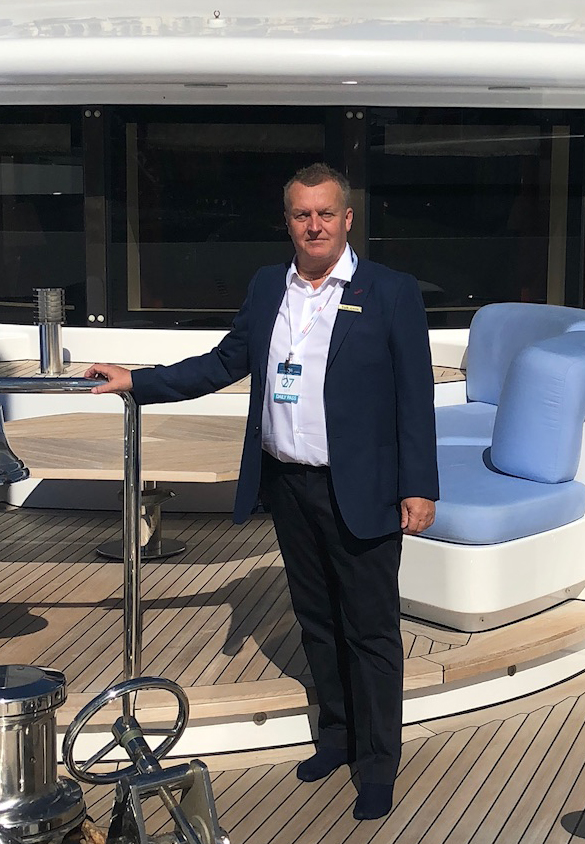
Why We Built 24Synergy — and Why the Magazines Matter

When we started developing 24Synergy, the objective was never simply to build another business directory, advertising website or collection of industry portals. There are already plenty of those, and creating another one would have achieved very little.
The question I kept coming back to was much simpler: **what should 24Synergy actually do for the businesses that use it?**
For me, the answer has always been about creating opportunity through collaboration.
We are constantly told that competition is healthy, and of course it is. Competition drives standards, innovation and better service. But I became interested in a slightly different question. What happens if competitors can also work together?
I don't mean sharing commercially sensitive information or pretending that companies aren't competing for the same customers. I mean recognising that every business already has its own clients, contacts, audience, knowledge and reach. If those individual networks can be connected intelligently, everybody potentially reaches considerably further than they could alone.
That principle became the foundation of 24Synergy.
The network is designed to grow through the businesses using it. Companies introduce their clients and contacts, other businesses do the same, and gradually those separate audiences become part of something much larger. Everybody contributes something to the network and everybody has the opportunity to benefit from the network that results.
There is also a perfectly sensible commercial reason for getting involved early. Your customers are already doing business with other companies and receiving marketing from other suppliers. It therefore makes sense to introduce them to a useful industry network yourself rather than waiting for somebody else to do it first.
That is why I think the early-adopter stage is particularly interesting. I am not going to pretend that a network during its launch period can offer the same volume of activity it should offer when thousands of companies and industry professionals are using it. Networks need people. They need participation and they need time to develop.
But eventually there is a tipping point. More companies join, more buyers arrive, more enquiries circulate, more RFQs are submitted, more people read the newsletters and magazines and more conversations take place through 24live. At that point, the companies that supported the network early aren't arriving and trying to establish themselves in an already busy marketplace. They are already there, with their accounts, listings, content, contacts and presence established.
Some of the mechanisms we have built become much more significant at that stage. Priority access to an RFQ, for example, might seem relatively unimportant when there are only a handful moving through the system. When substantial numbers of genuine opportunities are being generated, seeing something 48 hours before other users can make a considerable difference. The value of the network should therefore increase as the network itself grows.
That same thinking is ultimately what led us to create the magazines.
As 24Synergy developed, I increasingly felt that something was missing. We had created ways for businesses to list themselves, communicate, publish information, distribute newsletters, generate enquiries, respond to opportunities and reach audiences across different specialist sectors, but if we were genuinely trying to build a comprehensive marketing network, those businesses also needed somewhere to advertise.
So we built it.
The 24 Magazines aren't intended to sit separately from 24Synergy. They are another part of the same ecosystem, giving companies another route to market while giving readers useful specialist information in an accessible format. They are global publications, but with regional editions and regional editorial because the businesses and people using 24Synergy are global too.
A company shouldn't be disadvantaged because it happens to be based in Britain, France, the United States, Dubai, Singapore, Spain or somewhere else entirely. Nor should a reader have to wade through endless irrelevant information before finding something applicable to where they live, work, sail, charter, fly or conduct business.
That brings me to something else that is probably worth addressing openly.
Some readers will look through these magazines and ask: **“Have they used AI to produce some of this?”**
The answer is yes.
We have.
There are thousands of pieces of editorial involved across these publications and their regional editions, and it would be rather ridiculous for me to pretend that artificial intelligence hasn't helped us create them. AI exists, it is an extraordinarily useful tool when used properly, and I don't see any reason to hide the fact that we have used it.
What matters to me is **how** we have used it.
We haven't simply asked a machine to fill hundreds of pages with words so that the magazines look busy. We have chosen the subjects we believe are worth covering, identified the questions we think readers actually want answered and, in many cases, started the articles ourselves before using AI to help develop the research, structure and additional information around them.
The objective has always been usefulness.
If you're reading one of our sailing magazines, I want you to discover something that helps you sail, plan a passage, choose equipment, understand a destination or avoid a problem. If you're involved with private aviation, I want the information to answer questions relevant to flying, ownership, charter or operations. If you're in commercial shipping, brokerage, boat building, property, charter or another sector, the same principle applies.
I don't want pages of disposable editorial written simply because a magazine needs another article.
We have tried to identify subjects where somebody would otherwise have to spend time searching around the internet, opening numerous websites and piecing the information together themselves. We can do some of that background work instead, ask the questions and bring the useful information together in one place.
There is an environmental argument for that approach too. Endless searching, loading websites, serving adverts and repeatedly retrieving information all require digital infrastructure and energy. A magazine can be downloaded once, kept and read offline.
I wouldn't pretend that this somehow makes digital publishing impact-free, because it doesn't, but if we can save readers unnecessary searching while creating something useful enough to keep and refer back to, I think that is a better use of the technology available to us.
So yes, some of what you are reading has involved AI, and some of it has involved people. Increasingly it will involve more people as well.
As early adopters, journalists, specialists and other contributors become involved, their voices will naturally become part of these pages. We are also inviting other magazines and media organisations to contribute, which should introduce completely different editorial voices and areas of expertise. They may use AI themselves, of course, and I have no intention of telling another publisher or journalist which tools they are permitted to use.
The test is much simpler than that: **does the article give the reader something worthwhile?**
If it doesn't, it shouldn't be here.
That philosophy also explains something rather unusual we are now introducing. We are going to allow other independent magazines to promote themselves through our magazines.
At first that might sound counter-intuitive. Why would one magazine deliberately introduce its readers to another magazine?
My answer is: why wouldn't we?
If another specialist publication produces good material that our readers would appreciate, discovering it doesn't make our own magazine less useful. Quite the opposite. If we can become somewhere readers come to discover worthwhile information, including information and publications produced by other people, then I think we become more useful.
A participating publication will be able to contribute a genuine editorial article, tell readers where they can find more of its work and promote its magazine within our pages. We can potentially take that relationship considerably further as well. There may be opportunities to work with other publishers commercially, including arrangements where advertising from their own clients can reach our publications and both parties share in the resulting revenue.
Again, it comes back to the original idea behind 24Synergy. Competition doesn't have to prevent collaboration.
The scale of the network comes from the same philosophy. Historically, the industries we have worked with have never existed neatly inside individual boxes. A superyacht depends upon builders, suppliers, engineering companies, crew, brokers, charter businesses, marinas and countless specialist services. Those same owners and clients may use private aviation and own international property. Boat builders need suppliers. Charter companies need customers. Brokers need buyers and sellers. Employers need crew.
Exhibitors need boat shows, and boat shows need exhibitors and visitors.
Commercial ships and cruise ships sit alongside superyachts, motor yachts and sailing yachts. There are crew and employment services, boat and ship builders, ports, yacht services and suppliers, aviation, empty legs, property and specialist luxury markets. Each sector has its own identity, but there are countless points where they intersect.
That is why 24Synergy has become such a large collection of connected websites. It is deliberately not centred on one country or one type of business. A company with branches in several countries can bring those offices together through the same network, while a small specialist supplier can concentrate on the particular market that matters to it. Everything can still be managed centrally through the same account and dashboard.
24live takes that idea in another direction again. I sometimes describe it as sitting somewhere between the professional nature of LinkedIn and the immediacy of a social network such as Facebook, although I don't really want it to become either of those things. The purpose is business.
Members can publish their own material, interact with other users, promote their businesses and place appropriate content across relevant parts of the 24 Network. If somebody wants to be proactive, there is considerable freedom to put themselves in front of the industries they want to reach rather than simply creating a listing and waiting for somebody to find them.
That is an important distinction for me. **24Synergy isn't designed to do your marketing while you sit and watch. It is designed to give you the tools to do considerably more with your marketing yourself.**
There is another, deliberately different part of the ecosystem too.
Within the superyacht sector, 1UK.com is being developed around recognition rather than conventional paid placement. Companies cannot simply buy their way into recognition. They can request consideration, but that request can be declined. As the concept develops, I want appropriate industry leaders themselves to help determine the standards that businesses should achieve to be recognised at different levels.
That connects directly with where I would like 24Synergy itself eventually to go.
The intention is for 24Synergy to develop into a cooperative structure with industry leaders and board members helping to determine its future direction. The industry changes constantly, and the technology serving it needs to change with it. Electric propulsion is an obvious example today, but tomorrow there will be something else. The people actually working within these sectors will often identify what is needed long before a software developer sitting outside the industry ever could.
We have built the infrastructure, but I don't believe that means we should dictate indefinitely what it becomes. I would much rather create a structure where the people using the network have a meaningful voice in deciding which features should be developed next and where the network should go as their industries evolve.
There is a personal reason behind all of this as well.
I've always enjoyed helping businesses develop. I enjoy looking at a new company, understanding what it is trying to achieve and asking what could be done differently. Sometimes it is marketing, sometimes positioning, sometimes making an introduction or simply giving somebody the confidence and advice they need when they're trying to get something started.
I suppose 24Synergy is my attempt to do that on a much larger scale.
Rather than helping one company find another route to market, we have tried to build the infrastructure through which thousands of businesses can create those routes for themselves and for each other. It gives a small specialist company access to many of the same marketing mechanisms available to a much larger international organisation, while allowing a multinational business to connect offices, people and sectors through one global hub.
And that is probably the simplest answer to the question I started with: **what is 24Synergy actually for?**
It is there to create connections and opportunities that would otherwise be harder to create individually. The websites, magazines, newsletters, RFQs, publishing tools, 24live and everything else we develop are simply different ways of achieving that.
We've done the difficult part of bringing that infrastructure together. Now I want businesses to use it, challenge it and help us improve it. I want people to tell us what works, what doesn't and what their particular part of the industry needs next. As more businesses participate, the network should become more useful to everybody already inside it.
We have built 24Synergy, but I don't want it to feel as though it belongs to a small team sitting somewhere deciding what everybody else needs.
**We've built it for you. Now make use of it, make it work for your business, and help us decide what it becomes next.**
**Paul Thompson** *Editor*
Contributor: Paul Thompson / 24Synergy

Be the first reader to react to this article.

One of the easiest mistakes in sailing yachts, cruising, rigs and seamanship is to concentrate on the headline and leave the awkward questions until later.

One of the easiest mistakes in sailing yachts, cruising, rigs and seamanship is to concentrate on the headline and leave the awkward questions until later.
Cost also needs to be separated into purchase cost and ownership cost. The second figure is usually less visible. Consumables, routine servicing, insurance, finance, berthing or storage, professional fees, software subscriptions, inspections and eventual replacement items can materially change the economics. A useful quotation is therefore one that makes exclusions obvious.
If a supplier cannot explain what normally falls outside the quoted figure, ask for that clarification before treating two prices as comparable.
After-sales support can be more important than the original specification. A component that is excellent on paper is less attractive if parts take months to arrive or there is no competent service agent where the equipment will be used. The same applies to software-led products: ownership now includes updates, access rights, data and sometimes recurring subscriptions. Find out who supports the system, for how long, and what happens if the original supplier changes hands.
Timing matters. Buying or commissioning under deadline pressure weakens the buyer's position because there is less time to inspect, compare and walk away. Where possible, build the timetable backwards from the date the asset or service is genuinely required. Include survey or inspection time, corrections, training, delivery and a contingency. A realistic programme often reveals that the cheapest-looking option is not the one with the lowest overall cost.
The starting point is use. In sailing yachts, cruising, rigs and seamanship, two apparently similar products or services can be right for completely different owners because their operating pattern is different. Frequency of use, geography, crew or staffing, storage, servicing access and the length of time you expect to keep the asset all change the answer. Before comparing brands or quotations, write down those constraints.
It sounds basic, but it prevents a specification being chosen for a lifestyle that exists only in the sales material.
Technical claims deserve context. Range, output, capacity, speed, efficiency and performance figures are normally produced under stated conditions. Real use adds weather, load, temperature, fouling, route, operator behaviour and reserve margins. Rather than arguing over a headline number, ask what assumptions sit behind it and what happens when those assumptions change. That produces a much more useful comparison.

Sustainability claims are increasingly part of the decision as well. The useful question is not whether a product is described as green, but what has actually changed: energy use, fuel consumption, material choice, repairability, service life, emissions, waste or end-of-life handling. Improvements in one area can create compromises in another. Evidence and measured performance are more valuable than broad environmental language.
Finally, insist on a proper handover. Familiarisation, emergency procedures, maintenance intervals, passwords, spare parts, warranty contacts and operating limitations should all be understood before the supplier disappears over the horizon. A surprising number of early problems are not failures at all but gaps in handover. Thirty minutes spent recording the right information can save days later.
My own shorthand for sailing-yacht ownership: buying used: the checks that matter before money changes hands is simple: verify the condition, verify the paperwork, understand the support network and calculate the cost on a realistic pattern of use. If any one of those four is unclear, there is still work to do before committing.

When money is about to change hands, the sequence matters. Establish identity and authority to sell, agree exactly what is included, record known defects and make any deposit terms clear. Where a survey, valuation or finance approval is part of the transaction, the contract should reflect that process rather than relying on a verbal understanding. Buyers should also know when risk and title transfer, particularly if the asset is moving between jurisdictions.
Market value is evidence, not aspiration. Advertised prices show what sellers hope to achieve; completed transactions, condition, specification, location and time on market give a better picture. A well-presented example can deserve a premium, but a premium still needs a reason. The strongest negotiating position comes from knowing which defects are merely cosmetic, which affect usability and which could lead to immediate capital expenditure.
The practical test for sailing yachts, cruising, rigs and seamanship is whether the decision still makes sense when circumstances are less than ideal. Weather changes, schedules move, components fail and people use equipment differently from the designer's neat assumptions. Building a little resilience into the choice usually costs less than trying to recover it afterwards.
For most readers, that is enough to narrow the field considerably before serious money or time is committed.
Contributor: Paul Thompson / Editorial / 24SailingYachts
Be the first reader to react to this article.
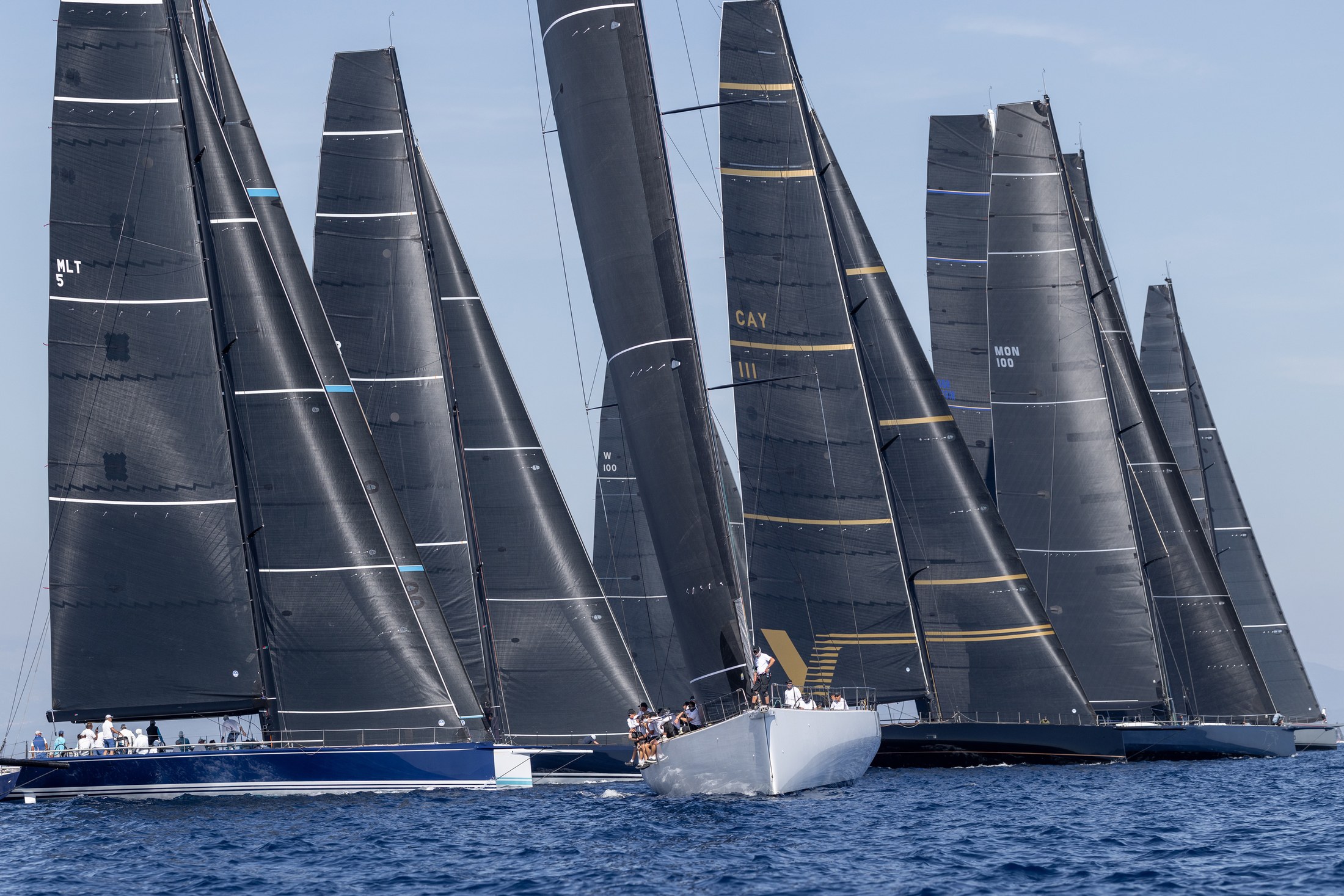
I have always found that the useful part of sailing yachts, cruising, rigs and seamanship starts once the brochure language has been stripped away.
I have always found that the useful part of sailing yachts, cruising, rigs and seamanship starts once the brochure language has been stripped away.
Documentation is another practical test. Service records, manuals, certificates, invoices, warranties, software licences and evidence of previous work are not administrative clutter; they are part of the asset. Good records make troubleshooting easier and can support resale. Missing records do not automatically mean there is a problem, but they increase uncertainty, and uncertainty should be reflected in the questions asked, the inspection undertaken and sometimes the price.
Risk is best dealt with before commitment. That means independent inspection where appropriate, clear written scope, confirmation of insurance implications and an agreed process for defects or incomplete work. In higher-value transactions, legal, tax and regulatory advice should come from qualified advisers in the relevant jurisdiction. The purpose is not to make every transaction defensive; it is to stop assumptions becoming expensive surprises.
Resale should be considered even by people who intend to keep something for years. Highly personal specifications can be perfectly sensible, but buyers should understand the trade-off. Widely supported equipment, sensible layouts, complete records and recognised maintenance tend to be easier for the next owner to understand. The objective is not to design everything for an unknown future buyer; it is simply to avoid destroying flexibility without a good reason.
Cost also needs to be separated into purchase cost and ownership cost. The second figure is usually less visible. Consumables, routine servicing, insurance, finance, berthing or storage, professional fees, software subscriptions, inspections and eventual replacement items can materially change the economics. A useful quotation is therefore one that makes exclusions obvious.
If a supplier cannot explain what normally falls outside the quoted figure, ask for that clarification before treating two prices as comparable.
After-sales support can be more important than the original specification. A component that is excellent on paper is less attractive if parts take months to arrive or there is no competent service agent where the equipment will be used. The same applies to software-led products: ownership now includes updates, access rights, data and sometimes recurring subscriptions. Find out who supports the system, for how long, and what happens if the original supplier changes hands.
Timing matters. Buying or commissioning under deadline pressure weakens the buyer's position because there is less time to inspect, compare and walk away. Where possible, build the timetable backwards from the date the asset or service is genuinely required. Include survey or inspection time, corrections, training, delivery and a contingency. A realistic programme often reveals that the cheapest-looking option is not the one with the lowest overall cost.
The starting point is use. In sailing yachts, cruising, rigs and seamanship, two apparently similar products or services can be right for completely different owners because their operating pattern is different. Frequency of use, geography, crew or staffing, storage, servicing access and the length of time you expect to keep the asset all change the answer. Before comparing brands or quotations, write down those constraints.
It sounds basic, but it prevents a specification being chosen for a lifestyle that exists only in the sales material.
When money is about to change hands, the sequence matters. Establish identity and authority to sell, agree exactly what is included, record known defects and make any deposit terms clear. Where a survey, valuation or finance approval is part of the transaction, the contract should reflect that process rather than relying on a verbal understanding. Buyers should also know when risk and title transfer, particularly if the asset is moving between jurisdictions.
Market value is evidence, not aspiration. Advertised prices show what sellers hope to achieve; completed transactions, condition, specification, location and time on market give a better picture. A well-presented example can deserve a premium, but a premium still needs a reason. The strongest negotiating position comes from knowing which defects are merely cosmetic, which affect usability and which could lead to immediate capital expenditure.
The practical test for sailing yachts, cruising, rigs and seamanship is whether the decision still makes sense when circumstances are less than ideal. Weather changes, schedules move, components fail and people use equipment differently from the designer's neat assumptions. Building a little resilience into the choice usually costs less than trying to recover it afterwards.
A measured decision now generally costs less than correcting an enthusiastic one later.
Contributor: Paul Thompson / Editorial / 24SailingYachts


Be the first reader to react to this article.

I have always found that the useful part of sailing yachts, cruising, rigs and seamanship starts once the brochure language has been stripped away.
I have always found that the useful part of sailing yachts, cruising, rigs and seamanship starts once the brochure language has been stripped away.
Finally, insist on a proper handover. Familiarisation, emergency procedures, maintenance intervals, passwords, spare parts, warranty contacts and operating limitations should all be understood before the supplier disappears over the horizon. A surprising number of early problems are not failures at all but gaps in handover. Thirty minutes spent recording the right information can save days later.
Documentation is another practical test. Service records, manuals, certificates, invoices, warranties, software licences and evidence of previous work are not administrative clutter; they are part of the asset. Good records make troubleshooting easier and can support resale. Missing records do not automatically mean there is a problem, but they increase uncertainty, and uncertainty should be reflected in the questions asked, the inspection undertaken and sometimes the price.
Risk is best dealt with before commitment. That means independent inspection where appropriate, clear written scope, confirmation of insurance implications and an agreed process for defects or incomplete work. In higher-value transactions, legal, tax and regulatory advice should come from qualified advisers in the relevant jurisdiction. The purpose is not to make every transaction defensive; it is to stop assumptions becoming expensive surprises.
Resale should be considered even by people who intend to keep something for years. Highly personal specifications can be perfectly sensible, but buyers should understand the trade-off. Widely supported equipment, sensible layouts, complete records and recognised maintenance tend to be easier for the next owner to understand. The objective is not to design everything for an unknown future buyer; it is simply to avoid destroying flexibility without a good reason.
Cost also needs to be separated into purchase cost and ownership cost. The second figure is usually less visible. Consumables, routine servicing, insurance, finance, berthing or storage, professional fees, software subscriptions, inspections and eventual replacement items can materially change the economics. A useful quotation is therefore one that makes exclusions obvious.
If a supplier cannot explain what normally falls outside the quoted figure, ask for that clarification before treating two prices as comparable.
After-sales support can be more important than the original specification. A component that is excellent on paper is less attractive if parts take months to arrive or there is no competent service agent where the equipment will be used. The same applies to software-led products: ownership now includes updates, access rights, data and sometimes recurring subscriptions. Find out who supports the system, for how long, and what happens if the original supplier changes hands.
Timing matters. Buying or commissioning under deadline pressure weakens the buyer's position because there is less time to inspect, compare and walk away. Where possible, build the timetable backwards from the date the asset or service is genuinely required. Include survey or inspection time, corrections, training, delivery and a contingency. A realistic programme often reveals that the cheapest-looking option is not the one with the lowest overall cost.
My own shorthand for choosing sailing-yacht ownership suppliers: why response time can matter as much as price is simple: verify the condition, verify the paperwork, understand the support network and calculate the cost on a realistic pattern of use. If any one of those four is unclear, there is still work to do before committing.

When money is about to change hands, the sequence matters. Establish identity and authority to sell, agree exactly what is included, record known defects and make any deposit terms clear. Where a survey, valuation or finance approval is part of the transaction, the contract should reflect that process rather than relying on a verbal understanding. Buyers should also know when risk and title transfer, particularly if the asset is moving between jurisdictions.
Market value is evidence, not aspiration. Advertised prices show what sellers hope to achieve; completed transactions, condition, specification, location and time on market give a better picture. A well-presented example can deserve a premium, but a premium still needs a reason. The strongest negotiating position comes from knowing which defects are merely cosmetic, which affect usability and which could lead to immediate capital expenditure.
The practical test for sailing yachts, cruising, rigs and seamanship is whether the decision still makes sense when circumstances are less than ideal. Weather changes, schedules move, components fail and people use equipment differently from the designer's neat assumptions. Building a little resilience into the choice usually costs less than trying to recover it afterwards.
The best outcome is not necessarily the newest or most sophisticated option. It is the one that remains practical after the first season, the first service bill and the first change of plan.
Contributor: Paul Thompson / Editorial / 24SailingYachts

Be the first reader to react to this article.
A good decision in sailing yachts, cruising, rigs and seamanship rarely comes from one impressive specification.
A good decision in sailing yachts, cruising, rigs and seamanship rarely comes from one impressive specification. It comes from understanding how the whole package will be used.
Technical claims deserve context. Range, output, capacity, speed, efficiency and performance figures are normally produced under stated conditions. Real use adds weather, load, temperature, fouling, route, operator behaviour and reserve margins. Rather than arguing over a headline number, ask what assumptions sit behind it and what happens when those assumptions change. That produces a much more useful comparison.
Sustainability claims are increasingly part of the decision as well. The useful question is not whether a product is described as green, but what has actually changed: energy use, fuel consumption, material choice, repairability, service life, emissions, waste or end-of-life handling. Improvements in one area can create compromises in another. Evidence and measured performance are more valuable than broad environmental language.
Finally, insist on a proper handover. Familiarisation, emergency procedures, maintenance intervals, passwords, spare parts, warranty contacts and operating limitations should all be understood before the supplier disappears over the horizon. A surprising number of early problems are not failures at all but gaps in handover. Thirty minutes spent recording the right information can save days later.
Documentation is another practical test. Service records, manuals, certificates, invoices, warranties, software licences and evidence of previous work are not administrative clutter; they are part of the asset. Good records make troubleshooting easier and can support resale. Missing records do not automatically mean there is a problem, but they increase uncertainty, and uncertainty should be reflected in the questions asked, the inspection undertaken and sometimes the price.
Risk is best dealt with before commitment. That means independent inspection where appropriate, clear written scope, confirmation of insurance implications and an agreed process for defects or incomplete work. In higher-value transactions, legal, tax and regulatory advice should come from qualified advisers in the relevant jurisdiction. The purpose is not to make every transaction defensive; it is to stop assumptions becoming expensive surprises.
Resale should be considered even by people who intend to keep something for years. Highly personal specifications can be perfectly sensible, but buyers should understand the trade-off. Widely supported equipment, sensible layouts, complete records and recognised maintenance tend to be easier for the next owner to understand. The objective is not to design everything for an unknown future buyer; it is simply to avoid destroying flexibility without a good reason.
Cost also needs to be separated into purchase cost and ownership cost. The second figure is usually less visible. Consumables, routine servicing, insurance, finance, berthing or storage, professional fees, software subscriptions, inspections and eventual replacement items can materially change the economics. A useful quotation is therefore one that makes exclusions obvious.
If a supplier cannot explain what normally falls outside the quoted figure, ask for that clarification before treating two prices as comparable.
Comparison becomes easier if every contender is put through the same questions. Ask for the same operating assumptions, the same delivery point, the same warranty period and the same list of included equipment or services. That turns a collection of sales conversations into something closer to a procurement exercise and exposes the areas where one quotation has quietly omitted an expensive item.
References are useful when they are relevant. A supplier's biggest or most prestigious project may tell you very little about how it handles an ordinary job in your region. Ask instead for examples with a similar scale, operating pattern and timetable. The most useful reference is often the customer who has lived with the product for two or three years and has already needed after-sales support.
The practical test for sailing yachts, cruising, rigs and seamanship is whether the decision still makes sense when circumstances are less than ideal. Weather changes, schedules move, components fail and people use equipment differently from the designer's neat assumptions. Building a little resilience into the choice usually costs less than trying to recover it afterwards.
That is the point worth carrying into the next conversation with a broker, builder, supplier or adviser: ask what the choice will be like to own and operate, not merely what it is like to buy.
Contributor: Paul Thompson / Editorial / 24SailingYachts
Be the first reader to react to this article.

I have always found that the useful part of sailing yachts, cruising, rigs and seamanship starts once the brochure language has been stripped away.
I have always found that the useful part of sailing yachts, cruising, rigs and seamanship starts once the brochure language has been stripped away.
After-sales support can be more important than the original specification. A component that is excellent on paper is less attractive if parts take months to arrive or there is no competent service agent where the equipment will be used. The same applies to software-led products: ownership now includes updates, access rights, data and sometimes recurring subscriptions. Find out who supports the system, for how long, and what happens if the original supplier changes hands.
Timing matters. Buying or commissioning under deadline pressure weakens the buyer's position because there is less time to inspect, compare and walk away. Where possible, build the timetable backwards from the date the asset or service is genuinely required. Include survey or inspection time, corrections, training, delivery and a contingency. A realistic programme often reveals that the cheapest-looking option is not the one with the lowest overall cost.
The starting point is use. In sailing yachts, cruising, rigs and seamanship, two apparently similar products or services can be right for completely different owners because their operating pattern is different. Frequency of use, geography, crew or staffing, storage, servicing access and the length of time you expect to keep the asset all change the answer. Before comparing brands or quotations, write down those constraints.
It sounds basic, but it prevents a specification being chosen for a lifestyle that exists only in the sales material.
Technical claims deserve context. Range, output, capacity, speed, efficiency and performance figures are normally produced under stated conditions. Real use adds weather, load, temperature, fouling, route, operator behaviour and reserve margins. Rather than arguing over a headline number, ask what assumptions sit behind it and what happens when those assumptions change. That produces a much more useful comparison.
Sustainability claims are increasingly part of the decision as well. The useful question is not whether a product is described as green, but what has actually changed: energy use, fuel consumption, material choice, repairability, service life, emissions, waste or end-of-life handling. Improvements in one area can create compromises in another. Evidence and measured performance are more valuable than broad environmental language.
Finally, insist on a proper handover. Familiarisation, emergency procedures, maintenance intervals, passwords, spare parts, warranty contacts and operating limitations should all be understood before the supplier disappears over the horizon. A surprising number of early problems are not failures at all but gaps in handover. Thirty minutes spent recording the right information can save days later.
Documentation is another practical test. Service records, manuals, certificates, invoices, warranties, software licences and evidence of previous work are not administrative clutter; they are part of the asset. Good records make troubleshooting easier and can support resale. Missing records do not automatically mean there is a problem, but they increase uncertainty, and uncertainty should be reflected in the questions asked, the inspection undertaken and sometimes the price.
When money is about to change hands, the sequence matters. Establish identity and authority to sell, agree exactly what is included, record known defects and make any deposit terms clear. Where a survey, valuation or finance approval is part of the transaction, the contract should reflect that process rather than relying on a verbal understanding. Buyers should also know when risk and title transfer, particularly if the asset is moving between jurisdictions.
Market value is evidence, not aspiration. Advertised prices show what sellers hope to achieve; completed transactions, condition, specification, location and time on market give a better picture. A well-presented example can deserve a premium, but a premium still needs a reason. The strongest negotiating position comes from knowing which defects are merely cosmetic, which affect usability and which could lead to immediate capital expenditure.
The practical test for sailing yachts, cruising, rigs and seamanship is whether the decision still makes sense when circumstances are less than ideal. Weather changes, schedules move, components fail and people use equipment differently from the designer's neat assumptions. Building a little resilience into the choice usually costs less than trying to recover it afterwards.
None of this makes the decision difficult. It simply moves attention from presentation to evidence, which is usually where the better value sits.
Contributor: Paul Thompson / Editorial / 24SailingYachts
Be the first reader to react to this article.
One of the easiest mistakes in sailing yachts, cruising, rigs and seamanship is to concentrate on the headline and leave the awkward questions until later.

One of the easiest mistakes in sailing yachts, cruising, rigs and seamanship is to concentrate on the headline and leave the awkward questions until later.
Risk is best dealt with before commitment. That means independent inspection where appropriate, clear written scope, confirmation of insurance implications and an agreed process for defects or incomplete work. In higher-value transactions, legal, tax and regulatory advice should come from qualified advisers in the relevant jurisdiction. The purpose is not to make every transaction defensive; it is to stop assumptions becoming expensive surprises.
Resale should be considered even by people who intend to keep something for years. Highly personal specifications can be perfectly sensible, but buyers should understand the trade-off. Widely supported equipment, sensible layouts, complete records and recognised maintenance tend to be easier for the next owner to understand. The objective is not to design everything for an unknown future buyer; it is simply to avoid destroying flexibility without a good reason.
Cost also needs to be separated into purchase cost and ownership cost. The second figure is usually less visible. Consumables, routine servicing, insurance, finance, berthing or storage, professional fees, software subscriptions, inspections and eventual replacement items can materially change the economics. A useful quotation is therefore one that makes exclusions obvious.
If a supplier cannot explain what normally falls outside the quoted figure, ask for that clarification before treating two prices as comparable.
After-sales support can be more important than the original specification. A component that is excellent on paper is less attractive if parts take months to arrive or there is no competent service agent where the equipment will be used. The same applies to software-led products: ownership now includes updates, access rights, data and sometimes recurring subscriptions. Find out who supports the system, for how long, and what happens if the original supplier changes hands.
Timing matters. Buying or commissioning under deadline pressure weakens the buyer's position because there is less time to inspect, compare and walk away. Where possible, build the timetable backwards from the date the asset or service is genuinely required. Include survey or inspection time, corrections, training, delivery and a contingency. A realistic programme often reveals that the cheapest-looking option is not the one with the lowest overall cost.
The starting point is use. In sailing yachts, cruising, rigs and seamanship, two apparently similar products or services can be right for completely different owners because their operating pattern is different. Frequency of use, geography, crew or staffing, storage, servicing access and the length of time you expect to keep the asset all change the answer. Before comparing brands or quotations, write down those constraints.
It sounds basic, but it prevents a specification being chosen for a lifestyle that exists only in the sales material.
Technical claims deserve context. Range, output, capacity, speed, efficiency and performance figures are normally produced under stated conditions. Real use adds weather, load, temperature, fouling, route, operator behaviour and reserve margins. Rather than arguing over a headline number, ask what assumptions sit behind it and what happens when those assumptions change. That produces a much more useful comparison.
My own shorthand for insurance questions worth answering before you commit is simple: verify the condition, verify the paperwork, understand the support network and calculate the cost on a realistic pattern of use. If any one of those four is unclear, there is still work to do before committing.
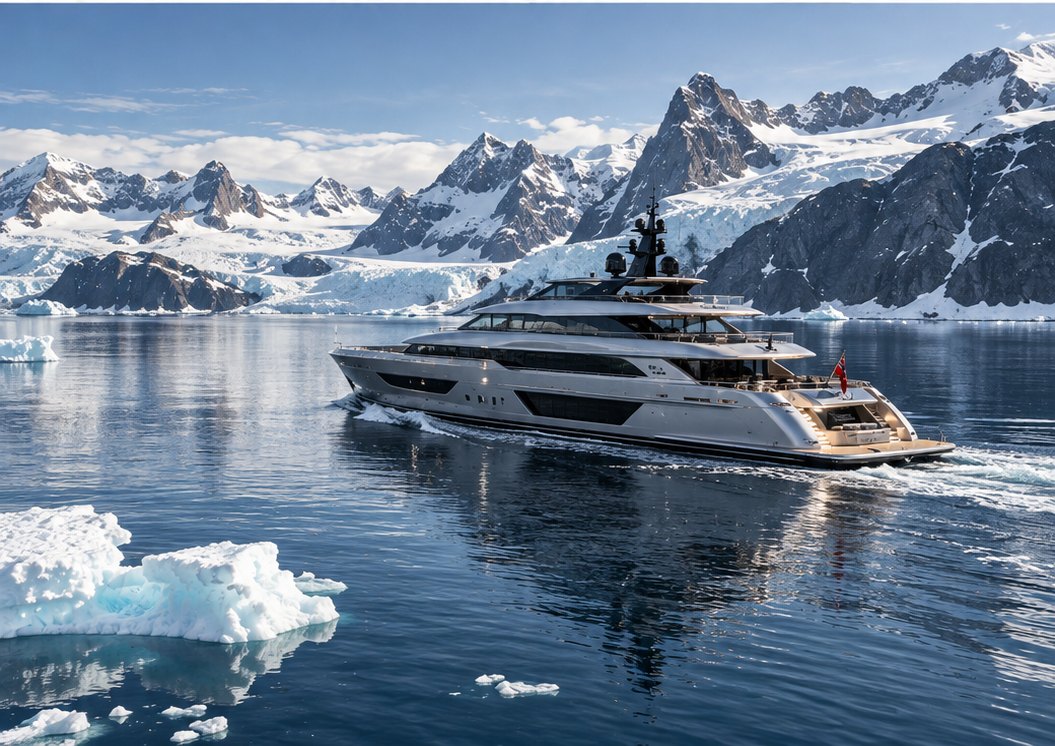
Comparison becomes easier if every contender is put through the same questions. Ask for the same operating assumptions, the same delivery point, the same warranty period and the same list of included equipment or services. That turns a collection of sales conversations into something closer to a procurement exercise and exposes the areas where one quotation has quietly omitted an expensive item.
References are useful when they are relevant. A supplier's biggest or most prestigious project may tell you very little about how it handles an ordinary job in your region. Ask instead for examples with a similar scale, operating pattern and timetable. The most useful reference is often the customer who has lived with the product for two or three years and has already needed after-sales support.
The practical test for sailing yachts, cruising, rigs and seamanship is whether the decision still makes sense when circumstances are less than ideal. Weather changes, schedules move, components fail and people use equipment differently from the designer's neat assumptions. Building a little resilience into the choice usually costs less than trying to recover it afterwards.
The sensible approach is therefore quite conventional: define the job, verify the evidence, price the whole commitment and keep enough margin for the things that never appear in the brochure.
Contributor: Paul Thompson / Editorial / 24SailingYachts
Be the first reader to react to this article.
There is nothing particularly complicated about the maintenance jobs that are cheapest when planned early, but there are several ways to make it unnecessarily expensive.

There is nothing particularly complicated about the maintenance jobs that are cheapest when planned early, but there are several ways to make it unnecessarily expensive.
Sustainability claims are increasingly part of the decision as well. The useful question is not whether a product is described as green, but what has actually changed: energy use, fuel consumption, material choice, repairability, service life, emissions, waste or end-of-life handling. Improvements in one area can create compromises in another. Evidence and measured performance are more valuable than broad environmental language.
Finally, insist on a proper handover. Familiarisation, emergency procedures, maintenance intervals, passwords, spare parts, warranty contacts and operating limitations should all be understood before the supplier disappears over the horizon. A surprising number of early problems are not failures at all but gaps in handover. Thirty minutes spent recording the right information can save days later.
Documentation is another practical test. Service records, manuals, certificates, invoices, warranties, software licences and evidence of previous work are not administrative clutter; they are part of the asset. Good records make troubleshooting easier and can support resale. Missing records do not automatically mean there is a problem, but they increase uncertainty, and uncertainty should be reflected in the questions asked, the inspection undertaken and sometimes the price.
Risk is best dealt with before commitment. That means independent inspection where appropriate, clear written scope, confirmation of insurance implications and an agreed process for defects or incomplete work. In higher-value transactions, legal, tax and regulatory advice should come from qualified advisers in the relevant jurisdiction. The purpose is not to make every transaction defensive; it is to stop assumptions becoming expensive surprises.
Resale should be considered even by people who intend to keep something for years. Highly personal specifications can be perfectly sensible, but buyers should understand the trade-off. Widely supported equipment, sensible layouts, complete records and recognised maintenance tend to be easier for the next owner to understand. The objective is not to design everything for an unknown future buyer; it is simply to avoid destroying flexibility without a good reason.
Cost also needs to be separated into purchase cost and ownership cost. The second figure is usually less visible. Consumables, routine servicing, insurance, finance, berthing or storage, professional fees, software subscriptions, inspections and eventual replacement items can materially change the economics. A useful quotation is therefore one that makes exclusions obvious.
If a supplier cannot explain what normally falls outside the quoted figure, ask for that clarification before treating two prices as comparable.
After-sales support can be more important than the original specification. A component that is excellent on paper is less attractive if parts take months to arrive or there is no competent service agent where the equipment will be used. The same applies to software-led products: ownership now includes updates, access rights, data and sometimes recurring subscriptions. Find out who supports the system, for how long, and what happens if the original supplier changes hands.
Preventive work is most effective when it is recorded rather than remembered. A simple calendar of hours, dates, consumables, inspections and recurring tasks gives owners and managers an early warning before maintenance becomes urgent. It also allows jobs to be grouped sensibly, reducing repeated access costs and downtime. The discipline is not glamorous, but it is one of the clearest ways to protect reliability.
Scope control matters on any refit or repair. Once equipment is opened up, additional work is common, so the original quotation should distinguish fixed items, provisional sums and work that requires further authorisation. Photographing condition before and after the job and retaining replaced-part details can prevent disputes and gives the next technician a useful history.
The practical test for sailing yachts, cruising, rigs and seamanship is whether the decision still makes sense when circumstances are less than ideal. Weather changes, schedules move, components fail and people use equipment differently from the designer's neat assumptions. Building a little resilience into the choice usually costs less than trying to recover it afterwards.
The sensible approach is therefore quite conventional: define the job, verify the evidence, price the whole commitment and keep enough margin for the things that never appear in the brochure.
Contributor: Paul Thompson / Editorial / 24SailingYachts

Be the first reader to react to this article.
For anyone looking at sailing-yacht ownership: how digital systems are changing the ownership experience, the first job is not to decide what looks best.
For anyone looking at sailing-yacht ownership: how digital systems are changing the ownership experience, the first job is not to decide what looks best. It is to establish what problem actually needs solving.
Timing matters. Buying or commissioning under deadline pressure weakens the buyer's position because there is less time to inspect, compare and walk away. Where possible, build the timetable backwards from the date the asset or service is genuinely required. Include survey or inspection time, corrections, training, delivery and a contingency. A realistic programme often reveals that the cheapest-looking option is not the one with the lowest overall cost.
The starting point is use. In sailing yachts, cruising, rigs and seamanship, two apparently similar products or services can be right for completely different owners because their operating pattern is different. Frequency of use, geography, crew or staffing, storage, servicing access and the length of time you expect to keep the asset all change the answer. Before comparing brands or quotations, write down those constraints.
It sounds basic, but it prevents a specification being chosen for a lifestyle that exists only in the sales material.
Technical claims deserve context. Range, output, capacity, speed, efficiency and performance figures are normally produced under stated conditions. Real use adds weather, load, temperature, fouling, route, operator behaviour and reserve margins. Rather than arguing over a headline number, ask what assumptions sit behind it and what happens when those assumptions change. That produces a much more useful comparison.
Sustainability claims are increasingly part of the decision as well. The useful question is not whether a product is described as green, but what has actually changed: energy use, fuel consumption, material choice, repairability, service life, emissions, waste or end-of-life handling. Improvements in one area can create compromises in another. Evidence and measured performance are more valuable than broad environmental language.
Finally, insist on a proper handover. Familiarisation, emergency procedures, maintenance intervals, passwords, spare parts, warranty contacts and operating limitations should all be understood before the supplier disappears over the horizon. A surprising number of early problems are not failures at all but gaps in handover. Thirty minutes spent recording the right information can save days later.
Documentation is another practical test. Service records, manuals, certificates, invoices, warranties, software licences and evidence of previous work are not administrative clutter; they are part of the asset. Good records make troubleshooting easier and can support resale. Missing records do not automatically mean there is a problem, but they increase uncertainty, and uncertainty should be reflected in the questions asked, the inspection undertaken and sometimes the price.
Risk is best dealt with before commitment. That means independent inspection where appropriate, clear written scope, confirmation of insurance implications and an agreed process for defects or incomplete work. In higher-value transactions, legal, tax and regulatory advice should come from qualified advisers in the relevant jurisdiction. The purpose is not to make every transaction defensive; it is to stop assumptions becoming expensive surprises.
Connected equipment creates a second maintenance schedule: passwords, access permissions, firmware, backups and subscriptions. Owners should know which systems can be updated remotely, which data leaves the asset and whether loss of an online service affects core operation. A paper or offline record of critical settings is still useful when the problem being diagnosed is the network itself.
Cybersecurity does not need to become a specialist exercise for every user. Basic separation of guest and operational networks, unique credentials, prompt updates and controlled administrator access remove a large proportion of avoidable risk. The more important question for a supplier is whether security has been designed into the product and whether updates will continue throughout its realistic service life.
The practical test for sailing yachts, cruising, rigs and seamanship is whether the decision still makes sense when circumstances are less than ideal. Weather changes, schedules move, components fail and people use equipment differently from the designer's neat assumptions. Building a little resilience into the choice usually costs less than trying to recover it afterwards.
That is the point worth carrying into the next conversation with a broker, builder, supplier or adviser: ask what the choice will be like to own and operate, not merely what it is like to buy.
Contributor: Paul Thompson / Editorial / 24SailingYachts


Be the first reader to react to this article.
There is nothing particularly complicated about where energy efficiency now makes a practical difference, but there are several ways to make it unnecessarily expensive.
There is nothing particularly complicated about where energy efficiency now makes a practical difference, but there are several ways to make it unnecessarily expensive.
Resale should be considered even by people who intend to keep something for years. Highly personal specifications can be perfectly sensible, but buyers should understand the trade-off. Widely supported equipment, sensible layouts, complete records and recognised maintenance tend to be easier for the next owner to understand. The objective is not to design everything for an unknown future buyer; it is simply to avoid destroying flexibility without a good reason.
Cost also needs to be separated into purchase cost and ownership cost. The second figure is usually less visible. Consumables, routine servicing, insurance, finance, berthing or storage, professional fees, software subscriptions, inspections and eventual replacement items can materially change the economics. A useful quotation is therefore one that makes exclusions obvious.
If a supplier cannot explain what normally falls outside the quoted figure, ask for that clarification before treating two prices as comparable.
After-sales support can be more important than the original specification. A component that is excellent on paper is less attractive if parts take months to arrive or there is no competent service agent where the equipment will be used. The same applies to software-led products: ownership now includes updates, access rights, data and sometimes recurring subscriptions. Find out who supports the system, for how long, and what happens if the original supplier changes hands.
Timing matters. Buying or commissioning under deadline pressure weakens the buyer's position because there is less time to inspect, compare and walk away. Where possible, build the timetable backwards from the date the asset or service is genuinely required. Include survey or inspection time, corrections, training, delivery and a contingency. A realistic programme often reveals that the cheapest-looking option is not the one with the lowest overall cost.
The starting point is use. In sailing yachts, cruising, rigs and seamanship, two apparently similar products or services can be right for completely different owners because their operating pattern is different. Frequency of use, geography, crew or staffing, storage, servicing access and the length of time you expect to keep the asset all change the answer. Before comparing brands or quotations, write down those constraints.
It sounds basic, but it prevents a specification being chosen for a lifestyle that exists only in the sales material.
Technical claims deserve context. Range, output, capacity, speed, efficiency and performance figures are normally produced under stated conditions. Real use adds weather, load, temperature, fouling, route, operator behaviour and reserve margins. Rather than arguing over a headline number, ask what assumptions sit behind it and what happens when those assumptions change. That produces a much more useful comparison.
Sustainability claims are increasingly part of the decision as well. The useful question is not whether a product is described as green, but what has actually changed: energy use, fuel consumption, material choice, repairability, service life, emissions, waste or end-of-life handling. Improvements in one area can create compromises in another. Evidence and measured performance are more valuable than broad environmental language.
Energy decisions need a duty-cycle calculation. Average use is less important than the difficult day: the longest passage, the coldest morning, the heaviest load, the remote berth or the turnaround with the least charging time. Design around that case with a sensible reserve and the everyday operation normally becomes straightforward. Design around the brochure average and the owner may spend years managing around the system.
Infrastructure should be checked before hardware is ordered. Available electrical supply, connector type, grid capacity, bunkering arrangements, ventilation, fire protection and local operating rules can all dictate what is practical. In many projects the limiting factor is not the motor, battery or fuel technology; it is the place where the asset has to recharge, refuel or be maintained.
The practical test for sailing yachts, cruising, rigs and seamanship is whether the decision still makes sense when circumstances are less than ideal. Weather changes, schedules move, components fail and people use equipment differently from the designer's neat assumptions. Building a little resilience into the choice usually costs less than trying to recover it afterwards.
The best outcome is not necessarily the newest or most sophisticated option. It is the one that remains practical after the first season, the first service bill and the first change of plan.
Contributor: Paul Thompson / Editorial / 24SailingYachts

Be the first reader to react to this article.

This is one of those subjects where a little preparation is worth far more than a long list of features.
This is one of those subjects where a little preparation is worth far more than a long list of features.
The starting point is use. In sailing yachts, cruising, rigs and seamanship, two apparently similar products or services can be right for completely different owners because their operating pattern is different. Frequency of use, geography, crew or staffing, storage, servicing access and the length of time you expect to keep the asset all change the answer. Before comparing brands or quotations, write down those constraints.
It sounds basic, but it prevents a specification being chosen for a lifestyle that exists only in the sales material.
Technical claims deserve context. Range, output, capacity, speed, efficiency and performance figures are normally produced under stated conditions. Real use adds weather, load, temperature, fouling, route, operator behaviour and reserve margins. Rather than arguing over a headline number, ask what assumptions sit behind it and what happens when those assumptions change. That produces a much more useful comparison.
Sustainability claims are increasingly part of the decision as well. The useful question is not whether a product is described as green, but what has actually changed: energy use, fuel consumption, material choice, repairability, service life, emissions, waste or end-of-life handling. Improvements in one area can create compromises in another. Evidence and measured performance are more valuable than broad environmental language.
Finally, insist on a proper handover. Familiarisation, emergency procedures, maintenance intervals, passwords, spare parts, warranty contacts and operating limitations should all be understood before the supplier disappears over the horizon. A surprising number of early problems are not failures at all but gaps in handover. Thirty minutes spent recording the right information can save days later.
Documentation is another practical test. Service records, manuals, certificates, invoices, warranties, software licences and evidence of previous work are not administrative clutter; they are part of the asset. Good records make troubleshooting easier and can support resale. Missing records do not automatically mean there is a problem, but they increase uncertainty, and uncertainty should be reflected in the questions asked, the inspection undertaken and sometimes the price.
Risk is best dealt with before commitment. That means independent inspection where appropriate, clear written scope, confirmation of insurance implications and an agreed process for defects or incomplete work. In higher-value transactions, legal, tax and regulatory advice should come from qualified advisers in the relevant jurisdiction. The purpose is not to make every transaction defensive; it is to stop assumptions becoming expensive surprises.
Resale should be considered even by people who intend to keep something for years. Highly personal specifications can be perfectly sensible, but buyers should understand the trade-off. Widely supported equipment, sensible layouts, complete records and recognised maintenance tend to be easier for the next owner to understand. The objective is not to design everything for an unknown future buyer; it is simply to avoid destroying flexibility without a good reason.
When money is about to change hands, the sequence matters. Establish identity and authority to sell, agree exactly what is included, record known defects and make any deposit terms clear. Where a survey, valuation or finance approval is part of the transaction, the contract should reflect that process rather than relying on a verbal understanding. Buyers should also know when risk and title transfer, particularly if the asset is moving between jurisdictions.
Market value is evidence, not aspiration. Advertised prices show what sellers hope to achieve; completed transactions, condition, specification, location and time on market give a better picture. A well-presented example can deserve a premium, but a premium still needs a reason. The strongest negotiating position comes from knowing which defects are merely cosmetic, which affect usability and which could lead to immediate capital expenditure.
The practical test for sailing yachts, cruising, rigs and seamanship is whether the decision still makes sense when circumstances are less than ideal. Weather changes, schedules move, components fail and people use equipment differently from the designer's neat assumptions. Building a little resilience into the choice usually costs less than trying to recover it afterwards.
For most readers, that is enough to narrow the field considerably before serious money or time is committed.
Contributor: Paul Thompson / Editorial / 24SailingYachts

Be the first reader to react to this article.
For anyone looking at planning for winter: the work that prevents expensive spring surprises, the first job is not to decide what looks best.
For anyone looking at planning for winter: the work that prevents expensive spring surprises, the first job is not to decide what looks best. It is to establish what problem actually needs solving.
Cost also needs to be separated into purchase cost and ownership cost. The second figure is usually less visible. Consumables, routine servicing, insurance, finance, berthing or storage, professional fees, software subscriptions, inspections and eventual replacement items can materially change the economics. A useful quotation is therefore one that makes exclusions obvious.
If a supplier cannot explain what normally falls outside the quoted figure, ask for that clarification before treating two prices as comparable.
After-sales support can be more important than the original specification. A component that is excellent on paper is less attractive if parts take months to arrive or there is no competent service agent where the equipment will be used. The same applies to software-led products: ownership now includes updates, access rights, data and sometimes recurring subscriptions. Find out who supports the system, for how long, and what happens if the original supplier changes hands.
Timing matters. Buying or commissioning under deadline pressure weakens the buyer's position because there is less time to inspect, compare and walk away. Where possible, build the timetable backwards from the date the asset or service is genuinely required. Include survey or inspection time, corrections, training, delivery and a contingency. A realistic programme often reveals that the cheapest-looking option is not the one with the lowest overall cost.
The starting point is use. In sailing yachts, cruising, rigs and seamanship, two apparently similar products or services can be right for completely different owners because their operating pattern is different. Frequency of use, geography, crew or staffing, storage, servicing access and the length of time you expect to keep the asset all change the answer. Before comparing brands or quotations, write down those constraints.
It sounds basic, but it prevents a specification being chosen for a lifestyle that exists only in the sales material.
Technical claims deserve context. Range, output, capacity, speed, efficiency and performance figures are normally produced under stated conditions. Real use adds weather, load, temperature, fouling, route, operator behaviour and reserve margins. Rather than arguing over a headline number, ask what assumptions sit behind it and what happens when those assumptions change. That produces a much more useful comparison.
Sustainability claims are increasingly part of the decision as well. The useful question is not whether a product is described as green, but what has actually changed: energy use, fuel consumption, material choice, repairability, service life, emissions, waste or end-of-life handling. Improvements in one area can create compromises in another. Evidence and measured performance are more valuable than broad environmental language.
Finally, insist on a proper handover. Familiarisation, emergency procedures, maintenance intervals, passwords, spare parts, warranty contacts and operating limitations should all be understood before the supplier disappears over the horizon. A surprising number of early problems are not failures at all but gaps in handover. Thirty minutes spent recording the right information can save days later.
Preventive work is most effective when it is recorded rather than remembered. A simple calendar of hours, dates, consumables, inspections and recurring tasks gives owners and managers an early warning before maintenance becomes urgent. It also allows jobs to be grouped sensibly, reducing repeated access costs and downtime. The discipline is not glamorous, but it is one of the clearest ways to protect reliability.
Scope control matters on any refit or repair. Once equipment is opened up, additional work is common, so the original quotation should distinguish fixed items, provisional sums and work that requires further authorisation. Photographing condition before and after the job and retaining replaced-part details can prevent disputes and gives the next technician a useful history.
The practical test for sailing yachts, cruising, rigs and seamanship is whether the decision still makes sense when circumstances are less than ideal. Weather changes, schedules move, components fail and people use equipment differently from the designer's neat assumptions. Building a little resilience into the choice usually costs less than trying to recover it afterwards.
A measured decision now generally costs less than correcting an enthusiastic one later.
Contributor: Paul Thompson / Editorial / 24SailingYachts

Be the first reader to react to this article.
For anyone looking at documentation: the paperwork that protects value and avoids delays, the first job is not to decide what looks best.
For anyone looking at documentation: the paperwork that protects value and avoids delays, the first job is not to decide what looks best. It is to establish what problem actually needs solving.
Documentation is another practical test. Service records, manuals, certificates, invoices, warranties, software licences and evidence of previous work are not administrative clutter; they are part of the asset. Good records make troubleshooting easier and can support resale. Missing records do not automatically mean there is a problem, but they increase uncertainty, and uncertainty should be reflected in the questions asked, the inspection undertaken and sometimes the price.
Risk is best dealt with before commitment. That means independent inspection where appropriate, clear written scope, confirmation of insurance implications and an agreed process for defects or incomplete work. In higher-value transactions, legal, tax and regulatory advice should come from qualified advisers in the relevant jurisdiction. The purpose is not to make every transaction defensive; it is to stop assumptions becoming expensive surprises.
Resale should be considered even by people who intend to keep something for years. Highly personal specifications can be perfectly sensible, but buyers should understand the trade-off. Widely supported equipment, sensible layouts, complete records and recognised maintenance tend to be easier for the next owner to understand. The objective is not to design everything for an unknown future buyer; it is simply to avoid destroying flexibility without a good reason.
Cost also needs to be separated into purchase cost and ownership cost. The second figure is usually less visible. Consumables, routine servicing, insurance, finance, berthing or storage, professional fees, software subscriptions, inspections and eventual replacement items can materially change the economics. A useful quotation is therefore one that makes exclusions obvious.
If a supplier cannot explain what normally falls outside the quoted figure, ask for that clarification before treating two prices as comparable.
After-sales support can be more important than the original specification. A component that is excellent on paper is less attractive if parts take months to arrive or there is no competent service agent where the equipment will be used. The same applies to software-led products: ownership now includes updates, access rights, data and sometimes recurring subscriptions. Find out who supports the system, for how long, and what happens if the original supplier changes hands.
Timing matters. Buying or commissioning under deadline pressure weakens the buyer's position because there is less time to inspect, compare and walk away. Where possible, build the timetable backwards from the date the asset or service is genuinely required. Include survey or inspection time, corrections, training, delivery and a contingency. A realistic programme often reveals that the cheapest-looking option is not the one with the lowest overall cost.
The starting point is use. In sailing yachts, cruising, rigs and seamanship, two apparently similar products or services can be right for completely different owners because their operating pattern is different. Frequency of use, geography, crew or staffing, storage, servicing access and the length of time you expect to keep the asset all change the answer. Before comparing brands or quotations, write down those constraints.
It sounds basic, but it prevents a specification being chosen for a lifestyle that exists only in the sales material.
Comparison becomes easier if every contender is put through the same questions. Ask for the same operating assumptions, the same delivery point, the same warranty period and the same list of included equipment or services. That turns a collection of sales conversations into something closer to a procurement exercise and exposes the areas where one quotation has quietly omitted an expensive item.
References are useful when they are relevant. A supplier's biggest or most prestigious project may tell you very little about how it handles an ordinary job in your region. Ask instead for examples with a similar scale, operating pattern and timetable. The most useful reference is often the customer who has lived with the product for two or three years and has already needed after-sales support.
The practical test for sailing yachts, cruising, rigs and seamanship is whether the decision still makes sense when circumstances are less than ideal. Weather changes, schedules move, components fail and people use equipment differently from the designer's neat assumptions. Building a little resilience into the choice usually costs less than trying to recover it afterwards.
The best outcome is not necessarily the newest or most sophisticated option. It is the one that remains practical after the first season, the first service bill and the first change of plan.
Contributor: Paul Thompson / Editorial / 24SailingYachts

Be the first reader to react to this article.
I have always found that the useful part of sailing yachts, cruising, rigs and seamanship starts once the brochure language has been stripped away.
I have always found that the useful part of sailing yachts, cruising, rigs and seamanship starts once the brochure language has been stripped away.
Technical claims deserve context. Range, output, capacity, speed, efficiency and performance figures are normally produced under stated conditions. Real use adds weather, load, temperature, fouling, route, operator behaviour and reserve margins. Rather than arguing over a headline number, ask what assumptions sit behind it and what happens when those assumptions change. That produces a much more useful comparison.
Sustainability claims are increasingly part of the decision as well. The useful question is not whether a product is described as green, but what has actually changed: energy use, fuel consumption, material choice, repairability, service life, emissions, waste or end-of-life handling. Improvements in one area can create compromises in another. Evidence and measured performance are more valuable than broad environmental language.
Finally, insist on a proper handover. Familiarisation, emergency procedures, maintenance intervals, passwords, spare parts, warranty contacts and operating limitations should all be understood before the supplier disappears over the horizon. A surprising number of early problems are not failures at all but gaps in handover. Thirty minutes spent recording the right information can save days later.
Documentation is another practical test. Service records, manuals, certificates, invoices, warranties, software licences and evidence of previous work are not administrative clutter; they are part of the asset. Good records make troubleshooting easier and can support resale. Missing records do not automatically mean there is a problem, but they increase uncertainty, and uncertainty should be reflected in the questions asked, the inspection undertaken and sometimes the price.
Risk is best dealt with before commitment. That means independent inspection where appropriate, clear written scope, confirmation of insurance implications and an agreed process for defects or incomplete work. In higher-value transactions, legal, tax and regulatory advice should come from qualified advisers in the relevant jurisdiction. The purpose is not to make every transaction defensive; it is to stop assumptions becoming expensive surprises.
Resale should be considered even by people who intend to keep something for years. Highly personal specifications can be perfectly sensible, but buyers should understand the trade-off. Widely supported equipment, sensible layouts, complete records and recognised maintenance tend to be easier for the next owner to understand. The objective is not to design everything for an unknown future buyer; it is simply to avoid destroying flexibility without a good reason.
Cost also needs to be separated into purchase cost and ownership cost. The second figure is usually less visible. Consumables, routine servicing, insurance, finance, berthing or storage, professional fees, software subscriptions, inspections and eventual replacement items can materially change the economics. A useful quotation is therefore one that makes exclusions obvious.
If a supplier cannot explain what normally falls outside the quoted figure, ask for that clarification before treating two prices as comparable.
My own shorthand for sailing-yacht ownership: refit or replace? a practical way to make the decision is simple: verify the condition, verify the paperwork, understand the support network and calculate the cost on a realistic pattern of use. If any one of those four is unclear, there is still work to do before committing.
Preventive work is most effective when it is recorded rather than remembered. A simple calendar of hours, dates, consumables, inspections and recurring tasks gives owners and managers an early warning before maintenance becomes urgent. It also allows jobs to be grouped sensibly, reducing repeated access costs and downtime. The discipline is not glamorous, but it is one of the clearest ways to protect reliability.
Scope control matters on any refit or repair. Once equipment is opened up, additional work is common, so the original quotation should distinguish fixed items, provisional sums and work that requires further authorisation. Photographing condition before and after the job and retaining replaced-part details can prevent disputes and gives the next technician a useful history.
The practical test for sailing yachts, cruising, rigs and seamanship is whether the decision still makes sense when circumstances are less than ideal. Weather changes, schedules move, components fail and people use equipment differently from the designer's neat assumptions. Building a little resilience into the choice usually costs less than trying to recover it afterwards.
For most readers, that is enough to narrow the field considerably before serious money or time is committed.
Contributor: Paul Thompson / Editorial / 24SailingYachts

Be the first reader to react to this article.
The market has become very good at presenting how to budget for the first year of sailing-yacht ownership as simple.
The market has become very good at presenting how to budget for the first year of sailing-yacht ownership as simple. In practice, the details still determine whether it works.
After-sales support can be more important than the original specification. A component that is excellent on paper is less attractive if parts take months to arrive or there is no competent service agent where the equipment will be used. The same applies to software-led products: ownership now includes updates, access rights, data and sometimes recurring subscriptions. Find out who supports the system, for how long, and what happens if the original supplier changes hands.
Timing matters. Buying or commissioning under deadline pressure weakens the buyer's position because there is less time to inspect, compare and walk away. Where possible, build the timetable backwards from the date the asset or service is genuinely required. Include survey or inspection time, corrections, training, delivery and a contingency. A realistic programme often reveals that the cheapest-looking option is not the one with the lowest overall cost.
The starting point is use. In sailing yachts, cruising, rigs and seamanship, two apparently similar products or services can be right for completely different owners because their operating pattern is different. Frequency of use, geography, crew or staffing, storage, servicing access and the length of time you expect to keep the asset all change the answer. Before comparing brands or quotations, write down those constraints.
It sounds basic, but it prevents a specification being chosen for a lifestyle that exists only in the sales material.
Technical claims deserve context. Range, output, capacity, speed, efficiency and performance figures are normally produced under stated conditions. Real use adds weather, load, temperature, fouling, route, operator behaviour and reserve margins. Rather than arguing over a headline number, ask what assumptions sit behind it and what happens when those assumptions change. That produces a much more useful comparison.
Sustainability claims are increasingly part of the decision as well. The useful question is not whether a product is described as green, but what has actually changed: energy use, fuel consumption, material choice, repairability, service life, emissions, waste or end-of-life handling. Improvements in one area can create compromises in another. Evidence and measured performance are more valuable than broad environmental language.
Finally, insist on a proper handover. Familiarisation, emergency procedures, maintenance intervals, passwords, spare parts, warranty contacts and operating limitations should all be understood before the supplier disappears over the horizon. A surprising number of early problems are not failures at all but gaps in handover. Thirty minutes spent recording the right information can save days later.
Documentation is another practical test. Service records, manuals, certificates, invoices, warranties, software licences and evidence of previous work are not administrative clutter; they are part of the asset. Good records make troubleshooting easier and can support resale. Missing records do not automatically mean there is a problem, but they increase uncertainty, and uncertainty should be reflected in the questions asked, the inspection undertaken and sometimes the price.
Connected equipment creates a second maintenance schedule: passwords, access permissions, firmware, backups and subscriptions. Owners should know which systems can be updated remotely, which data leaves the asset and whether loss of an online service affects core operation. A paper or offline record of critical settings is still useful when the problem being diagnosed is the network itself.
Cybersecurity does not need to become a specialist exercise for every user. Basic separation of guest and operational networks, unique credentials, prompt updates and controlled administrator access remove a large proportion of avoidable risk. The more important question for a supplier is whether security has been designed into the product and whether updates will continue throughout its realistic service life.
The practical test for sailing yachts, cruising, rigs and seamanship is whether the decision still makes sense when circumstances are less than ideal. Weather changes, schedules move, components fail and people use equipment differently from the designer's neat assumptions. Building a little resilience into the choice usually costs less than trying to recover it afterwards.
That is the point worth carrying into the next conversation with a broker, builder, supplier or adviser: ask what the choice will be like to own and operate, not merely what it is like to buy.
Contributor: Paul Thompson / Editorial / 24SailingYachts
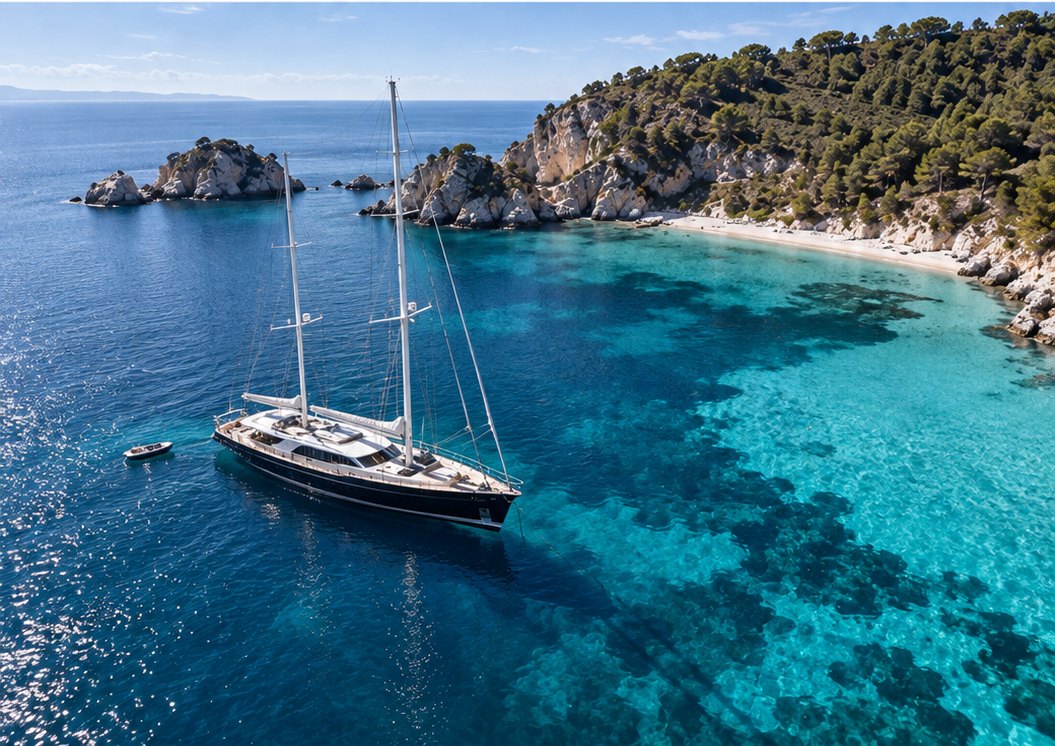
Be the first reader to react to this article.
For anyone looking at common specification upgrades that solve real problems, the first job is not to decide what looks best.
For anyone looking at common specification upgrades that solve real problems, the first job is not to decide what looks best. It is to establish what problem actually needs solving.
Risk is best dealt with before commitment. That means independent inspection where appropriate, clear written scope, confirmation of insurance implications and an agreed process for defects or incomplete work. In higher-value transactions, legal, tax and regulatory advice should come from qualified advisers in the relevant jurisdiction. The purpose is not to make every transaction defensive; it is to stop assumptions becoming expensive surprises.
Resale should be considered even by people who intend to keep something for years. Highly personal specifications can be perfectly sensible, but buyers should understand the trade-off. Widely supported equipment, sensible layouts, complete records and recognised maintenance tend to be easier for the next owner to understand. The objective is not to design everything for an unknown future buyer; it is simply to avoid destroying flexibility without a good reason.
Cost also needs to be separated into purchase cost and ownership cost. The second figure is usually less visible. Consumables, routine servicing, insurance, finance, berthing or storage, professional fees, software subscriptions, inspections and eventual replacement items can materially change the economics. A useful quotation is therefore one that makes exclusions obvious.
If a supplier cannot explain what normally falls outside the quoted figure, ask for that clarification before treating two prices as comparable.
After-sales support can be more important than the original specification. A component that is excellent on paper is less attractive if parts take months to arrive or there is no competent service agent where the equipment will be used. The same applies to software-led products: ownership now includes updates, access rights, data and sometimes recurring subscriptions. Find out who supports the system, for how long, and what happens if the original supplier changes hands.
Timing matters. Buying or commissioning under deadline pressure weakens the buyer's position because there is less time to inspect, compare and walk away. Where possible, build the timetable backwards from the date the asset or service is genuinely required. Include survey or inspection time, corrections, training, delivery and a contingency. A realistic programme often reveals that the cheapest-looking option is not the one with the lowest overall cost.
The starting point is use. In sailing yachts, cruising, rigs and seamanship, two apparently similar products or services can be right for completely different owners because their operating pattern is different. Frequency of use, geography, crew or staffing, storage, servicing access and the length of time you expect to keep the asset all change the answer. Before comparing brands or quotations, write down those constraints.
It sounds basic, but it prevents a specification being chosen for a lifestyle that exists only in the sales material.
Technical claims deserve context. Range, output, capacity, speed, efficiency and performance figures are normally produced under stated conditions. Real use adds weather, load, temperature, fouling, route, operator behaviour and reserve margins. Rather than arguing over a headline number, ask what assumptions sit behind it and what happens when those assumptions change. That produces a much more useful comparison.
Comparison becomes easier if every contender is put through the same questions. Ask for the same operating assumptions, the same delivery point, the same warranty period and the same list of included equipment or services. That turns a collection of sales conversations into something closer to a procurement exercise and exposes the areas where one quotation has quietly omitted an expensive item.
References are useful when they are relevant. A supplier's biggest or most prestigious project may tell you very little about how it handles an ordinary job in your region. Ask instead for examples with a similar scale, operating pattern and timetable. The most useful reference is often the customer who has lived with the product for two or three years and has already needed after-sales support.
The practical test for sailing yachts, cruising, rigs and seamanship is whether the decision still makes sense when circumstances are less than ideal. Weather changes, schedules move, components fail and people use equipment differently from the designer's neat assumptions. Building a little resilience into the choice usually costs less than trying to recover it afterwards.
A measured decision now generally costs less than correcting an enthusiastic one later.
Contributor: Paul Thompson / Editorial / 24SailingYachts

Be the first reader to react to this article.
The market has become very good at presenting sailing-yacht ownership: what buyers should ask about warranties and after-sales support as simple.
The market has become very good at presenting sailing-yacht ownership: what buyers should ask about warranties and after-sales support as simple. In practice, the details still determine whether it works.
Sustainability claims are increasingly part of the decision as well. The useful question is not whether a product is described as green, but what has actually changed: energy use, fuel consumption, material choice, repairability, service life, emissions, waste or end-of-life handling. Improvements in one area can create compromises in another. Evidence and measured performance are more valuable than broad environmental language.
Finally, insist on a proper handover. Familiarisation, emergency procedures, maintenance intervals, passwords, spare parts, warranty contacts and operating limitations should all be understood before the supplier disappears over the horizon. A surprising number of early problems are not failures at all but gaps in handover. Thirty minutes spent recording the right information can save days later.
Documentation is another practical test. Service records, manuals, certificates, invoices, warranties, software licences and evidence of previous work are not administrative clutter; they are part of the asset. Good records make troubleshooting easier and can support resale. Missing records do not automatically mean there is a problem, but they increase uncertainty, and uncertainty should be reflected in the questions asked, the inspection undertaken and sometimes the price.
Risk is best dealt with before commitment. That means independent inspection where appropriate, clear written scope, confirmation of insurance implications and an agreed process for defects or incomplete work. In higher-value transactions, legal, tax and regulatory advice should come from qualified advisers in the relevant jurisdiction. The purpose is not to make every transaction defensive; it is to stop assumptions becoming expensive surprises.
Resale should be considered even by people who intend to keep something for years. Highly personal specifications can be perfectly sensible, but buyers should understand the trade-off. Widely supported equipment, sensible layouts, complete records and recognised maintenance tend to be easier for the next owner to understand. The objective is not to design everything for an unknown future buyer; it is simply to avoid destroying flexibility without a good reason.
Cost also needs to be separated into purchase cost and ownership cost. The second figure is usually less visible. Consumables, routine servicing, insurance, finance, berthing or storage, professional fees, software subscriptions, inspections and eventual replacement items can materially change the economics. A useful quotation is therefore one that makes exclusions obvious.
If a supplier cannot explain what normally falls outside the quoted figure, ask for that clarification before treating two prices as comparable.
After-sales support can be more important than the original specification. A component that is excellent on paper is less attractive if parts take months to arrive or there is no competent service agent where the equipment will be used. The same applies to software-led products: ownership now includes updates, access rights, data and sometimes recurring subscriptions. Find out who supports the system, for how long, and what happens if the original supplier changes hands.
When money is about to change hands, the sequence matters. Establish identity and authority to sell, agree exactly what is included, record known defects and make any deposit terms clear. Where a survey, valuation or finance approval is part of the transaction, the contract should reflect that process rather than relying on a verbal understanding. Buyers should also know when risk and title transfer, particularly if the asset is moving between jurisdictions.
Market value is evidence, not aspiration. Advertised prices show what sellers hope to achieve; completed transactions, condition, specification, location and time on market give a better picture. A well-presented example can deserve a premium, but a premium still needs a reason. The strongest negotiating position comes from knowing which defects are merely cosmetic, which affect usability and which could lead to immediate capital expenditure.
The practical test for sailing yachts, cruising, rigs and seamanship is whether the decision still makes sense when circumstances are less than ideal. Weather changes, schedules move, components fail and people use equipment differently from the designer's neat assumptions. Building a little resilience into the choice usually costs less than trying to recover it afterwards.
None of this makes the decision difficult. It simply moves attention from presentation to evidence, which is usually where the better value sits.
Contributor: Paul Thompson / Editorial / 24SailingYachts

Be the first reader to react to this article.
For anyone looking at how to judge claims about sustainability without accepting the marketing, the first job is not to decide what looks best.
For anyone looking at how to judge claims about sustainability without accepting the marketing, the first job is not to decide what looks best. It is to establish what problem actually needs solving.
Timing matters. Buying or commissioning under deadline pressure weakens the buyer's position because there is less time to inspect, compare and walk away. Where possible, build the timetable backwards from the date the asset or service is genuinely required. Include survey or inspection time, corrections, training, delivery and a contingency. A realistic programme often reveals that the cheapest-looking option is not the one with the lowest overall cost.
The starting point is use. In sailing yachts, cruising, rigs and seamanship, two apparently similar products or services can be right for completely different owners because their operating pattern is different. Frequency of use, geography, crew or staffing, storage, servicing access and the length of time you expect to keep the asset all change the answer. Before comparing brands or quotations, write down those constraints.
It sounds basic, but it prevents a specification being chosen for a lifestyle that exists only in the sales material.
Technical claims deserve context. Range, output, capacity, speed, efficiency and performance figures are normally produced under stated conditions. Real use adds weather, load, temperature, fouling, route, operator behaviour and reserve margins. Rather than arguing over a headline number, ask what assumptions sit behind it and what happens when those assumptions change. That produces a much more useful comparison.
Sustainability claims are increasingly part of the decision as well. The useful question is not whether a product is described as green, but what has actually changed: energy use, fuel consumption, material choice, repairability, service life, emissions, waste or end-of-life handling. Improvements in one area can create compromises in another. Evidence and measured performance are more valuable than broad environmental language.
Finally, insist on a proper handover. Familiarisation, emergency procedures, maintenance intervals, passwords, spare parts, warranty contacts and operating limitations should all be understood before the supplier disappears over the horizon. A surprising number of early problems are not failures at all but gaps in handover. Thirty minutes spent recording the right information can save days later.
Documentation is another practical test. Service records, manuals, certificates, invoices, warranties, software licences and evidence of previous work are not administrative clutter; they are part of the asset. Good records make troubleshooting easier and can support resale. Missing records do not automatically mean there is a problem, but they increase uncertainty, and uncertainty should be reflected in the questions asked, the inspection undertaken and sometimes the price.
Risk is best dealt with before commitment. That means independent inspection where appropriate, clear written scope, confirmation of insurance implications and an agreed process for defects or incomplete work. In higher-value transactions, legal, tax and regulatory advice should come from qualified advisers in the relevant jurisdiction. The purpose is not to make every transaction defensive; it is to stop assumptions becoming expensive surprises.
My own shorthand for how to judge claims about sustainability without accepting the marketing is simple: verify the condition, verify the paperwork, understand the support network and calculate the cost on a realistic pattern of use. If any one of those four is unclear, there is still work to do before committing.

Energy decisions need a duty-cycle calculation. Average use is less important than the difficult day: the longest passage, the coldest morning, the heaviest load, the remote berth or the turnaround with the least charging time. Design around that case with a sensible reserve and the everyday operation normally becomes straightforward. Design around the brochure average and the owner may spend years managing around the system.
Infrastructure should be checked before hardware is ordered. Available electrical supply, connector type, grid capacity, bunkering arrangements, ventilation, fire protection and local operating rules can all dictate what is practical. In many projects the limiting factor is not the motor, battery or fuel technology; it is the place where the asset has to recharge, refuel or be maintained.
The practical test for sailing yachts, cruising, rigs and seamanship is whether the decision still makes sense when circumstances are less than ideal. Weather changes, schedules move, components fail and people use equipment differently from the designer's neat assumptions. Building a little resilience into the choice usually costs less than trying to recover it afterwards.
For most readers, that is enough to narrow the field considerably before serious money or time is committed.
Contributor: Paul Thompson / Editorial / 24SailingYachts
Be the first reader to react to this article.
A good decision in sailing yachts, cruising, rigs and seamanship rarely comes from one impressive specification.
A good decision in sailing yachts, cruising, rigs and seamanship rarely comes from one impressive specification. It comes from understanding how the whole package will be used.
Resale should be considered even by people who intend to keep something for years. Highly personal specifications can be perfectly sensible, but buyers should understand the trade-off. Widely supported equipment, sensible layouts, complete records and recognised maintenance tend to be easier for the next owner to understand. The objective is not to design everything for an unknown future buyer; it is simply to avoid destroying flexibility without a good reason.
Cost also needs to be separated into purchase cost and ownership cost. The second figure is usually less visible. Consumables, routine servicing, insurance, finance, berthing or storage, professional fees, software subscriptions, inspections and eventual replacement items can materially change the economics. A useful quotation is therefore one that makes exclusions obvious.
If a supplier cannot explain what normally falls outside the quoted figure, ask for that clarification before treating two prices as comparable.
After-sales support can be more important than the original specification. A component that is excellent on paper is less attractive if parts take months to arrive or there is no competent service agent where the equipment will be used. The same applies to software-led products: ownership now includes updates, access rights, data and sometimes recurring subscriptions. Find out who supports the system, for how long, and what happens if the original supplier changes hands.
Timing matters. Buying or commissioning under deadline pressure weakens the buyer's position because there is less time to inspect, compare and walk away. Where possible, build the timetable backwards from the date the asset or service is genuinely required. Include survey or inspection time, corrections, training, delivery and a contingency. A realistic programme often reveals that the cheapest-looking option is not the one with the lowest overall cost.
The starting point is use. In sailing yachts, cruising, rigs and seamanship, two apparently similar products or services can be right for completely different owners because their operating pattern is different. Frequency of use, geography, crew or staffing, storage, servicing access and the length of time you expect to keep the asset all change the answer. Before comparing brands or quotations, write down those constraints.
It sounds basic, but it prevents a specification being chosen for a lifestyle that exists only in the sales material.
Technical claims deserve context. Range, output, capacity, speed, efficiency and performance figures are normally produced under stated conditions. Real use adds weather, load, temperature, fouling, route, operator behaviour and reserve margins. Rather than arguing over a headline number, ask what assumptions sit behind it and what happens when those assumptions change. That produces a much more useful comparison.
Sustainability claims are increasingly part of the decision as well. The useful question is not whether a product is described as green, but what has actually changed: energy use, fuel consumption, material choice, repairability, service life, emissions, waste or end-of-life handling. Improvements in one area can create compromises in another. Evidence and measured performance are more valuable than broad environmental language.
Connected equipment creates a second maintenance schedule: passwords, access permissions, firmware, backups and subscriptions. Owners should know which systems can be updated remotely, which data leaves the asset and whether loss of an online service affects core operation. A paper or offline record of critical settings is still useful when the problem being diagnosed is the network itself.
Cybersecurity does not need to become a specialist exercise for every user. Basic separation of guest and operational networks, unique credentials, prompt updates and controlled administrator access remove a large proportion of avoidable risk. The more important question for a supplier is whether security has been designed into the product and whether updates will continue throughout its realistic service life.
The practical test for sailing yachts, cruising, rigs and seamanship is whether the decision still makes sense when circumstances are less than ideal. Weather changes, schedules move, components fail and people use equipment differently from the designer's neat assumptions. Building a little resilience into the choice usually costs less than trying to recover it afterwards.
The sensible approach is therefore quite conventional: define the job, verify the evidence, price the whole commitment and keep enough margin for the things that never appear in the brochure.
Contributor: Paul Thompson / Editorial / 24SailingYachts

Be the first reader to react to this article.
This is one of those subjects where a little preparation is worth far more than a long list of features.
This is one of those subjects where a little preparation is worth far more than a long list of features.
Finally, insist on a proper handover. Familiarisation, emergency procedures, maintenance intervals, passwords, spare parts, warranty contacts and operating limitations should all be understood before the supplier disappears over the horizon. A surprising number of early problems are not failures at all but gaps in handover. Thirty minutes spent recording the right information can save days later.
Documentation is another practical test. Service records, manuals, certificates, invoices, warranties, software licences and evidence of previous work are not administrative clutter; they are part of the asset. Good records make troubleshooting easier and can support resale. Missing records do not automatically mean there is a problem, but they increase uncertainty, and uncertainty should be reflected in the questions asked, the inspection undertaken and sometimes the price.
Risk is best dealt with before commitment. That means independent inspection where appropriate, clear written scope, confirmation of insurance implications and an agreed process for defects or incomplete work. In higher-value transactions, legal, tax and regulatory advice should come from qualified advisers in the relevant jurisdiction. The purpose is not to make every transaction defensive; it is to stop assumptions becoming expensive surprises.
Resale should be considered even by people who intend to keep something for years. Highly personal specifications can be perfectly sensible, but buyers should understand the trade-off. Widely supported equipment, sensible layouts, complete records and recognised maintenance tend to be easier for the next owner to understand. The objective is not to design everything for an unknown future buyer; it is simply to avoid destroying flexibility without a good reason.
Cost also needs to be separated into purchase cost and ownership cost. The second figure is usually less visible. Consumables, routine servicing, insurance, finance, berthing or storage, professional fees, software subscriptions, inspections and eventual replacement items can materially change the economics. A useful quotation is therefore one that makes exclusions obvious.
If a supplier cannot explain what normally falls outside the quoted figure, ask for that clarification before treating two prices as comparable.
After-sales support can be more important than the original specification. A component that is excellent on paper is less attractive if parts take months to arrive or there is no competent service agent where the equipment will be used. The same applies to software-led products: ownership now includes updates, access rights, data and sometimes recurring subscriptions. Find out who supports the system, for how long, and what happens if the original supplier changes hands.
Timing matters. Buying or commissioning under deadline pressure weakens the buyer's position because there is less time to inspect, compare and walk away. Where possible, build the timetable backwards from the date the asset or service is genuinely required. Include survey or inspection time, corrections, training, delivery and a contingency. A realistic programme often reveals that the cheapest-looking option is not the one with the lowest overall cost.
Connected equipment creates a second maintenance schedule: passwords, access permissions, firmware, backups and subscriptions. Owners should know which systems can be updated remotely, which data leaves the asset and whether loss of an online service affects core operation. A paper or offline record of critical settings is still useful when the problem being diagnosed is the network itself.
Cybersecurity does not need to become a specialist exercise for every user. Basic separation of guest and operational networks, unique credentials, prompt updates and controlled administrator access remove a large proportion of avoidable risk. The more important question for a supplier is whether security has been designed into the product and whether updates will continue throughout its realistic service life.
The practical test for sailing yachts, cruising, rigs and seamanship is whether the decision still makes sense when circumstances are less than ideal. Weather changes, schedules move, components fail and people use equipment differently from the designer's neat assumptions. Building a little resilience into the choice usually costs less than trying to recover it afterwards.
The sensible approach is therefore quite conventional: define the job, verify the evidence, price the whole commitment and keep enough margin for the things that never appear in the brochure.
Contributor: Paul Thompson / Editorial / 24SailingYachts
Be the first reader to react to this article.
The market has become very good at presenting five-year thinking: decisions today that affect cost, usability and value later as simple.
The market has become very good at presenting five-year thinking: decisions today that affect cost, usability and value later as simple. In practice, the details still determine whether it works.
The starting point is use. In sailing yachts, cruising, rigs and seamanship, two apparently similar products or services can be right for completely different owners because their operating pattern is different. Frequency of use, geography, crew or staffing, storage, servicing access and the length of time you expect to keep the asset all change the answer. Before comparing brands or quotations, write down those constraints.
It sounds basic, but it prevents a specification being chosen for a lifestyle that exists only in the sales material.
Technical claims deserve context. Range, output, capacity, speed, efficiency and performance figures are normally produced under stated conditions. Real use adds weather, load, temperature, fouling, route, operator behaviour and reserve margins. Rather than arguing over a headline number, ask what assumptions sit behind it and what happens when those assumptions change. That produces a much more useful comparison.
Sustainability claims are increasingly part of the decision as well. The useful question is not whether a product is described as green, but what has actually changed: energy use, fuel consumption, material choice, repairability, service life, emissions, waste or end-of-life handling. Improvements in one area can create compromises in another. Evidence and measured performance are more valuable than broad environmental language.
Finally, insist on a proper handover. Familiarisation, emergency procedures, maintenance intervals, passwords, spare parts, warranty contacts and operating limitations should all be understood before the supplier disappears over the horizon. A surprising number of early problems are not failures at all but gaps in handover. Thirty minutes spent recording the right information can save days later.
Documentation is another practical test. Service records, manuals, certificates, invoices, warranties, software licences and evidence of previous work are not administrative clutter; they are part of the asset. Good records make troubleshooting easier and can support resale. Missing records do not automatically mean there is a problem, but they increase uncertainty, and uncertainty should be reflected in the questions asked, the inspection undertaken and sometimes the price.
Risk is best dealt with before commitment. That means independent inspection where appropriate, clear written scope, confirmation of insurance implications and an agreed process for defects or incomplete work. In higher-value transactions, legal, tax and regulatory advice should come from qualified advisers in the relevant jurisdiction. The purpose is not to make every transaction defensive; it is to stop assumptions becoming expensive surprises.
Resale should be considered even by people who intend to keep something for years. Highly personal specifications can be perfectly sensible, but buyers should understand the trade-off. Widely supported equipment, sensible layouts, complete records and recognised maintenance tend to be easier for the next owner to understand. The objective is not to design everything for an unknown future buyer; it is simply to avoid destroying flexibility without a good reason.
Comparison becomes easier if every contender is put through the same questions. Ask for the same operating assumptions, the same delivery point, the same warranty period and the same list of included equipment or services. That turns a collection of sales conversations into something closer to a procurement exercise and exposes the areas where one quotation has quietly omitted an expensive item.
References are useful when they are relevant. A supplier's biggest or most prestigious project may tell you very little about how it handles an ordinary job in your region. Ask instead for examples with a similar scale, operating pattern and timetable. The most useful reference is often the customer who has lived with the product for two or three years and has already needed after-sales support.
The practical test for sailing yachts, cruising, rigs and seamanship is whether the decision still makes sense when circumstances are less than ideal. Weather changes, schedules move, components fail and people use equipment differently from the designer's neat assumptions. Building a little resilience into the choice usually costs less than trying to recover it afterwards.
None of this makes the decision difficult. It simply moves attention from presentation to evidence, which is usually where the better value sits.
Contributor: Paul Thompson / Editorial / 24SailingYachts
Be the first reader to react to this article.
Every quarter produces plenty of announcements in sailing yachts, seamanship, ownership, cruising and equipment, but the useful story is usually not the loudest one. I am more interested in the changes that alter what somebody buys, what it costs to operate, how quickly support arrives and whether the decision still makes sense several years later.
Every quarter produces plenty of announcements in sailing yachts, seamanship, ownership, cruising and equipment, but the useful story is usually not the loudest one. I am more interested in the changes that alter what somebody buys, what it costs to operate, how quickly support arrives and whether the decision still makes sense several years later.
What is changing
Start by defining the job in plain language. What does the buyer, owner, operator or guest actually need to achieve, and under what conditions? That immediately makes comparison easier. A specification that is excellent for one use can be unnecessarily expensive or actively inconvenient for another. I would write down the non-negotiables, the desirable extras and the things that merely look attractive in a sales presentation.
Then verify the basics. Ask for documents, dimensions, service intervals, exclusions, lead times, warranties, references or operating data where they are relevant. If a claim materially affects the decision, it should be capable of being explained without resorting to vague phrases. This is particularly important where two offers appear similar but include different levels of preparation, support or responsibility.
Why it matters in practice
Price needs context. The cheapest quotation can become the expensive option once delivery, installation, travel, consumables, finance, insurance, maintenance, downtime or replacement are included. Equally, paying more is not evidence of quality. The useful comparison is total cost against the benefit that will actually be used.
Support deserves the same scrutiny as the initial product or service. Who answers the telephone when something goes wrong? Is technical knowledge held in-house or passed elsewhere? Are parts, people or replacements readily available? A realistic response time can be more valuable than an impressive feature that becomes unusable for weeks when a minor component fails.
There is also a human factor. Complicated systems and elaborate processes are often sold on capability, but somebody has to live with them. Training, handover, documentation and ease of use should therefore be part of the buying decision, not an afterthought.
What readers should watch next
Before committing, I would reduce the decision to a short written comparison. What problem does each option solve, what evidence supports the claims, what is excluded, what are the likely running costs, and what happens if circumstances change? That final question is important because resale, upgrade, relocation, regulation and changing patterns of use can alter the economics surprisingly quickly.
The strongest decisions in sailing yachts, seamanship, ownership, cruising and equipment are rarely the ones with the longest specification or the most fashionable name attached. They are the ones where the requirement was understood at the beginning, the evidence was checked, the inconvenient questions were asked and the owner or customer knew exactly what would happen after the deal was done.
That is also the standard I would apply to this category in the magazine. It should help a reader make a better decision, not simply give another supplier somewhere to repeat a brochure.
Contributor: Paul Thompson / Editorial / 24SailingYachts
Be the first reader to react to this article.
The expensive mistakes in sailing yachts, seamanship, ownership, cruising and equipment are rarely caused by one spectacular failure. More often they begin with a small assumption that nobody checked. That is why I would start with the detail that sits behind the brochure, quotation or listing rather than the headline promise.
The expensive mistakes in sailing yachts, seamanship, ownership, cruising and equipment are rarely caused by one spectacular failure. More often they begin with a small assumption that nobody checked. That is why I would start with the detail that sits behind the brochure, quotation or listing rather than the headline promise.
The overlooked detail
Start by defining the job in plain language. What does the buyer, owner, operator or guest actually need to achieve, and under what conditions? That immediately makes comparison easier. A specification that is excellent for one use can be unnecessarily expensive or actively inconvenient for another. I would write down the non-negotiables, the desirable extras and the things that merely look attractive in a sales presentation.
Then verify the basics. Ask for documents, dimensions, service intervals, exclusions, lead times, warranties, references or operating data where they are relevant. If a claim materially affects the decision, it should be capable of being explained without resorting to vague phrases. This is particularly important where two offers appear similar but include different levels of preparation, support or responsibility.
Where cost and risk appear
Price needs context. The cheapest quotation can become the expensive option once delivery, installation, travel, consumables, finance, insurance, maintenance, downtime or replacement are included. Equally, paying more is not evidence of quality. The useful comparison is total cost against the benefit that will actually be used.
Support deserves the same scrutiny as the initial product or service. Who answers the telephone when something goes wrong? Is technical knowledge held in-house or passed elsewhere? Are parts, people or replacements readily available? A realistic response time can be more valuable than an impressive feature that becomes unusable for weeks when a minor component fails.
There is also a human factor. Complicated systems and elaborate processes are often sold on capability, but somebody has to live with them. Training, handover, documentation and ease of use should therefore be part of the buying decision, not an afterthought.
Questions to ask before committing
Before committing, I would reduce the decision to a short written comparison. What problem does each option solve, what evidence supports the claims, what is excluded, what are the likely running costs, and what happens if circumstances change? That final question is important because resale, upgrade, relocation, regulation and changing patterns of use can alter the economics surprisingly quickly.
The strongest decisions in sailing yachts, seamanship, ownership, cruising and equipment are rarely the ones with the longest specification or the most fashionable name attached. They are the ones where the requirement was understood at the beginning, the evidence was checked, the inconvenient questions were asked and the owner or customer knew exactly what would happen after the deal was done.
That is also the standard I would apply to this category in the magazine. It should help a reader make a better decision, not simply give another supplier somewhere to repeat a brochure.
Contributor: Paul Thompson / Editorial / 24SailingYachts
Be the first reader to react to this article.
New does not automatically mean better. In sailing yachts, seamanship, ownership, cruising and equipment, a launch is worth attention when it removes a genuine inconvenience, reduces operating burden, improves safety or gives the buyer more useful choice. Everything else can wait until the excitement has settled.
New does not automatically mean better. In sailing yachts, seamanship, ownership, cruising and equipment, a launch is worth attention when it removes a genuine inconvenience, reduces operating burden, improves safety or gives the buyer more useful choice. Everything else can wait until the excitement has settled.
What is actually new
Start by defining the job in plain language. What does the buyer, owner, operator or guest actually need to achieve, and under what conditions? That immediately makes comparison easier. A specification that is excellent for one use can be unnecessarily expensive or actively inconvenient for another. I would write down the non-negotiables, the desirable extras and the things that merely look attractive in a sales presentation.
Then verify the basics. Ask for documents, dimensions, service intervals, exclusions, lead times, warranties, references or operating data where they are relevant. If a claim materially affects the decision, it should be capable of being explained without resorting to vague phrases. This is particularly important where two offers appear similar but include different levels of preparation, support or responsibility.
Separating substance from launch noise
Price needs context. The cheapest quotation can become the expensive option once delivery, installation, travel, consumables, finance, insurance, maintenance, downtime or replacement are included. Equally, paying more is not evidence of quality. The useful comparison is total cost against the benefit that will actually be used.
Support deserves the same scrutiny as the initial product or service. Who answers the telephone when something goes wrong? Is technical knowledge held in-house or passed elsewhere? Are parts, people or replacements readily available? A realistic response time can be more valuable than an impressive feature that becomes unusable for weeks when a minor component fails.
There is also a human factor. Complicated systems and elaborate processes are often sold on capability, but somebody has to live with them. Training, handover, documentation and ease of use should therefore be part of the buying decision, not an afterthought.
Where it could prove useful
Before committing, I would reduce the decision to a short written comparison. What problem does each option solve, what evidence supports the claims, what is excluded, what are the likely running costs, and what happens if circumstances change? That final question is important because resale, upgrade, relocation, regulation and changing patterns of use can alter the economics surprisingly quickly.
The strongest decisions in sailing yachts, seamanship, ownership, cruising and equipment are rarely the ones with the longest specification or the most fashionable name attached. They are the ones where the requirement was understood at the beginning, the evidence was checked, the inconvenient questions were asked and the owner or customer knew exactly what would happen after the deal was done.
That is also the standard I would apply to this category in the magazine. It should help a reader make a better decision, not simply give another supplier somewhere to repeat a brochure.
Contributor: Paul Thompson / Editorial / 24SailingYachts
Be the first reader to react to this article.
A useful professional contribution should leave the reader with something they can apply. For sailing yachts, seamanship, ownership, cruising and equipment, that means concentrating on the requirement, the evidence and the consequences of the decision rather than turning the page into a sales pitch.
A useful professional contribution should leave the reader with something they can apply. For sailing yachts, seamanship, ownership, cruising and equipment, that means concentrating on the requirement, the evidence and the consequences of the decision rather than turning the page into a sales pitch.
Start with the requirement
Start by defining the job in plain language. What does the buyer, owner, operator or guest actually need to achieve, and under what conditions? That immediately makes comparison easier. A specification that is excellent for one use can be unnecessarily expensive or actively inconvenient for another. I would write down the non-negotiables, the desirable extras and the things that merely look attractive in a sales presentation.
Then verify the basics. Ask for documents, dimensions, service intervals, exclusions, lead times, warranties, references or operating data where they are relevant. If a claim materially affects the decision, it should be capable of being explained without resorting to vague phrases. This is particularly important where two offers appear similar but include different levels of preparation, support or responsibility.
Check the evidence
Price needs context. The cheapest quotation can become the expensive option once delivery, installation, travel, consumables, finance, insurance, maintenance, downtime or replacement are included. Equally, paying more is not evidence of quality. The useful comparison is total cost against the benefit that will actually be used.
Support deserves the same scrutiny as the initial product or service. Who answers the telephone when something goes wrong? Is technical knowledge held in-house or passed elsewhere? Are parts, people or replacements readily available? A realistic response time can be more valuable than an impressive feature that becomes unusable for weeks when a minor component fails.
There is also a human factor. Complicated systems and elaborate processes are often sold on capability, but somebody has to live with them. Training, handover, documentation and ease of use should therefore be part of the buying decision, not an afterthought.
Keep the decision commercially grounded
Before committing, I would reduce the decision to a short written comparison. What problem does each option solve, what evidence supports the claims, what is excluded, what are the likely running costs, and what happens if circumstances change? That final question is important because resale, upgrade, relocation, regulation and changing patterns of use can alter the economics surprisingly quickly.
The strongest decisions in sailing yachts, seamanship, ownership, cruising and equipment are rarely the ones with the longest specification or the most fashionable name attached. They are the ones where the requirement was understood at the beginning, the evidence was checked, the inconvenient questions were asked and the owner or customer knew exactly what would happen after the deal was done.
That is also the standard I would apply to this category in the magazine. It should help a reader make a better decision, not simply give another supplier somewhere to repeat a brochure.
Contributor: Editorial Desk / Guest Contributor Brief / 24SailingYachts
Be the first reader to react to this article.
If I had an hour with a specialist in sailing yachts, seamanship, ownership, cruising and equipment, I would spend surprisingly little of it asking what they sell. The more revealing questions concern what they refuse to recommend, what commonly goes wrong, how they deal with delays and what happens after the invoice has been paid.
If I had an hour with a specialist in sailing yachts, seamanship, ownership, cruising and equipment, I would spend surprisingly little of it asking what they sell. The more revealing questions concern what they refuse to recommend, what commonly goes wrong, how they deal with delays and what happens after the invoice has been paid.
Questions about capability
Start by defining the job in plain language. What does the buyer, owner, operator or guest actually need to achieve, and under what conditions? That immediately makes comparison easier. A specification that is excellent for one use can be unnecessarily expensive or actively inconvenient for another. I would write down the non-negotiables, the desirable extras and the things that merely look attractive in a sales presentation.
Then verify the basics. Ask for documents, dimensions, service intervals, exclusions, lead times, warranties, references or operating data where they are relevant. If a claim materially affects the decision, it should be capable of being explained without resorting to vague phrases. This is particularly important where two offers appear similar but include different levels of preparation, support or responsibility.
Questions about delivery
Price needs context. The cheapest quotation can become the expensive option once delivery, installation, travel, consumables, finance, insurance, maintenance, downtime or replacement are included. Equally, paying more is not evidence of quality. The useful comparison is total cost against the benefit that will actually be used.
Support deserves the same scrutiny as the initial product or service. Who answers the telephone when something goes wrong? Is technical knowledge held in-house or passed elsewhere? Are parts, people or replacements readily available? A realistic response time can be more valuable than an impressive feature that becomes unusable for weeks when a minor component fails.
There is also a human factor. Complicated systems and elaborate processes are often sold on capability, but somebody has to live with them. Training, handover, documentation and ease of use should therefore be part of the buying decision, not an afterthought.
Questions about support after the sale
Before committing, I would reduce the decision to a short written comparison. What problem does each option solve, what evidence supports the claims, what is excluded, what are the likely running costs, and what happens if circumstances change? That final question is important because resale, upgrade, relocation, regulation and changing patterns of use can alter the economics surprisingly quickly.
The strongest decisions in sailing yachts, seamanship, ownership, cruising and equipment are rarely the ones with the longest specification or the most fashionable name attached. They are the ones where the requirement was understood at the beginning, the evidence was checked, the inconvenient questions were asked and the owner or customer knew exactly what would happen after the deal was done.
That is also the standard I would apply to this category in the magazine. It should help a reader make a better decision, not simply give another supplier somewhere to repeat a brochure.
Contributor: Paul Thompson / Editorial / 24SailingYachts
Be the first reader to react to this article.
There is no shortage of confident language around sailing yachts, seamanship, ownership, cruising and equipment. The difficulty is that confidence is not evidence. Buyers and operators are better served by information that can be checked: specifications, service commitments, operating limits, references, documentation and a clear explanation of cost.
There is no shortage of confident language around sailing yachts, seamanship, ownership, cruising and equipment. The difficulty is that confidence is not evidence. Buyers and operators are better served by information that can be checked: specifications, service commitments, operating limits, references, documentation and a clear explanation of cost.
The problem with easy claims
Start by defining the job in plain language. What does the buyer, owner, operator or guest actually need to achieve, and under what conditions? That immediately makes comparison easier. A specification that is excellent for one use can be unnecessarily expensive or actively inconvenient for another. I would write down the non-negotiables, the desirable extras and the things that merely look attractive in a sales presentation.
Then verify the basics. Ask for documents, dimensions, service intervals, exclusions, lead times, warranties, references or operating data where they are relevant. If a claim materially affects the decision, it should be capable of being explained without resorting to vague phrases. This is particularly important where two offers appear similar but include different levels of preparation, support or responsibility.
What better evidence looks like
Price needs context. The cheapest quotation can become the expensive option once delivery, installation, travel, consumables, finance, insurance, maintenance, downtime or replacement are included. Equally, paying more is not evidence of quality. The useful comparison is total cost against the benefit that will actually be used.
Support deserves the same scrutiny as the initial product or service. Who answers the telephone when something goes wrong? Is technical knowledge held in-house or passed elsewhere? Are parts, people or replacements readily available? A realistic response time can be more valuable than an impressive feature that becomes unusable for weeks when a minor component fails.
There is also a human factor. Complicated systems and elaborate processes are often sold on capability, but somebody has to live with them. Training, handover, documentation and ease of use should therefore be part of the buying decision, not an afterthought.
A more useful way to decide
Before committing, I would reduce the decision to a short written comparison. What problem does each option solve, what evidence supports the claims, what is excluded, what are the likely running costs, and what happens if circumstances change? That final question is important because resale, upgrade, relocation, regulation and changing patterns of use can alter the economics surprisingly quickly.
The strongest decisions in sailing yachts, seamanship, ownership, cruising and equipment are rarely the ones with the longest specification or the most fashionable name attached. They are the ones where the requirement was understood at the beginning, the evidence was checked, the inconvenient questions were asked and the owner or customer knew exactly what would happen after the deal was done.
That is also the standard I would apply to this category in the magazine. It should help a reader make a better decision, not simply give another supplier somewhere to repeat a brochure.
Contributor: Paul Thompson / Editorial / 24SailingYachts
Be the first reader to react to this article.
One recurring argument in sailing yachts, seamanship, ownership, cruising and equipment is whether the safest route is a proven standard package or a solution tailored closely to the individual user. Both approaches can be right, and both can become expensive when chosen for the wrong reason.
One recurring argument in sailing yachts, seamanship, ownership, cruising and equipment is whether the safest route is a proven standard package or a solution tailored closely to the individual user. Both approaches can be right, and both can become expensive when chosen for the wrong reason.
The case for standardisation
Start by defining the job in plain language. What does the buyer, owner, operator or guest actually need to achieve, and under what conditions? That immediately makes comparison easier. A specification that is excellent for one use can be unnecessarily expensive or actively inconvenient for another. I would write down the non-negotiables, the desirable extras and the things that merely look attractive in a sales presentation.
Then verify the basics. Ask for documents, dimensions, service intervals, exclusions, lead times, warranties, references or operating data where they are relevant. If a claim materially affects the decision, it should be capable of being explained without resorting to vague phrases. This is particularly important where two offers appear similar but include different levels of preparation, support or responsibility.
The case for customisation
Price needs context. The cheapest quotation can become the expensive option once delivery, installation, travel, consumables, finance, insurance, maintenance, downtime or replacement are included. Equally, paying more is not evidence of quality. The useful comparison is total cost against the benefit that will actually be used.
Support deserves the same scrutiny as the initial product or service. Who answers the telephone when something goes wrong? Is technical knowledge held in-house or passed elsewhere? Are parts, people or replacements readily available? A realistic response time can be more valuable than an impressive feature that becomes unusable for weeks when a minor component fails.
There is also a human factor. Complicated systems and elaborate processes are often sold on capability, but somebody has to live with them. Training, handover, documentation and ease of use should therefore be part of the buying decision, not an afterthought.
Where the sensible middle ground sits
Before committing, I would reduce the decision to a short written comparison. What problem does each option solve, what evidence supports the claims, what is excluded, what are the likely running costs, and what happens if circumstances change? That final question is important because resale, upgrade, relocation, regulation and changing patterns of use can alter the economics surprisingly quickly.
The strongest decisions in sailing yachts, seamanship, ownership, cruising and equipment are rarely the ones with the longest specification or the most fashionable name attached. They are the ones where the requirement was understood at the beginning, the evidence was checked, the inconvenient questions were asked and the owner or customer knew exactly what would happen after the deal was done.
That is also the standard I would apply to this category in the magazine. It should help a reader make a better decision, not simply give another supplier somewhere to repeat a brochure.
Contributor: Paul Thompson / Editorial / 24SailingYachts
Be the first reader to react to this article.
People who work around sailing yachts, seamanship, ownership, cruising and equipment every day tend to notice different things from a first-time buyer. They look past presentation and start with the awkward details: access, records, response times, condition, exclusions, compatibility and who is actually responsible when something stops working.
People who work around sailing yachts, seamanship, ownership, cruising and equipment every day tend to notice different things from a first-time buyer. They look past presentation and start with the awkward details: access, records, response times, condition, exclusions, compatibility and who is actually responsible when something stops working.
The first five minutes
Start by defining the job in plain language. What does the buyer, owner, operator or guest actually need to achieve, and under what conditions? That immediately makes comparison easier. A specification that is excellent for one use can be unnecessarily expensive or actively inconvenient for another. I would write down the non-negotiables, the desirable extras and the things that merely look attractive in a sales presentation.
Then verify the basics. Ask for documents, dimensions, service intervals, exclusions, lead times, warranties, references or operating data where they are relevant. If a claim materially affects the decision, it should be capable of being explained without resorting to vague phrases. This is particularly important where two offers appear similar but include different levels of preparation, support or responsibility.
The paperwork and detail
Price needs context. The cheapest quotation can become the expensive option once delivery, installation, travel, consumables, finance, insurance, maintenance, downtime or replacement are included. Equally, paying more is not evidence of quality. The useful comparison is total cost against the benefit that will actually be used.
Support deserves the same scrutiny as the initial product or service. Who answers the telephone when something goes wrong? Is technical knowledge held in-house or passed elsewhere? Are parts, people or replacements readily available? A realistic response time can be more valuable than an impressive feature that becomes unusable for weeks when a minor component fails.
There is also a human factor. Complicated systems and elaborate processes are often sold on capability, but somebody has to live with them. Training, handover, documentation and ease of use should therefore be part of the buying decision, not an afterthought.
The clues that justify a second look
Before committing, I would reduce the decision to a short written comparison. What problem does each option solve, what evidence supports the claims, what is excluded, what are the likely running costs, and what happens if circumstances change? That final question is important because resale, upgrade, relocation, regulation and changing patterns of use can alter the economics surprisingly quickly.
The strongest decisions in sailing yachts, seamanship, ownership, cruising and equipment are rarely the ones with the longest specification or the most fashionable name attached. They are the ones where the requirement was understood at the beginning, the evidence was checked, the inconvenient questions were asked and the owner or customer knew exactly what would happen after the deal was done.
That is also the standard I would apply to this category in the magazine. It should help a reader make a better decision, not simply give another supplier somewhere to repeat a brochure.
Contributor: Paul Thompson / Editorial / 24SailingYachts
Be the first reader to react to this article.
The best way to understand sailing yachts, seamanship, ownership, cruising and equipment is to experience it under conditions that resemble real use. A polished demonstration can be useful, but it should not prevent straightforward questions about inconvenience, noise, waiting time, staffing, storage, maintenance or the parts of the experience that happen after the photograph.
The best way to understand sailing yachts, seamanship, ownership, cruising and equipment is to experience it under conditions that resemble real use. A polished demonstration can be useful, but it should not prevent straightforward questions about inconvenience, noise, waiting time, staffing, storage, maintenance or the parts of the experience that happen after the photograph.
Before you arrive
Start by defining the job in plain language. What does the buyer, owner, operator or guest actually need to achieve, and under what conditions? That immediately makes comparison easier. A specification that is excellent for one use can be unnecessarily expensive or actively inconvenient for another. I would write down the non-negotiables, the desirable extras and the things that merely look attractive in a sales presentation.
Then verify the basics. Ask for documents, dimensions, service intervals, exclusions, lead times, warranties, references or operating data where they are relevant. If a claim materially affects the decision, it should be capable of being explained without resorting to vague phrases. This is particularly important where two offers appear similar but include different levels of preparation, support or responsibility.
During the experience
Price needs context. The cheapest quotation can become the expensive option once delivery, installation, travel, consumables, finance, insurance, maintenance, downtime or replacement are included. Equally, paying more is not evidence of quality. The useful comparison is total cost against the benefit that will actually be used.
Support deserves the same scrutiny as the initial product or service. Who answers the telephone when something goes wrong? Is technical knowledge held in-house or passed elsewhere? Are parts, people or replacements readily available? A realistic response time can be more valuable than an impressive feature that becomes unusable for weeks when a minor component fails.
There is also a human factor. Complicated systems and elaborate processes are often sold on capability, but somebody has to live with them. Training, handover, documentation and ease of use should therefore be part of the buying decision, not an afterthought.
What to assess afterwards
Before committing, I would reduce the decision to a short written comparison. What problem does each option solve, what evidence supports the claims, what is excluded, what are the likely running costs, and what happens if circumstances change? That final question is important because resale, upgrade, relocation, regulation and changing patterns of use can alter the economics surprisingly quickly.
The strongest decisions in sailing yachts, seamanship, ownership, cruising and equipment are rarely the ones with the longest specification or the most fashionable name attached. They are the ones where the requirement was understood at the beginning, the evidence was checked, the inconvenient questions were asked and the owner or customer knew exactly what would happen after the deal was done.
That is also the standard I would apply to this category in the magazine. It should help a reader make a better decision, not simply give another supplier somewhere to repeat a brochure.
Contributor: Paul Thompson / Editorial / 24SailingYachts
Be the first reader to react to this article.
A review of anything connected with sailing yachts, seamanship, ownership, cruising and equipment should begin before the reviewer sees the product. Decide what matters first. Otherwise the most impressive feature in the room has a habit of becoming the most important feature in the review, whether it deserves to or not.
A review of anything connected with sailing yachts, seamanship, ownership, cruising and equipment should begin before the reviewer sees the product. Decide what matters first. Otherwise the most impressive feature in the room has a habit of becoming the most important feature in the review, whether it deserves to or not.
Set the test before the product
Start by defining the job in plain language. What does the buyer, owner, operator or guest actually need to achieve, and under what conditions? That immediately makes comparison easier. A specification that is excellent for one use can be unnecessarily expensive or actively inconvenient for another. I would write down the non-negotiables, the desirable extras and the things that merely look attractive in a sales presentation.
Then verify the basics. Ask for documents, dimensions, service intervals, exclusions, lead times, warranties, references or operating data where they are relevant. If a claim materially affects the decision, it should be capable of being explained without resorting to vague phrases. This is particularly important where two offers appear similar but include different levels of preparation, support or responsibility.
Use realistic conditions
Price needs context. The cheapest quotation can become the expensive option once delivery, installation, travel, consumables, finance, insurance, maintenance, downtime or replacement are included. Equally, paying more is not evidence of quality. The useful comparison is total cost against the benefit that will actually be used.
Support deserves the same scrutiny as the initial product or service. Who answers the telephone when something goes wrong? Is technical knowledge held in-house or passed elsewhere? Are parts, people or replacements readily available? A realistic response time can be more valuable than an impressive feature that becomes unusable for weeks when a minor component fails.
There is also a human factor. Complicated systems and elaborate processes are often sold on capability, but somebody has to live with them. Training, handover, documentation and ease of use should therefore be part of the buying decision, not an afterthought.
Judge ownership as well as performance
Before committing, I would reduce the decision to a short written comparison. What problem does each option solve, what evidence supports the claims, what is excluded, what are the likely running costs, and what happens if circumstances change? That final question is important because resale, upgrade, relocation, regulation and changing patterns of use can alter the economics surprisingly quickly.
The strongest decisions in sailing yachts, seamanship, ownership, cruising and equipment are rarely the ones with the longest specification or the most fashionable name attached. They are the ones where the requirement was understood at the beginning, the evidence was checked, the inconvenient questions were asked and the owner or customer knew exactly what would happen after the deal was done.
That is also the standard I would apply to this category in the magazine. It should help a reader make a better decision, not simply give another supplier somewhere to repeat a brochure.
Contributor: Paul Thompson / Editorial / 24SailingYachts
Be the first reader to react to this article.
A classified advertisement in sailing yachts, seamanship, ownership, cruising and equipment is an invitation to investigate, not proof of condition or value. Good listings make that investigation easier; weak ones often reveal themselves through what they omit.
A classified advertisement in sailing yachts, seamanship, ownership, cruising and equipment is an invitation to investigate, not proof of condition or value. Good listings make that investigation easier; weak ones often reveal themselves through what they omit.
Read between the lines
Start by defining the job in plain language. What does the buyer, owner, operator or guest actually need to achieve, and under what conditions? That immediately makes comparison easier. A specification that is excellent for one use can be unnecessarily expensive or actively inconvenient for another. I would write down the non-negotiables, the desirable extras and the things that merely look attractive in a sales presentation.
Then verify the basics. Ask for documents, dimensions, service intervals, exclusions, lead times, warranties, references or operating data where they are relevant. If a claim materially affects the decision, it should be capable of being explained without resorting to vague phrases. This is particularly important where two offers appear similar but include different levels of preparation, support or responsibility.
Verify before travelling or paying
Price needs context. The cheapest quotation can become the expensive option once delivery, installation, travel, consumables, finance, insurance, maintenance, downtime or replacement are included. Equally, paying more is not evidence of quality. The useful comparison is total cost against the benefit that will actually be used.
Support deserves the same scrutiny as the initial product or service. Who answers the telephone when something goes wrong? Is technical knowledge held in-house or passed elsewhere? Are parts, people or replacements readily available? A realistic response time can be more valuable than an impressive feature that becomes unusable for weeks when a minor component fails.
There is also a human factor. Complicated systems and elaborate processes are often sold on capability, but somebody has to live with them. Training, handover, documentation and ease of use should therefore be part of the buying decision, not an afterthought.
Compare total proposition, not asking price
Before committing, I would reduce the decision to a short written comparison. What problem does each option solve, what evidence supports the claims, what is excluded, what are the likely running costs, and what happens if circumstances change? That final question is important because resale, upgrade, relocation, regulation and changing patterns of use can alter the economics surprisingly quickly.
The strongest decisions in sailing yachts, seamanship, ownership, cruising and equipment are rarely the ones with the longest specification or the most fashionable name attached. They are the ones where the requirement was understood at the beginning, the evidence was checked, the inconvenient questions were asked and the owner or customer knew exactly what would happen after the deal was done.
That is also the standard I would apply to this category in the magazine. It should help a reader make a better decision, not simply give another supplier somewhere to repeat a brochure.
Contributor: Paul Thompson / Editorial / 24SailingYachts
Be the first reader to react to this article.
The most useful reader questions about sailing yachts, seamanship, ownership, cruising and equipment are usually practical rather than glamorous. What will it cost after purchase? Who supports it? What happens when plans change? Which claims can be verified? Those questions deserve more space than another page of adjectives.
The most useful reader questions about sailing yachts, seamanship, ownership, cruising and equipment are usually practical rather than glamorous. What will it cost after purchase? Who supports it? What happens when plans change? Which claims can be verified? Those questions deserve more space than another page of adjectives.
Cost and value
Start by defining the job in plain language. What does the buyer, owner, operator or guest actually need to achieve, and under what conditions? That immediately makes comparison easier. A specification that is excellent for one use can be unnecessarily expensive or actively inconvenient for another. I would write down the non-negotiables, the desirable extras and the things that merely look attractive in a sales presentation.
Then verify the basics. Ask for documents, dimensions, service intervals, exclusions, lead times, warranties, references or operating data where they are relevant. If a claim materially affects the decision, it should be capable of being explained without resorting to vague phrases. This is particularly important where two offers appear similar but include different levels of preparation, support or responsibility.
Service and accountability
Price needs context. The cheapest quotation can become the expensive option once delivery, installation, travel, consumables, finance, insurance, maintenance, downtime or replacement are included. Equally, paying more is not evidence of quality. The useful comparison is total cost against the benefit that will actually be used.
Support deserves the same scrutiny as the initial product or service. Who answers the telephone when something goes wrong? Is technical knowledge held in-house or passed elsewhere? Are parts, people or replacements readily available? A realistic response time can be more valuable than an impressive feature that becomes unusable for weeks when a minor component fails.
There is also a human factor. Complicated systems and elaborate processes are often sold on capability, but somebody has to live with them. Training, handover, documentation and ease of use should therefore be part of the buying decision, not an afterthought.
The questions that deserve clearer answers
Before committing, I would reduce the decision to a short written comparison. What problem does each option solve, what evidence supports the claims, what is excluded, what are the likely running costs, and what happens if circumstances change? That final question is important because resale, upgrade, relocation, regulation and changing patterns of use can alter the economics surprisingly quickly.
The strongest decisions in sailing yachts, seamanship, ownership, cruising and equipment are rarely the ones with the longest specification or the most fashionable name attached. They are the ones where the requirement was understood at the beginning, the evidence was checked, the inconvenient questions were asked and the owner or customer knew exactly what would happen after the deal was done.
That is also the standard I would apply to this category in the magazine. It should help a reader make a better decision, not simply give another supplier somewhere to repeat a brochure.
Contributor: Editorial Desk / Reader Questions / 24SailingYachts
Be the first reader to react to this article.
Forecasting sailing yachts, seamanship, ownership, cruising and equipment is easy if the aim is to sound futuristic. It is harder, and more useful, to identify changes that have a realistic route into everyday use. Cost, infrastructure, regulation, skills and customer behaviour usually decide the pace long before technology reaches its theoretical limit.
Forecasting sailing yachts, seamanship, ownership, cruising and equipment is easy if the aim is to sound futuristic. It is harder, and more useful, to identify changes that have a realistic route into everyday use. Cost, infrastructure, regulation, skills and customer behaviour usually decide the pace long before technology reaches its theoretical limit.
Technology with a purpose
Start by defining the job in plain language. What does the buyer, owner, operator or guest actually need to achieve, and under what conditions? That immediately makes comparison easier. A specification that is excellent for one use can be unnecessarily expensive or actively inconvenient for another. I would write down the non-negotiables, the desirable extras and the things that merely look attractive in a sales presentation.
Then verify the basics. Ask for documents, dimensions, service intervals, exclusions, lead times, warranties, references or operating data where they are relevant. If a claim materially affects the decision, it should be capable of being explained without resorting to vague phrases. This is particularly important where two offers appear similar but include different levels of preparation, support or responsibility.
Infrastructure and skills
Price needs context. The cheapest quotation can become the expensive option once delivery, installation, travel, consumables, finance, insurance, maintenance, downtime or replacement are included. Equally, paying more is not evidence of quality. The useful comparison is total cost against the benefit that will actually be used.
Support deserves the same scrutiny as the initial product or service. Who answers the telephone when something goes wrong? Is technical knowledge held in-house or passed elsewhere? Are parts, people or replacements readily available? A realistic response time can be more valuable than an impressive feature that becomes unusable for weeks when a minor component fails.
There is also a human factor. Complicated systems and elaborate processes are often sold on capability, but somebody has to live with them. Training, handover, documentation and ease of use should therefore be part of the buying decision, not an afterthought.
What is likely to remain stubbornly familiar
Before committing, I would reduce the decision to a short written comparison. What problem does each option solve, what evidence supports the claims, what is excluded, what are the likely running costs, and what happens if circumstances change? That final question is important because resale, upgrade, relocation, regulation and changing patterns of use can alter the economics surprisingly quickly.
The strongest decisions in sailing yachts, seamanship, ownership, cruising and equipment are rarely the ones with the longest specification or the most fashionable name attached. They are the ones where the requirement was understood at the beginning, the evidence was checked, the inconvenient questions were asked and the owner or customer knew exactly what would happen after the deal was done.
That is also the standard I would apply to this category in the magazine. It should help a reader make a better decision, not simply give another supplier somewhere to repeat a brochure.
Contributor: Paul Thompson / Editorial / 24SailingYachts
Be the first reader to react to this article.
Some ideas in sailing yachts, seamanship, ownership, cruising and equipment sound ridiculous until the problem they are trying to solve is understood. Others remain ridiculous after closer inspection. The useful exercise is working out which is which before paying to find out.
Some ideas in sailing yachts, seamanship, ownership, cruising and equipment sound ridiculous until the problem they are trying to solve is understood. Others remain ridiculous after closer inspection. The useful exercise is working out which is which before paying to find out.
Why it sounds odd
Start by defining the job in plain language. What does the buyer, owner, operator or guest actually need to achieve, and under what conditions? That immediately makes comparison easier. A specification that is excellent for one use can be unnecessarily expensive or actively inconvenient for another. I would write down the non-negotiables, the desirable extras and the things that merely look attractive in a sales presentation.
Then verify the basics. Ask for documents, dimensions, service intervals, exclusions, lead times, warranties, references or operating data where they are relevant. If a claim materially affects the decision, it should be capable of being explained without resorting to vague phrases. This is particularly important where two offers appear similar but include different levels of preparation, support or responsibility.
Where it can actually work
Price needs context. The cheapest quotation can become the expensive option once delivery, installation, travel, consumables, finance, insurance, maintenance, downtime or replacement are included. Equally, paying more is not evidence of quality. The useful comparison is total cost against the benefit that will actually be used.
Support deserves the same scrutiny as the initial product or service. Who answers the telephone when something goes wrong? Is technical knowledge held in-house or passed elsewhere? Are parts, people or replacements readily available? A realistic response time can be more valuable than an impressive feature that becomes unusable for weeks when a minor component fails.
There is also a human factor. Complicated systems and elaborate processes are often sold on capability, but somebody has to live with them. Training, handover, documentation and ease of use should therefore be part of the buying decision, not an afterthought.
The limitations nobody should ignore
Before committing, I would reduce the decision to a short written comparison. What problem does each option solve, what evidence supports the claims, what is excluded, what are the likely running costs, and what happens if circumstances change? That final question is important because resale, upgrade, relocation, regulation and changing patterns of use can alter the economics surprisingly quickly.
The strongest decisions in sailing yachts, seamanship, ownership, cruising and equipment are rarely the ones with the longest specification or the most fashionable name attached. They are the ones where the requirement was understood at the beginning, the evidence was checked, the inconvenient questions were asked and the owner or customer knew exactly what would happen after the deal was done.
That is also the standard I would apply to this category in the magazine. It should help a reader make a better decision, not simply give another supplier somewhere to repeat a brochure.
Contributor: Paul Thompson / Editorial / 24SailingYachts
Be the first reader to react to this article.
No single supplier, adviser or operator covers every part of sailing yachts, seamanship, ownership, cruising and equipment. Outcomes improve when the right specialists can be found quickly, information moves cleanly between them and everybody understands where their responsibility starts and finishes.
No single supplier, adviser or operator covers every part of sailing yachts, seamanship, ownership, cruising and equipment. Outcomes improve when the right specialists can be found quickly, information moves cleanly between them and everybody understands where their responsibility starts and finishes.
The information gap
Start by defining the job in plain language. What does the buyer, owner, operator or guest actually need to achieve, and under what conditions? That immediately makes comparison easier. A specification that is excellent for one use can be unnecessarily expensive or actively inconvenient for another. I would write down the non-negotiables, the desirable extras and the things that merely look attractive in a sales presentation.
Then verify the basics. Ask for documents, dimensions, service intervals, exclusions, lead times, warranties, references or operating data where they are relevant. If a claim materially affects the decision, it should be capable of being explained without resorting to vague phrases. This is particularly important where two offers appear similar but include different levels of preparation, support or responsibility.
Why trusted specialists matter
Price needs context. The cheapest quotation can become the expensive option once delivery, installation, travel, consumables, finance, insurance, maintenance, downtime or replacement are included. Equally, paying more is not evidence of quality. The useful comparison is total cost against the benefit that will actually be used.
Support deserves the same scrutiny as the initial product or service. Who answers the telephone when something goes wrong? Is technical knowledge held in-house or passed elsewhere? Are parts, people or replacements readily available? A realistic response time can be more valuable than an impressive feature that becomes unusable for weeks when a minor component fails.
There is also a human factor. Complicated systems and elaborate processes are often sold on capability, but somebody has to live with them. Training, handover, documentation and ease of use should therefore be part of the buying decision, not an afterthought.
Turning contacts into measurable value
Before committing, I would reduce the decision to a short written comparison. What problem does each option solve, what evidence supports the claims, what is excluded, what are the likely running costs, and what happens if circumstances change? That final question is important because resale, upgrade, relocation, regulation and changing patterns of use can alter the economics surprisingly quickly.
The strongest decisions in sailing yachts, seamanship, ownership, cruising and equipment are rarely the ones with the longest specification or the most fashionable name attached. They are the ones where the requirement was understood at the beginning, the evidence was checked, the inconvenient questions were asked and the owner or customer knew exactly what would happen after the deal was done.
That is also the standard I would apply to this category in the magazine. It should help a reader make a better decision, not simply give another supplier somewhere to repeat a brochure.
Contributor: Paul Thompson / Editorial / 24SailingYachts
Be the first reader to react to this article.
The entrance to Portsmouth Harbour looks deceptively simple from seaward: a marked approach, a narrow gate between the forts and a small-craft route tucked along its western side. Direction 2/26 makes clear why a yacht crew must treat those features as a system, not a set of convenient buoys. This is a practical reading of the harbour master’s rules, from the narrow-channel obligation to the cross-tide at the mouth and the VHF call that may shape a final turn. Chart work, timing and a prepared lookout make the difference between a passage that feels controlled and one spent reacting.

The first useful thing to know about Portsmouth Harbour is that the entrance is not a harbour mouth in the casual sense. It is a working, controlled passage where small craft, ferries, commercial traffic and naval movements share restricted water. From a yacht’s cockpit the marks may appear close together and the route easy to improvise. That visual impression is precisely why the King’s Harbour Master’s Direction 2/26 deserves to be read before the boat is committed to the approach.
Issued on 1 January 2026, the direction restates the legal and practical relationship between the main approach channel and the Small Boat Channel. It says the entrance and main approach are a narrow channel for the purposes of the collision regulations. Under Rule 9(b), vessels under 20 metres and sailing vessels must not impede a vessel that can safely navigate only within that channel. The sentence is short; its implications are not.
A yacht cannot assume that being under sail, being in the right, or being visible on AIS gives it precedence over a larger ship constrained by the dredged route.
The useful mental model is not “find the entrance and turn north”, but “arrive at the outer approach with the chart, traffic picture and tide already understood”. KHM identifies Admiralty charts 2625 and 2629 for the approach and entrance limits; the Small Boat Channel itself is shown on charts 2625 and 2631. Use current official charts and notices, check the harbour master’s latest directions and warnings, and compare them with the boat’s plotter.
An electronic track is helpful, but it does not explain what the marks mean or what is likely to happen if the vessel is carried sideways.
The approach channel is marked to the seaward of the entrance, with the dredged limits identified by buoys. The narrow-channel rule applies before the yacht reaches the inner harbour, so do not postpone the traffic assessment until the forts are abeam. Identify commercial and naval movements early, monitor the correct VHF channel as instructed by the current KHM information, and keep a listening watch.
The public shipping movements page can help with context, but it is not a guarantee that the water will be clear when you arrive. A movement list is one input to the plan, not permission to proceed.
The Small Boat Channel is on the western side of the harbour entrance. It is 50 metres wide, and is intended for craft under 20 metres, including personal watercraft. KHM’s entering-the-harbour guidance says small boats must use it to enter and leave. The rule is not a suggestion to use the channel when convenient; it is the prescribed route. For a yacht, that means setting up well before the entrance rather than making a late, sharp alteration when the channel is already in view.

A common source of confusion is that the channel’s western position can tempt an approaching boat to treat it as a separate, sheltered lane. It is not sheltered from the tide or from the consequences of the main channel’s traffic. The harbour master specifically warns that a strong cross-current can sweep small boats from the Small Boat Channel into mid-channel at the entrance. The small boat is also difficult for larger vessels to see, and the entrance includes a blind bend for traffic leaving the Camber.
Being in the right channel is therefore only the start of the job. You still have to hold the intended line, remain conspicuous, and leave room for ships whose options are limited.
The direction and KHM’s guidance distinguish the channel from the Inner Swashway and the main approach. The entrance is not a place to wander between routes because one looks less busy. Small craft are to enter or leave the Small Boat Channel from the east at its northern or southern extremities. At the Ballast Beacon, a traffic pattern is established: inbound small boats pass close to its east, outbound boats close to its west.
All vessels using the Small Boat Channel leave No 4 Bar Buoy to port, whether inbound or outbound. These instructions form a deliberate pattern. If every crew invents a slightly different shortcut, the pattern ceases to help anyone.
The Inner Swashway has its own restrictions. Vessels over 20 metres are not to use it, except when taking action to avoid collision under the collision regulations. At BC Outer, the red beacon south of Fort Blockhouse, vessels generally pass to its east; craft joining or leaving the Small Boat Channel at the Inner Swashway leave it to port. KHM flags this as an area that can become particularly busy in summer and warns about strong cross-currents.
These details matter because a yacht crew arriving late to a turn may be tempted to cross a boundary to recover the planned route. A better plan has the marks, turn points and fallback options written down before the boat is in the flow.
Cross-tide is not merely a correction to the compass course. The current changes the ground track and the time available to make a manoeuvre. If the yacht is being set towards the main channel, steering directly at the next mark may be the wrong response: the bow may point correctly while the boat slides laterally. The crew needs to know the stream direction and strength expected at the entrance, then allow for set and drift without allowing the correction to carry it beyond the channel edge.
There is no universal “best” tidal state. A favourable stream may improve control over the ground, while an adverse or cross-setting stream may make holding the narrow lane more demanding. The safe choice depends on the yacht’s speed, handling, visibility, crew and traffic, not on a single tide-table label.
This is where chart work becomes practical rather than academic. Mark the relevant limits and extremities; note the Ballast Beacon, No 4 Bar Buoy, BC Outer and the point at which a crossing is permitted. Work out the predicted stream at the actual time the yacht will reach the entrance, not simply at the time it leaves the last anchorage. Allow for the vessel’s real speed under sail and under engine, including time spent slowing, reefing or waiting outside.
If the stream forecast is uncertain or the timing slips, update the plan rather than pressing on because the original estimate looked tidy.
For a yacht with an engine, there is a further explicit requirement. KHM says craft fitted with engines are to proceed under power in the approach channel between No 4 Bar Buoy and Ballast Beacon. The crossing-harbour guidance also says that vessels fitted with engines bound for Gunwharf Quays or Town Camber use them from entering the Small Boat Channel until arrival. On departure from those destinations, engines are used until the vessel exits the channel.
Crews should read the current full wording rather than rely on a paraphrase, and ensure the engine is ready before entering the relevant stretch. “Ready” means more than a key in the ignition: confirm fuel, cooling, controls, charging and the ability to start promptly.
The call to KHM is part of the route when the passage requires a crossing. Small boats bound for Gunwharf Quays or Town Camber enter through the Small Boat Channel, cross the main channel only north of Ballast Pile, and first obtain permission on VHF Channel 11. Departing craft obtain permission before crossing and then go direct to Ballast Pile to leave by the Small Boat Channel. The harbour master’s wording should be checked for the precise current procedure, and the call made early enough to be useful.
Have the vessel’s identity and intended movement ready; do not begin a crossing while trying to compose a call or tune the radio.
This is also a reminder to check the yacht’s communications fit. KHM says craft without fixed or portable VHF, when departing from the Camber or Gunwharf and needing to cross, must be escorted by a marshalling craft or accompany another vessel so fitted. A handheld radio is useful only if charged, accessible and understood by the person operating it. The person on the helm should not be made the sole lookout, navigator and radio operator during a tight manoeuvre.
Agree who speaks, who watches traffic, and who calls the next mark.
The 50-metre width is a discipline as much as a dimension. KHM advises small boats to remain on the starboard side of the Small Boat Channel and adjust speed to remain within it rather than overtake and be forced into the main channel. That is a valuable instruction for a yacht under engine as well as for a faster launch. A sailing boat can feel slow beside a powerboat, but an attempted pass in a narrow channel can turn an orderly queue into a crossing hazard.
Retain safe speed, stay to the prescribed side, and accept that the passage may be slower than the boat’s normal harbour pace.
Do not loiter in the Small Boat Channel unless within the listed exceptions for craft such as pilot boats, police launches, harbour patrol launches, Border Force craft, naval vessels, lifeboats, senior officers’ boats and tugs engaged in towing or escorting. The rule protects a passage lane from becoming a waiting area. If you need to wait, do so where the charts and directions permit, clear of the route and with traffic in mind. Do not assume that because other vessels are stopped, a yacht may stop beside them.
The next task is to make the crew’s picture match the skipper’s. Before the approach, brief the crew with the chart open. Explain which side of the Small Boat Channel the yacht intends to use, where the cross-tide may set the boat, what the Ballast Beacon pattern requires, and what traffic would cause the yacht to delay or abort. Assign a lookout who can see beyond the sprayhood and is not occupied below. If the visibility is poor, reduce the plan to what can be safely executed and consider waiting.
The harbour is busy enough that a marginally visible sailing yacht has little to gain from arriving at the entrance under pressure.
The “abort” decision should be specific. If the yacht cannot establish a reliable position in the channel, if an engine does not start, if VHF contact is lost where it is required, or if a ship’s movement removes the planned margin, what will the crew do? Identify a safe place to hold or a route to remain clear, using current charts and directions. There is no virtue in committing because the entrance is close.
A delay outside is often less consequential than an improvised course alteration inside a confined channel.
For the same reason, treat speed as a control, not a target. The KHM safety guidance reminds mariners of the COLREGS safe-speed requirement. At the mouth, too much speed reduces the time available to react; too little may leave a yacht unable to maintain steerage against a cross-current. The right speed is the one that gives the crew control and leaves manoeuvring room.
Make adjustments before the critical point where possible, and avoid a sudden reduction that puts the yacht’s stern or bow across the intended track.
Racing sailors have an additional local consideration. KHM notes that the Spitbank area is often used for yacht racing and regattas, while hovercraft and high-speed catamarans use the Swashway on routes to and from Ryde. The authority advises yachts and slow-moving craft to maintain a thorough all-round lookout and take particular care to check the appropriate quarter before altering course. This is not simply a matter of seeing a fast craft on AIS. A vessel may approach quickly, and a yacht’s turn can be misread.
Look astern as well as ahead before changing course, and make the alteration early and clearly when it is safe to do so.
The practical approach can be reduced to a sequence, though it should not be mistaken for a substitute for the current chart. First, establish the yacht’s position well outside the entrance and identify the approach-channel limits. Second, review the current KHM directions, warnings and movements; check the tide for the expected arrival time. Third, set engine, crew roles, radio and lookout before reaching the narrow water.
Fourth, enter the Small Boat Channel from the east at the permitted extremity, keeping to its starboard side and following the Ballast Beacon and No 4 Bar Buoy instructions. Fifth, maintain a track that allows for the cross-set, without being carried towards the main channel. If crossing to Gunwharf Quays or Town Camber, make the required Channel 11 call and wait for permission before crossing north of Ballast Pile.
There is no shame in revising that sequence. A yacht sailing from the Solent may find the wind and tide combine to produce a much less comfortable entrance than the forecast suggested. A ship movement may alter the gap. A crew member may be seasick or the engine may be reluctant. The skipper remains responsible for the vessel’s safe conduct, and should be prepared to hold outside, divert or wait for another stream.
Local pilotage knowledge can add useful context, but it does not replace the harbour master’s direction or the chart.
Direction 2/26 is valuable because it makes the hierarchy of the water plain: the main channel is narrow, the yacht must not impede traffic constrained to it, and small craft have a designated channel with precise entry, crossing and beacon rules. The strongest practical advice is to translate each sentence into a visible action on the chart and a job for a person aboard. At Portsmouth’s entrance, confidence is not a matter of pressing on.
It is knowing where the yacht should be, what can move it sideways, who else has limited room, and which decision will keep the boat clear when the expected picture changes.
Contributor: Paul Thompson / 24SailingYachts
Be the first reader to react to this article.
Across the North Minch, the scheduled ferry is a moving part of the passage plan, not a landmark to be dealt with at the last minute. CalMac’s Uig–Lochmaddy service runs through the same open water used by yachts making for North Uist and Harris, and its 2026 timetable shifts between seasons and includes amended dates. A safe plan begins with the yacht’s own weather window, then overlays the ferry’s likely track, visibility and room to manoeuvre. Here is a practical way to build that picture, and to decide when a timetable is useful, when it is stale, and when waiting is the better seamanship.
The passage across the North Minch is not especially long in yacht miles. It can still feel substantial when the wind has backed, the sea has built and the island you are aiming for has disappeared into low cloud. The CalMac ferry between Uig on Skye and Lochmaddy on North Uist is part of that picture. It is a large, scheduled vessel crossing open water on a working route, and a yacht passage should account for it without making the ferry timetable the skipper’s weather forecast.
Begin with geography. Uig lies on the north-west of Skye, while Lochmaddy is on North Uist’s east coast. The route crosses the Little Minch, the water between Skye and the Outer Hebrides. CalMac’s Uig–Lochmaddy information identifies MV Hebrides as the route vessel and publishes separate seasonal timetables. For 2026, the published summer period runs from 27 March to 18 October; the winter timetable begins on 19 October and continues into March 2027.
The route page also flags an amended timetable for the Eilean Dorcha Festival from 22 to 28 July. That is already enough to show why an old printed timetable or a remembered departure time cannot be treated as current.
The first planning decision is whether the passage is justified at all. A yacht choosing to cross must weigh wind direction and strength, sea state, visibility, daylight, crew condition, tide and the availability of a safe alternative. The ferry’s timetable does not make an unsuitable sea state acceptable. Nor does a convenient gap between sailings guarantee that the route will be clear: weather disruption can delay, cancel or bunch vessels, and the service status page is the live source for operational changes.
The timetable is a planning aid; service status and actual traffic information matter on the day.
It helps to think in two separate plans. The first is the yacht’s passage plan: departure time, course, expected speed, waypoints, tidal allowances, forecast limits and decision points. The second is a traffic plan: where the ferry may be, what information is available, which side of its track the yacht will encounter it on, and what action leaves both vessels ample room. Overlay them only after the yacht’s own passage is coherent.
A ferry schedule cannot rescue a passage plan that puts the boat in a poor position at night or in deteriorating weather.
For a representative planning exercise, imagine a yacht leaving the Skye side for Lochmaddy. It is not a report of a particular voyage; it is a way to test the decisions a skipper must make. Work backwards from the intended arrival, allowing for the vessel’s realistic speed rather than the number on the log when the wind is astern. Add time for reefing, sail changes, sea-room, navigation and any delay before entering the harbour.
Then examine the forecast for the whole crossing, not just the conditions at departure. A north-westerly can make a short crossing uncomfortable on the exposed leg, while a shift in direction can turn a workable sea into a confused one. The crew’s tolerance matters as much as the yacht’s capability.
A yacht heading west from Uig may be sailing toward the ferry’s departure area; one leaving Lochmaddy may meet it on the way out or during the crossing. The precise encounter depends on departure timing and the service’s actual movement. Do not assume the vessel will leave exactly on the advertised minute, or that it will make the same speed in every condition. Use CalMac’s current route information, timetable, service status and, where available, live vessel information to build an estimate.
Recheck before departure. If the route is disrupted, the timetable’s usual pattern may no longer describe the water.
The useful question is not “Can I beat the ferry?” A yacht’s speed is variable, and the ferry is not obliged to accommodate a recreational timetable. Ask instead: where will each vessel likely be, what is the closest point of approach if neither alters, and what early action gives the clearest separation? The answer depends on the actual geometry, the collision regulations, visibility and the vessels’ manoeuvring room.
A yacht should keep out of the way of a vessel constrained by its draught or otherwise restricted in its ability to manoeuvre where the rules apply; in all cases, assess the situation early and do not rely on a last-minute turn.
The chart is the starting point for that assessment. Plot the route and identify the ferry ports, the likely line across the Minch, the areas where the yacht has sea room, and the water that should be avoided because of hazards or depth. Use up-to-date Admiralty charting and current notices, plus official tide and weather information.
The public sources cited here do not provide a single fixed ferry track for every sailing, so the yacht’s passage should not be based on an assumed straight line between terminal symbols. A large ship may adjust for weather, traffic, port approach or operational reasons.
The Minch’s tidal streams deserve specific attention because the route is not a flat sheet of water between two islands. The stream can affect the yacht’s ground track, arrival time and the angle at which a meeting with the ferry develops. Use the appropriate tidal stream data and charted information, then check the forecast and observe actual conditions. A small error in speed or stream estimate compounds over an exposed passage.
For a yacht making six knots through the water, a knot of current is a material change in ground speed; for a slower boat, it is more consequential still. Avoid false precision: tidal predictions are a planning basis, not a promise about the conditions under the keel.
A useful departure window is one in which the yacht has enough daylight and crew capacity to respond, with conditions expected to remain within agreed limits throughout. The chosen window should leave time in hand at the destination rather than force an arrival at the end of the day. If the ferry’s scheduled crossing falls inside the yacht’s likely route, the skipper can alter departure time, adjust the intended course to maintain safe separation where appropriate, or wait.
The option chosen should be made before the boat is committed to a narrow situation. If the yacht cannot cross without creating an uncertain close-quarters encounter, the route can wait.
This does not mean a yacht should make an exaggerated detour every time a ferry is scheduled. A large commercial vessel is visible, its movement can often be monitored, and the sea room may be generous. It does mean the yacht needs a deliberate traffic picture. Keep a proper lookout by sight and hearing; use radar or AIS as aids if fitted, not as replacements for the collision regulations. AIS data can be delayed, incomplete or misunderstood, and not every vessel or small craft will appear.
On a yacht, a person at the helm who is also trying to scan screens, navigate, talk on the radio and read the chart is not an adequate lookout team.
Divide the work. Before departure, one person can review the current timetable and service status; another can check weather, stream and charted route. At sea, establish a watch routine that includes regular visual scans, a listening watch on the appropriate VHF channel, and position checks against the planned route. If fitted, AIS can help identify a contact and estimate its movement. Radar can show a target in poor visibility, but only if the set is correctly tuned, understood and watched.
Electronic plotting may provide a closest-approach calculation, but the skipper still has to decide whether the assumptions are sound.
VHF is valuable for safety information, but should not be used as a substitute for taking early action under the collision regulations. A yacht should not call a ferry and expect the bridge to direct every manoeuvre. If communication is needed to clarify intentions, use concise, standard language and maintain the lookout while the call is made. Do not assume silence means agreement.
Keep clear when appropriate, make course alterations obvious, and avoid small, indecisive changes that are difficult for the other vessel to interpret.
The timetable itself takes a little reading. CalMac lists multiple legs in the Uig–Lochmaddy–Tarbert triangle, and a vessel may serve more than one destination within the same operating day. The sequence of departures and arrivals matters to a yacht crossing nearby because a vessel that is not currently shown on the Lochmaddy leg may be approaching from or continuing to Tarbert. Check the complete route timetable, not a cropped screenshot of one port’s departure.
The route information page provides downloads for the relevant date ranges and cautions users to check service status.
The 2026 seasonal split is particularly relevant to a Q4 reader. The published winter period beginning 19 October will operate under a different schedule from the summer. Shorter days and autumn weather make the timetable change only one part of the passage calculation. In winter, there is less daylight margin for a delayed departure, and a forecast can deteriorate quickly.
A yacht planning a North Minch passage late in the season should set conservative limits for visibility, wind and sea state, and should not count on a scheduled ferry continuing normally if conditions disrupt service.
Build a simple traffic worksheet before leaving. Record the ferry’s scheduled departure, the source and date of the timetable, any service notice, and the yacht’s expected position at the relevant times. Mark a broad “encounter period” rather than a single predicted meeting minute. Add a note about what will cause the yacht to delay or alter its plan: a forecast change, an unexpected ferry movement, reduced visibility, or a speed shortfall. This document need not be elaborate.
Its purpose is to stop the watch team from treating an early estimate as a fact hours later.
A realistic plan includes uncertainty. If the yacht averages slower than expected, the ferry’s departure is delayed, or a head sea reduces speed, the projected meeting will move. Update the estimate as the passage develops. A plotted route and a passage plan are living tools, not a contract. If the encounter is now likely at a less favourable time or location, act while there is still space. Do not wait until the ferry is close to ask whether the yacht has enough room.
Port approaches deserve their own planning. Lochmaddy’s harbour should be approached using the latest chart and local information, with attention to the weather exposure and the available depth. Uig is a busy ferry terminal, not a casual place to loiter in the ferry’s manoeuvring area. The yacht’s arrival should be timed to avoid impeding the vessel, and the crew should be ready to hold or divert if the ferry is approaching or the berth is occupied.
CalMac’s port pages provide operational details and contacts, but a visiting yacht should verify current access and berthing arrangements directly rather than infer them from passenger-ferry facilities.
There is also a human factor in choosing whether to go. A passage that looks straightforward to an experienced skipper can become a poor proposition if the crew is tired, seasick or not ready for a night watch. Decide before casting off what the maximum acceptable wind and sea conditions are, who will be on watch and what happens if someone is unwell. A yacht does not need to prove its range by crossing the Minch on the first available slot. If the conditions or crew are wrong, waiting is part of passage planning.
For those sailing from elsewhere in the Hebrides, the larger route network changes the alternatives. The CalMac timetable connects Uig with both Lochmaddy and Tarbert, while other services link islands and mainland ports. An itinerary can be adjusted around those services, but the yacht’s navigation remains independent. Ferry routes do not provide a safe corridor or a guaranteed opening.
A change of landfall, a sheltered anchorage or an extra night can be a more sensible answer than trying to preserve a fixed itinerary.
The most useful habit is to compare the plan with reality at regular intervals. Check the yacht’s position, speed over ground, wind and sea state against the expected values. Review the current ferry information again before the likely crossing period. Keep a record of any changes in the log. If the plan has drifted outside its limits, make the decision while there is room to do so. That is how a timetable becomes useful: as one layer in a broader picture that is updated as conditions change.
A ferry schedule can tell a yacht when a crossing is intended. It cannot tell the yacht what the wind will do, how much sea will stand up in the Minch, or what safe distance looks like in the conditions of the day. For those, the skipper needs charted water, current forecasts, a sensible stream estimate, a proper lookout and the willingness to wait. The North Minch rewards that order of thought.
First make a passage the yacht and crew can manage; then fit the ferry’s movements into it, with enough margin to change the plan when the timetable and the sea stop agreeing.
Contributor: Paul Thompson / 24SailingYachts
Be the first reader to react to this article.
A yacht arriving from abroad brings two separate jobs: reporting the voyage and settling the vessel’s customs position. HMRC’s July 2026 revisions make the distinction especially important for buyers, because a private arrival report does not itself import the yacht or decide its VAT status. This guide follows the sequence from classifying the voyage and preparing the pleasure craft report to deciding whether the boat is entering permanently or temporarily. The practical details are easy to miss at sea: the Q flag, passenger information, amended plans, supporting records and the new C384 requirement for owners importing a pleasure vessel.
The most expensive paperwork mistake in an overseas yacht purchase can begin with a seemingly modest assumption: that one report to the authorities covers everything required when the boat arrives. It does not. The pleasure craft report tells Border Force and HMRC about the voyage, people and goods on board. The vessel’s customs status, including whether it is being imported or entering temporarily, is a separate question.
The distinction matters whether the yacht is sailed home by its new owner or arrives under a different arrangement.
For the 2026 edition, the key official pages have recently changed. HMRC updated its arrival guidance on 20 July 2026, and the online reporting guidance was updated on 9 July. The arrival page says owners of vessels designed or adapted for recreation or pleasure use must complete form C384 (Vessels) on arrival in the UK when declaring the craft they are importing. The separate pleasure craft report process remains the route for reporting the voyage.
Buyers should use the live GOV.UK pages and current forms on the day; an old forum post or a saved PDF may not reflect the latest instructions.
Start by asking what the voyage is. A private vessel is one used for recreation when it arrives, and HMRC says this can include a company-owned boat used privately. Pleasure craft hired or chartered for private recreation may also report as pleasure craft, as can certain training vessels whose users are involved in sailing and operating the vessel.
By contrast, if the boat is being used to carry fare-paying passengers from one point to another and those passengers play no role in operating it, HMRC says it should report as a commercial vessel. Carrying goods for industrial or commercial purposes also leads to different commercial rules.
That classification is not a matter of what the yacht looks like or how its owner describes it in a sale listing. Think about the actual activity on arrival. A privately owned yacht with family aboard is not the same case as a boat carrying paying passengers as transport. A delivery crew being paid to move a newly purchased yacht should not assume that the ordinary leisure example answers every customs question.
Where the use is unusual, or the contractual arrangements are complicated, get advice from HMRC or a customs specialist before departure. A specialist can check the facts; no generic article can decide a particular vessel’s treatment.
Next, establish where the yacht is arriving from and where it is entering. HMRC requires a report for a pleasure craft arriving in Great Britain from outside Great Britain, including the Channel Islands but excluding Northern Ireland. Separate rules apply to arrival in Northern Ireland from places outside Great Britain, with the Isle of Man treated under its own stated exceptions. The route matters: “coming to the UK” is not precise enough for customs reporting.
Identify the first relevant arrival, the route taken and the place the vessel is intended to enter.
The report should be prepared before departure. HMRC’s online sPCR service must be used at least two hours before departure and no more than 24 hours before departure. The service asks for details of the vessel, skipper, everyone on board, and estimated departure and arrival times. The online route allows the skipper to amend a plan and replaces the earlier report with a new reference; it can also cancel a voyage that is abandoned.
In practical terms, that reference belongs in the yacht’s voyage folder or passage plan, where the skipper can retrieve it without searching through email at sea.
Prepare the underlying information before opening the form. Have the boat’s name and identifying details to hand, including registration where applicable. Confirm the skipper’s details and check the passport or travel document information for each person on board. HMRC specifies dates and estimated times for the plan. The effort is best spent checking that names and document details match the actual travellers rather than typing from memory at the last moment.
If crew change before departure, make sure the report describes the people actually sailing.
The report is not frozen once submitted. If departure is delayed, abandoned or any voyage detail changes, HMRC says to notify the authorities at the earliest opportunity. For an online report, amend it in the service; the amended record replaces the old one, so retain the new reference. If the skipper cannot access the online service, HMRC directs users to contact the National Yachtline about changes.
A weather delay that shifts the departure time, a change of crew or a new planned arrival should trigger a review of the report rather than an assumption that the original entry remains close enough.
There are fallback routes. HMRC provides an email template for non-UK voyages and a paper form C1331. Its guidance says the fallback template or paper report can be submitted on arrival or departure. The paper procedure has additional practical steps: use the appropriate part for the voyage, send it to the address specified, and contact the National Yachtline when arriving. Do not assume that the word “fallback” means the process is identical to the online service.
Check the latest instructions and make sure someone aboard can complete the route if the internet connection fails.
As the yacht enters UK waters on a voyage that must be reported, HMRC requires the yellow Q flag to be flown where it can easily be seen. It must remain up until reporting is finished. This is a simple requirement, but it is often the sort of thing that becomes hard to remember while the crew is handling sails, fenders and a busy approach. Put the flag somewhere accessible before the crossing and assign one crew member to deal with it.
The arrival procedure is easier when it is part of the passage checklist rather than a new task discovered at the limit.
Immigration requirements run alongside the customs report. HMRC’s arrival guidance says a person on board who is not a British or Irish citizen must obtain Border Force permission to enter the UK from a place other than Ireland, the Isle of Man or the Channel Islands. Each traveller should check their own immigration position and current requirements. Do not assume that the skipper’s customs submission automatically resolves every person’s right to enter.
The report carries information about the people aboard; it does not replace any separate permission that a traveller needs.
Goods need thought as well. The pleasure craft report carries information about goods documentation, and the arrival page sets out rules relevant to items brought aboard. If the boat contains goods being imported, purchased equipment, stores or items for commercial use, identify their status before arrival. Keep invoices and supporting paperwork available.
If the voyage includes goods that take the case outside ordinary private use, check the applicable commercial or import procedure rather than trying to explain the details after tying up.
Now consider the yacht itself. There are at least two broad situations: a boat being imported for use in the UK, and a vessel that is temporarily in the country under a customs relief such as Temporary Admission. The buyer of a yacht purchased abroad who intends to keep and use it in the UK should not treat the pleasure craft report as the import declaration. HMRC’s arrival guidance states that owners importing vessels designed or adapted for pleasure use must complete C384 (Vessels) on arrival.
Check the form and associated instructions, and take professional advice if the facts raise questions about value, relief, ownership or the boat’s previous customs history.
The purchase contract is relevant evidence, but it is not the whole customs file. Assemble the bill of sale, proof of payment, registration documents, previous ownership papers, build information and any documents showing where the vessel has been and under what status. If the seller has supplied records concerning VAT or importation, retain them and check what they actually establish. A phrase such as “VAT paid” should be supported by documents that relate to this specific vessel and its circumstances.
A buyer should not infer that a prior owner’s position automatically transfers to the new owner or answers a fresh import question.
The treatment may differ where the owner is not UK resident and the yacht is entering temporarily for private use. HMRC’s Temporary Admission guidance says a vessel may be eligible for relief from duty and VAT if conditions are met. Broadly, it must be registered outside the UK in the name of someone established outside the UK, or, if unregistered, belong to someone normally resident outside the UK; use is generally by a non-UK resident subject to limited exceptions.
A vessel must be clearly identifiable, for example by its registration, name or hull identification number.
The stated time limits are not a general allowance for a UK resident who has bought a foreign-registered boat. HMRC gives private-use periods of up to 24 months in Great Britain and 18 months in Northern Ireland for eligible non-UK residents under Temporary Admission. The rules also specify when a UK resident may use such a vessel, including conditions tied to the non-UK registration holder and their presence in the UK.
A UK resident considering a purchase, shared ownership or use of a non-UK registered yacht should check the exact facts before taking the boat into UK waters. “It is foreign flagged” does not by itself create a relief.
Temporary Admission also brings record-keeping duties. HMRC lists evidence of registration or ownership, the claimant’s residence, the date and place of arrival and the date and place of departure or other disposal. The records must be kept for four years after the procedure is discharged. The vessel remains under customs supervision, and checks may be made.
If circumstances change so that the relief no longer applies, the owner must contact HMRC’s National Temporary Admission Section and may need to make a diversion entry and pay duties or taxes. These are ownership records, not merely trip paperwork.
A yacht brought in for sale is another distinct case. HMRC says Temporary Admission cannot be claimed when a vessel is imported for sale, although relief may be available in specified circumstances such as acceptance tests, inspection before purchase or certain auction cases involving used boats. Similarly, bringing a yacht for a major refit or refurbishment does not fit ordinary Temporary Admission; HMRC notes that Inward Processing Relief may be relevant.
The intention behind the voyage can change the treatment, so discuss the plan before the yacht arrives rather than trying to retrofit an explanation afterwards.
For a buyer sailing a newly purchased yacht home, the sequence is therefore practical. Before departure, establish the yacht’s intended customs status and the route’s reporting requirements. Identify who owns the boat, who is operating it, who is aboard and whether the voyage is private or commercial in substance. Gather identity and vessel documents. Submit the pleasure craft report in the correct time window, keep the reference, and fly the Q flag on entry.
On arrival, complete the applicable customs steps, including C384 where the owner is importing the vessel, and retain evidence of submissions and supporting documents.
A useful file can be digital, paper or both, but it should be available offline. Include the report reference, current forms, proof of ownership, registration, crew details, invoices, relevant customs correspondence and a contact for the adviser who has reviewed the case. Store copies somewhere other than the yacht’s only laptop. If the boat’s internet fails or a device is damaged, the skipper should still be able to explain what has been submitted and find the key documents.
The most common operational error is treating “reporting” as a single task completed by one click. In reality, the voyage report, immigration position, goods declaration and customs treatment of the vessel answer different questions. The arrival report helps authorities understand who and what is travelling. C384 addresses the importing owner’s vessel declaration under the updated guidance. Temporary Admission is a relief with eligibility conditions and continuing obligations.
Commercial use can move the voyage into different rules. No one form cancels the need to understand the others.
Nor should a buyer confuse a successful passage with a resolved import. The yacht may have arrived safely while the paperwork remains incomplete or the customs position uncertain. Conversely, an owner with good records may still need to submit a fresh voyage report for a later crossing. Keep a calendar reminder for deadlines, store the final versions of amended reports, and note who aboard is responsible for each step.
These are small habits, but they help prevent an avoidable penalty or a delay when the boat is ready to sail.
The safest purchase is one where the customs questions are addressed before the deposit becomes a delivery schedule. Ask the seller for the vessel’s complete history, ask an adviser what evidence is required for the intended use, and check the current HMRC pages immediately before departure. If a key fact is unknown—ownership structure, prior import status, the buyer’s residence or whether the yacht will be used commercially—resolve it before setting course.
At the UK landfall, the report should be the visible end of preparation, not the moment the owner first discovers that a pleasure craft report and an import declaration are different things.
Contributor: Paul Thompson / 24SailingYachts
Be the first reader to react to this article.
A ferry route can vanish from the timetable while its geography remains legible in slips, old plans and the shape of the river. The Renfrew–Yoker crossing offers a compact way to read that change: a short link between two banks, made obsolete in stages by new transport connections, yet remembered in archival plans and local landscape. Reconstructing it by yacht is not a claim to revive the old service. It is an exercise in reading the Clyde as working water, comparing historic crossing points with today’s channels, bridges, industrial frontage and navigation constraints.
A ferry leaves a mark on a river that outlasts the service. Sometimes it is a ramp; sometimes a recess in the bank, a name on a plan or a gap in the sequence of roads. On the Clyde, where the river has served as route, workplace and engineered channel, those marks reward a slow look. The Renfrew–Yoker crossing offers an unusually concise lesson: a few hundred metres of water can connect two communities, and the value of that crossing can change as bridges, roads and industries reshape the banks.
The route is not being proposed here as a modern yacht ferry passage or a historical reenactment. It is a way to use a sailing yacht as a moving vantage point, then compare what the crew sees with the surviving record. The most useful archival clue is unusually specific. National Records of Scotland catalogues an 1800 plan of the River Clyde from Renfrew Ferry to Yoker Burn, held as RHP9310.
The title alone locates a ferry in a working stretch of river and anchors the reconstruction in a dated document rather than a romantic memory.
Another clue comes from Renfrewshire Council’s material on Ferry Green, which says a ferry has operated at that spot for more than 200 years and describes the crossing from Renfrew to Yoker. It also links the service’s busiest period with Clyde shipbuilding. That is a useful relationship to consider: a short ferry crossing can become part of a much larger daily geography, carrying people across a river whose industrial development is visible in its depth, banks and waterfront sites.
The council’s account is local history, not a complete operational log, so specific timings, vessel names and service changes should be checked in fuller archive records before being repeated as fact.
The first preparation is to locate the former landing places precisely. “Renfrew Ferry” is not enough for a safe modern passage plan. The NRS catalogue’s plan title identifies the area between the ferry and Yoker Burn; it does not certify a modern landing point, depth or safe anchorage. Find the historic map or plan in the archive, compare its scale and orientation with current charting, and identify the corresponding modern shoreline features. Keep the historic layer separate from the navigation layer.
The old plan explains where people once crossed; the current chart tells a skipper what water can be used today.
That distinction matters on the Clyde. A river that appears broad can have a navigable channel shaped by dredging, berths, works and vessel movements. The channel is not necessarily where a shoreline observer expects it to be. A yacht should not use an 1800 plan as a chart, estimate its modern position from an archival scan without georeferencing, or assume that the old ferry’s proximity to shore means shallow-draught access today.
Use the up-to-date chart, current notices and official navigation information for every actual movement.
The reconstruction can start at the riverbank rather than the yacht. On foot, look for the public spaces and access points associated with Ferry Green and the former crossing. Compare the landward routes on historic and modern maps: where did the old path lead, what destination did it connect to, and what roads or bridges later changed the journey? The question is not simply when a ferry ended. It is what the ferry made possible before an alternative crossing altered the calculation.
A river crossing is valuable because it shortens a trip, links markets and workplaces, and avoids a long route to another bridge or ferry.
The Renfrew crossing’s long history makes that point tangible. The council material describes a service running at the site for more than two centuries. The NRS plan from 1800 places the ferry in a particular river landscape, while later records and photographs can reveal how the service and its surroundings changed. The Mitchell Library’s Langmuir Collection listing includes images identified as Renfrew Steam Ferry from 1868 and 1897, as well as later Clyde ferry vessels.
These references suggest a research trail through images and plans, but a catalogue entry is not a substitute for examining the images and their metadata.
For the yacht, the route reconstruction is modest. Choose a suitable berth or launch point that is genuinely accessible, obtain permission where required, and plan a short river passage through charted water to view the historic crossing from a safe distance. There is no need to approach the bank or attempt to land at the old slip. Stay clear of commercial operations, construction zones, bridge works, moorings and any restricted area shown in current notices.
The aim is to read the relationship between the banks, not to occupy a former ferry landing.
A sailing yacht on the Clyde is also a comparatively slow observer. That can be an advantage: landmarks and alignments become easier to notice when the crew is not rushing through a road journey. It is also a limitation. The river is an active navigation environment, and a yacht must be aware of traffic with far greater speed or draught. The crew should keep an all-round lookout, understand the local collision regulations and port or harbour directions, and avoid interfering with vessels using the channel.
Engine readiness and a conservative under-sail plan are essential wherever wind shifts, current or traffic make precise control important.
The river’s geography gives a useful way to organise the story. Start with the upstream and downstream orientation, then trace the two banks and the old crossing line. Identify what the ferry connected: Renfrew on one side, Yoker on the other. Next, examine the approach corridors and the current river edge. The old plan’s reference to Yoker Burn is especially useful because a watercourse or drainage feature can be more durable as a landscape clue than a building.
But even a persistent feature may have been culverted, diverted or altered; verify it against current mapping and local records.
The banks also tell the story of industrial change. A ferry does not need to travel far to be exposed to changing demand. Shipyards, factories, docks and associated housing can create concentrations of workers whose journeys depend on a short crossing. When those industries shift, close or reorganise, the crossing’s daily purpose changes. When roads or bridges offer a faster or more reliable alternative, the route can lose passengers even if the water crossing remains physically possible.
The transport infrastructure is therefore a record of economic geography as much as engineering.
The Renfrew–Yoker story belongs in a wider Clyde context. The river carried passenger steamers and short-crossing ferries as well as cargo and industrial traffic. National Records of Scotland’s research guides point researchers towards archival series for canals, shipbuilding and other transport records, while local archives and library collections hold photographs, maps and company material. That spread of sources is important: “the Clyde’s ferries” were not a single service with one archive.
They were many routes, operated for different purposes, across different river reaches and periods.
The modern yacht can make that scattered history more intelligible by following one route carefully. Before leaving, sketch the old crossing line on a transparent layer or separate screen. On another, plot the current navigable route and relevant hazards. At the crossing, compare the bearing between historic landing points with the present shoreline. Note what still aligns: a bend, burn, road approach or open bank. Then record where the historic route would intersect modern infrastructure.
Do not assume that a bridge visible in the distance is the direct successor to the ferry; check its opening date, purpose and connection to road or rail networks.
A useful research question is how the crossing changed as transport alternatives arrived. The ferry was short, but its usefulness depended on the time and cost of the complete trip on both banks. Did passengers walk to the landing, connect to a tram or train, or continue into an industrial site? What did a later bridge connect directly? Which groups gained from the change, and which lost the convenience of a local landing?
These questions need documentary evidence: timetables, maps, company records, council papers and newspapers. A yacht passage can provide observation, but cannot supply the historical answer on its own.
The archive can help test a map against a visual record. The NRS plan is a primary clue for the early route. The Langmuir Collection catalogue suggests photographs across later decades. The council’s local history gives a public account of Ferry Green and the site’s long operation. Together they offer different kinds of evidence: a plan indicates spatial relationships; a photograph shows the built environment and vessel appearance; a local history offers context. None should be made to say more than it does.
A plan does not tell us how crowded the ferry was on a particular morning; a photograph cannot establish a route’s full operating dates.
For a practical passage, tides and current are the next layer. The Clyde is not a static backdrop. Use official tidal predictions and current hydrographic information for the intended date, and account for the current’s effect on the yacht’s ground track. The wind can funnel or be altered by the river’s built environment, while the current may set the boat towards or away from the bank. A short route is no excuse for skipping the passage plan.
Record the expected stream, safe water, traffic considerations, engine plan and a clear turning point before leaving a berth.
The passage should be scheduled around safe daylight and suitable conditions. Visibility is particularly important where industrial structures, bridges and vessel traffic complicate the visual picture. Avoid planning a sightseeing loop that leaves the crew tired or short of time for a safe return. If the river is busy, wait for a suitable opportunity rather than attempting to hold position in a channel.
The skipper should be able to abandon the heritage objective at any stage and return by the safest available route.
Do not make a landing without checking access. Former ferry slips may now be private, altered, unusable or unsafe. A yacht’s dinghy is not a licence to go ashore wherever a historic map shows a ferry. Check current local access rules, land ownership and any environmental or port restrictions. If the purpose is research or photography, shore access from public land may be simpler and safer than bringing a boat close to a bank that no longer serves vessels.
A passage log can turn the outing into a useful piece of local research. Record date, time, weather, visibility, tidal state, track and any observations of the shoreline. Photograph the same broad alignments as historic images where public access allows, noting the camera direction. Mark modern structures and changes in the bank without assigning them dates until those dates are checked.
If the boat’s track is recorded electronically, save it with the chart edition and the date so future readers understand what the line represents.
There is a temptation in maritime history to make the old service feel more continuous than it was. A route may have moved, changed operators, changed vessel type or ceased for a period before returning. The Renfrew crossing’s longevity is striking, but a full account needs dates and evidence for each transition. The planned yacht feature should therefore be a reconstruction of one line across water, not a grand claim to narrate every Clyde ferry.
The narrow focus is a strength: a single crossing allows the reader to see how local geography works.
The yacht also reveals what a road map hides. From the water, the two banks are not simply edges; they are approaches, working spaces and navigational constraints. A shallow bay may once have offered a convenient landing, while a dredged route now draws vessels elsewhere. A river bend changes the apparent alignment of the crossing. A bridge may shorten the land journey but impose a new vertical clearance or traffic boundary for boats. The river preserves its own logic even as the transport system above it changes.
Before taking a boat into this stretch, verify where the yacht can safely navigate, what local rules apply and whether the intended launch or berth is available. The sources cited here establish the historical trail, not the current operational permissions for a specific yacht. Current charts, harbour authority directions and direct local advice remain essential. The right route may begin at a nearby marina rather than the old ferry site itself.
A worthwhile reconstruction ends with a comparison rather than a verdict. What did the ferry make possible that a modern bridge or road now makes routine? What remains dependent on water transport? Which traces still survive at the landing points, and which have been absorbed by the industrial riverfront? Those are questions a yacht can help frame because its crew experiences distance, current, wind and shoreline as physical facts.
The old ferry was a short crossing, but its route condensed the Clyde’s larger story: communities shaped by water, industry organised around access, and a transport network that keeps changing while the river remains underneath it.
Contributor: Paul Thompson / 24SailingYachts
Be the first reader to react to this article.
A marine protected area is not automatically a no-sail area, and the Marine Management Organisation’s September 2026 guidance gives sailors a clearer way to understand when activity might be assessed and managed. The test begins with the site’s protected features, asks where activity overlaps them, and weighs the best available evidence of effects. Sailing, launching and anchoring raise different questions; a proportionate response can range from better information to a byelaw. Studland Bay, with its voluntary no-anchor zone and monitoring history, shows how those decisions may translate from policy into a practical choice at anchor.
A chart symbol marked “marine protected area” can prompt a simple question at the chart table: may I sail here? The answer is usually less simple than the symbol. Protection applies to specified features and conservation objectives; the activity, its location and its potential effect determine whether management may be needed.
The Marine Management Organisation’s guidance, published on 25 September 2026, sets out how it assesses marine activities that do not require a marine licence in English marine protected areas within 12 nautical miles of the coast.
For a sailing yacht, the distinction matters. The MMO explicitly includes sailing and powerboating, including launching and participation, among marine non-licensable activities it may consider. That does not mean every passage through an MPA is prohibited, nor that every anchoring decision triggers the same response. The agency says an assessment asks whether an activity could prevent or hinder the site from meeting its conservation objectives.
It considers the protected features, where activities overlap them and the best available evidence of their effects.
This is a practical assessment test, not a blanket rulebook for every bay. A site’s features may be seabed habitats, species or other interests; different activities interact with them in different ways. Sailing through an area under way is not equivalent to repeatedly anchoring over seagrass, and a launch site or mooring field may present another set of pressures.
The useful question is therefore not only “Am I inside the boundary?” but “What is protected here, where is it, what activity am I undertaking, and what does current site guidance ask me to do?”
Start with the site. Marine protected areas include different designations and different protected features. The boundary alone does not say whether the concern is reef, sediment, birds, seals, seagrass or a particular species. MMO points users to conservation advice packages and its new assessment guidance. Natural England provides evidence and advice for English sites, and MMO may gather evidence and views from people or organisations with relevant knowledge, including regional stakeholders where appropriate.
A sailor should consult the site’s current information rather than assume that a familiar MPA has a single generic restriction.
Then identify the activity accurately. “Sailing” can describe a yacht making passage, racing, drifting under sail, motoring through a channel, launching from a slip, anchoring for lunch or laying out a permanent mooring. Each has different duration, footprint and possible contact with the seabed or wildlife. The effect can also depend on frequency and intensity.
The MMO’s approach looks at actual overlap and evidence, which makes a precise description of what a yacht is doing more useful than a broad label such as recreational boating.
Anchoring is a particularly clear case because it physically connects the vessel to the seabed. The anchor and chain can move across the bottom as the yacht swings, and the process of setting and retrieving the anchor can disturb habitat. The significance depends on the seabed type, its sensitivity, the location and the pattern of use. A sand patch, reef and seagrass bed do not respond in the same way.
Nor does a single emergency anchor necessarily present the same management question as repeated routine anchoring in a sensitive area.
The MMO’s 2026 guidance describes a range of possible management responses if assessment finds an activity could hinder conservation objectives. Options include information and education, managing access or activity areas, designated access points, signs, voluntary codes or agreements, engagement with clubs and local users, wardens, byelaws and permit conditions. The agency says the choice depends on the protected feature, activity, evidence, existing responsibility and level of risk.
This range matters to sailors because “assessment” does not automatically mean a formal ban. It can produce practical advice, local arrangements or, where justified, legally binding controls.
The result also has a life after designation. MMO says measures will be communicated to affected users and may be implemented with relevant organisations. Activity, protected features and the effectiveness of management will be monitored. Measures can be kept, changed, replaced or removed where evidence supports that and the legal process allows.
That emphasis on monitoring makes the process more than a one-off decision: management should be capable of responding to what is learned about use and ecological condition.
Studland Bay in Dorset provides an instructive on-water example. It was designated as a Marine Conservation Zone in 2019, with protected features including seagrass beds, intertidal coarse sediment, long-snouted seahorses and subtidal sand. The MMO introduced a voluntary no-anchor zone in 2021 to reduce anchoring damage to the main seagrass bed.
Its current public guidance asks boaters to avoid anchoring inside that zone where safe, avoid seagrass outside it too, and use an environmentally sensitive mooring where one is available and suitable.
The wording “where safe” is not decorative. MMO states that safety of life at sea comes first; the voluntary approach does not prevent anchoring in an emergency or where anchoring is necessary to avoid a genuine emergency. A skipper should not risk grounding or collision to comply with a conservation preference. The sensible sequence is to plan ahead so the yacht has alternatives, then use the least damaging safe option available.
In an emergency, preserve life and vessel first, and report or explain the circumstances as appropriate afterwards.
The zone is voluntary, not a statutory exclusion area. That distinction should not be used as a reason to ignore it. A voluntary arrangement relies on users choosing to cooperate, and its value depends on enough boaters changing their behaviour to reduce pressure. The MMO’s guidance says the current zone covers the main seagrass area off South Beach and Middle Beach; visitors should check current boundary information rather than relying on a screenshot, old chart annotation or a remembered buoy position.
Practical anchoring begins before arrival. Review the latest site map and coordinates, identify the protected habitat and likely wind shift, and look for a suitable alternative anchorage or an available eco-mooring. Check depths and swing room, and consider where the chain will lie as the yacht moves around the anchor. A chart may show a general seabed type but not every patch of vegetation. Visual cues, local signs and current site guidance can add detail.
If the preferred spot is uncertain, move to a known suitable area rather than dropping the hook and hoping the bottom is benign.
An environmentally sensitive mooring, sometimes called an eco-mooring or advanced mooring system, is designed to reduce seabed contact compared with traditional moorings or repeated anchoring. It is not automatically suitable for every yacht. Confirm the mooring’s availability, fee, depth, load and vessel limits, and whether it is operating at the time of the visit. MMO advises users to check current local information.
A mooring that is too shallow, too heavily loaded or unavailable does not solve the skipper’s immediate safety problem.
The Studland case shows how the broader assessment can combine management, local participation and evidence. MMO’s public materials describe assessment of recreational activities, a habitat protection strategy and monitoring and control plans. In 2025 the agency highlighted a marine partnership project involving conservation and sustainable mooring solutions, including an installation of 57 new eco-moorings.
The details show that management can involve more than signs or enforcement: infrastructure can provide boaters with a practical alternative, while monitoring helps test whether arrangements are working.
That does not mean a particular number of moorings will always be available, or that the installation guarantees protection everywhere. Nor does the Studland arrangement establish a template that applies automatically to every MPA. Each site has different features and uses. What carries across is the logic of the assessment: identify the feature at risk, understand the activity and overlap, review evidence, choose measures proportionate to the risk, then monitor and review.
For a visiting yacht, the most reliable routine is to check three sources before entering a sensitive area: the official designation and site guidance, current navigation information, and the local harbour or managing authority’s instructions. A protected boundary may intersect a harbour, anchorage or channel with separate rules. If a sign or notice gives a more specific direction, follow the current direction and verify whether it is voluntary advice or a legal requirement.
MMO’s guidance also recognises other organisations’ responsibilities, so a sailor should not assume the MMO is the only authority involved.
There is a useful distinction between a protected area and a closed area. Many MPAs remain accessible for recreation; protection is achieved through site-specific measures that address activities capable of damaging the features. A passage yacht may be able to cross without incident, while an anchoring pattern or launch activity is the focus of management. This is why route planning and anchoring decisions need separate thought.
The fact that a yacht may pass through an MPA does not automatically tell the skipper where to anchor; the fact that anchoring is managed at one site does not imply that sailing is forbidden there.
The assessment framework also offers a way for sailors to contribute usefully. MMO’s September 2026 guidance says it may gather views from people and organisations with relevant knowledge. The separate call for evidence published on 30 September asks for information about recreational activity and anchoring and their possible impacts on protected habitats and species. It identifies evidence topics including seabed sediments, birds, seals and otters, reef, seagrass, maerl beds, seahorses and stalked jellyfish.
A sailor who has credible observations can provide location, date, activity and conditions rather than a general impression that a site is busy or quiet.
Good observations are specific. Note the approximate position, date, time, weather and activity observed. If reporting an anchoring event, distinguish the vessel’s position from the anchor’s likely seabed contact and avoid claiming to identify habitat unless the observation supports it. Photos can help, but should be accompanied by context. A record of repeated use or an observed change is more useful when it can be compared with an established baseline.
Do not disturb wildlife or put the yacht at risk to gather evidence.
The sailor’s own behaviour is the immediate test. On passage, use the appropriate route and avoid unnecessary disturbance to wildlife. At anchor, choose a location with the seabed in mind, minimise dragging and avoid swinging over sensitive habitat where possible. Use an eco-mooring when suitable and available. If a local voluntary code exists, read it and follow it. If the yacht must anchor for safety, do so; the conservation framework is not intended to demand an unsafe manoeuvre.
The evidence question can be uncomfortable because it asks boaters to reconsider familiar habits. An anchorage may look like bare water from the deck while the protected feature lies below the surface. The chain’s repeated sweep may matter even when each individual visit seems minor. Conversely, management should not be based on unsupported assumptions. MMO’s assessment explicitly uses best available evidence and considers the activity’s overlap with the feature.
The balance is not served by dismissing local observations or by treating every concern as proof of damage.
A responsible reading of the 2026 test therefore has two halves. Sailors should not treat the MPA label as an automatic prohibition, and they should not treat the absence of a prohibition as permission to disregard a site’s needs. Check what is protected, identify the activity, follow the current local guidance, and adapt where a low-impact alternative is practical. If the evidence is uncertain, precaution and monitoring can be sensible, but the eventual management should still be proportionate to the risk.
For anyone planning a stop at Studland, that means checking the current voluntary no-anchor-zone boundary and the state of moorings before departure, then selecting an anchorage or mooring with weather, depth and habitat all in view. For a yacht merely making passage near an MPA, it means knowing the boundary and any local route guidance, keeping a good lookout and avoiding unnecessary manoeuvres over sensitive areas.
For an owner or club, it can mean helping members understand why a voluntary measure exists and where reliable coordinates are published.
The MMO’s new assessment guidance is most useful when read as a process sailors can recognise. It starts with the conservation objective, tests activity against features and evidence, chooses a response, then checks whether the response works. On the water, that translates into a simple but demanding habit: make the decision before the anchor is ready to drop. An MPA need not be a blank patch on the chart or a warning to stay away.
It is a reason to understand the place well enough to use it without making the protected feature bear the cost of an avoidable choice.
Contributor: Paul Thompson / 24SailingYachts
Be the first reader to react to this article.
The January 2026 agreement between Denmark and Germany gives Bornholm Energy Island a firm political push: a cross-border project designed to connect 3 GW of offshore wind to both countries’ grids. For a yacht, the relevant question is not whether to avoid a vast new exclusion zone today. The project is still moving from planning into delivery, and the navigational arrangements will be set out through official notices and chart updates as works are defined. Existing safety assessments identify the busy waters and the issues to watch. Here is how to separate those planning documents from the instructions that actually govern a passage.
The first thing to do with Bornholm Energy Island is resist drawing a new line across your chart. The project is substantial, the political agreement is recent, and its eventual wind farms and cables will change the texture of sailing around the island. But there is no single permanent avoidance boundary that a visiting yacht can simply copy from a press release. For now, the useful distinction is between a project being developed and a restriction being issued for a particular place and time.
On 26 January 2026, Denmark and Germany reached an agreement on the joint development of the project at the North Sea Summit in Hamburg. The European Commission described it as a first-of-its-kind cross-border scheme linking 3 GW of offshore wind to the Danish and German grids, backed by €645 million from the Connecting Europe Facility. The Danish Energy Agency’s project material locates the wind farm areas about 15 kilometres south and south-west of Bornholm.
Bornholm Energy Island is a power hub, not an artificial island built offshore: electrical equipment on the existing island will collect and route energy through subsea and land cables.
The scale matters to a sailor because the Baltic here is a working sea. The route around Bornholm is used by commercial shipping and ferries as well as leisure craft, and proposed wind farm sites sit in water already crossed by established tracks. The Danish Energy Agency publishes preliminary investigations, including a navigational safety assessment prepared by Ramboll. It is a planning document, not a chart correction.
It helps explain where collision risk, route displacement, construction traffic and cable issues were considered; it does not substitute for the instructions issued by maritime authorities when an operation is under way.
That difference is important in practical terms. A project map may show planning areas and suggested corridors, while the applicable restriction for a particular week may be a temporary safety zone around a survey vessel or cable-laying operation. Later, established wind farm boundaries, marked routes or other rules may apply. The Danish Maritime Authority’s nautical-information service publishes active Notices to Mariners and navigational warnings.
It is the live notice, read with the relevant corrected chart and the sailing directions, that tells a skipper what applies now.
The planning work is useful because it reveals the points likely to attract attention. In the HAZID process, stakeholders discussed the northern part of the proposed Bornholm I offshore wind farm, close to the Bornholmsgat traffic separation scheme. This is not a quiet corner: the assessment describes traffic routes crossing, merging and splitting, with a nearby ferry route also part of the picture.
The report considers pleasure craft separately from commercial traffic because a yacht’s course can be less predictable and its movement less consistently represented by large-vessel AIS tracks.
That last point should not be read as a forecast that yachts will be shut out. The report explores hazards and possible mitigations; its purpose is to identify risks early enough to consider marking, route arrangements and construction-phase controls. It records discussions of navigational corridors, including the possibility of routes through a wind farm area and alternatives that would take traffic around it. It also notes concerns about maintaining an inshore traffic route north of Rønne.
Those are planning considerations, not instructions for a yacht to use a proposed corridor as though it were already a promulgated route.
A sensible passage plan therefore begins with the chart, not with a schematic from an energy-project website. Identify the traffic separation scheme, its separation zone, the usual ferry routes and any charted restrictions relevant to the intended leg. Then check the latest Danish Notices to Mariners and navigational warnings, including any temporary works areas. The DMA’s nautical-information page links to active notices and warnings and allows mariners to examine them geographically.
Recheck close to departure: offshore surveys and construction work move, and a notice that was current when the passage was sketched may not be current when the yacht leaves the berth.
For a yacht that crosses Bornholmsgat, the important operational question is where the route meets the traffic scheme, not simply whether the wind farm lies on the horizon. A crossing should be planned to cross the lanes as nearly as practicable at right angles, with a clear assessment of the traffic picture, rather than to track along a lane. The Collision Regulations remain the governing framework.
AIS can help identify and interpret commercial traffic, but it is not a substitute for keeping a proper visual and radar lookout; nor should a yacht assume every small craft is transmitting AIS. This is especially relevant in a busy ferry area where a yacht may be hard to distinguish against background returns or shore lights.
The old habit of thinking of a wind farm as a neat rectangle to sail around is also too simple. The operational layout will include turbines, substations, inter-array cables, export cables and service traffic. Cable corridors may matter even where the turbines do not. The Danish Energy Agency’s project material and technical reports identify cable activity as part of the navigation-safety picture.
One report on the transmission cable describes construction vessels working near the traffic separation scheme and the potential need to manage traffic around those operations. Again, the detail is specific to a work phase and must be checked against notices when the time comes.
The most immediate practical risk during construction is often not the completed structure but the temporary concentration of activity. A cable-laying vessel can be restricted in its ability to manoeuvre; survey craft may be operating in a defined area; support vessels can make repeated trips between the work site and port.
The published technical report discusses measures such as a safety distance around construction vessels, lights and the possibility that other development works could slightly relocate established shipping routes. For a yacht, the response is straightforward: give the working vessel room, follow its signals and any promulgated restrictions, and do not presume that a line on a small-scale chart accurately describes the edge of an active work site.
There are secondary effects to consider. Turbines can complicate radar interpretation, particularly when a yacht is close to structures or when rain clutter, sea clutter and multiple echoes already make the display busy. The HAZID material discusses potential radar and visual disturbance. In practice, that is another reason to avoid using a single sensor as the whole picture.
Keep bearings and ranges, compare radar with the electronic chart and visual observations, and make sure the crew understands that a turbine field can create repetitive echoes and obscure a target in its background. The exact performance depends on equipment, range and conditions, so an assessment made in clear daylight is not a reliable proxy for an overnight passage in rain.
Visibility has its own consequences. A wind farm that is easy to identify in good weather can become a confusing mix of lights, structures and background illumination at night. Planning reports consider the marking of turbines and areas, but the skipper should use the light descriptions and chart information actually in force, not an assumption that every turbine will be conspicuous or that a construction light pattern will remain unchanged.
If the intended route depends on threading a gap, poor visibility may be the reason to choose a wider route or wait for conditions to improve.
The cable issue is less visible but more enduring. The HAZID material notes that anchoring close to cables is constrained under Danish rules, and the transmission-cable report examines the safety implications of works at sea. A skipper should not treat a cable line as an invitation to anchor nearby because the water looks sheltered.
Use the charted information and the applicable notice; if a yacht suffers engine failure or loses steerage, immediate safety takes precedence, but the passage plan should already identify alternative areas clear of cables, traffic lanes and construction zones where holding or anchoring might be feasible.
For long-distance cruisers, route flexibility is the most valuable tool. A north-about or south-about route around Bornholm may be affected differently by wind, sea state, ferry movements and temporary construction. The short way is not always the sensible way. Assess whether the yacht can safely make the intended crossing before committing to a narrow weather window; leave room for a detour; and avoid fixing a landfall schedule that depends on passing close to a temporary works area at night.
The best departure time may be the one that gives the watch team daylight for the busiest section, rather than the one that optimises the whole passage on paper.
Use local information, but make its status clear. The Danish Sailing Union was involved in stakeholder discussions recorded in the navigational safety work. That is useful evidence that leisure sailing was considered in the planning process. It does not mean a local sailing organisation can replace the maritime authority’s notices. Club newsletters and cruising associations can help alert members to forthcoming activity, but the skipper remains responsible for checking official material and the current chart.
In a developing project, old screenshots and forwarded messages are particularly easy to mistake for current instructions.
The wider project timetable is long. The Bornholm Energy Island website says the project and associated wind farms are expected to be operational in 2036. That date is a project expectation, not a promise that every piece of marine infrastructure will appear at once. The Danish Energy Agency’s material reflects a staged sequence of studies, tenders and decisions. Construction activity can begin in components before the whole system is ready, and different contractors may work in different places at different times.
Expect a succession of notices, not a single moment when the sea suddenly acquires its final form.
A visiting skipper can make that uncertainty manageable with a simple source hierarchy. Start with the latest notice and warning for the area. Compare them with the latest chart corrections and the relevant nautical publications. Use project maps and assessment reports to understand the likely context, especially where traffic corridors, cable routes and construction phases have been discussed. Treat general web maps as orientation aids, not as navigational authority.
Record the notice numbers and the date checked in the passage plan, then recheck if the departure is delayed or the route changes.
It is equally useful to know what not to infer. The announcement of 3 GW does not itself establish a safety zone. A study that evaluates a two-nautical-mile buffer around a shipping corridor does not mean that every yacht must observe such a buffer today. A proposed route through an offshore wind farm is not an established yacht lane. The legal effect comes from an applicable decision, regulation or notice, and its precise coordinates and dates.
When a restriction is published, plot it carefully; when no restriction exists, ordinary navigation rules and the conditions on the water still apply.
The energy island is a major new use of the Baltic, but it is not a reason to abandon Bornholm as a cruising destination. It is a reason to plan the approaches with the same care given to a narrow strait, a busy ferry route or a construction site. The useful chart will be the one corrected for the date of the passage. The useful route will be the one that has room for changing conditions.
And the useful habit will be to check what is actually in force, rather than sailing by a project diagram drawn years before the work begins.
Contributor: Paul Thompson / 24SailingYachts
Be the first reader to react to this article.
At night, the German Bight is not a dark, empty reach between landfalls. Traffic separation schemes, wind farms, cable works and the glow of shore and installations all compete for attention. A safe overnight passage depends on decisions made before dusk: choosing the crossing points, setting a watch that can sustain concentration, and knowing which official publications and notices describe the current picture. This is a practical planning feature, not a tale of a particular skipper’s log. It follows the decisions a yacht crew must make as visibility falls, wind alters and commercial traffic closes, with special attention to what charts and AIS can—and cannot—tell you.
At night the German Bight becomes a test of how well the crew has prepared before the lights start to blur together. A ship’s steady loom may be a distant vessel; a string of fixed lights may mark an offshore installation; a bright background can swallow the weak light of a yacht. Meanwhile, the track across the chart is not an empty diagonal. It meets traffic lanes, wind farm areas and, depending on the year and the precise route, construction sites or temporary safety zones.
There is no single best line through the Bight for every yacht. Departure point, destination, draught, speed, tide, forecast and crew experience all matter. What can be said with confidence is that a passage plan should be built from the official routeing information and current notices, then translated into a watch plan that works in darkness. The Federal Maritime and Hydrographic Agency (BSH) publishes the Mariners’ Routeing Guide German Bight, chart 2910, and the VTS Guide Germany.
Its Notices to Mariners correct charts and nautical publications; the Elwis notice service carries current German announcements for mariners.
The BSH’s own guidance is a useful reminder that the German Bight is managed as a system. The 2024 Notices to Mariners direct mariners to the VTS Guide and the Mariners’ Routeing Guide for the principal routeing measures, navigational warnings and traffic services. That is a more reliable foundation than a casual look at a small-scale plotter display. Obtain the appropriate charts and publications, confirm they are corrected, and ensure that the electronic chart system in use is up to date.
If carrying paper, make corrections there too. An uncorrected paper chart is not made current by the presence of an electronic plotter.
The first planning decision is whether to cross a traffic separation scheme and where. Under the Collision Regulations, a vessel crossing a traffic lane should do so as nearly as practicable at right angles to the general direction of traffic flow. A yacht should not use a traffic lane as a convenient route along the coast, and should not drift into the separation zone as a shortcut. The master must also respect any routeing restrictions that apply to the particular vessel and area.
The chart and routeing guide clarify geometry; the actual encounter is managed with a proper lookout, safe speed and the steering and sailing rules.
This distinction between routeing and collision avoidance matters at night. Plot a crossing well ahead, so the helmsperson does not have to invent one while watching a large vessel’s lights grow. Establish an approach point and a departure point that allow a clear crossing without last-minute turns. Keep the yacht’s course predictable. If the wind shifts or a ferry crosses the planned track, alter early enough to be understood by other traffic.
A series of small course changes near a commercial vessel is harder to interpret than one substantial alteration made with room to spare.
AIS is valuable in this environment, but only as one part of the watch. It can provide a name, course, speed and calculated closest point of approach for many commercial vessels. It does not replace radar or visual bearings, and it cannot be expected to show every yacht, fishing boat or small craft. The display may lag, the target may not transmit, and a course-over-ground vector is not a guarantee that the vessel will continue on that line. Cross-check the picture against the radar and the view outside.
If the target’s reported motion does not fit what the yacht sees, investigate rather than trusting the screen.
Radar needs thoughtful set-up. Sea and rain clutter, gain, range scale and tuning affect what appears. A watchkeeper who leaves the set on a long range may miss close detail; one who looks only at a short range can be surprised by a faster ship still outside it. Use a range scale that supports early detection and change ranges systematically. Acquire a contact, follow its movement over time and compare it with AIS data.
Offshore turbines can create strong and repeated returns, while structures, rain and sea clutter can degrade the picture. The skipper should be familiar with the yacht’s radar before a night crossing, not learning the controls when the Bight is already busy.
Wind farms change the way a chart is read. The presence of turbines does not mean that a yacht may choose any route between them. Restrictions vary by installation, phase and notice. The BSH’s annual Notices to Mariners have set out general safety-zone provisions for offshore wind farms, with specific exceptions and differing rules for named sites.
In March 2026, an Elwis notice announced a safety-zone arrangement covering the EnBW He Dreiht and Nordlicht I offshore wind projects, associated with construction activity. This is exactly why a static route copied from an older passage plan can become unsafe or unlawful.
The proper procedure is to check notices for the date and area of the intended passage, not to assume every wind farm has the same status. A warning may close a construction area for a defined period; a permanent or operational arrangement may have separate terms. Plot the coordinates from the notice rather than estimating a boundary from a small-scale overview.
If a temporary exclusion changes the intended route, revise the plan early and ensure that the revised course does not create a new conflict with a traffic lane, shallow water or another installation.
In a night passage, the project itself can be harder to interpret than it is by day. The turbine row may appear as a dense field of lights, with unlit or less conspicuous structures between marked points. Background lights onshore, the vessel’s own deck lighting and reflections from spray can all affect perception. Reduce unnecessary white light on deck while preserving safe working light where required.
Shield instruments that are too bright, preserve night vision and brief the crew on the navigation lights and signals relevant to the likely traffic. Use the charted light characteristics and official notice, not a generic visual expectation.
A watch system should match the workload. One person alone at the helm may be inadequate when navigation, sail trim, collision assessment and fatigue converge. Set clear watch handovers, require the off-watch person to be available if called, and agree in advance when the skipper must be woken. The handover should include the current position, course and speed, next alteration, traffic targets, alarms, weather trend and any constraints such as a wind farm boundary or planned crossing.
A short written log at regular intervals helps prevent a tired watchkeeper from holding a mistaken mental picture.
The timing of the passage can remove some risk. If the schedule allows, arrange for the most complex traffic crossing in daylight or in the early part of the night when the crew is fresh. This does not mean all night passages can be avoided, but it is a useful planning lever. Check the forecast and the duration of daylight at the time of year; a plan made in June has a different margin from one made in October.
If the expected arrival forces the yacht into a complex approach while the crew is exhausted, consider stopping earlier, slowing down or delaying departure.
Weather alters the plan in more ways than sail selection. A wind shift can increase leeway, affect speed and push a yacht toward a lane boundary or a wind farm. Poor visibility reduces the value of visual range estimates and makes radar plotting more important. Strong wind against tide can steepen the sea and make crew movement difficult. If a front is expected during the crossing, decide before departure whether to reef early, alter the route, or wait.
Reefing while maintaining a traffic crossing is an avoidable division of attention.
Tidal information and water levels deserve the same care as the wind forecast. The BSH provides tide predictions for the German Bight and its river basins, and its 2026 tide calendar covers around 180 gauge locations. The detail becomes especially important when the route approaches the Wadden Sea, an estuary or a shallow coastal passage. A yacht that must divert around a temporary works area may find that the alternative route depends on depth or timing.
Build those constraints into the plan before committing to the shortest line.
The routeing guide is not a passage plan. It is an authoritative aid to understanding how commercial traffic is organised and which measures apply. The yacht’s plan should add waypoints, no-go areas, safe water, abort points, alternative destinations, expected tide and contingency for a change in visibility or wind. Mark the boundaries that matter and set alarms with margins wide enough to be useful; an alarm that sounds only at the edge of a restricted zone is an alarm that arrives too late.
Check the plotter’s datum and waypoint positions against the charted information.
The distinction between charted and uncharted activity is critical. A chart may show a wind farm but not every temporary survey vessel, cable operation or construction platform active on the day. The notice service exists to communicate changes and hazards that have not yet become permanent chart features. Before departure, check the BSH Notices to Mariners and Elwis announcements. During the passage, monitor the applicable navigational warnings and maintain a radio watch where required or prudent.
When an official message is unclear, resolve it before reaching the area rather than relying on an assumption made from a translation or summary.
A yacht should not call a traffic service casually as a substitute for navigation, but it should understand the service and reporting requirements in the relevant sector. The VTS Guide explains the German system. Some requirements apply to specified categories and sizes of vessel, while leisure yachts may not fall within mandatory reporting thresholds. That does not remove the need to know which VTS area the yacht is entering or what channel and procedures may be relevant.
Carry the guide in a usable form and have the correct VHF channels available before the call is needed.
A good night-watch briefing is specific. Show the crew the intended crossing, the adjacent traffic flows and the route around the wind farm. Explain what an AIS target’s CPA and TCPA figures mean and the limits of the calculation. Allocate who watches visually, who monitors radar and who records course and position. Agree the language for calling a contact and the threshold for waking the skipper.
Explain that the helmsperson must not stare continuously at the plotter; traffic is outside the boat, and the displays are tools for interpreting it.
When visibility falls, speed must reflect the conditions, traffic density and the yacht’s ability to manoeuvre. A sailing yacht under sail may have limited acceleration and a different turning response from a powered commercial ship. The watchkeeper must account for that reality when judging a safe speed and an avoiding action. If a vessel is closing, do not wait for the AIS CPA to become uncomfortable.
Make a clear, early alteration in accordance with the rules, and verify that the other vessel’s movement confirms the situation is improving. If uncertainty remains, call the skipper and take action while there is room.
There is a temptation to treat the wind farm as the main hazard because it is visually striking. In many situations, the more consequential risk is the interaction of a yacht, commercial traffic and its own workload. A turbine field can constrain a route, but a collision risk is created by relative motion and delayed decisions. The practical advantage of planning is that it gives the watchkeeper fewer simultaneous choices.
If the route around a site, the traffic crossing and the reefing point are all decided in advance, the crew can concentrate on the actual conditions.
The final check happens before the first line is cast off. Confirm the route against current chart corrections; check all relevant notices and warnings; test radar, AIS, navigation lights, VHF and alarms; set a workable watch; and brief the crew on alternatives. Log the time and source of the information consulted. If the passage is postponed, repeat the check. If the route changes because of weather, re-evaluate the notices and hazards along the new line.
Passage planning is a process that continues at sea, not a printout that expires at departure.
The German Bight at night rewards discipline more than bravado. Its traffic schemes are legible when studied beforehand, the official information is available, and the yacht has time to make deliberate choices. What darkness removes is not the chart; it removes spare perception. A clear route, a properly rested watch and an early response to changing conditions give the crew back some of that lost margin.
Contributor: Paul Thompson / 24SailingYachts
Be the first reader to react to this article.
A winter berth in Denmark can put a yacht close to specialist service, sheltered storage and a convenient spring departure. The lift itself is only one link in a longer chain: cradle or trailer, mast handling, indoor or outdoor storage, contractor access, owner visits and a launch slot that fits the season. Danish yards and marinas publish markedly different capabilities, so comparisons need to begin with the boat and the work required. This feature follows the decisions an owner should make before booking, using real service examples and the questions that reveal whether a yard’s offer is genuinely workable for a visiting yacht.
A winter yard can look convincing in a photograph: a neat row of yachts, a broad crane and a promise of spring launch. The difficult questions begin after the boat is lifted. Where will it sit? Who handles the mast? Can the yard support the work planned, or will the owner be arranging a string of outside contractors? And what does “launch in spring” mean when dozens of boats are waiting for the same travel lift and the owner is several borders away?
These are not abstract concerns for a visiting yacht. Denmark’s coast and islands make it an attractive place to lay up while cruising the Baltic, and yards range from full-service workshops to marinas offering a lift and storage space. The choice should be made around the whole service chain: arrival, haul-out, winter access, work, relaunch and departure. Price matters, but a low headline rate can be offset by towing, transport, mast storage, contractor travel or a launch date that misses the weather window.
Start with the boat’s particulars, not the yard’s brochure. Give the yard the yacht’s overall length, beam, displacement, keel configuration, draft, mast length, rig type and any unusual appendages. Confirm whether dimensions include bow sprit, davits, radar arch or wind generator. A yard that can lift a yacht of a certain length may still be unable to handle its weight, sling geometry or draft. Ask for the maximum vessel weight and the lifting arrangement in writing, then describe the boat honestly.
A crane capacity is a limit, not a guarantee of compatibility.
The service description from Søholm Yacht Service is a useful example of why detail matters. The company states that its stationary crane can lift and launch boats up to 73 feet with the mast standing, and that its crane and rigging work, as well as towing, is covered by insurance. It also lists frost-free hall space with an 11-metre port height, a mast crane and indoor mast storage, including fully rigged masts from 16 to 30 metres.
These are meaningful capabilities, but a yacht owner still needs to confirm that the specific hull, mast and intended work fit the actual slot and arrangement.
A standing mast can save time and expense, but it does not suit every boat or every job. If the yard lifts with rig in place, ask how wind limits, crane reach, sling placement and rig clearance are managed. A tall mast adds windage and creates a handling constraint; nearby wires, trees or buildings may restrict movement. If the yacht needs standing rigging inspection, masthead work, new wiring or spreader repairs, leaving the mast stepped may be false economy.
The choice should follow the work plan, not a general preference for fewer operations.
Unstepping the mast creates its own chain of questions. Who disconnects the standing and running rigging? Are halyards and wires labelled? Where will the mast be stored, and is it supported at enough points? Can the mast remain rigged, or must spreaders and fittings be removed? Will the yard store the boom as well? Does storage include protection from water and accidental impact? A mast stored in a rack outdoors is not equivalent to a mast stored inside a hall.
Photograph the rig and its connections before dismantling; keep a simple inventory of removed fittings and label items in a way that will still make sense in April.
The Danish Sailing Association’s local club example shows how different the offer can be at club scale. Sejlforeningen Vikingen publishes 2026/27 winter rates and says boats can be stored ashore with mast and boom in a mast house. It specifies that a boat over about 5,000 kilograms requires a boat trailer rather than being transported by crane in slings. The published rate includes lifting and launch, harbour fee, winter space and summer storage of the boat stand.
This illustrates both the attraction and the limit of a local arrangement: useful inclusions are spelled out, while weight and handling constraints are equally clear.
The first comparison should therefore separate bundled work from optional work. Ask what the quoted winter fee includes: lift out, wash, blocking, stand hire, mast handling, mast storage, launch, summer storage of the cradle, shore power, water, security, waste disposal and access to toilets or workshop facilities. The answers often differ by yard. A line item that sounds minor, such as storing a mast, may become material if the mast is long or needs special support.
A “lift and launch” offer may not include cleaning, pressure washing or reblocking after the hull has dried.
Storage type is not simply a comfort choice. An outdoor lay-up can make the hull easy to access and may offer more room for owner work. Indoor storage can protect the yacht from weather and, in a heated or frost-free hall, can support certain jobs more conveniently. But the hall’s door height and length, the ability to work inside, ventilation, fire rules and access hours matter. Ask whether contractors can work there and whether hot work, sanding, spray products or use of electrical tools is restricted.
Confirm what the yard provides for dust extraction and waste handling; these rules can affect whether a planned job is practical.
Outdoor storage needs a close look at the support plan. Ask who supplies the cradle, whether the yacht must arrive with its own stand and whether the stand is designed for the hull. A keel yacht’s weight should be borne as designed, with the stand stabilising rather than distorting the hull. If the yacht has a shallow keel, twin keels, a lifting keel or a non-standard hull form, the yard needs to know before haul-out.
Clarify how the boat will be reblocked after a pressure wash, when the hull is clean and the load points can be inspected.
A visiting owner should also ask how often the yard expects the yacht to be checked. Marina Minde says its service staff keep an eye on boats 365 days a year and describes fenced, insurance-approved stands and the option to leave a boat in its berth over winter. That is an example of a stated service; the owner should still establish precisely what routine checks mean. Does a staff member inspect lines and covers after a storm? Is the yacht inspected internally?
Will the owner be told about a leak, damaged cover or movement in the stand? “Monitored” should be converted into a clear expectation about frequency and response.
Work planning should begin before the yard is chosen. Make a short scope with priorities and dependencies. A rig survey may require the mast down; replacing a through-hull may require the boat out and dry; electrical work may be easier in a hall; polishing can be carried out outdoors if conditions permit. The purpose is not to create a generic refit list but to see which facility can actually support the jobs.
Ask the yard which trades are on site, which are independent contractors and which tasks it does not accept. The distinction affects scheduling, insurance and who coordinates the work if a specialist is delayed.
For each contractor, establish whether the owner or yard makes the booking. A yard may allow an outside rigger, electrician or engine engineer to work on the premises, but require advance registration, proof of insurance or a daily fee. If the boat is stored in a secure hall, the contractor may need a key or escort. If the owner intends to visit from abroad, ask whether the yard can accept deliveries, move the boat between work areas and pass on messages.
These are mundane details, but they determine whether a remote winter programme can function.
Ask about the order in which boats are hauled and launched. A winter berth is a queue, and spring launch is a shared operation. The date may depend on weather, tides, staff capacity, contractor completion and the order in which boats were blocked. Find out whether launch is booked by a fixed date, arranged on a rolling basis or subject to a schedule set later. If an owner needs the boat ready for a particular passage, discuss that date before paying a deposit.
Ask what happens if the yacht is not ready: is the launch postponed, does the yard charge daily storage, and is a later slot available?
The mast and rig can dictate the calendar. A crane, mast crane or rigging team may be in high demand at the same time as the first spring launches. Confirm whether masts are stepped by the yard or by an outside rigger, whether the fee is per operation or per hour, and whether the boat must be in a particular berth or staging area. If the yacht is due to leave promptly after launch, allow time for mast tuning, engine checks, commissioning, sea trial and correction of faults.
A launch date is not the same as a departure date.
Transport is another hidden dependency. Walsteds Bådeværft describes a hydraulic boat trailer and tractor capable of handling boats up to 47 tonnes, with subcontractors used for larger boats, and says it can arrange collection and delivery. This is a different service model from a yard that expects the boat to arrive under its own power. If the yacht is being moved overland, confirm permits, route constraints, insurance, mast transport and responsibility for preparing the vessel.
If arriving by sea, check the yard’s approach, local depth, berth availability and fuel access, and allow a buffer for weather.
The place itself matters. A winter yard near the owner’s home or regular cruising ground may reduce visits and simplify work. A more distant yard can be worthwhile if it has specialist facilities or a better service chain, but travel time turns small decisions into delays. Ask about public transport, nearby accommodation, chandlery and access to a supermarket or hardware store. These conveniences become useful during repeated visits, but should not outweigh lifting suitability and work access.
Cost comparison requires matching like with like. Request an itemised quote for the exact yacht and the exact storage period. Check whether VAT is included, how the yard handles extended storage and whether the quoted dates include the autumn arrival and spring commissioning period. Ask whether electricity is metered, whether water is charged, whether waste disposal is included and whether there are fees for contractors or owner work.
Confirm deposit, cancellation and payment terms, and ask how a change in launch date affects the bill. Published rates are useful reference points, but not a substitute for a boat-specific offer.
Insurance deserves a practical conversation. Ask what cover the yard carries for lifting, blocking, storage and launch, and what the owner must carry. Søholm explicitly states its lifting, crane and rigging work, and towing, are covered by insurance. That is helpful information, but the owner should request the scope and limits of cover and understand exclusions. Does the policy cover damage caused by a contractor? Is the yacht’s own insurance valid while stored ashore in Denmark?
Does the insurer require a particular stand, survey or winter preparation? Ask the insurer and yard the same questions so that responsibility is not assumed by either party.
Winterisation requirements should be agreed, not guessed. If the boat is stored ashore in freezing conditions, the engine, water system, batteries, heating, refrigeration and tanks need a plan suited to the specific equipment. Some owners do this themselves; others pay the yard. Establish whether the yard accepts responsibility for commissioning and decommissioning, whether a service record is provided and whether the engine can be run while the yacht is on the hard.
If the yacht remains afloat, confirm winter berth availability, shore power, line requirements and how ice or severe weather is handled. A yard’s offer of in-water winter storage may be useful, but it needs a separate risk assessment for the boat and location.
Communication can be tested before booking. Send the same concise enquiry to two or three yards, including the boat dimensions, intended dates and work scope. A useful reply will identify missing information, state the limitations of the facility and explain the next step. A vague assurance that “we can take most boats” does not answer whether the yard can lift this one. Ask for photographs of the storage arrangement or a site plan if the handling is unusual.
If the yacht is from abroad, make sure the paperwork needed for arrival, insurance and contractor access is understood well in advance.
There is also value in asking the yard what it does not do. A specialist rigging service may not undertake electrical work; a marina may offer winter storage but outsource all maintenance; a large yard may have excellent capacity but a full work queue. Knowing the boundary early helps prevent an owner from assuming that the person who lifts the boat will coordinate every job. Set one point of contact if possible, but record which party is responsible for each operation and who approves extra work.
The owner should plan a final inspection before departure for winter. Photograph the hull and rig, note existing damage, record the inventory left aboard and agree how the yacht will be secured. Remove valuables and items vulnerable to damp. Provide contact details for the owner and a local representative. Make clear what the yard may do without approval in an emergency, such as tightening a cover or moving the yacht, and what requires written authorisation.
A short written handover protects both sides from later confusion.
In spring, the work chain should run in reverse with enough time for snags. Check the mast and rig before stepping; inspect hull supports and through-hulls after blocking is removed; verify that the engine, batteries, plumbing and safety equipment are commissioned. If the yacht has had contractors aboard, collect receipts and records. Agree whether the yard will launch before the mast is stepped, or whether it can launch rigged. Ask when the boat can be moved to a commissioning berth and how long it may stay there.
A short sea trial before a long departure is preferable to discovering a problem outside the harbour.
The best Danish winter berth is not necessarily the cheapest or the one with the largest crane. It is the one whose handling limits match the yacht, whose storage suits the work and whose people can explain how each operation fits together. Get the lift, mast, stand, storage, contractors and launch on the same page before autumn. Then the yard becomes part of the sailing plan, rather than a separate winter problem.
Contributor: Paul Thompson / 24SailingYachts
Be the first reader to react to this article.
A sauna-based cruise around Stockholm is less a chain of freely available bathhouses than a route assembled from booked sessions, guest harbours and places where landing is welcome. That distinction changes the itinerary. Vaxholm, Rindö, Dalarö and Åkersberga offer different combinations of boat access, jetty, swimming and reservation; the archipelago foundation also lists saunas on its managed islands. Dates, access and etiquette need checking before departure, while Sweden’s right of public access comes with clear duties to respect homes, wildlife and private facilities. The reward is a distinctly water-led way to plan a short cruise.
The route begins with a correction. “Public sauna” in the Stockholm archipelago does not mean that every sauna is an open hut where a yacht crew can tie up and walk in. Some are bookable businesses, some belong to associations or managed sites, and some are floating installations that require advance arrangements or a transfer. The sailing plan therefore has two charts: the nautical one, and the practical map of who may land where, when, and on what terms.
That is not a drawback. It makes the itinerary more interesting. A sauna stop can be a destination in itself, but it can also set the shape of the day: a short reach from a protected harbour, an afternoon on shore, then an overnight anchorage chosen with care. For a visiting yacht, the key is to separate water access from guest access. A visible jetty does not automatically grant a right to use it, and the Swedish right of public access is not a licence to enter a private sauna or cross a garden.
The archipelago is large enough that a route should be modest. A week can disappear in the channels between islands, while a long list of saunas can turn a sailing holiday into a timetable. For a short break, choose two or three stops, reserve at least one session, and leave room for a weather day. The inner archipelago provides the easiest combinations of sailing, harbour facilities and shore services.
Vaxholm is a natural first stop, while Dalarö or Åkersberga can work as a separate outing depending on where the boat is based and how much sailing the crew wants.
Vaxholm is both a harbour town and a useful gateway. The town’s visitor material describes a guest harbour with around 130 moorings and access to basic services. That makes it practical for provisioning and shore visits, though a berth should be confirmed against the current harbour information and season. The town is busy in summer, and the approach is shared with passenger traffic. Arrive with the chart open, observe local speed limits and keep clear of ferry routes and marked channels.
A sauna visit should not begin with an improvised landing at a private dock.
Vaxholms Bastubåt, the sauna raft near Rindö, is an example of the more structured option. Its first-party information says it is moored beyond Vaxholm’s guest harbour and accepts bookings; it also describes arrival by a guest’s own boat as possible, while pointing to water-taxi transport as the easiest transfer. That distinction is worth respecting. Contact the operator before setting out, ask whether the yacht can come alongside or anchor nearby, and confirm the exact position and landing arrangements.
Do not assume the raft has space for a sailing yacht or that its mooring can be used without permission.
A Rindö visit can be paired with a night in Vaxholm, but that makes the sauna the shore excursion rather than a private stop on the yacht. If the crew is sailing from the city, the approach passes through heavily used inner waters and needs a passage plan that accounts for ferries, local traffic and the likely return after dark. A booked session removes uncertainty about access; it does not remove the need to check transfer timings or how the group gets back to the boat.
Dalarö offers a different mood. The official Stockholm visitor guide lists Smådalarö Gård as a wood-fired sauna by Hemviken, with its own dock and direct access to the water. The wording is specific enough to be useful but not to support an assumption of open public entry: it is described as a private archipelago sauna experience for small groups. Treat it as a venue to book, and confirm whether the dock can accept the yacht, or whether a short tender transfer is required.
Ask about the depth, fendering and berth duration before making the dock a navigation waypoint.
The approach to Dalarö is a useful reminder that the archipelago is not a collection of interchangeable anchorages. Islands shelter some routes and expose others; depths and rocks can sit close to a tempting shore. The yacht’s draught, wind direction and local chart detail determine whether a particular bay is comfortable. A sauna appointment should not dictate an approach through water the skipper is not happy to use.
If the chosen landing is unsuitable, keep the yacht in a proper guest harbour and use a confirmed transfer.
Åkersberga and Trälhavet provide another practical stop. Visit Stockholm lists Saunify Bastu at Skåvsjöholm, describing shared sessions on the water, a jetty and year-round operation. The Visit Stockholm event listing for October 2026 to April 2027 likewise specifies open shared sessions, swimwear and booking. The operator’s location is at Skåvsjöholmsvägen 80, and the city guide gives a public-transport recommendation, but neither fact alone guarantees that a visiting yacht can use the jetty.
Check directly with the venue about boat access, overnight mooring and any restrictions on arrival.
For crews who prefer a short first leg, the inner islands can be used to settle into the cruising ground before committing to a further reach. Waxholmsbolaget’s passenger services link many islands, and the company changes its timetable four times a year; some routes operate only during particular periods. A crew can use public transport as a backup if the yacht is left in a guest harbour, or if a booked sauna is more easily reached from a ferry landing than from an anchorage.
Check current times and disruption notices close to the date, because a published route map is not a guarantee of an evening return.
A realistic route might take the yacht from Stockholm or a nearby base to Vaxholm, where the crew can arrange a booked sauna visit near Rindö and spend the night in the guest harbour. The next day can be a short leg toward a sheltered stop, with time to check the weather and secure a session at another venue. A separate Dalarö or Åkersberga visit can then be planned according to the yacht’s position and the crew’s appetite for distance.
This is more useful than insisting that all three sites form one continuous cruise; distances and access arrangements do not always line up neatly.
For a longer summer itinerary, Grinda and other islands managed by Skärgårdsstiftelsen can provide walking, swimming and an overnight stay, with a sauna as a possible part of the visit if current access allows. The foundation has a dedicated sauna page and manages a range of archipelago locations. Before setting a course, check the individual site’s current information: opening periods, booking, guest access, landing rules and any seasonal restrictions.
The foundation’s presence on an island does not itself mean every facility is available to non-members or overnight visitors.
The right of public access, allemansrätten, is a generous principle, but its boundaries are practical. Sweden’s Environmental Protection Agency says the right applies on land and water; boaters may travel in most waters, moor and stay overnight for a short period, and swim at beaches. It also says to keep away from homes, leave a private jetty if the owner needs it, respect nesting birds and protected areas, and take rubbish away. A sauna is a built facility, often with an owner, booking system or association.
The public right to pass through nature does not override those arrangements.
This matters especially when using a tender. A small landing place beside a sauna might be reserved for customers, residents or service craft. Ask permission if the site is private and do not leave the tender on a working dock. If a landing is public, keep the vessel clear of other users and do not block a channel or ferry pier. Carry a painter and a way to secure the tender without damaging vegetation or someone else’s boat.
A crew that arrives quietly and leaves the place tidy is more likely to be welcome on a future visit.
Sauna etiquette is not complicated, but it is worth checking. Visit Stockholm’s guide advises washing before entering, sitting on a towel and keeping conversation low; it notes that swimwear expectations differ by venue. Saunify’s shared sessions require swimwear and a towel. Bring water, avoid alcohol before a cold-water swim, and take breaks. The skipper should remain responsible for the boat and should not treat a sauna visit as permission for the whole crew to become unavailable.
Arrange a sober, capable person to keep watch if the yacht is at anchor or in a busy harbour.
The swim itself deserves thought. Baltic water temperature can remain cold even when the air feels warm, and the step from sauna heat into open water is a physiological shock. Use the venue’s designated access and handholds, enter gradually, and do not swim alone. A dinghy, ladder or bathing platform can help, but a yacht’s propeller, stern gear and mooring lines make an unsafe swimming area.
If the venue has a dock or floating sauna, follow its local instructions instead of choosing the nearest appealing patch of water.
A sailing yacht offers a good way to reach these places, but it has practical constraints. A deep fin keel may rule out a close approach to a small jetty. A high freeboard can make stepping ashore awkward from a low dock. A tender adds flexibility, but it needs safe storage, an engine or oars and a way to lock or watch it. Before committing to a sauna at a floating raft, ask whether the operator expects guests by water taxi, private boat or both.
The answer determines whether the yacht is part of the stop or merely its base for the day.
The timetable should be built around the return, not just the booking. If a sauna session ends at 20:00, determine whether the public ferry is still running, whether a water taxi has been arranged and whether the yacht can remain safely where it is. A mooring outside a harbour is not a suitable place to improvise a night landing after dark. Keep the yacht’s lights and anchor watch in mind, and do not leave a crew member alone with an unfamiliar approach if conditions are deteriorating.
Weather is the obvious variable, but local traffic and wake can matter just as much in the inner archipelago. Passenger boats, ferries and fast craft operate close to shore. A yacht entering or leaving a small bay should keep a lookout astern as well as ahead, and avoid anchoring where a ferry wake will make the evening uncomfortable. If the forecast brings strong winds from an exposed direction, change the anchorage first and the sauna plan second.
A sauna booking may be moved; a yacht in an untenable berth may not be.
The season changes the character of the cruise. Summer gives the longest light and broadest operating schedules, but also the greatest demand for guest berths and booked experiences. Autumn and winter can make a sauna more compelling, while sailing conditions and passenger timetables become less forgiving. Saunify describes year-round shared sessions, but that should not be generalised to every venue. Confirm the venue’s calendar, ferry schedule, harbour service and water access for the exact dates.
A winter landing that works in daylight may be awkward after an early sunset.
A good booking enquiry is precise. Give the date, party size, expected arrival time and the fact that you are arriving by sailing yacht. Ask whether the venue accepts visiting boaters, whether there is a suitable berth or tender landing, what depth and approach are available, whether the session is shared or private, what to bring and how cancellation works. If the answer is that access is by transfer only, ask where the transfer leaves from and how late it runs.
Save the reply offline with the booking details; mobile coverage can vary among islands.
The route can also be designed around shore access without making every stop a commercial transaction. A guest harbour, public bathing place or island walk can be a useful complement to the booked sauna. But the same rules apply: distinguish public access from private property, respect protected areas and avoid disturbing nesting birds or seals. The Stockholm archipelago has extensive nature and wildlife, not just a string of leisure facilities.
A quiet anchorage is not a private garden, but neither is it a place to leave rubbish, play loud music or run a generator through the night.
A practical itinerary has a clear fallback for each leg. If a sauna is fully booked, the crew can use the harbour facilities and swim at a permitted public bathing area. If the dock is unsuitable, keep the yacht at a confirmed berth and take a taxi or ferry. If weather prevents the planned passage, stay put and move the booking. A route with alternatives is more relaxing than one whose success depends on every appointment and landing working exactly as expected.
The unusual element is not simply that there are saunas on the water. It is that the sauna makes the shoreline part of the passage plan. A booked session, a jetty, a harbour berth and a public ferry each create a different relationship between yacht and island. The crew has to understand who owns the landing and how it is meant to be used. Once that is clear, the itinerary becomes less about collecting facilities and more about choosing a good place to stop.
The best final test is whether the route still works if the sauna disappears from the day. If the answer is yes, the yacht has a sound passage plan. If the answer is no, the booking has been asked to carry too much. In the Stockholm archipelago, set the course first, secure the landing, book the heat and leave enough time to enjoy the water between them.
Contributor: Paul Thompson / 24SailingYachts
Be the first reader to react to this article.
A yacht that spends the season moving between Sweden, Denmark and Germany cannot assume one tin of antifouling is suitable everywhere. Sweden distinguishes product approvals by the boat’s home mooring area; Denmark has its own national approval and use limits; Germany combines EU product authorisation with strong guidance on careful application and capture of hull-cleaning waste. The differences are practical, not academic: the coating on the hull, where it is applied and how it is cleaned all matter. This feature explains how visiting owners can check the rules before a haul-out and avoid turning a maintenance job into a regulatory or environmental problem.
A yacht can leave a Danish yard with a fresh coat of paint and arrive in Sweden to discover that the product is not approved for the boat’s normal home waters. The complication is easy to miss because antifouling is sold as a technical product, while its permission to be used is often tied to a jurisdiction and a particular use. For a Baltic cruiser, the question is not only whether a coating works in cold water.
It is whether that product may be applied where the boat is hauled, whether it is appropriate for the waters where the boat is kept, and how its residue may be handled.
The Baltic makes the issue more visible. It is a brackish sea with different salinity and fouling pressure from the North Sea and from the western Danish coast. A boat kept in the Gulf of Bothnia does not face the same growth conditions as one lying in the Skagerrak. At the same time, a visiting yacht may cross national borders within a single season, each with its own product authorisations, labels and environmental rules. The coating is physically continuous across the hull; the legal regime is not.
The first principle is simple: check the exact product and the exact location before applying it. Do not rely on a familiar brand name or a label that was valid in another country. The Danish Environmental Protection Agency states that antifouling products containing active substances must be authorised by the Danish EPA for import, sale or use in Denmark after the active substance has been approved at EU level.
The agency also describes restrictions on pleasure-boat products, including a ban on certain products classified as R53 and limits relating to copper release. The boat owner should use the current Danish product and legal information, not an old recommendation from a yard or forum.
Denmark’s rules have an important special provision for long-distance sailing outside the Baltic Sea Area. The Danish EPA says it may permit use of paint releasing more copper than the usual limit on a new pleasure boat for export, or on a pleasure boat before a long-distance voyage outside the Baltic Sea Area, where the yacht will not call at a Danish port for at least three months. That is a narrow exception, not a general pass for any boat that might later sail west.
An owner should not interpret the possibility of a permit as permission already granted; contact the Danish authority and document the answer before applying a product.
The Swedish system is particularly easy to misunderstand because it differentiates by the boat’s main mooring place. The Swedish Chemicals Agency’s map says that boats whose principal mooring is in the Gulf of Bothnia north of Örskär or in inland freshwater may use only products without biocides, which do not require authorisation. For boats moored on the east coast south of Örskär and on the west coast, the agency allows specified east-coast paints; west-coast boats may use both east- and west-coast categories.
The current authorisation and location rules should be checked against the agency’s up-to-date material before purchase.
The phrase “main mooring site” matters. A visiting yacht passing through Stockholm waters does not automatically become a Swedish home-port boat, but neither should an owner assume that a coating approved in Denmark is automatically acceptable for a Swedish-based yacht. The operator should establish where the boat is normally kept and which area category applies. The Swedish Chemicals Agency also explains that products acting only by physical means do not need its authorisation in the same way as biocidal paints.
That makes non-biocidal systems a real option, particularly in waters where biocidal products are not authorised, though the owner must follow the product’s own preparation and maintenance instructions.
Sweden’s maritime regulator adds a broader point: the ban on organotin biocides applies to ships of any size or purpose, including recreational craft, and boats under 24 metres need not undergo inspection or certification but must use systems approved under the rules. Most cruising yachts fall below that threshold, but the absence of a certificate requirement does not mean the owner can use any coating. The rule concerns the product applied and the system present, not merely whether a surveyor checks it.
Germany has a different regulatory shape. Biocidal antifouling products fall under the EU Biocidal Products Regulation and require authorisation for their authorised uses. The German Environment Agency (UBA) provides guidance for recreational boating on legal requirements, product choice and hull cleaning. Its updated guidance in 2026 stresses that biocide-containing coatings release active substances into the water and that boat owners should consider use patterns and local conditions.
The agency notes that lower-copper or lower-release products can provide adequate fouling protection in many Baltic areas, and that non-biocidal alternatives are available.
The practical point is that a German-authorised product is not automatically appropriate for every Baltic berth, and a product sold in one EU country may not be authorised for use in another. EU-level approval of an active substance is not the same thing as national approval of every paint containing it. The Danish EPA explicitly distinguishes the EU evaluation of active substances from national authorisation of individual products.
For an owner who winters in Denmark, summers in Sweden and occasionally uses a German yard, that distinction should be treated as a pre-season check.
There is no universal “Baltic antifouling” category that removes the need to check. Product labels, official lists and local conditions should be read together. Record the exact product name, batch if available, date applied, yard or applicator, and the vessel’s location at the time. Keep invoices and technical sheets aboard with maintenance records. If the boat is moved to a new home port, check whether its previous coating remains acceptable and what is required at the next application.
A written record is more useful than a vague recollection that “the yard used the blue stuff”.
The other half of the problem is what happens when the coating is removed or cleaned. Scraping, sanding, pressure washing and underwater brushing can release paint particles, copper, zinc and other active substances. The UBA’s guidance says that cleaning a hull with eroding or self-polishing biocidal paint creates abrasion and should take place out of the water with measures to prevent contaminated wash water and debris entering soil or water.
It warns against uncontrolled cleaning without collection of growth and paint particles. The Swedish Agency for Marine and Water Management updated its guidance on hull washing in 2025; the guidance covers boats with and without biocidal paint and provides recommendations and threshold values for handling cleaning.
A skipper should not assume that a quick scrub afloat is environmentally harmless because the fouling is only a thin film. If the coating is biocidal and designed to wear, the cleaning action can release the active layer along with the growth. The marina may prohibit underwater cleaning or permit it only for a suitable non-biocidal hard coating and a controlled cleaning system. Ask the harbour before using a brush, not after.
Some facilities provide a wash-down area with collection and treatment; others may require an approved contractor or a specific cleaning method.
At haul-out, ask the yard where the wash water goes. Is the wash pad contained? Are solids collected? How is wastewater treated? Are residues treated as hazardous waste, and who arranges disposal? The answer should be operational, not merely “we are environmentally friendly”. A yard with a proper capture system protects workers as well as the harbour. It also reduces the chance that a boat owner’s routine spring job contaminates a drain or neighbouring property.
Before stripping old paint, establish what is already on the hull. Older coatings may contain substances now prohibited, or layers whose composition is unknown. A new topcoat does not necessarily solve the issue if a prohibited coating is exposed during sanding or remains able to leach. The Swedish Transport Agency notes that ships moved to Sweden from a non-EU register may retain certain older organotin systems only until the first dry dock, at which point an approved system must be applied.
That statement concerns a specific class of transfer, but it illustrates the importance of investigating a boat’s history rather than treating every hull as a clean surface.
A yard can assist with identification, but the owner should ask what evidence supports the conclusion. If the coating history is incomplete, a controlled inspection or sample analysis may be sensible before major removal. The work plan should specify containment, dust extraction, personal protective equipment and disposal route. Antifouling dust is not ordinary sanding dust, and dry sanding without extraction can spread contamination and expose the worker.
Owners working on their own boats should follow the product safety data and local waste requirements, and avoid carrying contaminated debris away in household bins.
The coating choice itself should be based on use. A yacht that sails frequently may shed growth differently from one that stays stationary through a warm season. A boat kept in a low-salinity northern Baltic berth may need less biocidal protection than one kept in a more saline, warmer western area. UBA guidance advises matching product selection to the boat’s use and local conditions; it also notes that lower copper content and lower release rates may be sufficient in many Baltic areas.
The appropriate solution may be a biocidal paint authorised for the relevant waters, a hard coating with scheduled cleaning, a physical foul-release system, or no coating where the boat is lifted regularly. The answer depends on the yacht and its mooring, not on a general claim that one technology is always best.
The owner should also consider the maintenance burden of a non-biocidal system. A hard coating may require more frequent mechanical cleaning, and the cleaning must be suitable for that coating. UBA material describes controlled cleaning methods and notes that biofouling intensity varies with water type. A boat in brackish water can still accumulate barnacles and mussels; lower salinity does not mean zero fouling.
Monitor a control plate or the hull itself, and choose a cleaning interval that prevents heavy growth without damaging the coating or releasing debris.
This is where local marinas have useful knowledge. Ask what systems are accepted, where hull cleaning is permitted, whether the yard has a boat-wash facility and how often owners in that berth typically clean. The answer is not a substitute for official approval, but it helps establish whether a proposed system will be practical. A coating that is legally permitted yet needs a weekly cleaning regime may be a poor fit for an owner who visits only once a month.
Likewise, a highly biocidal paint may be unnecessary for a yacht that is lifted and rinsed often.
The Danish exception for a long-distance voyage makes a useful case study in how to think about jurisdiction. Suppose a yacht is painted in Denmark, then plans a summer passage through the Baltic and into the North Sea. The owner should ask whether the intended product is authorised for the boat’s Danish base and whether any exception applies before the voyage. If the yacht will return to a Danish port within three months, the cited exception may not fit.
If it will remain away longer, the owner still needs the relevant permission rather than relying on an interpretation made at the yard. The itinerary and the coating decision are linked.
Likewise, a yacht arriving in Sweden from Germany should not assume that the product used during a German winter refit can simply be renewed at a Swedish yard. If the boat is based in the Gulf of Bothnia or inland waters, the Swedish map indicates that only non-biocidal products may be used. A visiting boat needs to understand its status and the applicable rules before work begins. When the answer is uncertain, ask the regulator or a qualified local authority and keep the response.
Do not rely solely on a seller’s assertion that the paint is “EU approved”.
Documentation can be made simple. Keep a one-page hull coating record with product name, active substances, approval number, colour, application date, location, coats applied, preparation method and waste-handling information. Add the product label and safety data sheet. When cleaning, record date, location, method and whether waste was captured. This gives the next yard a starting point and helps the owner prove what is on the hull if asked.
It can also prevent incompatible coatings being applied over one another without proper preparation.
A foreign owner should ask the yard to state the product in the quotation before booking. If the yard proposes to supply paint, ask for the exact product and the authorisation relevant to the location. If the owner supplies the paint, confirm the yard will accept it and whether a product purchased in another country is lawful to use there. Get the answer before the yacht is lifted; otherwise, the owner may face pressure to accept a substitute with little time to check.
The environmental issue is not only theoretical. UBA describes biocidal substances leaching from hull coatings and recommends avoiding biocidal products where feasible, particularly in freshwater. It also points to the value of regional differentiation and recording reapplication intervals. That does not mean every yacht can abandon antifouling in every berth. It means the decision should account for the receiving water, hull use, maintenance capacity and available cleaning infrastructure.
A product’s effectiveness against fouling is only one part of its real cost.
The owner’s best sequence is to check the home-port rule, confirm product authorisation, agree application and cleaning methods with the yard, and keep the record. Then ask whether the selected coating fits the sailing programme. A yacht that moves between jurisdictions needs a little more paperwork than one that stays at a single marina, but the process is manageable if undertaken before the boat is on the hard.
The worst time to discover a product mismatch is when the launch slot is booked and the hull is already stripped.
Cold water can slow some kinds of marine growth, but it does not suspend the rules or remove the need to protect the hull. Across Sweden, Denmark and Germany, the details differ: Swedish approvals follow the boat’s main mooring area; Denmark requires national authorisation and sets limits for pleasure-boat products; Germany applies EU product controls and emphasises careful handling and cleaning. The useful habit is to identify the water and the product before opening the tin.
Then manage the waste as deliberately as the coating itself.
Contributor: Paul Thompson / 24SailingYachts
Be the first reader to react to this article.
A summer call at Mykonos now begins online, with a booking window that opens only 30 days ahead and a strict distinction between the New Port at Tourlos and the Old Port in Chora. The Municipal Port Fund’s rules make clear that submitting a request is not the same as securing a berth: documents must pass review, payment is due promptly after approval, and arrival has a narrow daytime window. Add ferry movements, a prohibited hour for yacht traffic and a skipper who must remain on the island, and the visit rewards a little more planning than the postcard suggests.
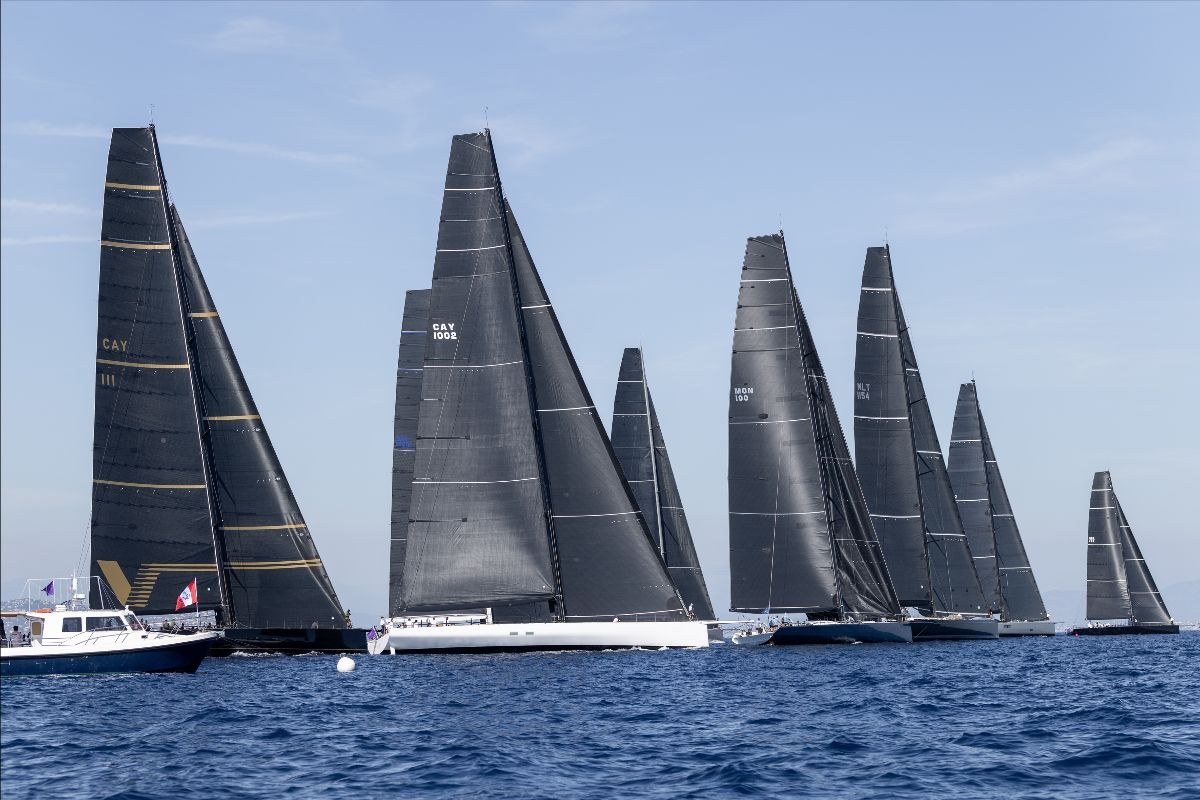
The first trap in planning a sailing-yacht call at Mykonos is thinking of the island as one harbour. It is not. The Municipal Port Fund’s current online rules draw a hard line between Tourlos, the New Port, and the Old Port at Chora. Sailing yachts under 25 metres may apply for Tourlos. Sailing yachts of any size are excluded from the Old Port, which is reserved for motor yachts over 25 metres.
That distinction settles the first question before the crew has compared anchorages, ferry timetables or the appeal of walking ashore into town.
The next surprise is the calendar. The Tourlos application system accepts requests only for an arrival date within the following 30 days. That is a short horizon for a yacht crew accustomed to planning a passage weeks ahead, and it changes the order of operations. A skipper can work out a likely arrival, assemble the paperwork and monitor the weather early, but cannot turn a provisional itinerary into an approved berth months in advance.
The online submission itself carries no guarantee: acceptance remains at the Port Fund’s discretion and depends on available space.
This is not a conventional reservation in which a successful payment instantly settles the matter. The authority describes four stages: application with supporting documents; document verification and approval; payment within 24 hours of approval; then online check-in, activated 24 hours before arrival. Miss the payment deadline and the reservation is cancelled. A crew that has filled in the form but not watched its email has not completed the booking.
Nor has one that has paid but not completed the check-in step when it becomes available.
The port authority’s English-language Tourlos page should be treated as the controlling operational reference, rather than summaries on cruising forums or old pilot notes. It confirms that the New Port application applies only to boats below 25 metres and says requests are submitted online. The current broader yacht rules add the 30-day window, arrival hours and traffic restrictions.
Because web forms and local instructions can be revised, save or print the exact requirements visible when applying and recheck them before sailing. For a skipper, that small administrative habit is a useful defence against relying on a remembered procedure from a previous season.
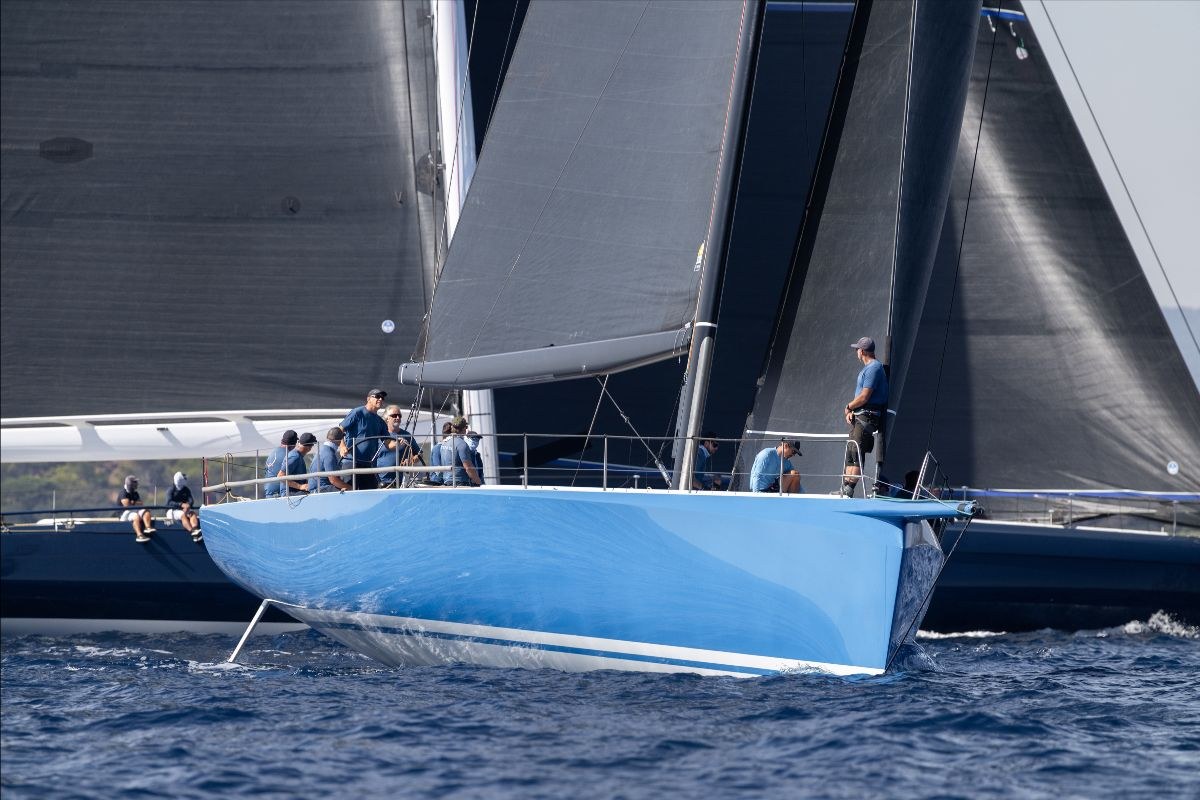
What must be submitted? The official system describes a booking request accompanied by supporting documents, but its page does not provide a complete fixed checklist in the text available to visitors. It does say invalid or incomplete documents lead to rejection. This is where a careful applicant should resist filling gaps with guesswork.
Expect to have the boat’s registration and identity details, dimensions and the relevant skipper or ownership particulars to hand, but verify the form’s actual upload fields before preparing a final packet. The port’s stated contact for marina correspondence is marina@mykonosports.gr; its published general contact page also lists the marina telephone number. Use the designated channel for a specific document query and retain the answer with the booking record.
A practical application file should be internally consistent. The vessel name, flag, registration number, length overall and arrival date need to match across the form and supporting papers. Check units: a form asking for metres should not receive feet copied from a registration certificate without conversion. If a scan is unreadable, re-export it; if the skipper and registered owner differ, provide the requested authority or explanation rather than hoping the mismatch will pass unnoticed.
These are not additional official rules; they are simple ways to reduce the chance of a rejection under the authority’s published requirement that documents be valid and complete.
The 30-day system also encourages a more realistic itinerary. A yacht departing from the Cyclades’ neighbouring islands may have a good estimate of its arrival, but the Meltemi can unsettle a schedule quickly. A crew should avoid treating a berth request as a reason to press on in unsafe conditions. The port’s own no-show and cancellation policy says that, after approval and payment, fees are non-refundable if the vessel fails to arrive on the scheduled date or the arrival is cancelled by the applicant.
Weather does not create an assumed refund. If conditions threaten the planned arrival, contact the marina through its official channel as soon as the risk becomes clear and ask what options, if any, are available. Do not assume a date change has been accepted until the authority confirms it.
That non-refundable condition matters when deciding whether to apply at the earliest possible moment. The booking window permits a request up to 30 days ahead, but it does not make the date weather-proof. A sensible skipper can wait until the route and forecast support a credible arrival estimate, while still allowing enough margin to assemble the file and respond to approval.
In peak season, leaving the process to the last minute risks finding that no space is available; applying before the crew has any workable passage plan risks paying for a call it cannot make. There is no perfect formula. The useful point is to understand exactly when money becomes committed.
Arrival itself is also constrained. The authority says vessels must arrive for mooring between noon and sunset. This is an arrival window, not a suggestion to turn up at any convenient hour and ask for an exception. For an overnight passage from another Cycladic island, the rule may require slowing down, waiting offshore or adjusting the departure so the yacht reaches Tourlos within the permitted period.
Plan the final leg with time to identify the approach, make the required communications and manage a missed slot without making an unsafe rush for the entrance.
There is a separate traffic restriction that deserves to be plotted into the day. The Port Fund says private and commercial pleasure yachts are strictly prohibited from entering or leaving Tourlos between 09:30 and 10:30 because of heavy scheduled passenger and car-ferry traffic. Its notice also refers to prior approval via VHF channel in connection with this restriction. The central operational message is unambiguous: do not plan to use the entrance during the prohibited hour.
The ferry timetable is not a side issue to be watched only from the cockpit; the authority has placed it at the heart of the port’s safety arrangements.
Tourlos is a working ferry port as well as a yacht destination. Passenger and vehicle ferries arrive with speed, displacement and predictable schedules, but their actual manoeuvres and wake still demand room. Keep a current view of the published ship movements and any live port information, maintain a proper listening watch, and do not assume that a large ferry will alter its movement to accommodate a yacht.
A sailing boat under power may be slower to accelerate and less conspicuous against shore clutter than its skipper would like. Prepare the crew before entering: fenders out, lines ready, cockpit clear, and one person tasked with monitoring traffic while another handles communications and deck work.
The port’s website offers real-time ship information and live cameras for the New Port. These are useful supplements to the chart and VHF watch, not substitutes for either. A camera view can help reveal whether the port is unusually congested, but it cannot tell a skipper that a berth has been assigned or that entry is approved. The official process requires approval, payment and check-in. The marina page says mooring requests are made by telephone after approval and instructions from the Marina Manager.
That is a detail worth checking in the current confirmation: berth allocation and the final approach instructions should be treated as port-directed steps, not inferred from a map or an online booking receipt.
The authority’s listed arrival procedure should be kept distinct from informal anchoring. Its rules say that submitting an application does not guarantee the ability to anchor in the marina area. The service is at the Port Fund’s discretion and depends on available space. A crew without approval should not arrive expecting to wait in the marina basin or improvise a berth. Have an alternative plan for the night and make it before leaving the previous harbour.
That may mean choosing a different island or an anchorage appropriate to the conditions and local restrictions; it should not mean assuming a yacht can remain wherever it finds room outside a busy port.
The skipper’s presence rule is unusually consequential for a shore visit. The Port Fund says the captain or skipper is not permitted to leave Mykonos for the duration of the yacht’s stay. The phrasing is about leaving the island, not simply being aboard every minute, but crews should take it literally until the authority clarifies otherwise. A plan to put the skipper on a ferry to another island while the crew remains aboard would conflict with the published rule.
If the named skipper needs to depart, ask the port in advance whether a formal change of skipper is possible and what documents would be needed. Do not solve the problem by making an unreported substitution.
This has knock-on effects for crew logistics. Someone may need to travel to Athens, meet a flight or collect parts. If that person is the skipper, arrange the journey before the yacht enters Tourlos or identify an authorised replacement before applying. A berth that ties the skipper to the island may be a poor fit for a short call built around changing crew.
Likewise, if illness or an emergency changes who is in command, communicate with the Port Fund and relevant authorities rather than relying on the crew’s assumption that a private yacht is exempt from the rule.
The Old Port is not a fallback for a sailing yacht refused space at Tourlos. The current Port Fund rule specifically prohibits sailing yachts of any kind there, irrespective of size. The distinction is easy to miss because Chora’s harbour is visually central and its small-boat activity is woven into the town. But a visitor should not confuse fishing craft, local boats, tenders and permitted motor yachts with a general right for a visiting sailing yacht to berth.
A skipper who wants to walk into town should plan the shore transfer from the approved berth or use an authorised alternative; the proximity of the Old Port does not make it available.
Tourlos itself lies north of Chora, and the harbour’s geography shapes the visit. It is an exposed, busy arrival point in a port environment where ferries dominate the movement. Think of the berth as a secure base for going ashore, not as an invitation to arrive casually and sort details out later. Before departure from the previous port, check the forecast for the crossing, the ship schedule, the booking status, the check-in activation and the marina’s latest instructions.
Make sure the vessel can manoeuvre under its own power in the conditions forecast, even if the approach is normally short. Sail handling is no substitute for having an engine ready in tight traffic.
The website publishes route guidance for movements between the marina and sea, including a departure route designed to avoid congestion with scheduled passenger ferries. It instructs departing vessels to follow the indicated path from the marina towards the seaward exit, and says returning yachts should follow the route given by the marina manager. This is a useful reminder that entry and departure are not necessarily mirror images.
The shoreline and ferry tracks create local traffic patterns which may not be obvious from a small-scale chart. Review the port map and directions before lines are cast off, then follow live directions from the marina staff.
A disciplined approach means arriving with the boat already prepared to move. Stow loose gear, secure cockpit lockers, rig fenders on the appropriate side once the berth instructions are known, and brief the crew on who will handle which line. Avoid letting a passenger stand between yacht and quay, and use a boat hook only as a last aid rather than a way to fend off a heavy vessel.
If the harbour staff assign a stern-to berth, have the stern lines and bow anchor arrangement ready as appropriate to the marina’s instructions. The exact manoeuvre depends on the assigned berth and local configuration; the authority’s directions take precedence over generic advice.
Water and electricity are not necessarily bundled into the berth fee. The Port Fund’s yacht page publishes separate charges for water and electricity, quoted respectively by cubic metre and kilowatt-hour, with top-ups available in set amounts. Rates can change, so check the live table before budgeting. This detail is more than an accounting footnote.
A crew planning a long stay or a water-intensive washdown should know what it will consume, and should not assume that a shore-power connection will be a flat-rate service. Track the meter or payment balance, use the vessel’s own water sensibly and clarify the connection procedure at the berth.
Fuel also requires permission. The Port Fund says telephone approval is required for refuelling. At the Old Port’s Zone 12, fuel operations are allowed only if they do not obstruct cruise-ship tenders. That Old Port detail does not create permission for a sailing yacht to berth there; it simply illustrates how carefully fuel movements are managed in the town harbour. At Tourlos, ask the marina about the procedure and do not assume a fuel truck, tanker or transfer can be arranged at short notice.
If fuel is essential for the next leg, confirm the availability and method before relying on it.
The website lists basic facilities at the New Port, including waste management, toilets, lighting, passenger shelters, firefighting provision and Wi-Fi. Amenities are useful, but a marina page is not a guarantee that every facility is immediately available at every berth. On arrival, establish where waste is accepted and what separation is expected, and keep oil, filters and hazardous items out of general bins.
Treat shore connections as services to be checked, not simply plugged in: inspect the cable, use suitable protection and verify the supply before energising sensitive equipment.
There is also a clear financial distinction between a request, an approval and a completed reservation. The port’s wording says payment must be made within 24 hours of approval, after which the reservation enters the online check-in stage. The fee is stated to be non-refundable for a no-show or applicant cancellation. Keep the approval, payment receipt, check-in confirmation and any messages about the berth together offline.
Phone signal and roaming can be unreliable at precisely the moment a crew is juggling an entrance, so a screenshot or downloaded confirmation is worthwhile. The same file can be shared with the first mate or another responsible crew member.
If the plan changes before application, alter the intended date and allow the itinerary to settle. If it changes after submission but before approval, contact the marina rather than sending duplicate forms that may confuse the record. If approval has been issued and payment made, the published policy removes any expectation of a refund for a cancelled arrival. A late shift from one date to another should therefore be treated as a request for discretionary help, not as an entitlement.
Record the time and substance of any phone call and seek written confirmation where possible.
If the vessel is running late on the day, the first response should be to contact the marina through the channel provided in the booking instructions. Do not assume that a reservation means the berth remains available at any hour after the sunset limit. Nor should a skipper try to beat the deadline by making a high-speed approach or pushing into ferry traffic. A safe alternative anchorage, port or revised passage is part of the plan.
In this respect, the 30-day booking rule is less demanding than it first appears: it forces the skipper to make the port call a deliberate commitment and to think through what happens when the sea alters the schedule.
A Mykonos call can be straightforward when the crew treats Tourlos as a port with rules, not a beach-side marina with an informal waiting list. Start with the correct harbour, prepare the documents the live application asks for, watch the 30-day window, respond quickly to approval and complete check-in when it opens. Work the noon-to-sunset arrival limit and the 09:30–10:30 prohibition into the passage plan; keep the skipper on the island; and never regard an online submission as a confirmed berth.
Mykonos still rewards the detour. The practical price of a smooth arrival is simply to organise the call before the island appears over the bow.
Contributor: Paul Thompson / 24SailingYachts
Be the first reader to react to this article.
The crossing between Corsica and Sardinia looks short on the chart; the Strait of Bonifacio makes it a passage in which the forecast, traffic picture and protected-area rules matter as much as the mileage. The reserve’s mooring arrangements and Posidonia restrictions remove some of the casual anchoring choices that crews may expect, while the wind can accelerate around headlands and islands. A sound plan uses the official zoning and current notices, keeps a credible refuge option on each side and treats the Lavezzi archipelago as a managed natural site rather than an improvised overnight stop.
On a chart, Corsica and Sardinia nearly touch. The narrow water between them can tempt a crew to treat the crossing as a short hop, an easy gap to thread on the way south. That is the wrong scale of thinking. The Strait of Bonifacio is a passage with its own wind behaviour, commercial traffic, restricted areas and environmentally sensitive anchorages. Its distance is modest; its decisions are not.
Start with the chart, not a favourite anchorage photograph. The Bouches de Bonifacio reserve lies across the waters between southern Corsica and northern Sardinia and includes the Lavezzi islands and other exposed outcrops. The Bonifacio tourist office describes an 80,000-hectare protected area, with anchoring regulated and anchoring on Posidonia prohibited. It points visitors towards official maps and regulations from the Office de l’Environnement de la Corse.
The authority’s material is the place to check current zoning, rather than relying on a recollection of where a boat anchored last summer.
That distinction matters because a visible patch of turquoise water is not proof that the seabed below is sand. Posidonia oceanica forms extensive meadows in shallow Mediterranean water. The anchor may seem to hold perfectly in grass; the damage is caused by setting and dragging the hook, then tearing the chain through the meadow as the boat swings. A skipper planning to stop should be able to identify the seabed and know whether anchoring is permitted there.
If the chart, official app or visual conditions do not provide confidence, move on to a designated mooring or a different refuge.
A route plan should be built around the forecast’s detail, not just the broad wind direction. The strait channels flow between substantial land masses, and local acceleration around capes and islands can make a moderate regional forecast feel sharper on deck. Gusts may build in the constricted water, while wind against current can steepen the sea.
The relevant question is not simply whether the wind is forecast from the north or south, but what the direction and strength imply for the chosen track, the lee available at each stage and the ability to shorten sail before the boat is committed to a narrow section.
Before departure, compare the synoptic forecast with local observations and the latest warnings. Check the route against the charted traffic separation or reporting arrangements in force, the notices to mariners, and any current restrictions for the reserve. Do not assume that a route line drawn on a plotter captures temporary exclusions, seasonal mooring controls or an updated boundary.
Use official French and Italian notices and charts for the respective waters, then cross-check with the authority responsible for the relevant reserve. A cruising guide is useful context, but it is not a notice to mariners.
There is a good case for making the crossing in daylight when circumstances permit. Landmarks and colour changes help with situational awareness in a strait of islands, rocks and shallows, and daylight makes it easier to distinguish the traffic pattern from the recreational activity close to shore. Commercial vessels may use the passage, while excursion boats and ferries operate around the islands and ports. Their speeds and turning radii differ sharply from a yacht’s.
Maintain a proper watch, keep the AIS picture in perspective, and do not rely on an electronic target to reveal every small craft or fishing boat.
The crew should be briefed before the boat enters the constricted part. One person can follow the chart and depth trend; another can maintain a visual lookout; the helm should know the intended course, the nearest safe options and the point at which the plan will be abandoned. A short crossing can become busy quickly, and a deck crew who are hearing the route for the first time while the skipper alters course are unlikely to be useful. Set the sails for controllable progress, not maximum speed.
Reefing early is easier than doing so in a gust between rocks and ferry tracks.
A route from Bonifacio towards Sardinia commonly gives the skipper a natural starting point at the port of Bonifacio, reached through its spectacular inlet. But the harbour’s sheltered appearance should not lead to a casual departure time. Check the wind outside as well as inside; a calm basin can mask a hard breeze around the headland. Allow room to clear the entrance, settle the sails and confirm the plotter and compass before aiming for the strait.
A crew leaving the marina under pressure to catch a booked mooring or restaurant slot has allowed shore plans to dictate a sea passage.
On the Sardinian side, the chosen landfall depends on the intended route, weather and berth availability. Santa Teresa Gallura is the obvious northern port for some itineraries, but the port and approaches should be checked using current official information. A sailing yacht does not gain safety simply by aiming at the closest harbour. The lee, sea state, night-time access, berth arrangements and the boat’s draught all matter.
If a strong mistral is forecast, a port that looks near on the chart may become a difficult entrance or a poor refuge. Make the decision early enough to turn back or divert while there is room.
The Lavezzi islands are the most tempting detour and the place where the environmental rules become immediate. The Bonifacio tourist office says mooring in the archipelago is organised. Its information about the reserve warns that anchoring is controlled and that Posidonia anchoring is prohibited. The Lavezzu visitor guidance asks people to plan around the reserve’s regulations and notes that mooring is organised. These are not details to discover by circling a crowded bay with the anchor ready.
Check the designated arrangements, their availability and vessel limits before diverting there.
If a mooring buoy is available and suitable for the yacht, follow its published rules and inspect the hardware before relying on it. Have a plan to approach without crossing another boat’s swing, and keep the crew ready to abort if wind or traffic makes the pick-up unsafe. A buoy is not automatically a safe solution in every sea state, and local rules may limit who can use it.
If there is no appropriate mooring, continue to a permitted anchorage or harbour rather than putting the hook down on a patch of seagrass because it looks quiet.
The seabed question is not always easy to answer from the cockpit. In clear water, a trained eye can distinguish pale sand from darker seagrass, but glare, depth and a rippled surface can disguise the boundary. A charted habitat layer or environmental navigation tool can help, but each layer has scale and currency limits. The French Ministry’s guidance on DONIA describes it as a tool to help recreational boaters choose where to anchor without damaging Posidonia.
The app can inform the decision; the skipper remains responsible for checking legal restrictions and actual conditions.
The same caution applies to anchoring outside the formally designated reserve zones. A plotter showing an unshaded area is not a blanket permission to anchor, and local rules may address where a yacht may stop, how long it may remain or which gear is allowed. In French Mediterranean waters, broader anchoring regulations also exist, and the maritime prefecture’s decrees may impose controls beyond a nature reserve boundary. Check the rules applicable to the exact position and vessel size.
In particular, do not assume that a small sailing yacht is exempt from restrictions that apply to all recreational craft in a local zone.
A prudent passage plan identifies more than one shelter option on each side of the strait. That does not mean listing every cove in a pilot book. It means choosing alternatives that are usable in the wind direction expected, with a realistic approach depth and room to turn away if conditions have deteriorated. The primary destination may be a marina, the first alternative a different harbour, and the second a lee anchorage where stopping is lawful and the seabed suitable.
Mark the turning point at which the crew will divert, then make the decision before the last safe option has slipped astern.
Shelter is a relative word in this region. A bay may be comfortable in one wind and untenable in another; a low island can create a deceptive wind shadow that ends abruptly offshore. Swell wraps around headlands, and a wind shift can expose a boat that had seemed snug. Consider the forecast trend through the night, not just the conditions at arrival.
If a mooring is for a few hours only or the reserve is crowded, the yacht may be better served by continuing to a reliable harbour rather than adding a scenic stop that introduces another departure under pressure.
The strait’s current and tide deserve a place in the arithmetic. They may alter a yacht’s speed over the ground and affect the sea state when opposing the wind. Use official tidal and current data where available, and verify whether the local conditions are likely to make the chosen time more manageable. A favourable set can be helpful, but should not be treated as a substitute for sufficient engine power, sail plan and manoeuvring margin.
If the boat is under-canvassed, overloaded or prone to poor control under power, this is not the place to discover the limitation.
For a sailing yacht, the engine is part of the passage plan. It should be checked before leaving: cooling flow, fuel, filters, belts, charging, controls and the ability to manoeuvre astern. In heavy traffic or close to the coast, there may be moments when making reliable progress under power is the safer choice. Carry enough reserve fuel for a diversion, not merely the predicted crossing.
A fuel gauge and a hopeful estimate are not equivalent to a calculated range, especially if the boat must motorsail into a headwind.
Crew comfort affects judgment. A crew that has been awake all night is slower to recognise traffic and less effective when a squall arrives. If the strait is the middle leg of a long passage, rota the watch so the person at the helm is rested. Keep water, foul-weather gear and snacks accessible. The boat should be reefed before a crew member is sent forward to wrestle with a sail in exposed conditions.
These are ordinary seamanship measures, but the temptation to wave them away on a 10-mile crossing is precisely why they deserve mention.
Before entering the reserve, confirm the boundaries and rules for the exact island group, not just the general area. Protected waters contain different management zones and activities. The Bonifacio tourism office notes areas of reinforced protection and no-take zones, with specific restrictions on fishing and underwater activity. Those examples concern more than yacht passage, but they underline the point that the reserve is zoned rather than uniformly permissive.
A skipper should not infer the rules for anchoring, landing, fishing or diving from a single broad description of the park.
Landing by dinghy also needs planning. A crew may be able to moor offshore but have no permission or suitable place to land. The islands are protected, and visitors should follow marked access and local instructions. Avoid dragging a tender across fragile shore or tying it to vegetation. Keep rubbish aboard and minimise noise. These choices are modest, but multiplied by hundreds of boats they determine whether an attractive natural site remains tolerable to wildlife and visitors alike.
The purpose of a protected-area rule is not to make passage-making inconvenient for its own sake. It puts limits around the impact that boats can create in shallow, heavily used water. A skipper who has identified sand, chosen an authorised stopping point and avoided a meadow is already making a better decision than one who anchors wherever the depth sounds comfortable.
The same discipline helps the crew: a planned mooring removes uncertainty about holding, while a defined alternative reduces the pressure to improvise after dark.
The route should be rechecked on the day. Weather models can disagree, and the wind funnel around the strait can make a small change in direction significant. Review the latest forecast, notices, port status and any official updates for the reserve. Confirm that the destination can take the yacht and that a mooring has not been suspended or restricted. If the plan depended on a particular buoy or berth, verify it before leaving. A simple call to the port can save a day of circling in uncomfortable conditions.
When the passage is under way, keep the chart at a scale that shows the nearby hazards and the boundaries of the intended route. The plotter’s automatic zoom can leave a skipper looking at a broad overview with rocks and exclusion lines too small to read. Set an alarm for depth or cross-track error where appropriate, but do not let alarms replace visual navigation. Cross-check position using more than one method when close to land.
If an electronic chart or GPS fails, the crew should know where the paper chart, compass and written notes are.
Traffic management is a matter of predictability. Hold a steady course when safe, keep out of the way of vessels constrained by their draught or route, and avoid cutting across a ferry’s bow to save a few minutes. A yacht’s apparent right of way does not guarantee that a large ship can see it or turn in time. Use the COLREGs, make early and substantial alterations when required, and avoid confusing the picture with a last-second change.
At night, ensure navigation lights are working and visible; if a light has failed, address it before entering the busiest part of the route.
A squall plan should be specific. Decide in advance who goes forward, how the mainsail will be reefed, what course keeps the boat in deeper water and which nearby harbour or lee provides the safest diversion. Secure loose objects and keep the companionway protected from water. If the boat is carrying a tender on davits, check that it is secured against the motion and wind. Where a squall line is visible, do not wait until its gust hits to reduce sail.
The best time to make the boat manageable is while the sea is still manageable.
For a crew moving north from Sardinia to Corsica, the same framework applies in reverse. A departure from Santa Teresa or another port should be judged against the forecast beyond the entrance, not the calm inside the breakwater. Choose the landfall and reserve crossing based on the yacht’s speed and the conditions expected at the narrowest section. If the wind is against current, if visibility is poor or if traffic is unusually heavy, waiting is a passage-making decision, not a failure to keep schedule.
The value of a short crossing lies in its flexibility. A yacht can wait for a better window, take a different route or spend another night in a harbour. The temptation is to compress the plan because the islands seem close. But the distance between safe options matters more than the line on the chart. The crossing should be undertaken when the crew can handle the likely conditions and still retain a way out if the forecast is wrong.
Bonifacio and northern Sardinia are close enough to make the Strait of Bonifacio one of the region’s most appealing passages. Its rewards are better appreciated when the route is built around reality: read the wind acceleration, account for traffic, verify official zoning, avoid Posidonia and know where the yacht can go if the chosen destination is unavailable. The water between the islands may be narrow. The seamanship required to cross it well is not.
Contributor: Paul Thompson / 24SailingYachts
Be the first reader to react to this article.
The Turkish transit log is often described as a formality, but for a foreign-flagged yacht it is the record that brings vessel, crew, passengers and declared movements together. Official guidance says the process begins on arrival at an authorised maritime border point; later domestic port calls do not normally require the same full formalities until departure. That apparent simplicity hides important boundaries around crew changes, winter lay-up, use by the owner and commercial activity. Understanding what the log does—and what it does not permit—makes a long stay or season of coastal cruising far easier to manage.
The Turkish transit log has an unhelpful name for anyone who assumes it is a document used only while passing through. The Ministry of Trade describes it as a navigation permit and a record of the yacht, its people and its declared movements. It also serves as a departure document within the Turkish system. For a foreign-flagged sailing yacht, it is the core record that connects arrival formalities with the subsequent domestic itinerary, until the vessel leaves the country or enters another regulated status.
The useful way to understand it is as a process rather than a form. A yacht arrives from abroad at an authorised maritime border point, completes the required entry formalities and has the relevant details recorded. The boat can then cruise between Turkish ports under the declared arrangements without repeating the same full customs and immigration process at every stop. Eventually the yacht closes its stay by completing departure procedures at an authorised exit point.
A wintering yacht follows a related route: official guidance says the transit-log process for a yacht laid up in Türkiye is carried out at the harbour where it will stay.
The first source to consult is the Ministry of Trade’s Customs Protection FAQ, which answers core questions about foreign-flagged yachts. It says no pre-arrival action is required simply to obtain permission to cruise Turkish waters; the process starts when the yacht enters Türkiye and its navigation permit is issued. It also says yachts entering or leaving must use designated maritime border gates. That means an attractive small harbour is not necessarily a lawful first port of call from abroad.
The skipper should identify a recognised entry point and verify its current operating arrangements before setting the departure date.
The Ministry of Culture and Tourism’s guidance explains the record’s contents: customs declarations, passport details, health matters and information about crew, passengers and staff. Once the relevant authorities have recorded these details, they are checked on entering and leaving ports but do not normally require further processing until the yacht departs Türkiye. That is a concise description, but it should not be misread as permission to make unrecorded personnel changes or ignore movement conditions.
The log reflects who and what has been declared; if the facts change, the record may need to change too.
A prudent arrival file begins before the yacht reaches the border. Keep the vessel’s registration or certificate of registry, insurance evidence, passports for everyone aboard, and any licence or qualification documents required for the skipper readily accessible. Carry a crew list that agrees with the actual people on board and keep copies of the last clearance papers from the previous country. These are practical preparation points, not a promise that every official desk will demand the same list.
The Turkish authorities’ published guidance identifies vessel, customs, health and passenger information as relevant. Ask the chosen port or an authorised agent for the current document checklist and confirm that scans and originals are acceptable.
Choose the first port of entry with the same care as a land border. If the route from a Greek island makes a particular Turkish harbour convenient, verify that it is an authorised entry and exit point and that the relevant services are available when the yacht is expected. Weekend or after-hours arrivals may need coordination. Do not enter Turkish waters and proceed directly to a marina that is not authorised to handle arrival formalities on the assumption that the marina will regularise matters later.
The correct first stop is a legal and operational decision, not merely a convenient berth.
The physical process may involve several authorities. The government’s English guidance groups customs, passport and health procedures, while the Turkish Ministry of Trade FAQ says that customs and exit processes are declared through the navigation permit. An authorised port agent can help route the paperwork, but the skipper remains responsible for the accuracy of the declaration. Before signing, check names, passport numbers, vessel particulars, dates and intended itinerary.
If the official record contains an error, correct it while the officials and agent are still engaged with the file.
The transit log is not simply a crew manifest. The Trade Ministry defines it as a record of declarations and procedures concerning the yacht, personnel, passengers and voyages, and says it also acts in place of a port departure document for movements outside port limits. That dual role helps explain why a crew should keep the current document aboard and know where it is. It is relevant when moving between ports and at final departure.
A photograph on a phone may be convenient for reference, but it is not a safe substitute for carrying whatever original or official version the authorities require.
After clearance, the apparent ease of cruising between Turkish ports can be misleading. The Ministry of Culture and Tourism says recorded details will be checked on entering and leaving each port, with no further processing normally required until departure. The official Customs Protection FAQ similarly explains that the transit log covers movements and that the entry declaration remains valid at later Turkish ports until definitive exit.
This is why the log should be kept available, with port calls and any required changes recorded as instructed, rather than left in a folder at home or with an agent who is no longer involved.
Domestic movements still need planning. A port may ask to see the document, and local harbour or marina procedures can add requirements. Call ahead where the yacht expects to arrive late or where the port has seasonal controls. Distinguish a marina’s berth reservation from state formalities: a booked berth does not itself constitute customs clearance, and a transit log does not guarantee space. Keep evidence of each port call and any communication about a changed itinerary.
This is especially helpful if a weather diversion takes the boat somewhere different from the original route.
Weather diversions are a normal part of sailing, not a paperwork failure. The Turkish Yacht Tourism Regulation, published by the Ministry of Culture and Tourism’s inspection service, recognises that yachts may need to make obligatory entry or departure in extraordinary circumstances, with declarations made subsequently. That exception is tied to extraordinary or force-majeure conditions and obligations to protect life and property.
It is not a general permission to skip a designated border point or to treat all changes as self-explanatory. If a yacht diverts for safety, notify the nearest relevant authority as soon as it is practicable and preserve the reason and timing of the decision.
Crew changes deserve more thought than they usually receive. The transit log records who is aboard, and immigration status is individual as well as vessel-based. If one crew member leaves by air and another joins, the yacht’s papers and the travellers’ passport records need to tell a coherent story. Do not assume a simple substitution can be made informally at the marina.
Ask the responsible authority or agent what must be updated, whether the outgoing crew member must be formally removed and what immigration step is required for the arriving person. The answer may depend on nationality, visa status, route and the particular circumstances.
The same caution applies when the owner is not aboard. Turkish tourism rules set limits on who may use a foreign yacht in Turkish waters. The Ministry of Trade FAQ says captains may not use the yacht for leisure, sport or recreation without the owner aboard, except for specified arrangements in which the owner or family is collected or dropped at another port under permission from the Harbour Master.
The Ministry of Culture and Tourism’s cabotage guidance likewise says foreign-owned private yachts entering from foreign harbours, or wintering in Türkiye, may cruise in Turkish waters only on condition that the owner is aboard, with a limited provision for jointly owned yachts or clubs and nominated owners.
That rule affects ordinary ownership choices. An owner who has left the yacht in a marina and expects a paid skipper to move it for a weekend’s sailing should not assume the arrangement is permitted. Nor should an owner believe that a friend can take the yacht for a leisure trip simply because the friend is a competent sailor. The Ministry’s guidance is concerned with use of the foreign yacht, not only whether it has a valid log.
Get a specific ruling from the Harbour Master or an authorised professional before the owner leaves the country or hands over the boat.
There is a carefully described exception in the official material for moving the owner or family between ports. The Trade Ministry says the captain may, under the owner’s written or faxed instruction, pick up or drop off the owner or family at another port if permission is obtained from the Harbour Master, and may use the yacht only for the out-and-back movement. That is not a general charter permission.
The written instruction and Harbour Master’s voyage permission are central to the exception; a crew should not assume that a casual message or verbal arrangement will satisfy it.
Commercial activity creates a separate line. The Ministry of Culture and Tourism’s cabotage information says private foreign yachts may carry Turkish or foreign guests for travel, sport and leisure without commercial undertaking, but not as a paid domestic passenger service. It explains that paid carriage between Turkish ports can bring cabotage rules into play, and that commercial foreign-flagged yachts are subject to their own licensing and operating rules.
A yacht’s appearance, VAT history or owner’s nationality does not decide whether an activity is private or commercial. If the boat is used for paid trips, crew services or organised itineraries, obtain advice based on the actual operating model before accepting a booking.
The log also interacts with the yacht’s customs status. Foreign-flagged boats may stay in Türkiye for maintenance, repair, docking or wintering under the relevant tourism law, subject to the period and conditions in force. The law published by the Ministry of Culture and Tourism states a period of up to two years for these purposes, which may be extended under specified principles. The precise application depends on the yacht and the owner’s circumstances, so do not reduce this to a universal countdown rule.
Confirm the applicable stay allowance and any extension procedure with customs before making a long-term plan.
A winter lay-up is not the same thing as leaving a yacht unattended without formalities. The Ministry’s English page says the transit-log process for yachts wintering in Türkiye is performed at the harbour where the vessel will stay. The Trade Ministry FAQ defines the transit log as applying to foreign yachts arriving at their first Turkish port or wintering at the last mooring place. That tells an owner to work with the intended winter berth and to complete the relevant declarations there.
If the boat is to be moved to a yard, ask how the movement will be authorised and recorded before the yacht is hauled or relocated.
The two-year reference can be important for a long refit. A yacht may be in a yard for months, waiting for imported parts or technical work. Customs oversight of repairs and imported spares is specifically mentioned in the Trade Ministry FAQ, which says repair and maintenance on foreign-flagged yachts are subject to customs supervision, and that parts follow temporary-import rules. Do not treat a refit invoice as a customs document.
Maintain a record of the work, parts, import paperwork and the boat’s status, and have the yard or agent explain which items need formal clearance.
If a yacht is entering Türkiye for winter, decide before arrival where it will lay up and who will manage it. A marina berth, a boatyard hardstanding and a commercial repair facility may not be interchangeable in the eyes of the authorities. Confirm that the chosen place can handle the log process and the yacht’s intended status. Ask whether the owner may leave the country, how the yacht will be supervised, who may move it and what records are needed if the boat later transfers to another port.
Keep those answers in writing.
Renewal is one area where online summaries can be especially confusing. Some owners use “renewal” to mean obtaining a new transit log for a new cruising period; others mean replacing a lost or exhausted document or registering a wintering status. The official Turkish Yacht Tracking application FAQ addresses cases in which a foreign-flagged yacht seeks a new log but does not have an entry document registered in the system.
It says an entry form can be generated by recording the Turkish-port entry information from the yacht’s previous log. That technical provision shows why carrying previous documents matters, but it is not a substitute for asking the competent office how a specific renewal should be handled.
Avoid letting a document expire or a planned departure date pass while assuming an agent will notice. Put the expected expiry, departure and any required renewal dates into the yacht’s operational calendar. If the itinerary changes, ask early whether the existing log remains valid for the revised route and whether the authority needs an amendment.
The published regulation says declared details remain valid for subsequent Turkish ports until definitive exit, but the relevant authorities may still need to be told about changes in crew, yacht status or route. Preserve copies of the old and new documents.
Departure deserves its own checklist. The Trade Ministry says entry and exit are to take place at designated maritime border gates, and the transit log records the customs procedure on departure. Identify the authorised exit port, its opening arrangements and any required notice before the last domestic leg. If the yacht’s final port is not equipped to clear it internationally, allow enough time to sail to the correct one.
Do not wait until the day a crew member’s flight leaves to discover that the boat must first clear elsewhere.
Before departure, reconcile the people listed on the yacht with those actually aboard and ensure all passports and travel arrangements are in order. Ask the agent or port authority which officials must be visited and whether the yacht must remain at a particular berth during clearance. The process may be efficient when documents are ready; it becomes stressful when a crew list, passport or vessel detail does not match.
Once clearance has been recorded, retain the transit log and related documents until the yacht has completed its next formal arrival.
A sailing yacht’s cruising route may cross into Greece and return to Türkiye several times in a season. Each international crossing changes the formal picture. A yacht should not assume that its domestic transit-log status survives an international departure in a way that removes the next arrival process. On return, follow the entry requirements at the authorised port and establish the new record.
The same is true if the yacht changes its flag, ownership or customs status: a detail that seems administrative can alter the basis on which the boat is cruising.
Agents can be valuable, particularly when language, opening hours or an unfamiliar port complicate the process. Their role is to guide and submit; the owner should still understand what has been declared. Ask for a copy of each completed form and confirmation of the yacht’s status after clearance. Check the spelling of every name, passport number, vessel identifier and date. If an agent says that a certain step is unnecessary, ask which rule or authority confirms it.
A competent professional will not be offended by a skipper who wants the paperwork to match the boat.
Keep a simple onboard file: current transit log, registration, insurance, crew list, passports or copies as appropriate, prior port clearances, and contact details for the relevant agent and port authority. Maintain a separate digital backup, secured but accessible. If there is a change in the crew or a diversion, note the date, position, reason and who was notified. That record can make later questions easier to answer and prevents the skipper from reconstructing an event from memory weeks afterward.
The main practical lesson is that the transit log is neither a bureaucratic obstacle nor a magic pass. It gives the yacht a route through a connected set of customs, passport, health and port procedures. Properly completed at the first authorised arrival point, it can simplify domestic cruising. But the privileges attached to it sit alongside rules on where the yacht may enter and leave, who may use it, whether it is private or commercial and how a winter stay is recorded.
The skipper who understands those boundaries can plan a season around them. The one who files the form and forgets the rules may find the real complication begins at the next crew change or port call.
Contributor: Paul Thompson / 24SailingYachts
Be the first reader to react to this article.
Venice is surrounded by water, but the lagoon is no open-water playground. Channels, shoals, working traffic and local restrictions reward a yacht that can take the ground or pass where a deeper boat cannot. The most interesting part of lagoon sailing is not the postcard view of the city from a cockpit; it is the close reading of soundings, tide and marked routes that makes a small boat useful in a busy urban waterway. Here is how to think about the boat, the navigation and the limits of a visit before setting off.
A sailing yacht in the Venetian Lagoon is an argument with the word “yacht”. The image most people carry is of a deep-keeled cruiser anchored off an island, city lights on the water and the Adriatic just beyond. The lagoon is more demanding and more particular than that picture suggests. It is a shallow, working waterway where channels matter, tide changes the usable depth and traffic rules apply differently from those at sea.
A boat that draws little and can be handled precisely may enjoy access that a conventional cruising yacht simply cannot use.
The lagoon is not a single open basin. It is a mesh of marked channels, shallow flats, islands, fishing areas, ports and urban waterways, connected to the Adriatic by inlets. The city sits within that system, not beside a natural deep-water harbour. A skipper approaching from the sea must understand which entrance and route are suitable for the boat and its purpose, then follow the applicable navigation rules.
A cruising chart gives the broad picture; official nautical charts, notices and local regulations provide the working detail.
The first design decision is draught. A fin-keel yacht with a draught approaching two metres has a different lagoon from a shallow-draught centreboarder or lifting-keel boat. Even a modest difference can affect which channels and berths remain available at low water. The useful question is not whether the yacht is “shallow” in the abstract, but what its actual draught is with tanks, stores and crew aboard, and how much clearance it needs over the ground in the expected conditions.
A tide table is not a substitute for that calculation.
A shallow-draught boat may have a centreboard that can be raised, a lifting keel or a relatively flat bottom intended to dry out. Each arrangement changes the handling. A raised board reduces lateral resistance under sail, so the boat may make more leeway and need more room to tack. Lowering it increases grip but also exposes the boat to grounding if the depth changes unexpectedly.
A yacht designed to sit upright on suitable ground has to be checked for the loads and support points involved; not every flat-bottomed hull is safe to leave on an uneven seabed.
The lagoon’s tide is a navigational fact, not a scenic detail. Water levels rise and fall, and the effect on a route can be amplified by wind and local conditions. In a shallow channel, a few centimetres can make the difference between a comfortable clearance and a slow, unpleasant scrape. Build a passage around predicted level and actual depth, allowing a margin for squat, waves, measurement error and the yacht’s true draught.
The number on the tide app should be treated as one input among several, not as a promise that a shoal will be passable at the minute shown.
For unfamiliar waters, use current official charts and local port information. The Comune di Venezia and the harbour authorities publish rules governing boat traffic and access in parts of the lagoon; these can change with works, events or local management. The skipper should establish which rules apply to the particular vessel, the route and any desired stop. Do not rely on an old blog post describing a shortcut through a channel.
A channel that is passable for a local fishing boat at a particular tide may be unsuitable for a heavier sailing yacht with different manoeuvring limits.
The marked channels are the lagoon’s roads. Stay within their limits where required and do not treat their edges as suggestions. Outside them, the bottom can rise abruptly into mudflats or shoals. A chart may show broad depth contours that do not capture every recent change, while a local marker can make the safe route clear in a way that a screen cannot. Keep a visual lookout for lateral marks, poles and signs; cross-check them with the electronic chart and compass.
In the narrowest urban reaches, attention must also be shared with water buses, service craft, freight boats and local traffic.
A sailing yacht is often a poor choice for pushing through the lagoon under sail alone. The channels can be narrow, bends frequent, traffic close and wind variable behind buildings and islands. The engine is not merely a convenience for docking; it can be essential to maintaining control and making way in constrained areas. Before entering, check fuel, cooling water, propeller, gearbox and steering.
A yacht that cannot reliably manoeuvre under power should not enter a crowded urban channel on the assumption that a breeze will always help.
That does not make sailing irrelevant. The pleasure lies in the stretches where the lagoon opens enough for the boat to move under sail, and in the careful transitions between free water and a marked channel. A low-draught boat can make those transitions with less anxiety and can explore some reaches unavailable to deeper yachts. But the sail plan should be ready to strike quickly.
Reef early, keep sheets organised and avoid creating a deck-work problem when the boat needs to respond to traffic or a sudden loss of wind behind an island.
The centreboard boat has a useful compromise: shallow access with a sailing hull that still tracks when the board is down. A lifting keel can provide similar flexibility, though the mechanism adds complexity and needs maintenance. A bilge-keel yacht can dry out on suitable ground but may draw more than a purpose-built shoal-draught craft and can be vulnerable to uneven support.
The right choice depends on how often the owner expects to use the lagoon, where the boat will be kept and whether it must also make open-sea passages across the Adriatic.
A low-draught boat has trade-offs offshore. A shallow keel may reduce upwind performance and can make the yacht more affected by leeway. A lifting system introduces weight, moving parts and a maintenance item that deserves inspection. A boat capable of grounding needs a structure, rudder and appendages designed for it; the ability to touch bottom is not the same as the ability to take the ground safely.
Owners considering a lagoon-based yacht should ask a naval architect or yard how the hull is intended to be supported and how the keel system is maintained.
The rudder deserves particular attention. In shallow water, it may be the first appendage to touch, and some rudders are more vulnerable than the keel. A kick-up rudder or a protected arrangement can be useful, but it must still provide dependable steering under sail and power. Check the mechanism for play, corrosion and secure locking. If a rudder can lift, know how it behaves in reverse and whether it will stay down when the boat needs to back away from a berth.
These are practical details that matter more in a confined lagoon than the brochure’s top speed.
Depth sounders help, but the skipper should understand where the transducer sits and how its reading is referenced. Many units display depth below the transducer rather than clearance under the keel. Set a shallow-water alarm with a safe margin and account for the yacht’s draught. A boat drawing one metre with a transducer 30 centimetres below the waterline does not have a metre of clearance when the screen shows a metre.
Keep the sounder visible at the helm, but do not stare at it at the expense of marks and traffic.
A lead line remains useful. It gives a direct measurement and helps identify whether the bottom is mud, sand or something firmer, though in a busy channel it should not be deployed in a way that risks the crew or gear. A sounding pole may be more practical for a dinghy or a very shallow craft. Electronic charts and sounders are valuable, yet the ability to make a basic independent check is a sensible backup when the seabed is close and a screen or power supply fails.
A lagoon passage should have a tide margin. Decide beforehand the minimum depth over which the boat can safely proceed, then add a contingency for weather and uncertainty. If the predicted level falls below that margin, wait or change route. A grounded yacht may not be in danger if the bottom is soft and the boat was designed to dry out, but an unexpected grounding can damage rudder, keel, propeller or saildrive, and a rising tide may not arrive quickly enough to fit the crew’s plans.
Do not use another boat’s success as your depth survey.
Wind can complicate the level as much as the tide. A persistent wind may pile water into one part of the lagoon and draw it down elsewhere; a shift can reverse the effect. Strong wind can also make a shallow channel uncomfortable by building short waves and reducing steering control. Check the local forecast and understand whether the expected wind direction helps or hinders the route.
If the lagoon’s water level has been affected by weather, use current local observations and harbour advice rather than relying solely on a standard tide prediction.
The same precision applies to speed. Local restrictions may set speed limits in channels or urban waters to manage wash and protect banks, boats and structures. A planing motorboat and a sailing yacht create different wakes, but a sailing boat under power can still produce an uncomfortable wash at speed. Check the posted or published limits, reduce speed early and avoid using the narrow channel as a place to test the engine.
Respect the craft around you: small boats may be carrying passengers or working close to the banks.
Venice’s waterways are not just a backdrop for visiting yachts. They are transport corridors and working routes. Water buses, taxis, ferries, supply craft and emergency services all have practical reasons to maintain speed and course. A sailing yacht moving slowly in a marked route should make itself predictable, keep a listening watch where required and avoid drifting across the channel while deciding what to do next.
If a stop is needed to consult a chart, find a safe place outside the traffic flow where stopping is lawful.
The traffic rules around the city require special attention. Access to canals, areas near the historic centre and certain waters may be restricted or governed by local permits and operating conditions. A recreational sailing yacht should not assume that the ability to navigate a canal in physical terms means it is authorised to do so. Check the current Comune regulations and the competent harbour authority’s notices for the exact craft and route.
Restrictions can distinguish between local residents, commercial operators, service craft and visitors; the rules may also differ by waterway and time.
There is a practical distinction between sailing in the lagoon and sailing through the city’s inner canals. The city’s canals are heavily used and subject to local traffic management; the lagoon’s broader waters offer a different setting. Do not put a yacht into an urban canal simply because it appears on a map or because a tender has used a nearby waterway. Review whether the canal is open to that class of vessel and whether a specific permit, transit route or size limit applies.
If the rule is unclear, ask the local authority or harbour office before entry.
The boat’s air draught can also matter. Bridges and overhead infrastructure, where present along a route, impose limits that have nothing to do with charted depth. Measure the yacht’s mast height accurately, accounting for antennas and instruments, and verify clearances on the intended route. A mast that can be lowered may be a major advantage, but lowering it in a confined waterway is a controlled manoeuvre that requires suitable equipment, crew and space.
Never attempt it in a busy channel because a route has proved lower than expected.
Mooring choice is a further constraint. A deep-water marina berth may be convenient for a conventional yacht, but a shallow-draught craft may be able to use more local facilities, provided the berth is legally available and the depth suits. Confirm depth at the berth at low water, approach restrictions, shore-power availability and any limits on vessel dimensions. Ask whether the marina requires advance booking, what time access is available and whether the final approach needs local assistance.
The lagoon’s water level at the entrance may differ from that at the berth.
The ability to dry out expands options only when the bottom and location are suitable. A soft mudflat may look inviting, but tidal currents, drainage channels and uneven ground can place the boat at an angle or leave it hard aground. Never assume that a public shore or flat is an authorised place to beach. Check local restrictions, private rights and environmental protections. Before relying on drying out, confirm the hull’s support arrangement and the position of keel, rudder, saildrive and through-hulls.
A small mistake can convert a useful feature into a repair bill.
For a lagoon-based yacht, corrosion and fouling deserve close monitoring. Brackish water and a different biological environment can affect metals, anodes, propeller and hull in ways that differ from open salt water. The owner should ask a local yard about the right anode material and inspection interval for the actual berth. Do not copy a generic setup from a yacht kept in the open Adriatic.
The boat’s electrical system and shore-power connections also deserve routine checks, particularly if it remains plugged in for long periods.
A boat kept near Venice faces weather and water-level exposure alongside the usual maintenance. Check bilge pumps and high-water alarms, inspect mooring lines for chafe and ensure the boat can ride safely through wind shifts. A low-draught hull may be easier to shelter in some locations but is not immune to surge, wake or storms. Keep spare lines and chafe protection aboard, and have a plan for securing the boat if the owner is away.
Where a berth has a particular tide or current pattern, learn it from the harbour staff rather than from the first difficult departure.
Local knowledge has real value, but should be used correctly. A local skipper can explain how a marker is used in practice, where shoaling has occurred and what wind does to the channel. That practical understanding complements the chart and official regulations; it does not replace them. Ask a harbour office or qualified local operator about the route before the first transit, and compare the advice against current notices.
If a route is only safe at a particular tide, put that condition into the written plan and make sure the whole crew understands it.
A tender can be a useful way to reach shore from a lagoon berth, but tender routes have their own rules and hazards. The small boat may be low, difficult to see and vulnerable to wash from larger traffic. Carry appropriate lights, lifejackets and a means of communication, and remain clear of restricted channels. Check where the tender may land and whether public access is permitted. Venice’s shoreline is not an open beach; landing in an unsuitable place can cause conflict or violate local restrictions.
A sailing yacht passing through the lagoon should also consider noise, wake and waste. Even a small recreational craft shares space with residents and working operators. Keep speed down near settlements, dispose of waste at approved facilities and avoid discharging sewage or oily water. The lagoon is an inhabited environment as much as an ecological one. A visitor who thinks only about depth and destination misses the social rules that make the waterway usable for everyone.
Before a first visit, a skipper can make a one-page route sheet: entry point, charted channel, minimum acceptable depth, expected tide, speed and access rules, radio channels, planned berth and diversion options. Note the yacht’s loaded draught and air draught at the top. Add the points at which the crew will cross-check position and the places where a decision to wait would be safer than continuing.
Such a sheet need not be elaborate; its value is that the key numbers are in front of the helm before the boat reaches the shoal.
The route sheet should be matched to the yacht’s actual condition. A newly antifouled boat with a heavy cruising load may draw more than its specification sheet states. A full water tank, stores, dinghy and outboard add weight. Measure the boat at the waterline or calculate from reliable loading data, and leave margin for uncertainty. A boat that can cross a channel on paper may not have comfortable clearance with crew, stores and a low tide. It is the real cruising draught that matters.
A narrow channel is not the place to find out that the keel mechanism is stiff, the engine overheats or the steering cable has excessive play. Make a shakedown close to the berth in open water. Raise and lower the centreboard or keel, test steering in forward and reverse, and confirm that the depth alarm is set correctly. Check the compass against the plotter and make sure the charts cover the route at a useful scale. The best time to discover an equipment fault is alongside, with tools and assistance nearby.
There is no shame in waiting for more water. A high-water window may be the difference between a relaxed passage and one in which the crew spends every minute watching the sounder. Waiting also avoids the temptation to steer outside the marked channel to save distance. A skipper who arrives at the next berth an hour later, with the keel and rudder intact, has made a better use of the day than one who treats the tide as an opponent to beat.
The unusual boat that belongs in the lagoon is not necessarily the smallest or most specialised. It is the one whose draught, appendages, engine, charts and crew competence match the waterway. Shallow draught opens doors, but does not erase traffic rules, shoals or tidal uncertainty. A lifting keel is helpful only if it works; a depth sounder is useful only if its datum is understood; local knowledge is valuable only when it is current.
Sail a Venetian lagoon with that discipline and the experience changes. Instead of forcing an open-water cruising routine into a shallow urban basin, the skipper begins to read the water as it is: a shifting network of marked routes and quiet reaches, with local craft moving on familiar lines. The right yacht can make the city’s watery margins accessible. The right seamanship keeps that access from becoming an expensive experiment.
Contributor: Paul Thompson / 24SailingYachts
Be the first reader to react to this article.
The revised French Mediterranean Sustainable Cruise Charter takes effect from 1 January 2026 and strengthens voluntary commitments on biodiversity, cetaceans, waste, emissions and passenger awareness. Its rules bind signatory cruise companies, not every sailing yacht passing the coast, but they point towards a more demanding standard of care in shared waters. For yacht crews, the practical test remains local: anchoring restrictions and mooring zones are set by maritime authorities, while avoiding seagrass, choosing low-toxicity products and reporting wildlife sightings are decisions made aboard.
A sailing yacht’s anchor can do more harm in a minute than its engine does in an afternoon. Set it into a Posidonia meadow, let the chain sweep across the leaves and the damage is hard to see from deck. That mismatch between a casual manoeuvre and a lasting seabed impact is one reason France’s updated Mediterranean Sustainable Cruise Charter puts anchoring among its biodiversity commitments. The charter is written for cruise companies, but its practical questions reach every skipper using the same bays.
The revised charter was signed in 2025 and applies from 1 January 2026 in French and Monegasque Mediterranean waters under their jurisdiction, including the relevant maritime zones. The French government says the new edition contains 20 new or strengthened commitments across eight themes, including biodiversity, cetaceans, discharges, waste, noise and light, emissions, passenger awareness and social responsibility. The commitments apply to participating cruise operators.
A private sailing yacht is not made a signatory by sailing through the same water.
That distinction is important. The charter does not replace local anchoring regulations, and it does not grant permission to anchor wherever a cruise ship may stop. Nor does it directly impose its corporate reporting procedures on a family cruising yacht. What it does provide is a useful signal of direction: environmental practices once treated as voluntary extras are being made more visible, audited and expected of large operators.
Yacht crews can learn from the operational discipline, while continuing to follow the rules that actually apply to their vessel.
The anchoring commitment is concise. The charter says a company commits to protect seagrass beds by anchoring only in areas authorised by coastal authorities. The principle is clearer than a generic promise to “respect nature”: the vessel must identify where anchoring is allowed and stay within that permission. For yachts, this aligns with local controls and the basic need to avoid Posidonia.
The French Office for Biodiversity describes Posidonia oceanica as an endemic Mediterranean flowering plant that occupies a significant share of coastal seabed and supports complex marine life.
A skipper’s first practical task is to find the rules for the exact bay. Regulations can differ by coast, protected area, vessel size, season and type of anchoring. France has adopted measures restricting anchoring by larger vessels in sensitive areas, while local prefectural orders can establish additional controls. The Mediterranean Maritime Prefecture’s framework regulates anchoring and stopping in French waters; other decrees address specific locations and vessels.
A yacht should check the current order and charted zones for its intended position rather than assuming that a general coastal rule tells the whole story.
The official source hierarchy matters. Start with the prefecture maritime, local port or protected-area authority, then use current charts and notices. Apps showing seagrass or authorised moorings are useful planning tools, but they do not necessarily reproduce every temporary prohibition. A marina may have local knowledge, yet a casual phone answer should not be treated as a formal exemption. If a zone is unclear, move to an unambiguously permitted berth or anchorage.
The cheapest way to resolve doubt is usually to change the plan before dropping the anchor.
Posidonia is not simply underwater grass. It is a slow-growing marine plant that forms extensive meadows, stabilises sediment and provides habitat and nursery grounds. Its leaves and roots support a living structure that can persist over long periods. The consequences of an anchor dragging through it are not comparable to disturbing an annual weed patch.
The French Ministry’s DONIA guidance notes that recreational anchoring is among the pressures on these meadows and presents the app as a way to help boaters choose safer places to anchor.
Colour is only a first clue. In clear water, sand often appears pale and seagrass darker, but depth, glare, cloud, surface texture and the boat’s angle can distort the picture. A meadow may have sandy gaps, and an anchor can land in one while the chain cuts across the surrounding grass. Use a chart or habitat layer, compare it with what can be seen from the bow and consider the swing circle. An anchor set in sand is not sufficient if the chain will sweep over protected vegetation as the wind shifts.
The way to set the anchor can reduce impact. Approach slowly, establish the wind and current, and lower the anchor under control rather than throwing it. Pay out chain without dragging the anchor across the bottom, then reverse gently to set it. Before the boat swings, check where the chain lies and whether the full circle remains clear of seagrass. If the yacht is positioned too close to a meadow, weigh anchor and move while the impact is still limited.
When retrieving, bring the boat close to the anchor before hauling so the chain does not plough across the seabed.
A crew should know who is watching the chain. The helm can hold the yacht over the anchor while a bow crew member manages the windlass and observes the bottom. Use clear hand signals or radios, especially when engine noise makes speech difficult. A chain counter helps measure scope, but it does not show where the anchor lies relative to the meadow. Mark the anchor position on the plotter and use a suitable alarm to detect dragging.
If the boat swings outside the planned circle, reassess immediately rather than waiting for the next gust.
The charter’s second biodiversity commitment concerns oils at the water interface. Signatories commit, where technically feasible, to use biodegradable and low-toxicity oils for underwater components likely to contact the marine environment, and to identify those components. It also commits them to biodegradable and non-toxic cleaning agents and detergents for external decks where technically feasible. These are commitments made by cruise companies, not a blanket product specification for sailing yachts.
But the language offers a useful owner’s question: which fluids can escape into the sea during normal operation, maintenance or a failure?
On a yacht, oil-to-sea interfaces may include stern gear, hydraulic systems or components where leakage can reach water. The appropriate lubricant depends on the equipment maker’s specification and operating conditions. “Biodegradable” is not a licence to substitute an unsuitable fluid into a gearbox or hydraulic system. Check the manufacturer’s manual, confirm compatibility and record what is used.
If a lower-toxicity product is technically suitable, the maintenance file should identify it; if it is not, the reason should be understood rather than assumed.
Cleaning products are another manageable choice. A detergent advertised as “green” still needs to be suitable for its task and used sparingly. Washing a deck with a hose and a large volume of cleaner can send chemicals directly overboard. Prefer products with clear ingredient and environmental information, avoid unnecessary solvents and use the smallest effective quantity. Clean bilges and oily equipment ashore where possible, and take absorbent pads and contaminated materials to the appropriate waste facility.
The target is not a perfectly impact-free yacht; it is to prevent avoidable releases.
The charter’s cetacean commitment is more formal. Signatory cruise companies commit to recording large-cetacean sightings within the Northwest Mediterranean Particularly Sensitive Sea Area under French jurisdiction through OBSenMer. A cruise operator has bridge teams, reporting systems and a management chain. A private yacht does not need to copy that corporate structure, but can contribute useful observations and should handle an encounter responsibly.
OBSenMer provides a reporting system and a code of conduct for recreational boaters. Its guidance sets an outer observation zone of 300 metres and an exclusion zone of 100 metres, with approach conditions, speed limits and behaviour intended to minimise disturbance. The guidance says to approach gradually on a course becoming parallel to the animal’s route, limit speed to five knots and avoid sudden changes.
Within the exclusion distance, the boat should reduce relative speed to zero, with the engine potentially disengaged but not shut down, so the skipper retains control. Crews should check the current code and legal requirements for their location before approaching wildlife.
The safest encounter is often no encounter at all. If a whale or dolphin is sighted, reduce speed carefully, avoid cutting across its path, and keep a sharp lookout for other animals. Never chase from behind or approach head-on. Do not put swimmers in the water near a large animal, and do not attempt to touch, feed or surround it with several boats. If the animal changes course, accelerates or appears disturbed, leave.
A sailing yacht under sail still makes noise and can obstruct a route; quiet propulsion does not make it harmless.
Reporting should be useful rather than theatrical. Note the position, time, species if confidently identified, number of animals, direction of travel and any behaviour or vessel interaction. A photograph may help identification, but obtaining it should not draw the boat closer or delay the report. Submit observations through the relevant platform or authority and follow its instructions. Do not label an uncertain sighting as a precise species.
A cautious “large whale, identification uncertain” is better data than a confident but wrong entry.
The charter also covers vessel biofouling, ballast-water treatment, wastewater, waste, noise, lighting and emissions. Much of that is aimed at ships and their operators, but yachts have parallel responsibilities. A hull that carries invasive organisms between ports can spread them; a poorly maintained toilet system can discharge where it should not; bright underwater lights disturb the night environment.
A cruiser can review its antifouling, hull-cleaning method, sewage arrangements, waste storage and lighting without pretending that a small yacht has the same footprint as a cruise ship.
Antifouling choices are particularly local. France regulates biocidal products under European and national rules, and product authorisation and restrictions can change. A yacht should use a product authorised for its intended market and vessel, following the label, rather than relying on a neighbouring boat’s paint or a forum recommendation.
The OBSenMer recreational guidance encourages use of newer, less toxic antifouling products, but performance and permitted chemistry depend on the applicable rules, hull material, waters and maintenance interval. Ask a competent yard to explain the options and disposal requirements.
Hull cleaning can undermine a good product choice if it releases biocide-rich residue into the water. Use a yard or method that captures debris where required, and check local rules before cleaning in the water. Avoid aggressive brushing that strips coatings and releases material. Keep records of product, application date, batch and the yard’s disposal method. That file supports responsible maintenance and helps a future owner understand what is on the hull.
Anchoring alternatives are becoming more organised in popular areas. Mooring buoys may offer a way to keep yachts away from vulnerable seabed while preserving access to a bay. But a buoy is not automatically a first-come free-for-all. Check its reservation system, vessel-size limit, fee, operating season and whether it is available overnight. Inspect the line and attachment before relying on it, and leave if the buoy appears damaged or unsuitable.
Do not attach a yacht to a navigation mark or an unverified private mooring.
The DONIA Mooring service illustrates how technology and infrastructure are meeting. Its current information describes a booking module for participating buoys, with search by boat size, location and date. The availability is geographically limited, so it should not be mistaken for a coast-wide network. Check the exact position and conditions in the app, and compare them with official local rules.
The existence of a booking button does not prove that a mooring is legally suitable for every boat or every weather condition.
A useful anchoring plan has a primary and a fallback. The primary may be a booked mooring or a designated sand anchorage; the fallback should be a port or a different lawful location. Choose the fallback before sunset or a forecast deterioration, not after the first anchor has dragged. If the bay is full, do not squeeze into a narrow patch between boats and seagrass. Crowding increases the chance of crossed chains and leaves little room to react if wind or current changes.
The French charter’s monitoring process is one of its more consequential features. The DIRM Méditerranée says the 2025 charter uses a sequence that includes company adhesion, self-assessment, vessel audit, an action plan and certification or follow-up audit. Companies also provide information covering their vessels calling at French and Monegasque Mediterranean ports. That structure turns commitments into something that can be examined.
For yacht owners, the lesson is not to invent a certificate for private cruising; it is to keep evidence of decisions that can be checked.
A simple record can include the date and location of a mooring, the source used to confirm permission, a note that the crew checked the seabed, any report of wildlife, and the maintenance products selected. This is useful if a question arises later, and it helps an owner see whether good intentions have become routine. Charter operators can go further by briefing crew and guests, recording anchor locations and keeping a report of any wildlife encounter or incident.
A policy that nobody can show in practice is merely a sentence in a folder.
Charter operators have particular leverage because they repeat the same itineraries and can shape guest expectations. Before departure, a skipper can explain why a bay has a buoy field, what Posidonia looks like and why the boat will move if the anchor is not clearly on sand. A short briefing can prevent a guest from asking the crew to “just drop it here” when the seabed is unsuitable. Record the briefing in the operating checklist and give the crew authority to reject an unsafe or damaging anchoring request.
Private owners can make similar decisions without turning every outing into a lecture. Put the relevant chart layer on the plotter, choose a suitable anchor and carry a marker buoy if local practice permits its use. Keep the windlass and chain in good order so retrieval is controlled. Use a tender to check a prospective anchorage only where that is safe and lawful, and do not motor over a meadow in an effort to inspect it. The best environmental decision may be to stay in a marina and visit the bay another day.
The biggest failure mode is often haste. A crew reaches an appealing cove late, sees a patch that looks sandy and anchors before checking the chart. Another boat swings unexpectedly, the wind shifts, and the chain drags over the meadow as the skipper tries to reset. The cure is procedural: assess before entry, identify the authorised zone, consider the full swing circle, assign an observer and keep a departure option. A few minutes spent selecting the site can prevent a damaging manoeuvre and an anxious night.
The charter’s scope is also a useful reminder that different impacts call for different solutions. Shore power can cut emissions at berth where the vessel can connect; it does not prevent anchor damage. Low-toxicity oils address a leak risk; they do not authorise discharge. Cetacean reporting improves shared knowledge; it does not excuse approaching too closely. For a sailing yacht, sustainability is not one equipment purchase but a series of operational choices, each matched to the harm it can prevent.
The sea state and safety of the vessel remain paramount. A skipper must not refuse a necessary anchorage in an emergency simply because a preferred option is unavailable. French law and local regulations contain provisions and exceptions for safety circumstances, but crews should not use that possibility as routine planning. If an emergency forces the yacht to stop in a sensitive area, protect life first, minimise damage where possible, then notify the appropriate authority and explain the circumstances.
Record what happened accurately.
The revised charter has entered a different phase from a voluntary pledge that exists only on paper. It has a defined start date, an audit path and reporting expectations for participating cruise companies. French government material says external auditors will assess the commitments annually. That does not mean every commitment will be perfectly delivered, or that a yacht can infer compliance from a company’s signature alone.
It does mean the framework is designed to measure performance and identify action, rather than rely solely on a public promise.
For yacht crews, the practical standard is more immediate and more local. Check the rule where the boat is; know the seabed before anchoring; use an authorised mooring where appropriate; handle the anchor and chain carefully; choose equipment and maintenance products with a clear understanding of their environmental effect; and treat a wildlife sighting as an observation, not entertainment. These steps do not require a cruise-ship management department.
They require preparation and a crew willing to move when the first choice is wrong.
Posidonia protection is often presented as a question of where to drop the hook. It is also a question of how the yacht arrives, swings, retrieves and responds when conditions change. The French cruise charter has sharpened attention on that sequence for large operators; its relevance to a small sailing yacht is practical rather than legal. In a crowded Mediterranean anchorage, the best mark of a responsible skipper is not a label or a slogan.
It is a clean lift of the anchor, a chain that has not ploughed the meadow, and a crew that knows why it chose to move.
Contributor: Paul Thompson / 24SailingYachts
Be the first reader to react to this article.
The Northern Neck’s new no-discharge designation turns a routine holding-tank chore into a passage-planning question. Virginia’s waters now include 30 named creeks, rivers and coves where treated and untreated sewage discharge is prohibited. The practical challenge is that the protected waters form a scattered network, not one easily spotted boundary, and pump-out access is not uniform. Here is how to plan a visit: read the limits carefully, confirm a facility can serve your boat on the day, and arrange the tank, hose and timetable before you enter a quiet creek with no convenient way back out.
A holding tank is easy to forget when the chart is full of more interesting things. In the Northern Neck, that forgetfulness now has a defined boundary. On 7 May 2026, the US Environmental Protection Agency published its affirmative determination for Virginia’s Northern Neck no-discharge zone. The state’s Department of Health lists 30 designated water bodies across Richmond, Lancaster, Northumberland and Westmoreland counties. Inside them, a marine sanitation device may not discharge treated or untreated sewage.
The rule changes the ordinary passage question from “How much room is left in the tank?” to “Where, exactly, can I empty it before I go in?”
That is a practical question, not a theoretical one. The Northern Neck is a broad peninsula between the Potomac and Rappahannock rivers, with the Chesapeake Bay on its eastern side. Its creeks and coves offer sheltered water and quiet anchorages, but the designation does not trace a single continuous line around the peninsula. It names particular tributaries and defines their limits at their mouths.
A yacht can be sailing on the mainstem Chesapeake or Potomac, outside a listed creek, and then cross into a designated waterway over a short distance. The coastline may look continuous; the legal status of the water is not.
Virginia’s published list includes, among other waters, the Yeocomico River, Little Wicomico River, Great Wicomico River and Ingram Bay, Coan River, Indian Creek, Dymer Creek, Carter Creek and the Corrotoman River with its tidal tributaries. It also names smaller creeks that might be no more than a notch in the chart at cruising scale.
The state says the boundaries are defined at the mouths where the named waters meet their receiving waters, and points crews to a map and the Department of Environmental Quality application for coordinate detail. That distinction matters: a broad map is useful for orientation, but the boundary description and current official chart should guide the actual approach.
An NDZ designation under section 312(f)(3) of the Clean Water Act is tied to the availability of adequate pump-out facilities. It prohibits discharge from vessels, including treated sewage. A Type I or Type II treatment device does not create an exception inside the zone. Crews should secure the discharge valve or otherwise ensure the marine sanitation device cannot discharge, in keeping with the applicable rules, before entering.
A holding tank is not an optional extra for the visitor who intends to use the creeks. It is part of the plan.
There is a useful nuance in Virginia’s material: the designation covers named waters, rather than every part of the regional estuary. That does not make the rule a matter of guesswork. Nor does it mean that an owner should assume that travelling just outside a zone to discharge treated sewage is always a sensible alternative. The waterway boundaries, the vessel’s actual position, the device fitted aboard and the applicable federal and state provisions all matter.
If the crew’s intended practice depends on an exception or on operating outside a designated line, confirm the rule with the responsible authorities before departure. For a visiting yacht, a pump-out is the cleaner and simpler assumption.
The first job is to plot the route against the official list. Mark every listed creek that the itinerary enters, not simply the overnight berth. A day spent exploring the Corrotoman or Great Wicomico can use tank capacity just as surely as a night at anchor. Set the boundary waypoints from the state’s supporting map or application where available, then compare them with a current chart.
Chartplotter labels may use a creek name at a different scale or place a label well inside the watershed; neither the label nor a visual impression substitutes for the stated boundary. If a route crosses several inlets, treat each crossing as a point at which the crew should already know its tank status.
The second job is to find a usable pump-out on the approach side. Virginia’s Department of Health maintains a Marina Program map of marinas with public pump-outs and boating-infrastructure projects. It also links to a Clean Vessel Act pump-out map from its no-discharge-zone information. Those are good starting points, but a map pin is not a booking. A facility may be private, available only to customers, temporarily out of service, reachable only at a particular tide or staffed during limited hours.
A land-based station can be of no use to a visiting yacht if it cannot be reached by the boat, or if the crew cannot arrange access.
Call the operator before shaping the day around the service. Ask whether the pump-out is operating now, whether visiting boats can use it, whether an appointment is needed, what hours it is attended, what the charge is and how the boat should approach. Give the yacht’s draft and approximate length, and ask whether there is sufficient depth and turning room at the station. If the facility offers both a fixed station and a mobile pump-out boat, establish which service is available and how to summon it.
A mobile service that comes to a berth may be convenient, but it should not be treated as available until someone has confirmed the arrangement.
The regional map should be read as a network rather than a set of isolated destinations. A yacht coming from the Potomac might approach the western Northern Neck and be tempted to turn into a creek first, with pump-out left for later. A boat arriving from the Chesapeake may have different options along the Bay’s western shore. In either case, make the pump-out stop before the route enters a listed tributary.
If the boat is already low on tank capacity, a detour across a large estuary can turn a relaxed afternoon into a forced schedule. Plan the stop while there is still room to change course.
The EPA’s determination and Virginia’s supporting documents are especially useful because they expose the service question behind the rule. The state’s application was assessed against expected demand and the facilities available to remove and treat sewage. In its analysis, the EPA considered the number of vessels likely to need service at peak use and the capacity of existing facilities.
The federal document also notes that one private pump-out was not counted in the analysis because access for vessel operators was uncertain. That is a telling operational detail: a pump-out that exists behind a gate or under a private arrangement may not be reasonably available to the transient sailor.
For the visiting skipper, this means calling is not mere politeness; it is part of verifying that the planned route can be serviced. Do not infer public access from a facility’s appearance on an online map. Nor should you assume a marina’s fuel dock also means a pump-out is working. Ask the precise question: “Can our visiting sailing yacht use your sewage pump-out on this date, and what is the approach procedure?” If the answer is conditional, write down the condition and a contact number.
Keep a second option on the plan, preferably one that does not require retracing a long leg.
Tank capacity is the next calculation. Manufacturers’ nominal figures are only part of the story. Actual holding capacity can be reduced by tank shape, internal fittings, a conservative high-level alarm, unusable volume or a tank that has not been fully emptied. A crew of two using a marine toilet sparingly will have a different consumption rate from a family aboard for a long weekend. Before departure, estimate usage for the whole interval between confirmed pump-outs, then add a margin.
It is not a good time to discover that the nominal 40-gallon tank behaves more like a 30-gallon one when the boat is committed to a creek.
That estimate should include the black-water system’s condition. Confirm that the discharge valve is shut and secured as required, that the holding-tank vent is clear, that the deck pump-out fitting is accessible and that the crew has the correct cap key or tool. A blocked vent can make a pump-out slow or ineffective and can cause unpleasant pressure problems. Label valves clearly if the layout is not obvious.
A crew member who did not prepare the boat should still be able to identify the tank, the deck fitting and the correct procedure without opening a locker full of hoses in a crowded marina fairway.
The pump-out itself rewards a little preparation. Have gloves, disinfectant and paper towels ready; remove the deck cap only when the hose is ready; and make sure the nozzle is properly seated before starting the pump. Follow the facility’s instructions, and do not leave the hose running unattended. When the tank is empty, rinse or flush the system only as the equipment and facility permit. Refit the deck cap, stow the hose tidily and check the fitting for leaks.
If the installation has a Y-valve, macerator or overboard-discharge plumbing, inspect the selected position and lock or secure the arrangement so it cannot shift inadvertently underway.
Do not confuse a treatment device with a holding tank. The regulatory purpose of the zone is to stop sewage discharge into the listed waters, and treated discharge remains discharge. A yacht with a treatment unit may still have a holding tank, but the crew needs to understand the plumbing rather than assume the device changes the rule. Read the vessel manual, identify the operating mode and ask a marine technician if the system’s configuration is unclear.
Misunderstanding a valve is an avoidable way to turn a pleasant creek visit into a compliance problem.
A crew planning a multi-day visit can make tank management part of the daily routine. Note the tank gauge at departure and after each day. Gauges can be inaccurate, so use them as trends, not as a promise of remaining capacity. Agree simple practices aboard: use shore facilities when convenient, avoid unnecessary flushing where appropriate to the system, and do not wait until the tank is full to contact a pump-out provider.
Those are ordinary good habits anywhere, but the combination of narrow creeks and scattered service makes them particularly valuable here.
The word “public” also deserves care. Virginia’s map distinguishes marinas with public pump-outs and grant-supported projects, but the individual service conditions remain local. A facility can be public in the sense that it serves boaters, yet still require a fee, a call ahead or a customer account. A slip-holder’s gate code is not a public service.
Crews travelling with children, guests or crew who require shore access should check the accompanying facilities too, but should keep that separate from the pump-out confirmation: access to a washroom does not prove that the vessel can use the sewage station.
Seasonal conditions complicate the apparently simple map. Opening hours may change outside peak boating months; staffing can be limited on weekdays; and maintenance can take a facility offline. Shallow entrances and low water can constrain access for deeper-draft yachts. The Northern Neck’s sheltered setting does not eliminate weather planning either: wind direction can make a narrow creek entrance or an exposed pump-out berth uncomfortable.
Check tide predictions and the forecast, then leave enough flexibility to wait or choose another stop. The right pump-out is one that is both legally available and safe to approach in the conditions on the day.
The best passage plan marks a decision point before each designated entrance. At that point, the skipper should know the tank level, the valve position, the next confirmed pump-out and the return route if service is unavailable. A phone call made from the anchorage may fail because of poor coverage, and a facility may close before the yacht arrives. Save numbers and directions before casting off.
Paper or offline chart access is useful where mobile data is intermittent; the most important boundary information should not depend on a live map loading at the creek mouth.
There is a broader reason to treat the detail seriously. The NDZ designation is intended to protect water quality and habitat while requiring a service network that gives boaters a practical way to comply. An owner who pumps out before a trip, uses a properly functioning holding system and respects the listed waters is participating in the system that made the designation possible. The obligation is not discharged by saying that the boat’s own treatment system is effective.
In these waters, the relevant action is containment and shore-side removal.
For a first visit, a conservative itinerary is straightforward. Empty the tank at a confirmed facility before turning into the first listed water. Enter the creek with the discharge secured, check the planned boundaries on the chart, and keep track of use. If staying several days, arrange the next service before capacity becomes urgent. If no suitable facility can be confirmed, alter the itinerary while still outside the zone.
The published pump-out map and the EPA’s determination provide the framework; the marina operator supplies the final, local fact that a service is open and reachable.
The Northern Neck remains an inviting cruising ground precisely because its waterways are small enough to reward a slower approach. A little forethought at the pump-out berth protects that unhurried quality. The useful question to ask before casting off is not just whether the tank is empty, but whether the next emptying point has been confirmed, plotted and kept within reach.
In a region where a creek can begin just beyond the next point of land, that small piece of preparation is what lets the crew enjoy the anchorage without turning the return trip into a scramble.
Contributor: Paul Thompson / 24SailingYachts
Be the first reader to react to this article.
Hawk Channel offers a tempting southbound line behind the Florida Reef, but its protection is conditional: weather, sea state, shoaling and the shape of each exit all change the calculation. In squall season, a useful bailout is not simply the nearest opening in the reef. It is a route that remains navigable for the yacht’s draft, leads to a place that can accept the boat, and can be entered safely in the wind and visibility actually encountered. This feature builds a decision framework around NOAA charts, National Weather Service products and sanctuary rules, with the emphasis on making the turn before it becomes urgent.
A squall line rarely announces itself in the form that makes a skipper’s decision easy. It may arrive as a darker patch under a high cloud, a sudden rain curtain, or a freshening breeze that is still just short of a warning. Along the Florida Keys, the instinct is often to stay inside the reef in Hawk Channel, where the water is shallower and the Atlantic swell is moderated. That can be a sound passage choice. It is not a guarantee of shelter, and it does not make every cut through the reef a safe escape route.
Hawk Channel runs along the ocean side of the Keys, between the islands and the Florida Reef. It is a defined coastal-water forecast area in the National Weather Service’s Key West products, but on the water it behaves as a series of linked reaches and approaches. The route has reef structure on its seaward side, islands and shallow banks to landward, and openings whose utility depends on location, depth, sea state and the direction from which the weather is arriving.
A skipper planning to “duck in” at the first sign of trouble needs more than a line drawn towards the nearest notch.
The first decision is whether to sail Hawk Channel at all. The alternative might be the Gulf side, Florida Bay, or a wait in port, depending on the yacht’s position, draft, destination and the forecast. A narrow coastal passage can reduce exposure to ocean swell yet still carry a steep, uncomfortable chop in an opposing wind. Shoals and reef edges make room for error limited. A protected-looking area on a small-scale chart can also be exposed to wind-driven water and squall gusts.
The prudent choice is built around the yacht and crew, not a general claim that the inside route is always kinder.
Start with the products designed for the waters you will occupy. The National Weather Service office in Key West publishes coastal waters forecasts divided into named zones, including successive sections of Hawk Channel. The zone forecast gives wind direction and speed, expected seas, and the chance of showers or thunderstorms over its valid period. The same office provides marine warnings, statements, buoy observations and tide information. Read the issue time, forecast period and zone description.
A forecast for the Lower Keys should not be casually applied to a yacht still near Ocean Reef, and a stale screenshot is not the latest product.
NOAA’s own marine-weather page warns that internet data may not represent the latest information and advises mariners to use other means, including NOAA Weather Radio. That advice is especially sensible during convective weather, when a forecast can be overtaken by an active thunderstorm. Check the forecast before leaving, obtain updates underway and keep a working VHF radio tuned to the appropriate weather broadcast.
Use available radar and satellite information as additional evidence, not as a substitute for watching the sky and water. If a squall is visible, the choice is no longer about the forecast’s broad probability; it is about its track, movement and the time needed to reach a safe position.
Squalls are not only a wind problem. Rain can reduce visibility, lightning changes the risk calculus, and gust fronts can shift the wind before the rain arrives. A sailing yacht can be caught with too much canvas set, a reef entrance ahead and other traffic close by. Reefing early is a better use of a calm patch than trying to make the decision while the first gust is already loading the rig.
Reduce sail, secure loose gear, confirm that the engine will start and check the crew’s positions before the weather becomes immediate. A bailout plan is most useful when the boat is still under control.
Before departure, mark more than one possible refuge for each leg. Use the current NOAA nautical chart and large-scale harbour or inlet plans to check depths, marked channels, obstructions and the intended approach. NOAA’s Coast Pilot 4 provides useful written context for the Florida Keys and notes that local qualified captains can provide pilotage or guidance to strangers using Hawk Channel and the passages through the Keys. That is a reminder that chart lines do not remove local complexity.
If the yacht’s draft is near the available depth, or the crew is unfamiliar with a passage, consult current local information rather than relying on a cruising guide that may not reflect recent shoaling or aids-to-navigation changes.
A bailout is not necessarily an inlet. It may be a decision to slow down, heave to in an appropriate area, turn back to a known harbour, or remain offshore if conditions and sea room allow. The right option depends on where the yacht is when the squall develops. A reef cut that appears close on the chart may be difficult to enter with breaking or confused seas, poor visibility, or a wind setting the boat across the channel.
In those conditions, a familiar marina entrance with reliable depths could be preferable even if it requires more distance. Conversely, an inlet that is safe in settled weather may become a poor choice in a strong onshore blow.
For each prospective opening, answer four questions before leaving the dock: Is it charted and currently usable by this draft? What are the sea and wind conditions at the entrance likely to be? Where does the passage lead, and can the yacht anchor or obtain a berth there? What is the alternative if the entrance is untenable? Mark the turn point and a latest decision time. If the conditions have deteriorated beyond the plan, do not press on simply because the opening is near.
The route that matters is the one the yacht can complete safely, not the one that looked shortest during passage planning.
The Keys add a further constraint that is easy to overlook in a hurried turn: the Florida Keys National Marine Sanctuary. NOAA maintains more than 800 buoys of different kinds across sanctuary waters. Its mooring buoy programme provides more than 600 reef moorings, generally free and available first come, first served. Standard white buoys with a blue stripe accommodate vessels up to 59 feet; larger buoys are designated for vessels from 60 to 100 feet at specified sites.
The buoy is an alternative to anchoring where the reef is vulnerable, not a general-purpose storm mooring. Check buoy availability, vessel limits and the weather exposure of the site before treating one as a safe haven.
Anchoring on living coral is prohibited in the sanctuary. NOAA says that if a mooring buoy is unavailable and the vessel is outside a no-anchor zone, anchoring may be done in sandy areas away from coral and seagrass. That still requires the skipper to know where the bottom is and what rules apply at the chosen position. Sanctuary Preservation Areas add restrictions, including no anchoring on coral and a prohibition on anchoring when a mooring buoy is available.
NOAA states that from 2027 anchoring of any kind will be prohibited in SPAs, subject to listed exceptions. A Q4 2026 passage should use the rules currently in force but plan with the published change in mind if the yacht’s cruising calendar extends into the next year.
The larger lesson is that an emergency anchorage must be legal and appropriate as well as physically reachable. A yellow boundary buoy is not a mooring buoy; NOAA notes that those regulatory markers have no mooring line and vessels may not tie to them. Mooring buoy fields can be crowded or unavailable. Reef, coral and seagrass hazards do not disappear because a squall has arrived.
If anchoring is necessary, the crew must identify suitable sandy bottom outside restricted zones and avoid dragging across sensitive habitat. A stern anchor or improvised line arrangement should not be deployed in a way that obstructs a channel or endangers other boats.
A route plan for the north Keys might divide the passage into shorter legs, each with a forecast check and an exit decision. Ocean Reef to the next section of the channel is not merely mileage; it is a commitment to a particular set of reef openings and possible destinations. A crew should note when the forecast zone changes, when the boat will cross an inlet and where it can turn back.
The same approach applies farther south: the zone designation changes, and so may the local forecast, shoreline access and availability of a marina. Plotting the trip as a succession of manageable choices makes it easier to alter the plan before the boat is committed.
Do not plan a squall-season passage to the edge of daylight. In darkness, the visual cues that help distinguish rain, breaking water and the reef line are reduced. A chartplotter and radar are valuable, but they do not excuse a rushed approach to a narrow cut. If the passage would require entering an unfamiliar opening near nightfall, adjust the departure or destination so the decision falls in better light. That may mean waiting for a morning window or shortening the day’s run.
The time saved by pushing on can be erased quickly by a difficult arrival.
Crew management is part of the same calculation. Make sure everyone knows where lifejackets, tethers, handheld VHF, head torches and foul-weather gear are stored. Brief the crew on the intended reefing sequence and who will take the helm if the skipper has to work at the chart or radio. Keep the cockpit clear, close lockers, and stow items that can become projectiles. If the crew includes inexperienced sailors, explain that a change of plan is routine seamanship, not a failure to complete the passage.
A well-briefed crew is less likely to create a second problem while dealing with the first.
The forecast’s sea-height figure needs context too. The NWS describes significant wave height, while an individual wave can be substantially larger. A yacht inside the channel can meet short steep seas when wind and current or local geometry oppose each other. The exact response depends on the hull, loading, rig, crew and safe operating limits. Use the forecast as a planning input, then compare it with observed conditions.
If the sea state is already uncomfortable enough to make steering, sail handling or crew movement unreliable, the moment to choose a refuge has passed earlier than the skipper may wish to admit.
A squall that passes over the route does not automatically mean the remainder is safe. Rain bands can obscure other traffic; gusts can leave a steep sea behind; and another cell may follow. Allow time to assess the conditions after the first burst. Check the actual wind, visibility and sea, then obtain the latest forecast and warning information.
If the boat has been knocked down, suffered gear damage or lost reliable propulsion, choose a response appropriate to the new condition and make a distress or urgency call when warranted. A written route plan should include contact details and a way for someone ashore to know the yacht’s intentions, but the skipper remains responsible for decisions afloat.
There are practical limits to the term “sheltered”. Hawk Channel may offer a more manageable sea than open water on one day and a punishing, short chop on another. Island and reef protection changes with wind direction, and the channel does not remove exposure to lightning, gusts or poor visibility. Do not let a familiar route become an automatic one. Compare the current forecast with the chart, then ask whether the crew and boat can handle the expected conditions and the likely worst case between exits.
A sensible bailout plan has layers. The first is prevention: choose a departure window with margin, reef early and monitor the weather. The second is avoidance: identify where to turn, shorten the leg or head for a known harbour while the entrance remains safe. The third is immediate response: protect the crew, secure the boat, maintain steerage and communicate if needed. Anchoring or taking a mooring comes only after the crew has assessed the location, regulations, bottom, vessel limits and expected exposure.
No single refuge can cover every combination of wind, tide and sea.
Before casting off, leave the cockpit with a short, legible passage brief. It should name the forecast zones for the route, the next check-in time, the relevant charted openings, the selected refuge and the alternative. Keep the chart and forecast products accessible offline, and keep the radio ready. Revisit the plan when the sky changes or the observed conditions diverge from the forecast. The discipline is less about predicting each gust than about refusing to let one bad assumption narrow the available choices.
The most useful bailout is often the one chosen an hour before it appears necessary. A yacht already reefed, with the crew briefed and a suitable harbour in mind, can make a deliberate turn. A yacht that waits until the rain erases the reef line may find that the nearest opening is no longer a refuge at all. Hawk Channel rewards good local planning; the passage becomes less about finding a magical sheltered lane and more about preserving options as the weather evolves.
Contributor: Paul Thompson / 24SailingYachts
Be the first reader to react to this article.
A shared yacht can lower the cost and effort of getting afloat, but it works only when access is real, expectations are clear and somebody remains responsible for the boat. Great Lakes Yacht Club on Lake St Clair offers a documented example: two club Sonars are available to members, with checkout arrangements, a three-hour limit and maintenance handled by the club. Those facts do not make it a fractional ownership scheme, nor do they reveal every internal procedure. They do provide a useful case study in what a member should establish before relying on a communal boat for a short, weather-sensitive sailing season.
A shared boat can be a route onto the water, or a booking calendar that looks better on a website than it does on a Friday afternoon. The difference is in the rules. Who may take the boat? How far ahead can it be reserved? Who checks it back in? What happens if a fitting breaks, a storm delays the return or two members want the same good-weather slot? Those are the questions that turn a club boat from an amenity into a dependable way to sail.
Great Lakes Yacht Club, on Lake St Clair in the Detroit area, provides a small but clear example. Its website says that the club has two Sonar sailboats available for member use. The club’s activities page encourages sailing for all ages, and its FAQ explains how a member arranges a sailing instruction course or is checked out by a member instructor before taking a club boat.
It says that the boats may be signed out for three hours on a first-come, first-served basis, that there is no fee to use them and that the club maintains them.
That is a specific arrangement, but it is not a claim that every yacht club operates a shared-boat programme in the same way. Nor is it a member-owned syndicate: the club describes the boats as club boats. The distinction affects the economics and the responsibilities. Members are paying for access through their relationship with the club, not buying a defined equity share in a particular hull or voting on every maintenance decision.
For someone comparing the arrangement with owning a yacht, that simplicity is attractive; it also means the user has less control over the boat’s configuration, schedule and long-term decisions.
A Sonar is a keelboat that can give a member a genuine taste of sailing rather than a brief introduction in a dinghy. The club’s materials do not set out the boats’ full inventory, age or individual condition, so a prospective user should ask about those details rather than assume that two boats are identical. The basic appeal is clear: a keelboat provides a platform for practising crew coordination, sail trim and handling in a club setting, while the club retains the maintenance burden.
A member can sail without arranging a haul-out, storing a mast or locating a winter berth.
The three-hour limit is worth reading closely. It provides a predictable turn for the next member and fits a club outing or practice session. It is not a substitute for a full day’s cruising, and the published rule does not say whether exceptions are available. A member dreaming of a long afternoon sail to a distant port should ask before joining whether the intended use fits the arrangement.
The boat may be an excellent way to get regular local time on the water and a poor match for someone who wants overnight trips. Knowing that before paying dues is part of the value of the programme.
First-come, first-served access carries its own trade-off. It avoids a complicated allocation system and makes spontaneous sailing possible when a boat is free. It does not guarantee a boat at the moment a member wants one. Popular summer weekends, evenings with settled weather and regatta days can create pressure on limited inventory.
Ask the club manager how sign-outs are recorded, whether members can check availability remotely, whether reservations are permitted for instruction or special events, and what happens when both Sonars are in use. The club’s published FAQ gives the broad rule; a prospective member should confirm the current operating details directly.
The instruction or check-out requirement is a sensible gate, particularly where users have different levels of experience. It protects the club’s equipment and helps the member learn local procedures. But it is important to know what “checked out” means in practice. Does it confirm basic boat handling, familiarity with the reefing and safety equipment, or knowledge of the local harbour? Does an existing sailing qualification count, or must every member complete the club’s own course?
The public information says that a course or member-instructor checkout can be arranged. It does not specify the syllabus, so ask for the exact steps and likely wait time before assuming the boat can be used immediately after joining.
Lake St Clair is a useful setting for such a programme because it offers club sailing within a larger Great Lakes region and an active boating community. Great Lakes Yacht Club describes its harbour as roughly seven feet deep, with 118 finger wells and a full-time harbormaster. It lists a self-service pump-out station, winter storage and a travel lift among the facilities.
Those details speak to the club’s wider operating environment, but they should not be confused with a description of the Sonars’ maintenance routine. The club says the shared boats are maintained by the club; it does not publicly itemise inspections, service intervals or a repair reserve for each boat.
That is one of the first subjects worth discussing with the membership committee. Ask who inspects the boat before and after a sail, how defects are reported, whether a member can take the boat out if a minor item is not working, and who decides that a boat should be grounded for repair. A shared boat needs a reporting culture in which a loose shackle or damaged sail is recorded promptly, not passed silently to the next crew.
The best process is simple enough that a tired sailor will use it: a check-in form, an online report or a direct call to the responsible person.
The member’s responsibilities should be equally plain. Confirm what is expected after use: returning sails dry and folded, rinsing or wiping the cockpit, removing personal kit, checking the fuel level if the boat has an engine, and reporting any damage. A three-hour booking can end close to dusk or the next person’s slot. A short checklist helps avoid a rushed handover. If the club asks members to supply their own lifejackets or other gear, find that out before arriving.
A boat being maintained by the club does not necessarily mean every piece of personal safety equipment is included or correctly sized for every sailor.
Seasonality is a central feature of Great Lakes sailing. The lake can offer wonderful summer evenings, but the period when a member can expect comfortable recreational sailing is limited compared with a warm-water base. The season’s shortness makes access rules more consequential. A boat that is available only after a course, checkout and a particular weekday opening window might yield fewer sails than a member expects.
Ask when the Sonars are launched, when they are typically put away, and whether club events or maintenance reduce access at the beginning and end of the season. The website’s winter-storage information concerns the club’s harbour services generally; it does not establish the Sonars’ exact seasonal calendar.
The club has several dimensions beyond the boats. Its membership information distinguishes active members, who may rent a boat well and vote or hold office, from social categories aimed at people who do not own a boat. That does not by itself establish that every social member has access to the Sonars. A prospective member should ask which membership category carries boat-use privileges and whether checkout, instruction or additional fees apply.
One of the most common misunderstandings in club joining is assuming that a social membership includes the same rights as an active one because both categories appear on the same website.
That question leads to the real comparison with yacht ownership. A privately owned sailing yacht grants control: the owner chooses the boat, can prepare it for a weekend away and can leave gear aboard. It also brings mooring or storage, insurance, maintenance and winter work. A club boat swaps control for reduced responsibility. The user accepts the available design, time limit and booking conditions, while the club handles the major ownership tasks.
For somebody who wants to practise or enjoy a short sail without committing to a hull, that exchange may be favourable. For a sailor who wants to cruise, race a specific class or invite a large family group, it may not be.
There are also less visible costs. Even if the boat use itself has no fee, club membership has dues and may involve initiation charges, assessments, work commitments or other costs. Great Lakes Yacht Club’s published page lays out membership levels, but the exact financial commitment should be confirmed directly for the category under consideration. Ask whether the Sonar use is included at every tier, whether instruction is charged separately, and whether the sailor must be accompanied by an active member.
“No fee to use the boat” is a useful fact; it is not the same thing as free access to the club.
A shared-boat programme can also help a new sailor understand what size and style of boat actually suit them. A member who has only sailed dinghies may discover a preference for a keelboat; another may find that a short, responsive session is more enjoyable than the obligations of ownership. This trial value is strongest when access is frequent enough to build competence.
If the Sonar is used only once or twice each summer, the member may never develop the confidence and routine that make sailing feel straightforward. Check the practical likelihood of repeat use, not just the boat’s presence on the club website.
The question of continuity matters too. Who has authority to decide that the programme grows, shrinks or changes? A club-owned boat is an asset maintained within a broader organisation. Members may have a voice through club governance, but users do not necessarily hold a direct share in the hull. Great Lakes Yacht Club’s active-membership description includes voting and office-holding privileges; social membership categories are described differently.
Ask how boat users can raise a maintenance concern or propose improvements, and whether those decisions are made by a sailing committee, the board or staff. It is easier to accept limits when the route for feedback is clear.
Weather creates an obvious pressure point. The best sailing window may be short, and a three-hour sign-out can be disrupted by a thunderstorm or a sudden wind shift. Ask how the club handles a delayed return caused by weather, whether a member can postpone a booking and whether there is a protocol for leaving the boat secured if conditions make a return unsafe. The answer should favour safety over strict clock-watching, but members still need to know whom to contact.
A programme that makes a skipper feel compelled to rush through worsening weather has a bad operating rule, regardless of how attractive the dues look.
A member should take the checkout seriously even if already experienced. Local water, slip layout, engine starting procedure, reefing arrangement and emergency equipment are specific to each boat. A short briefing can reveal that the main halyard is led differently, that the tiller extension is stored elsewhere or that the club expects the crew to use a particular dock line. Ask for a walk-through, then make a personal note of the steps.
Familiarisation preserves both the boat and the time available for sailing; it also avoids wasting half a booking locating basic equipment.
The first sail is a good test of the programme. Arrive early enough to complete the check-out, inspect the hull and rig, and understand what the club expects at return. Choose a modest plan that leaves time to learn the boat rather than attempting to cover the whole lake. Bring only what can be stowed safely, and agree who is responsible for each task. After the sail, note what worked and what did not.
If the crew found the sign-out process awkward or the boat’s condition uncertain, raise it while the details are fresh and ask how the club wants reports made.
The strongest shared-boat systems make maintenance visible without making sailing feel bureaucratic. A posted calendar, clear eligibility rules, simple checklists and a named contact can do more for reliability than a thick manual no one reads. Great Lakes Yacht Club’s published arrangement is appealing in its simplicity: two club Sonars, member instruction or checkout, three-hour use, first come, first served, and club maintenance.
The missing detail is precisely what a prospective user should investigate: availability at the times they can sail, the current checkout path and the scope of member obligations.
There is no need to turn a club’s boat into a substitute for every kind of ownership. Its value lies in matching a modest platform to a member’s actual use. For one sailor, that could mean learning to handle a keelboat and enjoying an evening on Lake St Clair. For another, it could be a stepping stone towards buying a boat after a season of regular use. The arrangement becomes frustrating only when the member expects a charter service, private yacht or unlimited access and the club is offering something else.
Before joining, visit the club, speak to the membership staff and ask to see the boat. Confirm which membership category qualifies; how the checkout is arranged; whether bookings are possible; how first-come access works; what is included in the boat; what the member must bring; and how damage, weather delays and maintenance reports are handled. Ask how many boats are currently in service and when they are available. Those are not awkward questions.
They are the small print that decides whether the programme fits a real calendar.
Shared sailing is most effective when both sides understand the bargain. The club provides an accessible boat and manages its upkeep; the member accepts a defined slot, a common platform and a duty to leave the boat ready for the next sailor. In a Great Lakes season, that structure can mean more time sailing and less time managing a hull.
Its success is measured less by the fact that a boat is listed as available than by whether members can use it often, confidently and without uncertainty about what happens after the dock lines are made fast.
Contributor: Paul Thompson / 24SailingYachts
Be the first reader to react to this article.
The final miles of the Chicago Yacht Club Race to Mackinac do not end at an ordinary marina entrance. Boats finish between Windermere Point and Round Island Lighthouse, after a long passage in which the crew may be tired, the light poor and the local traffic increasing. The finish line is a navigational task as well as a sporting one: understand the current race instructions, identify the marks, keep the island’s approaches clear and make a safe plan for what happens after the line. Here is how to think through that arrival without confusing race lore with the documents that govern a particular year.
An island appearing ahead after a long lake passage can make a crew feel that the hard part is over. In the Chicago Yacht Club Race to Mackinac, that is exactly the moment to stay attentive. The finish is off Mackinac Island, between Windermere Point and Round Island Lighthouse, and the yacht still has to identify the correct line, negotiate the traffic and move safely towards its post-race berth or anchorage.
The race may be won or lost in the final approach; the crew’s responsibility does not end when the bow crosses the line.
The Chicago Yacht Club describes the route as beginning off Chicago and finishing between those two landmarks. Its 2026 event page identifies the race as the 117th running. That gives a useful geographic picture, but the official Notice of Race and Sailing Instructions for each edition remain the controlling documents for the exact line, marks, reporting requirements, communications and procedures. The published race route is an overview.
A competitor should have the current documents downloaded and understood before leaving Chicago, not attempt to reconstruct them from a general website page after two nights on deck.
The finish is unusual because the line is close to a busy destination, not an isolated mark in open water. Mackinac Island has a compact waterfront, ferry traffic, local vessels and recreational craft. The island’s harbour approaches and adjacent waters are active, and a fleet of arriving yachts can concentrate movement into a short period. The finish committee’s location at Windermere Point is also identified in the race FAQ, which notes that competitors may seek out the race committee operating there.
A crew approaching the island should expect a working finish area, not a private racecourse that belongs to the fleet.
The exact geometry must be taken from the year’s race instructions and chart. The line is described by the organiser as between Windermere Point and Round Island Lighthouse. That description gives landmarks, not permission to choose a convenient route through every gap nearby. Plot the line and the intended approach on a current chart, identify any required mark or side to leave it, and read every change notice.
Race documents can be amended; a crew that has memorised last year’s instructions may be working from obsolete information. The organiser’s event documents page is where to confirm the current file set.
The Race to Mackinac has a long history, but the arrival conditions are specific to the day. The lake can deliver variable wind, waves, fog and current. The crew’s final approach may happen in bright afternoon light or after dark, after a slow drift or a long hard beat. Each case changes the workload. Fatigue is not simply a comfort issue: it affects lookout, chart reading, sail trim and the ability to handle a sudden manoeuvre.
Before the island is in close view, the watch captain should have a plan for the line, the next mark and the destination after finishing.
A useful approach begins with a crew change before the finish becomes immediate. Bring the next watch on deck, give them the current position and explain the expected route. Check that the chartplotter is on the correct scale and orientation, the paper chart or backup display is ready, and the crew can see the relevant marks. Confirm the time, position and course, then check the latest race notices.
If the yacht has been using a simplified route display, zoom out far enough to understand the relationship between the finish line, island, Round Island and surrounding traffic. An electronic boat icon at the centre of a screen is not a substitute for knowing which way the line lies.
Race crews often work under pressure to achieve a clean finish, but a clean finish is a navigational one as well as a timing one. The helm must keep clear of other vessels, while the trimmers manage sail changes without blocking the lookout. The navigator should not be the only crew member who knows where the line is. A concise deck briefing can identify the likely approach, the person calling the line, the mark or landmark to watch and the action after crossing.
If the wind is light, the boat may need to preserve steerage and avoid drifting into another competitor. If it is fresh, a sail change or reef may be needed before the crowded waters close in.
The organiser’s route page notes that teams have chosen between the Wisconsin and Michigan shorelines as they head north. That strategic choice shapes the race, but the final arrival is a different kind of problem. The approach compresses the attention from broad-scale weather and route selection into close-quarters navigation, rules, communications and traffic awareness.
A crew that has spent a day weighing which side of the lake offers better pressure must switch to a more disciplined mode as the island approaches. The tactics of the passage are not an excuse to make a hurried finish.
Current and wind can make the water around the island look different from the plotter’s neat lines. Even a modest current can alter a low-speed approach, while a breeze across the finish can push the yacht towards or away from the line. The skipper should know the expected set and drift from current predictions and observations, then compare them with the boat’s actual movement. Do not assume the shortest distance to the line is the easiest course.
A slightly longer approach that gives a clean angle, room to manoeuvre and a clear view of other traffic is often preferable to arriving square-on with little control.
Darkness changes the meaning of familiar landmarks. The light at Round Island can be identified from its charted characteristics, but the crew should not rely on a point of light alone in a crowded horizon. Match the visual scene with charted aids, bearings, GPS position and radar where fitted. Avoid using a phone or a single plotter as the only navigation source. A second independent means of checking position matters if one display fails or a chart layer is misconfigured.
Before the race, test the boat’s navigation lights, spare bulbs or alternatives, handheld torches and instrument dimming; white cockpit light can ruin night vision just when the crew needs it most.
The race’s formal finish is not a harbour entrance. Once across the line, the boat may need to continue under sail or motor according to the instructions and local conditions, report its finish as required, and make its way to an assigned mooring, slip or anchorage. The crew should know what the event’s shore-side arrangements require, including how to report and where to go. Do not stop in the finish area to celebrate, take photographs or wait for another yacht if doing so obstructs the race committee or traffic.
The exact post-finish route and reporting method should be checked in the current instructions and organiser’s updates.
The local ferry operation deserves particular respect. Mackinac Island is reached by passenger ferries, and their routes are part of the everyday traffic picture. The yacht must keep an active lookout and comply with the rules of the road. At the end of an offshore race, a boat may be short-handed, moving slowly or making a sail change. That is precisely when it must avoid assuming that other traffic has seen it or can alter course.
Use the crew available to maintain a proper lookout, keep VHF monitoring appropriate channels and avoid impeding vessels in marked channels. A finish line does not grant right of way.
Race fleets can bunch together as competitors converge on the island. Boats may have different speeds, manoeuvrability, sail plans and levels of fatigue. A boat that has completed the course and one still racing are sharing water; the former is not entitled to make an unpredictable turn. Keep a generous buffer, especially around a vessel changing sails or preparing to furl. If the crew must reef or drop a sail, choose a position with room and retain steerage.
Avoid setting up a spinnaker drop or other complex manoeuvre in the middle of a cluster simply because the line is near.
An approaching crew should also be prepared for a finish that takes longer than expected. Light air can turn the last few miles into a slow contest of patience. A race committee may be visible before the yacht reaches the line, and a competitor may hear other boats report or finish, but the crew still has to maintain the prescribed course and record its own time. Save battery power and keep a log of positions, times and communications.
In a prolonged light-air finish, continue to monitor weather for a new cell or wind shift. The island can seem close while the boat moves very little.
The opposite problem is a hard arrival after a fast final reach. Crew members who have slept in shifts may suddenly need to shift from endurance mode to precision. Make the transition explicit. Drink water, eat if practical and assign a lookout who is not also carrying out sail-handling tasks. Check the engine, fuel and cooling before relying on it for harbour manoeuvring. If the engine has not been run for hours, do not wait until the finish area to discover a starting fault.
The finish is a poor place to conduct an improvised mechanical diagnosis.
There is a temptation in a major race to treat the line as a spectacle. The island, its buildings and ferry traffic create a memorable backdrop, but a crew’s first priority is safe navigation. Phones and cameras should be used only by someone not tasked with steering, lookout or trimming. A photograph can wait until the boat is secured.
The Race to Mackinac’s appeal comes partly from the contrast between a long, exposed lake passage and a lively island arrival; appreciating that contrast does not require the crew to become distracted by it.
A yacht arriving in poor visibility should consider whether it can safely identify the marks and navigate the area. The race instructions may specify procedures for adverse conditions or line identification; the skipper should know them. Radar can help reveal traffic and shoreline, but clutter, rain and nearby land can complicate interpretation. AIS can add information about equipped vessels but does not show every small boat and is not a substitute for a visual or radar lookout.
If the crew cannot establish a safe position and route, it should slow down or manoeuvre to preserve sea room while seeking the information it needs, rather than pressing into a congested approach at full speed.
A chart review before the race should extend beyond the line itself. Identify the approaches on both sides of the island, the relevant depths, shoals, aids to navigation, traffic routes and likely destinations. The NOAA Coast Pilot and current charts give context, while the organiser supplies race-specific instructions. The route and harbour information should be checked against the latest chart corrections and local notices.
A printed page from a previous season or an old chartplotter card may contain changes to aids or depths. Race preparation should include updating charts, not simply checking the race notice.
The crew should know how to call for assistance and how to communicate its status. VHF radio checks, a charged handheld backup, a list of relevant shore contacts and the race committee’s reporting method belong in the pre-race brief. The organiser’s FAQ points competitors towards the race documents and notes the finish committee at Windermere Point. The particular contact channels and reporting procedures change with the event documents, so use the current ones.
A crew should not rely on a social-media post, a tracker screen or another boat’s relay as its sole means of communicating a problem.
Finishing is an emotional release, which can be precisely why the skipper should set one final routine. Call the line, record the time and position, report as required, clear the area and confirm the destination. The crew can then relax when the yacht is safely out of the traffic pattern. There may be celebrations ashore and a long conversation about the race’s decisive wind shift, but none of that should begin while the boat is still manoeuvring among competitors and ferries.
A controlled transition makes the finish safer and leaves more room to enjoy it.
For family members or friends watching from the island, the fleet’s arrival can look like a procession. From aboard, each finish is an individual navigation problem. A racer may have to identify its place in the fleet, keep clear of another boat, cross the line correctly and still manage tired crew and equipment. The best crews will have talked through those tasks long before Mackinac’s lights appear. That preparation allows the island to come into view as a destination rather than a last-minute complication.
There is no universal Mackinac finish script. The wind, visibility, traffic, race instructions and crew state decide the details. The reliable principles are more modest: read the current documents, plot the line, make a crew briefing, maintain a lookout, respect local traffic, and plan beyond the line. Those steps are useful whether the arrival comes in a calm evening or an untidy night squall.
They also preserve what is distinctive about this race: the sudden shift from a broad, strategic lake crossing to a close, concentrated finish under the island.
When the yacht finally clears the finish area, the crew has earned its celebration. But the most dramatic part of the arrival may be the disciplined work that nobody ashore notices: the helm holding a steady course, the navigator checking the line twice, the lookout tracking a ferry and the trimmer keeping the sail under control. It is a fitting end to a long passage. The island is the backdrop; good seamanship is what gets the boat there.
Contributor: Paul Thompson / 24SailingYachts
Be the first reader to react to this article.
A retired sail is not automatically recyclable. Its second life depends on the cloth, coatings, condition, size and the capacity of a maker willing to cut it up. In Maine, Sea Bags offers a visible reuse route, turning donated sails into hand-made bags and accessories. That is a real form of material recovery, but it is not closed-loop recycling: seams, laminate, webbing and scraps present different problems, and a bag cannot absorb every sail that comes ashore. Following the practical limits reveals how sailors can give usable material another job and avoid overstating what happens to the rest.
A retired sail arrives with a past written into its cloth. It may carry a faded class insignia, a repaired tear, a number from a regatta or the outline of a batten pocket. It may also be too stretched, UV-damaged or contaminated to do much more than fill a skip. Between those extremes sits a small but useful second-life trade: makers who can turn selected sailcloth into bags, wallets, covers and other products. In New England, Sea Bags in Portland, Maine, is among the best-known examples.
Its work demonstrates both the appeal and the limits of reusing old sails.
The first distinction is between reuse and recycling. Reuse keeps material in service in a different form; recycling generally breaks material down so it can be made into another material or product. A tote bag made from a retired sail is reuse, even if the maker and customer casually call it recycling. The distinction matters because it changes what claims can responsibly be made.
Turning a sail into a bag diverts that piece of cloth from disposal and gives it another use, but it does not return the fibres to a new sail or guarantee that every part of the original sail is recovered.
Sea Bags says its products are handmade in Maine from recycled sails and that the company has made its home on Portland’s waterfront. Its material page explains that sails are cut by hand and that pieces too small to make a bag are used for its hangtags. Those are useful specifics. They show how a maker can use offcuts in a small product stream, but the public description does not say that every component of every sail is recovered.
Nor does it provide a complete mass balance for donated sails, usable panels, hardware, reinforcement and waste. The story is one of practical upcycling, not a claim of a perfectly circular system.
The sail itself is a composite object. Even a conventional woven polyester sail may carry stitching, tapes, webbing, luff hardware, battens, corner reinforcement and patches made from different materials. Performance laminates can contain multiple films, fibres and adhesives bonded together. The resulting sail may be light, strong and stable in use, but those same combinations make material separation difficult. A bag maker can select and cut workable sections without separating every layer.
A recycler seeking to recover raw material needs a different process and a much more consistent feedstock.
That is why a sail’s suitability for reuse is judged panel by panel. A flat, relatively clean area can become the body of a bag. A heavily creased, brittle or stained section may be hard to work with; a stretch-damaged panel may still be durable enough for a product but cannot go back into a load-bearing sail. A maker has to consider the fabric’s weight, handling, colour, coatings and the cut sizes its pattern requires.
A sail that looks large in a loft may yield less usable area than expected once seams, damaged zones and non-cloth fittings are removed.
The consumer value comes partly from those signs of previous life. Sea Bags notes that sailcloth varies in weight, texture and feel, and its products reflect material with individual character. A buyer can value a bag for that traceability, though the provenance of a specific sail may not always be documented in detail. For a sail owner, the question is more practical: will the maker take this particular sail, in this condition, and what will happen if it is not usable?
A donation programme is not a disposal service unless its terms say so.
Sea Bags operates a Sail Trade Program that allows people to donate old or unused sails; the company’s public materials say that for every usable sail a donor may receive a product or credit under the programme’s terms. Those terms should be checked before packing a sail for shipment. The business has reported reclaiming more than 1.5 million pounds of sailcloth since 1999 in a press release.
That is a company-reported cumulative figure, not an independently audited account of material that would otherwise have gone to landfill. It is nevertheless a documented indication of the scale a dedicated maker says it has handled.
The phrase “usable sail” does important work. A clean, intact sail of a familiar cloth may be a good source of material. One that has spent years exposed to sunlight, salt, mildew and chafe may not be. A sail that still has value as a sail should not be cut into bags simply because its owner wants to clear a loft. Resale, donation to a youth programme, repair or transfer to a smaller boat can preserve its original function, which is usually the highest-value use.
Reuse as a consumer product becomes more logical after the sail has genuinely reached the end of its useful sailing life.
A responsible route begins with an honest inspection. Identify the sail type, approximate age, cloth construction and known history. Separate hardware that the recipient does not want, and do not cut the sail unless the programme asks for that. Photograph the whole sail and any areas of damage. Ask whether the maker accepts the specific material: woven Dacron, nylon spinnaker cloth, laminate, cruising laminate or another construction.
Reuse organisations may have narrow requirements, and a courier cost can make a distant donation impractical. If the maker cannot use the sail, ask whether they can suggest another outlet before sending it.
A sail loft is often a useful first contact because it sees sails at the point of replacement. Loft staff can tell an owner whether the sail has enough residual service life to resell, whether a repair is worthwhile, or whether it is primarily a material source. They may also have a relationship with a local maker or reuse programme. That does not mean a loft can accept unlimited old sails; storage space is finite, and a pile of unusable laminates becomes a disposal problem. Ask before leaving a sail behind.
The same courtesy applies to yacht clubs and sailing schools, which may be able to use a sound sail for practice but cannot turn every donation into an asset.
For a maker, supply has to be matched to demand. A bag pattern can use certain panel sizes, but not necessarily every corner, leech strip or narrow offcut. The maker’s cutting plan determines the yield. A heavily shaped sail may contain substantial curved seams and patches that complicate layout. A clean section that is large enough for a product can be surrounded by cloth that is not. When a business says it uses scraps in hangtags, that is valuable, yet the size and composition of the scrap stream still matter.
Small offcuts can be used in labels or details, but they cannot absorb unlimited material.
There is also labour in turning sail into a saleable object. Before cutting, someone may have to remove battens, slides, shackles and webbing, clean the cloth, inspect it, mark patterns and sort panels by weight or colour. Sewing sailcloth can require specialised equipment and a different approach from ordinary garment fabric. These costs are part of the product’s story. Reuse is not free simply because the raw material was donated; the work of making the second life happen must be paid for.
A fair comparison with new fabric should account for collection, transport, sorting and labour as well as the avoided purchase of cloth.
The environmental case is strongest when stated carefully. Reusing a sail avoids demand for some new material and may prevent that particular sailcloth from being discarded immediately. It also creates a product that a customer can use for years. The net benefit depends on how the sail would otherwise have been handled, what new material the bag replaces and how far the sail and finished product travel. A long-distance courier journey for an unusable sail can weaken the case.
A local handover to a maker with a clear acceptance policy may be more efficient. These are ordinary lifecycle questions, not reasons to dismiss reuse.
Sail construction presents a larger challenge for conventional textile recycling. Polyester cloth is not automatically recyclable through the same route as household bottles or clothing. Coatings, laminates, stitching and mixed components complicate sorting and processing. A fibre-to-fibre recycling process would need to cope with the material’s variation and contaminants, while a sailmaker’s offcut or a consumer bag maker can use selected pieces without dismantling them.
That is why a bag programme and an industrial recycling programme should not be described as the same solution. One finds value in selected panels; the other would need to handle material at a different scale and specification.
The most durable sails may be particularly attractive to reuse makers because the cloth can withstand a second life. But performance and age do not map neatly onto each other. A sail can lose shape and be unsuitable for efficient sailing while remaining strong enough for a bag. Conversely, cloth can look sound while fibres have degraded under UV exposure. A maker’s acceptance decision should be based on actual condition, not only the sail’s age or appearance.
Sailors should not assume a bag maker can inspect every donation remotely from a few photographs, especially if the sail has unusual construction.
New England’s sailing landscape helps explain why the route has visibility. The region has busy recreational sailing, working waterfronts, lofts and a strong identity around marine products. Portland, Maine, gives Sea Bags a local setting and a ready connection to sail culture. That does not mean every donated sail originates in New England or that every product can be traced to one local boat.
The company’s site describes the production location and the use of sails, but consumers who want a particular provenance should ask what level of traceability is offered. A compelling story on a label is not always a complete chain-of-custody record.
For a sailor changing sails, timing matters. Contact a reuse programme before the new sail arrives and before the old one is folded away in a damp locker. A dry, clean sail is easier to inspect and store. Remove personal identification or decide whether it is acceptable for a product to retain a boat name, sail number or club logo. Some owners may enjoy seeing those marks carried forward; others will want them removed for privacy.
Ask whether the programme can return a finished product made from the donated sail, whether that option has a cost and how long it takes. Do not assume a donation automatically entitles the donor to a bespoke bag.
If a sail cannot be accepted, the alternatives should be considered in order of preserving value. A sail with remaining life may be sold or passed to another sailor, community sailing programme or school. A loft may be able to repair it or direct it to a buyer. A maker may use another portion of the sail, but owners should confirm this rather than presume. If none of these routes is possible, ask the local waste authority or marine-service provider about disposal.
It is tempting to leave a sail in a loft corner while hoping a reuse route will appear. That merely transfers the storage problem to someone else.
The scale question is important for sustainability claims. A hand-made bag maker can create a meaningful local outlet and demonstrate a craft use for retired sails. It cannot by itself solve the end-of-life problem for all the sailcloth used across a country’s sailing fleet. For a material to be recovered at scale, the industry would need collection points, accepted material standards, consistent sorting and a destination for every major construction type.
That means manufacturers, lofts, clubs, marinas, recyclers and consumers have a role. An individual owner can contribute by separating a sound sail from general waste and describing it accurately; the broader system requires dependable infrastructure.
Manufacturers also influence the problem before a sail is retired. Design choices that reduce unnecessary material combinations, make components easier to separate or provide clear end-of-life guidance could make later reuse easier. Sailmakers can help owners distinguish a sail that still has service value from one that is merely taking up space. Clubs can establish a collection day with an identified recipient, but should avoid advertising a recycling drive until a recipient confirms what it can take.
A collection box full of rejected laminate is not an environmental success.
A simple donation checklist prevents much of the avoidable friction. Record the sail’s type and construction; photograph it; disclose mildew, repairs and UV damage; ask about accepted fabrics and sizes; confirm freight or drop-off arrangements; and establish what will happen to unsuitable material. If a programme offers a credit or product in exchange, read the current terms. Keep any hardware separate if the recipient requests it.
These small steps save transport and storage and help a maker spend its time on cloth it can actually use.
The best outcome is not always a bag. A sail still fit for use can serve another boat, and a repair may extend its original function for a season or more. Once that service life is over, converting a usable panel into a durable consumer object is a credible form of reuse. It gives the material more time in service and gives the owner a tangible connection to the boat. The claim should stop there unless the maker can document more.
A product made from a retired sail is not automatically zero-waste, carbon-neutral or recyclable at the end of its second life.
A sailor deciding where an old sail should go should ask three questions: Can it safely sail again? If not, is there a maker that accepts its particular cloth and condition? If so, what parts will that maker use and what happens to the rest? Sea Bags provides one concrete New England answer, with hand-made products from selected sailcloth and a trade programme for usable sails. It is an honest, practical route for some material, not a universal solution.
The sail’s second life begins with that clear-eyed distinction—and with finding a recipient before the next one comes aboard.
Contributor: Paul Thompson / 24SailingYachts
Be the first reader to react to this article.

A visiting yacht’s Saudi passage is shaped as much by its paperwork as by its plotter. The Saudi Red Sea Authority sets out a sequence covering a licensed maritime tourism agent, Logisti applications, vessel and crew documentation, entry formalities, marina designation, trip permits and departure clearance. Getting the order right matters: a navigation licence, a permit to move between destinations and permission to leave territorial waters are distinct steps. Here is how to assemble the process, what to have ready before departure, and why fuel, repairs and protected-area plans belong in the coordination conversation well before the yacht reaches the coast.
A Saudi Red Sea arrival begins with a small but consequential distinction: permission for the yacht to enter the system is not the same thing as permission to go sailing. A skipper who treats every approval as one all-purpose cruising permit risks discovering the difference while the boat is alongside and the crew are ready to cast off.
The Saudi Red Sea Authority’s guidance separates a foreign yacht’s entry and navigation into a set of linked procedures. A licensed maritime tourism agent is authorised to handle the necessary permits and clearances, including coordination for customs and immigration and designation of a marina. The Authority’s published owners’ guide starts with appointing that agent, preparing the yacht documents, opening the Logisti platform process and deciding the visit’s purpose and visa requirements.
A navigation licence follows; then an arrival notification, entry port confirmation and coordination, port formalities, marina designation and a sailing permit. Departure from Saudi territorial waters requires its own permit and an official port or marina of departure.
That sequence rewards preparation more than speed. In particular, the words “navigation licence”, “sailing permit” and “departure permit” should not be used interchangeably in the passage plan. They answer different administrative questions. The navigation licence addresses the vessel’s authority to operate in the relevant waters. The trip or sailing permit covers movement between destinations. Departure clearance is required to leave the territorial sea.
An owner’s guide on the Authority website describes the permit as a prerequisite for moving between destinations, and says that a foreign yacht already inside Saudi waters must obtain it through Logisti, activate it through the marina where it is berthed before the journey, and close it through that marina on return.
A practical file should be assembled before the yacht sets off for the Saudi coast. The Authority’s service information for a visiting yacht lists the registration certificate, a recent general inspection report, flag-state or classification compliance evidence, crew manifest and passenger list, passports for captain and crew, owner identification, berth contract, insurance, captain and crew certificates, ship station licence and a planned itinerary including duration of stay and sailing areas.
The insurance requirement is more specific than a generic certificate of cover: the published terms call for comprehensive insurance effective in the geographical area and covering civil liability for death, bodily injury or material damage caused by the vessel, as well as wreck removal.
This is not a checklist to be interpreted casually from a phone screen after an arrival date has been fixed. Check each document’s validity, name spellings, flag and vessel particulars against the yacht’s registration. If a crew member’s passport name differs from a manifest entry, the discrepancy is easier to correct ashore before submission than during clearance.
The published service requirements call for the documents, and the Authority’s yacht regulation says supporting documents for relevant applications are to be provided in Arabic or English; where not available in those languages, an approved Arabic translation can be submitted with the original. Ask the agent which platform fields and formats are currently required, and whether a particular document needs certification.
The published list is a useful baseline, but the Authority reserves the ability to add requirements according to its assessment.
The agent is not simply a courier. The Authority’s guide says a licensed maritime tourism agent can assist with entry and departure, permits and coordination with relevant authorities. Its service-provider information also describes a process for authorising an agent.
The owner should establish in writing what the appointment covers: application preparation, updates to the itinerary, port-of-entry arrangements, customs and immigration liaison, berth coordination, trip permit submission, marina activation and closure, and final departure formalities. A clear division of work prevents the common operational gap in which the owner assumes the marina has activated a permit while the marina assumes the agent has done so.
The route plan deserves the same discipline as the document pack. A planned itinerary is among the listed requirements for the visiting-yacht navigational licence, including the intended duration and sailing areas. For the trip permit, the Saudi Yacht Regulation asks for passenger details and destination; for a private cruise it also asks for evidence that the use is private, while a charter trip requires the charter contract.
If the intended cruising changes, do not assume that an earlier destination entry silently covers the new one. Ask the agent how to amend the platform record and whether a new or revised permit is necessary before sailing.
The distinction between private use and charter is substantive. The Authority’s yacht regulation provides separate requirements for tourism charter licences and tourism trip permits. A yacht offered for hire needs a licensed maritime tourism agent and the relevant charter licence; the permit documentation includes passenger information, destination and charter contract.
A private owner’s paperwork does not authorise commercial charter activity simply because the yacht is privately registered or the guests are friends. If any part of the visit is being sold, packaged or operated as a charter, resolve the category before arrival.
Visa and vessel processes also run alongside one another, not in place of one another. The Authority’s visitor guidance tells owners to review travel rules to determine the appropriate visa according to the visit’s purpose, such as tourism, religious travel or transit, and apply through the Saudi Visa Platform. Do this for each person whose circumstances require it, and confirm passport validity and entry conditions through the official visa channels.
A cleared vessel does not settle the immigration status of the people aboard; nor does a suitable visa substitute for yacht documents or port clearance.
The moment of arrival should be treated as a formal port call. Confirm the named port or marina with the agent and Authority before making landfall, and follow the arrival notification and declaration process. The published sequence places customs and immigration at the port of entry before final marina designation and the sailing permit to proceed to the designated berth. A yacht should not improvise a convenient anchorage as a substitute for the nominated point of entry.
The local rules, security restrictions and operational instructions apply within a defined geographical scope and exclude military, security and other zones; a charted patch of water that looks open is not automatically available for leisure navigation.
Once the yacht is berthed, the marina becomes an administrative checkpoint as well as a place to take on water and sleep. For yachts moving between destinations, the owners’ guide says to obtain the sailing permit, activate it through the marina where the vessel is berthed and then commence the journey. On return, close it through that marina.
The sequence implies a useful habit: leave enough time at the berth for the activation to be confirmed in the system before departure, and do not regard a submitted application or an agent’s message that it is “in progress” as the permit itself. Keep a copy of the issued approval and any platform reference aboard, together with the current crew and passenger lists.
This is also where a realistic schedule matters. The Authority’s service page gives a 24-hour service time for the visiting-yacht navigational licence, with a published fee of SAR 500 and a maximum duration of six months. That figure is a stated service target and fee for the specified service; it is not a promise that every part of entry will be completed within a day.
Other stages depend on complete supporting documents, arrival timing, port and immigration processes, marina availability and coordination among parties. Build margin into the itinerary, particularly if the yacht’s arrival is tied to a weather window or onward passage.
Fuel and maintenance should be discussed before they become urgent. The Authority’s investor guidance describes tourist marina operations as including berth management, fuelling, maintenance and repair, security and safety services. That does not establish that every marina provides every service, or that a particular berth can receive a fuel delivery at short notice.
Ask the agent and marina, in advance, about fuel type and availability, operating hours, payment method, delivery restrictions and whether bunkering takes place at a dedicated berth or by another approved arrangement. Share the yacht’s engine and tank requirements accurately; a vague request for “diesel” is less useful than a quantity, connection and delivery plan.
For repairs, identify the fault and the service required before arrival. A marina may be able to berth the yacht but not have the parts, lift capacity, technician or permission for a particular job. Ask whether work is permitted alongside, whether the boat must move to a service area, and whether a contractor needs separate approval.
The yacht’s technical readiness is part of the Authority’s expectations: visiting yachts are to remain in good seaworthy condition, maintain required certificates and repair or replace safety, navigation and communications equipment when needed. A defect in a compulsory system is not merely a maintenance inconvenience if it affects the licence conditions or safe passage.
Environmental planning belongs in the same conversation. The Saudi Red Sea Authority’s framework identifies protected areas and environmental regulations as part of the operating context. Its yacht regulation requires disclosure of accessories and activities such as diving, recreational fishing and snorkelling when applying for a technical leisure-tourism licence, and says additional licences may be needed for their use.
The captain should therefore disclose the actual plan rather than file a bare point-to-point route that omits a tender, drone, diving gear or water toys intended for use. Whether a particular activity is permitted in a particular place must be checked with the Authority and relevant local authority; a general yacht permit is not blanket permission to enter a protected area or conduct every activity.
In operational terms, put the proposed route into a working passage document with alternative destinations, estimated dates, fuel range, crew list and the activities planned at each stop. Then ask the licensed agent which details need to appear in the formal permit application and what change-control process applies if weather forces a diversion. This is especially important for a long coast: a diversion that makes sound seamanship may still need a prompt administrative update.
The safest assumption is that the approved itinerary and the yacht’s real movements should remain aligned, with the agent told about material changes as early as practicable.
The departure process deserves attention from the beginning of the stay. The Authority’s sequence requires a departure permit after forms are completed, followed by proceeding to the designated official port or marina of departure. Confirm the required lead time, final location and paperwork with the agent before booking onward travel or setting a weather-dependent departure date.
Check whether the crew list remains accurate after any change, whether the marina has closed the last trip permit, and whether customs and immigration steps are required for the people aboard. Avoid leaving the administrative closeout to the morning the yacht intends to sail.
For the skipper, the most useful tool is a one-page status sheet kept alongside the passage plan: licence issued and expiry date; arrival port agreed; arrival notification complete; customs and immigration status; assigned marina; trip destination and permit number; marina activation confirmed; return closure confirmed; departure port and clearance status. The agent can maintain the formal application record, but the captain remains responsible for knowing which approval authorises the next action.
There is an attractive simplicity to thinking of a yacht visit as a line on a chart: enter here, stop there, leave from somewhere else. In practice, a Saudi Red Sea cruise is a sequence of permissions tied to places and movements. That need not make it cumbersome. It makes it legible. Build the documents early, appoint the licensed agent before the arrival becomes imminent, confirm each marina handoff, and treat the itinerary as a live administrative record as well as a navigational plan.
Then the skipper’s attention can return to the coast itself, with the next departure authorised before the mooring lines come off.
Contributor: Paul Thompson / 24SailingYachts
Be the first reader to react to this article.
The short-looking coastal run east from Muscat changes character as the land opens towards Quriyat, Ras al Hadd and Sur. The Gulf of Oman’s coastal forecast, offshore swell, headlands and the scarcity of dependable stopping places make a neat timetable a poor substitute for a weather window. Oman’s meteorological service publishes marine wind and sea-state material, while the National Hydrographic Office’s 2026 nautical almanac brings together tides, lights, radio signals and chart references. The useful passage plan is built around those live sources, conservative daylight legs and a willingness to wait when the sea outside the harbour is telling a different story.
On a chart, Muscat to Sur is an inviting coastal passage: leave the capital’s dramatic harbour country, run down the coast, round the approaches to Ras al Hadd and arrive at one of Oman’s historic seaports. The distances are manageable for a properly equipped sailing yacht. The mistake is to read that as a promise of an easy day’s sail.
This coast has a particular shape. Muscat sits on the Gulf of Oman, with the Al Hajar range close behind and rocky capes breaking the shoreline. To the south-east, the route threads past Quriyat and the broad approach to Ras al Hadd before Sur. There are stretches where the terrain looks as though it ought to create shelter, but a lee from the local wind is not necessarily protection from residual swell.
Nor does a recognisable town on the chart automatically provide a yacht berth, visitor landing or safe anchorage in the conditions prevailing on the day.
Start with the forecast, not the month on the calendar. Oman’s Directorate General of Meteorology publishes a sea-state service with sea-surface wind, coastal outlook and marine conditions. The official marine forecasts should be read for the actual passage dates and updated close to departure, not used as a climatological guarantee. The coast is exposed to broader weather systems as well as local wind.
Research on Oman’s wave climate notes that swell generated away from the immediate coast can contribute to higher waves at southern coastal stations even where local wind is not the sole driver. The practical lesson is plain: a light breeze at the marina does not establish that the seaward side of the headland will be comfortable.
The passage planner should separate three questions: what will the wind do, what will the sea do, and what will the route offer if either is worse than forecast? A headwind against an opposing sea is more demanding than the wind strength alone suggests. A quartering swell can make an otherwise straightforward run tiring and increase the work required to keep the crew rested and the yacht’s gear secure. The forecaster’s headline number is a starting point, not a decision.
Review direction, gusts, wave height and period, visibility, coastal observations and the trend across successive forecasts.
The published sea-state product is useful because it expresses the marine picture rather than only the weather over Muscat. The Civil Aviation Authority’s meteorological service also provides marine forecast material and model products. Use these official sources alongside the yacht’s own instruments, a reputable gridded forecast and radio or local updates. If models diverge, treat that disagreement as uncertainty to manage.
A small yacht with a modest engine, limited crew or a deep draft may have less room to convert a bad forecast into a comfortable alternative than a larger passagemaker.
Season matters, but it should be used as context, not permission. The southwest monsoon has a major influence on Oman’s Arabian Sea coast, particularly around Dhofar. Muscat to Sur lies on the Gulf of Oman side and is not simply a miniature version of a Salalah khareef passage. The seasonal pattern can still shape regional winds, sea state and the reach of wider weather systems.
The Civil Aviation Authority’s climate material describes the southwest monsoon and its effects in southern Oman; it is a reminder to distinguish the country’s different marine regimes rather than applying one seasonal label to the whole coastline.
For a Q4 passage, daylight and temperature may be more comfortable than high summer, but weather remains variable and a named season does not remove the chance of a frontal change, fresh wind or swell. A crew planning the passage should choose a window with slack at both ends: time to wait in Muscat before departure, and flexibility on arrival if conditions do not permit a safe approach or landing. A schedule that requires leaving on a particular date and arriving by a particular hour is brittle.
A passage plan that names the no-go triggers and allows an extra day is more credible.
The first logistical check is whether the yacht has a genuinely suitable departure berth and can leave without being committed to a long passage immediately. Marina Bandar Al Rowdha describes itself as Muscat’s original marina and lists wet and dry berthing among its facilities. Confirm the specific berth, visitor terms, access and departure arrangements directly with the marina.
Check fuel, water, provisions, shore access and any required formalities, and establish whether the yacht’s intended navigation area or status requires permissions. A convenient marina is a useful base, but a berth listing does not amount to an assurance that fuel, spare parts or an on-demand repair will be available when needed.
Before casting off, build the route from current official charting and publications. Oman’s Ministry of Defence announced the 2026 edition of the Oman Nautical Almanac, issued by the Oman National Hydrographic Office. The Ministry says it contains tide tables, sunrise and sunset times, radio call-sign and navigational light lists, an index of Omani nautical charts, a national wreck list, distances between Omani and nearby regional ports, and information covering commercial and fishing ports.
That is the sort of reference that belongs beside the electronic chart, not in a drawer at home. Use current charts for soundings, dangers, aids and approaches, and check the latest notices and warnings for changes.
Do not try to extract a complete passage plan from a general map or a cruising blog. The official hydrographic chart and its corrections should establish the route, charted depths, no-go areas, navigational marks and port details. A chartplotter is only as current as its data and updates. Check the datum, scale and chart coverage, especially near shore and in an approach. If you carry paper charts, ensure they are current and correct them.
If the vessel relies on electronic charting, make sure the route can still be navigated safely after loss of power or display.
The navigation plan from Muscat should identify the actual harbour exit, traffic, reefs and headlands on the selected chart, then make the next leg a decision point rather than a fixed march. Quriyat can be a geographic reference, but do not assume its harbour or nearby water provides refuge to a yacht without checking local access, depth, swell and permission. The same applies to any cove or fishing harbour shown along the route.
A safe pause is one that is confirmed by current chart data, local authority or harbour information, and conditions—not merely a place that appears close to shore.
The coast is not densely furnished with marina alternatives. That fact changes the passage design. Instead of treating every settlement as a potential overnight stop, choose a main plan and a set of verified contingencies. For each one, ask: is the approach charted at an appropriate scale; what is the depth at the yacht’s draft and tide; is the entrance open to recreational yachts; does the port require advance permission; can the yacht lie safely in the expected swell; and is there any restriction on anchoring?
If the answer is uncertain, do not include it as a dependable refuge. A bailout that exists only in the imagination is worse than no bailout because it can encourage an unsafe departure.
The same discipline applies to fuel. Calculate engine hours and reserve based on actual consumption, not brochure range. A sailing yacht may expect to make most of the passage under sail, but a calm, headwind or close manoeuvre can consume more fuel than expected. Carry the reserve appropriate to the yacht and conditions, and confirm refuelling arrangements in Muscat and at the destination well ahead.
Do not make Sur the only place where a critical supply or repair is possible unless the receiving facility has confirmed it can provide it.
A day passage can be attractive if the forecast and yacht speed support it. A slower boat, a late start or a difficult angle may make an overnight leg necessary. The decision should be made with crew rest, navigational workload and arrival conditions in view. Arriving near an unfamiliar entrance in darkness after a long watch is a poor trade for saving a berth night.
Set an arrival cutoff: if progress falls behind, turn for the pre-verified alternative or remain offshore in a safe position as appropriate, rather than pressing on to meet the original estimate.
Ras al Hadd deserves respect as a geographical turning point and a weather decision point. The coastline’s change of direction can alter the yacht’s relationship to wind and swell, and the offshore conditions may differ materially from a forecast snapshot in Muscat. Do not presume the cape will shelter the vessel; do not assume a favourable wind on one side will continue on the other. Make the round only when the forecast leaves a safe margin for the exposed water beyond it.
Keep the possibility of a stronger-than-expected sea state in the calculations, and avoid placing the yacht in a position where its only option is to continue into worsening conditions.
A crew should brief the passage in plain language. Agree on who monitors the forecast and when, what wind or wave conditions will stop departure, which sails are available for reefing, how the engine will be checked, and what happens if the route is delayed. Review man-overboard procedures, lifejackets, harnesses, VHF, navigation lights and emergency communications. File a float plan with someone ashore, with the route, crew, expected arrival and overdue action.
These steps are not special to Oman, but they matter more on a coast where an improvised short stop may not be available.
The yacht’s equipment should fit the conditions and the crew. Inspect standing and running rigging, reefing systems, steering, batteries, bilge pumps, fuel filters, cooling water and engine spares. Secure loose gear below. Check that anchor, chain and windlass are serviceable even if the plan is to use marinas: the ability to hold off or manage a delay is part of a passage plan. Carry enough drinking water for a longer passage than the optimistic estimate.
Heat, sun exposure and dehydration can turn a manageable watch into a poor one even in the cooler part of the year.
Sur is not simply a finish line on the chart. Confirm where a visiting yacht may enter, berth or anchor, and what communications and permissions are expected. The Oman Nautical Almanac includes information on ports, but current access and service details should be checked with the relevant port or local authority.
If the intended destination is a marina or commercial facility, contact it directly to confirm visitor space, depth, arrival times, pilotage or reporting requirements, fuel and water, and whether the facility is open to the yacht’s flag and size. A local contact is particularly useful when a strong swell may complicate an approach or landing.
The cultural and historical pull of Sur can tempt a crew to make the passage the centrepiece of a visit. Better to let the arrival follow the sailing, not drive it. If the sea state is too high for a comfortable approach, wait at the safe place already identified or extend the passage plan. If the forecast deteriorates before departure, stay in Muscat.
A yacht at a secure berth is not failing to sail; it is preserving the option to make the passage when the whole route, rather than only the first few miles, looks workable.
A disciplined weather window has no single magic threshold. It is the combination of a forecast that matches the yacht’s limits, a route with realistic refuge options, a crew fit to manage the passage and an arrival plan that does not depend on luck. The chart gives the coast its shape. Oman’s marine forecasts, hydrographic publications and local port information give that shape its operational meaning.
Put all three together, leave room for delay, and the passage to Sur becomes an enjoyable coastal run instead of a race against a forecast that was never guaranteed.
Contributor: Paul Thompson / 24SailingYachts
Be the first reader to react to this article.
A sailing yacht kept in Dubai sits at the meeting point of federal vessel registration, emirate licensing, crew permissions and marina requirements. The distinction between motorised pleasure craft and non-motorised sailing boats matters, as do length, flag, intended use and whether the yacht is privately operated or chartered. Dubai’s published rules classify sailing boats as recreational vessels, while the authority’s service pages set out applications, inspections and fees. For an owner, the useful first move is to identify the yacht’s legal category and ask the right questions before buying, importing or booking a berth.
A sailing yacht can be a straightforward boat and an awkward administrative object. In Dubai, the first question is not how many cabins it has or whether it carries a small auxiliary engine. It is which authority’s rules apply to the vessel’s registration, licence and operation, given its flag, construction, dimensions and use.
The Dubai Maritime Authority’s rules expressly classify non-motorised recreational vessels to include rowing boats, sailing boats and similar vessels. Recreational vessels also include motorised craft grouped by length. That distinction matters because owners often use “sailing yacht” to describe a range of boats: an unpowered dinghy, an auxiliary-keelboat, a large privately operated yacht or a charter vessel. The classification is a legal one, not a matter of marketing description.
Do not assume a yacht with sails is exempt from licensing simply because it can move without an engine.
Dubai’s Executive Council Resolution No. 11 of 2013, as amended, establishes the implementing rules for vessel licensing. The law applies to vessels used in the emirate’s waters and says vessels in scope are to be licensed and registered with the authority, subject to exemptions. The amended resolution places sailing boats in the recreational category. It also distinguishes commercial vessels, sports vessels and traditional wooden vessels.
That means a sailboat used privately and one offered for charter may follow different regulatory paths, even if the hull and rig are identical.
The resolution and service information should be read together. The authority’s vessel licensing service describes registration and licensing for vessels operating in Dubai waters and lists supporting material for the application. For a new vessel, the documents include proof of ownership or an appropriately attested purchase invoice. Used vessels require evidence of deregistration from the previous jurisdiction and proof that there is no lien, finance lease or other encumbrance.
A valid technical inspection report is part of the licensing process. These are practical checks for a buyer as much as administrative attachments: the seller’s promise that the boat is “ready to register” is not the same as a clean chain of title accepted by the authority.
Registration and operation are separate questions. A yacht can have a flag-state registration document and still require local permission to operate in Dubai’s waters. The amended resolution requires licensing for relevant vessels in the emirate and sets out a visiting foreign vessel authorisation. A foreign recreational vessel may navigate in Dubai waters for recreation subject to the applicable conditions and an authority licence; the published authorisation is six months and renewable for recreational use.
The service page for foreign visiting yachts asks for flag-state navigation licence or legal ownership papers, a valid approved classification certificate, owner information and captain authorisation where relevant. An overseas certificate does not by itself settle every local requirement.
Owners should first establish whether the yacht is locally owned and registered, federally registered, or visiting temporarily under a foreign flag. The UAE Ministry of Energy and Infrastructure offers a federal pleasure-boat registration service with its own requirements, including documentation for new and used boats and import paperwork. Dubai’s local authority has a separate remit for vessels operating in the emirate’s waters.
The right route depends on the vessel’s circumstances; do not infer from a marina’s advice alone that the federal and emirate steps have both been completed.
This is where a useful “case study” begins—not with an invented owner’s story, but with the paperwork any owner can test against the rules. Imagine a buyer considering a used auxiliary sailing yacht already in the UAE. Before paying a deposit, ask for the current registration and licence, the previous jurisdiction’s deregistration document if applicable, evidence of clear title, the builder’s certificate, inspection history and any local authority correspondence.
Ask the authority which registration route is required for this hull and intended use, and ask the marina what it needs for berth contracting. The answer should be written down before the sale completes.
The checklist changes if the yacht is imported. Establish which documents will prove ownership and origin, whether the customs manifest is required, what evidence of prior registration must be presented and whether the boat needs a technical inspection before use. The federal pleasure boat registration page identifies original invoices or building certificates for new boats, bills of sale and deletion certificates for used boats, and duly attested import customs manifests for imported craft.
Requirements depend on the case and should be confirmed with the ministry. A yacht that has sailed into the UAE under a foreign flag should not be treated as equivalent to a locally imported vessel without checking its status.
The application sequence should be confirmed with the Dubai Maritime Authority before a purchase, move or launch. Its online issuing service describes a staged process, including technical inspection and submission of required documents. Published Dubai legislation requires an application on the authority’s prescribed form and lists builder’s certificate, inspection report and ownership evidence among the material. For a second-hand vessel, deregistration and absence of encumbrances are specified.
Use the current application portal for the latest forms and document requirements; older copies of regulations can remain online after a service is updated.
Costs are another area where specificity helps. Dubai’s amended implementing resolution includes schedule fees of AED 100 for issuing or renewing a recreational vessel licence and technical inspection fees that vary by length: AED 200 for recreational vessels under 12 metres; AED 400 for vessels from 12 metres to under 24 metres; and a higher listed tier for 24 metres and above. These are the fees in that legal schedule.
Individual service pages may show a different packaged total or additional service charges, so owners should confirm the live amount in the relevant e-service before budgeting. The authority’s current e-service page also lists pleasure craft registration and licensing fee items, including an inspection charge and radio frequency permit fee in applicable cases.
Treat a quoted “registration cost” as a question to unpack: inspection, licence, frequency, registration, certificate and any inspection re-visit may be separate lines.
Length is a threshold worth resolving accurately. Use the vessel’s documented length as defined by the applicable rule, not a rounded broker listing. If the yacht is close to 12 or 24 metres, clarify the authority’s measurement basis and the fee and inspection tier before relying on an estimate. The same measurement can affect documentation, class requirements, manning, safety equipment or service eligibility.
Record the builder’s official dimensions and keep copies of the measurement evidence in the registration file.
The owner’s qualifications are not the same thing as the yacht’s licence. Dubai’s 2024 Administrative Resolution on vessel crew licensing says operators of recreational vessels need a permit to operate them; a person may not operate or work aboard a vessel unless they hold the required permit. The minimum age specified for navigating or working on a recreational vessel is 16, with the necessary qualification and requirements also applying.
A skipper holding a foreign certificate should ask whether it is accepted for the particular vessel and whether the authority’s visitor licensing service applies. In August 2025 the Dubai Media Office announced a visitors’ licence for holders of vessel-operation licences issued by IMO member states, delivered through an electronic process.
This is a material change for visitors, but it does not mean every overseas certificate is automatically interchangeable with every local permit; check eligibility and the current application conditions.
Crew rules can matter even when the owner is the only person on board. The 2024 resolution differentiates a navigation permit from a crew work permit and applies to people undertaking operational, service or other continuous roles. If a paid captain, engineer or permanent crew member is involved, determine whether they need a crew member work permit in addition to a navigation credential.
Recreational use and commercial operations should not be blurred: paying a professional to operate the boat may raise employment, crewing and vessel-use questions beyond the simple ownership licence.
A private sailing yacht that occasionally hosts friends remains different from a vessel marketed for hire. Commercial use can bring in charter licensing, a licensed operating entity, service-level classification and safe-manning requirements. The owner should declare the intended use accurately when speaking with the authority, insurer and marina. Do not assume that a boat licensed as recreational can be advertised for day charters, used for paid instruction or operated as a business.
Ask the authority to confirm which activities constitute commercial use and which documents are needed.
There is a separate practical layer at the marina. The harbour may ask for the vessel’s registration certificate, insurance, crew details, emergency contacts, dimensions, draft, shore power specifications and evidence of liability cover. It may impose its own requirements for maintenance work, contractors, lifting, fuel, liveaboard status or access cards. These facility rules do not replace public licensing rules, but they can determine whether the yacht can be berthed and used conveniently.
Get the marina’s current berth agreement and technical specification before signing. Confirm the berth’s depth at low water, finger-pontoon dimensions, shore power, water, access hours, haul-out arrangements and whether the marina supports sailing yachts of the boat’s beam and draft.
Insurance needs to match the actual operating area and use. A policy written for a yacht kept elsewhere may restrict navigation or exclude particular activities. Ask the insurer to confirm cover for Dubai waters, third-party liability, crew, tender and any charter or training activity. The authority’s licensing requirements and marina contract may each specify evidence of insurance. Keep the certificate and endorsements alongside the licence so the skipper can show them if requested.
The owner should maintain a single compliance file, digital and paper, with the registration certificate, purchase and title chain, import papers, local licence, inspection report, insurance, radio documentation, crew permits, marina agreement and renewal dates. If ownership, engine, dimensions, flag, usage or particulars change, ask whether a variation or fresh inspection is required.
The legislation includes a fee for variation or replacement of licence particulars, a reminder that vessel records must stay aligned with the boat as it exists. Changes made during a refit can create a documentation issue if the certificate still describes the previous installation.
For a yacht already in Dubai, the owner can use the annual renewal as a compliance audit. Compare hull identification and engine details with the certificate; check that the inspection remains valid; verify insurance expiry; confirm radio equipment and frequency authorisation; and ensure the operator’s permit is current. Ask the marina if the berth contract has separate expiry or insurance conditions.
A renewal application is not a reason to wait until the last week to uncover a missing deletion certificate or expired inspection.
Timelines need the same caution as costs. The regulations establish the documents and processes, but they do not guarantee that each yacht’s application will be completed in a fixed number of days. An incomplete title chain, missing manufacturer’s certificate, inspection finding or discrepancy in vessel dimensions can add time. Before purchase, ask the authority for the current processing estimate and any appointment requirement for inspection.
Arrange the inspection when the yacht is accessible, clean and safe to examine, and allow time to remedy a defect rather than booking a launch date that depends on a first-pass approval.
A foreign visiting yacht has its own clock. The six-month authorisation period in the legislation is a maximum defined validity for the relevant visiting vessel permission, not a substitute for checking immigration, customs, cruising and insurance obligations. Confirm the yacht’s entry formalities, the authorised stay, navigation limits, reporting obligations and any requirement to apply through an agent or local representative. If the yacht will leave and return, ask how that affects the permit.
If ownership changes while the vessel is in the emirate, ask whether the existing authorisation survives or must be cancelled and reissued.
These questions may sound procedural, but they have direct consequences for an owner’s choice of boat. A yacht with incomplete ownership records can be a bargain only until the authority refuses the paperwork. An attractive long-keel cruiser may not fit a marina’s depth or lifting capacity. A foreign flag can affect local authorisation and insurance. A helmsperson’s certificate may not be enough for a hired crew role.
Each point is easier to resolve before a deposit, import booking or berth commitment than after the yacht is afloat.
The sequence is simple to state: classify the yacht, confirm the applicable registration route, prepare title and technical evidence, obtain inspection and licensing, check the operator’s permit, then satisfy marina and insurance requirements. The work lies in establishing which version of each step applies to this particular boat. Dubai’s rules explicitly include sailing boats within recreational vessel licensing; that is the crucial starting point.
From there, precise questions to the authority, ministry, insurer and marina turn a vague sense of “local paperwork” into a manageable owner’s file—and leave more of the season for sailing.
Contributor: Paul Thompson / 24SailingYachts
Be the first reader to react to this article.
Al Thakhira’s mangrove channels look made for a small yacht expedition, but the protected landscape sets hard limits on what can sensibly enter them. Qatar’s environment ministry describes a reserve of creeks, mudflats, salt flats, seagrass and mangrove habitat that supports feeding, breeding and resting wildlife. Official tourism guidance points visitors towards kayaks and guided small-craft trips; it does not establish that a sailing yacht may navigate the creek. The more useful expedition, then, begins with a candid question about draft, tide, access and permissions—and ends with a way to experience the place while leaving its fragile margins intact.
The idea is irresistible: drop the sails, slip into a narrow creek and let a small yacht nose between mangroves in a landscape more often associated with desert and open sea. Al Thakhira, north of Al Khor, seems to invite that sort of close-quarters exploration. But the first question is not whether a yacht can be persuaded into the channel. It is whether a yacht belongs there at all.
The official material points towards caution. Qatar’s Ministry of Environment and Climate Change describes Al Thakhira as a reserve established under Decision No. 6 of 2006, approximately 64 kilometres from Doha. The protected area includes mangrove swamps, tidal pools, sabkha, coral reefs and seagrass beds. The ministry describes the coastal wetland as important habitat for breeding, feeding and resting, including for migratory birds, osprey and other wildlife.
This is not an empty creek waiting to be used as a yacht anchorage. It is a connected habitat whose mud, roots, shallows and wildlife are the reason to visit.
That context changes the meaning of “expedition”. The objective should not be to take the largest boat that can float across the entrance at high water. It should be to understand the limits of access, find a craft suited to the water and move through the reserve in a way that avoids damage and disturbance. A sailing yacht can be part of the approach by sea, but the mangrove section is more plausibly a small-craft or kayak journey unless the relevant authorities and local operator explicitly confirm otherwise.
Qatar’s official visitor information is clear about the familiar way to experience the channels: kayak. Visit Qatar describes kayaking through the waterways between mangroves and notes that guided tours are offered by companies using kayaks or stand-up paddleboards. The Ministry of Environment and Climate Change’s ecotourism publication likewise identifies kayak hire from tour operators and specialist companies as a way to explore.
Neither source advertises access by sailing yacht, nor grants a general right to navigate the reserve in a keelboat or tender. That absence should be treated as a boundary of what is confirmed, not an invitation to test the rules on the water.
A shallow-draught craft may seem like the obvious alternative, but shallow draft alone is not enough. The channel’s usable depth changes with the tide. The ministry warns that the sabkha mudflats can be difficult to cross when soft, with a quicksand-like quality. A dinghy may be able to float over a patch that traps a person stepping ashore; a catamaran’s wider footprint may touch both sides of a narrowing channel; a propeller wash can resuspend sediment; and a keel or rudder can strike a submerged root or shoal.
None of these is a theoretical reason to dramatise the setting. They are the predictable consequences of bringing a craft into a shallow tidal wetland without current local information.
For the skipper of a yacht based elsewhere along Qatar’s coast, the responsible plan separates the offshore leg from the reserve visit. First confirm where the yacht may legally berth or anchor and whether it can reach an authorised shoreline access point. Then arrange the mangrove visit through an operator that knows the current route, tide and access conditions.
The kayak operator’s craft, launch point and guide are better suited to the narrow creeks than a sailing yacht’s tender selected only because it happens to be aboard. If the intention is to carry a private kayak on the yacht, check whether landing or launching is permitted at the planned location and whether the reserve requires prior permission or use of a designated access point.
Do not extrapolate from the fact that tours run to a general permission for independent vessels. Qatar’s Ministry of Interior Coast and Borders Security Directorate publishes prohibited areas and restrictions for marine activities, including exclusion distances from some private, industrial, petroleum, diplomatic and military facilities, and restrictions related to navigation channels.
That page is not a detailed Al Thakhira visitor permit guide, but it underlines that recreational movement on the water is subject to location-specific controls. Check directly with the relevant authority and reserve manager before taking any craft into a protected area. Ask a simple, precise question: is this vessel, of this size and draft, permitted to enter this named channel on this date, and if so, from which access point and under what conditions?
The same care applies to a yacht’s documentation and movements. A private boat registered and licensed for general recreational navigation may still face additional restrictions in a protected reserve, near port approaches or within a designated activity zone. Verify current vessel registration, operator credentials, insurance, radio and safety requirements with the relevant Qatari authorities. Do not assume a foreign flag, local berth or skipper’s licence settles access to a wildlife reserve.
A marina’s ability to host a yacht does not confer navigation rights in every adjacent creek.
Tide planning is central even for an authorised kayak trip. Before booking, ask the operator how its departure time relates to the local tidal cycle and whether a low-water period can strand or obstruct the group. Confirm duration, launch and landing points, weather cancellation terms and the size of group. A guided trip is not simply a convenience for visitors unfamiliar with the landscape.
It helps avoid a party spreading through multiple channels, disturbing birds on a roost or walking through fragile mudflats to retrieve a craft. Ask whether the operator follows a designated route and how it handles wildlife encounters.
The best time to see the mangroves is not necessarily the time that makes the yacht’s passage convenient. Wind can build across open water even when the channels themselves seem sheltered, and a return to the yacht may take longer than planned. Leave a sensible margin around the excursion. Keep the tender or yacht secured only at an authorised, stable point; do not leave an anchor or line in a root system, and do not use the mangroves themselves as a tie-up.
If the yacht must remain offshore or at another berth, make arrangements that do not turn a brief visit into an improvised overnight stay in the reserve.
The ecological scale is easy to underestimate from water level. The ministry describes the Al Thakhira area as a composite system: mangroves, creeks, mudflats, sabkha, seagrass and reefs. The grey mangrove trees provide nesting and breeding habitat, including for fish eggs; the wider bay supports species using the coast to forage and rest. This is why apparently small acts matter.
A propeller that cuts into shallow substrate, a careless anchor that drags through seagrass, a drone flown over nesting birds or food wrappers dropped from a tender can impose costs beyond the short visit.
Use the engine only where necessary and at a speed compatible with the channel and local instructions. In a confined creek, wake is not merely an inconvenience to another boat. It can erode soft banks, shake branches and unsettle birds. Avoid turning close to roots, where a propeller or rudder can damage the vegetation. If a channel is too shallow, too narrow or not clearly marked for the craft, turn around early. The correct decision may be to remain in open water and join the guided kayak launch from shore.
Anchoring presents a similar challenge. A sandy patch on a chart or satellite image may not be sand at all; it could be soft mud, seagrass or an area of biological growth. If anchoring is explicitly permitted, choose only a location confirmed by local guidance and use equipment suited to the bottom and conditions. Never set an anchor among mangrove roots. Avoid dragging chain through shallow habitat. If no permitted and suitable holding ground is confirmed, do not anchor in the reserve.
A low tide may expose an inviting mudflat for a walk, but the Ministry warns of difficult and soft sabkha. Stay on marked or clearly approved access routes and do not walk across wet mud to reach the trees. A person who sinks or becomes stuck is a rescue problem in a landscape where foot access is limited; the same footsteps can damage root pneumatophores and disturb feeding birds.
Closed footwear, water and sun protection are sensible for any designated land-based access, but the more important safeguard is not leaving the established route.
The official sources do not provide a general vessel-depth chart, visitor yacht permit process or independent sailing-yacht route through Al Thakhira. That is a significant reporting fact. It means a feature should not claim that a keelboat can navigate the creek, invent a permitted anchorage or name a tide window as if it were validated.
A skipper wishing to test a specific plan should obtain written guidance from the reserve authority, coast and border security, the relevant maritime authority and a licensed local operator. The question should include the exact vessel dimensions, draft, propulsion, planned launch point, passenger numbers and intended date. If there is no clear answer, the decision is no entry.
The visit can still be a remarkable water-level experience. Approach the Al Khor and Al Thakhira coast by yacht only where navigation and berthing are confirmed, then transfer to a guided kayak trip at its designated launch point. A kayak gives the visitor low freeboard, quiet movement and the ability to follow narrow creeks without the keel and engine of a yacht. It does not make the visitor impact-free: paddles can strike roots, groups can crowd a channel, and the temptation to land for photographs remains.
Follow the guide’s instruction, maintain distance from wildlife and keep the party together.
Birdwatching is best done with patience rather than pursuit. Carry binoculars and a camera with a useful lens; there is no need to steer closer to a roost for a photograph. Do not feed birds or leave bait. Keep voices low, avoid sudden movement and give wildlife an escape route. A bird that flies because a kayak has come too close may be spending energy it needs for feeding or migration. The reserve’s purpose is not to guarantee a close encounter.
There is also a useful planning lesson for sailing-yacht owners. The popular image of “exploring under sail” often assumes that a small boat can go anywhere a kayak can. In reality, a yacht’s ability to reach the edge of a landscape does not establish its suitability for entering it. Draft, rig height, turning room, wash, weight, anchor scope and rescue needs all change the footprint.
In narrow mangrove creeks, the boat that offers the most comfortable offshore passage may be the least appropriate tool for the final mile.
Owners can make the yacht itself part of a low-impact visit. Stow the tender securely during the offshore passage; carry a dry bag, drinking water, sun protection and binoculars for the kayak transfer; keep rubbish aboard; and ensure no fuel or bilge discharge can occur near the reserve. Before departure from the berth, inspect the tender’s engine and fuel line, but consider whether a quiet paddle craft is the better choice.
Confirm that the tender is permitted and that its launch location is approved rather than simply dropping it from the yacht wherever the water looks calm.
Visitors should also plan for heat and exposure. The creek’s apparent shelter can create a false impression of a cool woodland outing. The open water, mudflats and mangrove canopy each produce different sun and wind conditions. Take water, a hat and protection appropriate to the forecast. If weather worsens, cancel or shorten the trip rather than treating a booked time as a commitment.
Small craft have little reserve against a strong breeze or rapidly changing conditions, particularly on the exposed route back to the launch site.
Al Thakhira is not a secret navigable shortcut. It is a protected wetland whose beauty depends on the fact that access is limited by tide, substrate, habitat and rules. For a sailing yacht, the credible expedition may stop at the coast and continue by kayak. That is not a lesser version of the visit. It is an acknowledgement that different water calls for different craft.
Confirm permission before launching, follow a knowledgeable operator, stay out of roots and mudflats, and leave the wildlife with the room the reserve was established to protect.
Contributor: Paul Thompson / 24SailingYachts
Be the first reader to react to this article.
A marina is often judged from the yacht’s side of the pontoon: depth, power, water, fuel and a place to pump out. Saudi Arabia’s Red Sea Authority has turned many of those expectations into planning and design requirements, with a code that treats waste, stormwater, fuel handling, shoreline ecology and access as parts of one facility. The detail matters on a reef-fringed coast, where a marina can either contain the everyday risks of boating or export them into sensitive water. Read through a skipper’s needs, the code asks for infrastructure that works before the first yacht arrives.
The first test of a marina is often unromantic. Can the yacht get in at the predicted water level, can it lie safely, and can the crew dispose of sewage without being told to wait until the next port? Saudi Arabia’s Red Sea Authority has put those questions inside a wider planning framework. Its Marina Planning and Design Code treats the facility as infrastructure with environmental consequences, not simply a collection of pontoons and a reception desk.
The code was issued as a planning and design reference for tourist marinas on the Saudi Red Sea coast. It applies to developers, planners, designers, engineers and technical professionals, and the Authority says it is intended to provide a unified basis for assessment of marina plans. Crucially, the code itself says it focuses on planning and design, while operations and maintenance are covered by a dedicated code.
That division is useful to keep in mind: a design document can specify what should be built, but day-to-day performance depends on the operator and the systems that are actually maintained.
For a sailing-yacht user, the most important line may be the one that appears least glamorous: sufficient depth in channels and berths. A marina entrance can look broad and modern and still be unsuitable for a deep-draft yacht if the approach is not dredged and maintained to a reliable depth. The Authority’s marina design and operation regulation requires sufficient draught for marina channels and berths. The planning code expands the design thinking around access, circulation and berth layout.
A skipper should ask for published controlling depths, the datum used, maintenance dredging arrangements and any restrictions on arrival with a particular draft.
The question is not only whether the yacht can enter at high water. The practical requirement is a safe passage across the tidal range and in the conditions in which the marina is intended to operate. The designer has to consider the channel, entrance geometry, turning basin and berths together. A deep berth behind a shallow entrance does not solve the problem. Nor does a depth figure without a clear datum.
A visitor booking a berth should ask for the controlling depth and any current notices; an owner considering a seasonal base should ask how often soundings are taken and how shoaling is addressed.
A marina also has to protect boats from the sea outside it. The Authority’s regulation specifies a breakwater to protect marine craft, protective supports and bumpers on piers, and safe electrical charging stations. The design code addresses wave climate and harbour layout as site-specific engineering problems. On a reef-fringed coast, shelter cannot be reduced to a sketch of a seawall.
Designers must balance wave penetration, sediment movement, navigation safety, environmental constraints and the need to avoid creating an attractive basin that becomes uncomfortable or unsafe during a strong sea state.
This has immediate value for yacht owners. Ask how the marina behaves under the strongest seasonal wind and swell, where surge is likely to be felt, whether exposed berths are assigned by vessel type and what the emergency mooring plan is. Find out whether the entrance becomes restricted during a particular sea state and how the marina communicates a closure. A marina’s marketing may show calm water on a clear day; a useful design review asks what happens when the outside sea is not calm.
The code addresses water supply as a utility with a finite operational demand. Yachts need potable water for tanks, washing and provisioning; marinas need water for sanitation, cleaning and fire response. Planning for supply means considering source, storage, distribution and demand rather than adding a hose point after the berth layout is fixed. The Authority’s regulation expressly requires fuel and water supply stations.
The planning code discusses water efficiency, supply and waste management as part of marina services. For the yacht, the detail is practical: confirm whether water is potable, what pressure and connection are available, whether supply is metered and how outages are handled.
Sewage management shows how design can change everyday behaviour. The Authority’s regulation requires sewage plants and solid or liquid waste receiving stations. It also says moored craft should use their holding tanks and discharge waste through the disposal facilities provided by the marina. The planning code states that full-service marinas should provide wastewater pump-out systems and equipment to empty vessel holding tanks safely, with onward discharge to an appropriate treatment network.
It distinguishes black water, grey water and bilge water, which require different handling and controls.
That distinction matters because a generic “waste station” may not serve all three. A pump-out system should connect reliably to yacht holding tanks, be accessible to different berth sizes and be maintained well enough that crews use it. The code identifies two approaches: centralised pump-out stations, suitable for smaller-boat marinas where access is convenient, and fixed in-slip systems that allow service at the berth. The choice is a design decision with operational consequences.
A central station may be less costly but can create queues, hose handling and manoeuvring demands; in-slip connections improve convenience but require more infrastructure and careful maintenance.
A skipper evaluating a berth should ask where the pump-out point is, whether it accepts the vessel’s fitting, whether an adapter is available, what hours it operates and how the waste is treated. Ask separately about bilge waste and hazardous liquids; they should not be treated as ordinary toilet effluent. The ability to empty a holding tank is not meaningful if the station is broken or inaccessible to a yacht with the correct hose connection.
Solid waste has its own place in the design. The code calls for waste reception and a system for handling different streams, while the Authority’s regulation requires waste stations and regular maintenance. Storage needs to prevent windblown litter, leakage, odour, pest attraction and accidental entry into the water. Yacht owners should be able to separate recyclables, domestic rubbish and controlled waste such as used oil or batteries.
A facility that provides only an overflowing general bin has not closed the environmental loop.
Stormwater is the quiet route by which a marina can carry land-based pollution into the basin. The planning code directs designers to isolate contaminated runoff from hardstand and maintenance areas so it can be collected, treated and disposed of under the relevant authority requirements. It recommends vegetated shoreline buffers, rain gardens, retention ponds and swales where appropriate, permeable surfaces where feasible, and oil and grit separators to capture petroleum and sediment.
These are not decorative landscape features. They manage the water that falls on boatyards, car parks, service roads and washdown areas.
For a yacht owner, this matters most around repair work. Sanding dust, antifouling residue, hydraulic oil, fuel and cleaning chemicals should not wash directly from a hardstand into a lagoon. Ask whether boat maintenance takes place on a controlled surface, how wash water is collected, where contractors may work and how spills are contained. A marina can have a clean-looking basin while exporting pollution through drains after rain.
The code’s attention to runoff makes that invisible infrastructure part of the environmental performance test.
Fuel provision is another design feature with direct safety and environmental stakes. The code considers options for fuel supply and notes that a dedicated fuel berth may not be achievable in every setting; truck or barge supply is subject to strict safety standards. Where direct delivery is used, the site needs adequate access and space. Fuel and charging areas need to be designed around safe vessel movement, fire control, spill response and separation of incompatible activities.
The authority regulation requires fuel supply stations and specifies safe bunkering arrangements, including well-protected locations and maintained equipment.
A visiting yacht should ask whether fuel is dispensed at a fixed berth or delivered by truck or barge, what fuels are available, whether the operator can accommodate the yacht’s tank arrangement and what notice is required. Confirm the payment method, hours and procedures before arriving low on fuel. If fuel supply is temporarily unavailable, the passage plan may need to change. The marina’s licence or design approval is not evidence that a particular grade of fuel is in stock on a particular day.
The code also looks beyond conventional diesel. It asks planners to consider electric propulsion, charging stations and provision for future power needs. That is not a prediction that every Saudi Red Sea marina will be ready for an electric yacht tomorrow. It is a reminder that electrical capacity and connections should be considered during design, when they can be incorporated coherently.
For owners of hybrid or electric boats, ask about voltage, connector type, load limits, charging speed, billing and whether the charging berth is separated from fuel operations. For conventional yachts, safe shore power remains essential: verify supply voltage and frequency, breaker protection, cable routing and the facility’s inspection regime.
The design code’s environmental framework recognises that marina development begins before construction. Site selection and layout have to account for coastal habitats, reefs, seagrass, currents, sediment, water quality and shoreline processes. On this coast, a marina’s basin cannot be considered in isolation from the nearshore environment.
A breakwater can alter wave energy and sediment movement; dredging can affect water clarity; lighting can affect wildlife; and construction activity can disturb sensitive habitat. The code does not make every environmental risk disappear, but it directs designers to identify and manage them as part of the project.
For a user, the signs of good environmental design may be subtle: vegetated buffers rather than bare hard edges; contained maintenance areas; clear rules on discharge; adequate sewage facilities; spill response equipment; appropriately managed lighting; and regular monitoring. Ask how the marina reports incidents, whether water quality is monitored and what environmental conditions apply to contractors.
An attractive waterfront landscape is not proof of a sound environmental management system, but a facility willing to explain how it manages waste and spills offers a useful starting point.
Access and circulation also matter to a sailing yacht. A marina layout must accommodate boats of differing length, beam and manoeuvring characteristics, together with tenders, service craft and emergency vehicles. The design code considers land-side infrastructure and the connections between berth areas and support facilities.
For owners, ask about fairway width, turning space, prevailing crosswind, finger-pier arrangement and how assistance is handled for a yacht entering under sail or with restricted engine performance. Ask whether the marina has a defined procedure for towing, emergency response and temporary berthing during bad weather.
A code can only be as effective as the information supplied to the designer. The Authority’s planning code acknowledges that the process is complex and evolving, and its disclaimer says it does not guarantee that every requirement from every authority is represented or fully up to date. This is an important qualification. Developers still need to secure approvals from competent authorities, and owners should not treat one document as a complete substitute for current site-specific permits.
A marina built to a published design reference may still need to meet environmental, municipal, civil defence, port and utility requirements.
That qualification should encourage careful questions, not cynicism. A planning code is valuable precisely because it makes design assumptions visible. Ask an operating or planned marina which version of the code it follows, how its technical design was reviewed, what additional authority approvals apply and how the operation will be audited. For a marina under construction, request the environmental impact assessment and public information that can be shared.
For an operating facility, ask who is responsible for maintaining pump-out stations, fuel equipment, breakwater inspection and dredged depths.
The separation between planning and operation is especially important. The 2025 Marina Operations Code and the Authority’s marina design and operation regulation focus on management, environmental controls and routine provision. They require procedures, records and maintenance for waste facilities, incident reporting, safe fuel handling and protection of marine wildlife. A brilliantly designed pump-out point that is unavailable for months is not a functional environmental measure.
A well-engineered breakwater does not help if its navigation lights fail. Operational competence is the bridge between infrastructure and actual outcome.
A practical berth inspection should therefore move beyond the pontoon. Look at where storm drains discharge; whether fuel equipment is maintained; whether spill kits are visible; how rubbish is contained; whether waste and pump-out stations are labelled; and whether contractor work areas have runoff control. Ask who can respond to an oil spill and how to report damage or pollution.
Check whether the marina’s rules prohibit discharge, in-marina fishing, open-flame cooking or water sports in the basin, as the Authority’s regulation sets out restrictions unless relevant permission has been granted.
The most useful comparison between marinas is not a glossy list of amenities. It is whether the facility can explain its operating systems. A fuel station, pump-out point and shore-power socket are only assets if they work, are safe and can serve the yacht’s dimensions. A shoreline planting scheme matters if it is maintained and integrated with drainage. An environmental policy matters if it has clear instructions for tenants, contractors and visitors.
For the yacht owner, asking direct questions is not pedantry; it is a way to avoid relying on infrastructure that exists only on a site plan.
Saudi Arabia’s Red Sea marina standards ask developers to think about the yacht and the coast at the same time. Adequate depth, breakwater protection, safe charging, water, fuel and waste services make a marina usable. Stormwater controls, wastewater treatment, habitat protection and spill prevention make it more responsible. The test for a skipper is whether those provisions are present in the water, on the ground and in working order.
On a sensitive coast, good marina design is not an abstract sustainability claim. It is the difference between containing the ordinary consequences of boating and letting them leak into the environment that brought the yacht there.
Contributor: Paul Thompson / 24SailingYachts
Be the first reader to react to this article.
Indonesia’s 2026 Sail 2 Indonesia rally has a named entry port, a fixed clearance window and organised help with the paperwork. That makes a useful case study in how a fleet arrival can simplify a complicated first landfall, while exposing the parts a skipper still owns: arrival timing, document consistency, the vessel’s temporary-import status and keeping copies that can be produced ashore. Customs, immigration, quarantine and port formalities have distinct jobs even when they are coordinated as one welcome. Here is a workable preparation sequence, grounded in official guidance and the 2026 rally’s published arrangements, with the local details clearly separated from rules crews should verify for their own port and date.
The first administrative decision on a voyage to Indonesia is made well before the first island appears over the bow: where, and when, will the yacht make its formal entry? A boat can be geographically inside the archipelago and still be outside the process that permits it to cruise. For a rally fleet, that distinction shapes the passage plan as firmly as a reef, a tide gate or a seasonal wind.
The 2026 Wonderful Sail 2 Indonesia Rally makes the point unusually clearly. Its organisers name Tual in the Kei Islands as the entry port and set 15–21 July as the organised clearance window for Silver and Platinum participants. The skipper remains responsible for arriving within that period. At Tual in July, Indonesia’s customs service reported that 22 yachts and 75 sailors had arrived from Darwin and had to satisfy customs, immigration, quarantine and port requirements before continuing.
The rally and customs accounts therefore describe a coordinated arrival, not a waiver of the separate authorities’ requirements.
That is the useful frame for a working checklist. Think of entry as four related desks—customs, immigration, quarantine and port or harbour authority—with a rally organiser or agent helping to join them up. Customs deals with the yacht’s temporary entry as an imported vessel. Immigration deals with people and their permission to stay. Quarantine deals with public and biological health controls. Port authorities manage the vessel’s arrival and movement at the entry harbour.
A folder that treats all four as one generic “clearance” risks hiding the missing document until someone asks for it.
There is also a fifth item, often discussed alongside formalities but not identical to them: the crew’s visa. Rally organisers say their Silver and Platinum services include help assembling e-visa documentation, and the published 2026 package includes a sponsor letter for the initial visa. That is assistance and processing support; a rally registration is not itself a visa, nor does a vessel’s customs declaration grant a person permission to remain.
Crew should establish the appropriate visa category and validity for their nationality, intended stay and planned route using current Indonesian immigration instructions before departure.
Begin by fixing the entry plan. The published 2026 rally information says Tual is the arrival port for the event, and its organised clearance window runs 15–21 July. Its skipper guidance is plain: plan the passage to arrive at the port of entry within the window. A crew should turn that instruction into a range, not a single optimistic ETA. Include time for weather delay, gear failure, an unexpected stop and the slowest yacht in a company of boats.
A rally is a social fleet, but it cannot make a headwind arrive on schedule.
If circumstances push the yacht outside the organised window, contact the rally administration before altering the clearance plan. Do not assume that arriving at another Indonesian harbour and completing formalities later is an acceptable substitute. Indonesia’s official customs guidance describes the Vessel Declaration System as the electronic registration system for foreign yachts visiting Indonesian waters.
The customs office’s material says the declaration is submitted at the place of entry; separate local guidance directs yachts to anchor or moor at the nominated entry port specified in the Vessel Declaration. The entry port is therefore a formal choice, not merely the first convenient anchorage.
That leads to a useful pre-departure task: settle the vessel’s identity and ownership records before completing online forms. The customs definition of a foreign tourist yacht refers to a foreign-flagged vessel used by tourists for non-commercial recreation or racing. Customs guidance on temporary import says eligibility depends on the vessel being registered abroad, owned in a foreign national’s name and imported by a foreign national or authorised representative.
Local customs material also describes the Vessel Declaration as the document for temporary import and re-export. A yacht that is commercially operated, locally owned, or being brought in for a different purpose may not fit the same route. Resolve that with customs or a qualified Indonesian agent before assuming the standard yacht procedure applies.
The Vessel Declaration, often shortened to VD, is the customs centrepiece. Official Directorate General of Customs and Excise material calls the VDS an electronic registration application designed to facilitate the arrival of foreign yachts. Its more detailed local guidance describes the declaration as the customs notification used for temporary import and eventual re-export. In other words, it is not just an arrival form: it records the legal customs pathway by which the yacht enters and later leaves.
The document deserves the same care as the yacht’s registration certificate. Keep a saved digital copy and several printed copies; check that its vessel name, flag, registration number, owner details, dimensions and nominated entry point agree with the original ship papers.
The time allowance matters. Official Indonesian yacht guidance surfaced through a customs-linked port service says yachts should give at least 24 hours’ notice before arrival so the harbour master, immigration, quarantine and customs can be notified and prepare paperwork. That is useful operational advice, but it should be treated as local published guidance rather than a universal guarantee of two-hour clearance. A rally fleet may have its own reporting channel, receiving point and arrival protocol.
For the 2026 Tual event, follow the current rally instructions and the local authorities’ nominated procedure; do not copy a timing instruction from Sabang, Aceh, and assume it governs Tual.
Rally coordination can reduce repeated work. The 2026 rally’s Silver and Platinum packages list administration of entry applications and arrival documentation, agent fees, help compiling e-visa papers and coordination of the CIQP process at Tual. That is exactly where a fleet organiser adds practical value: standardising the paperwork, explaining sequence and notifying multiple offices of a group’s arrival. The published arrangement is not the same as handing legal responsibility to the rally.
Skippers should still understand what has been filed in the yacht’s name and obtain copies of submissions, approvals and receipts. Ask the organiser how changes to crew, vessel or ETA are handled, and who will communicate them to each authority.
Make the document set boringly consistent. Assemble the original vessel registration, evidence of ownership or authority to act for the owner, passports for every person aboard, the crew list, the Vessel Declaration and any rally or agent forms. Retain the last port’s clearance or departure document and the vessel’s insurance and radio details in the same pack, even if not every official asks for every item.
Local Sabang guidance specifically lists three copies of the crew list, valid passports and the Vessel Declaration for immigration; it advises customs to receive two copies of the signed declaration certificate and passport copies. Those copy counts are a helpful model for preparing a paper pack, not confirmed Tual counts. Confirm the required number and form locally. A crew list that matches passport spellings and passport numbers avoids the slow, avoidable work of reconciling a typo while officials wait.
Build a people list as carefully as a boat list. For each crew member record full name as printed in the passport, nationality, passport number, expiry date, date and place of birth if requested, visa type or application reference, and a working contact. Carry passport copies separately from the originals and keep a secure backup ashore or in a cloud account accessible offline. The skipper should retain a master copy and nominate one crew member to maintain a live version if people join or leave.
Any crew change affects immigration records and may also affect the rally’s filed documents; notify the organiser and relevant office rather than quietly editing a photocopy.
Quarantine is not an afterthought. Indonesia’s official quarantine agency covers animal, fish and plant quarantine, and its current public notices warn international travellers against bringing animal and plant products without health certificates. The available Indonesian yacht clearance guidance says the yacht’s owner or representative reports to quarantine with a completed medical declaration.
Requirements can depend on what is aboard and what is being landed, so list pets, food, plants, seeds, animal products and any medicines or controlled goods before departure. Do not infer that a recreational yacht receives the same treatment as a passenger on an airport arrival system. Ask the local quarantine office or rally agent what declaration applies to a vessel, and declare honestly.
If there is a pet aboard, begin the conversation well in advance; animal entry rules are a different and more demanding problem than routine crew health paperwork.
On arrival, the traditional signal remains useful: the customs-linked foreign-yachter guidance says to hoist the code flag Q and remain at the nominated port of entry while formalities are completed. It advises the yacht to anchor or moor at the port specified in the Vessel Declaration. Keep the crew aboard and avoid going ashore or inviting visitors aboard until the authorities have completed their checks and the rally or port contact confirms the vessel is cleared.
This is not an occasion to improvise a dinghy trip for provisions. A flag is a signal of status; it does not replace the need to notify authorities or follow their instructions.
The published foreign-yachter sequence offers a practical order: notify authorities before arrival; report to quarantine with the health declaration; take crew passports, crew list and Vessel Declaration to immigration for stamping; present the signed declaration and passport copies to customs; permit any customs inspection; then provide the stamped customs declaration, customs clearance and immigration-endorsed crew list to the harbour master.
Port Tual may coordinate these in a different order or conduct some formalities aboard. The important point is the hand-off: do not leave the final port or customs step until you know which office holds the next required original or stamp. Have one person keep a simple log of office, time, document handed over, officer or receipt, and outstanding action.
The inspection itself is easier if the boat can be read. Keep registration papers, equipment serial numbers and the declaration accessible. Stow personal goods and stores sensibly; do not create a maze around the engine space or bilges. If asked about alcohol, tobacco, medicines, spare parts or other goods, answer precisely. A yacht arriving under temporary import is being admitted for a defined use, not entering as a locally sold vessel.
Customs material says foreign yachts may qualify for temporary import and possible duty relief under conditions. The route has a re-export obligation; it should not be confused with permanent import or an unrestricted right to sell the yacht in Indonesia.
Keep a calendar after the welcome ceremony. The local published guidance from Sabang says a foreign yacht may cruise in Indonesia for up to three years and directs the captain or representative to email the original entry customs office every six months. An older customs PDF gives similar advice. Other official regional customs material states a maximum temporary-import period of three years, with foreign registration, foreign ownership and entry and exit at designated ports as conditions.
Treat the permitted period and reporting obligation as matters to confirm on the approved declaration issued for your own yacht. Write the actual expiry date and any reporting dates into two crew calendars. Do not rely on a general web page to override the date stamped or recorded in your own clearance papers.
The same discipline applies when leaving Indonesia. The foreign-yachter guidance says to report to immigration for passport formalities, then customs for clearance, then the harbour master for port clearance. The Vessel Declaration is intended to serve on temporary import and re-export, so losing it can turn departure into a paperwork chase. Store the stamped documents in a dedicated waterproof wallet and scan them.
Before departure, verify which exit port is authorised and whether customs needs notice or an appointment. If the yacht’s route changes, check with customs rather than presuming that any harbour can close out the temporary import.
A rally’s calendar can also make the passage itself safer. The 2026 Sail 2 Indonesia programme offers fleet weather information for the passage period and identifies webinars and a web app with preparation and cruising information. The published arrival port and dates help each skipper construct a go/no-go schedule, but a fleet timetable must not become an instruction to leave in conditions the yacht cannot safely handle. Plan for the actual boat, crew, fuel and stores.
If the ETA slips, tell the rally early, preserve the required clearance sequence and accept that the clearance plan may need a formal adjustment.
A practical preparation timeline starts months out. First, confirm that the yacht fits the foreign non-commercial yacht category and that its registration and ownership documents are current. Confirm the entry port and rally clearance dates, then ask the organiser what it files, what it needs from you and what remains your responsibility. In the next stage, check visa eligibility and validity for each crew member, including any sponsor documentation.
Assemble accurate vessel particulars, passport copies and crew data; submit Vessel Declaration and other applications only through the current official process or the agent handling them. As departure approaches, cross-check every field against original documents, print the latest approvals, and put the nominated entry port and the clearance contact on the passage plan.
In the final 24 hours, send the required arrival notice through the channel specified for Tual, update the ETA, prepare the Q flag and keep the clearance pack to hand.
For an independent yacht, the same plan is useful, but the answer to “who coordinates the desks?” changes. Indonesia’s tourism portal says yachts should obtain the relevant sailing permit through the electronic yacht registration system before entering Indonesian waters, while customs directs foreign-yacht registration to the VDS. The names and platforms can shift, so check the current direction from Indonesian authorities and the intended entry port rather than relying on a guide written for another year.
The 2026 rally’s Tual arrangement is a particular event with a stated window; it is not a nationwide appointment system.
There is a reason these steps deserve proper attention. The administrative sequence governs where the yacht may make its first call, when the crew can go ashore, how long the vessel can stay under temporary import and what it must do on departure. Yet the work is manageable when every paper tells the same story and the authority hand-offs are understood. Use the rally for coordination, the Indonesian authorities for the current rule, and the yacht’s own stamped documents as the record that governs its case.
Then the first Indonesian landfall can be a landfall in the proper sense: the start of a cruise, rather than the beginning of a document hunt.
Contributor: Paul Thompson / 24SailingYachts
Be the first reader to react to this article.
The Taiwan Strait is not a single weather problem or a simple line between two coasts. A yacht passage asks for decisions about the seasonal flow of water, wind against current, commercial traffic, port choice and the local reporting process. Taiwan’s Coast Guard publishes a specific pre-departure reporting procedure for yachts, while official maritime guidance sets a 24-hour notice for a yacht entering the country. The hard part is combining legal reporting with a route that remains flexible when the forecast changes. This feature builds a conservative planning method from official sources and flags where chart, forecast and port-specific checks must take precedence over general advice.
A passage through the Taiwan Strait is best planned backwards from the moment when the yacht can safely stop. The charted line across the water may look manageable; the real question is where the crew can wait, shelter, report and regroup if wind, sea or traffic makes the planned transit untenable. On this coast, an attractive direct track is not always the useful one.
The strait is a broad, busy corridor between Taiwan and mainland China, but the name tempts sailors into treating it as one uniform piece of sea. It is not. The northern and southern approaches, the western and eastern margins, and the water around the Penghu Islands present different traffic, exposure and sea-state problems. The passage plan should therefore be built as a series of legs with distinct decision points rather than a single departure and destination pair.
Current is an important part of that arithmetic, but it is also where published generalities can mislead. Oceanographic studies describe a strong seasonal component in the Taiwan Strait circulation, with the northeast monsoon and southwest monsoon influencing the direction and strength of the dominant flow.
Taiwan’s Central Weather Administration offers marine observations and current information, including station observations and sea-condition tools; its ocean-data platform exposes forecast and measured marine fields. These are useful inputs, not a promise that a particular yacht will see a predictable set over a particular route.
A cruising skipper should use current atlases and official forecast data to identify the broad seasonal pattern, then recalculate the passage against the latest local forecast, tide and observed conditions.
The practical danger is familiar: wind against current steepens and shortens the sea. A boat may be making acceptable progress over the ground while the bow is being knocked about, sails are loading hard and the crew are losing rest. The reverse can be just as deceptive. A favourable current can increase speed into a traffic separation scheme or narrow approach, reducing the time available for decisions. Do not treat set and drift as a line item added after the weather forecast.
Put it into the departure choice, expected arrival time, fuel reserve and daylight plan.
Seasonal planning begins with the monsoon calendar, but it should not end there. During the northeast monsoon, northerly or northeasterly flows can combine with the strait’s seasonal current in ways that produce a sustained, uncomfortable beat for a southbound yacht. Under the southwest monsoon, a northbound boat may find the prevailing wind more helpful on some legs, while the current can still oppose or complicate progress.
The actual wind direction depends on the weather system and coastline; neither monsoon label is a passage forecast. A tropical cyclone, frontal passage or local acceleration can overrule the average. Build a weather window for the whole exposed leg and give the boat a margin to wait rather than sailing simply because the calendar says one season is preferable.
A route should be drawn only after the skipper has identified the controlling charts and notices. The Taiwan Strait has dense commercial traffic and a complicated network of approaches, regulated port waters and fishing activity. Use current official charts for the intended scale, not a small-scale plotter view that smooths over separation schemes, restricted zones or port limits. Check the relevant Notices to Mariners close to departure and again before entering a port.
The China Maritime Safety Administration publishes navigation warnings and notices, including chart corrections and time-limited activities; Taiwan’s maritime authorities and port agencies issue their own notices and operating information. A notice affecting a particular box of water on a particular day can matter more than a route drawn weeks earlier.
AIS is a valuable aid, but it is not a substitute for a proper lookout or the collision regulations. Commercial ships may be moving quickly, fishing vessels may have variable visibility and manoeuvring patterns, and the AIS picture can be incomplete. On a yacht, one person should be assigned to traffic monitoring when the crew workload allows. Track closest point of approach and time to closest point; assess the target by radar and visually where possible.
Do not wait for a CPA alarm to decide that a vessel is on a collision course. If a course alteration is needed, make it early and substantial, keeping the intended route and other traffic in view.
Traffic separation schemes should be treated as structured waters, not shortcuts. Read the charted direction of traffic, separation zones and crossing requirements before departure. If the yacht must cross a lane, choose a crossing angle as near to right angles as practicable, avoid impeding ships following the lane and do not loiter in a lane while sorting out a reefed sail or an electronic fault. This is basic seamanship, but the density of traffic can make basic tasks feel urgent.
Prepare the boat before entering the busy section: reefing lines accessible, loose gear secured, crew briefed and navigation display configured with an uncluttered scale.
Commercial pressure is not the only traffic concern. Fishing gear, small craft, aquaculture areas and local ferry routes complicate coastal approaches. Night sailing can make gear and unlit boats hard to see, while a dawn arrival may put the yacht among working traffic at its busiest. A crew should decide whether it has the watch-keeping depth for night passage in the expected conditions. If not, plan to make a safe offshore wait or stop at a suitable port before fatigue becomes the main navigational hazard.
Check port entrance restrictions, pilotage requirements and access to a waiting anchorage; do not assume that a yacht can simply anchor outside any commercial harbour.
Taiwan’s Coast Guard makes an important distinction between yachts whose activity involves an international arrival or departure and those going to sea without crossing a national border. For a domestic yacht outing that does not involve entry or exit, its published procedure asks the skipper to submit vessel, voyage and personnel information to the Coast Guard station at the departure port before sailing.
The online application should be submitted two days in advance; email, fax or in-person reporting are also listed. The Coast Guard explains that the report helps it and rescue organisations respond in an emergency. For a yacht involving entry or exit, the Coast Guard directs crews to the separate procedures for customs, immigration, quarantine and safety inspection.
For a foreign yacht entering Taiwan, the official procedure published by Taiwan’s animal and plant health authority sets out a 24-hour pre-arrival notice to the navigation authority. The authority then circulates the information to customs, immigration, quarantine, safety inspection and port management. The captain or representative must complete entry formalities within 24 hours of arrival at an international commercial port, yacht harbour or other announced port.
After entry clearance, the yacht may continue to other permitted harbours without repeating customs, immigration and quarantine unless it is leaving the country. That is a precise framework with real planning consequences: the port selected for arrival has to be eligible, the notice has to be early enough and the yacht should not casually divert to an unannounced place of entry.
The same published regulation requires a yacht to send a departure report 24 hours before leaving Taiwan and to complete exit formalities at an international commercial port, yacht harbour or other officially announced harbour. Once the relevant authorities have finished inspection, the skipper reports to the port management body before the yacht may depart. If the intended departure time changes, check whether a fresh report is necessary.
A delayed departure because of a squall may be prudent; leaving on the original paperwork after a material schedule change may not be.
Foreign yachts are not permitted by that procedure to stop at arbitrary non-commercial ports, except where the government has specially allowed it or for refuge. Taiwan’s Coast Guard lists 21 fishing ports where yachts may apply to berth, including Bisha at Badouzi, Wushi, Zhuwei, Hsinchu, Anping, Kaohsiung’s Gushan and Qijin areas, and several Penghu ports. “May apply” does not mean a yacht can arrive without arrangement.
Contact the port before departure, confirm the berth, depth, local conditions and reporting method, and make a plan for a port that cannot accept the yacht when it arrives.
A skipper should prepare the reporting pack as a compact, internally consistent set: vessel registration, crew list, passports, planned route, ports, estimated times, emergency contact and the relevant entry or departure notification. The Coast Guard’s process asks for vessel, voyage and personnel information; the exact fields and forms should be taken from the current system rather than copied from an old file. Keep a submitted copy and confirmation of receipt aboard.
A sent email is not proof that the authority has received or processed it. When the application is made through the online system, distinguish a receipt notification from an approval or clearance.
There is a seamanship reason for this administrative discipline. A filed route and crew list help authorities respond when a yacht does not arrive or a crew member is missing. The report should describe the voyage the yacht intends to make, not an overly neat plan that the skipper expects to abandon as soon as the bow points offshore. If the route changes materially, update the responsible office as required.
Tell a shore contact the same plan and establish check-in times; a reporting form is no substitute for a family or shore manager knowing when to raise the alarm.
The first route decision is whether to take the eastern side of the strait, the western side, or a track that uses a suitable port or island stop to break the passage. There is no universal yacht route. The choice depends on origin, destination, draft, engine range, crew experience, forecast, traffic and the availability of lawful refuge. A route close to Taiwan may offer access to harbours and better communications, but can bring more fishing activity and port traffic.
A route further offshore may reduce some coastal interactions while lengthening exposure and making a diversion less convenient. The western side is not a simple alternative: it brings its own port approaches, traffic patterns and reporting environment. Make the comparison on the chart and with current local information.
Penghu can be a useful planning reference, but an island group is not automatically a safe stopping point. Verify the selected harbour’s entry, depth, shelter under the expected wind direction, and whether a visiting yacht may use it. An anchorage that is comfortable in one monsoon can be exposed in another. Commercial and local ferry movements may affect timing.
Have a second option that remains reachable if the first becomes unsuitable, and a decision time at which the crew turns toward that option rather than pressing on.
Current data has scales and limits. Taiwan’s marine information platform displays fields such as surface current, wind and waves; the Central Weather Administration also publishes station observations with current direction and speed where instruments are available. Check observation time, forecast validity and the location of the station relative to the yacht’s track. A single point measurement on a coast does not describe flow across the whole strait.
Compare several sources, use the charted tidal information, and make conservative allowances for set. If a planned coastal leg depends on a narrow favourable current, the plan is fragile; build enough time and fuel to tolerate the less favourable case.
A weather-routing service can help, particularly where a yacht has limited crew or the departure window is narrow. Treat routing output as advice that needs local interpretation. The model may not resolve small-scale acceleration, fishing traffic, harbour constraints or the crew’s tolerance for a hard sea. The skipper remains responsible for checking the route against charts, notices, current official warnings and the yacht’s condition.
Before departure, agree what conditions trigger a delay, a sail reduction, a diversion or a return. Decisions made in calm air are easier to keep when the crew is tired and the sea is rising.
Communications deserve attention. Plan for VHF coverage, mobile coverage near the coast and satellite communications offshore. Monitor the appropriate working channels for local port and vessel traffic information and keep a listening watch as directed. The navigation plan should identify whom to call for a port approach, how to contact the Coast Guard, and what information to give in an emergency.
Test equipment before leaving, carry a handheld VHF with a charged battery and make sure more than one person can operate it. An official departure report that nobody aboard knows how to update is a brittle arrangement.
The crew briefing should include more than waypoints. Mark the traffic schemes, prohibited or restricted areas, intended crossing points, ports and alternates. Agree which crew member keeps the log, who monitors AIS and radar, when watches change and how the skipper is called. Explain the rule that a route change must be reported if it alters the information supplied to authorities.
Keep a printed chart or independent plot available if the main display fails; electronic layers can be misconfigured, and a power interruption is a poor moment to discover that the crew has never read the paper chart.
Before departure, run a final check with four distinct questions. Is the vessel legally and practically able to leave this port and enter the planned next one? Has the correct Coast Guard or maritime authority received the departure or arrival notice within the required period? Do the current forecast and current information support the planned leg with an adequate reserve? Does the crew have a credible stopping place if the answer changes at sea?
If any answer depends on an assumption, resolve it while there is still time to telephone the authority or wait for another weather cycle.
A strait crossing can look like a line across a screen, but it is really a sequence of permissions, forecasts, traffic decisions and opportunities to stop. The reporting rules are specific enough to plan around: Taiwan calls for advance reporting, separate procedures for domestic yacht movements and international clearance, and formal entry and exit at recognised ports. The current is less tidy.
Treat seasonal direction as a broad tendency, not a tactical guarantee; watch the forecast and observations close to the time of sailing. A sound plan lets the yacht make progress when the conditions allow and decline the crossing when they do not. That is not lost time. It is the essential decision that keeps a passage in the skipper’s hands.
Contributor: Paul Thompson / 24SailingYachts
Be the first reader to react to this article.
A trailer-sailer changes hands in one state and moves to another; suddenly the boat and its trailer belong to two different administrative stories. Australia has no single national process that turns a state boat registration into another state’s registration, and road agencies assess the trailer separately from the vessel. A New South Wales to Queensland move is a useful example: vessel transfer deadlines, interstate recognition, trailer inspection and road registration all require their own checks. The buyer who puts these questions into the purchase contract can avoid discovering that the yacht is ready to sail but cannot yet be legally towed to the water.
The boat is ready for the road. The mast is lowered, the cradle sits squarely on its rollers, the lights work and the buyer has the keys. Then somebody looks closely at the trailer plate and asks the question that can stop the whole move: whose registration is this, and will it still be valid after the border?
A trailer-sailer is one purchase with two regulatory lives. The hull is a vessel, managed under the state or territory boating system. The trailer is a road vehicle, subject to registration, construction and towing rules. The tow vehicle brings a third set of requirements, including mass limits, coupling ratings and licence conditions. A sale can therefore be sound as a yacht transaction and still leave the new owner with an unusable road combination.
The term “state by state” should not suggest that every state’s rules are wholly different. It means the buyer must check the relevant state or territory authority rather than assuming a national boat transfer covers the trailer. This feature uses a New South Wales to Queensland move as a practical example because the government pages describe several of the steps plainly.
Exact costs and inspection requirements depend on the boat, trailer, ownership details and the destination address; the authorities’ current calculators and checklists should be used before money changes hands.
Start by separating the records. Ask the seller for the vessel registration certificate and the trailer registration papers, then compare each against the physical identifiers. The vessel should have a hull identification number or other recorded identity that matches the certificate. The trailer should have its own vehicle identification number and compliance plate or other accepted identification. Photograph both numbers before the sale and record the make, model and registration in the contract.
A handwritten receipt saying “boat and trailer” is not enough when an agency later asks which asset changed hands.
In New South Wales, the government says both buyer and seller are responsible for transferring a registered vessel. The buyer must ensure the transfer is completed within 14 days of acquisition. The process uses the original registration certificate with the seller’s signed registered-owner section; if there is no certificate, the buyer can provide an application for transfer and evidence of acquisition or a statutory declaration.
NSW also asks for proof of identity, the transfer fee, and, if the hull identification number and Boatcode are not already on the record, the relevant HIN/Boatcode certificate unless an exemption applies. Those are manageable tasks when both parties are present and the certificate is available. They become awkward if the seller has misplaced the original or the identifying numbers do not match.
The boat registration in the source state is not simply transferred to Queensland. Queensland’s government says a Queensland registration cannot be transferred to or from another state or territory. A recreational boat with valid interstate registration can operate in Queensland, but a person moving the vessel to Queensland as a continuing home base needs to check whether it must be newly registered there and what evidence is required.
That distinction matters: temporary use while visiting differs from establishing the boat’s ordinary location in Queensland. Tell the authority the actual circumstances instead of relying on a general claim that “interstate rego is accepted”.
A boat that is already on the New South Wales register can be transferred to the buyer there, then dealt with as an interstate vessel if the buyer later moves. But this may not be the most efficient sequence for a buyer whose settled home is Queensland. Before signing, ask Queensland Maritime Safety whether the vessel’s present state registration can be used during the move and what application will be needed at the destination.
Ask whether an inspection or identity check is required, what original documents count as proof of ownership, and whether any specific fee or concession applies. Put the answers in writing or save the official checklist. A phone conversation is helpful, but the document list is what the counter will use.
The trailer needs its own plan. Queensland says trailers used on Queensland roads must be registered. If a trailer is already registered interstate, has its plate attached and is being brought to Queensland, the government page says the owner has 14 days to register it in Queensland. That window is meant to allow time for a safety certificate or inspection and the registration process. It is not a permission to tow a trailer whose interstate registration has expired or whose plate is missing.
If the trailer is unregistered, Queensland tells owners to check with the towing vehicle’s CTP insurer about whether cover extends to the trailer while it is towed for registration; any number plate on the unregistered trailer must be removed.
A current trailer registration is not a guarantee of a smooth Queensland registration. Queensland’s checklist for a first registration asks the owner to produce required documents and may require a safety certificate or certificate of inspection, depending on the trailer. It also notes that a trailer being moved from another state or territory needs new Queensland registration. Confirm what inspection applies to the actual trailer’s aggregate trailer mass (ATM), age and construction.
A light yacht trailer may fall into a different category from a heavy multi-axle cradle. Take the plate details and photographs to the registration authority before the purchase if the trailer’s identity is unclear.
New South Wales gives useful clues about the issues that can surface during re-registration elsewhere. Its trailer guidance refers to Vehicle Standards Bulletin 1 and differentiates trailers by manufacture date. For trailers made on or after 1 July 2023, or with an entry on the Register of Approved Vehicles, it identifies the current VSB1 Revision 6 framework and a 17-character VIN, compliance plate information and RAV entry. Older trailers are assessed under the standards applicable to their period.
NSW specifically warns that a generic “homemade” manufacturer name can be a problem for some trailers unless prior registration evidence supports it. That is not automatically Queensland’s test, but it demonstrates why a faded plate or vague home-built history should be resolved before buying.
The trailer’s physical condition is another matter distinct from legal identification. Check the chassis for corrosion and repairs, particularly around the drawbar, cross-members and suspension mounts. Inspect the axle, hubs, bearings, brakes, breakaway system where fitted, tyres, winch, jockey wheel, coupling and safety chains. Test all lights with the boat loaded if possible; an empty trailer may sit at a different angle.
Check that the hull’s weight and dimensions fall within the trailer’s rated capacity and that the winch post and supports carry the boat in the right places. A registration certificate does not prove the trailer is safe or correctly matched to the yacht.
Then check the road combination. The boat’s advertised displacement is not its towing weight. Add the trailer, outboard, fuel, batteries, anchors, sails, cruising gear and any water carried. Compare the actual loaded trailer mass with its aggregate trailer mass rating and the tow vehicle’s towing capacity. Verify towball download, gross vehicle mass and gross combination mass against manufacturer plates and the relevant state rules.
A generous safety margin is more useful than a calculation that only works if the boat is stripped bare. The Queensland government reminds drivers that the driver is responsible for safe towing and compliance with loaded mass limits; it advises one trailer at a time and requires that the trailer’s number plate be visible and lit.
The purchase itself should anticipate the transfer. Write the sale contract to identify the hull and trailer separately, state each registration number and HIN/VIN, list included equipment and set out who will provide original certificates, transfer forms, inspection documents and keys. Include a condition that the seller warrants the numbers match the papers and discloses any finance interest, written-off status or registration problem.
NSW recommends checking the Personal Property Securities Register for money owing and the Register of Statutory Notices for outstanding notices before buying a second-hand vessel. Similar due diligence is prudent for the tow vehicle and trailer where applicable. The point is not to turn a modest trailer-sailer sale into a corporate transaction; it is to make the identity and handover unambiguous.
A sensible buying sequence starts with the destination. If the buyer lives in Queensland, decide before the offer whether the boat will be registered there immediately or temporarily remain on valid NSW registration while being moved. Ask the state boat agency what proof supports a new application. Ask the road agency which trailer documents and inspections apply. Then inspect the physical numbers and compare them with the paperwork.
If the registration history is incomplete, price the trailer as a project and make the sale conditional on the seller producing enough evidence for a lawful registration pathway.
On the day of purchase, complete both asset transfers. In NSW, the seller signs the vessel certificate and the buyer keeps the original. If the boat is being transferred within Queensland instead, the government’s online procedure is a two-step process: seller transfers it out of their name, buyer finalises and pays any applicable charges. The buyer must complete transfer within 14 days. A boat transfer is not the trailer transfer.
Do not leave the trailer registration in the previous owner’s name on the assumption it follows the hull. The agencies’ online systems may not accept all registration types, and some transactions have to be done in person.
Before towing away, check the plate, lights, tyres and coupling, and carry the documents that establish the trailer’s current registration. If it is being driven across the border under existing registration, confirm its validity and ask Queensland what the 14-day period means in the buyer’s circumstances. If the trailer is unregistered, do not attach its old plate and hope for the best. Arrange a lawful permit or transport option through the relevant road authority.
The buyer should also check insurance: a yacht policy may not cover road transit, and the vehicle’s third-party cover may not extend to physical damage to the boat or trailer.
After arrival, book the inspection promptly. Bring the trailer itself, proof of ownership, the interstate registration document, identification and any certificate or plate data requested. If the inspector finds a defect, make sure any repair is documented and ask whether the trailer must be re-presented. Keep receipts for tyres, brakes, bearings and structural work. If the trailer needs modifications, make sure the changes do not reduce load capacity or invalidate its compliance status.
A different hitch, axle or braking system can change the legal and engineering position.
The vessel registration application should follow the state agency’s checklist. If the yacht is registered in NSW, the existing certificate and completed transfer establish the chain of ownership; if applying in Queensland, confirm whether the interstate certificate and bill of sale suffice. Record the HIN correctly. Ensure the registered owner’s name and address are accurate and that any company ownership is supported by the requested records.
Keep the receipt showing submission and the new certificate when issued. Do not assume that an online application means the registration is final while processing remains pending.
Costs should be compared as a combined relocation budget. Boat transfer fees, new boat registration, trailer inspection, trailer registration, possible permit fees, repairs, travel, fuel, insurance changes and storage all contribute. Boat registration fees and trailer registration charges are not interchangeable; they use separate schedules and may depend on boat length, trailer mass, vehicle use and other factors. Check the current government fee pages rather than relying on a seller’s last renewal receipt.
The biggest surprise is often not a fee but a repair needed to pass inspection: bearings and tyres are ordinary consumables, while a non-compliant chassis identity can be a serious obstacle.
A trailer-sailer buyer should also consider how the boat will be used after the move. A boat kept on a trailer and launched occasionally has different practical costs from one permanently moored. Check access to ramps, parking restrictions, storage and the towing route to the intended sailing ground. Confirm bridge clearances, road width and any oversize load rules if the mast or boat extends beyond standard dimensions.
If the trailer’s width, height or combination length is unusual, seek advice before planning a long haul. The shortest road route is not always the best route for a high or wide load.
Interstate recognition can be useful for a visit, but it is not a substitute for understanding the destination’s rules. A Queensland-registered boat can be used in NSW under applicable arrangements, and a recreational vessel with valid interstate registration may operate in Queensland, but the owner’s residence, usual location and duration matter. Ask the regulator how it treats a permanent move.
The details are not an administrative nicety; they affect whether the yacht can be used, where it may be kept and what evidence an insurer or buyer will later request.
The state-by-state hurdle becomes manageable when the buyer treats hull, trailer and tow vehicle as separate assets, then checks how they work together. In a New South Wales to Queensland move, the vessel transfer has a 14-day deadline in NSW, Queensland does not transfer boat registration across the border, and an interstate trailer brought into Queensland has a separate 14-day registration period.
The trailer may need inspection, and the buyer must verify that it is identifiable and meets the destination’s requirements. Get those answers before the money changes hands. A boat that can be towed legally is a boat that can actually reach the water.
Contributor: Paul Thompson / 24SailingYachts
Be the first reader to react to this article.
The Andaman and Nicobar Islands look like a cruising ground; legally, they are a patchwork of entry rules, protected areas and places a foreign crew cannot simply decide to visit. A foreign yacht must separate permission to enter India from permission to navigate to particular islands, and both from wildlife sanctuary access. Official sources also differ in how they describe which islands are open to foreign tourists, so the prudent route is to confirm permissions directly before departure and carry written approvals aboard. This is a guide to the sequence, the constraints and the reasons not to mistake a tourist list for a sailing permit.
From a yacht, the Andaman and Nicobar Islands invite a dangerous simplification: a chain of green landfalls laid across an open sea, each one apparently just another waypoint. The legal map is more complicated. Permission to enter India, permission to visit the islands and permission to enter protected places are separate questions. A crew that merges them into a single idea of “the Andamans permit” can find its route narrowed after it has already sailed there.
The first rule is to treat the island group as a controlled destination and to establish the yacht’s access before departure. India’s hydrographic Notices to Mariners describe the Union Territory of Andaman and Nicobar as restricted and say foreign vessels and foreign nationals are prohibited from visiting without prior Government of India permission. The Administration’s tourism information, meanwhile, publishes a list of islands foreign tourists may visit without a Restricted Area Permit.
Those statements address different levels of access and should not be read as contradictory shortcuts. A tourist’s permission to visit a named island does not by itself clear a foreign yacht, its crew, or its passage route.
There is a further distinction between foreign nationals and foreign-flagged vessels. A crew member’s immigration status does not automatically authorise the yacht’s movement. The vessel may be subject to port-entry, customs, immigration, health, safety and local movement requirements; an individual may face visa or restricted-area conditions; and a protected-area manager may require a separate tourism permit.
For planning purposes, ask each authority about the particular thing it controls: the yacht’s entry, the people aboard, the route, and each intended landing or anchorage.
Start with India’s entry formalities. A foreign yacht needs to approach through an authorised port of entry and complete customs, immigration, health and security procedures as required by the authorities. The yacht should not assume that Port Blair, now officially named Sri Vijaya Puram, is a casual domestic stop available after an offshore arrival without prior arrangement.
Before departure from the last foreign port, confirm the current designated entry port, notification deadline, documents, arrival procedure and contact details with Indian authorities or a qualified local agent. The paper trail should include vessel registration, ownership, crew list, passports, visas, clearance from the last port, insurance and a passage plan. Keep original documents secure and several copies accessible.
The Andaman and Nicobar Administration’s Directorate of Shipping Services provides a particularly sharp warning: foreign nationals are not permitted to travel beyond Hut Bay on Little Andaman, and travellers to the Nicobar group must possess a Tribal Pass issued by the Administration. This is a current operational statement on a government service site. It should outweigh old cruising notes, informal route descriptions or a hotel website’s broad list of tourist attractions.
A foreign crew should not plan to sail south into the Nicobars on the theory that a domestic ferry passenger’s Tribal Pass process will somehow apply to a private yacht.
The same agency’s passenger information is not a complete yacht regulation, but it reveals how tightly controlled movement can be. Its notices speak of permitted routes, passenger documentation and service schedules; its citizen charter lists foreign national passport and Restricted Area Permission as documents for certain services.
The yacht skipper should contact the relevant Administration offices to determine the procedure applicable to private vessels and crew, rather than extrapolating directly from passenger-ferry rules.
The tourism website offers a list of islands that foreign tourists may visit without a Restricted Area Permit, including North Andaman, Smith Island, Long Island, Baratang, South Andaman, Swaraj Dweep (Havelock), Shaheed Dweep (Neil) and Little Andaman, among others. This is useful for identifying places that may be open to visitors under ordinary tourism access. It is not a cruising itinerary.
The list does not specify that every listed island can be approached by a private foreign yacht, that every anchorage is permitted, or that a particular crew can land without further checks. Confirm the current access rules and the right port or local office for each planned stop.
Protected areas add a distinct layer. The Department of Environment and Forest’s entry-permit page describes the process for entering a National Park or Sanctuary for tourism, study, photography or research. A tourism application is made to the Chief Wildlife Warden or the relevant deputy conservator, divisional officer, assistant conservator or range officer.
Permission may be granted or rejected following an enquiry, and a permit for tourism may be issued at the sanctuary or national park gate on payment of the relevant fee. For the Mahatma Gandhi Marine National Park and other island sanctuaries, the page lists a fee for a foreign yacht or boat per vessel per day. That fee is not a substitute for authorisation to enter India or travel to the islands. It is a protected-area fee tied to a particular access purpose.
The same forest page gives a 15-day timeframe for issue of entry permits to bona fide applicants. Treat that as a planning minimum, not a promise that an application will be completed exactly on day 15. An enquiry may require additional material, and a proposed route may include more than one protected area. Contact the relevant wildlife office with the vessel particulars, dates, crew details and exact place to be visited. Ask whether a guide, escort, anchoring restriction or local operator is required.
The Administration’s watersports guidelines state that visiting parties to certain areas are to be accompanied by a guide nominated by the Chief Wildlife Warden and must follow the park code of conduct; a Restricted Area Permit may also be subject to wildlife restrictions. That is precisely why carrying only a general tourist permission is inadequate.
A route plan should divide the islands into three categories: places the yacht may lawfully approach under its entry and movement authorisation; places where crew may go ashore under ordinary tourism rules; and protected or restricted areas that require a separate permit or are closed to the intended visitors. Keep the categories visible on the chart table, not just in an email thread. The crew should know which islands are waypoints for navigation and which are intended landfalls.
A safe anchorage can still be an unlawful stop.
For a foreign crew, the least ambiguous practical approach is to clear in, receive the official permission applicable to the vessel and crew, then seek confirmation for the next intended area before sailing there. Do not assume that initial clearance grants an unrestricted right to cruise the whole territory. Keep written permission aboard and retain the contact who issued or confirmed it. If the approved itinerary specifies ports, anchorages, time limits or reporting calls, follow those limits.
Any proposed deviation should be approved before the yacht makes it, especially where the new destination is within a protected area or the Nicobar district.
The yacht’s own records matter. Authorities may need to know the registered owner, flag, vessel dimensions, crew, last port, next port, intended duration and exact route. Prepare a vessel information sheet with the official name and call sign, registration number, flag, HIN or hull particulars, length, draft, engine details and radio identity. The crew list should match passports exactly. Make sure the yacht’s registration covers international navigation and that the skipper can show authority to act for the owner.
If the boat has changed name, flag or ownership, bring evidence of the transition. A mismatch between a registration document and the vessel’s visible name is not a problem to solve after arrival.
A shore agent can help, but the appointment should be specific. Ask which permits the agent will apply for, which authority issues each one, when it must be submitted, what fees apply, and whether the resulting approval names the vessel or only the crew. Confirm whether the agent is authorised to handle customs and immigration or is only a local tourism contact. Ask for copies of all filed applications and approvals.
“We will arrange the permits” is not useful until the skipper knows what “the permits” are and whether they cover the intended route.
Timing requires a margin. Some permissions may be issued before departure, while others may require arrival, local verification or a visit to an office. The forest page’s 15-day indication alone suggests that last-minute requests are poor planning. Allow extra days for weekends, public holidays, weather delay, incomplete applications and official enquiries. Do not schedule a tight passage on the assumption that a permit will be stamped the morning after arrival.
A yacht’s cruising plan should have enough slack to wait without forcing an onward departure before clearance is complete.
There is an important difference between a Restricted Area Permit and protected-area entry. The Restricted Area Permit regime controls access to designated parts of the territory for foreign nationals. A Wildlife Sanctuary or National Park permit controls entry into a protected area and may impose a guide, route or fee. A permit from one authority should not be assumed to satisfy the other.
Ask each office to state the scope of its document: who is covered, which islands or zones, what dates, what vessel, whether overnighting is allowed and whether the crew may land. Keep the original or authenticated electronic approval aboard and have a printed copy for officials without reliable connectivity.
The ecological controls are not bureaucratic ornament. The islands contain sensitive reefs, mangroves, beaches and wildlife sites. The forest rules make clear that entry into sanctuaries is permission-based, and the watersports guidelines require guided access and conduct codes in designated park areas. A yacht’s anchor can damage coral or seagrass; a dinghy can cross a no-entry boundary faster than the mother vessel. Before dropping the hook, verify whether anchoring is allowed and whether a mooring is designated.
Avoid anchoring on coral, do not collect shells or wildlife, and keep the crew from treating an empty beach as proof that it is open.
In addition to protected-area law, navigational warnings should be checked. The Andaman and Nicobar waters include military and strategic activity, shipping channels, local ferry routes and fishing grounds. The official Indian Notices to Mariners are the appropriate source for current chart corrections and warnings. Check those notices close to departure and again before approaching the islands.
Use current charts and sailing directions, particularly for reef-fringed passages, and do not rely on a cruising guide’s positions where official corrections have since been issued. Maintain a listening watch on the locally appropriate channels and follow any instructions from Coast Guard, port control or harbour authorities.
A foreign yacht should keep its movement conservative and transparent. Report arrivals and departures where required, advise the agent or local contact if the ETA changes, and use the named port or anchorage in the approval. Do not let a favourable breeze tempt the crew into a spontaneous overnight stop at an island that was not cleared. A small alteration may look inconsequential from the cockpit; to an authority it can be a move into a restricted zone or an unreported port call.
When the crew is unsure, hold outside the area and ask.
There are safety reasons to resist an overambitious itinerary as well. The islands are spread across a large area, and services can be limited. A yacht should carry the fuel, water, spares and medical supplies needed for a longer wait. Check cyclone-season guidance, monsoon conditions, forecast availability and the practical range of communications. Plan alternate anchorages and ports that are both safe and authorised.
A permission that identifies one route may not cover a weather diversion, so ask in advance how to request an emergency change. In an actual emergency, safety of life comes first, but the skipper should notify authorities as soon as practicable and document the reason for deviation.
Crew shore access should be handled with the same care as yacht movement. The Directorate of Shipping Services’ warning about foreign nationals travelling beyond Hut Bay is categorical. The Tourism FAQ list of islands open without an RAP does not cancel that warning, especially for the Nicobars. When two official pages appear to offer different impressions, seek a written answer from the office responsible for the specific location.
Include nationality, visa status, vessel flag, route, purpose and dates in the question. A general enquiry about “the Andamans” may receive a general answer that does not fit a yacht’s proposed route.
Before departure, build a permission matrix. For each planned port or island, record: whether the yacht may enter or anchor; whether crew may land; whether an RAP is required; whether a sanctuary or national park permit applies; the authority and contact; application lead time; permit number and validity; any guide, agent or reporting requirement; and a fallback if permission is refused. Have the matrix reviewed by the local agent or relevant authority.
If a stop cannot be confirmed, remove it from the itinerary rather than leaving the question to the day of arrival.
Once permissions are issued, compare them with the charted route. Check that names, dates, vessel details and crew match, and that the permitted area includes the actual anchorage and landing. Ask whether the approval requires the yacht to report to a local official or use a designated mooring. Record any fee receipt with the permit. If the itinerary changes because a crew member is ill, a system fails or weather closes a passage, contact the issuing office as soon as the situation allows and seek instructions.
Do not treat an old approval as an open-ended cruising licence.
The most useful mental model is not “the islands are restricted” or “the islands are open”. Access varies by person, vessel, location, purpose and protected-area status. Some tourist destinations are listed as available to foreign visitors without a Restricted Area Permit. Other zones remain tightly limited; the Directorate of Shipping Services explicitly says foreign nationals may not travel beyond Hut Bay and identifies a Tribal Pass requirement for the Nicobar group.
National Parks and Sanctuaries operate under their own entry permit rules. The yacht’s route must fit all of those layers at once.
A good passage plan here begins ashore. Confirm the entry route, separate the vessel’s clearance from each crew member’s permission, and apply early for protected-area access. Carry written approvals, check their limits against the chart and treat the official service pages as the starting point for a direct confirmation, not an invitation to infer. The islands reward careful planning, but their remoteness and ecological importance make improvisation a poor substitute.
A crew that sails only where its permissions actually take it can explore with more confidence—and leave the restricted waters undisturbed.
Contributor: Paul Thompson / 24SailingYachts
Be the first reader to react to this article.
A cruising yacht already carries a chartplotter, camera and a pair of observant eyes. Australia’s Eye on the Reef app gives those eyes a route into the Great Barrier Reef Marine Park Authority’s reporting network, including sightings, incidents and reef-health observations. It works beyond mobile coverage, but a report is still only an observation: the programme’s structured survey methods and trained monitoring work serve a different purpose. This feature explains how a visiting crew can prepare the app, record useful information without overclaiming, check zoning independently and submit observations that managers can interpret alongside other evidence.
The first useful test of a reef-reporting app is not whether it has a polished screen. It is whether a sailor can use it when the phone has no bars, the yacht is swinging to a mooring and the crew has seen something worth reporting. On the Great Barrier Reef, that is a practical question. The distances are large, reception is patchy and a sighting can be memorable without being scientifically conclusive.
Eye on the Reef is a programme of the Great Barrier Reef Marine Park Authority, known as the Reef Authority. Its app lets users access zoning information and record reef health, marine animal sightings or incidents. The Authority says the app works outside mobile range and that submissions contribute information to help managers and scientists understand reef condition.
The programme is broader than the phone app: it includes sightings, rapid monitoring, tourism monitoring and the Reef Health and Impact Survey, each designed for a different sort of observation and level of training.
That distinction matters to a yacht crew. Reporting a whale, turtle, unusual coral condition or possible incident is not the same as carrying out a standardised reef-health survey. The app can capture a useful point observation. It does not turn a passing yacht into a monitoring team, and it should not be presented as if it were a formal survey of the reef. The crew’s contribution is strongest when it is accurate about what was seen, where and when, and careful about what remains uncertain.
Preparation begins ashore. The Reef Authority advises users to install its latest version of Eye on the Reef before heading out. It says the app displays zoning maps and rules, works without mobile range and can be used on a smartphone or tablet. The Authority also recommends cross-checking the app’s zoning information with a GPS plotter and a copy of the zoning maps.
That is good practice for both compliance and resilience: download the tools before leaving signal, then make sure the device can still be used in the cockpit with wet hands and sunlight on the screen.
The application’s offline capability is not a reason to skip updates. The Authority has released an updated platform and app and warns that older versions may eventually stop working. Download the current release, open it at home, review the available zone information and check that the map area needed for the planned route is accessible. Test the device in flight mode to see what functions remain available. If the crew intends to submit sightings, create or validate the account while internet access is reliable.
The app’s zoning functions can be accessed without an account, but reporting may require login. Keep account recovery details somewhere more useful than the same phone that might be lost overboard.
The Reef Marine Park is zoned, and activity permissions vary by zone. The app is a helpful way to see where the yacht is and what rules apply, but it should be used alongside official zoning maps and navigational charts. A yacht’s chartplotter may be current for navigation yet lack the latest zone data, or the app’s GPS position may be inaccurate if the tablet has no location sensor.
Cross-check the yacht’s position and the boundary against more than one source, especially near the edge of a no-take or restricted area. Before anchoring, verify that anchoring is permitted at the exact position and that the chosen spot is not reef habitat.
The most useful reporting habit is to separate observation from interpretation. “A turtle with a white plastic ring around its front flipper, swimming at the surface at this position” is more useful than “injured turtle” if the crew cannot determine the animal’s condition. “Several coral colonies appear pale in a roughly five-metre patch near the mooring” says more than “the reef is bleached” when the crew has no training in coral bleaching assessment.
Record what can be seen, the time, location, conditions, approximate distance and any photograph. Use the report form’s categories; do not force an observation into a confident species identification if the app allows “unknown” or a general category.
Location quality is especially important from a moving yacht. Note whether the observation was made from the deck, dinghy, snorkel or under sail; whether the vessel was drifting; and whether the position is from the boat’s GPS or a later estimate. A sighting made from a yacht travelling at six knots can be several hundred metres from the recorded position by the time the crew enters it. If safe, mark the position immediately and attach a timestamp.
Never ask a crew member to enter a report while they should be on lookout or handling a manoeuvre. The observation can wait until the yacht is stopped and safe.
Photography can help, but only if it is taken responsibly. The Authority’s app guidance says sighting reports may ask for location, species and notable conditions; it also allows image uploads. A photograph can support identification or show an incident’s scale, but a blurry image should not be treated as proof. Avoid approaching, feeding, pursuing or disturbing wildlife to secure a better picture. Do not put the dinghy over coral or enter a restricted zone for a photograph.
If the crew cannot safely get an image, a clear written description is still better than compromising the animal or the yacht’s navigation.
What should a cruising crew report? Eye on the Reef is intended to collect information about reef health, marine animals and incidents. The Authority describes the Sightings Network as a community programme capturing interesting, unusual or amazing experiences and reporting incidents or impacts. That suggests a practical threshold: a notable wildlife sighting, an unusual reef condition, marine debris, a grounding or anchor impact, or an incident with potential environmental consequence merits consideration.
Routine sightings of common species may still be useful if the app invites them, but a report should be made because the form requests the data or the event is significant—not because the crew wants to generate a large count.
Incidents need a different response from ordinary sightings. If the crew encounters a vessel grounding, a spill, damaged coral, entangled wildlife or another immediate threat, put safety first and contact the appropriate emergency or marine authority through the prescribed channel. A report entered into Eye on the Reef is not an emergency callout and should not be assumed to trigger immediate assistance.
The app can contribute information to the Authority, but the crew should use local emergency, Coast Guard or park contact channels for urgent situations and then submit a report when practical.
The app is useful beyond the act of reporting. Its zoning icon helps answer the daily question of where the boat is allowed to anchor, fish, collect or transit. A skipper can check the planned anchorage before arrival, brief the crew on permitted activities and confirm the boat’s position after a night watch. Because it works outside mobile coverage, it can be consulted in remote sections where a web map will not load.
But stored information can age, devices can lose position, and chartplotter layers may use different data. The crew should check the map’s version and official updates before departure and carry a current zoning map in an independent format.
A yacht can improve its reports by assigning roles. One crew member keeps the deck watch and handles navigation; another notes the time and coordinates of a sighting; a third enters the report when the boat is stopped. For a short-handed crew, make a quick voice memo or a note with position, time, description and conditions, then enter it at anchor.
Standardise the log format before leaving: date and time in local time or UTC clearly labelled, latitude and longitude with datum if known, observation method, weather and sea state, species confidence, and photo file name. The app may capture some of this automatically, but a backup note protects the observation if the phone crashes.
The report’s value is not measured only by how dramatic it sounds. A clear, repeatable observation at a known place and time can be useful when combined with other records. Conversely, a vague description with no position or date may be difficult to interpret, even if the crew is certain it saw something important. Add a short account of what the yacht was doing and how long the crew observed the feature.
If the water was turbid, the boat was moving, the animal was distant or identification uncertain, include that context. Such caveats are not weaknesses; they allow the recipient to judge the observation honestly.
The Reef Authority’s programme has several levels of monitoring. The official “What is Eye on the Reef?” material describes rapid monitoring for users who want to follow a guided standardised assessment; tourism weekly site monitoring provides long-term trend data at sites visited regularly by operators; and the Reef Health and Impact Survey is used mainly by managers, researchers and experienced tourism staff. The Authority recommends training for its survey methods, including RHIS.
A sailor who wants to go beyond incidental observations can look at the available online training courses and learn which protocol suits the intended contribution. Training is what makes a repeated survey comparable, not merely a more serious-looking app screen.
A distinction between app sightings and structured surveys also helps manage expectations. A single report of pale coral does not establish a reef-wide bleaching event. A turtle sighting does not measure population abundance. A one-off photograph cannot show whether a coral colony is recovering or deteriorating. Those questions require repeated observations, consistent methods, calibrated identification and often specialist analysis.
Eye on the Reef reports can provide timely information and context; formal survey programmes provide standardised data. Both can be useful, but they answer different questions.
The Reef Authority’s web platform centralises information on reef health, wildlife and environmental incidents. Its public description says programme data supports management decisions and helps build a larger picture of conditions. It also distinguishes the levels of participation: anyone can submit a sighting, while more detailed monitoring activities are intended for participants with appropriate training or experience. The programme’s architecture is a reminder that app submissions enter a broader system.
They are not necessarily reviewed instantly, displayed publicly or adopted as a management finding. The user should report carefully and let the Authority decide how the record fits with other evidence.
A sensible onboard protocol can be simple. Before the voyage, update the app, check login and download or prepare the relevant zoning information. During passage, make sightings only when safe and note exact time and position. At anchor or after the watch, submit the record, using cautious identification and a concise description. Save photographs with the original timestamp and location data where available. If the report concerns an urgent incident, contact the relevant authority directly as well.
At the end of the day, check that offline reports have uploaded when connectivity returns and retain confirmation if the app provides it.
Privacy deserves a glance before submission. The app’s registration notice explains that contact details are collected for programme purposes and that uploaded material may be used by the Reef Authority; if material is published, the contributor may be named. Before uploading images, review them for faces, identifying details or sensitive information not needed to explain the sighting. The app’s terms and conditions also describe data and image use.
A crew should know whether it is comfortable sharing the material and the name attached to it. That is ordinary good practice for any reporting platform, particularly one whose outputs may be publicly accessible.
There is no need to turn every cruise into a formal survey. A yacht can make a useful contribution by being consistent and restrained. If the app asks for a species, record the closest identification the crew can support; if uncertain, say so. If the app asks for reef condition, describe visible features rather than diagnosing a cause. If a position is approximate, mark it as such. If an image is not clear, do not imply that it proves a claim. The crew’s credibility is part of the data quality.
A visit to a reef can also teach the crew to notice operational impacts. Anchoring in sand rather than coral, respecting mooring areas, managing rubbish and preventing fuel or oil discharge are direct actions; reporting is supplementary. The app’s zoning guidance can help the skipper choose a permitted location, but the crew still has to use sound seamanship and follow Marine Park rules. Do not rely on a report as a way to excuse an avoidable impact.
Where an incident is caused by the yacht, report it honestly and follow instructions from park authorities.
The Great Barrier Reef is too large for one programme or one group of scientists to observe every place at every moment. Eye on the Reef offers a way for people who are already there to contribute observations. The app’s offline operation is well suited to cruising, and its combination of zoning guidance and reporting makes it relevant to the daily work of passage planning.
Its limits are equally important: an observation is not a survey, an app is not an emergency service and a photograph does not make an uncertain identification certain.
For a cruising sailor, the test is practical. Can the crew prepare the app before leaving signal, check a zone against independent information, make a precise note without compromising lookout, and submit an observation that says exactly what was seen? If so, the yacht can add a small but useful record to the Reef Authority’s wider picture. The best report is not the most dramatic one. It is the one another person can understand, locate and assess.
Contributor: Paul Thompson / 24SailingYachts
Be the first reader to react to this article.
A second test advert so the classified page can be checked with the standard four advert layout.
+44 0000 000000 / info@1uk.com / 24boatbuilders.gold@24group.uk

A compact test advert for yacht tenders, water toys and marina-side services.
+44 0000 000000 / info@1uk.com / 24boatbuilders.gold@24group.uk

sadfsafdsadvere ergew wergew rg
+44 0000 000000 / info@1uk.com / https://1uk.com

Test classified advert for the forthcoming issue layout. Includes image, company details and contact information.
+44 0000 000000 / info@1uk.com / https://1uk.com
Cont. Cont.
 Cont.
 Cont.
 Cont.
 Cont.
 Cont.
 Cont.
 Cont.
 Cont.
 Cont.
 Cont.
 Cont.
 Cont.
 Cont.
 Cont.
 Cont.
 Cont.
 Cont.
 Cont.
 Cont.
 Cont.
