
Test marina services
A second test advert so the classified page can be checked with the standard four advert layout.
+44 0000 000000 / info@1uk.com / 24boatbuilders.gold@24group.uk

 Subscribe
Approved articles for this 24PrivateJets issue.
Approved articles for this 24PrivateJets issue.
Approved articles for this 24PrivateJets issue.
Approved articles for this 24PrivateJets issue.
Approved articles for this 24PrivateJets issue.
Approved articles for this 24PrivateJets issue.
Approved articles for this 24PrivateJets issue.
Approved articles for this 24PrivateJets issue.
Approved articles for this 24PrivateJets issue.
Approved articles for this 24PrivateJets issue.
Approved articles for this 24PrivateJets issue.
Editor's comments for this issue will be added shortly.
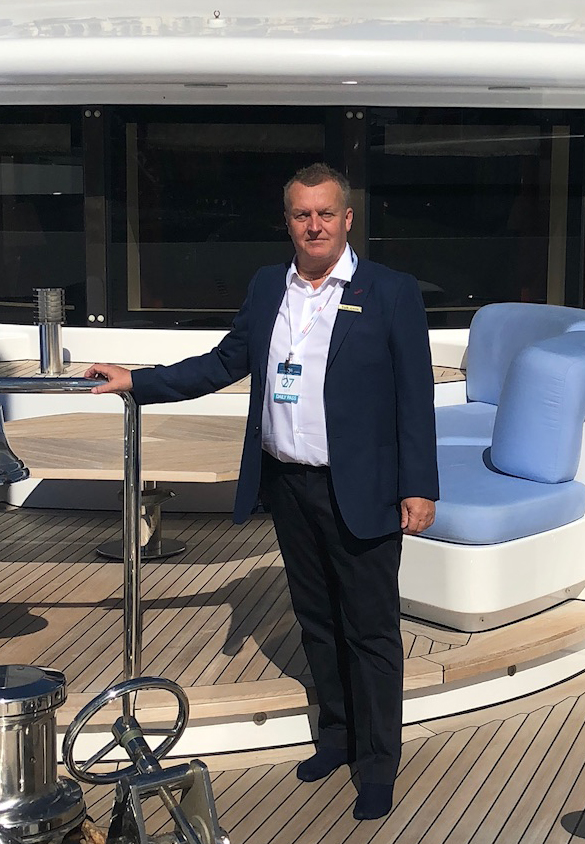
Why We Built 24Synergy — and Why the Magazines Matter

When we started developing 24Synergy, the objective was never simply to build another business directory, advertising website or collection of industry portals. There are already plenty of those, and creating another one would have achieved very little.
The question I kept coming back to was much simpler: **what should 24Synergy actually do for the businesses that use it?**
For me, the answer has always been about creating opportunity through collaboration.
We are constantly told that competition is healthy, and of course it is. Competition drives standards, innovation and better service. But I became interested in a slightly different question. What happens if competitors can also work together?
I don't mean sharing commercially sensitive information or pretending that companies aren't competing for the same customers. I mean recognising that every business already has its own clients, contacts, audience, knowledge and reach. If those individual networks can be connected intelligently, everybody potentially reaches considerably further than they could alone.
That principle became the foundation of 24Synergy.
The network is designed to grow through the businesses using it. Companies introduce their clients and contacts, other businesses do the same, and gradually those separate audiences become part of something much larger. Everybody contributes something to the network and everybody has the opportunity to benefit from the network that results.
There is also a perfectly sensible commercial reason for getting involved early. Your customers are already doing business with other companies and receiving marketing from other suppliers. It therefore makes sense to introduce them to a useful industry network yourself rather than waiting for somebody else to do it first.
That is why I think the early-adopter stage is particularly interesting. I am not going to pretend that a network during its launch period can offer the same volume of activity it should offer when thousands of companies and industry professionals are using it. Networks need people. They need participation and they need time to develop.
But eventually there is a tipping point. More companies join, more buyers arrive, more enquiries circulate, more RFQs are submitted, more people read the newsletters and magazines and more conversations take place through 24live. At that point, the companies that supported the network early aren't arriving and trying to establish themselves in an already busy marketplace. They are already there, with their accounts, listings, content, contacts and presence established.
Some of the mechanisms we have built become much more significant at that stage. Priority access to an RFQ, for example, might seem relatively unimportant when there are only a handful moving through the system. When substantial numbers of genuine opportunities are being generated, seeing something 48 hours before other users can make a considerable difference. The value of the network should therefore increase as the network itself grows.
That same thinking is ultimately what led us to create the magazines.
As 24Synergy developed, I increasingly felt that something was missing. We had created ways for businesses to list themselves, communicate, publish information, distribute newsletters, generate enquiries, respond to opportunities and reach audiences across different specialist sectors, but if we were genuinely trying to build a comprehensive marketing network, those businesses also needed somewhere to advertise.
So we built it.
The 24 Magazines aren't intended to sit separately from 24Synergy. They are another part of the same ecosystem, giving companies another route to market while giving readers useful specialist information in an accessible format. They are global publications, but with regional editions and regional editorial because the businesses and people using 24Synergy are global too.
A company shouldn't be disadvantaged because it happens to be based in Britain, France, the United States, Dubai, Singapore, Spain or somewhere else entirely. Nor should a reader have to wade through endless irrelevant information before finding something applicable to where they live, work, sail, charter, fly or conduct business.
That brings me to something else that is probably worth addressing openly.
Some readers will look through these magazines and ask: **“Have they used AI to produce some of this?”**
The answer is yes.
We have.
There are thousands of pieces of editorial involved across these publications and their regional editions, and it would be rather ridiculous for me to pretend that artificial intelligence hasn't helped us create them. AI exists, it is an extraordinarily useful tool when used properly, and I don't see any reason to hide the fact that we have used it.
What matters to me is **how** we have used it.
We haven't simply asked a machine to fill hundreds of pages with words so that the magazines look busy. We have chosen the subjects we believe are worth covering, identified the questions we think readers actually want answered and, in many cases, started the articles ourselves before using AI to help develop the research, structure and additional information around them.
The objective has always been usefulness.
If you're reading one of our sailing magazines, I want you to discover something that helps you sail, plan a passage, choose equipment, understand a destination or avoid a problem. If you're involved with private aviation, I want the information to answer questions relevant to flying, ownership, charter or operations. If you're in commercial shipping, brokerage, boat building, property, charter or another sector, the same principle applies.
I don't want pages of disposable editorial written simply because a magazine needs another article.
We have tried to identify subjects where somebody would otherwise have to spend time searching around the internet, opening numerous websites and piecing the information together themselves. We can do some of that background work instead, ask the questions and bring the useful information together in one place.
There is an environmental argument for that approach too. Endless searching, loading websites, serving adverts and repeatedly retrieving information all require digital infrastructure and energy. A magazine can be downloaded once, kept and read offline.
I wouldn't pretend that this somehow makes digital publishing impact-free, because it doesn't, but if we can save readers unnecessary searching while creating something useful enough to keep and refer back to, I think that is a better use of the technology available to us.
So yes, some of what you are reading has involved AI, and some of it has involved people. Increasingly it will involve more people as well.
As early adopters, journalists, specialists and other contributors become involved, their voices will naturally become part of these pages. We are also inviting other magazines and media organisations to contribute, which should introduce completely different editorial voices and areas of expertise. They may use AI themselves, of course, and I have no intention of telling another publisher or journalist which tools they are permitted to use.
The test is much simpler than that: **does the article give the reader something worthwhile?**
If it doesn't, it shouldn't be here.
That philosophy also explains something rather unusual we are now introducing. We are going to allow other independent magazines to promote themselves through our magazines.
At first that might sound counter-intuitive. Why would one magazine deliberately introduce its readers to another magazine?
My answer is: why wouldn't we?
If another specialist publication produces good material that our readers would appreciate, discovering it doesn't make our own magazine less useful. Quite the opposite. If we can become somewhere readers come to discover worthwhile information, including information and publications produced by other people, then I think we become more useful.
A participating publication will be able to contribute a genuine editorial article, tell readers where they can find more of its work and promote its magazine within our pages. We can potentially take that relationship considerably further as well. There may be opportunities to work with other publishers commercially, including arrangements where advertising from their own clients can reach our publications and both parties share in the resulting revenue.
Again, it comes back to the original idea behind 24Synergy. Competition doesn't have to prevent collaboration.
The scale of the network comes from the same philosophy. Historically, the industries we have worked with have never existed neatly inside individual boxes. A superyacht depends upon builders, suppliers, engineering companies, crew, brokers, charter businesses, marinas and countless specialist services. Those same owners and clients may use private aviation and own international property. Boat builders need suppliers. Charter companies need customers. Brokers need buyers and sellers. Employers need crew.
Exhibitors need boat shows, and boat shows need exhibitors and visitors.
Commercial ships and cruise ships sit alongside superyachts, motor yachts and sailing yachts. There are crew and employment services, boat and ship builders, ports, yacht services and suppliers, aviation, empty legs, property and specialist luxury markets. Each sector has its own identity, but there are countless points where they intersect.
That is why 24Synergy has become such a large collection of connected websites. It is deliberately not centred on one country or one type of business. A company with branches in several countries can bring those offices together through the same network, while a small specialist supplier can concentrate on the particular market that matters to it. Everything can still be managed centrally through the same account and dashboard.
24live takes that idea in another direction again. I sometimes describe it as sitting somewhere between the professional nature of LinkedIn and the immediacy of a social network such as Facebook, although I don't really want it to become either of those things. The purpose is business.
Members can publish their own material, interact with other users, promote their businesses and place appropriate content across relevant parts of the 24 Network. If somebody wants to be proactive, there is considerable freedom to put themselves in front of the industries they want to reach rather than simply creating a listing and waiting for somebody to find them.
That is an important distinction for me. **24Synergy isn't designed to do your marketing while you sit and watch. It is designed to give you the tools to do considerably more with your marketing yourself.**
There is another, deliberately different part of the ecosystem too.
Within the superyacht sector, 1UK.com is being developed around recognition rather than conventional paid placement. Companies cannot simply buy their way into recognition. They can request consideration, but that request can be declined. As the concept develops, I want appropriate industry leaders themselves to help determine the standards that businesses should achieve to be recognised at different levels.
That connects directly with where I would like 24Synergy itself eventually to go.
The intention is for 24Synergy to develop into a cooperative structure with industry leaders and board members helping to determine its future direction. The industry changes constantly, and the technology serving it needs to change with it. Electric propulsion is an obvious example today, but tomorrow there will be something else. The people actually working within these sectors will often identify what is needed long before a software developer sitting outside the industry ever could.
We have built the infrastructure, but I don't believe that means we should dictate indefinitely what it becomes. I would much rather create a structure where the people using the network have a meaningful voice in deciding which features should be developed next and where the network should go as their industries evolve.
There is a personal reason behind all of this as well.
I've always enjoyed helping businesses develop. I enjoy looking at a new company, understanding what it is trying to achieve and asking what could be done differently. Sometimes it is marketing, sometimes positioning, sometimes making an introduction or simply giving somebody the confidence and advice they need when they're trying to get something started.
I suppose 24Synergy is my attempt to do that on a much larger scale.
Rather than helping one company find another route to market, we have tried to build the infrastructure through which thousands of businesses can create those routes for themselves and for each other. It gives a small specialist company access to many of the same marketing mechanisms available to a much larger international organisation, while allowing a multinational business to connect offices, people and sectors through one global hub.
And that is probably the simplest answer to the question I started with: **what is 24Synergy actually for?**
It is there to create connections and opportunities that would otherwise be harder to create individually. The websites, magazines, newsletters, RFQs, publishing tools, 24live and everything else we develop are simply different ways of achieving that.
We've done the difficult part of bringing that infrastructure together. Now I want businesses to use it, challenge it and help us improve it. I want people to tell us what works, what doesn't and what their particular part of the industry needs next. As more businesses participate, the network should become more useful to everybody already inside it.
We have built 24Synergy, but I don't want it to feel as though it belongs to a small team sitting somewhere deciding what everybody else needs.
**We've built it for you. Now make use of it, make it work for your business, and help us decide what it becomes next.**
**Paul Thompson** *Editor*
Contributor: Paul Thompson / 24Synergy

Be the first reader to react to this article.

There is nothing particularly complicated about saf in europe: what the 2026 supply figures mean for business aviation, but there are several ways to make it unnecessarily expensive.

There is nothing particularly complicated about saf in europe: what the 2026 supply figures mean for business aviation, but there are several ways to make it unnecessarily expensive.
Cost also needs to be separated into purchase cost and ownership cost. The second figure is usually less visible. Consumables, routine servicing, insurance, finance, berthing or storage, professional fees, software subscriptions, inspections and eventual replacement items can materially change the economics. A useful quotation is therefore one that makes exclusions obvious.
If a supplier cannot explain what normally falls outside the quoted figure, ask for that clarification before treating two prices as comparable.
After-sales support can be more important than the original specification. A component that is excellent on paper is less attractive if parts take months to arrive or there is no competent service agent where the equipment will be used. The same applies to software-led products: ownership now includes updates, access rights, data and sometimes recurring subscriptions. Find out who supports the system, for how long, and what happens if the original supplier changes hands.
Aviation fuel is a current example of why detail matters. EU reporting published in September 2026 said sustainable aviation fuel supplied at Union airports in 2025 reached 2.8% of total aviation fuel, above the 2% minimum target. Availability is improving, but it is not uniform, so operators and charter customers still need to distinguish a policy target from what can be uplifted on a particular trip.
Timing matters. Buying or commissioning under deadline pressure weakens the buyer's position because there is less time to inspect, compare and walk away. Where possible, build the timetable backwards from the date the asset or service is genuinely required. Include survey or inspection time, corrections, training, delivery and a contingency. A realistic programme often reveals that the cheapest-looking option is not the one with the lowest overall cost.
The starting point is use. In business aviation, aircraft ownership, charter and operations, two apparently similar products or services can be right for completely different owners because their operating pattern is different. Frequency of use, geography, crew or staffing, storage, servicing access and the length of time you expect to keep the asset all change the answer. Before comparing brands or quotations, write down those constraints.
It sounds basic, but it prevents a specification being chosen for a lifestyle that exists only in the sales material.

Technical claims deserve context. Range, output, capacity, speed, efficiency and performance figures are normally produced under stated conditions. Real use adds weather, load, temperature, fouling, route, operator behaviour and reserve margins. Rather than arguing over a headline number, ask what assumptions sit behind it and what happens when those assumptions change. That produces a much more useful comparison.
Sustainability claims are increasingly part of the decision as well. The useful question is not whether a product is described as green, but what has actually changed: energy use, fuel consumption, material choice, repairability, service life, emissions, waste or end-of-life handling. Improvements in one area can create compromises in another. Evidence and measured performance are more valuable than broad environmental language.
Finally, insist on a proper handover. Familiarisation, emergency procedures, maintenance intervals, passwords, spare parts, warranty contacts and operating limitations should all be understood before the supplier disappears over the horizon. A surprising number of early problems are not failures at all but gaps in handover. Thirty minutes spent recording the right information can save days later.


My own shorthand for saf in europe: what the 2026 supply figures mean for business aviation is simple: verify the condition, verify the paperwork, understand the support network and calculate the cost on a realistic pattern of use. If any one of those four is unclear, there is still work to do before committing.
Energy decisions need a duty-cycle calculation. Average use is less important than the difficult day: the longest passage, the coldest morning, the heaviest load, the remote berth or the turnaround with the least charging time. Design around that case with a sensible reserve and the everyday operation normally becomes straightforward. Design around the brochure average and the owner may spend years managing around the system.
Infrastructure should be checked before hardware is ordered. Available electrical supply, connector type, grid capacity, bunkering arrangements, ventilation, fire protection and local operating rules can all dictate what is practical. In many projects the limiting factor is not the motor, battery or fuel technology; it is the place where the asset has to recharge, refuel or be maintained.
The practical test for business aviation, aircraft ownership, charter and operations is whether the decision still makes sense when circumstances are less than ideal. Weather changes, schedules move, components fail and people use equipment differently from the designer's neat assumptions. Building a little resilience into the choice usually costs less than trying to recover it afterwards.
The best outcome is not necessarily the newest or most sophisticated option. It is the one that remains practical after the first season, the first service bill and the first change of plan.
Contributor: Paul Thompson / Editorial / 24PrivateJets
Be the first reader to react to this article.
The conversation around buying versus chartering: the utilisation question comes first has moved quickly this year, yet the practical decision is still built on fairly ordinary questions.
The conversation around buying versus chartering: the utilisation question comes first has moved quickly this year, yet the practical decision is still built on fairly ordinary questions.
Documentation is another practical test. Service records, manuals, certificates, invoices, warranties, software licences and evidence of previous work are not administrative clutter; they are part of the asset. Good records make troubleshooting easier and can support resale. Missing records do not automatically mean there is a problem, but they increase uncertainty, and uncertainty should be reflected in the questions asked, the inspection undertaken and sometimes the price.
Risk is best dealt with before commitment. That means independent inspection where appropriate, clear written scope, confirmation of insurance implications and an agreed process for defects or incomplete work. In higher-value transactions, legal, tax and regulatory advice should come from qualified advisers in the relevant jurisdiction. The purpose is not to make every transaction defensive; it is to stop assumptions becoming expensive surprises.
Aviation fuel is a current example of why detail matters. EU reporting published in September 2026 said sustainable aviation fuel supplied at Union airports in 2025 reached 2.8% of total aviation fuel, above the 2% minimum target. Availability is improving, but it is not uniform, so operators and charter customers still need to distinguish a policy target from what can be uplifted on a particular trip.
Resale should be considered even by people who intend to keep something for years. Highly personal specifications can be perfectly sensible, but buyers should understand the trade-off. Widely supported equipment, sensible layouts, complete records and recognised maintenance tend to be easier for the next owner to understand. The objective is not to design everything for an unknown future buyer; it is simply to avoid destroying flexibility without a good reason.
Cost also needs to be separated into purchase cost and ownership cost. The second figure is usually less visible. Consumables, routine servicing, insurance, finance, berthing or storage, professional fees, software subscriptions, inspections and eventual replacement items can materially change the economics. A useful quotation is therefore one that makes exclusions obvious.
If a supplier cannot explain what normally falls outside the quoted figure, ask for that clarification before treating two prices as comparable.
After-sales support can be more important than the original specification. A component that is excellent on paper is less attractive if parts take months to arrive or there is no competent service agent where the equipment will be used. The same applies to software-led products: ownership now includes updates, access rights, data and sometimes recurring subscriptions. Find out who supports the system, for how long, and what happens if the original supplier changes hands.
Timing matters. Buying or commissioning under deadline pressure weakens the buyer's position because there is less time to inspect, compare and walk away. Where possible, build the timetable backwards from the date the asset or service is genuinely required. Include survey or inspection time, corrections, training, delivery and a contingency. A realistic programme often reveals that the cheapest-looking option is not the one with the lowest overall cost.
The starting point is use. In business aviation, aircraft ownership, charter and operations, two apparently similar products or services can be right for completely different owners because their operating pattern is different. Frequency of use, geography, crew or staffing, storage, servicing access and the length of time you expect to keep the asset all change the answer. Before comparing brands or quotations, write down those constraints.
It sounds basic, but it prevents a specification being chosen for a lifestyle that exists only in the sales material.

When money is about to change hands, the sequence matters. Establish identity and authority to sell, agree exactly what is included, record known defects and make any deposit terms clear. Where a survey, valuation or finance approval is part of the transaction, the contract should reflect that process rather than relying on a verbal understanding. Buyers should also know when risk and title transfer, particularly if the asset is moving between jurisdictions.
Market value is evidence, not aspiration. Advertised prices show what sellers hope to achieve; completed transactions, condition, specification, location and time on market give a better picture. A well-presented example can deserve a premium, but a premium still needs a reason. The strongest negotiating position comes from knowing which defects are merely cosmetic, which affect usability and which could lead to immediate capital expenditure.
The practical test for business aviation, aircraft ownership, charter and operations is whether the decision still makes sense when circumstances are less than ideal. Weather changes, schedules move, components fail and people use equipment differently from the designer's neat assumptions. Building a little resilience into the choice usually costs less than trying to recover it afterwards.
For most readers, that is enough to narrow the field considerably before serious money or time is committed.
Contributor: Paul Thompson / Editorial / 24PrivateJets
Be the first reader to react to this article.

The market has become very good at presenting connectivity in the cabin: what passengers now expect as standard as simple.
The market has become very good at presenting connectivity in the cabin: what passengers now expect as standard as simple. In practice, the details still determine whether it works.
Finally, insist on a proper handover. Familiarisation, emergency procedures, maintenance intervals, passwords, spare parts, warranty contacts and operating limitations should all be understood before the supplier disappears over the horizon. A surprising number of early problems are not failures at all but gaps in handover. Thirty minutes spent recording the right information can save days later.
Documentation is another practical test. Service records, manuals, certificates, invoices, warranties, software licences and evidence of previous work are not administrative clutter; they are part of the asset. Good records make troubleshooting easier and can support resale. Missing records do not automatically mean there is a problem, but they increase uncertainty, and uncertainty should be reflected in the questions asked, the inspection undertaken and sometimes the price.
Aviation fuel is a current example of why detail matters. EU reporting published in September 2026 said sustainable aviation fuel supplied at Union airports in 2025 reached 2.8% of total aviation fuel, above the 2% minimum target. Availability is improving, but it is not uniform, so operators and charter customers still need to distinguish a policy target from what can be uplifted on a particular trip.
Risk is best dealt with before commitment. That means independent inspection where appropriate, clear written scope, confirmation of insurance implications and an agreed process for defects or incomplete work. In higher-value transactions, legal, tax and regulatory advice should come from qualified advisers in the relevant jurisdiction. The purpose is not to make every transaction defensive; it is to stop assumptions becoming expensive surprises.
Resale should be considered even by people who intend to keep something for years. Highly personal specifications can be perfectly sensible, but buyers should understand the trade-off. Widely supported equipment, sensible layouts, complete records and recognised maintenance tend to be easier for the next owner to understand. The objective is not to design everything for an unknown future buyer; it is simply to avoid destroying flexibility without a good reason.
Cost also needs to be separated into purchase cost and ownership cost. The second figure is usually less visible. Consumables, routine servicing, insurance, finance, berthing or storage, professional fees, software subscriptions, inspections and eventual replacement items can materially change the economics. A useful quotation is therefore one that makes exclusions obvious.
If a supplier cannot explain what normally falls outside the quoted figure, ask for that clarification before treating two prices as comparable.
After-sales support can be more important than the original specification. A component that is excellent on paper is less attractive if parts take months to arrive or there is no competent service agent where the equipment will be used. The same applies to software-led products: ownership now includes updates, access rights, data and sometimes recurring subscriptions. Find out who supports the system, for how long, and what happens if the original supplier changes hands.
Timing matters. Buying or commissioning under deadline pressure weakens the buyer's position because there is less time to inspect, compare and walk away. Where possible, build the timetable backwards from the date the asset or service is genuinely required. Include survey or inspection time, corrections, training, delivery and a contingency. A realistic programme often reveals that the cheapest-looking option is not the one with the lowest overall cost.

My own shorthand for connectivity in the cabin: what passengers now expect as standard is simple: verify the condition, verify the paperwork, understand the support network and calculate the cost on a realistic pattern of use. If any one of those four is unclear, there is still work to do before committing.
Comparison becomes easier if every contender is put through the same questions. Ask for the same operating assumptions, the same delivery point, the same warranty period and the same list of included equipment or services. That turns a collection of sales conversations into something closer to a procurement exercise and exposes the areas where one quotation has quietly omitted an expensive item.
References are useful when they are relevant. A supplier's biggest or most prestigious project may tell you very little about how it handles an ordinary job in your region. Ask instead for examples with a similar scale, operating pattern and timetable. The most useful reference is often the customer who has lived with the product for two or three years and has already needed after-sales support.
The practical test for business aviation, aircraft ownership, charter and operations is whether the decision still makes sense when circumstances are less than ideal. Weather changes, schedules move, components fail and people use equipment differently from the designer's neat assumptions. Building a little resilience into the choice usually costs less than trying to recover it afterwards.
A measured decision now generally costs less than correcting an enthusiastic one later.
Contributor: Paul Thompson / Editorial / 24PrivateJets
Be the first reader to react to this article.
This is one of those subjects where a little preparation is worth far more than a long list of features.
This is one of those subjects where a little preparation is worth far more than a long list of features.
Technical claims deserve context. Range, output, capacity, speed, efficiency and performance figures are normally produced under stated conditions. Real use adds weather, load, temperature, fouling, route, operator behaviour and reserve margins. Rather than arguing over a headline number, ask what assumptions sit behind it and what happens when those assumptions change. That produces a much more useful comparison.
Sustainability claims are increasingly part of the decision as well. The useful question is not whether a product is described as green, but what has actually changed: energy use, fuel consumption, material choice, repairability, service life, emissions, waste or end-of-life handling. Improvements in one area can create compromises in another. Evidence and measured performance are more valuable than broad environmental language.
Aviation fuel is a current example of why detail matters. EU reporting published in September 2026 said sustainable aviation fuel supplied at Union airports in 2025 reached 2.8% of total aviation fuel, above the 2% minimum target. Availability is improving, but it is not uniform, so operators and charter customers still need to distinguish a policy target from what can be uplifted on a particular trip.
Finally, insist on a proper handover. Familiarisation, emergency procedures, maintenance intervals, passwords, spare parts, warranty contacts and operating limitations should all be understood before the supplier disappears over the horizon. A surprising number of early problems are not failures at all but gaps in handover. Thirty minutes spent recording the right information can save days later.
Documentation is another practical test. Service records, manuals, certificates, invoices, warranties, software licences and evidence of previous work are not administrative clutter; they are part of the asset. Good records make troubleshooting easier and can support resale. Missing records do not automatically mean there is a problem, but they increase uncertainty, and uncertainty should be reflected in the questions asked, the inspection undertaken and sometimes the price.
Risk is best dealt with before commitment. That means independent inspection where appropriate, clear written scope, confirmation of insurance implications and an agreed process for defects or incomplete work. In higher-value transactions, legal, tax and regulatory advice should come from qualified advisers in the relevant jurisdiction. The purpose is not to make every transaction defensive; it is to stop assumptions becoming expensive surprises.
Resale should be considered even by people who intend to keep something for years. Highly personal specifications can be perfectly sensible, but buyers should understand the trade-off. Widely supported equipment, sensible layouts, complete records and recognised maintenance tend to be easier for the next owner to understand. The objective is not to design everything for an unknown future buyer; it is simply to avoid destroying flexibility without a good reason.
Cost also needs to be separated into purchase cost and ownership cost. The second figure is usually less visible. Consumables, routine servicing, insurance, finance, berthing or storage, professional fees, software subscriptions, inspections and eventual replacement items can materially change the economics. A useful quotation is therefore one that makes exclusions obvious.
If a supplier cannot explain what normally falls outside the quoted figure, ask for that clarification before treating two prices as comparable.
Preventive work is most effective when it is recorded rather than remembered. A simple calendar of hours, dates, consumables, inspections and recurring tasks gives owners and managers an early warning before maintenance becomes urgent. It also allows jobs to be grouped sensibly, reducing repeated access costs and downtime. The discipline is not glamorous, but it is one of the clearest ways to protect reliability.
Scope control matters on any refit or repair. Once equipment is opened up, additional work is common, so the original quotation should distinguish fixed items, provisional sums and work that requires further authorisation. Photographing condition before and after the job and retaining replaced-part details can prevent disputes and gives the next technician a useful history.
The practical test for business aviation, aircraft ownership, charter and operations is whether the decision still makes sense when circumstances are less than ideal. Weather changes, schedules move, components fail and people use equipment differently from the designer's neat assumptions. Building a little resilience into the choice usually costs less than trying to recover it afterwards.
For most readers, that is enough to narrow the field considerably before serious money or time is committed.
Contributor: Paul Thompson / Editorial / 24PrivateJets


Be the first reader to react to this article.
The market has become very good at presenting aircraft management contracts: the clauses owners should understand as simple.
The market has become very good at presenting aircraft management contracts: the clauses owners should understand as simple. In practice, the details still determine whether it works.
After-sales support can be more important than the original specification. A component that is excellent on paper is less attractive if parts take months to arrive or there is no competent service agent where the equipment will be used. The same applies to software-led products: ownership now includes updates, access rights, data and sometimes recurring subscriptions. Find out who supports the system, for how long, and what happens if the original supplier changes hands.
Timing matters. Buying or commissioning under deadline pressure weakens the buyer's position because there is less time to inspect, compare and walk away. Where possible, build the timetable backwards from the date the asset or service is genuinely required. Include survey or inspection time, corrections, training, delivery and a contingency. A realistic programme often reveals that the cheapest-looking option is not the one with the lowest overall cost.
Aviation fuel is a current example of why detail matters. EU reporting published in September 2026 said sustainable aviation fuel supplied at Union airports in 2025 reached 2.8% of total aviation fuel, above the 2% minimum target. Availability is improving, but it is not uniform, so operators and charter customers still need to distinguish a policy target from what can be uplifted on a particular trip.
The starting point is use. In business aviation, aircraft ownership, charter and operations, two apparently similar products or services can be right for completely different owners because their operating pattern is different. Frequency of use, geography, crew or staffing, storage, servicing access and the length of time you expect to keep the asset all change the answer. Before comparing brands or quotations, write down those constraints.
It sounds basic, but it prevents a specification being chosen for a lifestyle that exists only in the sales material.
Technical claims deserve context. Range, output, capacity, speed, efficiency and performance figures are normally produced under stated conditions. Real use adds weather, load, temperature, fouling, route, operator behaviour and reserve margins. Rather than arguing over a headline number, ask what assumptions sit behind it and what happens when those assumptions change. That produces a much more useful comparison.
Sustainability claims are increasingly part of the decision as well. The useful question is not whether a product is described as green, but what has actually changed: energy use, fuel consumption, material choice, repairability, service life, emissions, waste or end-of-life handling. Improvements in one area can create compromises in another. Evidence and measured performance are more valuable than broad environmental language.
Finally, insist on a proper handover. Familiarisation, emergency procedures, maintenance intervals, passwords, spare parts, warranty contacts and operating limitations should all be understood before the supplier disappears over the horizon. A surprising number of early problems are not failures at all but gaps in handover. Thirty minutes spent recording the right information can save days later.
Documentation is another practical test. Service records, manuals, certificates, invoices, warranties, software licences and evidence of previous work are not administrative clutter; they are part of the asset. Good records make troubleshooting easier and can support resale. Missing records do not automatically mean there is a problem, but they increase uncertainty, and uncertainty should be reflected in the questions asked, the inspection undertaken and sometimes the price.

Connected equipment creates a second maintenance schedule: passwords, access permissions, firmware, backups and subscriptions. Owners should know which systems can be updated remotely, which data leaves the asset and whether loss of an online service affects core operation. A paper or offline record of critical settings is still useful when the problem being diagnosed is the network itself.
Cybersecurity does not need to become a specialist exercise for every user. Basic separation of guest and operational networks, unique credentials, prompt updates and controlled administrator access remove a large proportion of avoidable risk. The more important question for a supplier is whether security has been designed into the product and whether updates will continue throughout its realistic service life.
The practical test for business aviation, aircraft ownership, charter and operations is whether the decision still makes sense when circumstances are less than ideal. Weather changes, schedules move, components fail and people use equipment differently from the designer's neat assumptions. Building a little resilience into the choice usually costs less than trying to recover it afterwards.
For most readers, that is enough to narrow the field considerably before serious money or time is committed.
Contributor: Paul Thompson / Editorial / 24PrivateJets

Be the first reader to react to this article.
There is nothing particularly complicated about hourly rates are not the whole charter price, but there are several ways to make it unnecessarily expensive.
There is nothing particularly complicated about hourly rates are not the whole charter price, but there are several ways to make it unnecessarily expensive.
Risk is best dealt with before commitment. That means independent inspection where appropriate, clear written scope, confirmation of insurance implications and an agreed process for defects or incomplete work. In higher-value transactions, legal, tax and regulatory advice should come from qualified advisers in the relevant jurisdiction. The purpose is not to make every transaction defensive; it is to stop assumptions becoming expensive surprises.
Resale should be considered even by people who intend to keep something for years. Highly personal specifications can be perfectly sensible, but buyers should understand the trade-off. Widely supported equipment, sensible layouts, complete records and recognised maintenance tend to be easier for the next owner to understand. The objective is not to design everything for an unknown future buyer; it is simply to avoid destroying flexibility without a good reason.
Aviation fuel is a current example of why detail matters. EU reporting published in September 2026 said sustainable aviation fuel supplied at Union airports in 2025 reached 2.8% of total aviation fuel, above the 2% minimum target. Availability is improving, but it is not uniform, so operators and charter customers still need to distinguish a policy target from what can be uplifted on a particular trip.
Cost also needs to be separated into purchase cost and ownership cost. The second figure is usually less visible. Consumables, routine servicing, insurance, finance, berthing or storage, professional fees, software subscriptions, inspections and eventual replacement items can materially change the economics. A useful quotation is therefore one that makes exclusions obvious.
If a supplier cannot explain what normally falls outside the quoted figure, ask for that clarification before treating two prices as comparable.
After-sales support can be more important than the original specification. A component that is excellent on paper is less attractive if parts take months to arrive or there is no competent service agent where the equipment will be used. The same applies to software-led products: ownership now includes updates, access rights, data and sometimes recurring subscriptions. Find out who supports the system, for how long, and what happens if the original supplier changes hands.
Timing matters. Buying or commissioning under deadline pressure weakens the buyer's position because there is less time to inspect, compare and walk away. Where possible, build the timetable backwards from the date the asset or service is genuinely required. Include survey or inspection time, corrections, training, delivery and a contingency. A realistic programme often reveals that the cheapest-looking option is not the one with the lowest overall cost.
The starting point is use. In business aviation, aircraft ownership, charter and operations, two apparently similar products or services can be right for completely different owners because their operating pattern is different. Frequency of use, geography, crew or staffing, storage, servicing access and the length of time you expect to keep the asset all change the answer. Before comparing brands or quotations, write down those constraints.
It sounds basic, but it prevents a specification being chosen for a lifestyle that exists only in the sales material.
Technical claims deserve context. Range, output, capacity, speed, efficiency and performance figures are normally produced under stated conditions. Real use adds weather, load, temperature, fouling, route, operator behaviour and reserve margins. Rather than arguing over a headline number, ask what assumptions sit behind it and what happens when those assumptions change. That produces a much more useful comparison.
My own shorthand for hourly rates are not the whole charter price is simple: verify the condition, verify the paperwork, understand the support network and calculate the cost on a realistic pattern of use. If any one of those four is unclear, there is still work to do before committing.
When money is about to change hands, the sequence matters. Establish identity and authority to sell, agree exactly what is included, record known defects and make any deposit terms clear. Where a survey, valuation or finance approval is part of the transaction, the contract should reflect that process rather than relying on a verbal understanding. Buyers should also know when risk and title transfer, particularly if the asset is moving between jurisdictions.
Market value is evidence, not aspiration. Advertised prices show what sellers hope to achieve; completed transactions, condition, specification, location and time on market give a better picture. A well-presented example can deserve a premium, but a premium still needs a reason. The strongest negotiating position comes from knowing which defects are merely cosmetic, which affect usability and which could lead to immediate capital expenditure.
The practical test for business aviation, aircraft ownership, charter and operations is whether the decision still makes sense when circumstances are less than ideal. Weather changes, schedules move, components fail and people use equipment differently from the designer's neat assumptions. Building a little resilience into the choice usually costs less than trying to recover it afterwards.
That is the point worth carrying into the next conversation with a broker, builder, supplier or adviser: ask what the choice will be like to own and operate, not merely what it is like to buy.
Contributor: Paul Thompson / Editorial / 24PrivateJets
Be the first reader to react to this article.
This is one of those subjects where a little preparation is worth far more than a long list of features.
This is one of those subjects where a little preparation is worth far more than a long list of features.
Sustainability claims are increasingly part of the decision as well. The useful question is not whether a product is described as green, but what has actually changed: energy use, fuel consumption, material choice, repairability, service life, emissions, waste or end-of-life handling. Improvements in one area can create compromises in another. Evidence and measured performance are more valuable than broad environmental language.
Finally, insist on a proper handover. Familiarisation, emergency procedures, maintenance intervals, passwords, spare parts, warranty contacts and operating limitations should all be understood before the supplier disappears over the horizon. A surprising number of early problems are not failures at all but gaps in handover. Thirty minutes spent recording the right information can save days later.
Aviation fuel is a current example of why detail matters. EU reporting published in September 2026 said sustainable aviation fuel supplied at Union airports in 2025 reached 2.8% of total aviation fuel, above the 2% minimum target. Availability is improving, but it is not uniform, so operators and charter customers still need to distinguish a policy target from what can be uplifted on a particular trip.
Documentation is another practical test. Service records, manuals, certificates, invoices, warranties, software licences and evidence of previous work are not administrative clutter; they are part of the asset. Good records make troubleshooting easier and can support resale. Missing records do not automatically mean there is a problem, but they increase uncertainty, and uncertainty should be reflected in the questions asked, the inspection undertaken and sometimes the price.
Risk is best dealt with before commitment. That means independent inspection where appropriate, clear written scope, confirmation of insurance implications and an agreed process for defects or incomplete work. In higher-value transactions, legal, tax and regulatory advice should come from qualified advisers in the relevant jurisdiction. The purpose is not to make every transaction defensive; it is to stop assumptions becoming expensive surprises.
Resale should be considered even by people who intend to keep something for years. Highly personal specifications can be perfectly sensible, but buyers should understand the trade-off. Widely supported equipment, sensible layouts, complete records and recognised maintenance tend to be easier for the next owner to understand. The objective is not to design everything for an unknown future buyer; it is simply to avoid destroying flexibility without a good reason.
Cost also needs to be separated into purchase cost and ownership cost. The second figure is usually less visible. Consumables, routine servicing, insurance, finance, berthing or storage, professional fees, software subscriptions, inspections and eventual replacement items can materially change the economics. A useful quotation is therefore one that makes exclusions obvious.
If a supplier cannot explain what normally falls outside the quoted figure, ask for that clarification before treating two prices as comparable.
After-sales support can be more important than the original specification. A component that is excellent on paper is less attractive if parts take months to arrive or there is no competent service agent where the equipment will be used. The same applies to software-led products: ownership now includes updates, access rights, data and sometimes recurring subscriptions. Find out who supports the system, for how long, and what happens if the original supplier changes hands.

Connected equipment creates a second maintenance schedule: passwords, access permissions, firmware, backups and subscriptions. Owners should know which systems can be updated remotely, which data leaves the asset and whether loss of an online service affects core operation. A paper or offline record of critical settings is still useful when the problem being diagnosed is the network itself.
Cybersecurity does not need to become a specialist exercise for every user. Basic separation of guest and operational networks, unique credentials, prompt updates and controlled administrator access remove a large proportion of avoidable risk. The more important question for a supplier is whether security has been designed into the product and whether updates will continue throughout its realistic service life.
The practical test for business aviation, aircraft ownership, charter and operations is whether the decision still makes sense when circumstances are less than ideal. Weather changes, schedules move, components fail and people use equipment differently from the designer's neat assumptions. Building a little resilience into the choice usually costs less than trying to recover it afterwards.
The best outcome is not necessarily the newest or most sophisticated option. It is the one that remains practical after the first season, the first service bill and the first change of plan.
Contributor: Paul Thompson / Editorial / 24PrivateJets
Be the first reader to react to this article.
For anyone looking at fractional ownership: where convenience can justify the structure, the first job is not to decide what looks best.
For anyone looking at fractional ownership: where convenience can justify the structure, the first job is not to decide what looks best. It is to establish what problem actually needs solving.
Timing matters. Buying or commissioning under deadline pressure weakens the buyer's position because there is less time to inspect, compare and walk away. Where possible, build the timetable backwards from the date the asset or service is genuinely required. Include survey or inspection time, corrections, training, delivery and a contingency. A realistic programme often reveals that the cheapest-looking option is not the one with the lowest overall cost.
The starting point is use. In business aviation, aircraft ownership, charter and operations, two apparently similar products or services can be right for completely different owners because their operating pattern is different. Frequency of use, geography, crew or staffing, storage, servicing access and the length of time you expect to keep the asset all change the answer. Before comparing brands or quotations, write down those constraints.
It sounds basic, but it prevents a specification being chosen for a lifestyle that exists only in the sales material.
Aviation fuel is a current example of why detail matters. EU reporting published in September 2026 said sustainable aviation fuel supplied at Union airports in 2025 reached 2.8% of total aviation fuel, above the 2% minimum target. Availability is improving, but it is not uniform, so operators and charter customers still need to distinguish a policy target from what can be uplifted on a particular trip.
Technical claims deserve context. Range, output, capacity, speed, efficiency and performance figures are normally produced under stated conditions. Real use adds weather, load, temperature, fouling, route, operator behaviour and reserve margins. Rather than arguing over a headline number, ask what assumptions sit behind it and what happens when those assumptions change. That produces a much more useful comparison.
Sustainability claims are increasingly part of the decision as well. The useful question is not whether a product is described as green, but what has actually changed: energy use, fuel consumption, material choice, repairability, service life, emissions, waste or end-of-life handling. Improvements in one area can create compromises in another. Evidence and measured performance are more valuable than broad environmental language.
Finally, insist on a proper handover. Familiarisation, emergency procedures, maintenance intervals, passwords, spare parts, warranty contacts and operating limitations should all be understood before the supplier disappears over the horizon. A surprising number of early problems are not failures at all but gaps in handover. Thirty minutes spent recording the right information can save days later.
Documentation is another practical test. Service records, manuals, certificates, invoices, warranties, software licences and evidence of previous work are not administrative clutter; they are part of the asset. Good records make troubleshooting easier and can support resale. Missing records do not automatically mean there is a problem, but they increase uncertainty, and uncertainty should be reflected in the questions asked, the inspection undertaken and sometimes the price.
Risk is best dealt with before commitment. That means independent inspection where appropriate, clear written scope, confirmation of insurance implications and an agreed process for defects or incomplete work. In higher-value transactions, legal, tax and regulatory advice should come from qualified advisers in the relevant jurisdiction. The purpose is not to make every transaction defensive; it is to stop assumptions becoming expensive surprises.

Comparison becomes easier if every contender is put through the same questions. Ask for the same operating assumptions, the same delivery point, the same warranty period and the same list of included equipment or services. That turns a collection of sales conversations into something closer to a procurement exercise and exposes the areas where one quotation has quietly omitted an expensive item.
References are useful when they are relevant. A supplier's biggest or most prestigious project may tell you very little about how it handles an ordinary job in your region. Ask instead for examples with a similar scale, operating pattern and timetable. The most useful reference is often the customer who has lived with the product for two or three years and has already needed after-sales support.
The practical test for business aviation, aircraft ownership, charter and operations is whether the decision still makes sense when circumstances are less than ideal. Weather changes, schedules move, components fail and people use equipment differently from the designer's neat assumptions. Building a little resilience into the choice usually costs less than trying to recover it afterwards.
The sensible approach is therefore quite conventional: define the job, verify the evidence, price the whole commitment and keep enough margin for the things that never appear in the brochure.
Contributor: Paul Thompson / Editorial / 24PrivateJets
Be the first reader to react to this article.
There is nothing particularly complicated about maintenance reserves: why a cheap aircraft can become expensive quickly, but there are several ways to make it unnecessarily expensive.
There is nothing particularly complicated about maintenance reserves: why a cheap aircraft can become expensive quickly, but there are several ways to make it unnecessarily expensive.
Resale should be considered even by people who intend to keep something for years. Highly personal specifications can be perfectly sensible, but buyers should understand the trade-off. Widely supported equipment, sensible layouts, complete records and recognised maintenance tend to be easier for the next owner to understand. The objective is not to design everything for an unknown future buyer; it is simply to avoid destroying flexibility without a good reason.
Cost also needs to be separated into purchase cost and ownership cost. The second figure is usually less visible. Consumables, routine servicing, insurance, finance, berthing or storage, professional fees, software subscriptions, inspections and eventual replacement items can materially change the economics. A useful quotation is therefore one that makes exclusions obvious.
If a supplier cannot explain what normally falls outside the quoted figure, ask for that clarification before treating two prices as comparable.
Aviation fuel is a current example of why detail matters. EU reporting published in September 2026 said sustainable aviation fuel supplied at Union airports in 2025 reached 2.8% of total aviation fuel, above the 2% minimum target. Availability is improving, but it is not uniform, so operators and charter customers still need to distinguish a policy target from what can be uplifted on a particular trip.
After-sales support can be more important than the original specification. A component that is excellent on paper is less attractive if parts take months to arrive or there is no competent service agent where the equipment will be used. The same applies to software-led products: ownership now includes updates, access rights, data and sometimes recurring subscriptions. Find out who supports the system, for how long, and what happens if the original supplier changes hands.
Timing matters. Buying or commissioning under deadline pressure weakens the buyer's position because there is less time to inspect, compare and walk away. Where possible, build the timetable backwards from the date the asset or service is genuinely required. Include survey or inspection time, corrections, training, delivery and a contingency. A realistic programme often reveals that the cheapest-looking option is not the one with the lowest overall cost.
The starting point is use. In business aviation, aircraft ownership, charter and operations, two apparently similar products or services can be right for completely different owners because their operating pattern is different. Frequency of use, geography, crew or staffing, storage, servicing access and the length of time you expect to keep the asset all change the answer. Before comparing brands or quotations, write down those constraints.
It sounds basic, but it prevents a specification being chosen for a lifestyle that exists only in the sales material.
Technical claims deserve context. Range, output, capacity, speed, efficiency and performance figures are normally produced under stated conditions. Real use adds weather, load, temperature, fouling, route, operator behaviour and reserve margins. Rather than arguing over a headline number, ask what assumptions sit behind it and what happens when those assumptions change. That produces a much more useful comparison.
Sustainability claims are increasingly part of the decision as well. The useful question is not whether a product is described as green, but what has actually changed: energy use, fuel consumption, material choice, repairability, service life, emissions, waste or end-of-life handling. Improvements in one area can create compromises in another. Evidence and measured performance are more valuable than broad environmental language.

Preventive work is most effective when it is recorded rather than remembered. A simple calendar of hours, dates, consumables, inspections and recurring tasks gives owners and managers an early warning before maintenance becomes urgent. It also allows jobs to be grouped sensibly, reducing repeated access costs and downtime. The discipline is not glamorous, but it is one of the clearest ways to protect reliability.
Scope control matters on any refit or repair. Once equipment is opened up, additional work is common, so the original quotation should distinguish fixed items, provisional sums and work that requires further authorisation. Photographing condition before and after the job and retaining replaced-part details can prevent disputes and gives the next technician a useful history.
The practical test for business aviation, aircraft ownership, charter and operations is whether the decision still makes sense when circumstances are less than ideal. Weather changes, schedules move, components fail and people use equipment differently from the designer's neat assumptions. Building a little resilience into the choice usually costs less than trying to recover it afterwards.
The sensible approach is therefore quite conventional: define the job, verify the evidence, price the whole commitment and keep enough margin for the things that never appear in the brochure.
Contributor: Paul Thompson / Editorial / 24PrivateJets
Be the first reader to react to this article.
There is nothing particularly complicated about noise restrictions and airport access: check the mission before the aircraft, but there are several ways to make it unnecessarily expensive.
There is nothing particularly complicated about noise restrictions and airport access: check the mission before the aircraft, but there are several ways to make it unnecessarily expensive.
The starting point is use. In business aviation, aircraft ownership, charter and operations, two apparently similar products or services can be right for completely different owners because their operating pattern is different. Frequency of use, geography, crew or staffing, storage, servicing access and the length of time you expect to keep the asset all change the answer. Before comparing brands or quotations, write down those constraints.
It sounds basic, but it prevents a specification being chosen for a lifestyle that exists only in the sales material.
Technical claims deserve context. Range, output, capacity, speed, efficiency and performance figures are normally produced under stated conditions. Real use adds weather, load, temperature, fouling, route, operator behaviour and reserve margins. Rather than arguing over a headline number, ask what assumptions sit behind it and what happens when those assumptions change. That produces a much more useful comparison.
Aviation fuel is a current example of why detail matters. EU reporting published in September 2026 said sustainable aviation fuel supplied at Union airports in 2025 reached 2.8% of total aviation fuel, above the 2% minimum target. Availability is improving, but it is not uniform, so operators and charter customers still need to distinguish a policy target from what can be uplifted on a particular trip.
Sustainability claims are increasingly part of the decision as well. The useful question is not whether a product is described as green, but what has actually changed: energy use, fuel consumption, material choice, repairability, service life, emissions, waste or end-of-life handling. Improvements in one area can create compromises in another. Evidence and measured performance are more valuable than broad environmental language.
Finally, insist on a proper handover. Familiarisation, emergency procedures, maintenance intervals, passwords, spare parts, warranty contacts and operating limitations should all be understood before the supplier disappears over the horizon. A surprising number of early problems are not failures at all but gaps in handover. Thirty minutes spent recording the right information can save days later.
Documentation is another practical test. Service records, manuals, certificates, invoices, warranties, software licences and evidence of previous work are not administrative clutter; they are part of the asset. Good records make troubleshooting easier and can support resale. Missing records do not automatically mean there is a problem, but they increase uncertainty, and uncertainty should be reflected in the questions asked, the inspection undertaken and sometimes the price.
Risk is best dealt with before commitment. That means independent inspection where appropriate, clear written scope, confirmation of insurance implications and an agreed process for defects or incomplete work. In higher-value transactions, legal, tax and regulatory advice should come from qualified advisers in the relevant jurisdiction. The purpose is not to make every transaction defensive; it is to stop assumptions becoming expensive surprises.
Resale should be considered even by people who intend to keep something for years. Highly personal specifications can be perfectly sensible, but buyers should understand the trade-off. Widely supported equipment, sensible layouts, complete records and recognised maintenance tend to be easier for the next owner to understand. The objective is not to design everything for an unknown future buyer; it is simply to avoid destroying flexibility without a good reason.

Connected equipment creates a second maintenance schedule: passwords, access permissions, firmware, backups and subscriptions. Owners should know which systems can be updated remotely, which data leaves the asset and whether loss of an online service affects core operation. A paper or offline record of critical settings is still useful when the problem being diagnosed is the network itself.
Cybersecurity does not need to become a specialist exercise for every user. Basic separation of guest and operational networks, unique credentials, prompt updates and controlled administrator access remove a large proportion of avoidable risk. The more important question for a supplier is whether security has been designed into the product and whether updates will continue throughout its realistic service life.
The practical test for business aviation, aircraft ownership, charter and operations is whether the decision still makes sense when circumstances are less than ideal. Weather changes, schedules move, components fail and people use equipment differently from the designer's neat assumptions. Building a little resilience into the choice usually costs less than trying to recover it afterwards.
For most readers, that is enough to narrow the field considerably before serious money or time is committed.
Contributor: Paul Thompson / Editorial / 24PrivateJets
Be the first reader to react to this article.
There is nothing particularly complicated about winter operations: de-icing, delays and realistic scheduling, but there are several ways to make it unnecessarily expensive.
There is nothing particularly complicated about winter operations: de-icing, delays and realistic scheduling, but there are several ways to make it unnecessarily expensive.
Cost also needs to be separated into purchase cost and ownership cost. The second figure is usually less visible. Consumables, routine servicing, insurance, finance, berthing or storage, professional fees, software subscriptions, inspections and eventual replacement items can materially change the economics. A useful quotation is therefore one that makes exclusions obvious.
If a supplier cannot explain what normally falls outside the quoted figure, ask for that clarification before treating two prices as comparable.
After-sales support can be more important than the original specification. A component that is excellent on paper is less attractive if parts take months to arrive or there is no competent service agent where the equipment will be used. The same applies to software-led products: ownership now includes updates, access rights, data and sometimes recurring subscriptions. Find out who supports the system, for how long, and what happens if the original supplier changes hands.
Aviation fuel is a current example of why detail matters. EU reporting published in September 2026 said sustainable aviation fuel supplied at Union airports in 2025 reached 2.8% of total aviation fuel, above the 2% minimum target. Availability is improving, but it is not uniform, so operators and charter customers still need to distinguish a policy target from what can be uplifted on a particular trip.
Timing matters. Buying or commissioning under deadline pressure weakens the buyer's position because there is less time to inspect, compare and walk away. Where possible, build the timetable backwards from the date the asset or service is genuinely required. Include survey or inspection time, corrections, training, delivery and a contingency. A realistic programme often reveals that the cheapest-looking option is not the one with the lowest overall cost.
The starting point is use. In business aviation, aircraft ownership, charter and operations, two apparently similar products or services can be right for completely different owners because their operating pattern is different. Frequency of use, geography, crew or staffing, storage, servicing access and the length of time you expect to keep the asset all change the answer. Before comparing brands or quotations, write down those constraints.
It sounds basic, but it prevents a specification being chosen for a lifestyle that exists only in the sales material.
Technical claims deserve context. Range, output, capacity, speed, efficiency and performance figures are normally produced under stated conditions. Real use adds weather, load, temperature, fouling, route, operator behaviour and reserve margins. Rather than arguing over a headline number, ask what assumptions sit behind it and what happens when those assumptions change. That produces a much more useful comparison.
Sustainability claims are increasingly part of the decision as well. The useful question is not whether a product is described as green, but what has actually changed: energy use, fuel consumption, material choice, repairability, service life, emissions, waste or end-of-life handling. Improvements in one area can create compromises in another. Evidence and measured performance are more valuable than broad environmental language.
Finally, insist on a proper handover. Familiarisation, emergency procedures, maintenance intervals, passwords, spare parts, warranty contacts and operating limitations should all be understood before the supplier disappears over the horizon. A surprising number of early problems are not failures at all but gaps in handover. Thirty minutes spent recording the right information can save days later.

Preventive work is most effective when it is recorded rather than remembered. A simple calendar of hours, dates, consumables, inspections and recurring tasks gives owners and managers an early warning before maintenance becomes urgent. It also allows jobs to be grouped sensibly, reducing repeated access costs and downtime. The discipline is not glamorous, but it is one of the clearest ways to protect reliability.
Scope control matters on any refit or repair. Once equipment is opened up, additional work is common, so the original quotation should distinguish fixed items, provisional sums and work that requires further authorisation. Photographing condition before and after the job and retaining replaced-part details can prevent disputes and gives the next technician a useful history.
The practical test for business aviation, aircraft ownership, charter and operations is whether the decision still makes sense when circumstances are less than ideal. Weather changes, schedules move, components fail and people use equipment differently from the designer's neat assumptions. Building a little resilience into the choice usually costs less than trying to recover it afterwards.
The best outcome is not necessarily the newest or most sophisticated option. It is the one that remains practical after the first season, the first service bill and the first change of plan.
Contributor: Paul Thompson / Editorial / 24PrivateJets
Be the first reader to react to this article.
A good decision in business aviation, aircraft ownership, charter and operations rarely comes from one impressive specification.
A good decision in business aviation, aircraft ownership, charter and operations rarely comes from one impressive specification. It comes from understanding how the whole package will be used.
Documentation is another practical test. Service records, manuals, certificates, invoices, warranties, software licences and evidence of previous work are not administrative clutter; they are part of the asset. Good records make troubleshooting easier and can support resale. Missing records do not automatically mean there is a problem, but they increase uncertainty, and uncertainty should be reflected in the questions asked, the inspection undertaken and sometimes the price.
Risk is best dealt with before commitment. That means independent inspection where appropriate, clear written scope, confirmation of insurance implications and an agreed process for defects or incomplete work. In higher-value transactions, legal, tax and regulatory advice should come from qualified advisers in the relevant jurisdiction. The purpose is not to make every transaction defensive; it is to stop assumptions becoming expensive surprises.
Aviation fuel is a current example of why detail matters. EU reporting published in September 2026 said sustainable aviation fuel supplied at Union airports in 2025 reached 2.8% of total aviation fuel, above the 2% minimum target. Availability is improving, but it is not uniform, so operators and charter customers still need to distinguish a policy target from what can be uplifted on a particular trip.
Resale should be considered even by people who intend to keep something for years. Highly personal specifications can be perfectly sensible, but buyers should understand the trade-off. Widely supported equipment, sensible layouts, complete records and recognised maintenance tend to be easier for the next owner to understand. The objective is not to design everything for an unknown future buyer; it is simply to avoid destroying flexibility without a good reason.
Cost also needs to be separated into purchase cost and ownership cost. The second figure is usually less visible. Consumables, routine servicing, insurance, finance, berthing or storage, professional fees, software subscriptions, inspections and eventual replacement items can materially change the economics. A useful quotation is therefore one that makes exclusions obvious.
If a supplier cannot explain what normally falls outside the quoted figure, ask for that clarification before treating two prices as comparable.
After-sales support can be more important than the original specification. A component that is excellent on paper is less attractive if parts take months to arrive or there is no competent service agent where the equipment will be used. The same applies to software-led products: ownership now includes updates, access rights, data and sometimes recurring subscriptions. Find out who supports the system, for how long, and what happens if the original supplier changes hands.
Timing matters. Buying or commissioning under deadline pressure weakens the buyer's position because there is less time to inspect, compare and walk away. Where possible, build the timetable backwards from the date the asset or service is genuinely required. Include survey or inspection time, corrections, training, delivery and a contingency. A realistic programme often reveals that the cheapest-looking option is not the one with the lowest overall cost.
The starting point is use. In business aviation, aircraft ownership, charter and operations, two apparently similar products or services can be right for completely different owners because their operating pattern is different. Frequency of use, geography, crew or staffing, storage, servicing access and the length of time you expect to keep the asset all change the answer. Before comparing brands or quotations, write down those constraints.
It sounds basic, but it prevents a specification being chosen for a lifestyle that exists only in the sales material.

Comparison becomes easier if every contender is put through the same questions. Ask for the same operating assumptions, the same delivery point, the same warranty period and the same list of included equipment or services. That turns a collection of sales conversations into something closer to a procurement exercise and exposes the areas where one quotation has quietly omitted an expensive item.
References are useful when they are relevant. A supplier's biggest or most prestigious project may tell you very little about how it handles an ordinary job in your region. Ask instead for examples with a similar scale, operating pattern and timetable. The most useful reference is often the customer who has lived with the product for two or three years and has already needed after-sales support.
The practical test for business aviation, aircraft ownership, charter and operations is whether the decision still makes sense when circumstances are less than ideal. Weather changes, schedules move, components fail and people use equipment differently from the designer's neat assumptions. Building a little resilience into the choice usually costs less than trying to recover it afterwards.
That is the point worth carrying into the next conversation with a broker, builder, supplier or adviser: ask what the choice will be like to own and operate, not merely what it is like to buy.
Contributor: Paul Thompson / Editorial / 24PrivateJets
Be the first reader to react to this article.
A good decision in business aviation, aircraft ownership, charter and operations rarely comes from one impressive specification.
A good decision in business aviation, aircraft ownership, charter and operations rarely comes from one impressive specification. It comes from understanding how the whole package will be used.
Technical claims deserve context. Range, output, capacity, speed, efficiency and performance figures are normally produced under stated conditions. Real use adds weather, load, temperature, fouling, route, operator behaviour and reserve margins. Rather than arguing over a headline number, ask what assumptions sit behind it and what happens when those assumptions change. That produces a much more useful comparison.
Sustainability claims are increasingly part of the decision as well. The useful question is not whether a product is described as green, but what has actually changed: energy use, fuel consumption, material choice, repairability, service life, emissions, waste or end-of-life handling. Improvements in one area can create compromises in another. Evidence and measured performance are more valuable than broad environmental language.
Aviation fuel is a current example of why detail matters. EU reporting published in September 2026 said sustainable aviation fuel supplied at Union airports in 2025 reached 2.8% of total aviation fuel, above the 2% minimum target. Availability is improving, but it is not uniform, so operators and charter customers still need to distinguish a policy target from what can be uplifted on a particular trip.
Finally, insist on a proper handover. Familiarisation, emergency procedures, maintenance intervals, passwords, spare parts, warranty contacts and operating limitations should all be understood before the supplier disappears over the horizon. A surprising number of early problems are not failures at all but gaps in handover. Thirty minutes spent recording the right information can save days later.
Documentation is another practical test. Service records, manuals, certificates, invoices, warranties, software licences and evidence of previous work are not administrative clutter; they are part of the asset. Good records make troubleshooting easier and can support resale. Missing records do not automatically mean there is a problem, but they increase uncertainty, and uncertainty should be reflected in the questions asked, the inspection undertaken and sometimes the price.
Risk is best dealt with before commitment. That means independent inspection where appropriate, clear written scope, confirmation of insurance implications and an agreed process for defects or incomplete work. In higher-value transactions, legal, tax and regulatory advice should come from qualified advisers in the relevant jurisdiction. The purpose is not to make every transaction defensive; it is to stop assumptions becoming expensive surprises.
Resale should be considered even by people who intend to keep something for years. Highly personal specifications can be perfectly sensible, but buyers should understand the trade-off. Widely supported equipment, sensible layouts, complete records and recognised maintenance tend to be easier for the next owner to understand. The objective is not to design everything for an unknown future buyer; it is simply to avoid destroying flexibility without a good reason.
Cost also needs to be separated into purchase cost and ownership cost. The second figure is usually less visible. Consumables, routine servicing, insurance, finance, berthing or storage, professional fees, software subscriptions, inspections and eventual replacement items can materially change the economics. A useful quotation is therefore one that makes exclusions obvious.
If a supplier cannot explain what normally falls outside the quoted figure, ask for that clarification before treating two prices as comparable.
My own shorthand for carbon claims in private aviation: what can actually be verified is simple: verify the condition, verify the paperwork, understand the support network and calculate the cost on a realistic pattern of use. If any one of those four is unclear, there is still work to do before committing.
Connected equipment creates a second maintenance schedule: passwords, access permissions, firmware, backups and subscriptions. Owners should know which systems can be updated remotely, which data leaves the asset and whether loss of an online service affects core operation. A paper or offline record of critical settings is still useful when the problem being diagnosed is the network itself.
Cybersecurity does not need to become a specialist exercise for every user. Basic separation of guest and operational networks, unique credentials, prompt updates and controlled administrator access remove a large proportion of avoidable risk. The more important question for a supplier is whether security has been designed into the product and whether updates will continue throughout its realistic service life.
The practical test for business aviation, aircraft ownership, charter and operations is whether the decision still makes sense when circumstances are less than ideal. Weather changes, schedules move, components fail and people use equipment differently from the designer's neat assumptions. Building a little resilience into the choice usually costs less than trying to recover it afterwards.
A measured decision now generally costs less than correcting an enthusiastic one later.
Contributor: Paul Thompson / Editorial / 24PrivateJets

Be the first reader to react to this article.
A good decision in business aviation, aircraft ownership, charter and operations rarely comes from one impressive specification.
A good decision in business aviation, aircraft ownership, charter and operations rarely comes from one impressive specification. It comes from understanding how the whole package will be used.
After-sales support can be more important than the original specification. A component that is excellent on paper is less attractive if parts take months to arrive or there is no competent service agent where the equipment will be used. The same applies to software-led products: ownership now includes updates, access rights, data and sometimes recurring subscriptions. Find out who supports the system, for how long, and what happens if the original supplier changes hands.
Timing matters. Buying or commissioning under deadline pressure weakens the buyer's position because there is less time to inspect, compare and walk away. Where possible, build the timetable backwards from the date the asset or service is genuinely required. Include survey or inspection time, corrections, training, delivery and a contingency. A realistic programme often reveals that the cheapest-looking option is not the one with the lowest overall cost.
Aviation fuel is a current example of why detail matters. EU reporting published in September 2026 said sustainable aviation fuel supplied at Union airports in 2025 reached 2.8% of total aviation fuel, above the 2% minimum target. Availability is improving, but it is not uniform, so operators and charter customers still need to distinguish a policy target from what can be uplifted on a particular trip.
The starting point is use. In business aviation, aircraft ownership, charter and operations, two apparently similar products or services can be right for completely different owners because their operating pattern is different. Frequency of use, geography, crew or staffing, storage, servicing access and the length of time you expect to keep the asset all change the answer. Before comparing brands or quotations, write down those constraints.
It sounds basic, but it prevents a specification being chosen for a lifestyle that exists only in the sales material.
Technical claims deserve context. Range, output, capacity, speed, efficiency and performance figures are normally produced under stated conditions. Real use adds weather, load, temperature, fouling, route, operator behaviour and reserve margins. Rather than arguing over a headline number, ask what assumptions sit behind it and what happens when those assumptions change. That produces a much more useful comparison.
Sustainability claims are increasingly part of the decision as well. The useful question is not whether a product is described as green, but what has actually changed: energy use, fuel consumption, material choice, repairability, service life, emissions, waste or end-of-life handling. Improvements in one area can create compromises in another. Evidence and measured performance are more valuable than broad environmental language.
Finally, insist on a proper handover. Familiarisation, emergency procedures, maintenance intervals, passwords, spare parts, warranty contacts and operating limitations should all be understood before the supplier disappears over the horizon. A surprising number of early problems are not failures at all but gaps in handover. Thirty minutes spent recording the right information can save days later.
Documentation is another practical test. Service records, manuals, certificates, invoices, warranties, software licences and evidence of previous work are not administrative clutter; they are part of the asset. Good records make troubleshooting easier and can support resale. Missing records do not automatically mean there is a problem, but they increase uncertainty, and uncertainty should be reflected in the questions asked, the inspection undertaken and sometimes the price.

Comparison becomes easier if every contender is put through the same questions. Ask for the same operating assumptions, the same delivery point, the same warranty period and the same list of included equipment or services. That turns a collection of sales conversations into something closer to a procurement exercise and exposes the areas where one quotation has quietly omitted an expensive item.
References are useful when they are relevant. A supplier's biggest or most prestigious project may tell you very little about how it handles an ordinary job in your region. Ask instead for examples with a similar scale, operating pattern and timetable. The most useful reference is often the customer who has lived with the product for two or three years and has already needed after-sales support.
The practical test for business aviation, aircraft ownership, charter and operations is whether the decision still makes sense when circumstances are less than ideal. Weather changes, schedules move, components fail and people use equipment differently from the designer's neat assumptions. Building a little resilience into the choice usually costs less than trying to recover it afterwards.
That is the point worth carrying into the next conversation with a broker, builder, supplier or adviser: ask what the choice will be like to own and operate, not merely what it is like to buy.
Contributor: Paul Thompson / Editorial / 24PrivateJets
Be the first reader to react to this article.
There is nothing particularly complicated about new aircraft delivery: why crew and training planning starts months earlier, but there are several ways to make it unnecessarily expensive.
There is nothing particularly complicated about new aircraft delivery: why crew and training planning starts months earlier, but there are several ways to make it unnecessarily expensive.
Risk is best dealt with before commitment. That means independent inspection where appropriate, clear written scope, confirmation of insurance implications and an agreed process for defects or incomplete work. In higher-value transactions, legal, tax and regulatory advice should come from qualified advisers in the relevant jurisdiction. The purpose is not to make every transaction defensive; it is to stop assumptions becoming expensive surprises.
Resale should be considered even by people who intend to keep something for years. Highly personal specifications can be perfectly sensible, but buyers should understand the trade-off. Widely supported equipment, sensible layouts, complete records and recognised maintenance tend to be easier for the next owner to understand. The objective is not to design everything for an unknown future buyer; it is simply to avoid destroying flexibility without a good reason.
Aviation fuel is a current example of why detail matters. EU reporting published in September 2026 said sustainable aviation fuel supplied at Union airports in 2025 reached 2.8% of total aviation fuel, above the 2% minimum target. Availability is improving, but it is not uniform, so operators and charter customers still need to distinguish a policy target from what can be uplifted on a particular trip.
Cost also needs to be separated into purchase cost and ownership cost. The second figure is usually less visible. Consumables, routine servicing, insurance, finance, berthing or storage, professional fees, software subscriptions, inspections and eventual replacement items can materially change the economics. A useful quotation is therefore one that makes exclusions obvious.
If a supplier cannot explain what normally falls outside the quoted figure, ask for that clarification before treating two prices as comparable.
After-sales support can be more important than the original specification. A component that is excellent on paper is less attractive if parts take months to arrive or there is no competent service agent where the equipment will be used. The same applies to software-led products: ownership now includes updates, access rights, data and sometimes recurring subscriptions. Find out who supports the system, for how long, and what happens if the original supplier changes hands.
Timing matters. Buying or commissioning under deadline pressure weakens the buyer's position because there is less time to inspect, compare and walk away. Where possible, build the timetable backwards from the date the asset or service is genuinely required. Include survey or inspection time, corrections, training, delivery and a contingency. A realistic programme often reveals that the cheapest-looking option is not the one with the lowest overall cost.
The starting point is use. In business aviation, aircraft ownership, charter and operations, two apparently similar products or services can be right for completely different owners because their operating pattern is different. Frequency of use, geography, crew or staffing, storage, servicing access and the length of time you expect to keep the asset all change the answer. Before comparing brands or quotations, write down those constraints.
It sounds basic, but it prevents a specification being chosen for a lifestyle that exists only in the sales material.
Technical claims deserve context. Range, output, capacity, speed, efficiency and performance figures are normally produced under stated conditions. Real use adds weather, load, temperature, fouling, route, operator behaviour and reserve margins. Rather than arguing over a headline number, ask what assumptions sit behind it and what happens when those assumptions change. That produces a much more useful comparison.

Connected equipment creates a second maintenance schedule: passwords, access permissions, firmware, backups and subscriptions. Owners should know which systems can be updated remotely, which data leaves the asset and whether loss of an online service affects core operation. A paper or offline record of critical settings is still useful when the problem being diagnosed is the network itself.
Cybersecurity does not need to become a specialist exercise for every user. Basic separation of guest and operational networks, unique credentials, prompt updates and controlled administrator access remove a large proportion of avoidable risk. The more important question for a supplier is whether security has been designed into the product and whether updates will continue throughout its realistic service life.
The practical test for business aviation, aircraft ownership, charter and operations is whether the decision still makes sense when circumstances are less than ideal. Weather changes, schedules move, components fail and people use equipment differently from the designer's neat assumptions. Building a little resilience into the choice usually costs less than trying to recover it afterwards.
The best outcome is not necessarily the newest or most sophisticated option. It is the one that remains practical after the first season, the first service bill and the first change of plan.
Contributor: Paul Thompson / Editorial / 24PrivateJets
Be the first reader to react to this article.
I have always found that the useful part of business aviation, aircraft ownership, charter and operations starts once the brochure language has been stripped away.
I have always found that the useful part of business aviation, aircraft ownership, charter and operations starts once the brochure language has been stripped away.
Sustainability claims are increasingly part of the decision as well. The useful question is not whether a product is described as green, but what has actually changed: energy use, fuel consumption, material choice, repairability, service life, emissions, waste or end-of-life handling. Improvements in one area can create compromises in another. Evidence and measured performance are more valuable than broad environmental language.
Finally, insist on a proper handover. Familiarisation, emergency procedures, maintenance intervals, passwords, spare parts, warranty contacts and operating limitations should all be understood before the supplier disappears over the horizon. A surprising number of early problems are not failures at all but gaps in handover. Thirty minutes spent recording the right information can save days later.
Aviation fuel is a current example of why detail matters. EU reporting published in September 2026 said sustainable aviation fuel supplied at Union airports in 2025 reached 2.8% of total aviation fuel, above the 2% minimum target. Availability is improving, but it is not uniform, so operators and charter customers still need to distinguish a policy target from what can be uplifted on a particular trip.
Documentation is another practical test. Service records, manuals, certificates, invoices, warranties, software licences and evidence of previous work are not administrative clutter; they are part of the asset. Good records make troubleshooting easier and can support resale. Missing records do not automatically mean there is a problem, but they increase uncertainty, and uncertainty should be reflected in the questions asked, the inspection undertaken and sometimes the price.
Risk is best dealt with before commitment. That means independent inspection where appropriate, clear written scope, confirmation of insurance implications and an agreed process for defects or incomplete work. In higher-value transactions, legal, tax and regulatory advice should come from qualified advisers in the relevant jurisdiction. The purpose is not to make every transaction defensive; it is to stop assumptions becoming expensive surprises.
Resale should be considered even by people who intend to keep something for years. Highly personal specifications can be perfectly sensible, but buyers should understand the trade-off. Widely supported equipment, sensible layouts, complete records and recognised maintenance tend to be easier for the next owner to understand. The objective is not to design everything for an unknown future buyer; it is simply to avoid destroying flexibility without a good reason.
Cost also needs to be separated into purchase cost and ownership cost. The second figure is usually less visible. Consumables, routine servicing, insurance, finance, berthing or storage, professional fees, software subscriptions, inspections and eventual replacement items can materially change the economics. A useful quotation is therefore one that makes exclusions obvious.
If a supplier cannot explain what normally falls outside the quoted figure, ask for that clarification before treating two prices as comparable.
After-sales support can be more important than the original specification. A component that is excellent on paper is less attractive if parts take months to arrive or there is no competent service agent where the equipment will be used. The same applies to software-led products: ownership now includes updates, access rights, data and sometimes recurring subscriptions. Find out who supports the system, for how long, and what happens if the original supplier changes hands.

Connected equipment creates a second maintenance schedule: passwords, access permissions, firmware, backups and subscriptions. Owners should know which systems can be updated remotely, which data leaves the asset and whether loss of an online service affects core operation. A paper or offline record of critical settings is still useful when the problem being diagnosed is the network itself.
Cybersecurity does not need to become a specialist exercise for every user. Basic separation of guest and operational networks, unique credentials, prompt updates and controlled administrator access remove a large proportion of avoidable risk. The more important question for a supplier is whether security has been designed into the product and whether updates will continue throughout its realistic service life.
The practical test for business aviation, aircraft ownership, charter and operations is whether the decision still makes sense when circumstances are less than ideal. Weather changes, schedules move, components fail and people use equipment differently from the designer's neat assumptions. Building a little resilience into the choice usually costs less than trying to recover it afterwards.
For most readers, that is enough to narrow the field considerably before serious money or time is committed.
Contributor: Paul Thompson / Editorial / 24PrivateJets
Be the first reader to react to this article.
One of the easiest mistakes in business aviation, aircraft ownership, charter and operations is to concentrate on the headline and leave the awkward questions until later.
One of the easiest mistakes in business aviation, aircraft ownership, charter and operations is to concentrate on the headline and leave the awkward questions until later.
Timing matters. Buying or commissioning under deadline pressure weakens the buyer's position because there is less time to inspect, compare and walk away. Where possible, build the timetable backwards from the date the asset or service is genuinely required. Include survey or inspection time, corrections, training, delivery and a contingency. A realistic programme often reveals that the cheapest-looking option is not the one with the lowest overall cost.
The starting point is use. In business aviation, aircraft ownership, charter and operations, two apparently similar products or services can be right for completely different owners because their operating pattern is different. Frequency of use, geography, crew or staffing, storage, servicing access and the length of time you expect to keep the asset all change the answer. Before comparing brands or quotations, write down those constraints.
It sounds basic, but it prevents a specification being chosen for a lifestyle that exists only in the sales material.
Aviation fuel is a current example of why detail matters. EU reporting published in September 2026 said sustainable aviation fuel supplied at Union airports in 2025 reached 2.8% of total aviation fuel, above the 2% minimum target. Availability is improving, but it is not uniform, so operators and charter customers still need to distinguish a policy target from what can be uplifted on a particular trip.
Technical claims deserve context. Range, output, capacity, speed, efficiency and performance figures are normally produced under stated conditions. Real use adds weather, load, temperature, fouling, route, operator behaviour and reserve margins. Rather than arguing over a headline number, ask what assumptions sit behind it and what happens when those assumptions change. That produces a much more useful comparison.
Sustainability claims are increasingly part of the decision as well. The useful question is not whether a product is described as green, but what has actually changed: energy use, fuel consumption, material choice, repairability, service life, emissions, waste or end-of-life handling. Improvements in one area can create compromises in another. Evidence and measured performance are more valuable than broad environmental language.
Finally, insist on a proper handover. Familiarisation, emergency procedures, maintenance intervals, passwords, spare parts, warranty contacts and operating limitations should all be understood before the supplier disappears over the horizon. A surprising number of early problems are not failures at all but gaps in handover. Thirty minutes spent recording the right information can save days later.
Documentation is another practical test. Service records, manuals, certificates, invoices, warranties, software licences and evidence of previous work are not administrative clutter; they are part of the asset. Good records make troubleshooting easier and can support resale. Missing records do not automatically mean there is a problem, but they increase uncertainty, and uncertainty should be reflected in the questions asked, the inspection undertaken and sometimes the price.
Risk is best dealt with before commitment. That means independent inspection where appropriate, clear written scope, confirmation of insurance implications and an agreed process for defects or incomplete work. In higher-value transactions, legal, tax and regulatory advice should come from qualified advisers in the relevant jurisdiction. The purpose is not to make every transaction defensive; it is to stop assumptions becoming expensive surprises.
My own shorthand for charter due diligence: checking operator credentials before booking is simple: verify the condition, verify the paperwork, understand the support network and calculate the cost on a realistic pattern of use. If any one of those four is unclear, there is still work to do before committing.
Comparison becomes easier if every contender is put through the same questions. Ask for the same operating assumptions, the same delivery point, the same warranty period and the same list of included equipment or services. That turns a collection of sales conversations into something closer to a procurement exercise and exposes the areas where one quotation has quietly omitted an expensive item.
References are useful when they are relevant. A supplier's biggest or most prestigious project may tell you very little about how it handles an ordinary job in your region. Ask instead for examples with a similar scale, operating pattern and timetable. The most useful reference is often the customer who has lived with the product for two or three years and has already needed after-sales support.
The practical test for business aviation, aircraft ownership, charter and operations is whether the decision still makes sense when circumstances are less than ideal. Weather changes, schedules move, components fail and people use equipment differently from the designer's neat assumptions. Building a little resilience into the choice usually costs less than trying to recover it afterwards.
A measured decision now generally costs less than correcting an enthusiastic one later.
Contributor: Paul Thompson / Editorial / 24PrivateJets

Be the first reader to react to this article.
One of the easiest mistakes in business aviation, aircraft ownership, charter and operations is to concentrate on the headline and leave the awkward questions until later.
One of the easiest mistakes in business aviation, aircraft ownership, charter and operations is to concentrate on the headline and leave the awkward questions until later.
Resale should be considered even by people who intend to keep something for years. Highly personal specifications can be perfectly sensible, but buyers should understand the trade-off. Widely supported equipment, sensible layouts, complete records and recognised maintenance tend to be easier for the next owner to understand. The objective is not to design everything for an unknown future buyer; it is simply to avoid destroying flexibility without a good reason.
Cost also needs to be separated into purchase cost and ownership cost. The second figure is usually less visible. Consumables, routine servicing, insurance, finance, berthing or storage, professional fees, software subscriptions, inspections and eventual replacement items can materially change the economics. A useful quotation is therefore one that makes exclusions obvious.
If a supplier cannot explain what normally falls outside the quoted figure, ask for that clarification before treating two prices as comparable.
Aviation fuel is a current example of why detail matters. EU reporting published in September 2026 said sustainable aviation fuel supplied at Union airports in 2025 reached 2.8% of total aviation fuel, above the 2% minimum target. Availability is improving, but it is not uniform, so operators and charter customers still need to distinguish a policy target from what can be uplifted on a particular trip.
After-sales support can be more important than the original specification. A component that is excellent on paper is less attractive if parts take months to arrive or there is no competent service agent where the equipment will be used. The same applies to software-led products: ownership now includes updates, access rights, data and sometimes recurring subscriptions. Find out who supports the system, for how long, and what happens if the original supplier changes hands.
Timing matters. Buying or commissioning under deadline pressure weakens the buyer's position because there is less time to inspect, compare and walk away. Where possible, build the timetable backwards from the date the asset or service is genuinely required. Include survey or inspection time, corrections, training, delivery and a contingency. A realistic programme often reveals that the cheapest-looking option is not the one with the lowest overall cost.
The starting point is use. In business aviation, aircraft ownership, charter and operations, two apparently similar products or services can be right for completely different owners because their operating pattern is different. Frequency of use, geography, crew or staffing, storage, servicing access and the length of time you expect to keep the asset all change the answer. Before comparing brands or quotations, write down those constraints.
It sounds basic, but it prevents a specification being chosen for a lifestyle that exists only in the sales material.
Technical claims deserve context. Range, output, capacity, speed, efficiency and performance figures are normally produced under stated conditions. Real use adds weather, load, temperature, fouling, route, operator behaviour and reserve margins. Rather than arguing over a headline number, ask what assumptions sit behind it and what happens when those assumptions change. That produces a much more useful comparison.
Sustainability claims are increasingly part of the decision as well. The useful question is not whether a product is described as green, but what has actually changed: energy use, fuel consumption, material choice, repairability, service life, emissions, waste or end-of-life handling. Improvements in one area can create compromises in another. Evidence and measured performance are more valuable than broad environmental language.
When money is about to change hands, the sequence matters. Establish identity and authority to sell, agree exactly what is included, record known defects and make any deposit terms clear. Where a survey, valuation or finance approval is part of the transaction, the contract should reflect that process rather than relying on a verbal understanding. Buyers should also know when risk and title transfer, particularly if the asset is moving between jurisdictions.
Market value is evidence, not aspiration. Advertised prices show what sellers hope to achieve; completed transactions, condition, specification, location and time on market give a better picture. A well-presented example can deserve a premium, but a premium still needs a reason. The strongest negotiating position comes from knowing which defects are merely cosmetic, which affect usability and which could lead to immediate capital expenditure.
The practical test for business aviation, aircraft ownership, charter and operations is whether the decision still makes sense when circumstances are less than ideal. Weather changes, schedules move, components fail and people use equipment differently from the designer's neat assumptions. Building a little resilience into the choice usually costs less than trying to recover it afterwards.
The sensible approach is therefore quite conventional: define the job, verify the evidence, price the whole commitment and keep enough margin for the things that never appear in the brochure.
Contributor: Paul Thompson / Editorial / 24PrivateJets
Be the first reader to react to this article.
I have always found that the useful part of business aviation, aircraft ownership, charter and operations starts once the brochure language has been stripped away.
I have always found that the useful part of business aviation, aircraft ownership, charter and operations starts once the brochure language has been stripped away.
Finally, insist on a proper handover. Familiarisation, emergency procedures, maintenance intervals, passwords, spare parts, warranty contacts and operating limitations should all be understood before the supplier disappears over the horizon. A surprising number of early problems are not failures at all but gaps in handover. Thirty minutes spent recording the right information can save days later.
Documentation is another practical test. Service records, manuals, certificates, invoices, warranties, software licences and evidence of previous work are not administrative clutter; they are part of the asset. Good records make troubleshooting easier and can support resale. Missing records do not automatically mean there is a problem, but they increase uncertainty, and uncertainty should be reflected in the questions asked, the inspection undertaken and sometimes the price.
Aviation fuel is a current example of why detail matters. EU reporting published in September 2026 said sustainable aviation fuel supplied at Union airports in 2025 reached 2.8% of total aviation fuel, above the 2% minimum target. Availability is improving, but it is not uniform, so operators and charter customers still need to distinguish a policy target from what can be uplifted on a particular trip.
Risk is best dealt with before commitment. That means independent inspection where appropriate, clear written scope, confirmation of insurance implications and an agreed process for defects or incomplete work. In higher-value transactions, legal, tax and regulatory advice should come from qualified advisers in the relevant jurisdiction. The purpose is not to make every transaction defensive; it is to stop assumptions becoming expensive surprises.
Resale should be considered even by people who intend to keep something for years. Highly personal specifications can be perfectly sensible, but buyers should understand the trade-off. Widely supported equipment, sensible layouts, complete records and recognised maintenance tend to be easier for the next owner to understand. The objective is not to design everything for an unknown future buyer; it is simply to avoid destroying flexibility without a good reason.
Cost also needs to be separated into purchase cost and ownership cost. The second figure is usually less visible. Consumables, routine servicing, insurance, finance, berthing or storage, professional fees, software subscriptions, inspections and eventual replacement items can materially change the economics. A useful quotation is therefore one that makes exclusions obvious.
If a supplier cannot explain what normally falls outside the quoted figure, ask for that clarification before treating two prices as comparable.
After-sales support can be more important than the original specification. A component that is excellent on paper is less attractive if parts take months to arrive or there is no competent service agent where the equipment will be used. The same applies to software-led products: ownership now includes updates, access rights, data and sometimes recurring subscriptions. Find out who supports the system, for how long, and what happens if the original supplier changes hands.
Timing matters. Buying or commissioning under deadline pressure weakens the buyer's position because there is less time to inspect, compare and walk away. Where possible, build the timetable backwards from the date the asset or service is genuinely required. Include survey or inspection time, corrections, training, delivery and a contingency. A realistic programme often reveals that the cheapest-looking option is not the one with the lowest overall cost.
Connected equipment creates a second maintenance schedule: passwords, access permissions, firmware, backups and subscriptions. Owners should know which systems can be updated remotely, which data leaves the asset and whether loss of an online service affects core operation. A paper or offline record of critical settings is still useful when the problem being diagnosed is the network itself.
Cybersecurity does not need to become a specialist exercise for every user. Basic separation of guest and operational networks, unique credentials, prompt updates and controlled administrator access remove a large proportion of avoidable risk. The more important question for a supplier is whether security has been designed into the product and whether updates will continue throughout its realistic service life.
The practical test for business aviation, aircraft ownership, charter and operations is whether the decision still makes sense when circumstances are less than ideal. Weather changes, schedules move, components fail and people use equipment differently from the designer's neat assumptions. Building a little resilience into the choice usually costs less than trying to recover it afterwards.
The best outcome is not necessarily the newest or most sophisticated option. It is the one that remains practical after the first season, the first service bill and the first change of plan.
Contributor: Paul Thompson / Editorial / 24PrivateJets
Be the first reader to react to this article.
This is one of those subjects where a little preparation is worth far more than a long list of features.
This is one of those subjects where a little preparation is worth far more than a long list of features.
The starting point is use. In business aviation, aircraft ownership, charter and operations, two apparently similar products or services can be right for completely different owners because their operating pattern is different. Frequency of use, geography, crew or staffing, storage, servicing access and the length of time you expect to keep the asset all change the answer. Before comparing brands or quotations, write down those constraints.
It sounds basic, but it prevents a specification being chosen for a lifestyle that exists only in the sales material.
Technical claims deserve context. Range, output, capacity, speed, efficiency and performance figures are normally produced under stated conditions. Real use adds weather, load, temperature, fouling, route, operator behaviour and reserve margins. Rather than arguing over a headline number, ask what assumptions sit behind it and what happens when those assumptions change. That produces a much more useful comparison.
Aviation fuel is a current example of why detail matters. EU reporting published in September 2026 said sustainable aviation fuel supplied at Union airports in 2025 reached 2.8% of total aviation fuel, above the 2% minimum target. Availability is improving, but it is not uniform, so operators and charter customers still need to distinguish a policy target from what can be uplifted on a particular trip.
Sustainability claims are increasingly part of the decision as well. The useful question is not whether a product is described as green, but what has actually changed: energy use, fuel consumption, material choice, repairability, service life, emissions, waste or end-of-life handling. Improvements in one area can create compromises in another. Evidence and measured performance are more valuable than broad environmental language.
Finally, insist on a proper handover. Familiarisation, emergency procedures, maintenance intervals, passwords, spare parts, warranty contacts and operating limitations should all be understood before the supplier disappears over the horizon. A surprising number of early problems are not failures at all but gaps in handover. Thirty minutes spent recording the right information can save days later.
Documentation is another practical test. Service records, manuals, certificates, invoices, warranties, software licences and evidence of previous work are not administrative clutter; they are part of the asset. Good records make troubleshooting easier and can support resale. Missing records do not automatically mean there is a problem, but they increase uncertainty, and uncertainty should be reflected in the questions asked, the inspection undertaken and sometimes the price.
Risk is best dealt with before commitment. That means independent inspection where appropriate, clear written scope, confirmation of insurance implications and an agreed process for defects or incomplete work. In higher-value transactions, legal, tax and regulatory advice should come from qualified advisers in the relevant jurisdiction. The purpose is not to make every transaction defensive; it is to stop assumptions becoming expensive surprises.
Resale should be considered even by people who intend to keep something for years. Highly personal specifications can be perfectly sensible, but buyers should understand the trade-off. Widely supported equipment, sensible layouts, complete records and recognised maintenance tend to be easier for the next owner to understand. The objective is not to design everything for an unknown future buyer; it is simply to avoid destroying flexibility without a good reason.
Energy decisions need a duty-cycle calculation. Average use is less important than the difficult day: the longest passage, the coldest morning, the heaviest load, the remote berth or the turnaround with the least charging time. Design around that case with a sensible reserve and the everyday operation normally becomes straightforward. Design around the brochure average and the owner may spend years managing around the system.
Infrastructure should be checked before hardware is ordered. Available electrical supply, connector type, grid capacity, bunkering arrangements, ventilation, fire protection and local operating rules can all dictate what is practical. In many projects the limiting factor is not the motor, battery or fuel technology; it is the place where the asset has to recharge, refuel or be maintained.
The practical test for business aviation, aircraft ownership, charter and operations is whether the decision still makes sense when circumstances are less than ideal. Weather changes, schedules move, components fail and people use equipment differently from the designer's neat assumptions. Building a little resilience into the choice usually costs less than trying to recover it afterwards.
The sensible approach is therefore quite conventional: define the job, verify the evidence, price the whole commitment and keep enough margin for the things that never appear in the brochure.
Contributor: Paul Thompson / Editorial / 24PrivateJets
Be the first reader to react to this article.
Every quarter produces plenty of announcements in private aviation, aircraft ownership, charter, operations, cabins and airports, but the useful story is usually not the loudest one. I am more interested in the changes that alter what somebody buys, what it costs to operate, how quickly support arrives and whether the decision still makes sense several years later.
Every quarter produces plenty of announcements in private aviation, aircraft ownership, charter, operations, cabins and airports, but the useful story is usually not the loudest one. I am more interested in the changes that alter what somebody buys, what it costs to operate, how quickly support arrives and whether the decision still makes sense several years later.
What is changing
Start by defining the job in plain language. What does the buyer, owner, operator or guest actually need to achieve, and under what conditions? That immediately makes comparison easier. A specification that is excellent for one use can be unnecessarily expensive or actively inconvenient for another. I would write down the non-negotiables, the desirable extras and the things that merely look attractive in a sales presentation.
Then verify the basics. Ask for documents, dimensions, service intervals, exclusions, lead times, warranties, references or operating data where they are relevant. If a claim materially affects the decision, it should be capable of being explained without resorting to vague phrases. This is particularly important where two offers appear similar but include different levels of preparation, support or responsibility.
Why it matters in practice
Price needs context. The cheapest quotation can become the expensive option once delivery, installation, travel, consumables, finance, insurance, maintenance, downtime or replacement are included. Equally, paying more is not evidence of quality. The useful comparison is total cost against the benefit that will actually be used.
Support deserves the same scrutiny as the initial product or service. Who answers the telephone when something goes wrong? Is technical knowledge held in-house or passed elsewhere? Are parts, people or replacements readily available? A realistic response time can be more valuable than an impressive feature that becomes unusable for weeks when a minor component fails.
There is also a human factor. Complicated systems and elaborate processes are often sold on capability, but somebody has to live with them. Training, handover, documentation and ease of use should therefore be part of the buying decision, not an afterthought.
What readers should watch next
Before committing, I would reduce the decision to a short written comparison. What problem does each option solve, what evidence supports the claims, what is excluded, what are the likely running costs, and what happens if circumstances change? That final question is important because resale, upgrade, relocation, regulation and changing patterns of use can alter the economics surprisingly quickly.
The strongest decisions in private aviation, aircraft ownership, charter, operations, cabins and airports are rarely the ones with the longest specification or the most fashionable name attached. They are the ones where the requirement was understood at the beginning, the evidence was checked, the inconvenient questions were asked and the owner or customer knew exactly what would happen after the deal was done.
That is also the standard I would apply to this category in the magazine. It should help a reader make a better decision, not simply give another supplier somewhere to repeat a brochure.
Contributor: Paul Thompson / Editorial / 24PrivateJets
Be the first reader to react to this article.
The expensive mistakes in private aviation, aircraft ownership, charter, operations, cabins and airports are rarely caused by one spectacular failure. More often they begin with a small assumption that nobody checked. That is why I would start with the detail that sits behind the brochure, quotation or listing rather than the headline promise.
The expensive mistakes in private aviation, aircraft ownership, charter, operations, cabins and airports are rarely caused by one spectacular failure. More often they begin with a small assumption that nobody checked. That is why I would start with the detail that sits behind the brochure, quotation or listing rather than the headline promise.
The overlooked detail
Start by defining the job in plain language. What does the buyer, owner, operator or guest actually need to achieve, and under what conditions? That immediately makes comparison easier. A specification that is excellent for one use can be unnecessarily expensive or actively inconvenient for another. I would write down the non-negotiables, the desirable extras and the things that merely look attractive in a sales presentation.
Then verify the basics. Ask for documents, dimensions, service intervals, exclusions, lead times, warranties, references or operating data where they are relevant. If a claim materially affects the decision, it should be capable of being explained without resorting to vague phrases. This is particularly important where two offers appear similar but include different levels of preparation, support or responsibility.
Where cost and risk appear
Price needs context. The cheapest quotation can become the expensive option once delivery, installation, travel, consumables, finance, insurance, maintenance, downtime or replacement are included. Equally, paying more is not evidence of quality. The useful comparison is total cost against the benefit that will actually be used.
Support deserves the same scrutiny as the initial product or service. Who answers the telephone when something goes wrong? Is technical knowledge held in-house or passed elsewhere? Are parts, people or replacements readily available? A realistic response time can be more valuable than an impressive feature that becomes unusable for weeks when a minor component fails.
There is also a human factor. Complicated systems and elaborate processes are often sold on capability, but somebody has to live with them. Training, handover, documentation and ease of use should therefore be part of the buying decision, not an afterthought.
Questions to ask before committing
Before committing, I would reduce the decision to a short written comparison. What problem does each option solve, what evidence supports the claims, what is excluded, what are the likely running costs, and what happens if circumstances change? That final question is important because resale, upgrade, relocation, regulation and changing patterns of use can alter the economics surprisingly quickly.
The strongest decisions in private aviation, aircraft ownership, charter, operations, cabins and airports are rarely the ones with the longest specification or the most fashionable name attached. They are the ones where the requirement was understood at the beginning, the evidence was checked, the inconvenient questions were asked and the owner or customer knew exactly what would happen after the deal was done.
That is also the standard I would apply to this category in the magazine. It should help a reader make a better decision, not simply give another supplier somewhere to repeat a brochure.
Contributor: Paul Thompson / Editorial / 24PrivateJets
Be the first reader to react to this article.
New does not automatically mean better. In private aviation, aircraft ownership, charter, operations, cabins and airports, a launch is worth attention when it removes a genuine inconvenience, reduces operating burden, improves safety or gives the buyer more useful choice. Everything else can wait until the excitement has settled.
New does not automatically mean better. In private aviation, aircraft ownership, charter, operations, cabins and airports, a launch is worth attention when it removes a genuine inconvenience, reduces operating burden, improves safety or gives the buyer more useful choice. Everything else can wait until the excitement has settled.
What is actually new
Start by defining the job in plain language. What does the buyer, owner, operator or guest actually need to achieve, and under what conditions? That immediately makes comparison easier. A specification that is excellent for one use can be unnecessarily expensive or actively inconvenient for another. I would write down the non-negotiables, the desirable extras and the things that merely look attractive in a sales presentation.
Then verify the basics. Ask for documents, dimensions, service intervals, exclusions, lead times, warranties, references or operating data where they are relevant. If a claim materially affects the decision, it should be capable of being explained without resorting to vague phrases. This is particularly important where two offers appear similar but include different levels of preparation, support or responsibility.
Separating substance from launch noise
Price needs context. The cheapest quotation can become the expensive option once delivery, installation, travel, consumables, finance, insurance, maintenance, downtime or replacement are included. Equally, paying more is not evidence of quality. The useful comparison is total cost against the benefit that will actually be used.
Support deserves the same scrutiny as the initial product or service. Who answers the telephone when something goes wrong? Is technical knowledge held in-house or passed elsewhere? Are parts, people or replacements readily available? A realistic response time can be more valuable than an impressive feature that becomes unusable for weeks when a minor component fails.
There is also a human factor. Complicated systems and elaborate processes are often sold on capability, but somebody has to live with them. Training, handover, documentation and ease of use should therefore be part of the buying decision, not an afterthought.
Where it could prove useful
Before committing, I would reduce the decision to a short written comparison. What problem does each option solve, what evidence supports the claims, what is excluded, what are the likely running costs, and what happens if circumstances change? That final question is important because resale, upgrade, relocation, regulation and changing patterns of use can alter the economics surprisingly quickly.
The strongest decisions in private aviation, aircraft ownership, charter, operations, cabins and airports are rarely the ones with the longest specification or the most fashionable name attached. They are the ones where the requirement was understood at the beginning, the evidence was checked, the inconvenient questions were asked and the owner or customer knew exactly what would happen after the deal was done.
That is also the standard I would apply to this category in the magazine. It should help a reader make a better decision, not simply give another supplier somewhere to repeat a brochure.
Contributor: Paul Thompson / Editorial / 24PrivateJets
Be the first reader to react to this article.
A useful professional contribution should leave the reader with something they can apply. For private aviation, aircraft ownership, charter, operations, cabins and airports, that means concentrating on the requirement, the evidence and the consequences of the decision rather than turning the page into a sales pitch.
A useful professional contribution should leave the reader with something they can apply. For private aviation, aircraft ownership, charter, operations, cabins and airports, that means concentrating on the requirement, the evidence and the consequences of the decision rather than turning the page into a sales pitch.
Start with the requirement
Start by defining the job in plain language. What does the buyer, owner, operator or guest actually need to achieve, and under what conditions? That immediately makes comparison easier. A specification that is excellent for one use can be unnecessarily expensive or actively inconvenient for another. I would write down the non-negotiables, the desirable extras and the things that merely look attractive in a sales presentation.
Then verify the basics. Ask for documents, dimensions, service intervals, exclusions, lead times, warranties, references or operating data where they are relevant. If a claim materially affects the decision, it should be capable of being explained without resorting to vague phrases. This is particularly important where two offers appear similar but include different levels of preparation, support or responsibility.
Check the evidence
Price needs context. The cheapest quotation can become the expensive option once delivery, installation, travel, consumables, finance, insurance, maintenance, downtime or replacement are included. Equally, paying more is not evidence of quality. The useful comparison is total cost against the benefit that will actually be used.
Support deserves the same scrutiny as the initial product or service. Who answers the telephone when something goes wrong? Is technical knowledge held in-house or passed elsewhere? Are parts, people or replacements readily available? A realistic response time can be more valuable than an impressive feature that becomes unusable for weeks when a minor component fails.
There is also a human factor. Complicated systems and elaborate processes are often sold on capability, but somebody has to live with them. Training, handover, documentation and ease of use should therefore be part of the buying decision, not an afterthought.
Keep the decision commercially grounded
Before committing, I would reduce the decision to a short written comparison. What problem does each option solve, what evidence supports the claims, what is excluded, what are the likely running costs, and what happens if circumstances change? That final question is important because resale, upgrade, relocation, regulation and changing patterns of use can alter the economics surprisingly quickly.
The strongest decisions in private aviation, aircraft ownership, charter, operations, cabins and airports are rarely the ones with the longest specification or the most fashionable name attached. They are the ones where the requirement was understood at the beginning, the evidence was checked, the inconvenient questions were asked and the owner or customer knew exactly what would happen after the deal was done.
That is also the standard I would apply to this category in the magazine. It should help a reader make a better decision, not simply give another supplier somewhere to repeat a brochure.
Contributor: Editorial Desk / Guest Contributor Brief / 24PrivateJets
Be the first reader to react to this article.
If I had an hour with a specialist in private aviation, aircraft ownership, charter, operations, cabins and airports, I would spend surprisingly little of it asking what they sell. The more revealing questions concern what they refuse to recommend, what commonly goes wrong, how they deal with delays and what happens after the invoice has been paid.
If I had an hour with a specialist in private aviation, aircraft ownership, charter, operations, cabins and airports, I would spend surprisingly little of it asking what they sell. The more revealing questions concern what they refuse to recommend, what commonly goes wrong, how they deal with delays and what happens after the invoice has been paid.
Questions about capability
Start by defining the job in plain language. What does the buyer, owner, operator or guest actually need to achieve, and under what conditions? That immediately makes comparison easier. A specification that is excellent for one use can be unnecessarily expensive or actively inconvenient for another. I would write down the non-negotiables, the desirable extras and the things that merely look attractive in a sales presentation.
Then verify the basics. Ask for documents, dimensions, service intervals, exclusions, lead times, warranties, references or operating data where they are relevant. If a claim materially affects the decision, it should be capable of being explained without resorting to vague phrases. This is particularly important where two offers appear similar but include different levels of preparation, support or responsibility.
Questions about delivery
Price needs context. The cheapest quotation can become the expensive option once delivery, installation, travel, consumables, finance, insurance, maintenance, downtime or replacement are included. Equally, paying more is not evidence of quality. The useful comparison is total cost against the benefit that will actually be used.
Support deserves the same scrutiny as the initial product or service. Who answers the telephone when something goes wrong? Is technical knowledge held in-house or passed elsewhere? Are parts, people or replacements readily available? A realistic response time can be more valuable than an impressive feature that becomes unusable for weeks when a minor component fails.
There is also a human factor. Complicated systems and elaborate processes are often sold on capability, but somebody has to live with them. Training, handover, documentation and ease of use should therefore be part of the buying decision, not an afterthought.
Questions about support after the sale
Before committing, I would reduce the decision to a short written comparison. What problem does each option solve, what evidence supports the claims, what is excluded, what are the likely running costs, and what happens if circumstances change? That final question is important because resale, upgrade, relocation, regulation and changing patterns of use can alter the economics surprisingly quickly.
The strongest decisions in private aviation, aircraft ownership, charter, operations, cabins and airports are rarely the ones with the longest specification or the most fashionable name attached. They are the ones where the requirement was understood at the beginning, the evidence was checked, the inconvenient questions were asked and the owner or customer knew exactly what would happen after the deal was done.
That is also the standard I would apply to this category in the magazine. It should help a reader make a better decision, not simply give another supplier somewhere to repeat a brochure.
Contributor: Paul Thompson / Editorial / 24PrivateJets
Be the first reader to react to this article.
There is no shortage of confident language around private aviation, aircraft ownership, charter, operations, cabins and airports. The difficulty is that confidence is not evidence. Buyers and operators are better served by information that can be checked: specifications, service commitments, operating limits, references, documentation and a clear explanation of cost.
There is no shortage of confident language around private aviation, aircraft ownership, charter, operations, cabins and airports. The difficulty is that confidence is not evidence. Buyers and operators are better served by information that can be checked: specifications, service commitments, operating limits, references, documentation and a clear explanation of cost.
The problem with easy claims
Start by defining the job in plain language. What does the buyer, owner, operator or guest actually need to achieve, and under what conditions? That immediately makes comparison easier. A specification that is excellent for one use can be unnecessarily expensive or actively inconvenient for another. I would write down the non-negotiables, the desirable extras and the things that merely look attractive in a sales presentation.
Then verify the basics. Ask for documents, dimensions, service intervals, exclusions, lead times, warranties, references or operating data where they are relevant. If a claim materially affects the decision, it should be capable of being explained without resorting to vague phrases. This is particularly important where two offers appear similar but include different levels of preparation, support or responsibility.
What better evidence looks like
Price needs context. The cheapest quotation can become the expensive option once delivery, installation, travel, consumables, finance, insurance, maintenance, downtime or replacement are included. Equally, paying more is not evidence of quality. The useful comparison is total cost against the benefit that will actually be used.
Support deserves the same scrutiny as the initial product or service. Who answers the telephone when something goes wrong? Is technical knowledge held in-house or passed elsewhere? Are parts, people or replacements readily available? A realistic response time can be more valuable than an impressive feature that becomes unusable for weeks when a minor component fails.
There is also a human factor. Complicated systems and elaborate processes are often sold on capability, but somebody has to live with them. Training, handover, documentation and ease of use should therefore be part of the buying decision, not an afterthought.
A more useful way to decide
Before committing, I would reduce the decision to a short written comparison. What problem does each option solve, what evidence supports the claims, what is excluded, what are the likely running costs, and what happens if circumstances change? That final question is important because resale, upgrade, relocation, regulation and changing patterns of use can alter the economics surprisingly quickly.
The strongest decisions in private aviation, aircraft ownership, charter, operations, cabins and airports are rarely the ones with the longest specification or the most fashionable name attached. They are the ones where the requirement was understood at the beginning, the evidence was checked, the inconvenient questions were asked and the owner or customer knew exactly what would happen after the deal was done.
That is also the standard I would apply to this category in the magazine. It should help a reader make a better decision, not simply give another supplier somewhere to repeat a brochure.
Contributor: Paul Thompson / Editorial / 24PrivateJets
Be the first reader to react to this article.
One recurring argument in private aviation, aircraft ownership, charter, operations, cabins and airports is whether the safest route is a proven standard package or a solution tailored closely to the individual user. Both approaches can be right, and both can become expensive when chosen for the wrong reason.
One recurring argument in private aviation, aircraft ownership, charter, operations, cabins and airports is whether the safest route is a proven standard package or a solution tailored closely to the individual user. Both approaches can be right, and both can become expensive when chosen for the wrong reason.
The case for standardisation
Start by defining the job in plain language. What does the buyer, owner, operator or guest actually need to achieve, and under what conditions? That immediately makes comparison easier. A specification that is excellent for one use can be unnecessarily expensive or actively inconvenient for another. I would write down the non-negotiables, the desirable extras and the things that merely look attractive in a sales presentation.
Then verify the basics. Ask for documents, dimensions, service intervals, exclusions, lead times, warranties, references or operating data where they are relevant. If a claim materially affects the decision, it should be capable of being explained without resorting to vague phrases. This is particularly important where two offers appear similar but include different levels of preparation, support or responsibility.
The case for customisation
Price needs context. The cheapest quotation can become the expensive option once delivery, installation, travel, consumables, finance, insurance, maintenance, downtime or replacement are included. Equally, paying more is not evidence of quality. The useful comparison is total cost against the benefit that will actually be used.
Support deserves the same scrutiny as the initial product or service. Who answers the telephone when something goes wrong? Is technical knowledge held in-house or passed elsewhere? Are parts, people or replacements readily available? A realistic response time can be more valuable than an impressive feature that becomes unusable for weeks when a minor component fails.
There is also a human factor. Complicated systems and elaborate processes are often sold on capability, but somebody has to live with them. Training, handover, documentation and ease of use should therefore be part of the buying decision, not an afterthought.
Where the sensible middle ground sits
Before committing, I would reduce the decision to a short written comparison. What problem does each option solve, what evidence supports the claims, what is excluded, what are the likely running costs, and what happens if circumstances change? That final question is important because resale, upgrade, relocation, regulation and changing patterns of use can alter the economics surprisingly quickly.
The strongest decisions in private aviation, aircraft ownership, charter, operations, cabins and airports are rarely the ones with the longest specification or the most fashionable name attached. They are the ones where the requirement was understood at the beginning, the evidence was checked, the inconvenient questions were asked and the owner or customer knew exactly what would happen after the deal was done.
That is also the standard I would apply to this category in the magazine. It should help a reader make a better decision, not simply give another supplier somewhere to repeat a brochure.
Contributor: Paul Thompson / Editorial / 24PrivateJets
Be the first reader to react to this article.
People who work around private aviation, aircraft ownership, charter, operations, cabins and airports every day tend to notice different things from a first-time buyer. They look past presentation and start with the awkward details: access, records, response times, condition, exclusions, compatibility and who is actually responsible when something stops working.
People who work around private aviation, aircraft ownership, charter, operations, cabins and airports every day tend to notice different things from a first-time buyer. They look past presentation and start with the awkward details: access, records, response times, condition, exclusions, compatibility and who is actually responsible when something stops working.
The first five minutes
Start by defining the job in plain language. What does the buyer, owner, operator or guest actually need to achieve, and under what conditions? That immediately makes comparison easier. A specification that is excellent for one use can be unnecessarily expensive or actively inconvenient for another. I would write down the non-negotiables, the desirable extras and the things that merely look attractive in a sales presentation.
Then verify the basics. Ask for documents, dimensions, service intervals, exclusions, lead times, warranties, references or operating data where they are relevant. If a claim materially affects the decision, it should be capable of being explained without resorting to vague phrases. This is particularly important where two offers appear similar but include different levels of preparation, support or responsibility.
The paperwork and detail
Price needs context. The cheapest quotation can become the expensive option once delivery, installation, travel, consumables, finance, insurance, maintenance, downtime or replacement are included. Equally, paying more is not evidence of quality. The useful comparison is total cost against the benefit that will actually be used.
Support deserves the same scrutiny as the initial product or service. Who answers the telephone when something goes wrong? Is technical knowledge held in-house or passed elsewhere? Are parts, people or replacements readily available? A realistic response time can be more valuable than an impressive feature that becomes unusable for weeks when a minor component fails.
There is also a human factor. Complicated systems and elaborate processes are often sold on capability, but somebody has to live with them. Training, handover, documentation and ease of use should therefore be part of the buying decision, not an afterthought.
The clues that justify a second look
Before committing, I would reduce the decision to a short written comparison. What problem does each option solve, what evidence supports the claims, what is excluded, what are the likely running costs, and what happens if circumstances change? That final question is important because resale, upgrade, relocation, regulation and changing patterns of use can alter the economics surprisingly quickly.
The strongest decisions in private aviation, aircraft ownership, charter, operations, cabins and airports are rarely the ones with the longest specification or the most fashionable name attached. They are the ones where the requirement was understood at the beginning, the evidence was checked, the inconvenient questions were asked and the owner or customer knew exactly what would happen after the deal was done.
That is also the standard I would apply to this category in the magazine. It should help a reader make a better decision, not simply give another supplier somewhere to repeat a brochure.
Contributor: Paul Thompson / Editorial / 24PrivateJets
Be the first reader to react to this article.
The best way to understand private aviation, aircraft ownership, charter, operations, cabins and airports is to experience it under conditions that resemble real use. A polished demonstration can be useful, but it should not prevent straightforward questions about inconvenience, noise, waiting time, staffing, storage, maintenance or the parts of the experience that happen after the photograph.
The best way to understand private aviation, aircraft ownership, charter, operations, cabins and airports is to experience it under conditions that resemble real use. A polished demonstration can be useful, but it should not prevent straightforward questions about inconvenience, noise, waiting time, staffing, storage, maintenance or the parts of the experience that happen after the photograph.
Before you arrive
Start by defining the job in plain language. What does the buyer, owner, operator or guest actually need to achieve, and under what conditions? That immediately makes comparison easier. A specification that is excellent for one use can be unnecessarily expensive or actively inconvenient for another. I would write down the non-negotiables, the desirable extras and the things that merely look attractive in a sales presentation.
Then verify the basics. Ask for documents, dimensions, service intervals, exclusions, lead times, warranties, references or operating data where they are relevant. If a claim materially affects the decision, it should be capable of being explained without resorting to vague phrases. This is particularly important where two offers appear similar but include different levels of preparation, support or responsibility.
During the experience
Price needs context. The cheapest quotation can become the expensive option once delivery, installation, travel, consumables, finance, insurance, maintenance, downtime or replacement are included. Equally, paying more is not evidence of quality. The useful comparison is total cost against the benefit that will actually be used.
Support deserves the same scrutiny as the initial product or service. Who answers the telephone when something goes wrong? Is technical knowledge held in-house or passed elsewhere? Are parts, people or replacements readily available? A realistic response time can be more valuable than an impressive feature that becomes unusable for weeks when a minor component fails.
There is also a human factor. Complicated systems and elaborate processes are often sold on capability, but somebody has to live with them. Training, handover, documentation and ease of use should therefore be part of the buying decision, not an afterthought.
What to assess afterwards
Before committing, I would reduce the decision to a short written comparison. What problem does each option solve, what evidence supports the claims, what is excluded, what are the likely running costs, and what happens if circumstances change? That final question is important because resale, upgrade, relocation, regulation and changing patterns of use can alter the economics surprisingly quickly.
The strongest decisions in private aviation, aircraft ownership, charter, operations, cabins and airports are rarely the ones with the longest specification or the most fashionable name attached. They are the ones where the requirement was understood at the beginning, the evidence was checked, the inconvenient questions were asked and the owner or customer knew exactly what would happen after the deal was done.
That is also the standard I would apply to this category in the magazine. It should help a reader make a better decision, not simply give another supplier somewhere to repeat a brochure.
Contributor: Paul Thompson / Editorial / 24PrivateJets
Be the first reader to react to this article.
A review of anything connected with private aviation, aircraft ownership, charter, operations, cabins and airports should begin before the reviewer sees the product. Decide what matters first. Otherwise the most impressive feature in the room has a habit of becoming the most important feature in the review, whether it deserves to or not.
A review of anything connected with private aviation, aircraft ownership, charter, operations, cabins and airports should begin before the reviewer sees the product. Decide what matters first. Otherwise the most impressive feature in the room has a habit of becoming the most important feature in the review, whether it deserves to or not.
Set the test before the product
Start by defining the job in plain language. What does the buyer, owner, operator or guest actually need to achieve, and under what conditions? That immediately makes comparison easier. A specification that is excellent for one use can be unnecessarily expensive or actively inconvenient for another. I would write down the non-negotiables, the desirable extras and the things that merely look attractive in a sales presentation.
Then verify the basics. Ask for documents, dimensions, service intervals, exclusions, lead times, warranties, references or operating data where they are relevant. If a claim materially affects the decision, it should be capable of being explained without resorting to vague phrases. This is particularly important where two offers appear similar but include different levels of preparation, support or responsibility.
Use realistic conditions
Price needs context. The cheapest quotation can become the expensive option once delivery, installation, travel, consumables, finance, insurance, maintenance, downtime or replacement are included. Equally, paying more is not evidence of quality. The useful comparison is total cost against the benefit that will actually be used.
Support deserves the same scrutiny as the initial product or service. Who answers the telephone when something goes wrong? Is technical knowledge held in-house or passed elsewhere? Are parts, people or replacements readily available? A realistic response time can be more valuable than an impressive feature that becomes unusable for weeks when a minor component fails.
There is also a human factor. Complicated systems and elaborate processes are often sold on capability, but somebody has to live with them. Training, handover, documentation and ease of use should therefore be part of the buying decision, not an afterthought.
Judge ownership as well as performance
Before committing, I would reduce the decision to a short written comparison. What problem does each option solve, what evidence supports the claims, what is excluded, what are the likely running costs, and what happens if circumstances change? That final question is important because resale, upgrade, relocation, regulation and changing patterns of use can alter the economics surprisingly quickly.
The strongest decisions in private aviation, aircraft ownership, charter, operations, cabins and airports are rarely the ones with the longest specification or the most fashionable name attached. They are the ones where the requirement was understood at the beginning, the evidence was checked, the inconvenient questions were asked and the owner or customer knew exactly what would happen after the deal was done.
That is also the standard I would apply to this category in the magazine. It should help a reader make a better decision, not simply give another supplier somewhere to repeat a brochure.
Contributor: Paul Thompson / Editorial / 24PrivateJets
Be the first reader to react to this article.
A classified advertisement in private aviation, aircraft ownership, charter, operations, cabins and airports is an invitation to investigate, not proof of condition or value. Good listings make that investigation easier; weak ones often reveal themselves through what they omit.
A classified advertisement in private aviation, aircraft ownership, charter, operations, cabins and airports is an invitation to investigate, not proof of condition or value. Good listings make that investigation easier; weak ones often reveal themselves through what they omit.
Read between the lines
Start by defining the job in plain language. What does the buyer, owner, operator or guest actually need to achieve, and under what conditions? That immediately makes comparison easier. A specification that is excellent for one use can be unnecessarily expensive or actively inconvenient for another. I would write down the non-negotiables, the desirable extras and the things that merely look attractive in a sales presentation.
Then verify the basics. Ask for documents, dimensions, service intervals, exclusions, lead times, warranties, references or operating data where they are relevant. If a claim materially affects the decision, it should be capable of being explained without resorting to vague phrases. This is particularly important where two offers appear similar but include different levels of preparation, support or responsibility.
Verify before travelling or paying
Price needs context. The cheapest quotation can become the expensive option once delivery, installation, travel, consumables, finance, insurance, maintenance, downtime or replacement are included. Equally, paying more is not evidence of quality. The useful comparison is total cost against the benefit that will actually be used.
Support deserves the same scrutiny as the initial product or service. Who answers the telephone when something goes wrong? Is technical knowledge held in-house or passed elsewhere? Are parts, people or replacements readily available? A realistic response time can be more valuable than an impressive feature that becomes unusable for weeks when a minor component fails.
There is also a human factor. Complicated systems and elaborate processes are often sold on capability, but somebody has to live with them. Training, handover, documentation and ease of use should therefore be part of the buying decision, not an afterthought.
Compare total proposition, not asking price
Before committing, I would reduce the decision to a short written comparison. What problem does each option solve, what evidence supports the claims, what is excluded, what are the likely running costs, and what happens if circumstances change? That final question is important because resale, upgrade, relocation, regulation and changing patterns of use can alter the economics surprisingly quickly.
The strongest decisions in private aviation, aircraft ownership, charter, operations, cabins and airports are rarely the ones with the longest specification or the most fashionable name attached. They are the ones where the requirement was understood at the beginning, the evidence was checked, the inconvenient questions were asked and the owner or customer knew exactly what would happen after the deal was done.
That is also the standard I would apply to this category in the magazine. It should help a reader make a better decision, not simply give another supplier somewhere to repeat a brochure.
Contributor: Paul Thompson / Editorial / 24PrivateJets
Be the first reader to react to this article.
The most useful reader questions about private aviation, aircraft ownership, charter, operations, cabins and airports are usually practical rather than glamorous. What will it cost after purchase? Who supports it? What happens when plans change? Which claims can be verified? Those questions deserve more space than another page of adjectives.
The most useful reader questions about private aviation, aircraft ownership, charter, operations, cabins and airports are usually practical rather than glamorous. What will it cost after purchase? Who supports it? What happens when plans change? Which claims can be verified? Those questions deserve more space than another page of adjectives.
Cost and value
Start by defining the job in plain language. What does the buyer, owner, operator or guest actually need to achieve, and under what conditions? That immediately makes comparison easier. A specification that is excellent for one use can be unnecessarily expensive or actively inconvenient for another. I would write down the non-negotiables, the desirable extras and the things that merely look attractive in a sales presentation.
Then verify the basics. Ask for documents, dimensions, service intervals, exclusions, lead times, warranties, references or operating data where they are relevant. If a claim materially affects the decision, it should be capable of being explained without resorting to vague phrases. This is particularly important where two offers appear similar but include different levels of preparation, support or responsibility.
Service and accountability
Price needs context. The cheapest quotation can become the expensive option once delivery, installation, travel, consumables, finance, insurance, maintenance, downtime or replacement are included. Equally, paying more is not evidence of quality. The useful comparison is total cost against the benefit that will actually be used.
Support deserves the same scrutiny as the initial product or service. Who answers the telephone when something goes wrong? Is technical knowledge held in-house or passed elsewhere? Are parts, people or replacements readily available? A realistic response time can be more valuable than an impressive feature that becomes unusable for weeks when a minor component fails.
There is also a human factor. Complicated systems and elaborate processes are often sold on capability, but somebody has to live with them. Training, handover, documentation and ease of use should therefore be part of the buying decision, not an afterthought.
The questions that deserve clearer answers
Before committing, I would reduce the decision to a short written comparison. What problem does each option solve, what evidence supports the claims, what is excluded, what are the likely running costs, and what happens if circumstances change? That final question is important because resale, upgrade, relocation, regulation and changing patterns of use can alter the economics surprisingly quickly.
The strongest decisions in private aviation, aircraft ownership, charter, operations, cabins and airports are rarely the ones with the longest specification or the most fashionable name attached. They are the ones where the requirement was understood at the beginning, the evidence was checked, the inconvenient questions were asked and the owner or customer knew exactly what would happen after the deal was done.
That is also the standard I would apply to this category in the magazine. It should help a reader make a better decision, not simply give another supplier somewhere to repeat a brochure.
Contributor: Editorial Desk / Reader Questions / 24PrivateJets
Be the first reader to react to this article.
Forecasting private aviation, aircraft ownership, charter, operations, cabins and airports is easy if the aim is to sound futuristic. It is harder, and more useful, to identify changes that have a realistic route into everyday use. Cost, infrastructure, regulation, skills and customer behaviour usually decide the pace long before technology reaches its theoretical limit.
Forecasting private aviation, aircraft ownership, charter, operations, cabins and airports is easy if the aim is to sound futuristic. It is harder, and more useful, to identify changes that have a realistic route into everyday use. Cost, infrastructure, regulation, skills and customer behaviour usually decide the pace long before technology reaches its theoretical limit.
Technology with a purpose
Start by defining the job in plain language. What does the buyer, owner, operator or guest actually need to achieve, and under what conditions? That immediately makes comparison easier. A specification that is excellent for one use can be unnecessarily expensive or actively inconvenient for another. I would write down the non-negotiables, the desirable extras and the things that merely look attractive in a sales presentation.
Then verify the basics. Ask for documents, dimensions, service intervals, exclusions, lead times, warranties, references or operating data where they are relevant. If a claim materially affects the decision, it should be capable of being explained without resorting to vague phrases. This is particularly important where two offers appear similar but include different levels of preparation, support or responsibility.
Infrastructure and skills
Price needs context. The cheapest quotation can become the expensive option once delivery, installation, travel, consumables, finance, insurance, maintenance, downtime or replacement are included. Equally, paying more is not evidence of quality. The useful comparison is total cost against the benefit that will actually be used.
Support deserves the same scrutiny as the initial product or service. Who answers the telephone when something goes wrong? Is technical knowledge held in-house or passed elsewhere? Are parts, people or replacements readily available? A realistic response time can be more valuable than an impressive feature that becomes unusable for weeks when a minor component fails.
There is also a human factor. Complicated systems and elaborate processes are often sold on capability, but somebody has to live with them. Training, handover, documentation and ease of use should therefore be part of the buying decision, not an afterthought.
What is likely to remain stubbornly familiar
Before committing, I would reduce the decision to a short written comparison. What problem does each option solve, what evidence supports the claims, what is excluded, what are the likely running costs, and what happens if circumstances change? That final question is important because resale, upgrade, relocation, regulation and changing patterns of use can alter the economics surprisingly quickly.
The strongest decisions in private aviation, aircraft ownership, charter, operations, cabins and airports are rarely the ones with the longest specification or the most fashionable name attached. They are the ones where the requirement was understood at the beginning, the evidence was checked, the inconvenient questions were asked and the owner or customer knew exactly what would happen after the deal was done.
That is also the standard I would apply to this category in the magazine. It should help a reader make a better decision, not simply give another supplier somewhere to repeat a brochure.
Contributor: Paul Thompson / Editorial / 24PrivateJets
Be the first reader to react to this article.
Some ideas in private aviation, aircraft ownership, charter, operations, cabins and airports sound ridiculous until the problem they are trying to solve is understood. Others remain ridiculous after closer inspection. The useful exercise is working out which is which before paying to find out.
Some ideas in private aviation, aircraft ownership, charter, operations, cabins and airports sound ridiculous until the problem they are trying to solve is understood. Others remain ridiculous after closer inspection. The useful exercise is working out which is which before paying to find out.
Why it sounds odd
Start by defining the job in plain language. What does the buyer, owner, operator or guest actually need to achieve, and under what conditions? That immediately makes comparison easier. A specification that is excellent for one use can be unnecessarily expensive or actively inconvenient for another. I would write down the non-negotiables, the desirable extras and the things that merely look attractive in a sales presentation.
Then verify the basics. Ask for documents, dimensions, service intervals, exclusions, lead times, warranties, references or operating data where they are relevant. If a claim materially affects the decision, it should be capable of being explained without resorting to vague phrases. This is particularly important where two offers appear similar but include different levels of preparation, support or responsibility.
Where it can actually work
Price needs context. The cheapest quotation can become the expensive option once delivery, installation, travel, consumables, finance, insurance, maintenance, downtime or replacement are included. Equally, paying more is not evidence of quality. The useful comparison is total cost against the benefit that will actually be used.
Support deserves the same scrutiny as the initial product or service. Who answers the telephone when something goes wrong? Is technical knowledge held in-house or passed elsewhere? Are parts, people or replacements readily available? A realistic response time can be more valuable than an impressive feature that becomes unusable for weeks when a minor component fails.
There is also a human factor. Complicated systems and elaborate processes are often sold on capability, but somebody has to live with them. Training, handover, documentation and ease of use should therefore be part of the buying decision, not an afterthought.
The limitations nobody should ignore
Before committing, I would reduce the decision to a short written comparison. What problem does each option solve, what evidence supports the claims, what is excluded, what are the likely running costs, and what happens if circumstances change? That final question is important because resale, upgrade, relocation, regulation and changing patterns of use can alter the economics surprisingly quickly.
The strongest decisions in private aviation, aircraft ownership, charter, operations, cabins and airports are rarely the ones with the longest specification or the most fashionable name attached. They are the ones where the requirement was understood at the beginning, the evidence was checked, the inconvenient questions were asked and the owner or customer knew exactly what would happen after the deal was done.
That is also the standard I would apply to this category in the magazine. It should help a reader make a better decision, not simply give another supplier somewhere to repeat a brochure.
Contributor: Paul Thompson / Editorial / 24PrivateJets
Be the first reader to react to this article.
No single supplier, adviser or operator covers every part of private aviation, aircraft ownership, charter, operations, cabins and airports. Outcomes improve when the right specialists can be found quickly, information moves cleanly between them and everybody understands where their responsibility starts and finishes.
No single supplier, adviser or operator covers every part of private aviation, aircraft ownership, charter, operations, cabins and airports. Outcomes improve when the right specialists can be found quickly, information moves cleanly between them and everybody understands where their responsibility starts and finishes.
The information gap
Start by defining the job in plain language. What does the buyer, owner, operator or guest actually need to achieve, and under what conditions? That immediately makes comparison easier. A specification that is excellent for one use can be unnecessarily expensive or actively inconvenient for another. I would write down the non-negotiables, the desirable extras and the things that merely look attractive in a sales presentation.
Then verify the basics. Ask for documents, dimensions, service intervals, exclusions, lead times, warranties, references or operating data where they are relevant. If a claim materially affects the decision, it should be capable of being explained without resorting to vague phrases. This is particularly important where two offers appear similar but include different levels of preparation, support or responsibility.
Why trusted specialists matter
Price needs context. The cheapest quotation can become the expensive option once delivery, installation, travel, consumables, finance, insurance, maintenance, downtime or replacement are included. Equally, paying more is not evidence of quality. The useful comparison is total cost against the benefit that will actually be used.
Support deserves the same scrutiny as the initial product or service. Who answers the telephone when something goes wrong? Is technical knowledge held in-house or passed elsewhere? Are parts, people or replacements readily available? A realistic response time can be more valuable than an impressive feature that becomes unusable for weeks when a minor component fails.
There is also a human factor. Complicated systems and elaborate processes are often sold on capability, but somebody has to live with them. Training, handover, documentation and ease of use should therefore be part of the buying decision, not an afterthought.
Turning contacts into measurable value
Before committing, I would reduce the decision to a short written comparison. What problem does each option solve, what evidence supports the claims, what is excluded, what are the likely running costs, and what happens if circumstances change? That final question is important because resale, upgrade, relocation, regulation and changing patterns of use can alter the economics surprisingly quickly.
The strongest decisions in private aviation, aircraft ownership, charter, operations, cabins and airports are rarely the ones with the longest specification or the most fashionable name attached. They are the ones where the requirement was understood at the beginning, the evidence was checked, the inconvenient questions were asked and the owner or customer knew exactly what would happen after the deal was done.
That is also the standard I would apply to this category in the magazine. It should help a reader make a better decision, not simply give another supplier somewhere to repeat a brochure.
Contributor: Paul Thompson / Editorial / 24PrivateJets
Be the first reader to react to this article.
From 1 April 2027, the higher Air Passenger Duty rate is scheduled to reach private and business jets with a maximum take-off weight of at least 5.7 tonnes. The change affects a broad middle of the fleet, not simply the largest long-range aircraft, and the tax is charged per passenger on qualifying departures from UK airports. The practical question when comparing a quote is therefore not only which aircraft is being offered, but how many passengers are travelling, where they are going and how the operator has presented the tax. Here is how to read the new charge without confusing it with the broker’s or operator’s own fees.

A private-jet quote has a habit of making several very different costs look like one. The aircraft, crew, handling, fuel, positioning, catering and taxes may all arrive together under a single total. From April 2027, one line deserves particular scrutiny: Air Passenger Duty, or APD, on private and business jets with a maximum take-off weight of 5.7 tonnes or more.
HM Revenue & Customs published draft legislation in July 2026 to extend the higher APD rate to that category of aircraft from 1 April 2027. At the time of writing, the government has confirmed its policy and published a draft for technical consultation; the draft is not the same thing as an enacted rule. The proposed start date and rates are clear, but the legal machinery still has to complete its passage through the Finance Bill process.
A sensible quote for a flight after the commencement date should make the assumption visible rather than bury it in a vague “taxes” line.
The weight threshold matters because the existing higher rate has applied to aircraft of at least 20 tonnes equipped to carry fewer than 19 passengers. Many business jets below that threshold have therefore been charged at the standard or reduced rate, depending on cabin class. The extension brings aircraft from 5.7 tonnes up to 20 tonnes into the higher-rate regime when used as a private or business jet.
In practice this captures numerous light and midsize jets as well as larger aircraft that already meet the old test.
The rule is not simply “every private flight pays the maximum”. APD is a passenger duty on qualifying departures from UK airports. The operator is responsible for accounting for it, and the amount depends on the passenger’s destination band and class of travel, as well as the aircraft’s status under the legislation.
That distinction is useful when reading a charter offer: a company may pass the duty through to the customer, but its own commercial charges are not APD merely because they appear beside APD on an invoice.
For flights beginning in Great Britain, the published 2027–28 rates show the scale. The higher rate is £146.63 for a domestic journey and for Band A destinations, £1,132.76 for Band B, and £1,178.20 for Band C. The bands are based on distance from London: Band A covers destinations up to 2,000 miles, Band B 2,001 to 5,500 miles, and Band C more than 5,500 miles. These figures are per passenger, not per aircraft movement.
They are the scheduled rates from 1 April 2027 and should be checked against HMRC’s live guidance when a booking is made, especially if legislation or rates change.
Take a four-passenger flight from a qualifying aircraft from London to Paris after that date. Paris falls in Band A. If all four passengers are within the higher-rate rules, the APD element would be four times £146.63, or £586.52. The aircraft’s charter price could include a much larger sum for the flight itself; the APD is a discrete tax calculation sitting alongside it. If the same aircraft carries eight passengers on that same route, the duty would be £1,173.04.
The aircraft has not become more expensive to operate because it has more occupants; the passenger-tax line has doubled.
Now take a four-passenger UK departure to New York. That destination falls in Band B under the distance bands. At the scheduled higher rate, the APD total would be £4,531.04. This gives a useful sense of why the effect can be material on longer international legs. It also shows why a per-aircraft shorthand such as “the new tax is about £1,100” is misleading: the rate is per passenger, and the destination band changes the answer substantially.
The difference can be smaller on short trips than the headline rate suggests, but it is still worth making explicit. A one-passenger domestic repositioning or owner trip would generate £146.63 at the higher rate, on the assumptions above. A two-passenger UK-to-Paris sector would produce £293.26. Those sums may be modest next to the aircraft cost, yet an itinerary with several chargeable departures can accumulate several passenger charges.
Build the calculation leg by leg rather than treating “the trip” as one indivisible tax event.
The relevant itinerary is the passenger’s journey, not always the individual sector in isolation. HMRC’s connected-flight rules treat flights as one journey where the relevant ticketing and time conditions are satisfied, and assess duty by reference to the final destination. A stop lasting more than 24 hours in a higher-rate destination can alter the treatment.
Private-jet arrangements do not necessarily resemble airline tickets, so do not assume that two separate flight legs are automatically connected, or automatically independent. Ask the operator’s tax team how it is treating the passenger journey and what facts it needs to support that treatment.
A change of aircraft can change the answer even when the route and passenger list stay the same. On a proposed aircraft below 5.7 tonnes, the new extension would not apply by reason of this threshold, although other APD rules may still be relevant. On an aircraft at or above 5.7 tonnes, the higher rate is proposed to apply when it is used as a private or business jet.
The figure that matters is maximum take-off weight, not how heavy the aircraft happens to be on the day, how many seats are occupied, or the aircraft’s marketing category. If an offer identifies only a model family, ask for the specific aircraft and the MTOW basis used in the operator’s calculation; variants can differ.
There are exceptions and detailed definitions in the draft that make it unwise to turn the weight test into a passenger’s own tax ruling. The legislation defines the relevant aircraft and use, while established APD rules contain exemptions and special cases. An empty positioning sector, a flight departing from a particular territory, or a complex connected itinerary may not be treated like a straightforward passenger departure.
The aircraft operator is the party that files and pays the duty, and it should explain any treatment that differs from the ordinary worked example. The customer’s practical protection is a written breakdown and a clear statement of the assumptions, not an improvised interpretation of the draft.
Class of travel can matter too. HMRC guidance distinguishes reduced, standard and higher rates partly by seat pitch and passenger accommodation. For private aircraft the familiar airline labels—economy, business and first—are not a neat fit. A cabin may offer more than one seating arrangement, and the operator needs to apply HMRC’s definitions rather than casually label every private cabin “first class”.
With the new higher-rate aircraft rule, the issue is whether the aircraft is brought within the higher-rate category, not whether a passenger paid extra for an individual seat as on an airline. Ask the operator which passenger class and rate it has applied and why, particularly if your quotation compares an aircraft that straddles a relevant threshold with one that does not.
The route itself can be more complicated than a map suggests. APD bands are assigned by the destination, and HMRC’s published guidance determines which band applies. A planned technical stop, a refuelling stop or a schedule change is not automatically a new passenger destination for tax purposes. Conversely, a stop involving a lengthy stay or a separate journey may change the analysis.
When a trip includes multiple UK departures, overnight stops, or separately booked sectors, request an itinerary-level tax schedule. It should identify each departure, passenger count, destination band, rate and any connected-flight treatment.
Separate that tax schedule from the operator’s other charges. An operator or broker may charge a handling fee, coordination fee, payment fee, aircraft-positioning cost or margin. These can be legitimate parts of a commercial quote, but none becomes APD just because it is collected in the same transaction.
A useful request is simple: “Please show APD by sector and passenger, and show your own fees separately.” If an operator cannot itemise the tax because it is quoting a provisional figure, it should say so and identify what could change it.
This matters especially for brokered flights. The broker arranges the aircraft; the operating carrier is generally the party responsible for APD reporting. The customer may pay the broker, which then settles amounts with the operator, but payment path does not change who has the statutory filing responsibility. Check which entity is contracting to operate the flight and whether the quoted APD is an estimate or a final passenger calculation.
If the broker offers two aircraft from different operators, ask whether each quote uses the same passenger assumptions and treatment. Comparing a quote that includes tax with one that excludes it produces a false price difference.
Owners should apply the same discipline to their own aircraft. APD is not only a charter consideration. If a company aircraft carries passengers on taxable departures, an owner should ask its operator or tax adviser to establish who reports the duty, how passenger records feed the return, and how the 2027 change is reflected in budgets. A company’s internal description of a flight as “business” does not, by itself, establish an APD exemption.
Nor does the use of an aircraft for corporate travel mean that the tax has become an operator fee. Keep the APD question separate from employment benefits, corporation tax, VAT and fuel-duty questions; they arise under different rules and require their own analysis.
The calendar creates a straightforward transition issue. Flights departing before 1 April 2027 are not subject to the new extension simply because they were booked after the announcement. Flights departing on or after the effective date need to be considered under the new rule, subject to the final legislation and any applicable exceptions. For a multi-sector trip spanning the date, do not assume that the booking date governs every leg.
Ask the operator to allocate each departure to its date and apply the relevant rate regime. If an itinerary is moved, the tax may need to be recalculated.
The published higher rates are also not frozen forever. The rates for 2027–28 were set out as part of the government’s APD rate schedule, while future budgets may change later years. Quotes for travel well into 2028 or beyond should state whether APD is fixed, estimated or passed through at the rate in force on departure. A contract that says “all taxes included” may leave the operator carrying the change; one that permits tax adjustment may pass it through.
Neither clause is inherently unusual, but the wording should be understood before the deposit is paid.
A buyer can make the comparison more reliable with four pieces of information: the aircraft’s exact variant and MTOW; the departure date for every leg; the number of passengers on each sector; and the destination and stopover plan. With these in hand, ask for a per-sector APD calculation, the rate category, and a separate list of all operator or broker fees. If the itinerary changes, request a revised calculation rather than relying on the original total.
For a complex ownership or charter structure, take the operator’s explanation to a UK tax adviser familiar with aviation rather than extending an online example beyond its purpose.
The change does not make every private-jet itinerary suddenly uneconomic. Its impact is uneven: aircraft weight, passenger count, destination, number of UK departures and itinerary design all matter. It does, however, make tax presentation a more useful test of the quality of a quote. The operator that can explain its assumptions plainly gives the passenger something more valuable than a reassuringly round total: a number that can be checked, compared and budgeted before the aircraft is booked.
Contributor: Paul Thompson / 24PrivateJets
Be the first reader to react to this article.
Farnborough, Biggin Hill and Luton all serve London-bound business aviation, but the airport that looks nearest on a map may be the wrong one for a particular passenger, aircraft or arrival time. Their operating hours, slot and prior-permission arrangements, handling provision and onward road journeys produce quite different operating propositions. Farnborough is purpose-built around business aviation and has a defined operating window; Biggin Hill is a dedicated business-aviation airport with a longer weekend day; Luton offers round-the-clock airport opening within a busy coordinated environment. The useful comparison begins at the passenger’s destination and ends at the kerb.
The most useful London airport comparison begins with a postcode. “London” may mean a meeting in Mayfair, a house in Surrey, an office in the City, an event in Kent or a connection to a long-haul airline. Those destinations pull an arriving aircraft in different directions. A runway’s distance from central London says little about the time required to reach a particular door, and airport choice has to account for hours, slots, handling and ground transport together.
For a private arrival, the familiar hierarchy of airport size is not much help. Heathrow is not the assumption here; the practical choice is often among Farnborough, Biggin Hill and Luton. Each has a distinct operating character. Farnborough is a business-aviation airport in Hampshire with a controlled daily window. Biggin Hill, in south-east London, describes itself as the capital’s only dedicated business-aviation airport and publishes separate weekday and weekend hours.
Luton is a major commercial airport that remains open 24 hours, but business-aviation movements operate within a slot-coordinated airport and use dedicated handling providers.
Start with the passenger’s true endpoint, not a generic “central London” pin. A journey to Westminster from Farnborough may work well in light traffic and poorly when the M3 and approaches are clogged. Biggin Hill can be convenient for the City, Canary Wharf, Greenwich or Kent, yet its position south-east of the centre does not make every central London trip quick.
Luton is a logical option for north London, Hertfordshire and the Midlands, and offers extensive road and rail links, but an onward car journey to Mayfair can be long at the wrong time. Have the ground handler or transport provider quote the door-to-door leg for the actual arrival time.
Farnborough’s appeal is operational focus. The airport’s published standard opening times are 07:00–22:00 Monday to Friday and 08:00–20:00 on Saturdays, Sundays and bank holidays, with closure on Christmas Day and Boxing Day. Those times make it essential to distinguish airport opening from a passenger’s ideal arrival time. A late departure from a continental city can encounter a delay en route, and the scheduled landing time may not be the time the aircraft reaches the stand.
The operator should confirm the latest permissible arrival and departure for the planned date, along with any special approval requirements.
That narrow window is not a mere inconvenience; it shapes the whole itinerary. If a client meeting runs late, the flight plan cannot be treated as infinitely elastic. A schedule built to land near closing time has little resilience for air traffic flow restrictions, weather diversion or a delayed passenger transfer. Ask whether the operator has planned a suitable alternate, what a diversion would mean for passenger ground transport, and whether the crew’s duty day can absorb a delay.
If the trip needs genuine flexibility, an airport open later may be preferable even if the first leg by road looks longer.
Farnborough also operates within a planning framework that is unusually relevant to schedule design. Current published opening times are the starting point, but movements are managed under airport procedures and permissions; special periods, including the Farnborough International Airshow, bring temporary arrangements and route changes.
The 2026 airshow supplement, for example, required a minimum 24-hour notice to the airport for movements to obtain the mandatory prior permission number, and directed operators to comply with UK Border Force requirements. That is an event-specific notice, not a standing rule for every day, but it illustrates why a regular visitor should check current AIP and NOTAM material rather than rely on last year’s operating assumptions.
Biggin Hill publishes opening hours of 06:30–23:00 on weekdays and 08:00–22:00 at weekends and on public holidays. For a passenger with a late evening appointment in the City or east London, that can offer more time than Farnborough’s regular schedule. But the airport closing time is not a promise that any aircraft can arrive at any moment up to the last minute. A booking still needs airport acceptance, handling coordination, aircraft compatibility and a realistic margin for delay.
Ask the handling team for the applicable latest movement time and any restrictions on the aircraft or operation.
Biggin Hill’s location is an advantage for some itineraries because the airport sits south-east of the centre, with routes towards Bromley, the City and Kent. It can make particular sense when the meeting is in the financial district or the passenger is staying in south-east London. The reverse is equally true: a destination west of the centre or near Heathrow may turn the ground leg into the least convenient part of the day.
The road trip should be assessed with actual time-of-day conditions and a named destination, not an airport’s promotional estimate of travel time to a broad city centre.
The airport’s operating model is tailored to business aviation, and its operations pages describe aircraft support and ground handling arrangements. The airport also has maintenance providers and technical support on site, a useful consideration when a trip depends on more than a clean arrival and departure.
For passengers, the relevant question is whether the assigned handler can manage the aircraft and service needed: passenger reception, baggage, customs and immigration where required, transport handover, and any special assistance. A dedicated business-aviation airport may make the passenger journey feel direct, but those services should be confirmed for the actual movement.
Luton is the outlier in the comparison. Airport Coordination Limited lists it as a Level 3 coordinated airport, open around the clock, year-round. It directs general and business aviation operators without permission to request slots to contact Signature Flight Support or Harrods Aviation. That combination matters: 24-hour airport operation does not remove the slot process or ensure that an arrival slot will be available at the preferred time.
A passenger may benefit from an airport that does not close at 22:00, but the operator must still secure the movement within the coordinated system and arrange the relevant handler.
The scale of the commercial operation also changes the feel of Luton. It shares its airfield with scheduled traffic, so traffic management, taxiing and stand allocation are part of a larger, busier picture than at an airport devoted to business aviation. For an arrival, this may be perfectly manageable, and the dedicated FBO arrangements give private passengers a separate handling route.
Yet operators should account for ground movement and slot timing rather than assume that a light-looking schedule means an immediate arrival and departure. Ask which handling company is assigned and where passengers will be met.
Luton’s all-day and overnight availability is particularly valuable when a passenger needs flexibility, when the inbound flight is arriving from a long distance with uncertain timing, or when the trip cannot sensibly be fitted inside the more restricted windows elsewhere. It may also suit a passenger headed north of London. But the open-airport fact does not override noise, slot, stand, customs or handler limits.
The quote should state whether the preferred arrival time is confirmed or merely requested, and whether changes to the slot would affect the price or onward transport.
Customs and immigration are practical details, not boxes to tick after the aircraft is chosen. For international arrivals, operators need to ensure the flight and passenger information are submitted under the applicable UK border processes and that the airport and handler can receive the movement as planned. The airshow supplement at Farnborough explicitly points to Border Force compliance; for any airport, a handler should confirm arrangements for the date and flight type.
Do not infer from an airport’s international traffic or a 24-hour opening time that every immigration or customs service is continuously available in every circumstance.
Aircraft suitability also belongs near the top of the comparison. Runway length, declared distances, performance at the expected weight, weather, approach minima and any aircraft-specific operating limits should be checked by the operator. A location that is excellent for a midsize jet may not work for a heavier aircraft under a hot-day or wet-runway scenario.
If a flight is being quoted with a particular model, insist that the operator has checked the specific aircraft and conditions; “business jets use this airport” is not a performance calculation.
This is one reason to avoid selecting an airport by landing fee alone. The direct fee is visible and easy to compare; the costs of a long transfer, an overnight crew stay, missed meeting time, extra handling or a repositioning leg can be less visible. An airport with a higher handling charge might still produce a lower total trip cost if it puts the passenger near the destination and avoids a costly ground leg.
Conversely, a cheaper slot or handling offer is poor value if the airport closes before the aircraft can reasonably arrive.
Build a like-for-like comparison around a few operational facts. Provide all three handlers with the same aircraft type and registration if known, passenger count, origin, arrival time window, destination address, customs status, baggage needs and departure plan. Ask each to confirm the earliest and latest feasible movement, PPR or slot status, handling arrangement, passenger meeting point, ground-transport time estimate and charges.
For Luton, be explicit about the slot request and handler; for Farnborough and Biggin Hill, get the operative hours and any movement-specific acceptance in writing.
Then run a disruption test. Move the inbound departure by 45 minutes, add a weather delay, or imagine that the passenger’s meeting overruns. Which airport still works? Is the flight forced to divert or overnight? Can the ground car wait, and at what cost? Will the crew remain within its legal duty limitations? These are not abstract questions for a passenger with a fixed meeting; they reveal whether the itinerary has been designed around the schedule or merely around an attractive airport name.
The onward transfer can be the decisive factor. For a City meeting, Biggin Hill may compete strongly despite a map that appears less central. For a west London destination or a stay in Hampshire, Farnborough may save ground time. For north London or a late arrival needing a 24-hour airport, Luton could be the practical answer. These are tendencies, not universal rankings. Traffic, road incidents, public events and weather can overturn them, so a professional transport estimate should use the actual day and hour.
An airport choice is also a choice about the kind of day the passenger wants. The smaller, business-focused environment can shorten the transition between car and cabin, while a larger airport may offer longer availability and more routings. A passenger who values an unhurried check-in may prefer a dedicated terminal; a passenger whose schedule depends on an arrival after the other airports’ closing times may accept the busier setting. Neither preference is irrational.
It should be priced against the real ground journey and movement constraints.
The best brief to a charter broker is therefore precise: “We need to be at this address by this time; these are our acceptable departure and arrival windows; here is the aircraft class and passenger list; please compare airport, handler, slot and door-to-door transfer.” Ask for an alternative airport and a contingency plan as well as the preferred one. If two airports are close in total cost, decide whether schedule resilience or transfer convenience matters more for that trip.
London has no single best private-jet gateway. Farnborough offers a focused business-aviation environment inside a defined operating day. Biggin Hill combines a dedicated business-aviation proposition with useful south-east positioning and later weekend hours. Luton adds a round-the-clock airport and dedicated handlers within a coordinated commercial operation. The right choice emerges when a postcode, a clock and a specific aircraft are put on the same page.
Contributor: Paul Thompson / 24PrivateJets
Be the first reader to react to this article.
A company can own an aircraft, employ its crew and pay the bills, but those facts do not settle how a director’s family flight should be treated. UK tax analysis turns on what the aircraft is available for, who uses it, why a journey is made and how the arrangement is recorded. HMRC’s manuals include a worked aircraft example that still illustrates the crucial distinction between business use and an asset placed at an employee’s disposal, while modern reporting and ownership rules add separate administrative layers. Owners should map tax, registration and operating responsibilities before the first mixed-purpose trip.
The awkward question about a company aircraft rarely arrives when the company buys it. It comes later, when a director asks to take the family to a weekend house, or when an employee joins a trip that also includes a commercial meeting. The aircraft’s ownership may be simple on paper; the use is not. For UK owners, the first discipline is to stop treating “the company plane” as one tax question.
There are several arrangements that can look similar from the cabin. A company may own an aircraft used only to carry staff for genuine business journeys. It may make an aircraft available to a director who also uses it privately. It may own the asset but appoint an external operator to manage and fly it. Or it may charter an aircraft from a third party for a particular trip. Those distinctions affect different taxes and responsibilities.
Ownership, operation and use are related, but they are not interchangeable descriptions.
HMRC’s employment-income manual contains a particularly instructive aircraft example. A company buys a ten-seat aircraft, makes it available to its managing director at all times, and the director occasionally decides at weekends to take a flight. HMRC’s example treats the asset’s availability as central to the benefit analysis; it also contrasts the managing director’s use with other employee or company use.
The manual page flags that its example explains HMRC’s approach for tax years 2016–17 and earlier, so it is not a substitute for current advice. Its continuing value is the question it poses: was an expensive asset at an employee’s disposal, and what use did that person make of it?
That is a different question from whether the company had a business reason to own an aircraft. A company can have real commercial reasons for fast transport: multiple sites, customers in different regions, staff time, or journeys that are difficult to make efficiently by scheduled service. Those reasons do not automatically erase private use. Nor does a majority of business flying necessarily answer the treatment of a specific personal journey.
Tax follows the facts and the relevant legislation, not the company’s preferred label for a trip.
Start with availability. If the director can request the aircraft for personal journeys, is private use genuinely prohibited or simply discouraged? Who has authority to approve a booking? Does the operator accept a private itinerary on the director’s instruction? Can the family use the aircraft when the director is not travelling? These are operational questions, but they provide evidence about whether the asset has been made available.
A policy saying “business use only” is weak support if calendars, flight logs and staff practice tell a different story.
Then examine the journey. Who travelled? What was the destination? Was there a business meeting, and did it generate contemporaneous commercial records? Was the family travelling alongside the director? Did the aircraft reposition empty? Did a personal extension add a weekend or a detour? A journey can contain both business and private elements. The practical answer may involve allocation or a benefit calculation; it should not be assumed that a single purpose describes every passenger or every leg.
Good records are therefore not an administrative afterthought. Maintain the aircraft movement log alongside passenger manifests, booking requests, flight approvals, crew documents, invoices and the business calendar. For each flight, record the passenger’s role, purpose, origin and destination, and the decision-maker who authorised the use. Preserve evidence of meetings and client visits where the company relies on a business purpose.
If a journey combines work with a private stay, record the itinerary before and after the private element and how the company charged or accounted for it.
The log should distinguish aircraft movement from passenger travel. A flight may have an empty positioning leg, a leg carrying one business passenger and a return carrying that person’s family. A block-hour invoice does not show who benefited from each sector. A passenger-by-passenger record makes it possible to explain the commercial use and assess any private element. The same record helps the operator reconcile fuel, landing and handling charges, and can support answers to HMRC queries years after the flight.
Benefit in kind is one part of the analysis. The availability and use of an aircraft may create a taxable employment benefit for a director or employee, and reporting obligations may follow. The company and individual should establish whether the benefit is reportable through payroll or forms such as P11D under the rules applicable for the relevant tax year, and whether the company must pay Class 1A National Insurance.
Current reporting rules can change, so the owner’s accountant should verify the route for the year in question. A director should not assume that paying for the fuel alone settles the benefit; the valuation rules and the nature of the benefit need to be considered.
If the employee or director reimburses the company, retain evidence of what was paid, how the amount was calculated and when it was paid. An informal transfer after the holiday is not the same as a documented recharge made under an established policy. The cost may involve more than the marginal fuel bill: crew, landing fees, handling, repositioning and aircraft wear can all be relevant to a defensible commercial charge.
Whether those amounts reduce a taxable benefit is a technical question for an adviser, but a carefully documented recharge gives the adviser something concrete to analyse.
Corporation tax is separate. The company’s ability to deduct acquisition, financing, maintenance and operating costs is not answered by whether the director reports a benefit. Capital allowances and business-purpose tests may be relevant, as may restrictions or adjustments where private use is involved. The tax treatment can depend on the company’s activities and the way the aircraft is used. Do not take an employment-benefit calculation and assume it automatically determines the corporation-tax result.
VAT is another distinct issue. Input tax recovery may depend on the company’s taxable business activities, the nature of the costs and the aircraft’s use. A company that makes exempt supplies or has mixed business and private use may need a different analysis from a fully taxable trading business. The fact that the invoice is addressed to the company is not proof that all VAT is recoverable.
Ask the adviser to review purchase, maintenance, fuel, charter and management invoices as separate categories, and document how private flights are handled.
Fuel duty can produce a further surprise. HMRC’s Excise Notice 554 explains that the fuel treatment for private pleasure flying differs from business transport and specifically notes that carrying a company’s own staff to a meeting or trade fair on its own aircraft is not, for this relief, the provision of air services for consideration. This is a narrow fuel-duty issue, not a rule that turns a business journey into private use for every other tax.
It illustrates why one word—“business”—cannot safely be carried from one tax regime to another without checking the regime’s own definitions.
The structure of the operating arrangement also deserves close attention. The company may own the aircraft but contract with an AOC holder or management company to provide crew, maintenance coordination and operational control. The owner’s role in selecting destinations or approving budgets does not itself establish who has operational control of a flight. Contract documents should say who is responsible for dispatch, maintenance status, crew assignment, flight planning, passenger manifests and compliance.
The aircraft owner should understand who is allowed to accept a trip request and whether personal flights are within the agreed scope.
This boundary matters for insurance and safety as well as tax. The operator must know whether a flight is private, commercial or otherwise categorised for the applicable aviation rules and policy terms. A management agreement that assumes only company travel may not fit a pattern of frequent personal use. Ask the insurer and operator to confirm in writing that the intended use, passenger profile and territories are covered.
A tax adviser should not be left to infer the operating facts from an invoice after the event.
Registration is yet another separate track. The Civil Aviation Authority says a UK-registered aircraft may be entered in the name of its owner or a charterer by demise, subject to eligibility rules. Its register is a register of aircraft registration, not a complete proof of beneficial ownership. A company may appear as registered owner, but the registration entry does not settle who ultimately owns the company, who financed the aircraft, or who controls its use.
The CAA’s change-of-ownership guidance says the new owner must apply to re-register within 28 days and advises checking the ownership record and the aircraft mortgage register before completion.
For a company buyer, the transaction file should therefore join up the aircraft purchase contract, corporate approvals, financing documents, insurance, CAA registration application, management agreement and tax advice. If several individuals share the aircraft through a company, the articles, shareholder agreement and usage policy need to explain how competing trip requests are allocated and how private use is charged.
A company structure does not make personal availability disappear; it can make the evidence trail more complicated if the documents do not match what happens.
Owners should build an approval process before the aircraft is delivered. A simple request form can record the proposed route, passengers, business purpose, personal elements, budget code and approving officer. The operator can then classify the movement correctly and capture passenger data at dispatch. If a trip changes en route or a passenger is added, the record should be updated. At month-end, reconcile the movement log to invoices, fuel, crew duty records and the company diary.
That small routine is more useful than trying to reconstruct a year’s flights when accounts are being prepared.
A written personal-use policy should be specific. Does it prohibit private trips, allow them only with board approval, or permit a director to book subject to reimbursement? How are family members treated? Can personal use occur when the director is not aboard? Who pays for a cancellation or a positioning leg? What happens when a business trip is extended for a weekend? These decisions influence tax, cost allocation and expectations among staff.
They should be settled with the company’s accountants and aviation operator, then applied consistently.
Professional case studies can be useful, but only when they reveal the facts and the tax year. A polished story about a company “saving time” says little about benefit valuation if it omits who was on board, whether the aircraft was available privately, and what was reimbursed. The HMRC manual example is more useful because it isolates availability and use, while its age is an important caveat.
Ask advisers to explain which current rule applies and how the example maps—or does not map—to the company’s own arrangement.
The common mistake is to view the aircraft through just one ledger. The accounts show ownership and expenses; the flight log shows movements; the employment records show benefits; the management contract shows operating roles; and the register shows registration. None alone tells the whole story.
A robust review puts them side by side and looks for contradictions: a “business only” policy beside weekend family flights, a management agreement with no private-use authority beside repeated owner-directed trips, or a tax recharge unsupported by any passenger-level calculation.
Before taking delivery, commission a short written memo from a UK tax adviser covering employment benefits, corporation tax, VAT and fuel duty separately. Have the aviation lawyer or operator verify operational control, insurance and the scope of management services. Confirm CAA ownership eligibility and registration steps, and review financing and mortgage records. Agree the usage policy and record system before the first passenger boards.
This is not needless ceremony around a luxury asset; it is the way to keep a convenient transport tool from becoming an expensive ambiguity.
A company aircraft can support a serious business case and still be used privately. The question is whether the company has recognised both sides, recorded each properly and applied the relevant rules rather than allowing the ownership structure to do the thinking. When each flight has a clear purpose, each passenger is accounted for and the operating contracts match actual practice, the tax discussion becomes narrower and more manageable. The paperwork cannot make an uneconomic aircraft worthwhile.
It can make its real cost and use visible.
Contributor: Paul Thompson / 24PrivateJets
Be the first reader to react to this article.
Elstree Aerodrome is not one of the famous sound stages that made Borehamwood a film town. It is a working Hertfordshire airfield, part of the wider Aldenham Estate, whose hangars and runway can also be hired for filming. That combination has an appealing cinematic quality, but the useful story is practical: productions need controlled access, space and predictable schedules, while aircraft need clear movement areas, prior permission and attention to local procedures. Visitors can reach the café and watch activity from permitted public areas; a film location or a runway visit is never an invitation to wander airside.
A runway can stand in for almost anything on screen: a wartime dispersal strip, a private terminal, a place where a character makes a very bad decision. At Elstree, the fictional role has to coexist with real aircraft movements. The aerodrome’s own website says interior and exterior filming is welcome on application, while the Aldenham Estate lists its hangars and runway among the locations available for productions. The unusual connection is not that a film studio happens to sit beside an airport.
It is that a live airfield can itself become a location.
The distinction matters because “Elstree” is a crowded name in British screen history. Elstree Studios on Shenley Road, BBC facilities, Sky Studios Elstree and other production sites have helped make Borehamwood synonymous with television and film. The aerodrome is a separate operation at Hogg Lane, several miles from the principal studio complex.
Its location and association with the estate bring it within the region’s production landscape, but it should not be mistaken for a sound-stage business or assumed to share the studios’ public tours and visitor arrangements.
The airfield operates as London Elstree Aerodrome, code EGTR. Its website describes a general-aviation field welcoming fixed-wing and rotary activity, with flying schools, aircraft maintenance, hangarage, refuelling, dedicated ground handlers and flight information services. It also describes the aerodrome as having 24-hour operations.
For a visitor, those details explain the place’s working character better than the word “film set”: this is an active airfield with aircraft, training circuits, service vehicles and controlled areas, not a museum arranged for visitors.
Filming is one of several uses of the estate. The Aldenham Estate presents itself as a mixed rural, property, agricultural and aviation operation, and promotes filming locations that include the aerodrome’s runway and hangars as well as fields, woodland and a lake. That broad inventory gives a production designer variety within one estate.
A production may need a hangar interior, apron-like space, rural approach road or landscape background; the actual location, timing and setup would need to be agreed with the site. Public material establishes availability for filming, not that any specific production has taken place there.
That evidence line is important. It is tempting to claim that a particular film or television programme was shot at the aerodrome because it is near studios and looks cinematic. Unless the estate or production credits confirm the location, proximity is not proof. The more telling point is that the aerodrome openly offers its spaces to productions while retaining aviation operations. It is an active-location proposition, not a claim to be the region’s best-known production campus.
For a production, the attraction of a real airfield is obvious. Authentic aircraft, hangar structure, apron geometry and the scale of an open runway can be difficult to reproduce convincingly. A location shoot can provide real textures: painted markings, weathered doors, control equipment and the visual distance between aircraft and buildings. But operational authenticity brings constraints.
Filming requires a safe perimeter, controlled access, equipment placement that does not interfere with aircraft, and coordination with airport staff. Lighting rigs, cranes, vehicles and cables are not simply scenery when aircraft and people are moving through the same environment.
A film crew cannot claim the runway as a set whenever it likes. The airfield must remain available for flying and meet its own safety obligations. The production’s permitted area, working hours, camera positions and vehicle routes need agreement in advance. A production that wants aircraft taxiing in shot has a different operational problem from one that wants an empty hangar interior.
Exact requirements depend on the scene and the day; enquiries should go through the aerodrome or estate rather than arriving at the gate with a location scout’s assumptions.
The airport’s public information asks visiting and inbound pilots to obtain prior permission, while residents and outbound flights use the booking-out process. Pilots should consult the current UK Aeronautical Information Publication, NOTAMs and local procedures, not treat the website’s inviting description as clearance to land. The published details include a single asphalt runway, 08/26, and the aerodrome’s own pilot resources.
Runway dimensions, declared distances, circuit arrangements and operating information should be confirmed against current official aeronautical material and the aircraft’s performance requirements before a flight is planned.
This is where the private-aviation angle becomes practical. Elstree’s proximity to London makes it attractive for some general-aviation and rotary journeys, but it is not a substitute for a large business-jet airport. A passenger arriving in a light aircraft or helicopter might find it useful, subject to aircraft suitability, permission, handling availability and the actual destination. A larger jet operator should not infer that the word “private” or the availability of hangars means the runway fits its aircraft.
Performance, runway length, surface, approach, weight, weather and operating procedures all need to be assessed by the operator.
The aerodrome’s own website says dedicated ground handlers are available and that refuelling operates around the clock, while inviting visitors to contact the airport for current fuel prices because these vary by delivered load. That is exactly the sort of detail a pilot or dispatcher should verify before departure. Published availability does not guarantee that a particular service can meet a specific aircraft, fuel grade, arrival time or handling request.
A phone call, PPR approval and confirmation of payment arrangements are more useful than relying on an old directory entry.
The café is the most accessible point of contact for casual visitors. The airport promotes The Aerodrome Café, open seven days, and describes public access with a parking system: the first hour is free, then charges apply, with some extra free time linked to minimum café spend. This is a sensible way to enjoy the site from public areas, have a meal and watch aircraft. It is not permission to enter the apron, hangars, operating surfaces or a filming zone.
Airside areas are controlled for good reason; guests should follow staff instructions and stay in public spaces.
The word “visitor” can mean several different things at Elstree. A café customer, a pilot with PPR, a film crew, an aircraft owner and a production guest do not have the same access rights. A visitor hoping to see filming should not assume that production schedules are public or that the location can be entered without an invitation. If a production is using the site, security and confidentiality may tighten access.
The estate’s or aerodrome’s permission governs, and the public café does not convert the rest of the airfield into a viewing gallery.
There is a deeper reason why this shared identity works. Both aviation and location filming depend on controlled choreography. Aircraft move according to clearances, weather, circuit traffic and crew readiness; productions move according to call sheets, light, cast availability and equipment. Each discipline can disrupt the other if the boundaries are casual. At an active airfield, a director’s “one more take” cannot outrank a safety instruction or an aircraft movement.
Conversely, a planned closure or restricted filming window must be communicated clearly to pilots and tenants.
The practical systems are likely to be site-specific, and public information does not describe every coordination detail. The prudent assumption is not that filming routinely stops flying, or that production activity is invisible to pilots, but that every shoot must be agreed in a way that protects ongoing operations. Producers should disclose the full footprint: number and type of vehicles, crew size, lighting and sound equipment, aircraft involvement, special effects, overnight storage and any intended closure.
The airport can then assess what is possible. Aviation operators should check current notices and local communications rather than relying on hearsay about a shoot.
For pilots, an arrival plan should begin with aircraft suitability and PPR. Confirm the runway and performance data from authoritative aeronautical sources, local circuit and noise procedures, operating service availability and any current restrictions. Ask whether the requested arrival time aligns with flying-school activity or an event. Clarify how the aircraft will be parked, whether fuel is available, and what the departure process requires.
If a film unit is present, do not assume its activity is relevant or irrelevant; ask the aerodrome whether any operational coordination is needed.
For a passenger, the ground side deserves equal attention. Elstree is in Hertfordshire, north-west of central London, and a short-looking map distance does not guarantee a quick city transfer. A car should be arranged to meet at the agreed location, with the handler confirming passenger handover and access. If the journey depends on a precise arrival, build in time for road conditions and airport procedures.
The café’s public entrance is not necessarily the passenger terminal or a dedicated business-aviation lounge, so confirm where the vehicle and traveller should meet.
For a production manager, the first enquiry should be a location brief rather than a request to “use the runway”. What story is being told? Is the aircraft static or operating? Is the crew looking for a hangar interior, an exterior, or the runway in the frame? What dates, hours, personnel, equipment and vehicle movements are needed? Can the scene be shot in a restricted area without affecting aircraft operations? Does the production require an aircraft owner’s participation or a separate aircraft hire?
Early specificity lets the estate and aerodrome determine whether the request is feasible and what permissions, insurance and charges apply.
The history of Elstree’s screen reputation is broader than the aerodrome. The area’s studios have hosted generations of film and television productions, and the nearby Elstree Studios marked a century since opening in 1925. The aerodrome’s own relationship with that landscape is more modest and more unusual: it supplies a real aviation setting and offers its hangars and runway as filming locations. That is enough.
Its value lies partly in not being a full studio: the sound, space and practical interruptions are those of an airport, which can give a scene the texture of a place still in use.
There is also an economic logic to the arrangement. An estate with aviation, commercial property and rural land can make productive use of spaces between their primary roles. A hangar can serve aircraft storage and, when properly arranged, a production. A field may be agricultural land one week and a location the next. The value depends on scheduling, access control and respect for the underlying use.
The estate’s production offering is therefore not simply scenery for hire; it is a coordination task across a working property.
This dual use offers a useful reminder for business aviation. Airports and airfields are not blank infrastructure waiting for a charter passenger; they are communities of operators, tenants, instructors, engineers, neighbours and local businesses. A film unit is another temporary user, and the best result comes when each role is made explicit. For a passenger, that means asking what facilities are actually available. For a pilot, it means checking the current procedure.
For a producer, it means treating flight safety as part of the location design.
Elstree’s appeal is the contrast between its scale and its reach: a working general-aviation airfield close to London that can also provide a real runway and hangar to a camera crew. The responsible visitor can enjoy the café and view aircraft from permitted areas. The responsible pilot obtains permission, studies the current data and confirms the service needed. The responsible production plans around active flying.
If the three understand that the aerodrome is a workplace before it is a backdrop, its screen connection becomes more than an unusual footnote: it becomes a workable arrangement.
Contributor: Paul Thompson / 24PrivateJets
Be the first reader to react to this article.
A quiet electric vehicle on the ramp is not the same thing as an aircraft connected to electric ground power. Fixed electrical ground power, mobile battery units, diesel GPUs and aircraft charging each solve different problems, and public airport sustainability claims do not always say which system is available to a visiting business jet. Farnborough’s environmental reporting and Biggin Hill’s plans provide useful evidence of airport-side change, but availability at a particular stand remains a dispatch question. Crews should confirm connector, voltage, frequency, capacity, access and operating procedure before assuming the APU can stay off.
On a business-aviation ramp, electrification can be easy to misread. An airport may announce electric vehicles and renewable electricity, yet the aircraft on stand still receives power from a diesel ground power unit or runs its auxiliary power unit. A charging point for staff cars does not provide aircraft power. And an electric GPU is not an aircraft charger. The distinction is central to understanding where diesel is actually being displaced.
Ground power keeps aircraft systems running while the engines are shut down. It can support avionics, lighting, cabin systems and other electrical loads during turnaround or maintenance. A conventional GPU may generate power from a diesel engine; a fixed electrical ground power unit draws from the local grid and delivers the required aircraft supply through a cable; a mobile electric GPU stores electricity in batteries and can be moved to the aircraft.
Aircraft charging equipment, by contrast, replenishes propulsion batteries on an electric aircraft. These systems use electricity in different ways and serve different fleets.
For most conventional business jets, the immediate emissions opportunity is to reduce APU and diesel-GPU use at the stand. An APU burns aviation fuel and produces local emissions and noise; a diesel GPU also burns fuel while supplying ground power. If a suitable fixed or battery-electric unit is available and connected promptly, the aircraft can use external electrical supply during some of its time on the ground.
That does not eliminate all fuel use or emissions: the flight remains, and electricity has a generation footprint. It can, however, change what is burned next to the terminal and how much time the APU runs.
A useful question is not “Does the airport have electric ground power?” but “Can this aircraft receive the right power at the stand where it will park, for the time it will be there?” Aircraft connectors, voltage, frequency, phase, capacity and the required cable reach matter. Some aircraft also need conditioned air, pneumatic start capability or other services that a simple electrical outlet does not provide. A ground-power option may not be suitable for every type or every phase of turnaround.
Farnborough is a useful case because it publishes regular financial and environmental reports and has appeared in local and airport-related documents discussing ground-power units. Public material points to electrical GPUs as part of the airport’s sustainability activity, but the practical question remains aircraft- and stand-specific.
A ground-power reference in a corporate report should not be read as a guarantee that fixed power is available at every parking position, nor that a visiting operator can connect without arranging it.
The point becomes clear in the airport consultative committee’s published minutes. A question was raised about whether Farnborough could offer a fixed ground electrical GPU, indicating that infrastructure availability and coverage had been a live operational issue in discussions. Local-authority material has also described electrical GPUs among measures associated with airport operations.
These records show that ground power is part of the conversation, but they do not establish a current inventory, the number of equipped stands or universal availability. The operator needs a direct confirmation for the date and parking plan.
Biggin Hill’s public sustainability information documents several concrete measures: a green electricity tariff, HVO fuel in its vehicle fleet, electric customer-service vehicles and plans to equip new or refurbished buildings with electric-vehicle charging points. Its aircraft-facilities page describes ground-handling equipment and the airport’s broad maintenance ecosystem.
Those are relevant improvements, but they should not be conflated with a published promise that electric aircraft ground power is available at all business-aviation stands. The careful reading is that the airport is electrifying and decarbonising ground-side operations in particular ways; aircraft supply needs its own confirmation.
The distinction matters because electric ground support equipment comes in several categories. A baggage tug or passenger bus can be battery-electric while the GPU remains diesel. A building can use renewable electricity while aircraft power is supplied by a mobile diesel unit. Conversely, a fixed GPU can draw grid electricity even when other airside vehicles still use liquid fuel.
An airport’s carbon inventory may account for these sources differently, and its sustainability target may cover only emissions under its direct control. When comparing facilities, ask what equipment has changed, where it is deployed and what boundary the reported carbon reduction covers.
A GPU’s technical fit starts with the aircraft flight manual and the operator’s approved procedures. Conventional aircraft commonly use 400 Hz AC ground power, but requirements vary, and some aircraft accept more than one supply configuration. The voltage, frequency, current limit, connector and quality of the output must meet the aircraft specification. A unit that is physically close but incorrectly configured is no use.
The flight crew or maintenance team must follow the aircraft manufacturer’s procedures for connection, start-up and disconnection; ground staff do not improvise based on another type’s practice.
Availability also has a human element. A fixed unit may be installed but not working, locked out, allocated to another stand or unavailable because the aircraft is parked beyond its cable reach. A mobile electric GPU may be serviceable but not fully charged, or a handling company may operate only a limited number. The ramp crew must know where it is stored and who is trained to operate it.
In a busy arrival bank, a unit that takes longer to position or connect can change turnaround rhythm, especially if the aircraft arrives with passengers waiting and a tight onward schedule.
The difference between fixed and mobile power shapes infrastructure economics. Fixed ground points require capital investment, electrical capacity and careful placement around stands; they are easiest to use where aircraft park repeatedly and the apron layout permits cable access. Mobile battery units can be shared across more positions and deployed flexibly, but need charging, maintenance, storage and a reliable dispatch process.
A diesel GPU is self-contained and familiar, which explains its persistence where access to grid power is limited or demand is irregular. Each solution has a niche; counting units alone says little without utilisation and coverage data.
Aircraft charging for electric propulsion is a further step. Training aircraft such as the Pipistrel Velis Electro need charging equipment designed for their batteries and operating cycle. That is not the same as providing a 400 Hz supply to a conventional jet. Electric aircraft charging may require dedicated high-power equipment, appropriate connectors, electrical capacity, fire-safety procedures and turnaround planning.
For a business-jet operator, a charger for a small electric trainer does not reduce the need for conventional aircraft ground power, although it may form part of a wider airport electrification programme.
The airport grid is often the hidden constraint. A high-power charger or several fixed GPUs can create significant demand, especially if loads coincide with terminal, hangar and vehicle charging requirements. Connection capacity, transformer upgrades, demand management and resilience determine whether an installation can serve regular operations.
Renewable electricity procurement can reduce the market-based emissions associated with consumption, but it does not supply power at a stand unless the cables and equipment exist. Solar panels on a hangar roof, for example, may contribute electricity to a site while leaving aircraft service dependent on conventional equipment.
That is why useful reporting should distinguish actual energy supplied from plans and targets. Ask an airport or handler how many aircraft stands offer fixed electrical power, what ratings are installed, whether the system is available at night, and whether equipment is airport-owned or handler-provided. Request the proportion of eligible movements that use it, average connection time and any service charges.
If data are not published, the absence does not prove the equipment is absent; it does mean a visitor should verify availability rather than assume.
Crews can make that verification part of the flight-planning call. Give the handler the aircraft model and, if relevant, registration or power specification; identify the expected stand or handling arrangement; and ask whether fixed or mobile electric power can be connected at arrival. Confirm whether the service includes pre-conditioned air or only electrical supply, what the fallback is, and whether the aircraft’s APU may need to run during arrival or departure.
Ask whether the GPU is included in handling or charged separately. A generic “ground power available” answer should be followed by the unit type and technical compatibility.
For an operator, the benefit should be measured against the actual alternative. If the crew would otherwise run the APU for 40 minutes, electric ground power may reduce that runtime. If the APU is needed for air conditioning, engine start or a system not supported by the unit, the savings are smaller. A unit arriving after the aircraft has already run its APU for half an hour does not achieve the same result as one positioned before arrival.
Procedures that prompt early connection and timely disconnection can matter as much as procurement.
This is where handlers become central. Airport infrastructure alone does not connect itself. The handler dispatches the equipment, provides trained staff, confirms aircraft compatibility and coordinates ramp safety. If multiple handlers serve an airport, their equipment and procedures may differ. A passenger comparing airports should ask the operator which handler is contracted and whether electric ground power is part of its standard turnaround or a requestable service.
A site-wide environmental claim cannot guarantee that a third-party handler uses a particular unit for a particular aircraft.
The emissions accounting can be more complicated than “electric is zero”. A battery GPU charged from the grid has indirect emissions determined by the electricity supply and accounting method. A fixed unit’s impact depends on the grid and its utilisation. Replacing a diesel GPU with electric power usually shifts emissions away from the apron and can reduce local noise, but the climate benefit depends on energy source and displaced APU or diesel use.
An airport that buys renewable electricity may report lower market-based emissions, but a passenger should not treat a percentage reduction as a measure of the aircraft’s entire journey footprint.
HVO is another measure that can be mistaken for electrification. Biggin Hill reports using hydrotreated vegetable oil in its vehicle and equipment fleet, with stated lifecycle carbon reduction potential. HVO remains a liquid fuel used in compatible engines; it is not electric equipment and the reported lifecycle result depends on feedstock and methodology. For a ground GPU, a shift from diesel to HVO could change lifecycle emissions while leaving combustion and local operating characteristics in place.
It is a different pathway from replacing the unit with fixed or battery power.
The practical case for external power can include more than carbon. Less APU operation reduces noise beside the terminal and can improve the ramp environment; reliable ground supply can also reduce fuel burn. But connection and power quality must be dependable. If the electrical unit fails, the crew needs a fallback that preserves safety and schedule. A ramp procedure should specify who disconnects, how faults are reported and what happens if the aircraft must depart immediately.
Electrification is successful when it fits the operational task, not when equipment is simply counted in a sustainability presentation.
Airport comparisons need a common basis. Farnborough’s reports, committee documents and operational profile provide one set of evidence; Biggin Hill’s sustainability roadmap provides another. To compare them fairly, seek current dates, equipment scope, actual stand coverage, energy supplied and utilisation. Distinguish airport-controlled operations from tenant or handler fleets. Distinguish a target from an achieved installation, and a building charging point from an aircraft power interface.
If the airport does not publish these details, a charter operator can still test its own itinerary with a direct handling enquiry.
A buyer or owner planning a base can go further. During a site visit, ask to see the GPU, inspect its rating plate, identify the stands it serves and understand how the aircraft is marshalled to reach it. Ask maintenance staff whether the supply is routinely used on the target aircraft and whether maintenance procedures allow it during overnight parking. Check if power can be metered or charged per use. For a fleet with several types, build a compatibility matrix rather than assume one unit serves every aircraft.
The next step is to measure use, not just installation. A facility could publish the number of eligible movements, the share supplied by electric ground power, hours of APU avoided and diesel litres displaced. Those metrics would let operators compare infrastructure and let airports target new installations where they will be used most. They would also expose the bottlenecks: a stand without a socket, a unit that arrives too late, a charger with insufficient capacity, or a process that crews find cumbersome.
For now, the practical answer remains specific. Farnborough and Biggin Hill have public evidence of environmental measures and ground-side change, but a crew should obtain confirmation of aircraft power at the assigned stand. The operator should state whether the equipment is fixed, mobile battery-electric or diesel, and which other services it supports. Electric vehicle charging and aircraft propulsion charging belong in separate columns from jet ground power.
This may sound like a technical distinction, but it is the difference between an airport’s general sustainability story and the service an aircraft can actually use.
Diesel GPUs will not disappear merely because airports electrify fleets or purchase renewable electricity. Some stands lack infrastructure; some aircraft need particular services; some handlers will need time and investment to change equipment. The transition is likely to be uneven, with fixed systems at high-use stands, mobile electric units where flexibility matters and conventional GPUs retained as backup or for difficult tasks. The passenger need not master every connector standard. The operator should.
A clear pre-arrival question—what power can this aircraft use here, now?—turns an abstract target into a verifiable operational choice.
Contributor: Paul Thompson / 24PrivateJets
Be the first reader to react to this article.
For Art Basel, the best arrival airport depends less on the map than on the exact point in the week when the aircraft needs to be on the ground, how long it must stay and where passengers are going next. EuroAirport is the obvious first choice for the city, but it is a three-country airport with its own handling and parking procedures; Zurich, Strasbourg and other regional options add surface distance and border questions of their own. This guide sets out what to confirm before a booking is fixed, why a slot is not the same as a parking guarantee, and how to make the decision around the trip rather than the airport name.
Basel is a compact city with an unusually complicated airport. The fairgrounds sit close to the centre, the airport is a short drive away, and the runway lies in France beside the Swiss border, with the German border also within a few kilometres. On an ordinary week, that geography is an advantage. During Art Basel, when the city fills with galleries, collectors, advisers and their aircraft, it becomes a planning problem in its own right.
The calendar matters before the airport does. Art Basel’s 2026 fair ran from 18 to 21 June, with preview days on 16 and 17 June. The city’s event listing also points to a wider week of parallel exhibitions and cultural activity. That pattern produces more than a single arrival rush: some visitors want to be in Basel for previews, others arrive for public days, while exhibitors and teams may need to reach the city earlier and leave later.
A flight plan built around the public opening dates alone can miss the pressure points at either end of the week.
For a trip whose destination is Basel itself, EuroAirport Basel-Mulhouse-Freiburg should normally be examined first. The airport serves the city and is close enough that road transfer is usually simple by regional standards. But the important question is not merely whether an aircraft can land there. It is whether it can be accepted at the required time, handled by the chosen agent, parked for the intended stay and moved through the border process that matches the itinerary.
EuroAirport’s own general-aviation guidance is unusually clear on one point: aircraft not based there require ground-manoeuvring support, and the airport operator must be contacted before departure from the origin airport for authorisation. The airport also says a ground-handling agent is required for aircraft parking on its apron. If the aircraft is assigned to a remote or northern apron stand, passenger transport between aircraft and terminal is part of the arrangement.
None of these details is exotic, but they are precisely the sort that disappear behind the shorthand “Basel airport” in an early itinerary.
A further distinction is crucial. EuroAirport’s published prior-permission procedure applies to non-based VFR flights seeking to land and park on the main apron. It calls for a stand reservation, prior approval and a flight-plan reference, with the request made at least 24 hours before the intended schedule; the airport notes that requests can be refused where traffic is overloaded or operations are unpunctual. Those instructions should not be casually transplanted to every IFR business-jet movement.
IFR slot coordination has its own process, and the relevant airport slot, ground handling request and parking confirmation are separate operational matters. Ask the handling agent to identify which approvals apply to the specific aircraft and movement, rather than relying on a general-aviation page as a universal slot rule.
This is where “slot secured” can mislead a passenger. A slot allocates a time for a movement under the applicable coordination rules. It does not, by itself, prove the aircraft has a parking stand for several nights. Nor does an airport’s acceptance of a parking request necessarily mean that the handler has confirmed the services, passenger assistance, customs arrangements or transport plan.
On event dates, obtain written confirmation for arrival and departure slots, parking duration, handling, fuel, crew requirements and any restrictions on operating hours. Ask what happens if the aircraft arrives late or needs to extend its stay. The last question is not pessimism; it is a way of finding out whether the plan has a usable margin.
The three-country character of EuroAirport also deserves a practical explanation. The airport is on French territory and its main public access route is through France. A Swiss sector gives passengers a route to Basel without a conventional external border crossing at the road boundary, but the operating details depend on the flight’s origin, passenger status and the relevant airport procedures.
Do not assume that a Swiss destination automatically means Swiss border formalities, or that every passenger can simply walk out of whichever side is most convenient. The handling agent should confirm which route is available for the specific flight and how passports, customs declarations and passenger transfers are managed.
For non-Schengen arrivals, the first point of entry into the Schengen area is a border decision as well as an airport choice. If a flight comes directly from outside Schengen, passenger processing takes place at the external border airport. If the aircraft first lands elsewhere in Schengen, the border crossing has already occurred there and the subsequent leg to Basel is intra-Schengen. That can make the first landing operationally important even when the passenger regards it as a fuel stop or technical pause.
Make sure the route, filed flight plan and actual border process agree, and confirm with the handler which passengers are expected to be presented to border authorities.
Surface travel is the other half of the decision. At EuroAirport, the short road transfer is a material advantage when the passenger’s day is built around Messe Basel, a hotel in the centre or several meetings in town. The journey is not immune to traffic, and it should not be priced as a fixed number of minutes during fair week. Ask the car provider for a realistic pickup and arrival allowance, including the time needed to meet passengers at the designated airport exit.
For a passenger carrying artwork, samples or other sensitive material, confirm who is responsible for custody during the transfer. The vehicle itself may be the least complicated part of the chain.
The first alternative usually considered is Zurich. It is a substantial international airport with a wider range of scheduled connections, but it lies well to the east of Basel. It can be a sound choice if the passenger is already arriving on a commercial connection, has meetings in Zurich, or if a specific operational constraint makes a Basel movement unavailable. It is not automatically a better business-aviation solution merely because its airport infrastructure is larger.
The additional road journey absorbs time, introduces a second transport leg and can leave passengers exposed to motorway disruption. Zurich needs its own examination of business-aviation handling, movement coordination, parking availability and any seasonal or event-related restrictions. A request for “a Basel slot” cannot be converted into a Zurich arrival without rebuilding the ground itinerary.
Strasbourg offers a different compromise. It is west of Basel and can work for an itinerary that includes the Alsace region or when EuroAirport capacity cannot meet the required movement. It leaves a significant road transfer to Basel and introduces a cross-border drive from France into Switzerland. That crossing is routine, but the passenger’s identity documents, vehicle arrangements and timing still need to be considered.
An airport alternative that moves the aircraft away from the destination may solve the parking problem while creating a longer, less flexible road leg. Calculate the whole journey, including the likely return to the aircraft, rather than comparing landing fees in isolation.
Other airports may appear on a map as possible substitutes, but the word “nearby” can become elastic when the trip is planned from a distance. A suitable runway and a published customs facility do not prove that a business-jet operator can obtain handling, parking, fuel, crew support or a usable slot at the required hour. The relevant question is whether the airport can accept the aircraft category and the exact operating profile, not whether a larger aircraft has landed there before.
The operator should check current aeronautical information, NOTAMs, airport operating hours and agent capability for each candidate.
The ranking changes with the destination. If the passenger is attending the fair and staying in Basel, EuroAirport is the natural first request. If the passenger is splitting time between Basel and Zurich, a two-airport plan may reduce backtracking, provided the aircraft and ground arrangements support it. If the visit includes a private collection, gallery or meeting in the surrounding region, the address may favour a different side of the city.
An executive who lands in Basel but spends the day in the German border area may not need the same transfer plan as a collector going directly to Messeplatz.
Dates change the answer too. The preview days can be as consequential as the public days because galleries and their clients have strong reasons to arrive before the fair opens. The official dates are a starting point, not a forecast of airport demand by hour. Departures after the last fair day can compress into a narrow period; so can arrivals around preview access and evening events. Build the itinerary backwards from the first fixed commitment and forwards from the last one.
A morning arrival may be useful only if a stand and driver are ready; a late departure is only valuable if the aircraft can remain parked and the crew can operate within their duty and airport limits.
There is a good case for arriving earlier than the first appointment when the trip cannot tolerate a missed opening. That does not mean paying for an idle aircraft indiscriminately. It means comparing the cost of an earlier arrival and overnight parking with the cost of losing the appointment, then checking whether the aircraft has a confirmed stand.
A plan that has an aircraft positioned at a more distant airport and a car scheduled to make up the difference may be cheaper on paper but brittle if the road is congested or the arrival runs late.
A useful briefing to the broker or operator should include the passenger’s actual destinations, not just “Basel”; the latest acceptable arrival time; the earliest practical departure; the desired parking interval; the aircraft type and any performance constraints; the origin country and passenger nationalities; and whether the trip includes baggage, equipment or materials requiring special handling. Include a second-choice airport only after deciding how far the passengers are willing to travel by road.
If an alternative is acceptable, specify whether it remains acceptable at night, in poor weather or after a delay. “Use Zurich if needed” leaves too much undefined.
Ask the operator to return a coordinated plan rather than a list of airport names. It should identify the status of the movement slot, stand or parking request, ground-handling confirmation, customs and immigration process, operating-hour limits, fuel plan, crew transport and passenger transfer. The answer should distinguish confirmed items from requests still pending.
For Basel, ask explicitly whether the airport’s prior permission applies to the proposed operation, whether the handler has secured the correct stand, and how the French and Swiss access arrangements affect passenger collection.
The principal commercial trap is to compare only the landing and handling charges. A farther airport can appear attractive until the car, driver waiting time, additional crew positioning, overnight stay, second flight leg or passenger time is counted. Conversely, an expensive airport can be the rational choice if it places the passenger minutes from the fair and allows a more reliable schedule.
Pricing should include likely parking charges and any event-period terms, but the terms themselves must be confirmed with the airport or handler; public tariffs are not a substitute for a live quote.
Art Basel is a week in which passenger priorities vary sharply. Some want a fast transfer and a quiet arrival. Some require the aircraft to wait nearby for several days. Others need a flexible departure after an uncertain programme. The airport that best serves one of those missions may be wrong for another. Start with the address and schedule, then test the airport against parking, border and handling realities. In Basel, the shortest line on the map is useful only when the operational line is complete.
Contributor: Paul Thompson / 24PrivateJets
Be the first reader to react to this article.
For a non-EU traveller, the first Schengen landing now carries a digital border record as well as the familiar passport check. The Entry/Exit System became fully operational on 10 April 2026, replacing passport stamps for covered short stays with electronically recorded entries and exits, including biometric data. On a private or charter flight, the passenger experience depends on the airport, the route and the border arrangements available to the handler. The practical lesson is to treat the first Schengen stop as a planned operational event: identify who is covered, where checks will take place, and what delay or rerouting would do to the rest of the itinerary.
The first Schengen landing has always mattered. It is where a traveller arriving from outside the area normally clears the external border, even if the flight continues to another European city afterwards. The change in 2026 is that the encounter now produces a digital record under the Entry/Exit System, not merely a stamp in the passport. For business aviation, that makes the first stop a question of passenger processing and data capture as well as fuel, slot and handling.
The European Commission set 12 October 2025 as the start of the system’s progressive deployment across 29 European countries. It became fully operational on 10 April 2026. The Commission describes EES as a system to record entries, exits and refusals of entry for non-EU nationals travelling for short stays. It stores personal data from the travel document together with a facial image and fingerprints where required.
The rollout period is over; a flight planned for late 2026 should not assume that the old passport-stamp process remains the default.
The scope is important. EES applies to covered non-EU nationals entering or leaving the participating countries for short stays, generally subject to the Schengen short-stay rules. It does not mean that every person stepping off a business aircraft has fingerprints taken at every border. EU citizens and people whose status falls within specified exemptions are not treated in the same way as a short-stay visitor. Holders of residence permits or long-stay visas, for example, have distinct status.
The airline or charter operator does not determine a passenger’s immigration category; the border authority does. Passenger details should therefore be collected accurately and early enough for the handler to present the right information.
The system replaces manual stamping for people it covers, but it does not replace the border officer. The officer still checks identity, travel document, purpose and conditions of entry. At first registration, the traveller’s facial image and fingerprints are recorded, subject to the rules and exceptions that apply. Later crossings can be checked against that record.
A passenger who has previously passed through a major scheduled airport may find the process familiar; a passenger whose recent trips were by private aircraft may not. Tell the traveller what to expect without promising a fixed processing time. Operational conditions differ between border locations.
The aviation distinction that often causes confusion is between an external-border arrival and an intra-Schengen flight. A flight from London to Basel, for example, crosses into the Schengen area at Basel. A flight from London to Amsterdam and then on to Basel crosses the external border in Amsterdam; the second leg is within Schengen, assuming the passengers and aircraft follow the lawful route and the necessary procedures.
A technical stop can still become a border stop if passengers disembark or the itinerary is changed. Route planning needs to say where formal entry will happen, not just where the aircraft intends to refuel.
A business aircraft does not make the border requirement disappear. Nor should planners assume that a private terminal has its own immigration officers waiting at the door. The airport may arrange for border police to attend, direct passengers to a designated facility, or require them to be processed in a particular part of the terminal. The arrangement can depend on the airport, operating hours, notice, passenger count and flight origin.
The handler should confirm the local process with the competent border authority and airport before the day of operation.
That confirmation should be specific. Ask where passengers will be met, whether they remain aboard while officers approach, whether they need to enter a terminal, how crew are processed, what document data must be submitted in advance and what lead time is required. Confirm whether the procedure differs for an arrival from another Schengen state, a flight from outside Schengen or a mixed itinerary.
If the airport’s private aviation facility is not itself an authorised border crossing point, ask how transfer to the control point is organised and whether the aircraft can be parked while passengers are processed.
The practical issue is not only paperwork but timing. Border officers are not necessarily dedicated to one arriving business aircraft. Their availability may be shared with scheduled traffic or other tasks. The aircraft can be ready, the car waiting and the passengers still in process. A schedule that places a meeting immediately after landing should include a realistic allowance between block-in and landside release.
The allowance should be based on the airport’s current arrangements and traffic pattern rather than a universal number supplied by a broker.
The Commission’s phase-in was designed to allow progressive installation and operation. By the time EES became fully operational, national authorities had been bringing the system online across external border crossing points. That does not guarantee identical passenger throughput at every location. Airports vary in staffing, terminal layout and biometric equipment. Some controls may be performed in a dedicated room; others can be at a conventional border checkpoint.
A quiet regional airport can be operationally convenient but have fewer staff and less redundancy than a major international hub. That is not an argument against using it. It is a reason to confirm its process before making it the first Schengen stop.
The carrier interface is another piece of the operating picture. eu-LISA’s information for carriers says use of the interface was optional during the period from 9 January to 9 April 2026 and became mandatory on 10 April for the relevant carrier checks. Its purpose is to let carriers verify whether a non-EU national requiring a visa has already used the number of entries authorised by that visa before boarding. Do not confuse this pre-boarding check with the passenger’s arrival registration at the border.
They are separate steps serving separate purposes. The operator or carrier needs to know whether the obligation applies to its operation and how it is being met; the passenger still has to meet entry conditions on arrival.
Private operations complicate the word “carrier”. A commercial charter operator, a corporate flight department and an owner flying privately do not necessarily occupy identical roles in every regulatory context. The EES carrier tool’s application must be checked against the operating arrangement, not inferred from the fact that the aircraft is privately operated. The operator should consult the official carrier guidance and competent authority if there is any doubt over the responsible party.
A broker who arranges the flight may have useful administrative knowledge, but that does not automatically transfer the operator’s legal obligations.
A clear passenger manifest is indispensable. Names should match travel documents, dates of birth should be correct, and passport details should be entered exactly as requested. The operator should know which passengers are visa-required and which hold a residence document or long-stay status. If a passport is renewed after a booking file has been created, the new details must reach the handler and operator.
EES is a border-control database, not a passenger convenience application, and an incorrect document number can create needless difficulty at the point of entry.
Crew planning deserves similar attention. Flight crew may have a professional status or visa exemption that changes the nature of their border processing, but they still need valid documents and must follow local instructions. If the crew are positioning separately, they may cross the border as passengers. If they are operating a flight, their status and record-keeping can be different.
Ask the handler to explain the crew process rather than assuming that the pilot’s uniform or crew ID substitutes for a passport check.
The itinerary should also identify who is leaving the Schengen area and when. EES records exits as well as entries, and the short-stay calculation depends on crossings. A traveller who enters at one airport and leaves from another must be processed at the actual external border on departure. A repositioning flight without passengers does not itself make a passenger exit record; a passenger’s flight plan must match the movement that person actually makes.
Where a passenger leaves by scheduled airline while the private aircraft repositions, the scheduled departure is the relevant exit event.
This matters for passengers who move through several countries during a stay. Schengen is a border-free travel area internally, but EES records crossings at its external borders, not every inter-country flight. A Geneva stop can introduce a different regime because Switzerland participates in Schengen but is not an EU member; Norway and Iceland also participate in Schengen while outside the EU.
The traveller sees a familiar passport-control process, but the operator must distinguish the system’s geographic participation from EU membership and the separate national rules that apply to the particular airport.
Route flexibility is the area in which EES planning most visibly intersects with aircraft operations. Suppose a direct arrival into a small airport is disrupted by weather and the aircraft diverts to a different country. The planned border point may change, as may the officer availability and the handling arrangement. The operator should have a viable alternate that can process the passengers’ entry, not merely an airport with a suitable runway.
If the diversion airport is outside Schengen, passengers may remain outside the area; if it is inside, border processing may be required. The captain and operations team need current authority and handling contacts to resolve the difference.
A reroute after entry has different consequences. Once passengers have crossed the external border at the first Schengen airport, a subsequent flight to another Schengen state is generally intra-Schengen. But the passenger’s legal entry is not a licence to ignore local airport requirements, customs rules or passenger-identification obligations. A domestic or intra-area movement can still trigger security, customs or airport controls.
The plan should preserve a record of where each traveller was processed and which leg carried them onward.
Do not overstate the system’s connection to customs. EES is a border and migration system, not a customs declaration platform. Customs controls on goods, cash, commercial samples and personal effects remain separate. A passenger carrying artwork or merchandise may face customs requirements even after immigration processing is complete.
At an airport such as Basel, where national borders and access routes are unusually close, the handler should make clear which authorities are relevant to the passengers’ route and any goods they carry. Border clearance is not a blanket release from every other control.
For the charter customer, the most useful questions are simple: Which airport is the first external Schengen point? Is it equipped and staffed for the proposed arrival time? Where will each passenger be processed? What information does the operator need before departure? What delay allowance has been built into the ground transfer? Who is responsible for checking the carrier interface, where applicable? What is the contingency if the first-choice airport is unavailable?
A confident answer should identify the local process, not rely on generic assurances that “the handler takes care of immigration”.
Operators should maintain a repeatable file for each airport they use regularly. It can record contact details, notification deadlines, passenger manifest requirements, treatment of crew, terminal access, biometric process and diversion arrangements. Because local staffing and equipment can change, the file needs a date and a point of contact; old notes are not a substitute for reconfirmation before a specific flight. An airport procedure that worked in winter may not match peak summer operations.
Passengers can help by sending travel documents securely and promptly, declaring any dual nationality or residence status that may affect the process and allowing a buffer after arrival. They should not expect a private aircraft to confer priority over border law. The aircraft may be privately arranged; the authority’s responsibility at the external border remains public and individual.
EES changes the shape of the first stop, not the logic of careful route planning. The first Schengen airport is where border obligations, airport capability and the rest of the itinerary meet. Treat it as a named operational choice. Confirm the route, the passenger categories, the local authority procedure, the carrier’s responsibilities and the ground-transfer allowance.
When the flight is planned on those terms, digital registration becomes a manageable part of arrival rather than a surprise at the aircraft steps.
Contributor: Paul Thompson / 24PrivateJets
Be the first reader to react to this article.
EASA harmonises much of the safety framework, but it does not turn national aircraft registers into one shared European service. The register remains a state matter, and the owner still encounters local rules on eligibility, evidence of title, forms, fees, processing and continuing administration. France, Germany and Ireland illustrate the distinction: the broad technical environment is common, while the paperwork and practical tests are not interchangeable. Before selecting a registration, an owner should map the legal owner, operator, aircraft documents, import status and intended base together. The useful comparison is not which prefix looks familiar, but which register can support the real ownership and operating structure.
An aircraft can cross several borders in a day while remaining entered in one national register. That register is more than a paint scheme on the tail. It connects the aircraft to a state’s civil aviation administration, forms part of its legal identity and sits alongside the records used for airworthiness, ownership, security interests and operation. In Europe, the safety framework is substantially harmonised through EASA and EU law. The register itself, however, remains national.
That distinction explains why an owner cannot select a registration as though choosing a phone number. EASA’s rules establish common requirements in areas such as airworthiness certification, and a natural or legal person under whose name an aircraft is or will be registered in a Member State can qualify as an applicant for an airworthiness certificate under the applicable rules.
But the application to enter the aircraft on a national register, the evidence requested and the continuing administrative relationship are matters that still involve the state concerned.
The first question is therefore not “Which register is quickest?” It is “Who is the owner in law, and does that owner qualify?” A private aircraft may be held by an individual, a company, co-owners or a leasing structure. A management company may operate it but not own it. The register authority will want a coherent account of the legal person named as proprietor, the aircraft’s identity, its previous registration and the evidence that title has passed.
If those elements do not align, a fast filing is unlikely to rescue the timetable.
France offers a useful example of a register with explicit procedural steps. The French government’s aircraft-registration page requires an applicant to reserve a registration mark before lodging an initial application. The initial-registration and transfer-of-ownership processes use forms supplied by the ministry. The authority states that an original bill of sale is required for a transfer, and that original instruments are also required for matters such as a mortgage registration.
A lease does not have to be registered, but the ministry says registration makes it opposable to third parties. That is a legal distinction worth discussing with counsel before a buyer treats a lease as an internal commercial document only.
The French page is a practical reminder that “registration” can encompass several transactions. Initial entry, a change of owner, registration of a lease, mortgage entry, deregistration and a change of address are separate actions. A purchaser may need to obtain a reservation for the mark, submit an original title instrument, deal with the former state’s deregistration and arrange the aircraft’s airworthiness records.
If the aircraft comes from outside the EU, customs and import-tax evidence may be required under the applicable rules. The aircraft’s previous country and VAT status are not footnotes to the registration file; they can determine what must accompany it.
France also illustrates why older online guidance must be checked carefully. The current ministry page was updated in May 2026 and sets out present procedures and a change affecting mortgage creditors from 29 December 2025. A downloaded form or a law-firm checklist from several years earlier might still be useful for background but should not be treated as a current filing instruction. Always work from the live authority page and ask whether a form has been revised since it was downloaded.
Germany presents a different documentary rhythm. The federal government’s administrative service for registering aircraft describes a process that includes proof of compliance with national requirements and, for a used aircraft previously registered in an EU or associated state, original documentation related to the aircraft’s conformity and previous airworthiness status.
Where applicable, the file may include a valid certificate of airworthiness and airworthiness review certificate from the prior register, or evidence from the exporting authority that the aircraft conforms to an EASA-approved design. The precise list varies with the aircraft’s history and category, which makes early review of the original records valuable.
The German route is not simply “send the certificate and wait”. The authority needs to understand the aircraft’s identity and technical status, as well as the basis on which it may be entered and operated. If an aircraft is newly imported, has a non-standard or restricted certificate, has undergone modifications or has gaps in its records, those facts can change the evidence needed.
A buyer should ask a specialist to review the aircraft’s airworthiness file before agreeing a closing date that assumes immediate registration and dispatch.
Ireland is often considered by internationally structured owners, but the Irish register is not an automatic pass for any overseas company that wants an EI prefix. The Irish Aviation Authority says that an aircraft may remain registered subject to conditions involving where it is managed and operated, or whether it is managed and operated by an air transport undertaking holding an IAA-issued air operator certificate.
The authority’s registration guidance asks applicants to submit a complete application through its MySRS platform and advises allowing at least 20 working days from receipt of all required items. It also notes that fees must be paid before a certificate is issued.
That stated processing period is not a promise that every case will be finished in 20 working days. It begins when the required material has been received, and the authority may ask for further action. The IAA’s change-of-owner process says that, upon receiving a valid application, the authority will re-register the aircraft or advise what else is required; it recommends allowing 10 working days for that specific process.
In practice, a purchaser should distinguish a transfer on an existing Irish registration from a first-time entry, and should build in time for the current owner’s confirmation, insurance evidence and other required material.
A register comparison should separate four different questions. First, is the proposed legal owner eligible? Second, can the aircraft’s documents support entry and airworthiness certification? Third, can the aircraft be operated under the intended arrangement, including its base and management? Fourth, can the register support the owner’s finance, leasing and transaction needs? Similar prefixes do not make the answers similar.
A register can be administratively attractive but poorly matched to the actual operating structure.
Ownership eligibility is where corporate diagrams sometimes become a problem. The authority needs the legal entity, not just the brand name used by the aircraft manager. If a limited company owns the aircraft, its registered name and jurisdiction should match the sale instrument and the application.
If shares in a holding company are changing hands but the registered proprietor remains the same, that may not be a registry transfer; it may nevertheless matter to lenders, insurers, beneficial-ownership reporting or sanctions checks. If a trust or nominee holds title, the authority and counsel need to establish which person or entity is recognised as owner under national law.
Co-ownership brings its own file. The French authority’s materials, for example, contemplate multiple owners and require the ownership documentation to identify them. Every person or entity that must appear in the register needs to sign or be properly represented. A partnership agreement can govern use, costs and exit rights, but the register’s treatment of co-owners is a separate question. Do not assume that the commercial agreement alone will satisfy the registry’s evidence-of-title requirement.
A second recurrent issue is the chain of title. If the seller is not the last owner shown in the former register, the authority may require the intermediate bills of sale or other instruments demonstrating each transfer. The French registration guidance explicitly calls for intermediate sale documents where the vendor is not the last recorded owner.
Even where another authority expresses the requirement differently, the underlying point is universal: the buyer must be able to show how the current seller acquired title and how that title passes to the new owner.
A bill of sale must identify the aircraft sufficiently. The manufacturer, model, serial number and registration should be consistent across the purchase agreement, deregistration certificate, export certificate and registration application. Minor inconsistencies can trigger questions. A transposed serial-number digit is not corrected by the fact that everyone knows which aircraft was intended. Before closing, compare every core identifier across the records and use the authority’s required form of instrument.
The former register matters as much as the new one. An aircraft cannot lawfully be registered in two states at once. The seller or its representative must complete deregistration and provide the relevant evidence; the timing has to be coordinated with the new state’s entry. The aircraft may need temporary marks or a permit to fly during a ferry or export operation. That movement depends on separate regulatory approvals, insurance and airworthiness status.
Registration counsel should choreograph the sequence so that the aircraft is not left in a documentary gap between states.
The airworthiness file follows a related but distinct path. A national certificate of registration establishes nationality and registration; it is not a certificate of airworthiness. Under the common EASA framework, the state of registry and relevant competent authority still have roles in issuing or maintaining the individual aircraft’s airworthiness documents.
The package may include the certificate of airworthiness, airworthiness review certificate, noise certificate, radio licence, aircraft flight manual and maintenance records, depending on the case. An owner should not equate acceptance of a registration application with authority to fly.
Technical history can alter the registration timetable. An aircraft imported from outside the EASA system may need additional validation or inspection. A modification approved under a different certification basis may need its approval records assessed. A previous registration on a non-EASA register, an incomplete logbook run or an expired review certificate can create work beyond the administrative filing.
That is why a pre-purchase records review should ask not merely whether the aircraft is “EASA registered” today, but what will be required to transfer it to the proposed state and keep it airworthy there.
Finance should be integrated early. A lender may require its mortgage or security to be entered in a particular form, and the registry may impose formalities about the creditor’s identity, original signatures or jurisdiction. France’s current guidance, for instance, describes a new domicile requirement for mortgage creditors with effect from late 2025. That is a local procedural point with consequences for a foreign lender’s counsel and closing logistics.
The buyer should have the lender’s security package reviewed against the target register before the transaction documents are finalised.
The Cape Town Convention and International Registry may also be relevant for qualifying aircraft objects and transactions. International interests can be registered at the international level, but that does not make the national aircraft register irrelevant. The two systems serve related but different functions. Confirm which filings protect the lender or owner, who is responsible for making them, and the order in which they should occur at closing.
Relying on one registry entry to accomplish the other’s purpose is a poor shortcut.
Tax and customs questions should be tested separately from registration eligibility. The aircraft’s location, import status, intended use, operator and ownership chain can all affect VAT, customs duty and local tax treatment. A state’s willingness to register an aircraft does not amount to a tax ruling. Likewise, a tax structure that appears efficient may not satisfy the aviation authority’s ownership or operational requirements.
The owner needs aviation counsel and tax advice working from the same facts, particularly where the aircraft is imported, leased or made available to a business group.
There is a further distinction between owner and operator. The entity listed on the certificate may own the aircraft while another company holds the AOC, manages the operation or supplies crew. That arrangement is common, but the contracts and regulatory approvals must describe it accurately. The Irish rule concerning management and operation illustrates that the place and manner of operation can be material to continued registration.
A management agreement should therefore be reviewed not only for fees and services but also for consistency with the register’s conditions.
Before choosing a state, build a document matrix. List the proposed owner and its corporate documents; the executed purchase agreement and bill of sale; current and former certificates of registration; deregistration evidence; airworthiness and review certificates; maintenance records; export certificate if relevant; insurance; radio licence; financing and mortgage documents; and proof of import or customs status where needed. Mark which must be original, certified, translated or notarised.
Ask the relevant authority or an experienced filing agent to validate the list against the live requirements.
Then build a calendar that begins before delivery. Reserve the mark if required, confirm the filing channel, obtain signatures in the requested form, arrange deregistration, schedule any inspection and coordinate finance filings. The buyer should not assume the aircraft can be delivered, registered, insured and dispatched on the same day. If the seller is responsible for ferrying the aircraft, establish what registration and operating authority it will use before the sale closes.
The most useful register is the one that fits the aircraft’s actual owner, operator and operating base, with a process the parties can complete cleanly. National differences persist because registration is not the same thing as EASA certification. Germany, France and Ireland share much of the safety architecture, yet their authorities ask for different evidence and impose different administrative rhythms. Choosing a prefix first and trying to make the ownership structure fit later reverses the sensible order.
Start with the legal facts, test the documents and the operating plan against each national rule, and only then decide where the aircraft belongs.
Contributor: Paul Thompson / 24PrivateJets
Be the first reader to react to this article.
Vágar can be a useful North Atlantic stop, but the island’s geography changes the meaning of a straightforward diversion plan. There is one airport, a single runway and a weather environment in which cloud, wind and visibility can move quickly. The published aerodrome information, local handling capability, customs arrangements and the aircraft’s own performance limits all need to be considered together. A stop that looks simple on a route map can become an overnight stay if the weather closes in or the aircraft cannot depart at its planned weight. Here is how to assess the airport’s real role in a business-jet itinerary.
On a map, Vágar can look like a neat waypoint between northern Europe and the North Atlantic. The airport sits on an island connected by road tunnel to the Faroese capital, Tórshavn, and it handles scheduled traffic as well as other operations. The sea is close, the terrain is not forgiving, and the weather is part of the operating decision from the first briefing. A private aircraft planning a stop here needs a more complete plan than a runway length and a fuel estimate.
The Faroes are not an airport-rich destination. Vágar, identified in the aeronautical information as EKVG, is the islands’ sole airport. That fact gives it a clear role but removes the usual comfort of a nearby alternate. If conditions deteriorate, there is no second Faroese runway a few minutes away.
The next suitable airport may be a substantial distance across open water, and reaching it can mean carrying the fuel, time and permissions required for a diversion to Iceland, Scotland or another North Atlantic destination.
The current aeronautical information publication should be the starting point for technical planning. The Faroe Islands AIP, published through Naviair, contains the authoritative details for the aerodrome: runway characteristics, declared distances, approach procedures, operating hours, communications, rescue and firefighting information, and local restrictions. These are live operational facts, subject to amendment and NOTAMs. A generic airport database or an old route-planning page is not a substitute.
The dispatch team should check the current AIP entry on the day of planning and again before departure.
The runway is a major constraint to assess against the actual aircraft, not a simple yes-or-no threshold. Length alone does not tell an operator whether a business jet can land and depart with the intended payload. Runway condition, slope, elevation, wind component, temperature, wet or contaminated surface, obstacle environment and any applicable performance factors all matter. So do the aircraft’s configuration and weight.
The performance calculation should include the planned fuel uplift and the take-off weight required for the next leg, not merely the weight at arrival.
A light or midsize aircraft with favourable runway performance may find the destination easier to accommodate than a heavy long-range jet arriving near maximum landing weight. But the smaller aircraft may have less range margin for the onward leg and fewer options if a diversion is needed. A larger jet may be able to land comfortably under some conditions yet be unable to depart with its preferred fuel load.
Operators should calculate both ends of the stop, including a wet-runway or adverse-wind case where relevant, and decide in advance what payload, fuel or route changes would be acceptable.
The island setting also makes crosswind and wind variation central. Approaches are exposed to coastal and terrain effects, and the weather can change between the time the flight leaves its origin and the arrival window. The flight crew need to know the published approach minima, the aircraft’s own approved limits and the operator’s operational minima. An approach procedure being available does not mean it will be usable in every condition.
Nor does the existence of an instrument approach eliminate the possibility of a missed approach or diversion.
A diversion plan needs real destinations. The operator should choose alternates with sufficient runway performance, customs capability if passengers must enter the country, handling and fuel availability, and realistic opening hours. It should identify whether the airport can accept the aircraft type, whether a prior permission request is required, whether overnight parking is available and how crew and passengers would continue their journeys.
A nearby point on the map can be a poor alternate if it lacks the services or operating window the aircraft needs.
The next question is what the stop is for. A fuel stop has different requirements from a passenger visit. If passengers remain on board during a technical stop, the handler and authority still need to confirm that the planned operation is permitted and how customs and border rules apply. If passengers disembark, the operator needs a route through the relevant controls, ground transport and perhaps accommodation.
A planned overnight should not be improvised after an evening diversion; hotel capacity and transport arrangements on the islands are finite compared with a major hub.
The Faroe Islands are outside the European Union but are linked to Denmark through the Kingdom of Denmark and have their own arrangements. They are not part of the Schengen Area. That means operators cannot treat a Faroese arrival as simply another intra-Schengen movement. Border and customs requirements depend on the passengers’ route and status, and the flight’s origin.
The operator should confirm formalities with the relevant authorities and handler before departure, particularly when arriving from or continuing to a Schengen country. Immigration and customs are not interchangeable: the passenger’s admission and any goods carried may be dealt with under different rules.
Customs availability must be established for the requested date and time. The existence of an airport does not prove that officers will be present automatically for every general-aviation arrival. The flight may require advance notification, a prescribed arrival point or coordination by the handling agent. Confirm the notice period and provide an accurate passenger and crew manifest. If a schedule change affects the arrival time, notify the handler promptly.
A late arrival that misses a planned customs arrangement can change the passenger plan even when the weather remains good.
The same discipline applies to handling. The airport’s public website is designed primarily around its passenger services and scheduled airline users; it is not a complete specification for every private aircraft service. The operator or broker should identify the local handling agent and obtain confirmation of the services required: aircraft marshalling, parking, passenger assistance, baggage, fuel, catering, crew transport, security and any special access needs.
A business jet may need more than the airport’s standard passenger terminal process, particularly if passengers require direct airside transfers.
Fuel is a decisive item. Verify availability of the required grade, uplift method, payment arrangements, hours and any limitations on quantity or delivery. Do not infer that because scheduled aircraft operate to Vágar, every fuel requirement for every aircraft is assured. A remote stop can depend on advance coordination, and the next leg may require a full tank or a particular fuel plan. If fuel is not available as expected, the aircraft may need to depart with a reduced payload, divert for fuel or wait.
Ask for written confirmation and a plan B before passengers board at the origin.
There is a useful route-planning example. A midsize business jet travelling from a northern European city to the Faroes for a short visit might arrive with enough fuel for the approach, missed approach and diversion, then uplift locally for a return leg. The route should be built around the aircraft’s approved performance and fuel policy, not a generic distance calculation.
The dispatcher would check forecast wind, alternates on both sides of the Atlantic sector, airport operating hours, customs notice, parking and the return take-off calculation. If the weather forecast leaves little margin, a scheduled overnight or a mainland meeting point may be more sensible than treating Vágar as a guaranteed arrival.
The example becomes more demanding for a long-range aircraft using the Faroes as a technical stop. The aircraft may have ample range, but that does not make the stop automatically attractive. If it can fly direct to the ultimate destination with legal reserves and suitable alternates, the stop adds another landing, another set of handling and border arrangements, and another weather decision.
If the stop is needed for passengers or schedule reasons, the operator should compare the time saved by shorter sectors with the operational exposure of a single-airport island.
A crew should know what an approach interruption means before it happens. If the aircraft executes a missed approach, the decision to make another attempt depends on the published procedure, fuel, weather trend and the operator’s limits. There must be a point at which the aircraft diverts rather than repeatedly holding out for conditions to improve. The passenger can be briefed that a diversion is part of the plan, not a failure of it.
The crew’s first duty is to make the safe decision; the ground team’s task is to keep the rest of the trip workable.
The tunnel and road network make a landside visit feasible, but transfer time should be verified for the day and destination. Tórshavn is reachable by road, yet a transfer is not equivalent to stepping into a city hotel beside a major airport. Weather can affect road conditions as well as flight operations. If passengers are travelling to a meeting or a vessel, include the exact address and departure time in the schedule.
A car service should know whether it is meeting passengers at the terminal, a private handling area or another agreed point, and the driver should have a plan if arrival moves substantially.
Accommodation can be another limiting factor. A delay during a busy period may push passengers into a limited room inventory. If a trip is important enough to justify the stop, reserve a flexible room or identify a credible alternative in advance. The operator should also consider where the crew would stay and whether duty limits could prevent an immediate onward flight. The aircraft might be technically ready while the crew is not legally or safely available to operate it.
The aircraft’s own systems and equipment deserve a Faroe-specific review. Confirm that navigation databases are current, the flight crew are familiar with the relevant procedures and the aircraft is appropriately equipped for the planned route and approach. Review runway contamination reporting and the operator’s policy for braking action. If the aircraft has performance options dependent on particular landing configurations, make sure those are reflected in the calculations.
A copy of an old airport briefing in the cockpit folder is not an adequate substitute for current information.
Noise, operating hours and permissions can further shape the plan. Check the current AIP and NOTAMs for local restrictions, and coordinate any arrival outside published operating hours well in advance. Confirm whether the airport requires prior permission for the aircraft or operation, whether it has parking capacity and whether special handling is required. A schedule that assumes an after-hours arrival should not be treated as a routine option until approval is confirmed.
A practical pre-flight file for Vágar should contain the AIP and relevant NOTAM review; runway and obstacle data; aircraft landing and departure performance; forecast and alternate analysis; handling and fuel confirmation; parking duration; customs and border process; passenger manifest; crew transport and accommodation plan; and the contact chain for a diversion. The operator should state which items are confirmed, which are weather-dependent and who will make the go/no-go decision.
This is particularly useful when a charter broker, management company and local handler are all involved.
Passengers can help by treating the airport as a destination with weather contingencies rather than as a guaranteed stepping stone. Keep essential medication, a change of clothes and important documents with the party if a diversion or overnight is plausible. Avoid commitments immediately after a landing where the schedule cannot absorb border processing or a transfer. A customer who needs to be in Tórshavn by a fixed hour may be better served by arriving the previous day or choosing a different meeting plan.
Vágar is capable of supporting a carefully planned business-aviation visit. Its limitations are not hidden: a single runway, island exposure and restricted alternatives demand a disciplined approach to performance, weather, fuel and ground support. The airport works best when it is treated as the centre of a complete North Atlantic plan, with realistic contingencies and a named person responsible for each confirmation. The runway is only the beginning of the question.
Contributor: Paul Thompson / 24PrivateJets
Be the first reader to react to this article.
EU ETS reporting is not simply a year-end fuel total. An aircraft operator in scope must use an approved monitoring approach, maintain a monitoring plan, assemble evidence for each relevant flight and submit an annual report verified by an accredited verifier. The deadlines are fixed: emissions for a calendar year are reported by 31 March the next year, and the corresponding allowances are surrendered by 30 September. Business aviation adds practical questions about who counts as the operator, which flights are covered and whether simplified methods apply. A sound process starts with responsibility and records, not a spreadsheet assembled in March.
The emissions report is the visible end of an annual process that should have started before the first flight of the year. For an aircraft operator covered by the EU Emissions Trading System, the task is not to estimate the fleet’s annual fuel use from invoices and send a number to Brussels.
It is to monitor the activities that fall within scope under an approved plan, retain evidence, calculate emissions according to the applicable method, obtain independent verification and meet the reporting and surrender deadlines.
The European Commission describes the annual compliance cycle in direct terms. Operators monitor emissions for each calendar year, prepare an emissions report, have it verified by an accredited verifier and submit it to the competent authority by 31 March of the following year. They then surrender allowances in the Union Registry by 30 September of that year.
For 2026 operations, that means a verified emissions report due by 31 March 2027 and allowance surrender by 30 September 2027, subject to any specific requirement or instruction from the administering authority.
The first challenge is deciding who the aircraft operator is. Ownership is not decisive. The Commission’s guidance identifies the operator through the aviation activity and, where available, the ICAO designator in field 7 of the flight plan; if there is no designator, the aircraft registration mark is used. A management company can be the operator for ETS purposes if it is the entity responsible for the flight, while an aircraft owner may be a customer rather than the regulated operator.
The contracts, flight plans, AOC and actual operational control should tell a consistent story.
That identity affects which authority administers the operator. The Commission says EEA-based aircraft operators are administered by the country that issued their operating licence. Operators based outside the EEA are allocated to the state where their aviation emissions were estimated to be greatest in the base year.
Its annual operator lists are useful reference points, but inclusion or omission from a list does not alone determine the legal obligation: the Commission says operators carrying out an Annex I activity are covered regardless of whether they appear on the list. A company that cannot find itself should not assume it has no duty.
Before calculating anything, the operator must establish scope. EU ETS aviation coverage depends on the activity, route, operator and applicable exemptions, not merely on the aircraft’s registration or the fact that it is a business jet. The operator should review the current Annex I provisions of the ETS Directive and relevant implementing rules, including the geographic scope and exemptions. It should not rely on a blanket claim that all private flights are covered or that all non-commercial flights are exempt.
The analysis can change depending on where the flight begins and ends and what kind of operation is being conducted.
Business aviation presents a particular trap: operational categories do not map neatly onto passenger perceptions. A flight carrying a company executive may be non-commercial from the passenger’s viewpoint but performed under an AOC. A corporate aircraft may fly owner-only movements, charter sectors and positioning legs. The ETS treatment follows the legal provisions and the responsible aircraft operator, not the marketing description of the journey.
A route-and-activity matrix is a better starting point than an assumption based on whether money changed hands for one specific leg.
The monitoring plan is the control document. It explains how the operator identifies relevant flights, determines fuel consumed, calculates emissions, manages data gaps, assigns responsibilities and retains records. The Commission provides aviation monitoring-plan templates, annual emissions-report templates, verification materials and guidance through its reporting tools. The plan should reflect the operator’s actual fleet and processes.
A generic template filed once and forgotten is not a monitoring system; any change in fleet, fuel method, organisation or data process may require an update under the rules.
For an operator that buys fuel into aircraft tanks, the core evidence often begins with fuel records. These may include fuel delivery notes, invoices, uplift receipts, tankering information, dispatch documents and aircraft fuel measurements. The operator needs a method to reconcile fuel purchased with fuel consumed on covered flights and to explain how it deals with fuel remaining in the tanks at the beginning or end of a reporting period. A fuel invoice proves a purchase.
By itself, it does not prove which flight consumed the fuel or how much was burned on an ETS-covered leg.
The report’s activity data must match the underlying records. At a minimum, the operator should be able to identify each relevant flight, the aircraft, the departure and arrival aerodromes, the date, the fuel consumed or the basis for estimating it, and the emissions calculation. Passenger and cargo data may be relevant under specific methodologies or reporting schemes. If the aircraft flew several sectors, the records need to separate them.
A year-end total aggregated by tail number may hide that some legs are in scope and others are not.
The operator should also reconcile flight data across systems. Dispatch releases, flight plans, movement logs, fuel-management tools, invoices and maintenance records can use different time zones, registration formats or flight identifiers. A flight in one system may be filed under the aircraft registration, while another record uses the operator designator or a charter reference. The reconciliation should detect missing sectors, duplicate records and diversions.
The verifier will need a traceable path from source evidence through the calculation to the reported figure.
A recurring complication is the aircraft’s operator identification in flight-plan data. The Commission’s guidance points to the ICAO designator in field 7 as the primary means of identifying the aircraft operator and uses the registration mark in its absence. The operator should ensure flight plans consistently show the correct designator. If a management company’s designator is used on one flight and the aircraft registration is used on another, the administering authority may have difficulty allocating activity.
A mismatch is best corrected early, with a documented explanation, rather than discovered during verification.
Small emitters may use simplified monitoring tools where they meet the applicable criteria. The Commission approved a simplified tool developed by EUROCONTROL for certain small emitting aircraft operators. The Monitoring and Reporting Regulation also defines small emitters using thresholds that include fewer than 243 flights in each of three consecutive four-month periods or annual emissions below 25,000 tonnes of CO₂, subject to the detailed legal provisions. The phrase “small emitter” does not mean “no report”.
It describes access to simplified monitoring approaches where the conditions are met and the authority accepts the method.
This distinction is valuable to business aviation, where operators may have modest emissions compared with airlines but still face non-trivial recordkeeping. A simplified tool can reduce the burden of estimating fuel consumption, but it does not remove the need to identify the operator, determine covered flights, maintain records, file on time and arrange verification where required.
The operator must check the current eligibility criteria and competent authority instructions; it should not choose a tool solely because the fleet is small or privately owned.
The annual report is not a standalone declaration of tonnes. The Commission’s current materials include an annual emissions report template for aircraft operators covering EU ETS, Swiss ETS and CORSIA, alongside monitoring-plan and improvement-report templates. Which fields apply depends on the operator’s participation and the reporting year. The form should be completed against the operative template and guidance for that cycle.
Operators should record the template version used and retain the submitted copy with its supporting schedules.
Verification is an independent review, not an administrative stamp. The verifier assesses whether the report is complete, consistent and supported by evidence, and whether the monitoring plan has been followed. The European Commission’s 2026 guidance references accredited verification requirements and provides aviation-specific guidance. The operator must engage a verifier accredited for the relevant work and allow enough time for questions, sample testing and corrections before 31 March.
Waiting until the last few weeks compresses the chance to resolve a missing invoice or an unexplained discrepancy.
A useful annual timetable starts with monthly reconciliation. At each month end, operations or finance should compare completed flight sectors with fuel records, identify missing data and assign follow-up. Quarterly, the responsible officer can review operator identity, fleet changes, flight-plan designators and any updates needed to the monitoring plan.
In January, close the calendar year and freeze the source data; by February, provide the verifier with a complete draft package; by March, resolve findings and submit the verified report. This is an operational suggestion, not a substitute for the legal deadline or any national authority’s timetable.
The evidence file should include the approved monitoring plan and changes; flight lists; fuel records and calculations; data-quality checks; the annual emissions report; verifier’s report; communications with the competent authority; and Union Registry records. Store the source files in a way that permits retrieval by flight, date, registration and fuel transaction.
A shared drive with inconsistent naming may be technically a repository but practically unusable when a verifier asks for a sample from a particular week.
Where an aircraft is managed for several owners or related companies, define the handoff. The management company may collect invoices and flight data, while the owner’s finance team holds fuel-card statements and the operator’s accountable manager approves the report. No one should assume that another party is maintaining the complete ETS record.
The management agreement should specify who prepares and submits ETS data, who pays for verification, who responds to authority enquiries and who bears the consequences of late or inaccurate reporting. Those clauses matter even when the flight operation is otherwise routine.
A fleet transition during the year needs particular care. If an aircraft is sold, leased or moved to another operator, document the effective date and the party responsible for each relevant flight. The registration may remain unchanged while the operator changes; conversely, a new registration may not mean that the operator changed. Keep records of the handover, flight-plan designator and fuel data. A clean boundary makes the annual report more defensible for both parties.
Data gaps need a controlled treatment. If a fuel receipt is missing, the operator should identify the gap, document the investigation and use an estimation method permitted by the monitoring plan and rules. It should not silently substitute a broad average. If a flight was omitted from the dispatch export, the operator should reconcile against movement, crew or flight-plan data and explain the correction.
The monitoring plan should state how missing or unreliable data are handled, and the verifier should be able to see that the approach was applied consistently.
The same discipline applies to sustainable or alternative fuel claims. A fuel’s commercial description does not itself establish its eligibility for zero-rating or a particular emissions treatment under ETS rules. If the operator seeks to apply a special factor or claim, it needs the required chain of evidence and must follow the applicable methodology. Keep the fuel supplier’s sustainability documentation, delivery records and claim calculations together.
Do not subtract a certificate from the annual total merely because a supplier called the product sustainable aviation fuel.
Non-CO₂ reporting is a developing part of the aviation framework. The ETS Directive has introduced monitoring and reporting of non-CO₂ aviation effects, and Commission materials in 2026 include guidance and a separate annual non-CO₂ effects report template. That reporting should not be confused with the established CO₂ allowance obligation. Operators should check whether and when the non-CO₂ requirements apply to their activities, which data are required and how the submission relates to their ETS report.
This area is especially unsuitable for relying on last year’s spreadsheet without checking updated Commission guidance.
For operators with activity in Switzerland or under CORSIA, the administrative picture may be consolidated but must still be checked. The Commission’s combined annual template is designed to cover EU ETS, Swiss ETS and CORSIA reporting fields, yet the scope and obligations of each regime differ. One report form does not turn separate legal schemes into one. The operator should map flights to the relevant system and confirm its administering authority and any specific reporting instructions.
Late filing is expensive in more than one sense. The EU ETS compliance cycle requires surrender by 30 September for the previous year’s verified emissions. The Commission notes that the directive provides a penalty of €100 for each tonne of CO₂ for which an allowance has not been surrendered on time, in addition to the obligation to surrender the allowances owed. Other penalties can apply to breaches. Treating the annual report as a clerical chore therefore creates an avoidable financial and regulatory exposure.
Smaller operators should seek specialist support when the boundary of scope is uncertain, when the responsible operator is unclear, when fleet or management structures change, or when data systems cannot reconcile fuel and flight activity. A competent authority can clarify its administration and filing expectations; an accredited verifier can explain evidence standards without taking over the operator’s responsibility for the report; an aviation ETS specialist can build the monitoring process.
The operator remains accountable for the quality and timeliness of its submission.
The most reliable annual report is assembled one flight at a time, even if the final figures are consolidated across the fleet. Start by confirming who the operator is and which activities are covered. Maintain an approved monitoring method, reconcile fuel and movement records throughout the year, and arrange verification early enough to correct findings. Then submit by 31 March and surrender by 30 September. Those dates are simple. The work that makes them achievable is a year-round operating discipline.
Contributor: Paul Thompson / 24PrivateJets
Be the first reader to react to this article.
The helicopter is the conspicuous answer to a Nice arrival, and often the quickest. But the seven-minute flight is only one part of the journey: passengers must still move between terminals, manage baggage, fit the helicopter’s capacity and reach a final address from Monaco’s heliport. A car can be slower on a busy coastal road, yet it takes the party and its luggage together and can be the better choice for several travellers or an onward trip west. The useful comparison is not runway to runway. It is door to door, with a credible plan for weather, waiting time and the last kilometre.
The helicopter makes the Nice–Monaco connection look almost absurdly simple. A private jet lands at Nice Côte d’Azur; a few minutes later, its passengers are above the coast, with Monaco’s buildings ahead. The published flight time is seven minutes. The road journey, by contrast, has to contend with traffic, tunnels and a final approach into one of the most congested small states in Europe.
That comparison is real, but incomplete. The helicopter is a link between two aviation facilities, not a magic carpet from the aircraft door to a hotel suite. The passengers have to disembark from the jet, clear the arrival formalities required for their journey, reach the helicopter operator’s departure point, check in, load themselves and their bags, and then continue from Monaco Heliport to the actual destination. The car has fewer transfers.
It collects the whole party and its luggage in one place and keeps them together until the hotel, residence, office or marina.
For one or two people travelling light to central Monaco, the helicopter will often be the neatest answer. For a family, a larger party, bulky luggage or a meeting somewhere beyond Monaco, the car may be more useful even when it is slower. During a major event, when the road network is strained and the aircraft parking plan already has a fixed end time, the helicopter’s speed has particular value. But the sensible choice depends on the entire itinerary, including the chance that weather disrupts the flight.
Nice airport lists regular helicopter links to Monaco and describes the connection as a seven-minute transfer, with fares advertised from €195 per seat. That is a starting price, not a universal door-to-door tariff. It is tied to a seat on an available service; the price of a private flight, or of securing a particular departure time, will be different. The airport also lists several helicopter operators and a mixture of single- and twin-engine aircraft.
Published seating capacities vary by type, with examples ranging from five passenger seats to six. A traveller should not assume that a group of six will fit simply because an aircraft’s brochure says six: baggage, passenger weights, operational limits and the chosen aircraft all matter.
The first practical question is where the jet will park. Nice is a coordinated airport. The French aeronautical information publication says IFR flights within the coordination scheme need a slot allocated by COHOR, and it reminds users that a landing is authorised only when the handler has guaranteed an aircraft stand for the intended stop. General aviation flight plans must carry the slot identification where the rules apply.
This makes the ground itinerary part of the aircraft plan: the operator and handling agent need to secure the stand, slot and arrival arrangements before a passenger starts comparing helicopter departure times.
That detail can change the shape of a tight arrival. A jet that is late may lose a connecting helicopter departure, even when the coastal flight itself takes only minutes. A passenger should ask the helicopter operator how late check-in is handled and whether a missed connection can be moved to a later flight. The answer can differ between a scheduled seat and a privately chartered helicopter. Allow a realistic connection interval rather than treating the published flight time as the transfer time.
Airport geography is another small but consequential matter. Nice’s business aviation terminal is distinct from the main passenger terminals. The airport publishes separate 2026 access charges for vehicles entering the business aviation terminal, a reminder that a ground car collecting the jet’s passengers needs the right access arrangements. A chauffeur booking should specify the aircraft’s actual handling location and the permitted pick-up point.
“Nice airport” is not enough information for a driver, especially when the passengers are moving between an FBO, terminal, helicopter facility and restricted roads.
The helicopter has its own sequence. The operator’s check-in point, the walk or vehicle transfer from the jet, security requirements and the flight’s departure point need to be confirmed. Nice airport says it provides lounge access at Terminals 1 and 2 for certain helicopter passengers, but a private aviation arrival may be handled elsewhere. Ask the operator to describe the route from the business aviation terminal, not merely to send a map pin for a public terminal.
If the journey is arranged by an assistant or concierge, pass through the tail number, handler and expected landing time, then ask the operator to confirm that the hand-off is workable.
Baggage is where the glossy version of the helicopter transfer can come unstuck. A passenger’s allowance is not just a matter of how many cases the aircraft can physically accept. Cabin shape, loading configuration and total payload all affect what can be carried. A soft holdall may be easier than a hard-sided case of the same volume; a golf bag, garment carrier, presentation equipment or a week’s luggage can alter the calculation. Operators can provide the relevant limit for the actual aircraft and flight.
Send them the number of passengers, the number and dimensions of bags, and any unusual items before booking. “We have four bags” is not sufficiently precise if two are large cases and one is a set of clubs.
If the helicopter cannot take all the luggage, a separate road vehicle becomes necessary. That does not erase the advantage of flying, but it changes the transfer into a small logistics operation. Someone must identify the bags, agree where they will be delivered and ensure the car reaches the correct address at the right time. A delayed bag vehicle can leave passengers waiting at the heliport or, worse, leave the hotel receiving a party without the clothing and equipment they need.
For a group with substantial baggage, a single car transfer is often simpler.
Party size has a similar effect. A helicopter that seats five or six may sound generous until the operator applies real payload and luggage limits. Larger parties may require two aircraft or a second departure. The split party then needs coordinated check-in, arrival transport and a plan for anyone who cannot be carried on the first flight. If the group is travelling together for a time-sensitive appointment, one larger car can be more dependable than dividing people between rotorcraft.
If two helicopters are required, compare their total price and the practical consequences of the party arriving separately.
The car’s chief weakness is not that it is always slow; it is that its journey time is variable. The coastal route to Monaco can be quick when traffic flows and frustrating when an incident, event closure or peak-hour queue holds it up. The airport-to-Monaco distance is modest, but the final approach is through a constrained urban environment. A driver who knows the area can choose among routes, yet cannot remove congestion. On an ordinary day, a scheduled road transfer may be perfectly adequate.
On a Grand Prix weekend or during another major event, it deserves a larger time allowance and an early check of road closures and access arrangements.
The helicopter has a different kind of uncertainty: weather and operational conditions. Low cloud, wind, visibility or other limits may prevent a departure or alter the service. A passenger cannot assume that a confirmed booking guarantees a flight in every condition. Ask what happens if the helicopter cannot operate: is there a refund, rebooking, or a road transfer option, and who arranges it?
If the passenger must reach a meeting, ship or event at a fixed time, the contingency should be agreed before departure from the first airport. A chauffeured vehicle can be held as a standby, but the cost and waiting terms should be explicit.
The destination in Monaco also matters. The heliport is in Fontvieille, on the western side of the principality. A passenger going to a nearby address may make the last leg quickly; someone heading to Monte-Carlo, Larvotto or an address on the far side still needs a road transfer. That may be a short drive compared with the journey from Nice, but it remains another vehicle change. Confirm whether the helicopter fare includes onward ground transport.
Do not assume that “Monaco” in a booking description means the passenger will be delivered to a hotel entrance.
A car, in contrast, can be booked straight to a named door. Its driver can adjust for a hotel entrance, a private residence, an office or a marina gate. It also allows luggage and passengers to stay together. On the return journey, that simplicity can be especially valuable if the party has shopping, event materials or equipment acquired during the stay. The car is less dramatic, but logistics often reward the option that has fewer hand-offs.
There is a third consideration: onward destination. The helicopter is compelling when Monaco is the endpoint. If the passenger is continuing towards Cannes, Antibes or another point west of Nice, a road transfer may be more direct than flying east to Monaco and then reversing direction. For destinations east of Monaco, such as Menton or the Italian Riviera, compare the practical ground route with what a private helicopter charter could offer; the scheduled Nice–Monaco shuttle is not automatically the right sector.
If the traveller is heading to a yacht, ask where the tender or vehicle can meet them and whether the heliport-to-marina transfer creates a bottleneck.
The mode decision is therefore better made with a simple itinerary test. Write down the aircraft arrival time, the precise handling location, the helicopter check-in deadline or car meeting point, the number of passengers, each bag’s size, the final address and the latest acceptable arrival time. Then add the connection time and a disruption margin. Get the helicopter operator’s answer on baggage, seat availability, missed departures and weather cancellation.
Get the driver’s answer on access, waiting time, event-day restrictions and the route to the final destination. A quote that omits these points may be cheaper because it omits part of the journey.
Price comparisons should include the whole party. The airport advertises helicopter seats from €195 each, so the published headline can make a pair of seats look economical against a private car. But the comparison changes for a group of four or five, particularly if the helicopter requires an additional vehicle for luggage or onward travel. A private helicopter flight has a different pricing basis again. Request one total for the party, including taxes, ground transport and any waiting charges.
For cars, ask whether the price covers airport access, parking and flight delay. The cheapest line item is not necessarily the least expensive arrival.
For a business traveller with one small case, a tight schedule and a Monaco address, the helicopter usually earns its place. It compresses the exposed road portion of the trip and offers a direct connection between Nice and the principality. For a party of several, a family with full-size luggage, or anyone continuing elsewhere along the coast, a car can be the more rational choice.
When the itinerary is event-critical, the best answer may combine the modes: helicopter to avoid the worst road leg, then a pre-booked car from the heliport; or a car from Nice with enough buffer to absorb traffic.
The useful luxury is not the fastest vehicle. It is knowing, before the aircraft lands, who is carrying whom, where the bags are going, and what happens if the weather or schedule changes the plan. Once those details are clear, the seven-minute flight can be judged for what it is: a very fast crossing of one leg in a journey that still has a beginning and an end.
Contributor: Paul Thompson / 24PrivateJets
Be the first reader to react to this article.
For a Grand Prix arrival, the difficult part is rarely finding a runway. At Nice, an aircraft needs a coordinated slot and a confirmed stand; a passenger needs a workable transfer; and the operator needs a plan for where the jet will go after unloading. Those pieces become harder to secure when many visitors want the same airport in the same narrow window. The lesson for 2026 is procedural rather than glamorous: start with the aircraft’s exact arrival and departure requirements, confirm parking through the handler, and treat the Monaco transfer as a separate operation with its own capacity, timing and contingency.
A Monaco Grand Prix itinerary can appear finished when the aircraft has been chartered. In practice, that is when the airport work begins. Nice Côte d’Azur is the natural arrival point for many visitors, but an aircraft cannot simply nominate a convenient time, arrive, unload and remain parked until the race is over. The airport is coordinated, stands are finite, and event demand concentrates movements into a handful of days and hours.
A slot without a stand is not a usable plan; a stand without a passenger transfer is not a complete itinerary.
The 2026 Grand Prix ran in late May, but the operational questions recur every year: what arrival time can actually be secured, how long may the aircraft remain, where will it park, and what is the alternative if the original plan fails? The answer needs to come from current airport information and the handler’s confirmed arrangements. Event restrictions can change between editions. It is a mistake to assume that last year’s parking pattern or a generic statement about Nice’s capacity will carry over unchanged.
The first gate is the airport slot. The French Aeronautical Information Service publication for Nice says that IFR flights falling within the coordination measures must receive a time slot from the appointed coordinator, COHOR. It also states that users are authorised to land only if their ground handling agent has guaranteed an aircraft stand for the scheduled stop. General aviation flights must include the slot identifier in the flight plan where the rule applies. These requirements are not clerical decoration.
They connect the airside permission to the practical question of where the aircraft will sit.
In normal operations, that distinction is easy to overlook. A flight planner can see a slot request accepted and treat the arrival as settled. At a major event, that is only one approval in a chain. The handler needs to secure a stand for the aircraft, of the relevant size and for the intended period. The airport’s published material also describes the management of business-aviation infrastructure and parking capacity.
The available position is not interchangeable across aircraft types: a large-cabin jet needs an appropriate stand and safe manoeuvring space; a smaller aircraft cannot necessarily use any position that happens to be vacant.
The order of work matters. Establish the aircraft type and operational constraints first. Ask the handler to confirm the stand for the planned arrival and departure, then have the flight coordinator obtain the applicable slot. Make sure the confirmed time and stand cover the full stop, not just the landing. The aircraft may need to reposition after passenger disembarkation, particularly if it is staying for several days.
Confirm who is responsible for the repositioning flight, where the aircraft will park and how the crew will return to it. Never treat “parking arranged” as a single condition without dates, times and aircraft dimensions attached.
The next decision is duration. Some itineraries assume the aircraft can remain at Nice while passengers attend the event. That can be an expensive and potentially unavailable assumption during a busy period. Parking capacity is needed by aircraft arriving and departing throughout the event window. A handler may instead propose that the jet leave after dropping passengers and return for collection.
This can work, but it creates two additional flight movements and requires suitable parking or operating arrangements at the aircraft’s temporary base. The crew needs accommodation, transport and duty-time planning; the aircraft must have fuel, services and a return slot where required.
A reposition is not a free way of solving a parking problem. It shifts the problem to another airport and adds sensitivity to weather, air traffic flow and the return schedule. If the aircraft is based elsewhere, make certain the crew and aircraft can be called forward in time for the passenger departure. Include a buffer for the return flight and a fallback collection point.
If the passengers are attending the race on Sunday afternoon, a late collection can encounter the same pressure that complicated the original arrival. A plan that uses a narrow return slot after the chequered flag should be challenged before tickets and ground transport are fixed.
For the passenger, the route from Nice to Monaco is a second planning chain. The airport lists helicopter flights to Monaco, including a service advertised at seven minutes, and describes helicopter operators offering both scheduled-seat and private-flight options. The short airborne time is attractive during race week, when road access can become difficult.
But helicopter capacity is finite and each passenger still has to reach the departure point, meet any check-in deadline, and continue from Monaco Heliport to the final address. Seats for a group are not guaranteed just because the jet has landed.
Book the transfer against the jet’s planned landing time, with a sensible margin for taxiing, disembarkation and the journey between handling facilities. Ask whether the helicopter operator can hold a later departure if the aircraft is delayed, and what happens to a missed booking. Confirm the luggage allowance for the actual helicopter, not just the service category. If bags travel by road, establish who will collect them and when they will arrive.
For a party that needs to reach a yacht, hospitality suite or hotel at a set time, the last leg deserves as much attention as the helicopter itself.
Road transfers can be more resilient for some groups, but event traffic and road controls can make ordinary journey estimates unreliable. Ask the ground operator to identify the vehicle’s authorised pick-up point and route, and to explain how access to the destination is affected during the Grand Prix. Nice airport publishes specific access rules and charges for vehicles entering its business aviation terminal.
An annual access pass for general airport terminals may not cover the business aviation terminal; in 2026, the airport lists a separate premium pass for that access. The chauffeur should have the right permit and know where the passengers will emerge.
A private aviation arrival should not be described simply as “meet at Nice”. The flight crew, handler, car service, helicopter operator and passenger representative need one shared version of the arrival. Include the aircraft registration or callsign, handling location, estimated landing time, passenger count, baggage details, transfer mode and contact number. If the flight is early or late, one person should be authorised to update the others.
This is particularly useful when the jet has been chartered through one broker, handled by another provider and connected to a separately booked helicopter.
The schedule should also distinguish between a slot time and an estimated time of arrival. The aircraft may be delayed by weather at departure, route restrictions or an air traffic flow measure. The accepted slot can constrain the revised arrival, so the operator needs to know how to request a change and how far in advance the coordinator expects notice. A revised ETA sent to the handler does not itself amend an airport slot.
Make the flight planner responsible for coordinating the new time with COHOR and the stand provider, then have the transfer operator acknowledge the new plan.
The departure is just as exposed. A passenger may assume the aircraft can leave whenever the event finishes. The flight plan, airport slot, stand availability, crew duty limits and expected surface congestion all constrain that departure. If a race or hospitality schedule runs late, the crew may not be able to absorb an indefinite wait. Agree the passenger cut-off time, a later service option if available, and the cost of waiting.
For a charter, find out whether the aircraft has to leave at a fixed time to meet another commitment. A private aircraft is not necessarily waiting without limit simply because it brought the passengers in.
Event restrictions should be read in the relevant official publication for the exact period, rather than inferred from general airport pages. The Nice airport business-aviation pages describe infrastructure and environmental operating measures, including restrictions affecting noisy aircraft and procedures for auxiliary power use and engine shutdown at certain parking areas. These operating requirements may shape how an aircraft is handled and parked, but they do not substitute for a Grand Prix-specific notice.
Before each event, the operator should review the current French AIP, AIP supplements, NOTAMs and any airport event bulletin, then reconcile them with the handler’s written confirmation.
That review should include whether the aircraft can use its preferred runway and approach, any hours or noise limitations, permitted ground power arrangements, and whether a tow is required between arrival and parking. The airport describes an engine shutdown and towing procedure for business-aviation parking in the KILO area, alongside limits on APU use.
Such conditions matter operationally: the crew should know what ground equipment is available and how the aircraft will be moved before planning a rapid turnaround. A passenger timetable that assumes engines remain available for cabin cooling may not suit the airport procedure.
There is a useful division of responsibility. The flight department or charter operator owns the flight plan, aircraft compliance, crew timing and slot application. The ground handler confirms the stand, services, security and passenger movement. The helicopter or car provider owns its own capacity and collection point. The passenger’s representative coordinates the human itinerary and communicates changes. A single person should maintain the master timeline, but each provider must confirm its own element.
This avoids the common gap in which everyone believes somebody else has checked the last transfer or late arrival.
A robust event file is not complicated. It should contain the approved arrival and departure slots, the handler’s stand confirmation and parking period, any planned repositioning, the current event notices, the passenger manifest and handling information, and the booked transfer details. Add direct telephone numbers for the handler and transport providers. Include a decision time for switching from helicopter to car or from Nice to an alternative airport, if that is feasible.
An alternative only counts if it has been checked for aircraft performance, customs and immigration needs, parking, operating hours and ground transport. A name on a list is not a contingency.
The commercial terms deserve equal attention. Airport parking, handling, towage, slot changes, repositioning, crew accommodation, helicopter seats, chauffeured waiting time and cancellation charges can all enter the final bill. Ask for the assumptions behind the quote: how many nights of parking, what arrival window, whether a stand is guaranteed, what happens if the aircraft type changes, and whether taxes and airport fees are included.
For a helicopter, confirm whether the quoted fare is for a seat on a scheduled service or for a private aircraft. For the car, establish whether delays at customs or on the ramp are charged as waiting time.
The event does not necessarily make an itinerary impossible. It makes the dependencies more visible. A well-planned arrival begins earlier than the passenger’s departure day: aircraft type and schedule are fixed, a handler checks stand availability, the slot is obtained, the parking strategy is agreed and the passenger transfer is booked against realistic ground times. The plan is then refreshed against current notices and revised promptly when the flight schedule changes.
The airport’s job is to keep a complex operation orderly, not to guarantee that every aircraft can arrive at its preferred minute and park where its owner wishes. The operator’s job is to understand the limits and work within them. For the passenger, the best sign of preparation is not a promise of a frictionless Grand Prix week.
It is a written plan that answers the unglamorous questions: where the aircraft will stand, when it must leave, how passengers reach Monaco, and what happens if any one of those pieces moves.
Contributor: Paul Thompson / 24PrivateJets
Be the first reader to react to this article.
A seasonal base in Turkey can mean anything from a few weeks of foreign-registered private operations to a Turkish-registered aircraft operated under a local structure. Those are not variations on one simple permit. Registration, flight permissions, local representation, maintenance approval, tax and the owner’s intended use sit in different regulatory lanes. Turkey’s civil aviation authority publishes distinct procedures for registration and flight authorisations, while local providers advertise business-jet maintenance in Istanbul and other centres. Before choosing a hangar, an owner should define the operating model and have Turkish aviation, tax and legal advisers test it against the intended flights.
The temptation is to begin with a map. Istanbul for access and maintenance; Antalya for the coast; perhaps a hangar close to a summer residence. But an aircraft cannot be based in a country by geography alone. The first question is what “based” means: where the aircraft is parked for a season, which registration it carries, who operates it, what flights it will make, and whether any of those arrangements amount to an import or a local commercial operation.
That distinction matters in Turkey because the paperwork changes with the structure. A foreign-registered aircraft visiting for private non-commercial flights does not automatically become a Turkish-registered aircraft. Nor does a long stay in a hangar, by itself, tell the owner what customs, tax or operating permissions apply. The owner needs a view that joins aviation regulation to the actual use of the aircraft.
A local lawyer can advise on the legal and tax treatment; the operator and handling agent can establish the operational process; the maintenance organisation can say what support is genuinely available for the type.
Begin by separating four questions. Is the aircraft remaining on its existing national register, or will it be registered in Turkey? Who is the operator: the owner, a management company or an air carrier? Will the aircraft make only private flights, or will it be offered for charter or another commercial purpose? And will it be present temporarily or imported, whether permanently or under a leasing arrangement? Each answer points to a different file and a different set of approvals.
The Directorate General of Civil Aviation, SHGM, publishes registration procedures for aircraft entering Turkey for registration in the Turkish Civil Aircraft Registry. Its material describes reservation of a registration mark, initial registration, changes of operator and required documents. The process is not simply an application for a national mark.
Among the listed items are ownership or leasing documents, company registry information for legal persons, proof of authority for signatories, de-registration from the previous register, export documentation, insurance and technical information such as the aircraft’s maximum take-off weight. The authority also refers to a tax clearance certificate in the initial-registration process.
Those requirements make the proposed ownership chain an early decision, not a detail to resolve after the aircraft arrives. If the aircraft is held by a company, the corporate documents and authority of the signatory must be in order. If leased, the lease structure and the approvals associated with it need review. If it is to move from another register, the former authority’s de-registration process has to align with the Turkish application.
A ferry flight into the country may need a temporary registration solution or documentation that fits the selected route. SHGM’s registration information describes the possibility of arriving under the reserved Turkish registration mark or using the existing registration for the ferry flight, subject to the applicable process.
A seasonal owner may decide that Turkish registration is not appropriate. That does not remove the need to understand flight permissions. SHGM’s flight-authorisation page says aircraft using Turkish airspace and airports operate under the Civil Aviation Act and relevant regulations, with landing, take-off and transit provisions set out in the Turkish AIP. Applications are made through the authority’s information system or AFTN for the relevant categories.
The page distinguishes non-commercial general aviation from commercial permits and states that ECAC general aviation flights do not require a flight permit from the Directorate, with the flight schedule forwarded to the air traffic unit at least three hours before departure. Flights outside that scope follow an unscheduled permit procedure.
That is a useful starting distinction, not a reason to rely on a rule of thumb. The owner and operator should identify the flight category, aircraft registration, origin, destination, purpose and any passengers or services involved, then check the current AIP and authority procedure. “Private jet” is a market description, not a legal operating category. A flight carrying the owner and family may be treated differently from a flight sold to a customer, even if the same aircraft and crew are involved.
Charter activity can bring air operator certification and permit requirements that are absent from a non-commercial flight.
A further layer concerns foreign-registered aircraft operating in Turkey for business travel. SHGM’s regulatory index lists the HUD-2020/1 circular for foreign-registered aircraft flying in Turkish airspace, with a subsequent revision shown in the authority’s listing. The circular’s presence is a reminder to ask the operator how the rule applies to the intended flying, rather than infer that a general-aviation exemption covers every owner’s pattern of use.
The current circular and its annexes should be obtained directly from SHGM before the season, particularly if the owner expects repeated domestic sectors, local business travel or a mix of private and commercial use.
The local representative is often the person who turns a theoretical rule into an executable flight plan. SHGM states that foreign air operators are required to have authorised personnel or staff present for flight-permission applications and to provide their contact details to the authority.
Even when a particular private operation follows a simpler route, the owner needs a responsible local point of contact who can keep aircraft and operator documents current, manage applications where needed, and deal with changes. A broker’s email address is not necessarily an authorised representative; ask what authority the representative has, which filings they make, and how they handle out-of-hours changes.
The paperwork should be arranged as a controlled set rather than a collection of scans. Keep the certificate of registration, airworthiness documents, insurance, aircraft particulars, crew licences and medicals, operator details, ownership or lease records, and any Turkish approvals in a shared, version-controlled file. Record expiry dates and identify who checks them.
Flight permission applications can depend on current documents; an out-of-date insurance certificate or a mismatch between the aircraft’s legal owner and submitted operator information can delay an otherwise routine movement.
Seasonality makes document control more important. An aircraft may be moved between countries, operated by a substitute crew, or placed under a different management arrangement during the winter. A change in operator, owner, lessee or registration can require registry action. SHGM’s published procedures expressly distinguish changes of operator and ownership-related registry matters. The owner should not assume that a contract amendment or a management-company change updates the regulator’s record automatically.
Build a change notification into the closing checklist and make one party responsible for confirming that the authority’s record matches the aircraft’s real arrangement.
Maintenance is the next practical test of a base. Istanbul has the deepest concentration of aviation infrastructure, and providers advertise business-jet maintenance, hangarage and handling at several airports. Turkish Technic lists business-jet maintenance teams at Istanbul Atatürk, Istanbul Airport, Sabiha Gökçen and Ankara Esenboğa. Genel Havacılık describes maintenance and hangar services at Istanbul Atatürk and Sabiha Gökçen, including facilities for avionics and component work.
These statements establish that support exists in the market; they do not establish that a particular shop is approved for every aircraft model or task.
Before committing to a base, provide the maintenance provider with the exact aircraft type, serial number, engine and avionics configuration, current maintenance programme, upcoming inspections, open defects and expected annual utilisation. Ask which approvals cover the work, what is performed in-house, what is subcontracted, and what parts are stocked locally. Clarify whether the provider can support line maintenance at the seasonal location or whether the aircraft must ferry to Istanbul for scheduled work.
A provider’s general capability statement should be translated into a type-specific scope and response time.
The aircraft’s maintenance programme and authority of oversight also matter. A foreign-registered aircraft remains subject to its state of registry’s airworthiness regime, alongside whatever Turkish rules apply to its operation and presence. The owner should confirm who coordinates with the state of registry, who records defects and releases, and whether the local maintenance approval is recognised for the required work. If the aircraft is Turkish-registered, the responsibility chain changes.
The operator must establish which approved organisation can perform the work and how records will be accepted by SHGM.
A seasonal base can expose the owner to a support mismatch: a convenient parking site but a long reposition to a suitable maintenance organisation. That may be acceptable for a few months of light use, but not if the aircraft is expected to fly frequently or carry an important schedule. Compare the cost of hangarage, local handling and crew accommodation with the cost of planned repositioning for maintenance. Include the likelihood of unscheduled work.
A base that works only when nothing breaks is not a reliable base.
The commercial plan can complicate matters further. Some owners offset costs by making the aircraft available for charter when they are not using it. This changes the operating question. Commercial carriage generally requires an appropriately certificated operator, and SHGM’s flight authorisations distinguish commercial unscheduled services from general aviation. The aircraft’s ownership company, management agreement, operator’s AOC, insurance, crew arrangements and flight permits need to agree.
A privately owned aircraft cannot simply be advertised for charter because it is parked near a resort.
If the owner intends to keep the aircraft exclusively for private use, document that intention in the operating arrangements and review the tax and customs position with Turkish advisers. If charter is contemplated, ask the operator to explain the route to approval in writing, including whether the aircraft’s registration and lease structure are suitable. The aircraft may need to be placed under a Turkish operator or meet specific conditions for foreign-registered operations.
Do not build a financial forecast on charter revenue until the legal route, approvals, insurance and actual demand are established.
Tax and import treatment require individual advice. SHGM’s registration material calls for a tax clearance certificate in its initial-registration checklist, but that does not answer the full tax position for a foreign owner keeping an aircraft temporarily in Turkey. Questions may include customs status, VAT, permanent establishment or company residence, private use by directors or shareholders, lease payments, and the consequences of a change from temporary to permanent import.
The answers depend on the owner’s residence, corporate structure, aircraft use, duration and route. An aviation permit does not settle a customs issue, and a customs position does not grant flight rights.
That is why the local legal review should begin with facts, not a preferred tax structure. Supply the adviser with the aircraft’s register, beneficial owner, operator, planned dates in Turkey, passenger profile, routes, maintenance plan, lease documents and any proposed charter activity. Ask for a written analysis that distinguishes a foreign-registered seasonal presence from a Turkish registration or import.
The owner should also ask what records to retain: flight logs, invoices, crew rosters, maintenance entries and evidence of departure from the country may all matter when the aircraft leaves or its treatment is reviewed.
The base itself needs a practical audit. Confirm the airport’s operating hours, parking and hangar availability, fuel access, ground handling, security, customs and immigration services, crew accommodation, transport and emergency support. Ask whether the chosen airport can accept the aircraft’s weight and dimensions in the expected conditions, and whether overnight parking is guaranteed for the relevant dates.
For summer destinations, check the peak-season congestion and the reliability of road access to the owner’s property. An airport close on a map may be a poor base if the services, operating window or maintenance access do not match the schedule.
The owner should also examine the contracts. The hangar agreement should say who bears responsibility for aircraft movement, access, security, damage, insurance and maintenance visits. The management agreement should specify which party monitors permits, registration renewals, airworthiness directives, insurance and document validity. A local representative’s engagement should define its authority to submit applications and incur fees.
Make sure the parties agree who can approve a flight, release the aircraft after maintenance and speak for the owner in a regulatory inspection.
The right order is straightforward. First, define the aircraft’s use and whether it will remain foreign-registered. Second, obtain a Turkish legal and tax view on the proposed presence and any import or leasing implications. Third, have the operator confirm the flight-permission path using current SHGM and AIP rules. Fourth, select an airport and maintenance provider based on the actual type and programme.
Finally, execute the management, representation, hangarage and maintenance agreements with named responsibility for each filing and deadline.
Turkey offers real operational depth, particularly around Istanbul, and a seasonal base can make sense for an owner whose travel pattern is concentrated in the region. But a hangar reservation is the least consequential part of the decision. The durable arrangement is the one in which the registration, operator, permissions, maintenance support and tax treatment describe the same aircraft and the same use.
When those records agree, the aircraft can be where the owner wants it, without the season turning into a recurring exercise in repairing assumptions.
Contributor: Paul Thompson / 24PrivateJets
Be the first reader to react to this article.
“No scheduled airline service” tells you almost nothing about whether an island can accept a private jet. Greece has a current Aeronautical Information Publication, but each aerodrome has its own runway, hours, approach, handling and customs conditions. A small island airfield may serve scheduled turboprops while being unsuitable for a heavier business jet; another may accept a light aircraft but lack the services needed for an international arrival. The answer has to be tested airport by airport and aircraft by aircraft, with the final transfer by road or boat included in the itinerary.
The Greek island looks close from the air. That is the first misleading thing about planning a private flight to one. The second is the phrase “no scheduled airline service”. It sounds like a constraint, but it does not say whether the island has an aerodrome, whether it accepts the aircraft in question, or whether that aerodrome can handle an international private arrival at the desired hour.
A scheduled route is a commercial decision. An airport’s ability to serve a private aircraft is an operational and regulatory question. The runway may be long enough for one aircraft and unsuitable for another. The apron may accommodate a turboprop but not a midsize jet. The published operating hours may not cover a late arrival. Customs and immigration may be available only by prior arrangement, or not at all.
A flight plan, slot or landing permission can be the easy part compared with making all of those conditions line up.
The right answer is therefore not a list of islands that are “private-jet accessible”. It is a test of a specific aircraft and a specific itinerary against current aeronautical information. Greece publishes its AIP through the Aeronautical Information Service, and the current product includes amendments and supplements. The Hellenic Civil Aviation Authority describes its role in licensing and certifying civil aerodromes and overseeing their safety.
That official material gives the framework; the individual airport entries establish whether a flight can actually be planned.
Begin by choosing the island for the trip, then look for its aerodrome in the current AIP. Do not start with a booking site or a map search. The AIP entry provides operational details such as runway dimensions, declared distances, elevation, lighting, operating hours, communications, rescue and fire-fighting information, and available services. Depending on the aerodrome, it may also specify restrictions or procedures that affect the planned operation.
If an item is unclear or a published service is available only on request, confirm it with the airport operator and handling agent.
A runway length is not a verdict. An aircraft’s required take-off and landing distances change with weight, temperature, wind, runway condition, slope, obstacles and the aircraft’s approved performance data. An island runway that looks generous on a chart can become limiting in a hot afternoon with a full cabin and fuel for a long onward sector. The operator has to run the aircraft’s performance calculations for the actual day and conditions.
A marketing claim that a jet “can use short runways” is not a substitute for that calculation.
Aircraft category matters as much as length. A light jet may be able to use a runway where a large-cabin jet cannot. A turboprop may have different performance advantages, but the passenger may have accepted a shorter range, lower cruise speed or different cabin. For a private mission, there is no virtue in insisting on a jet if an approved alternative is safer and more practical. Conversely, the fact that a regional airline’s turboprop serves an island does not prove that a business jet can land there.
The airline’s aircraft type, operating approvals, crew procedures and dispatch margins may differ substantially.
Consider Milos as an illustration of why this distinction matters, but do not use it as a universal proxy for the Cyclades. It has an airport and some scheduled service, yet published secondary descriptions note a short runway and constraints on the size of aircraft using it. The official HCAA airport information and the current AIP should be the basis of an operational decision.
If the planned business aircraft falls outside the aerodrome’s capability, the nearest practical alternative may be a larger island or mainland airport followed by a boat or road transfer. That can still be the best journey, but it is a different proposition from landing on Milos.
Island geography adds another performance issue: alternates. An aircraft may be able to land at the destination under ideal conditions but have few nearby alternatives if weather deteriorates. The crew needs a suitable alternate airport with adequate hours, runway, fuel and handling. On an island trip, the nearest airport by distance may not be usable because it lacks the necessary services or is closed.
The fuel carried for an alternate reduces payload; the alternate route may also require crossing a different weather system. The dispatch plan should identify the real alternate, not simply name a nearby island.
Operating hours can be decisive. A small aerodrome may not be open around the clock, and some services can require advance notice. The published opening time may also be affected by staffing, local procedures or seasonal changes. A late-running flight from northern Europe can miss the available window and be forced to divert. Ask the operator to verify the exact planned date against the latest AIP, NOTAMs and airport confirmation. If an extension is possible, establish who requests it and how far in advance.
Do not assume a private flight can arrive after hours simply because the runway is physically clear.
Customs and immigration need particular care. Many Greek island airports are domestic points rather than international border crossing points with permanent customs and passport-control capability. An aircraft arriving from outside the relevant customs and Schengen area may need to clear at an authorised airport first, then continue domestically. Whether a particular airport can accept an international non-scheduled flight must be verified against the current AIP and arrangements with the authorities.
If customs officers or border police must be called in, the process may require advance notice, approved operating hours and fees. The flight planner should confirm the sequence before an aircraft leaves its origin.
This affects the itinerary even when passengers are travelling from another Schengen country. Schengen status does not erase customs rules, and customs status does not settle immigration requirements. An airport can be open to domestic traffic but not equipped for an international arrival. For a journey that begins outside the relevant area, routing through Athens or another authorised entry point may be necessary.
That adds a landing, handling and passenger-processing stop, but gives the operator a clean, confirmed route to the island. Ask the handler to explain exactly where the passengers complete each formal procedure.
Ground handling is another common assumption. An airport may have a runway but no resident business-aviation handler, fuel service for the required grade, GPU, stairs, passenger lounge or secure overnight parking. Services can be arranged by a local agent, but the availability and timing need confirmation. A small team may serve the aerodrome only during scheduled operations.
Ask who will meet the aircraft, how passengers reach the terminal, whether ramp access is controlled, and where the crew can obtain support if the departure is delayed. Confirm that the airport can accept the aircraft’s wingspan and turning requirements, not merely its weight.
Fuel planning deserves a separate conversation. A remote island may not stock the fuel needed for the aircraft, or may offer it only through a limited arrangement. If the aircraft arrives with enough fuel for the return and an alternate, payload may be restricted. If it plans to refuel, confirm grade, availability, payment method and delivery hours. A fuel truck that is not available after a certain time can make a late departure impossible.
The operator should never rely on a verbal assurance passed through several intermediaries; obtain confirmation from the airport or supplier and keep an alternative uplift plan.
The runway surface and environment can influence the choice. Some island airfields are exposed to crosswinds, salt air, terrain or nearby obstacles. A coastal runway may have a wind pattern that changes quickly, while hills can complicate approach and departure paths. The AIP’s obstacle data and approach procedures matter, particularly for aircraft with performance or equipment limits.
The pilot-in-command retains responsibility for accepting the landing, and the operator should check whether the crew has the relevant qualification or familiarisation for the procedure. A private itinerary is not a reason to compress the briefing.
A proposed “jet to island” itinerary should be tested in writing. Provide the operator with the aircraft registration and type, expected passenger and baggage load, date and time, origin, planned fuel, desired ground duration and final destination. Ask for a performance assessment under expected conditions, a confirmed operating window, handling and parking arrangements, fuel status, customs and immigration sequence, and the nominated alternate.
If the answer to any of those is “we will sort it out on the day”, the itinerary is not ready.
Then consider the onward transfer. An island airport can be on the opposite side of the island from the resort, villa or port. A car may be waiting, but the road can be narrow, steep or slow. For a destination reached mainly by boat, the passenger must transfer from aircraft to car, then car to marina or harbour, then to tender or ferry. The sea leg can be affected by wind, darkness, port schedules and luggage.
A chartered boat should not be timed to an aircraft arrival with no slack, especially if the flight needs to refuel or clear formalities.
Sometimes the best answer is to land on a larger island and take a helicopter, boat or road transfer. That can offer a better combination of runway capability, international handling, fuel and operating hours. It may also reduce the risk of diverting from a small destination with limited alternatives. But it can add transfers, cost and baggage restrictions. Compare the entire door-to-door route and identify which leg has the greatest uncertainty.
For a group travelling with substantial luggage, a longer direct car-and-ferry journey can outperform a series of aircraft changes.
Charter brokers should be pressed for the aircraft’s actual capability, rather than a broad assurance that it can reach the island. Ask which aircraft type is being proposed and whether it has previously used the aerodrome under comparable conditions. The operator need not disclose confidential client information, but should be able to explain the performance basis and the relevant restrictions. If the broker offers a larger jet after the itinerary is agreed, the airport assessment must be repeated.
Aircraft substitutions can change runway requirements, parking fit, passenger capacity and fuel planning.
The same applies to the return flight. A passenger may be able to land in the morning but find that the aircraft cannot depart at the planned weight or in the afternoon temperature. Departure performance can be more limiting than landing performance. The aircraft might need to leave with reduced fuel, fewer passengers or less baggage, then refuel elsewhere.
If the owner expects to bring home purchases, sporting equipment or additional guests, those items need to be included in the outbound and return calculations before the trip is sold.
A good operator will also check whether the airport has a slot or prior permission requirement and whether any local restrictions apply to non-scheduled flights. Greece’s HCAA provides access to the AIP through its AIS, and the current AIP amendment cycle matters: aeronautical details can change. Operators should also review NOTAMs for works, lighting outages or temporary closures.
The traveler need not interpret the technical notices personally, but should ask the flight department to confirm that the destination and alternate remain usable on the day.
There is a useful way to think about the phrase “private jet to a Greek island”. It describes a passenger’s preferred experience, not a guaranteed runway outcome. The actual mission may be a jet to Athens, a smaller aircraft to an island, or a jet to a nearby airport followed by a car and boat. Each can be an excellent journey when it is planned honestly. Trouble starts when a booking promise is treated as proof of airport capability.
The answer to the headline question is yes in some cases, and emphatically no in others. The absence of scheduled airline service is neither a ban nor an invitation. The airport’s published data, the aircraft’s calculated performance, the required permissions and services, and the route to the final address decide the matter.
For an island without a convenient scheduled connection, those checks are precisely what make the private flight useful: not because it ignores the limits, but because it can be designed around them.
Contributor: Paul Thompson / 24PrivateJets
Be the first reader to react to this article.
Marseille has an unusually tangible SAF story: TotalEnergies says its La Mède biorefinery began producing fuel in 2025 and supplying Marseille-Provence Airport under a partnership with the airport. The refinery is nearby, but proximity alone does not tell a business-aviation operator what can be bought at the ramp. Airport-level distribution, a supplier agreement, fuel grade, uplift logistics and emissions documentation still matter. The regional opportunity is real; so is the gap between local production headlines and a confirmed uplift for a particular aircraft on a particular date.
A refinery can be close enough to see from the road and still be far from the aircraft’s wing. Sustainable aviation fuel has to move through a chain: feedstock, conversion, certification, blending, quality control, distribution to an airport, storage and delivery into the aircraft. For a business-aviation operator, the last questions are practical. Can the fuel be ordered at the airport? In what quantity and blend? Who supplies it? What records will accompany the uplift?
The Marseille-Provence area offers a useful case because the first links in that chain are unusually local. TotalEnergies announced in September 2025 that its La Mède biorefinery had begun producing sustainable aviation fuel and supplying it to Marseille-Provence Airport, following a partnership signed in April 2024. The company says the facility can produce up to 15,000 tonnes a year using used cooking oils and animal fats. The airport, in turn, says 2 per cent of fuel distributed locally in 2025 was SAF.
Those facts establish a real regional supply pathway. They do not establish that every operator can order any volume of SAF directly for any aircraft, or that the product is separately identifiable once it enters the airport’s fuel system. Nor does a regional production figure tell a flight department what uplift price or delivery arrangement will apply to a specific flight. The gap between production and procurement is where a sustainability claim becomes an operational question.
The first distinction is between a product and a claim. SAF is aviation fuel produced from eligible non-fossil feedstocks or processes, meeting an approved specification and blended as required for use in existing aircraft. It can be physically delivered into the airport fuel system, or a buyer can acquire the environmental attributes through a book-and-claim arrangement while the physical fuel is used elsewhere. These approaches can support demand, but they do not describe the same thing.
An operator should state clearly whether an aircraft is uplifted with a SAF blend at Marseille or whether the customer has purchased a separate environmental claim linked to fuel supplied elsewhere.
TotalEnergies says its La Mède fuel requires no changes to aircraft, refuelling infrastructure or refuelling procedures. That is important for compatibility, but it does not remove the need to confirm the exact blend, paperwork and supply conditions. The aircraft’s approved fuel specification, the airport’s quality system and the supplier’s documentation remain controlling.
The operator should obtain the product name, blend information and delivery record from the supplier or into-plane provider, and retain the invoice and any sustainability certification needed for its reporting scheme.
The airport’s role is more than providing a postcode. Fuel can be produced locally but moved into a common storage or distribution network. An airport may receive a blended product through a supplier agreement and make it available to selected customers, or it may have a more general supply arrangement. The commercial route determines who can request it and how. Marseille-Provence’s public material describes efforts to facilitate SAF distribution on its platform and reports the 2 per cent local share for 2025.
That is encouraging evidence of availability at airport level, but it is not a published business-aviation price list or a guarantee of immediate uplift for every operator.
An operator planning a departure from Marseille should ask the fuel provider directly whether SAF is available for the relevant date, aircraft and volume. Ask whether the uplift is physical, what blend is supplied, whether a minimum quantity applies, how much notice is required, and whether delivery is made by the normal into-plane provider. Confirm whether the price is a differential to conventional Jet A-1, a fixed premium or a quote subject to market movement.
Find out whether the fee is assessed on the full uplift or only the SAF component. These details can materially change a seemingly simple sustainability choice.
For a business jet, volume and timing can be awkward. A narrow uplift window, an aircraft arriving late, a tankering decision or a small fuel order may affect whether the supply can be arranged economically. The flight department may wish to carry enough fuel for the next sector rather than uplift at Marseille, especially if the destination has cheaper fuel or less predictable availability.
If the operator chooses to uplift SAF locally, it should confirm that doing so does not undermine payload planning or create an avoidable technical stop elsewhere. Sustainability procurement still has to fit the mission.
There is also a difference between airport-wide blending mandates and an individual buyer’s choice. Under the EU ReFuelEU Aviation framework, suppliers are required to provide a minimum share of SAF at covered Union airports, beginning with a 2 per cent share in 2025 and increasing over time. That obligation concerns the fuel supplied in the regulatory system; it does not necessarily mean that a specific business aircraft receives a distinct quantity of SAF whenever it purchases conventional fuel.
The operator needs to know what the supplier actually delivers and what the documentation supports.
The European mandate also creates a floor for the market, not a bespoke service. Airlines and fuel suppliers have their own contracts and large, predictable demand. Business aviation users may buy through a fixed-base operator, a fuel broker or an into-plane supplier, each with a different relationship to the airport and refinery. The buyer should ask which entity is selling the fuel, which entity physically delivers it, and which entity issues the sustainability documentation.
If a broker sells a certificate or book-and-claim product, the certificate should make clear what volume and emissions methodology it represents.
Book-and-claim can make sense where physical SAF is not available at the airport of departure or where the buyer wants to aggregate demand across multiple flights. It separates the physical fuel from the environmental attribute: sustainable fuel is delivered into a system, while the claim is assigned to a purchaser elsewhere under a documented accounting framework. That can expand the market beyond airports with direct access to SAF. It also makes traceability essential.
The buyer should establish whether the claim is independently verified, whether it is based on a recognised chain-of-custody method, how emissions savings are calculated, and whether the attribute can be claimed only once.
A useful book-and-claim certificate should specify the quantity of SAF attributed, the fuel pathway, the lifecycle emissions basis, the period and geography of supply, the relevant standard or verification scheme, and the unique retirement or cancellation record. It should disclose whether the claimed benefit includes only fuel lifecycle emissions or also other effects. The purchaser should avoid comparing one provider’s percentage reduction with another’s unless the boundary and calculation method match.
“Up to 90 per cent” is not a universal outcome for every SAF pathway; the exact feedstock and process determine the lifecycle result.
TotalEnergies states that its La Mède SAF can reduce lifecycle carbon dioxide emissions by at least 75 per cent and up to 90 per cent compared with fossil jet fuel. That is a company claim about lifecycle performance, not a direct reduction in aircraft exhaust carbon dioxide during a flight. Burning a litre of SAF still releases carbon dioxide at the engine.
The climate accounting benefit comes from the feedstock’s lifecycle and the production pathway, including the carbon absorbed or recycled before the fuel is made. The operator should preserve the supplier’s pathway-specific documentation rather than repeat a broad headline as though it were a flight-level measurement.
The feedstocks named by TotalEnergies—used cooking oils and animal fats—are among the waste and residue sources used in current SAF production. Their sustainability depends on traceability and eligibility under the relevant rules. A buyer should ask for proof that the product meets the applicable sustainability criteria and is not derived from material that undermines the claimed emissions benefit through land-use change or poor chain of custody.
Regulation and certification schemes set the boundaries; a marketing description alone does not.
Marseille’s wider industrial ambition should be read separately from present uplift. The airport’s H4 Marseille Fos reporting describes a proposed e-SAF project with a planned 2030 horizon and projected production capacity. That is relevant to the region’s future fuel system, but it is not current supply for a business jet. E-SAF, made using renewable electricity, hydrogen and captured carbon, has a different production pathway and infrastructure requirement from the current La Mède biogenic fuel.
A project announcement is not a delivered fuel contract.
This distinction matters because “local SAF” can refer to several stages. A nearby facility might be producing fuel; a supply agreement may send a portion to the airport; a blending operation may make it available to airlines; the airport may report a share of distributed fuel; and a private operator may or may not be able to reserve a specific uplift. Each statement is true at a different point in the chain.
The procurement question is not whether Marseille has SAF in the regional story, but how an operator accesses it and what evidence follows the aircraft.
The cost premium should be understood in the same way. SAF is generally more expensive than fossil jet fuel because production capacity and feedstocks are constrained and the pathways are more costly. The exact premium varies by contract, market and procurement structure. Ask for a written quote rather than relying on a generic multiple.
If the customer wants to fund SAF use across several flights, the operator should show whether the premium is charged per litre, per flight or as a separate annual contribution, and how unused or cancelled fuel commitments are handled.
The operator can also compare physical uplift with book-and-claim. Physical SAF at Marseille may offer a clear operational link between departure and supply, but could have a higher or less flexible price. Book-and-claim may be available through a broker or programme across a wider network, but depends on credible certificates and robust allocation. The choice should reflect the customer’s purpose. If the objective is to support production and use at a particular airport, physical uplift has local relevance.
If the objective is to make a verified contribution across a flight portfolio, a carefully documented book-and-claim scheme may be more practical.
For reporting, the aircraft owner should keep a record that can survive scrutiny. At minimum, retain the invoice, uplift quantity, supplier identity, fuel product and blend data, certificate or delivery documentation, and the calculation method used for any emissions claim. For book-and-claim, retain the certificate and evidence that the claim has been retired against the customer’s account.
If the emissions figure is included in corporate reporting, align it with the organisation’s accounting boundary and avoid double counting with the operator, broker or another passenger. Where several clients share a flight, clarify who may claim the environmental attribute.
The charter customer has a related question: what exactly is included in the quoted SAF option? A charter quote may add a voluntary contribution, purchase a book-and-claim certificate or arrange a physical uplift. These are not interchangeable. Ask the broker or operator to name the supplier, state whether fuel is physically loaded at Marseille, provide the quantity and methodology, and explain how the claim is documented.
A rounded percentage reduction without a named pathway or certificate is too vague to compare.
For an owner operating from Marseille, the best approach is to set the requirement before the trip. Tell the fuel provider the tail number, expected uplift, date and desired delivery. Ask for confirmation of physical SAF availability, quote, lead time, blend, documentation and cancellation terms. Tell the flight department whether the purpose is operational supply, emissions reporting or support for a specific regional pathway.
If the provider cannot supply physical product for the date, ask whether a book-and-claim option exists and what independent evidence accompanies it.
The same discipline helps airports and suppliers build real demand. A vague expression of interest is difficult to convert into production planning. A buyer who can provide expected volumes, seasonal pattern, aircraft mix and documentation needs gives a supplier something that can be priced and scheduled. Business aviation has less aggregate fuel demand than the airline sector, but its buyers can still support uptake where access is concrete and the product is credible.
Marseille is a useful place to ask the question because the refinery-to-airport link is no longer only a proposal. SAF production at La Mède and supply to Marseille-Provence have been publicly announced, and the airport reports local distribution. The next test is the one that matters to an operator: can the fuel be booked, delivered, priced and documented for this aircraft? The answer should come from the supplier and airport on the day the flight is planned.
That is how a regional production story reaches the ramp—and how a sustainability claim becomes something an owner can actually verify.
Contributor: Paul Thompson / 24PrivateJets
Be the first reader to react to this article.
An N-number search is a useful first move in an aircraft purchase, but it is not a title certificate and it cannot settle every question about ownership or debt. A careful buyer follows the recorded chain of conveyances, checks each security instrument against its release, and coordinates the search with the purchase agreement, escrow instructions and delivery documents. The FAA itself warns that its records have limits, including liens that may arise under other law. Here is a practical route through the Registry, the paper trail that matters, and the gaps a buyer should close before wiring funds.
A buyer can find an aircraft’s registration record before the first call with the seller. That convenience creates a dangerous illusion: that a public search is a title opinion. The FAA’s Civil Aviation Registry is a vital part of a United States aircraft closing, but the agency is clear that registration is not proof of ownership in a civil dispute.
Its records tell a buyer what has been filed and recorded at the federal level; they do not replace review of the instruments, the chain of ownership, the aircraft’s maintenance records or the law governing every possible claim against it.
That distinction is easy to lose in the rush between agreeing a price and arranging a ferry flight. A buyer should treat the Registry as the beginning of a defined due-diligence route. Identify the aircraft precisely, search its record, obtain and read the underlying documents, establish what must be discharged at closing, and give the escrow holder written instructions that make delivery of funds conditional on the agreed evidence. A clean-looking screen is not a closing condition.
Start with the aircraft, not the seller’s description of it. Confirm the N-number and manufacturer’s serial number against the data plate, registration certificate, purchase agreement and logbooks. Registration numbers can change; serial numbers are the more durable key to the aircraft’s identity. Engines, propellers and other collateral can be described separately in security instruments, so collect their serial numbers too.
Where an engine or other item has been exchanged, installed, leased or financed independently, the buyer needs to know whether the transaction covers the item physically on the aircraft or an item named in a filing.
The FAA’s Aircraft Inquiry offers several useful searches, including N-number, serial number, name, make and model, and document index. The database is updated each federal working day, but an online result should be treated as a navigation aid rather than a certified closing search. The public document index may help locate recent filings, but the FAA notes that the index inquiry is limited to the N-number and displays receipts for the previous 180 days.
The durable task is to obtain the complete aircraft record and a professional title search close enough to closing to catch new documents.
A title search is not the same thing as clicking through the registration inquiry. It should identify recorded bills of sale, security agreements, releases, leases and other conveyances in the aircraft’s record. Read the documents themselves. A database line saying “security agreement” does not tell the buyer whether the collateral schedule names this airframe and its installed engines, whether the debtor is the current seller, or whether the instrument was later amended.
The filing number, date, parties and collateral description matter. A title professional or aviation attorney can assemble the chain and flag discrepancies, but the buyer should still understand what the resulting search does and does not cover.
The FAA’s handbook on buying an aircraft says a simple title search shows federally recorded ownership and lien status for a US-registered aircraft. It also warns that federal liens against an owner, including certain government claims, may not appear in the aircraft title search. State law determines many lien and security interests, and there is no universal requirement that every such instrument be filed with the FAA.
That is the core reason a Registry search cannot be treated as a guarantee that no creditor, taxing authority, repair station, seller or other claimant has an interest.
The limits of public records are not a technical footnote. They shape the questions to ask before signing. Who owns the aircraft under the sale documents? Is the seller the registered owner, a trustee, a limited liability company, a lessor or a party with authority from the owner? Has the airframe been used in a structure that involves a lender, operating company or lessee? Are any maintenance invoices disputed or unpaid?
Has the seller disclosed litigation, tax liens, mechanic’s liens, repossession claims, judgments or other obligations that might touch the aircraft or the owner? A buyer should request written representations and supporting documents, rather than rely on the fact that the online registration page displays the seller’s name.
The ownership chain deserves the same scrutiny as the current record. Each transfer should have a legible, properly executed bill of sale or other instrument that connects the named grantor to the next owner. Gaps can result from a missing document, an entity name that changed, an estate transfer, a divorce, a merger or an instrument filed under an unexpected spelling. The aircraft might have been bought by a company that later dissolved, or a seller might be acting under a power of attorney.
These are resolvable issues in many cases, but they should be resolved before the buyer is waiting at the aircraft with a crew and a departure slot.
The buyer should compare every recorded lien against its release. The FAA’s filing guidance says an instrument marked “paid” is not sufficient by itself to record the release of a security interest. A release must identify the conveyance being discharged and be signed by the lienholder or authorised party. The FAA may accept the release section on its Form 8050-41 notice of recordation or an equivalent document that describes the collateral, identifies the lien and expressly releases the lienholder’s rights.
A lender’s payoff letter is useful, but it is not always the same thing as a recordable release.
There is a practical reason to make the comparison line by line. A release may cover an airframe but not an engine; it may refer to a different serial number; it may discharge one filing while leaving a later amendment outstanding. Or the lender may have been paid but the release has not yet reached the Registry.
The escrow instructions need to account for the sequence: the lender receives a verified payoff from closing funds, signs or delivers the required release, and the escrow holder records or submits the documents as agreed. The buyer should not assume that a seller’s promise to “take care of the lien” is a process.
Escrow is the mechanism that makes this sequence manageable. An aircraft title and escrow company can hold purchase funds and documents, confirm the names and signing authority of the parties, coordinate lender payoffs, and submit bills of sale and releases for recordation. The parties should settle in advance who selects the escrow holder, who pays its fees, where funds will be held, what makes a wire instruction authentic, and what documents must be in hand before disbursement.
The closing statement should show the purchase price, deposits, commissions if any, payoff amounts, taxes or fees and the net amount due to the seller.
Do not treat an escrow company as a substitute for the buyer’s own counsel. Escrow follows the written instructions; it does not ordinarily decide whether the aircraft is worth the agreed price, whether a lien is legally valid, or whether the maintenance records support the seller’s description. The purchase agreement should match the escrow instructions on delivery conditions, risk of loss, possession, acceptance, title, liens and the fate of the deposit if a condition is not met.
When the documents conflict, an escrow holder may be unable to disburse or may follow a result neither side expected.
Timing matters. Order an initial title search early enough to expose issues while the purchase agreement still allows time to cure them. Then refresh the search immediately before closing. A lien recorded after the first search can alter the position. The FAA’s records are updated regularly, but recordation itself is not instantaneous: a document must be properly executed, received, reviewed and accepted.
A buyer should ask the title professional what date and time the search covers, whether it is based on the full record, and what monitoring occurs between search and closing.
A private purchase also needs a disciplined approach to the buyer’s documents. The FAA requires evidence of ownership and a properly completed registration application; its registration materials identify different requirements depending on the owner’s legal form and eligibility. The purchase agreement, bill of sale, registration application and certificate of incorporation or other entity documents should use consistent legal names.
If the buyer is an entity, obtain evidence that the person signing is authorised to bind it. A buyer who expects a new N-number or a particular registration timeline should discuss that with the Registry process early rather than build a delivery schedule around an assumption.
There is an international dimension even when the aircraft is registered in the United States. The Cape Town Convention’s International Registry may be relevant for certain aircraft objects and interests, depending on the aircraft and transaction. That is a separate registry and a separate analysis from the FAA’s recordation system. Buyers of qualifying aircraft should ask counsel whether an International Registry search, registration or discharge is required and coordinate it with the FAA closing.
One search does not replace the other.
Then there is the aircraft itself. A title search says nothing about whether the jet is airworthy, whether its maintenance programme is current, or whether an engine trend points to expensive work.
Before releasing funds, the buyer needs the technical inspection and document review set out in the purchase agreement: airframe and engine logbooks, status of airworthiness directives and service bulletins, damage and repair history, life-limited component status, maintenance tracking reports, parts traceability, deferred defects, warranties and current operating documents. Those records should be reconciled with the physical aircraft and the serial-number schedule.
A beautiful title file cannot compensate for a missing engine log.
The same principle applies to possession and operational control. A sale may transfer title without automatically transferring a useful operating arrangement, hangar access, insurance, crew or management contract. If the aircraft is leased or managed, identify which agreements terminate, assign or continue at closing. Confirm that the insurance binder covers the intended owner, operator, crew, use and territory from the moment risk passes.
If the aircraft is being delivered outside the United States, resolve export and import formalities and any ferry permissions before the buyer signs off on acceptance.
A useful closing checklist is therefore more than a list of Registry forms. It begins with verified aircraft identity and an early title search; expands into a review of every recorded instrument and its collateral; tests the seller’s authority and the chain of title; identifies claims outside the FAA record; obtains technical and maintenance evidence; and concludes with escrow instructions that make funds and documents move together.
The list should be tailored to the aircraft, ownership history, financing and intended use. It is not a template to complete without judgement.
The difficult moment is often not finding a problem but deciding whether it has actually been cured. A lien that appears on the search may be old and paid, but the buyer still needs a valid release. A missing bill of sale may be explainable, but the chain must be repaired with acceptable evidence. A company name may be slightly different, but the signer’s authority and the entity’s continuity have to be established.
The buyer’s team should document the answer and the evidence, not merely note that “seller says resolved”.
Before funds move, ask the title specialist or aviation attorney to explain the scope of the search and the exceptions in plain language. Ask which instruments are still effective, which are being discharged through escrow and which issues cannot be answered from the Registry. Request copies of the documents behind the search, not only a one-page report.
A specialist can offer a precise, useful opinion only against the records examined and the assumptions stated; no responsible professional can turn a public database into proof that no unrecorded claim exists.
The FAA record is indispensable because it gives the buyer a formal federal paper trail and a way to record the new conveyance. It is also deliberately narrower than the word “title” can suggest. Buyers who understand that boundary can use the Registry well: as one part of a closing architecture in which the search, underlying instruments, legal advice, technical review and escrow mechanics reinforce each other. The right question is not whether the FAA page looks clean.
It is whether every material route to ownership, possession and a defensible closing has been checked before the wire is released.
Contributor: Paul Thompson / 24PrivateJets
Be the first reader to react to this article.
San Francisco’s 2026 runway programme has made its operating picture unusually changeable: construction has restricted runway use, while FAA arrival procedures have also affected capacity. The dates matter, but so does the distinction between a runway reopening and a return to the old arrival rate. For a business-jet itinerary, the decision is not simply whether to keep SFO on the flight plan. It is when to arrive, what delay the passenger can absorb, whether an alternate fits the ground journey, and how late a change can be made without disrupting handling, permits and onward transport.
At San Francisco International, the runway plan is a moving part of the itinerary. The runways are visible in the airport diagram; the less visible constraint is the rate at which arriving traffic can be sequenced into the Bay Area’s crowded airspace. During 2026, those two factors have overlapped. A runway closure for rehabilitation reduced the available configuration, while FAA changes to arrival procedures affected the number of aircraft that could be accepted in an hour.
For a business aircraft, neither should be reduced to a calendar note in the trip folder.
The first discipline is to establish which date is being discussed. SFO announced in December 2025 that runway 1R would close from 30 March 2026 for six months of repaving and adjacent taxiway improvements, with reopening expected on 2 October. As of early October, the airport’s live runway information described 1L and 1R as closed until 2 October, followed by a reopening period from 3 to 12 October subject to weather, and all runways open after 12 October.
These are precise, time-sensitive operational facts; the current airport notice and NOTAMs should govern any flight scheduled after publication.
Even the opening date needs care. The planned work involved more than putting pavement back into service. Taxiway construction, inspections, markings, lighting, and coordination with air traffic control affect how quickly the airport can use a runway. A runway reopening does not mean that every flow returns instantly to its historic pattern.
The airport’s information noted that most departures would shift back to runways 1L and 1R after reopening, weather permitting, while arrivals and heavy departures would continue to use 28L and 28R in the normal configuration. Fleet Week activity also changed air traffic on specified afternoons in October. The lesson is simple: the published work schedule is a planning baseline, not a promise of a particular arrival slot.
The second factor is the FAA’s revised approach picture. SFO’s runways are closely spaced, and the airport lies within airspace influenced by Oakland, San José and other regional traffic. In spring 2026, the FAA required greater separation for arrivals and ended the airport’s use of certain simultaneous side-by-side approaches. SFO said this, combined with construction, was expected to cause delays of at least 30 minutes for a share of arrivals.
The airport’s public notices have since updated their expectations as conditions evolved. Dispatchers should not take a historic hourly arrival rate and assume it remains available simply because the pavement is open.
The exact restriction can change with FAA direction and weather. For a dispatch team, that means checking current FAA flow programmes, airport operational notices and the provider’s flight planning information on the day before departure and again on the day of flight. The relevant detail is not just a headline percentage of delayed flights.
Ask whether an arrival rate initiative or ground delay programme is active, how the expected delay is allocated to the individual flight, whether the aircraft is likely to receive an assigned departure time at origin, and what happens if the estimated arrival time slips across a busy period.
A private flight can be more flexible than a scheduled airline itinerary, but that flexibility is not unlimited. A charter operator cannot simply arrive outside the managed flow if ATC has metered traffic. A crew has duty limits; passengers may have fixed meetings; an FBO may have ramp or parking constraints; and a late change of destination affects ground transport and, in some cases, customs arrangements. One advantage of a private flight is the ability to move the departure time to a less congested window.
That advantage only exists if the passenger’s schedule, crew availability, handling, catering and slot arrangements are aligned early enough.
The morning and evening peaks deserve particular scrutiny. Airport and FAA reporting during the closure period has identified greater exposure at busy times, but a generic peak label is not a usable forecast. The dispatcher should compare the planned arrival against the current traffic management outlook and the latest airport configuration, then build a realistic buffer around the event that matters on the ground.
A meeting that can begin an hour later is different from a same-day international connection, a board presentation or a short-notice departure from the FBO. Build the buffer around the passenger’s consequence of delay, not the average delay printed in a notice.
The aircraft’s route and performance matter too. SFO’s arrival flow is shaped by wind, ceiling, visibility and runway configuration. A jet arriving from the east may face a different sequencing and routing picture from one approaching from the north or south. Strong westerly winds can make the west-facing runways the practical choice; low ceilings can reduce the available approach options. The aircraft’s equipment, approach capability, weight, fuel load and alternate plan are not interchangeable across types.
A dispatcher should have the crew review the expected arrival, forecast and fuel requirements rather than treat a generic flight-time estimate as the operational plan.
Fuel planning becomes more important when delay exposure rises. Carrying extra fuel may provide options, but it increases landing weight and can affect payload, range and performance. The commander and operator must decide the appropriate reserve and alternate strategy under the applicable rules and company procedures. A business passenger should not press the crew to accept a reduced margin to preserve a meeting.
If the expected arrival delay makes the plan marginal, the right choice may be an earlier departure, a different arrival time or a different airport.
The Bay Area alternatives are not interchangeable pins on a map. Oakland San Francisco Bay Airport can be a practical option for passengers whose destination is the East Bay or northern San Francisco region, but its distance from the meeting and the crossing of the Bay Bridge can erase the benefit at peak road times. San José Mineta may suit Silicon Valley destinations and has its own airport construction programme and traffic picture.
Smaller general-aviation airports can be attractive for certain light aircraft and local trips, but their runway length, instrument approaches, services, operating hours, customs availability, parking and FBO capability may not suit a large-cabin jet or a particular international arrival.
The dispatcher should compare the entire door-to-door journey. For each candidate airport, calculate realistic transfer time at the passenger’s actual hour, identify the FBO that will receive the aircraft, confirm parking and handling, and establish the availability and capacity of the vehicle or helicopter transfer if one is planned. A 20-minute reduction in airborne delay can be meaningless if the alternative requires a long cross-bay drive.
Conversely, a Silicon Valley meeting may make SJC the sensible choice even if SFO offers a more familiar handler.
Do not make an alternate-airport decision from runway length alone. An airport may accept the aircraft but lack a suitable FBO arrangement, customs processing, hangar space, late-night fuel, crew transport or the parking duration required. Large jets require attention to pavement strength, taxiway geometry and restrictions on wingtip clearance. At a smaller field, the usable landing distance, runway condition and obstacle environment may be materially different.
The operator should confirm these items with the airport and handler directly, then review current charts and NOTAMs. The passenger should know what a diversion would mean for the ground plan before departure.
An alternate should be agreed in advance, but the final decision remains operational. If SFO is the required destination, the captain may retain it as the primary airport and carry fuel for a nominated alternate. If the passenger could accept OAK or SJC, the operator can build that flexibility into the booking and identify the conditions that trigger a change. The trigger might be a projected delay beyond a threshold, a temporary closure, a worsening forecast or a ground transport constraint.
A clear rule avoids a stressful conversation after the aircraft is already airborne.
Handling can become the hidden bottleneck when several aircraft shift to alternatives. FBOs have finite ramp space, staff and tow capacity. Ask whether the aircraft can park for the planned duration, whether a quick turn is feasible, whether the handler can accept a late arrival, and whether the ground vehicle will wait through a slot or delay change.
If a passenger requires a quiet meeting room, a particular catering order or private customs processing, those should be reconfirmed at the alternate rather than assumed to transfer automatically.
International flights need additional coordination. A change between SFO and another airport can affect customs and border arrangements, passenger manifests, handling permissions and the timing of ground transportation. Not every airport offers identical services at all hours. The operator must confirm the proper arrival procedure with the relevant authorities and handler.
A passenger should not choose an alternate simply because the map suggests it is closer without asking whether the airport can receive the flight in the required status.
A useful dispatch briefing for a trip into SFO should be brief but specific. It should state the latest runway availability and relevant works; any current FAA arrival restriction or flow programme; the expected arrival window and basis for it; the likely runway configuration given forecast conditions; fuel and alternate assumptions; and the latest time at which the destination can be changed without upsetting the ground plan.
The dispatcher should identify the source and timestamp for each current operational assumption. A confident answer based on yesterday’s runway note is weaker than a qualified answer based on current notices.
Passengers can help by giving the operator the real priority. If the flight is for a meeting in downtown San Francisco, say whether the destination airport or the meeting time matters more. If an alternate airport is acceptable, agree that before dispatch and understand the transfer time and cost. If SFO is non-negotiable, allow realistic schedule margin and avoid making an aircraft turn dependent on an optimistic arrival estimate.
Tell the operator about any passenger who must connect to a commercial flight or reach a fixed event; the recovery plan is different from a flexible business visit.
Owners and charter clients should also ask who pays for a diversion or extended handling. The charter contract may allocate landing fees, repositioning, waiting time, crew accommodation and ground transport differently. The hourly flight rate does not determine the cost of a changed destination. Clarify whether the quote includes the chosen alternative, what happens if the passenger elects to continue to SFO after a delay, and whether an aircraft reposition is billed separately.
A decision made for operational resilience can have a commercial consequence, and it is easier to understand that consequence before departure.
By the time the aircraft is airborne, several options have already narrowed. The best planning happens with the booking: choose the airport based on the actual destination, set an acceptable arrival window, agree the alternate, secure the handler and ground transport, and make room for a same-day update from dispatch. Then refresh the facts close to departure. SFO’s 2026 works have made that discipline visible, but it is useful well beyond one runway programme.
Airport capacity is a live operating condition; the itinerary should be built around it, not around the assumption that an aircraft’s flexibility can overrule it.
Contributor: Paul Thompson / 24PrivateJets
Be the first reader to react to this article.
The name on an FAA registration application is a legal choice with consequences, but it does not answer every question an aircraft owner faces. Federal registration rules distinguish individuals, corporations, partnerships and trusts, and the eligibility test can turn on control as well as share ownership. Tax treatment, insurance, liability and operational control follow their own rules. Before choosing a structure, an owner should map who holds title, who makes operating decisions, who pays costs and who uses the aircraft, then have aviation counsel and tax advisers test the arrangement against the intended operation.
An aircraft ownership structure often begins as a simple question: whose name should go on the registration? It becomes more complicated as soon as the proposed answer is an LLC, a trust or a company whose investors, managers or users live in different places. The FAA does not register an abstract brand or a convenient bookkeeping arrangement. It registers an aircraft in the legal name of an owner that meets the eligibility rules.
A certificate of registration is not a certificate of ownership, and it does not settle who controls a flight, who owes tax or who bears liability.
That makes the structure a working part of the aircraft’s operating plan. The owner should be able to explain, in one diagram, who holds legal title, who has beneficial interests, who controls voting or management, who contracts with the crew and manager, who pays the bills, and who decides how the aircraft is used. If that diagram changes when the aircraft is chartered, leased, placed with a management company or made available to related businesses, the documents must reflect the change.
A tidy entity chart cannot substitute for a correct operating arrangement.
Start with the federal registration rules. Under 14 CFR Part 47, an aircraft may be registered only by and in the legal name of its owner. The rules permit registration by a US citizen, a qualifying resident alien, certain US-organised corporations that are not themselves US citizens when the aircraft is based and primarily used in the United States, and other specified categories. They also provide detailed routes for trusts and voting trusts.
The exact facts matter; nationality labels alone do not establish eligibility.
For an individual, the analysis is often the most direct. A US citizen may apply and certify citizenship. A resident alien must provide the required representation of permanent residence and alien registration number. Joint ownership is possible in circumstances allowed by the regulations, but the documents and form of ownership need to be clear. If multiple individuals own the aircraft, the purchase documents, registration application, insurance and operating agreements should all use the same structure.
Shared title can work, but it can also make decision rights, expenses and transfers harder if the co-owners have not agreed them in advance.
A corporation has a distinct test. The regulations recognise corporations organised and doing business under US or state law where the aircraft is based and primarily used in the United States, subject to the statutory framework. A corporation that seeks to qualify as a US citizen may need to meet citizenship requirements concerning its organisation, president, directors and voting interest.
Where a corporation uses a voting trust to qualify, the trust must meet prescribed requirements and be filed with the Registry. These are not informal arrangements: the actual governance rights and voting documents must support the claimed eligibility.
An LLC deserves particular attention because people often assume the letters themselves confer a registration advantage. They do not. The FAA’s guidance treats LLC eligibility through the governing statutory and regulatory tests, which examine the LLC’s organisation, members and control. A domestic LLC whose members are all US citizens may qualify as a US citizen for registration purposes.
If some members are not US citizens, the question becomes more detailed: whether the entity can register under the non-citizen corporation provision depends on where it is organised, whether it does business in the United States, and whether the aircraft is based and primarily used here. The LLC must also provide the documentation required by FAA guidance.
The limits are important. FAA materials state that an LLC cannot create a voting trust to qualify for citizenship in the same way a corporation can. A buyer who has been told that a small US voting interest, a US manager or a nominal member will solve an eligibility problem should not proceed on that assurance. Counsel must review the operating agreement, membership interests, manager appointment and removal provisions, voting rights, vetoes, distributions and actual business conduct.
A document that grants one person day-to-day authority may not overcome other provisions that shift control elsewhere.
Partnerships are different again. The regulations generally require each partner, general or limited, to be an individual US citizen for registration under the relevant route. An LLC is not automatically treated as an ordinary partnership simply because it has multiple members; the FAA’s classification and documentation requirements need to be considered. A limited partnership, general partnership, corporation and LLC each have distinct treatment.
The label in a term sheet does not replace the legal form actually filed and maintained.
Trust structures can help in particular cross-border or succession circumstances, but a trust is not a shortcut around eligibility. Where legal title is held in trust, each trustee must meet the applicable status requirements, and the applicant must submit the documents that legally affect the trust relationship. Beneficiary interests are subject to their own rules, and trust documents may need to be provided to the FAA.
A voting trust used by a corporation has its own requirements and should not be confused with a title-holding trust. The question is not simply who benefits from the aircraft; it is who holds legal title and who has the power to direct the entity or trustee.
The registration file is only one layer. A trust or LLC can be the owner of record while another company operates the aircraft. Under FAA operating rules, the person who exercises operational control of a flight may be different from the title owner. Operational control concerns authority over initiating, conducting and terminating a flight. A management agreement, dry lease, charter agreement or informal arrangement can affect how those responsibilities are allocated.
Calling a company “the operator” or paying a management fee does not by itself establish who actually has operational control.
This distinction is especially important for owners who make aircraft available to their own business, family members, customers or outside charter clients. A company may hold title, a management company may arrange crew and maintenance, and a related business may pay costs. If a dry lease places the aircraft with another party, the documents and practice should show who supplies the crew and who has authority over the flight.
If the arrangement is really a wet lease or charter operation, different regulatory requirements may apply. A structure intended to separate ownership from use can instead create confusion if the parties behave differently from the contracts.
Tax advice must run alongside aviation counsel, not behind it. Federal income tax, state sales and use taxes, property taxes, personal use, depreciation, business deductions and related-party charges can all depend on the facts. Tax results may change when the aircraft is used for personal travel, employee transport, business travel, charter, or a mixture. A title-holding LLC does not make personal use a business expense, nor does it decide whether a use is taxable to an owner or employee.
The owner should document the purpose of each trip and the payments made by each user, then have a tax adviser apply the relevant rules.
Sales and use tax deserves particular attention because aircraft are mobile and ownership entities can be formed in one state while the aircraft is hangared, operated or delivered in another. State rules differ, and exemptions may require specific documentation, qualifying use or timely filing. The place of purchase is not necessarily the only state with an interest. Delivery location, principal base, flight patterns, residence of users and entity activity may all matter.
Before closing, obtain a state-by-state analysis based on the actual expected use. Do not rely on a generic claim that registering through an LLC avoids tax.
Liability planning is similarly more nuanced than adding a company name to the bill of sale. An LLC can help separate some business liabilities from an individual’s assets under applicable law, but it does not immunise a person who personally participates in negligent conduct or signs a guarantee. The operating company, owner, manager, pilot and maintenance provider may each have duties.
Insurance coverage, indemnities, maintenance responsibility, pilot qualification and contract drafting matter as much as the title structure. A related-party owner should also consider whether the entity is adequately capitalised, properly maintained and actually respected as separate from the individuals behind it.
Insurance underwriters will want to know the real arrangement. They may ask about ownership, named insureds, additional insureds, crew, approved pilots, flight activity, charter use, hangar location and geographical limits. A mismatch between the policy and the registration or operating agreements can create a painful dispute after an incident. If the aircraft moves from private use into managed charter, or the controlling entity changes, notify the broker and insurer before that use begins.
A certificate listing the holding company does not necessarily protect every related user or operator.
Financing can constrain the choice too. Lenders may require the borrower to be the registered owner, restrict transfers or changes in ownership, require guarantees, or impose covenants on charter and leasing. If the aircraft is owned by a trust or subsidiary while a parent company borrows, the lender will specify which entity grants the security interest and which parties support the debt. A restructuring after delivery may require lender consent, revised insurance and new Registry filings.
Discuss the structure with the lender before the purchase agreement is signed, not after the aircraft is due to close.
Operational administration is the unglamorous test of a structure’s quality. Someone must maintain the entity records, file annual reports, keep the FAA registration current, respond to the Registry, renew insurance, hold maintenance records, track tax filings and approve expenses. The entity must have a real address for notices and an authorised person who can sign documents. Changes to members, trustees, directors, managers or voting rights should be reviewed for registration eligibility before they take effect.
A structure that depends on permanent inaction is fragile.
An aircraft that is registered to a non-citizen corporation under the based-and-primarily-used route also raises ongoing documentation. FAA regulations require the corporation to maintain records of total flight hours in the United States for a specified period and make them available for inspection on request. Owners should assign that recordkeeping responsibility to a named person or service provider.
Flight tracking data, dispatch records and operating logs can support compliance, but the owner must know which records are required and how long to retain them.
Changes in ownership or control need advance review. A transfer of membership interests may not appear as a conventional bill of sale, yet it can affect the entity’s eligibility, lender covenants, insurance and tax status. A change in trustee or manager may alter who has authority. A merger or conversion can affect the legal identity of the owner and the validity of the registration.
Before a transaction, ask whether the aircraft record, registration application, trust documents or corporate certificates need amendment. It is much easier to plan the filings before the change than to reconstruct the chain after it.
There is no universally best choice among individual ownership, LLC or trust. Individual ownership may be simpler where the owner is eligible, use is straightforward and financing allows it. An LLC may suit co-ownership, liability organisation or accounting, but it has to meet the FAA’s eligibility rules and be operated as a real entity. A corporation may be more appropriate for certain ownership or business arrangements, while a trust may suit succession or a permitted ownership plan.
Each can also add cost, filings and coordination. The right form follows the actual people, capital, control, tax residence and operation.
A useful first meeting with counsel should produce a written structure map, a registration eligibility analysis and a list of documents required before closing. The aviation lawyer should review Part 47 eligibility, purchase and conveyance documents, lender requirements, management or lease agreements, and operational control. A tax specialist should address expected business and personal use, state exposure, depreciation and reporting.
The insurance broker should confirm that the proposed owner, operator, users and aircraft activity fit the proposed coverage. If the aircraft will enter charter service, a certificate-holding operator or specialist should review the regulatory arrangement.
The owner should bring practical information, not just a preferred entity name. Provide the identities and citizenship or residence status of proposed owners and members, where the aircraft will be based, expected flight hours and destinations, who will use it, whether it will be chartered, who will employ or contract with crew, how expenses will be allocated, and whether a lender is involved. The structure may look different once these facts are on the table.
That is useful; the point is to discover the constraint before signing a purchase agreement.
Finally, distinguish registration from the matters people often hope it will solve. An FAA certificate supports the aircraft’s authority to operate under US registration. It does not prove title conclusively, create a tax exemption, transfer operational control, insulate every individual from liability or guarantee insurance coverage. A sound ownership arrangement coordinates those legal effects without pretending they are one thing.
Before selecting an LLC, trust or individual owner, ask the advisers to explain what each structure accomplishes, what it does not accomplish, and what must be maintained after the closing file is put away.
Contributor: Paul Thompson / 24PrivateJets
Be the first reader to react to this article.
Kivalina’s airport sits on a barrier island between the Chukchi Sea and a lagoon, where storm waves can scatter ocean debris across the runway. Alaska’s transport department is studying whether the airport should move to safer ground. That is a very different proposition from a picturesque beach landing: the runway is working infrastructure for a community where weather, coastal change and access are inseparable. The available official material does not establish that a business jet can use it. The useful question for a private-flight planner is what the site can support, what it cannot promise, and how far the aircraft remains from the traveller’s actual destination.
The runway does not quite end at the tide line, but the image is close enough to conceal the more serious fact. Kivalina Airport occupies a narrow barrier island between the Chukchi Sea and Kivalina Lagoon. Alaska’s Department of Transportation and Public Facilities says severe storms and longer periods without sea ice can drive erosion and waves that throw ocean debris onto the runway, impeding safe operations. The airport is not a scenic shortcut. It is a lifeline whose operating surface is exposed to the coast.
Kivalina is a village in northwest Alaska, well above the Arctic Circle, and the airport links residents to services and supplies that cannot be reached by road in the ordinary sense. Alaska DOT&PF is undertaking a relocation feasibility study to assess a safer and more protected location. The agency’s framing matters: this is a public safety and long-term viability problem, not a tourism development project.
A private traveller should begin by asking whether the trip is essential and whether the aircraft can operate within the airport’s published limits, not by imagining a jet taxiing off the beach.
The word “tide” can also mislead. The official project description focuses on storms, erosion, waves, sea-ice conditions and debris. Those are coastal processes, but they do not provide a simple tide table for dispatching a flight. The fact that a runway sits beside the sea does not mean its use can be scheduled according to high or low water as though it were a tidal beach strip.
The controlling operational information comes from the current FAA Chart Supplement, NOTAMs, weather observations and local airport conditions, as well as advice from the operator familiar with the region.
A traveller should resist the temptation to read a runway’s published length as a guarantee of usability. FAA airport data establishes published dimensions, surface and facilities; it does not guarantee that the strip will be clear, dry, firm or available on a particular day. At Kivalina, official state material explicitly notes that storm debris may be deposited on the runway.
A dispatch decision depends on whether the runway is open and inspected, whether the surface is suitable for the aircraft, whether winds and visibility permit a safe approach, and whether the crew has an appropriate escape and diversion plan.
This is where the phrase “private jet” becomes too broad to be useful. A light twin turboprop, a rugged utility aircraft, a light jet and a large-cabin jet have different runway performance, tyre, braking, propeller or engine-clearance and contamination considerations. The Kivalina materials do not establish an approved business-jet capability or a blanket permission for turbine aircraft.
Without verified current FAA airport data and a specific aircraft performance assessment, it would be irresponsible to state that a Citation, Challenger or other business jet can use the field. A private flight may instead require a suitably equipped regional aircraft and a connection from a larger airport.
The operator must obtain the current Chart Supplement entry and relevant NOTAMs, then contact the airport or local authority where appropriate. Alaska’s Chart Supplement is published on a 56-day cycle and includes operational information not readily shown on charts, including runway details, airport services, hours and procedures. NOTAMs can report closures or conditions that change more quickly. An old online airport page or a remembered runway length is not an operational source.
In remote Alaska, the latest information and local knowledge have particular value because a temporary condition can decide whether a flight proceeds at all.
Surface condition is more than a question of whether gravel looks compact. A runway can be soft, uneven, contaminated by windblown material or damaged by erosion and water. The aircraft’s approved performance calculations use defined assumptions; an unpaved or degraded surface may require operator-specific corrections or exclude the aircraft entirely. A jet’s reversers, brakes and engines are not designed to make every gravel strip acceptable.
The pilot in command must have reliable information about runway condition and performance, and the operator should have explicit limits for surface, crosswind, contamination and available length.
Weather can turn a marginal plan into no plan. Coastal Alaska is exposed to rapidly changing winds, low cloud, fog, precipitation and blowing snow, depending on season. The coastal setting and surrounding terrain shape local weather; the nearest broad forecast may not capture the conditions at the runway. Crews need current observations, forecasts, approach availability and a realistic alternate.
If the airport lacks an instrument approach or the approach is unavailable, visual conditions and pilot qualification become decisive. Flight planning must also account for the possibility that the weather closes in after arrival, leaving the aircraft and passengers unable to depart when intended.
The second half of the journey is equally important. The airport serves the village; it does not put a passenger at a hotel, meeting venue or road network. There is no assumption of a conventional car-rental desk, taxi queue or paved highway onward. Ground arrangements should be confirmed with local contacts before the aircraft departs for Kivalina.
Determine who will meet the passengers, what vehicle or other transport is available, whether it can reach the airport in the expected conditions, and how luggage will be carried. If weather prevents that transfer, the flight may have landed successfully and still have failed the itinerary.
Remote travel also puts pressure on basic passenger planning. There may be limited accommodation, food, medical support and communications compared with a regional hub. The traveller should know who can help if a flight is delayed overnight, where the crew can rest, and whether the aircraft can remain parked securely. Crew rest and duty limits are not flexible simply because a passenger expects to return the same day.
Operators should build a contingency that includes spare crew duty time, lodging, fuel and a way to communicate changes to people waiting in the village.
The community context should not be lost in the operational details. Kivalina’s residents have lived with coastal change and infrastructure risks for years. The state’s relocation study describes a project to improve aviation safety by considering a more protected location. That means the current airport is part of a larger discussion about the community’s future, not an isolated airfield improvement.
A visitor should approach local arrangements with respect, avoid treating the runway as an attraction, and recognise that aviation movements support daily life and emergency access.
The state project documents describe the risks of flooding, erosion and damage from wind-driven waves, including ice and debris deposited on the runway. Earlier work includes an erosion-control project using a rock revetment. Such measures can reduce exposure, but they do not turn a barrier island into a stable mainland site. The feasibility study considers alternatives and coastal threats; until a relocation decision is made and implemented, the existing airfield remains subject to its physical environment.
The runway can be open on one day and affected by a storm on another.
That has implications for aircraft choice. The mission planner should work backwards from the payload, distance, weather and surface rather than forwards from a preferred jet. Include passengers, baggage and any equipment; calculate takeoff and landing performance under expected conditions; account for fuel required to reach a suitable alternate; and confirm the aircraft has the required avionics and crew qualifications.
A multi-leg plan through a larger airport may be slower but more robust than attempting to reach Kivalina directly in an aircraft not designed for the strip.
The nearest useful alternative is not necessarily the nearest airport by distance. It must have suitable runway and fuel, reliable services, an operating window that fits the trip and a realistic onward connection. In Alaska, the alternates should be selected with local weather and fuel availability in mind.
The operator should know whether the alternate has instrument approaches, whether it is affected by the same weather system, whether it has overnight services and how passengers would proceed if the final leg is cancelled. A robust plan can include a threshold beyond which the flight stops at the regional airport and waits for better conditions or a local connection.
A planned medical evacuation is a different mission from a business visit. DOT&PF has specifically cited medevac operations during storms as a concern when debris obstructs the runway. That underlines the runway’s importance but should not be read as a guarantee that every aircraft can use it in every storm. Emergency operators work within specialised aircraft, crews, procedures and local coordination.
A private passenger should not assume that a medevac-capable community airport is a suitable destination for a corporate jet.
Handling needs to be confirmed too. Remote airports may have limited or no conventional FBO service, and the airport’s published entry will state what fuel and support are actually available. Do not assume Jet A, avgas, a tug, de-icing, lavatory service, catering or secure hangar space. If fuel is not available, the aircraft must arrive with enough for the planned flight and contingencies, within its performance limits.
If the crew has to wait, the operator needs to know where the aircraft can park and what support can be arranged.
The equipment list follows from that reality. The aircraft should carry suitable survival and emergency equipment for the season and route. Communications should be reliable outside mobile coverage; the operator should have a satellite or other approved means to maintain contact where appropriate. The crew must have current weather information, route alternates, terrain and approach data, and a contingency for loss of communications or unexpected closure. These are not dramatic extras.
They are ordinary planning tools for an area where services and access are sparse.
Owners considering a direct flight should ask their operator a set of grounded questions. What aircraft type has actually operated into the airport under comparable conditions? What published runway and surface data does the operator rely on? What current NOTAMs, weather and local reports have been checked? What landing and takeoff margins remain with the intended passenger and baggage load? What is the alternate, and what happens to passengers if the field closes?
What ground transport and accommodation are confirmed? If the answer to any of these depends on “we will see when we get there”, the itinerary is not complete.
The same discipline applies to charter sales. A provider should not promise that an aircraft can reach a remote field on the basis of a map, a historical flight or the presence of a runway in a database. The quote should state whether the quoted aircraft is subject to a performance review and whether a substitute aircraft or staged connection may be required. It should also explain who bears the cost of weather diversions, overnight delays and ground transport changes.
Remote operations carry costs that cannot be hidden inside a headline hourly rate.
For passengers, there is a useful mental shift: the runway is one link in a chain of access. The aircraft must be capable of the landing; the surface must be usable; the weather must permit the approach; the airport must be open; the ground party must be able to meet the arrival; and there must be a way to recover if any of those conditions fails. At Kivalina, the coast makes that chain visible.
Storms can send material onto the runway and the airport’s long-term location is under study because the physical setting creates persistent risk.
The runway may sit close enough to the water to earn the tide-line description, but the operational story is not a dare to land near the sea. It is a lesson in what airport data can and cannot tell a traveller. Published dimensions describe a facility; they do not certify today’s surface, guarantee a jet’s performance or supply transport after landing. Use current official data, involve an operator with relevant Alaska experience, confirm local arrangements and keep a viable alternative.
In a place like Kivalina, the best private flight is the one planned around the community and the conditions, not the one that treats proximity to the coast as a spectacle.
Contributor: Paul Thompson / 24PrivateJets
Be the first reader to react to this article.
Electric-aircraft charging is beginning to appear in airport planning documents, but it is not the same project as electrifying a ground power unit or installing car chargers by the terminal. A fixed charger can require substantial utility capacity, a carefully chosen apron location, safety review, airspace screening and an agreed way for operators to access it. FAA guidance is still developing, and many projects remain in planning or funding stages. For business-aviation airports, the practical question is what infrastructure can be built, who will use it, and how to verify that it is operational before scheduling an aircraft around it.
The useful question about electric-aircraft charging at an airport is not whether a charger can be installed. It is whether the airport can deliver the required power, at the right place, safely and reliably, for an aircraft that is actually expected to use it. That question sits several steps beyond the familiar electric vehicle charger in a car park. It reaches into the airport’s electrical system, apron layout, fire and emergency plans, airspace review, funding rules and operating agreements.
For a business-aviation operator, this is easy to confuse with ground electrification. An electric ground power unit supplies aircraft systems while an aircraft is parked. An electric tug moves an aircraft. An electric vehicle charger serves a car or shuttle. An aircraft propulsion charger transfers energy into the batteries of an electric aircraft. The technologies may share parts of the power network, but they serve different loads and uses.
A quiet apron or a new row of car chargers does not demonstrate that an airport can charge an aircraft.
The FAA’s Office of Airports guidance on advanced air mobility makes the distinction clear in its scope. It describes battery-powered aircraft, including many emerging powered-lift designs, as requiring charging infrastructure on or near an airport or vertiport.
Its current interim recommendations tell facility owners to consider siting and operations as part of overall site planning, coordinate early with a local Airports District Office or Regional Office, update the airport layout plan where required, and consider airspace compatibility. The FAA also says that charging-station siting criteria are still being developed. That is useful guidance, but it is not a turnkey national specification for every aircraft and airport.
Airport sponsors should begin with the aircraft and its operating profile, not a vendor’s charger brochure. What aircraft is expected to use the facility? What is its battery voltage, current, connector, charging rate and thermal-management requirement? How much energy does a typical turn require, and how long will the aircraft remain parked? Will charging take place between flights, overnight or during a longer dwell? Is the operator planning a regular service or an occasional demonstration?
Without this information, an airport cannot sensibly size the power connection or establish whether one installation serves a real operating need.
The aircraft itself is a moving target. Manufacturers may use different connectors, battery architectures, charge curves and communications protocols. A charger that meets one manufacturer’s requirements may not serve another aircraft. Interoperability matters, but forcing it prematurely can lock a project into an unsuitable standard. Airport sponsors should ask the aircraft manufacturer and operator to provide a written interface specification, projected demand and maintenance requirements.
They should also identify whether the equipment is certified or approved for the intended use and what support is available if it fails.
Power is often the largest hidden challenge. An airport may have sufficient total utility service but not enough spare capacity at the intended charger location, particularly during periods of peak building, hangar, heating, lighting or vehicle demand. A high-power charger can require a new transformer, switchgear, feeder, duct bank, utility service upgrade or on-site energy storage. The airport must ask the utility about available capacity, interconnection time, demand charges, tariffs and the cost of upgrades.
A nominal connection size is not the same thing as a firm supply available when aircraft need to charge.
The project may also change how electricity is used across the site. Several aircraft charging at once could create a coincident peak unlike typical terminal or hangar demand. A charging schedule may need to reserve capacity, stagger aircraft or coordinate with battery storage. If chargers are shared among different operators, the airport needs a fair method for booking them and handling competing demands.
An airport with one charger and an uncertain queue should not make a service commitment that assumes every flight can recharge on arrival.
Power quality and resilience deserve attention. Electric propulsion depends on energy stored in the aircraft, but the airport charging session depends on the supply being available. A power outage, failed breaker, damaged connector or software fault can affect the next leg. Operators need to know whether the charger has backup power, whether a second charging point exists, how the fault is reported and how quickly maintenance can respond.
Airport sponsors should agree service levels with the equipment provider and establish a process for taking a failed unit out of service safely.
Site selection requires a different eye from the one used for a parking lot charger. The equipment must be near the aircraft’s planned parking position and connected to a suitable electrical source, but it must not obstruct aircraft movement, emergency access, fuel operations, passenger paths or equipment staging. A charging cabinet, cable management system, transformer and protective barriers take space. Cables must reach the aircraft without crossing taxi routes or creating trip and vehicle hazards.
The airport has to consider wingtip clearances, propeller or rotor areas, blast zones, stand geometry and the way aircraft are moved into and out of the position.
The intended charging point may also affect airport layout planning. The FAA says federally obligated airports must reflect AAM infrastructure such as charging stations on the approved airport layout plan. Its guidance also calls for an airspace review through the FAA’s Obstruction Evaluation/Airport Airspace Analysis system for permanent and temporary construction at federally obligated and public-use non-federally obligated airports, to ensure there are no impacts to Part 77 surfaces.
The structure around a charger may be low, but associated equipment, poles, canopies and construction cranes still need appropriate review.
Electrical interference is another consideration. FAA workshop material on electric and hydrogen infrastructure notes concern that charging stations could potentially create electromagnetic interference with navigational instrumentation. The practical response is not to assume every charger will cause interference; it is to review equipment specifications and siting with the FAA and relevant airport engineering specialists early.
A proposed location should be assessed for nearby navigation aids, communications equipment and other sensitive systems. Discovering a siting conflict after procurement can consume time and money.
Safety planning should involve airport operations, fire and emergency response staff, the local utility, the charger supplier, aircraft manufacturer and operator. Battery charging involves energy and thermal-management systems that may behave differently from conventional aircraft fuelling. The airport should understand the manufacturer’s emergency procedures, isolation requirements, connector and cable handling, charging supervision, fire response and what to do if a battery fault is suspected.
The first response cannot depend on staff searching a manual while an aircraft is on the stand.
The project also has to fit the airport’s fuel and service model. FAA guidance says sponsor-furnished charging stations should be available to all aeronautical users on a non-exclusive basis, similar to traditional self-fuelling rights. An airport may have proprietary charging on leased property in some arrangements, but the legal and commercial structure needs careful review. The airport should determine whether it will own and operate the equipment, lease space to a provider, or contract with an energy company.
Each route affects access, tariffs, maintenance, data ownership and liability.
Funding rules are evolving. The FAA’s Reauthorization Program Guidance Letter 25-06 describes an Electric Aircraft Infrastructure Pilot Program authorised through fiscal year 2028 for up to ten airports. Eligible activities may include acquisition, installation and operation of equipment supporting electric aircraft and associated power infrastructure, including utility upgrades and design costs.
The guidance directs airports to include anticipated projects in their Airports Capital Improvement Plan and says new fixed infrastructure should appear on the airport layout plan and be submitted for FAA review with an approved airspace case. It also notes that additional information was forthcoming. Sponsors should therefore verify the current programme solicitation and eligibility conditions instead of treating the guidance letter as a grant award.
There are existing FAA funding pathways for airport electrification, but they should not be conflated. The Airport Zero Emissions Vehicle and Infrastructure Pilot Program supports zero-emission ground vehicles and the infrastructure needed to use them. It can fund airport vehicles and associated vehicle charging, but it is not by itself evidence of propulsion charging for aircraft.
Another FAA FAQ treats electric vehicle and aircraft chargers as fuel tanks for certain AIP purposes and says sponsors must justify revenue-generating charging projects in relation to airport revenue. The funding source, project scope and cost-share rules need to be matched to the specific installation.
A business-aviation airport considering a project should put the users on paper. Which operators have aircraft in development or in service that can use the site? How often are they expected to arrive? What routes and payloads are plausible? What is the aircraft’s charging time and turnaround profile? Does the operator have an agreement in place? FAA funding guidance specifically ties eligibility to electric aircraft operators using or planning to use an airport, with an associated agreement.
A general expression of interest may be weaker than a documented operating plan.
This market question is particularly important for a reliever airport that hopes to attract future electric aircraft. A charging installation has a long useful life, while aircraft certification, route economics and fleet delivery dates can move. The sponsor should stage the project where possible: assess utility capacity, reserve a location, complete design and approvals, then procure equipment once an operator and aircraft interface are sufficiently defined.
Early planning can preserve flexibility; buying a charger before the aircraft is specified can create an expensive mismatch.
The operator’s perspective is concrete. Before accepting an airport as a charging stop, verify that the specific aircraft can use the charger, that the connection will be available in the planned time window, that the airport has trained personnel or a clear self-service process, and that payment and access instructions are settled. Ask for the charger’s rated output and recent availability, not just its nameplate rating.
Confirm whether charging can occur while passengers are boarding, whether the position is protected from weather, and whether the aircraft can be moved if charging is interrupted.
The power source also matters for operating cost and climate claims. A battery aircraft charged from a grid draws electricity with a carbon intensity that varies by region and time. If the airport claims renewable charging, the operator should ask whether the facility has on-site generation, a renewable electricity contract, certificates or another verifiable accounting method.
Solar panels on an airport roof do not automatically mean the aircraft is charged directly from solar energy; power flows through the grid and the charging system. Separate the physical electricity supply from the contractual environmental claim.
Airport sponsors should also consider who pays for grid upgrades. The aircraft operator may generate the demand, but infrastructure improvements can benefit hangars, ground vehicles and future tenants. Agreements can allocate connection fees, demand charges, charger use, maintenance and future expansion. If a grant pays part of the capital cost, restrictions may apply to use, rates, revenue and access. Make those terms understandable before the equipment is installed.
Ambiguous pricing can make a technically successful charger commercially unattractive.
Construction and commissioning need their own schedule. Utility work can take longer than the charger procurement, particularly when a new transformer or service is required. Permits, airport layout plan amendments, FAA airspace review, environmental review and construction phasing all take time. The airport must preserve access to operating aprons while trenching and installing equipment.
Commissioning should include load testing, emergency shutoff checks, communications tests, connector compatibility and a live session with the intended aircraft. A ribbon-cutting is not a substitute for a successful charge under operating conditions.
Data is another operational issue. Charging equipment may collect aircraft identity, energy use, battery temperature, charging duration and operator information. The airport and operator should decide who can see that data, how long it is kept and whether it is shared with the manufacturer, utility or service provider. Billing requires reliable metering and clear records.
Flight and energy data can reveal schedules or utilisation, so operators may wish to establish confidentiality terms before connecting to a third-party network.
Ground handling remains relevant even when the aircraft uses electric propulsion. The aircraft will need parking, towing or taxi arrangements, passenger handling, security and perhaps ground power while connected. Cables should be managed so they do not interfere with passenger movement or emergency access. The airport’s FBO needs to know who may connect and disconnect the aircraft, what checks are required, and how the charging state is communicated to crew.
An airport could have a technically capable charger and still fail the turn if the handling process is unclear.
For now, the prudent business-aviation question is not whether every airport should install chargers. It is what level of readiness is justified by the aircraft and operators actually expected to use it. An airport may sensibly conduct a utility study, reserve an apron position, consult the FAA and include a project in its capital plan before buying equipment. An operator may need to distinguish public demonstrations from reliable scheduled availability.
Both should ask what has been funded, approved, installed, commissioned and tested; these are different milestones.
The boundary between near-term ground support and aircraft propulsion deserves particular care in public claims. Replacing diesel ground power units or adding electric service vehicles can cut local emissions and noise around the ramp. Those are practical airport improvements, and they do not depend on an electric aircraft fleet. Aircraft charging is a separate infrastructure project with different power demand, safety procedures, layout issues and users.
Reporting the two as if they were the same progress obscures what an operator can actually rely on.
A good charging project starts with an operator, a defined aircraft, a utility conversation and a site plan. It identifies the required power and connector; checks apron access, airspace and safety; secures the right funding and access model; and tests the equipment with the intended aircraft before promising service. FAA guidance gives airport sponsors a route into these decisions, while also making clear that some standards remain interim. For jet operators, that is the signal to ask detailed questions now.
Infrastructure readiness is measured at the plug, on the apron, with the aircraft connected—not by the rendering in a capital plan.
Contributor: Paul Thompson / 24PrivateJets
Be the first reader to react to this article.
An airport choice in the Emirates is also a ground-transport decision. Dubai offers two very different gateways for business aviation, while Abu Dhabi’s Al Bateen Executive Airport puts private aircraft close to the capital’s government and business districts. Zayed International Airport adds another option, with dedicated VIP services and round-the-clock customs and immigration listed in the aeronautical information. The right arrival point depends on where the first appointment sits, what follows it, and how much road time the party can absorb. A workable plan starts with the meeting address, then checks permits, handling, border processing and the drive.
The meeting is in Abu Dhabi. The aircraft is booked to Dubai. On a map, the choice can look like a modest inconvenience: a drive south, a car waiting, perhaps an hour or two added to the day. In practice, the airport decision can set the rhythm of the entire trip. A morning arrival into Al Maktoum International at Dubai World Central may be efficient for an appointment in Dubai South or Jebel Ali, yet poor for a first meeting on Abu Dhabi’s Corniche.
A landing at Al Bateen Executive Airport may put a visitor close to the capital’s centre, while leaving a later Dubai appointment to the road. There is no single best UAE gateway for private aviation. There is a best gateway for a particular itinerary, and it is usually found by plotting every appointment before asking which airport has the most polished lounge.
The first useful distinction is between the airports themselves. Dubai International, or DXB, is the city’s principal international hub. Dubai World Central–Al Maktoum International, or DWC, lies in Dubai South and supports general aviation as well as seasonal charter, scheduled and cargo operations. Dubai Airports says it launched general aviation operations at DWC in 2011.
For an executive aircraft, the airport’s location matters as much as its runway: DWC sits well south of central Dubai, while DXB is closer to the older commercial districts and the northern side of the city. A passenger whose first destination is DIFC, Downtown Dubai or the Creek may value a DXB arrival differently from someone going to Expo City, Jebel Ali or a site in Dubai South.
The more specific private-flight question is not simply “Dubai or Abu Dhabi?” It is which airport and which handling arrangement can accept the proposed flight, at the required time, with the required aircraft and passenger formalities. The UAE’s General Civil Aviation Authority directs private non-revenue operators to register with the National Advance Information Center before applying for an ad-hoc landing permit.
It then routes the application to the relevant emirate authority: Dubai Civil Aviation Authority for Dubai, Abu Dhabi Airports for Abu Dhabi and Al Ain, and the respective aviation authority or airport for other emirates. This means a permit is not a generic UAE-wide green light to land wherever convenient. The operator should confirm the airport-specific process and the permit status against the actual routing and date.
For Dubai, DWC is often the more visible business-aviation choice. The airport’s published material describes general-aviation activity and quick turnaround capability. A commercial FBO at DWC advertises a VVIP terminal, aircraft handling, hangars and on-site customs and immigration services.
Those services are arranged through the handler and should be confirmed for the flight; a terminal’s ability to process arrivals does not remove the need to verify operating hours, advance notice, passenger details, landing permission or stand availability. The aircraft’s size, parking duration, handling request and any maintenance need all belong in the initial enquiry, not in a last-minute message from the car.
DXB has a different attraction. It is closer to much of established Dubai and remains a major international gateway. Business-aviation handling is available through dedicated providers, but access to the airport is shaped by its high traffic, operating procedures and the specific terminal or facility used. A passenger should ask the operator to identify the exact arrival point, not accept “Dubai” as an adequate answer.
If an itinerary relies on a private terminal, ask how immigration and customs are managed, whether the passenger is transferred to a separate facility, what the expected vehicle collection point is, and whether the airport’s approval and slot arrangements are confirmed. Those details determine whether DXB’s more central position saves time or whether terminal movement and road congestion absorb the advantage.
In Abu Dhabi, Al Bateen Executive Airport (AZI) is the dedicated business-aviation airport. Abu Dhabi Airports describes it as a 24-hour facility, with stands for more than 50 private aircraft and a 3,202-metre runway. Its location is its central selling point for a capital-focused itinerary. The airport operator places it five minutes from the Abu Dhabi National Exhibition Centre, 15 minutes from Yas Island and around 50 minutes from Dubai.
Those are indicative published distances and times, not a promise for a particular hour. Traffic, roadworks, security arrangements, weather and the exact destination can change the transfer materially. Still, the airport’s position makes it a strong candidate for a trip centred on government offices, the Corniche, ADNEC or the central business district.
Zayed International Airport (AUH) is the capital’s main international airport and another possible arrival point. Its official VIP services page advertises private-terminal access, dedicated agents, on-site immigration and customs, private airside limousines and passenger lounges. The current UAE aeronautical information publication lists customs and immigration, handling, security, fuelling and air traffic services at Abu Dhabi International as available H24.
For an operator, the published aerodrome information is more than background reading: it sets out operational services and contacts, while the handling agent confirms the service package and availability for the movement. For a passenger, AUH can be convenient where scheduled connections, a larger terminal environment or a specific handling service is part of the plan. It should not be assumed to be the same experience as arriving at Al Bateen.
The most common planning mistake is to compare airports by city name rather than by the first and last road journeys. A Dubai–Abu Dhabi transfer is not a local taxi ride. The drive is roughly 140 kilometres between central areas, and practical travel time can swing sharply with departure hour and destination. If the passenger lands in Dubai in the morning, spends an hour at a private terminal, then drives south during a busy period, the scheduled meeting may be at risk even if the flight itself is early.
A later trip back to Dubai creates the same problem in reverse. Build the ground journey around a realistic door-to-door window: time for arrival formalities, baggage, vehicle positioning, road traffic, parking or building security, and the final walk to the meeting room.
There is no value in choosing an airport that saves twenty minutes on paper if the transfer car cannot reach the aircraft when planned. Ask the handler and transport provider to coordinate collection directly. Confirm whether the vehicle can meet at the terminal or must wait in a public area, whether additional access is required for a close-protection team, and how luggage is moved. If a senior party has several vehicles or a motorcade, road access and staging may matter more than a few kilometres of distance.
When the trip includes a conference, exhibition, hotel check-in or site visit with a fixed start time, verify the actual event venue entrance. Major venues can have multiple access points and security perimeters; the map pin may not represent the passenger’s door.
A multi-city UAE itinerary rewards a hub-and-spoke approach. If the first day is Abu Dhabi and the second is Dubai, it may be sensible to arrive into Al Bateen or AUH, stay overnight in the capital and move north the next morning. If the first commitment is in Dubai and the later meeting is in Abu Dhabi, reverse the sequence.
If the programme contains a short Dubai meeting followed by a same-day Abu Dhabi appointment, calculate the transfer with a substantial buffer or consider whether a domestic air connection or helicopter charter genuinely fits the schedule. Air alternatives involve their own boarding, handling and security steps; they do not make the road leg disappear. They can be useful for a suitable party and itinerary, but they need to be compared door-to-door rather than flight-time-to-flight-time.
The commercial distinction between private and charter operations also affects preparation. A non-revenue private flight and a commercial charter may fall into different permit categories and trigger different documentation or operating requirements. The GCAA’s FOCUS portal identifies a NAIC certificate as mandatory before it can issue a landing permit for private non-revenue flights, then assigns the relevant application authority by emirate.
Operators should check the current process for the actual flight category, rather than use a file built for another trip. For charter, the operator must also establish that its approvals and operating authority cover the requested activity. A passenger does not need to become a regulatory specialist, but should ask the broker or operator who is responsible for each application and when written confirmation is expected.
Passenger data deserves attention because border processing depends on accurate advance information. Names must match travel documents, passport details must be current, and visa eligibility should be checked before travel. DWC’s passenger information page describes Smart Gate use for eligible travellers, including certain residents and visa-on-arrival visitors with biometric passports; first-time users are registered at the passport-control point.
This is useful context but not a guarantee that every arrival can use an automated gate. A passenger with a new passport, a visa requirement, a child travelling with one parent, or an unusual document should have the handler verify the applicable procedure. Avoid sending passport scans casually across multiple messaging groups; use the operator’s secure method and limit distribution to those who need the information.
Customs questions can be just as practical. Personal effects are one thing; professional equipment, samples, artwork, cash or goods intended for business may need declaration or supporting paperwork. Dubai Customs publishes passenger guidance and identifies customs centres at both DXB and Al Maktoum Airport. If the party is carrying commercial items, ask the handler in advance what needs to be declared and what evidence should accompany it.
A passenger who discovers an invoice requirement at the aircraft door has little leverage over the timetable. The same principle applies to firearms, controlled medicines, drones and specialist equipment: disclose the item early and obtain the relevant advice, rather than relying on an informal assumption that a private aircraft bypasses ordinary border rules.
Airport choice can change again when the trip includes an overnight aircraft stay. Parking availability is not guaranteed by a landing approval. A large cabin jet requiring several nights on stand, a maintenance visit or a hangar slot should be discussed with the airport and handling provider before the itinerary is fixed. Dubai and Abu Dhabi have substantial aviation infrastructure, but demand can tighten around major events, public holidays and busy business periods.
The aircraft’s dimensions and weight, engine run requirements, passenger schedule and requested services should be submitted accurately. If a planned departure time is likely to change, ask how amendments are handled and whether parking or handling terms change with them.
Fuel planning belongs in the same conversation. Confirm the grade, payment method, uplift window and whether the airport’s fuelling arrangements match the aircraft’s needs. At a technical stop, the pilot may need fuel and a quick departure; on a multi-day visit, the operator may prioritise secure parking and maintenance access. A passenger’s convenient terminal is only one piece of the mission.
Aircraft performance, payload, weather, runway conditions, noise restrictions and the departure route can all influence where the crew can operate. The best passenger-facing airport does not automatically make the best operational choice, so the flight department should present any constraints early and explain their impact in plain terms.
The airport-to-meeting calculation should include the return leg. A visitor who lands close to a morning appointment but departs from a distant airport after an evening event may have created a difficult second day. A split itinerary can work: arrive in Abu Dhabi, meet in the capital, transfer to Dubai by road and depart from DWC or DXB. But it requires a clear plan for the aircraft’s repositioning, crew duty limits, parking, passenger luggage and any change in permit or handling arrangements.
If the aircraft remains at the arrival airport while passengers continue by car, confirm where it will park, whether security arrangements are suitable and how the crew will reach the hotel. A position flight may cost more and consume crew time, but can save the principal a long return transfer. The operator should price both options transparently.
Do not treat advertised transfer times as a schedule guarantee. Airport websites often describe a typical drive in light traffic. In reality, congestion varies by time, weekday, event calendar and road conditions. The UAE’s urban networks are changing, and construction can redirect traffic with little notice. A reliable transport provider will track the route on the day and know where to hold if a meeting runs late.
For a party with a critical appointment, schedule arrival the previous evening or allow enough time for an unexpected delay. The cost of a hotel night is often smaller than the cost of a missed meeting, but the decision belongs to the passenger’s priorities and diary.
An efficient airport brief can be short. It should state the aircraft type and registration; the flight’s private or charter status; the requested airport and arrival window; passenger and crew details; parking duration; service requirements; and the actual destinations with meeting times. The broker or operator should return the landing-permit status, handling confirmation, border-processing plan, stand or parking status, passenger collection point and a realistic ground transfer.
Ask who is coordinating the car with the handler and who will update the plan if the estimated arrival time changes. When there are several UAE stops, give the full sequence rather than just the first destination. This allows the operator to test the route as a whole and flag a poor airport choice before the booking becomes difficult to alter.
A visitor with one appointment in central Abu Dhabi should look first at Al Bateen, then compare AUH if its services, flight availability or wider schedule better suit the movement. A trip centred on Dubai’s northern business districts may favour DXB; a programme in Dubai South, Jebel Ali or Expo City may point to DWC. An itinerary split between cities should be designed around the order and timing of meetings, with the transfer treated as a scheduled leg rather than an incidental car ride.
The right question is not which airport has the grandest arrival lounge. It is which one leaves the passenger closest to the work, with the aircraft, border process and road plan all confirmed.
Contributor: Paul Thompson / 24PrivateJets
Be the first reader to react to this article.
A Saudi landing permit is a sequence of coordinated checks, not a single form handed to a broker. Flight category, operator status, airport, slots, passenger data and handling all matter, and the application path can differ between a private owner’s flight and a commercial charter. The Kingdom’s AIP describes the Oboor system and states that private general-aviation requests should be submitted at least 72 hours before flight. That is a minimum planning marker, not a prudent target. A dependable file begins earlier, with one person responsible for reconciling the documents, schedule and route-specific requirements before the aircraft is positioned.
The flight plan is not the permit. That distinction is worth establishing before anyone starts forwarding passport scans and certificates to a handling agent. An international private flight to Saudi Arabia needs a chain of permissions and operational arrangements that fit the flight’s legal category, its routing and its destination. A private aircraft flown for the owner, a charter carrying paying passengers, a delivery flight and a technical stop are not interchangeable entries on an application.
A file can be complete in a folder and still be wrong for the operation it is meant to support.
The current Saudi Aeronautical Information Publication (AIP) describes flight clearances for landing and overflight and identifies the Oboor electronic system for permit applications. It separates general-aviation purposes into categories that include private, non-scheduled charter, delivery, technical stop and other operations. The AIP says a completed request for private flights, normal overflights and normal technical stops should be submitted no less than 72 hours before the flight date.
The wording sets a minimum submission time. It does not guarantee approval within that interval, reserve an airport slot, confirm a handler or settle a discrepancy in the supporting documents. For a trip with commercial passengers, a busy event, a remote destination or a new operator, planning to the minimum is an avoidable gamble.
The first decision is classification. The owner, operator and broker should agree whether the flight is genuinely private or a commercial charter, who holds operational control and which entity is applying. The answer affects the permit category and the evidence required. An aircraft may be privately owned but operated under a commercial air operator certificate; conversely, an owner may use an aircraft under a private operating arrangement.
The word “private” in ordinary conversation is not enough to establish the regulatory category. Ask the operator to name the category it intends to submit and to explain why that category fits the flight. If the purpose changes, such as adding a passenger leg that is not covered by the initial request, the file may need to be amended rather than merely updated in the dispatch notes.
The Saudi AIP directs applicants to Oboor for applications and monitoring. First-time users must register before applying. The published process allows an airline, agent or appointed ground handler to track an application, which makes local coordination important. A handling company may be well placed to manage the submission, but the aircraft operator remains responsible for ensuring that the data is accurate and the movement is lawful.
A good division of labour is explicit: one party assembles the operator and aircraft papers, another checks the airport and ground services, and one named coordinator reconciles the full application and tracks the approval. Several people emailing different versions of the same file can create delay rather than redundancy.
Begin with the core flight data: aircraft type, registration, call sign, operator, requested operation, origin, destination, route, estimated times, alternates and purpose. The route must make sense against the requested clearance. A change in departure point, arrival airport, date, aircraft or operating purpose can affect the application. Keep the schedule internally consistent across the permit request, flight plan, handling request and passenger manifest.
An estimated arrival time that differs by several hours between documents can prompt a clarification at the wrong moment. When a trip includes several Saudi stops, prepare each leg as part of one itinerary and confirm whether individual permits, slots or handling arrangements are required at each airport.
The aircraft file should be current and legible. Depending on the operation and the authority’s requirements, the operator may need to supply evidence of registration, airworthiness, insurance, noise compliance, radio equipment, operator approval and the crew’s qualifications. The AIP and GACA guidance should be checked for the relevant category rather than treated as a universal checklist.
A scanned certificate that has expired, does not match the registration, or names an entity different from the applicant creates an obvious problem. Keep a controlled document pack with issue dates and a named owner for each record. For leased aircraft, have the lease chain and operating authority available if requested. Where an aircraft is changing operators, registrations or ownership, resolve the transition before permit submission.
Passenger and crew information needs equal care. Names should match passport spellings, including the order and spacing that the document uses. Passport numbers, nationality, date of birth and expiry data must be checked, not copied from an old manifest. Crew identities and licences should be verified against the operating roster. If a passenger is added late, do not assume the handler can simply insert the name without operational consequences.
Visa requirements and entry eligibility are separate from an aircraft landing permit; passengers should confirm them through authoritative channels before departure. A permit approval does not substitute for the passenger’s right to enter the country.
Handle personal data securely. A permit file often contains passport copies, dates of birth, contact details and travel patterns. Send documents through an agreed secure channel, restrict access to those who need them and avoid repeated circulation of unredacted scans through informal chat groups. Establish whether the operator, broker and handler each retain copies and for what operational purpose.
If a passenger has a diplomatic, official or otherwise sensitive travel status, raise it early with the operator and relevant authorities; do not try to improvise a different process at the airport.
Airport selection adds its own layer. Major international airports may offer round-the-clock customs and immigration, multiple handling providers and more robust support, but capacity and access rules still vary. At a smaller or more remote airport, services such as fuel, parking, customs availability, security, ground transport or maintenance may be limited or dependent on advance notice. Saudi Arabia’s AIP provides airport-specific information on operational hours, facilities and procedures.
Read the current aerodrome entry for the intended airport and check the relevant NOTAMs. Do not infer that because an airport appears in a booking system it can process the exact international private movement at the desired time.
The airport slot is another distinct approval. The AIP notes that GACA has a slot coordination role for civil airports and makes clear that an allocated slot for a commercial operation does not itself constitute flight authorisation. This is a useful warning against conflating two separate pieces of the puzzle. A slot controls access to airport capacity at a particular time; the permit authorises the flight under the applicable rules. The operator should keep written evidence of both where both are required.
If the airport is congested, the slot time and approved permit window need to align with the planned schedule, and the handling agent must know about any likely delay or change.
The operator should check whether the arrival airport accepts the flight’s category and whether the requested ground service is actually available. The distinction between the airport’s published status and its day-to-day service offering matters. AIP entries set out formal facilities and hours, while handling arrangements can depend on prior notification, aircraft type, staffing and local operating restrictions.
Confirm customs and immigration attendance, after-hours charges, fuel arrangements, parking limits and passenger transfer. At a remote airport, ask who can arrange the final road leg and whether the vehicle provider can enter the airside or private terminal area. At a larger airport, identify the exact FBO or terminal and establish who will meet passengers after clearance.
Fuel can be a limiting factor. A technical stop may be approved as a flight purpose, yet the airport may not have the required grade, quantity or payment arrangement immediately available. Verify uplift in writing and have the crew confirm the fuel plan. If the aircraft requires special handling, a towbar, GPU, oxygen, lavatory service or a hangar, put the request in the initial ground-handling message. The same applies to a maintenance need.
A service listed in an airport directory may not mean that a visiting aircraft can receive it without prior arrangements.
Crew duty and aircraft positioning should be considered before the permit is submitted. The time at which the aircraft is expected to arrive affects the crew’s legal duty day, fuel planning and onward schedule. If the flight is delayed by a document issue, the consequence may be a crew rest requirement or a missed slot, with the aircraft and passengers waiting in different places. An alternate airport should be selected for operational reasons and confirmed as available for the aircraft and the flight category.
A destination change is not automatically covered by the original permit. Ask the operator how it would handle diversion or a change in schedule and what further clearances would be required.
A first-time operator should allow time for registration and system onboarding. Saudi Arabia’s AIP states that first-time Oboor users need to register. New applicants should not wait until the 72-hour submission threshold to discover that the account, agent access or supporting credentials are incomplete. The person who submits should know how to monitor the application, respond to questions and distribute an updated approval. A screenshot of a “submitted” status is not the same as an approved clearance.
The operator should identify what constitutes final approval in the system and circulate the confirmation to the crew and handler.
The best file is a controlled file, not a large one. Prepare an index with version dates, identify documents that expire, and mark which data is confirmed versus provisional. Keep one current manifest and one current schedule. If a passport is renewed, an aircraft registration changes or the itinerary shifts, update every relevant party from that master version. Avoid multiple “final” files in circulation.
A simple pre-submission review should compare the application against the aircraft documents, the crew roster, the passenger list, the route, the handling order and the flight plan. The reviewer should look for mismatched spellings, dates, registration marks, operator names and arrival times. These mundane checks prevent a surprising number of late questions.
The application should be submitted by an operator or agent with clear authority and local competence. Ask for the name of the person monitoring the file, the official reference number and a time for the next status update. For a flight near a holiday or major event, consider a more frequent update cadence. Make sure the handler has the crew’s direct operational contact and the crew has the handler’s duty contact, but do not let that become a substitute for the permit coordinator.
If a question arrives from the authority, one person should answer it and circulate the response so the documents do not diverge.
There is a useful distinction between a permit delay and a poor operational plan. A permit can be granted while a trip remains impractical because the aircraft cannot park, fuel is unavailable, customs processing is not arranged or the road transfer is too long. Conversely, a suitable airport and handler cannot cure an application submitted under the wrong flight category. Treat regulatory approval, airport capacity, handling and passenger entry as separate workstreams that meet in a single dispatch plan.
That plan should show the approved routing, arrival and departure windows, ground service confirmation, passenger documents and contact chain.
For a charter, check the operating authority with particular care. The customer should know the legal operator, not only the brand on the aircraft or the broker’s invoice. Confirm that the aircraft and operator are approved for the proposed commercial operation and that any required foreign-operator acceptance or authorisation is current. The GACA’s public guidance distinguishes among operation types and provides materials for private aircraft operations.
Because rules and application fields can change, the operator should consult the current GACA regulations and the live Oboor process for the intended date. A prior successful trip is useful experience, but it does not prove that the same papers, airport or route remain valid.
Build in a contingency for changes. Weather, a late-running meeting, a medical issue or an aircraft substitution may force a revised schedule. The operator should know which changes require a fresh application or formal amendment and who will make it. Have a decision point before departure: if approval is still pending at a stated time, does the aircraft hold, reposition, delay or cancel?
Passengers benefit from a clear update rather than a vague assurance that “the permit is being handled.” The trip manager should explain the practical consequences of each option, including where passengers will wait and whether the aircraft can remain at the departure airport.
A dependable pre-arrival file is assembled around the operation, not around a standard attachment bundle. Establish the flight category, verify the operator and aircraft documents, select an airport whose services fit the mission, check current AIP information and NOTAMs, and submit through the prescribed channel with enough lead time to resolve questions. Confirm the landing clearance and any slot separately.
Then make the ground plan real: customs and immigration, parking, fuel, handling, transport and a reachable duty contact. The 72-hour minimum in the AIP is a floor. A sound trip plan gives the paperwork room to be checked before the aircraft and passenger schedule depend on it.
Contributor: Paul Thompson / 24PrivateJets
Be the first reader to react to this article.
An aircraft can be worth tens of millions and still make awkward collateral. The lender needs confidence in title, the borrower, the aircraft’s condition and location, the enforceability of its security, and the route to recover value if the transaction fails. In the UAE, the practical work crosses corporate records, aviation registration, the aircraft’s state of registry, insurance, leases and the international Cape Town system. Those layers do not collapse into one mortgage filing. A financing plan should establish who owns the jet, where it will be registered and kept, which law governs the documents, and how a default would be managed before funds are advanced.
A lender looking at an aircraft sees two assets at once. One is a machine: engines, airframe, maintenance status and market value. The other is a bundle of rights that must survive a default, a change of operator or a border crossing. The first can be inspected in a hangar. The second is assembled from company records, title documents, registrations, leases, insurance and security filings. A financing proposal that begins and ends with the aircraft’s appraised value misses the point.
If the lender cannot establish who owns it, what other interests exist and how it could take control, the aircraft may be excellent collateral in the wrong legal structure.
The phrase “UAE aircraft finance” covers more than one transaction. A borrower incorporated in the UAE may acquire an aircraft registered in another state. A foreign owner may keep a jet in the Emirates. A local operator may lease it from a special-purpose company. A lender may be based in a different jurisdiction and take security under the aircraft registry’s law, the borrower’s law or both. The aircraft can also move regularly between states. Each variation changes which records matter and who must sign.
The lender’s first task is therefore to map the chain of ownership and operation, rather than rely on the address of the borrower or the location of the aircraft on the day of the proposal.
The UAE General Civil Aviation Authority’s aircraft-registration rules give a practical indication of the evidence that can matter in a registry transaction. The regulation calls for certified copies of instruments affecting title or an interest in aircraft property, including bills of sale, leases, subleases, mortgages and mortgage assignments. It also addresses consent from parties whose interests are recorded against an aircraft and refers to authorised parties named in an IDERA.
This is not a full lender checklist, and the applicable process depends on the aircraft’s state of registry and the transaction. It does show why clean documentary alignment is more than administrative tidiness: the authority needs to understand the ownership and interests behind the registration.
A lender will begin with the borrower. It needs to know which legal entity is taking the loan, who owns and controls that entity, whether its constitutional documents permit the borrowing and security, and whether the signatories have authority. If a special-purpose vehicle owns the aircraft, its beneficial ownership, directors, shareholder decisions, registered office and standing should be examined.
The company may be newly established and have little operating history; that is not automatically a problem, but it makes the supporting structure more important. The lender may also review the sponsor’s financial position, guarantees, sources of equity, sanctions exposure and the group’s existing debt. A strong aircraft cannot compensate for uncertainty over who can bind the borrower.
The corporate approvals need to match the transaction documents precisely. A board resolution authorising a general borrowing may not clearly permit a mortgage, assignment of insurance, lease assignment or power of attorney. Check the named lender, security agent, aircraft, maximum amount and signing authority against the final contracts. Where there are multiple shareholders, lenders often want evidence that corporate approvals follow the company’s governing documents.
Legal opinions may confirm capacity, due execution and enforceability, but an opinion is only as useful as the facts and documents it covers. If the company’s activities or ownership have changed since the opinion was issued, counsel should assess whether it remains reliable.
The next question is title. A lender wants to see how the seller acquired the aircraft and how it will pass to the borrower. The closing file typically needs a bill of sale, prior registration and deregistration evidence where applicable, evidence that the seller has authority to transfer, and a search for registered interests or liens. The aircraft’s serial numbers, registration mark, engine serial numbers and configuration should agree across every document.
A mismatch can be a typo, but it should be resolved rather than ignored. Engines may have a different ownership or lease history from the airframe. A lender that takes security over the aircraft but overlooks an engine lease, maintenance lien or title reservation may discover that the most valuable parts of the collateral are subject to someone else’s rights.
The physical condition is a parallel due-diligence stream. A technical review should examine maintenance status, life-limited parts, airworthiness directives, service bulletins, engine programme agreements, damage history, deferred defects, records continuity and upcoming heavy checks. The lender needs to understand not simply whether the aircraft can fly today, but what cash may be required to keep it airworthy and marketable.
An aircraft with incomplete logs can be worth materially less than a visually similar aircraft with a full traceable history. The physical inspection and records review should be completed by specialists acting for the lender or acceptable to it, with access to the maintenance provider and operator where necessary.
The aircraft’s use affects its value and risk. Who operates it? Is it used privately, chartered commercially or leased to a third-party operator? Does the insurance cover the actual operation and the lender’s interest? Are the crew and operator approvals in order? Is the aircraft subject to a management agreement, maintenance contract or charter commitment that constrains access?
The lender will want to know who can move the aircraft, who has the keys and technical records, and whether the operator can continue using it after a change in ownership. A financed jet is not a static asset. Its location and operational status can change between the loan drawdown and a default, so the documents need to govern possession, reporting and access.
Location is not a footnote. An aircraft parked in the UAE may be registered in the UAE, San Marino, the Cayman Islands, the United States or another state. The aircraft’s registry determines a central part of its regulatory identity and can affect how security is created and recorded. The location where the aircraft is physically present can matter to repossession and insolvency procedure. The borrower’s place of incorporation governs separate questions about corporate authority and local security.
A cross-border transaction therefore requires more than a UAE-law mortgage document. Counsel should identify the relevant jurisdictions and obtain local advice where the aircraft, owner, lender, operator and registry are based.
The Cape Town Convention and Aircraft Protocol provide an international framework for interests in qualifying aircraft objects. ICAO explains that the treaty is intended to support rights in high-value mobile assets such as airframes and engines, with an electronic international registry for international interests. The Convention is not a substitute for every national filing or local-law opinion.
It works alongside the aircraft registry and transaction documents, and its application depends on the states and transaction involved. A lender should verify whether the relevant state has adopted the Convention and Protocol, whether the aircraft object meets the criteria, which declarations apply and whether the interest can be registered as intended. Do not assume that a UAE borrower automatically means the UAE is the relevant treaty jurisdiction for the aircraft security.
The International Registry search and registration process should be handled as a closing item, not as a formality left until after funds move. The lender’s counsel should check existing registrations against the debtor, airframe and engines as appropriate, obtain the necessary consents and releases, and ensure its own interest is registered in the agreed priority position. A priority search should be refreshed at closing because interests can be filed while a transaction is in progress.
The parties should agree who will make each filing, who bears the fees and what evidence is required before drawdown. If an existing lender is being repaid, the release sequence should be choreographed so the old security is discharged and the new security becomes effective without a gap that leaves the incoming lender exposed.
The UAE GCAA’s registration rules add another layer if the aircraft is UAE-registered or the transaction requires a GCAA filing. The regulation specifies documentary requirements for instruments affecting title or aircraft interests and describes consent requirements in certain amendments where security or liens are recorded. It also addresses IDERAs, or irrevocable deregistration and export request authorisations, and consent from the authorised party named in one.
A lender should not assume that possession of a signed mortgage is enough. It should check what the register records, whether a consent is needed for a transfer, deregistration or amendment, and whether any party’s approval must be obtained before enforcement. Registry procedures can change; the current GCAA rules and the registry’s written guidance should be checked at the time of the transaction.
The IDERA deserves attention because it is intended to support deregistration and export in defined circumstances. It is not a universal repossession shortcut. The relevant aircraft registry must have accepted the document, it must be properly recorded, and the lender or authorised party must meet the applicable requirements. Other parties may have rights that require consent or coordination.
An enforcement plan should account for the aircraft’s location, customs status, physical access, maintenance condition, crew, operator and destination after recovery. A lender that can deregister an aircraft but cannot safely move it or obtain its records has not yet realised the collateral.
Governing law requires deliberate choices. The loan agreement, aircraft mortgage, lease, guarantee, account security and insurance assignment may each involve different legal systems. Parties may choose a governing law with established aviation-finance practice for the loan and security documents, while local law governs company authority, registry formalities or enforcement in the place where the aircraft is found. The choice of court or arbitration forum is a separate question from governing law.
A clause selecting a foreign court does not necessarily resolve how a UAE court will treat a local security interest or foreign judgment. Counsel should map the enforcement route, including interim relief, recognition of judgments, insolvency effects and access to the aircraft, before the documents are signed.
Enforcement planning should be practical. If the borrower defaults, where is the jet likely to be? Can the lender reach it at its base? Is it in a hangar controlled by the borrower, an operator or a maintenance provider? Does the lender have the right to enter and inspect? Are flight records and technical logs available? Who can crew it and ferry it? Is insurance maintained during the recovery period? Are airport charges, maintenance costs or taxes likely to take priority?
The answers should be reflected in covenants, information rights, access agreements, powers of attorney and cooperation undertakings. A security package that works only when the borrower cooperates is a weaker package than the lender may think.
The operator’s position should be documented too. If the aircraft is chartered, the lender may need a direct agreement with the operator that recognises the security and sets out what happens on default. It may require limits on subleasing, relocation, alterations or new encumbrances, alongside notice of default and access rights. Yet a lender cannot simply demand that the aircraft remain idle: an aircraft’s value can deteriorate if maintenance and preservation stop.
The operator’s obligations should include records access, maintenance reporting and preservation, while giving the lender a workable route to step in or appoint a replacement operator. The same issue arises with management agreements. The documents should state whether the management company holds aircraft records, has a lien for unpaid sums or can retain possession pending payment.
Insurance is more than a certificate in the closing binder. The lender will want to review hull and liability coverage, insured values, deductibles, geographic limits, permitted uses, pilot warranties and exclusions. It needs to be named or noted in the capacity required by the policy and the applicable law, and it will want to know how claims proceeds are applied. If the aircraft is leased or used for charter, the policy must reflect that use.
An owner who moves from private use to commercial charter without updating the cover can create a gap precisely when the aircraft is at risk. Renewal dates, cancellation notices and premium payment should be monitored throughout the loan, not checked only at closing.
Valuation requires independent judgement. Aircraft markets can move quickly with fuel costs, delivery availability, model changes, maintenance events and shifts in operator demand. A lender may commission a desktop appraisal at proposal stage, then require a full valuation before closing. The appraisal should identify assumptions about maintenance status, specification, installed equipment, market conditions and selling time. A forced-sale value is not the same as a normal retail price.
If a specialised cabin or unusual configuration narrows the buyer pool, the lender should understand the likely discount and the time required to sell. Engines enrolled in a programme can support value, but the transferability and outstanding balances of the programme should be verified.
Funding mechanics are another source of surprises. The lender may require equity to be funded first, use an escrow agent, impose conditions precedent and release funds only after title transfer and security perfection. The sale agreement, loan agreement and closing checklist must agree on timing, currency, taxes and who pays registration and filing costs. If the aircraft is imported into the UAE or moved between customs territories, import duties, VAT treatment and free-zone arrangements may affect the transaction.
Those issues require transaction-specific tax and customs advice. A finance plan that ignores them can leave a borrower with a valid loan and a costly aircraft that is not in the intended operating status.
A UAE-based borrower may also need to show its source of funds, business purpose and compliance arrangements to its bank and counterparties. Know-your-customer and anti-money-laundering checks can involve ultimate beneficial owners, source of wealth and the expected flow of funds. International sanctions screening may apply to the borrower, seller, operator, passengers or maintenance providers. These checks are not aviation-specific, but an aircraft transaction often touches many entities across borders.
Resolve beneficial ownership questions early and provide consistent corporate records. Last-minute changes to the ownership structure can trigger fresh checks, slow down payment and unsettle the seller’s delivery plan.
The lender’s due-diligence process should have a clear order. First map the parties, ownership and operating structure. Then confirm the aircraft’s registry, location and status; conduct title, registry and International Registry searches; review technical records and valuation; assess the borrower and corporate approvals; and agree the governing-law and enforcement architecture.
Draft and negotiate the loan and security documents in parallel with any lease, operator or maintenance agreements that affect possession. Before drawdown, refresh searches, obtain releases and consents, complete registrations and confirm insurance. After closing, monitor covenants, maintenance, insurance, ownership changes, aircraft location and registry status.
The owner’s best protection is to start the financing conversation before signing an unconditional purchase contract. Ask the lender what it will accept as collateral, which registry and jurisdictions it expects, what technical conditions must be met and how long legal and physical due diligence will take. Ask whether the aircraft can remain in the planned operating structure and whether the intended charter use changes its requirements. Confirm which security filings must be complete before funds are released.
If a seller wants a fast close, agree a realistic sequence with counsel and lender rather than discovering at the delivery meeting that a corporate approval, deregistration consent or engine release is missing.
Aircraft finance works when the lender can see an unbroken line from the borrower’s authority to the aircraft’s title, from the security document to the register, and from a default clause to a realistic recovery. In the UAE, that line may cross company law, the GCAA register, the aircraft’s state of registry, the Cape Town system, insurance markets and the airport where the jet is parked. The legal structure should fit the aircraft and its use; the aircraft’s records should fit the structure.
A lender’s confidence is built from that alignment, long before the first repayment date.
Contributor: Paul Thompson / 24PrivateJets
Be the first reader to react to this article.
AlUla’s airport is not at the archaeological landscape that brings most visitors there. It sits about 25 kilometres from the town, and the transfer onwards is part of the trip rather than an afterthought. The current Saudi AIP describes a private aviation hangar, handling by Saudi Ground Services, Jet A1 fuel and H24 customs and immigration, alongside operational details that deserve a crew’s attention. For passengers, the useful questions are different: which sites are open on the dates, how far apart are they, and what vehicle and guide arrangements fit the schedule? The itinerary begins at the runway and only then becomes a visit.
The runway ends well before the destination. AlUla International Airport sits roughly 25 kilometres from AlUla, according to the Saudi Aeronautical Information Publication. Beyond the terminal are the sandstone formations, cultivated oasis and archaeological sites that make the journey worth planning. For a business-jet passenger, that distance is not an inconvenience to be left to a concierge at the last minute.
It is the final leg of the itinerary, with its own vehicles, timing, access rules and operational constraints.
AlUla is a place where a short visit can be misleading. On a map, Hegra, the old town and the surrounding landscape appear close enough to combine casually. In practice, sites have separate entry arrangements, schedules and guided experiences, and the journey across the area can take longer than the map suggests. The Royal Commission for AlUla (RCU) manages the destination’s development and cultural assets, while Experience AlUla publishes visitor information and booking details.
A passenger should confirm which experiences are available for the specific dates, whether tickets or guides must be booked in advance, and how long the planned visit takes. The flight schedule should follow the site plan, not the other way round.
The airport’s current AIP entry gives a more precise picture than broad destination marketing. It lists AlUla International as an IFR/VFR aerodrome with customs and immigration, fuelling, handling, security and air traffic services shown H24. Jet A1 is available, with tanker delivery and published capacity information. The airport includes a private-aviation hangar, but storage requires prior arrangement, with the AIP specifying 24 hours’ advance notice.
Ground handling for private aircraft is provided in that hangar by Saudi Ground Services. These are valuable facilities, but they are not an invitation to assume that an aircraft can arrive unannounced, park indefinitely or obtain any requested service on demand.
The private hangar is described in the AIP as accommodating category A and B aircraft and providing ground and long-term parking services to visiting aircraft. It lists GPU, lavatory and water service, cleaning, towing and push-back, baggage services, marshalling and related support. Operators should check the aircraft’s dimensions and category with the handler rather than infer suitability from the phrase “private aviation”.
Hangar space needs advance notification; a passenger itinerary that keeps the jet overnight should include confirmation of parking and aircraft security. If the aircraft’s category, wingspan or support requirements exceed what is available, that must be resolved before the trip is committed.
The runway itself is approximately 3,050 metres long, as shown in the Saudi AIP material. Length alone does not establish suitability. Aircraft performance depends on temperature, elevation, wind, runway condition, weight, obstacles, slope and departure requirements. AlUla sits at about 2,045 feet elevation. The AIP includes specific procedures, and the 2026 supplementary procedures describe terrain and climb-gradient requirements for departures.
The crew must evaluate the current charts, NOTAMs, weather and aircraft performance for the actual routing. Passengers should not pressure the flight crew to accept a schedule that leaves no margin for heat, load or operational restrictions.
AlUla’s traffic environment also merits careful reading. The AIP identifies the airport as uncontrolled with an aerodrome flight information service and a remote tower arrangement. A 2026 AIP supplement outlines procedures in Class G airspace and asks pilots to maintain lookout and follow specified departure procedures. Radio and surveillance coverage below certain levels is described as limited in the supplement.
These details are not passenger concerns in the ordinary sense, but they shape the flight’s approach, departure and timing. An operator familiar with the airport will brief the crew using current information and coordinate with the local service provider. A first visit is a reason for more preparation, not a reason to assume that a remote tower makes the airport operationally simple.
For the traveller, the airport’s distance from town frames the day. A car should be ready at the agreed collection point when the aircraft arrives, with a vehicle suitable for the party, luggage and terrain. Confirm whether the itinerary requires a standard sedan, SUV or several vehicles, and whether the transfer is direct to a hotel, a site or a meeting. The handler should coordinate passenger release and baggage with the driver.
If several guests arrive on separate aircraft or on different flights, set a rendezvous plan. Do not build the schedule around a vehicle that is merely “on standby” without specifying where it waits and who is authorised to meet the passengers.
Access to cultural sites requires more than a driver. At Hegra, visitors encounter a protected archaeological landscape with timed experiences and rules intended to manage access. RCU and Experience AlUla publish the current products and booking arrangements; those should be checked close to travel because operating calendars and availability can change.
A passenger should know whether a ticket is for a particular time, whether transport to the site is included, where the guide meets the group, and what happens if the aircraft arrives late. A private vehicle does not necessarily mean private or unrestricted entry. Site access remains governed by the destination’s booking and conservation arrangements.
The same thought applies to the old town and other heritage experiences. Visitors may want a guided walk, a dining reservation, a cultural performance or a visit to a landscape feature outside the central area. Each adds a time block and a transfer. A short stop can become a rushed sequence of car rides unless the schedule is built around one or two meaningful experiences. The site operator’s advice should guide how much can reasonably fit.
For an executive group, a slower programme may be more productive: one substantial visit, a meal and a well-timed return to the hotel or airport can leave more room for conversation than a list of five stops.
The season affects both comfort and demand. AlUla’s cooler months typically attract more visitors and a fuller events programme, while hotter periods place greater emphasis on the time of day and the comfort of outdoor activities. This is not a substitute for checking current weather and the RCU calendar. Before confirming the flight, consult current local conditions, event dates, hotel availability and site opening times.
A high-profile festival or cultural programme may bring more traffic and reduce the flexibility of rooms, cars and guides. A private aircraft can control the arrival time to a degree, but cannot create a hotel room or an empty guided tour at short notice.
The trip’s duration should be chosen honestly. A same-day out-and-back is possible in some circumstances, but the flight time is only one component. Add handling, customs and immigration, ground transfer, site access, meal, return transfer and the time needed for a sensible airport arrival before departure. Include a buffer for late arrival, a longer-than-expected tour, or road delay. If the destination has a fixed site reservation, the inbound schedule should allow recovery from a modest delay.
If the passenger has a fixed departure window, the site booking should finish well before the car must leave. An overnight stay often makes a more coherent visit, particularly if the agenda includes more than one major cultural site.
Hotel selection shapes the ground plan. A property near the town may reduce some transfers, while a desert or resort setting can make the landscape itself part of the stay. Ask the hotel to confirm vehicle arrangements, luggage handling, check-in timing and the route to the first experience. If the group is travelling with security personnel, request advance coordination about site access and vehicle positions. Private aviation does not bypass the destination’s rules or replace local coordination.
The best transfer plan is one the hotel, guide and driver all share, with a single named contact who can respond if the aircraft’s arrival time changes.
A passenger carrying professional equipment should disclose it. Photography gear, drones, survey devices and specialist communications equipment can be subject to restrictions or approvals. The operator and local organiser should confirm what can be brought into the country and used at specific sites. Protected landscapes may have their own rules about photography, filming and equipment. A guest should not assume that a drone is permitted simply because the desert appears open.
If an image or filming brief is part of the visit, obtain written guidance before packing the equipment, including any permits required and whether a commercial production has a different approval route.
The flight’s regulatory preparation should be completed alongside the cultural itinerary. Saudi landing clearance, aircraft and operator documents, passenger information, airport handling, customs and immigration, fuel and parking all need confirmation. AlUla’s AIP lists H24 customs and immigration, but that published availability does not remove the need to arrange the flight under the current permit process or to confirm the handler’s role.
The Saudi AIP describes permit applications through the Oboor system and sets a minimum 72-hour submission period for certain private, overflight and technical-stop requests. The operator should verify the current requirements for the actual operation and airport. A complex itinerary, first-time operator or seasonal event is better submitted earlier.
The local handler should be asked specific questions: who receives the arrival, where the aircraft will park, whether the private hangar is confirmed, what fuel quantity can be uplifted, what payment method is accepted, and how passengers will be transferred. Ask whether the aircraft can remain overnight, how the hangar is accessed and whether the operator needs to provide a towbar or technical equipment. Confirm the airport’s notification deadlines and contact a duty manager, not only a general mailbox.
The current AIP includes named handling contacts and details; the operator should use the live publication and verify any contact before relying on it.
Fuel planning is particularly relevant if the aircraft will depart AlUla for a distant next stop. The AIP lists Jet A1 and provides details on tanker delivery and capacity. The crew should confirm the required uplift, delivery rate and availability for the planned turnaround. A full tank may be unnecessary or constrained by payload; a small uplift may be imprudent if the next destination’s fuel availability is uncertain.
The flight department should plan alternates and reserves in accordance with its operating rules, and the passenger should understand that a departure time can change if fuel, weather or performance conditions require it.
An aircraft substitution needs a fresh operational check. If the booked jet becomes unavailable, a replacement may have different performance, cabin capacity, airport compatibility, parking needs or baggage limits. The private hangar’s category limitations and the departure climb requirements need to be checked against the new aircraft. A larger cabin does not automatically make the journey more suitable.
Passengers should ask the operator to confirm the substitute’s range and performance for the route, the baggage plan and whether the airport and handling arrangements remain valid. Any permit amendment should be managed before the aircraft departs for AlUla.
Security and privacy are often considered in terms of the aircraft, but the ground visit is where a group becomes visible. Coordinate vehicle movements, hotel check-in and site access with the local team. Avoid circulating the full itinerary widely; provide only the necessary detail to each supplier. If a principal needs a discreet arrival, confirm how the private aircraft terminal and car collection operate, and whether the chosen hotel can receive the party without a public lobby wait.
The guest’s privacy does not justify bypassing heritage-site access controls or local regulations. A well-planned visit can be discreet and respectful at the same time.
The most useful itinerary starts with one priority. Is the visit centred on Hegra, the historic town, the landscape, an event or business meetings? Choose that anchor, check its schedule and access, then add surrounding activities that fit the real transfer time. If a flight arrives at midday, do not assume that a timed afternoon tour can be reached comfortably without confirming the handling and road plan.
If a departure is early, ask whether a pre-dawn vehicle and airport service can be arranged and what the hotel’s breakfast or check-out process will be. Those small timings are the difference between an enjoyable visit and an itinerary that looks elegant only in a spreadsheet.
For a longer stay, consider how the aircraft will be used after arrival. It may remain in AlUla, reposition to another airport, or return to its base. Each choice affects parking, crew duty, accommodation and the cost of the charter. If the aircraft leaves, passengers should know whether local transport is available for the return journey and whether a replacement flight has been planned. If it stays, secure written confirmation of parking and services.
A last-minute aircraft reposition can also affect the departure schedule if the crew needs to return from another location. The flight plan and ground itinerary need to be designed together.
AlUla is an unusual destination precisely because landing is only the beginning. The airport has meaningful private-aviation provisions, but they sit within a specific operating environment, and the main visitor experiences require local scheduling. The strongest plan pairs current AIP and permit checks with a confirmed handler, a suitable ground vehicle and timed access to the sites. Give the trip enough room for the road, the landscape and the visit itself.
The runway brings the passenger to AlUla; what makes the itinerary work is what has been arranged beyond it.
Contributor: Paul Thompson / 24PrivateJets
Be the first reader to react to this article.
Solar panels make compelling airport photographs, but installed capacity is not the same as energy used by an aircraft facility. Dubai Airports’ announced 39MWp programme spans DXB and DWC terminals and concourses, while Abu Dhabi’s 3MW solar car park was designed to power the parking facility and send surplus electricity elsewhere on the airport grid. Those are meaningful operational projects, yet neither claim proves that an FBO or business-jet hangar is being supplied directly. To understand what solar achieves, ask where the panels connect, what load they serve, how much is generated and whether the figure represents measured output or a forecast.
A row of solar panels on an airport roof is easy to photograph. The harder question is what the electricity actually powers. Is it feeding the hangar next door, a passenger terminal, the airport grid or a net-metering arrangement that balances consumption across several buildings? Is a published megawatt figure the panels’ peak capacity or their annual production? And how much of the facility’s demand does that production meet after the air-conditioning load rises through a Gulf summer?
Those distinctions matter to anyone trying to judge whether a solar announcement changes the energy footprint of business aviation.
The region has real airport solar projects to examine. In 2019, Dubai Airports and Etihad Energy Services announced completion of a 5MWp installation of 15,000 photovoltaic panels at Dubai International’s Terminal 2. Their published estimate was annual generation of about 7.48 million kilowatt-hours, with a projected reduction in the terminal’s load of roughly 29 per cent. The installation was tied to DEWA’s Shams Dubai programme, under which rooftop solar systems connect to the grid.
This was a defined airport project with an identified location, capacity, expected generation and load relationship. It is a useful model for the information that a sustainability claim should provide.
A later announcement broadened the scale. In October 2024, Dubai Airports and Etihad Clean Energy Development Company announced a phased 39MWp solar project across DXB and Dubai World Central–Al Maktoum International (DWC). The partners said it would involve 62,904 panels and generate 60,346MWh annually once fully operational in 2026. The stated scope is terminals and concourses across the two airports. Dubai Airports’ sustainability material describes rooftop solar integration and energy-efficiency measures.
These are significant numbers, but they should be read as a programme with a stated completion horizon and an annual production estimate, not as proof that every airport building, hangar or business-aviation operator already receives solar power.
The distinction between announced and operating capacity is especially important in a Q4 2026 assessment. The 2024 release set 2026 as the target for full operation. The reader should look for a completion or performance update from the airport or energy partner before describing the entire 39MWp programme as delivered. A target date is not a meter reading. Where a project is phased, one rooftop may be active while another is being installed, connected or commissioned.
The useful follow-up is specific: how much capacity is now installed, which buildings are connected, what electricity has actually been generated over the last twelve months, and whether the original annual estimate remains on track.
Dubai’s Terminal 2 example also helps separate peak capacity from energy. “MWp” describes the nominal peak output of a photovoltaic system under standard test conditions. It does not mean the installation produces that output continuously. Actual generation varies with sunlight, panel orientation, temperature, dust, shading, inverter performance and downtime. In a hot climate, solar irradiance is abundant but panel temperatures can reduce efficiency.
A system’s annual output in kilowatt-hours or megawatt-hours provides a more useful measure of delivered energy than peak capacity alone. Even then, it should be compared with the actual building load over the same period and with clear boundaries around what the denominator includes.
Abu Dhabi offers a second instructive case. In 2021, Abu Dhabi Airports and Masdar completed a 3MW solar photovoltaic project on car shading at the short-term parking facility serving the Midfield Terminal at Abu Dhabi International Airport, now Zayed International Airport. The project comprised 7,542 panels. The Abu Dhabi Media Office said the generated electricity would power the car park, with excess fed to other airport sections.
This gives a useful connection detail: the panels served an identified facility and excess power could be used elsewhere on the airport grid. It does not say that the panels supply a private-aviation hangar or FBO. That distinction should remain clear when comparing the project with business-aviation operations.
The Gulf has no shortage of sun, but airport electricity demand is not a simple load. A hangar may be large and mechanically straightforward, yet cooling it can be expensive. A business-aviation terminal can have high cooling demand, lighting, security systems, baggage equipment, kitchens, offices and chilled-water plant. An airport also runs airfield lighting, pumps, data centres, fire systems, passenger terminals and cargo facilities.
Solar generation often occurs most strongly during the day, when cooling loads are also high, which can make rooftop PV a useful match. But night operations, storage, grid supply and the scale of the terminal’s air-conditioning system all affect how much solar electricity is used locally.
For a hangar or FBO, the central question is the metering boundary. A solar array may be installed on the roof of an airport building, but the electricity could be generated into a shared grid rather than allocated to the tenant whose aircraft sits below it. The airport operator or landlord might own the array and sell power to a tenant through a tariff, or the facility may simply receive electricity from the wider grid while renewable generation is credited elsewhere.
Neither arrangement is inherently bad, but the claim should be described accurately. If an FBO says it runs on solar, ask whether that means rooftop generation powers its own meter, it buys renewable electricity through a contract, or it participates in an airport-wide accounting scheme.
A practical data request is short. Ask for installed DC capacity in kWp or MWp; the date the system entered service; the buildings or meters connected; the annual output from the last full year; the facility’s electricity consumption for the same period; and the share of that consumption supplied by on-site generation. Ask how exported electricity is counted, whether batteries are installed, and whether the figures are metered or modelled.
If the operator quotes avoided emissions, ask which grid-emissions factor was used and whether the number relates to a year of measured production or a forecast. These answers make a sustainability claim comparable across facilities.
The distinction between avoided grid emissions and aircraft emissions must also be kept firm. Solar electricity can reduce emissions associated with airport buildings and services, depending on how generation is measured and what grid electricity it displaces. It does not reduce the fuel burned by a jet flying to or from the airport. A facility’s solar project may make ground infrastructure less carbon-intensive; it should not be presented as a reduction in the flight’s direct emissions.
Passengers and operators benefit when the boundary is explicit, because it allows operational improvements to be recognised without making them carry a claim they cannot support.
Solar can indirectly help an aircraft operation in ways that are still worth measuring. A solar-powered hangar or terminal can reduce the emissions associated with aircraft maintenance, passenger handling, lighting and cooling. If the facility has electric ground equipment, charging it with on-site solar can cut fossil-fuel use on the ramp. If solar generation coincides with GPU or electric vehicle charging, the airport can reduce grid demand at peak times.
These effects are distinct from propulsion, but they form part of aviation’s wider ground footprint. A mature sustainability report should separate building electricity, ground-support equipment, fleet fuel and aircraft emissions instead of blending them into a single carbon figure.
The airport’s energy architecture determines what can be claimed. In a grid-connected system, daytime solar may first meet a building’s immediate load, with excess exported to the network. At night, the facility draws power from the grid. Unless storage is installed and used, it is misleading to describe the building as continuously powered by solar. Annual netting can still yield a meaningful renewable contribution, but that is not the same as physical supply at every hour.
If batteries are part of the project, ask for their capacity, charge source, discharge pattern and role in emergency power. A battery can shift solar energy into evening use, smooth demand and provide backup, but it also brings cost, maintenance and replacement considerations.
Rooftop solar at airports faces engineering constraints that ordinary commercial roofs may not. Roof loading, wind uplift, drainage, fire access, aviation security, glare, bird management, lightning protection and maintenance access all need consideration. Panels must not interfere with roof plant, aircraft operations or safety zones. Large hangar roofs can provide substantial area, but span, structural capacity and thermal movement may affect design.
Dust and sand increase the need for cleaning, while water scarcity can make cleaning methods a relevant operational cost. A project with impressive nameplate capacity but poor cleaning access or frequent outages will not achieve its projected annual generation.
The airport’s procurement model also matters. Some projects are financed, installed and maintained by an energy-services company, with the airport buying electricity or benefiting from an agreed saving. Others are owned directly by the airport operator. The arrangement affects who bears performance risk, who owns renewable-energy attributes and who can claim the resulting emissions reduction.
A business-aviation tenant may be able to sign a separate power purchase or rooftop lease, but airport property rules, security requirements and grid connection approvals can be complex. FBO managers considering their own installation should start with the landlord and utility, not with a panel supplier’s payback calculator.
At a shared airport, the power bill is not always a reliable guide to energy use. A tenant may pay a service charge that includes common-area electricity, while cooling or maintenance loads are metered separately. A hangar can also have significant operational loads that vary with aircraft maintenance activity, door openings and seasonal heat. To judge a solar contribution, compare consumption and generation at the same boundary.
If panels serve a common terminal, do not compare their output with the electricity consumed by a single FBO. If the project serves a campus, ask for campus-level load and generation. The scale and denominator should match.
The UAE’s sustainability disclosures provide useful examples of institutional reporting but should not be treated as direct evidence about every airport facility. Dubai Airports reports energy-efficiency work and its solar integration project; Abu Dhabi’s airport solar car park was described in terms of its generation and use. Neither source, by itself, tells a private-jet passenger what share of an FBO’s electricity is solar today.
A passenger seeking a lower-impact ground experience can ask the operator which terminal handles the flight, whether that facility has on-site generation, and what the facility measures. The answer may be “airport-wide supply” rather than “our own rooftop array”; that is still useful if explained honestly.
There is a temptation to compare the annual generation figure with a familiar household equivalent. Such analogies can help communicate scale, but they obscure the unusual load profile of an airport. A more informative comparison is the project’s generation against the metered electricity demand of the buildings it serves. If that demand is unavailable, the report should say so. If the project’s stated annual generation is a forecast, label it a forecast.
If a building is claimed to be 29 per cent solar-powered, identify the measurement period and whether the figure refers to electricity consumption, peak load or a modelled reduction. Precise units are not pedantry; they prevent unlike metrics being sold as equivalent.
Solar also has a life-cycle footprint. Panels, inverters, steel supports, cabling and batteries require materials and manufacturing energy. The system’s useful climate benefit depends on production over its lifetime, maintenance, replacements and the carbon intensity of the electricity it displaces. In a Gulf grid with a changing generation mix, the avoided-emissions factor can shift over time.
A robust project assessment considers the life-cycle emissions and equipment replacement schedule, but for an airport user the first standard should be simpler: disclose measured generation, demand served and the calculation method. That is enough to distinguish a working energy asset from an announcement built mainly around installed capacity.
The business-aviation sector can make more use of roof area if the technical and commercial case is sound. Hangars, workshops, terminal buildings and car parks are candidates for PV, particularly where daytime cooling and equipment demand are high. Before installation, an operator should establish its load profile, roof condition, lease term, structural suitability, electrical connection point and tariff.
It should determine who pays for inverter replacement and cleaning, how access is maintained and who receives the environmental attributes. If the operator leases the hangar, it should negotiate ownership and removal rights for the equipment. A project that outlasts the tenant’s lease can become a dispute unless the documents address it.
The relationship with ground equipment is another opportunity. Electric tow tractors, baggage vehicles and service carts are often charged during the same daytime period when solar output is strongest. If a facility pairs PV with electric ground support, the operator should report both the electricity source and the diesel displaced. A solar array alone does not demonstrate that the ramp has electrified; an electric vehicle alone does not prove that it is charged with renewable electricity.
The value comes from tracking the system as a whole: kilowatt-hours generated, equipment charged, diesel avoided and any change in operational reliability or cost.
Operators should resist turning sustainability into a passenger-facing badge detached from the service. A clear statement might say that a terminal has a rooftop system of a given capacity, that the project generated a measured amount of electricity last year, and that this represented a defined share of the terminal’s consumption. A less useful statement says that the airport is “powered by the sun” without describing the meter or period. The first allows an informed comparison.
The second asks the reader to infer more than the evidence supports. Good reporting benefits the airport as much as the passenger because it makes genuine investment visible and identifies the next practical improvement.
For an owner or charter customer choosing a Gulf base, the airport’s solar performance can be one factor among many, alongside access, handling quality, maintenance, parking and the operator’s wider environmental management. It should not outweigh operational suitability, and it should not be used to imply that the aircraft’s flight is emissions-free. A facility with a measured rooftop contribution, efficient cooling and electrified ground equipment has made a useful operational change.
The remaining question is what the aircraft burns and how that flight is accounted for, which requires separate evidence and methods.
Dubai’s 5MWp Terminal 2 installation and the planned 39MWp programme offer scale; Abu Dhabi’s 3MW car-park array provides a clearer example of a specific facility and grid connection. The next useful disclosures are completion status, metered annual output, the buildings served and the share of their load covered. For business aviation, the decisive measure is not how many panels appear in an airport photograph.
It is how much verified solar electricity reaches the meter serving the hangar or FBO, over what period, and what conventional power that generation actually displaces.
Contributor: Paul Thompson / 24PrivateJets
Be the first reader to react to this article.
Singapore gives private-flight planners two airports, but they are not interchangeable terminals on opposite sides of town. Seletar is organised around non-scheduled and private operations, with a dedicated business aviation centre and a short, defined submission window. Changi offers the global airline hub and its onward connections, but requires earlier slot action, an appointed handler and use of its commercial-side passenger clearance arrangements. The sensible choice depends on aircraft capability, where passengers need to be next, and how much certainty the schedule needs. Current CAAS and airport procedures make the practical distinction clearer than the map does.
The map suggests an easy choice: Singapore is compact, and Seletar and Changi are close enough that a car journey between them is a modest inconvenience. For an aircraft, however, the distinction is more fundamental. The two airports sit in different operating systems. One is built around the scheduled-airline hub; the other has a business aviation centre and a submission regime explicitly designed for non-scheduled flights. A passenger can compensate for road distance.
A crew cannot assume that an airport’s spare runway, terminal or parking stand is available simply because the aircraft can reach it.
Start with the mission rather than the airport name. Where are passengers sleeping, meeting or connecting? What is the aircraft’s performance and ground-handling requirement? Is the flight private or a charter for hire and reward? How long will it remain on the ground? Are the arrival and departure times fixed, or can they move? These answers shape the airport choice before a ground-transfer quote enters the conversation.
Seletar’s case is straightforward for many private and charter movements. The airport’s Business Aviation Centre gives passengers a dedicated drop-off area, lounge, security screening and immigration arrangements. The airport says non-scheduled flight passengers and crew clear customs and immigration at the Seletar Business Aviation Centre. That is a practical difference from Changi, where CAAS’s AIP directs business-aviation passengers through the Commercially Important Persons facility beside Terminal 2.
The latter is a defined process within a much larger terminal environment; it is not the same thing as a private terminal on the ramp.
The difference can matter more than an extra few minutes in a car. If a client’s itinerary begins or ends around Seletar Aerospace Park, the north-east of the island or nearby industrial and engineering facilities, Seletar can avoid crossing the city. If passengers are bound for the central business district, Sentosa or Marina Bay, the road journey should be priced and timed from the actual destination, not from a vague assumption that one airport is always “closer”.
Traffic varies, and the airport-to-hotel transfer remains ground transport whichever field is selected.
Aircraft suitability is the first hard filter. The current Singapore AIP lists Seletar for non-scheduled and private traffic, while Changi is listed for scheduled and limited non-scheduled use. That does not mean every aircraft that can physically land at one can be accepted operationally at the other. Runway length, declared distances, pavement limits, aircraft dimensions, noise, performance at the planned weight, stand availability and local procedures all matter.
Operators must use the current AIP aerodrome data and NOTAMs, then confirm the specific aircraft and handling plan with the airport and handler. A marketing page describing a business aviation facility is not a substitute for aircraft-specific acceptance.
Seletar is a schedules-facilitated airport. That phrase is worth understanding. It is not simply a conventional airport where an operator files a flight plan and turns up. CAAS says non-scheduled commercial and non-commercial operators must submit planned-flight details to the Seletar Schedules Facilitator. The submission window opens no earlier than seven calendar days before the operation and closes at 1400 UTC, or 2200 local time, on the day before.
For an urgent flight outside that window, the operator must send the details and call Seletar Airside Operations. The AIP lists what the submission must contain: operator and handler, local arrival and departure times, aircraft type and seat capacity, origin and destination, registration and purpose of flight. The facilitator may require schedule adjustments to keep airport capacity within its parameters.
That process has an operational advantage: it is legible, and it forces the agent to provide the details needed to plan the movement. Its constraint is equally clear: the window is short and a preferred timing is not an unconditional guarantee. Do not construct a multi-leg itinerary around an unconfirmed Seletar movement and assume that an ad-hoc change will be absorbed. If the preceding leg may be late, ask the handler and facilitator how changes are to be handled, and build sensible slack into the trip.
The airport’s published urgent-flight procedure is a contingency channel, not a scheduling strategy.
Changi works differently. CAAS identifies it as a slot-coordinated airport. Non-scheduled commercial and non-commercial operators must apply through a Slot Clearance Request, or through a General (Aviation) Clearance Request for operators without a two-letter IATA airline code. The current published CAAS guidance says the request should be submitted at least 72 hours before operation. For urgent flights less than 24 hours away, an operator must still submit the request and contact CAG Airside Operations.
The AIP also strongly advises that non-scheduled operators limit ground time to no more than 24 hours from the arrival slot, reflecting the value of scarce aircraft parking capacity.
A Changi slot should not be confused with a parking stand, an air-transport permit or permission to carry out a commercial flight. These are different checks. CAAS requires an Air Transport permit for non-scheduled air services, applied for through flightSG. A slot coordinates the movement time; a ground handler arranges the local service and may have to align parking and passenger handling; the transport permit relates to the legal authority to provide the service.
A well-run trip file keeps the approvals distinct and records who has confirmed each one.
The passenger process is another important distinction. At Changi, CAAS states that all business aviation flights must engage a ground handling agent, and passengers clear customs, immigration and quarantine through the CIP facility beside Terminal 2. Requests to handle executive jet charters through the main terminals are exceptional and must be submitted for consideration.
This is a useful point to settle early with the handler: passengers may expect to walk from aircraft to car as they would at a dedicated business aviation centre, but the airport’s published arrangement is specific. Clarify where they will be met, what identification is required, how baggage is moved and how much time should be allowed.
Changi becomes persuasive when the itinerary depends on the airline hub. A passenger arriving by business jet and continuing on a scheduled international service may value the broader connection network, airline lounges, alliance options and the ability to keep a tight onward journey within one airport system.
That is not automatically frictionless: the private aircraft arrival clearance and airline check-in remain separate processes, baggage may not be through-checked, and the passenger needs a realistic transfer allowance. Confirm the exact arrangement with both the business-aviation handler and airline. For some itineraries, a road transfer to the other airport or a hotel is simpler than trying to engineer a same-day air connection.
Conversely, if the private aircraft is the whole journey, an airline hub does not by itself confer an advantage. It may still be right for a large aircraft, an operational need or a particular destination, but those factors need to be verified rather than assumed. A long-range jet with a high passenger load can have different stand, towing and service needs from a light aircraft. At Changi, CAG’s slot and parking constraints make precise times particularly important.
At Seletar, capacity facilitation and the short submission window demand early coordination inside the permitted period. In both cases, an airport acceptance is not a promise that the aircraft can park wherever or for as long as passengers might prefer.
The aircraft’s size can change the balance. A smaller business jet that is well suited to Seletar may find the airport’s access and purpose attractive. A heavier or larger aircraft may need the operator to investigate Changi’s facilities or another operational option, but it must not be routed there merely because it is a large jet.
The handler should confirm stand compatibility, tow-bar availability, ground power, fuel service, lavatory and potable-water service, passenger access, security arrangements and the limits on ground time. Singapore’s AIP calls attention to tow-bar arrangements at both airports and specifies that Changi business aviation flights use a ground handler. A plan that assumes a ramp-side facility will provide every service on demand can be undone by a missing tow-bar or a stand constraint.
International arrival formalities also deserve planning. An international arrival is not equivalent to a domestic repositioning. The operator must comply with Singapore’s aircraft-entry and passenger requirements, submit accurate passenger and crew information, and coordinate customs, immigration and public-health clearance through the approved process. The airport may have a dedicated facility, but that does not remove the paperwork.
The flight’s origin, passenger documentation, animals, goods, controlled items and any special cargo can affect what must be arranged. Ask the handler for the current document checklist and cut-off times. Do not rely on an old trip folder when regulations and online workflows can change.
Commercial status is especially easy to misread. CAAS distinguishes a non-scheduled air service from business aviation. Its AIP definition describes business aviation as a flight owned and operated privately by a business corporation or privately chartered by business or corporate executives for non-revenue purposes. A flight carried out for hire or reward has separate regulatory treatment and may require an Air Transport permit. Calling a flight “corporate” in an email does not decide its legal category.
The operator and charterer should confirm the correct classification before the application is filed, since inconsistent descriptions across the permit, slot request and passenger manifest create avoidable delays.
Timing and destination can settle the decision. If the trip is a sequence of meetings on the island, calculate the full door-to-door journey from both airports at the actual planned time. The difference between an airport’s runway-to-car time and the passenger’s arrival at a meeting may be larger than the difference in airborne time. If passengers have a connecting commercial flight, compare the transfer time and disruption risk across the whole itinerary.
If the aircraft must remain overnight, check that parking is approved for the entire stay and ask what happens if the return timing changes. A landing slot is not a multi-day parking reservation.
There is also a broader scheduling consideration. Changi’s peak airline traffic and slot coordination are part of why a private operator should treat it as a planned airport visit rather than a flexible alternative field. Seletar’s facilitation approach does not mean unlimited capacity either: the published possibility of schedule adjustments is the relevant warning. Keep the aircraft’s estimated time of arrival, departure and turnaround realistic.
Avoid requesting implausibly narrow windows to make a passenger itinerary look more convenient; a robust slot with transfer time is more useful than a nominally perfect schedule that collapses after a modest delay.
For a charterer, the most useful questions to ask are concrete. Which airport has been requested, and has the airport’s approval actually been received? Is the flight private or commercial for permit purposes? Who has filed the slot or schedule details, and who will monitor amendments? Is the parking approved for the whole stay? Which passenger-clearance facility will be used? What is the agreed transfer plan, including a contingency if the aircraft lands late?
Who is responsible for updating the passenger list and other required data? Those questions are not bureaucratic theatre. They reveal whether the itinerary exists as an operational plan or only as a sales proposal.
The final decision often comes down to the value of the dedicated business aviation process at Seletar against the connections and operational case for Changi. Seletar is the natural first enquiry for a private or charter flight that fits its aircraft and schedule rules and benefits from its dedicated arrival experience. Changi is the right enquiry when a specific aircraft, onward connection or operating requirement points there and the operator can satisfy its earlier slot, handling and parking coordination.
Both airports demand current confirmation. The choice should be made from the aircraft’s mission, not from a general claim that one airport is more convenient. In Singapore, convenience has an address, a timetable and a clearance process; check all three before the passengers leave home.
Contributor: Paul Thompson / 24PrivateJets
Be the first reader to react to this article.
At Hong Kong International, a business-jet arrival is a coordinated sequence, not a single booking. The runway slot, parking stand, handling request and—where relevant—Hong Kong landing permit move through different channels and do not become interchangeable simply because one has been approved. HKBAC’s published process gives operators a useful order of work: seek a tentative runway slot, arrange handling and parking promptly, then secure the slot and complete the remaining permissions. Peak demand makes the gaps between those steps consequential. A workable plan therefore begins with a realistic window, a named handler and a parking contingency.
Hong Kong is a useful reminder that a runway slot is only one part of an arrival. The aircraft may have a time to use the runway and still lack a parking stand. It may have parking and still lack a confirmed handler. A charter may have those airport arrangements in hand while its separate landing permission remains outstanding. When traffic is busy, treating these as one approval is the fastest way to discover that a carefully timed itinerary is not yet operable.
The Hong Kong Business Aviation Centre (HKBAC) sets out the process in a clear sequence on its operator information page. Operators can obtain a tentative runway slot through the Online Coordination System as early as 30 days before the operation. Within 24 hours after securing that tentative slot, they are asked to submit a ground-handling request to HKBAC and apply for a stand through the Business Aviation Parking Management System (BAPS). The tentative slot then has to be confirmed and granted.
For a non-scheduled air service to or from Hong Kong, HKBAC says the landing-permit application must be filed at least three working days before the arrival or departure date.
Those steps involve different organisations and serve different purposes. The runway slot is coordinated through the airport slot system. Parking is managed through the airport’s BAPS process. HKBAC is the handling facility and handles the aircraft and passenger service request. The Civil Aviation Department (CAD) landing permit is a regulatory permission for qualifying non-scheduled services.
A private flight may not have the same permit requirement as a non-scheduled service for hire or reward, but an operator must establish the classification with CAD and its local representative rather than infer it from the aircraft type or the passenger’s business purpose.
The practical lesson is to maintain a status sheet with one line per approval: requested, tentative, confirmed, and responsible contact. A booking email that says “slot obtained” can refer to the initial tentative runway time, not the final accepted movement, and it says nothing about parking. HKBAC’s guidance explicitly distinguishes a tentative slot from the confirmed and granted slot.
Record the slot reference, stand request, handling confirmation, landing permit reference where applicable, passenger processing and each deadline. Share the same current schedule with the operator, handling agent, charterer and local permit agent.
Why does Hong Kong require this discipline? The airport serves an exceptionally dense scheduled network and business aircraft compete for finite runway windows and ground space. The constraints are not merely on the runway. On a high-demand day, a movement may be feasible while a suitable business-aviation stand is not available for the requested period. A stand allocation, in turn, must fit the planned turnaround and the aircraft’s size.
HKBAC’s published FAQ notes strong demand for general and business aviation stands and requires operators to apply for parking before operating to or from HKIA.
The parking system also carries a time limit. HKBAC says BAPS applications may be made up to 14 calendar days before the planned operation, with each application covering no more than 14 calendar days. An extension requires an explanation and approval from the airport. Even when HKBAC hangar parking has been arranged, the FAQ says a BAPS application is still required and should identify the hangar confirmation.
This detail matters to an operator expecting a long stay, maintenance visit or itinerary that can shift by several days. A hangar arrangement is not an automatic substitute for the airport parking process.
The first planning decision is therefore how much flexibility the trip can absorb. A business visitor with a meeting at a fixed hour may prefer to arrive early and accept a longer stay if parking can be confirmed. An aircraft making a short turnaround needs a realistic arrival and departure window that leaves time for passenger processing, fuel and servicing.
A multi-day stay should be treated as a parking project in its own right, with a plan for extension or alternative accommodation if the initial period is insufficient. “We can probably extend” is not a confirmed stand.
A strong request starts with accurate data. Confirm the aircraft registration, type, dimensions, maximum take-off weight where requested, noise characteristics, operator, flight purpose, route, passenger count, expected local arrival and departure times, and intended parking duration. Aircraft details should match across slot, parking, handling and permit filings. A registration typo or a changed aircraft type can trigger rework just when the desired timing is under pressure.
If a substitute aircraft may be used, tell the handler and slot coordinator early; do not assume that a slot or stand approved for one aircraft transfers without review.
The distinction between arrival time and runway time should also be explicit. Operators and passengers speak casually of an “arrival slot” as though it were the aircraft’s expected touchdown minute. In coordinated operations, the accepted slot represents an approved movement time under the applicable rules and tolerances. Build the filed schedule around a credible estimated time of arrival, accounting for departure delay, route, weather, air traffic flow and the aircraft’s performance.
A schedule that asks for an unrealistically precise arrival may be less robust than one that allows a sensible range and a ground plan for delay.
HKBAC’s information says a tentative runway slot can be sought up to 30 days in advance. That is a planning window, not a guarantee that every desirable time is free or that the request will be accepted exactly as submitted. Start as early as the system permits, especially for peak dates, major events and days with high traffic.
The slot coordinator’s guidelines and online coordination platform are the authoritative channels; an operator should check the live process and any current restrictions rather than rely on an old spreadsheet or another operator’s recollection.
For schedule amendments, HKBAC’s FAQ advises users to apply for a new slot and then cancel the unwanted slot. This is a useful warning against editing a confirmed plan informally. A departure may move because a meeting runs late, a passenger misses the transfer, the aircraft needs additional servicing, or a preceding sector has been delayed. The handler should tell the operator how to request a revised slot and whether a parking amendment is also required.
Cancel only when the replacement arrangement is in place, if the system’s rules allow that sequence. A paper trail prevents two different times from circulating among crew, passengers and ground teams.
A robust peak-period timing plan should contain at least three versions: the preferred schedule, a modest delay case and the point at which the trip must be re-planned. The preferred schedule needs to align the runway movement with a confirmed stand, HKBAC’s handling availability, passenger clearance and the onward road transfer. The delay case should state who contacts the slot coordinator and parking system, who informs HKBAC, and whether the aircraft can still be accommodated.
The re-plan point should be practical: if a meeting cannot be reached at the required time, will the aircraft hold, divert, land later, or cancel? This is not pessimism. It is a way to keep a weather or air traffic delay from becoming an uncoordinated ground problem.
Hong Kong’s weather deserves a place in that plan. Tropical weather, seasonal winds and low cloud can affect arrival timing, while local operating conditions may change quickly. The airport and HKBAC link directly to current NOTAMs and Hong Kong Observatory weather information, and crews should use current official products during flight planning. An operator should avoid scheduling a tight series of connections that assumes the runway slot itself guarantees arrival to the minute.
A slot is an airport coordination permission, not a weather forecast or an air traffic clearance.
A further practical distinction is whether the flight is private or commercial. HKBAC’s published page says applications for non-scheduled air services must be submitted at least three working days before the operation. The legal classification depends on the service being performed and the applicable Hong Kong rules; a corporate owner’s aircraft carrying its own executives may be treated differently from an aircraft chartered to a customer for reward.
A flight can still need other clearances and must meet entry requirements. Operators should consult CAD’s current AIP and permit service, not use the three-day figure as a universal filing deadline for every kind of flight.
Passenger and crew data require equal attention. HKBAC notes that all crew and passengers need valid travel documents and any required visa or entry permit, and that aircraft operators must transmit Advance Passenger Information under Hong Kong’s system. A late passenger substitution can therefore affect more than the manifest used by the handler.
Confirm the current passenger data submission deadline, ensure spelling and travel-document details are correct, and give the local representative a controlled process for amendments. If a passenger is not visa-eligible for entry, a private aircraft does not create a visa-on-arrival exception.
The handling request should be specific enough to be useful. State passenger requirements, baggage volume, catering, fuel, special assistance, pets or other relevant needs. Explain if the aircraft has unusual dimensions, requires a particular towbar, needs maintenance support, or will remain overnight. Ask the handler what is included and what is separately sourced, including transport to and from the aircraft, security screening, lounge access and crew arrangements.
A handling confirmation should identify who is providing which service and at what time. In peak periods, a vague request can lead to assumptions that each party believed somebody else would meet.
Contingency parking is worth discussing before travel, not after the stand application is declined. Ask whether an alternative stand, hangar or revised stay duration is possible, how any extension is assessed, and how much notice is useful. If the aircraft must leave Hong Kong after dropping passengers, calculate the repositioning leg and obtain its own movement approvals rather than leaving it implicit. If a separate airport or nearby operating base is considered, verify its permissions and ground transfer time.
An alternative that looks close on a chart can have its own curfew, capability and permit constraints.
Charterers can improve the plan by asking the broker or operator for evidence of each stage. A useful update says whether the runway slot is tentative or confirmed, whether parking has been approved and for what period, whether HKBAC has accepted the handling request, and whether the CAD permit is required and filed. It identifies the next decision deadline and contact. A simple “all arranged” message does not convey that information.
When a passenger itinerary changes, the charterer should tell the operator immediately rather than assume the broker will update every application automatically.
There is a commercial question beneath the operational one: who bears the cost of a delay, extra parking or a change of airport? Charter terms should state how these items are treated, but the operational team still needs to prevent avoidable costs. A schedule that gives passengers no margin can result in a late change to the runway request or parking period. The operator may face extra handling, stand charges or repositioning.
Ask for the quote to identify what happens if the aircraft must wait, stay longer or leave without passengers. Clarity at booking gives the traveller a basis for deciding whether the itinerary is realistic.
Hong Kong’s approval sequence is manageable once each approval is understood on its own terms. Seek the runway slot early, move promptly on handling and BAPS, obtain final slot confirmation, and handle any CAD landing permission with the lead time required for the flight category. Check current slot guidelines, AIP material and airport systems before each operation. The prize is not a clever shortcut; it is a plan that stays coherent when traffic, weather or passenger timing changes.
At HKBAC, the best arrival is the one for which the runway, stand, handler and paperwork all point to the same aircraft and the same clock.
Contributor: Paul Thompson / 24PrivateJets
Be the first reader to react to this article.
The purchase price is only one figure in an Australian aircraft acquisition. Before signing, a buyer needs to know whether the model and its configuration can meet CASA’s requirements, how the aircraft will be brought into the country, what the Australian Border Force considers an import, and which person or entity can hold the registration. Customs clearance, airworthiness certification and registration are related but separate gates. A private owner’s route also differs from a business that will offer charter or other commercial flights. Getting the sequence right turns a cross-border purchase from a delivery story into an entry-into-service plan.
A business aircraft can be bought in one country, deregistered in another, flown across an ocean and still be a long way from legal service in Australia. The visible milestones—purchase agreement, ferry flight and arrival—are only the beginning. Customs status, registration eligibility, airworthiness acceptance and the intended operating category must line up before the aircraft can do the job for which it was bought.
The sequence starts before the deposit. CASA’s guidance on importing an aircraft into Australia tells buyers to check whether the type or model is already approved, whether it is a first-time import needing additional approval, whether the aircraft has a complete operational and maintenance history, and whether it has ever been registered, modified or used for military purposes.
CASA also recommends considering assessment by a licensed aircraft maintenance engineer or an appropriately authorised airworthiness delegate before commitment. This is not a clerical review. An aircraft’s configuration, records and modification status can change the cost and timing of acceptance substantially.
A buyer should therefore commission two parallel reviews before the agreement becomes unconditional. The technical review examines conformity, logbooks, airworthiness directives, maintenance programmes, structural repairs, engine status, life-limited parts, modifications and the availability of Australian-approved technical data.
The legal and transaction review checks title, security interests, export deregistration, delivery conditions, insurance and the party that will become the Australian owner and registered operator. The two reviews meet at the handover: a clean bill of sale is not proof of technical acceptability, and a technically sound aeroplane is not necessarily free of title or import complications.
Then choose the route into Australia. The aircraft may be flown in or shipped as disassembled cargo. Flying it in requires a ferry plan, suitable crew, permits and insurance, and brings the aircraft into the border-reporting process. Shipping can reduce operational exposure but creates a freight, crating, customs and reassembly job. CASA notes that imported aircraft need customs and quarantine clearance and may attract taxes and fees.
The Australian Border Force (ABF) is clear that an aircraft landing in Australia is not automatically an import; its status depends on the individual facts and is assessed case by case.
This distinction between entry into the country and importation is crucial. ABF says an aircraft is likely to require entry for home consumption if it is intended to remain in Australia, undertake work there, undergo a major repair or refurbishment, be offered for sale, or transport domestic passengers or cargo. Its examples include an Australian resident bringing an aircraft in to tour the country and a foreign operator bringing one for charter work.
A private aircraft stopping to refuel and continuing to a place outside Australia is among the examples that may not require entry. A buyer who intends to base the aircraft locally should not plan around the transit example.
For an import, ABF requires an import declaration within the prescribed timeframe and recommends lodging early. Duty on aircraft is free under its published guidance, but GST is payable unless an exemption applies, and other charges may be due. The tax base and any applicable concession should be assessed by an adviser using the actual transaction and import facts. Do not assume that the aircraft’s overseas purchase price is the only relevant value or that a company structure automatically removes GST.
The ABF issues an Authority to Deal only when the required declarations and documents are finalised, payable duty, GST and charges have been settled, and relevant requirements—including biosecurity—are met.
Before arrival, ABF says the operator must lodge an Impending Arrival Report, Form B364, no earlier than ten days and no later than three hours before the estimated time of arrival. If cargo is carried, the report must be submitted electronically; air cargo reports are due no later than two hours before arrival. The operator must include details of goods carried, including items that remain aboard, subject to the stated treatment for accompanied personal effects and aircraft stores.
After landing, an Arrival Report, Form B358, is required within three hours. Additional reports may apply when passengers, crew or cargo are on board. These deadlines are a border compliance task, separate from the flight plan and aviation approvals.
International arrival also means designated-airport planning. ABF says an arriving aircraft must land at a designated international airport unless prior permission has been granted to use another aerodrome. Non-scheduled operations may need approval to enter or depart from a non-designated airport for customs, immigration, infrastructure and biosecurity purposes. The first Australian landing should be chosen with the import clearance process in mind, not simply fuel range or proximity to the new hangar.
Confirm that the airport and local agent can manage the aircraft, passengers, cargo and border process at the proposed time.
If the aircraft is to be registered in Australia, the CASA application follows its own documentary sequence. CASA’s imported-aircraft registration guidance requires official notification from the national aviation authority in the country of origin confirming deregistration or non-registration.
If that notification is more than three months old, CASA requires a statutory declaration setting out the aircraft’s whereabouts and operations since deregistration or issue of the non-registration notice, and confirming it has not been registered elsewhere in the interim. An aircraft cannot be on two national registers simultaneously. The seller’s cooperation in obtaining a timely export certificate is therefore part of the delivery schedule, not an afterthought.
The buyer uses CASA Form 029 for initial registration of an imported aircraft. The form requests aircraft, engine, owner and registered-operator details, and supporting evidence. CASA says an owner who is not an “eligible person” must nominate an eligible person to be registered operator. A company that owns the jet should establish who will be the registration holder and who will take on registered-operator obligations; those need not be the same party.
The selected mark may be reserved or CASA may allocate an available registration. Registration is a public-law aviation record, not a substitute for the sale agreement, a company’s title documents or a mortgage registration.
A registration certificate does not by itself authorise the aircraft to fly. CASA says the aircraft must also have the applicable Certificate of Airworthiness. For conventional aeroplanes, the type must be certified by CASA or an accepted foreign entity, or the aircraft must qualify for a relevant special category. The route depends on the model, its type certification basis, individual serial number, approved configuration and records.
A buyer importing an established model should still verify the aircraft’s individual conformity. Previous operation in a major market does not guarantee that every installed modification or documentation detail will pass unchanged into the Australian system.
The point at which the Australian register is appropriate depends partly on the owner’s intended use. A private aircraft flown by its owner for private purposes is not the same regulatory case as an aircraft used to carry passengers for hire or reward. A company-owned aircraft may carry executives, but the legal category depends on the actual operation and the applicable exemptions, not solely on the employer’s ownership.
CASA’s material on Part 119 notes that some corporate and business transport flights are not covered by a particular exemption, and that operators conducting air transport need the relevant air operator certificate and approvals. Get a written classification from an aviation lawyer or CASA-experienced adviser before deciding that “corporate use” means no operating approval is required.
If the plan includes charter, the work should start well before the aircraft arrives. The operator needs the appropriate air operator certificate and operating approvals, crew, maintenance control, manuals, insurance, continuing airworthiness arrangements, training and commercial contracts. A foreign registration does not provide a shortcut for domestic Australian service.
CASA explains that Part 129 governs foreign-registered aircraft operating to, within or from Australia and that foreign operators may require an Australian foreign air transport AOC for air transport. Whether a particular flight constitutes air transport, corporate transport or another category must be analysed against the facts. The buyer should not close on the assumption that a foreign operator can simply place the aircraft into local charter service.
Commercial use also affects import status. ABF specifically identifies an overseas operator bringing an aircraft to Australia to engage in charter work as an example of a situation likely to require import entry. If the owner expects to lease the aircraft, charter it or use it for domestic carriage, customs treatment and aviation regulation need to be considered together. A temporary import may be available only if defined conditions are met.
ABF says aircraft may be temporarily imported for up to 12 months under sections 162 and 162A of the Customs Act, without duties or taxes, but eligibility depends on aircraft nature, intended use and importer identity. Temporary import is not a general tax holiday for an Australian resident buying a jet for local use.
An Australian resident buyer should be particularly wary of casual descriptions such as “temporary base” or “visiting aircraft”. ABF’s test is factual. How long is the aircraft staying? Will it undertake work? Will it be offered for sale? Will it carry domestic passengers? Is it being repaired or refurbished? Who is the importer? Those details can change the customs answer.
A written customs opinion based on the ownership, operating and stay plan is safer than relying on a broker’s informal analogy with another aircraft.
The border file should be assembled before the ferry crew departs. It may include the purchase invoice, bill of sale, registration and deregistration evidence, airworthiness documents, aircraft and engine particulars, packing and cargo details, importer identity, valuation information, passenger and crew details, and any temporary-import or exemption documents. The customs broker should confirm which documents are required for the specific movement.
The aircraft’s stores, spare parts and equipment are not invisible simply because they are carried in the cabin or baggage compartment. Biosecurity requirements should be handled with the relevant department and agent, particularly where the aircraft has operated internationally and contains food, soil or other regulated items.
After customs release, the aircraft may still need assembly, inspection, acceptance work and maintenance before it can enter service. If it arrives by container, the buyer must plan for reassembly, calibrated tooling, technical support and inspection access. If it arrives under a ferry permit or other limited authority, do not infer that the ferry authorisation allows ordinary passenger operations. Confirm the certificate status and any conditions before the next leg.
Arrange an Australian maintenance programme and parts support; a technically acceptable aircraft can still be difficult to operate if its support ecosystem is distant or its records cannot be reconciled with local requirements.
The registration transfer after purchase has its own deadlines. CASA says the existing registration holder must notify the authority of a transfer within 14 days, while the new owner must apply to become the registration holder within 28 days. For an imported aircraft being initially registered, the buyer follows the initial-registration route instead.
Where title is held by a company or trustee, align the legal entity names exactly across the sale contract, import declaration, registration application and insurance. A mismatch in corporate names or a stale deregistration notice is mundane but can hold up clearance and registration.
Financing introduces another layer. The lender will typically want a clear ownership chain, evidence of registration and airworthiness, insurance, export deregistration, and a security arrangement that can be enforced in relevant jurisdictions. The International Registry and IDERA may matter for qualifying transactions under the Cape Town framework, while Australian security filings and company records also need review.
These are legal matters rather than CASA approval steps; the buyer’s aviation lawyer and lender should coordinate them with the delivery timetable. Ensure that any conditions precedent to funding are achievable before the aircraft is ferried.
A sensible sequence is therefore: define the use; assess type approval and records; agree the transaction subject to satisfactory technical and regulatory checks; choose ferry or freight; settle customs classification and import route; arrange border and biosecurity reporting; obtain deregistration evidence; apply for registration and airworthiness certification; complete maintenance and acceptance work; and only then schedule the first operational flight.
In practice some tasks overlap, but none should be mistaken for another. The customs Authority to Deal is not an airworthiness certificate. An Australian registration is not an AOC. A foreign certificate is not necessarily sufficient for Australian operation.
The closing checklist should include named owners for every workstream. The seller supplies title, records and deregistration. The buyer’s technical representative assesses conformity and maintenance. The customs broker determines import classification, entry, tax and reporting. CASA-facing specialists manage registration and airworthiness. The operator decides whether the intended use is private, corporate or commercial and obtains the corresponding approvals.
The flight department builds a delivery plan that respects border, crew and maintenance limits. If one party assumes another is handling a task, write that assumption into the delivery plan and confirm it.
Australia’s process is manageable, but only if the buyer treats purchase, import, registration and entry into service as separate gates in one project. The most expensive mistake is not necessarily a large tax bill; it can be discovering after completion that the aircraft’s configuration, title chain or intended use requires a path that was never priced or scheduled.
Begin with the intended operation, test the aircraft against the Australian system before signing, and make each approval an explicit delivery milestone. That discipline turns the ferry flight into the middle of the story, where it belongs.
Contributor: Paul Thompson / 24PrivateJets
Be the first reader to react to this article.
Paro is not an airport to add casually to a private itinerary because the destination looks close on a map. The official Bhutan AIP describes a visual-meteorological flight procedure, recommends a prior briefing and observer visit or approved simulator instruction, and places private-aircraft clearance work through an authorised local agent. Foreign aircraft need advance approval, and route permissions through neighbouring airspace must be in place before departure. Terrain, weather, crew qualification and a narrowly managed timetable all shape feasibility. The interesting question is not whether a private jet can touch down there in theory, but whether this aircraft, crew and date can be approved together.
The final approach to Paro is often described in superlatives. That language can obscure the more useful point: Bhutan’s official operating material treats the airport as a specialised destination, with specific pilot preparation, visual conditions and prior clearances. For a private aircraft planner, the decisive question is not whether Paro appears on a charter broker’s destination list.
It is whether the aircraft, crew, approval file, airspace permissions and weather window all fit the published operating conditions on the chosen date.
Paro sits in a narrow valley in the western Himalaya, and the surrounding terrain sharply limits the options available to a pilot. The Bhutan Department of Air Transport’s AIP is the essential first reference. It says flights in Paro’s traffic circuit must be conducted in visual meteorological conditions.
Before operating into Paro, the pilot-in-command should be briefed and visit the aerodrome as an observer, undertake instruction in a simulator approved by the authority for that purpose, or request a guide pilot (navigator) through the authorised clearing agent. The alternatives are not casual recommendations to be settled after the passenger has booked a hotel. They are part of the operating case that should be resolved before the flight is proposed.
The AIP also makes clear that Bhutanese approval is required for foreign-registered private aircraft and non-scheduled flights. An amendment to the AIP says prior approval from the Bhutan Civil Aviation Authority is required for foreign-registered aircraft operating non-scheduled or private flights into or over Bhutan, with specific Category C requirements for Paro to be met by the applicant’s operating crew. The application needs to be submitted sufficiently in advance under the relevant BCAA circular.
The exact current crew requirements and approval timeline must be confirmed with Bhutanese authorities and the authorised local agent; a previous visit by a crew member or another aircraft does not prove that a new operation is acceptable.
That qualification matters because “business jet” covers a broad range of aircraft and operating profiles. Paro’s published requirements cannot be treated as universal permission for every jet type. A light aircraft’s performance, speed, climb, approach characteristics and crew experience differ from those of a heavier long-range aircraft. The approval authority must be satisfied with the proposed aircraft and crew for the route and procedure.
Operators should not advertise an arrival until the relevant authority has accepted the specific operation. If the available public material does not establish that a particular business jet is approved, the honest answer is to seek written confirmation, not infer feasibility from scheduled airline service.
Paro is an international airport, but that does not make it a conventional international arrival for every operator. Bhutan’s AIP directs private aircraft and helicopter operators to use Bhutan Air Services (BAS), the authorised clearing agent, which coordinates documents for submission to the Director General of the Bhutan Civil Aviation Authority and collects the relevant charges on behalf of the Department of Air Transport. The agent can also arrange the guide pilot or navigator and additional logistics.
A local agent is therefore central to the permission process, not merely a meet-and-greet service at the terminal.
Begin with the proposed operation in full: ownership or operating entity, aircraft type and registration, crew names and qualifications, origin, route, date and time, passenger complement, purpose and length of stay. The clearances are tied to specified dates and times. Bhutan’s AIP warns that last-minute flight-plan changes can delay a flight because new air defence clearance and flight information clearances may be needed.
The AIP recommends informing the aerodrome reporting office of changes at least a day in advance. A seemingly small passenger itinerary change can have a disproportionate effect if it moves the planned departure into a different slot or requires new overflight arrangements.
The international route is not just a line from the origin to Bhutan. The AIP says relevant clearances from India and other authorities must be obtained for overflight or transit through their airspace. It recommends that flights departing Paro early in the morning file the flight plan at least one day earlier to avoid delays in securing the necessary clearances through the Indian flight information region.
A flight approved to land in Bhutan is not automatically cleared to use every neighbouring airspace on its preferred route. The dispatcher should map the route, identify each permission requirement and establish who files and monitors it.
This is an unusual element of the destination: permission choreography can be as important as the aircraft’s performance. Operators should set a latest time for route confirmation, have an alternative route that is itself approved, and know what happens if an overflight permission is late. If the aircraft’s intended departure depends on a same-day approval, the itinerary is exposed. A plan that relies on a schedule change being accepted without delay is at odds with the AIP’s explicit warning.
Weather is the next limiting factor. A VMC-only circuit procedure means the aircraft cannot simply rely on an instrument approach to continue into Paro when the valley is obscured. The crew must assess cloud, visibility, winds, turbulence and the local forecast against the applicable minima and operator policy. In mountainous terrain, visual conditions at the airport do not by themselves establish that the route and approach are safe.
Weather can change between dispatch and arrival, and the aircraft needs a viable alternate and sufficient fuel to use it. The passenger’s onward plans should allow for a diversion or a departure delay; an itinerary that has no slack is not made reliable by paying for a private aircraft.
The official AIP also states that no radar facilities are available at Paro. That is operationally significant in a terrain-constrained environment, but it should not be transformed into a simplistic claim about safety. Crews use the published procedures, communications and navigation aids, and must meet the authority’s qualification requirements. The absence of radar means the flight plan and crew preparation must respect the local procedural environment.
Dispatchers should ensure that the aircraft’s navigation equipment, performance data and crew familiarity match current published procedures and NOTAMs.
A pre-visit as an observer or approved simulator instruction has practical consequences for the schedule and budget. A crew may need to travel to Paro before the passenger flight, complete approved simulator training, or arrange the authorised guide pilot. Which route satisfies the authority is a question for BCAA and BAS. Build the time into the project.
Do not assume an otherwise current type rating substitutes for destination-specific training; the Bhutanese requirement is about the particular airport and procedures. Likewise, do not assume that a guide pilot can be found at short notice for any date.
Aircraft performance is a separate gate. Elevation, runway conditions, temperature, aircraft weight, obstacles and the published departure procedure all affect take-off capability. The aircraft may be able to land with a particular payload but not depart at the same weight or under warmer conditions. The operator’s performance engineer should run the actual landing and take-off calculations, with planned fuel, passengers, baggage, runway state and weather.
A brochure’s maximum range or a generic runway length comparison tells little about a specific operation into a mountain valley.
The flight must also be commercially and legally classified correctly. A privately owned aircraft carrying its owner or company executives is not necessarily treated like a charter flight sold for hire or reward. Bhutan’s AIP distinguishes private flights and non-scheduled flights in its clearance provisions, and the local agent can explain what supporting documentation is needed. If the flight is a charter, the operator must supply the relevant operating authority and meet any additional conditions.
Do not describe a paid charter as a private company movement to simplify the paperwork; inconsistent purpose statements can jeopardise the application and create legal exposure.
A private flight into Bhutan should also account for passenger immigration and entry permissions. An airport clearance for the aircraft does not confer entry rights on each passenger. Confirm visa or entry arrangements, passport validity, passenger data requirements, customs declarations and any restrictions on goods well before departure. Bhutan’s tourism and immigration requirements can depend on the traveller and purpose.
Use official Bhutanese government channels and a reputable local ground representative; do not assume that the aircraft’s status changes the passenger’s visa obligations.
Ground support needs careful confirmation. Establish the availability of fuel, handling, stairs, baggage equipment, ground power and overnight parking for the aircraft type and dates. Ask how the aircraft will be positioned and whether a particular towbar or servicing capability is required. Confirm that the aerodrome can support the full passenger and crew complement and that the planned parking does not conflict with other activity. The AIP’s private-flight fee arrangements run through BAS.
Obtain a written estimate of charges and clarify payment deadlines, currency and what is included. Facilities may evolve: the Department of Air Transport’s current website has carried a tender notice for a private-jet apron, ground-support equipment shed and parallel taxiway rehabilitation. A tender or proposed project does not establish that the facility is complete or usable; verify current status directly.
For many itineraries, the more useful plan is to fly to a nearby airport with broader operating margins and continue overland or on an approved local service. That sacrifices some convenience but may make the trip more robust. The alternative should be chosen after checking its own immigration, customs, transfer, road and weather constraints. If the final destination is Paro town or a resort elsewhere in the valley, ground travel is not necessarily simple in bad weather.
Ask the receiving hotel or local agent to estimate the actual journey and any road restrictions. The aircraft’s arrival point is only one part of the door-to-door mission.
The schedule itself should be framed around decision points. Before the aircraft departs its origin, confirm the Bhutan approval, neighbouring overflight clearances, crew qualification evidence, route, flight plan, weather and alternate. At a defined time before arrival, the captain and dispatcher reassess weather and performance. If conditions fall below the applicable limits, the flight diverts or delays rather than attempting to preserve the passenger programme.
Before departure from Paro, confirm the outbound route clearances and file early where the AIP recommends. The operating decision must belong to the captain under the operator’s safety management system, not to a passenger who has a meeting in another city.
The charterer can help by asking precise questions. Has the specific aircraft and crew been approved for the operation? Which AIP procedure or BCAA requirement applies? Has the crew met the Category C and familiarisation requirements? Is a guide pilot required and confirmed? Are the landing and overflight clearances issued, and do they match the current dates and route? What are the weather and alternate decision points? What ground services are confirmed?
If the answer is only “Paro is possible”, the work has not yet been done.
Avoid interpreting scheduled airline operations as evidence that a private jet can land. Airline operators may have aircraft, crews, approvals, performance margins and operating procedures specific to Paro. A private aircraft has its own type, weight, equipment, crew and commercial status. The fact that the airport accepts international flights establishes neither a blanket business-aviation permission nor an automatic operating precedent.
A charter company should be able to explain the relevant authority’s acceptance for the actual trip without disclosing confidential details.
There are also sensible limits to what public information can prove. The Bhutan AIP provides critical operational rules, and its amendments show the relevant authority and clearance agent. It does not publish a consumer-facing matrix stating that every business-jet model and crew combination is accepted. Current AIP pages and NOTAMs should be checked near the operation, while the operator obtains direct confirmation from BCAA and BAS.
If approval depends on a particular training route, guide pilot or aircraft limitation, get that in writing. The story’s central detail is precisely that permission is conditional and specific.
Paro’s reputation is built on a dramatic setting, but a reliable private flight depends on quiet, methodical work: qualifications, aircraft performance, weather, route permissions, passenger entry and a realistic ground plan. Treating the valley as a guaranteed stop can turn a high-value itinerary into a series of last-minute exceptions. Treating it as a specialised operation makes the decision clearer. The right question for an owner, charterer or operator is not whether the destination is impressive.
It is whether the operation can meet Bhutan’s published limits, with a crew and aircraft approved for the day actually planned. If that cannot be demonstrated, the sensible itinerary ends at another airport and continues by another means.
Contributor: Paul Thompson / 24PrivateJets
Be the first reader to react to this article.
Singapore’s sustainable aviation fuel levy now has a settled start date, a statutory basis and a specific treatment for general and business aviation. For flights departing from 1 January 2027, services sold from 1 October 2026 attract a levy charged per aircraft, with the amount linked to destination distance and an ICAO aircraft-size category. The money is pooled to procure SAF and environmental attributes; it does not mean that a particular jet receives a particular batch of fuel. Operators will need to explain what the charge buys, how it appears on an invoice and how a separate voluntary SAF claim can be verified.
A fuel decision used to be made in the familiar way: confirm availability, price, specification and uplift quantity. In Singapore, from the beginning of 2027, a business-aviation departure will carry a second question on the invoice: what is the SAF levy, and what exactly does it purchase? The answer matters because the charge is mandatory for covered flights, while the environmental attributes associated with sustainable aviation fuel (SAF) may be allocated separately from the physical fuel.
For an operator or passenger trying to make a credible emissions claim, those are not the same thing.
The Civil Aviation Authority of Singapore (CAAS) announced the definitive timetable on 3 September 2026. The levy applies to general and business-aviation flights departing Singapore from 1 January 2027, for services sold from 1 October 2026. An earlier announcement had set an October 2026 start, but CAAS subsequently deferred implementation to January 2027.
For Q4 2026 planning, that distinction is essential: a departure on 31 December 2026 and one on 1 January 2027 may be treated differently, even if the trip was arranged on the same date. A service sold from October can be subject to the levy when its departure falls inside the implementation period.
The official 2026 order defines chargeable flights as flights beginning at Changi or Seletar for an immediate destination outside Singapore, subject to exclusions in the Order. It covers both general aviation and business aviation, with the order defining general aviation as aircraft operation for any purpose other than commercial air transport or aerial work. For a business aircraft, the levy is imposed per aircraft rather than per passenger.
That means the cost does not scale neatly with the headcount in the cabin. It is based on the destination distance band and the aircraft’s ICAO category A to F, which uses wingspan as a proxy for aircraft size.
This is a significant distinction from the passenger levy structure used for scheduled travel. A private jet carrying one passenger and a jet of the same category carrying a full cabin do not generate different SAF levy amounts just because passenger numbers differ. For the quote, the operator should identify the aircraft category, immediate destination and applicable distance band. Ask for the levy as a separate line, as CAAS says it must be reflected distinctly in the fare breakdown for covered services.
If the flight has multiple legs, ask how the levy is assessed for each Singapore departure rather than assuming a single charge covers the whole itinerary.
The levy is not a fuel surcharge in the traditional sense. It is not calculated as a per-litre premium attached to the fuel uplift on that aircraft. CAAS says the money collected goes into a statutory SAF Fund and will be used to purchase SAF and related environmental attributes, as well as associated administrative costs. SAFCo, a not-for-profit company wholly owned by CAAS, is designated to collect the levy and procure, manage, account for and allocate SAF and environmental attributes.
The collected demand is aggregated with voluntary demand.
That pooled structure is designed to create scale. Instead of each departing aircraft having to source and physically uplift SAF on its own route, the fund aggregates contributions and procures fuel and attributes centrally. This can help create demand for a product that is not routinely available at every airport and avoids treating each aircraft’s fuel tank as the only route to participation.
The trade-off is that a levy payer should not assume that its specific flight is physically powered by SAF or that a precise volume of SAF has been uplifted into its aircraft. The programme purchases the fuel and associated claims across the system.
CAAS explains that the environmental attributes attached to the fuel will be managed separately from the physical fuel and allocated to eligible users. The attributes have two components: Scope 1, relating to fuel-use emissions, and Scope 3, relating to value-chain emissions. SAFCo will allocate Scope 1 attributes to aircraft operators in proportion to their relative levy contributions, subject to a minimum threshold of 0.01 per cent of total levy collected.
CAAS expects that threshold to cover more than 80 passenger-aircraft operators. Scope 3 attributes, and unallocated Scope 1 attributes, will be centrally managed and made available to organisations seeking to reduce emissions associated with business travel and air freight.
For business aviation, that allocation design creates a practical reporting question. A smaller operator may pay the levy but fall below the minimum threshold to receive a direct allocation of Scope 1 attributes. Its payment still contributes to the pooled fund, but the operator should not claim a specific allocated reduction unless it receives appropriate evidence. A corporate charter customer may want to use the flight’s levy contribution in its own travel reporting.
It should establish whether the operator receives an attribute allocation, whether it is transferred or retired for the customer, and how double counting is prevented. The invoice alone proves a charge was paid; it does not prove a particular emissions reduction has been allocated to that passenger.
CAAS says SAFCo will maintain transparent, traceable and verifiable management of the environmental attributes and will comply with sustainability requirements including ICAO’s CORSIA Eligible Fuels certification standards. The programme’s accounting framework is therefore relevant to the quality of the claim. Operators and corporate travel managers should request the methodology, evidence of allocation, vintage and quantity, and confirmation of retirement or ownership rights where a claim is made.
Use the language supplied by the scheme and avoid converting a contribution into an unsupported statement that a flight was “carbon neutral” or “100 per cent sustainable”.
The levy’s amount for general and business aviation is based on distance and aircraft category. CAAS’s November 2025 announcement described four geographic bands, with the longer journey consuming more fuel and therefore attracting a different amount. The official schedule and any subsequent amendments should be checked when pricing an actual booking.
Do not extrapolate the published economy passenger examples to a private jet: the passenger rates and the per-aircraft general/business aviation table are different calculations. If an operator quotes one figure without specifying the aircraft category or destination band, ask it to show the basis.
The start date also interacts with the sale date. A service sold from 1 October 2026 for a departure from 1 January 2027 is within the announced scope. Charter pricing should therefore be clear about whether the levy is included or added as a separate item, and whether a schedule change alters the assessment. A flight booked before October but departing in January raises a timing question that should be answered from the statute and CAAS guidance rather than assumed.
Operators should update charter terms, booking systems and customer invoices so that the levy is not introduced as an unexplained surprise at payment or departure.
Does the levy change the fuel decision? It changes the economics of a departure by adding a policy-based cost whether or not the operator buys a physical SAF uplift for that trip. It does not necessarily change which fuel is available at Changi or Seletar, nor does it decide whether a particular aircraft can use an offered blend. Fuel decisions remain operational: the operator must confirm approved specification, supplier, availability, quantity, airport infrastructure and the aircraft manufacturer’s requirements.
A levy is not a substitute for those checks.
There may still be a case for a separate, voluntary SAF purchase. A company may want a verified volume associated with its own travel, or an operator may wish to buy physical SAF for a particular uplift if available. The buyer should distinguish a physical fuel transaction from an environmental-attribute transaction.
Ask where the fuel is delivered, how it is blended and certified, whether it was uplifted into the aircraft or supplied through a book-and-claim chain, what emissions methodology is used, who owns the attributes, and whether they can be retired to one claimant. If an operator says it can “add SAF to the trip”, those questions establish whether that means fuel in the aircraft, a certificate or a contribution to a pooled purchase.
The levy scheme itself uses centralised procurement and attributes separate from the physical fuel. In its September 2026 release, CAAS reported that SAFCo completed its first voluntary procurement trial in August with nine participating companies and planned a request for proposals for levy-funded procurement by the end of 2026. CAAS said the first batch of SAF was expected to be delivered and uplifted in mid-2027.
That projected timetable makes plain why a January 2027 departure should not be represented as receiving the actual fuel procured under the levy. The pooled fund may be collecting on those flights before its first levy-funded batch is expected to be delivered.
Singapore has a wider SAF ambition and industrial context, but the traveller should keep claims at the right level. The levy helps finance procurement and related environmental attributes. It does not promise a dedicated quantity of SAF for each jet, nor does its payment establish the complete lifecycle emissions of a trip. The physical supply chain includes production, transport, blending, certification and delivery.
The environmental benefit depends on the feedstock and pathway, the lifecycle methodology and the counterfactual used to calculate emissions. Operators should rely on certified data and avoid broad language that outstrips it.
There is also a distinction between a flight’s levy and carbon accounting under other systems. CAAS says Scope 1 attributes allocated to operators support requirements under ICAO’s CORSIA and the organisation’s long-term aspirational goal. Whether a particular private flight is covered by CORSIA depends on the applicable operator and flight criteria. The SAF levy’s existence should not be treated as proof that all regulatory emissions obligations have been satisfied.
Operators should coordinate their SAF records with existing monitoring, reporting and verification requirements and avoid using one attribute twice to satisfy different claims.
For a charter customer, the most useful conversation begins at quotation. Ask whether the itinerary includes a departure from Changi or Seletar on or after 1 January 2027. Ask when the service is considered sold and whether a later change of date or destination changes the levy. Request the levy line and the calculation basis: distance band and aircraft category.
Then ask what the charge funds, whether the operator expects to receive an environmental-attribute allocation, and whether the customer can receive evidence for a travel report. These are ordinary purchasing questions, not a demand for the operator to promise an outcome the programme does not provide.
For operators, the implementation tasks are concrete. Configure quote and invoicing systems for the January departure date and October service-sale threshold; map fleet aircraft to the relevant ICAO wingspan categories; establish the right distance band for each destination; and retain records of the amount charged and remitted. Define how itinerary amendments, repositioning legs, ferry flights and cancellations are treated under the rules.
Train sales teams to explain the levy without suggesting that a specific flight has taken on SAF. Coordinate with SAFCo’s final collection and reporting instructions as they are issued.
Seletar and Changi are both within the Order’s scope for departures to an immediate destination outside Singapore. The choice of airport does not create an obvious route around the levy. Nor should an operator reframe a flight’s purpose to avoid a charge: the statutory terms, flight facts and any exclusions govern.
If an operation appears to fall within an exclusion—for instance, because of aircraft capability or another specified class—the operator should document the legal basis and confirm the treatment through current official guidance. Do not rely on hearsay from another flight department.
The levy can influence the total cost comparison between private aviation options, particularly when comparing different aircraft sizes and journey distances. A smaller aircraft category or shorter destination band may carry a different amount, but the operational aircraft choice should not be distorted around a levy in isolation. Range, payload, safety margins, route permissions, passenger needs and repositioning costs remain substantial.
Ask for the amount in context with the whole charter price, then judge whether a different routing or aircraft actually makes sense once all costs and operational consequences are included.
The fair test of the new system is not whether a passenger can point to a levy on an invoice. It is whether the charge is calculated transparently, procurement is traceable, attributes are allocated and retired without double counting, and the claims made by operators and customers match the evidence. Singapore’s rules establish that general and business aviation must contribute from the specified date.
They also make clear that the fund purchases SAF and attributes collectively, with allocation rules rather than aircraft-by-aircraft tank matching.
So the levy does change the fuel decision in one defined sense: it adds a mandatory contribution to the price of covered departures and finances pooled SAF procurement. It does not turn every private flight into a SAF-fuelled flight. Those are separate propositions, and responsible operators should keep them separate in the quote, the records and any sustainability statement. For passengers, the useful response is to ask what the levy covers and what a voluntary purchase would add.
For operators, it is to price accurately, account carefully and describe the result in language that the underlying fuel and attribute records can support.
Contributor: Paul Thompson / 24PrivateJets
Be the first reader to react to this article.
A second test advert so the classified page can be checked with the standard four advert layout.
+44 0000 000000 / info@1uk.com / 24boatbuilders.gold@24group.uk

A compact test advert for yacht tenders, water toys and marina-side services.
+44 0000 000000 / info@1uk.com / 24boatbuilders.gold@24group.uk

sadfsafdsadvere ergew wergew rg
+44 0000 000000 / info@1uk.com / https://1uk.com

Test classified advert for the forthcoming issue layout. Includes image, company details and contact information.
+44 0000 000000 / info@1uk.com / https://1uk.com
 Cont.
 Cont.
 Cont.
 Cont.
 Cont.
 Cont.
 Cont.
 Cont.
 Cont.
 Cont.
 Cont.
 Cont.
 Cont.
 Cont.
 Cont.
 Cont.
 Cont.
 Cont.
 Cont.
 Cont.
 Cont.
 Cont.
