
Test marina services
A second test advert so the classified page can be checked with the standard four advert layout.
+44 0000 000000 / info@1uk.com / 24boatbuilders.gold@24group.uk

 Subscribe
Approved articles for this 24 Boat Sales issue.
Approved articles for this 24 Boat Sales issue.
Approved articles for this 24 Boat Sales issue.
Approved articles for this 24 Boat Sales issue.
Approved articles for this 24 Boat Sales issue.
Approved articles for this 24 Boat Sales issue.
Approved articles for this 24 Boat Sales issue.
Approved articles for this 24 Boat Sales issue.
Approved articles for this 24 Boat Sales issue.
Approved articles for this 24 Boat Sales issue.
Approved articles for this 24 Boat Sales issue.
Editor's comments for this issue will be added shortly.
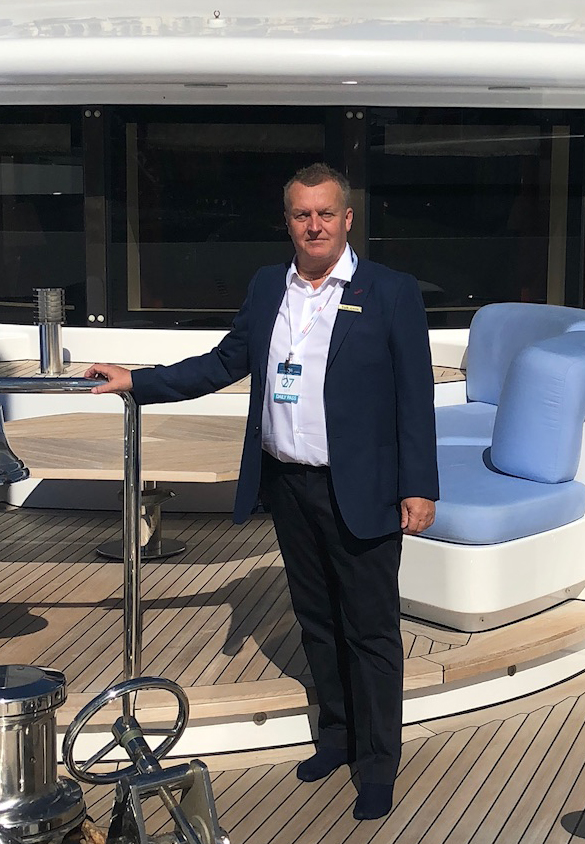
Why We Built 24Synergy — and Why the Magazines Matter

When we started developing 24Synergy, the objective was never simply to build another business directory, advertising website or collection of industry portals. There are already plenty of those, and creating another one would have achieved very little.
The question I kept coming back to was much simpler: **what should 24Synergy actually do for the businesses that use it?**
For me, the answer has always been about creating opportunity through collaboration.
We are constantly told that competition is healthy, and of course it is. Competition drives standards, innovation and better service. But I became interested in a slightly different question. What happens if competitors can also work together?
I don't mean sharing commercially sensitive information or pretending that companies aren't competing for the same customers. I mean recognising that every business already has its own clients, contacts, audience, knowledge and reach. If those individual networks can be connected intelligently, everybody potentially reaches considerably further than they could alone.
That principle became the foundation of 24Synergy.
The network is designed to grow through the businesses using it. Companies introduce their clients and contacts, other businesses do the same, and gradually those separate audiences become part of something much larger. Everybody contributes something to the network and everybody has the opportunity to benefit from the network that results.
There is also a perfectly sensible commercial reason for getting involved early. Your customers are already doing business with other companies and receiving marketing from other suppliers. It therefore makes sense to introduce them to a useful industry network yourself rather than waiting for somebody else to do it first.
That is why I think the early-adopter stage is particularly interesting. I am not going to pretend that a network during its launch period can offer the same volume of activity it should offer when thousands of companies and industry professionals are using it. Networks need people. They need participation and they need time to develop.
But eventually there is a tipping point. More companies join, more buyers arrive, more enquiries circulate, more RFQs are submitted, more people read the newsletters and magazines and more conversations take place through 24live. At that point, the companies that supported the network early aren't arriving and trying to establish themselves in an already busy marketplace. They are already there, with their accounts, listings, content, contacts and presence established.
Some of the mechanisms we have built become much more significant at that stage. Priority access to an RFQ, for example, might seem relatively unimportant when there are only a handful moving through the system. When substantial numbers of genuine opportunities are being generated, seeing something 48 hours before other users can make a considerable difference. The value of the network should therefore increase as the network itself grows.
That same thinking is ultimately what led us to create the magazines.
As 24Synergy developed, I increasingly felt that something was missing. We had created ways for businesses to list themselves, communicate, publish information, distribute newsletters, generate enquiries, respond to opportunities and reach audiences across different specialist sectors, but if we were genuinely trying to build a comprehensive marketing network, those businesses also needed somewhere to advertise.
So we built it.
The 24 Magazines aren't intended to sit separately from 24Synergy. They are another part of the same ecosystem, giving companies another route to market while giving readers useful specialist information in an accessible format. They are global publications, but with regional editions and regional editorial because the businesses and people using 24Synergy are global too.
A company shouldn't be disadvantaged because it happens to be based in Britain, France, the United States, Dubai, Singapore, Spain or somewhere else entirely. Nor should a reader have to wade through endless irrelevant information before finding something applicable to where they live, work, sail, charter, fly or conduct business.
That brings me to something else that is probably worth addressing openly.
Some readers will look through these magazines and ask: **“Have they used AI to produce some of this?”**
The answer is yes.
We have.
There are thousands of pieces of editorial involved across these publications and their regional editions, and it would be rather ridiculous for me to pretend that artificial intelligence hasn't helped us create them. AI exists, it is an extraordinarily useful tool when used properly, and I don't see any reason to hide the fact that we have used it.
What matters to me is **how** we have used it.
We haven't simply asked a machine to fill hundreds of pages with words so that the magazines look busy. We have chosen the subjects we believe are worth covering, identified the questions we think readers actually want answered and, in many cases, started the articles ourselves before using AI to help develop the research, structure and additional information around them.
The objective has always been usefulness.
If you're reading one of our sailing magazines, I want you to discover something that helps you sail, plan a passage, choose equipment, understand a destination or avoid a problem. If you're involved with private aviation, I want the information to answer questions relevant to flying, ownership, charter or operations. If you're in commercial shipping, brokerage, boat building, property, charter or another sector, the same principle applies.
I don't want pages of disposable editorial written simply because a magazine needs another article.
We have tried to identify subjects where somebody would otherwise have to spend time searching around the internet, opening numerous websites and piecing the information together themselves. We can do some of that background work instead, ask the questions and bring the useful information together in one place.
There is an environmental argument for that approach too. Endless searching, loading websites, serving adverts and repeatedly retrieving information all require digital infrastructure and energy. A magazine can be downloaded once, kept and read offline.
I wouldn't pretend that this somehow makes digital publishing impact-free, because it doesn't, but if we can save readers unnecessary searching while creating something useful enough to keep and refer back to, I think that is a better use of the technology available to us.
So yes, some of what you are reading has involved AI, and some of it has involved people. Increasingly it will involve more people as well.
As early adopters, journalists, specialists and other contributors become involved, their voices will naturally become part of these pages. We are also inviting other magazines and media organisations to contribute, which should introduce completely different editorial voices and areas of expertise. They may use AI themselves, of course, and I have no intention of telling another publisher or journalist which tools they are permitted to use.
The test is much simpler than that: **does the article give the reader something worthwhile?**
If it doesn't, it shouldn't be here.
That philosophy also explains something rather unusual we are now introducing. We are going to allow other independent magazines to promote themselves through our magazines.
At first that might sound counter-intuitive. Why would one magazine deliberately introduce its readers to another magazine?
My answer is: why wouldn't we?
If another specialist publication produces good material that our readers would appreciate, discovering it doesn't make our own magazine less useful. Quite the opposite. If we can become somewhere readers come to discover worthwhile information, including information and publications produced by other people, then I think we become more useful.
A participating publication will be able to contribute a genuine editorial article, tell readers where they can find more of its work and promote its magazine within our pages. We can potentially take that relationship considerably further as well. There may be opportunities to work with other publishers commercially, including arrangements where advertising from their own clients can reach our publications and both parties share in the resulting revenue.
Again, it comes back to the original idea behind 24Synergy. Competition doesn't have to prevent collaboration.
The scale of the network comes from the same philosophy. Historically, the industries we have worked with have never existed neatly inside individual boxes. A superyacht depends upon builders, suppliers, engineering companies, crew, brokers, charter businesses, marinas and countless specialist services. Those same owners and clients may use private aviation and own international property. Boat builders need suppliers. Charter companies need customers. Brokers need buyers and sellers. Employers need crew.
Exhibitors need boat shows, and boat shows need exhibitors and visitors.
Commercial ships and cruise ships sit alongside superyachts, motor yachts and sailing yachts. There are crew and employment services, boat and ship builders, ports, yacht services and suppliers, aviation, empty legs, property and specialist luxury markets. Each sector has its own identity, but there are countless points where they intersect.
That is why 24Synergy has become such a large collection of connected websites. It is deliberately not centred on one country or one type of business. A company with branches in several countries can bring those offices together through the same network, while a small specialist supplier can concentrate on the particular market that matters to it. Everything can still be managed centrally through the same account and dashboard.
24live takes that idea in another direction again. I sometimes describe it as sitting somewhere between the professional nature of LinkedIn and the immediacy of a social network such as Facebook, although I don't really want it to become either of those things. The purpose is business.
Members can publish their own material, interact with other users, promote their businesses and place appropriate content across relevant parts of the 24 Network. If somebody wants to be proactive, there is considerable freedom to put themselves in front of the industries they want to reach rather than simply creating a listing and waiting for somebody to find them.
That is an important distinction for me. **24Synergy isn't designed to do your marketing while you sit and watch. It is designed to give you the tools to do considerably more with your marketing yourself.**
There is another, deliberately different part of the ecosystem too.
Within the superyacht sector, 1UK.com is being developed around recognition rather than conventional paid placement. Companies cannot simply buy their way into recognition. They can request consideration, but that request can be declined. As the concept develops, I want appropriate industry leaders themselves to help determine the standards that businesses should achieve to be recognised at different levels.
That connects directly with where I would like 24Synergy itself eventually to go.
The intention is for 24Synergy to develop into a cooperative structure with industry leaders and board members helping to determine its future direction. The industry changes constantly, and the technology serving it needs to change with it. Electric propulsion is an obvious example today, but tomorrow there will be something else. The people actually working within these sectors will often identify what is needed long before a software developer sitting outside the industry ever could.
We have built the infrastructure, but I don't believe that means we should dictate indefinitely what it becomes. I would much rather create a structure where the people using the network have a meaningful voice in deciding which features should be developed next and where the network should go as their industries evolve.
There is a personal reason behind all of this as well.
I've always enjoyed helping businesses develop. I enjoy looking at a new company, understanding what it is trying to achieve and asking what could be done differently. Sometimes it is marketing, sometimes positioning, sometimes making an introduction or simply giving somebody the confidence and advice they need when they're trying to get something started.
I suppose 24Synergy is my attempt to do that on a much larger scale.
Rather than helping one company find another route to market, we have tried to build the infrastructure through which thousands of businesses can create those routes for themselves and for each other. It gives a small specialist company access to many of the same marketing mechanisms available to a much larger international organisation, while allowing a multinational business to connect offices, people and sectors through one global hub.
And that is probably the simplest answer to the question I started with: **what is 24Synergy actually for?**
It is there to create connections and opportunities that would otherwise be harder to create individually. The websites, magazines, newsletters, RFQs, publishing tools, 24live and everything else we develop are simply different ways of achieving that.
We've done the difficult part of bringing that infrastructure together. Now I want businesses to use it, challenge it and help us improve it. I want people to tell us what works, what doesn't and what their particular part of the industry needs next. As more businesses participate, the network should become more useful to everybody already inside it.
We have built 24Synergy, but I don't want it to feel as though it belongs to a small team sitting somewhere deciding what everybody else needs.
**We've built it for you. Now make use of it, make it work for your business, and help us decide what it becomes next.**
**Paul Thompson** *Editor*
Contributor: Paul Thompson / 24Synergy

Be the first reader to react to this article.

A good decision in mainstream new and used boat sales, buying, selling and ownership costs rarely comes from one impressive specification.



A good decision in mainstream new and used boat sales, buying, selling and ownership costs rarely comes from one impressive specification. It comes from understanding how the whole package will be used.
Cost also needs to be separated into purchase cost and ownership cost. The second figure is usually less visible. Consumables, routine servicing, insurance, finance, berthing or storage, professional fees, software subscriptions, inspections and eventual replacement items can materially change the economics. A useful quotation is therefore one that makes exclusions obvious.
If a supplier cannot explain what normally falls outside the quoted figure, ask for that clarification before treating two prices as comparable.
After-sales support can be more important than the original specification. A component that is excellent on paper is less attractive if parts take months to arrive or there is no competent service agent where the equipment will be used. The same applies to software-led products: ownership now includes updates, access rights, data and sometimes recurring subscriptions. Find out who supports the system, for how long, and what happens if the original supplier changes hands.
Timing matters. Buying or commissioning under deadline pressure weakens the buyer's position because there is less time to inspect, compare and walk away. Where possible, build the timetable backwards from the date the asset or service is genuinely required. Include survey or inspection time, corrections, training, delivery and a contingency. A realistic programme often reveals that the cheapest-looking option is not the one with the lowest overall cost.
The starting point is use. In mainstream new and used boat sales, buying, selling and ownership costs, two apparently similar products or services can be right for completely different owners because their operating pattern is different. Frequency of use, geography, crew or staffing, storage, servicing access and the length of time you expect to keep the asset all change the answer. Before comparing brands or quotations, write down those constraints.
It sounds basic, but it prevents a specification being chosen for a lifestyle that exists only in the sales material.
Technical claims deserve context. Range, output, capacity, speed, efficiency and performance figures are normally produced under stated conditions. Real use adds weather, load, temperature, fouling, route, operator behaviour and reserve margins. Rather than arguing over a headline number, ask what assumptions sit behind it and what happens when those assumptions change. That produces a much more useful comparison.

Sustainability claims are increasingly part of the decision as well. The useful question is not whether a product is described as green, but what has actually changed: energy use, fuel consumption, material choice, repairability, service life, emissions, waste or end-of-life handling. Improvements in one area can create compromises in another. Evidence and measured performance are more valuable than broad environmental language.
Finally, insist on a proper handover. Familiarisation, emergency procedures, maintenance intervals, passwords, spare parts, warranty contacts and operating limitations should all be understood before the supplier disappears over the horizon. A surprising number of early problems are not failures at all but gaps in handover. Thirty minutes spent recording the right information can save days later.
My own shorthand for used-boat buying in 2026: where to look beyond the polished photographs is simple: verify the condition, verify the paperwork, understand the support network and calculate the cost on a realistic pattern of use. If any one of those four is unclear, there is still work to do before committing.

When money is about to change hands, the sequence matters. Establish identity and authority to sell, agree exactly what is included, record known defects and make any deposit terms clear. Where a survey, valuation or finance approval is part of the transaction, the contract should reflect that process rather than relying on a verbal understanding. Buyers should also know when risk and title transfer, particularly if the asset is moving between jurisdictions.
Market value is evidence, not aspiration. Advertised prices show what sellers hope to achieve; completed transactions, condition, specification, location and time on market give a better picture. A well-presented example can deserve a premium, but a premium still needs a reason. The strongest negotiating position comes from knowing which defects are merely cosmetic, which affect usability and which could lead to immediate capital expenditure.
The practical test for mainstream new and used boat sales, buying, selling and ownership costs is whether the decision still makes sense when circumstances are less than ideal. Weather changes, schedules move, components fail and people use equipment differently from the designer's neat assumptions. Building a little resilience into the choice usually costs less than trying to recover it afterwards.
A measured decision now generally costs less than correcting an enthusiastic one later.
Contributor: Paul Thompson / Editorial / 24BoatSales
Be the first reader to react to this article.
This is one of those subjects where a little preparation is worth far more than a long list of features.
This is one of those subjects where a little preparation is worth far more than a long list of features.
Documentation is another practical test. Service records, manuals, certificates, invoices, warranties, software licences and evidence of previous work are not administrative clutter; they are part of the asset. Good records make troubleshooting easier and can support resale. Missing records do not automatically mean there is a problem, but they increase uncertainty, and uncertainty should be reflected in the questions asked, the inspection undertaken and sometimes the price.
Risk is best dealt with before commitment. That means independent inspection where appropriate, clear written scope, confirmation of insurance implications and an agreed process for defects or incomplete work. In higher-value transactions, legal, tax and regulatory advice should come from qualified advisers in the relevant jurisdiction. The purpose is not to make every transaction defensive; it is to stop assumptions becoming expensive surprises.
Resale should be considered even by people who intend to keep something for years. Highly personal specifications can be perfectly sensible, but buyers should understand the trade-off. Widely supported equipment, sensible layouts, complete records and recognised maintenance tend to be easier for the next owner to understand. The objective is not to design everything for an unknown future buyer; it is simply to avoid destroying flexibility without a good reason.
Cost also needs to be separated into purchase cost and ownership cost. The second figure is usually less visible. Consumables, routine servicing, insurance, finance, berthing or storage, professional fees, software subscriptions, inspections and eventual replacement items can materially change the economics. A useful quotation is therefore one that makes exclusions obvious.
If a supplier cannot explain what normally falls outside the quoted figure, ask for that clarification before treating two prices as comparable.
After-sales support can be more important than the original specification. A component that is excellent on paper is less attractive if parts take months to arrive or there is no competent service agent where the equipment will be used. The same applies to software-led products: ownership now includes updates, access rights, data and sometimes recurring subscriptions. Find out who supports the system, for how long, and what happens if the original supplier changes hands.
Timing matters. Buying or commissioning under deadline pressure weakens the buyer's position because there is less time to inspect, compare and walk away. Where possible, build the timetable backwards from the date the asset or service is genuinely required. Include survey or inspection time, corrections, training, delivery and a contingency. A realistic programme often reveals that the cheapest-looking option is not the one with the lowest overall cost.
The starting point is use. In mainstream new and used boat sales, buying, selling and ownership costs, two apparently similar products or services can be right for completely different owners because their operating pattern is different. Frequency of use, geography, crew or staffing, storage, servicing access and the length of time you expect to keep the asset all change the answer. Before comparing brands or quotations, write down those constraints.
It sounds basic, but it prevents a specification being chosen for a lifestyle that exists only in the sales material.
When money is about to change hands, the sequence matters. Establish identity and authority to sell, agree exactly what is included, record known defects and make any deposit terms clear. Where a survey, valuation or finance approval is part of the transaction, the contract should reflect that process rather than relying on a verbal understanding. Buyers should also know when risk and title transfer, particularly if the asset is moving between jurisdictions.
Market value is evidence, not aspiration. Advertised prices show what sellers hope to achieve; completed transactions, condition, specification, location and time on market give a better picture. A well-presented example can deserve a premium, but a premium still needs a reason. The strongest negotiating position comes from knowing which defects are merely cosmetic, which affect usability and which could lead to immediate capital expenditure.
The practical test for mainstream new and used boat sales, buying, selling and ownership costs is whether the decision still makes sense when circumstances are less than ideal. Weather changes, schedules move, components fail and people use equipment differently from the designer's neat assumptions. Building a little resilience into the choice usually costs less than trying to recover it afterwards.
The best outcome is not necessarily the newest or most sophisticated option. It is the one that remains practical after the first season, the first service bill and the first change of plan.
Contributor: Paul Thompson / Editorial / 24BoatSales


Be the first reader to react to this article.

The conversation around why a survey can still matter on a relatively inexpensive boat has moved quickly this year, yet the practical decision is still built on fairly ordinary questions.
The conversation around why a survey can still matter on a relatively inexpensive boat has moved quickly this year, yet the practical decision is still built on fairly ordinary questions.
Finally, insist on a proper handover. Familiarisation, emergency procedures, maintenance intervals, passwords, spare parts, warranty contacts and operating limitations should all be understood before the supplier disappears over the horizon. A surprising number of early problems are not failures at all but gaps in handover. Thirty minutes spent recording the right information can save days later.
Documentation is another practical test. Service records, manuals, certificates, invoices, warranties, software licences and evidence of previous work are not administrative clutter; they are part of the asset. Good records make troubleshooting easier and can support resale. Missing records do not automatically mean there is a problem, but they increase uncertainty, and uncertainty should be reflected in the questions asked, the inspection undertaken and sometimes the price.
Risk is best dealt with before commitment. That means independent inspection where appropriate, clear written scope, confirmation of insurance implications and an agreed process for defects or incomplete work. In higher-value transactions, legal, tax and regulatory advice should come from qualified advisers in the relevant jurisdiction. The purpose is not to make every transaction defensive; it is to stop assumptions becoming expensive surprises.
Resale should be considered even by people who intend to keep something for years. Highly personal specifications can be perfectly sensible, but buyers should understand the trade-off. Widely supported equipment, sensible layouts, complete records and recognised maintenance tend to be easier for the next owner to understand. The objective is not to design everything for an unknown future buyer; it is simply to avoid destroying flexibility without a good reason.
Cost also needs to be separated into purchase cost and ownership cost. The second figure is usually less visible. Consumables, routine servicing, insurance, finance, berthing or storage, professional fees, software subscriptions, inspections and eventual replacement items can materially change the economics. A useful quotation is therefore one that makes exclusions obvious.
If a supplier cannot explain what normally falls outside the quoted figure, ask for that clarification before treating two prices as comparable.
After-sales support can be more important than the original specification. A component that is excellent on paper is less attractive if parts take months to arrive or there is no competent service agent where the equipment will be used. The same applies to software-led products: ownership now includes updates, access rights, data and sometimes recurring subscriptions. Find out who supports the system, for how long, and what happens if the original supplier changes hands.
Timing matters. Buying or commissioning under deadline pressure weakens the buyer's position because there is less time to inspect, compare and walk away. Where possible, build the timetable backwards from the date the asset or service is genuinely required. Include survey or inspection time, corrections, training, delivery and a contingency. A realistic programme often reveals that the cheapest-looking option is not the one with the lowest overall cost.
My own shorthand for why a survey can still matter on a relatively inexpensive boat is simple: verify the condition, verify the paperwork, understand the support network and calculate the cost on a realistic pattern of use. If any one of those four is unclear, there is still work to do before committing.

Comparison becomes easier if every contender is put through the same questions. Ask for the same operating assumptions, the same delivery point, the same warranty period and the same list of included equipment or services. That turns a collection of sales conversations into something closer to a procurement exercise and exposes the areas where one quotation has quietly omitted an expensive item.
References are useful when they are relevant. A supplier's biggest or most prestigious project may tell you very little about how it handles an ordinary job in your region. Ask instead for examples with a similar scale, operating pattern and timetable. The most useful reference is often the customer who has lived with the product for two or three years and has already needed after-sales support.
The practical test for mainstream new and used boat sales, buying, selling and ownership costs is whether the decision still makes sense when circumstances are less than ideal. Weather changes, schedules move, components fail and people use equipment differently from the designer's neat assumptions. Building a little resilience into the choice usually costs less than trying to recover it afterwards.
The sensible approach is therefore quite conventional: define the job, verify the evidence, price the whole commitment and keep enough margin for the things that never appear in the brochure.
Contributor: Paul Thompson / Editorial / 24BoatSales

Be the first reader to react to this article.
There is nothing particularly complicated about deposits, contracts and sea trials: the order that protects a buyer, but there are several ways to make it unnecessarily expensive.
There is nothing particularly complicated about deposits, contracts and sea trials: the order that protects a buyer, but there are several ways to make it unnecessarily expensive.
Technical claims deserve context. Range, output, capacity, speed, efficiency and performance figures are normally produced under stated conditions. Real use adds weather, load, temperature, fouling, route, operator behaviour and reserve margins. Rather than arguing over a headline number, ask what assumptions sit behind it and what happens when those assumptions change. That produces a much more useful comparison.
Sustainability claims are increasingly part of the decision as well. The useful question is not whether a product is described as green, but what has actually changed: energy use, fuel consumption, material choice, repairability, service life, emissions, waste or end-of-life handling. Improvements in one area can create compromises in another. Evidence and measured performance are more valuable than broad environmental language.
Finally, insist on a proper handover. Familiarisation, emergency procedures, maintenance intervals, passwords, spare parts, warranty contacts and operating limitations should all be understood before the supplier disappears over the horizon. A surprising number of early problems are not failures at all but gaps in handover. Thirty minutes spent recording the right information can save days later.
Documentation is another practical test. Service records, manuals, certificates, invoices, warranties, software licences and evidence of previous work are not administrative clutter; they are part of the asset. Good records make troubleshooting easier and can support resale. Missing records do not automatically mean there is a problem, but they increase uncertainty, and uncertainty should be reflected in the questions asked, the inspection undertaken and sometimes the price.
Risk is best dealt with before commitment. That means independent inspection where appropriate, clear written scope, confirmation of insurance implications and an agreed process for defects or incomplete work. In higher-value transactions, legal, tax and regulatory advice should come from qualified advisers in the relevant jurisdiction. The purpose is not to make every transaction defensive; it is to stop assumptions becoming expensive surprises.
Resale should be considered even by people who intend to keep something for years. Highly personal specifications can be perfectly sensible, but buyers should understand the trade-off. Widely supported equipment, sensible layouts, complete records and recognised maintenance tend to be easier for the next owner to understand. The objective is not to design everything for an unknown future buyer; it is simply to avoid destroying flexibility without a good reason.
Cost also needs to be separated into purchase cost and ownership cost. The second figure is usually less visible. Consumables, routine servicing, insurance, finance, berthing or storage, professional fees, software subscriptions, inspections and eventual replacement items can materially change the economics. A useful quotation is therefore one that makes exclusions obvious.
If a supplier cannot explain what normally falls outside the quoted figure, ask for that clarification before treating two prices as comparable.
When money is about to change hands, the sequence matters. Establish identity and authority to sell, agree exactly what is included, record known defects and make any deposit terms clear. Where a survey, valuation or finance approval is part of the transaction, the contract should reflect that process rather than relying on a verbal understanding. Buyers should also know when risk and title transfer, particularly if the asset is moving between jurisdictions.
Market value is evidence, not aspiration. Advertised prices show what sellers hope to achieve; completed transactions, condition, specification, location and time on market give a better picture. A well-presented example can deserve a premium, but a premium still needs a reason. The strongest negotiating position comes from knowing which defects are merely cosmetic, which affect usability and which could lead to immediate capital expenditure.
The practical test for mainstream new and used boat sales, buying, selling and ownership costs is whether the decision still makes sense when circumstances are less than ideal. Weather changes, schedules move, components fail and people use equipment differently from the designer's neat assumptions. Building a little resilience into the choice usually costs less than trying to recover it afterwards.
For most readers, that is enough to narrow the field considerably before serious money or time is committed.
Contributor: Paul Thompson / Editorial / 24BoatSales

Be the first reader to react to this article.

The conversation around how engine hours should influence a used-boat decision has moved quickly this year, yet the practical decision is still built on fairly ordinary questions.
The conversation around how engine hours should influence a used-boat decision has moved quickly this year, yet the practical decision is still built on fairly ordinary questions.
After-sales support can be more important than the original specification. A component that is excellent on paper is less attractive if parts take months to arrive or there is no competent service agent where the equipment will be used. The same applies to software-led products: ownership now includes updates, access rights, data and sometimes recurring subscriptions. Find out who supports the system, for how long, and what happens if the original supplier changes hands.
Timing matters. Buying or commissioning under deadline pressure weakens the buyer's position because there is less time to inspect, compare and walk away. Where possible, build the timetable backwards from the date the asset or service is genuinely required. Include survey or inspection time, corrections, training, delivery and a contingency. A realistic programme often reveals that the cheapest-looking option is not the one with the lowest overall cost.
The starting point is use. In mainstream new and used boat sales, buying, selling and ownership costs, two apparently similar products or services can be right for completely different owners because their operating pattern is different. Frequency of use, geography, crew or staffing, storage, servicing access and the length of time you expect to keep the asset all change the answer. Before comparing brands or quotations, write down those constraints.
It sounds basic, but it prevents a specification being chosen for a lifestyle that exists only in the sales material.
Technical claims deserve context. Range, output, capacity, speed, efficiency and performance figures are normally produced under stated conditions. Real use adds weather, load, temperature, fouling, route, operator behaviour and reserve margins. Rather than arguing over a headline number, ask what assumptions sit behind it and what happens when those assumptions change. That produces a much more useful comparison.
Sustainability claims are increasingly part of the decision as well. The useful question is not whether a product is described as green, but what has actually changed: energy use, fuel consumption, material choice, repairability, service life, emissions, waste or end-of-life handling. Improvements in one area can create compromises in another. Evidence and measured performance are more valuable than broad environmental language.
Finally, insist on a proper handover. Familiarisation, emergency procedures, maintenance intervals, passwords, spare parts, warranty contacts and operating limitations should all be understood before the supplier disappears over the horizon. A surprising number of early problems are not failures at all but gaps in handover. Thirty minutes spent recording the right information can save days later.
Documentation is another practical test. Service records, manuals, certificates, invoices, warranties, software licences and evidence of previous work are not administrative clutter; they are part of the asset. Good records make troubleshooting easier and can support resale. Missing records do not automatically mean there is a problem, but they increase uncertainty, and uncertainty should be reflected in the questions asked, the inspection undertaken and sometimes the price.
Comparison becomes easier if every contender is put through the same questions. Ask for the same operating assumptions, the same delivery point, the same warranty period and the same list of included equipment or services. That turns a collection of sales conversations into something closer to a procurement exercise and exposes the areas where one quotation has quietly omitted an expensive item.
References are useful when they are relevant. A supplier's biggest or most prestigious project may tell you very little about how it handles an ordinary job in your region. Ask instead for examples with a similar scale, operating pattern and timetable. The most useful reference is often the customer who has lived with the product for two or three years and has already needed after-sales support.
The practical test for mainstream new and used boat sales, buying, selling and ownership costs is whether the decision still makes sense when circumstances are less than ideal. Weather changes, schedules move, components fail and people use equipment differently from the designer's neat assumptions. Building a little resilience into the choice usually costs less than trying to recover it afterwards.
None of this makes the decision difficult. It simply moves attention from presentation to evidence, which is usually where the better value sits.
Contributor: Paul Thompson / Editorial / 24BoatSales

Be the first reader to react to this article.
The conversation around outboards versus sterndrives versus shafts: choosing for the way you actually boat has moved quickly this year, yet the practical decision is still built on fairly ordinary questions.

The conversation around outboards versus sterndrives versus shafts: choosing for the way you actually boat has moved quickly this year, yet the practical decision is still built on fairly ordinary questions.
Risk is best dealt with before commitment. That means independent inspection where appropriate, clear written scope, confirmation of insurance implications and an agreed process for defects or incomplete work. In higher-value transactions, legal, tax and regulatory advice should come from qualified advisers in the relevant jurisdiction. The purpose is not to make every transaction defensive; it is to stop assumptions becoming expensive surprises.
Resale should be considered even by people who intend to keep something for years. Highly personal specifications can be perfectly sensible, but buyers should understand the trade-off. Widely supported equipment, sensible layouts, complete records and recognised maintenance tend to be easier for the next owner to understand. The objective is not to design everything for an unknown future buyer; it is simply to avoid destroying flexibility without a good reason.
Cost also needs to be separated into purchase cost and ownership cost. The second figure is usually less visible. Consumables, routine servicing, insurance, finance, berthing or storage, professional fees, software subscriptions, inspections and eventual replacement items can materially change the economics. A useful quotation is therefore one that makes exclusions obvious.
If a supplier cannot explain what normally falls outside the quoted figure, ask for that clarification before treating two prices as comparable.
After-sales support can be more important than the original specification. A component that is excellent on paper is less attractive if parts take months to arrive or there is no competent service agent where the equipment will be used. The same applies to software-led products: ownership now includes updates, access rights, data and sometimes recurring subscriptions. Find out who supports the system, for how long, and what happens if the original supplier changes hands.
Timing matters. Buying or commissioning under deadline pressure weakens the buyer's position because there is less time to inspect, compare and walk away. Where possible, build the timetable backwards from the date the asset or service is genuinely required. Include survey or inspection time, corrections, training, delivery and a contingency. A realistic programme often reveals that the cheapest-looking option is not the one with the lowest overall cost.
The starting point is use. In mainstream new and used boat sales, buying, selling and ownership costs, two apparently similar products or services can be right for completely different owners because their operating pattern is different. Frequency of use, geography, crew or staffing, storage, servicing access and the length of time you expect to keep the asset all change the answer. Before comparing brands or quotations, write down those constraints.
It sounds basic, but it prevents a specification being chosen for a lifestyle that exists only in the sales material.
Technical claims deserve context. Range, output, capacity, speed, efficiency and performance figures are normally produced under stated conditions. Real use adds weather, load, temperature, fouling, route, operator behaviour and reserve margins. Rather than arguing over a headline number, ask what assumptions sit behind it and what happens when those assumptions change. That produces a much more useful comparison.
My own shorthand for outboards versus sterndrives versus shafts: choosing for the way you actually boat is simple: verify the condition, verify the paperwork, understand the support network and calculate the cost on a realistic pattern of use. If any one of those four is unclear, there is still work to do before committing.
Comparison becomes easier if every contender is put through the same questions. Ask for the same operating assumptions, the same delivery point, the same warranty period and the same list of included equipment or services. That turns a collection of sales conversations into something closer to a procurement exercise and exposes the areas where one quotation has quietly omitted an expensive item.
References are useful when they are relevant. A supplier's biggest or most prestigious project may tell you very little about how it handles an ordinary job in your region. Ask instead for examples with a similar scale, operating pattern and timetable. The most useful reference is often the customer who has lived with the product for two or three years and has already needed after-sales support.
The practical test for mainstream new and used boat sales, buying, selling and ownership costs is whether the decision still makes sense when circumstances are less than ideal. Weather changes, schedules move, components fail and people use equipment differently from the designer's neat assumptions. Building a little resilience into the choice usually costs less than trying to recover it afterwards.
A measured decision now generally costs less than correcting an enthusiastic one later.
Contributor: Paul Thompson / Editorial / 24BoatSales
Be the first reader to react to this article.
For anyone looking at trailerable boats: the hidden limits buyers discover after purchase, the first job is not to decide what looks best.
For anyone looking at trailerable boats: the hidden limits buyers discover after purchase, the first job is not to decide what looks best. It is to establish what problem actually needs solving.
Sustainability claims are increasingly part of the decision as well. The useful question is not whether a product is described as green, but what has actually changed: energy use, fuel consumption, material choice, repairability, service life, emissions, waste or end-of-life handling. Improvements in one area can create compromises in another. Evidence and measured performance are more valuable than broad environmental language.
Finally, insist on a proper handover. Familiarisation, emergency procedures, maintenance intervals, passwords, spare parts, warranty contacts and operating limitations should all be understood before the supplier disappears over the horizon. A surprising number of early problems are not failures at all but gaps in handover. Thirty minutes spent recording the right information can save days later.
Documentation is another practical test. Service records, manuals, certificates, invoices, warranties, software licences and evidence of previous work are not administrative clutter; they are part of the asset. Good records make troubleshooting easier and can support resale. Missing records do not automatically mean there is a problem, but they increase uncertainty, and uncertainty should be reflected in the questions asked, the inspection undertaken and sometimes the price.
Risk is best dealt with before commitment. That means independent inspection where appropriate, clear written scope, confirmation of insurance implications and an agreed process for defects or incomplete work. In higher-value transactions, legal, tax and regulatory advice should come from qualified advisers in the relevant jurisdiction. The purpose is not to make every transaction defensive; it is to stop assumptions becoming expensive surprises.
Resale should be considered even by people who intend to keep something for years. Highly personal specifications can be perfectly sensible, but buyers should understand the trade-off. Widely supported equipment, sensible layouts, complete records and recognised maintenance tend to be easier for the next owner to understand. The objective is not to design everything for an unknown future buyer; it is simply to avoid destroying flexibility without a good reason.
Cost also needs to be separated into purchase cost and ownership cost. The second figure is usually less visible. Consumables, routine servicing, insurance, finance, berthing or storage, professional fees, software subscriptions, inspections and eventual replacement items can materially change the economics. A useful quotation is therefore one that makes exclusions obvious.
If a supplier cannot explain what normally falls outside the quoted figure, ask for that clarification before treating two prices as comparable.
After-sales support can be more important than the original specification. A component that is excellent on paper is less attractive if parts take months to arrive or there is no competent service agent where the equipment will be used. The same applies to software-led products: ownership now includes updates, access rights, data and sometimes recurring subscriptions. Find out who supports the system, for how long, and what happens if the original supplier changes hands.
When money is about to change hands, the sequence matters. Establish identity and authority to sell, agree exactly what is included, record known defects and make any deposit terms clear. Where a survey, valuation or finance approval is part of the transaction, the contract should reflect that process rather than relying on a verbal understanding. Buyers should also know when risk and title transfer, particularly if the asset is moving between jurisdictions.
Market value is evidence, not aspiration. Advertised prices show what sellers hope to achieve; completed transactions, condition, specification, location and time on market give a better picture. A well-presented example can deserve a premium, but a premium still needs a reason. The strongest negotiating position comes from knowing which defects are merely cosmetic, which affect usability and which could lead to immediate capital expenditure.
The practical test for mainstream new and used boat sales, buying, selling and ownership costs is whether the decision still makes sense when circumstances are less than ideal. Weather changes, schedules move, components fail and people use equipment differently from the designer's neat assumptions. Building a little resilience into the choice usually costs less than trying to recover it afterwards.
None of this makes the decision difficult. It simply moves attention from presentation to evidence, which is usually where the better value sits.
Contributor: Paul Thompson / Editorial / 24BoatSales

Be the first reader to react to this article.
The conversation around family boats: the practical details that matter after the first weekend has moved quickly this year, yet the practical decision is still built on fairly ordinary questions.
The conversation around family boats: the practical details that matter after the first weekend has moved quickly this year, yet the practical decision is still built on fairly ordinary questions.
Timing matters. Buying or commissioning under deadline pressure weakens the buyer's position because there is less time to inspect, compare and walk away. Where possible, build the timetable backwards from the date the asset or service is genuinely required. Include survey or inspection time, corrections, training, delivery and a contingency. A realistic programme often reveals that the cheapest-looking option is not the one with the lowest overall cost.
The starting point is use. In mainstream new and used boat sales, buying, selling and ownership costs, two apparently similar products or services can be right for completely different owners because their operating pattern is different. Frequency of use, geography, crew or staffing, storage, servicing access and the length of time you expect to keep the asset all change the answer. Before comparing brands or quotations, write down those constraints.
It sounds basic, but it prevents a specification being chosen for a lifestyle that exists only in the sales material.
Technical claims deserve context. Range, output, capacity, speed, efficiency and performance figures are normally produced under stated conditions. Real use adds weather, load, temperature, fouling, route, operator behaviour and reserve margins. Rather than arguing over a headline number, ask what assumptions sit behind it and what happens when those assumptions change. That produces a much more useful comparison.
Sustainability claims are increasingly part of the decision as well. The useful question is not whether a product is described as green, but what has actually changed: energy use, fuel consumption, material choice, repairability, service life, emissions, waste or end-of-life handling. Improvements in one area can create compromises in another. Evidence and measured performance are more valuable than broad environmental language.
Finally, insist on a proper handover. Familiarisation, emergency procedures, maintenance intervals, passwords, spare parts, warranty contacts and operating limitations should all be understood before the supplier disappears over the horizon. A surprising number of early problems are not failures at all but gaps in handover. Thirty minutes spent recording the right information can save days later.
Documentation is another practical test. Service records, manuals, certificates, invoices, warranties, software licences and evidence of previous work are not administrative clutter; they are part of the asset. Good records make troubleshooting easier and can support resale. Missing records do not automatically mean there is a problem, but they increase uncertainty, and uncertainty should be reflected in the questions asked, the inspection undertaken and sometimes the price.
Risk is best dealt with before commitment. That means independent inspection where appropriate, clear written scope, confirmation of insurance implications and an agreed process for defects or incomplete work. In higher-value transactions, legal, tax and regulatory advice should come from qualified advisers in the relevant jurisdiction. The purpose is not to make every transaction defensive; it is to stop assumptions becoming expensive surprises.
Connected equipment creates a second maintenance schedule: passwords, access permissions, firmware, backups and subscriptions. Owners should know which systems can be updated remotely, which data leaves the asset and whether loss of an online service affects core operation. A paper or offline record of critical settings is still useful when the problem being diagnosed is the network itself.
Cybersecurity does not need to become a specialist exercise for every user. Basic separation of guest and operational networks, unique credentials, prompt updates and controlled administrator access remove a large proportion of avoidable risk. The more important question for a supplier is whether security has been designed into the product and whether updates will continue throughout its realistic service life.
The practical test for mainstream new and used boat sales, buying, selling and ownership costs is whether the decision still makes sense when circumstances are less than ideal. Weather changes, schedules move, components fail and people use equipment differently from the designer's neat assumptions. Building a little resilience into the choice usually costs less than trying to recover it afterwards.
The best outcome is not necessarily the newest or most sophisticated option. It is the one that remains practical after the first season, the first service bill and the first change of plan.
Contributor: Paul Thompson / Editorial / 24BoatSales

Be the first reader to react to this article.
A good decision in mainstream new and used boat sales, buying, selling and ownership costs rarely comes from one impressive specification.
A good decision in mainstream new and used boat sales, buying, selling and ownership costs rarely comes from one impressive specification. It comes from understanding how the whole package will be used.
Resale should be considered even by people who intend to keep something for years. Highly personal specifications can be perfectly sensible, but buyers should understand the trade-off. Widely supported equipment, sensible layouts, complete records and recognised maintenance tend to be easier for the next owner to understand. The objective is not to design everything for an unknown future buyer; it is simply to avoid destroying flexibility without a good reason.
Cost also needs to be separated into purchase cost and ownership cost. The second figure is usually less visible. Consumables, routine servicing, insurance, finance, berthing or storage, professional fees, software subscriptions, inspections and eventual replacement items can materially change the economics. A useful quotation is therefore one that makes exclusions obvious.
If a supplier cannot explain what normally falls outside the quoted figure, ask for that clarification before treating two prices as comparable.
After-sales support can be more important than the original specification. A component that is excellent on paper is less attractive if parts take months to arrive or there is no competent service agent where the equipment will be used. The same applies to software-led products: ownership now includes updates, access rights, data and sometimes recurring subscriptions. Find out who supports the system, for how long, and what happens if the original supplier changes hands.
Timing matters. Buying or commissioning under deadline pressure weakens the buyer's position because there is less time to inspect, compare and walk away. Where possible, build the timetable backwards from the date the asset or service is genuinely required. Include survey or inspection time, corrections, training, delivery and a contingency. A realistic programme often reveals that the cheapest-looking option is not the one with the lowest overall cost.
The starting point is use. In mainstream new and used boat sales, buying, selling and ownership costs, two apparently similar products or services can be right for completely different owners because their operating pattern is different. Frequency of use, geography, crew or staffing, storage, servicing access and the length of time you expect to keep the asset all change the answer. Before comparing brands or quotations, write down those constraints.
It sounds basic, but it prevents a specification being chosen for a lifestyle that exists only in the sales material.
Technical claims deserve context. Range, output, capacity, speed, efficiency and performance figures are normally produced under stated conditions. Real use adds weather, load, temperature, fouling, route, operator behaviour and reserve margins. Rather than arguing over a headline number, ask what assumptions sit behind it and what happens when those assumptions change. That produces a much more useful comparison.
Sustainability claims are increasingly part of the decision as well. The useful question is not whether a product is described as green, but what has actually changed: energy use, fuel consumption, material choice, repairability, service life, emissions, waste or end-of-life handling. Improvements in one area can create compromises in another. Evidence and measured performance are more valuable than broad environmental language.
When money is about to change hands, the sequence matters. Establish identity and authority to sell, agree exactly what is included, record known defects and make any deposit terms clear. Where a survey, valuation or finance approval is part of the transaction, the contract should reflect that process rather than relying on a verbal understanding. Buyers should also know when risk and title transfer, particularly if the asset is moving between jurisdictions.
Market value is evidence, not aspiration. Advertised prices show what sellers hope to achieve; completed transactions, condition, specification, location and time on market give a better picture. A well-presented example can deserve a premium, but a premium still needs a reason. The strongest negotiating position comes from knowing which defects are merely cosmetic, which affect usability and which could lead to immediate capital expenditure.
The practical test for mainstream new and used boat sales, buying, selling and ownership costs is whether the decision still makes sense when circumstances are less than ideal. Weather changes, schedules move, components fail and people use equipment differently from the designer's neat assumptions. Building a little resilience into the choice usually costs less than trying to recover it afterwards.
None of this makes the decision difficult. It simply moves attention from presentation to evidence, which is usually where the better value sits.
Contributor: Paul Thompson / Editorial / 24BoatSales
Be the first reader to react to this article.
I have always found that the useful part of mainstream new and used boat sales, buying, selling and ownership costs starts once the brochure language has been stripped away.

I have always found that the useful part of mainstream new and used boat sales, buying, selling and ownership costs starts once the brochure language has been stripped away.
The starting point is use. In mainstream new and used boat sales, buying, selling and ownership costs, two apparently similar products or services can be right for completely different owners because their operating pattern is different. Frequency of use, geography, crew or staffing, storage, servicing access and the length of time you expect to keep the asset all change the answer. Before comparing brands or quotations, write down those constraints.
It sounds basic, but it prevents a specification being chosen for a lifestyle that exists only in the sales material.
Technical claims deserve context. Range, output, capacity, speed, efficiency and performance figures are normally produced under stated conditions. Real use adds weather, load, temperature, fouling, route, operator behaviour and reserve margins. Rather than arguing over a headline number, ask what assumptions sit behind it and what happens when those assumptions change. That produces a much more useful comparison.
Sustainability claims are increasingly part of the decision as well. The useful question is not whether a product is described as green, but what has actually changed: energy use, fuel consumption, material choice, repairability, service life, emissions, waste or end-of-life handling. Improvements in one area can create compromises in another. Evidence and measured performance are more valuable than broad environmental language.
Finally, insist on a proper handover. Familiarisation, emergency procedures, maintenance intervals, passwords, spare parts, warranty contacts and operating limitations should all be understood before the supplier disappears over the horizon. A surprising number of early problems are not failures at all but gaps in handover. Thirty minutes spent recording the right information can save days later.
Documentation is another practical test. Service records, manuals, certificates, invoices, warranties, software licences and evidence of previous work are not administrative clutter; they are part of the asset. Good records make troubleshooting easier and can support resale. Missing records do not automatically mean there is a problem, but they increase uncertainty, and uncertainty should be reflected in the questions asked, the inspection undertaken and sometimes the price.
Risk is best dealt with before commitment. That means independent inspection where appropriate, clear written scope, confirmation of insurance implications and an agreed process for defects or incomplete work. In higher-value transactions, legal, tax and regulatory advice should come from qualified advisers in the relevant jurisdiction. The purpose is not to make every transaction defensive; it is to stop assumptions becoming expensive surprises.
Resale should be considered even by people who intend to keep something for years. Highly personal specifications can be perfectly sensible, but buyers should understand the trade-off. Widely supported equipment, sensible layouts, complete records and recognised maintenance tend to be easier for the next owner to understand. The objective is not to design everything for an unknown future buyer; it is simply to avoid destroying flexibility without a good reason.
When money is about to change hands, the sequence matters. Establish identity and authority to sell, agree exactly what is included, record known defects and make any deposit terms clear. Where a survey, valuation or finance approval is part of the transaction, the contract should reflect that process rather than relying on a verbal understanding. Buyers should also know when risk and title transfer, particularly if the asset is moving between jurisdictions.
Market value is evidence, not aspiration. Advertised prices show what sellers hope to achieve; completed transactions, condition, specification, location and time on market give a better picture. A well-presented example can deserve a premium, but a premium still needs a reason. The strongest negotiating position comes from knowing which defects are merely cosmetic, which affect usability and which could lead to immediate capital expenditure.
The practical test for mainstream new and used boat sales, buying, selling and ownership costs is whether the decision still makes sense when circumstances are less than ideal. Weather changes, schedules move, components fail and people use equipment differently from the designer's neat assumptions. Building a little resilience into the choice usually costs less than trying to recover it afterwards.
That is the point worth carrying into the next conversation with a broker, builder, supplier or adviser: ask what the choice will be like to own and operate, not merely what it is like to buy.
Contributor: Paul Thompson / Editorial / 24BoatSales

Be the first reader to react to this article.
The conversation around part exchange: convenient, but understand the valuation has moved quickly this year, yet the practical decision is still built on fairly ordinary questions.
The conversation around part exchange: convenient, but understand the valuation has moved quickly this year, yet the practical decision is still built on fairly ordinary questions.
Cost also needs to be separated into purchase cost and ownership cost. The second figure is usually less visible. Consumables, routine servicing, insurance, finance, berthing or storage, professional fees, software subscriptions, inspections and eventual replacement items can materially change the economics. A useful quotation is therefore one that makes exclusions obvious.
If a supplier cannot explain what normally falls outside the quoted figure, ask for that clarification before treating two prices as comparable.
After-sales support can be more important than the original specification. A component that is excellent on paper is less attractive if parts take months to arrive or there is no competent service agent where the equipment will be used. The same applies to software-led products: ownership now includes updates, access rights, data and sometimes recurring subscriptions. Find out who supports the system, for how long, and what happens if the original supplier changes hands.
Timing matters. Buying or commissioning under deadline pressure weakens the buyer's position because there is less time to inspect, compare and walk away. Where possible, build the timetable backwards from the date the asset or service is genuinely required. Include survey or inspection time, corrections, training, delivery and a contingency. A realistic programme often reveals that the cheapest-looking option is not the one with the lowest overall cost.
The starting point is use. In mainstream new and used boat sales, buying, selling and ownership costs, two apparently similar products or services can be right for completely different owners because their operating pattern is different. Frequency of use, geography, crew or staffing, storage, servicing access and the length of time you expect to keep the asset all change the answer. Before comparing brands or quotations, write down those constraints.
It sounds basic, but it prevents a specification being chosen for a lifestyle that exists only in the sales material.
Technical claims deserve context. Range, output, capacity, speed, efficiency and performance figures are normally produced under stated conditions. Real use adds weather, load, temperature, fouling, route, operator behaviour and reserve margins. Rather than arguing over a headline number, ask what assumptions sit behind it and what happens when those assumptions change. That produces a much more useful comparison.
Sustainability claims are increasingly part of the decision as well. The useful question is not whether a product is described as green, but what has actually changed: energy use, fuel consumption, material choice, repairability, service life, emissions, waste or end-of-life handling. Improvements in one area can create compromises in another. Evidence and measured performance are more valuable than broad environmental language.
Finally, insist on a proper handover. Familiarisation, emergency procedures, maintenance intervals, passwords, spare parts, warranty contacts and operating limitations should all be understood before the supplier disappears over the horizon. A surprising number of early problems are not failures at all but gaps in handover. Thirty minutes spent recording the right information can save days later.
When money is about to change hands, the sequence matters. Establish identity and authority to sell, agree exactly what is included, record known defects and make any deposit terms clear. Where a survey, valuation or finance approval is part of the transaction, the contract should reflect that process rather than relying on a verbal understanding. Buyers should also know when risk and title transfer, particularly if the asset is moving between jurisdictions.
Market value is evidence, not aspiration. Advertised prices show what sellers hope to achieve; completed transactions, condition, specification, location and time on market give a better picture. A well-presented example can deserve a premium, but a premium still needs a reason. The strongest negotiating position comes from knowing which defects are merely cosmetic, which affect usability and which could lead to immediate capital expenditure.
The practical test for mainstream new and used boat sales, buying, selling and ownership costs is whether the decision still makes sense when circumstances are less than ideal. Weather changes, schedules move, components fail and people use equipment differently from the designer's neat assumptions. Building a little resilience into the choice usually costs less than trying to recover it afterwards.
For most readers, that is enough to narrow the field considerably before serious money or time is committed.
Contributor: Paul Thompson / Editorial / 24BoatSales


Be the first reader to react to this article.
A good decision in mainstream new and used boat sales, buying, selling and ownership costs rarely comes from one impressive specification.
A good decision in mainstream new and used boat sales, buying, selling and ownership costs rarely comes from one impressive specification. It comes from understanding how the whole package will be used.
Documentation is another practical test. Service records, manuals, certificates, invoices, warranties, software licences and evidence of previous work are not administrative clutter; they are part of the asset. Good records make troubleshooting easier and can support resale. Missing records do not automatically mean there is a problem, but they increase uncertainty, and uncertainty should be reflected in the questions asked, the inspection undertaken and sometimes the price.
Risk is best dealt with before commitment. That means independent inspection where appropriate, clear written scope, confirmation of insurance implications and an agreed process for defects or incomplete work. In higher-value transactions, legal, tax and regulatory advice should come from qualified advisers in the relevant jurisdiction. The purpose is not to make every transaction defensive; it is to stop assumptions becoming expensive surprises.
Resale should be considered even by people who intend to keep something for years. Highly personal specifications can be perfectly sensible, but buyers should understand the trade-off. Widely supported equipment, sensible layouts, complete records and recognised maintenance tend to be easier for the next owner to understand. The objective is not to design everything for an unknown future buyer; it is simply to avoid destroying flexibility without a good reason.
Cost also needs to be separated into purchase cost and ownership cost. The second figure is usually less visible. Consumables, routine servicing, insurance, finance, berthing or storage, professional fees, software subscriptions, inspections and eventual replacement items can materially change the economics. A useful quotation is therefore one that makes exclusions obvious.
If a supplier cannot explain what normally falls outside the quoted figure, ask for that clarification before treating two prices as comparable.
After-sales support can be more important than the original specification. A component that is excellent on paper is less attractive if parts take months to arrive or there is no competent service agent where the equipment will be used. The same applies to software-led products: ownership now includes updates, access rights, data and sometimes recurring subscriptions. Find out who supports the system, for how long, and what happens if the original supplier changes hands.
Timing matters. Buying or commissioning under deadline pressure weakens the buyer's position because there is less time to inspect, compare and walk away. Where possible, build the timetable backwards from the date the asset or service is genuinely required. Include survey or inspection time, corrections, training, delivery and a contingency. A realistic programme often reveals that the cheapest-looking option is not the one with the lowest overall cost.
The starting point is use. In mainstream new and used boat sales, buying, selling and ownership costs, two apparently similar products or services can be right for completely different owners because their operating pattern is different. Frequency of use, geography, crew or staffing, storage, servicing access and the length of time you expect to keep the asset all change the answer. Before comparing brands or quotations, write down those constraints.
It sounds basic, but it prevents a specification being chosen for a lifestyle that exists only in the sales material.
When money is about to change hands, the sequence matters. Establish identity and authority to sell, agree exactly what is included, record known defects and make any deposit terms clear. Where a survey, valuation or finance approval is part of the transaction, the contract should reflect that process rather than relying on a verbal understanding. Buyers should also know when risk and title transfer, particularly if the asset is moving between jurisdictions.
Market value is evidence, not aspiration. Advertised prices show what sellers hope to achieve; completed transactions, condition, specification, location and time on market give a better picture. A well-presented example can deserve a premium, but a premium still needs a reason. The strongest negotiating position comes from knowing which defects are merely cosmetic, which affect usability and which could lead to immediate capital expenditure.
The practical test for mainstream new and used boat sales, buying, selling and ownership costs is whether the decision still makes sense when circumstances are less than ideal. Weather changes, schedules move, components fail and people use equipment differently from the designer's neat assumptions. Building a little resilience into the choice usually costs less than trying to recover it afterwards.
None of this makes the decision difficult. It simply moves attention from presentation to evidence, which is usually where the better value sits.
Contributor: Paul Thompson / Editorial / 24BoatSales

Be the first reader to react to this article.

The market has become very good at presenting older electronics: when an upgrade is sensible and when it is unnecessary as simple.
The market has become very good at presenting older electronics: when an upgrade is sensible and when it is unnecessary as simple. In practice, the details still determine whether it works.
Technical claims deserve context. Range, output, capacity, speed, efficiency and performance figures are normally produced under stated conditions. Real use adds weather, load, temperature, fouling, route, operator behaviour and reserve margins. Rather than arguing over a headline number, ask what assumptions sit behind it and what happens when those assumptions change. That produces a much more useful comparison.
Sustainability claims are increasingly part of the decision as well. The useful question is not whether a product is described as green, but what has actually changed: energy use, fuel consumption, material choice, repairability, service life, emissions, waste or end-of-life handling. Improvements in one area can create compromises in another. Evidence and measured performance are more valuable than broad environmental language.
Finally, insist on a proper handover. Familiarisation, emergency procedures, maintenance intervals, passwords, spare parts, warranty contacts and operating limitations should all be understood before the supplier disappears over the horizon. A surprising number of early problems are not failures at all but gaps in handover. Thirty minutes spent recording the right information can save days later.
Documentation is another practical test. Service records, manuals, certificates, invoices, warranties, software licences and evidence of previous work are not administrative clutter; they are part of the asset. Good records make troubleshooting easier and can support resale. Missing records do not automatically mean there is a problem, but they increase uncertainty, and uncertainty should be reflected in the questions asked, the inspection undertaken and sometimes the price.
Risk is best dealt with before commitment. That means independent inspection where appropriate, clear written scope, confirmation of insurance implications and an agreed process for defects or incomplete work. In higher-value transactions, legal, tax and regulatory advice should come from qualified advisers in the relevant jurisdiction. The purpose is not to make every transaction defensive; it is to stop assumptions becoming expensive surprises.
Resale should be considered even by people who intend to keep something for years. Highly personal specifications can be perfectly sensible, but buyers should understand the trade-off. Widely supported equipment, sensible layouts, complete records and recognised maintenance tend to be easier for the next owner to understand. The objective is not to design everything for an unknown future buyer; it is simply to avoid destroying flexibility without a good reason.
Cost also needs to be separated into purchase cost and ownership cost. The second figure is usually less visible. Consumables, routine servicing, insurance, finance, berthing or storage, professional fees, software subscriptions, inspections and eventual replacement items can materially change the economics. A useful quotation is therefore one that makes exclusions obvious.
If a supplier cannot explain what normally falls outside the quoted figure, ask for that clarification before treating two prices as comparable.
My own shorthand for older electronics: when an upgrade is sensible and when it is unnecessary is simple: verify the condition, verify the paperwork, understand the support network and calculate the cost on a realistic pattern of use. If any one of those four is unclear, there is still work to do before committing.
Comparison becomes easier if every contender is put through the same questions. Ask for the same operating assumptions, the same delivery point, the same warranty period and the same list of included equipment or services. That turns a collection of sales conversations into something closer to a procurement exercise and exposes the areas where one quotation has quietly omitted an expensive item.
References are useful when they are relevant. A supplier's biggest or most prestigious project may tell you very little about how it handles an ordinary job in your region. Ask instead for examples with a similar scale, operating pattern and timetable. The most useful reference is often the customer who has lived with the product for two or three years and has already needed after-sales support.
The practical test for mainstream new and used boat sales, buying, selling and ownership costs is whether the decision still makes sense when circumstances are less than ideal. Weather changes, schedules move, components fail and people use equipment differently from the designer's neat assumptions. Building a little resilience into the choice usually costs less than trying to recover it afterwards.
The best outcome is not necessarily the newest or most sophisticated option. It is the one that remains practical after the first season, the first service bill and the first change of plan.
Contributor: Paul Thompson / Editorial / 24BoatSales

Be the first reader to react to this article.
One of the easiest mistakes in mainstream new and used boat sales, buying, selling and ownership costs is to concentrate on the headline and leave the awkward questions until later.

One of the easiest mistakes in mainstream new and used boat sales, buying, selling and ownership costs is to concentrate on the headline and leave the awkward questions until later.
After-sales support can be more important than the original specification. A component that is excellent on paper is less attractive if parts take months to arrive or there is no competent service agent where the equipment will be used. The same applies to software-led products: ownership now includes updates, access rights, data and sometimes recurring subscriptions. Find out who supports the system, for how long, and what happens if the original supplier changes hands.
Timing matters. Buying or commissioning under deadline pressure weakens the buyer's position because there is less time to inspect, compare and walk away. Where possible, build the timetable backwards from the date the asset or service is genuinely required. Include survey or inspection time, corrections, training, delivery and a contingency. A realistic programme often reveals that the cheapest-looking option is not the one with the lowest overall cost.
The starting point is use. In mainstream new and used boat sales, buying, selling and ownership costs, two apparently similar products or services can be right for completely different owners because their operating pattern is different. Frequency of use, geography, crew or staffing, storage, servicing access and the length of time you expect to keep the asset all change the answer. Before comparing brands or quotations, write down those constraints.
It sounds basic, but it prevents a specification being chosen for a lifestyle that exists only in the sales material.
Technical claims deserve context. Range, output, capacity, speed, efficiency and performance figures are normally produced under stated conditions. Real use adds weather, load, temperature, fouling, route, operator behaviour and reserve margins. Rather than arguing over a headline number, ask what assumptions sit behind it and what happens when those assumptions change. That produces a much more useful comparison.
Sustainability claims are increasingly part of the decision as well. The useful question is not whether a product is described as green, but what has actually changed: energy use, fuel consumption, material choice, repairability, service life, emissions, waste or end-of-life handling. Improvements in one area can create compromises in another. Evidence and measured performance are more valuable than broad environmental language.
Finally, insist on a proper handover. Familiarisation, emergency procedures, maintenance intervals, passwords, spare parts, warranty contacts and operating limitations should all be understood before the supplier disappears over the horizon. A surprising number of early problems are not failures at all but gaps in handover. Thirty minutes spent recording the right information can save days later.
Documentation is another practical test. Service records, manuals, certificates, invoices, warranties, software licences and evidence of previous work are not administrative clutter; they are part of the asset. Good records make troubleshooting easier and can support resale. Missing records do not automatically mean there is a problem, but they increase uncertainty, and uncertainty should be reflected in the questions asked, the inspection undertaken and sometimes the price.
Energy decisions need a duty-cycle calculation. Average use is less important than the difficult day: the longest passage, the coldest morning, the heaviest load, the remote berth or the turnaround with the least charging time. Design around that case with a sensible reserve and the everyday operation normally becomes straightforward. Design around the brochure average and the owner may spend years managing around the system.
Infrastructure should be checked before hardware is ordered. Available electrical supply, connector type, grid capacity, bunkering arrangements, ventilation, fire protection and local operating rules can all dictate what is practical. In many projects the limiting factor is not the motor, battery or fuel technology; it is the place where the asset has to recharge, refuel or be maintained.
The practical test for mainstream new and used boat sales, buying, selling and ownership costs is whether the decision still makes sense when circumstances are less than ideal. Weather changes, schedules move, components fail and people use equipment differently from the designer's neat assumptions. Building a little resilience into the choice usually costs less than trying to recover it afterwards.
The sensible approach is therefore quite conventional: define the job, verify the evidence, price the whole commitment and keep enough margin for the things that never appear in the brochure.
Contributor: Paul Thompson / Editorial / 24BoatSales

Be the first reader to react to this article.
A good decision in mainstream new and used boat sales, buying, selling and ownership costs rarely comes from one impressive specification.
A good decision in mainstream new and used boat sales, buying, selling and ownership costs rarely comes from one impressive specification. It comes from understanding how the whole package will be used.
Risk is best dealt with before commitment. That means independent inspection where appropriate, clear written scope, confirmation of insurance implications and an agreed process for defects or incomplete work. In higher-value transactions, legal, tax and regulatory advice should come from qualified advisers in the relevant jurisdiction. The purpose is not to make every transaction defensive; it is to stop assumptions becoming expensive surprises.
Resale should be considered even by people who intend to keep something for years. Highly personal specifications can be perfectly sensible, but buyers should understand the trade-off. Widely supported equipment, sensible layouts, complete records and recognised maintenance tend to be easier for the next owner to understand. The objective is not to design everything for an unknown future buyer; it is simply to avoid destroying flexibility without a good reason.
Cost also needs to be separated into purchase cost and ownership cost. The second figure is usually less visible. Consumables, routine servicing, insurance, finance, berthing or storage, professional fees, software subscriptions, inspections and eventual replacement items can materially change the economics. A useful quotation is therefore one that makes exclusions obvious.
If a supplier cannot explain what normally falls outside the quoted figure, ask for that clarification before treating two prices as comparable.
After-sales support can be more important than the original specification. A component that is excellent on paper is less attractive if parts take months to arrive or there is no competent service agent where the equipment will be used. The same applies to software-led products: ownership now includes updates, access rights, data and sometimes recurring subscriptions. Find out who supports the system, for how long, and what happens if the original supplier changes hands.
Timing matters. Buying or commissioning under deadline pressure weakens the buyer's position because there is less time to inspect, compare and walk away. Where possible, build the timetable backwards from the date the asset or service is genuinely required. Include survey or inspection time, corrections, training, delivery and a contingency. A realistic programme often reveals that the cheapest-looking option is not the one with the lowest overall cost.
The starting point is use. In mainstream new and used boat sales, buying, selling and ownership costs, two apparently similar products or services can be right for completely different owners because their operating pattern is different. Frequency of use, geography, crew or staffing, storage, servicing access and the length of time you expect to keep the asset all change the answer. Before comparing brands or quotations, write down those constraints.
It sounds basic, but it prevents a specification being chosen for a lifestyle that exists only in the sales material.
Technical claims deserve context. Range, output, capacity, speed, efficiency and performance figures are normally produced under stated conditions. Real use adds weather, load, temperature, fouling, route, operator behaviour and reserve margins. Rather than arguing over a headline number, ask what assumptions sit behind it and what happens when those assumptions change. That produces a much more useful comparison.
When money is about to change hands, the sequence matters. Establish identity and authority to sell, agree exactly what is included, record known defects and make any deposit terms clear. Where a survey, valuation or finance approval is part of the transaction, the contract should reflect that process rather than relying on a verbal understanding. Buyers should also know when risk and title transfer, particularly if the asset is moving between jurisdictions.
Market value is evidence, not aspiration. Advertised prices show what sellers hope to achieve; completed transactions, condition, specification, location and time on market give a better picture. A well-presented example can deserve a premium, but a premium still needs a reason. The strongest negotiating position comes from knowing which defects are merely cosmetic, which affect usability and which could lead to immediate capital expenditure.
The practical test for mainstream new and used boat sales, buying, selling and ownership costs is whether the decision still makes sense when circumstances are less than ideal. Weather changes, schedules move, components fail and people use equipment differently from the designer's neat assumptions. Building a little resilience into the choice usually costs less than trying to recover it afterwards.
For most readers, that is enough to narrow the field considerably before serious money or time is committed.
Contributor: Paul Thompson / Editorial / 24BoatSales


Be the first reader to react to this article.
This is one of those subjects where a little preparation is worth far more than a long list of features.
This is one of those subjects where a little preparation is worth far more than a long list of features.
Sustainability claims are increasingly part of the decision as well. The useful question is not whether a product is described as green, but what has actually changed: energy use, fuel consumption, material choice, repairability, service life, emissions, waste or end-of-life handling. Improvements in one area can create compromises in another. Evidence and measured performance are more valuable than broad environmental language.
Finally, insist on a proper handover. Familiarisation, emergency procedures, maintenance intervals, passwords, spare parts, warranty contacts and operating limitations should all be understood before the supplier disappears over the horizon. A surprising number of early problems are not failures at all but gaps in handover. Thirty minutes spent recording the right information can save days later.
Documentation is another practical test. Service records, manuals, certificates, invoices, warranties, software licences and evidence of previous work are not administrative clutter; they are part of the asset. Good records make troubleshooting easier and can support resale. Missing records do not automatically mean there is a problem, but they increase uncertainty, and uncertainty should be reflected in the questions asked, the inspection undertaken and sometimes the price.
Risk is best dealt with before commitment. That means independent inspection where appropriate, clear written scope, confirmation of insurance implications and an agreed process for defects or incomplete work. In higher-value transactions, legal, tax and regulatory advice should come from qualified advisers in the relevant jurisdiction. The purpose is not to make every transaction defensive; it is to stop assumptions becoming expensive surprises.
Resale should be considered even by people who intend to keep something for years. Highly personal specifications can be perfectly sensible, but buyers should understand the trade-off. Widely supported equipment, sensible layouts, complete records and recognised maintenance tend to be easier for the next owner to understand. The objective is not to design everything for an unknown future buyer; it is simply to avoid destroying flexibility without a good reason.
Cost also needs to be separated into purchase cost and ownership cost. The second figure is usually less visible. Consumables, routine servicing, insurance, finance, berthing or storage, professional fees, software subscriptions, inspections and eventual replacement items can materially change the economics. A useful quotation is therefore one that makes exclusions obvious.
If a supplier cannot explain what normally falls outside the quoted figure, ask for that clarification before treating two prices as comparable.
After-sales support can be more important than the original specification. A component that is excellent on paper is less attractive if parts take months to arrive or there is no competent service agent where the equipment will be used. The same applies to software-led products: ownership now includes updates, access rights, data and sometimes recurring subscriptions. Find out who supports the system, for how long, and what happens if the original supplier changes hands.
When money is about to change hands, the sequence matters. Establish identity and authority to sell, agree exactly what is included, record known defects and make any deposit terms clear. Where a survey, valuation or finance approval is part of the transaction, the contract should reflect that process rather than relying on a verbal understanding. Buyers should also know when risk and title transfer, particularly if the asset is moving between jurisdictions.
Market value is evidence, not aspiration. Advertised prices show what sellers hope to achieve; completed transactions, condition, specification, location and time on market give a better picture. A well-presented example can deserve a premium, but a premium still needs a reason. The strongest negotiating position comes from knowing which defects are merely cosmetic, which affect usability and which could lead to immediate capital expenditure.
The practical test for mainstream new and used boat sales, buying, selling and ownership costs is whether the decision still makes sense when circumstances are less than ideal. Weather changes, schedules move, components fail and people use equipment differently from the designer's neat assumptions. Building a little resilience into the choice usually costs less than trying to recover it afterwards.
For most readers, that is enough to narrow the field considerably before serious money or time is committed.
Contributor: Paul Thompson / Editorial / 24BoatSales

Be the first reader to react to this article.

For anyone looking at selling a boat well: the maintenance records buyers want to see, the first job is not to decide what looks best.
For anyone looking at selling a boat well: the maintenance records buyers want to see, the first job is not to decide what looks best. It is to establish what problem actually needs solving.
Timing matters. Buying or commissioning under deadline pressure weakens the buyer's position because there is less time to inspect, compare and walk away. Where possible, build the timetable backwards from the date the asset or service is genuinely required. Include survey or inspection time, corrections, training, delivery and a contingency. A realistic programme often reveals that the cheapest-looking option is not the one with the lowest overall cost.
The starting point is use. In mainstream new and used boat sales, buying, selling and ownership costs, two apparently similar products or services can be right for completely different owners because their operating pattern is different. Frequency of use, geography, crew or staffing, storage, servicing access and the length of time you expect to keep the asset all change the answer. Before comparing brands or quotations, write down those constraints.
It sounds basic, but it prevents a specification being chosen for a lifestyle that exists only in the sales material.
Technical claims deserve context. Range, output, capacity, speed, efficiency and performance figures are normally produced under stated conditions. Real use adds weather, load, temperature, fouling, route, operator behaviour and reserve margins. Rather than arguing over a headline number, ask what assumptions sit behind it and what happens when those assumptions change. That produces a much more useful comparison.
Sustainability claims are increasingly part of the decision as well. The useful question is not whether a product is described as green, but what has actually changed: energy use, fuel consumption, material choice, repairability, service life, emissions, waste or end-of-life handling. Improvements in one area can create compromises in another. Evidence and measured performance are more valuable than broad environmental language.
Finally, insist on a proper handover. Familiarisation, emergency procedures, maintenance intervals, passwords, spare parts, warranty contacts and operating limitations should all be understood before the supplier disappears over the horizon. A surprising number of early problems are not failures at all but gaps in handover. Thirty minutes spent recording the right information can save days later.
Documentation is another practical test. Service records, manuals, certificates, invoices, warranties, software licences and evidence of previous work are not administrative clutter; they are part of the asset. Good records make troubleshooting easier and can support resale. Missing records do not automatically mean there is a problem, but they increase uncertainty, and uncertainty should be reflected in the questions asked, the inspection undertaken and sometimes the price.
Risk is best dealt with before commitment. That means independent inspection where appropriate, clear written scope, confirmation of insurance implications and an agreed process for defects or incomplete work. In higher-value transactions, legal, tax and regulatory advice should come from qualified advisers in the relevant jurisdiction. The purpose is not to make every transaction defensive; it is to stop assumptions becoming expensive surprises.
My own shorthand for selling a boat well: the maintenance records buyers want to see is simple: verify the condition, verify the paperwork, understand the support network and calculate the cost on a realistic pattern of use. If any one of those four is unclear, there is still work to do before committing.

When money is about to change hands, the sequence matters. Establish identity and authority to sell, agree exactly what is included, record known defects and make any deposit terms clear. Where a survey, valuation or finance approval is part of the transaction, the contract should reflect that process rather than relying on a verbal understanding. Buyers should also know when risk and title transfer, particularly if the asset is moving between jurisdictions.
Market value is evidence, not aspiration. Advertised prices show what sellers hope to achieve; completed transactions, condition, specification, location and time on market give a better picture. A well-presented example can deserve a premium, but a premium still needs a reason. The strongest negotiating position comes from knowing which defects are merely cosmetic, which affect usability and which could lead to immediate capital expenditure.
The practical test for mainstream new and used boat sales, buying, selling and ownership costs is whether the decision still makes sense when circumstances are less than ideal. Weather changes, schedules move, components fail and people use equipment differently from the designer's neat assumptions. Building a little resilience into the choice usually costs less than trying to recover it afterwards.
The sensible approach is therefore quite conventional: define the job, verify the evidence, price the whole commitment and keep enough margin for the things that never appear in the brochure.
Contributor: Paul Thompson / Editorial / 24BoatSales
Be the first reader to react to this article.

A good decision in mainstream new and used boat sales, buying, selling and ownership costs rarely comes from one impressive specification.
A good decision in mainstream new and used boat sales, buying, selling and ownership costs rarely comes from one impressive specification. It comes from understanding how the whole package will be used.
Resale should be considered even by people who intend to keep something for years. Highly personal specifications can be perfectly sensible, but buyers should understand the trade-off. Widely supported equipment, sensible layouts, complete records and recognised maintenance tend to be easier for the next owner to understand. The objective is not to design everything for an unknown future buyer; it is simply to avoid destroying flexibility without a good reason.
Cost also needs to be separated into purchase cost and ownership cost. The second figure is usually less visible. Consumables, routine servicing, insurance, finance, berthing or storage, professional fees, software subscriptions, inspections and eventual replacement items can materially change the economics. A useful quotation is therefore one that makes exclusions obvious.
If a supplier cannot explain what normally falls outside the quoted figure, ask for that clarification before treating two prices as comparable.
After-sales support can be more important than the original specification. A component that is excellent on paper is less attractive if parts take months to arrive or there is no competent service agent where the equipment will be used. The same applies to software-led products: ownership now includes updates, access rights, data and sometimes recurring subscriptions. Find out who supports the system, for how long, and what happens if the original supplier changes hands.
Timing matters. Buying or commissioning under deadline pressure weakens the buyer's position because there is less time to inspect, compare and walk away. Where possible, build the timetable backwards from the date the asset or service is genuinely required. Include survey or inspection time, corrections, training, delivery and a contingency. A realistic programme often reveals that the cheapest-looking option is not the one with the lowest overall cost.
The starting point is use. In mainstream new and used boat sales, buying, selling and ownership costs, two apparently similar products or services can be right for completely different owners because their operating pattern is different. Frequency of use, geography, crew or staffing, storage, servicing access and the length of time you expect to keep the asset all change the answer. Before comparing brands or quotations, write down those constraints.
It sounds basic, but it prevents a specification being chosen for a lifestyle that exists only in the sales material.
Technical claims deserve context. Range, output, capacity, speed, efficiency and performance figures are normally produced under stated conditions. Real use adds weather, load, temperature, fouling, route, operator behaviour and reserve margins. Rather than arguing over a headline number, ask what assumptions sit behind it and what happens when those assumptions change. That produces a much more useful comparison.
Sustainability claims are increasingly part of the decision as well. The useful question is not whether a product is described as green, but what has actually changed: energy use, fuel consumption, material choice, repairability, service life, emissions, waste or end-of-life handling. Improvements in one area can create compromises in another. Evidence and measured performance are more valuable than broad environmental language.
When money is about to change hands, the sequence matters. Establish identity and authority to sell, agree exactly what is included, record known defects and make any deposit terms clear. Where a survey, valuation or finance approval is part of the transaction, the contract should reflect that process rather than relying on a verbal understanding. Buyers should also know when risk and title transfer, particularly if the asset is moving between jurisdictions.
Market value is evidence, not aspiration. Advertised prices show what sellers hope to achieve; completed transactions, condition, specification, location and time on market give a better picture. A well-presented example can deserve a premium, but a premium still needs a reason. The strongest negotiating position comes from knowing which defects are merely cosmetic, which affect usability and which could lead to immediate capital expenditure.
The practical test for mainstream new and used boat sales, buying, selling and ownership costs is whether the decision still makes sense when circumstances are less than ideal. Weather changes, schedules move, components fail and people use equipment differently from the designer's neat assumptions. Building a little resilience into the choice usually costs less than trying to recover it afterwards.
None of this makes the decision difficult. It simply moves attention from presentation to evidence, which is usually where the better value sits.
Contributor: Paul Thompson / Editorial / 24BoatSales
Be the first reader to react to this article.
The conversation around sea trials: a practical checklist for ordinary buyers has moved quickly this year, yet the practical decision is still built on fairly ordinary questions.

The conversation around sea trials: a practical checklist for ordinary buyers has moved quickly this year, yet the practical decision is still built on fairly ordinary questions.
Finally, insist on a proper handover. Familiarisation, emergency procedures, maintenance intervals, passwords, spare parts, warranty contacts and operating limitations should all be understood before the supplier disappears over the horizon. A surprising number of early problems are not failures at all but gaps in handover. Thirty minutes spent recording the right information can save days later.
Documentation is another practical test. Service records, manuals, certificates, invoices, warranties, software licences and evidence of previous work are not administrative clutter; they are part of the asset. Good records make troubleshooting easier and can support resale. Missing records do not automatically mean there is a problem, but they increase uncertainty, and uncertainty should be reflected in the questions asked, the inspection undertaken and sometimes the price.
Risk is best dealt with before commitment. That means independent inspection where appropriate, clear written scope, confirmation of insurance implications and an agreed process for defects or incomplete work. In higher-value transactions, legal, tax and regulatory advice should come from qualified advisers in the relevant jurisdiction. The purpose is not to make every transaction defensive; it is to stop assumptions becoming expensive surprises.
Resale should be considered even by people who intend to keep something for years. Highly personal specifications can be perfectly sensible, but buyers should understand the trade-off. Widely supported equipment, sensible layouts, complete records and recognised maintenance tend to be easier for the next owner to understand. The objective is not to design everything for an unknown future buyer; it is simply to avoid destroying flexibility without a good reason.
Cost also needs to be separated into purchase cost and ownership cost. The second figure is usually less visible. Consumables, routine servicing, insurance, finance, berthing or storage, professional fees, software subscriptions, inspections and eventual replacement items can materially change the economics. A useful quotation is therefore one that makes exclusions obvious.
If a supplier cannot explain what normally falls outside the quoted figure, ask for that clarification before treating two prices as comparable.
After-sales support can be more important than the original specification. A component that is excellent on paper is less attractive if parts take months to arrive or there is no competent service agent where the equipment will be used. The same applies to software-led products: ownership now includes updates, access rights, data and sometimes recurring subscriptions. Find out who supports the system, for how long, and what happens if the original supplier changes hands.
Timing matters. Buying or commissioning under deadline pressure weakens the buyer's position because there is less time to inspect, compare and walk away. Where possible, build the timetable backwards from the date the asset or service is genuinely required. Include survey or inspection time, corrections, training, delivery and a contingency. A realistic programme often reveals that the cheapest-looking option is not the one with the lowest overall cost.
When money is about to change hands, the sequence matters. Establish identity and authority to sell, agree exactly what is included, record known defects and make any deposit terms clear. Where a survey, valuation or finance approval is part of the transaction, the contract should reflect that process rather than relying on a verbal understanding. Buyers should also know when risk and title transfer, particularly if the asset is moving between jurisdictions.
Market value is evidence, not aspiration. Advertised prices show what sellers hope to achieve; completed transactions, condition, specification, location and time on market give a better picture. A well-presented example can deserve a premium, but a premium still needs a reason. The strongest negotiating position comes from knowing which defects are merely cosmetic, which affect usability and which could lead to immediate capital expenditure.
The practical test for mainstream new and used boat sales, buying, selling and ownership costs is whether the decision still makes sense when circumstances are less than ideal. Weather changes, schedules move, components fail and people use equipment differently from the designer's neat assumptions. Building a little resilience into the choice usually costs less than trying to recover it afterwards.
None of this makes the decision difficult. It simply moves attention from presentation to evidence, which is usually where the better value sits.
Contributor: Paul Thompson / Editorial / 24BoatSales
Be the first reader to react to this article.
This is one of those subjects where a little preparation is worth far more than a long list of features.
This is one of those subjects where a little preparation is worth far more than a long list of features.
The starting point is use. In mainstream new and used boat sales, buying, selling and ownership costs, two apparently similar products or services can be right for completely different owners because their operating pattern is different. Frequency of use, geography, crew or staffing, storage, servicing access and the length of time you expect to keep the asset all change the answer. Before comparing brands or quotations, write down those constraints.
It sounds basic, but it prevents a specification being chosen for a lifestyle that exists only in the sales material.
Technical claims deserve context. Range, output, capacity, speed, efficiency and performance figures are normally produced under stated conditions. Real use adds weather, load, temperature, fouling, route, operator behaviour and reserve margins. Rather than arguing over a headline number, ask what assumptions sit behind it and what happens when those assumptions change. That produces a much more useful comparison.
Sustainability claims are increasingly part of the decision as well. The useful question is not whether a product is described as green, but what has actually changed: energy use, fuel consumption, material choice, repairability, service life, emissions, waste or end-of-life handling. Improvements in one area can create compromises in another. Evidence and measured performance are more valuable than broad environmental language.
Finally, insist on a proper handover. Familiarisation, emergency procedures, maintenance intervals, passwords, spare parts, warranty contacts and operating limitations should all be understood before the supplier disappears over the horizon. A surprising number of early problems are not failures at all but gaps in handover. Thirty minutes spent recording the right information can save days later.
Documentation is another practical test. Service records, manuals, certificates, invoices, warranties, software licences and evidence of previous work are not administrative clutter; they are part of the asset. Good records make troubleshooting easier and can support resale. Missing records do not automatically mean there is a problem, but they increase uncertainty, and uncertainty should be reflected in the questions asked, the inspection undertaken and sometimes the price.
Risk is best dealt with before commitment. That means independent inspection where appropriate, clear written scope, confirmation of insurance implications and an agreed process for defects or incomplete work. In higher-value transactions, legal, tax and regulatory advice should come from qualified advisers in the relevant jurisdiction. The purpose is not to make every transaction defensive; it is to stop assumptions becoming expensive surprises.
Resale should be considered even by people who intend to keep something for years. Highly personal specifications can be perfectly sensible, but buyers should understand the trade-off. Widely supported equipment, sensible layouts, complete records and recognised maintenance tend to be easier for the next owner to understand. The objective is not to design everything for an unknown future buyer; it is simply to avoid destroying flexibility without a good reason.
Energy decisions need a duty-cycle calculation. Average use is less important than the difficult day: the longest passage, the coldest morning, the heaviest load, the remote berth or the turnaround with the least charging time. Design around that case with a sensible reserve and the everyday operation normally becomes straightforward. Design around the brochure average and the owner may spend years managing around the system.
Infrastructure should be checked before hardware is ordered. Available electrical supply, connector type, grid capacity, bunkering arrangements, ventilation, fire protection and local operating rules can all dictate what is practical. In many projects the limiting factor is not the motor, battery or fuel technology; it is the place where the asset has to recharge, refuel or be maintained.
The practical test for mainstream new and used boat sales, buying, selling and ownership costs is whether the decision still makes sense when circumstances are less than ideal. Weather changes, schedules move, components fail and people use equipment differently from the designer's neat assumptions. Building a little resilience into the choice usually costs less than trying to recover it afterwards.
The sensible approach is therefore quite conventional: define the job, verify the evidence, price the whole commitment and keep enough margin for the things that never appear in the brochure.
Contributor: Paul Thompson / Editorial / 24BoatSales

Be the first reader to react to this article.
Every quarter produces plenty of announcements in small boats, RIBs, day boats, canal boats and the practical used-boat market, but the useful story is usually not the loudest one. I am more interested in the changes that alter what somebody buys, what it costs to operate, how quickly support arrives and whether the decision still makes sense several years later.
Every quarter produces plenty of announcements in small boats, RIBs, day boats, canal boats and the practical used-boat market, but the useful story is usually not the loudest one. I am more interested in the changes that alter what somebody buys, what it costs to operate, how quickly support arrives and whether the decision still makes sense several years later.
What is changing
Start by defining the job in plain language. What does the buyer, owner, operator or guest actually need to achieve, and under what conditions? That immediately makes comparison easier. A specification that is excellent for one use can be unnecessarily expensive or actively inconvenient for another. I would write down the non-negotiables, the desirable extras and the things that merely look attractive in a sales presentation.
Then verify the basics. Ask for documents, dimensions, service intervals, exclusions, lead times, warranties, references or operating data where they are relevant. If a claim materially affects the decision, it should be capable of being explained without resorting to vague phrases. This is particularly important where two offers appear similar but include different levels of preparation, support or responsibility.
Why it matters in practice
Price needs context. The cheapest quotation can become the expensive option once delivery, installation, travel, consumables, finance, insurance, maintenance, downtime or replacement are included. Equally, paying more is not evidence of quality. The useful comparison is total cost against the benefit that will actually be used.
Support deserves the same scrutiny as the initial product or service. Who answers the telephone when something goes wrong? Is technical knowledge held in-house or passed elsewhere? Are parts, people or replacements readily available? A realistic response time can be more valuable than an impressive feature that becomes unusable for weeks when a minor component fails.
There is also a human factor. Complicated systems and elaborate processes are often sold on capability, but somebody has to live with them. Training, handover, documentation and ease of use should therefore be part of the buying decision, not an afterthought.
What readers should watch next
Before committing, I would reduce the decision to a short written comparison. What problem does each option solve, what evidence supports the claims, what is excluded, what are the likely running costs, and what happens if circumstances change? That final question is important because resale, upgrade, relocation, regulation and changing patterns of use can alter the economics surprisingly quickly.
The strongest decisions in small boats, RIBs, day boats, canal boats and the practical used-boat market are rarely the ones with the longest specification or the most fashionable name attached. They are the ones where the requirement was understood at the beginning, the evidence was checked, the inconvenient questions were asked and the owner or customer knew exactly what would happen after the deal was done.
That is also the standard I would apply to this category in the magazine. It should help a reader make a better decision, not simply give another supplier somewhere to repeat a brochure.
Contributor: Paul Thompson / Editorial / 24BoatSales
Be the first reader to react to this article.

The expensive mistakes in small boats, RIBs, day boats, canal boats and the practical used-boat market are rarely caused by one spectacular failure. More often they begin with a small assumption that nobody checked. That is why I would start with the detail that sits behind the brochure, quotation or listing rather than the headline promise.
The expensive mistakes in small boats, RIBs, day boats, canal boats and the practical used-boat market are rarely caused by one spectacular failure. More often they begin with a small assumption that nobody checked. That is why I would start with the detail that sits behind the brochure, quotation or listing rather than the headline promise.
The overlooked detail
Start by defining the job in plain language. What does the buyer, owner, operator or guest actually need to achieve, and under what conditions? That immediately makes comparison easier. A specification that is excellent for one use can be unnecessarily expensive or actively inconvenient for another. I would write down the non-negotiables, the desirable extras and the things that merely look attractive in a sales presentation.
Then verify the basics. Ask for documents, dimensions, service intervals, exclusions, lead times, warranties, references or operating data where they are relevant. If a claim materially affects the decision, it should be capable of being explained without resorting to vague phrases. This is particularly important where two offers appear similar but include different levels of preparation, support or responsibility.
Where cost and risk appear
Price needs context. The cheapest quotation can become the expensive option once delivery, installation, travel, consumables, finance, insurance, maintenance, downtime or replacement are included. Equally, paying more is not evidence of quality. The useful comparison is total cost against the benefit that will actually be used.
Support deserves the same scrutiny as the initial product or service. Who answers the telephone when something goes wrong? Is technical knowledge held in-house or passed elsewhere? Are parts, people or replacements readily available? A realistic response time can be more valuable than an impressive feature that becomes unusable for weeks when a minor component fails.
There is also a human factor. Complicated systems and elaborate processes are often sold on capability, but somebody has to live with them. Training, handover, documentation and ease of use should therefore be part of the buying decision, not an afterthought.
Questions to ask before committing
Before committing, I would reduce the decision to a short written comparison. What problem does each option solve, what evidence supports the claims, what is excluded, what are the likely running costs, and what happens if circumstances change? That final question is important because resale, upgrade, relocation, regulation and changing patterns of use can alter the economics surprisingly quickly.
The strongest decisions in small boats, RIBs, day boats, canal boats and the practical used-boat market are rarely the ones with the longest specification or the most fashionable name attached. They are the ones where the requirement was understood at the beginning, the evidence was checked, the inconvenient questions were asked and the owner or customer knew exactly what would happen after the deal was done.
That is also the standard I would apply to this category in the magazine. It should help a reader make a better decision, not simply give another supplier somewhere to repeat a brochure.
Contributor: Paul Thompson / Editorial / 24BoatSales
Be the first reader to react to this article.
New does not automatically mean better. In small boats, RIBs, day boats, canal boats and the practical used-boat market, a launch is worth attention when it removes a genuine inconvenience, reduces operating burden, improves safety or gives the buyer more useful choice. Everything else can wait until the excitement has settled.

New does not automatically mean better. In small boats, RIBs, day boats, canal boats and the practical used-boat market, a launch is worth attention when it removes a genuine inconvenience, reduces operating burden, improves safety or gives the buyer more useful choice. Everything else can wait until the excitement has settled.
What is actually new
Start by defining the job in plain language. What does the buyer, owner, operator or guest actually need to achieve, and under what conditions? That immediately makes comparison easier. A specification that is excellent for one use can be unnecessarily expensive or actively inconvenient for another. I would write down the non-negotiables, the desirable extras and the things that merely look attractive in a sales presentation.
Then verify the basics. Ask for documents, dimensions, service intervals, exclusions, lead times, warranties, references or operating data where they are relevant. If a claim materially affects the decision, it should be capable of being explained without resorting to vague phrases. This is particularly important where two offers appear similar but include different levels of preparation, support or responsibility.
Separating substance from launch noise
Price needs context. The cheapest quotation can become the expensive option once delivery, installation, travel, consumables, finance, insurance, maintenance, downtime or replacement are included. Equally, paying more is not evidence of quality. The useful comparison is total cost against the benefit that will actually be used.
Support deserves the same scrutiny as the initial product or service. Who answers the telephone when something goes wrong? Is technical knowledge held in-house or passed elsewhere? Are parts, people or replacements readily available? A realistic response time can be more valuable than an impressive feature that becomes unusable for weeks when a minor component fails.
There is also a human factor. Complicated systems and elaborate processes are often sold on capability, but somebody has to live with them. Training, handover, documentation and ease of use should therefore be part of the buying decision, not an afterthought.
Where it could prove useful
Before committing, I would reduce the decision to a short written comparison. What problem does each option solve, what evidence supports the claims, what is excluded, what are the likely running costs, and what happens if circumstances change? That final question is important because resale, upgrade, relocation, regulation and changing patterns of use can alter the economics surprisingly quickly.
The strongest decisions in small boats, RIBs, day boats, canal boats and the practical used-boat market are rarely the ones with the longest specification or the most fashionable name attached. They are the ones where the requirement was understood at the beginning, the evidence was checked, the inconvenient questions were asked and the owner or customer knew exactly what would happen after the deal was done.
That is also the standard I would apply to this category in the magazine. It should help a reader make a better decision, not simply give another supplier somewhere to repeat a brochure.
Contributor: Paul Thompson / Editorial / 24BoatSales
Be the first reader to react to this article.
A useful professional contribution should leave the reader with something they can apply. For small boats, RIBs, day boats, canal boats and the practical used-boat market, that means concentrating on the requirement, the evidence and the consequences of the decision rather than turning the page into a sales pitch.
A useful professional contribution should leave the reader with something they can apply. For small boats, RIBs, day boats, canal boats and the practical used-boat market, that means concentrating on the requirement, the evidence and the consequences of the decision rather than turning the page into a sales pitch.
Start with the requirement
Start by defining the job in plain language. What does the buyer, owner, operator or guest actually need to achieve, and under what conditions? That immediately makes comparison easier. A specification that is excellent for one use can be unnecessarily expensive or actively inconvenient for another. I would write down the non-negotiables, the desirable extras and the things that merely look attractive in a sales presentation.
Then verify the basics. Ask for documents, dimensions, service intervals, exclusions, lead times, warranties, references or operating data where they are relevant. If a claim materially affects the decision, it should be capable of being explained without resorting to vague phrases. This is particularly important where two offers appear similar but include different levels of preparation, support or responsibility.
Check the evidence
Price needs context. The cheapest quotation can become the expensive option once delivery, installation, travel, consumables, finance, insurance, maintenance, downtime or replacement are included. Equally, paying more is not evidence of quality. The useful comparison is total cost against the benefit that will actually be used.
Support deserves the same scrutiny as the initial product or service. Who answers the telephone when something goes wrong? Is technical knowledge held in-house or passed elsewhere? Are parts, people or replacements readily available? A realistic response time can be more valuable than an impressive feature that becomes unusable for weeks when a minor component fails.
There is also a human factor. Complicated systems and elaborate processes are often sold on capability, but somebody has to live with them. Training, handover, documentation and ease of use should therefore be part of the buying decision, not an afterthought.
Keep the decision commercially grounded
Before committing, I would reduce the decision to a short written comparison. What problem does each option solve, what evidence supports the claims, what is excluded, what are the likely running costs, and what happens if circumstances change? That final question is important because resale, upgrade, relocation, regulation and changing patterns of use can alter the economics surprisingly quickly.
The strongest decisions in small boats, RIBs, day boats, canal boats and the practical used-boat market are rarely the ones with the longest specification or the most fashionable name attached. They are the ones where the requirement was understood at the beginning, the evidence was checked, the inconvenient questions were asked and the owner or customer knew exactly what would happen after the deal was done.
That is also the standard I would apply to this category in the magazine. It should help a reader make a better decision, not simply give another supplier somewhere to repeat a brochure.
Contributor: Editorial Desk / Guest Contributor Brief / 24BoatSales

Be the first reader to react to this article.
If I had an hour with a specialist in small boats, RIBs, day boats, canal boats and the practical used-boat market, I would spend surprisingly little of it asking what they sell. The more revealing questions concern what they refuse to recommend, what commonly goes wrong, how they deal with delays and what happens after the invoice has been paid.
If I had an hour with a specialist in small boats, RIBs, day boats, canal boats and the practical used-boat market, I would spend surprisingly little of it asking what they sell. The more revealing questions concern what they refuse to recommend, what commonly goes wrong, how they deal with delays and what happens after the invoice has been paid.
Questions about capability
Start by defining the job in plain language. What does the buyer, owner, operator or guest actually need to achieve, and under what conditions? That immediately makes comparison easier. A specification that is excellent for one use can be unnecessarily expensive or actively inconvenient for another. I would write down the non-negotiables, the desirable extras and the things that merely look attractive in a sales presentation.
Then verify the basics. Ask for documents, dimensions, service intervals, exclusions, lead times, warranties, references or operating data where they are relevant. If a claim materially affects the decision, it should be capable of being explained without resorting to vague phrases. This is particularly important where two offers appear similar but include different levels of preparation, support or responsibility.
Questions about delivery
Price needs context. The cheapest quotation can become the expensive option once delivery, installation, travel, consumables, finance, insurance, maintenance, downtime or replacement are included. Equally, paying more is not evidence of quality. The useful comparison is total cost against the benefit that will actually be used.
Support deserves the same scrutiny as the initial product or service. Who answers the telephone when something goes wrong? Is technical knowledge held in-house or passed elsewhere? Are parts, people or replacements readily available? A realistic response time can be more valuable than an impressive feature that becomes unusable for weeks when a minor component fails.
There is also a human factor. Complicated systems and elaborate processes are often sold on capability, but somebody has to live with them. Training, handover, documentation and ease of use should therefore be part of the buying decision, not an afterthought.
Questions about support after the sale
Before committing, I would reduce the decision to a short written comparison. What problem does each option solve, what evidence supports the claims, what is excluded, what are the likely running costs, and what happens if circumstances change? That final question is important because resale, upgrade, relocation, regulation and changing patterns of use can alter the economics surprisingly quickly.
The strongest decisions in small boats, RIBs, day boats, canal boats and the practical used-boat market are rarely the ones with the longest specification or the most fashionable name attached. They are the ones where the requirement was understood at the beginning, the evidence was checked, the inconvenient questions were asked and the owner or customer knew exactly what would happen after the deal was done.
That is also the standard I would apply to this category in the magazine. It should help a reader make a better decision, not simply give another supplier somewhere to repeat a brochure.
Contributor: Paul Thompson / Editorial / 24BoatSales
Be the first reader to react to this article.

There is no shortage of confident language around small boats, RIBs, day boats, canal boats and the practical used-boat market. The difficulty is that confidence is not evidence. Buyers and operators are better served by information that can be checked: specifications, service commitments, operating limits, references, documentation and a clear explanation of cost.
There is no shortage of confident language around small boats, RIBs, day boats, canal boats and the practical used-boat market. The difficulty is that confidence is not evidence. Buyers and operators are better served by information that can be checked: specifications, service commitments, operating limits, references, documentation and a clear explanation of cost.
The problem with easy claims
Start by defining the job in plain language. What does the buyer, owner, operator or guest actually need to achieve, and under what conditions? That immediately makes comparison easier. A specification that is excellent for one use can be unnecessarily expensive or actively inconvenient for another. I would write down the non-negotiables, the desirable extras and the things that merely look attractive in a sales presentation.
Then verify the basics. Ask for documents, dimensions, service intervals, exclusions, lead times, warranties, references or operating data where they are relevant. If a claim materially affects the decision, it should be capable of being explained without resorting to vague phrases. This is particularly important where two offers appear similar but include different levels of preparation, support or responsibility.
What better evidence looks like
Price needs context. The cheapest quotation can become the expensive option once delivery, installation, travel, consumables, finance, insurance, maintenance, downtime or replacement are included. Equally, paying more is not evidence of quality. The useful comparison is total cost against the benefit that will actually be used.
Support deserves the same scrutiny as the initial product or service. Who answers the telephone when something goes wrong? Is technical knowledge held in-house or passed elsewhere? Are parts, people or replacements readily available? A realistic response time can be more valuable than an impressive feature that becomes unusable for weeks when a minor component fails.
There is also a human factor. Complicated systems and elaborate processes are often sold on capability, but somebody has to live with them. Training, handover, documentation and ease of use should therefore be part of the buying decision, not an afterthought.
A more useful way to decide
Before committing, I would reduce the decision to a short written comparison. What problem does each option solve, what evidence supports the claims, what is excluded, what are the likely running costs, and what happens if circumstances change? That final question is important because resale, upgrade, relocation, regulation and changing patterns of use can alter the economics surprisingly quickly.
The strongest decisions in small boats, RIBs, day boats, canal boats and the practical used-boat market are rarely the ones with the longest specification or the most fashionable name attached. They are the ones where the requirement was understood at the beginning, the evidence was checked, the inconvenient questions were asked and the owner or customer knew exactly what would happen after the deal was done.
That is also the standard I would apply to this category in the magazine. It should help a reader make a better decision, not simply give another supplier somewhere to repeat a brochure.
Contributor: Paul Thompson / Editorial / 24BoatSales
Be the first reader to react to this article.
One recurring argument in small boats, RIBs, day boats, canal boats and the practical used-boat market is whether the safest route is a proven standard package or a solution tailored closely to the individual user. Both approaches can be right, and both can become expensive when chosen for the wrong reason.

One recurring argument in small boats, RIBs, day boats, canal boats and the practical used-boat market is whether the safest route is a proven standard package or a solution tailored closely to the individual user. Both approaches can be right, and both can become expensive when chosen for the wrong reason.
The case for standardisation
Start by defining the job in plain language. What does the buyer, owner, operator or guest actually need to achieve, and under what conditions? That immediately makes comparison easier. A specification that is excellent for one use can be unnecessarily expensive or actively inconvenient for another. I would write down the non-negotiables, the desirable extras and the things that merely look attractive in a sales presentation.
Then verify the basics. Ask for documents, dimensions, service intervals, exclusions, lead times, warranties, references or operating data where they are relevant. If a claim materially affects the decision, it should be capable of being explained without resorting to vague phrases. This is particularly important where two offers appear similar but include different levels of preparation, support or responsibility.
The case for customisation
Price needs context. The cheapest quotation can become the expensive option once delivery, installation, travel, consumables, finance, insurance, maintenance, downtime or replacement are included. Equally, paying more is not evidence of quality. The useful comparison is total cost against the benefit that will actually be used.
Support deserves the same scrutiny as the initial product or service. Who answers the telephone when something goes wrong? Is technical knowledge held in-house or passed elsewhere? Are parts, people or replacements readily available? A realistic response time can be more valuable than an impressive feature that becomes unusable for weeks when a minor component fails.
There is also a human factor. Complicated systems and elaborate processes are often sold on capability, but somebody has to live with them. Training, handover, documentation and ease of use should therefore be part of the buying decision, not an afterthought.
Where the sensible middle ground sits
Before committing, I would reduce the decision to a short written comparison. What problem does each option solve, what evidence supports the claims, what is excluded, what are the likely running costs, and what happens if circumstances change? That final question is important because resale, upgrade, relocation, regulation and changing patterns of use can alter the economics surprisingly quickly.
The strongest decisions in small boats, RIBs, day boats, canal boats and the practical used-boat market are rarely the ones with the longest specification or the most fashionable name attached. They are the ones where the requirement was understood at the beginning, the evidence was checked, the inconvenient questions were asked and the owner or customer knew exactly what would happen after the deal was done.
That is also the standard I would apply to this category in the magazine. It should help a reader make a better decision, not simply give another supplier somewhere to repeat a brochure.
Contributor: Paul Thompson / Editorial / 24BoatSales
Be the first reader to react to this article.
People who work around small boats, RIBs, day boats, canal boats and the practical used-boat market every day tend to notice different things from a first-time buyer. They look past presentation and start with the awkward details: access, records, response times, condition, exclusions, compatibility and who is actually responsible when something stops working.
People who work around small boats, RIBs, day boats, canal boats and the practical used-boat market every day tend to notice different things from a first-time buyer. They look past presentation and start with the awkward details: access, records, response times, condition, exclusions, compatibility and who is actually responsible when something stops working.
The first five minutes
Start by defining the job in plain language. What does the buyer, owner, operator or guest actually need to achieve, and under what conditions? That immediately makes comparison easier. A specification that is excellent for one use can be unnecessarily expensive or actively inconvenient for another. I would write down the non-negotiables, the desirable extras and the things that merely look attractive in a sales presentation.
Then verify the basics. Ask for documents, dimensions, service intervals, exclusions, lead times, warranties, references or operating data where they are relevant. If a claim materially affects the decision, it should be capable of being explained without resorting to vague phrases. This is particularly important where two offers appear similar but include different levels of preparation, support or responsibility.
The paperwork and detail
Price needs context. The cheapest quotation can become the expensive option once delivery, installation, travel, consumables, finance, insurance, maintenance, downtime or replacement are included. Equally, paying more is not evidence of quality. The useful comparison is total cost against the benefit that will actually be used.
Support deserves the same scrutiny as the initial product or service. Who answers the telephone when something goes wrong? Is technical knowledge held in-house or passed elsewhere? Are parts, people or replacements readily available? A realistic response time can be more valuable than an impressive feature that becomes unusable for weeks when a minor component fails.
There is also a human factor. Complicated systems and elaborate processes are often sold on capability, but somebody has to live with them. Training, handover, documentation and ease of use should therefore be part of the buying decision, not an afterthought.
The clues that justify a second look
Before committing, I would reduce the decision to a short written comparison. What problem does each option solve, what evidence supports the claims, what is excluded, what are the likely running costs, and what happens if circumstances change? That final question is important because resale, upgrade, relocation, regulation and changing patterns of use can alter the economics surprisingly quickly.
The strongest decisions in small boats, RIBs, day boats, canal boats and the practical used-boat market are rarely the ones with the longest specification or the most fashionable name attached. They are the ones where the requirement was understood at the beginning, the evidence was checked, the inconvenient questions were asked and the owner or customer knew exactly what would happen after the deal was done.
That is also the standard I would apply to this category in the magazine. It should help a reader make a better decision, not simply give another supplier somewhere to repeat a brochure.
Contributor: Paul Thompson / Editorial / 24BoatSales

Be the first reader to react to this article.
The best way to understand small boats, RIBs, day boats, canal boats and the practical used-boat market is to experience it under conditions that resemble real use. A polished demonstration can be useful, but it should not prevent straightforward questions about inconvenience, noise, waiting time, staffing, storage, maintenance or the parts of the experience that happen after the photograph.
The best way to understand small boats, RIBs, day boats, canal boats and the practical used-boat market is to experience it under conditions that resemble real use. A polished demonstration can be useful, but it should not prevent straightforward questions about inconvenience, noise, waiting time, staffing, storage, maintenance or the parts of the experience that happen after the photograph.
Before you arrive
Start by defining the job in plain language. What does the buyer, owner, operator or guest actually need to achieve, and under what conditions? That immediately makes comparison easier. A specification that is excellent for one use can be unnecessarily expensive or actively inconvenient for another. I would write down the non-negotiables, the desirable extras and the things that merely look attractive in a sales presentation.
Then verify the basics. Ask for documents, dimensions, service intervals, exclusions, lead times, warranties, references or operating data where they are relevant. If a claim materially affects the decision, it should be capable of being explained without resorting to vague phrases. This is particularly important where two offers appear similar but include different levels of preparation, support or responsibility.
During the experience
Price needs context. The cheapest quotation can become the expensive option once delivery, installation, travel, consumables, finance, insurance, maintenance, downtime or replacement are included. Equally, paying more is not evidence of quality. The useful comparison is total cost against the benefit that will actually be used.
Support deserves the same scrutiny as the initial product or service. Who answers the telephone when something goes wrong? Is technical knowledge held in-house or passed elsewhere? Are parts, people or replacements readily available? A realistic response time can be more valuable than an impressive feature that becomes unusable for weeks when a minor component fails.
There is also a human factor. Complicated systems and elaborate processes are often sold on capability, but somebody has to live with them. Training, handover, documentation and ease of use should therefore be part of the buying decision, not an afterthought.
What to assess afterwards
Before committing, I would reduce the decision to a short written comparison. What problem does each option solve, what evidence supports the claims, what is excluded, what are the likely running costs, and what happens if circumstances change? That final question is important because resale, upgrade, relocation, regulation and changing patterns of use can alter the economics surprisingly quickly.
The strongest decisions in small boats, RIBs, day boats, canal boats and the practical used-boat market are rarely the ones with the longest specification or the most fashionable name attached. They are the ones where the requirement was understood at the beginning, the evidence was checked, the inconvenient questions were asked and the owner or customer knew exactly what would happen after the deal was done.
That is also the standard I would apply to this category in the magazine. It should help a reader make a better decision, not simply give another supplier somewhere to repeat a brochure.
Contributor: Paul Thompson / Editorial / 24BoatSales
Be the first reader to react to this article.
A review of anything connected with small boats, RIBs, day boats, canal boats and the practical used-boat market should begin before the reviewer sees the product. Decide what matters first. Otherwise the most impressive feature in the room has a habit of becoming the most important feature in the review, whether it deserves to or not.
A review of anything connected with small boats, RIBs, day boats, canal boats and the practical used-boat market should begin before the reviewer sees the product. Decide what matters first. Otherwise the most impressive feature in the room has a habit of becoming the most important feature in the review, whether it deserves to or not.
Set the test before the product
Start by defining the job in plain language. What does the buyer, owner, operator or guest actually need to achieve, and under what conditions? That immediately makes comparison easier. A specification that is excellent for one use can be unnecessarily expensive or actively inconvenient for another. I would write down the non-negotiables, the desirable extras and the things that merely look attractive in a sales presentation.
Then verify the basics. Ask for documents, dimensions, service intervals, exclusions, lead times, warranties, references or operating data where they are relevant. If a claim materially affects the decision, it should be capable of being explained without resorting to vague phrases. This is particularly important where two offers appear similar but include different levels of preparation, support or responsibility.
Use realistic conditions
Price needs context. The cheapest quotation can become the expensive option once delivery, installation, travel, consumables, finance, insurance, maintenance, downtime or replacement are included. Equally, paying more is not evidence of quality. The useful comparison is total cost against the benefit that will actually be used.
Support deserves the same scrutiny as the initial product or service. Who answers the telephone when something goes wrong? Is technical knowledge held in-house or passed elsewhere? Are parts, people or replacements readily available? A realistic response time can be more valuable than an impressive feature that becomes unusable for weeks when a minor component fails.
There is also a human factor. Complicated systems and elaborate processes are often sold on capability, but somebody has to live with them. Training, handover, documentation and ease of use should therefore be part of the buying decision, not an afterthought.
Judge ownership as well as performance
Before committing, I would reduce the decision to a short written comparison. What problem does each option solve, what evidence supports the claims, what is excluded, what are the likely running costs, and what happens if circumstances change? That final question is important because resale, upgrade, relocation, regulation and changing patterns of use can alter the economics surprisingly quickly.
The strongest decisions in small boats, RIBs, day boats, canal boats and the practical used-boat market are rarely the ones with the longest specification or the most fashionable name attached. They are the ones where the requirement was understood at the beginning, the evidence was checked, the inconvenient questions were asked and the owner or customer knew exactly what would happen after the deal was done.
That is also the standard I would apply to this category in the magazine. It should help a reader make a better decision, not simply give another supplier somewhere to repeat a brochure.
Contributor: Paul Thompson / Editorial / 24BoatSales
Be the first reader to react to this article.
A classified advertisement in small boats, RIBs, day boats, canal boats and the practical used-boat market is an invitation to investigate, not proof of condition or value. Good listings make that investigation easier; weak ones often reveal themselves through what they omit.
A classified advertisement in small boats, RIBs, day boats, canal boats and the practical used-boat market is an invitation to investigate, not proof of condition or value. Good listings make that investigation easier; weak ones often reveal themselves through what they omit.
Read between the lines
Start by defining the job in plain language. What does the buyer, owner, operator or guest actually need to achieve, and under what conditions? That immediately makes comparison easier. A specification that is excellent for one use can be unnecessarily expensive or actively inconvenient for another. I would write down the non-negotiables, the desirable extras and the things that merely look attractive in a sales presentation.
Then verify the basics. Ask for documents, dimensions, service intervals, exclusions, lead times, warranties, references or operating data where they are relevant. If a claim materially affects the decision, it should be capable of being explained without resorting to vague phrases. This is particularly important where two offers appear similar but include different levels of preparation, support or responsibility.
Verify before travelling or paying
Price needs context. The cheapest quotation can become the expensive option once delivery, installation, travel, consumables, finance, insurance, maintenance, downtime or replacement are included. Equally, paying more is not evidence of quality. The useful comparison is total cost against the benefit that will actually be used.
Support deserves the same scrutiny as the initial product or service. Who answers the telephone when something goes wrong? Is technical knowledge held in-house or passed elsewhere? Are parts, people or replacements readily available? A realistic response time can be more valuable than an impressive feature that becomes unusable for weeks when a minor component fails.
There is also a human factor. Complicated systems and elaborate processes are often sold on capability, but somebody has to live with them. Training, handover, documentation and ease of use should therefore be part of the buying decision, not an afterthought.
Compare total proposition, not asking price
Before committing, I would reduce the decision to a short written comparison. What problem does each option solve, what evidence supports the claims, what is excluded, what are the likely running costs, and what happens if circumstances change? That final question is important because resale, upgrade, relocation, regulation and changing patterns of use can alter the economics surprisingly quickly.
The strongest decisions in small boats, RIBs, day boats, canal boats and the practical used-boat market are rarely the ones with the longest specification or the most fashionable name attached. They are the ones where the requirement was understood at the beginning, the evidence was checked, the inconvenient questions were asked and the owner or customer knew exactly what would happen after the deal was done.
That is also the standard I would apply to this category in the magazine. It should help a reader make a better decision, not simply give another supplier somewhere to repeat a brochure.
Contributor: Paul Thompson / Editorial / 24BoatSales
Be the first reader to react to this article.
The most useful reader questions about small boats, RIBs, day boats, canal boats and the practical used-boat market are usually practical rather than glamorous. What will it cost after purchase? Who supports it? What happens when plans change? Which claims can be verified? Those questions deserve more space than another page of adjectives.
The most useful reader questions about small boats, RIBs, day boats, canal boats and the practical used-boat market are usually practical rather than glamorous. What will it cost after purchase? Who supports it? What happens when plans change? Which claims can be verified? Those questions deserve more space than another page of adjectives.
Cost and value
Start by defining the job in plain language. What does the buyer, owner, operator or guest actually need to achieve, and under what conditions? That immediately makes comparison easier. A specification that is excellent for one use can be unnecessarily expensive or actively inconvenient for another. I would write down the non-negotiables, the desirable extras and the things that merely look attractive in a sales presentation.
Then verify the basics. Ask for documents, dimensions, service intervals, exclusions, lead times, warranties, references or operating data where they are relevant. If a claim materially affects the decision, it should be capable of being explained without resorting to vague phrases. This is particularly important where two offers appear similar but include different levels of preparation, support or responsibility.
Service and accountability
Price needs context. The cheapest quotation can become the expensive option once delivery, installation, travel, consumables, finance, insurance, maintenance, downtime or replacement are included. Equally, paying more is not evidence of quality. The useful comparison is total cost against the benefit that will actually be used.
Support deserves the same scrutiny as the initial product or service. Who answers the telephone when something goes wrong? Is technical knowledge held in-house or passed elsewhere? Are parts, people or replacements readily available? A realistic response time can be more valuable than an impressive feature that becomes unusable for weeks when a minor component fails.
There is also a human factor. Complicated systems and elaborate processes are often sold on capability, but somebody has to live with them. Training, handover, documentation and ease of use should therefore be part of the buying decision, not an afterthought.
The questions that deserve clearer answers
Before committing, I would reduce the decision to a short written comparison. What problem does each option solve, what evidence supports the claims, what is excluded, what are the likely running costs, and what happens if circumstances change? That final question is important because resale, upgrade, relocation, regulation and changing patterns of use can alter the economics surprisingly quickly.
The strongest decisions in small boats, RIBs, day boats, canal boats and the practical used-boat market are rarely the ones with the longest specification or the most fashionable name attached. They are the ones where the requirement was understood at the beginning, the evidence was checked, the inconvenient questions were asked and the owner or customer knew exactly what would happen after the deal was done.
That is also the standard I would apply to this category in the magazine. It should help a reader make a better decision, not simply give another supplier somewhere to repeat a brochure.
Contributor: Editorial Desk / Reader Questions / 24BoatSales
Be the first reader to react to this article.
Forecasting small boats, RIBs, day boats, canal boats and the practical used-boat market is easy if the aim is to sound futuristic. It is harder, and more useful, to identify changes that have a realistic route into everyday use. Cost, infrastructure, regulation, skills and customer behaviour usually decide the pace long before technology reaches its theoretical limit.
Forecasting small boats, RIBs, day boats, canal boats and the practical used-boat market is easy if the aim is to sound futuristic. It is harder, and more useful, to identify changes that have a realistic route into everyday use. Cost, infrastructure, regulation, skills and customer behaviour usually decide the pace long before technology reaches its theoretical limit.
Technology with a purpose
Start by defining the job in plain language. What does the buyer, owner, operator or guest actually need to achieve, and under what conditions? That immediately makes comparison easier. A specification that is excellent for one use can be unnecessarily expensive or actively inconvenient for another. I would write down the non-negotiables, the desirable extras and the things that merely look attractive in a sales presentation.
Then verify the basics. Ask for documents, dimensions, service intervals, exclusions, lead times, warranties, references or operating data where they are relevant. If a claim materially affects the decision, it should be capable of being explained without resorting to vague phrases. This is particularly important where two offers appear similar but include different levels of preparation, support or responsibility.
Infrastructure and skills
Price needs context. The cheapest quotation can become the expensive option once delivery, installation, travel, consumables, finance, insurance, maintenance, downtime or replacement are included. Equally, paying more is not evidence of quality. The useful comparison is total cost against the benefit that will actually be used.
Support deserves the same scrutiny as the initial product or service. Who answers the telephone when something goes wrong? Is technical knowledge held in-house or passed elsewhere? Are parts, people or replacements readily available? A realistic response time can be more valuable than an impressive feature that becomes unusable for weeks when a minor component fails.
There is also a human factor. Complicated systems and elaborate processes are often sold on capability, but somebody has to live with them. Training, handover, documentation and ease of use should therefore be part of the buying decision, not an afterthought.
What is likely to remain stubbornly familiar
Before committing, I would reduce the decision to a short written comparison. What problem does each option solve, what evidence supports the claims, what is excluded, what are the likely running costs, and what happens if circumstances change? That final question is important because resale, upgrade, relocation, regulation and changing patterns of use can alter the economics surprisingly quickly.
The strongest decisions in small boats, RIBs, day boats, canal boats and the practical used-boat market are rarely the ones with the longest specification or the most fashionable name attached. They are the ones where the requirement was understood at the beginning, the evidence was checked, the inconvenient questions were asked and the owner or customer knew exactly what would happen after the deal was done.
That is also the standard I would apply to this category in the magazine. It should help a reader make a better decision, not simply give another supplier somewhere to repeat a brochure.
Contributor: Paul Thompson / Editorial / 24BoatSales
Be the first reader to react to this article.
Some ideas in small boats, RIBs, day boats, canal boats and the practical used-boat market sound ridiculous until the problem they are trying to solve is understood. Others remain ridiculous after closer inspection. The useful exercise is working out which is which before paying to find out.
Some ideas in small boats, RIBs, day boats, canal boats and the practical used-boat market sound ridiculous until the problem they are trying to solve is understood. Others remain ridiculous after closer inspection. The useful exercise is working out which is which before paying to find out.
Why it sounds odd
Start by defining the job in plain language. What does the buyer, owner, operator or guest actually need to achieve, and under what conditions? That immediately makes comparison easier. A specification that is excellent for one use can be unnecessarily expensive or actively inconvenient for another. I would write down the non-negotiables, the desirable extras and the things that merely look attractive in a sales presentation.
Then verify the basics. Ask for documents, dimensions, service intervals, exclusions, lead times, warranties, references or operating data where they are relevant. If a claim materially affects the decision, it should be capable of being explained without resorting to vague phrases. This is particularly important where two offers appear similar but include different levels of preparation, support or responsibility.
Where it can actually work
Price needs context. The cheapest quotation can become the expensive option once delivery, installation, travel, consumables, finance, insurance, maintenance, downtime or replacement are included. Equally, paying more is not evidence of quality. The useful comparison is total cost against the benefit that will actually be used.
Support deserves the same scrutiny as the initial product or service. Who answers the telephone when something goes wrong? Is technical knowledge held in-house or passed elsewhere? Are parts, people or replacements readily available? A realistic response time can be more valuable than an impressive feature that becomes unusable for weeks when a minor component fails.
There is also a human factor. Complicated systems and elaborate processes are often sold on capability, but somebody has to live with them. Training, handover, documentation and ease of use should therefore be part of the buying decision, not an afterthought.
The limitations nobody should ignore
Before committing, I would reduce the decision to a short written comparison. What problem does each option solve, what evidence supports the claims, what is excluded, what are the likely running costs, and what happens if circumstances change? That final question is important because resale, upgrade, relocation, regulation and changing patterns of use can alter the economics surprisingly quickly.
The strongest decisions in small boats, RIBs, day boats, canal boats and the practical used-boat market are rarely the ones with the longest specification or the most fashionable name attached. They are the ones where the requirement was understood at the beginning, the evidence was checked, the inconvenient questions were asked and the owner or customer knew exactly what would happen after the deal was done.
That is also the standard I would apply to this category in the magazine. It should help a reader make a better decision, not simply give another supplier somewhere to repeat a brochure.
Contributor: Paul Thompson / Editorial / 24BoatSales
Be the first reader to react to this article.
No single supplier, adviser or operator covers every part of small boats, RIBs, day boats, canal boats and the practical used-boat market. Outcomes improve when the right specialists can be found quickly, information moves cleanly between them and everybody understands where their responsibility starts and finishes.
No single supplier, adviser or operator covers every part of small boats, RIBs, day boats, canal boats and the practical used-boat market. Outcomes improve when the right specialists can be found quickly, information moves cleanly between them and everybody understands where their responsibility starts and finishes.
The information gap
Start by defining the job in plain language. What does the buyer, owner, operator or guest actually need to achieve, and under what conditions? That immediately makes comparison easier. A specification that is excellent for one use can be unnecessarily expensive or actively inconvenient for another. I would write down the non-negotiables, the desirable extras and the things that merely look attractive in a sales presentation.
Then verify the basics. Ask for documents, dimensions, service intervals, exclusions, lead times, warranties, references or operating data where they are relevant. If a claim materially affects the decision, it should be capable of being explained without resorting to vague phrases. This is particularly important where two offers appear similar but include different levels of preparation, support or responsibility.
Why trusted specialists matter
Price needs context. The cheapest quotation can become the expensive option once delivery, installation, travel, consumables, finance, insurance, maintenance, downtime or replacement are included. Equally, paying more is not evidence of quality. The useful comparison is total cost against the benefit that will actually be used.
Support deserves the same scrutiny as the initial product or service. Who answers the telephone when something goes wrong? Is technical knowledge held in-house or passed elsewhere? Are parts, people or replacements readily available? A realistic response time can be more valuable than an impressive feature that becomes unusable for weeks when a minor component fails.
There is also a human factor. Complicated systems and elaborate processes are often sold on capability, but somebody has to live with them. Training, handover, documentation and ease of use should therefore be part of the buying decision, not an afterthought.
Turning contacts into measurable value
Before committing, I would reduce the decision to a short written comparison. What problem does each option solve, what evidence supports the claims, what is excluded, what are the likely running costs, and what happens if circumstances change? That final question is important because resale, upgrade, relocation, regulation and changing patterns of use can alter the economics surprisingly quickly.
The strongest decisions in small boats, RIBs, day boats, canal boats and the practical used-boat market are rarely the ones with the longest specification or the most fashionable name attached. They are the ones where the requirement was understood at the beginning, the evidence was checked, the inconvenient questions were asked and the owner or customer knew exactly what would happen after the deal was done.
That is also the standard I would apply to this category in the magazine. It should help a reader make a better decision, not simply give another supplier somewhere to repeat a brochure.
Contributor: Paul Thompson / Editorial / 24BoatSales
Be the first reader to react to this article.
The Broads are not a single, uniformly accessible playground. A cruiser that feels perfectly at home on broad reaches may be excluded from a favourite mooring by one low bridge, while a boat’s quoted draught can be an optimistic number measured without its real cruising load. The sensible buying question is therefore not simply whether a boat “does the Broads”, but which rivers and broads it can reach safely, at what state of water, and with what compromises. The Authority’s bridge tables, live gauge boards and depth surveys give buyers a practical starting point. Used properly, they turn dimensions into a route plan before money changes hands.

A boat can be beautifully presented, correctly priced and entirely wrong for the river you want to explore. On the Broads, that mismatch is often measured in inches: the height of a screen above the waterline, a few centimetres of extra draught, or the width needed to meet another boat under an arched bridge. The remedy is not to buy the smallest boat available. It is to decide which journeys matter, then measure the candidate against the waterway as it actually behaves.
The Broads Authority’s bridge table is a useful first filter, but it is not a promise of passage. The published clearances are given at Average High Water, and the Authority cautions that tides, rainfall, barometric pressure and wind can change the level. Most bridges have gauge boards showing the clearance available at that moment. The reading at the bridge, not a figure copied into a sales description, is the operational fact.
That distinction matters particularly to buyers who are comparing a low-profile river cruiser with a cabin boat that offers more comfort. A boat listed at six feet of air draft may clear a bridge whose table gives six feet eight inches at average high water. But the margin is not a licence to aim for a tight fit. The boat’s height depends on what is aboard, whether aerials or screens fold, how the water is moving and how much clearance the skipper chooses to preserve. Wind and waves can make a boat rise and fall.
The Authority specifically advises allowing extra clearance in poor conditions.
Start by defining the map you want to use. A week based around Wroxham and the northern rivers raises different questions from a route through Norwich, Reedham and the southern system. A boat that passes Potter Heigham’s fixed bridge at a suitable water level may still be limited elsewhere. Published figures show Wroxham Bridge at 2.18 metres at Average High Water, Wayford at 2.17 metres, Ludham at 2.60 metres and Potter Heigham New Bridge at 2.32 metres.
The old Potter Heigham bridge is listed at 1.94 metres, with an arch and clearance given at its centre. Those numbers are not interchangeable: bridge shape and navigable width influence whether a boat can use the theoretical maximum height.
Nor is the lowest bridge always the only constraint. A route may include a narrow span, a tight bend, an exposed reach or a stretch where depth is less than the boat’s owner expects. A sensible shortlist begins with the Authority’s water-depth maps and navigation notes as well as its bridge page. The depth maps show measurements at Mean Low Water, and the lower river reaches are surveyed every two years, with other areas surveyed at least every five.
The Authority says the notes are based on ranger knowledge and hydrographic surveys. They are a better planning reference than an old forum post or a recollection from a particularly high-water summer.
Treat the water-depth figure with similar care to the bridge number. It describes a surveyed condition referenced to a stated water level; it does not guarantee that every inch of a channel is equally deep on the day you arrive. Sediment moves, local shoaling occurs and the channel is not a swimming pool. A boat drawing 0.9 metres may be usable across much of a route, but the number by itself does not prove that it can nose into every cut, mooring or shallow broad.
Nor does it tell you how much under-keel clearance you personally need in soft mud, how your propeller behaves when close to the bottom, or what load does to the waterline.
Measure the boat you are buying, not the model brochure. Ask the seller to identify the waterline reference and the boat’s real draught with tanks, batteries, stores and normal crew aboard. A lightly equipped demonstrator and a holiday-loaded cruiser can sit differently. If the vessel has adjustable trim, a lifting drive or a removable skeg, understand what must be altered and whether that alteration is practical before every bridge or shallow reach.
A feature that needs tools, two people and a calm berth is not an everyday solution.
Air draft deserves the same discipline. The Authority defines it as the height from the waterline to the boat’s highest point. Measure with the boat afloat, in its normal cruising condition, and include every projection: screen, canopy frame, aerial, mast, radar scanner, solar panel and any raised helm seat that forms part of the fixed profile. Record the height both with removable or folding items in cruising position and in the configuration you would use for a low bridge.
If lowering a screen changes visibility or leaves sharp edges exposed, the nominally low configuration may not be a sensible one.
For a buyer, the crucial phrase is “at the waterline”. A measurement taken ashore can mislead if it starts at the keel, the ground or an assumed datum. Ask the owner to demonstrate the exact method and write it down. Better still, have the boat measured by someone who understands the hull and its equipment. A laser measure can help, but it cannot correct a poor reference point. If the vessel is already afloat, photograph the waterline and the highest point in the same configuration.
The object is not to produce an impressive number; it is to know what clearance the boat needs.
The Authority’s bridge guidance adds two subtleties buyers often miss. Arched bridges provide their stated clearance at the centre, so a wider boat may need more clearance than a narrow boat because the arch slopes down towards the sides. And most gauge boards have an advance board on the approach, allowing a skipper to assess conditions before committing. That is useful, but it does not make the passage automatic.
A boat needs room to wait or turn if the reading is unfavourable, and a skipper must be able to control it in the flow.
Bridge width is therefore part of the selection, even when the sales conversation is dominated by height. The table gives widths for many bridges: Ludham Bridge is listed at 5.4 metres, Wroxham at eight metres and Acle at 23.7 metres. At Ludham, the combined geometry of the bridge, current, traffic and boat dimensions may matter more than an extra centimetre of headroom. A wide cabin cruiser may also have less room to correct its line than a narrow day boat.
The Authority advises vessels travelling against the current to give way to those being carried by it through a bridge. The narrowed opening can accelerate flow; the Authority warns against increasing speed in response, because that adds wash.
That guidance has direct consequences for propulsion and handling. A boat that is easy to steer at low speed, with predictable reverse and good visibility from the helm, is more useful around bridge approaches than a faster boat with awkward sightlines. An owner who cannot see the bow or judge the stern while manoeuvring will be working harder at the precise moments when the river demands calm decisions.
During a viewing, check where the skipper stands or sits, whether the helm can see the bridge gauge and whether the boat responds without a burst of throttle. On a trial, observe how it behaves astern and in crosswind. Do not mistake horsepower for manoeuvrability.
Think about what “turning space” means on the stretches you expect to use. The Broads contain broad expanses and relatively confined river bends; they are not all generous turning basins. A long boat with a deep forefoot may need more room and more planning than its length suggests. A single-engine boat with a large rudder, a bow thruster or twin engines may each handle differently. Thrusters can be useful, but they do not cancel current or replace practice.
Buyers should inspect the boat’s turning circle, low-speed control and visibility, then compare those qualities with the narrowest reaches and moorings on the intended itinerary.
One practical approach is to build a route sheet before looking at specific models. Choose a start point, destinations and at least one fallback route. Mark every bridge, its published clearance and width, and note whether it is fixed, swing or lifting. Add the relevant water-depth map, the tidal section and the likely mooring options. Then identify the boat’s measured air draft and loaded draught, with a margin that you are comfortable managing.
If a route only works at a particular tide, ask whether waiting for that tide fits the way you actually use the boat. A theoretical passage that turns every day into a timetable may be a poor match for a relaxed weekend.
For the northern rivers, the challenge is often the sequence of bridges and the character of the reaches rather than a single spectacular obstacle. A low cabin cruiser may be able to use much more of the system than a taller craft, but an owner should not infer access from one bridge. The Authority’s navigation page separates northern and southern depth information and supplies notes for individual rivers, including the Bure, Thurne and Ant.
Use the complete route rather than the best-known destination as the benchmark.
On the southern system, the route can involve tidal planning, wider water and bridges around Norwich and the Yare. Breydon Water is a gateway between the ports and the Broads, and the Authority says tides are particularly important there. The Authority’s general navigation guidance notes that larger boats often have to wait for low water to get under certain bridges.
That is an operational issue as much as a dimension issue: the boat’s height may be acceptable at one state of tide and not another, while the current and timing also affect the passage. If you are considering bringing a vessel in from the sea, use the Authority’s separate advice for Great Yarmouth or Lowestoft rather than assuming a local hire boat’s route is a suitable template.
The boat’s interior layout can complicate the dimension calculation. A folding canopy may make the air draft manageable, but where is it stored while lowered? Can it be secured so it cannot swing or snag? Does taking it down require leaving the helm? Does a removable screen come out cleanly, or does the process expose wiring and fittings? Some owners adapt equipment to a particular cruising ground; buyers need evidence that the adaptation is engineered, weatherproof and reversible.
A seller’s assurance that “it all comes down” is less useful than seeing the procedure done, with the parts and tools present.
Weight and draught are also linked to the comfort features buyers value. A larger water tank, extra batteries, a generator, air conditioning and a heavy tender can all affect displacement and trim. On a shallow river, the buyer is choosing between useful equipment and access. There is no universal correct compromise. If the boat spends most of its time on broad, deep reaches and the owner values a proper cabin, carrying the extra weight may make sense.
If quiet, shallow side waters and easy access to small moorings are central to the plan, a simpler craft with less draught may deliver more use.
When comparing published draughts, note whether the figure is for the hull alone, the propeller, the drive in its raised position or the deepest fixed appendage. A stern drive may be lifted in some circumstances, but that should not be treated as a substitute for a safe depth margin while under way. A shaft boat’s propeller and rudder are fixed below the hull. A sailboat’s keel is an obvious issue, yet powerboat buyers can overlook a deep propeller or skeg.
Ask for the deepest point and what protects it if the boat touches bottom. A bent propeller may be a manageable repair; damage to a shaft, rudder or engine mount can turn a shallow-water scrape into a major job.
The route sheet should include moorings, not just passage. A boat might physically fit under a bridge but have limited options for stopping beyond it. Mooring lengths, water depth at the bank, access to shore and availability of turning room change the practical value of a route. The Authority’s navigation notes are a starting point, while local mooring operators can confirm their own berth conditions. Do not assume a convenient village mooring is available merely because it appears on a map.
For a purchase, it is sensible to visit the likely home mooring and talk to the operator about the exact boat’s length, draught and access windows.
Consider the difference between a day boat, a low-profile weekender and a high-sided cabin cruiser. The day boat may win on low air draft and shallow draught, and its open plan makes it easy to keep watch. Its limit is obvious: overnight comfort and weather protection. A low weekender can preserve access while offering shelter, but folding gear and tight sleeping arrangements deserve inspection. A high-sided cruiser provides space and protection, yet its headroom, windage and draught may narrow the usable route.
The buyer’s task is to value access honestly. A boat that reaches fewer places may still be the right boat if it is more comfortable where it will actually be used.
The same is true of width. Wider boats offer interior volume and stability at rest, but may lose room in narrow channels, under arched bridges and at crowded moorings. Compare beam with the published bridge widths and the boat’s ability to hold a controlled line. A paper clearance leaves no allowance for fenders, unusual current or a nervous helmsman. A beam that is comfortably inside the opening is one thing; a fit that depends on perfect alignment is another.
There are useful questions to ask a seller. Which bridges has the boat passed beneath, and in what configuration? What was the water level or gauge-board reading? How was air draft measured? What is the loaded draught? Which reach does the owner avoid, and why? Does the boat have a record of touching bottom or striking a bridge? Are aerials, screens and canopy parts included? Has the helm been adapted for improved visibility? Answers should be specific enough to check.
A story about “getting everywhere” is not a measurement.
A buyer should also distinguish legal or authority information from informal local knowledge. The published table and depth maps are authoritative planning tools, but actual conditions change. A local skipper may know that a particular reach silts or that a bridge feels tight after rain; useful intelligence, but not a permanent guarantee. The Authority’s pages identify where current gauge boards and navigation notes fit into that picture.
Check the latest information before passage, and use the gauge at each bridge rather than relying on a prediction made at home.
The vessel’s paperwork can help establish what was measured and what has changed. Look for the builder’s specifications, equipment list, records of canopy or mast alterations and any documentation relating to a raised helm or removable fitting. If a previous owner has cut down, hinged or relocated something, inspect how it was done. A modification that improves bridge access may affect strength, visibility, weather sealing or wiring.
It should be part of the survey and valuation, not treated as a clever bonus without scrutiny.
There is a safety margin that no table can calculate for you. The Broads Authority says to take account of bridge shape, boat design and the experience of the person at the helm. Those factors are not a footnote: a skipper with little experience of a narrow tidal river should choose a greater margin than one who regularly handles the boat and understands its movement. If the planned passage feels marginal, wait for a better level or choose another route.
A purchase decision should not depend on regularly threading a boat through the smallest possible gap.
The final comparison is not “will it fit?” but “will it fit with useful reserve, on the route I want, in conditions I can manage?” That changes how a buyer reads a brochure. A listed air draft becomes a measurement to verify; draught becomes a loaded condition; bridge height becomes a live gauge reading; and a broad cruising area becomes a connected set of reaches, tide windows and turning opportunities.
The Broads reward boats that suit their geography. Before committing, take the candidate’s real dimensions and lay them over the Authority’s bridge and depth information. Visit the boat afloat, measure it in cruising trim, and ask the seller to demonstrate every folding or removable fitting. Walk the mooring, plan the route in both directions and leave room for the conditions you cannot control. If the figures work with margin, the boat is likely to feel like a key to the waterways.
If they work only on paper, the restriction will become part of ownership.
Contributor: Paul Thompson / 24BoatSales
Be the first reader to react to this article.
A yacht yard can be busy, a launch date can be on the board, and the work can still stop because one specialist is unavailable. Boatbuilding depends on a chain of skills that range from laminating and joinery to marine electrics, engineering and systems commissioning. National evidence points to a growing marine workforce and more apprenticeship starts, while employers continue to describe recruitment and retention as a problem. The numbers do not identify one universal shortage across every yard. They do point towards a practical question for the industry: how can small specialist employers train people while keeping current work moving?
A boatbuilder does not finish a hull and then hand it to a generic team. The work passes through a sequence of trades, each with its own tolerances and its own capacity limits. If the laminator is missing, the next stage waits. If the electrical installation is incomplete, commissioning may slip. If a skilled marine engineer is committed elsewhere, a refit can occupy a berth long after the owner expected it back.
The visible symptom is a late delivery or a longer queue; underneath is a workforce question about who can do the work, where they learned it and how a yard can afford to train the next person.
The evidence should be handled carefully. British Marine’s published industry material reports more than 38,000 direct full-time-equivalent jobs in the UK marine industry and a 23 per cent increase in apprenticeship starts in 2022–23. The same material says marine businesses continue to struggle to recruit and retain a sufficiently skilled workforce.
Those figures describe an industry with employment and training activity, not proof that every yard has the same vacancy or that the number of missing boatbuilders can be stated precisely.
That distinction matters because “boatbuilding skills gap” can become a convenient label for several different problems. A yard may need a composite technician who can work accurately with a particular resin system. Another may be unable to recruit a marine electrician with the experience to fault-find an installed system. A third may have skilled people but not enough supervision capacity to support an apprentice.
The demand may be seasonal, tied to refit periods, or concentrated in regions where boatbuilding competes with aerospace, construction and general engineering employers.
The official occupational standards help show the breadth of the work. Skills England’s Level 3 Boatbuilder standard covers construction, refit and repair of vessels made from composites, metals or wood. It includes interpreting drawings, making moulds, jigs, plugs and templates, producing complex shapes, assembling structure and carrying out interior and exterior fit-out.
It expects people to work individually and in teams, understand safety and sustainability requirements, and solve problems with limited supervision. That is a broad occupational profile; it is not simply sanding and painting.
Marine engineering is another distinct pathway. The current Skills England standard describes engineers who install, maintain, fault-find and repair engines, ancillary systems and equipment. It includes working to fine tolerances, designing solutions around vessel layouts and engineering requirements, and rebuilding components. The listed typical duration is 42 months, excluding assessment.
The standard names employers involved in its development, including Berthon Boat Company, Broom Boats, Fairline, Goodchild Marine, Pendennis Shipyard, Princess Yachts, Sunseeker and Windboats. The list demonstrates that employers helped define the occupation; it does not establish how many openings exist at any one yard.
The practical point is that yards are not recruiting one skill called “boatbuilding”. They are assembling complementary capabilities. A composite hull specialist may not be able to diagnose a charging fault. A joiner who can produce excellent cabinetry may not be qualified to install fuel systems. A marine engineer may be strong on propulsion and unfamiliar with the fit-out demands of a heritage timber boat.
For customers, this explains why a job can pause after one apparently modest task: the next person in the sequence may be the scarce one.
Manufacturing schedules are particularly sensitive to bottlenecks. In a production yard, work can be organised around repeatable stages, but a delay in one specialist operation can hold up a line of boats. In a repair yard, each vessel brings its own mix of hidden damage, owner changes and parts availability. A skilled technician’s calendar can be disrupted by a fault found after panels are removed.
The customer sees a berth occupied; the yard sees a job whose next safe step requires a particular person, a part or a decision.
Small employers face a difficult arithmetic. Taking on an apprentice means paying wages and allowing experienced staff to teach, check and correct work. The apprentice is not immediately a substitute for the experienced tradesperson whose time is already committed. Training has a short-term cost before it produces capacity. If the business is small, the senior worker who teaches may also be the person responsible for keeping a launch or refit on schedule.
When demand is uneven, employers can hesitate to make a multi-year commitment, even while they know the workforce needs renewal.
The apprenticeship framework is designed around that combination of learning and productive work. The National Careers Service says boatbuilding entrants may qualify through college courses, apprenticeships, direct application or commercial training. It lists Level 3 routes including Boatbuilder, Maritime Mechanical Fitter, Maritime Electrical Fitter, Maritime Pipeworker and Marine Engineer.
Advanced apprenticeships typically involve on-the-job learning and time with a college or training provider, and may take three to four years. The official information also highlights the value of transferable experience in joinery, electrics, engineering, welding and plumbing.
This mix is important. The industry needs people who can understand a boat as a system, but it also needs deep competence in specific trades. A good apprentice may arrive with hand skills and a curiosity about the water, then learn how materials behave in a marine environment. That context is not trivial. Salt, vibration, moisture, access constraints and the consequences of failure make marine work different from a superficially similar task in a building or factory.
The worker must understand where the job sits within a vessel and what happens when it is done badly.
Composites provide a clear example. A repair may involve identifying the laminate schedule, preparing the damaged area, controlling contamination, rebuilding layers and managing cure conditions. The visible finish is only part of the result; the repaired structure must carry loads and remain compatible with adjoining material. In production, tooling and repeatability matter. On a refit, the technician may be working in a confined space with limited access and uncertainty about what previous owners have changed.
These are skills that develop through supervised practice, not a one-day introduction to resin.
Marine electrical work has a similar hidden depth. A boat’s 12- or 24-volt DC circuits may sit alongside shore-power AC, chargers, inverters, generators, batteries, navigation equipment and increasingly complex digital systems. A competent installer must understand protection, cable routing, charging behaviour, fault-finding and safe isolation. A new battery installation can change charging assumptions elsewhere on the boat. A tidy panel is not proof of a safe system.
The technical breadth makes training and experience central to both recruitment and customer confidence.
The standards do not, by themselves, solve recruitment. Employers still need to find candidates, offer work that sustains them and provide enough supervision for training to be real. A qualification can establish a baseline, but specialist competence grows in the yard. It depends on what a trainee is allowed to see and do, whether a supervisor explains the reason behind a method, and whether the business gives that person time to develop beyond repetitive tasks.
A useful way to examine the skills question is to trace one job from training room to launch. Consider a refit that requires a new electrical distribution panel, revised charging equipment and repairs to joinery disturbed during installation. The trainee may begin with electrical theory and safe working, then learn cable selection, crimping, routing and documentation under supervision.
They see how a drawing is translated into the real geometry of a boat, how a cable is supported against vibration and how the panel remains accessible for service. The joinery work then restores access and finish without hiding inspection points. Commissioning verifies the installation as a whole.
That progression is not a claim about one named yard or a particular apprentice; it is the shape of work described by the occupational standards. It shows why the quality of supervision matters. A trainee who is only assigned isolated tasks may learn the technique but miss the system. A trainee who is included in planning, fitting, testing and documentation develops the judgement that an employer needs. For a small yard, the challenge is to make that teaching possible while completing paid work.
The time pressure is also visible in the refit calendar. Owners often want work completed before the spring or summer season, so winter becomes a concentrated period for maintenance and upgrades. A specialist trade with finite capacity can be booked months ahead. A yard that loses one experienced person may have to reschedule whole jobs rather than simply fill a vacancy. Customers should therefore ask what work is being undertaken in-house, which trades are contracted, and how the yard manages sequencing.
A long lead time may reflect the availability of a specialist, not poor organisation.
Production builders face a different version of the same issue. Skilled labour affects throughput, quality control and the ability to respond to design changes. If a business cannot recruit at the rate required, it may limit output or lengthen delivery estimates. Apprenticeship capacity is one part of the response, alongside retention, pay, working conditions and investment in process.
A recruitment advert is not evidence of an industry-wide shortage; repeated difficulty filling posts, supported by workforce evidence, is more meaningful. Trade bodies can provide broad context, but individual employer experience remains essential to explaining which roles are hardest to fill locally.
There is a geographic dimension. UK marine businesses are spread across coastal and inland clusters, from major yacht-building centres to small repair yards and canal specialists. A training provider near one cluster may not be accessible to an employer elsewhere. Apprentices may need transport, accommodation or a mix of workplace learning and block release. The workplace itself may be a modest shed, a travel lift yard or a large production facility. That variety makes a single national answer unlikely.
A shortage of composite technicians in one region does not automatically tell us the position in a timber restoration yard hundreds of miles away.
The pipeline is also affected by perception. Boatbuilding can be imagined as a romantic craft, yet much of the work is technical, repetitive and governed by deadlines. It involves measuring, documenting, maintaining a clean work area, following safety controls and sometimes working in awkward positions. The attraction is that the product has purpose and that an individual can see the consequence of careful work. Recruitment messaging needs to explain both sides.
Candidates should know that a boatyard is not simply a workshop with a view; it is a production and service environment where standards matter.
For buyers and owners, the shortage has practical effects. A delivery date should be treated as a schedule with dependencies. Ask which stages are complete, what trades remain and whether any outsourced work is booked. On a refit, agree how discoveries will be authorised and recorded, because a hidden problem can alter the sequence. If a job is delayed, ask which specialist or part is holding it up and what the revised plan is. Clear answers are better than a vague promise that the boat will be ready “soon”.
Owners can also help yards use scarce expertise well. Arrive with a clear brief, service records, system diagrams and a list of symptoms rather than a diagnosis. Distinguish essential repairs from optional upgrades. Make decisions promptly when the yard identifies a hidden defect. A skilled person’s time is valuable; repeated scope changes can send a job back through design, parts ordering and installation. Good information at the beginning reduces wasted investigation.
Yards, in turn, benefit from making skills visible. A customer who understands why a competent electrician costs more than a generic fitting service is more likely to value documentation and testing. A buyer considering a new boat can ask how key systems are installed and supported after delivery. A refit customer can request records of materials, settings and tests. These are not bureaucratic extras. They preserve knowledge for the next owner and make future diagnosis quicker.
Apprenticeship growth is encouraging, but starts are not completions, and completions are not automatic retention. British Marine’s reported increase in starts is a useful sign of activity; the industry still needs to understand how many apprentices progress, where they work and which skills employers continue to struggle to recruit. Better evidence should distinguish roles and regions, and separate manufacturing from repair and refit.
Without that detail, employers risk treating a broad headline as a precise labour-market map.
There is room for shared approaches. Training providers, yards and trade bodies can coordinate placements, access to equipment and mentoring where a small employer cannot offer every learning experience alone. Larger builders can contribute specialist facilities; independent yards can expose trainees to varied real-world work. The occupational standards already provide a common language for what a boatbuilder or marine engineer should know.
The next task is to ensure that qualification routes lead to credible workplace practice and stable jobs.
Technology may alter tasks, but it does not remove the need for judgement. Digital design, CNC cutting and improved diagnostic tools can reduce some repetitive effort and improve repeatability. They still need people who can check whether a part fits the real boat, whether the system behaves correctly and whether a repair is structurally sound.
New propulsion and battery systems are likely to increase demand for electrical and systems competence, while ageing fleets will continue to require mechanical, composite, timber and metal repair. The workforce needs breadth as well as a route into emerging specialisms.
The question for a yard is not only which vacancy is hardest to fill today. It is which skills will take longest to replace when an experienced worker retires, and which work depends on knowledge held by one or two people. Documented procedures, mentoring and deliberate succession planning can make the business less fragile. Those measures do not replace craft knowledge; they give the next worker a place to begin.
For the industry, the skills gap is best understood at the level of the job. The national figures show a substantial workforce, more apprenticeship starts and continuing recruitment and retention concerns. The standards show how varied the occupations are. The yards’ daily reality is that a project moves only when the right skills are available in the right order.
A stronger pipeline will come from training people for actual marine work, giving supervisors the time to teach and making specialist careers visible enough to attract candidates.
A boat is a complicated object assembled by people who know how its materials and systems behave in service. The schedule, the finish and ultimately the safety of the vessel depend on that knowledge. Recruitment is not an abstract human-resources issue for yards. It determines whether the hull is finished, whether the repair is sound and whether the boat leaves the yard when its owner expects. The industry already has recognised pathways. The hard work is making those pathways lead to skilled, lasting employment.
Contributor: Paul Thompson / 24BoatSales
Be the first reader to react to this article.
When a surge warning arrives, a marina’s first problem may not be water over the pontoon. Access can close, electricity may need to be isolated and a boat that was easy to reach yesterday may be impossible to inspect safely today. The Environment Agency’s warning categories describe risk at community scale; a marina must translate them into local decisions about gates, pontoons, staff and owners. Without a named marina plan to consult, owners can still prepare a useful personal plan: know who makes the call, protect the boat before access is lost and never treat a worsening forecast as an invitation to go down the ladder.
A lock gate closing is a visible act, but the decision behind it begins much earlier. Water levels are rising, the tide and surge are being watched, and the marina has to decide whether people, pontoons, access roads and electrical systems can remain safely in use. For an owner, the closure may feel abrupt: a text arrives, the gate is shut, and the boat is suddenly out of reach. Good preparation is the work done before that message.
There is no single UK marina storm plan. Local exposure, the type of entrance, tidal range, river flows and the marina’s own operating procedures differ. A tidal lock, a flood barrier and a set of marina gates do not share one national closure threshold. Without a specific published plan from a named marina, it would be misleading to invent one or suggest that every harbourmaster follows the same trigger. The useful question is what each owner can establish with their own marina before the next warning.
The Environment Agency’s warning system for England distinguishes a flood alert, a flood warning and a severe flood warning. An alert means flooding is possible; a warning means it is expected; a severe warning means flooding could threaten life and cause significant disruption. The Agency says alerts for rivers, high tides, surges or strong winds may be issued two to 12 hours before flooding, while flood warnings are usually issued 30 minutes to two hours before.
Forecasts are uncertain and local conditions can change quickly, so those windows should not become a countdown for last-minute boat work.
The practical implication is that the warning category should be treated as a cue to follow official advice and a pre-agreed local plan, not as a substitute for one. At alert stage, an owner can check access, secure loose gear if the marina says it is safe to do so and confirm contact details. A warning may require people to move to safety, not visit a boat. A severe warning is about life and significant disruption. No boat is worth placing oneself, marina staff or emergency responders at risk.
The first conversation should happen in settled weather. Ask the marina who decides to close gates or restrict access, how owners will be notified and which official channels they monitor. Ask what a closure means in practice: will the pontoons remain accessible, will shore power be isolated, can vehicles enter, and who can authorise emergency access? Ask whether the marina expects owners to adjust lines, remove covers or leave the boat alone.
A marina that has a plan should be able to explain its broad approach, even if operational thresholds are not public.
Owners should record the marina’s instructions rather than rely on memory. Save the emergency number and check that email, text or app notifications reach the person who can act. If the boat is kept away from home, nominate a local contact with permission to carry out agreed checks. Avoid informal instructions that ask someone to enter a closed or unsafe site. A contact person should know what they are authorised to do and when the right action is to stay away.
A boat’s preparation begins with its mooring arrangement. Lines should allow for the expected rise and fall without becoming taut at high water or slack enough to let the boat surge into a neighbouring vessel. Spring lines, breast lines and fenders have different jobs; their layout depends on the berth, pontoon movement and likely wind direction. Owners should ask the marina what arrangement it recommends for their specific berth.
A generic line diagram cannot account for the length of the finger pontoon, the direction of exposure or the way a floating pontoon rises.
The boat must also be able to move vertically without being trapped. A rising water level can lift the boat against a fixed structure, while a floating pontoon generally rises with it but may move differently under load and wind. Lines that are too short can pull cleats or damage the boat. Lines that are too long can allow excessive movement. The correct arrangement is one that preserves control through the expected range, with enough chafe protection at fairleads and contact points.
Inspect the line itself: a sound knot is no comfort if the rope is UV-damaged or abraded through at the chock.
Fenders should be positioned for the boat’s likely movement, not simply left where they usually sit on a calm day. A surge can change the point at which hull, pontoon and neighbouring craft meet. Check that fenders cannot roll out of place, that their lines are secure and that a moored boat cannot ride over them. If the marina has a preferred storm arrangement, follow it. More fenders are not always better if they create a tangle or interfere with access to a cleat.
Electrical decisions belong to the marina and qualified personnel. If shore power is to be disconnected, owners should know who does it and whether they are expected to unplug at the boat. Do not assume that a live shore lead can remain safely connected in floodwater, and do not handle electrical equipment in wet conditions. A marina may need to isolate parts of its system to protect people and infrastructure.
Owners should ask in advance how refrigeration, battery charging and bilge pumps are affected by a planned disconnection, then prepare the boat so a power interruption is not a surprise.
Bilge pumps deserve a separate check. Automatic pumps and float switches should be tested, the discharge should be clear and the battery state should be known. A pump that works during a routine test may still be compromised by a blocked strainer, a weak battery, a jammed float or a hose that has split. Inspect the installation, not just the switch. If the boat has multiple pumps, learn which one is automatic and what alarm or indicator shows that it is running.
A pump is a last line of defence, not a reason to leave a boat unattended without checking its condition.
Owners should also think about through-hull fittings, cockpit drains and openings. Close seacocks that can safely be closed when the boat is left, while ensuring essential systems remain configured correctly. Clear cockpit drains and scuppers of leaves and debris. Secure washboards, hatches and lockers. Remove loose deck items that can become projectiles or block a drain. A cover should be tied down so it does not collect water or tear free in wind.
If a cover prevents a pump discharge or hides a problem, it may do more harm than good.
A storm plan needs an inventory that helps recovery as well as preparation. Keep photographs of the boat, its equipment and its condition; store registration, insurance and survey details where they are accessible away from the vessel. Record serial numbers and make a list of removable equipment. If a claim follows, dated photographs and maintenance records help establish what happened. Take those records before an event, not after water has destroyed the paper folder in the cabin.
The Environment Agency advises people in flood-risk areas to create a personal flood plan. Its guidance says to check local risk, sign up for warnings and follow official advice. For a boat owner, that personal plan should include the marina contact, safe travel arrangements, the person who can make a local check and a clear point at which no visit is made. It should also account for household responsibilities: pets, medicines and family members take priority over lines and fenders.
A warning does not make the water predictable. Wind direction can drive water into a marina or hold it out; heavy rainfall may add river flow; pressure changes alter levels; local gates and barriers change the timing. The Environment Agency’s general warning categories give a framework for England, but the marina’s local procedures should reflect its own site and the relevant harbour or navigation authority. Scotland, Wales and Northern Ireland have their own flood information arrangements.
Owners should locate the correct service for their area rather than assume an England page covers the whole country.
When a marina closes its entrance, the owner’s options narrow. A boat may be safer left moored than moved in deteriorating conditions. The desire to shift it to a supposedly safer berth can expose the crew to wind, current, poor visibility and restricted access. Only move if the marina or relevant authority’s instructions and the actual conditions support it, and only if the skipper is competent and the route remains safe.
The idea that a boat should always be taken out of a marina before a surge is not a universal rule.
Do not rely on a neighbour’s last-minute call as the warning system. A robust arrangement has an official alert feed, a marina contact and a local person who can act within the agreed plan. If mobile reception is unreliable, identify alternatives in advance. A written message can be missed; calls can fail when many people are contacting the site. Ask whether the marina has a broadcast channel or a notice page, and check it periodically during unsettled weather.
The owner should ask about the marina’s physical defences, but interpret the answer carefully. A gate may reduce exposure to one type of water movement while creating different pressures on the entrance or pontoons. Flood boards, barriers and pump systems have operating limits and maintenance requirements. A marina operator should explain what the system is intended to protect and what conditions trigger closure.
The existence of a gate does not mean the site is flood-proof, and the word “protected” should never replace a clear account of residual risk.
Insurance is another piece of the plan. Check the policy wording for storm, flood and named-event conditions, and tell the insurer if the boat’s mooring changes. Confirm whether the policy expects particular security measures or maintenance. Keep the insurer’s claim contact with the boat records. A policy is not a substitute for the marina’s instructions, and the owner should not take unsafe action simply to satisfy an imagined insurance requirement.
If there is uncertainty, ask the insurer while conditions are calm.
For a liveaboard, flood planning has an additional human dimension. The boat is home, but a marina closure may remove access to water, power, sanitation or a safe route ashore. Residents should know where they can go if told to leave and how they will receive updates. Keep essential medication and documents accessible, and do not assume that emergency services can reach a pontoon during a surge.
The Environment Agency’s severe warning explicitly concerns threats to life; a liveaboard should treat evacuation instructions as decisive.
A marina’s plan should also cover staff. Owners sometimes assume that a harbourmaster will remain on site throughout an event, but staff safety and emergency response arrangements matter. Ask what services will cease and when. Do not demand a personal inspection while staff are managing a closure. A call centre or gate may be unattended because the team has moved to safety or is dealing with a more urgent hazard. Good planning makes the limits clear before pressure rises.
After the water recedes, resist the urge to restart systems immediately. A boat that has taken water may have contaminated fuel, wet electrical components or damaged insulation. Shore power connections and marina infrastructure need to be declared safe by the responsible operator. Check for movement damage, strained cleats, chafe, blocked drains and water ingress. Photograph conditions before moving items, and report damage promptly.
If the boat has been submerged or electrical systems have been exposed, have them assessed by a competent marine professional before energising them.
Recovery may take longer than the flood itself. Access roads, gates, pontoons, shore power and fuel services may each be restored on different schedules. Owners should expect the marina to prioritise safe reopening, inspections and essential infrastructure. A boat that appears untouched may still be connected to a damaged supply or sitting in a berth whose access is unsafe. Wait for the marina’s formal notice rather than interpreting an open gate as permission to resume normal use.
For buyers choosing a berth, flood readiness belongs in the decision alongside access, cost and facilities. Ask what local flood warnings apply, how the marina communicates, whether the entrance can be closed and what happens to access during a closure. Inspect the site’s relationship to river, sea and surrounding land, but do not try to infer risk from a casual visit. Government long-term risk maps can help identify general exposure; the marina can explain site-specific controls and procedures.
A detailed conversation is more useful than a marketing phrase.
The same questions should be asked before leaving a boat for winter. Is there a named contact? Are lines and bilge systems checked as part of the service? What does the marina do if shore power fails? Are owners allowed to make visits during severe weather, or will access be restricted? If the boat is left ashore, what is the risk from surface water, wind and the supports? The answer may vary by site, but knowing it is part of responsible ownership.
A useful plan can be written on one page. It names warning sources and marina contacts; sets out the agreed action for each warning stage; records how the boat is secured; explains how power and bilge systems are handled; identifies who can act locally; and states when nobody should approach. Attach photographs of the mooring arrangement and the boat’s emergency equipment. Keep the plan where both the owner and nominated contact can find it.
The most valuable preparation is not elaborate. It is the phone number that works, the line that is correctly sized, the clear drain, the tested pump and the decision already made about when to stay away. A storm surge is a moving interaction between tide, wind, pressure and local geography. No owner can control it. They can make sure that the boat is not relying on a last-minute visit, and that the people responsible know what to do when the gate closes.
Contributor: Paul Thompson / 24BoatSales
Be the first reader to react to this article.
A delivery by water sounds like an old London idea given a modern logistics problem. The Thames already carries passengers and freight, but the evidence for a regular grocery boat serving residential moorings is thin. What can be documented is a wider experiment in moving light goods by river, alongside the rules and physical constraints that shape any working craft on the tidal Thames. This feature follows that reality rather than inventing a shopkeeper, route or customer list: what would make a provisions service useful, what permissions and access it would need, and why the final few metres from boat to mooring are often the hardest part.
The most awkward part of delivering groceries to a boat may be the last few metres. The Thames can carry a vessel past a riverside neighbourhood, but the customer may be moored behind a locked gate, on a tidal pontoon or at a bank with no safe landing. A boat removes the road queue and brings the goods close to the water. It does not make the transfer automatic.
There is a useful distinction to make at the outset. Publicly available evidence located for this feature does not establish a regular Thames grocery boat service to residential moorings. It would be wrong to manufacture an operator, a daily route or a deck full of shopping bags.
There is, however, a documented London experiment in river logistics: Thames Clippers Logistics says it operates high-speed light freight delivery on the Thames and is running a proof-of-concept river freight trial for tool-hire supplier Speedy Services and workplace-supplies provider Lyreco. Those are commercial supplies, not groceries. The trial gives a credible lens through which to examine the practicalities of a provisions service without pretending one already exists.
The idea has an obvious appeal. London’s river runs past dense districts, construction sites, offices and residential moorings. A waterborne carrier could consolidate orders at a riverside point, load them onto a small craft and deliver to a pier, landing stage or suitable berth. The river is a route with its own congestion, tides and access rules, but it is also a way to avoid some road mileage and kerbside handling.
For a boat owner, the dream version is simple: place an order, hear an engine approach, step onto the pontoon and take aboard fresh food.
The working version begins with the customer location. A mooring is not necessarily a landing place. Some boats lie behind private marina gates; some are on floating pontoons without public access; some are moored against a river wall with no safe means of stepping ashore. A delivery craft needs somewhere to stop, a transfer that can be made safely and permission from whoever controls the landing.
The boat may be able to reach the latitude of the customer, but that does not mean it can legally or safely tie up there.
On the tidal Thames, the water itself changes the geometry. The Port of London Authority points out that the majority of marinas have restricted access at certain times of day because of the river’s tidal nature. That affects a delivery as much as a visitor’s arrival. The height of a pontoon relative to the vessel, the current, wash from passing traffic and the available berth can all change with the tide.
A route planner cannot promise a narrow delivery window without knowing whether the receiving point is usable throughout that window.
There is also a difference between a public pier and a private mooring. A pier may have an operator, a timetable and established arrangements for passenger access. A private berth may not permit commercial loading, may be too narrow for a delivery boat, or may expose the recipient to a hazardous transfer. The operator would need to map approved handover points and agree access with each site. A route designed around the customer’s pin on a map would miss the infrastructure that makes the stop possible.
The London logistics trial described by Thames Clippers Logistics is instructive because it is framed as a proof of concept, not a fully established replacement for road freight. It tests whether high-speed light freight can be delivered by river for named business customers. The company says it has more than 20 years’ experience operating a fleet of high-speed vessels across the capital, alongside its sister passenger-ferry business.
That operational background may help with navigation and vessel handling; it does not by itself answer whether groceries to scattered residential boats could be commercially viable.
A provisions boat would need to make the numbers work. A grocery order is heavy relative to its value, and food needs careful handling. Chilled goods require temperature control; fragile fruit needs protection; frozen items bring a strict time limit. Orders would need to be batched tightly enough to keep the vessel productive while avoiding delays that spoil the contents.
If a boat serves a small number of dispersed moorings, the cost per delivery could quickly exceed the cost of a van or a customer’s own trip ashore.
That calculation depends on the catchment. A concentrated mooring site with many regular customers might support a weekly delivery run. A scattered population along several miles of river could leave the boat travelling empty between stops. A useful service might therefore begin with a collection point at an accessible pier or marina rather than individual boat-to-boat delivery. Customers could collect at a set time, or the operator could use a tender for the final transfer where that is permitted and safe.
The closer the service gets to bespoke door-to-door delivery, the more labour and time it consumes.
Small working craft are attractive for this task because they can use modest landings and carry a useful load without the overhead of a large vessel. But the right design would depend on the route. A shallow-draught craft could access some sites that a larger vessel cannot, while a stable deck and secure stowage would matter when handling boxes in a wash. A covered hold could protect food from spray and rain. A low freeboard would ease transfer but must be balanced against safe operation in the river’s conditions.
These are design considerations, not claims about an existing grocery vessel.
The load would have to be planned around the boat’s stability and trim. Boxes should be secured, weight distributed and chilled storage arranged so that goods do not slide or become inaccessible as the craft moves. The operator would need to know the payload limit and how it changes with fuel, crew and weather equipment aboard. A small craft loaded with a week’s provisions for multiple customers may be much less nimble than it appears in a promotional photograph.
On a busy river, safe handling comes before squeezing one more delivery into the hold.
Timing is another constraint. A river trip can be efficient when a road is congested, but tidal flow may help or hinder progress depending on direction. The river’s passenger services, commercial craft, leisure vessels and rowing activity share limited space. A service needs a timetable that fits customers while allowing navigational margins and realistic handover times. If one stop is delayed because a recipient cannot get through a gate, the next customer may miss the delivery window.
Scheduled consolidation is likely to be more robust than on-demand dispatch.
The legal framework depends on the operation and location. On the tidal Thames, the Port of London Authority is the relevant navigation authority, and commercial vessel operations may involve vessel registration, licensing, safety and local requirements. The Environment Agency administers boat registration on the non-tidal Thames and publishes its 2026 boat registration charges for vessels kept or used on the river within its jurisdiction.
Its charging scheme distinguishes launches from boats used for the carriage of goods, among other categories. That detail is a reminder to establish the precise authority and classification before buying or converting a vessel; a leisure registration is not a general permission for commercial delivery work.
An operator would need to ask the relevant authority how the proposed use is classified, what certificates or insurance are required, and whether the vessel’s design and crew meet applicable safety rules. The answer may differ between tidal and non-tidal reaches, and between a commercial delivery run and a private boat carrying its owner’s shopping. It would be careless to give one blanket licensing answer for the whole river. The route, vessel and business model determine the questions to put to the authority.
Landing rights need the same attention. The operator would need permission from a pier owner, marina or other site controller, and clear agreement about access, mooring, loading and passenger movement. A public landing does not automatically permit a commercial supplier to use it. Nor should a customer be expected to climb down a ladder or cross a narrow gap carrying bags. A safe handover needs a secure boarding point, a stable vessel and a clear route for the goods.
If those conditions do not exist, the delivery point should move.
Food hygiene and consumer expectations add another layer. The business would need suitable storage, temperature control and a reliable chain from retailer to recipient. Orders must be identifiable, protected from contamination and delivered within an agreed time. If the service accepts chilled or frozen goods, the boat’s equipment and operating procedures must reflect that commitment. The operator also needs a plan for cancellations, late arrivals and bad weather.
A river delivery business cannot promise every day regardless of conditions without a safe alternative.
A sensible first product might not be the entire weekly supermarket shop. It could be a small list of essentials—bread, milk, fresh produce, bottled water or a pre-ordered parcel—collected at one agreed berth. That lowers the onboard load and reduces the need for a large refrigerated space. The operator could test demand with a fixed weekly departure and a limited number of handover sites.
A trial would reveal whether customers value convenience enough to pay for it, how often tide and access disrupt deliveries, and how much time each transfer takes.
The service could also work through existing retailers rather than holding stock. Customers order online; the retailer assembles the bag; the boat carries it from a distribution point to a mooring hub. This avoids the inventory risk of a floating shop and makes food freshness easier to manage. It also creates coordination demands: orders must close before loading, substitutions need agreement and the delivery craft must be able to identify each customer’s package.
A barcode or simple manifest may sound mundane, but it becomes essential when several bags and similar-looking boats meet at a shared landing.
There is an environmental argument, but it should be measured rather than assumed. A boat trip may replace several road journeys or merely add a new leg to a van route. The result depends on vessel propulsion, load factor, route length and what transport it displaces. Thames Clippers Logistics describes river freight as an alternative mode in its proof-of-concept work; a grocery service would need its own data to show whether it reduces vehicle mileage or emissions.
A lightly loaded diesel boat making a long trip for a few orders could be less efficient than a consolidated road delivery.
Electric propulsion might suit a short, regular route with predictable stops and charging access, particularly where speed and range demands are modest. Yet a working vessel needs dependable turnaround, payload and reserve capacity. Charging a boat at a commercial berth is not just a matter of installing a domestic socket; it requires compatible infrastructure, safe connections and a business model for the energy.
If the delivery craft works long days, battery size and charging time become part of the service design. There is no reason to claim electric operation is automatically cheaper or greener without route-specific figures.
The customer experience would depend on communication. A delivery notification should state which landing is being used, the arrival window and how the recipient is to reach it. On a boat, a phone may be below deck or out of signal; a customer may be away from the mooring. The service needs a policy for missed handovers that does not leave chilled groceries in the sun or the craft waiting in an unsafe position.
A clear collection point and timed window might prove more reliable than trying to locate each owner aboard.
Weather resilience is part of the proposition. Strong wind, poor visibility, high flows or a navigation restriction may make a scheduled trip unsafe. The operator should have a transparent cancellation policy and an alternative delivery method for essential items. Thames closures and restrictions are published by the Environment Agency for the reaches it manages; tidal navigation information and local notices come from the relevant authority.
The customer needs to know whether an order will be refunded, rescheduled or moved by road when conditions change.
The river can be particularly valuable where road access is poor or where a site is already organised around water. Residential moorings with a communal landing, a marina with a staffed reception or a floating community with a regular service point may create a viable cluster. The boat becomes a mobile link between the land-based supply chain and a place that roads do not reach conveniently.
The opportunity is not necessarily to replace supermarkets; it is to solve the handover problem for a defined group of customers.
For an owner considering such a service, the first research is not a vessel purchase. Count likely customers, map their actual berths, identify safe landing points and speak to the controlling operators. Check the navigation authority’s requirements, the insurance market, food-handling obligations and the availability of a loading base. Ask retailers whether they can prepare orders in a consistent format and whether a river collection slot can be integrated into their fulfilment.
Then test the route with a non-perishable load and a small group of consenting customers, measuring time and cost honestly.
The vessel should be selected only after the route and load are understood. A compact workboat with secure storage could outperform a more attractive passenger launch if it is easier to load and maintain. An existing passenger vessel may have spare capacity, but the operator must consider separation of freight from passengers, passenger-safety rules, loading time and schedule reliability.
The economics of using an existing fleet are appealing only if the delivery work fits the operating pattern without disrupting the core service.
The Thames is not short of boats, but commercial access is a different matter from simply being afloat. A working craft must navigate, stop, load, unload and leave without compromising other river users. The Port of London Authority’s visitor-mooring advice tells visiting boaters to discuss vessel suitability with the mooring owner; for a commercial delivery operator, that principle becomes a necessary site-by-site conversation. No map can substitute for permission and a safe transfer plan.
A grocery boat could become part of London’s river logistics, but the route to it is more prosaic than the romance of shopping from the water suggests. It depends on concentrated demand, authorised landings, practical cold storage, sensible loads and rules that match the operation. Thames Clippers Logistics’ freight trial shows that river transport is being tested for light goods in the capital. It does not establish a grocery service to moorings.
That gap is precisely where a serious pilot would begin: with a landing, a timetable, a handful of customers and a careful record of every minute between the warehouse and the boat.
Contributor: Paul Thompson / 24BoatSales
Be the first reader to react to this article.
A marina’s shore-power problem is often hidden behind an ordinary-looking pedestal. Each socket may be modest, but the combined demand of many boats, workshops, offices and vehicle chargers can exceed the site’s connection just when owners all plug in. Adding more capacity may mean costly network work and a long connection process. Smart load management offers another route: measure demand and allocate available power across the site. It can help, but only if the marina understands its peak loads, the boats’ charging needs and the limits written into its network connection.
The first sign of a shore-power constraint may be an electrician’s question: how many boats will be plugged in at once? The answer is rarely the number of sockets on a marina plan. Some owners draw very little; others run heaters, kettles, chargers and domestic equipment together. A new electric boat can add a sustained charging load. The marina may also have lighting, workshops, offices, pumps and vehicle chargers on the same site supply.
The challenge is to serve all of them without exceeding the capacity available at the connection.
That makes shore power a site-planning problem rather than a pedestal-shopping exercise. A row of new outlets is straightforward to picture. The cables, distribution boards, protection, metering, upstream transformer and local network capacity behind them are less visible. Before a marina promises charging to more boats, it needs to know what the existing installation can support, when demand peaks and how much headroom remains.
Ofgem’s guidance on electricity distribution connections explains that cost and timing depend on the size and location of the connection, the distance to the existing network and whether the network can accommodate the required capacity. A larger connection is not simply a bigger fuse at the edge of the site. It may require reinforcement or new equipment, with costs borne directly by the connecting customer or recovered through network arrangements.
For a marina, that can make a full capacity upgrade expensive and slow.
There is no public, single UK marina case study in the source material establishing a universal solution or a typical connection limit. The answer depends on the marina’s location and electrical design. A port-scale shore-power installation cannot be treated as a direct model for a leisure marina: vessel loads, duty cycles, voltages and connection equipment differ. The useful comparison is in the principle of managing demand, not in copying a large-port specification.
The basic arithmetic is simple. If every berth has a 16-amp socket, it does not follow that the marina can supply every socket at 16 amps simultaneously. The installation may have been designed around diversity: the expectation that not all users draw maximum power at once. That assumption can be reasonable for conventional hotel loads, but it becomes more important as electric propulsion charging enters the mix.
Several boats returning from a day out and plugging in together can create a concentrated load that differs from the overnight trickle charging of a battery charger.
A marina must first understand the load it already has. That means measuring demand over time, not just checking the rating on the incoming supply. Smart meters and sub-metering can show when peaks occur and which parts of the site contribute. A seasonal profile may reveal that the highest demand comes on cold evenings when heaters are on, or at weekends when workshops and chargers run together.
The operator needs to distinguish the short surge of a motor or appliance from sustained charging demand, because the network and protection systems respond differently.
Once the baseline is known, the marina can decide what it is trying to share. Conventional shore power usually supports battery charging and domestic loads aboard. Electric propulsion charging may require higher power and longer continuous use, depending on the boat and its battery size. The operator should ask owners for charger specifications and realistic charging patterns.
A berth advertised as “electric boat ready” needs a clear statement of power, connector, billing and availability; a basic 16-amp socket is not equivalent to a rapid charging point.
Load management reallocates a fixed pool of capacity. A controller can monitor the site’s total demand and reduce or pause selected loads when the threshold is approached. It may assign priorities, give charging windows to boats or distribute power fairly across active connections. The system can be dynamic, responding to real-time demand, or scheduled, using known periods of lower use. In either case, it avoids the assumption that every user draws maximum power at the same moment.
For conventional berths, dynamic management could limit a socket’s available current when site demand rises and restore it when other loads fall. For electric boats, the marina could reserve a defined charging allocation, stagger starts or offer a booking system. A boat whose owner needs a full charge by morning may receive priority over a boat that will remain for several days. Such arrangements require transparent rules.
Owners need to know what service they are buying and whether a charge session can be interrupted.
The control system must be designed around safe electrical installation, not just software. Shore-power systems involve water, metal structures and multiple boats connected to earth. Protection, isolation, residual-current devices, cable condition and inspection all matter. Load sharing should not invite owners to use adapters, daisy-chain leads or improvised connections. A marina should use competent electrical designers and installers, and follow relevant marine and electrical standards.
The management layer can control how much power is offered; it does not make an unsafe connection safe.
The distribution network operator (DNO) enters the picture when a marina seeks a new or altered connection. The DNO can assess available capacity, quote for reinforcement and specify conditions. Ofgem regulates the framework and publishes guidance, but it is not the entity that designs a particular marina’s service cable. A prospective project needs early contact with the local DNO and a clear statement of required load, phasing and expected growth.
If a marina asks for capacity based on the sum of every socket rating, it may overstate its real need; if it underestimates electric-boat charging, it may have to return for a costly second upgrade.
The government’s electricity network connections action plan describes flexible connections in which use may be curtailed at certain times, potentially allowing a customer to connect sooner than waiting for full reinforcement. That idea has a marina parallel: a site may accept a defined supply with a managed limit rather than demand an immediately enlarged connection. The details must be agreed with the DNO and be compatible with the marina’s service obligations.
Curtailment is a contractual and operational constraint, not free capacity.
Battery storage can add another layer. A stationary battery can charge when site demand is low and discharge during a peak, smoothing the marina’s draw from the network. Solar panels may contribute during daylight, and a battery can help use that generation later. But storage is not an unlimited substitute for a grid connection. The battery has finite energy and power ratings, conversion losses, capital cost, maintenance and a replacement cycle.
If a marina’s peak is sustained for hours, a small battery may provide little relief. The operator needs a load profile and financial model before buying equipment.
The port-scale PINS marine-electrification project illustrates this integrated approach. Cenex describes a project involving Portsmouth International Port, Falmouth Harbour and Cowes Harbour among its partners, with battery energy storage operating under a multi-vector system that combines solar, grid services, storage and shore power. That is a useful demonstration of energy management across port operations.
Its scale and users differ from an ordinary leisure marina, so it should be read as evidence that several energy sources can be coordinated, not as proof that the same kit is economic on every pontoon.
The Plymouth marine electrification demonstration, described in a UK Research and Innovation project brochure, proposed onshore charging for electric boats, including high-power points at Mount Batten and Queen Anne’s Battery. The project material describes 150 kW and 75 kW charging installations and a 25 kW installation at the Barbican landing stage. Those ratings are far above the modest shore sockets on many leisure berths.
Their value for this discussion is to show how charging infrastructure is purpose-designed around boat use and location; they do not tell a marina how many 16-amp outlets its local network can support.
The user experience matters as much as the electrical design. A marina that manages load silently may frustrate owners if a charger appears to slow without explanation. Metered billing should show what energy was used, while the tariff should explain whether connection or access fees apply. If charging is booked, owners need to understand the cancellation policy and what happens if the boat arrives late. If the marina prioritises essential safety equipment or liveaboard loads, it should explain the hierarchy.
Fairness depends on rules that owners can see.
A simple system might begin with smart pedestals that measure individual berth use and communicate with a site controller. The controller could cap a row or allocate a maximum across the marina. The value is not merely avoiding overload; it can also support accurate billing and reveal which parts of the site need upgrading. But connectivity is a practical issue. A marina has pontoons, metal structures, long cable runs and changing water levels.
Communications equipment needs to work reliably outdoors, and the system should fail safely if the data connection drops.
The marina should also decide how it treats non-charging loads. A boat may have a battery charger, fridge, dehumidifier, immersion heater and occasional cooking appliances connected to one shore lead. Owners may not know which appliance is creating a peak. Load management can constrain the entire berth, but that may trip an inverter or disrupt charging if the boat’s equipment is poorly configured.
Before imposing limits, operators should communicate typical available power and give owners guidance about simultaneous loads.
For a marina adding electric-boat charging, a dedicated charger may be preferable to a general-purpose shore socket, depending on the vessel and use case. Charging power, connector type, compatibility and metering all need to be specified. A high-power charger can serve fewer boats but deliver faster turnarounds; lower-power AC charging may suit boats that remain overnight. The marina should ask whether users need rapid turnaround, routine overnight charging or simply the ability to top up.
Designing for a hypothetical future fleet can strand capital if demand does not materialise; designing only for current users can leave no path to expansion.
Expansion can be staged. An operator can begin by installing monitoring and metering, then use the data to identify a pilot area. A small number of managed charge points can establish actual demand. If utilisation is high and the supply is constrained, the marina can compare load management, storage and network reinforcement with real figures. If demand is low, a broad infrastructure build may have been premature.
A staged plan makes the commercial case visible and allows customers to influence where new capacity goes.
The commercial model is not straightforward. The marina pays for connection, equipment, installation and maintenance, while the customer pays through berth fees, metered energy or a separate charging tariff. A connection upgrade can be shared across users over many years, but the marina may bear the risk if boat uptake is slower than expected. A managed system lowers capital cost in some circumstances but can add software fees, service contracts and customer-support work.
The right comparison is lifetime cost per useful unit of energy delivered, not the sticker price of a pedestal.
The site also needs an emergency response. A failure in a charger or distribution board should be isolated quickly, and staff should know how to shut down a berth or section without disabling the entire marina. Owners need a way to report hot plugs, damaged leads and water ingress. Electrical inspections should be scheduled and recorded. The system should indicate faults clearly; an unexplained red light is not an adequate safety process.
Good monitoring helps staff detect abnormal patterns before a small fault becomes a site-wide outage.
One challenge is the mismatch between a marina’s annual energy consumption and its peak capacity. A site may use relatively little electricity over a year yet still need a large connection because many boats request power at the same time. Conversely, a marina with a substantial supply may have room for additional load if use is staggered. This is why annual bills alone are not enough. Half-hourly demand data and a clear picture of simultaneous loads are more useful for connection planning.
Another issue is the local network beyond the marina gate. A site may have spare capacity in its own switchboard but face constraints on the DNO’s feeder or transformer. The DNO’s assessment considers wider network conditions, and reinforcement may involve work away from the marina. Ofgem’s published explanation stresses that connection costs depend partly on network capacity and location.
A marina near a constrained urban feeder may face a different challenge from one with a nearby substation and available capacity. There is no national answer that can be applied without a site assessment.
Planning permission and civil works may also affect timing. New transformers, substations, trenching and cable routes can require land rights, access and approvals. On a waterfront, ground conditions, flood risk and environmental restrictions can complicate works. The project needs to coordinate electrical engineers, the DNO, marina operations and the relevant local authority. A technically straightforward circuit can still be delayed by the practical route through the site.
For boat owners, there are questions worth asking before choosing a berth. What is the socket rating and what power is available in practice? Is energy metered? Does the marina limit simultaneous loads? Can electric propulsion batteries be charged there, and at what rate? Is the berth assigned or shared? What happens during a site peak or network curtailment? How is the equipment inspected? A clear answer tells the owner whether the berth supports occasional battery maintenance or meaningful propulsion charging.
Owners should also understand their own onboard system. A large shore connection does not mean the boat can accept power at that rate. The charger, battery chemistry, wiring and onboard protection set limits. A marina may offer a 32-amp supply while the boat’s charger draws far less. Conversely, a high-capacity propulsion battery may take many hours on a modest service. The practical charging window depends on energy used, charger power and time alongside, not simply the amperage printed on the pedestal.
Marinas can begin the process without committing to major construction. Audit the incoming supply and distribution boards; install monitoring at the site and selected circuits; collect seasonal and weather-related load data; survey owner demand; identify the boats and equipment likely to charge; and discuss options with the DNO. Then compare a managed limit, staged connection upgrade and battery-supported solution. The output should be a capacity plan with costs, service levels and a route to expansion.
The data should be kept current. Boat populations change, owners add appliances and electric vessels may increase in size. A system designed around today’s peak can be overwhelmed by a cluster of new chargers. Annual review of demand and connection terms helps the marina see when the original assumptions no longer hold. It also allows the operator to identify unused capacity or unfair allocation that can be corrected before adding more infrastructure.
There is no magic setting that makes a weak network unlimited. Load sharing can prevent simultaneous demand from exceeding an agreed capacity, but customers may receive less power at busy moments. Batteries can shift some use in time, but they must be charged and eventually replaced. A DNO reinforcement can increase capacity, but it may take time and cost substantial money. Each option moves the constraint or distributes it differently. The right answer combines reliable engineering with an honest service promise.
Shore power will become more important as boats add larger battery banks and owners expect to charge propulsion systems while alongside. That makes the marina’s incoming connection a strategic asset. The operator that understands its real load can make a better investment and explain the limits to customers. The operator that simply installs more sockets may discover the bottleneck too late.
The question is not whether a marina can share power in theory. It can, if it knows the demand, establishes safe controls and agrees its connection limits. The harder question is how to share it fairly and economically as boats change. Start with measured data, a conversation with the DNO and a pilot that fits actual use. The grid connection may remain the same size; the way the marina uses it can become much smarter.
Contributor: Paul Thompson / 24BoatSales
Be the first reader to react to this article.
A boat that fits the berth may still be the wrong boat for the Rhine. The route brings together technical certification, skipper competence, local water levels, bridge clearances and the very different demands of a busy commercial river and a quiet connected canal. Buyers need to establish what the vessel is authorised to do, what its actual dimensions are with everything raised, and which stretches suit its handling and equipment. The paperwork is not a box to tick after the sale: on some boats, it decides whether the trip is possible at all.
The first measurement to take on a Rhine boat is not its length. It is the distance from the water to the highest fixed point, with the aerials, screens, mast and any folding arrangements in their real travelling positions. The second is the distance from the bottom of the keel to the water. Both can change with loading, fuel, water tanks and crew.
Those numbers, together with the boat’s certificate and the skipper’s qualification, will shape the route more decisively than the brochure’s range figure or the salon’s headroom.
The Rhine is often treated as a single destination. It is better understood as a system of routes with different physical and regulatory demands. A boat going from a Dutch marina up the Waal towards the German river, one exploring the Upper Rhine, and one using a quieter canal connection may face different traffic, current, lock and clearance conditions. The river is a working artery.
Barges occupy space, move with considerable momentum and create wash that can expose weaknesses in a lightly built boat or an inexperienced crew. The practical question is not simply whether a craft can float there. It is whether it is equipped, documented and manageable for the water actually planned.
Start with the certificate, not the seller’s reassurance. The Central Commission for the Navigation of the Rhine (CCNR) says that vessels navigating the Rhine must hold a vessel certificate issued after examination by an inspection commission. The Rhine Vessel Inspection Regulations set the technical conditions against which those commissions assess craft. CCNR also recognises the equivalence of Community certificates on the Rhine, while Rhine certificates are recognised on EU waterways.
That is useful for a boat intended to move between jurisdictions, but it does not make every leisure craft automatically eligible for every stretch or purpose. Ask to see the original certificate, all attached conditions and the inspection record, then confirm the document’s status with the issuing authority or inspection body.
The terminology can mislead. The boat’s technical vessel certificate is not the same thing as the skipper’s qualification. The former concerns the vessel; the latter concerns the person at the helm. They answer separate questions. A valid operator’s licence does not cure a missing or unsuitable vessel certificate, and a properly documented boat does not confer competence on its owner.
CCNR publishes the current Rhine navigation regulations and personnel rules, including the recreational boatmaster’s certificate material. Check the rules for the precise route and vessel rather than assuming that a certificate used on a lake or coastal passage is sufficient on the Rhine.
There is an important limit to the idea of a “pleasure boat certificate”. ES-TRIN, the European Standard laying down Technical Requirements for Inland Navigation Vessels, contains a chapter with special provisions for recreational craft. The 2025/1 edition is the current standard identified by CESNI, the European body that develops inland-navigation standards.
Its existence does not mean that every small recreational boat must carry a commercial-vessel style certificate, nor does it erase the distinctions between vessel categories and applicable national rules. It does mean that technical requirements are structured and specific. A buyer should ask which regime applies to this boat, on this waterway, in this use, and have the authority confirm the answer in writing where there is doubt.
A useful pre-purchase file has four elements: the boat’s identity and construction details; the current technical certificate or evidence of exemption; the registration and ownership papers; and the skipper’s qualifications for the intended route. Make sure hull identification, builder’s plate, registration and certificate agree on make, model, dimensions and serial number. An old document may be valid under transitional arrangements, but that is a question for the competent authority, not a seller’s memory.
If a craft has been modified, compare its present configuration with the drawings and certificate. A hardtop, enclosed wheelhouse, replacement engine or fixed arch can change its height, weight, stability or emissions profile. A modification can be perfectly sound and still require documentation.
The first physical measurement is air draught: the vertical distance from the waterline to the boat’s highest point. It is not simply the advertised hull height. A mast that folds but cannot be lowered without tools, a radar arch that remains fixed, a roof box, solar panels or an antenna can all become the actual limiting feature. Record air draught in the condition in which the boat will travel.
Then investigate whether the mast or screen folds, how long the operation takes, whether it requires a second person, and whether the folded structure is safely secured. A mechanism that works on a calm yard hardstanding can be awkward at a narrow approach, in rain or with traffic waiting behind.
Do not rely on one bridge-height number copied from a chart. Clearance can vary with river level, and the published value may be referenced to a datum rather than today’s water surface. River authorities publish notices, gauge readings and waterway information; use current official data for the planned passage and check again before departure. A useful margin is not a substitute for correct information, but it gives room for imperfect measurement, an unexpected load and the changing waterline.
If the route depends on a low bridge, work through the passage with a skipper who knows the stretch. A buyer who needs to dismantle half the boat at every crossing has bought a boat whose nominal route range may be much greater than its enjoyable one.
Draft deserves equal care. The published draft is often measured at a particular loading condition. Add fuel, water, provisions, people and equipment, and the stern or bow may sit lower. A deep keel, skeg or exposed propeller can become the practical constraint even when the hull’s quoted draft appears modest. Ask the seller for the actual loaded draft, including the lowest point and any appendages, and inspect the boat afloat if possible. Look for a draft mark or obtain a surveyor’s measurement.
Then compare the result with current waterway information and the shallowest reaches or marina approaches on the intended itinerary. A boat that can travel a broad river in normal conditions may be unable to enter a side basin during low water.
Length and beam affect more than the berth. Lock dimensions, turning space, mooring availability and the ability to wait safely outside a lock all matter. On major Rhine routes, commercial traffic and current demand competent boat handling; in a lock, there may be limited room to correct a poor approach. Measure the widest point rather than the nominal hull beam. Fenders, davits and projecting rails may count in a tight lock or marina entrance even when the certificate uses a defined measurement convention.
Carry a tape measure and take photographs of the points measured. Buyers regularly discover that the boat’s “beam” in an advertisement is hull beam, while the effective width with rubbing strakes and fittings is greater.
The likely itinerary should be drawn before the shortlist is final. Mark each intended waterway, lock, bridge, mooring and service stop. Check for seasonal restrictions, maintenance closures, temporary notices, depth constraints and local operating requirements. The CCNR’s Rhine police regulations cover navigation and traffic rules; authorities in the riparian states supervise compliance. Local notices can alter normal operation, so printed guidebooks and owner forums are starting points, not live clearance data.
On a commercial river, learn where recreational craft should keep, how to cross traffic lanes, which side to use and how to communicate with lock operators. These are operating skills, but they also influence the boat choice: visibility, engine response, steering authority, braking and a clear helm position all matter.
A small displacement cruiser with a low profile may be an excellent fit for a mixed river-and-canal itinerary. A tall flybridge boat may offer welcome outdoor space but impose a repeated lowering routine or rule out particular connections. A fast planing hull can make progress in suitable conditions, yet its fuel appetite and behaviour in short, steep wash deserve scrutiny. There is no universally ideal Rhine boat.
The sensible choice reflects the owner’s intended speed, crew, overnight pattern, storage and appetite for handling a heavy craft in current. Be honest about how often the boat will be used on the main river. A design optimised for a few days of fast transit may be less satisfying for weeks of slow canal cruising.
The engine installation merits a close look. On a river with current, the ability to hold position and make controlled progress is a safety matter. Inspect cooling, exhaust, fuel lines, steering, propeller protection and the engine’s service record. Verify that the installed power and configuration match the vessel documents. Ask how the boat behaves astern and at low speed, and whether the propeller has adequate protection for the intended waters.
A bow thruster can help in a crosswind or lock, but it is no substitute for a responsive engine, sound steering and a crew able to handle lines. Test the controls from the helm position and check that visibility remains good when the boat is loaded with passengers.
On a river, the ordinary deck details become working equipment. Strong, properly positioned cleats, sound handrails, non-slip surfaces, safe side decks and usable fender points can make the difference between an orderly lock approach and a scramble. Examine the anchor arrangement, but also ask what anchor and line are suitable for the boat’s mass and likely use. Check that mooring lines are long enough for changing water levels and that the crew can reach them without leaning over an unsafe rail.
Good fenders need to be available, not stored beneath a pile of bicycles. Test the horn, navigation lights, bilge pumps, fire equipment and communications. The applicable certificate may specify equipment, but the owner should also assess whether it is accessible and in serviceable condition.
Survey the boat with the route in mind. A general condition survey is essential, but the surveyor should know inland craft and understand the implications of the intended operation. Ask for specific attention to hull structure, appendages, steering gear, engine mounts, water ingress, electrical systems and signs of past grounding. On a steel hull, corrosion and coating condition require careful examination; on a GRP boat, inspect for impact damage, repairs and water ingress around fittings.
Pay attention to the transom and machinery space, where heavy engines and repeated vibration concentrate loads. If a certificate is near expiry, discover what inspection will be required and whether any known defects could prevent renewal. A low asking price is meaningless if recertification entails substantial work or a lengthy yard slot.
The boat’s height may change through modest alterations. Replacing an open canopy with a rigid enclosure, fitting a satellite dome, adding solar panels or installing a larger screen can alter the air-draught calculation. Weight added high up may also affect stability. Ask for records of every structural or equipment change and compare them with the vessel’s file. Do not assume that a removable item is irrelevant: the route plan must state whether it is removed, folded or carried.
If removal is required, identify where the component will be stored and how it will be handled during the trip. A mast lying loose on deck can create its own hazard.
The operating calendar matters. River conditions, maintenance works, high water and low water can change passage plans. Before buying, look at the authority’s notices for the likely season and ask local marinas how access and mooring work at different levels. A boat that relies on one narrow window between floods and low water may not deliver the flexible holidays the owner expects. Build in waiting days.
The Rhine is not a canal holiday in which every delay can be solved by booking another hotel: a rising river, suspended navigation or closed lock can rearrange a whole itinerary. The boat should have safe accommodation and enough consumables for a delay, and the owner should be content with that slower rhythm.
A yard or broker can help assemble the facts, but the competent waterway and inspection authorities settle regulatory questions. Give them the hull identification, dimensions, certificate details and route. Ask whether the existing certificate applies to the proposed use, whether it is recognised on connecting waterways and what changes would trigger a new inspection. Ask separately about the skipper’s qualifications. Keep answers with the purchase file.
If buying abroad, allow time for translation and for an inspection body to verify the paperwork. A scan can hide missing pages, endorsements or expiry information. The original documents should be available before completion, not promised for delivery afterwards.
The contract should identify the documents being transferred and make clear what the seller represents about the vessel’s status. If certification or route eligibility is a condition of the purchase, define what evidence satisfies it and when the buyer can withdraw. A sea trial is not enough. Arrange an inland-waterway trial that includes low-speed manoeuvring, stopping, reversing, handling in wash and, where appropriate, a lock approach under an experienced skipper.
Check that the helm can see the bow and both sides when fenders are deployed. A boat may handle beautifully on a calm lake yet feel underpowered or vulnerable among commercial traffic.
A practical route audit can be completed in a sequence. Fix the exact itinerary and the lowest-clearance point. Measure the craft at loaded waterline, including appendages and highest fixed equipment. Match those measurements to authoritative, current waterway data. Confirm technical documentation with the issuing inspection body and verify the operator’s qualifications with the relevant authority. Then assess handling, equipment and crew capability through a trial and survey.
If one link is uncertain, do not solve it by optimistic arithmetic. Change the route, change the boat or obtain a formal answer.
The boat that makes the Rhine possible is rarely the one with the most impressive dimensions. It is the one whose real measurements are known, whose papers match its present condition, and whose crew can handle it when the current is moving and the lock is busy. Establish those points before purchase and the river becomes a series of decisions that can be planned. Leave them until after the sale and a bridge, certificate or inspection can make the route shorter than the map suggested.
Contributor: Paul Thompson / 24BoatSales
Be the first reader to react to this article.
Registration tables look like a scoreboard, but they are a record of administrative rules as much as buying appetite. Sweden’s boating survey, Finland’s first-registration data and Estonia’s vehicle and vessel registers describe different populations and different moments in the ownership cycle. Read carefully, they can still tell buyers and dealers something useful about craft type, replacement demand and where boating is concentrated. Read carelessly, they invite a false regional story. The most honest market picture begins by asking what each dataset counts, what it leaves out and whether a registration represents a new boat at all.
A registration statistic has the confidence of a number and the qualifications of a footnote. That is its usefulness and its danger. In a market as varied as the Baltic, one country may register a broad range of recreational craft, another may publish first registrations by watercraft type, and a third may count vehicles in a transport register without a neat national series devoted to leisure boats. Put those figures side by side without checking definitions and the chart looks persuasive while saying very little.
The first point to establish is what “new” means. A first registration may be the first entry of a craft into a national register, not necessarily its first sale from a dealer. An imported used boat can appear as a first registration. Some small craft may not need registration at all, or may be recorded only in particular circumstances. A national boating survey, meanwhile, can count people who use boats without registering ownership.
It may be a better measure of participation than a register, but a poor measure of new-boat sales. These distinctions are central when trying to infer demand from public data.
Sweden offers an unusually useful complement to registry counts: the Swedish Transport Agency’s boating survey. The 2025 survey is published as the Swedish Boating Survey, with an English version available through the agency. It describes boating in the country rather than just new transactions. That wider lens matters in a place where a large installed fleet, extensive archipelagos and varied local uses shape demand.
The survey can help frame what people do with boats and how boating is distributed; it should not be presented as a tally of boats sold in 2025.
For dealers, that distinction separates replacement opportunity from growth in participation. A country can have stable numbers of boat users and still see a strong year for replacement sales if older craft are being traded in. It can also experience vigorous participation but modest new registrations if households buy used, share boats, or keep them for long periods. Registry data alone cannot explain those forces.
Look for age of fleet, household ownership, import flows, and the balance between new and second-hand transactions before announcing a category boom.
Finland’s Traficom provides a particularly useful dataset: first registrations of watercraft by area, type, make and year. The table includes categories such as motorboat and sailboat and extends through 2026, allowing a comparison over time. It is a first-registration series, however, so the analytical question is how it handles imports, transfers and registration eligibility. A single annual rise can reflect policy, recording practice or a delivery backlog as well as consumer enthusiasm.
Always inspect the table’s metadata and definitions before extracting the numbers.
The Finnish series is valuable because it permits a more granular view than a headline national total. A motorboat category can conceal very different products: small open craft, cabin boats, larger cruisers and specialist fishing designs may share a broad administrative label. A registration count cannot tell the reader whether sales are shifting from one size bracket to another unless the underlying data provide that detail. It also says nothing about propulsion unless propulsion is separately coded.
Claims about electric demand, outboard share or cabin-boat growth need a relevant field or another source.
Estonia’s data require particular care. Statistics Estonia describes its registered vehicles data as covering records in the traffic register and publishes the preceding year’s data; the country’s legal framework specifies registration requirements for recreational craft and vessels under 12 metres used at sea or on inland waters. The Maritime Safety Act is clear that registration applies to relevant craft, with particular obligations based on residence, ownership and flag.
The Estonian e-Ship Register, by contrast, covers seagoing and inland vessels at specified lengths and ownership conditions. These are related sources, not interchangeable counts of the entire recreational fleet.
A useful market read therefore needs a country-by-country data note. For Sweden, distinguish the national boating survey from registration records. For Finland, describe the Traficom table as first registrations, specify year and craft category, and check what the table includes. For Estonia, state which register and craft class are being counted, and whether the figure concerns recreational boats, mobile watercraft or seagoing vessels. A reader should be able to reproduce the comparison.
If the series are not comparable, say so plainly and compare direction within each country rather than manufacturing a Baltic total.
With those caveats in place, several questions become answerable. Is the first-registration trend rising or falling over multiple years? Which categories account for the movement? Does it persist after an unusual supply-constrained period? Are local first registrations accompanied by imports? Does a change appear across regions or only in a few coastal centres? Each question moves the analysis closer to actual demand. A one-year percentage change without its base count is often an invitation to overstate.
A small category can double while remaining small; a large category can lose a modest share and still represent many buyers.
The market’s geography complicates a national view. Finland’s long coast, lake districts and northern communities do not necessarily buy the same boat. Sweden’s archipelago users, inland lake owners and coastal cruisers have different needs. Estonia’s short distances, island connections and access to the Gulf of Finland create their own mix. A national series can mask the local dealer market that matters to a yard or broker.
Where the public tables allow regional filtering, use it, but avoid interpreting location as a direct proxy for intended use. Registration address may be an owner’s home rather than the boat’s berth.
Dealer interviews could turn a data story into a meaningful market feature, but no quotation or conclusion should be invented to fill the gap. The right reporting practice is to contact contrasting businesses: a Finnish dealer serving lake and coastal buyers, a Swedish operation in an archipelago market, and an Estonian seller with cross-border customers. Ask each to describe the last two seasons in terms that can be checked: inquiries, order lead times, stock age, trade-ins, category mix and cancellations.
Ask what changed in buyers’ stated use, then distinguish recollection from records. If a dealer says customers are moving to smaller boats, ask for examples and whether stock availability could explain the pattern.
A useful dealer conversation also tests the data’s blind spots. A registry may record a new craft but miss a change from one boat type to another. A dealer may see demand shifting towards used boats even as new registrations rise because imported craft are entering the register. Supply can suppress registrations: a popular model delivered late may land in the following year’s count. Dealers can also serve buyers from outside their home country, which complicates national attribution.
Ask how sales are booked, where vessels are registered and where customers actually use them.
The pandemic-era surge still affects the interpretation of replacement cycles. An unusually strong period brings forward some purchases and leaves a cohort of boats that may later return to the second-hand market together. But “replacement cycle” should not become a convenient explanation for every decline. Test it against age profiles, trade-in volumes and the age of boats offered for sale. The public datasets identified here do not by themselves establish a precise fleet age for each category.
If that information is unavailable, frame replacement as a hypothesis, not a measured fact.
Supply deserves equal attention. Builders and importers allocate models across markets, and dealer stock changes with freight, production schedules and exchange rates. A fall in first registrations may reflect fewer available boats rather than weaker intent. An increase may be a catch-up after deliveries were delayed. Use manufacturer delivery information only if it is published and relevant; otherwise, ask dealers for stock histories and provide the limits of their evidence.
Registration is a transaction outcome, not a direct survey of consumer desire.
Product type also matters more than the powerboat-versus-sailboat divide. In cold northern waters, an enclosed cabin and dependable heating may be more commercially relevant than headline speed. On archipelago routes, shallow draft and easy boarding can determine utility. On lakes, trailerability and storage can influence the purchase more than range offshore. Fishing, commuting, family day use and overnight cruising produce different choices.
These factors are valuable context, but they need to be tied to sources or clearly identified as questions for interviews rather than asserted as explanations of a national count.
The environmental and regulatory setting can change which products buyers consider, yet it should not be inferred from registrations without supporting evidence. A rise in electric boats, if observed, needs propulsion-specific data. A shift towards smaller craft might reflect storage costs, fuel expenses, berth availability or changing household budgets, but the registration table cannot decide which.
Dealers can report what customers say; manufacturer data can show what is offered; official rules can describe requirements. Keeping these evidence types distinct makes the eventual conclusion more credible.
The Baltic is also a cross-border market in practical terms. Buyers can purchase in one country, register in another and keep a boat at a third location. Brokers and dealers may handle imports, documentation and delivery as part of the transaction. This means national registration data can allocate a boat differently from the sales market. For an owner, that is a prompt to check registration, VAT evidence, conformity documentation and applicable safety rules before purchase.
For an analyst, it is a reason not to equate the location of a dealer with the nationality of demand.
A robust comparison can be made without pretending the datasets are identical. Plot each source as its own series, with its own denominator and category labels. Use several years where available, mark breaks in methodology and show absolute counts beside percentage changes. For Sweden, use the 2025 survey to describe participation and consult registration information only for the question it can answer. For Finland, calculate trends from Traficom’s first-registration table and make its scope explicit.
For Estonia, rely on the relevant register and legislation to establish what is covered; do not import totals from the seagoing-vessel table into a leisure-boat comparison.
The buyer can use this information differently from the dealer. A high registration count does not guarantee better resale value, and a declining category does not make a specific boat a poor purchase. Local service, parts supply, storage and the availability of competent yards often matter more to ownership than national market direction. Still, a category with an active dealer network and steady new registrations may be easier to support. Ask about service capacity, not only sales volume.
For a used boat, ask how common the model is in the local fleet and whether parts remain available.
Dealers can treat the data as a planning signal, not an order book. A sustained multi-year increase in a clearly defined category may justify more stock or staff training, but only after checking margins, lead times and used inventory. A one-year jump deserves investigation. Compare registrations with inquiries, conversions, cancellations and the age of unsold stock. If registrations are climbing while showroom stock is ageing, the apparent demand could be concentrated in a different price or size bracket.
The distinction is commercially useful and often absent from public reporting.
The most compelling finding may be what cannot be combined. Sweden’s survey offers a broad view of participation; Finland’s Traficom data provide a detailed first-registration series; Estonia’s registration framework and registers reveal which boats fall into which legal record. Together they illuminate the market, but they do not produce a single clean league table of Baltic buying. That is not a weakness to hide. It tells the reader where the evidence is firm and where a dealer’s verifiable account is needed.
For the next market report, the practical improvement is straightforward: publish source definitions beside every graph, retain prior-year revisions and interview dealers whose customer bases differ. Ask them for counts, dates and category definitions. Then let the evidence resist the easy headline. Registrations can reveal movement, but only careful reading shows whether that movement is a new owner, a replacement, an import, a delayed delivery or a change in the way a country records its boats.
Contributor: Paul Thompson / 24BoatSales
Be the first reader to react to this article.
A Dutch winter berth can be convenient, but “afloat” and “ashore” are not merely price options. They change how the hull is supported, which systems need attention, when the owner can reach the boat and how predictable spring commissioning will be. Local yard rules, water levels and the boat’s own materials matter as much as the forecast. This guide compares the decisions an inland-waterway owner should settle with a yard before autumn: winterisation, access, environmental handling, lifting capacity, storage terms and the date on which the boat must be ready to move again.
The winter-storage decision is usually made in a hurry: the last pleasant weekend has passed, the evenings are closing in, and the yard wants to know whether the boat is coming out. It is a poor moment to discover that the travel lift is too narrow for the boat, that the covered shed is booked, or that a contract treats owner access very differently from the summer berth. In the Netherlands, where inland waterways and marinas connect an unusually dense boating network, storage is part of the route plan.
Decide early enough to compare the options on the actual boat and the actual yard.
There are three broad choices: leave the vessel afloat, store it ashore outdoors, or put it under cover. Each solves one set of problems and creates another. A boat afloat avoids lifting and keeps the hull in its familiar support condition, but remains exposed to water, wind, ice risk and changing levels. Ashore, the hull can dry and many underwater areas become accessible for inspection, though the hull must be correctly supported and systems must still be winterised.
A covered shed reduces weather exposure and can make maintenance more comfortable, but it is not automatically the safest or simplest option. Availability, ventilation, access rules, fire controls and the work permitted inside the building all matter.
Start with the boat’s construction and systems. A steel hull has different winter concerns from a wooden hull or a GRP boat. A vessel with an inboard engine, raw-water cooling, domestic water system, heating, heads, holding tank and freshwater appliances has more winterisation points than a simple open boat with an outboard. The storage decision should be linked to the work you want done. If the hull needs coating or anodes, ashore access is useful.
If the engine requires a specialist service, a yard with the right workshop and lifting arrangement may matter more than whether the boat is indoors. If no work is planned, a secure berth afloat may be entirely reasonable, subject to the marina’s conditions and the owner’s monitoring plan.
Afloat is attractive because it can be the least disruptive option. The boat stays in its berth, shore services may remain available, and the owner can visit without coordinating a lift. But winter afloat is a management commitment. Mooring lines need to accommodate changing water levels and movement; fenders must be correctly placed; covers need to be secured against wind and arranged to shed water.
Check bilge pumps, float switches, batteries and shore-power arrangements, and ask the marina how it handles electrical supply during the off-season. A powered pump is only useful while its circuit and battery remain sound. A reliable plan includes periodic inspection, not the assumption that a pump will look after the boat indefinitely.
A float plan should account for rainwater, snow, leaves and condensation. A cockpit cover that holds a pool can overload its supports or leak into the cabin. A tarp tied tightly over a boat may trap moisture unless it is ventilated. Open vents can improve air movement but admit weather, and an unheated cabin can still suffer damp. Remove cushions, dry textiles and food, leave lockers open where suitable, and use moisture absorbers only as one part of a ventilation strategy.
Check whether the yard allows unattended dehumidifiers or heaters; many storage contracts restrict unattended electrical appliances for fire or liability reasons.
Freezing is a systems problem, not a single drain-cock problem. Water can remain in pumps, filters, calorifiers, strainers, taps, shower mixers, toilet valves and low sections of pipework. A boat with a domestic hot-water tank may need a specific procedure; simply opening a drain may not empty it. Engine cooling arrangements vary, and the correct method depends on engine type and manufacturer guidance. Follow the manufacturer’s winterisation instructions or employ a competent marine engineer.
Record what has been drained or protected, label shut-off valves and keep a copy with the boat’s service file. If the boat stays afloat, pay particular attention to systems whose failure could admit water below the waterline.
Fuel, lubricants and batteries require their own decisions. Ask the engine manufacturer or service provider about fuel treatment and storage requirements for the installed system. Charge batteries appropriately, isolate circuits that should be off and keep essential monitoring equipment supplied if the boat remains afloat. Lithium installations need particular attention to manufacturer temperature and charging limits.
Do not apply an automotive habit to a marine battery bank without checking the battery maker’s guidance. If shore power will remain connected, use equipment in good condition and establish how the marina expects the supply to be managed.
Taking the boat ashore changes the emphasis. The hull dries, underwater fittings become visible, and access for cleaning and maintenance improves. A yard can inspect the bottom, propeller, shaft, rudder and through-hull fittings without a diver. The lift itself is a critical operation. Give the yard the vessel’s true loaded displacement, beam, lifting points and any restrictions from keel, propeller or stabilisers. Do not assume the weight on a brochure includes fuel, water, batteries and later equipment.
A crane or travel lift may have a nominal capacity that is adequate on paper but a sling geometry that does not suit the boat. Discuss the lift before booking, particularly for wide, heavy or unusual craft.
Ask how the boat will be supported. Keel blocks and stands must suit the hull form and be positioned to avoid damage. A vessel with a deep fin keel, long keel, bilge keels or unusual underwater shape needs the correct arrangement. Photograph the supports after the boat is settled, and agree how often the yard checks them. Strong wind can increase side loads on a boat standing high on the hard. Remove or secure loose covers, dinghies, bicycles, solar panels and cockpit furniture.
A boat ashore is not immune from storm damage; it simply changes the failure modes.
Outdoor storage is often more accessible and less costly than indoor space, but verify what “access” means. Some yards allow owners to visit during business hours but require staff to move boats or operate machinery. Others limit DIY work, restrict noisy jobs or prohibit contractors who are not approved. Ask whether the storage fee includes blocking, pressure washing, launch and mast handling, or whether each is billed separately. Clarify whether the yard expects the boat to be moved by a particular date.
A cheap hardstanding contract can become expensive when lifts, power, water, shrink-wrap disposal and launch are itemised later.
Covered storage makes a powerful promise: less weather. It does not necessarily mean warm, dry or accessible. A shed may be unheated, and condensation can remain a concern if ventilation is poor. Check the building’s fire rules, working hours, electricity arrangements, insurance conditions and whether the owner may carry out repairs. Some yards do not permit sanding, painting, battery charging or use of heaters indoors.
A boat under cover may be safer from rain and ultraviolet exposure, but it can be harder for the owner to inspect if access is controlled. Ask how the yard handles a leak, alarm or emergency when the owner is away.
The contract is an operational document. Read the terms for liability, insurance, fire, pollution, access, work, lifting, payment and cancellation. Some standard yard terms prohibit hazardous materials, oil changes or bilge discharge on site. Those rules protect the yard and the water, but they also determine what jobs you can do yourself.
The Dutch Jachtbouw Industrie’s published winter-storage conditions, for example, address pollution and activities at the marina or boatyard; individual yards may use their own terms. Obtain the current version from the yard and check it against your intended maintenance. Do not rely on a previous season’s agreement or a verbal assurance that “DIY is usually fine”.
Environmental handling deserves specific attention. Never pump oily bilge water, antifreeze or dirty wash water into a marina basin or storm drain. Ask where the yard wants waste oil, old coolant, filters, batteries and contaminated materials deposited. If the boat will be pressure-washed, establish where wash water and scraped coatings go and whether the yard provides containment. The right procedure depends on the site and the products used.
Keep receipts for waste disposal and note any work carried out by contractors. A well-run yard should be able to explain its waste arrangements plainly.
The Dutch waterway context also argues for checking current local notices. Rijkswaterstaat and regional water authorities publish information about waterways, infrastructure and planned works. A winter storage yard near a desired cruising area may be convenient, but access can be affected by bridge or lock maintenance, channel closures and changing water levels. Consult the authority responsible for the route and the relevant marina before assuming a spring launch leads directly to open navigation.
If the boat must pass a fixed bridge or lock soon after launch, confirm that the boat will be ready and that the route is operating.
Water levels affect moorings and access. A berth that is comfortable in summer may have different line loads or gangway angles during high or low water. Ask the marina how it manages those conditions and whether the pontoon arrangement remains usable in winter. For a vessel left afloat, inspect the shore connection, fendering and mooring arrangement with a person familiar with the berth. For a boat on land, ask whether flood risk affects the storage area and what the yard does if water rises.
The owner should not infer protection from a hardstanding simply because it is above the waterline on an ordinary day.
Spring launch scheduling is often where the choice becomes visible. Yards have finite lifting capacity, staff and weather windows. A covered shed may have a sequence of boats that must be moved before the travel lift can reach yours. An outdoor berth can still be delayed by a full launch queue or outstanding work. Put the target launch date in writing and ask what happens if work overruns, the weather prevents lifting or the boat fails a safety check.
If your first planned trip is tied to a holiday or a berth reservation, schedule maintenance well ahead and retain a buffer. A launch date is not the same as a ready-to-cruise date.
A sensible winter work list distinguishes necessary work from convenient work. Necessary work includes safety-critical repairs, engine servicing due by time or hours, protection against frost, leaks and corrosion, and any regulatory inspection. Convenient work might include upholstery, electronics upgrades or refinishing. If a job depends on a specialist, book the specialist before the boat is lifted.
Yards can become congested in autumn, and a boat that arrives without a clear scope can occupy valuable space while the owner decides what to do. Photograph existing damage, agree a written estimate and set a spending limit for discoveries that do not affect safety.
Owners should think about access in practical terms. If you intend to work on the boat every weekend, a distant winter berth can undermine that plan. If you live far away, a yard that provides documented inspections, photographs and a named contact may be worth more than a lower storage price. Ask whether the yard will check covers and moorings after severe weather, and whether that service is included or charged.
Establish how quickly it will contact you about a problem and which decisions it can make without approval. A written reporting arrangement prevents a small leak becoming a dispute about who was meant to notice it.
Insurance deserves a call before the storage choice is final. Policies may specify where a boat can be kept, what precautions apply during lay-up and whether contractors need approval. The insurer may have requirements for unattended shore power, engine protection, alarm systems or winter cover. Tell the insurer whether the vessel will be afloat, ashore or under cover and disclose any planned works. A policy written for a summer berth may not automatically cover every yard or storage arrangement.
Keep the yard’s confirmation of the boat’s location and the dates of storage with the insurance documents.
The economic comparison should use the total season cost. Add storage rent, lifting, blocking, washing, launch, winterisation, covers, utilities, security, transport and any movement charges. Include the cost of lost access if the owner cannot reach the boat easily. A covered shed can reduce some exposure but still require outdoor lifting and yard movements. Leaving afloat may avoid two lifts but require paid inspections or additional equipment.
A lower headline fee is not a lower cost if it excludes the tasks the owner needs. Ask for a written schedule of charges and clarify how taxes and late-season surcharges are applied.
For a modest, simple boat in a secure marina, afloat storage may be the least complicated answer if systems are correctly protected and inspections are reliable. For a vessel with a hull or underwater gear due for work, ashore storage may repay its cost through access and inspection. For a valuable wooden boat or a vessel needing prolonged restoration, covered storage may be compelling if the environment and work permissions are suitable. Those are tendencies, not rules.
A wooden hull can be harmed by poor ventilation indoors; a GRP boat can be cared for perfectly afloat; a steel craft ashore can sit badly if the supports are wrong.
Before autumn, ask the yard to confirm its lifting envelope, winter access policy, included services, waste arrangements, winterisation responsibilities, insurance evidence, storage conditions and launch queue. Give it accurate dimensions and displacement. Make a written work list and take dated photographs before handover. If the boat remains afloat, agree who checks lines, covers, batteries, bilge pumps and shore power. If it goes ashore, record the support layout and the condition of the hull.
In both cases, label equipment and keep keys, documents and emergency contacts accessible.
The best storage choice is the one that suits the vessel’s construction, the work due and the owner’s ability to monitor it. Winter is not a pause in ownership. It is the season when an inaccessible failure can quietly become expensive, and when a good yard can make spring straightforward. Settle the technical and contractual details before the boats queue for lifting. The first warm weekend will arrive whether your boat is ready or not.
Contributor: Paul Thompson / 24BoatSales
Be the first reader to react to this article.
Berlin’s historic harbour is not a museum of motionless objects. Its surviving tugs, barges, ferries and workboats are still vessels, with steel to preserve, machinery to maintain and systems that must function if the boats are to move or host visitors. Keeping them alive in a compact urban setting demands a particular blend of ship knowledge, improvisation and patient fundraising. The public record tells us what the harbour preserves; the mechanics of keeping a fleet afloat are less visible. This feature follows those constraints through the practical work that any historic inland boat demands.
A historic vessel is easiest to admire when it is tied up and painted. The harder question begins underneath the polished rail: what has to keep working for the boat to remain a boat? In Berlin’s Historischer Hafen, the collection includes steam and motor tugs, barges, ferries and other craft associated with inland transport. The harbour is more than a line of preserved hulls.
It is a working conservation problem in a city where space is tight, the water is close at hand and each vessel’s original purpose can be far removed from its current one.
The official Berlin tourism information describes the harbour as being operated by an association committed to restoring and operating historic inland vessels. The city’s visitor page lists craft such as the steam tug Andreas, motor tugs, rafts, ferries, launches and icebreakers, with the oldest vessel dating from 1863. The collection is a reminder that Berlin’s waterways carried material and people through a city whose growth depended on river transport.
A boat preserved here is not simply an object from a bygone age. It is a concentrated record of how goods, labour and engineering moved through the capital.
The scale of the task is easy to underestimate. A working boat is a collection of systems that age at different rates. Hull plating corrodes; paint and coatings fail; pumps and valves seize; wiring becomes brittle; engines need parts; timber rots where water is trapped. If a vessel is operated, vibration and heat expose weaknesses that a static display may conceal. If it is kept afloat, the waterline and underwater fittings require attention.
If visitors go aboard, access, fire precautions and safe handrails become part of preservation. One successful repair does not end the work. It returns a component to the maintenance cycle.
A historic tug makes the relationship between preservation and operation particularly clear. Berlin.de notes that Andreas is a steam tug and describes its coal-fired machinery. The vessel’s propulsion technology predates the ship itself, a telling example of how an older engineering solution can remain in service through a later hull. Steam machinery requires specialist understanding of boilers, pressure systems, fuel, water treatment and operating procedures.
A safe excursion is not achieved by polishing the brass. It depends on trained people, inspection and the availability of parts and consumables. Public material establishes the vessel’s significance; it does not disclose the harbour’s current maintenance schedule, staffing or operating condition, so those details should be confirmed directly with the association before publication.
Space shapes repair as much as age. A large commercial yard can lift a vessel onto hardstanding, strip machinery and store components under cover. An urban harbour may have limited room, access windows and neighbours who are sensitive to noise, fumes or dust. Some tasks can be undertaken alongside a quay; others require a crane, floating dock or a journey to another facility. The logistics can dominate the job.
A replacement pump may be straightforward, but moving a heavy, irregular part through a crowded vessel or arranging lifting equipment in a narrow harbour is not. The repair plan begins with access.
For any afloat workshop, the first discipline is to understand what work can safely be done at the berth. A small repair to a handrail or pump can be manageable alongside the quay. Welding, hot work, fuel-system work, lifting machinery or opening a hull compartment may need permits, fire watch, additional containment or removal to a suitable facility. Historic vessels can contain old coatings, insulation or residues that require careful handling.
Before disturbing material, establish what it is and whether specialist controls are required. A conservation objective does not excuse unsafe exposure or uncontrolled pollution.
The hull is the foundation of the whole project. Inland steel boats can appear sound above the water while corrosion progresses around bilges, frames, seams and water-trapping details. A regular thickness survey gives more useful information than a fresh coat of paint. The inspection should identify where metal loss is concentrated and what level is acceptable for the vessel’s structural design and intended operation. Historic repairs may include plates of different thickness, old welds and inaccessible spaces.
Records matter: a drawing and dated survey can save future teams from repeating exploratory work. When a boat has been patched over decades, the repair history is part of its structure.
Wooden components bring a different challenge. Timber can hide decay behind a sound surface, and damp can remain trapped under coatings or interior linings. A repair has to respect the original construction while meeting current safety needs. Replacing a plank with an unsuitable species or fixing method may create a new failure at the seam. The best craftspeople understand both the material and the way the vessel was built.
Such knowledge is often held by a small number of specialists, which makes early planning essential. Waiting until a defect has become urgent narrows the options and increases cost.
Machinery restoration can be as much about documentation as metalwork. Historic engines may have no off-the-shelf replacement parts, so a damaged component could need machining, casting or adaptation. A shop drawing, photograph, serial number and measurement can be invaluable when the original maker has disappeared. Before dismantling, label every connection and record the order of parts. A valve that looks interchangeable may have a different thread, material or opening pressure.
A vessel that has survived because volunteers know its habits can become difficult to maintain when that knowledge is not written down.
The same principle applies to electrical systems. Many historic craft have acquired layers of wiring: original circuits, later replacements and temporary additions. A new battery or charger installed without a complete circuit map can introduce fire risk or obscure the source of a fault. Separate essential systems, remove redundant wiring and create an accurate schematic. Check cable protection, bonding and shore-power arrangements against modern practice.
Where an old system is part of the vessel’s historical significance, document it and decide what can be retained safely. Preservation is not the same as leaving every obsolete installation energised.
Keeping a boat afloat in a city also raises practical questions about water and waste. Bilge water may contain oil, fuel residues or cleaning products, and pumping it into a harbour is not an acceptable maintenance shortcut. Work should use absorbent protection and appropriate waste collection; paints, solvents and old lubricants need controlled disposal. If the boat is used for public or cultural purposes, toilets and refuse need a service plan. Even small volumes accumulate across a fleet.
A conservation association needs systems for routine housekeeping as well as headline restoration projects.
The city harbour itself has historical value. Berlin.de states that the harbour at Fischerinsel was recorded as early as 1298 and that the surviving vessels line the Friedrichsgracht and Märkisches Ufer. That location places the collection inside the urban fabric, where the waterways are both transport infrastructure and public space. It also makes the boats visible to passers-by who may not have planned to visit a museum.
That accessibility carries an obligation: moorings, gangways and visitor routes must be maintained, and the vessels need to present their history clearly without suggesting that every craft is always open or operational.
A useful workshop in this setting would have to be mobile or modular. Heavy tools and consumables must be moved to the vessel, while specialist machines may remain in a shore facility. Mobile welding, electrical diagnostics and pump repairs are practical only within the limits of the site and the job. A small team can solve many problems by building a temporary work surface, fabricating a bracket or adapting a part, but improvisation needs boundaries.
A substitute material or improvised fitting that works for a static display may be unsuitable for an operating vessel. Each repair should be reviewed against load, fire, water ingress and service access.
There is an important difference between keeping a vessel afloat and keeping it operational. A boat can remain on the water as a stationary exhibit after its machinery has been disabled. That can preserve form and location at lower operating risk, but it changes the conservation priorities and public interpretation. If it is to steam or motor under its own power, the maintenance burden rises sharply. The vessel needs valid inspections, competent operators, functional safety systems and a plan for breakdown.
A credible account should say which craft are operating, which are static and what restrictions apply at the time. A historic fleet is not automatically a fleet under way.
Funding follows the same split. Routine painting and small repairs are necessary but rarely dramatic. A major engine overhaul or hull renewal can produce a compelling campaign, yet the less visible annual work prevents those crises. Donations, membership and event revenue can be irregular, while skilled labour and materials require predictable budgets. Volunteer time is valuable but cannot substitute for regulated inspections or specialist work.
A boat association can make its case more effectively by showing the lifecycle of a repair: the survey finding, the decision, the work, the cost and the maintenance that follows.
The knowledge required is broader than traditional shipwrighting. It may include steel fabrication, woodworking, boiler operation, marine electrical work, engine maintenance, conservation practice, documentation, volunteer coordination and visitor safety. A person may have deep expertise in one craft but little familiarity with another. Historic tugs, barges and passenger craft differ in construction and machinery, so a generic “old boat” skill set is not enough. Training needs to be vessel-specific.
The association can preserve knowledge by pairing experienced operators with new volunteers and capturing procedures on paper or video before they disappear.
There is an educational opportunity in showing repair honestly. Visitors are accustomed to finished objects behind a rope. A working harbour can explain why corrosion is measured, why a boiler is inspected, what a propeller does in reverse and how crews handle a vessel in confined water. Demonstrations need to be planned safely and should not turn a working repair into theatre. The best interpretation makes maintenance visible without pretending it is easy.
A corroded plate, a worn bearing or a patched deck can tell the story of use more truthfully than a polished plaque.
Berlin’s wider waterway network imposes its own operating realities. Vessels must fit bridges, locks and fairways and respond to navigation rules. Historic craft may have low freeboard, poor visibility or slow steering compared with modern recreational boats. A trip through city waterways requires a route plan and a crew comfortable with local conditions. If a vessel is taken away for repairs, towing or transport becomes part of the project.
That expense and disruption should be included in the budget from the outset. Moving a boat to solve one maintenance problem can create a second set of logistics.
The condition of a historic vessel can also be hard to judge from the quay. A visitor may see a freshly painted hull and assume restoration is complete, although paint covers the structure rather than proving its condition. A serious preservation programme publishes survey dates, work records and operational status. This gives donors and the public a way to understand why some boats remain closed or stationary. It also helps a new volunteer avoid repeating work that was completed a few seasons earlier.
Documentation is inexpensive compared with reconstruction after a forgotten detail causes failure.
For prospective supporters, the most useful questions are concrete. Which vessel is the current priority? What inspection established the need? What work will the donation fund? Which parts and skills are required? What will the maintenance burden be after the repair? Can visitors see the result, and is the boat expected to operate? These questions respect the association’s expertise while ensuring that a restoration project has a credible finish line.
They also help separate urgent preservation from cosmetic work that can wait.
For anyone considering volunteering, start with the task rather than the romance of the machinery. A historic boat needs careful cleaning, painting preparation, record keeping, stores management and visitor assistance as well as specialist engineering. Ask about training, tools, supervision and safety arrangements. Do not offer to operate equipment for which you are not qualified.
Consistent help with an ordinary maintenance job may be more valuable than an ambitious plan to rebuild a complex system without a budget or mentor.
The harbour’s historical collection is a reminder that urban waterways can preserve working knowledge as well as hulls. But the boats remain legible only if the maintenance is sustained, records are kept and specialist skills are passed on. The workshop that matters is not necessarily a grand building with a sign above its door. It is the network of people, equipment, authority approvals and patient jobs that allows an old vessel to remain safely afloat.
In Berlin, that work makes the city’s transport history visible at water level, where it belongs.
Contributor: Paul Thompson / 24BoatSales
Be the first reader to react to this article.
The phrase “battery passport” sounds as though every leisure-boat battery will soon need a digital dossier. The legal scope is narrower, and the distinction matters to owners, importers and service yards. From February 2027, the EU requirement covers specified battery categories, including industrial batteries above two kilowatt-hours, alongside electric-vehicle and light-means-of-transport batteries. A boat’s propulsion pack may qualify; a small starter battery may not. This feature follows the regulation from manufacturer data to the marina, explaining what is already required, what remains unsettled and what practical records boat owners should keep.
The phrase is already travelling faster than the rule. “Battery passport” is being used as shorthand for a digital record attached to every battery, including the small lead-acid unit that starts a canal boat’s diesel engine. That is not the right reading of the European Union’s Batteries Regulation. The passport obligation applies to defined categories, and the battery’s classification matters more than the fact that it happens to be installed on a boat.
Owners should understand the distinction before asking a yard to produce paperwork that may not exist or be legally required.
The central date is 18 February 2027. Article 77 of Regulation (EU) 2023/1542 requires an electronic battery record, called a battery passport, for each light-means-of-transport battery, each industrial battery with capacity greater than two kilowatt-hours and each electric-vehicle battery placed on the market or put into service from that date. The European Commission identifies those same categories on its battery-passport page.
For leisure craft, an electric propulsion battery or substantial house-energy storage system may fall within the industrial-battery category, depending on its intended use and legal classification. A conventional starter battery is not automatically in scope simply because it is in a boat.
This is a classification question, not a marketing one. The legislation defines battery categories by purpose and characteristics. An importer or manufacturer placing a finished battery on the EU market has responsibilities that an individual boat owner usually does not. A service yard may need to identify the battery, consult its technical information and handle removal or replacement safely, but it is not necessarily the economic operator responsible for creating the passport.
The Commission states that responsibility lies with the economic operator placing the finished battery on the market, rather than suppliers of individual components or modules.
The passport is intended to make information about the battery available through a digital link, generally associated with a QR code. Depending on category and the requirements applicable at the time, information can include identification, technical characteristics, manufacturer and operator details, performance and durability, and information supporting repair, reuse and recycling. The passport is not simply a warranty document and it is not a live diagnostic display.
It is a structured record with information held by the responsible operator and access governed by the regulation.
The Commission’s August 2026 guidance is particularly useful because it maps the data points by battery category. It lists 71 points and indicates which are mandatory, optional, conditional or not required as of February 2027. The Commission explicitly cautions that the guidance should be read with the regulation and does not create additional legal requirements. This matters because early summaries often describe the passport as if every field becomes compulsory on the same day.
The FAQ states that some information is category-specific or conditional, and that carbon-footprint, recycled-content and due-diligence information will not yet be required simply because the passport obligation begins.
For the boat owner, the first practical step is to gather the battery’s identity and product file. Record chemistry, nominal voltage, capacity, manufacturer, model, serial number, date of installation and where it is fitted. Keep the purchase invoice, manuals, conformity information, warranty terms and any service reports. Photograph labels before installation makes them difficult to see.
If the vessel has several battery banks, make a simple diagram showing which unit serves propulsion, engine starting, domestic loads, bow thruster or emergency systems. Those records help the technician and may help establish whether a particular battery is within the legal passport category.
Do not assume the QR code will replace this file. A code may point to information held by a manufacturer or economic operator, but the owner still benefits from local records, especially if the boat changes hands or the battery is removed. Save the relevant information in a durable format and note the date it was checked. If the supplier’s web page changes or a manufacturer ceases trading, a printed manual and a clear serial-number photograph may prove more useful than a link that no longer works.
The owner should know who to contact when an account or digital service is unavailable.
A propulsion pack has different consequences from a starter battery. It can be heavy, integrated into the vessel’s structure, connected to high-voltage equipment and supported by a battery-management system. Removal may require specialist training, isolation procedures and lifting equipment. The passport’s repair and recycling information is valuable only if an authorised or competent operator can access it when needed.
Ask the builder or importer where the battery passport will be available, how access is maintained after a sale, and which service organisations can retrieve technical and safety information. Ask for the battery’s removal instructions before a failure makes the question urgent.
The regulation’s reuse and recycling ambitions are particularly relevant to marine batteries. A pack that no longer meets the vessel’s original range requirement may retain capacity for a less demanding second use, subject to testing and safety requirements. Conversely, an apparently healthy pack with damaged cells or a compromised enclosure may not be suitable for continued service. A data record can help a repairer understand performance and history, but it does not replace inspection.
The boat’s battery-management logs, fault history and service records may be as important to a later assessment as the passport’s static product information.
A yard’s role begins with safe handling and reliable identification. When a battery comes in for service, the technician needs chemistry, voltage, capacity, system architecture and manufacturer instructions. Lithium iron phosphate, nickel-based chemistries and lead-acid batteries have different charging, storage and fire-response considerations. A battery that looks like a conventional box can contain a sophisticated management system or high-energy cell pack. The yard should not guess based on appearance.
Owners can help by keeping labels readable and bringing the service file, but the commercial operator must establish a safe process for receiving, diagnosing, storing and dispatching the battery.
Storage and end-of-life handling are the marina’s less visible challenge. A marina is not automatically a battery collection centre. It may lack a safe, segregated space for damaged lithium packs, suitable fire controls, trained staff or a contract with an authorised waste handler. Damaged batteries can create hazards during storage and transport. Owners should ask where a removed battery goes and whether the receiving contractor accepts that chemistry and condition.
Do not leave a failed pack beside general rubbish or place it in a household battery bin. The correct route depends on national waste arrangements and the battery type.
Marinas can begin with a basic inventory of what they actually encounter. Separate portable starter batteries from larger propulsion and house-energy packs, identify chemistries, record common suppliers and map existing collection routes. Agree how a damaged unit is isolated and who can authorise collection. Train staff to recognise warning signs and to avoid improvised charging or storage.
The EU passport may make some product and service information more accessible, but it does not itself provide fire-safe storage, a courier or a recycling contract. Those are operational decisions for the marina and its waste partners.
Importers and boatbuilders have the most direct preparation work. They need to classify each battery correctly, establish who is the responsible economic operator, obtain data from battery suppliers and ensure that the passport can be created, maintained and accessed under the regulation. A boatbuilder that installs an off-the-shelf pack should ask whether it is placing a finished battery on the market or incorporating a component under another operator’s responsibility.
Contracts with suppliers should cover data delivery, updates, access, service life and end-of-life information. A supplier’s assurance that “the battery is compliant” is not a substitute for knowing who maintains the record.
The digital infrastructure is still developing. The Commission’s current page describes a decentralised passport system and sets out registry and standards milestones. It reports that the DPP Registry became operational on 20 July 2026 and that the passport obligation begins on 18 February 2027. These dates and guidance are current at the time of writing; operators should check for later implementing measures and updates.
The European Commission’s FAQ notes that not all fields apply to all batteries and that the detailed guidance can evolve. A company should build a process capable of updates, not hard-code a snapshot of current fields into a system that cannot change.
One common confusion concerns the QR code. It is a means of linking to the passport information, not the passport in its entirety. The data are maintained by the responsible economic operator, and access differs by information type. Some data may be public; other information may be available to parties with a legitimate interest, such as repairers or recyclers. This means a yard may need credentials or an access route that an ordinary consumer does not use.
Before commissioning a repair, ask the manufacturer how the service provider obtains legitimate access and what information is available for the specific model and serial number.
The rule also has a temporal boundary. The Commission FAQ explains that a battery placed on the market before February 2027 does not automatically need a passport merely because it remains in service. It also says a battery remanufactured after the requirements become applicable will require a passport, subject to relevant provisions and exemptions, and that a new passport must link to the previous record after repurposing or remanufacturing.
For an owner, the distinction makes documentation of installation date and later remanufacturing important. A replacement cell or routine repair is not necessarily the same thing as remanufacturing; the operator should obtain a legal classification rather than infer one.
This timing point affects second-hand boats. A used vessel bought in 2028 may contain an older battery that was lawfully placed on the market before the passport date. The owner should not treat the absence of a passport as proof of non-compliance. Instead, establish the battery’s date, classification and history. If the pack has been remanufactured, repurposed or replaced, obtain documentation from the responsible operator.
If the battery is new and within scope, ask for its passport access details as part of the vessel handover. Include the information in the boat’s service record so it follows the vessel when ownership changes.
The passport may also improve resale information. A buyer of an electric boat needs to know more than a battery’s age. Useful evidence includes capacity or state-of-health assessment, cycle and fault history where available, service interventions, charging conditions and any cell or module replacement. Some information may sit in the battery-management system rather than the passport. Ask how a surveyor can assess the pack and whether the manufacturer will provide a diagnostic report.
A digital record is a tool for traceability; it is not a guarantee that the battery is healthy or that a replacement will be affordable.
Boat owners should avoid altering a battery system casually. Adding a second-hand module, changing a charger or substituting a battery chemistry can affect compatibility, safety and warranties. A passport describes a product and its relevant history; it does not validate an installation that has been modified outside the manufacturer’s requirements. Keep wiring diagrams and installer details, and have changes made by someone competent in the system.
A boat with an undocumented energy upgrade may be harder to insure, survey and resell, even if it appears to work during a short trial.
A practical marina conversation can be concise. Ask whether the site accepts removed batteries, which chemistries and sizes it can handle, whether damaged packs are treated differently, what collection contractor is used and what records the owner receives. Ask whether the marina permits charging during winter storage and what restrictions apply to unattended systems. If the answer is that batteries must be taken away by the owner, make arrangements before removal.
A yard should not be expected to improvise disposal for a pack it has no safe route to handle.
The passport is one part of a larger EU battery framework. The regulation also addresses sustainability, safety, labelling, collection and waste management, with different dates and obligations. The start of passport requirements does not mean every carbon-footprint or recycled-content field is suddenly mandatory. The Commission says such information has separate application dates.
This staged approach is difficult to summarise in a sales brochure, but it is manageable if operators keep a compliance calendar and check primary guidance. Owners should seek the relevant information without assuming they themselves carry the manufacturer’s reporting obligations.
The most useful preparation in 2026 is practical rather than theatrical. Boatbuilders should map battery suppliers and responsibility; importers should confirm product classification and data flows; yards should establish safe service and waste procedures; marinas should identify whether they can accept the batteries arriving at their gates. Owners should record what is installed and keep the paperwork with the vessel. Nobody needs to wait for a QR code to start maintaining a clear battery file.
When the first passports become routine, their value will be judged at an awkward moment: a pack has failed, the boat is away from its home berth, and a technician needs to know what can be disconnected and how. A useful record will identify the battery, provide the right safety and service information, and remain accessible through a change of owner or operator. The best preparation is to make those facts easy to find now, while the battery is still working and the label can still be read.
Contributor: Paul Thompson / 24BoatSales
Be the first reader to react to this article.
A small boat can make the Balearics feel wonderfully close: a swim cove before lunch, a harbour for the afternoon, home before the evening breeze. But the useful question is no longer simply whether the boat draws little enough to reach a favourite bay. Spain’s March 2026 decree makes anchoring over protected seagrass a national issue, while the Balearic mapping tools and local mooring schemes shape what a skipper can actually do on a busy day. For buyers, hull choice, charts, booking habits and patience now belong in the same conversation. Here is how to match a boat to the islands’ changing rules and real geography.
The first decision is not the engine. It is what you expect to do after you have found the cove.
In the Balearics, that distinction matters. A small motorboat is often bought for the freedom to leave a crowded beach behind, nose into a sheltered bay and spend an hour swimming. Yet the familiar picture of dropping the hook wherever the water looks inviting has become an unreliable guide to the day. Protected Posidonia oceanica meadows occupy large areas of the seabed, and the legal and practical arrangements around anchoring are changing.
A buyer who chooses a boat on the assumption that every turquoise patch is a potential anchorage may discover that the boat’s most attractive advertised quality—being able to get close in—does little to solve the actual problem.
Spain’s Real Decreto 191/2026, published in March, sets a national baseline for protecting Posidonia and Cymodocea seagrass in Spanish Mediterranean waters. Article 5 generally prohibits anchoring over these meadows. It also covers a less obvious case: anchoring in nearby sand where the chain or other gear rests on the meadow, or the boat’s swing carries the gear across it.
Anchoring over a meadow is allowed only using authorised low-impact systems, such as individual buoys or buoy fields, and remains subject to the relevant maritime permissions. The decree does not abolish local rules or protected-area provisions; it sits alongside them, and stricter regional arrangements may apply.
That last point is central to buying. The decree is not a map of where a skipper may anchor. It is a legal framework. For an actual itinerary, the Balearic Government directs users to its Posidonia cartography and anchoring-assistance tools, including the IDEIB viewer and the fondeos.caib.es service. Those tools are starting points, not a substitute for checking current local restrictions, buoy availability, weather and depth. A chart layer can tell you where mapped habitat lies.
It cannot promise that a mooring will be free when you arrive, that a bay will be comfortable in the afternoon, or that the chart’s scale and date are adequate for a close-quarters decision.
The skipper still has to read the water, the chart and the day.
Posidonia is a seagrass, not seaweed. Its meadows form complex habitat and contribute to coastal stability and marine productivity. The practical point for a boater is less romantic: the plant’s presence is not always easy to judge from the surface. Water clarity, depth, glare, the angle of the sun and patches of sand or dead matte can make visual guesses unreliable.
A pale patch may offer sand, but the edge of the meadow is not necessarily obvious; a boat that appears stationary may still swing through it as wind or current changes. The new national rule makes the consequences of casual judgement more serious, but the better practice was always to verify the seabed rather than infer it from colour alone.
The Balearic mapping page is unusually useful because it collects several tools in one place. The regional environment service links to cartography, the Posidonia atlas, an anchoring-assistance web app, reserve-buoy information and monitoring resources. A buyer should open those services before signing for a boat, not after delivery. Pick likely home ports and a handful of regular day-trip destinations. Trace the routes out and back.
Note which bays have organised low-impact moorings, where sand is mapped, and where the attractive cove is mostly protected habitat. Then repeat the exercise for the wind directions that commonly make a planned stop untenable.
It is worth doing this with a chart plotter or paper chart as well as a phone. Mobile data may be patchy in a bay; a battery may be low after a day afloat; a web map may be difficult to read in glare. Download chart material where possible and carry an independent navigation method. The Balearic app can help with habitat awareness, but it is not a navigation system, nor does its existence transfer responsibility from the skipper. When in doubt, do not anchor over uncertain ground.
Move to a verified sandy area, use a properly authorised mooring if one is available, or continue to a harbour.
This is where boat design starts to matter, although not in the way brochures tend to imply. Shallow draught broadens access to beaches and sheltered shallows, but it does not grant permission to anchor on seagrass. A light boat may be easy to manoeuvre and less demanding to berth, yet its shallow draught will not make a protected meadow an acceptable stopping place.
Conversely, a deeper boat can still work very well if its owner plans around harbours, marina berths and established mooring fields rather than treating every bay as a private anchorage.
The most useful comparison is between boats that support flexible arrival and departure, and boats whose owners need a specific anchoring style to enjoy them. A small open outboard boat with a modest cabin or sun canopy may be easy to take into a marina for lunch, leave on a town quay, or use for a short swim stop from an approved buoy. A larger, heavier craft may offer more shelter and range but require more depth, more space to manoeuvre and more advance planning.
Neither is automatically the better Balearic choice. The right question is whether your chosen size and layout fit the places you intend to use under the conditions you are willing to accept.
The islands present different patterns. Around Mallorca, a buyer might use Palma or another established harbour as a base and make day trips along the coast. The island’s scale makes fuel planning and weather decisions meaningful even for a small boat. Around Ibiza and Formentera, the appeal of shallow turquoise bays is hard to miss, but their popularity can compress the available space in peak season. A boat’s modest draught does not solve the competition for a legal buoy or a safe sandy patch.
Menorca’s coves invite a different rhythm, with distances, exposure and shelter varying markedly around the island. In all three cases, a boat that can be secured securely and left safely while its crew goes ashore can be more useful than one optimised for sitting at anchor.
Buyers should investigate mooring reservations rather than assume that a buoy field works like an informal extension of the beach. Check who operates each field, how bookings are made, what boat dimensions are accepted, what fees apply, and whether the mooring is available to the sort of craft you are considering. Find out the permitted stay and the process if weather deteriorates. A low-impact mooring is still a finite resource.
If the only buoy in a desired bay is already taken, the skipper needs a second plan that does not depend on dropping an anchor on questionable ground.
A good second plan is usually a harbour or a different destination, not a more hopeful interpretation of the chart. That may feel like a loss of spontaneity, but it is how a small boat becomes practically useful rather than merely picturesque. A buyer who likes to drift between beaches all day may want a boat that handles short legs comfortably and can be put away quickly.
A buyer who wants long lunches in town may value an easy boarding arrangement, a reliable tender solution or a manageable walk from berth to shore. Someone who intends to spend time swimming may care more about a safe bathing ladder, shade and easy reboarding than an extra few knots of top speed.
The rule also changes the value of a good anchor locker and anchoring equipment, though it does not make them irrelevant. Anchors remain essential for emergency situations and for lawful use over suitable ground where permitted. The equipment should be correctly sized, in serviceable condition and backed by a chain and rode suited to the vessel and its intended use. But it is a mistake to treat a large anchor as the key to enjoying the islands. It cannot turn an unsuitable seabed into a lawful anchorage.
A windlass may ease handling on a heavier craft; on a compact boat, a well-organised manual arrangement may be simpler, cheaper to maintain and less likely to encourage casual anchoring where the skipper should move on.
Buyers should also look closely at how the boat behaves at low speed. A boat that turns predictably, holds steerage in a crosswind and gives the helmsman a clear view of the water ahead reduces the stress of approaching a buoy or threading into a crowded harbour. Test the visibility from the driving position while seated and standing. Check whether the bow blocks the view when the boat is trimmed for displacement speed. Make sure the crew can reach the bow safely, handle a line and communicate with the helm.
On a small boat, these arrangements are often more consequential than a small difference in engine output.
A sea trial in calm water tells only part of the story. Ask to practise a slow approach to a floating mark, a controlled turn and a stop under power. Try reversing if the boat will be used in tight berths. Check how the engine responds immediately above idle and how the hull reacts when another boat’s wash arrives from the side. A boat that is lively at speed but awkward at five knots may be tiring in the very situations the Balearics now ask skippers to manage carefully.
The point is not to make every buyer an expert boat handler before purchase; it is to avoid buying a craft whose handling demands exceed the owner’s appetite for practice.
Do not confuse low draught with low running cost either. A small outboard is accessible and easy to service in many places, but fuel use rises with speed and load. A heavier boat with a more powerful engine may be comfortable in a wider range of sea conditions, yet its berth, lift, insurance and maintenance costs can be materially greater.
A buyer should price the whole operating pattern: home-port berth, winter storage, annual servicing, haul-out, fuel, safety equipment and the occasional overnight stay when returning in worsening weather is a poor choice. In peak season, availability can matter as much as price.
The new decree makes the map part of the ownership file. Save a copy of the official text and the regional mapping links. Before purchase, ask the seller or broker where the boat has been used and how it was typically secured overnight. That is not an invitation to accept an informal answer that “everyone anchors there”; it is a way to learn whether the boat’s previous use matches your intended one.
If the boat comes with an existing berth or mooring arrangement, confirm in writing whether that arrangement is transferable and what permissions it relies on. A mooring buoy visible in a photograph is not proof of a lawful or transferable right to use it.
When viewing a used boat, inspect the ground tackle, but also ask how the owner stores charts, records service and keeps track of local notices. A boat in the Balearics may be affected by seasonal closures, protected-area restrictions and changing access arrangements. Find out whether the electronics have current chart data, whether the chart plotter can display relevant local information, and whether the owner’s phone or tablet system is actually usable aboard.
Treat navigation software as a tool that needs updating, not a guarantee that every relevant rule appears on screen.
There is a broader design lesson here. Low-impact boating is not achieved by choosing a particular hull and then ignoring where it is used. The physical footprint of a boat includes how it is secured, where it stops, what it discharges and how its movement affects other users and habitat. A modest displacement craft may use less fuel than a larger planing boat at a given pace, but route choices, operating speed, maintenance and the quality of the skipper’s decisions all matter.
A boat that can be used without constant anchoring may, for some owners, fit the new reality better than one that is ostensibly more beach-friendly.
Families should test the daily routine, not only the layout at the dock. Can children move around without crossing a slippery foredeck? Is there shade for a long wait at a buoy? Can an adult get back aboard without using a transom step that is difficult in a chop? Is there a place to stow wet gear away from navigation equipment? Can the boat carry drinking water, a first-aid kit, lifejackets and a useful anchor without becoming overloaded?
These details influence whether the crew will be willing to use the boat as planned when the easy option is full or the weather shifts.
The buyer who prizes independence should also accept that independence is not the same as unlimited access. The Balearics are served by ports, marinas and established operators, but a small boat still benefits from a sound harbour plan. Keep fuel reserves conservative. Check opening hours and berth procedures. Know how to contact the relevant port or mooring operator. Build enough time into a day to change destination without pushing the crew into a late return.
A skipper who has a real alternative can make better decisions than one who has promised everyone a swim in a particular bay and is now reluctant to abandon the plan.
The decree’s practical message is clear even where the precise local map requires careful reading: ordinary anchoring over protected seagrass is generally prohibited, and a sandy patch is not safe merely because the anchor itself lands on sand. A buyer should therefore judge a boat by the range of legal, safe and comfortable days it enables, not by the number of coves in its sales photographs.
Shallow draught helps with access but does not replace permission; a powerful engine does not shorten the time needed to plan; an anchoring system does not make a meadow expendable.
So start with the places you actually intend to go. Put them on the chart. Check the official habitat information and current mooring arrangements. Add realistic harbour alternatives and a weather plan. Then choose the boat whose draught, handling, shelter, storage and running costs support that pattern. In these islands, the best small motorboat is not necessarily the one that can get closest to the shore.
It is the one that lets its owner stop in the right place, leave it safely, and still enjoy the day when the obvious cove is already full.
Contributor: Paul Thompson / 24BoatSales
Be the first reader to react to this article.
Tourism figures can show where visitors sleep, but they do not identify the person buying a 6-metre RIB, the family hiring a runabout for an afternoon, or the operator replacing a tired charter boat. Greece’s island-hopping economy is often described as if those groups were interchangeable. They are not. The strongest evidence available points to concentrated visitor activity in the Aegean and Crete, alongside a broad, varied accommodation market; it says much less about small-boat transactions. That gap is useful. It reveals what a buyer, dealer or operator should check before treating tourist growth as a forecast for boat sales.
A ferry leaves the quay at Piraeus and a visitor begins to imagine the islands as a chain of reachable dots. On a map, the distances seem modest. On the water, each crossing brings a new calculation: wind, fuel, crew confidence, a harbour berth, a return trip and the fact that a route built around a public ferry timetable is not the same as one made in a small open boat.
That difference is easy to lose in the language of Greece’s island-hopping boom. More visitors arrive; therefore, one might assume, more people will buy small powerboats and RIBs. Yet tourism growth is not a sales register. It does not tell us whether the visitor hired a boat, joined a guided excursion, boarded a ferry, stayed in a hotel or bought a craft. The available official data provide a strong description of tourism, but no neat bridge from hotel arrivals to small recreational-boat purchases.
The Hellenic Statistical Authority’s 2025 hotel and similar-establishment figures report 30.2 million arrivals, up 2.4 per cent on 2024, and 119.0 million nights spent, up 1.8 per cent. The regional map in that release places the Aegean Islands and Crete together at 10.86 million non-resident arrivals and 60.67 million nights. That is a substantial concentration of hotel activity. It is not a count of boat tourists, much less a count of new RIB buyers.
The distinction is more than statistical pedantry. A hotel arrival is an administrative measure attached to accommodation. A sailing holiday may be counted differently; a day visitor arriving by ferry may not appear in hotel totals at all; an owner may use a privately held boat while staying in a villa; a charter customer may never set foot in a hotel. Tourism data can indicate where commercial services are likely to face pressure, but cannot say which boat length or price point is moving.
That uncertainty should shape how we discuss the market. Rather than announcing a buyer profile unsupported by transaction records, it is more useful to ask what kinds of use could sit behind the tourism numbers and what evidence a potential owner or operator should demand.
There are at least four distinct markets. The first is the visitor who hires a boat for a few hours, often with a skipper or through an operator that manages the vessel, fuel and local rules. The second is a locally based household purchasing a small craft for repeated coastal use. The third is the charter business buying vessels to earn revenue across a season.
The fourth is the foreign owner who keeps a boat in Greece, perhaps using it for a few weeks and placing it with a management or charter company for the rest of the year. These customers may appear in the same harbour, but their budgets, risk tolerance, paperwork and desired layouts are different.
An afternoon hire is a product of convenience. The customer may care about shade, easy boarding, a swim ladder, a short explanation of local navigation and a clear price. A buyer looking at the same boat has to consider storage, service access, registration, insurance, berth availability and how often the craft will be used. A business operator cares about utilisation, downtime, crew, cleaning, insurance terms, repair turnaround and whether the craft can be turned around between bookings.
The hull may look identical. The economics are not.
The Greek island geography favours this distinction. A boat hired for an excursion around a single island can be a small open craft or RIB, with a modest range and a home port close to its customers. An owner who wants to move between islands needs a different level of weather protection, fuel capacity, navigation equipment and competence. A RIB that is excellent for a sheltered-water swim circuit is not automatically an island-hopping cruiser.
The phrase “island hopping” can hide a wide spread of operating profiles, from a few miles outside a harbour to an overnight passage with changing exposure.
The official hotel figures suggest that visitor activity is not distributed evenly. The Aegean Islands and Crete dominate the non-resident hotel arrivals and nights shown in the 2025 regional panel. Attiki, which includes Athens, is also significant as a gateway and destination. A dealer considering a rental fleet or a buyer looking for a base should not convert those totals into a simple ranking of boat demand.
Instead, treat them as a prompt to examine each location’s access, season length, port capacity, local competition and customer mix.
A popular island can be a poor place to base a small fleet if its launch facilities are congested, its secure storage is scarce, its service options are limited or its season is short. A less celebrated port with reliable mechanics and a year-round local customer base may offer a better operating case. For a private owner, the arithmetic is similar. The postcard destination is not necessarily where a boat is easiest to keep.
The buyer’s first call should be to the harbour or marina, not to a sales office. Ask what sizes can be accommodated, whether annual berths are available, what the waiting list looks like and whether shore access works with the intended boat. Clarify the practicalities of lifting, winter storage, launch arrangements, fuel and repairs. A berth quote that does not include utilities, handling, security or seasonal charges is not a complete cost.
In a small island port, the most important service may be a competent outboard technician who can attend quickly during the season.
The next call is to operators already working locally. Their experience can be valuable, but should be treated as evidence about an operation rather than a promise of investment return. Ask what customers book, how far in advance, what cancellations look like in poor weather, how often the boat sits idle, which parts break most frequently and how long a repair takes in July. Ask whether the operator’s fleet is owned, leased or managed for third parties.
A full calendar in high season does not disclose the annual utilisation behind it.
A dealer can offer a useful view of enquiries, but enquiries are not sales either. Ask whether a quoted model is actually in stock, what engine and safety equipment are included, how lead times have changed, and how the boat will be serviced on the island where it is meant to work. A small powerboat sold in Athens may be easy to deliver but awkward to support on a remote island. A locally established dealer or service agent may be worth more than a marginal saving on purchase price.
Price comparison needs equal care. A bare hull or base boat is not the same product as an excursion-ready craft. Buyers should compare engine, electronics, canopy, ladder, anchor, safety kit, trailer or transport, taxes, commissioning, registration and delivery. An operator will also need commercial insurance, booking systems, maintenance reserves and possibly crew qualifications or licences depending on the activity and vessel.
The rules applicable to private recreational use are not automatically the rules applicable to carrying paying passengers.
The Greek legal and administrative picture should be checked for the precise intended operation. A private owner, a boat-rental business and a skippered excursion operator can face different obligations. The person selling the boat may be able to point to a configuration that has worked for another customer, but that is not a legal determination for the next buyer.
Before committing, establish which authority handles the relevant activity, which documents are required, and whether the craft’s design category, equipment and insurance align with that use.
Tourism growth can also create pressure on the infrastructure that makes boating attractive. Busy ports require arrivals to be managed; fuel stops and water points can become bottlenecks; waste arrangements need to keep pace with activity; popular anchorages can become crowded. An owner who expects to arrive late and improvise may compete with charter fleets and visiting yachts for the same space.
The practical buyer should test the itinerary at the hour and season they expect to use it, not merely inspect a quiet harbour in winter.
There is a compelling case for short-range rental in the islands: it lowers the threshold for trying a boat, allows visitors to pay for a particular afternoon rather than year-round ownership, and creates repeat business for an operator who can offer a dependable experience. It may draw some customers towards ownership, especially those who discover they want to return regularly.
It may also keep many people in the hire market because they visit only once a year and have no desire to manage storage, maintenance or winterisation. Both things can be true. There is no reason to suppose every satisfied hirer becomes a buyer.
The natural ownership comparison is not simply rental cost against a boat’s purchase price. It is the value of access against the obligations of owning. A family spending one week a year on a Greek island may find a pre-booked hire cheaper and easier than buying a boat, transporting it, finding a berth and maintaining it. A resident who uses a boat every weekend may value the control and familiarity of ownership.
A second-home owner might occupy the middle ground, using a local manager or seasonal charter arrangement to defray some costs, while accepting reduced availability and additional wear.
That middle ground deserves particular scrutiny. If a boat is placed in charter, the owner must understand who pays for scheduled servicing, damage, cleaning, insurance deductibles, winter storage and replacement equipment. The management agreement should state when the owner can use the boat, how bookings are allocated, who approves repairs and how income is reported. A revenue projection should show gross receipts and every deduction, not a headline figure.
The boat will also have to be designed for commercial durability and easy turnarounds, which may conflict with a private owner’s preference for upholstery, electronics and personal storage.
There is another buyer group whose choices can be obscured by visitor totals: local households. A family living near a port may buy a small outboard boat for fishing, swimming or short coastal trips rather than long-distance tourism. This buyer can be highly sensitive to storage and service costs. A simple, robust boat that can be launched from a trailer or kept on a manageable berth may suit better than the best-equipped vessel on a sales page.
Local users also know which bays are exposed to the prevailing wind, where a return becomes uncomfortable and which harbour is genuinely practical after work.
For a dealer, identifying these separate groups is more useful than chasing a single “island-hopping customer”. Stock requirements may differ by port. A tourism-focused operator may need a repeatable, easy-to-clean craft with common engine parts. A local family may prioritise value, shade and a trailer. A foreign owner may prioritise cabin space, security and management support.
A buyer should ask dealers which customer group a boat is configured for and whether the included specification reflects the local operating conditions.
The Hellenic statistical evidence supports cautious optimism about visitor volume in 2025, but not an unqualified claim about boat demand. ELSTAT’s accommodation data show more arrivals and nights nationally, with a large share of non-resident hotel activity concentrated in the Aegean Islands and Crete. Other tourism measures can enrich that picture, but the key gap remains: accommodation statistics do not track small-boat purchases or necessarily capture short-term rental transactions.
A market analysis that gives a precise figure for small recreational craft without explaining its source should be treated carefully.
The buyer can use that gap as a reason to ask better questions. Request recent sales data by model and location from dealers, with the definition of a sale made clear. Ask operators for booking patterns by month, not just their busiest weeks. Seek harbour information on berths and waiting lists. Check whether the local service network can support the proposed engine. If a boat is meant to earn income, ask for operating records from a comparable craft and verify how the figures were calculated.
Anonymous anecdotes and projected occupancy are not substitutes for documented performance.
A sensible test is to separate the boat from the destination. Imagine the same craft based in a busy port and in a quieter one. What would it cost to keep there? How would the owner get it serviced? How many genuinely usable days would the family have outside the peak weeks? Could it reach the intended destinations in ordinary summer conditions with a reasonable fuel reserve? If the answer depends on constant calm, full charter bookings or a berth that has not been confirmed, the plan is not yet robust.
The strongest market signal may be the continuing appeal of access itself. Visitors want to experience the coast from the water, and local people have enduring reasons to own small craft. But between those facts lies a business question that tourism figures alone cannot answer: who is paying for the boat, who is using it, and who carries the cost when it is not in use? The answer varies by island, port and operating model.
The boom, then, is not one market. It is a set of adjacent markets joined by the same blue water. Some visitors will rent for an afternoon and never want a boat of their own. Some will return often enough to buy. Some local families will choose a modest craft for regular use. Some operators will expand fleets; others will discover that maintenance, weather and berth costs thin the margin.
For the prospective buyer, the useful move is to find which of those people you are—and then buy for that reality, not for the broad promise of island hopping.
Contributor: Paul Thompson / 24BoatSales
Be the first reader to react to this article.
Remote ownership is made or lost in the hand-offs: the last day afloat, the winter inspection, the decision to authorise a repair, and the recommissioning check before the owner arrives. Croatia’s coast has a mature network of marinas and boat-storage facilities, but a berth does not by itself provide a managed boat. The owner needs clear authority, useful records and a plan for work that may be discovered after the yard has closed for the day. This feature follows the season as a process, showing what to arrange before leaving and what to verify before setting off again.
The boat is still warm from the season when its owner leaves Croatia. The key is handed over, the shore-power lead is disconnected, and the last photographs are taken: engine hours, fuel level, the dinghy on deck, a small stain beside the cockpit locker. Months will pass before the owner returns. The manager may be a marina, an independent technician, a local skipper or a combination of all three. The vulnerable part of the arrangement is the space between them.
Seasonal management is often sold as a convenience. In practice it is a chain of decisions. Someone has to close the boat correctly; someone has to notice when the batteries are not holding charge; someone has to decide whether a small leak warrants immediate work; someone has to obtain approval and keep evidence of what was done. In spring, someone must confirm that the engine starts, the safety equipment is current and the boat can be used as intended.
A foreign owner can make the arrangement work well, but distance makes ambiguity expensive.
Croatia’s State Bureau of Statistics treats nautical tourism as a distinct statistical field. Its 2025 quality report explains that the survey covers capacity and vessels on permanent and transit moorings, by flag and length, as well as occupancy and income in nautical ports and other facilities offering mooring and storage services. The observation units include anchorages, moorings, land marinas, marinas and boat storage. That official definition is useful because it captures the breadth of the infrastructure.
It does not mean that every facility offers the same maintenance or management service.
The first task is to define exactly what “management” means. A berth contract may cover the space in which the boat sits and services such as water, electricity or security. It may say nothing about engine servicing, winterisation, washing, cover removal, battery charging or spring checks. A yard may undertake storage and lifting but require separate orders for repairs. An independent mechanic may service the engine without inspecting the hull or running systems.
A local skipper may be able to take the boat out but not act as a technical manager. The owner needs a written list of tasks and a named person responsible for each.
That list should begin before the final cruise. By late summer, ask the marina or yard for its written procedure and dates for haul-out, storage, launch and access. Confirm whether the vessel will remain afloat, be stored ashore or be moved to another facility. Check how the yard records condition at arrival and what it expects the owner to remove. Batteries, gas cylinders, perishables, wet equipment and portable electronics may need particular treatment.
If the boat is hauled, confirm how it will be supported and whether access is possible during storage.
The last day afloat is a poor time to discover that the yard has no space for a tender or that the cover you brought does not fit. Photograph the boat’s exterior and interior in good light. Record the engine hours, fuel and water levels, alarms, existing damage, and any equipment left aboard. Take photographs of the hull before and after lift, where feasible, and retain the yard’s condition report. For a boat with a known defect, write down what symptoms occurred, when they occurred and what action was taken.
“Engine occasionally hesitates” is not a useful winter job instruction unless it is paired with the circumstances in which it happens.
The technical close-down depends on the boat and equipment. An engine may need fresh-water flushing, corrosion protection, fuel management, oil and filter work, cooling-system attention and battery care in accordance with its manufacturer’s instructions and local service advice. A freshwater system may need draining or treatment depending on the design and how the boat is stored. Toilets, pumps, bilges and seacocks need attention.
An owner who cannot be present should not invent a universal winterisation routine by copying a checklist written for a different engine or climate. The manager needs the model information, service history and written scope.
This is where the authority to spend money should be settled. Owners often say that the manager can deal with “anything urgent”. That phrase is convenient until a mechanic finds a corroded fitting, a damaged hose and a questionable battery. Is the manager authorised to proceed with a repair below a stated threshold? Does that threshold include labour and parts, and is VAT included? Who can approve a safety-related repair after hours? What happens if the owner does not respond?
A short written authorisation policy can distinguish emergency work from improvements that can wait for approval.
Use separate categories. Safety-critical faults may require immediate action to protect the boat or people. Preventive maintenance should be carried out to an agreed schedule. Cosmetic work and upgrades need explicit approval. The manager should provide an estimate before work beyond the agreed scope, along with photographs where practical. The owner should also know whether a call-out fee, travel time, diagnostic fee or yard handling charge applies.
A low hourly rate can become a costly invoice when travel and handling are not made clear.
The record of each job matters as much as the invoice. Ask for the date, engine hours, work description, parts fitted, part numbers where available, technician or contractor, and next due interval. Keep receipts and service documents in a shared digital folder, with a simple index. A photograph of a replaced impeller is not a service record; an invoice that says “engine service” without the work performed is only marginally better.
Consistent records make it easier for a new technician to diagnose a problem and preserve the boat’s value if it is later sold.
Croatian registration and operating arrangements need their own check. The Ministry of the Sea, Transport and Infrastructure publishes guidance for operating foreign-flagged boats and yachts in Croatian territorial waters. It states that operators must hold a certificate authorising them to operate the vessel.
The precise documents required depend on the vessel, flag, operator and use; owners should verify the applicable requirements with the ministry or relevant maritime authority rather than rely on another boater’s account. A local manager may be able to point out what is commonly requested, but ownership, registration, tax and operating permissions are not interchangeable questions.
An owner should also decide who may take the boat out during the season. If the manager is asked to conduct a shakedown, is that included? Is the boat covered by insurance when operated by that person? If a friend or family member uses it, what qualifications and documents must they carry? If the boat is commercially chartered, additional obligations may apply, and a private-use insurance policy may not cover that activity.
These points belong in the agreement before the first booking, not in a hurried exchange when the owner is already abroad.
Winter storage is not a single condition. A boat afloat needs a different monitoring plan from one ashore. For afloat storage, establish who checks mooring lines, fenders, bilges, shore power and pumps after bad weather. Ask how often the boat is inspected and whether the owner receives a dated report. For dry storage, confirm how rainwater is prevented from collecting, whether the cockpit cover is ventilated and how the hull is supported. An owner should learn where the boat will be kept and who can access it.
“The marina has security” does not answer who is looking after the vessel’s individual systems.
Shore power deserves specific attention. A connected boat may depend on a charger, battery condition and a sound electrical installation. Ask whether the manager checks the charger’s status and whether power failures are logged. If the boat will be left disconnected, agree what happens to batteries, alarms and bilge pumps. Some owners rely on a remotely accessible monitoring system, but connectivity, power and sensor faults can create a false sense of assurance.
Remote monitoring is useful as an alert; it is not a replacement for physical inspection.
The Croatian marina sector offers a range of services. Marina Punat, for example, describes an eco-service that includes collection of waste oil and batteries and a pump-out device for black-water tanks. That is a useful illustration of how a marina may combine berth services with specific environmental facilities. It should not be read as evidence that every marina offers the same package or that sewage handling is automatically part of a seasonal management contract.
Ask for the current service list and price schedule at the intended base.
A boat that stays in the water also needs a decision about hull fouling. How often will the hull be inspected? Is cleaning included, and what methods are used? Who is responsible for checking anodes and underwater fittings? The manager should report visible damage, not simply return a clean hull. On a boat stored ashore, ask whether the owner should arrange antifouling during the lay-up or close to launch, and whether the yard’s schedule can meet the manufacturer’s recommended conditions.
The right interval depends on the coating, use and local conditions.
The same specificity applies to covers and canvas. A cover that traps moisture can create mildew and damage upholstery; one that is poorly secured may chafe or fail in wind. Agree who removes, dries, inspects and refits it. A bimini left folded may be safer than one left deployed, depending on the design and exposure. The manager should not be expected to infer the owner’s preference. Provide the maker’s instructions or a clear photograph of the preferred arrangement.
Invoices in a foreign language are manageable if the owner and manager agree a format. Ask for an English summary if needed, but retain the original invoice and tax details. Establish whether the contractor is paid directly by the owner or through the manager, and whether a handling fee or commission is added. Agree when the owner receives invoices and how long they have to query them. A year-end bundle arriving just before the next visit is a poor substitute for timely approval and record-keeping.
There is a temptation to choose a single manager and delegate everything. That can work, but it concentrates responsibility and makes the scope especially important. A marina may be excellent at berth operations and still not have in-house engine expertise. A mechanic may know the outboard intimately but not be responsible for security, cover or shore power. The most robust arrangement may be one lead contact who coordinates named specialists, with each specialist’s role, access and cost visible to the owner.
Before signing, ask for references from owners whose boats are similar in size and systems. A manager who looks after large motor yachts may not have an efficient process for a small open boat, while a small-boat specialist may not support complex air-conditioning or generator systems. Ask how they handle an unexpected defect, what information they need before ordering parts, how they protect keys and access codes, and how quickly they can provide a condition update.
These are questions about operating practice, not a request for a guarantee that nothing will go wrong.
Spring recommissioning should be scheduled backwards from the owner’s arrival. Parts can take time to source, technicians become busy, and a boat may need a repair discovered during launch. Agree a date for inspection and a latest date by which the owner will be told about defects. A useful spring report records engine start and charging behaviour, cooling-water flow, steering, gear selection, bilge operation, navigation lights, safety equipment, hoses and visible leaks.
The list should be tailored to the vessel, not treated as a generic certificate of readiness.
The first run should be a test, not the start of a holiday. Someone competent should check the boat under way, confirm that it reaches normal operating temperature and look for leaks or alarms after running. A static engine start at the berth does not establish that a boat is ready for a passage. If the owner arrives to find a concern, the manager should be able to show what was checked and what remains outstanding. The owner can then make an informed decision about use, repair or delay.
A small foreign-owned boat may be easier to manage than a large one, but it is not exempt from the same organisational problems. The owner’s availability, the boat’s systems, the distance to the yard and the length of the season all affect the arrangement. Keeping a modest craft near a reliable service base can be wiser than choosing an iconic but remote harbour. A boat that is straightforward to haul, cover, service and launch often offers more real freedom than one with elaborate equipment and no local support.
The test of remote ownership is not whether the manager promises to “look after everything”. It is whether the owner can see what was agreed, what was done, what it cost and what still needs attention. Before leaving the boat, set the hand-off dates, tasks, spending authority, reporting format and emergency contact. Keep the owner’s documents, manuals, service records and insurance details accessible to the people who need them. Confirm the next season’s launch plan while everyone is still in the same place.
Then leave the manager enough time to do the job properly. A useful relationship is built on clear scope and regular communication, not a stream of messages asking whether the boat is all right. Croatia has the ports, marinas and yards to support seasonal ownership; the owner’s part is to make the service chain visible. When spring arrives, the meaningful question is not whether someone had a key. It is whether the boat can be shown, in its records and its behaviour under way, to be ready.
Contributor: Paul Thompson / 24BoatSales
Be the first reader to react to this article.
In Venice, a boat’s wake is not a minor inconvenience left behind at the throttle. It reaches stone edges, moored craft and other users in a confined network where speed rules are enforced and the shape of the waterway changes from broad lagoon to narrow urban canal. The city’s public transport fleet shows that low-wash operation is an engineering and operational question, not a single magic hull form. Looking closely at speed controls, working boats and electric propulsion helps explain what a genuinely lagoon-suited craft must do—and why a quiet motor alone is not enough.
A wake arrives after the boat has gone. In a Venetian canal, that delay gives it time to meet a mooring line, slap a stone landing, lift a smaller craft or rebound from a wall into another boat’s side. The skipper may have moved on; the water is still doing the work.
That is why a boat designed for the lagoon cannot be judged by its engine noise or its advertised top speed alone. It must move in a way that respects the narrowness, traffic and built edges of the place. Venice’s speed regime is more than a posted number: it is a response to the physical effects of a moving hull in waters where the consequences of a careless pass travel well beyond the person at the helm.
The Comune di Venezia lists the legal sources that set local speed limits and explains that its Si.Sa. sanctioning system has been active since 1 August 2025 on specified waterways. The city’s information points to the municipal water-traffic regulation and, in maritime channels and basins within the port, the Harbour Master’s Ordinance 10/2023. A 2025 municipal notice described the introduction of approved electronic speed-monitoring equipment and the use of the Si.Sa. system, often called Barcavelox.
For an operator or prospective owner, the practical message is plain: local navigation is regulated and monitored; check the applicable route and limits rather than relying on another boat’s pace.
Speed is only one part of wake. Hull form, displacement, trim, loading, water depth, propeller, acceleration and the distance from the bank all affect the waves a boat generates. A long hull moving at displacement speed may create a different wave pattern from a short, light craft driven hard; a planing boat can also create a pronounced hump while climbing onto the plane. The relationship is not reducible to “electric equals wake-free” or “traditional equals gentle”.
The skipper has to understand how a particular boat behaves across the range in which it is used.
The lagoon’s daily working boats make this a practical matter, not a theoretical one. Passenger transport, deliveries, public services, maintenance and private movement all take place in a shared water network. The city’s transport operator ACTV recently reported the entry into service of the new motorboat San Polo, part of fleet renewal for navigation services serving residents and lagoon islands.
A new public-service boat is not a direct template for a private craft, but it illustrates the operational context: vessels must do dependable work on a route, carry people or equipment, and comply with the local conditions that govern movement.
The title’s “boat without a wake” is an ideal. Every moving vessel disturbs water. The useful engineering question is how to keep that disturbance within acceptable limits for the route, the speed and the local structures. A low-wash boat does not eliminate the skipper’s responsibility; a low-noise electric boat can still create a damaging wake if driven too fast, and a carefully operated conventional boat can travel quietly at an appropriate speed.
Traditional Venetian boats offer a starting point for understanding the relationship between hull and water. The city’s working craft have evolved around shallow water, load, narrow passages and frequent low-speed manoeuvres. A flat or near-flat bottom can suit shallow draught and provide a useful platform in sheltered water, but it can also respond sharply to chop and may not be comfortable or efficient at higher speeds.
A hull with more displacement can carry load and move steadily, though its dimensions and turning characteristics must suit the channels it uses. There is no universal “lagoon hull”; there are forms shaped by a particular job.
The modern buyer should begin with the route. A boat that works between a mainland facility and an island landing may face different demands from a craft that spends its days in narrow urban canals. Measure the tightest passage, identify bridges and low clearances where relevant, note turning space, traffic direction and speed restrictions, and establish where the boat can legally be moored. Then consider the vessel’s beam, draught, air draught, turning circle, visibility and passenger access.
A boat that is technically shallow-draught but too wide to pass comfortably or too difficult to stop in a tight canal is not a good fit.
Visibility deserves particular attention. The helmsman should be able to see the water immediately ahead and to the sides, including small craft, floating debris and people moving near landing stages. A high bow can obscure the near field at slow speed; a cabin structure can limit the view through turns. The boat should offer a safe position for a lookout or crew member when the helm cannot see around a corner.
On a tourist route, the crew must also manage boarding, lines and passenger movement without distracting the person navigating.
At a viewing or trial, operate the boat at the speeds actually permitted on the intended route. Feel how quickly it responds to throttle changes. Observe the stern wave from another vessel if possible; a helmsman cannot accurately assess the wake from the driving seat. Test acceleration from idle, a gentle turn, a stop and a pass at a realistic distance from a bank. Look at how the boat behaves when lightly loaded and with the expected number of passengers.
Passenger load changes trim, freeboard and handling, and can change the wake pattern too.
A well-designed propeller and drive train matter at low speed. The skipper needs predictable thrust, especially when holding position or making a controlled turn in current or wind. Some small craft are easy to drive quickly but awkward to manoeuvre slowly. Others respond well at idle yet lack the reserve power needed when conditions change. A trial should reveal whether the boat can move precisely without repeated bursts of throttle.
Frequent acceleration is uncomfortable for passengers and can produce exactly the water disturbance the operator is trying to avoid.
Electric propulsion is attractive in a city where noise and emissions are significant concerns. It can reduce local engine noise and eliminate exhaust at the point of use, depending on the installation. But the system must be matched to the duty cycle. A public-service operator running repeated trips needs to know energy consumption across the route, charging time, shore connection capacity, battery replacement and the effect of cold or hot conditions.
A private owner needs to consider where the boat can be charged, how long it sits between trips and what reserve is available if the expected route length changes.
The battery is only one part of an electric installation. The hull has to be efficient at its working speed; the motor and propeller must suit the load; the controls need to be intuitive; the charging system must be compatible with the berth; and the boat should retain adequate manoeuvring capability if energy is lower than planned. A quiet motor can make a poor hull more pleasant to hear while leaving its wake and energy use unimproved.
Conversely, a hull that moves efficiently at low speed may make a smaller battery viable for a particular route.
Hybrid propulsion can be relevant where an operator needs electric movement in sensitive or constrained areas and longer range elsewhere. It adds complexity, weight and cost, and it is only worthwhile if the operating pattern makes useful use of both modes. Buyers should ask for duty-cycle data: energy consumed per route, charging time, typical speed, passenger load and reserve at the end of a working day. A brochure range under ideal conditions is not enough to assess a boat that must complete a timetable.
The city’s monitoring system changes the incentives around speed, but technology does not replace judgement. A posted limit is a maximum for the applicable stretch, not a recommended speed regardless of traffic or conditions. A skipper passing a small open boat, a loaded vessel, a mooring area or a stone edge may need to slow further. The municipal ordinance material explicitly calls for reducing speed to the minimum compatible with manoeuvring in specified situations so as to contain wave motion and avoid danger.
The exact application depends on the relevant rule and waterway; operators should consult current official notices.
For a private owner, that means learning the route’s local grammar before setting off. Where does the waterway widen? Which stretches have additional restrictions? Where are the crossing points and ferry routes? Which side of the channel should be used? How do tides and water levels alter available depth? Is there a local notice affecting a particular canal or landing? The rules and infrastructure can change, and a general tourist map is no substitute for official navigation information.
The handling question extends to stopping. A boat that can make a smooth approach to a landing without repeated reverse bursts is a more considerate boat. Fenders should be positioned before the final approach, lines ready, and crew briefed on where to stand. A clean, deliberate approach prevents the common sequence of surging forward, reversing abruptly, and sending a succession of waves against the quay.
The skipper should practise in a quiet area with a competent instructor before attempting a busy canal or a crowded landing.
A boat’s loading plan also contributes to its behaviour. Heavy items carried high or aft affect trim. Uneven passenger distribution can make the boat list and alter its response. A small craft loaded with luggage, provisions and passengers may sit lower and create a different wave from the same boat on a light solo run. Operators should mark safe load limits and arrange passenger seating to maintain visibility and stability. Owners should not treat every empty locker as a reason to carry more gear.
Maintenance has a direct link to low-speed control. A fouled hull requires more power for the same movement. A damaged propeller can create vibration and reduce thrust efficiency. A misadjusted throttle or faulty gear control makes precise speed management harder. Batteries, steering components, cooling systems and engine mounts all need routine attention.
Electric boats also need inspection of high-voltage components by appropriately qualified personnel, along with monitoring of battery state and cooling arrangements where fitted. The boat should be maintained for its actual duty, not only for the annual inspection.
Noise, emissions and wake are related but distinct. An electric motor may be quiet and locally emission-free, yet the hull still displaces water. A small diesel may be quiet at idle but generate exhaust and a substantial wake when pushed. A traditional design can move gently but require skilled handling and careful maintenance. Buyers should decide which problem they are trying to solve and assess evidence for that specific outcome. If the aim is quieter operation, measure sound or observe it on trial.
If it is low wake, watch the water behind the boat. If it is lower emissions, examine the propulsion system and energy source.
There is also a commercial case for low-wash operation. Less aggressive water movement can reduce repeated loading on vulnerable banks and moorings, while quieter propulsion may improve the experience of passengers and people living beside the waterways. In a city that relies on water transport, these benefits have to be weighed against reliability, passenger capacity and route time. A public operator cannot simply slow every service indefinitely; it must meet a timetable and transport people safely.
That is why hull selection, energy use and route design belong together.
For buyers considering a used boat, ask where it has been operated and how it was modified. A craft that has worked in the lagoon may have been fitted with local fenders, protective rubbing strakes, navigation equipment or propulsion adjustments. Inspect those additions carefully. Check for abrasion and impact damage around the waterline, inspect the propeller and lower unit, and ask whether the engine or motor has been operated under a commercial duty cycle.
A private owner may see modest engine hours while the boat has endured many starts, stops and hours at low speed. The service record should explain how it was used.
For a new boat, resist specifying speed before route. Establish the passengers, cargo and operating hours. Work with a builder who can explain the hull’s performance at the intended low speeds and under the expected load. Ask how the vessel has been tested, how wake was assessed and what data can be provided. If the boat is electric, request a route-energy estimate based on credible operating assumptions and agree what reserve is required.
A prototype that performs well on a calm demonstration run may need changes before it can meet a daily schedule.
The story of a lagoon boat is therefore not a story of one remarkable propulsion system. It is about restraint built into the whole vessel and the way it is operated: hull proportions suited to the route, a helm position with useful sightlines, controllable thrust, manageable loading, appropriate power and a skipper who reads the water. A low-wash boat can help, but cannot compensate for speed, poor technique or a route that exceeds its design.
The Venetian lagoon rewards the craft that can do ordinary work without making every passage about itself. It turns, stops, carries its people and reaches its landing with precision. Its wake is kept as small as the conditions allow; its motor does not dictate the pace; its skipper understands that the water continues to move after the transom has passed. That is the standard worth pursuing: not an impossible promise of no wake, but a boat and crew that leave the lagoon as little disturbance as the job permits.
Contributor: Paul Thompson / 24BoatSales
Be the first reader to react to this article.
A pump-out sign is a beginning, not proof that sewage has been kept out of the sea. For a visiting skipper, the practical test is whether the service is available at the right berth, during the hours it is needed, at a clear price, and with a disposal route that can be explained. Croatia’s official port information lists waste-reception facilities, while individual marinas publish strikingly different levels of detail. Looking at those arrangements reveals what makes compliance routine, why the final metres of service matter, and what boaters should ask before relying on a facility.
The black-water tank is nearly full, the next harbour is close, and the crew is ready to leave. This is the moment when a marina’s environmental promise becomes a practical service—or an inconvenience that may tempt someone to make the wrong decision.
A pump-out facility is easy to describe in a brochure. Its usefulness depends on much more: location, opening hours, access to the boat, compatible fittings, staff availability, price, and what happens to the collected sewage after the hose is disconnected. A service that exists only on paper, or requires a special appointment the skipper did not know to make, is unlikely to become routine.
The question for a busy Adriatic marina is not merely whether it has equipment, but whether the whole chain works for the visiting boat.
Croatia’s Ministry of the Sea, Transport and Infrastructure maintains a section on protection of the Adriatic that includes information on reception and handling of solid and liquid ship-generated waste, oily waters, sewage, cargo residues and other pollutants. It provides links to port-reception information and a table of facilities by port. That national listing is an important starting point for a skipper planning a route.
It is not, by itself, a live guarantee of operating hours or a particular service at every berth; the marina or port should confirm current arrangements before arrival.
The legal framework and the service reality are related but not identical. A port may have duties to provide adequate waste reception, while a visiting recreational boat needs to know how to use it. A pump may be fixed at one basin, a mobile unit may need staff to attend, or the service may be available only by prior arrangement. A skipper who sees “sewage reception” in a port directory still needs to ask where, when, how much it costs and whether the connection suits the boat’s deck fitting.
That is why the most revealing information comes from the facility’s operating instructions. Marina Agana, on its published environmental-protection page, specifies that it can receive black-water tank contents using a mobile LSM80W pump unit with a stated flow rate of 80 litres per minute. The page says the service is arranged through reception, requires advance notice and staff assistance, and is carried out during reception or technical-service working hours.
It also lists a fee of €10 for emptying a tank up to 80 litres under its 2026 price information. These details tell the visiting skipper considerably more than a generic claim that pump-out is available.
The Marina Agana example also shows why availability needs to be understood as a process. A mobile unit is flexible, because it can be brought to the vessel rather than requiring the boat to reach a fixed pump. But it depends on the staff member being available and the skipper notifying reception. A crew that arrives late, leaves early or expects a self-service station may miss the opportunity. A clearly published contact method and a reminder to make arrangements before or on arrival reduce that friction.
At Punat, on the island of Krk, the marina lists a pump-out drainage device for black-water tanks among its eco-services. Its published port waste-reception plan describes sewage disposal using a portable vacuum pump with a 200-litre tank and marks reception-facility locations on the marina map. Again, the detail is helpful because it shows how the service is delivered and where a skipper can find it.
But the user still needs to confirm the current procedure, any fee, hours and whether an appointment is required for the intended visit.
Vela Luka’s County Port Authority says that sewage reception is provided through a sewage pumping facility, and identifies a stationary black-water pumping device in one of its port basins. That is a useful contrast with a mobile marina pump: the type of infrastructure can vary even within the same regional system. For route planning, a fixed station may be convenient if the boat can reach the designated basin and the pump is working; a mobile unit may suit a berth better but be dependent on staff availability.
The “field test” begins with the tank itself. Before departure, the skipper needs to know its capacity, level indication and connection arrangement. Tank gauges are not always precise, particularly when sensors foul. A sound operating routine records approximate use and avoids leaving pump-out until the tank is at its limit. The owner should know the location of the deck fitting, the cap key, the waste plumbing layout and any instructions for venting or rinsing.
If the boat has no holding tank, it needs to comply with the applicable discharge restrictions and local rules. A pump-out service cannot solve a system the skipper does not understand.
A useful arrival procedure is simple. Check the marina’s current instructions before entering; contact reception or the harbour office; ask whether the unit is fixed or mobile; confirm the permitted service window and fee; then make the request early enough to allow staff to attend. If the fitting is unusual, tell the marina. Keep the tank accessible and the deck clear.
Do not assume that a general waste notification covers sewage, particularly where the port’s system separates categories or requires advance notice.
Marina Agana’s instructions ask boaters to submit advance waste notification to reception or the marina captain by email, VHF Channel 17 or in person, before entering or on the day of arrival. That kind of clear procedure helps turn environmental compliance into ordinary harbour administration. The same page says sewage service is arranged at reception, with the mobile pump brought to the vessel.
It also lists standard municipal and recyclable waste as continuously accessible, distinguishing it from sewage and hazardous waste that require staff assistance. The distinctions matter: not all waste can be handled by putting it in a bin.
What happens after the hose is connected is less visible to the visitor, but essential. The facility should be able to explain whether sewage goes to a collection tank or a municipal sewer, who is responsible for operating and maintaining the system, and how faults are reported. Marina Agana publishes two underground collection tanks with a combined capacity of 250 cubic metres for sanitary and sewage wastewater.
That is concrete operational information, but a visitor should not infer from tank capacity alone the final treatment pathway. A marina or local authority is the right source for that detail.
A pump-out service only prevents discharge at sea if the boat uses it properly and the waste is handled safely ashore. The marina needs a maintained pump, sealed hoses, suitable connection adapters and a route to a treatment system or authorised collection. It needs a way to deal with spills and a procedure for full tanks or pump failure. Staff should be able to tell boaters what to do if equipment is out of service. The environmental result is a chain, not a single piece of hardware.
The operator’s maintenance records are a useful indicator. Ask how often the pump is tested, who inspects hoses and seals, and what happens when the system is unavailable. A marina may not publish all this information on its website, and a visitor is not entitled to inspect internal records. But a straightforward answer from staff—especially one that includes an alternative facility or an expected repair time—is more reassuring than a vague assurance that “it usually works”.
The boat’s side of the bargain is equally important. Holding tanks can have odour problems that encourage owners to avoid using them. Regular rinsing, suitable treatment products, sound ventilation and serviceable hoses all matter. The owner should follow the toilet and tank manufacturers’ instructions, avoiding chemicals that damage seals or interfere with treatment systems. A poorly maintained tank can make the pump-out experience unpleasant and lead to delays or spills.
When a crew knows the system and uses it consistently, the marina service becomes part of normal departure planning.
Compatibility is a small but common obstacle. Deck fittings differ, hoses may not reach conveniently, and a boat’s waste outlet may be awkward to access. The skipper should carry any adapter recommended for the system and check that the hose can be handled safely without crossing electrical connections or obstructing a narrow pontoon. The marina should supply staff and equipment appropriate to the service, but the owner must know what is installed aboard.
A pump-out that cannot connect cleanly is not a practical facility for that vessel until an adapter or alternate arrangement is found.
Time has a cost. In a busy summer harbour, the mobile pump unit may be serving several boats. Staff availability may be limited outside office hours. A berth change or a late arrival can disrupt a planned appointment. The smart skipper treats pump-out like fuel and provisioning: part of the route plan, not a last-minute errand. If a particular port is the last convenient service before a longer stretch, call ahead and confirm.
If the facility is closed or broken, ask for the next practical option before the tank is full.
The route matters because the Adriatic is a mixture of marinas, municipal ports, anchorages and smaller harbours. A visitor should not assume that a pump-out is present simply because a port can receive garbage or oily waste. The Croatian ministry’s port-facilities information provides a way to check categories of reception, while marinas publish their own service descriptions. The two levels should be read together: national information helps locate facilities; the operator confirms the service on the day.
For operators, uptake is an important measure of service quality. A pump that is technically present but rarely used may be suffering from poor signage, confusing fees, inconvenient hours or a location that boaters cannot reach. A marina can make compliance easier by putting instructions in booking confirmations, berth information sheets and reception signage; stating the fee in advance; providing a phone or VHF contact; and giving a clear fallback when the pump is unavailable.
Staff need a concise procedure so that boaters receive the same answer from reception, the harbourmaster and the technical team.
Pricing needs to be transparent. Marina Agana’s published €10 fee for up to 80 litres makes the direct charge visible. Other ports may include the service in a general environmental fee, charge according to volume, or require a separate arrangement. A boater should ask before the service is carried out. The fee itself is only one part of convenience: a nominally free service that is inaccessible or unreliable may be less useful than a reasonably priced, bookable one.
The wider waste system is relevant because boaters experience it as a package. Marina Agana’s environmental page lists collection for municipal and recyclable waste, hazardous items such as used oil and batteries, waste electrical equipment and sanitary wastewater. It sets out different procedures for different categories, including staff-assisted handover for hazardous waste. The distinction is sensible: a marina cannot treat used oil, batteries and black water as ordinary rubbish.
The same principle applies aboard. Segregation and proper disposal require clear instructions and containers that are easy to locate.
Marina certification and environmental labels can help set expectations, but should not replace operational checks. A certification may require reception facilities or an environmental management system, while the skipper still needs to find out whether a particular service suits the boat and is open when required. Ask what the badge covers and when it was awarded. The boat owner’s decision should rest on the specific service and the facility’s current information, not an icon on a website.
A field visit, where practical, should look beyond the pump. Is the reception point signposted from the entrance? Can a visiting boat approach safely? Is there a map showing the fixed facility? Do staff know whom to contact? Is the fee posted? Are hoses stored cleanly and protected? Can a boat with a low freeboard or awkward deck fitting be serviced without unsafe lifting?
A short walk around the marina can reveal whether environmental infrastructure is integrated into ordinary operations or tucked away as an afterthought.
The visiting skipper can also make the service easier for the next boat. Report a fault promptly and describe it clearly. Do not leave a contaminated hose or spill unattended. Ask staff to confirm completion if the tank gauge is unreliable. Keep a note of pump-out dates and approximate volumes. If a marina has a feedback channel, report whether the instructions were easy to find and the service available as advertised. This is more useful than simply complaining after a tank has become urgent.
A practical purchase decision follows from the same questions. If a boat will spend time in Croatia, the buyer should inspect the holding-tank system and ask how it is emptied at likely home ports. Confirm that the deck fitting is accessible, the hose routing is sound and the tank capacity suits the crew’s use. On a used boat, inspect hoses for odour and age, check tank ventilation and test the level indicator.
If the system has been bypassed or is not serviceable, establish what repair or upgrade is needed and whether the intended berth can support pump-out.
The boat’s layout can make good practice easier. A clearly marked waste fitting, accessible tank, adequate ventilation and a gauge that provides useful information reduce friction. For a small boat, space may be tight and the tank necessarily modest, but that is no excuse for ignoring the route between toilet and shore. A buyer should weigh tank capacity against crew numbers and trip length. A larger tank adds weight and occupies storage space; a smaller one requires more frequent service.
The right size is a function of actual use, not an abstract preference for capacity.
The Croatian examples show several workable approaches: a mobile marina pump arranged through reception, a portable vacuum system described in a marina waste plan, and a fixed pump at a port basin. Each can contribute to keeping boat sewage out of the sea if it is maintained, accessible and used. The published information also shows why the word “available” needs unpacking. Hours, staff, prior notice, location and fee are not peripheral details; they determine whether the service fits a real itinerary.
The strongest facility is therefore not necessarily the one with the biggest tank or the most impressive environmental language. It is the one a visiting skipper can find, understand and use without guesswork, and whose operator can explain what happens after collection.
Croatia’s national port information and marina-level instructions give boaters useful tools, but the final check still belongs at the destination: call ahead, confirm the service, and make time for it before the black-water gauge becomes the day’s most pressing instrument.
That is the field test. The pump must work; the boat must connect; the crew must know the process; the fee and hours must be clear; and the sewage must go somewhere appropriate ashore. When all those pieces line up, responsible disposal becomes ordinary seamanship. When one is missing, the failure is rarely solved by a slogan. It is solved by a better service, better information and a skipper who plans the stop before the tank is full.
Contributor: Paul Thompson / 24BoatSales
Be the first reader to react to this article.
The Great Loop is often sold as an itinerary, but for a boat buyer it is first a set of physical limits: one low fixed bridge, a narrow Canadian lock, shallow stretches, long fuel gaps and a succession of different waters. These constraints do not point to one ideal cruiser. They do expose the compromises hidden by a comfortable salon or a generous range figure. Before falling for a layout, buyers need to know which measurements are fixed, which vary with route and water level, and how weight, equipment and loading change a boat’s real clearance and endurance.
A cruiser can look perfectly proportioned at the dock and still be too tall for the Great Loop. The trouble is that “air draft” is not always the number printed in a brochure. A radar arch, mast, aerial, canvas top, anchor light or even a removable screen can turn an apparently suitable boat into a route-planning problem. On a journey that links the Great Lakes, inland rivers, Gulf coast and Atlantic waterways, a few inches may decide whether a boat proceeds as bought or needs surgery before departure.
The America’s Great Loop Cruisers’ Association (AGLCA) identifies the lowest unavoidable fixed bridge on the route as charted at 19.6 feet, on the Illinois River at mile 300.6. That is a useful first filter, not permission to buy a boat advertised at 19 feet 6 inches and assume it will pass. Bridge clearance is measured from the water surface, which moves; boat height changes with loading, trim and what has been fitted on top.
The margin between a paper figure and safe passage is the buyer’s responsibility to understand.
Start with the actual boat, not the model’s marketing sheet. Ask the builder or seller for the height from the waterline to the highest fixed point, then identify exactly what that point is. Is the figure taken with tanks full or empty? Does it include the antenna, navigation light and air conditioning unit? Can the arch fold, and if it can, does the folded assembly truly lie below the relevant point?
A tape measure on the boat in the water, at a representative cruising load, is more persuasive than a number repeated across listings. Record the measurement and the conditions under which it was taken.
That sounds fussy until one considers the alternatives. A buyer may remove an arch or cut a hardtop, but such work can cost money, disturb wiring and compromise structure or resale appeal. Hinged arches are not automatically a solution: they need a safe folding mechanism, room to operate and a place for the aerials and lights that were mounted on them. A mast lowered for one bridge may also change how a boat handles lines, fenders and visibility.
If the boat’s design depends on an elevated helm canopy for shade, removing it has a daily consequence, not simply a technical one.
The route itself is not a single corridor with a single set of limits. AGLCA notes that the smallest lock width it knows on the Loop is Port Severn Lock on the Trent–Severn Waterway, at 23 feet. That is a hard dimensional constraint, but an owner should check current operator information and the chosen route before treating any figure as a universal guarantee.
The Loop’s possible variations, water levels, temporary restrictions and maintenance closures make a current route plan part of the purchase, not an activity reserved for the month before departure.
Length and beam affect more than whether a boat physically fits. In a lock, a broad, heavy cruiser has less room to correct its position and more hull exposed to turbulence, while a crew learns to work fenders and lines close to concrete walls. A boat that fits on paper still needs manageable line leads, accessible cleats and a crew arrangement that does not depend on one person leaping ashore. Walk the deck with a lock in mind. Can someone reach a spring line without climbing over furniture?
Are cleats positioned where a line can be handled safely? Is there a side deck wide enough to move forward while wearing a lifejacket and carrying a fender?
Length also changes the character of marina stays and narrow channels. A long boat may be more comfortable on open water and offer more cabin space, but it can be harder to turn in a tight basin and more expensive to berth. Buyers should not confuse the nominal dimensions with the usable footprint. Swim platforms, pulpit and davits add length; a wide beam may affect slip availability even when the hull itself appears compact.
Ask marinas along the likely route about their practical berth limits and reservation policies, rather than assuming that a published maximum means a convenient place will be free when needed.
Draft is a different kind of uncertainty. The Great Loop includes shallow water, and a charted depth is not a promise that the same depth will be available on the day a boat arrives. River levels, shoaling, local channels and weather affect the decision. A modest draft gives a skipper more choices and less anxiety, especially in areas where water depth changes or where leaving the marked channel is tempting.
But shallow-draft designs often achieve that advantage through hull form, propulsion arrangement or compromises in ride and interior volume. A flat-bottomed boat can be wonderfully economical in suitable water and uncomfortable when conditions build. A deep-V hull may run more comfortably at speed but draw more water and use more fuel.
There is no single draft figure that makes a boat “Loop-ready”. Instead, the buyer should ask which draft applies at the boat’s actual cruising displacement, including fuel, water, stores, equipment, passengers and tender. A heavy boat may settle deeper than the listing suggests. Outboard trim, drives and propellers complicate the practical question of what grounds first. Inspect the underwater arrangement and learn which components are vulnerable.
A propeller or drive exposed below the hull can turn a soft grounding into a costly repair.
Fuel range is commonly treated as a number in a specification box. For the Loop, it is a planning discipline. AGLCA flags the stretch between Alton, Illinois, and Paducah, Kentucky, as the farthest distance without a fuel stop along the route. That statement should trigger closer research, not a calculation based on the engine’s theoretical best economy. Routes and available services can change, and the operator of a fuel dock may have seasonal hours, limited access or a temporary closure.
The prudent buyer asks how the boat behaves at the speed and load it will actually use, then builds a margin around the longest likely interval.
A range figure based on a lightly loaded boat at an economical speed can be badly misleading for a couple planning to carry provisions, run air conditioning, charge batteries and cruise into wind or current. Fuel burn rises with speed, but the relationship is not always intuitive: pushing a displacement hull beyond its efficient range can increase consumption sharply, while a planing boat may have a particular cruising band in which it performs acceptably.
Get the engine data from the manufacturer and, where possible, verify consumption on a sea trial using the boat’s installed engines. Look for fuel-flow instruments, but understand that they need correct calibration and will not replace sound planning.
Tank capacity is not usable range. Fuel pick-ups may not reach the final portion of a tank; filters and water separators need attention; and keeping a reserve is prudent. Many experienced skippers plan to arrive with a reserve rather than treat the last gallon as available. A twin-engine installation can offer redundancy, but it can also consume fuel faster, add weight and require more maintenance. One efficient engine may provide a better range profile but leaves less propulsion redundancy.
This is a genuine design choice, not a simple scorecard of one versus two.
The Great Loop’s mix of water shapes the interior decision. A wide, high-sided cruiser with a large saloon may be superb for living aboard, but height and windage can make it less suitable for bridges, exposed stretches and handling. A lower profile can make the boat easier to route and less affected by crosswinds, yet may cost standing headroom or interior light. Buyers should test the compromise in person. Sit at the helm with the seat at cruising height; can you see forward over the bow without leaning?
Can you see the corners when manoeuvring? A low windshield may fit below a bridge but expose the crew to spray on open water.
Cabin layout matters because the Loop is a long undertaking, not a weekend away. A forward berth that looks generous in a brochure can be awkward for an older couple to use every night. A convertible dinette may be fine for occasional guests and wear thin if it becomes a permanent bed. Storage for spares, tools, lines, fenders, foul-weather clothing and provisions competes with the living space. A boat that has room for everything may be too heavy or too tall once everything is aboard.
That tension is best explored by imagining where the actual kit will live and what will be used every day.
Power systems and domestic equipment also have a route consequence. An onboard generator can support air conditioning and cooking but adds weight, fuel use, noise and service requirements. Solar panels can reduce generator hours, though they occupy roof space that may affect air draft and their output depends on installation and conditions.
Lithium battery installations promise capacity and reduced weight in some applications, but retrofits must be engineered around charging, protection and the boat’s electrical system. A buyer should distinguish between a boat that has been thoughtfully upgraded and one carrying a collection of mismatched equipment whose documentation has disappeared.
Lock operation deserves attention before purchase because hull shape and deck layout determine how much work the crew must do. The Mississippi’s navigation system includes locks built primarily for commercial traffic. US Army Corps of Engineers fact sheets describe common upper Mississippi chambers measuring 110 feet by 600 feet, while particular facilities differ. A small recreational boat may share a chamber with tow traffic or wait for a suitable lockage; it is not buying a private lift.
The useful question is whether the skipper and crew can handle lines, communicate with lock staff and remain patient around commercial operations. A boat with safe side access and well-placed cleats makes those routines easier.
A buyer should also ask how the boat behaves at slow speed. A high-powered planing hull may be exhilarating in open water but tricky when wind catches the bow in a confined basin. A bow thruster can help, though it is not a substitute for practice and can fail. Twin screws may make low-speed handling easier for a trained operator but add systems to maintain. A single screw with a rudder can be predictable once understood.
Sea trials should include close-quarters manoeuvring, not merely a high-speed run past the dealer’s dock.
The engine room is part of route suitability. A Loop boat may spend long days running at modest speed, and reliable cooling, access to filters and belts, sound fuel plumbing and documented service matter more than a glossy helm display. Check whether routine service can be carried out without dismantling half the cabin. Ask how the engine maker supports the model along the route, and what spares are sensible to carry.
A complex propulsion installation can be efficient and quiet but may depend on specialised service. A mechanically simpler installation may be easier to understand and repair, but older systems can suffer from scarce parts. Neither description alone settles the case; the condition and support network do.
Seasonality complicates buying. Many Loopers choose a departure window to avoid winter conditions, extreme summer heat or difficult seasonal water levels. The buyer should research current lock work, bridge schedules and navigation notices for the year of travel. A vessel’s theoretical ability to cruise the Loop does not make its owner immune to closures or weather. Leave room in the itinerary and budget for delay.
A tight schedule pressures people into taking risks, and a boat with no margin in fuel, maintenance or accommodation makes a delay expensive.
Documentation deserves the same attention as dimensions. Confirm title, hull identification, engine serials and the status of any modifications. If the arch has been altered or the propulsion system changed, establish who did the work and whether the design remains sound. Insurance providers may ask where the boat will travel and how it will be used; a policy that covers ordinary local boating may not automatically match a long journey through multiple jurisdictions.
Ask the insurer to confirm the intended route and use in writing, and understand requirements for navigation limits, operator qualifications and maintenance.
The most useful pre-purchase exercise is to create a route-specific measurement sheet. Record the boat’s loaded air draft, beam, length overall, actual draft and fuel capacity; note what can be removed or folded and how long that takes. Add the route constraints from current official operators and AGLCA material, with the date checked. Then list the most demanding fuel interval and work out a conservative range using credible consumption data and reserve.
If the boat only passes by assuming perfect water levels, a clean bottom, an empty cabin and no margin, it is not a comfortable fit.
This is where smaller cruisers can have a quiet advantage. A compact, lower boat is usually easier to place in locks, berth in tight marinas and operate economically. It may, however, offer less storage, narrower passages and less protection in rough water. A larger trawler-style cruiser can bring a comfortable cabin and more tankage, but those gains should be weighed against air draft, beam, windage and operating cost.
A pontoon or houseboat may suit protected sections but require careful evaluation for open-water legs and its ability to manage changing conditions. Category labels do not answer the route question; measurements and capability do.
Buy the boat for the water you expect to spend the most time on, while ensuring it can clear the unavoidable bottlenecks with margin. If open-water comfort matters, do not choose a hull that becomes unpleasant merely to save a few inches. If the bridge dictates a lower profile, accept that honestly and examine the resulting cabin and helm compromises. For a Great Loop buyer, the best cruiser is not the one with the longest list of amenities.
It is the one whose real dimensions, range, systems and crew arrangements make the whole route workable without converting every bridge, lock or fuel stop into a negotiation with the boat.
Contributor: Paul Thompson / 24BoatSales
Be the first reader to react to this article.
A national sales decline is a starting point, not a description of every boat shop. NMMA’s full-year figures show new retail unit sales falling in 2025, but the effect on a Florida dealer selling saltwater centre consoles is unlikely to match that on a Great Lakes business built around freshwater fishing boats, pontoons and seasonal storage. The useful questions are what moved, what sat, how financing shaped decisions and which parts of a dealership kept earning when new-unit turnover slowed. Public data can establish the scale; it cannot replace local evidence.
The most revealing thing about a sales dip is what it does to the conversation on a showroom floor. In a booming year, buyers ask what is available now. In a slower one, they ask what happens to the payment, whether last year’s model is discounted and how much the trade-in is really worth. Dealers have to answer those questions while deciding which inventory to finance, which units to order and how to keep technicians busy through a quieter season.
The National Marine Manufacturers Association reported in March 2026 that new recreational boat retail unit sales in 2025 fell 8.8 per cent year on year to 215,237, against 236,070 in 2024. The figure is a useful national measure of retail units, not a count of every boat transaction and not a verdict on every state or category. It says that fewer new boats were sold through retail channels across the country.
It does not say that every dealer’s revenue fell by the same amount, or that a customer who bought a used boat, engine or service package disappeared from the market.
That distinction matters in Florida and the Great Lakes, two of the country’s most consequential boating regions but very different places to sell a boat. Florida’s calendar is long, saltwater use is prominent, and the fleet spans small skiffs, fishing craft, pontoons, personal watercraft and substantial cruisers. Great Lakes customers deal with freshwater, a pronounced winter storage cycle, broad fishing markets and family boating that may be compressed into a handful of warm months.
A national percentage cannot capture those differences.
NMMA’s public release offers one clue about mix: freshwater fishing boats showed the greatest stability among new boat segments, declining 1.5 per cent. That is not proof that Great Lakes dealers prospered. A category is not a region, and a relatively stable national segment can still contain weak local patches or very different results by price band. It does, however, warn against the lazy conclusion that all boating products contracted equally.
A dealer whose sales lean towards freshwater fishing may have faced a different year from one whose floorplan is heavy with expensive offshore boats.
The 2025 Statistical Abstract makes detailed category and state reports available, including “Total Industry Sales by Category & State”. Access restrictions apply to some underlying research. That is a useful caveat: readers should not fill gaps in public state-level evidence with a confident story invented from national totals. The sound method is to use the national figure for context, the available state indicators for direction, and dealership evidence for the local account.
If a dealer claims the market was down 20 per cent, ask whether that means unit sales, revenue, new boats, all boats, or the business’s own orders.
For dealers, the unit-sales number can be less pressing than the balance sheet. Boats are expensive inventory. NMMA’s lending material describes a dealership model in which retailers carry substantial stock and often build inventory in winter ahead of the selling season. That stock is a working asset, but it ties up capital and can carry interest costs. A slow-moving boat does not become cheaper to keep simply because it remains attractive on the showroom floor.
Older stock may require price reductions, manufacturer incentives or dealer financing concessions; meanwhile, fresh models arrive and take space.
The post-pandemic demand surge created an awkward sequence for the trade. Manufacturers and retailers expanded to meet unusually strong demand; production and ordering decisions were made with lead times; consumer appetite then normalised as interest rates and household costs rose. The NMMA’s account of 2025 cites elevated rates, inflation above historical averages and subdued consumer confidence as factors influencing large discretionary purchases.
For a boat dealer, those pressures meet a product that buyers can postpone. A family can keep its existing boat another season, choose a used model or rent occasionally instead of committing to a long loan.
Florida magnifies that choice because buyers often have several substitutes. A household might compare a new centre console with a used boat of similar size, a smaller model with a newer engine, or a boat club membership. A customer shopping for an offshore fishing boat may prioritise range, engine warranty and electronics; a buyer for sandbar days may be more price-sensitive and compare pontoons or deck boats.
Dealers must know which buyer they are serving, since financing incentives on a large offshore package do not solve an affordability problem for a first-time family looking at a smaller craft.
Great Lakes dealers face a different rhythm. The short season makes delivery timing, commissioning and winter storage part of the product. A purchase made late in the season can be delayed in practical value: the buyer may pay now and use the boat only briefly before haul-out. A dealer with storage, service and winterisation capability can retain a customer through that interval, while a sales-only operation has fewer touchpoints. Weather also concentrates demand into a narrow season.
If consumers delay decisions until spring, the dealer’s capacity for rigging and delivery can become as important as the price of the boat.
The national stability of freshwater fishing boats is interesting in this context. Fishing customers may see a boat as equipment for a familiar activity, and a smaller aluminium fishing boat can cost less to buy and run than a large cruiser. But it would be wrong to reduce demand to utility. A new boat may incorporate better layout, storage, livewells, electronics integration and a warranty that matters to a keen angler. The competing used market can still make the decision difficult.
Dealers need to show the buyer what the price buys in condition, capability and support, not merely point to the model year.
Financing is a particularly sensitive lever. When borrowing costs are high, reducing the monthly figure by extending the term may make an offer look manageable while increasing total cost. Dealers with finance and insurance operations can help customers compare options, but that creates a duty to explain the complete cost, down payment, fees, term, rate and any balloon or other conditions. A promotional rate may be tied to a particular model or deposit.
Customers should request the cash price and the financed total separately, and compare them with an independent lender’s terms.
The used market can cushion a dealer in a soft new-boat year, but it brings its own demands. A trade-in may fill a gap in the price ladder and bring a buyer into the showroom, yet it must be inspected, reconditioned, stored and priced against comparable listings. An over-allowance on the trade can disguise the effective new-boat price. A buyer should separate the two figures: negotiate the new boat and the trade-in on their merits.
A dealer should be equally clear about what inspection has and has not established on a used craft.
Service and storage can make the difference between a business that merely sells units and one that remains useful between purchases. Engine maintenance, electronics installation, winterisation, shrink-wrapping, haul-out and parts keep customers connected to a local dealer. In the Great Lakes, winter work is obvious; in Florida, a longer boating season brings continual maintenance and repair demand, though the mix and timing vary by coast and customer.
A service backlog may be frustrating for an owner, but it can support revenue when new retail sales are weaker. It also affects reputation: a warranty is only as reassuring as the dealer’s capacity to honour it.
Inventory choices become more granular in these conditions. A dealer might carry fewer high-ticket models and retain more entry-level boats, or shift towards used inventory and brokerage. But reducing stock too far risks missing customers who want a boat now, while ordering too aggressively can leave the business with aged units. Manufacturers’ allocation arrangements, floorplan terms and delivery lead times all affect those choices.
Dealers rarely publish the fine-grained data that would allow outsiders to map these decisions, so the buyer can learn a good deal simply by asking what is physically available, what is on order and whether the quoted boat is last year’s stock.
A showroom’s apparent abundance can mislead. Several boats may be display units, committed to customers or awaiting engines; other models may be incoming. Ask for the actual hull identification number and build status. Check whether a package includes the engine, electronics, trailer and delivery preparation, or whether advertised prices exclude equipment necessary for use.
A “discount” against a suggested retail price does not automatically mean the best value if a comparable used craft includes the trailer and electronics the new one lacks.
Florida’s state-level scale makes it tempting to treat the state as a single market. It is not. A dealer in the Panhandle, one on the Gulf coast and one in South Florida may face different customer bases, boat types, insurance concerns and access to water. Likewise, Great Lakes commerce spans multiple states and waters, from major urban harbours to inland lakes and smaller communities.
The NMMA state data can help establish the broad distribution of activity, but a local shop’s catchment area may cross a state line or be shaped by a particular lake, river or marina network.
The practical test for buyers is to ask what is driving a price. Is the dealer clearing a prior-year boat? Has the manufacturer funded an incentive? Is the discount conditional on financing? Is the engine warranty starting at delivery or an earlier date? Is the package comparable in equipment? Those questions are more useful than assuming that a reported national dip guarantees a bargain.
A seller with a sought-after model and limited stock may have little reason to cut price, while a dealer with an ageing unit could be flexible on accessories, service or delivery even when the headline number holds.
The same caution applies to claims about demand. If a salesperson says “these are moving quickly”, ask how many comparable units have sold and whether the figure includes orders or completed deliveries. If they say the market is depressed, ask whether that refers to new boats, used boats, financing approvals or foot traffic. Dealers do not owe every customer a market briefing, but a transparent seller can explain why a unit is priced as it is and what support comes with it.
For dealerships, a lower unit total does not dictate a retreat. It does reward disciplined stock management, honest pricing and attention to after-sales capacity. A customer whose first purchase is a used fishing boat may later return for an engine upgrade or a new craft. A Florida cruiser owner may need storage and service long before considering another boat. A Great Lakes family may remember which dealer made winterisation and spring commissioning straightforward.
The sale is one event; the relationship often pays out across years of maintenance and practical help.
The 2025 decline is best read as a change in negotiating conditions, not a map of winners and losers. The national total confirms that the new-boat market contracted, while the comparatively steady freshwater fishing segment indicates that category mattered. It cannot establish the performance of an individual Florida or Great Lakes dealership.
Buyers should use that gap intelligently: check the specific inventory, get the complete price and financing terms, inspect trade values, and assess the service operation behind the showroom. Dealers, meanwhile, are being asked to sell not just a boat but confidence that ownership will still make sense after the first payment and the first season.
Contributor: Paul Thompson / 24BoatSales
Be the first reader to react to this article.
A haul-out plan can look settled in April and collapse when a named storm puts hundreds of owners on the phone at once. Gulf Coast yards work with finite travel lifts, blocking space, staff, access routes and time; a reservation is only as useful as its terms and the owner’s preparation. The National Hurricane Center advises boaters to make a detailed plan before a cyclone threatens. For an owner, that means asking what the yard promises, what it cannot promise, which documents are required and what happens when the schedule outruns the forecast.
The call that matters most in a hurricane haul-out plan is the one made before a storm has a name. By the time a watch is issued, a yard’s lift schedule, staff roster and storage ground are already being tested by the same forecast that has sent owners searching for a place ashore. The owner who assumed “the marina will handle it” may discover that the marina’s contract gave it discretion, not unlimited capacity.
There is no single Gulf Coast rulebook for deciding which boat gets lifted first. Each boatyard sets its own booking terms, operational limits and trigger points, subject to local conditions, insurance arrangements and emergency orders. Some facilities sell seasonal hurricane storage; others operate a first-come schedule or require a deposit well in advance. A yard may prioritise vessels already under contract, boats small enough for its lift, or craft that can be moved quickly.
These are reasonable business constraints, but they should be understood before a storm is approaching.
The National Hurricane Center’s marine guidance is unambiguous about the central principle: develop a detailed plan and carry it out when a tropical cyclone threatens. Its material also warns that a vessel should not be relying on last-minute movement once conditions deteriorate. Weather forecasts contain uncertainty, and wind, waves, traffic, bridge openings and local surge forecasts can all affect the available time.
The owner’s plan should therefore have a trigger earlier than the moment when everyone agrees the storm is definitely coming.
Start by asking the yard what “hurricane haul-out” means in its paperwork. Is the service a guaranteed lift by a specified time, or a place in a queue? Is transport or blocking included? Does the yard promise to move the boat to a particular elevation or only to haul it? Does it provide tie-downs, and what is the owner expected to supply? If a storm changes direction or intensifies, can the yard refuse the lift because wind limits for the travel lift have been reached?
Ask for the answers in writing, and read the contract rather than relying on a reassuring telephone conversation.
Capacity is more than the lift’s rated tonnage. A yard needs suitable slings and spreader bars for the vessel, an operator, a clear travel path, space to set the boat down and people available to secure it. Length, beam, weight, keel or drive configuration, and the condition of lifting points all matter. A large travel lift may be able to lift a boat that the yard cannot safely store.
Conversely, a yard with a smaller lift may process many trailerable craft quickly but be unable to handle a deep-keel sailboat or a wide catamaran.
Owners should give the yard accurate dimensions and weight, not the optimistic numbers from an old brochure. Add hardtops, tenders, davits, fuel, equipment and later modifications. Provide a current photograph and describe any special lifting requirements. A boat that arrives with a failed battery, stuck seacock or uncertain key access consumes time at precisely the moment the yard needs a smooth sequence.
If the yard is to move the craft without the owner present, establish who is authorised to operate it and where the keys and instructions will be held.
Booking windows deserve equal scrutiny. Some yards take reservations months before the season; a slot may require a non-refundable fee or a separate annual storage agreement. Find out whether the reservation is tied to a particular vessel and whether it can be transferred if the boat is sold. Ask what happens if the yard fills its contracted spaces or if a lift failure interrupts operations. A booking is not the same as a guarantee unless the written terms say so.
The price should be compared with the service actually promised, including haul, blocking, tie-down, storage duration, relaunch and any storm surcharge.
The weather deadline is a yard’s operational decision, not something the owner can control. Travel lifts generally need conditions within safe limits. A yard may stop lifting before winds become severe, because swinging a heavy boat in gusts is dangerous for crew, vessel and surrounding property. That means “I have a reservation” cannot sensibly mean “they will lift me after the wind reaches a certain threshold.” Ask the yard when it expects to stop and how it communicates a decision.
If a storm is forecast, owners should not wait for an official order or a perfect prediction before starting their own preparation.
Some owners choose a water-based plan instead: a protected basin, mooring or hurricane hole. That is a different risk calculation, not a free alternative to haul-out. Local shelter, bottom type, surge, wind direction, surrounding structures, scope and the ability to deploy multiple anchors all matter. A canal that feels protected on an ordinary day can become a funnel or rise beyond its banks. A boat left in a marina can be affected by other vessels breaking free.
The owner should follow local emergency instructions and understand the marina’s policy for vessels remaining in slips.
Florida law provides one example of why the written marina agreement matters. A statutory form under Florida’s vessel rules advises owners that, after a tropical storm or hurricane watch for the relevant area, a marina may be authorised under the agreement to remove a vessel from its slip or take other reasonable protective action if the owner has not removed it promptly, with the timeframe determined between marina and owner.
That does not mean every facility will lift every boat, or that a marina has capacity to do so. It underscores the need to know what rights and costs the contract assigns before the season begins.
Insurance documentation can be the hidden hurdle. Policies differ, and owners should ask their insurer whether a named storm plan is required, what locations are acceptable and what proof is needed after the boat is moved. A certificate, haul-out invoice, storage receipt, photographs and dated preparation record can help establish what was done. If a yard requires evidence of coverage or a signed release, keep it accessible.
Do not assume a marina’s policy covers the owner’s boat or that the owner’s policy covers damage caused during a yard move; ask the insurer and yard to explain their respective responsibilities.
A yard may request a current registration, proof of ownership, insurance certificate, emergency contact, vessel particulars and authorisation for staff to move the boat. It may ask that fuel be reduced, batteries disconnected or valuables removed, although practices vary. Ask for the complete list early. A missing title or expired insurance can turn into a delay if it is first noticed at check-in.
Keep digital copies in a secure place and a printed set with a trusted person in case power or mobile service is disrupted.
Preparation requirements are practical and boat-specific. Canvas, biminis, sails, cushions, electronics that can be removed, loose deck gear and tenders can become wind-borne debris. The National Hurricane Center’s preparation materials encourage a detailed plan, and owners should use the manufacturer’s instructions and yard guidance for their own boat. Secure or remove items according to the plan; do not improvise a tie-down scheme that creates new loads on lifelines or cleats.
Close and secure openings, protect ventilation as appropriate, and make sure the bilge system and batteries are treated according to the boat’s design and the yard’s requirements.
The yard’s blocking plan also matters. Ask where the boat will sit and how it will be supported. A vessel blocked on a hardstand may still be exposed to wind, flying debris, flooding or falling trees. Tie-down systems depend on the ground and the boat’s structure; a strap placed over a weak rail or sharp edge can damage the vessel or fail. Owners should document the condition of the hull and equipment on arrival, including photographs of the boat, cradle or stands, tie-downs and nearby surroundings.
Keep that record with the insurance papers.
For trailer boats, hauling may sound simple, but access is not automatic. A yard can have more trailers than spaces, and a home garage or inland storage location may be safer only if the owner can reach it before evacuations and road restrictions. Check the trailer tyres, bearings, lights, hitch and tow vehicle well before the season. Know the route and whether flood-prone roads or bridges could cut it off.
Tie the boat and trailer as directed by the yard or local authorities; a trailer is not inherently secure simply because it is on land.
A plan should state who acts if the owner is away. Owners who travel, live elsewhere or cannot reach the coast on short notice need a named person with written authority, access instructions and a realistic understanding of the tasks. A friend who has never started the boat is not a dependable substitute for a captain or yard crew under a tight deadline. If the yard is expected to act, the owner should clarify what it may do without further contact and how it will communicate completion.
No facility can make an absolute promise about a hurricane. A yard can be in the storm’s path; water can reach storage ground; power and communications can fail; roads can close. The owner should ask what the yard’s own facility plan is, where staff shelter, when the facility closes and how it will communicate after the storm. If the business cannot answer basic questions, the owner needs to decide whether that is an acceptable risk.
A cheaper haul-out may be poor value if the yard has no credible emergency process, but a higher fee is not proof of superior protection either.
When demand exceeds capacity, queues become a time problem. The yard’s ability to process boats depends on how quickly owners deliver them, whether vessels are ready, and how many suitable lift cycles can be completed in safe conditions. A boat with full access, working systems and clear paperwork may move faster than one requiring troubleshooting. Owners can help by removing loose gear, arriving at the appointed time, and not changing the plan at the last minute.
If the contract reserves a place rather than a precise appointment, ask how the yard prioritises and whether it will accept the boat early.
The most important operational question may be how the yard handles a storm that shifts away. If the boat has been hauled and the threat passes, when can it be relaunched? Is the yard prepared to relaunch promptly, or does it have to inspect every stored vessel first? Are storage charges continuous? Could the owner be without a boat for weeks because the yard is dealing with damage or a backlog? A hurricane plan is not simply an evacuation plan; it is a sequence that should include the period after the storm.
Costs vary, and published rates rarely tell the whole story. Get an itemised estimate for haul-out, blocking, tie-down materials, storage, relaunch, labour, emergency handling and taxes. Check whether the seasonal reservation fee is credited against the lift and whether the yard charges if the storm misses. Compare that with the cost of a secure inland option, fuel and transport, plus the time required to move the boat.
The cheapest method may not be available on short notice, so the decision belongs in the spring budget rather than the forecast week.
Owners should keep the boat’s documentation and preparation record independent of the boat. Photograph registration, insurance, engine serial numbers and installed equipment; keep service records and a current inventory. Photograph the boat before and after haul-out, and retain all yard correspondence and receipts. These records are useful for insurance and for the practical task of identifying the vessel if storage areas are damaged.
A useful test is to read the plan aloud as if the owner were 500 miles away. Where is the boat going? Who moves it? What is the agreed trigger? What does the yard need before lifting? What happens if the owner cannot be reached? Where are the keys, authorisation and insurance papers? Who checks the boat after the storm? If any answer is “we will work it out”, the plan is not finished.
The Gulf Coast’s yards do not decide who gets a lift by magic. Their priorities are shaped by contracts, equipment, safe operating limits, storage space and readiness. Owners cannot control storm track or capacity, but they can make themselves easy to process and understand exactly what their booking buys. Secure the written arrangement early, confirm insurance conditions, prepare the vessel to the yard’s instructions and set a trigger that leaves time to act.
By the time the lift queue is moving, the important decisions should already have been made.
Contributor: Paul Thompson / 24BoatSales
Be the first reader to react to this article.
On the upper Mississippi, education can begin with the river itself: its working boats, changing banks, wildlife and the infrastructure that turns a long waterway into a navigable route. The Mississippi River Institute has built a classroom barge for young adults to explore careers along the river, while a separate Floating Classroom programme in Scott County takes local students onto the water to study mussels, forestry and water quality. Together, these programmes show why a boat is more than transport. It gives students a place to observe the river at its own scale.
The Mississippi is a difficult classroom to reproduce indoors. A map can show a bend; it cannot show how current presses against the bank, how a tow’s wake travels, or how a river changes the distance between a student and a line of trees. A boat makes the difference between studying the river as a diagram and encountering it as a system.
There is not one Mississippi River floating classroom, nor a single programme that carries schoolchildren from the headwaters to the Gulf. The name describes several kinds of learning on and beside the water. In Scott County, Iowa, Partners of Scott County Watersheds has worked with Living Lands and Waters on a seasonal Floating Classroom programme, taking local students onto the Mississippi to learn about mussels, forestry and water quality.
Farther along the river system, the Mississippi River Institute has built a classroom barge intended to introduce young adults to the many careers connected to the river.
Those projects have different audiences and formats. The Scott County programme is an outdoor learning experience organised around the watershed and local students. The Institute’s barge is conceived as a travelling platform for career exploration, with routes and stops that connect young adults to work ranging from navigation and conservation to engineering and hospitality. Neither should be described as a daily school bus or a permanently operating vessel unless the organisers establish that.
Their shared insight is simpler: the river offers lessons that become legible when learners are brought into the place where they happen.
A classroom on land begins with a boundary: the room, the board, the window. A river boat removes that boundary and replaces it with a moving view. A student can see how the current crosses a channel, where a bank has been cut or restored, and how the human-built navigation system sits within a wider landscape. The boat also supplies a point of comparison. What does the water look like beside a wooded island, a city landing or an industrial reach?
Which parts of the shore have been shaped to support navigation, and which are habitat?
The River Institute describes its educational mission through a classroom barge and a journey along the Mississippi, with stops between St Paul and Memphis. Its material presents the river as a place of work as well as a natural resource: barge and boat crew, navigators and pilots, conservation and wildlife rangers, hospitality and other STEM-related careers. A travelling classroom can make those jobs visible by bringing students closer to the places where they happen.
The exact trip schedule and available programmes are set by the organisation, so educators and families should check directly before planning around a particular season or stop.
A barge is an unusual classroom because its form carries meaning. Commercial barges move enormous quantities of cargo along inland waterways, but a classroom barge repurposes the broad, stable platform as a place to teach. It is not a leisure cruise dressed up as education. The vessel can serve as an exhibit, meeting space and base for conversation with people whose work depends on the water.
That arrangement encourages a different kind of question: how does a navigation channel remain usable, who monitors its conditions, and what happens when river levels or sediment affect the route?
The Mississippi’s navigation infrastructure is itself an educational subject. On the upper river, the US Army Corps of Engineers maintains a system of locks and dams that creates a sequence of pools for navigation. The Corps describes this as a stairway of water, with pools held between dams and locks allowing vessels to move between levels. The apparatus is both practical and striking. A student watching a lock operation can see how gates, water pressure, crew communication and timing work together.
The scale of the system is easiest to grasp from nearby, though a school programme should always follow the operator’s access and safety rules.
The lock is also an invitation to read the river as managed infrastructure rather than untouched wilderness. Navigation, flood risk, habitat, recreation and commerce meet in the same corridor. A lock can make commercial traffic possible while changing how water and sediment move. A dam provides a crossing in the river’s elevation, but it also creates a different habitat upstream and downstream. Those are complicated matters; a short field lesson cannot resolve them.
It can teach students to notice what questions belong in the discussion and which agencies, communities and scientific observations may help answer them.
For the Scott County Floating Classroom, the core subjects named by the organisers—mussels, forestry and water quality—are particularly suited to place-based learning. Freshwater mussels are part of the river ecosystem and can be studied as living indicators and as animals with a complex relationship to water conditions and host fish. Forestry connects the river’s banks and floodplain to shade, erosion, habitat and human land use.
Water quality connects all the scales: what happens upstream can affect the water downstream, and conditions at one landing do not necessarily represent the whole river.
A boat trip turns these topics into observation. Students can look for differences in bank vegetation, compare a sheltered backwater with the main channel, or consider where runoff might enter. The lesson need not pretend that a visual inspection can determine chemical quality. Sampling, lab work and expert interpretation matter. The point is to start with a real location and then connect what is seen to methods that can test a claim.
When a programme involves hands-on sampling, educators should explain what the measurement does and does not show. A reading is evidence, not a complete diagnosis of an ecosystem.
The boat also changes who can participate in river learning. A classroom barge may provide a shared platform for a group that would otherwise meet the river only from a road or park. Its deck can bring together students, educators and practitioners who do not usually share a room. That potential depends on design and access: boarding, toilets, shade, seating, lifejackets and the ability to accommodate people with mobility needs all shape who can take part.
The organisers’ published information should be checked for the details of each programme and vessel; the phrase “floating classroom” alone does not tell a family whether a trip is accessible or suitable for a particular student.
The same is true of safety. A working river is not a pond. Towboats and commercial traffic operate at scale, current and wind can complicate a landing, and conditions change. A responsible education programme has to build around vessel capacity, lifejacket requirements, crew qualifications, weather decisions and emergency procedures. Those practical details may be less photogenic than a child looking over the rail, but they are what make that encounter possible.
Teachers should ask organisers how groups are supervised, what clothing and equipment students need, whether there are age or health restrictions and what happens if a trip is postponed.
The Institute’s career angle addresses a gap in how young people may imagine river work. The familiar picture is the towboat captain, but the river economy includes engineers, mechanics, environmental staff, pilots, dispatchers, port workers, deckhands, scientists and people who maintain navigation infrastructure. The Institute names a wide range of opportunities along the waterway and frames the barge as a way to explore them.
It is a useful proposition because a career becomes more concrete when the student can see the equipment, workplace and route rather than hearing a list of job titles in a school assembly.
A field trip can also reveal the less romantic side of those jobs. Navigation requires training and attention; vessels need maintenance; river work can involve long hours, variable conditions and time away from home. Conservation and wildlife work often combines field observation with regulation, data and public communication. Hospitality along the river depends on season, visitors and local infrastructure.
Career education is most useful when it includes the route into work, training requirements and the day-to-day tasks, not just the appeal of being near water.
The travelling barge’s geography matters. A programme moving between St Paul and Memphis crosses regions with distinct river landscapes, economies and communities. Students can compare the upper river’s lock-and-dam pools with lower reaches shaped by different navigation and flood-control systems. The river’s width, banks, tributaries and city connections change over that distance.
A route-based classroom can help learners understand that “the Mississippi” is not one uniform environment but a connected sequence of places whose conditions and uses differ.
The river is also a social history classroom. Trade, migration, settlement, engineering and environmental change are visible in the communities clustered along its banks. The craft itself gives the lesson a material dimension: steel, engines, deck equipment, lines and navigational instruments are not incidental scenery. They show the engineering choices required to work on a large river.
In a classroom barge, the question “how does this boat function?” can lead to physics, mechanics and design; “where does it go?” opens geography and economics; “what is in the water?” leads to biology and chemistry.
For teachers, the best use of a river programme starts before boarding. Students can study a map, identify the landing and the nearby river features, and write questions they want to test. They can learn basic vocabulary—upstream, downstream, channel, bank, floodplain, lock, tow, tributary—so that a guide’s explanation has somewhere to land. A teacher might ask a group to sketch the shoreline before and after a bend, or predict where current would be fastest.
The field visit then becomes a chance to refine those observations rather than simply collect photographs.
After a trip, the lesson should continue. Students can compare field notes with water-quality data, investigate the local watershed, or map careers tied to a port, lock or conservation site. They can distinguish between a direct observation and an inference. “The water looked cloudy” is an observation; “pollution caused it” is a conclusion that requires evidence. That distinction is an important scientific habit, and the river offers many opportunities to practise it.
The limitations of a boat-based classroom are real. A trip has a cost, a schedule and a finite number of places. It depends on weather, river conditions, crew availability and the logistics of getting a class to a landing. Students who live far from the river may have difficulty taking part. A barge cannot substitute for long-term monitoring or sustained instruction, and a single visit may leave learners with more questions than answers.
Those are reasons to connect the field experience to school and community programmes, not reasons to treat it as a novelty.
The organisations behind these efforts show two complementary models. Partners of Scott County Watersheds and Living Lands and Waters use a local partnership to take students onto the river and focus on environmental stewardship. The Mississippi River Institute’s barge aims to connect young adults with the breadth of work along the river. Both depend on partnerships, not just on the vessel: educators, river organisations, local communities and practitioners give the boat’s platform its curriculum.
That has a broader implication for river education. The most memorable lesson may be the moment students recognise that a river is not a line on a map but a working, living place with people, infrastructure and ecological relationships. A boat makes that recognition possible at close range. It can carry a class past a lock, a wetland, a working landing or a stretch of wooded bank; it can give a career discussion a real towboat in the background and a water-quality lesson an actual sample point.
The title “floating classroom” risks suggesting that the boat itself is the lesson. It is better understood as a tool that puts learning in the right place. The Mississippi River Institute’s barge and the Scott County Floating Classroom approach serve distinct purposes, but both use access to turn abstractions into questions students can see, discuss and investigate. The river remains too large and complex to be explained in a single outing. A boat can, however, help a student begin to read it.
Contributor: Paul Thompson / 24BoatSales
Be the first reader to react to this article.
An end-of-life fibreglass boat does not simply disappear when it leaves a slip. Someone must establish ownership, remove fuel and hazardous materials, lift and transport the hull, then find a facility willing to take a bulky composite that has little resale value as raw material. Florida offers one public route for certain at-risk vessels through its Vessel Turn-In Program, while other owners face local disposal rules and private costs. Following that chain reveals why a fibreglass hull is far harder to recycle than its glass-like name suggests.
The last journey of an old boat often begins with a phone call that nobody wants to make. The hull is taking on water, the engine has stopped, the owner cannot afford repairs, and the marina wants the space back. The question is no longer whether the boat can be restored. It is who can lawfully remove it, where it can be taken, and what the owner will have to pay to make the problem go away.
Fibreglass boats are durable by design. Their hulls are made from glass fibres held in a thermoset resin, commonly polyester or vinylester, with a core or structural reinforcement in some parts. That durability is valuable during decades of use and awkward at disposal. Unlike a steel hull, the composite does not have an easily separated, high-value material stream. It cannot simply be melted down and returned to the same product.
Breaking it apart creates a bulky mixture of fibres, resin, foam, wood, metals, wiring and contaminated fittings that must be sorted or managed.
The first step is not a recycling facility. It is establishing whether the owner can transfer or surrender the vessel. A boat with unclear title, unpaid liens, missing registration or an absent owner can become a legal and administrative problem before anyone reaches for a saw. If the craft is still titled, the owner should contact the state agency responsible for vessel titles and registration and follow the required transfer or surrender process.
Florida’s Fish and Wildlife Conservation Commission (FWC) explains that buyers and sellers must follow title procedures and that sellers must notify the state after a sale. Owners should not abandon a hull at a marina or on public land and assume that it becomes somebody else’s responsibility.
Florida provides a particularly clear example of an intervention before a vessel becomes derelict. Its Vessel Turn-In Program, or VTIP, is designed for an unwanted boat that remains afloat but has been identified as at risk. FWC says an owner who has received at least one written at-risk warning or citation and cannot bring the vessel into compliance may be eligible to surrender it for disposal at no cost.
The programme is funded to remove, destroy and dispose of eligible vessels, and applications are accepted while funding remains. This is a specific eligibility route, not a general free collection service for every old boat in the state.
That distinction matters. A boat already sunk, abandoned or declared derelict may fall under a different process, and a vessel owner who has not received the qualifying warning may not be eligible for VTIP. FWC says at-risk conditions can include a vessel taking on water, breaking loose from anchor or losing propulsion, among other circumstances. The programme’s purpose is preventive: an afloat boat is generally less difficult to remove than one that has sunk, dispersed fuel or become entangled in a sensitive area.
An owner struggling to maintain a boat should contact the relevant agency early, while it can still be moved and documented.
The public programme avoids some of the costs that make private disposal daunting, but it does not erase the underlying work. A contractor must identify the boat, arrange access, move it from the water or launch site, remove or manage dangerous contents and deliver the hull to an approved destination. If an owner is outside the programme, those tasks may be billed individually. A small boat on a trailer may be relatively straightforward.
A large, waterlogged hull with an engine, fuel, batteries and an inaccessible mooring can require a crane, pump-out, environmental controls and specialist transport.
The marina is often the first place an owner asks for help, but it may not be the responsible party. A marina can set rules for abandoned or unsafe vessels and report a derelict craft to authorities; its contract may allow it to move or remove a vessel after notice. Yet a marina is not automatically a disposal operator, and it cannot necessarily sell a boat whose ownership is unresolved. Owners should read their berth agreement and speak to management before the problem becomes an emergency.
If the boat is leased, financed or held in an estate, the lender or legal representative may need to be involved.
The practical disposal chain tends to divide into several operations. First comes legal authority to dispose of the vessel. Then comes preparation: pumping out water, removing fuel, oil, batteries, propane, electronics and personal property where required. A qualified contractor lifts or transports the boat. The hull may be dismantled so metals and reusable components can be separated.
What remains—the composite structure, foam and mixed materials—goes to a permitted waste facility or to a specialised processor if one is available and accepts it.
Each stage has a price. A quote that says “boat removal” may cover only towing or lifting, not disposal charges, hazardous waste, title work, engine removal or landfill tipping fees. Ask for an itemised estimate. Clarify who will disconnect batteries and fuel lines, whether the contractor carries suitable insurance, whether the destination is authorised to accept the waste, and whether the quote includes documentation proving final disposal.
If the boat is in the water, establish whether the operator will pump it out and how it will manage fuel or oil before lifting.
Owners sometimes hope that a charity or boat donation programme will take an old hull. Those organisations generally need a vessel with enough value or utility to justify the cost of transport, title processing and repair. A boat that cannot be safely moved or sold is not automatically a donation asset. Be wary of anyone promising free removal without checking ownership, access and condition. A legitimate operator should be able to explain the route from pickup to final destination and provide a written scope.
Why is recycling so difficult when fibreglass contains glass? The fibres are embedded in a cured resin matrix. Separating them without damaging their useful properties is technically challenging and energy-intensive. Mechanical grinding can produce material for lower-value applications, but the resulting powder or chopped fibre is not equivalent to virgin reinforcement. Chemical processes can break down some resins or recover fibre, but they require specialised equipment and a reliable supply of feedstock.
End-of-life boats arrive irregularly, vary widely in composition and are expensive to collect and process. That is a poor foundation for a commodity recycling business unless policy, scale or product demand changes the economics.
Boat construction also mixes materials in ways that complicate processing. A hull may include gelcoat, laminates, foam or balsa core, metal fittings, copper-bearing antifouling paint, wiring, tanks, engines, adhesives and interior fabrics. Before a processor can handle the glass-reinforced plastic, these materials must be removed or accounted for. A boat that has been modified or repaired many times may contain unknown products.
If the hull has fuel residue, batteries or oils, the waste stream may require additional handling. It is not a clean block of material waiting to be crushed.
The default destination in many places is therefore disposal rather than closed-loop recycling. Depending on state and local rules, a dismantled hull may be sent to a landfill, while metals and usable components are recovered separately. That is not a satisfying end for a boat built to last, but a properly managed landfill route is still preferable to abandonment or deliberate dumping.
An owner should ask the local solid-waste authority which facilities accept boat hulls, whether prior dismantling is required and what documentation is needed. Rules can vary by county and facility; a disposal path that works in one coastal town may not be accepted elsewhere.
The Maryland Department of Natural Resources, for example, administers an Abandoned Boat and Debris Program that includes removal and disposal of abandoned vessels. Such programmes address public hazards and abandoned property; they should not be mistaken for routine end-of-life collection for an owner who simply wants rid of a boat. State programmes often prioritise vessels that threaten navigation, public access or the environment.
The owner’s cheapest and most responsible option is usually to act before abandonment turns a private asset into a public problem.
A boat’s final value is often negative. The engine, trailer, electronics, hardware and fittings may have a second-hand market, but only if they can be removed economically and their condition is known. A buyer may pay for a working outboard or a sound trailer, while the shell itself costs money to transport. Owners can improve the outcome by separating salvageable components and documenting their condition, but dismantling should be done safely and in compliance with waste rules.
Cutting up a hull in a residential driveway can create dust, noise and hazardous waste issues; fibreglass particles require appropriate protective measures and containment.
The cost calculation depends on size, location and access. A 16-foot boat on a road-ready trailer is a very different proposition from a 35-foot cruiser tied in a remote creek. Crane access, distance to a disposal site, fuel removal and the need to pump out water all affect the bill. A hull filled with rainwater can weigh far more than expected. If it is sinking, emergency response may involve environmental and recovery costs beyond ordinary disposal.
The time to compare options is while the boat is stable and accessible, not after a storm or a failed mooring has made it urgent.
For buyers, end-of-life planning begins before purchase. Ask how the previous owner maintained the boat, whether repairs are documented and whether the hull has moisture or structural concerns. A cheap boat with a tired engine may still have a viable hull, while a neglected composite hull with widespread damage can be expensive to dispose of even if the engines have value.
Surveyors assess condition, not future waste costs, so a buyer considering a project boat should obtain local removal estimates as part of the decision. Storage fees can continue long after enthusiasm fades.
Manufacturers have a role in making disposal easier. Design choices can limit unnecessary material combinations, identify resin systems and make components easier to remove. Product documentation can help future dismantlers know where fuel tanks, foam cores and electrical systems are located. Repairability and long service life are valuable, but a truly circular approach also considers what happens when repair no longer makes sense.
The boat industry has historically focused on building, selling and maintaining craft; end-of-life systems are less developed, partly because boats last for decades and the volume arrives unpredictably.
Public policy can change that calculation. A programme that funds removal of at-risk boats prevents environmental damage and reduces the eventual cost of extracting a wreck. A regional dismantling hub could aggregate hulls, separate valuable metals and supply composite material to a processor, but it would need dependable volumes and clear standards. Pilot projects can demonstrate technical pathways; the hard part is building an operating model that covers transport, labour, contamination and market demand.
It is important not to overstate what a small research trial has achieved: recovered material may be useful in a limited product without making the whole boat recyclable at scale.
The owner’s immediate responsibility is more concrete. Keep title documents in order, contact the state boating agency if the boat is becoming unsafe, and discuss options with the marina before abandoning it. Get two or more written quotes where time permits. Ask the waste facility directly about acceptance and fees. Remove personal property and hazardous materials only as instructed, and retain receipts and transfer records.
If using a public turn-in programme, confirm eligibility and application timing through the administering agency rather than relying on an old online summary.
A hull’s disposal should be documented like a transaction. The bill of sale or surrender record establishes transfer; a receipt from the contractor records removal; a facility ticket or certificate confirms the destination. Keep photographs of the vessel and its identification numbers. Notify the relevant title authority that ownership has changed or that the boat has been surrendered, following the local process. This protects the owner from future questions about a vessel that otherwise remains on the books.
The hardest part of the old fibreglass boat problem is the gap between a durable product and an unplanned end. The hull was built to resist water, sun and years of use. When it is finally unusable, its strength becomes a handling and waste challenge. Florida’s VTIP shows that early intervention can give some owners a funded route before a vessel becomes derelict. State abandoned-boat programmes show that public agencies may step in when hazards arise, but they are not a substitute for responsible private disposal.
For most owners, the right path is local, documented and arranged while the boat can still be moved safely.
An old boat does not need a glamorous last chapter. It needs a clear title, a safe lift, responsible handling of fuel and other hazardous contents, and a legitimate destination for the hull. Until composite recycling can accept more boats at viable cost, the honest answer is that many fibreglass hulls will be dismantled and landfilled after recoverable parts are removed.
Knowing that before purchase—and acting before neglect turns disposal into an emergency—is the most useful environmental advice an owner can take aboard.
Contributor: Paul Thompson / 24BoatSales
Be the first reader to react to this article.

The Red Sea is opening to visiting yachts, but a Saudi itinerary begins with paperwork and local coordination, not a line on a chart. The Saudi Red Sea Authority sets out a clear entry process involving a licensed maritime tourism agent, a navigation licence, arrival clearances and a designated marina. Owners also need to distinguish the Authority’s tourism rules from customs, immigration and border procedures, then check that the yacht, insurance, crew documents and proposed itinerary fit the requirements. Here is how to turn those steps into a practical buying and passage-planning checklist before committing to a boat or a berth.
A yacht can be perfectly suited to the Red Sea and still be unable to leave its first Saudi berth until someone has joined the dots between its flag documents, its port of entry and its permission to sail. That is the first useful correction for a prospective owner: buying the boat and planning the passage are connected decisions, but they are not the same job.
Saudi Arabia’s Red Sea coast offers an enticing mix of open-water cruising, island groups and newly developed marina facilities. It also has a formal framework for tourism-related marine activity. The Saudi Red Sea Authority, or SRSA, publishes guidance for yacht owners and captains, regulations for visiting private yachts, and requirements for service providers. Zakat, Tax and Customs Authority, ZATCA, publishes the customs process for temporary entry. Each deals with a different piece of the visit.
Treating them as one general “permit” is a reliable way to discover a missing document at the least convenient moment.
Start with the intended use of the boat. A privately owned yacht making a visit, a boat intended for charter, and a vessel taking part in a marine exhibition may not follow identical procedures or carry the same permissions. Be specific about whether the passage is private recreation, a paid activity, a delivery or a combination.
The distinction matters before purchase because an owner may be tempted to rely on a seller’s description of a boat as “ready for charter” or “commercially coded” without checking what that means under Saudi rules and for the vessel’s flag.
The SRSA guidance says the entry process for a foreign visiting yacht or a Saudi yacht begins through the Logisti platform. A maritime tourism agent licensed by SRSA is authorised to handle the required permits and clearances on arrival, including customs and immigration coordination and designation of a marina.
The published sequence asks the owner or representative to prepare vessel registration, crew details, insurance and other documents, create an account, check visa requirements for people aboard, obtain the navigation licence, submit an arrival notification, complete entry formalities at the port or marina, designate a berth, and obtain a sailing permit before proceeding. Departure also has its own permit and nominated port process.
That sequence has a practical implication for the buyer: identify the agent and intended port before setting off, not after arriving offshore. An agent is not merely a form-filling convenience. In this framework, the agent is the local point linking the yacht’s documents to the official procedures and to the marina where the vessel is to berth.
Ask what the agent will submit, which approvals they will obtain, what information must be supplied by the captain, how long the process normally needs, and what happens if the vessel’s arrival date shifts. Get the answer in writing and keep a single document folder shared with the captain and owner.
The vessel file deserves more attention than a quick scan of the registration certificate.
SRSA’s published navigational licence requirements list a current registration certificate; a general inspection report no more than a year old at application; compliance or seaworthiness certificates issued by the flag state or classification authority; crew manifest and passenger list; passport and identification details; a berth contract; comprehensive insurance valid in the relevant geographical area; captain and crew certificates; the ship station radio licence identifying core devices such as AIS, marine VHF and EPIRB; and a planned itinerary, duration of stay and sailing areas.
The published service information describes the licence as valid for up to six months, subject to its conditions.
A buyer should not assume that a survey carried out for the purchase automatically satisfies the inspection-report requirement. It may not be in the required form, may be too old by the time of application, or may not address the certificates the authority requests. Ask the agent to review sample documents before the sale becomes unconditional. If a document is missing, clarify whether it can be obtained from the flag administration, a recognised surveyor or a classification body, and allow time for that process.
The issue is especially relevant to older boats with incomplete ownership files, boats that have changed flag, and vessels whose safety equipment has been altered since their last inspection.
Insurance is another pre-purchase conversation, not an afterthought. The SRSA’s service requirements specify a comprehensive policy in force in the geographical area and covering civil liability for death, bodily injury or material damage caused by the vessel, including wreck removal. A standard policy’s cruising area may not match a planned Saudi passage. Nor should an owner infer that a policy covering the Red Sea in general automatically meets every stated requirement.
Send the insurer the proposed cruising area, period, vessel particulars and intended activity, then ask for written confirmation that the policy meets the relevant conditions. Check the policy’s treatment of tenders, water toys, diving, crew and any charter use.
Customs is a separate thread. ZATCA says its Procedural Manual for Temporary Entry of Tourism Maritime Transportation Means was issued in cooperation with SRSA. It explains temporary-entry procedures for foreign and visiting yachts at tourism ports supervised by SRSA, including eligible users, duration, applications, requirements, restrictions and obligations. This is the right source for customs treatment; do not rely on a marina booking email or an agent’s informal summary as a substitute for the current manual.
Ask the agent to confirm which temporary-entry route applies to the boat’s nationality, flag, ownership and visit, and retain the supporting correspondence with the vessel papers.
People aboard need their own checks. The SRSA yacht guidance directs owners to review travel regulations and select the correct visa type for the purpose of the visit, including tourism, religious purposes or transit where relevant. A yacht’s permission to navigate does not settle a guest’s immigration position. Crew changes, family members joining for only part of the trip and shore excursions can complicate the picture.
Confirm requirements for each person with the appropriate Saudi visa channels before the boat sails, and make sure the arrival notification and passenger list match the people actually aboard. A last-minute substitution can be more than a hotel-booking change.
The next step is to map the route against real berthing options. A destination name on a chart or in a brochure is not proof that a marina will accept a particular boat. Ask for the permitted length, beam and draft, maximum alongside depth, berth type and availability for the dates; then confirm whether the marina can provide the power, water, fuel, waste reception, security and technical support the yacht needs.
A listed maximum length is not a promise of a suitable berth: a deep-draft boat may still be constrained by approach depth or a shallow inner basin, while a wide catamaran needs more than a nominal length check.
The AMAALA Yacht Club’s own marina information says it accommodates motor and sailing yachts up to 130 metres and lists dock managers, bunkerage, power, water supply, fibre internet on request, and help arranging international entry and exit visas. Those statements make it a useful example of the level of detail a visitor should seek. They do not remove the need to confirm a specific berth, current service availability, approach arrangements and eligibility with the operator.
A prospective owner of a modest motorboat should be equally precise: a marina built to receive superyachts may have facilities that are not set up for routine small-craft fuel, lifting or repair work.
Draw the route in stages, with a realistic passage plan between ports and anchorages rather than a chain of attractive names. For each intended stop, record the operator, contact, coordinates, VHF channels if published, arrival hours, maximum dimensions, depth limitations, fuel availability and whether a berth must be reserved. Mark which locations are licensed tourism marinas and which are anchorages or protected areas subject to separate controls.
SRSA’s marina operations code sets a regulatory framework for marina design and operation, but a code is not a live berth board. Current operating details belong with the marina itself.
Do not treat an anchorage as a substitute for an approved arrival point. The SRSA guidance describes arrival and departure through a port or marina and requires designation of a marina for berthing after formalities. Ask the agent whether the intended itinerary allows the vessel to anchor at each proposed stop, whether a permit is needed for a particular marine activity, and how the cruising permit defines the authorised area.
This is particularly important if the trip includes diving, fishing, swimming from the yacht or use of powered water toys. The published yacht service conditions prohibit allowing diving until relevant requirements are met and prohibit swimming or water-toy activity from sunset to sunrise. The owner should obtain the full current rules, not infer that customary practice amounts to permission.
These details help narrow the boat itself. In the Red Sea, range should be calculated from usable fuel and the speed at which the hull actually runs, with a reserve for weather, detours and time spent manoeuvring or idling. Brochure range at an ideal cruise is not enough for a passage plan. A boat with twin engines may provide redundancy but also has two fuel systems, two sets of service items and potentially greater consumption.
A single-engine boat may be simpler, yet its suitability depends on the route, rescue options, weather window and the captain’s operating plan. Those are engineering and seamanship decisions, but they become sharper once the planned ports and distances are known.
The same is true of draft and tender arrangements. A deep keel can limit access to some facilities; a large tender may take valuable deck space and require its own engine, fuel and maintenance. The useful question is not “What is the biggest boat I can buy?” It is “What vessel dimensions and systems can the intended ports reliably support?” A visiting owner should provide the agent and marina with accurate overall length, beam, draft, air draft if relevant, displacement and propulsion type.
Measure the boat in its cruising configuration, including antennas, davits, swim platforms and permanent appendages.
Local support is a buying criterion. Ask who can service the engine make, generator, air-conditioning plant, electronics and tender; where spares are held; whether technicians travel to the berth; and whether the marina or agent can arrange haul-out, towing or emergency assistance. A new marina may have strong hospitality facilities while relying on outside contractors for technical work. That is not necessarily a problem, but it affects the repair plan and the cost of keeping the boat operational.
Verify the support network for the exact model and engine, rather than accepting a generic promise of “full service”.
For an owner keeping the boat in Saudi Arabia, ask separately about the arrangements for a resident yacht, local registration and any technical or leisure-tourism licence. Visiting-yacht guidance is not a universal substitute for the rules that apply to a yacht based in the Kingdom. The SRSA publishes distinct rules and service information for different categories. A boat purchased locally, a foreign-flag vessel kept seasonally, and a yacht entering for a short cruise may fall into different pathways.
Make the ownership structure and expected use clear to the regulator or authorised agent before signing.
A sensible pre-purchase file can be assembled in four parts. First, the boat: registration, inspection, seaworthiness certificates, radio licence, crew credentials and equipment inventory. Second, the people: passports, visas, crew list, passenger list and any crew-change plan. Third, the voyage: dates, ports, intended route, areas of activity, expected stay and an alternative plan.
Fourth, the local arrangements: licensed agent, temporary-entry advice, nominated arrival marina, berth contract, insurance confirmation and service contacts. Keep copies accessible offline as well as digitally; mobile coverage and a working printer should not be assumed to solve every document problem.
The most useful questions for a seller are therefore operational. Can they provide a current inspection report and the certificates supporting seaworthiness? Is the radio station licence current and consistent with the installed equipment? Does the insurance wording extend to the intended area? Is the berth contract transferable, and does it state dimensions and term? Has the boat been maintained by a local service provider, and are invoices available?
If the seller has already visited Saudi waters, which permits were issued, for what dates and activity, and can the agent confirm whether those records help the new owner? Previous access is useful evidence, but it does not guarantee that a new application will be identical.
The Red Sea’s appeal lies partly in the sense of possibility: new facilities, a long coast and room to plan a voyage around the boat rather than the other way round. But the prudent buyer starts with the administrative route because it informs the cruising route.
The right sequence is to identify the use, confirm the licence pathway with SRSA and a licensed agent, establish temporary-entry and immigration requirements, check the berth and services, then choose a boat whose dimensions, range and technical support fit that plan. A beautiful hull can wait. The first thing to secure is a passage that can legally and practically happen.
Contributor: Paul Thompson / 24BoatSales
Be the first reader to react to this article.
A marina’s launch is a beginning, not a verdict. AMAALA Yacht Club began operations in September 2026 and says it is welcoming visiting yachts; Red Sea Global has since announced a shared operating network for the AMAALA–Shura corridor. Published information gives potential visitors useful markers, including berth numbers, maximum yacht lengths and services at the club. Yet a visiting skipper needs more than an impressive specification: dependable access, straightforward clearances, clear seasonal arrangements, competent technical support and current berth availability. We look at what the opening establishes, what remains to be verified on the water, and how visiting boats can judge the proposition for themselves.
A marina is easy to announce and harder to prove. Its real test arrives with the first visiting yacht that needs a berth at the advertised depth, a reliable shore-power connection, fuel at the promised time and a clear answer about where to go next.
AMAALA Yacht Club officially began operations on 14 September 2026, according to Red Sea Global, and the developer said it was welcoming founding members and visiting yachts. The opening matters because it moves the project beyond renderings and construction milestones. A skipper can now ask practical questions of an operating destination. That is a different standard of evidence from a launch announcement, and the right one for assessing a marina proposition.
The site sits at Triple Bay on the north-western Red Sea coast. The club’s published information describes a marina for motor and sailing yachts up to 130 metres, with dock managers, bunkerage, power, water supply, fibre internet on request and assistance arranging international entry and exit visas. These are meaningful operational claims. They make the facility relevant to a broad range of yacht owners, including smaller boats looking for a winter base or a stop on a longer Red Sea passage.
They do not, by themselves, tell a captain whether a particular berth is available, what the approach looks like in prevailing conditions, or which services operate on the dates of a planned visit.
That distinction is worth keeping in mind because luxury marina language can blur the difference between an amenity and a service obligation. A restaurant, clubhouse or pool may make a destination attractive to guests.
A visiting captain also wants the operational basics: a confirmed berth allocation, a usable depth alongside and in the approach, safe fendering arrangements, a reliable power specification, water pressure and quality, a fuel delivery method, waste handling, emergency response and a person who answers the radio. Each item needs an answer at the level of the vessel, not just the site.
The timing is significant. Red Sea Global announced the launch of Yachting Network on 23 September 2026, describing it as a new marina and yacht-club operator bringing its marine services under a single management entity. The company said that from winter 2026, private and charter yachts cruising the north-western coast would be able to explore an AMAALA–Shura corridor under one berthing contract, with 278 berths across the two marinas.
It listed AMAALA Marina at 119 berths and Shura Island Marina at 159, both for yachts up to 120 metres. In a separate 1 October announcement, Red Sea Global said SRSA had granted final operator licences for AMAALA Marina and Shura Marina.
For a visiting boat, one contract across two destinations could simplify planning. It might also create a clearer point of accountability if an itinerary includes both sites. But the announcement is not a substitute for the contract terms. Before relying on the corridor, ask what the single contract includes: berth nights, guest access, utilities, cancellation rules, vessel-specific limits, taxes, agency support and any restrictions on moving between marinas.
Confirm when the arrangement takes effect and whether it covers the vessel’s class and visit purpose. If the boat is chartered, the operator should verify that the applicable permissions are in place for the activity.
AMAALA’s published club information and Yachting Network’s later description use different stated maximum lengths: 130 metres for the club’s marina and 120 metres for each marina in the corridor announcement. That is not necessarily a contradiction; one may describe physical design capacity and the other the operating network’s current service envelope. A prudent captain should ask which limit applies to the berth being offered and whether there are separate limits for beam, draft, displacement or vessel type.
Length overall alone is a poor proxy for fit.
This is where the small-boat visitor has a different set of questions from the superyacht captain. A facility that accommodates very large vessels may have berths and staff suited to smaller boats, but the owner should confirm it. Is there a minimum length or a different tariff band? Can a small motorboat take fuel directly at the dock, or is the service designed around larger vessels? Are there lifting facilities, a slipway, a chandlery, engine technicians or only concierge coordination?
Is there a tender landing, and can a small boat use it without disrupting traffic? Ask before departure. A large headline capacity can conceal a thin local repair ecosystem.
Access is the first operational proof point. Obtain the exact coordinates and approach instructions directly from the marina, along with the designated VHF channel and contact procedure. Ask whether the marina expects advance notice, what information it needs about the vessel, and how late arrivals are handled. Request the minimum depth and any surveyed approach information, noting the date and the datum used.
In a new coastal development, published chart data, marina construction data and live navigation notices may not have identical levels of detail. The captain remains responsible for passage planning and should reconcile official charts, notices to mariners and operator guidance.
The next proof point is the berth itself. Ask for the berth’s dimensions, depth at chart datum, mooring arrangement, shore-power voltage and current, connector type and whether an adaptor is available. For a yacht with air-conditioning, galley appliances, battery chargers and a generator, “power available” is not enough. Confirm the electrical supply can support the expected load, and whether consumption is metered or included.
Similarly, confirm water delivery arrangements, fuel quality and whether bunkering is available continuously, by appointment or through a third party. A fuel service can exist without being immediately accessible to a small craft.
The club says international entry and exit visas can be arranged. That is a valuable service claim, but should be understood as assistance rather than a guarantee that a yacht can skip formalities. Saudi Red Sea Authority guidance sets out formal procedures for visiting yachts, including licensed-agent involvement, permit applications, designated entry and departure locations, customs and immigration clearance, and sailing permits. The exact pathway depends on the vessel and visit.
A captain should coordinate in advance with the marina and licensed maritime tourism agent, and ask who submits which information through the relevant platforms. The marina’s ability to help with visas does not settle the customs process or the yacht’s navigational licence.
For a new visitor, the quality of coordination may be more important than the beauty of the clubhouse. Ask for a single point of contact who can coordinate the marina, agent and relevant authorities. Request a checklist and submission deadlines. Confirm how the operator handles a weather delay, a change to the crew list, a revised arrival port or a late departure. These are common practical variations in yacht travel, not signs of poor planning.
An operating marina should be able to explain its procedure without implying that official decisions are within its control.
The seasonal proposition also deserves a grounded look. Red Sea Global described AMAALA as a winter destination for yachts migrating from the Mediterranean, and the opening announcement positioned it as a new cruising hub. The club’s website calls the area suitable for year-round sailing. For a visiting skipper, “year-round” needs local detail: summer heat, humidity, wind patterns, visibility, water temperature, seasonal weather systems and any limits on guest services.
A marina may remain open while some supporting services run reduced hours. A winter berth plan should therefore ask about operating calendars, staffing, fuel and repair availability through the shoulder seasons, not merely whether the gates are open.
A passage plan should account for the geography between the new sites and existing support. The Red Sea is a long, narrow sea with constrained gateways and a coastline where distances between services can matter as much as distances between destinations. The fact that a network includes two marinas does not yet make it a continuous cruising network. Red Sea Global said additional marinas and anchorages were expected to join in 2027.
Until they are operating and listed with usable details, captains should not plan around future capacity. Plot confirmed ports, fuel options, repair capability and safe alternatives using current charts and official notices.
The same caution applies to planned race activity. AMAALA’s opening announcement points to sailing and yachting ambitions, while Red Sea Global’s wider plans and public material associate the destination with international yacht events. Event activity can bring expertise, visibility and investment to a marina. It can also occupy berths, alter access, increase traffic and require temporary exclusion zones.
A visiting captain should ask whether a confirmed event affects the intended dates, the number of transient berths, fuel demand, security procedures or the ability to move between the marinas. Published plans are useful context; only the operator can confirm the current event schedule and restrictions.
Environmental stewardship is another operational question, especially in a destination built around coastal waters and reefs. A marina should be able to explain its waste-reception arrangements, bilge and sewage rules, spill response, wildlife protocols and restrictions on anchoring or tender use. The buyer should ask where black water may be discharged, whether pump-out is available, what waste streams are accepted and how to report a spill. These are not decorative sustainability points.
They affect daily operation, and a visiting skipper needs procedures that can be followed in practice.
A credible operator should also be able to describe emergency readiness. Ask about fire response, medical support, security and evacuation procedures, as well as the nearest haul-out or repair facility. If the marina cannot perform a repair itself, learn who it calls and how quickly a contractor can reach the site. Ask whether there is a local salvage or towage contact, what working hours apply, and how the operator handles a disabled yacht blocking a fairway or berth.
The answers help distinguish a hospitality destination with a marina from a marina with a working marine-service function.
For owners considering a seasonal base, the contract matters as much as the facility. Read the berth agreement for cancellation clauses, liability boundaries, access rules, insurance requirements, electricity charges, visitor access, maintenance permissions and responsibility for lines and fenders. Confirm whether the contract applies to a named boat, an owner or a corporate entity, and what happens if ownership changes.
Ask how the marina records condition at arrival and departure, and whether the owner can appoint a local representative. A boat left unattended needs clear arrangements for inspections, batteries, bilge alarms and storm preparation.
The value of the Yachting Network proposition will ultimately be measured in repeatability. Can a captain book a berth at one site and receive consistent information at the other? Is the same agent able to support arrival formalities, or does each marina require separate arrangements? Does the single contract provide actual practical integration or simply a common payment mechanism? What is the process for changing the itinerary while underway?
Those questions are fair because the network is being sold as a simplification of the cruising experience.
There is room for the project to establish something useful. The combination of new marina infrastructure, a licensed operator, an authority-backed regulatory framework and a planned corridor gives visitors a more concrete starting point than a map full of undeveloped coastline. But the market should judge it by ordinary service performance: accurate berth information, responsive communications, dependable utilities, competent local support and transparent terms. A yacht club that opens is a destination.
A marina that can handle a visitor’s unremarkable Tuesday problem is infrastructure.
Before booking, ask for a vessel-specific quote and written answers to five things: berth dimensions and depth; access and arrival procedure; utility and fuel specification; the local agent and technical-support contacts; and any seasonal or event-related restrictions. Then check the current SRSA requirements and complete the formal process through the appropriate channels. If those answers arrive clearly and consistently, the proposition is becoming real.
If they remain wrapped in launch language, the sensible response is to wait for operational detail.
Contributor: Paul Thompson / 24BoatSales
Be the first reader to react to this article.
Heat and salt do not wait for an owner to notice a problem. In the Gulf, a boat can spend months exposed to hot air, intense sun, warm seawater and humid nights, then be expected to start immediately when the season turns. That pattern puts batteries, cooling circuits, air-conditioning systems, fuel, seals and electrical connections under particular pressure. The useful response is not a vague instruction to service more often, but a calendar linked to the boat’s manuals and the conditions it actually faces. We trace the systems worth checking, the warning signs owners can spot, and the jobs that need a competent marine technician.
A boat can look immaculate at the end of a Gulf summer and still be one flat battery, blocked strainer or tired hose away from a disappointing first run. The climate’s most costly trick is that deterioration often happens quietly while the boat is sitting still.
In the Gulf, “off season” does not mean the boat is resting in a cool, dry shed. A vessel may spend extended periods afloat or ashore in high temperatures, direct sun, humid air and salt-laden surroundings. The mix stresses equipment in different ways: heat accelerates ageing in batteries and plastics; humidity can encourage condensation and corrosion; salt leaves conductive deposits; warm seawater carries its own fouling and cooling-system challenges. The maintenance plan needs to reflect both use and storage.
There is no single Gulf service interval that applies to every boat. Engine type, hours, cooling arrangement, installation, berth exposure and manufacturer guidance matter. A small outboard kept on a trailer has different needs from a diesel cruiser left plugged into shore power with air-conditioning running. The useful approach is to build a calendar from the manuals, then add inspections around the seasons and the boat’s actual environment. Calendar time can matter as much as engine hours.
The battery is a good place to begin. Victron Energy’s marine-system information warns that high temperature has a strongly negative effect on battery service life and gives design-life examples showing shorter life at higher average temperatures for its AGM and gel products.
Those figures apply to the stated battery types and conditions, not every battery aboard every boat, but the principle is broadly important: a battery installed in a hot compartment or left continuously charged in heat may age much faster than an owner expects.
Check the battery’s resting voltage and charging behaviour using the manufacturer’s instructions. Inspect terminals for looseness, corrosion or heat damage, and make sure the battery is secure and ventilated as required by its type. Look for swollen cases, cracks, leakage or a sulphurous smell; these are reasons to stop and seek qualified advice. Confirm the charger’s settings match the actual battery chemistry, and check whether the temperature sensor, if fitted, is correctly installed.
An owner should not assume that a charger’s “maintenance” mode compensates for an overheated battery space.
Storage is a decision, not a default. If the boat will sit for weeks, follow the battery maker’s recommended state of charge and isolation procedure. Some installations need shore power for monitoring or essential loads; others are better isolated. Owners should understand which systems remain live: bilge pumps, alarms, refrigerators, chargers, inverters and air-conditioning. Leaving a boat connected to shore supply without knowing its load and protection arrangement is not a maintenance plan.
Nor is disconnecting everything if the bilge pump is then without power.
Shore power itself warrants attention. Inspect the shore lead, plug, inlet and breaker for corrosion, loose fit, heat discoloration or damaged insulation. A connection that runs warm under load deserves prompt investigation by a qualified marine electrician. Salt and humidity can make marginal connections worse. The boat’s galvanic protection also needs checking, especially if it is connected to shore power in a marina.
Galvanic corrosion involves dissimilar metals, an electrolyte and an electrical path; a vessel’s bonding and shore-power arrangements determine how the risk is managed. Do not add or remove an isolator or alter bonding casually. Have the installation inspected by someone competent in marine electrical systems.
Air-conditioning turns from comfort equipment to a major system in hot weather. Marine units typically depend on seawater to remove heat from the condenser. A restricted strainer, failing pump, fouled heat exchanger, collapsed hose or closed seacock can reduce cooling and overwork the unit. BoatUS’s maintenance guidance recommends monitoring the overboard discharge when the system starts and during operation, and inspecting the raw-water path from seacock through strainer, pump and unit to the discharge.
Weak or intermittent flow, repeated cycling and declining cooling performance deserve attention before the compressor is damaged.
The strainer should be checked and cleaned at an interval appropriate to the boat’s fouling conditions, not just when the cabin stops cooling. Close the seacock before opening it, relieve pressure as the system requires, clean the basket and inspect the lid seal. Make sure the seacock is reopened before operation. Check clamps, hose condition and chafe, paying attention to cracking, swelling, corrosion and seepage.
A seacock that is difficult to operate needs maintenance; it is a safety device, not a valve to ignore until a hose fails.
When the boat is unattended, owners should think carefully before leaving raw-water air-conditioning running continuously. BoatUS notes that hose failure with the system running can admit water unattended, and that constant flow can encourage marine growth in the circuit. The correct decision depends on the system, the boat’s monitoring and the manufacturer’s instructions, but an owner should know exactly what is running and what alarm will report a failure.
Remote monitoring is useful only if someone receives the alert and can act.
The engine’s seawater circuit needs similar attention. Check the raw-water discharge during operation, inspect the intake strainer, and follow the engine manual for impeller, coolant, belt and heat-exchanger service. Yanmar manuals, for example, specify periodic checks of seawater discharge and inspection or replacement of sacrificial anodes; exact intervals differ by engine and model. Anodes protect vulnerable metal components by corroding in their place, but they do not provide indefinite protection.
If they are neglected, the engine’s cooling components can suffer.
For an outboard, include the internal and external anodes in the service inspection. Owners sometimes focus on the visible anode near the transom and miss those under the cowling or inside cooling passages. Salt deposits around fasteners, trim systems and electrical connections can also hide beneath covers. After each outing, follow the manufacturer’s flushing procedure where applicable, but do not assume flushing substitutes for scheduled service.
A professional should inspect the water pump, thermostats, fuel system, lower unit and propeller on the schedule for the model and use pattern.
Warm water can also affect the cooling system’s performance and the risks of marine growth. Look for tell-tale temperature changes, alarms, steam, weak discharge or unexplained power loss. Stop the engine if the manual says to do so when cooling-water flow is abnormal. Continuing at reduced power to “get back” can turn a blocked intake into expensive damage.
Keep the correct spares aboard—such as impeller, belts and filters—only if the owner or crew can safely fit them; otherwise identify the nearest qualified support and towing contact.
Fuel deserves a calendar too. Heat, condensation and long storage can contribute to fuel-quality problems, while contamination may collect at the bottom of tanks and in filters. Keep tanks and fuel systems maintained in line with the engine and fuel supplier’s recommendations. Inspect fuel hoses, connections and filters for leaks, cracking or deterioration. If the boat has been idle for a long period, check for water or microbial contamination through an appropriate inspection or sampling process before a long run.
Do not treat a full tank as automatically clean, or a recently changed filter as proof that the whole system is sound.
Seals and hoses are easy to overlook because their decline is gradual. Sunlight hardens exposed rubber and plastic; heat cycles put stress on joints; vibration works clamps loose. Inspect cockpit lockers, engine spaces, bilges, exhaust hoses, fuel lines, raw-water plumbing, freshwater hoses and hatch seals. Look for flattening, softness, cracks, staining or salt tracks. Replace parts according to manufacturer age limits and condition.
A hose that looks serviceable at one end may be chafing behind a panel at the other. Proper access during a service is worth the labour.
The hull and deck need regular washing, but washing is only the visible part of corrosion control. Rinse salt from fittings and machinery spaces where appropriate, then dry and inspect. Check stainless fasteners, rail bases, hinges, steering components, electrical connectors and dissimilar-metal joints for tea staining, pitting or white deposits. Look for blisters or paint failure around metal fittings, and examine sacrificial anodes on the hull, shaft or drive.
The correct anode material depends on water type and the vessel’s metals; fitting the wrong alloy can reduce protection. Ask the yard to document what was fitted and why.
A boat kept permanently afloat should have its underwater protection reviewed on a schedule that considers water temperature, fouling rate and usage. Warm seas can bring rapid marine growth, while a boat that rarely moves may foul more quickly than one used frequently. Hull cleaning, propeller inspection and anode checks should be carried out by competent divers or at haul-out, with a record of what they found. A diver’s “all fine” message is less useful than photographs and anode measurements.
Humidity affects the cabin as well as the machinery. Ventilation, clean air-conditioning filters and dry bilges help reduce musty odours and mould. Check condensate drains and pans; a blocked drain can send water into joinery or hidden spaces. Inspect headliners, lockers and mattresses for dampness, and look for moisture around windows, deck fittings and hatches. Desiccants can help in enclosed lockers, but they do not repair a leak or replace air movement.
If the boat is sealed for long periods, schedule inspections and make sure a person is responsible for them.
A seasonal calendar can make these jobs manageable. Before the main boating period, inspect the battery and charging system, verify engine service dates, test navigation lights and radios, inspect seacocks and raw-water strainers, test air-conditioning cooling flow, check safety equipment and confirm that insurance and registrations are current.
At the start of a hot storage period, decide how the boat will be powered, ventilated and monitored; arrange a competent inspection; protect exposed equipment from direct sun; and document any systems left running. After each outing, rinse salt from appropriate areas, check engine indicators and look for fresh leaks or unusual smells.
During a long lay-up, do not let the calendar become a substitute for observation. Arrange regular visits to check bilge levels, shore connections, battery voltage, alarms, ventilation, covers and evidence of leaks. A simple log should record dates, meter readings, alarm events and work done. If a service provider is responsible, agree the scope in writing: what will be checked, what counts as an urgent call-out, how photographs are delivered and who has authority to approve parts or repairs.
“Keep an eye on it” is not a defined service.
When the weather turns and the boat is recommissioned, make the first outing a systems test rather than a demanding passage. Check cooling flow, temperature, charging, steering, bilge operation and air-conditioning while close to assistance. Listen for changes in pumps and belts. Inspect after the run for leaks, hot connections, loosened clamps and abnormal deposits. A few minutes alongside after a short shakedown can reveal trouble that would otherwise appear at a poor moment.
A service record should show more than dates and invoices. Keep engine hours, battery age and test results, anode measurements, cooling-system work, air-conditioning cleaning, fuel treatment, hose replacement, shore-power inspection and the name of the technician. Record faults even when they are repaired quickly. That history helps the next technician diagnose recurring issues and helps a future buyer distinguish deliberate care from cosmetic preparation.
Owners should resist the temptation to translate “Gulf conditions” into one blanket instruction to service every component twice as often. Some tasks are genuinely time-sensitive; others follow hours or condition, and over-servicing can introduce mistakes. The manual remains the baseline. The climate changes how closely the owner watches the systems, how carefully storage is arranged and how quickly a small warning is investigated.
The most dependable Gulf boat is not necessarily the newest or most heavily equipped. It is the one whose owner knows what remains powered, when the cooling circuits were last checked, whether the battery lives in a hot compartment, and which local technician can reach the boat before a fault becomes a tow. Heat and salt are constants. Neglect is the variable.
Contributor: Paul Thompson / 24BoatSales
Be the first reader to react to this article.
At Sur, the surviving dhow-building tradition is not simply a display of old tools. Official Omani sources identify the town as a historic boatbuilding centre, and a government profile names a working boatbuilder at the Sur Dhow Factory. What can be established from published records is already revealing: a craft tied to trade and fishing now serves newer uses, while timber, hull form and hand skills carry knowledge that drawings alone cannot preserve. This feature follows the making of a dhow through the decisions a builder must resolve, while separating documented details from the tempting but unsupported fiction of a reporter’s yard visit.
A wooden boat begins long before it looks like a boat. At a dhowyard, the first decisions are hidden in the timber, in the shape imagined by the builder and in the sequence by which separate pieces will become a hull strong enough to work at sea.
Sur, on Oman’s south-eastern coast, remains the most compelling place to understand that process. Omani government sources describe it as a historic maritime town renowned for traditional dhow-building yards. The Ministry of Foreign Affairs profiles Hamza Al Araimi as a boatbuilder and team member at Sur’s Dhow Factory, where techniques have been passed through generations. These records establish that the work and its practitioners are not just museum subjects.
They do not provide a day-by-day account of a particular vessel under construction, so the story here follows the craft through documented materials, historical methods and the choices any working builder has to make.
The word dhow covers a family of boats rather than one fixed design. Across the western Indian Ocean and the Gulf, vessels differed by task, size, local waters and the people who built them. A cargo carrier, a fishing boat and a passenger craft have different demands, even when all are described loosely as dhows. The builder has to interpret what the owner needs, then turn that brief into a set of dimensions and a hull shape. The work starts with use, not nostalgia.
That point matters because the surviving craft is often framed as a remnant of a vanished trading world. Oman’s official heritage material records the country’s long maritime reach and the role of shipbuilding in connecting ports across the Indian Ocean. The Ministry of Information’s account describes teak as a principal timber for hull and keel in traditional construction, with locally available woods such as qart, sidr and sarar used for ribs.
It also lists straightforward hand tools: hammer, saw, awl, bow drill, chisel, plane and caulking iron. The materials and tools are not incidental decoration. They embody a method of working with timber that depends on feel, fit and accumulated judgement.
A builder selecting wood must think beyond species names. The timber needs to be suitable for its place in the structure, sound enough for the load and available in dimensions that can be worked without waste. Grain, knots, moisture and defects influence where a piece can go. A long keel or plank has to be chosen and prepared with the future curve in mind. A rib must be strong enough at its bend and placed so the hull can take the loads expected in service.
These are general principles of wooden boatbuilding; the exact choices at Sur vary by vessel and should be discussed with the builder rather than assumed from historic descriptions.
The keel provides the boat’s spine. Once its dimensions and line are set, the builder establishes the stem and stern and begins to define the sheer and the hull’s rise and run. Traditional builders did not need a computer model to make these decisions. They used patterns, measurements, marks and a practised eye, often drawing on forms repeated and adapted over many builds.
The shape is visible as the hull grows: a small change in flare or curvature affects how the boat meets waves, carries load and behaves under power or sail.
Planking is where the hull’s geometry becomes tangible. Each board must fit its neighbours around a changing surface. The builder shapes edges and ends so the planks close, fastening them to the frame or adjoining structure according to the method used. Omani heritage material records both fastening with nails and older sewn-plank methods in the wider region’s maritime history, but it would be misleading to claim every modern Sur dhow follows one ancient technique.
The vessel, builder and intended use determine the construction details. A visitor interested in the craft should ask which method is being used on the boat in front of them, rather than treating “traditional” as a single specification.
The ribs give the hull its transverse strength and help preserve the chosen shape. In a traditional build, fitting a rib is not a matter of dropping a standard component into a slot. The timber must meet the hull’s curve and sit correctly against the planking. The builder’s eye and hand are part of the measuring system. A poor fit can create stress, movement or a weak point. The work demands patience because a small error repeated across a structure becomes a large one.
Caulking addresses the seams between planks. The caulking iron, listed among the traditional tools, drives packing material into a joint; the finish depends on a consistent seam, not just force. Once the hull is assembled, the joints and fastenings must be checked for movement and leakage. The builder is making a vessel that will live in a changing material: timber swells and dries, fastenings move, coatings wear.
Wooden boats require attentive care, and their maintenance is part of the design rather than a later inconvenience.
The rig and deck arrangement also speak to intended use. A traditional dhow may be associated with lateen sails, but contemporary working and leisure vessels can use engines and modern navigation equipment. Regional tourism material on South Ash Sharqiyah notes that dhows from the yards are now used for leisure and can carry modern navigation aids despite their traditional design. The important design question is how new equipment is integrated without compromising the boat’s balance, structure or purpose.
A motor installation affects weight distribution, fuel storage, ventilation, access and noise. Navigation electronics need reliable power and sensible mounting. Safety equipment needs to be reachable and suitable for the vessel’s operating area.
The change in use is not a betrayal of the craft. Boats have always been adapted to what owners and crews need. A vessel intended for leisure trips may need seating, shade, handholds and boarding access different from a boat built to carry cargo or fishing gear. Passenger capacity affects stability and safety. A builder who knows the traditional hull form can adapt the deck and systems while preserving its character, but the owner must be clear about the compromises.
A broad, high-sided tourist layout can change windage and handling; a powerful engine can stress a hull designed around a different speed. These decisions warrant proper design and technical review.
The yard’s economic setting has changed as much as the boats. The trade and transport work that sustained large wooden vessels has largely given way to tourism, leisure, fishing and heritage projects. A Ministry of Foreign Affairs profile describes dhow manufacturing as integral to Oman’s maritime history and says Sur is one of the Arab world’s historic boatbuilding centres.
The continued presence of a factory matters because it keeps skill in circulation: a young worker can learn how to read timber, shape a plank and understand a hull by working alongside someone who has done it for years.
That learning is difficult to preserve in a photograph or a written plan. Drawings can record dimensions, but they rarely capture the force applied to a tool, the point at which a plank must be reshaped, or the builder’s sense that a frame is not sitting true. The knowledge is often tacit and social. It moves through demonstration, correction and repetition. A master builder’s judgement is valuable not because it is mysterious, but because it condenses years of observation into quick practical decisions.
The craft also depends on a supply chain that is less romantic than the finished boat. Timber must be sourced and transported; tools maintained; work space and lifting arrangements provided; and the boat moved safely from yard to water. Imported teak has long featured in regional boatbuilding accounts, while local timbers have had roles in other parts of the structure. Modern builders face the realities of price, availability, quality and regulation.
The substitution of one species for another is not a simple cost saving: density, durability, bending behaviour and fastener holding all matter. An owner commissioning a wooden boat should ask what species are proposed, where they will be used and what treatment is specified.
The same questions apply to coatings and preservatives. A wooden boat exposed to sun and salt needs a maintenance plan that suits its construction and operating pattern. Coatings protect surfaces but do not fix trapped moisture or poor ventilation. Owners should understand how to inspect bilges, seams, deck joints and hidden spaces, and what signs call for a shipwright.
A wooden hull can be maintained for a long time, but the owner must budget for ongoing skilled work rather than compare only the purchase price with a fibreglass alternative.
Modern safety expectations sharpen the adaptation question. The boat’s use, passenger numbers, operating area and commercial status determine what standards and approvals apply. A private leisure boat, a passenger excursion vessel and a workboat should not be treated as interchangeable. Owners need to establish applicable national requirements for registration, navigation, lifesaving equipment, fire protection, stability and inspection.
Where an engine or electrical system is added, qualified installation and documentation matter. Traditional construction does not exempt a vessel from contemporary obligations.
The most useful conversation at a yard is therefore specific. What is this boat being built to do? How many people will it carry? What load will it take? How far offshore will it operate? What propulsion and navigation systems are planned? Which parts of the design follow a known local pattern, and which are new? What timber is used in keel, planking and ribs? How will the hull be sealed, coated and inspected? How will the builder demonstrate the finished vessel’s condition and safety?
These questions respect the craft by treating it as real engineering.
For visitors, Sur offers a way to see the work in its geographic context. The town’s harbour, maritime museum and dhow factory form a wider record of a coastal economy that once joined regional and distant ports. Oman’s official tourism site invites visitors to the Dhow Factory, while local government material describes the site as a place to learn about traditional boat construction and the town’s maritime past.
A visitor should check current access arrangements before travelling; a working yard is not a museum floor, and the safety of workers and visitors comes first.
The best way to understand a dhow is to look at the decisions rather than the silhouette. A curved bow may carry cultural recognition, but its shape is also a response to water and use. A hand-fitted plank is a visible result of a sequence of choices. The tool marks show not only that the boat was made by hand but that the maker has managed the material’s resistance. When a motor, radio or modern safety system is added, the question is whether it has been integrated with equal care.
The future of Sur’s dhowyard cannot rest on heritage language alone. It depends on whether there are owners willing to commission wooden boats, apprentices able to make a living learning the work, and institutions prepared to recognise the value of maintaining living skills. Tourism can help explain the craft, but it cannot substitute for orders that keep builders at work. Nor should modern uses be reduced to a stage set for visitors.
A boat that earns its keep and is maintained by people with the relevant knowledge gives the tradition a stronger future than a static object.
There is a useful lesson for anyone choosing a boat, even one made of composite and aluminium. The builder’s process is a series of explicit decisions about material, load, shape, fastening, use and maintenance. A wooden dhow makes those decisions visible. At Sur, the craft persists not because time stopped, but because people continue to turn timber into boats for a world that has changed around them. The hull is traditional; the question it answers is contemporary: what work should this boat do now?
Contributor: Paul Thompson / 24BoatSales
Be the first reader to react to this article.
A solar canopy over a marina car park makes a persuasive photograph; the harder question is whether it keeps essential services dependable when the sun drops or demand peaks. Abu Dhabi’s Al Dhannah Community Harbour offers a documented case: its operator says 168 panels above parking areas can meet 80 per cent of the site’s energy needs. The harbour also has a marina, dry parking, workshops and a slipway, so the claim can be examined against real services rather than an abstract sustainability target. We look at what the published figure establishes, what it leaves unanswered, and how operators should report performance.
At first glance, the solar panels at Al Dhannah Community Harbour do their work in the most obvious place: above parked cars, where they shade the vehicles and catch the sun. The harder test sits out of sight, in the electrical system that has to keep a working harbour running when the sky is dark, the air-conditioning is on and a boat needs help.
The Abu Dhabi facility is a useful case because there is a published figure attached to an operating site. AD Ports Group says the harbour has 168 solar panels above parking areas and that the system is enough to meet 80 per cent of the site’s energy needs. The same announcement describes a public marina with 16 berths, 99 dry-parking spaces, two boat-maintenance workshops and a 15-metre-wide slipway.
That gives the claim a practical context: the site is not simply a car park with a token charger, but a public maritime facility with boats to berth, store and launch.
The figure also needs careful reading. “Enough to meet 80 per cent of the site’s energy needs” is not the same as 80 per cent of every load at every hour, nor necessarily 80 per cent of the electricity consumed during a peak summer day. The operator’s release does not, in the information published, specify the installed kilowatt-peak capacity, annual generation, load profile, export arrangements, battery storage, or the exact accounting period behind the percentage.
Without those details, the figure is a useful headline but not a complete energy balance.
That gap is not a reason to dismiss the project. It is a reason to ask the questions that distinguish installed panels from dependable low-carbon service. A marina consumes electricity unevenly. Lighting and security operate into the night. Workshops use tools during working hours. Offices and facilities need cooling. Shore power can create sudden demand when visiting boats connect chargers, refrigeration and air-conditioning.
A solar canopy can produce strongly in daylight; the operator still has to explain how power is balanced with the grid and with those changing loads.
Al Dhannah’s panel location suggests a sensible design choice. Car-park canopies make use of an already developed footprint, provide shade and avoid covering additional ground. The same panels can generate energy close to the harbour’s loads, reducing the need to use valuable waterfront space for a separate solar field.
The panels’ physical location also needs engineering attention: wind loading, corrosion protection, drainage, cleaning access and the safe movement of vehicles below are all part of a maritime installation. The harbour’s announcement establishes the canopy arrangement, but technical details about structure and maintenance would need to come from the operator.
The first question for any marina solar project is simple: what does “80 per cent” measure? It might describe annual energy consumption offset by annual solar production, a modeled proportion, or a current measured share over a selected period. Each tells a different story. An annual net balance can look strong while the marina imports nearly all power at night and exports surplus generation at midday. That may still be a useful outcome, but it does not mean the marina is running independently on solar power.
Grid-connected solar systems commonly operate as part of a wider electricity network. DEWA’s Shams Dubai guidance explains that a grid-connected photovoltaic system can serve local loads and export surplus electricity to the distribution grid; it also explains that off-grid systems need storage to retain excess generation. That is Dubai’s programme, not a statement of Al Dhannah’s specific connection arrangement, but it clarifies the engineering distinction.
Solar panels generate when the sun is available; they do not automatically provide stored electricity after sunset.
For a harbour connected to the grid, the network can act as a balancing partner. The marina draws power when its generation is insufficient and exports or otherwise accounts for excess energy in accordance with the applicable rules. The grid can keep boat services dependable without requiring a battery large enough to cover every overnight and peak demand. In that model, resilience rests on a combination of solar generation, a capable grid connection, protection systems and good load management.
It is not “solar alone”, and it need not be.
Battery storage changes the operating possibilities but adds cost, equipment and safety responsibilities. A battery system can store some daytime generation for evening loads, smooth peaks or provide backup for selected services. It does not make every marina load automatically resilient. The system needs inverters, controls, fire protection, monitoring and a clear definition of what remains powered during a grid fault.
A modest battery may keep security, communications and emergency lighting available without running workshops or shore power. A much larger one would have different economics and installation requirements.
Abu Dhabi’s Department of Energy published a solar self-supply policy in 2026 that covers photovoltaic and battery-storage systems, with requirements intended to preserve system reliability and security. Its second phase, announced in March 2026, expanded the policy’s scope and discussed self-generation, storage and integration with the grid. Those developments underline a point for marina operators: adding generation is a regulated electrical project, not a simple procurement of panels.
The connection, protection and operating rules matter as much as the hardware.
A harbour operator should be able to show a monthly energy dashboard. At minimum, it should report solar generation, site consumption, grid imports, grid exports and any battery charge and discharge. To assess whether boat services are protected, it should also describe the major loads: lighting, workshops, administration, cooling, pumps, security and shore-power delivery. If shore power is metered separately, publish the load and utilisation profile.
Those numbers would let visitors understand what the solar installation actually supports.
The shore-power question is especially important. A marina may have many electrical connections but not enough capacity to supply every berth at full load simultaneously. Solar generation can reduce daytime grid demand, but a vessel plugged in overnight may be drawing power after generation has stopped. Capacity planning has to consider the combined demand of connected boats, diversity between loads, cable ratings, transformer capacity, protection and voltage quality.
Operators should state the berth-level supply available and any restrictions, rather than imply that panels above the car park guarantee unlimited shore power.
There are also questions about energy quality. Marine users need a stable supply appropriate to their equipment. Power interruptions can affect chargers, refrigeration, air-conditioning and onboard monitoring, while poor earthing or protection arrangements raise safety concerns. The generation system must be properly isolated and integrated so a fault does not compromise the marina’s electrical distribution.
A qualified electrical engineer should sign off the system and the operator should maintain inspection records. Sustainability does not excuse an unreliable or unsafe dock supply.
Cooling is a major load in a hot climate, but the answer is not to cover every roof in panels and ignore efficiency. Shading, insulation, efficient air-conditioning, ventilation and controls can reduce the demand that solar must meet. Workshops can schedule non-urgent high-load tasks during the strongest generation periods. Water pumps and other flexible equipment may be operated when power is abundant, subject to operational needs.
Smart controls can stagger loads, prevent coincident peaks and prioritise critical functions. Every unit of demand avoided is one the generation system does not need to produce.
Maintenance of the solar array matters in a dusty, salty environment. Dust reduces output; salt deposits and grime can collect on panel surfaces; hot conditions can stress inverters and electrical connections. Cleaning must be frequent enough to preserve performance while avoiding excessive water use, panel damage or unsafe work at height. Operators should log cleaning dates and compare measured output with expected output, accounting for weather and seasonal changes.
If production falls, the cause might be soiling, shading, a failed inverter, a communications fault or degradation. Without monitoring, all those possibilities look alike from the ground.
The panels and canopy also need inspection as marine infrastructure. Fasteners, seals, cable routes and electrical enclosures face heat, UV exposure, dust and potentially corrosive air. Cable trays must be protected against abrasion and water ingress. Inverters should be installed in locations that meet their temperature and ventilation requirements, not simply where installation is convenient.
Spare-parts availability and response times deserve attention: if a central inverter fails during the busiest season, a large array can lose much of its output until repair.
Reliability should be measured in service outcomes as well as kilowatt-hours. Did the marina have power interruptions? Were berth supplies restricted? Were workshops kept operating? How often did solar or battery equipment fail? Did the system reduce peak imports? Was backup power available for critical services? A good sustainability report should include these operational measures, because a marina’s environmental performance is inseparable from its ability to serve boats safely and consistently.
There is a broader question of what “renewable marina” means. If panels generate more electricity over a year than the harbour consumes, but the marina imports from a carbon-intensive grid at night and exports surplus in the day, the annual balance is still meaningful but not identical to off-grid operation. If solar covers common-area loads but not berth power, that is a real contribution but a limited scope. If battery storage supports some critical loads during a fault, say which ones and for how long.
Precision builds trust and helps other operators learn what the project actually achieved.
Al Dhannah’s other facilities make it a useful place to ask about the relationship between energy and boat services. Two maintenance workshops need dependable power for tools, lighting and potentially air-conditioning. The slipway needs safe operation of lifting equipment. Dry storage creates lighting and security loads. The marina’s berths need shore supply and safe access.
The operator could publish which of these loads are included in the 80 per cent claim and whether the panels serve them directly, offset them through the grid or support them through storage.
For owners, the practical questions are direct. Is shore power available at the berth, and what is the amperage and voltage? Is consumption included or metered? What happens if supply is interrupted? Are the workshops able to operate during peak heat? Can a boat be left connected while unattended, and are there monitoring or load limits? These are ordinary marina questions, but in a solar-integrated site they also reveal how well generation has been matched to actual service requirements.
For operators considering a similar project, start with a year of interval load data if possible. Separate the common-area load from the boat load, record seasonal peaks and identify flexible demand. Then assess roof and canopy space, shading, grid connection, export rules and the need for storage. Design around maintenance access and a realistic cleaning regime. Finally, decide what the project is meant to do: lower annual emissions, reduce peak imports, protect essential loads or provide a visible demonstration.
One system can contribute to more than one objective, but it should be measured against each separately.
A solar canopy can look like a complete answer because its output is visible and the sun is abundant. The operating answer is less photogenic: load curves, breakers, inverters, cleaning schedules, grid rules and an electrician’s inspection report. That is where a marina either protects the service its customers depend on or discovers that generation and reliability were never the same design problem.
Al Dhannah has made a credible public claim and built a facility with tangible marine functions around it. The next step is transparent operating evidence: installed capacity, measured output, the basis for the 80 per cent figure, storage details if any, grid interaction and service reliability. If those records show that boats can berth, charge, launch and be repaired while solar generation materially reduces the harbour’s energy footprint, the project will offer other Gulf marinas a model worth studying.
The sun is not the difficult part. Making the electrical system fit the working harbour is.
Contributor: Paul Thompson / 24BoatSales
Be the first reader to react to this article.
Singapore’s paperwork starts with a practical question: where will the boat live when it is not being used? The Maritime and Port Authority requires pleasure craft in port waters to be licensed and based at an established boatel, yacht club, marina or designated mooring site. That requirement shapes the purchase before engine choice or electronics do. This guide follows the sequence from intended use and licence eligibility to berth confirmation, insurance, inspection and ownership transfer, with a close look at the important distinction between an SZ pleasure-craft licence and Singapore flag registration for craft venturing beyond port waters.
The first call a Singapore boat buyer should make may be to a marina, not a broker. That can feel backwards when a particular hull has caught the eye, but the Maritime and Port Authority of Singapore (MPA) makes a suitable mooring or storage base part of the licensing process. The owner must provide confirmation from an established boatel, yacht club or marina, or use a designated pleasure-craft mooring site.
A boat without an acceptable place to live is not simply inconvenient; its intended local use may be impossible to regularise.
This is the right place to begin because Singapore’s pleasure-craft system connects three matters that buyers sometimes treat separately: where the craft is kept, who may operate it, and what licence or registration it needs. Clarify those before paying a deposit. A vessel that suits a weekend plan on paper may prove awkward if the berth is unavailable, the intended skipper lacks the right driving licence, or the owner expects to travel beyond Singapore port waters under a local licence alone.
The MPA defines a pleasure craft as a vessel intended for sport or pleasure use within the port, excluding a craft carrying passengers on sightseeing trips for a separate fare. All pleasure craft used in Singapore port waters must be licensed. Private-use craft carry the prefix SZ; commercially used pleasure craft carry SZH. Those letters are not a decorative label or a substitute for understanding the operating category.
If friends’ cost-sharing, paid trips or charter plans are part of the proposed use, ask the authority and insurer how that activity is classified before buying.
A useful first step is to write down the actual plan in plain terms: private or commercial use; day trips or overnight stays; local waters only or international passages; expected crew; and whether the boat will be trailered, lifted, stored ashore or kept afloat. This simple description helps the owner, broker, insurer and marina answer the same question. It also exposes category mistakes early.
A pleasure-craft licence is not a general permission to use the vessel for hire, while a Singapore ship registry entry serves a different purpose from local licensing.
For craft operating solely within Singapore waters, the MPA says an SZ pleasure-craft licence is sufficient; a flag registry is not required. Registration with the Singapore Registry of Ships becomes relevant to an eligible owner wishing to sail beyond the port and in international waters. The distinction matters to a buyer looking at an overseas-built boat with existing foreign papers.
The domestic licence does not automatically give the craft Singapore nationality for foreign voyages, and registration is not a way to avoid the local licensing, mooring and safety requirements.
Singapore registration has eligibility criteria that narrow the field. The MPA’s current guidance says the registered craft must be at least seven metres in load-line length, have an enclosed deck, be no more than 17 years old at registration, and not have a wooden or inflatable hull. It must not be used as a passenger ship carrying more than 12 passengers. The owner must be ordinarily resident in Singapore or be a Singapore business entity.
A small open runabout, an older classic wooden boat or an inflatable craft may therefore be entirely unsuitable for this registry, even if the boat can be licensed for private use within port waters under the separate local regime.
Buyers should be cautious about relying on old forum posts or generic flag-registration advice. MPA Shipping Circular No. 5 of 2026 updated requirements for Singapore-registered pleasure craft, and the MPA’s page notes that from 1 October 2026 Port Inspector reports will no longer be accepted for these registered vessels. The survey must be carried out by a recognised surveyor employed by an accredited organisation.
That is a specific change affecting registered craft; it should not be casually applied to every SZ-licensed vessel. Confirm which track applies to the boat being considered and which survey standard the application requires.
Once the use and regulatory track are clear, look for the berth. The MPA requires an accepted mooring or storage base and advises owners to identify one before applying. A marina’s general willingness to accept a vessel is not the same as a confirmation letter for that particular boat and owner.
Ask whether the facility will issue the document MPA expects, whether the place is a wet berth, dry stack or land-storage position, and whether its approval covers the boat’s dimensions, weight, draught, lifting points and propulsion arrangement.
This is where the measurement sheet becomes as important as the sales brochure. Give the prospective facility the boat’s overall length, beam, draught, air draught if relevant to transit, displacement, engine configuration and any unusual appendages. A quoted berth length may not tell the whole story if the boat has a wide beam or a swim platform that changes its effective footprint.
For dry storage, confirm how the craft is moved in and out, which equipment must be removed, whether fuel or batteries are subject to restrictions, and what notice is needed to launch. A low advertised storage price has little value if the owner cannot use the vessel when desired.
Singapore’s maritime environment is unusually busy. A private craft has to be considered against commercial traffic, port control, channels, restricted areas and local operating conditions, not simply against the distance from the marina to a favourite anchorage. Ask the marina or experienced local training provider to identify a realistic first season: where a novice can practise, which routes need careful timing, and whether the boat’s speed, range and handling are appropriate for those waters.
MPA’s licensing page requires a Powered Pleasure Craft Driving Licence (PPCDL) or Advanced PPCDL (APPCDL) for those operating powered pleasure craft. The MPA sets PPCDL for craft under 24 metres and APPCDL for craft 24 metres and over.
A buyer should verify the skipper’s qualification before settling on the boat. If the regular operator has no current PPCDL, build training and examination into the acquisition timetable. An expired PPCDL is not simply revived by showing an old card: MPA says the holder must retake the course at a recognised centre or retake the examination, with the relevant attendance certificate or result for renewal. At age 65, licence holders must pass a medical examination and repeat it every three years.
These are useful details to check before a family member is assumed to be the designated skipper.
Insurance is another early gate. MPA requires insurance for all mechanically propelled pleasure craft equipped with an outboard or auxiliary engine, and for non-mechanically propelled pleasure craft of seven metres and above. The policy must cover third-party liabilities, including wreck removal and personal injury, with a minimum sum insured of S$25,000 for any one accident or occurrence. The policy must run to the next licence expiry.
MPA specifies a Singapore-registered insurance company, or a letter from the local representative office where the insurer is foreign. Do not assume that a policy designed for a boat in another country automatically satisfies this wording. Give the insurer the boat’s actual intended use, mooring arrangement and ownership details, and obtain confirmation in writing.
Now inspect the papers alongside the boat. MPA’s new-licence requirements include proof of ownership, proof of the vessel’s origin, insurance, a mooring confirmation, an inspection arrangement and other documents the Port Master may require. Proof of ownership can include a registry document, builder’s certificate, hull receipt or invoice. Evidence of origin may include proof of GST payment, cargo clearance or import permit, or a general arrival declaration.
For an imported vessel, gaps in the customs or tax trail can be more than clerical irritation: they may slow licensing and make it harder to establish an orderly chain of title.
Ask the seller to assemble the documents before completion. Match the hull identification and other identifiers in the paperwork to the physical vessel. Check that the bill of sale identifies the craft clearly, and establish whether any foreign registry must be closed before a new Singapore registration can be made.
On a registered craft, the MPA asks for the insurance policy, specifications including carrying capacity and gross tonnage, and a survey report by an accredited organisation as part of its documentation. Commissioning a marine surveyor can also help a buyer understand condition, even where the particular licensing pathway has a separate inspection process. Those are different tasks: a regulatory inspection does not necessarily deliver the same independent commercial assessment as a buyer’s survey.
The MPA says a new pleasure-craft licence application must be made while the craft is in port. That makes logistics part of the transaction. If the boat is overseas, at a yard or in transit, establish when and where it must be available. Do not build a completion plan around a vague promise that the vessel can be brought into port later. Confirm the sequence with MPA and the intended base before contracts become difficult to unwind.
For a powered boat, AIS installation is required by MPA’s published licensing instructions. Treat this as a specified installation and compliance task, not an invitation to buy the cheapest unit and hope it is accepted. Confirm equipment requirements, commissioning and any installation documentation with the authority or a competent local installer. The boat will also need to pass the required craft inspection.
Ask what the inspection covers, what items commonly prevent a pass, whether the inspection can take place at the intended marina, and who is responsible for correcting defects before the inspection date.
The purchase agreement should make its stages explicit. Identify who supplies the bill of sale, import and origin records, insurance evidence, mooring letter and technical documents. State how any existing licence or registration is handled, and make the handover conditional on a clean transfer of ownership. MPA uses digitalPORT for pleasure-craft licensing and ownership transfer.
Its instructions say the seller initiates the transfer by entering the new owner’s details and uploading a bill of sale acknowledged by both parties; the buyer then completes the process with documents such as the registry, insurance certificate and mooring letter in the new owner’s name. A fresh licence is issued after approval and payment.
The consequence of leaving transfer unfinished is plain: according to MPA, until the transfer is completed, the previous owner remains liable for violations and outstanding dues and fees. That can leave both sides exposed and make the buyer’s first days of ownership needlessly uncertain. Agree who will submit each part, keep digital copies of the application and evidence, and do not treat keys and a signed receipt as proof that the regulatory handover is complete.
If the boat is to be used beyond Singapore, follow the registration route as a separate workstream. The Singapore Registry of Ships requires closure evidence from a former flag registry where applicable, along with ownership and owner-eligibility documents, technical particulars, insurance and survey material. It also requires survey at three-year intervals for Singapore-registered pleasure craft. Registration is valid for up to one year, with its expiry linked to the anniversary of the relevant survey.
Check the current circular and forms rather than relying on an older checklist, especially for a boat that has recently changed flag or is close to an age threshold.
The financial calculation should include more than the annual licence fee. MPA’s current published schedule charges S$30 per year for a vessel under five gross tonnes, S$60 for five to under ten gross tonnes, and S$100 for ten to under 20 gross tonnes, with an additional S$15 for each 10 gross tonnes or part above 20. There is an additional annual S$15 per 10 gross tonnes or part for SZH craft. Those charges are modest relative to purchase cost, but they are not the whole cost of ownership.
Mooring, lift or dry-stack charges, insurance, inspection, maintenance, licensing qualifications and the local cost of servicing engines and systems will be more consequential.
Plan the service chain before choosing a complicated boat. Ask the berth operator which engine brands, electricians, electronics technicians and lift facilities are routinely available, and how quickly a vessel can be hauled. A boat with unusual systems or difficult access may be perfectly manageable where specialist support is close and expensive where it is not. Obtain estimates for a baseline service and likely first-year jobs.
For a used craft, ask whether the seller can show dated maintenance invoices, not simply a list of work remembered verbally.
Use the boat’s size and form to test the planned routine. A deeper-draught vessel may restrict where it can go and how it approaches a ramp or shallow anchorage; a tall flybridge may constrain movement under structures; an open boat may be economical to keep but uncomfortable in heavy rain or afternoon heat. A compact craft that can be launched from a trailer offers a different kind of freedom, but only if there is a workable launch site, a tow vehicle, legal storage and a practical retrieval routine.
The governing question is not which boat looks most capable at the show; it is whether this particular owner can get it from storage to water, operate it safely and maintain it without turning every outing into a logistics exercise.
A short sea trial should reproduce the intended use as closely as possible. Load the boat as it is likely to be used, test starting and manoeuvring, assess visibility from the helm, check trim and steering response, and listen for abnormal vibration. Operate systems individually: bilge pumps, navigation lights, communications, engine instruments, trim tabs, windlass and charging equipment. Ask for a demonstration of the AIS installation and any other required safety equipment.
Where the boat is kept in a dry stack, also inspect the lifting points and confirm that the yard accepts the hull and engine arrangement.
There is a useful order to the entire decision. Decide how the boat will be used. Establish which local licence or flag registration applies. Obtain written confirmation of a suitable mooring or storage base. Confirm skipper qualifications and insurance. Reconcile ownership and import documents. Arrange inspection and complete the transfer. Only then treat the vessel as ready for routine use.
This sequence may make the purchase feel less romantic, but it helps reveal whether the boat belongs in the buyer’s life before money is committed.
Singapore rewards people who approach boating as a joined-up activity: the boat, the berth, the skipper and the paperwork have to fit together. The best purchase is not automatically the largest craft that passes a trial. It is the one whose intended use, storage, licensing path and service support line up cleanly. Start with the berth, keep the two licensing regimes distinct, and make the transfer paperwork part of the sale itself.
Then the first day aboard can be spent learning the boat rather than discovering that a basic step was left ashore.
Contributor: Paul Thompson / 24BoatSales
Be the first reader to react to this article.
A registration count is not a sales tally, and a national boating economy cannot be read from one state’s return. South Australia’s annual report records 2,373 new boat registrations in 2024–25; the Boating Industry Association’s broader picture describes a fleet of more than 900,000 registered vessels, most under six metres. Those figures help set scale, but not identify which new trailer boats sold, who bought them or where they were used. The useful story lies in reading the numbers alongside each state’s rules, boat mix and the everyday appeal of a family runabout that can leave the driveway for a river, estuary or ramp.
The number that looks most useful in a boating-market story is often the one that answers the fewest questions. A state reports new registrations; a trade body estimates the national fleet; an industry survey describes turnover. Put them side by side without asking what each measures and the result can look impressively precise while being fundamentally muddled.
Australia’s trailer-boat market is particularly easy to misread because there is no single national register that captures every recreational craft in the same way. Registration is administered by states and territories, with differences in rules, data publication and what craft need to be registered. Some boats do not require registration at all. Personal watercraft are mixed into many totals, and a registration renewal is not a new-boat sale.
For a buyer or dealer, the first question is not simply where the number is largest. It is what the number is counting.
The Boating Industry Association’s 2025 State of the Industry Data Report Card gives a useful national frame. Published in December 2025 for the 2024–25 year, it put industry turnover at A$10.2 billion, and described more than 900,000 registered vessels and over 2.5 million people licensed to drive a powerboat. It reported that 67 per cent of registered boats were under six metres, that 10 per cent were personal watercraft, and that 60 per cent of boating trips lasted up to four hours.
These are valuable clues to the shape of boating demand. They are not a count of new trailer-boat sales.
That distinction matters because the title question asks which states are still registering new craft. State data can show the inflow into a register, but the word “new” must be read carefully. In South Australia, the Department for Infrastructure and Transport’s 2024–25 annual report says 2,373 new boat registrations were recorded during the year, and 50,292 boats were registered at the end of June 2025. The same report records 6,692 new boat licences, a separate measure of people gaining authority to operate.
Neither statistic says that 2,373 newly manufactured trailer boats were sold to South Australian buyers. A boat can be new to that register without being new from the factory; a boat sale can also involve a vessel already registered there.
The South Australian series does show that registration activity continued in the year reported. It is a concrete state result, backed by a government annual report, and more useful than a vague claim that the market is either booming or dead. But it needs context. South Australia’s total of 50,292 registered boats is a stock figure at a date. The 2,373 figure is an annual flow.
Comparing the stock directly with the flow from another state would be like comparing all cars on the road with cars first registered last year.
The BIA’s National Recreational Boating Statement adds another complication and a useful corrective. It says the association’s government-supplied registration data indicated at least 902,000 registered vessels nationally, while its report card presents the rounded shorthand of 900,000-plus. The association also warns that state data excludes unregistered or exempt craft and cannot tell readers how frequently people boat, where they go, who is aboard or what activity they undertake.
Its survey and location-data analysis are attempts to address those blind spots, but they are different evidence streams and should be labelled as such.
The trailerable boat is a strong fit for Australian geography precisely because it can change where a family goes without requiring a permanent berth. A boat under six metres can often be towed by an ordinary vehicle, stored at home or in a yard, and launched at a ramp on a river, lake, estuary or protected coast.
The practical attractions are obvious: owners can take the craft to the holiday destination, avoid some marina costs and decide at short notice whether the day is for fishing, swimming or a short run across the bay. The BIA has described the family runabout up to seven metres as one of the country’s most popular ways to get on the water.
That observation is consistent with the strong under-six-metre share in the registry profile, though it does not prove every boat in that category is trailerable or newly purchased.
A national story built around one market overlooks how varied the boating task is. A Queensland buyer may be choosing a small aluminium fishing boat for estuaries and river systems, or a larger plate boat for exposed coastal use. In New South Wales, the intended waters might be a harbour, a river, an inland lake or the open coast. In Victoria, a family may split weekends between Port Phillip, Gippsland and inland waters. South Australia’s river, gulf and southern coast all create different demands.
Tasmania, Western Australia and the territories have their own mix of access, distances, climate and service networks. These are not interchangeable purchase decisions, even when the hull length on a spreadsheet is identical.
That is why comparing states needs a consistent set of questions: what boat classes are included; whether registrations are annual, lifetime or renewable; whether personal watercraft are counted; the date used for the active fleet; whether the release counts new registrations, transfers or renewals; and whether the data are for recreational vessels only.
Ask for a time series if possible, because one year’s increase or decline can reflect administrative changes or a change in reporting, not a sudden shift in demand. If an official state dataset has categories by length or propulsion, retain those categories and avoid inventing a “trailer boat” subtotal unless the underlying data support it.
Dealers see a more granular customer than registers can. A registration database rarely says whether the owner bought a fishing boat, a ski boat, a runabout or a personal watercraft, and it cannot say whether a customer prioritised family seating over fishing space. Dealer evidence can provide that texture, but it needs to be presented as evidence from a business, not a representative market survey.
The assignment calls for dealers in contrasting states; the sources available here do not establish interviews, so the feature cannot honestly attribute opinions or sales patterns to unnamed dealers. Readers can still use public numbers to understand the evidence limits and see what questions are worth putting to a seller.
One of those questions is whether the boat is being sold as a complete package. A new trailer boat is more than a hull and engine. The road trailer, registration, safety gear, electronics, cover, battery, anchor, tie-downs and tow-vehicle compatibility all affect the delivered cost and how quickly the owner can launch. A dealer’s headline figure may exclude several items that a buyer will need before the first trip.
Ask for a written, itemised out-the-door price and confirm which registrations or inspections are included. If the package involves a used trailer, inspect its brakes, bearings, tyres, lights, winch and safety chains; a sound hull on an unroadworthy trailer is not a usable boat.
The fit with the tow vehicle deserves equal scrutiny. Do not compare the trailer’s gross vehicle mass with an estimate of the boat’s dry weight and assume the numbers settle the question. Include fuel, batteries, engine, options, gear and the trailer itself in the towing calculation, then check the vehicle manufacturer’s limits and the applicable state road rules.
Many compact boats are marketed as easy to tow, but a buyer who stores the boat away from home or has to reverse down a busy ramp needs to practise that task before deciding that trailering is effortless.
A small craft’s low purchase price can also disguise a mismatch with the water. An open aluminium hull may be an excellent choice for sheltered fishing, easy beaching and uncomplicated storage; it may be tiring in a short, steep chop or exposed afternoon sea breeze. A heavier glass-fibre runabout can provide a softer ride and a more sociable layout but weighs more on the road and can be costlier to maintain.
A bowrider offers open seating, but the forward area needs sensible occupancy and protection in rougher conditions. A cabin boat gives shelter and somewhere to stow things, but takes space and weight that might otherwise go to cockpit room. The right comparison starts with the waters and loads the boat will actually face.
Registration data are a poor substitute for that judgement, but they can help frame market scale. The BIA’s 2025 report says the fleet is dominated by small craft and that short trips are common. For a manufacturer or dealer, this points towards a market where access, ease of use, storage and time-efficient outings may be as important as headline speed or long-range capability.
For an individual buyer, it is a reminder to test whether the boat’s layout supports the regular four-hour outing, not merely a once-a-year extended holiday. That is an inference from aggregate patterns, not proof of what every Australian owner wants.
Personal watercraft should be kept visible in any market account. The BIA puts them at 10 per cent of registered vessels and identifies them as a fast-growing segment in earlier reporting. They are often trailerable and may account for meaningful registration activity, but they are not equivalent to conventional runabouts. A total that includes them can make the trailerable market look buoyant even if sales of fishing or family boats are flat.
If comparing state or national totals, separate watercraft categories wherever the source allows. If it does not, say so.
A similar caution applies to unpowered craft and craft that need no registration. The BIA’s National Recreational Boating Statement explicitly warns that registration omits boats not required to be registered. A broad account of boating participation will therefore use surveys, licence figures, trip data and other measures, each with its own limitations. A market account of new trailer boats should not treat any of those as a direct proxy for boat sales.
Turnover measures the whole industry, including services, manufacturing, retail and tourism; licences measure people; active registrations measure craft on a register; and new registration events measure administrative entries during a period.
The economic picture can remain steady while the mix of transactions changes. The BIA reported A$10.2 billion in turnover in 2024–25, holding close to the previous record year. That figure is not a sales index for new trailer boats. Its broad coverage means it can be supported by engines, servicing, marinas, brokerage, equipment and tourism as well as new-boat transactions.
A dealer evaluating orders should look for relevant sales data and local enquiries, not infer a model-specific boom from the headline turnover figure.
Practical conditions also shape state demand in less obvious ways. Ramp access, parking, congestion, local speed restrictions, fishing seasons and the distance to service facilities can alter what sort of craft makes sense. A buyer should visit the ramp likely to be used on a busy weekend, not just look at it on a quiet weekday. Check whether there is room to prepare the boat, whether a rigged boat can be launched and retrieved without holding up others, and whether there are restrictions on overnight parking.
A boat that is easy to tow but difficult to launch is not a low-friction purchase.
Before buying interstate, check the destination state’s registration and transfer requirements. A vessel moving between jurisdictions may need new registration, inspection, proof of ownership, payment of fees or compliance with local safety-equipment rules. The seller’s existing state registration does not automatically settle the buyer’s obligations. Ask the relevant maritime authority what evidence it needs, and have the bill of sale and identifying marks ready.
The buyer should also check whether the trailer is registered separately and whether its paperwork and condition match the boat’s.
For dealers, the recurring question is not just where registrations are rising, but what is driving those changes. Are customers buying new boats, transferring ownership, replacing older equipment, or adding a second craft? Are they choosing smaller boats because of storage and towing constraints, or because that hull type suits local water? Does a registration rise represent personal watercraft? These questions need transaction-level information or carefully designed surveys.
State annual reports alone generally cannot answer them. The honest industry story will say where the evidence stops, rather than turning a state-by-state dashboard into a fabricated league table.
For buyers, the data are most useful when they are treated as background rather than instruction. A high number of registrations in a state does not guarantee easy access to ramps, plentiful berths or a strong second-hand market for a particular model. A lower number does not mean a poor boating scene; it might reflect population, geography or registration exemptions.
What matters to a buyer is local support: where the boat can be serviced, how long parts take, whether a trailer specialist is nearby and what the resale pool looks like for the type under consideration.
The best public snapshot for now is a mosaic. The BIA’s national work describes a fleet weighted towards small craft and sets out why registrations are only one part of the picture. South Australia’s official annual report provides a recent, clearly defined state flow and fleet total. Other state datasets can add their own counts, but a careful comparison must preserve their dates and definitions. That does not deliver a spurious answer about which state has “won” the trailer-boat market.
It gives readers a sounder basis for asking what is actually being counted.
A registration number begins a story, rather than ending one. For the Australian trailer-boat buyer, the decisive market measure remains local: the craft that fits the water, the tow vehicle, the driveway and the way the family intends to spend a day afloat. National data can show that small boats matter. State records can show ongoing entry to the fleet. Neither can tell a buyer whether a particular boat will be easy to launch on a crowded Sunday.
That part still demands a visit to the ramp, an honest calculation of total weight and cost, and a close look at how the boat will be used.
Contributor: Paul Thompson / 24BoatSales
Be the first reader to react to this article.
On Phuket’s Andaman coast, the rainy season changes the owner’s calendar as much as the forecast. Thailand’s Meteorological Department identifies the southwest monsoon as the wet season and has issued 2026 advisories describing stronger winds and two-metre or higher seas north of Phuket during unsettled spells. A sheltered marina, a sound mooring and a boat prepared to sit unattended are different layers of protection. This feature turns the seasonal warning into an ownership routine: check the berth’s exposure, inspect lines and chafe points, preserve machinery properly, document the boat’s condition and agree who will act when the owner is away.
The first monsoon job is deciding whether the boat will stay where it is. That decision should be made before the season is established, while there is still time to arrange a haul-out, shift a vessel to a more protected berth or correct a weak mooring system. Once the wind is up and rain is moving across Phuket, options narrow quickly. Owners who treat the monsoon as a routine service interval can find that the weather has turned a small maintenance issue into a logistical one.
Thailand’s Meteorological Department (TMD) describes the southwest monsoon as the rainy season, generally running from mid-May to mid-October. Its 2026 seasonal material warns of increased rainfall on the west coast, while individual advisories give a clearer sense of the operational change. In a May 2026 warning, TMD said waves in the upper Andaman Sea from Phuket northwards could reach two to three metres and exceed three metres in thundershowers.
A June outlook described southwesterly winds from Phuket northwards and seas around one to two metres, rising above two metres in thundershowers. These are forecast snapshots, not a prediction for every day of the season. They are enough to make clear that a normal-looking berth may face a very different load when weather builds.
A monsoon plan begins with the boat’s location, not with a shopping list of thicker ropes. The coast and island offer different shelter, but a marina’s name alone does not answer how a particular berth behaves. Is the boat inside a basin, at an exposed outer pontoon, or on a mooring where wind and surge act differently? Which direction does the prevailing weather come from relative to the entrance and berth?
Does the site experience reflected waves, freshwater run-off, changing water levels or debris after heavy rain? A location that feels calm on a sunny day can reveal its weakness when wind pushes across the basin or a vessel’s lines are loaded unevenly.
Royal Phuket Marina describes its location as inland and says that, in heavy weather, boats there are sheltered from conditions affecting open-sea marinas. That is a first-party description of its facility, not a guarantee that a boat requires no preparation. The marina’s by-laws place responsibility on the licensee for damage caused by the vessel’s wake or wash and require permission for mooring arrangements or weighted objects in the marina.
Owners should read the rules for their own berth and ask the dockmaster how the facility manages bad-weather notices, line checks, emergency access and vessels whose owners are absent.
A good conversation with the marina is specific. Ask what weather threshold triggers an alert, how the owner receives it, whether staff inspect lines, and what they can and cannot do if a boat needs adjustment. Is the marina responsible for moving a boat, or only for contacting its owner? Does the contract permit staff to board? Can an authorised local person act if the owner is abroad? If the marina provides a service, what does it include and what is charged separately? Put the answers in writing.
Assumptions about “the marina looking after it” are especially dangerous when owner and vessel are separated by a flight.
Choosing between afloat storage and haul-out depends on the craft, its systems, the yard and the owner’s availability. A well-protected wet berth can allow regular checks and reduce the need to handle a boat on a trailer or travel lift. It still exposes the hull, lines, shore connections and external fittings to continuous wet conditions. A boat lifted ashore avoids some in-water loads, but then its support points, storage position, cover and access to drainage matter.
The yard must have the capacity and a schedule that fits the owner’s plan. If haul-out is the preferred option, book early and confirm what must be removed or secured before lifting.
The owner should inspect the boat with the same care before the wet months as they would after a hard passage. Look at the dock lines along their full length, especially where they touch fairleads, cleats, pile guides or pontoon edges. Chafe is often local: a line can be strong everywhere except the point that moves against a fitting for hours. Check for stiffness, flattened sections, glazing, cuts and UV degradation. Examine cleats and backing plates for movement or corrosion.
Confirm that the attachment points are suitable for the load and that the lines can move through the expected range of tide and surge without riding over a sharp edge.
Do not simply add lines until the arrangement becomes rigid. A boat needs enough slack and elasticity to move safely without snatching, while excessive slack can permit impact with the pontoon or neighbouring boat. The correct arrangement depends on the berth geometry, vessel and local conditions. A marina operator or competent mooring specialist can review the lead angles and fender positions.
A useful inspection records each line’s route and attachment, so a substitute caretaker can identify whether something has been changed. Spare lines should be ready, appropriately sized and kept where the person responsible can find them.
Fenders are not decoration. Check their number, size, inflation or condition and location, and make sure they cannot be displaced by movement. Consider whether fenders protect the hull at the points where the boat will actually press against the dock, not merely where they look tidy at rest. On a floating pontoon, altered water level may change the contact angle. On a pile berth, fender boards or other arrangements may be necessary to keep the hull clear of hard edges.
Do not install improvised fixed moorings or weighted objects in marina waters without permission; Royal Phuket Marina’s published rules expressly require prior approval for such objects.
Before the boat is left, clear drains and scuppers. Leaves and debris can clog a cockpit drain, while a blocked through-hull or a stuck bilge pump can turn persistent rain into rising water inside the boat. Test automatic and manual bilge pumps, float switches and alarms. Confirm the battery is capable of supporting the systems that must remain live and that charging arrangements are safe. Examine hoses and clamps below the waterline, seacocks, bilge hoses and electrical connections.
A pump should not be treated as a substitute for keeping water out, and a bilge alarm should not be considered useful unless someone will receive and respond to it.
Rainwater ingress is often gradual. Inspect hatch seals, window frames, deck fittings, cable entries, lockers and the windscreen base. Re-bed suspect fittings before the season, using materials suited to the application. Look for staining, swollen joinery, damp cushions and corrosion that might show where water has travelled. Remove valuables, paper records and loose electronics from areas that may become wet.
Secure covers with proper support and drainage so they do not form pools; a tight cover that sags under water can be more damaging than no cover at all. Ensure air can circulate to reduce trapped moisture and mildew.
The engine plan depends on whether the vessel will be used, periodically run or laid up. A boat that will remain in service should be kept ready to start and should receive the maker’s prescribed maintenance. A boat being stored for months needs a proper lay-up programme from a qualified technician familiar with its engine and cooling arrangement. Do not run an engine briefly every few weeks as a substitute for storage preparation.
Short runs may fail to bring it fully to operating temperature and can introduce moisture without adequately removing it. Follow the manufacturer’s instructions for fuel, lubrication, cooling system, batteries, exhaust and drive components.
For an inboard engine, ask the technician to inspect belts, hoses, clamps, raw-water strainers, impellers, exhaust components and cooling-system condition. Check for salt deposits, corrosion and leaks. For an outboard, examine the fuel system, steering, mounting bolts, propeller and gearcase, and follow the maker’s guidance on flushing and storage. If fuel is to be stabilised or drained, use the procedure appropriate to the engine and fuel system.
Do not rely on generic advice that ignores modern fuel injection or manufacturer-specific requirements. Record the date and work performed; the service history will also matter when the boat is sold.
The gearbox, saildrive, sterndrive or shaft arrangement deserves attention because it is exposed to water even when the boat is not moving. Inspect bellows and seals where fitted, check anodes and cooling passages, and ask the technician whether the drive should be serviced before an extended period ashore or afloat. A neglected rubber component can become an expensive failure.
If the boat will be lifted, check that the yard knows the correct support positions and that underwater appendages, transducers and drives are protected during handling.
Electrical preparation is as important as mechanical preservation. Inspect battery terminals for corrosion, confirm secure mounting and test the charger. Decide which circuits remain energised and why. Unnecessary loads should be isolated; essential bilge monitoring and alarm circuits need a reliable power source. Solar charging may help maintain batteries but should be installed with proper regulation and suitable wiring.
Shore power connections must be in sound condition and arranged so that cables cannot chafe, be submerged or create a trip hazard. The marina’s electrical rules take precedence over improvised extensions.
A boat that is unattended should not depend on a single remote app to detect trouble. Mobile coverage can fail, sensors can lose power and alert settings can be wrong. If the owner uses remote monitoring, test it before leaving: trigger the alarm, confirm the correct person receives it and establish what that person can do. Give the caretaker a short written list of shut-off points, emergency contacts, access arrangements and instructions for calling the marina or a technician.
A contact who cannot board or make decisions is not a practical response plan.
Insurance conditions need to be read before the season, not after a claim. Policies may have requirements around named storm preparations, mooring location, unattended periods, security, maintenance, haul-out or notification. Conditions vary, so no general rule can substitute for the owner’s wording. Ask the insurer to confirm in writing whether the intended mooring and period away meet the policy, what steps must be taken if a named storm is forecast, and whether a local caretaker is required.
Keep receipts and photographs of work. If the vessel changes berth or is moved ashore, notify the insurer where the terms require it.
TMD warnings should feed into decisions, but the owner needs a response ladder already agreed. A watch may mean checking the forecast and confirming the contact tree; a stronger warning may trigger a line inspection, removal of loose deck gear, disconnection of non-essential shore loads or the movement of the vessel, if that is permitted and feasible. The exact thresholds belong to the marina, local authorities, insurer and boat’s circumstances.
A forecast is not a substitute for an on-site inspection, particularly where thunderstorms can produce sharp changes in wind and sea state.
The cockpit and deck should be cleared of objects that can become projectiles or clog drains. Remove canvas or bimini panels if the manufacturer and marina advice indicate they should come down, and stow cushions, fishing gear, tenders and loose equipment. Secure the tender and its outboard according to the boat’s arrangement, or remove it if practical. Check that doors and hatches are dogged, lockers are latched and the anchor is secured.
A well-prepared boat is easier to inspect because fewer loose objects conceal defects or move when the vessel shifts.
The hull and topsides also deserve seasonal checks. Clean growth from the underwater hull if the boat is afloat, while following local rules for cleaning and disposal. Examine antifouling condition, propellers, rudders, trim tabs, transducers and anodes. A boat stored ashore needs its hull supported correctly and protected from standing water. Do not leave drain plugs or through-hull arrangements in an uncertain state; document exactly what was opened or closed.
The person returning the vessel should be able to verify the configuration before launch.
A monsoon inspection log can be brief but useful. Record the date, weather, line condition, fender position, bilge status, shore-power condition and any change made. Take photographs from fixed viewpoints so differences are visible. Keep a copy ashore or in a cloud location, along with the insurance policy, marina contact and engine service record. After a warning or a period of strong weather, the caretaker can compare the boat’s condition with the baseline rather than relying on memory.
Owners who remain in Phuket may be tempted to continue using the boat whenever a forecast offers a gap. That is reasonable only if the route and return time are conservative. TMD forecasts give regional wind and sea conditions; local squalls and thunderstorm cells can differ from the broad outlook. Check the latest marine forecast before leaving, confirm fuel and communications, and be prepared to stay in. A pleasant harbour departure can become a hard return if wind and sea build against the route.
The calendar does not owe the boat a final outing before the season changes.
For a boat kept outside a marina, the owner must understand the local anchoring or mooring rules and the specific holding ground and exposure. A secure-looking anchor does not prove adequate holding for months. The anchor, chain, rode, swivel, chafe protection, scope and backup arrangement should be reviewed by someone experienced with that location. A vessel at anchor also needs a way for its position to be monitored and a person able to respond.
No generic anchor size chart can solve the local questions of seabed, depth, windage and fetch.
The final preparation meeting should include the owner, marina representative, technician, insurer where needed, and the person who will check the boat. Give each person a clear role. Who receives the weather alert? Who has keys and permission to board? Who can call the yard? Who has authority to spend money on urgent work? If a decision needs the owner’s approval, how quickly can that approval be obtained?
If travel or connectivity makes the owner hard to reach, appoint someone with written authority rather than leaving staff to guess.
A Phuket boat does not need to be treated as if a major storm is inevitable every week. TMD’s forecasts describe variability, and marina environments differ markedly. But seasonal preparation is not alarmism; it is ordinary seamanship adapted to a predictable change in conditions. Better lines will not correct a poor berth, and a sheltered berth will not compensate for a failed pump or a dead battery. The preparation works as a system, with each layer taking some load from the next.
A good monsoon plan is finished before it is needed. The boat is in a location suited to its owner’s absence, the marina’s responsibilities are understood, lines and fenders are checked, water is kept out, machinery is laid up or maintained to the maker’s requirements, insurance conditions are confirmed, and a named person can act. Then weather notices become information to use rather than surprises that trigger a scramble.
When the skies darken over the Andaman, that difference is the measure of a boat prepared to wait safely for the next fair season.
Contributor: Paul Thompson / 24BoatSales
Be the first reader to react to this article.
A working boat on Dal Lake has to cope with a particular combination: shallow water, close daily use, traditional timber construction and rules shaped by the lake’s conservation needs. The craft are not scenery. Shikaras carry residents and visitors through channels, while houseboats depend on regular attention to hulls, fittings and domestic systems. Public evidence on individual repair yards is thin, so this feature does not invent a named craftsman or pretend to have visited a workshop. Instead, it follows the repair questions that keep the fleet usable, using official operating rules and conservation records to show why maintenance here has a civic as well as a commercial dimension.
On Dal Lake, a boat is part of the address. It can be transport, workplace, shopfront or home, and the same stretch of water may be crossed repeatedly in a day by people whose lives depend on small craft working reliably. That ordinary use is easy to miss in a postcard view of carved houseboats and shikaras. It is also the reason repair matters: a boat that cannot be moved or maintained is more than a neglected object in a picturesque setting.
The title promises a repair yard, but reliable public material does not identify one specific workshop or verify a named craftsman’s account. There is no basis here to claim a visit, reconstruct a conversation or assign a particular repair sequence to a particular yard.
What can be established is the operating environment in which such work takes place: the boats’ functions, the rules governing shikara operations, the conservation constraints on the lake and the practical systems that a working vessel must keep sound. From that evidence, the repair yard emerges not as a romantic backdrop but as part of the infrastructure that allows the lake fleet to keep earning and moving.
Srinagar’s shikara is the most visible working craft on Dal Lake. The Directorate of Tourism Kashmir describes boats moving visitors between the shore, houseboats and lake destinations; local vendors also use shikaras to sell produce. They are narrow wooden boats with a passenger space shaped around short-distance movement through the lake’s channels.
For owners, the critical features are not only the carved canopy or colourful cushions but the hull’s condition, safe passenger capacity, balance, propulsion and the ability to manoeuvre in crowded water.
In April 2025, the Directorate of Tourism Kashmir issued an order on safety norms, overloading, fare regulation and manual propulsion for shikara operations on Dal Lake and other water bodies. The order requires shikaras to be registered with the Tourism Department and to display their assigned number; it states that only registered shikaras may operate. It also addresses lifejackets, passenger safety and propulsion guidelines.
For the maintenance question, the significance is direct: the craft must remain identifiable, safe and fit for the permitted task. A repair that alters the hull, capacity or means of propulsion cannot be treated as a purely private workshop decision if it affects how the boat is registered and operated.
The wording around manual propulsion is an important reminder that repair does not automatically mean modernisation. A boat used in a particular way may be expected to retain a particular operating form. Installing an engine or changing the arrangement can bring different safety, registration and environmental questions.
The 2025 order makes manual propulsion guidelines part of its instructions; prospective operators should check current rules with the Tourism Department rather than assume a change is acceptable because the boat can physically take a motor. The most useful repair can be the one that restores original function without changing the craft’s legal or practical character.
Houseboats are a different class of problem. They are moored accommodation, not simply large shikaras, and the work required to keep them sound reaches beyond the waterline. The hull, buoyancy and mooring arrangement have to support a stationary structure carrying rooms, furniture, fittings, water and people. Domestic services add weight and complexity. Plumbing, waste handling, electrical wiring, heating equipment, deck fittings, windows and roof coverings all need inspection.
Repairs can be intrusive because a leak in a living space may come from a seam, joint, through-hull, fitting or plumbing component far from the visible damp patch.
The craft are traditionally associated with timber construction and decorative woodwork. Timber demands careful attention to moisture, joints, fastenings and coatings; covering damage without identifying its source risks trapping decay. A repairer needs to distinguish between a surface finish that has weathered and a structural member that has softened or separated. On a working boat, the distinction can be costly.
A worn plank or caulked seam calls for different work from damaged framing, a compromised deck beam or deterioration around a fitting. Any structural repair should preserve the designed shape and load path, and should use compatible materials and techniques.
A floating environment complicates diagnosis. The waterline is not a static reference, and access to the underside of an afloat vessel may be limited. The boat’s movement can shift loads at moorings and connections, while changing water levels or close contact with other craft can bring local damage. Moisture can enter through several routes and travel before it appears indoors.
A sound repair process begins with careful inspection: mark the extent of a leak, examine the outside and inside surfaces, check adjacent joints and fastenings, and test the repair after the boat returns to service. Paint alone is not proof that the underlying fault has gone.
Traditional skills remain valuable because a repair may need to preserve the geometry and character of an older hull. At the same time, a working boat benefits from modern diagnostic and safety practices: clear job records, suitable materials, electrical testing, correct fasteners and attention to fire and bilge risks. The choice is not between craft knowledge and modern standards. It is between repairs that understand the original boat and repairs that treat it as a generic floating platform.
A competent yard should be able to explain what has failed, how it will be corrected and what limitation remains after the work.
The Dal Lake conservation context is not an optional sidebar. The Jammu and Kashmir Lakes Conservation and Management Authority (LCMA) has documented work to connect houseboats to a sewerage network for scientific disposal of sewage generated aboard. A joint committee report hosted by the National Green Tribunal records the authority’s notice to houseboat owners about the installed network and its purpose.
This shows that a houseboat’s waste arrangements are connected to environmental oversight and public infrastructure. For owners and repairers, plumbing work cannot be planned in isolation from the rules and connections that govern disposal.
A repair involving a toilet, holding tank or discharge system must therefore begin by establishing the boat’s permitted system and what services are available at its berth. A leaking hose, failed pump or damaged tank can create both an operational nuisance and a pollution problem. Repairs should use appropriate hose and fittings, provide access for inspection, and avoid accidental discharge.
Where a network connection or specified disposal procedure applies, the owner should confirm that work complies with the current requirements of the LCMA and other relevant authorities. The conservation objective and the household’s need for reliable services meet at the same pipework.
Conservation also shapes the wider question of what can be repaired, where and with whose approval. The lake is subject to public management, and structures, moorings and works can fall under controls beyond the owner’s title to the boat. Reporting in 2025 on the government’s position indicated that repairs and renovation of houseboats were not generally prohibited, while approvals were being granted in particular cases. That does not mean every proposed alteration is automatically permitted.
The owner should establish the current approval route with the LCMA and tourism authorities before undertaking work that changes the vessel, its mooring, its waste system or its exterior footprint.
This is where a repair yard has to perform a balancing act unfamiliar to a simple shore-based workshop. The craft must be made sound enough to work, while the job respects the lake’s rules, the boat’s traditional construction and the conditions of its use. Moving a houseboat to a place where major work can be done may require permissions and coordinated handling. A shikara may be small enough to haul or beach more readily, but the surrounding water and access still matter.
The yard needs to plan the sequence and the owner needs to know which authority is responsible for each approval.
The practical maintenance calendar begins with daily observation. An operator should notice a new leak, a change in how the boat sits, a loose fitting, a steering problem or a suspicious sound before the defect becomes a failure. For shikaras, regular checks of the hull, seating, canopy structure, oar or paddle, and passenger safety equipment are sensible. Registration details should remain visible.
The 2025 Tourism Department order specifically addresses safety equipment and overloading; keeping the boat compliant is part of normal operation, not an annual paper exercise.
For a houseboat, the routine should include a close look at the waterline and bilges, mooring lines and attachment points, deck edges, roof drainage, windows and service penetrations. Check pumps and alarms, and confirm that electrical leads and chargers are protected from moisture. Test doors, handrails and steps that guests or residents rely on. A quiet houseboat may have hidden faults simply because it travels little; lack of engine hours does not mean lack of maintenance.
Stationary life subjects materials to moisture and weather every day.
Timber repair work benefits from a record of what has been opened and replaced. Keep photographs before, during and after work, note the species and dimensions of replacement material where known, and retain invoices for coatings, sealants and fasteners. The record helps a future repairer distinguish original structure from later inserts. It also gives a buyer or operator a way to understand whether a cosmetic refit addressed structural issues.
On an older boat, undocumented patching can make the next inspection harder and more expensive.
Propulsion is one of the clearest points at which a repair can affect the craft’s operation. A manual shikara’s propulsion depends on the hull tracking properly and the operator being able to apply power efficiently. Misalignment or damage can make a boat harder to control in a channel. If a craft is permitted to use mechanical propulsion, the engine installation, fuel system, steering, controls and exhaust need suitable support and ventilation.
Any changes should be checked against the current operating rules and registration. The Tourism Department’s 2025 order makes clear that propulsion is regulated for shikara operations; an owner should not treat a motor installation as a casual accessory purchase.
The passenger load is another engineering and regulatory matter. Overloading changes freeboard, stability and manoeuvrability, especially in a narrow craft. The 2025 order’s focus on preventing overloading reflects a basic operational truth: a boat’s comfortable visual capacity is not a reliable measure of its safe carrying limit. The certified or authorised limit must govern. Seating, equipment and modifications should not reduce the available space or shift weight in a way that undermines the boat’s handling.
Repair work that changes the hull or seating arrangement should trigger a check of whether the approved capacity and registration particulars remain accurate.
For visitors, the lake’s working boats are often encountered as a service: a ride between a hotel, shore and destination. But the boatman’s job relies on equipment that works day after day. A paddle or oar can crack; a canopy joint can loosen; a bench can wear through; a hull seam can begin to admit water. These are not spectacular failures. They are the ordinary demands of a fleet that runs in close quarters and is exposed to constant use.
A local repair yard keeps that small-scale infrastructure going, even if the public record does not name a particular one.
The yard’s work also helps sustain livelihoods. Tourism Department rules seek to make operations safer and more orderly, while lake conservation measures address the quality and health of the water on which both tourism and resident activity depend. Repairers sit at the junction: they help owners keep boats in service, but the work must fit the regulatory framework. Their craft knowledge is therefore not merely aesthetic.
It has a direct bearing on whether a boat stays safe, whether sewage systems function, and whether a boat can continue to operate within its authorised role.
The conservation challenge is substantial and visible in public reporting. An Associated Press report in June 2026 described untreated sewage, invasive vegetation, sediment and shrinking water areas among pressures affecting Dal Lake, quoting officials and researchers. That reporting should not be turned into a claim that boat repair alone can solve the lake’s condition. It does, however, explain why authorities pay attention to the cumulative effects of many individual craft and structures.
A leaking waste system or unapproved alteration may be small by itself; multiplied across a crowded lake, such problems matter.
For a boat owner, the sensible response is to maintain the craft proactively and keep it within the rules. Do not wait for a hull leak or sewage failure to become an emergency. Ask the relevant authority what approvals are needed before major work, and retain evidence of completed repairs. Use materials suited to wet service and ensure the person carrying out the work understands the vessel’s construction. Verify that any change to propulsion, layout, mooring or services remains permitted.
The cost of a careful repair is often lower than the cost of losing a season while documents and defects are sorted out.
A buyer assessing a houseboat or shikara should look beyond decorative condition. For timber, inspect seams and joints, the waterline, fastenings, framing, deck structure and any signs of repeated patching. For a houseboat, trace plumbing and waste arrangements, check pump operation and electrical safety, and establish how the vessel is connected to approved disposal infrastructure. Ask for records of inspections, approvals and repairs. Confirm the vessel’s current registration and permitted use.
If the seller cannot explain the waste system or the repair history, commission an independent assessment before treating the boat as ready for service.
A yard that keeps a fleet working is built from the small acts of maintenance that rarely attract attention: replacing a worn fitting, renewing a seam, repairing a canopy, correcting a leak and getting a boat back into service without compromising its structure or its place on the lake. Dal Lake’s vessels need those skills because they remain part of daily movement and local enterprise. The rules now make clear that safety, registration, propulsion and waste disposal belong in the same picture as timber and paint.
The repair yard, then, is not a nostalgic corner apart from modern conservation. It is one of the places where the lake’s practical future is negotiated: between an owner who needs a boat to work, a craft tradition that depends on skilled hands, and authorities charged with keeping a crowded water body usable. Every sound repair helps the fleet continue its work. Every repair done with the lake’s limits in mind also helps make sure that the work can continue there.
Contributor: Paul Thompson / 24BoatSales
Be the first reader to react to this article.
China’s 2025 Interim Rules for the Technology and Survey of Pure Battery-Powered Ships took effect on 1 March 2025, but they do not create a blanket code for every electric boat. Their stated scope covers specified Chinese-flagged domestic-voyage vessels, including craft at least five metres long using defined battery technologies; sports boats are excluded. The distinction is crucial for leisure builders and owners. The rules still offer a detailed safety reference on battery spaces, monitoring, ventilation, fire protection and survey, while China Classification Society’s separate 2025 battery-power rules have a broader design-and-inspection role. Understanding which framework applies is the first step towards useful lessons.
A five-metre electric boat can sit at the edge of a regulatory boundary. It may look like a recreational craft, be used by a private owner and carry no commercial passengers, yet the rules that govern its electrical installation depend on how it is registered, where it operates and what kind of vessel it is. China’s 2025 battery-ship rules matter to leisure boating, but the first task is to read their scope accurately.
On 21 February 2025, the China Maritime Safety Administration (China MSA) announced the Interim Rules for the Technology and Survey of Pure Battery-Powered Ships (2025), approved by the Ministry of Transport and effective from 1 March. The announcement is brief; the technical text is substantial. It establishes safety and survey requirements for a defined class of vessels powered solely by batteries. That is a significant step in formalising a rapidly developing technology.
It is not evidence that every electric recreational boat in China is automatically subject to the same certificate and survey regime.
A policy interpretation published by Changzhou’s transport authority describes the scope as particular types of Chinese-flagged domestic-voyage pure battery-powered ships. It identifies an exclusion for military ships and sports vessels, and says the rules specify applicable battery types and construction materials.
The primary regulation text, as indexed in the published material, applies to Chinese-flagged domestic-voyage ships at least five metres long that use batteries as the sole source of propulsion and main power, with the specified chemistry limited to lithium iron phosphate cells excluding pouch-type cells and energy-type supercapacitors. The definitions matter.
A hybrid boat, a boat with an auxiliary generator, a foreign-flagged craft, a vessel below the length threshold or a sports craft may not fit the scope in the same way.
That is why it is unsafe to describe the regulation as a new mandatory standard for all recreational boats. A leisure vessel might fall within its terms depending on its legal classification and operation, while another vessel of similar size and appearance might fall outside. The owner or builder needs to confirm status with the competent maritime authority and survey organisation, using the full Chinese text and the relevant rules for the waterway and vessel category.
Translation and summaries are useful entry points, not a substitute for a scope determination.
The rules are described as interim, but their contents are far from a casual checklist. They address examination and certification; vessel layout; battery systems; electrical distribution; control, monitoring, alarms and safety systems; temperature control, exhaust and drainage; firefighting; and risk assessment. The architecture of the document signals an important point: battery safety is not solved by choosing a reputable cell.
It depends on the entire installation, including its enclosure, cooling, detection, electrical protection, crew response and the way the vessel is surveyed over time.
For a recreational builder, the first transferable lesson is physical separation and protection. Batteries must be placed where they are not exposed to mechanical damage, heat or other hazards, and the space has to be designed around the installation rather than fitted as an afterthought.
The exact requirements depend on the applicable rule and vessel, but the design questions are universal: where can a cell or module release heat or gas; how will heat escape; what can strike or flood the battery enclosure; and can a fault in one component damage adjacent equipment? A tidy locker is not automatically a suitable battery compartment.
Weight and trim deserve early attention. Battery packs can be heavy, and a large energy store concentrated in one part of a small hull changes longitudinal and transverse balance. The designer needs to account for battery mass, occupants, stores and water, and then confirm stability and freeboard for realistic loading. A battery installation can also alter the boat’s centre of gravity and available buoyancy.
Adding capacity late in the design can undermine the handling characteristics that made the hull attractive in the first place. The rule’s attention to layout and arrangement reinforces that electrification is a naval-architecture decision as much as an electrical one.
The 2025 framework also draws attention to the battery system itself: cells, modules, packs, battery management, charging and protection. A battery management system (BMS) should monitor critical operating conditions, detect abnormalities and trigger protective action. It is not a magic box that makes a poorly assembled pack safe.
A complete design needs to consider cell balancing, temperature limits, overcurrent, short circuit, insulation failure, water ingress and the consequences of a communications fault between the BMS and propulsion controller. The battery supplier, integrator and boatbuilder must know who is responsible for each part of the safety case.
Monitoring and alarms need to reach the person who can act. Temperature sensors in a battery space, combustible-gas detection where required, alarms on the helm, and clear fault messages all have value only if their signals are intelligible and the crew knows what to do. An alarm that is easy to ignore because it triggers repeatedly without explanation can become a hazard in practice. Designers should distinguish a warning that calls for reduced load from a fault that requires immediate isolation or evacuation.
Operating instructions should be written for the actual installation, not copied from an unrelated system.
Thermal runaway is a central concern with lithium-ion batteries. It describes an uncontrolled rise in cell temperature that can propagate and release heat and gases. The precise behaviour varies by chemistry, cell construction, state of charge and failure mode. A boat’s safety design must consider how a failure is detected, how heat and gases are managed, how neighbouring cells are protected and how a fire or gas event is contained. A conventional extinguisher alone may not stop a cell-level event.
The vessel needs a layered plan: prevention, early detection, isolation, containment, firefighting arrangements and a means of escape.
The Chinese rules’ chapters on temperature control, exhaust, drainage and firefighting reflect the fact that the battery enclosure is an environment to manage. Ventilation cannot be chosen casually. It must address heat, possible gases and the risk of introducing water or spreading fire. Drainage paths need to prevent water accumulation without creating unsafe openings. Fire barriers, detection and extinguishing systems need to suit the space and the hazards.
An enclosed battery compartment that is sealed for one purpose may create another risk if gases cannot be managed. The system design must resolve those competing requirements rather than optimise a single feature.
Electrical protection extends beyond the battery. The DC distribution system, charging equipment, converters, shore-power connection and propulsion drive all need coordinated protection. A short circuit in a high-energy battery system can deliver exceptional fault current. Conductors need suitable sizing and routing; isolation devices must be rated for the duty; and protection needs to interrupt faults safely.
The design should account for electric shock, arc hazards, electromagnetic compatibility and the interaction between propulsion equipment and navigation or communications electronics. The applicable technical rules will set the required detail, but these are also the questions a competent leisure-boat designer should ask.
Charging is a safety operation, not just a convenience feature. The charger must be compatible with the battery chemistry and BMS, and its temperature limits, current controls and isolation behaviour need to be understood. If a boat uses a removable or containerised battery, the exchange process becomes part of the safety system. The owner or operator needs to check condition, identity, connection integrity and compatibility at each change.
The primary rule text specifically addresses box-type power sources, including conditions for their use and checks when exchanged. A battery swap that takes minutes is only safe if the pack and vessel interface have been designed and controlled as a system.
Survey is one of the most consequential parts of the rules. The framework provides for construction or initial examination as well as periodic inspections, including annual, intermediate, renewal and occasional survey categories as applicable. This is a lifecycle approach: the vessel is examined not merely once at launch but at intervals that allow its condition and key systems to be checked. Batteries age. Connectors loosen. Cooling paths clog. Software changes.
A vessel that passed an initial test may not remain safe without maintenance and inspection.
For leisure boat owners, the precise survey duties depend on the category and local law. A small private boat may fall under a different national, provincial or local route. Owners should nevertheless retain a technical file: battery model and serial numbers, cell chemistry, capacity, BMS and controller versions, wiring diagrams, charger specifications, installation drawings, test results, service records and any software updates. Keep a record of faults, repairs and replaced modules.
If the boat changes hands, this file tells the next owner what was installed and what must be maintained.
China Classification Society’s “Rules for Ships Applying Battery as a Power 2025” has a related but distinct role. CCS says its battery-power rules cover systems where batteries supply part or all of a vessel’s power and include battery systems, electrical distribution, ship arrangement, monitoring, alarms, control and safety systems, firefighting, risk assessment and automation. They apply to design, construction and survey and came into force on 1 January 2026, replacing the 2023 rules and 2024 amendments.
The CCS rules are classification rules; the MSA’s interim technical and survey rules are an administration-issued regulation. They should not be collapsed into one instrument or described as having identical scope.
For builders, the two frameworks illustrate a maturing regulatory ecosystem. One provides specific statutory requirements for defined domestic-voyage Chinese ships; the other provides classification requirements that may be relevant to a wider range of battery-powered vessel designs. The builder must identify which standard is mandatory for the specific craft, whether class is required or desired, and what additional requirements apply under the local waterway regime.
A design may need to satisfy more than one framework, or neither in full, depending on its use and status. Get that answer before freezing the electrical architecture.
The leisure sector can learn from commercial and public-service craft even where their rules do not directly apply. The transferable principles are strong: document the battery system; use an integrated design; monitor temperature and electrical state; protect the installation against impact and water; provide safe isolation; plan for fire and gas events; verify charging; and inspect over the vessel’s life.
Those principles do not mean a private boat should automatically copy a passenger vessel’s equipment or testing burden. The correct design is proportionate to the craft’s size, energy content, occupancy, operating area and rescue environment.
The operating area is especially important. A compact electric dayboat used close to shore in a supervised marina has different exposure from a boat that goes offshore or carries paying passengers. In a confined waterway, a propulsion fault may be inconvenient but a rescue boat could be nearby; in a remote area, loss of power may become a serious safety issue. The battery’s usable capacity must be calculated against actual operating conditions, including speed, load, temperature, current, wind, reserve and ageing.
Published range figures under ideal conditions are not a passage plan.
A boatbuilder selecting a battery should ask suppliers for marine-specific technical evidence, not only consumer product data. What standard or approval covers the cells and pack? How is thermal propagation tested? What protection is integral to the battery and what must the vessel provide? How does the BMS communicate faults? What are the service intervals and end-of-life criteria? Can failed modules be replaced individually, and how is a replacement pack verified as compatible?
Who supports the system if the original integrator disappears? These answers define whether the technology remains serviceable after launch.
The supply chain itself deserves scrutiny. A propulsion package may combine cells from one manufacturer, a pack assembled by another company, an inverter from a third and a boatbuilder’s own controls. Responsibility can become blurred at the interfaces. Contracts should state who approves the system, who signs off the installation, who supplies emergency technical support and which entity provides software updates.
If the maker’s warranty excludes faults caused by an unapproved integration, the owner needs to understand that before accepting the boat. A certificate for a component does not automatically certify the complete vessel.
Emergency arrangements should be practical for the crew who will use the boat. Identify how the battery is isolated, where the controls are located and what happens to steering, bilge pumps and communications when propulsion power is cut. Keep access to the isolation point clear. Mark the battery chemistry and emergency guidance where responders can find it.
Train operators to recognise unusual heat, smell, smoke, alarms or performance changes and to withdraw from a dangerous compartment rather than open it impulsively. The correct response follows the system maker’s guidance and local fire-service advice.
There is also an end-of-life question. A battery-powered vessel avoids exhaust emissions at the point of use, but batteries require careful handling at repair and disposal. The owner should know the supplier’s take-back route, the approved service network and how damaged packs are transported. A battery that has been flooded or impacted may be unsafe to store in an ordinary workshop. Maintenance plans should specify where defective packs go and who has the competence to assess them.
This is part of a credible sustainability claim, not an afterthought.
For a buyer in China, the immediate task is straightforward: identify whether the vessel is Chinese-flagged, domestic-voyage, five metres or longer, pure battery powered and fitted with a technology within the rules’ defined scope; then confirm whether it is classified as a sports vessel and which local authority and survey regime apply. Ask the builder for the rule basis in writing.
If the boat is imported or operates outside domestic waters, check the flag state and local rules instead of assuming the Chinese instrument follows the vessel abroad.
For a builder elsewhere in Asia-Pacific, the lesson is not to copy Chinese wording into a brochure. It is to ask whether the local system has a clear approval pathway for battery-powered recreational craft and how regulators treat small craft that do not fit conventional commercial categories. Manufacturers, classification societies and authorities can use the Chinese rules as a technical reference when discussing design practice, while respecting the limits of their legal reach.
The distinction between a useful benchmark and a binding requirement should be explicit in product literature.
For the industry, the most valuable effect of the 2025 rules may be the technical discipline they encourage. By forcing attention onto battery location, protection, monitoring, fire, survey and documentation, the rules make it harder to treat electric propulsion as a motor swap. Yet good regulation depends on clear boundaries. Small sports craft and private leisure boats need a pathway that reflects their risks without misapplying rules designed for a defined class of domestic-voyage vessel.
Precision about applicability will help both safety and innovation.
A battery boat should be judged as a complete vessel: hull, electrical system, charger, cooling, controls, alarms, operating plan and support network. China’s 2025 regulation gives a serious technical framework to a specified group of ships and useful questions to ask about electric boats beyond that group. Its headline is less important than its boundary. Read the scope, establish which rules apply, and then examine the system behind the propeller.
That is how a new standard can inform recreational design without pretending to regulate boats it does not cover.
Contributor: Paul Thompson / 24BoatSales
Be the first reader to react to this article.
A second test advert so the classified page can be checked with the standard four advert layout.
+44 0000 000000 / info@1uk.com / 24boatbuilders.gold@24group.uk

A compact test advert for yacht tenders, water toys and marina-side services.
+44 0000 000000 / info@1uk.com / 24boatbuilders.gold@24group.uk

sadfsafdsadvere ergew wergew rg
+44 0000 000000 / info@1uk.com / https://1uk.com

Test classified advert for the forthcoming issue layout. Includes image, company details and contact information.
+44 0000 000000 / info@1uk.com / https://1uk.com
Cont. Cont.
 Cont.
 Cont.
 Cont.
 Cont.
 Cont.
 Cont.
 Cont.
 Cont.
 Cont.
 Cont.
 Cont.
 Cont.
 Cont.
 Cont.
 Cont.
 Cont.
 Cont.
 Cont.
 Cont.
 Cont.
