
Test marina services
A second test advert so the classified page can be checked with the standard four advert layout.
+44 0000 000000 / info@1uk.com / 24boatbuilders.gold@24group.uk

 Subscribe
Approved articles for this 24HyperCars issue.
Approved articles for this 24HyperCars issue.
Approved articles for this 24HyperCars issue.
Approved articles for this 24HyperCars issue.
Approved articles for this 24HyperCars issue.
Approved articles for this 24HyperCars issue.
Approved articles for this 24HyperCars issue.
Approved articles for this 24HyperCars issue.
Approved articles for this 24HyperCars issue.
Approved articles for this 24HyperCars issue.
Approved articles for this 24HyperCars issue.
Editor's comments for this issue will be added shortly.
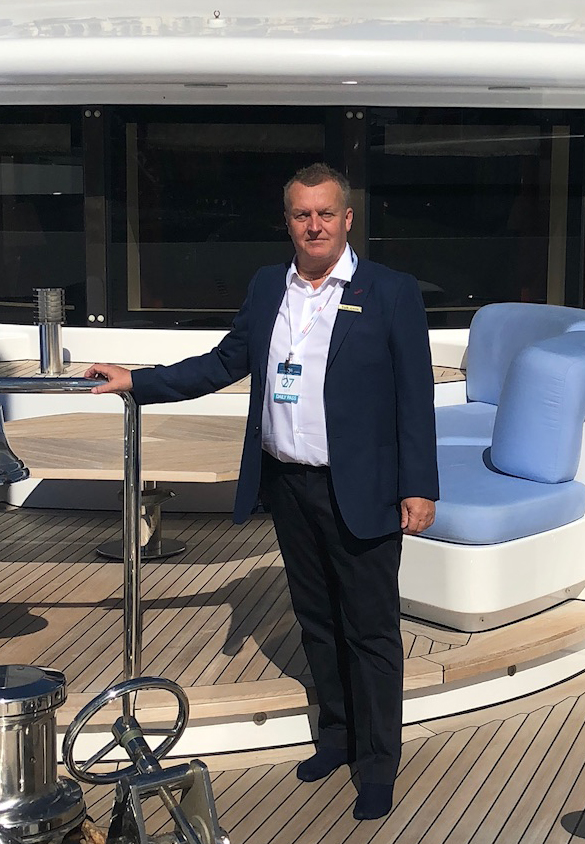
Why We Built 24Synergy — and Why the Magazines Matter

When we started developing 24Synergy, the objective was never simply to build another business directory, advertising website or collection of industry portals. There are already plenty of those, and creating another one would have achieved very little.
The question I kept coming back to was much simpler: **what should 24Synergy actually do for the businesses that use it?**
For me, the answer has always been about creating opportunity through collaboration.
We are constantly told that competition is healthy, and of course it is. Competition drives standards, innovation and better service. But I became interested in a slightly different question. What happens if competitors can also work together?
I don't mean sharing commercially sensitive information or pretending that companies aren't competing for the same customers. I mean recognising that every business already has its own clients, contacts, audience, knowledge and reach. If those individual networks can be connected intelligently, everybody potentially reaches considerably further than they could alone.
That principle became the foundation of 24Synergy.
The network is designed to grow through the businesses using it. Companies introduce their clients and contacts, other businesses do the same, and gradually those separate audiences become part of something much larger. Everybody contributes something to the network and everybody has the opportunity to benefit from the network that results.
There is also a perfectly sensible commercial reason for getting involved early. Your customers are already doing business with other companies and receiving marketing from other suppliers. It therefore makes sense to introduce them to a useful industry network yourself rather than waiting for somebody else to do it first.
That is why I think the early-adopter stage is particularly interesting. I am not going to pretend that a network during its launch period can offer the same volume of activity it should offer when thousands of companies and industry professionals are using it. Networks need people. They need participation and they need time to develop.
But eventually there is a tipping point. More companies join, more buyers arrive, more enquiries circulate, more RFQs are submitted, more people read the newsletters and magazines and more conversations take place through 24live. At that point, the companies that supported the network early aren't arriving and trying to establish themselves in an already busy marketplace. They are already there, with their accounts, listings, content, contacts and presence established.
Some of the mechanisms we have built become much more significant at that stage. Priority access to an RFQ, for example, might seem relatively unimportant when there are only a handful moving through the system. When substantial numbers of genuine opportunities are being generated, seeing something 48 hours before other users can make a considerable difference. The value of the network should therefore increase as the network itself grows.
That same thinking is ultimately what led us to create the magazines.
As 24Synergy developed, I increasingly felt that something was missing. We had created ways for businesses to list themselves, communicate, publish information, distribute newsletters, generate enquiries, respond to opportunities and reach audiences across different specialist sectors, but if we were genuinely trying to build a comprehensive marketing network, those businesses also needed somewhere to advertise.
So we built it.
The 24 Magazines aren't intended to sit separately from 24Synergy. They are another part of the same ecosystem, giving companies another route to market while giving readers useful specialist information in an accessible format. They are global publications, but with regional editions and regional editorial because the businesses and people using 24Synergy are global too.
A company shouldn't be disadvantaged because it happens to be based in Britain, France, the United States, Dubai, Singapore, Spain or somewhere else entirely. Nor should a reader have to wade through endless irrelevant information before finding something applicable to where they live, work, sail, charter, fly or conduct business.
That brings me to something else that is probably worth addressing openly.
Some readers will look through these magazines and ask: **“Have they used AI to produce some of this?”**
The answer is yes.
We have.
There are thousands of pieces of editorial involved across these publications and their regional editions, and it would be rather ridiculous for me to pretend that artificial intelligence hasn't helped us create them. AI exists, it is an extraordinarily useful tool when used properly, and I don't see any reason to hide the fact that we have used it.
What matters to me is **how** we have used it.
We haven't simply asked a machine to fill hundreds of pages with words so that the magazines look busy. We have chosen the subjects we believe are worth covering, identified the questions we think readers actually want answered and, in many cases, started the articles ourselves before using AI to help develop the research, structure and additional information around them.
The objective has always been usefulness.
If you're reading one of our sailing magazines, I want you to discover something that helps you sail, plan a passage, choose equipment, understand a destination or avoid a problem. If you're involved with private aviation, I want the information to answer questions relevant to flying, ownership, charter or operations. If you're in commercial shipping, brokerage, boat building, property, charter or another sector, the same principle applies.
I don't want pages of disposable editorial written simply because a magazine needs another article.
We have tried to identify subjects where somebody would otherwise have to spend time searching around the internet, opening numerous websites and piecing the information together themselves. We can do some of that background work instead, ask the questions and bring the useful information together in one place.
There is an environmental argument for that approach too. Endless searching, loading websites, serving adverts and repeatedly retrieving information all require digital infrastructure and energy. A magazine can be downloaded once, kept and read offline.
I wouldn't pretend that this somehow makes digital publishing impact-free, because it doesn't, but if we can save readers unnecessary searching while creating something useful enough to keep and refer back to, I think that is a better use of the technology available to us.
So yes, some of what you are reading has involved AI, and some of it has involved people. Increasingly it will involve more people as well.
As early adopters, journalists, specialists and other contributors become involved, their voices will naturally become part of these pages. We are also inviting other magazines and media organisations to contribute, which should introduce completely different editorial voices and areas of expertise. They may use AI themselves, of course, and I have no intention of telling another publisher or journalist which tools they are permitted to use.
The test is much simpler than that: **does the article give the reader something worthwhile?**
If it doesn't, it shouldn't be here.
That philosophy also explains something rather unusual we are now introducing. We are going to allow other independent magazines to promote themselves through our magazines.
At first that might sound counter-intuitive. Why would one magazine deliberately introduce its readers to another magazine?
My answer is: why wouldn't we?
If another specialist publication produces good material that our readers would appreciate, discovering it doesn't make our own magazine less useful. Quite the opposite. If we can become somewhere readers come to discover worthwhile information, including information and publications produced by other people, then I think we become more useful.
A participating publication will be able to contribute a genuine editorial article, tell readers where they can find more of its work and promote its magazine within our pages. We can potentially take that relationship considerably further as well. There may be opportunities to work with other publishers commercially, including arrangements where advertising from their own clients can reach our publications and both parties share in the resulting revenue.
Again, it comes back to the original idea behind 24Synergy. Competition doesn't have to prevent collaboration.
The scale of the network comes from the same philosophy. Historically, the industries we have worked with have never existed neatly inside individual boxes. A superyacht depends upon builders, suppliers, engineering companies, crew, brokers, charter businesses, marinas and countless specialist services. Those same owners and clients may use private aviation and own international property. Boat builders need suppliers. Charter companies need customers. Brokers need buyers and sellers. Employers need crew.
Exhibitors need boat shows, and boat shows need exhibitors and visitors.
Commercial ships and cruise ships sit alongside superyachts, motor yachts and sailing yachts. There are crew and employment services, boat and ship builders, ports, yacht services and suppliers, aviation, empty legs, property and specialist luxury markets. Each sector has its own identity, but there are countless points where they intersect.
That is why 24Synergy has become such a large collection of connected websites. It is deliberately not centred on one country or one type of business. A company with branches in several countries can bring those offices together through the same network, while a small specialist supplier can concentrate on the particular market that matters to it. Everything can still be managed centrally through the same account and dashboard.
24live takes that idea in another direction again. I sometimes describe it as sitting somewhere between the professional nature of LinkedIn and the immediacy of a social network such as Facebook, although I don't really want it to become either of those things. The purpose is business.
Members can publish their own material, interact with other users, promote their businesses and place appropriate content across relevant parts of the 24 Network. If somebody wants to be proactive, there is considerable freedom to put themselves in front of the industries they want to reach rather than simply creating a listing and waiting for somebody to find them.
That is an important distinction for me. **24Synergy isn't designed to do your marketing while you sit and watch. It is designed to give you the tools to do considerably more with your marketing yourself.**
There is another, deliberately different part of the ecosystem too.
Within the superyacht sector, 1UK.com is being developed around recognition rather than conventional paid placement. Companies cannot simply buy their way into recognition. They can request consideration, but that request can be declined. As the concept develops, I want appropriate industry leaders themselves to help determine the standards that businesses should achieve to be recognised at different levels.
That connects directly with where I would like 24Synergy itself eventually to go.
The intention is for 24Synergy to develop into a cooperative structure with industry leaders and board members helping to determine its future direction. The industry changes constantly, and the technology serving it needs to change with it. Electric propulsion is an obvious example today, but tomorrow there will be something else. The people actually working within these sectors will often identify what is needed long before a software developer sitting outside the industry ever could.
We have built the infrastructure, but I don't believe that means we should dictate indefinitely what it becomes. I would much rather create a structure where the people using the network have a meaningful voice in deciding which features should be developed next and where the network should go as their industries evolve.
There is a personal reason behind all of this as well.
I've always enjoyed helping businesses develop. I enjoy looking at a new company, understanding what it is trying to achieve and asking what could be done differently. Sometimes it is marketing, sometimes positioning, sometimes making an introduction or simply giving somebody the confidence and advice they need when they're trying to get something started.
I suppose 24Synergy is my attempt to do that on a much larger scale.
Rather than helping one company find another route to market, we have tried to build the infrastructure through which thousands of businesses can create those routes for themselves and for each other. It gives a small specialist company access to many of the same marketing mechanisms available to a much larger international organisation, while allowing a multinational business to connect offices, people and sectors through one global hub.
And that is probably the simplest answer to the question I started with: **what is 24Synergy actually for?**
It is there to create connections and opportunities that would otherwise be harder to create individually. The websites, magazines, newsletters, RFQs, publishing tools, 24live and everything else we develop are simply different ways of achieving that.
We've done the difficult part of bringing that infrastructure together. Now I want businesses to use it, challenge it and help us improve it. I want people to tell us what works, what doesn't and what their particular part of the industry needs next. As more businesses participate, the network should become more useful to everybody already inside it.
We have built 24Synergy, but I don't want it to feel as though it belongs to a small team sitting somewhere deciding what everybody else needs.
**We've built it for you. Now make use of it, make it work for your business, and help us decide what it becomes next.**
**Paul Thompson** *Editor*
Contributor: Paul Thompson / 24Synergy

Be the first reader to react to this article.

There is nothing particularly complicated about hypercar aerodynamics in 2026: why the floor matters as much as the wing, but there are several ways to make it unnecessarily expensive.

There is nothing particularly complicated about hypercar aerodynamics in 2026: why the floor matters as much as the wing, but there are several ways to make it unnecessarily expensive.
Cost also needs to be separated into purchase cost and ownership cost. The second figure is usually less visible. Consumables, routine servicing, insurance, finance, berthing or storage, professional fees, software subscriptions, inspections and eventual replacement items can materially change the economics. A useful quotation is therefore one that makes exclusions obvious.
If a supplier cannot explain what normally falls outside the quoted figure, ask for that clarification before treating two prices as comparable.
After-sales support can be more important than the original specification. A component that is excellent on paper is less attractive if parts take months to arrive or there is no competent service agent where the equipment will be used. The same applies to software-led products: ownership now includes updates, access rights, data and sometimes recurring subscriptions. Find out who supports the system, for how long, and what happens if the original supplier changes hands.
Timing matters. Buying or commissioning under deadline pressure weakens the buyer's position because there is less time to inspect, compare and walk away. Where possible, build the timetable backwards from the date the asset or service is genuinely required. Include survey or inspection time, corrections, training, delivery and a contingency. A realistic programme often reveals that the cheapest-looking option is not the one with the lowest overall cost.
The starting point is use. In hypercars, performance engineering, ownership and technology, two apparently similar products or services can be right for completely different owners because their operating pattern is different. Frequency of use, geography, crew or staffing, storage, servicing access and the length of time you expect to keep the asset all change the answer. Before comparing brands or quotations, write down those constraints.
It sounds basic, but it prevents a specification being chosen for a lifestyle that exists only in the sales material.
Technical claims deserve context. Range, output, capacity, speed, efficiency and performance figures are normally produced under stated conditions. Real use adds weather, load, temperature, fouling, route, operator behaviour and reserve margins. Rather than arguing over a headline number, ask what assumptions sit behind it and what happens when those assumptions change. That produces a much more useful comparison.

Sustainability claims are increasingly part of the decision as well. The useful question is not whether a product is described as green, but what has actually changed: energy use, fuel consumption, material choice, repairability, service life, emissions, waste or end-of-life handling. Improvements in one area can create compromises in another. Evidence and measured performance are more valuable than broad environmental language.
Finally, insist on a proper handover. Familiarisation, emergency procedures, maintenance intervals, passwords, spare parts, warranty contacts and operating limitations should all be understood before the supplier disappears over the horizon. A surprising number of early problems are not failures at all but gaps in handover. Thirty minutes spent recording the right information can save days later.
My own shorthand for hypercar aerodynamics in 2026: why the floor matters as much as the wing is simple: verify the condition, verify the paperwork, understand the support network and calculate the cost on a realistic pattern of use. If any one of those four is unclear, there is still work to do before committing.


Comparison becomes easier if every contender is put through the same questions. Ask for the same operating assumptions, the same delivery point, the same warranty period and the same list of included equipment or services. That turns a collection of sales conversations into something closer to a procurement exercise and exposes the areas where one quotation has quietly omitted an expensive item.
References are useful when they are relevant. A supplier's biggest or most prestigious project may tell you very little about how it handles an ordinary job in your region. Ask instead for examples with a similar scale, operating pattern and timetable. The most useful reference is often the customer who has lived with the product for two or three years and has already needed after-sales support.
The practical test for hypercars, performance engineering, ownership and technology is whether the decision still makes sense when circumstances are less than ideal. Weather changes, schedules move, components fail and people use equipment differently from the designer's neat assumptions. Building a little resilience into the choice usually costs less than trying to recover it afterwards.
None of this makes the decision difficult. It simply moves attention from presentation to evidence, which is usually where the better value sits.
Contributor: Paul Thompson / Editorial / 24HyperCars
Be the first reader to react to this article.
For anyone looking at hybrid systems: performance tool first, efficiency tool second, the first job is not to decide what looks best.
For anyone looking at hybrid systems: performance tool first, efficiency tool second, the first job is not to decide what looks best. It is to establish what problem actually needs solving.
Documentation is another practical test. Service records, manuals, certificates, invoices, warranties, software licences and evidence of previous work are not administrative clutter; they are part of the asset. Good records make troubleshooting easier and can support resale. Missing records do not automatically mean there is a problem, but they increase uncertainty, and uncertainty should be reflected in the questions asked, the inspection undertaken and sometimes the price.
Risk is best dealt with before commitment. That means independent inspection where appropriate, clear written scope, confirmation of insurance implications and an agreed process for defects or incomplete work. In higher-value transactions, legal, tax and regulatory advice should come from qualified advisers in the relevant jurisdiction. The purpose is not to make every transaction defensive; it is to stop assumptions becoming expensive surprises.
Resale should be considered even by people who intend to keep something for years. Highly personal specifications can be perfectly sensible, but buyers should understand the trade-off. Widely supported equipment, sensible layouts, complete records and recognised maintenance tend to be easier for the next owner to understand. The objective is not to design everything for an unknown future buyer; it is simply to avoid destroying flexibility without a good reason.
Cost also needs to be separated into purchase cost and ownership cost. The second figure is usually less visible. Consumables, routine servicing, insurance, finance, berthing or storage, professional fees, software subscriptions, inspections and eventual replacement items can materially change the economics. A useful quotation is therefore one that makes exclusions obvious.
If a supplier cannot explain what normally falls outside the quoted figure, ask for that clarification before treating two prices as comparable.
After-sales support can be more important than the original specification. A component that is excellent on paper is less attractive if parts take months to arrive or there is no competent service agent where the equipment will be used. The same applies to software-led products: ownership now includes updates, access rights, data and sometimes recurring subscriptions. Find out who supports the system, for how long, and what happens if the original supplier changes hands.
Timing matters. Buying or commissioning under deadline pressure weakens the buyer's position because there is less time to inspect, compare and walk away. Where possible, build the timetable backwards from the date the asset or service is genuinely required. Include survey or inspection time, corrections, training, delivery and a contingency. A realistic programme often reveals that the cheapest-looking option is not the one with the lowest overall cost.
The starting point is use. In hypercars, performance engineering, ownership and technology, two apparently similar products or services can be right for completely different owners because their operating pattern is different. Frequency of use, geography, crew or staffing, storage, servicing access and the length of time you expect to keep the asset all change the answer. Before comparing brands or quotations, write down those constraints.
It sounds basic, but it prevents a specification being chosen for a lifestyle that exists only in the sales material.
Energy decisions need a duty-cycle calculation. Average use is less important than the difficult day: the longest passage, the coldest morning, the heaviest load, the remote berth or the turnaround with the least charging time. Design around that case with a sensible reserve and the everyday operation normally becomes straightforward. Design around the brochure average and the owner may spend years managing around the system.
Infrastructure should be checked before hardware is ordered. Available electrical supply, connector type, grid capacity, bunkering arrangements, ventilation, fire protection and local operating rules can all dictate what is practical. In many projects the limiting factor is not the motor, battery or fuel technology; it is the place where the asset has to recharge, refuel or be maintained.
The practical test for hypercars, performance engineering, ownership and technology is whether the decision still makes sense when circumstances are less than ideal. Weather changes, schedules move, components fail and people use equipment differently from the designer's neat assumptions. Building a little resilience into the choice usually costs less than trying to recover it afterwards.
A measured decision now generally costs less than correcting an enthusiastic one later.
Contributor: Paul Thompson / Editorial / 24HyperCars


Be the first reader to react to this article.
For anyone looking at limited editions: rarity alone does not guarantee liquidity, the first job is not to decide what looks best.
For anyone looking at limited editions: rarity alone does not guarantee liquidity, the first job is not to decide what looks best. It is to establish what problem actually needs solving.
Finally, insist on a proper handover. Familiarisation, emergency procedures, maintenance intervals, passwords, spare parts, warranty contacts and operating limitations should all be understood before the supplier disappears over the horizon. A surprising number of early problems are not failures at all but gaps in handover. Thirty minutes spent recording the right information can save days later.
Documentation is another practical test. Service records, manuals, certificates, invoices, warranties, software licences and evidence of previous work are not administrative clutter; they are part of the asset. Good records make troubleshooting easier and can support resale. Missing records do not automatically mean there is a problem, but they increase uncertainty, and uncertainty should be reflected in the questions asked, the inspection undertaken and sometimes the price.
Risk is best dealt with before commitment. That means independent inspection where appropriate, clear written scope, confirmation of insurance implications and an agreed process for defects or incomplete work. In higher-value transactions, legal, tax and regulatory advice should come from qualified advisers in the relevant jurisdiction. The purpose is not to make every transaction defensive; it is to stop assumptions becoming expensive surprises.
Resale should be considered even by people who intend to keep something for years. Highly personal specifications can be perfectly sensible, but buyers should understand the trade-off. Widely supported equipment, sensible layouts, complete records and recognised maintenance tend to be easier for the next owner to understand. The objective is not to design everything for an unknown future buyer; it is simply to avoid destroying flexibility without a good reason.
Cost also needs to be separated into purchase cost and ownership cost. The second figure is usually less visible. Consumables, routine servicing, insurance, finance, berthing or storage, professional fees, software subscriptions, inspections and eventual replacement items can materially change the economics. A useful quotation is therefore one that makes exclusions obvious.
If a supplier cannot explain what normally falls outside the quoted figure, ask for that clarification before treating two prices as comparable.
After-sales support can be more important than the original specification. A component that is excellent on paper is less attractive if parts take months to arrive or there is no competent service agent where the equipment will be used. The same applies to software-led products: ownership now includes updates, access rights, data and sometimes recurring subscriptions. Find out who supports the system, for how long, and what happens if the original supplier changes hands.
Timing matters. Buying or commissioning under deadline pressure weakens the buyer's position because there is less time to inspect, compare and walk away. Where possible, build the timetable backwards from the date the asset or service is genuinely required. Include survey or inspection time, corrections, training, delivery and a contingency. A realistic programme often reveals that the cheapest-looking option is not the one with the lowest overall cost.
My own shorthand for limited editions: rarity alone does not guarantee liquidity is simple: verify the condition, verify the paperwork, understand the support network and calculate the cost on a realistic pattern of use. If any one of those four is unclear, there is still work to do before committing.
Comparison becomes easier if every contender is put through the same questions. Ask for the same operating assumptions, the same delivery point, the same warranty period and the same list of included equipment or services. That turns a collection of sales conversations into something closer to a procurement exercise and exposes the areas where one quotation has quietly omitted an expensive item.
References are useful when they are relevant. A supplier's biggest or most prestigious project may tell you very little about how it handles an ordinary job in your region. Ask instead for examples with a similar scale, operating pattern and timetable. The most useful reference is often the customer who has lived with the product for two or three years and has already needed after-sales support.
The practical test for hypercars, performance engineering, ownership and technology is whether the decision still makes sense when circumstances are less than ideal. Weather changes, schedules move, components fail and people use equipment differently from the designer's neat assumptions. Building a little resilience into the choice usually costs less than trying to recover it afterwards.
A measured decision now generally costs less than correcting an enthusiastic one later.
Contributor: Paul Thompson / Editorial / 24HyperCars

Be the first reader to react to this article.
One of the easiest mistakes in hypercars, performance engineering, ownership and technology is to concentrate on the headline and leave the awkward questions until later.
One of the easiest mistakes in hypercars, performance engineering, ownership and technology is to concentrate on the headline and leave the awkward questions until later.
Technical claims deserve context. Range, output, capacity, speed, efficiency and performance figures are normally produced under stated conditions. Real use adds weather, load, temperature, fouling, route, operator behaviour and reserve margins. Rather than arguing over a headline number, ask what assumptions sit behind it and what happens when those assumptions change. That produces a much more useful comparison.
Sustainability claims are increasingly part of the decision as well. The useful question is not whether a product is described as green, but what has actually changed: energy use, fuel consumption, material choice, repairability, service life, emissions, waste or end-of-life handling. Improvements in one area can create compromises in another. Evidence and measured performance are more valuable than broad environmental language.
Finally, insist on a proper handover. Familiarisation, emergency procedures, maintenance intervals, passwords, spare parts, warranty contacts and operating limitations should all be understood before the supplier disappears over the horizon. A surprising number of early problems are not failures at all but gaps in handover. Thirty minutes spent recording the right information can save days later.
Documentation is another practical test. Service records, manuals, certificates, invoices, warranties, software licences and evidence of previous work are not administrative clutter; they are part of the asset. Good records make troubleshooting easier and can support resale. Missing records do not automatically mean there is a problem, but they increase uncertainty, and uncertainty should be reflected in the questions asked, the inspection undertaken and sometimes the price.
Risk is best dealt with before commitment. That means independent inspection where appropriate, clear written scope, confirmation of insurance implications and an agreed process for defects or incomplete work. In higher-value transactions, legal, tax and regulatory advice should come from qualified advisers in the relevant jurisdiction. The purpose is not to make every transaction defensive; it is to stop assumptions becoming expensive surprises.
Resale should be considered even by people who intend to keep something for years. Highly personal specifications can be perfectly sensible, but buyers should understand the trade-off. Widely supported equipment, sensible layouts, complete records and recognised maintenance tend to be easier for the next owner to understand. The objective is not to design everything for an unknown future buyer; it is simply to avoid destroying flexibility without a good reason.
Cost also needs to be separated into purchase cost and ownership cost. The second figure is usually less visible. Consumables, routine servicing, insurance, finance, berthing or storage, professional fees, software subscriptions, inspections and eventual replacement items can materially change the economics. A useful quotation is therefore one that makes exclusions obvious.
If a supplier cannot explain what normally falls outside the quoted figure, ask for that clarification before treating two prices as comparable.
Energy decisions need a duty-cycle calculation. Average use is less important than the difficult day: the longest passage, the coldest morning, the heaviest load, the remote berth or the turnaround with the least charging time. Design around that case with a sensible reserve and the everyday operation normally becomes straightforward. Design around the brochure average and the owner may spend years managing around the system.
Infrastructure should be checked before hardware is ordered. Available electrical supply, connector type, grid capacity, bunkering arrangements, ventilation, fire protection and local operating rules can all dictate what is practical. In many projects the limiting factor is not the motor, battery or fuel technology; it is the place where the asset has to recharge, refuel or be maintained.
The practical test for hypercars, performance engineering, ownership and technology is whether the decision still makes sense when circumstances are less than ideal. Weather changes, schedules move, components fail and people use equipment differently from the designer's neat assumptions. Building a little resilience into the choice usually costs less than trying to recover it afterwards.
The best outcome is not necessarily the newest or most sophisticated option. It is the one that remains practical after the first season, the first service bill and the first change of plan.
Contributor: Paul Thompson / Editorial / 24HyperCars

Be the first reader to react to this article.
There is nothing particularly complicated about tyres: the most overlooked consumable on a seven-figure car, but there are several ways to make it unnecessarily expensive.
There is nothing particularly complicated about tyres: the most overlooked consumable on a seven-figure car, but there are several ways to make it unnecessarily expensive.
After-sales support can be more important than the original specification. A component that is excellent on paper is less attractive if parts take months to arrive or there is no competent service agent where the equipment will be used. The same applies to software-led products: ownership now includes updates, access rights, data and sometimes recurring subscriptions. Find out who supports the system, for how long, and what happens if the original supplier changes hands.
Timing matters. Buying or commissioning under deadline pressure weakens the buyer's position because there is less time to inspect, compare and walk away. Where possible, build the timetable backwards from the date the asset or service is genuinely required. Include survey or inspection time, corrections, training, delivery and a contingency. A realistic programme often reveals that the cheapest-looking option is not the one with the lowest overall cost.
The starting point is use. In hypercars, performance engineering, ownership and technology, two apparently similar products or services can be right for completely different owners because their operating pattern is different. Frequency of use, geography, crew or staffing, storage, servicing access and the length of time you expect to keep the asset all change the answer. Before comparing brands or quotations, write down those constraints.
It sounds basic, but it prevents a specification being chosen for a lifestyle that exists only in the sales material.
Technical claims deserve context. Range, output, capacity, speed, efficiency and performance figures are normally produced under stated conditions. Real use adds weather, load, temperature, fouling, route, operator behaviour and reserve margins. Rather than arguing over a headline number, ask what assumptions sit behind it and what happens when those assumptions change. That produces a much more useful comparison.
Sustainability claims are increasingly part of the decision as well. The useful question is not whether a product is described as green, but what has actually changed: energy use, fuel consumption, material choice, repairability, service life, emissions, waste or end-of-life handling. Improvements in one area can create compromises in another. Evidence and measured performance are more valuable than broad environmental language.
Finally, insist on a proper handover. Familiarisation, emergency procedures, maintenance intervals, passwords, spare parts, warranty contacts and operating limitations should all be understood before the supplier disappears over the horizon. A surprising number of early problems are not failures at all but gaps in handover. Thirty minutes spent recording the right information can save days later.
Documentation is another practical test. Service records, manuals, certificates, invoices, warranties, software licences and evidence of previous work are not administrative clutter; they are part of the asset. Good records make troubleshooting easier and can support resale. Missing records do not automatically mean there is a problem, but they increase uncertainty, and uncertainty should be reflected in the questions asked, the inspection undertaken and sometimes the price.
Comparison becomes easier if every contender is put through the same questions. Ask for the same operating assumptions, the same delivery point, the same warranty period and the same list of included equipment or services. That turns a collection of sales conversations into something closer to a procurement exercise and exposes the areas where one quotation has quietly omitted an expensive item.
References are useful when they are relevant. A supplier's biggest or most prestigious project may tell you very little about how it handles an ordinary job in your region. Ask instead for examples with a similar scale, operating pattern and timetable. The most useful reference is often the customer who has lived with the product for two or three years and has already needed after-sales support.
The practical test for hypercars, performance engineering, ownership and technology is whether the decision still makes sense when circumstances are less than ideal. Weather changes, schedules move, components fail and people use equipment differently from the designer's neat assumptions. Building a little resilience into the choice usually costs less than trying to recover it afterwards.
None of this makes the decision difficult. It simply moves attention from presentation to evidence, which is usually where the better value sits.
Contributor: Paul Thompson / Editorial / 24HyperCars

Be the first reader to react to this article.
The market has become very good at presenting storage: why a hypercar needs more than a dry garage as simple.
The market has become very good at presenting storage: why a hypercar needs more than a dry garage as simple. In practice, the details still determine whether it works.
Risk is best dealt with before commitment. That means independent inspection where appropriate, clear written scope, confirmation of insurance implications and an agreed process for defects or incomplete work. In higher-value transactions, legal, tax and regulatory advice should come from qualified advisers in the relevant jurisdiction. The purpose is not to make every transaction defensive; it is to stop assumptions becoming expensive surprises.
Resale should be considered even by people who intend to keep something for years. Highly personal specifications can be perfectly sensible, but buyers should understand the trade-off. Widely supported equipment, sensible layouts, complete records and recognised maintenance tend to be easier for the next owner to understand. The objective is not to design everything for an unknown future buyer; it is simply to avoid destroying flexibility without a good reason.
Cost also needs to be separated into purchase cost and ownership cost. The second figure is usually less visible. Consumables, routine servicing, insurance, finance, berthing or storage, professional fees, software subscriptions, inspections and eventual replacement items can materially change the economics. A useful quotation is therefore one that makes exclusions obvious.
If a supplier cannot explain what normally falls outside the quoted figure, ask for that clarification before treating two prices as comparable.
After-sales support can be more important than the original specification. A component that is excellent on paper is less attractive if parts take months to arrive or there is no competent service agent where the equipment will be used. The same applies to software-led products: ownership now includes updates, access rights, data and sometimes recurring subscriptions. Find out who supports the system, for how long, and what happens if the original supplier changes hands.
Timing matters. Buying or commissioning under deadline pressure weakens the buyer's position because there is less time to inspect, compare and walk away. Where possible, build the timetable backwards from the date the asset or service is genuinely required. Include survey or inspection time, corrections, training, delivery and a contingency. A realistic programme often reveals that the cheapest-looking option is not the one with the lowest overall cost.
The starting point is use. In hypercars, performance engineering, ownership and technology, two apparently similar products or services can be right for completely different owners because their operating pattern is different. Frequency of use, geography, crew or staffing, storage, servicing access and the length of time you expect to keep the asset all change the answer. Before comparing brands or quotations, write down those constraints.
It sounds basic, but it prevents a specification being chosen for a lifestyle that exists only in the sales material.
Technical claims deserve context. Range, output, capacity, speed, efficiency and performance figures are normally produced under stated conditions. Real use adds weather, load, temperature, fouling, route, operator behaviour and reserve margins. Rather than arguing over a headline number, ask what assumptions sit behind it and what happens when those assumptions change. That produces a much more useful comparison.
My own shorthand for storage: why a hypercar needs more than a dry garage is simple: verify the condition, verify the paperwork, understand the support network and calculate the cost on a realistic pattern of use. If any one of those four is unclear, there is still work to do before committing.
Comparison becomes easier if every contender is put through the same questions. Ask for the same operating assumptions, the same delivery point, the same warranty period and the same list of included equipment or services. That turns a collection of sales conversations into something closer to a procurement exercise and exposes the areas where one quotation has quietly omitted an expensive item.
References are useful when they are relevant. A supplier's biggest or most prestigious project may tell you very little about how it handles an ordinary job in your region. Ask instead for examples with a similar scale, operating pattern and timetable. The most useful reference is often the customer who has lived with the product for two or three years and has already needed after-sales support.
The practical test for hypercars, performance engineering, ownership and technology is whether the decision still makes sense when circumstances are less than ideal. Weather changes, schedules move, components fail and people use equipment differently from the designer's neat assumptions. Building a little resilience into the choice usually costs less than trying to recover it afterwards.
That is the point worth carrying into the next conversation with a broker, builder, supplier or adviser: ask what the choice will be like to own and operate, not merely what it is like to buy.
Contributor: Paul Thompson / Editorial / 24HyperCars
Be the first reader to react to this article.
This is one of those subjects where a little preparation is worth far more than a long list of features.
This is one of those subjects where a little preparation is worth far more than a long list of features.
Sustainability claims are increasingly part of the decision as well. The useful question is not whether a product is described as green, but what has actually changed: energy use, fuel consumption, material choice, repairability, service life, emissions, waste or end-of-life handling. Improvements in one area can create compromises in another. Evidence and measured performance are more valuable than broad environmental language.
Finally, insist on a proper handover. Familiarisation, emergency procedures, maintenance intervals, passwords, spare parts, warranty contacts and operating limitations should all be understood before the supplier disappears over the horizon. A surprising number of early problems are not failures at all but gaps in handover. Thirty minutes spent recording the right information can save days later.
Documentation is another practical test. Service records, manuals, certificates, invoices, warranties, software licences and evidence of previous work are not administrative clutter; they are part of the asset. Good records make troubleshooting easier and can support resale. Missing records do not automatically mean there is a problem, but they increase uncertainty, and uncertainty should be reflected in the questions asked, the inspection undertaken and sometimes the price.
Risk is best dealt with before commitment. That means independent inspection where appropriate, clear written scope, confirmation of insurance implications and an agreed process for defects or incomplete work. In higher-value transactions, legal, tax and regulatory advice should come from qualified advisers in the relevant jurisdiction. The purpose is not to make every transaction defensive; it is to stop assumptions becoming expensive surprises.
Resale should be considered even by people who intend to keep something for years. Highly personal specifications can be perfectly sensible, but buyers should understand the trade-off. Widely supported equipment, sensible layouts, complete records and recognised maintenance tend to be easier for the next owner to understand. The objective is not to design everything for an unknown future buyer; it is simply to avoid destroying flexibility without a good reason.
Cost also needs to be separated into purchase cost and ownership cost. The second figure is usually less visible. Consumables, routine servicing, insurance, finance, berthing or storage, professional fees, software subscriptions, inspections and eventual replacement items can materially change the economics. A useful quotation is therefore one that makes exclusions obvious.
If a supplier cannot explain what normally falls outside the quoted figure, ask for that clarification before treating two prices as comparable.
After-sales support can be more important than the original specification. A component that is excellent on paper is less attractive if parts take months to arrive or there is no competent service agent where the equipment will be used. The same applies to software-led products: ownership now includes updates, access rights, data and sometimes recurring subscriptions. Find out who supports the system, for how long, and what happens if the original supplier changes hands.
Connected equipment creates a second maintenance schedule: passwords, access permissions, firmware, backups and subscriptions. Owners should know which systems can be updated remotely, which data leaves the asset and whether loss of an online service affects core operation. A paper or offline record of critical settings is still useful when the problem being diagnosed is the network itself.
Cybersecurity does not need to become a specialist exercise for every user. Basic separation of guest and operational networks, unique credentials, prompt updates and controlled administrator access remove a large proportion of avoidable risk. The more important question for a supplier is whether security has been designed into the product and whether updates will continue throughout its realistic service life.
The practical test for hypercars, performance engineering, ownership and technology is whether the decision still makes sense when circumstances are less than ideal. Weather changes, schedules move, components fail and people use equipment differently from the designer's neat assumptions. Building a little resilience into the choice usually costs less than trying to recover it afterwards.
For most readers, that is enough to narrow the field considerably before serious money or time is committed.
Contributor: Paul Thompson / Editorial / 24HyperCars

Be the first reader to react to this article.
This is one of those subjects where a little preparation is worth far more than a long list of features.
This is one of those subjects where a little preparation is worth far more than a long list of features.
Timing matters. Buying or commissioning under deadline pressure weakens the buyer's position because there is less time to inspect, compare and walk away. Where possible, build the timetable backwards from the date the asset or service is genuinely required. Include survey or inspection time, corrections, training, delivery and a contingency. A realistic programme often reveals that the cheapest-looking option is not the one with the lowest overall cost.
The starting point is use. In hypercars, performance engineering, ownership and technology, two apparently similar products or services can be right for completely different owners because their operating pattern is different. Frequency of use, geography, crew or staffing, storage, servicing access and the length of time you expect to keep the asset all change the answer. Before comparing brands or quotations, write down those constraints.
It sounds basic, but it prevents a specification being chosen for a lifestyle that exists only in the sales material.
Technical claims deserve context. Range, output, capacity, speed, efficiency and performance figures are normally produced under stated conditions. Real use adds weather, load, temperature, fouling, route, operator behaviour and reserve margins. Rather than arguing over a headline number, ask what assumptions sit behind it and what happens when those assumptions change. That produces a much more useful comparison.
Sustainability claims are increasingly part of the decision as well. The useful question is not whether a product is described as green, but what has actually changed: energy use, fuel consumption, material choice, repairability, service life, emissions, waste or end-of-life handling. Improvements in one area can create compromises in another. Evidence and measured performance are more valuable than broad environmental language.
Finally, insist on a proper handover. Familiarisation, emergency procedures, maintenance intervals, passwords, spare parts, warranty contacts and operating limitations should all be understood before the supplier disappears over the horizon. A surprising number of early problems are not failures at all but gaps in handover. Thirty minutes spent recording the right information can save days later.
Documentation is another practical test. Service records, manuals, certificates, invoices, warranties, software licences and evidence of previous work are not administrative clutter; they are part of the asset. Good records make troubleshooting easier and can support resale. Missing records do not automatically mean there is a problem, but they increase uncertainty, and uncertainty should be reflected in the questions asked, the inspection undertaken and sometimes the price.
Risk is best dealt with before commitment. That means independent inspection where appropriate, clear written scope, confirmation of insurance implications and an agreed process for defects or incomplete work. In higher-value transactions, legal, tax and regulatory advice should come from qualified advisers in the relevant jurisdiction. The purpose is not to make every transaction defensive; it is to stop assumptions becoming expensive surprises.
When money is about to change hands, the sequence matters. Establish identity and authority to sell, agree exactly what is included, record known defects and make any deposit terms clear. Where a survey, valuation or finance approval is part of the transaction, the contract should reflect that process rather than relying on a verbal understanding. Buyers should also know when risk and title transfer, particularly if the asset is moving between jurisdictions.
Market value is evidence, not aspiration. Advertised prices show what sellers hope to achieve; completed transactions, condition, specification, location and time on market give a better picture. A well-presented example can deserve a premium, but a premium still needs a reason. The strongest negotiating position comes from knowing which defects are merely cosmetic, which affect usability and which could lead to immediate capital expenditure.
The practical test for hypercars, performance engineering, ownership and technology is whether the decision still makes sense when circumstances are less than ideal. Weather changes, schedules move, components fail and people use equipment differently from the designer's neat assumptions. Building a little resilience into the choice usually costs less than trying to recover it afterwards.
The best outcome is not necessarily the newest or most sophisticated option. It is the one that remains practical after the first season, the first service bill and the first change of plan.
Contributor: Paul Thompson / Editorial / 24HyperCars

Be the first reader to react to this article.
This is one of those subjects where a little preparation is worth far more than a long list of features.
This is one of those subjects where a little preparation is worth far more than a long list of features.
Resale should be considered even by people who intend to keep something for years. Highly personal specifications can be perfectly sensible, but buyers should understand the trade-off. Widely supported equipment, sensible layouts, complete records and recognised maintenance tend to be easier for the next owner to understand. The objective is not to design everything for an unknown future buyer; it is simply to avoid destroying flexibility without a good reason.
Cost also needs to be separated into purchase cost and ownership cost. The second figure is usually less visible. Consumables, routine servicing, insurance, finance, berthing or storage, professional fees, software subscriptions, inspections and eventual replacement items can materially change the economics. A useful quotation is therefore one that makes exclusions obvious.
If a supplier cannot explain what normally falls outside the quoted figure, ask for that clarification before treating two prices as comparable.
After-sales support can be more important than the original specification. A component that is excellent on paper is less attractive if parts take months to arrive or there is no competent service agent where the equipment will be used. The same applies to software-led products: ownership now includes updates, access rights, data and sometimes recurring subscriptions. Find out who supports the system, for how long, and what happens if the original supplier changes hands.
Timing matters. Buying or commissioning under deadline pressure weakens the buyer's position because there is less time to inspect, compare and walk away. Where possible, build the timetable backwards from the date the asset or service is genuinely required. Include survey or inspection time, corrections, training, delivery and a contingency. A realistic programme often reveals that the cheapest-looking option is not the one with the lowest overall cost.
The starting point is use. In hypercars, performance engineering, ownership and technology, two apparently similar products or services can be right for completely different owners because their operating pattern is different. Frequency of use, geography, crew or staffing, storage, servicing access and the length of time you expect to keep the asset all change the answer. Before comparing brands or quotations, write down those constraints.
It sounds basic, but it prevents a specification being chosen for a lifestyle that exists only in the sales material.
Technical claims deserve context. Range, output, capacity, speed, efficiency and performance figures are normally produced under stated conditions. Real use adds weather, load, temperature, fouling, route, operator behaviour and reserve margins. Rather than arguing over a headline number, ask what assumptions sit behind it and what happens when those assumptions change. That produces a much more useful comparison.
Sustainability claims are increasingly part of the decision as well. The useful question is not whether a product is described as green, but what has actually changed: energy use, fuel consumption, material choice, repairability, service life, emissions, waste or end-of-life handling. Improvements in one area can create compromises in another. Evidence and measured performance are more valuable than broad environmental language.
When money is about to change hands, the sequence matters. Establish identity and authority to sell, agree exactly what is included, record known defects and make any deposit terms clear. Where a survey, valuation or finance approval is part of the transaction, the contract should reflect that process rather than relying on a verbal understanding. Buyers should also know when risk and title transfer, particularly if the asset is moving between jurisdictions.
Market value is evidence, not aspiration. Advertised prices show what sellers hope to achieve; completed transactions, condition, specification, location and time on market give a better picture. A well-presented example can deserve a premium, but a premium still needs a reason. The strongest negotiating position comes from knowing which defects are merely cosmetic, which affect usability and which could lead to immediate capital expenditure.
The practical test for hypercars, performance engineering, ownership and technology is whether the decision still makes sense when circumstances are less than ideal. Weather changes, schedules move, components fail and people use equipment differently from the designer's neat assumptions. Building a little resilience into the choice usually costs less than trying to recover it afterwards.
A measured decision now generally costs less than correcting an enthusiastic one later.
Contributor: Paul Thompson / Editorial / 24HyperCars

Be the first reader to react to this article.
The conversation around track use: how one day can change maintenance requirements has moved quickly this year, yet the practical decision is still built on fairly ordinary questions.
The conversation around track use: how one day can change maintenance requirements has moved quickly this year, yet the practical decision is still built on fairly ordinary questions.
The starting point is use. In hypercars, performance engineering, ownership and technology, two apparently similar products or services can be right for completely different owners because their operating pattern is different. Frequency of use, geography, crew or staffing, storage, servicing access and the length of time you expect to keep the asset all change the answer. Before comparing brands or quotations, write down those constraints.
It sounds basic, but it prevents a specification being chosen for a lifestyle that exists only in the sales material.
Technical claims deserve context. Range, output, capacity, speed, efficiency and performance figures are normally produced under stated conditions. Real use adds weather, load, temperature, fouling, route, operator behaviour and reserve margins. Rather than arguing over a headline number, ask what assumptions sit behind it and what happens when those assumptions change. That produces a much more useful comparison.
Sustainability claims are increasingly part of the decision as well. The useful question is not whether a product is described as green, but what has actually changed: energy use, fuel consumption, material choice, repairability, service life, emissions, waste or end-of-life handling. Improvements in one area can create compromises in another. Evidence and measured performance are more valuable than broad environmental language.
Finally, insist on a proper handover. Familiarisation, emergency procedures, maintenance intervals, passwords, spare parts, warranty contacts and operating limitations should all be understood before the supplier disappears over the horizon. A surprising number of early problems are not failures at all but gaps in handover. Thirty minutes spent recording the right information can save days later.
Documentation is another practical test. Service records, manuals, certificates, invoices, warranties, software licences and evidence of previous work are not administrative clutter; they are part of the asset. Good records make troubleshooting easier and can support resale. Missing records do not automatically mean there is a problem, but they increase uncertainty, and uncertainty should be reflected in the questions asked, the inspection undertaken and sometimes the price.
Risk is best dealt with before commitment. That means independent inspection where appropriate, clear written scope, confirmation of insurance implications and an agreed process for defects or incomplete work. In higher-value transactions, legal, tax and regulatory advice should come from qualified advisers in the relevant jurisdiction. The purpose is not to make every transaction defensive; it is to stop assumptions becoming expensive surprises.
Resale should be considered even by people who intend to keep something for years. Highly personal specifications can be perfectly sensible, but buyers should understand the trade-off. Widely supported equipment, sensible layouts, complete records and recognised maintenance tend to be easier for the next owner to understand. The objective is not to design everything for an unknown future buyer; it is simply to avoid destroying flexibility without a good reason.
Preventive work is most effective when it is recorded rather than remembered. A simple calendar of hours, dates, consumables, inspections and recurring tasks gives owners and managers an early warning before maintenance becomes urgent. It also allows jobs to be grouped sensibly, reducing repeated access costs and downtime. The discipline is not glamorous, but it is one of the clearest ways to protect reliability.
Scope control matters on any refit or repair. Once equipment is opened up, additional work is common, so the original quotation should distinguish fixed items, provisional sums and work that requires further authorisation. Photographing condition before and after the job and retaining replaced-part details can prevent disputes and gives the next technician a useful history.
The practical test for hypercars, performance engineering, ownership and technology is whether the decision still makes sense when circumstances are less than ideal. Weather changes, schedules move, components fail and people use equipment differently from the designer's neat assumptions. Building a little resilience into the choice usually costs less than trying to recover it afterwards.
The sensible approach is therefore quite conventional: define the job, verify the evidence, price the whole commitment and keep enough margin for the things that never appear in the brochure.
Contributor: Paul Thompson / Editorial / 24HyperCars

Be the first reader to react to this article.
There is nothing particularly complicated about insurance: agreed value, mileage limits and security conditions, but there are several ways to make it unnecessarily expensive.
There is nothing particularly complicated about insurance: agreed value, mileage limits and security conditions, but there are several ways to make it unnecessarily expensive.
Cost also needs to be separated into purchase cost and ownership cost. The second figure is usually less visible. Consumables, routine servicing, insurance, finance, berthing or storage, professional fees, software subscriptions, inspections and eventual replacement items can materially change the economics. A useful quotation is therefore one that makes exclusions obvious.
If a supplier cannot explain what normally falls outside the quoted figure, ask for that clarification before treating two prices as comparable.
After-sales support can be more important than the original specification. A component that is excellent on paper is less attractive if parts take months to arrive or there is no competent service agent where the equipment will be used. The same applies to software-led products: ownership now includes updates, access rights, data and sometimes recurring subscriptions. Find out who supports the system, for how long, and what happens if the original supplier changes hands.
Timing matters. Buying or commissioning under deadline pressure weakens the buyer's position because there is less time to inspect, compare and walk away. Where possible, build the timetable backwards from the date the asset or service is genuinely required. Include survey or inspection time, corrections, training, delivery and a contingency. A realistic programme often reveals that the cheapest-looking option is not the one with the lowest overall cost.
The starting point is use. In hypercars, performance engineering, ownership and technology, two apparently similar products or services can be right for completely different owners because their operating pattern is different. Frequency of use, geography, crew or staffing, storage, servicing access and the length of time you expect to keep the asset all change the answer. Before comparing brands or quotations, write down those constraints.
It sounds basic, but it prevents a specification being chosen for a lifestyle that exists only in the sales material.
Technical claims deserve context. Range, output, capacity, speed, efficiency and performance figures are normally produced under stated conditions. Real use adds weather, load, temperature, fouling, route, operator behaviour and reserve margins. Rather than arguing over a headline number, ask what assumptions sit behind it and what happens when those assumptions change. That produces a much more useful comparison.
Sustainability claims are increasingly part of the decision as well. The useful question is not whether a product is described as green, but what has actually changed: energy use, fuel consumption, material choice, repairability, service life, emissions, waste or end-of-life handling. Improvements in one area can create compromises in another. Evidence and measured performance are more valuable than broad environmental language.
Finally, insist on a proper handover. Familiarisation, emergency procedures, maintenance intervals, passwords, spare parts, warranty contacts and operating limitations should all be understood before the supplier disappears over the horizon. A surprising number of early problems are not failures at all but gaps in handover. Thirty minutes spent recording the right information can save days later.
Comparison becomes easier if every contender is put through the same questions. Ask for the same operating assumptions, the same delivery point, the same warranty period and the same list of included equipment or services. That turns a collection of sales conversations into something closer to a procurement exercise and exposes the areas where one quotation has quietly omitted an expensive item.
References are useful when they are relevant. A supplier's biggest or most prestigious project may tell you very little about how it handles an ordinary job in your region. Ask instead for examples with a similar scale, operating pattern and timetable. The most useful reference is often the customer who has lived with the product for two or three years and has already needed after-sales support.
The practical test for hypercars, performance engineering, ownership and technology is whether the decision still makes sense when circumstances are less than ideal. Weather changes, schedules move, components fail and people use equipment differently from the designer's neat assumptions. Building a little resilience into the choice usually costs less than trying to recover it afterwards.
That is the point worth carrying into the next conversation with a broker, builder, supplier or adviser: ask what the choice will be like to own and operate, not merely what it is like to buy.
Contributor: Paul Thompson / Editorial / 24HyperCars

Be the first reader to react to this article.
A good decision in hypercars, performance engineering, ownership and technology rarely comes from one impressive specification.
A good decision in hypercars, performance engineering, ownership and technology rarely comes from one impressive specification. It comes from understanding how the whole package will be used.
Documentation is another practical test. Service records, manuals, certificates, invoices, warranties, software licences and evidence of previous work are not administrative clutter; they are part of the asset. Good records make troubleshooting easier and can support resale. Missing records do not automatically mean there is a problem, but they increase uncertainty, and uncertainty should be reflected in the questions asked, the inspection undertaken and sometimes the price.
Risk is best dealt with before commitment. That means independent inspection where appropriate, clear written scope, confirmation of insurance implications and an agreed process for defects or incomplete work. In higher-value transactions, legal, tax and regulatory advice should come from qualified advisers in the relevant jurisdiction. The purpose is not to make every transaction defensive; it is to stop assumptions becoming expensive surprises.
Resale should be considered even by people who intend to keep something for years. Highly personal specifications can be perfectly sensible, but buyers should understand the trade-off. Widely supported equipment, sensible layouts, complete records and recognised maintenance tend to be easier for the next owner to understand. The objective is not to design everything for an unknown future buyer; it is simply to avoid destroying flexibility without a good reason.
Cost also needs to be separated into purchase cost and ownership cost. The second figure is usually less visible. Consumables, routine servicing, insurance, finance, berthing or storage, professional fees, software subscriptions, inspections and eventual replacement items can materially change the economics. A useful quotation is therefore one that makes exclusions obvious.
If a supplier cannot explain what normally falls outside the quoted figure, ask for that clarification before treating two prices as comparable.
After-sales support can be more important than the original specification. A component that is excellent on paper is less attractive if parts take months to arrive or there is no competent service agent where the equipment will be used. The same applies to software-led products: ownership now includes updates, access rights, data and sometimes recurring subscriptions. Find out who supports the system, for how long, and what happens if the original supplier changes hands.
Timing matters. Buying or commissioning under deadline pressure weakens the buyer's position because there is less time to inspect, compare and walk away. Where possible, build the timetable backwards from the date the asset or service is genuinely required. Include survey or inspection time, corrections, training, delivery and a contingency. A realistic programme often reveals that the cheapest-looking option is not the one with the lowest overall cost.
The starting point is use. In hypercars, performance engineering, ownership and technology, two apparently similar products or services can be right for completely different owners because their operating pattern is different. Frequency of use, geography, crew or staffing, storage, servicing access and the length of time you expect to keep the asset all change the answer. Before comparing brands or quotations, write down those constraints.
It sounds basic, but it prevents a specification being chosen for a lifestyle that exists only in the sales material.
Energy decisions need a duty-cycle calculation. Average use is less important than the difficult day: the longest passage, the coldest morning, the heaviest load, the remote berth or the turnaround with the least charging time. Design around that case with a sensible reserve and the everyday operation normally becomes straightforward. Design around the brochure average and the owner may spend years managing around the system.
Infrastructure should be checked before hardware is ordered. Available electrical supply, connector type, grid capacity, bunkering arrangements, ventilation, fire protection and local operating rules can all dictate what is practical. In many projects the limiting factor is not the motor, battery or fuel technology; it is the place where the asset has to recharge, refuel or be maintained.
The practical test for hypercars, performance engineering, ownership and technology is whether the decision still makes sense when circumstances are less than ideal. Weather changes, schedules move, components fail and people use equipment differently from the designer's neat assumptions. Building a little resilience into the choice usually costs less than trying to recover it afterwards.
A measured decision now generally costs less than correcting an enthusiastic one later.
Contributor: Paul Thompson / Editorial / 24HyperCars

Be the first reader to react to this article.
There is nothing particularly complicated about active aerodynamics: the maintenance implications behind the performance, but there are several ways to make it unnecessarily expensive.
There is nothing particularly complicated about active aerodynamics: the maintenance implications behind the performance, but there are several ways to make it unnecessarily expensive.
Technical claims deserve context. Range, output, capacity, speed, efficiency and performance figures are normally produced under stated conditions. Real use adds weather, load, temperature, fouling, route, operator behaviour and reserve margins. Rather than arguing over a headline number, ask what assumptions sit behind it and what happens when those assumptions change. That produces a much more useful comparison.
Sustainability claims are increasingly part of the decision as well. The useful question is not whether a product is described as green, but what has actually changed: energy use, fuel consumption, material choice, repairability, service life, emissions, waste or end-of-life handling. Improvements in one area can create compromises in another. Evidence and measured performance are more valuable than broad environmental language.
Finally, insist on a proper handover. Familiarisation, emergency procedures, maintenance intervals, passwords, spare parts, warranty contacts and operating limitations should all be understood before the supplier disappears over the horizon. A surprising number of early problems are not failures at all but gaps in handover. Thirty minutes spent recording the right information can save days later.
Documentation is another practical test. Service records, manuals, certificates, invoices, warranties, software licences and evidence of previous work are not administrative clutter; they are part of the asset. Good records make troubleshooting easier and can support resale. Missing records do not automatically mean there is a problem, but they increase uncertainty, and uncertainty should be reflected in the questions asked, the inspection undertaken and sometimes the price.
Risk is best dealt with before commitment. That means independent inspection where appropriate, clear written scope, confirmation of insurance implications and an agreed process for defects or incomplete work. In higher-value transactions, legal, tax and regulatory advice should come from qualified advisers in the relevant jurisdiction. The purpose is not to make every transaction defensive; it is to stop assumptions becoming expensive surprises.
Resale should be considered even by people who intend to keep something for years. Highly personal specifications can be perfectly sensible, but buyers should understand the trade-off. Widely supported equipment, sensible layouts, complete records and recognised maintenance tend to be easier for the next owner to understand. The objective is not to design everything for an unknown future buyer; it is simply to avoid destroying flexibility without a good reason.
Cost also needs to be separated into purchase cost and ownership cost. The second figure is usually less visible. Consumables, routine servicing, insurance, finance, berthing or storage, professional fees, software subscriptions, inspections and eventual replacement items can materially change the economics. A useful quotation is therefore one that makes exclusions obvious.
If a supplier cannot explain what normally falls outside the quoted figure, ask for that clarification before treating two prices as comparable.
My own shorthand for active aerodynamics: the maintenance implications behind the performance is simple: verify the condition, verify the paperwork, understand the support network and calculate the cost on a realistic pattern of use. If any one of those four is unclear, there is still work to do before committing.
Preventive work is most effective when it is recorded rather than remembered. A simple calendar of hours, dates, consumables, inspections and recurring tasks gives owners and managers an early warning before maintenance becomes urgent. It also allows jobs to be grouped sensibly, reducing repeated access costs and downtime. The discipline is not glamorous, but it is one of the clearest ways to protect reliability.
Scope control matters on any refit or repair. Once equipment is opened up, additional work is common, so the original quotation should distinguish fixed items, provisional sums and work that requires further authorisation. Photographing condition before and after the job and retaining replaced-part details can prevent disputes and gives the next technician a useful history.
The practical test for hypercars, performance engineering, ownership and technology is whether the decision still makes sense when circumstances are less than ideal. Weather changes, schedules move, components fail and people use equipment differently from the designer's neat assumptions. Building a little resilience into the choice usually costs less than trying to recover it afterwards.
For most readers, that is enough to narrow the field considerably before serious money or time is committed.
Contributor: Paul Thompson / Editorial / 24HyperCars

Be the first reader to react to this article.
I have always found that the useful part of hypercars, performance engineering, ownership and technology starts once the brochure language has been stripped away.
I have always found that the useful part of hypercars, performance engineering, ownership and technology starts once the brochure language has been stripped away.
After-sales support can be more important than the original specification. A component that is excellent on paper is less attractive if parts take months to arrive or there is no competent service agent where the equipment will be used. The same applies to software-led products: ownership now includes updates, access rights, data and sometimes recurring subscriptions. Find out who supports the system, for how long, and what happens if the original supplier changes hands.
Timing matters. Buying or commissioning under deadline pressure weakens the buyer's position because there is less time to inspect, compare and walk away. Where possible, build the timetable backwards from the date the asset or service is genuinely required. Include survey or inspection time, corrections, training, delivery and a contingency. A realistic programme often reveals that the cheapest-looking option is not the one with the lowest overall cost.
The starting point is use. In hypercars, performance engineering, ownership and technology, two apparently similar products or services can be right for completely different owners because their operating pattern is different. Frequency of use, geography, crew or staffing, storage, servicing access and the length of time you expect to keep the asset all change the answer. Before comparing brands or quotations, write down those constraints.
It sounds basic, but it prevents a specification being chosen for a lifestyle that exists only in the sales material.
Technical claims deserve context. Range, output, capacity, speed, efficiency and performance figures are normally produced under stated conditions. Real use adds weather, load, temperature, fouling, route, operator behaviour and reserve margins. Rather than arguing over a headline number, ask what assumptions sit behind it and what happens when those assumptions change. That produces a much more useful comparison.
Sustainability claims are increasingly part of the decision as well. The useful question is not whether a product is described as green, but what has actually changed: energy use, fuel consumption, material choice, repairability, service life, emissions, waste or end-of-life handling. Improvements in one area can create compromises in another. Evidence and measured performance are more valuable than broad environmental language.
Finally, insist on a proper handover. Familiarisation, emergency procedures, maintenance intervals, passwords, spare parts, warranty contacts and operating limitations should all be understood before the supplier disappears over the horizon. A surprising number of early problems are not failures at all but gaps in handover. Thirty minutes spent recording the right information can save days later.
Documentation is another practical test. Service records, manuals, certificates, invoices, warranties, software licences and evidence of previous work are not administrative clutter; they are part of the asset. Good records make troubleshooting easier and can support resale. Missing records do not automatically mean there is a problem, but they increase uncertainty, and uncertainty should be reflected in the questions asked, the inspection undertaken and sometimes the price.
Preventive work is most effective when it is recorded rather than remembered. A simple calendar of hours, dates, consumables, inspections and recurring tasks gives owners and managers an early warning before maintenance becomes urgent. It also allows jobs to be grouped sensibly, reducing repeated access costs and downtime. The discipline is not glamorous, but it is one of the clearest ways to protect reliability.
Scope control matters on any refit or repair. Once equipment is opened up, additional work is common, so the original quotation should distinguish fixed items, provisional sums and work that requires further authorisation. Photographing condition before and after the job and retaining replaced-part details can prevent disputes and gives the next technician a useful history.
The practical test for hypercars, performance engineering, ownership and technology is whether the decision still makes sense when circumstances are less than ideal. Weather changes, schedules move, components fail and people use equipment differently from the designer's neat assumptions. Building a little resilience into the choice usually costs less than trying to recover it afterwards.
A measured decision now generally costs less than correcting an enthusiastic one later.
Contributor: Paul Thompson / Editorial / 24HyperCars
Be the first reader to react to this article.
For anyone looking at transporting a hypercar: loading angles, insurance and enclosed carriers, the first job is not to decide what looks best.
For anyone looking at transporting a hypercar: loading angles, insurance and enclosed carriers, the first job is not to decide what looks best. It is to establish what problem actually needs solving.
Risk is best dealt with before commitment. That means independent inspection where appropriate, clear written scope, confirmation of insurance implications and an agreed process for defects or incomplete work. In higher-value transactions, legal, tax and regulatory advice should come from qualified advisers in the relevant jurisdiction. The purpose is not to make every transaction defensive; it is to stop assumptions becoming expensive surprises.
Resale should be considered even by people who intend to keep something for years. Highly personal specifications can be perfectly sensible, but buyers should understand the trade-off. Widely supported equipment, sensible layouts, complete records and recognised maintenance tend to be easier for the next owner to understand. The objective is not to design everything for an unknown future buyer; it is simply to avoid destroying flexibility without a good reason.
Cost also needs to be separated into purchase cost and ownership cost. The second figure is usually less visible. Consumables, routine servicing, insurance, finance, berthing or storage, professional fees, software subscriptions, inspections and eventual replacement items can materially change the economics. A useful quotation is therefore one that makes exclusions obvious.
If a supplier cannot explain what normally falls outside the quoted figure, ask for that clarification before treating two prices as comparable.
After-sales support can be more important than the original specification. A component that is excellent on paper is less attractive if parts take months to arrive or there is no competent service agent where the equipment will be used. The same applies to software-led products: ownership now includes updates, access rights, data and sometimes recurring subscriptions. Find out who supports the system, for how long, and what happens if the original supplier changes hands.
Timing matters. Buying or commissioning under deadline pressure weakens the buyer's position because there is less time to inspect, compare and walk away. Where possible, build the timetable backwards from the date the asset or service is genuinely required. Include survey or inspection time, corrections, training, delivery and a contingency. A realistic programme often reveals that the cheapest-looking option is not the one with the lowest overall cost.
The starting point is use. In hypercars, performance engineering, ownership and technology, two apparently similar products or services can be right for completely different owners because their operating pattern is different. Frequency of use, geography, crew or staffing, storage, servicing access and the length of time you expect to keep the asset all change the answer. Before comparing brands or quotations, write down those constraints.
It sounds basic, but it prevents a specification being chosen for a lifestyle that exists only in the sales material.
Technical claims deserve context. Range, output, capacity, speed, efficiency and performance figures are normally produced under stated conditions. Real use adds weather, load, temperature, fouling, route, operator behaviour and reserve margins. Rather than arguing over a headline number, ask what assumptions sit behind it and what happens when those assumptions change. That produces a much more useful comparison.
Comparison becomes easier if every contender is put through the same questions. Ask for the same operating assumptions, the same delivery point, the same warranty period and the same list of included equipment or services. That turns a collection of sales conversations into something closer to a procurement exercise and exposes the areas where one quotation has quietly omitted an expensive item.
References are useful when they are relevant. A supplier's biggest or most prestigious project may tell you very little about how it handles an ordinary job in your region. Ask instead for examples with a similar scale, operating pattern and timetable. The most useful reference is often the customer who has lived with the product for two or three years and has already needed after-sales support.
The practical test for hypercars, performance engineering, ownership and technology is whether the decision still makes sense when circumstances are less than ideal. Weather changes, schedules move, components fail and people use equipment differently from the designer's neat assumptions. Building a little resilience into the choice usually costs less than trying to recover it afterwards.
The best outcome is not necessarily the newest or most sophisticated option. It is the one that remains practical after the first season, the first service bill and the first change of plan.
Contributor: Paul Thompson / Editorial / 24HyperCars

Be the first reader to react to this article.
One of the easiest mistakes in hypercars, performance engineering, ownership and technology is to concentrate on the headline and leave the awkward questions until later.
One of the easiest mistakes in hypercars, performance engineering, ownership and technology is to concentrate on the headline and leave the awkward questions until later.
Sustainability claims are increasingly part of the decision as well. The useful question is not whether a product is described as green, but what has actually changed: energy use, fuel consumption, material choice, repairability, service life, emissions, waste or end-of-life handling. Improvements in one area can create compromises in another. Evidence and measured performance are more valuable than broad environmental language.
Finally, insist on a proper handover. Familiarisation, emergency procedures, maintenance intervals, passwords, spare parts, warranty contacts and operating limitations should all be understood before the supplier disappears over the horizon. A surprising number of early problems are not failures at all but gaps in handover. Thirty minutes spent recording the right information can save days later.
Documentation is another practical test. Service records, manuals, certificates, invoices, warranties, software licences and evidence of previous work are not administrative clutter; they are part of the asset. Good records make troubleshooting easier and can support resale. Missing records do not automatically mean there is a problem, but they increase uncertainty, and uncertainty should be reflected in the questions asked, the inspection undertaken and sometimes the price.
Risk is best dealt with before commitment. That means independent inspection where appropriate, clear written scope, confirmation of insurance implications and an agreed process for defects or incomplete work. In higher-value transactions, legal, tax and regulatory advice should come from qualified advisers in the relevant jurisdiction. The purpose is not to make every transaction defensive; it is to stop assumptions becoming expensive surprises.
Resale should be considered even by people who intend to keep something for years. Highly personal specifications can be perfectly sensible, but buyers should understand the trade-off. Widely supported equipment, sensible layouts, complete records and recognised maintenance tend to be easier for the next owner to understand. The objective is not to design everything for an unknown future buyer; it is simply to avoid destroying flexibility without a good reason.
Cost also needs to be separated into purchase cost and ownership cost. The second figure is usually less visible. Consumables, routine servicing, insurance, finance, berthing or storage, professional fees, software subscriptions, inspections and eventual replacement items can materially change the economics. A useful quotation is therefore one that makes exclusions obvious.
If a supplier cannot explain what normally falls outside the quoted figure, ask for that clarification before treating two prices as comparable.
After-sales support can be more important than the original specification. A component that is excellent on paper is less attractive if parts take months to arrive or there is no competent service agent where the equipment will be used. The same applies to software-led products: ownership now includes updates, access rights, data and sometimes recurring subscriptions. Find out who supports the system, for how long, and what happens if the original supplier changes hands.
Comparison becomes easier if every contender is put through the same questions. Ask for the same operating assumptions, the same delivery point, the same warranty period and the same list of included equipment or services. That turns a collection of sales conversations into something closer to a procurement exercise and exposes the areas where one quotation has quietly omitted an expensive item.
References are useful when they are relevant. A supplier's biggest or most prestigious project may tell you very little about how it handles an ordinary job in your region. Ask instead for examples with a similar scale, operating pattern and timetable. The most useful reference is often the customer who has lived with the product for two or three years and has already needed after-sales support.
The practical test for hypercars, performance engineering, ownership and technology is whether the decision still makes sense when circumstances are less than ideal. Weather changes, schedules move, components fail and people use equipment differently from the designer's neat assumptions. Building a little resilience into the choice usually costs less than trying to recover it afterwards.
The sensible approach is therefore quite conventional: define the job, verify the evidence, price the whole commitment and keep enough margin for the things that never appear in the brochure.
Contributor: Paul Thompson / Editorial / 24HyperCars

Be the first reader to react to this article.
For anyone looking at provenance: documentation still matters in a digital service era, the first job is not to decide what looks best.
For anyone looking at provenance: documentation still matters in a digital service era, the first job is not to decide what looks best. It is to establish what problem actually needs solving.
Timing matters. Buying or commissioning under deadline pressure weakens the buyer's position because there is less time to inspect, compare and walk away. Where possible, build the timetable backwards from the date the asset or service is genuinely required. Include survey or inspection time, corrections, training, delivery and a contingency. A realistic programme often reveals that the cheapest-looking option is not the one with the lowest overall cost.
The starting point is use. In hypercars, performance engineering, ownership and technology, two apparently similar products or services can be right for completely different owners because their operating pattern is different. Frequency of use, geography, crew or staffing, storage, servicing access and the length of time you expect to keep the asset all change the answer. Before comparing brands or quotations, write down those constraints.
It sounds basic, but it prevents a specification being chosen for a lifestyle that exists only in the sales material.
Technical claims deserve context. Range, output, capacity, speed, efficiency and performance figures are normally produced under stated conditions. Real use adds weather, load, temperature, fouling, route, operator behaviour and reserve margins. Rather than arguing over a headline number, ask what assumptions sit behind it and what happens when those assumptions change. That produces a much more useful comparison.
Sustainability claims are increasingly part of the decision as well. The useful question is not whether a product is described as green, but what has actually changed: energy use, fuel consumption, material choice, repairability, service life, emissions, waste or end-of-life handling. Improvements in one area can create compromises in another. Evidence and measured performance are more valuable than broad environmental language.
Finally, insist on a proper handover. Familiarisation, emergency procedures, maintenance intervals, passwords, spare parts, warranty contacts and operating limitations should all be understood before the supplier disappears over the horizon. A surprising number of early problems are not failures at all but gaps in handover. Thirty minutes spent recording the right information can save days later.
Documentation is another practical test. Service records, manuals, certificates, invoices, warranties, software licences and evidence of previous work are not administrative clutter; they are part of the asset. Good records make troubleshooting easier and can support resale. Missing records do not automatically mean there is a problem, but they increase uncertainty, and uncertainty should be reflected in the questions asked, the inspection undertaken and sometimes the price.
Risk is best dealt with before commitment. That means independent inspection where appropriate, clear written scope, confirmation of insurance implications and an agreed process for defects or incomplete work. In higher-value transactions, legal, tax and regulatory advice should come from qualified advisers in the relevant jurisdiction. The purpose is not to make every transaction defensive; it is to stop assumptions becoming expensive surprises.
My own shorthand for provenance: documentation still matters in a digital service era is simple: verify the condition, verify the paperwork, understand the support network and calculate the cost on a realistic pattern of use. If any one of those four is unclear, there is still work to do before committing.
Preventive work is most effective when it is recorded rather than remembered. A simple calendar of hours, dates, consumables, inspections and recurring tasks gives owners and managers an early warning before maintenance becomes urgent. It also allows jobs to be grouped sensibly, reducing repeated access costs and downtime. The discipline is not glamorous, but it is one of the clearest ways to protect reliability.
Scope control matters on any refit or repair. Once equipment is opened up, additional work is common, so the original quotation should distinguish fixed items, provisional sums and work that requires further authorisation. Photographing condition before and after the job and retaining replaced-part details can prevent disputes and gives the next technician a useful history.
The practical test for hypercars, performance engineering, ownership and technology is whether the decision still makes sense when circumstances are less than ideal. Weather changes, schedules move, components fail and people use equipment differently from the designer's neat assumptions. Building a little resilience into the choice usually costs less than trying to recover it afterwards.
That is the point worth carrying into the next conversation with a broker, builder, supplier or adviser: ask what the choice will be like to own and operate, not merely what it is like to buy.
Contributor: Paul Thompson / Editorial / 24HyperCars

Be the first reader to react to this article.
I have always found that the useful part of hypercars, performance engineering, ownership and technology starts once the brochure language has been stripped away.
I have always found that the useful part of hypercars, performance engineering, ownership and technology starts once the brochure language has been stripped away.
Resale should be considered even by people who intend to keep something for years. Highly personal specifications can be perfectly sensible, but buyers should understand the trade-off. Widely supported equipment, sensible layouts, complete records and recognised maintenance tend to be easier for the next owner to understand. The objective is not to design everything for an unknown future buyer; it is simply to avoid destroying flexibility without a good reason.
Cost also needs to be separated into purchase cost and ownership cost. The second figure is usually less visible. Consumables, routine servicing, insurance, finance, berthing or storage, professional fees, software subscriptions, inspections and eventual replacement items can materially change the economics. A useful quotation is therefore one that makes exclusions obvious.
If a supplier cannot explain what normally falls outside the quoted figure, ask for that clarification before treating two prices as comparable.
After-sales support can be more important than the original specification. A component that is excellent on paper is less attractive if parts take months to arrive or there is no competent service agent where the equipment will be used. The same applies to software-led products: ownership now includes updates, access rights, data and sometimes recurring subscriptions. Find out who supports the system, for how long, and what happens if the original supplier changes hands.
Timing matters. Buying or commissioning under deadline pressure weakens the buyer's position because there is less time to inspect, compare and walk away. Where possible, build the timetable backwards from the date the asset or service is genuinely required. Include survey or inspection time, corrections, training, delivery and a contingency. A realistic programme often reveals that the cheapest-looking option is not the one with the lowest overall cost.
The starting point is use. In hypercars, performance engineering, ownership and technology, two apparently similar products or services can be right for completely different owners because their operating pattern is different. Frequency of use, geography, crew or staffing, storage, servicing access and the length of time you expect to keep the asset all change the answer. Before comparing brands or quotations, write down those constraints.
It sounds basic, but it prevents a specification being chosen for a lifestyle that exists only in the sales material.
Technical claims deserve context. Range, output, capacity, speed, efficiency and performance figures are normally produced under stated conditions. Real use adds weather, load, temperature, fouling, route, operator behaviour and reserve margins. Rather than arguing over a headline number, ask what assumptions sit behind it and what happens when those assumptions change. That produces a much more useful comparison.
Sustainability claims are increasingly part of the decision as well. The useful question is not whether a product is described as green, but what has actually changed: energy use, fuel consumption, material choice, repairability, service life, emissions, waste or end-of-life handling. Improvements in one area can create compromises in another. Evidence and measured performance are more valuable than broad environmental language.
Energy decisions need a duty-cycle calculation. Average use is less important than the difficult day: the longest passage, the coldest morning, the heaviest load, the remote berth or the turnaround with the least charging time. Design around that case with a sensible reserve and the everyday operation normally becomes straightforward. Design around the brochure average and the owner may spend years managing around the system.
Infrastructure should be checked before hardware is ordered. Available electrical supply, connector type, grid capacity, bunkering arrangements, ventilation, fire protection and local operating rules can all dictate what is practical. In many projects the limiting factor is not the motor, battery or fuel technology; it is the place where the asset has to recharge, refuel or be maintained.
The practical test for hypercars, performance engineering, ownership and technology is whether the decision still makes sense when circumstances are less than ideal. Weather changes, schedules move, components fail and people use equipment differently from the designer's neat assumptions. Building a little resilience into the choice usually costs less than trying to recover it afterwards.
For most readers, that is enough to narrow the field considerably before serious money or time is committed.
Contributor: Paul Thompson / Editorial / 24HyperCars
Be the first reader to react to this article.
This is one of those subjects where a little preparation is worth far more than a long list of features.
This is one of those subjects where a little preparation is worth far more than a long list of features.
Finally, insist on a proper handover. Familiarisation, emergency procedures, maintenance intervals, passwords, spare parts, warranty contacts and operating limitations should all be understood before the supplier disappears over the horizon. A surprising number of early problems are not failures at all but gaps in handover. Thirty minutes spent recording the right information can save days later.
Documentation is another practical test. Service records, manuals, certificates, invoices, warranties, software licences and evidence of previous work are not administrative clutter; they are part of the asset. Good records make troubleshooting easier and can support resale. Missing records do not automatically mean there is a problem, but they increase uncertainty, and uncertainty should be reflected in the questions asked, the inspection undertaken and sometimes the price.
Risk is best dealt with before commitment. That means independent inspection where appropriate, clear written scope, confirmation of insurance implications and an agreed process for defects or incomplete work. In higher-value transactions, legal, tax and regulatory advice should come from qualified advisers in the relevant jurisdiction. The purpose is not to make every transaction defensive; it is to stop assumptions becoming expensive surprises.
Resale should be considered even by people who intend to keep something for years. Highly personal specifications can be perfectly sensible, but buyers should understand the trade-off. Widely supported equipment, sensible layouts, complete records and recognised maintenance tend to be easier for the next owner to understand. The objective is not to design everything for an unknown future buyer; it is simply to avoid destroying flexibility without a good reason.
Cost also needs to be separated into purchase cost and ownership cost. The second figure is usually less visible. Consumables, routine servicing, insurance, finance, berthing or storage, professional fees, software subscriptions, inspections and eventual replacement items can materially change the economics. A useful quotation is therefore one that makes exclusions obvious.
If a supplier cannot explain what normally falls outside the quoted figure, ask for that clarification before treating two prices as comparable.
After-sales support can be more important than the original specification. A component that is excellent on paper is less attractive if parts take months to arrive or there is no competent service agent where the equipment will be used. The same applies to software-led products: ownership now includes updates, access rights, data and sometimes recurring subscriptions. Find out who supports the system, for how long, and what happens if the original supplier changes hands.
Timing matters. Buying or commissioning under deadline pressure weakens the buyer's position because there is less time to inspect, compare and walk away. Where possible, build the timetable backwards from the date the asset or service is genuinely required. Include survey or inspection time, corrections, training, delivery and a contingency. A realistic programme often reveals that the cheapest-looking option is not the one with the lowest overall cost.
Comparison becomes easier if every contender is put through the same questions. Ask for the same operating assumptions, the same delivery point, the same warranty period and the same list of included equipment or services. That turns a collection of sales conversations into something closer to a procurement exercise and exposes the areas where one quotation has quietly omitted an expensive item.
References are useful when they are relevant. A supplier's biggest or most prestigious project may tell you very little about how it handles an ordinary job in your region. Ask instead for examples with a similar scale, operating pattern and timetable. The most useful reference is often the customer who has lived with the product for two or three years and has already needed after-sales support.
The practical test for hypercars, performance engineering, ownership and technology is whether the decision still makes sense when circumstances are less than ideal. Weather changes, schedules move, components fail and people use equipment differently from the designer's neat assumptions. Building a little resilience into the choice usually costs less than trying to recover it afterwards.
That is the point worth carrying into the next conversation with a broker, builder, supplier or adviser: ask what the choice will be like to own and operate, not merely what it is like to buy.
Contributor: Paul Thompson / Editorial / 24HyperCars
Be the first reader to react to this article.
There is nothing particularly complicated about 2027 outlook: what will define the next generation of hypercars, but there are several ways to make it unnecessarily expensive.
There is nothing particularly complicated about 2027 outlook: what will define the next generation of hypercars, but there are several ways to make it unnecessarily expensive.
The starting point is use. In hypercars, performance engineering, ownership and technology, two apparently similar products or services can be right for completely different owners because their operating pattern is different. Frequency of use, geography, crew or staffing, storage, servicing access and the length of time you expect to keep the asset all change the answer. Before comparing brands or quotations, write down those constraints.
It sounds basic, but it prevents a specification being chosen for a lifestyle that exists only in the sales material.
Technical claims deserve context. Range, output, capacity, speed, efficiency and performance figures are normally produced under stated conditions. Real use adds weather, load, temperature, fouling, route, operator behaviour and reserve margins. Rather than arguing over a headline number, ask what assumptions sit behind it and what happens when those assumptions change. That produces a much more useful comparison.
Sustainability claims are increasingly part of the decision as well. The useful question is not whether a product is described as green, but what has actually changed: energy use, fuel consumption, material choice, repairability, service life, emissions, waste or end-of-life handling. Improvements in one area can create compromises in another. Evidence and measured performance are more valuable than broad environmental language.
Finally, insist on a proper handover. Familiarisation, emergency procedures, maintenance intervals, passwords, spare parts, warranty contacts and operating limitations should all be understood before the supplier disappears over the horizon. A surprising number of early problems are not failures at all but gaps in handover. Thirty minutes spent recording the right information can save days later.
Documentation is another practical test. Service records, manuals, certificates, invoices, warranties, software licences and evidence of previous work are not administrative clutter; they are part of the asset. Good records make troubleshooting easier and can support resale. Missing records do not automatically mean there is a problem, but they increase uncertainty, and uncertainty should be reflected in the questions asked, the inspection undertaken and sometimes the price.
Risk is best dealt with before commitment. That means independent inspection where appropriate, clear written scope, confirmation of insurance implications and an agreed process for defects or incomplete work. In higher-value transactions, legal, tax and regulatory advice should come from qualified advisers in the relevant jurisdiction. The purpose is not to make every transaction defensive; it is to stop assumptions becoming expensive surprises.
Resale should be considered even by people who intend to keep something for years. Highly personal specifications can be perfectly sensible, but buyers should understand the trade-off. Widely supported equipment, sensible layouts, complete records and recognised maintenance tend to be easier for the next owner to understand. The objective is not to design everything for an unknown future buyer; it is simply to avoid destroying flexibility without a good reason.
Comparison becomes easier if every contender is put through the same questions. Ask for the same operating assumptions, the same delivery point, the same warranty period and the same list of included equipment or services. That turns a collection of sales conversations into something closer to a procurement exercise and exposes the areas where one quotation has quietly omitted an expensive item.
References are useful when they are relevant. A supplier's biggest or most prestigious project may tell you very little about how it handles an ordinary job in your region. Ask instead for examples with a similar scale, operating pattern and timetable. The most useful reference is often the customer who has lived with the product for two or three years and has already needed after-sales support.
The practical test for hypercars, performance engineering, ownership and technology is whether the decision still makes sense when circumstances are less than ideal. Weather changes, schedules move, components fail and people use equipment differently from the designer's neat assumptions. Building a little resilience into the choice usually costs less than trying to recover it afterwards.
That is the point worth carrying into the next conversation with a broker, builder, supplier or adviser: ask what the choice will be like to own and operate, not merely what it is like to buy.
Contributor: Paul Thompson / Editorial / 24HyperCars
Be the first reader to react to this article.
Every quarter produces plenty of announcements in hypercars, engineering, ownership, collecting, servicing and specialist motoring events, but the useful story is usually not the loudest one. I am more interested in the changes that alter what somebody buys, what it costs to operate, how quickly support arrives and whether the decision still makes sense several years later.
Every quarter produces plenty of announcements in hypercars, engineering, ownership, collecting, servicing and specialist motoring events, but the useful story is usually not the loudest one. I am more interested in the changes that alter what somebody buys, what it costs to operate, how quickly support arrives and whether the decision still makes sense several years later.
What is changing
Start by defining the job in plain language. What does the buyer, owner, operator or guest actually need to achieve, and under what conditions? That immediately makes comparison easier. A specification that is excellent for one use can be unnecessarily expensive or actively inconvenient for another. I would write down the non-negotiables, the desirable extras and the things that merely look attractive in a sales presentation.
Then verify the basics. Ask for documents, dimensions, service intervals, exclusions, lead times, warranties, references or operating data where they are relevant. If a claim materially affects the decision, it should be capable of being explained without resorting to vague phrases. This is particularly important where two offers appear similar but include different levels of preparation, support or responsibility.
Why it matters in practice
Price needs context. The cheapest quotation can become the expensive option once delivery, installation, travel, consumables, finance, insurance, maintenance, downtime or replacement are included. Equally, paying more is not evidence of quality. The useful comparison is total cost against the benefit that will actually be used.
Support deserves the same scrutiny as the initial product or service. Who answers the telephone when something goes wrong? Is technical knowledge held in-house or passed elsewhere? Are parts, people or replacements readily available? A realistic response time can be more valuable than an impressive feature that becomes unusable for weeks when a minor component fails.
There is also a human factor. Complicated systems and elaborate processes are often sold on capability, but somebody has to live with them. Training, handover, documentation and ease of use should therefore be part of the buying decision, not an afterthought.
What readers should watch next
Before committing, I would reduce the decision to a short written comparison. What problem does each option solve, what evidence supports the claims, what is excluded, what are the likely running costs, and what happens if circumstances change? That final question is important because resale, upgrade, relocation, regulation and changing patterns of use can alter the economics surprisingly quickly.
The strongest decisions in hypercars, engineering, ownership, collecting, servicing and specialist motoring events are rarely the ones with the longest specification or the most fashionable name attached. They are the ones where the requirement was understood at the beginning, the evidence was checked, the inconvenient questions were asked and the owner or customer knew exactly what would happen after the deal was done.
That is also the standard I would apply to this category in the magazine. It should help a reader make a better decision, not simply give another supplier somewhere to repeat a brochure.
Contributor: Paul Thompson / Editorial / 24HyperCars
Be the first reader to react to this article.
The expensive mistakes in hypercars, engineering, ownership, collecting, servicing and specialist motoring events are rarely caused by one spectacular failure. More often they begin with a small assumption that nobody checked. That is why I would start with the detail that sits behind the brochure, quotation or listing rather than the headline promise.
The expensive mistakes in hypercars, engineering, ownership, collecting, servicing and specialist motoring events are rarely caused by one spectacular failure. More often they begin with a small assumption that nobody checked. That is why I would start with the detail that sits behind the brochure, quotation or listing rather than the headline promise.
The overlooked detail
Start by defining the job in plain language. What does the buyer, owner, operator or guest actually need to achieve, and under what conditions? That immediately makes comparison easier. A specification that is excellent for one use can be unnecessarily expensive or actively inconvenient for another. I would write down the non-negotiables, the desirable extras and the things that merely look attractive in a sales presentation.
Then verify the basics. Ask for documents, dimensions, service intervals, exclusions, lead times, warranties, references or operating data where they are relevant. If a claim materially affects the decision, it should be capable of being explained without resorting to vague phrases. This is particularly important where two offers appear similar but include different levels of preparation, support or responsibility.
Where cost and risk appear
Price needs context. The cheapest quotation can become the expensive option once delivery, installation, travel, consumables, finance, insurance, maintenance, downtime or replacement are included. Equally, paying more is not evidence of quality. The useful comparison is total cost against the benefit that will actually be used.
Support deserves the same scrutiny as the initial product or service. Who answers the telephone when something goes wrong? Is technical knowledge held in-house or passed elsewhere? Are parts, people or replacements readily available? A realistic response time can be more valuable than an impressive feature that becomes unusable for weeks when a minor component fails.
There is also a human factor. Complicated systems and elaborate processes are often sold on capability, but somebody has to live with them. Training, handover, documentation and ease of use should therefore be part of the buying decision, not an afterthought.
Questions to ask before committing
Before committing, I would reduce the decision to a short written comparison. What problem does each option solve, what evidence supports the claims, what is excluded, what are the likely running costs, and what happens if circumstances change? That final question is important because resale, upgrade, relocation, regulation and changing patterns of use can alter the economics surprisingly quickly.
The strongest decisions in hypercars, engineering, ownership, collecting, servicing and specialist motoring events are rarely the ones with the longest specification or the most fashionable name attached. They are the ones where the requirement was understood at the beginning, the evidence was checked, the inconvenient questions were asked and the owner or customer knew exactly what would happen after the deal was done.
That is also the standard I would apply to this category in the magazine. It should help a reader make a better decision, not simply give another supplier somewhere to repeat a brochure.
Contributor: Paul Thompson / Editorial / 24HyperCars
Be the first reader to react to this article.
New does not automatically mean better. In hypercars, engineering, ownership, collecting, servicing and specialist motoring events, a launch is worth attention when it removes a genuine inconvenience, reduces operating burden, improves safety or gives the buyer more useful choice. Everything else can wait until the excitement has settled.
New does not automatically mean better. In hypercars, engineering, ownership, collecting, servicing and specialist motoring events, a launch is worth attention when it removes a genuine inconvenience, reduces operating burden, improves safety or gives the buyer more useful choice. Everything else can wait until the excitement has settled.
What is actually new
Start by defining the job in plain language. What does the buyer, owner, operator or guest actually need to achieve, and under what conditions? That immediately makes comparison easier. A specification that is excellent for one use can be unnecessarily expensive or actively inconvenient for another. I would write down the non-negotiables, the desirable extras and the things that merely look attractive in a sales presentation.
Then verify the basics. Ask for documents, dimensions, service intervals, exclusions, lead times, warranties, references or operating data where they are relevant. If a claim materially affects the decision, it should be capable of being explained without resorting to vague phrases. This is particularly important where two offers appear similar but include different levels of preparation, support or responsibility.
Separating substance from launch noise
Price needs context. The cheapest quotation can become the expensive option once delivery, installation, travel, consumables, finance, insurance, maintenance, downtime or replacement are included. Equally, paying more is not evidence of quality. The useful comparison is total cost against the benefit that will actually be used.
Support deserves the same scrutiny as the initial product or service. Who answers the telephone when something goes wrong? Is technical knowledge held in-house or passed elsewhere? Are parts, people or replacements readily available? A realistic response time can be more valuable than an impressive feature that becomes unusable for weeks when a minor component fails.
There is also a human factor. Complicated systems and elaborate processes are often sold on capability, but somebody has to live with them. Training, handover, documentation and ease of use should therefore be part of the buying decision, not an afterthought.
Where it could prove useful
Before committing, I would reduce the decision to a short written comparison. What problem does each option solve, what evidence supports the claims, what is excluded, what are the likely running costs, and what happens if circumstances change? That final question is important because resale, upgrade, relocation, regulation and changing patterns of use can alter the economics surprisingly quickly.
The strongest decisions in hypercars, engineering, ownership, collecting, servicing and specialist motoring events are rarely the ones with the longest specification or the most fashionable name attached. They are the ones where the requirement was understood at the beginning, the evidence was checked, the inconvenient questions were asked and the owner or customer knew exactly what would happen after the deal was done.
That is also the standard I would apply to this category in the magazine. It should help a reader make a better decision, not simply give another supplier somewhere to repeat a brochure.
Contributor: Paul Thompson / Editorial / 24HyperCars
Be the first reader to react to this article.
A useful professional contribution should leave the reader with something they can apply. For hypercars, engineering, ownership, collecting, servicing and specialist motoring events, that means concentrating on the requirement, the evidence and the consequences of the decision rather than turning the page into a sales pitch.
A useful professional contribution should leave the reader with something they can apply. For hypercars, engineering, ownership, collecting, servicing and specialist motoring events, that means concentrating on the requirement, the evidence and the consequences of the decision rather than turning the page into a sales pitch.
Start with the requirement
Start by defining the job in plain language. What does the buyer, owner, operator or guest actually need to achieve, and under what conditions? That immediately makes comparison easier. A specification that is excellent for one use can be unnecessarily expensive or actively inconvenient for another. I would write down the non-negotiables, the desirable extras and the things that merely look attractive in a sales presentation.
Then verify the basics. Ask for documents, dimensions, service intervals, exclusions, lead times, warranties, references or operating data where they are relevant. If a claim materially affects the decision, it should be capable of being explained without resorting to vague phrases. This is particularly important where two offers appear similar but include different levels of preparation, support or responsibility.
Check the evidence
Price needs context. The cheapest quotation can become the expensive option once delivery, installation, travel, consumables, finance, insurance, maintenance, downtime or replacement are included. Equally, paying more is not evidence of quality. The useful comparison is total cost against the benefit that will actually be used.
Support deserves the same scrutiny as the initial product or service. Who answers the telephone when something goes wrong? Is technical knowledge held in-house or passed elsewhere? Are parts, people or replacements readily available? A realistic response time can be more valuable than an impressive feature that becomes unusable for weeks when a minor component fails.
There is also a human factor. Complicated systems and elaborate processes are often sold on capability, but somebody has to live with them. Training, handover, documentation and ease of use should therefore be part of the buying decision, not an afterthought.
Keep the decision commercially grounded
Before committing, I would reduce the decision to a short written comparison. What problem does each option solve, what evidence supports the claims, what is excluded, what are the likely running costs, and what happens if circumstances change? That final question is important because resale, upgrade, relocation, regulation and changing patterns of use can alter the economics surprisingly quickly.
The strongest decisions in hypercars, engineering, ownership, collecting, servicing and specialist motoring events are rarely the ones with the longest specification or the most fashionable name attached. They are the ones where the requirement was understood at the beginning, the evidence was checked, the inconvenient questions were asked and the owner or customer knew exactly what would happen after the deal was done.
That is also the standard I would apply to this category in the magazine. It should help a reader make a better decision, not simply give another supplier somewhere to repeat a brochure.
Contributor: Editorial Desk / Guest Contributor Brief / 24HyperCars
Be the first reader to react to this article.
If I had an hour with a specialist in hypercars, engineering, ownership, collecting, servicing and specialist motoring events, I would spend surprisingly little of it asking what they sell. The more revealing questions concern what they refuse to recommend, what commonly goes wrong, how they deal with delays and what happens after the invoice has been paid.
If I had an hour with a specialist in hypercars, engineering, ownership, collecting, servicing and specialist motoring events, I would spend surprisingly little of it asking what they sell. The more revealing questions concern what they refuse to recommend, what commonly goes wrong, how they deal with delays and what happens after the invoice has been paid.
Questions about capability
Start by defining the job in plain language. What does the buyer, owner, operator or guest actually need to achieve, and under what conditions? That immediately makes comparison easier. A specification that is excellent for one use can be unnecessarily expensive or actively inconvenient for another. I would write down the non-negotiables, the desirable extras and the things that merely look attractive in a sales presentation.
Then verify the basics. Ask for documents, dimensions, service intervals, exclusions, lead times, warranties, references or operating data where they are relevant. If a claim materially affects the decision, it should be capable of being explained without resorting to vague phrases. This is particularly important where two offers appear similar but include different levels of preparation, support or responsibility.
Questions about delivery
Price needs context. The cheapest quotation can become the expensive option once delivery, installation, travel, consumables, finance, insurance, maintenance, downtime or replacement are included. Equally, paying more is not evidence of quality. The useful comparison is total cost against the benefit that will actually be used.
Support deserves the same scrutiny as the initial product or service. Who answers the telephone when something goes wrong? Is technical knowledge held in-house or passed elsewhere? Are parts, people or replacements readily available? A realistic response time can be more valuable than an impressive feature that becomes unusable for weeks when a minor component fails.
There is also a human factor. Complicated systems and elaborate processes are often sold on capability, but somebody has to live with them. Training, handover, documentation and ease of use should therefore be part of the buying decision, not an afterthought.
Questions about support after the sale
Before committing, I would reduce the decision to a short written comparison. What problem does each option solve, what evidence supports the claims, what is excluded, what are the likely running costs, and what happens if circumstances change? That final question is important because resale, upgrade, relocation, regulation and changing patterns of use can alter the economics surprisingly quickly.
The strongest decisions in hypercars, engineering, ownership, collecting, servicing and specialist motoring events are rarely the ones with the longest specification or the most fashionable name attached. They are the ones where the requirement was understood at the beginning, the evidence was checked, the inconvenient questions were asked and the owner or customer knew exactly what would happen after the deal was done.
That is also the standard I would apply to this category in the magazine. It should help a reader make a better decision, not simply give another supplier somewhere to repeat a brochure.
Contributor: Paul Thompson / Editorial / 24HyperCars
Be the first reader to react to this article.
There is no shortage of confident language around hypercars, engineering, ownership, collecting, servicing and specialist motoring events. The difficulty is that confidence is not evidence. Buyers and operators are better served by information that can be checked: specifications, service commitments, operating limits, references, documentation and a clear explanation of cost.
There is no shortage of confident language around hypercars, engineering, ownership, collecting, servicing and specialist motoring events. The difficulty is that confidence is not evidence. Buyers and operators are better served by information that can be checked: specifications, service commitments, operating limits, references, documentation and a clear explanation of cost.
The problem with easy claims
Start by defining the job in plain language. What does the buyer, owner, operator or guest actually need to achieve, and under what conditions? That immediately makes comparison easier. A specification that is excellent for one use can be unnecessarily expensive or actively inconvenient for another. I would write down the non-negotiables, the desirable extras and the things that merely look attractive in a sales presentation.
Then verify the basics. Ask for documents, dimensions, service intervals, exclusions, lead times, warranties, references or operating data where they are relevant. If a claim materially affects the decision, it should be capable of being explained without resorting to vague phrases. This is particularly important where two offers appear similar but include different levels of preparation, support or responsibility.
What better evidence looks like
Price needs context. The cheapest quotation can become the expensive option once delivery, installation, travel, consumables, finance, insurance, maintenance, downtime or replacement are included. Equally, paying more is not evidence of quality. The useful comparison is total cost against the benefit that will actually be used.
Support deserves the same scrutiny as the initial product or service. Who answers the telephone when something goes wrong? Is technical knowledge held in-house or passed elsewhere? Are parts, people or replacements readily available? A realistic response time can be more valuable than an impressive feature that becomes unusable for weeks when a minor component fails.
There is also a human factor. Complicated systems and elaborate processes are often sold on capability, but somebody has to live with them. Training, handover, documentation and ease of use should therefore be part of the buying decision, not an afterthought.
A more useful way to decide
Before committing, I would reduce the decision to a short written comparison. What problem does each option solve, what evidence supports the claims, what is excluded, what are the likely running costs, and what happens if circumstances change? That final question is important because resale, upgrade, relocation, regulation and changing patterns of use can alter the economics surprisingly quickly.
The strongest decisions in hypercars, engineering, ownership, collecting, servicing and specialist motoring events are rarely the ones with the longest specification or the most fashionable name attached. They are the ones where the requirement was understood at the beginning, the evidence was checked, the inconvenient questions were asked and the owner or customer knew exactly what would happen after the deal was done.
That is also the standard I would apply to this category in the magazine. It should help a reader make a better decision, not simply give another supplier somewhere to repeat a brochure.
Contributor: Paul Thompson / Editorial / 24HyperCars
Be the first reader to react to this article.
One recurring argument in hypercars, engineering, ownership, collecting, servicing and specialist motoring events is whether the safest route is a proven standard package or a solution tailored closely to the individual user. Both approaches can be right, and both can become expensive when chosen for the wrong reason.
One recurring argument in hypercars, engineering, ownership, collecting, servicing and specialist motoring events is whether the safest route is a proven standard package or a solution tailored closely to the individual user. Both approaches can be right, and both can become expensive when chosen for the wrong reason.
The case for standardisation
Start by defining the job in plain language. What does the buyer, owner, operator or guest actually need to achieve, and under what conditions? That immediately makes comparison easier. A specification that is excellent for one use can be unnecessarily expensive or actively inconvenient for another. I would write down the non-negotiables, the desirable extras and the things that merely look attractive in a sales presentation.
Then verify the basics. Ask for documents, dimensions, service intervals, exclusions, lead times, warranties, references or operating data where they are relevant. If a claim materially affects the decision, it should be capable of being explained without resorting to vague phrases. This is particularly important where two offers appear similar but include different levels of preparation, support or responsibility.
The case for customisation
Price needs context. The cheapest quotation can become the expensive option once delivery, installation, travel, consumables, finance, insurance, maintenance, downtime or replacement are included. Equally, paying more is not evidence of quality. The useful comparison is total cost against the benefit that will actually be used.
Support deserves the same scrutiny as the initial product or service. Who answers the telephone when something goes wrong? Is technical knowledge held in-house or passed elsewhere? Are parts, people or replacements readily available? A realistic response time can be more valuable than an impressive feature that becomes unusable for weeks when a minor component fails.
There is also a human factor. Complicated systems and elaborate processes are often sold on capability, but somebody has to live with them. Training, handover, documentation and ease of use should therefore be part of the buying decision, not an afterthought.
Where the sensible middle ground sits
Before committing, I would reduce the decision to a short written comparison. What problem does each option solve, what evidence supports the claims, what is excluded, what are the likely running costs, and what happens if circumstances change? That final question is important because resale, upgrade, relocation, regulation and changing patterns of use can alter the economics surprisingly quickly.
The strongest decisions in hypercars, engineering, ownership, collecting, servicing and specialist motoring events are rarely the ones with the longest specification or the most fashionable name attached. They are the ones where the requirement was understood at the beginning, the evidence was checked, the inconvenient questions were asked and the owner or customer knew exactly what would happen after the deal was done.
That is also the standard I would apply to this category in the magazine. It should help a reader make a better decision, not simply give another supplier somewhere to repeat a brochure.
Contributor: Paul Thompson / Editorial / 24HyperCars
Be the first reader to react to this article.
People who work around hypercars, engineering, ownership, collecting, servicing and specialist motoring events every day tend to notice different things from a first-time buyer. They look past presentation and start with the awkward details: access, records, response times, condition, exclusions, compatibility and who is actually responsible when something stops working.
People who work around hypercars, engineering, ownership, collecting, servicing and specialist motoring events every day tend to notice different things from a first-time buyer. They look past presentation and start with the awkward details: access, records, response times, condition, exclusions, compatibility and who is actually responsible when something stops working.
The first five minutes
Start by defining the job in plain language. What does the buyer, owner, operator or guest actually need to achieve, and under what conditions? That immediately makes comparison easier. A specification that is excellent for one use can be unnecessarily expensive or actively inconvenient for another. I would write down the non-negotiables, the desirable extras and the things that merely look attractive in a sales presentation.
Then verify the basics. Ask for documents, dimensions, service intervals, exclusions, lead times, warranties, references or operating data where they are relevant. If a claim materially affects the decision, it should be capable of being explained without resorting to vague phrases. This is particularly important where two offers appear similar but include different levels of preparation, support or responsibility.
The paperwork and detail
Price needs context. The cheapest quotation can become the expensive option once delivery, installation, travel, consumables, finance, insurance, maintenance, downtime or replacement are included. Equally, paying more is not evidence of quality. The useful comparison is total cost against the benefit that will actually be used.
Support deserves the same scrutiny as the initial product or service. Who answers the telephone when something goes wrong? Is technical knowledge held in-house or passed elsewhere? Are parts, people or replacements readily available? A realistic response time can be more valuable than an impressive feature that becomes unusable for weeks when a minor component fails.
There is also a human factor. Complicated systems and elaborate processes are often sold on capability, but somebody has to live with them. Training, handover, documentation and ease of use should therefore be part of the buying decision, not an afterthought.
The clues that justify a second look
Before committing, I would reduce the decision to a short written comparison. What problem does each option solve, what evidence supports the claims, what is excluded, what are the likely running costs, and what happens if circumstances change? That final question is important because resale, upgrade, relocation, regulation and changing patterns of use can alter the economics surprisingly quickly.
The strongest decisions in hypercars, engineering, ownership, collecting, servicing and specialist motoring events are rarely the ones with the longest specification or the most fashionable name attached. They are the ones where the requirement was understood at the beginning, the evidence was checked, the inconvenient questions were asked and the owner or customer knew exactly what would happen after the deal was done.
That is also the standard I would apply to this category in the magazine. It should help a reader make a better decision, not simply give another supplier somewhere to repeat a brochure.
Contributor: Paul Thompson / Editorial / 24HyperCars
Be the first reader to react to this article.
The best way to understand hypercars, engineering, ownership, collecting, servicing and specialist motoring events is to experience it under conditions that resemble real use. A polished demonstration can be useful, but it should not prevent straightforward questions about inconvenience, noise, waiting time, staffing, storage, maintenance or the parts of the experience that happen after the photograph.
The best way to understand hypercars, engineering, ownership, collecting, servicing and specialist motoring events is to experience it under conditions that resemble real use. A polished demonstration can be useful, but it should not prevent straightforward questions about inconvenience, noise, waiting time, staffing, storage, maintenance or the parts of the experience that happen after the photograph.
Before you arrive
Start by defining the job in plain language. What does the buyer, owner, operator or guest actually need to achieve, and under what conditions? That immediately makes comparison easier. A specification that is excellent for one use can be unnecessarily expensive or actively inconvenient for another. I would write down the non-negotiables, the desirable extras and the things that merely look attractive in a sales presentation.
Then verify the basics. Ask for documents, dimensions, service intervals, exclusions, lead times, warranties, references or operating data where they are relevant. If a claim materially affects the decision, it should be capable of being explained without resorting to vague phrases. This is particularly important where two offers appear similar but include different levels of preparation, support or responsibility.
During the experience
Price needs context. The cheapest quotation can become the expensive option once delivery, installation, travel, consumables, finance, insurance, maintenance, downtime or replacement are included. Equally, paying more is not evidence of quality. The useful comparison is total cost against the benefit that will actually be used.
Support deserves the same scrutiny as the initial product or service. Who answers the telephone when something goes wrong? Is technical knowledge held in-house or passed elsewhere? Are parts, people or replacements readily available? A realistic response time can be more valuable than an impressive feature that becomes unusable for weeks when a minor component fails.
There is also a human factor. Complicated systems and elaborate processes are often sold on capability, but somebody has to live with them. Training, handover, documentation and ease of use should therefore be part of the buying decision, not an afterthought.
What to assess afterwards
Before committing, I would reduce the decision to a short written comparison. What problem does each option solve, what evidence supports the claims, what is excluded, what are the likely running costs, and what happens if circumstances change? That final question is important because resale, upgrade, relocation, regulation and changing patterns of use can alter the economics surprisingly quickly.
The strongest decisions in hypercars, engineering, ownership, collecting, servicing and specialist motoring events are rarely the ones with the longest specification or the most fashionable name attached. They are the ones where the requirement was understood at the beginning, the evidence was checked, the inconvenient questions were asked and the owner or customer knew exactly what would happen after the deal was done.
That is also the standard I would apply to this category in the magazine. It should help a reader make a better decision, not simply give another supplier somewhere to repeat a brochure.
Contributor: Paul Thompson / Editorial / 24HyperCars
Be the first reader to react to this article.
A review of anything connected with hypercars, engineering, ownership, collecting, servicing and specialist motoring events should begin before the reviewer sees the product. Decide what matters first. Otherwise the most impressive feature in the room has a habit of becoming the most important feature in the review, whether it deserves to or not.
A review of anything connected with hypercars, engineering, ownership, collecting, servicing and specialist motoring events should begin before the reviewer sees the product. Decide what matters first. Otherwise the most impressive feature in the room has a habit of becoming the most important feature in the review, whether it deserves to or not.
Set the test before the product
Start by defining the job in plain language. What does the buyer, owner, operator or guest actually need to achieve, and under what conditions? That immediately makes comparison easier. A specification that is excellent for one use can be unnecessarily expensive or actively inconvenient for another. I would write down the non-negotiables, the desirable extras and the things that merely look attractive in a sales presentation.
Then verify the basics. Ask for documents, dimensions, service intervals, exclusions, lead times, warranties, references or operating data where they are relevant. If a claim materially affects the decision, it should be capable of being explained without resorting to vague phrases. This is particularly important where two offers appear similar but include different levels of preparation, support or responsibility.
Use realistic conditions
Price needs context. The cheapest quotation can become the expensive option once delivery, installation, travel, consumables, finance, insurance, maintenance, downtime or replacement are included. Equally, paying more is not evidence of quality. The useful comparison is total cost against the benefit that will actually be used.
Support deserves the same scrutiny as the initial product or service. Who answers the telephone when something goes wrong? Is technical knowledge held in-house or passed elsewhere? Are parts, people or replacements readily available? A realistic response time can be more valuable than an impressive feature that becomes unusable for weeks when a minor component fails.
There is also a human factor. Complicated systems and elaborate processes are often sold on capability, but somebody has to live with them. Training, handover, documentation and ease of use should therefore be part of the buying decision, not an afterthought.
Judge ownership as well as performance
Before committing, I would reduce the decision to a short written comparison. What problem does each option solve, what evidence supports the claims, what is excluded, what are the likely running costs, and what happens if circumstances change? That final question is important because resale, upgrade, relocation, regulation and changing patterns of use can alter the economics surprisingly quickly.
The strongest decisions in hypercars, engineering, ownership, collecting, servicing and specialist motoring events are rarely the ones with the longest specification or the most fashionable name attached. They are the ones where the requirement was understood at the beginning, the evidence was checked, the inconvenient questions were asked and the owner or customer knew exactly what would happen after the deal was done.
That is also the standard I would apply to this category in the magazine. It should help a reader make a better decision, not simply give another supplier somewhere to repeat a brochure.
Contributor: Paul Thompson / Editorial / 24HyperCars
Be the first reader to react to this article.
A classified advertisement in hypercars, engineering, ownership, collecting, servicing and specialist motoring events is an invitation to investigate, not proof of condition or value. Good listings make that investigation easier; weak ones often reveal themselves through what they omit.
A classified advertisement in hypercars, engineering, ownership, collecting, servicing and specialist motoring events is an invitation to investigate, not proof of condition or value. Good listings make that investigation easier; weak ones often reveal themselves through what they omit.
Read between the lines
Start by defining the job in plain language. What does the buyer, owner, operator or guest actually need to achieve, and under what conditions? That immediately makes comparison easier. A specification that is excellent for one use can be unnecessarily expensive or actively inconvenient for another. I would write down the non-negotiables, the desirable extras and the things that merely look attractive in a sales presentation.
Then verify the basics. Ask for documents, dimensions, service intervals, exclusions, lead times, warranties, references or operating data where they are relevant. If a claim materially affects the decision, it should be capable of being explained without resorting to vague phrases. This is particularly important where two offers appear similar but include different levels of preparation, support or responsibility.
Verify before travelling or paying
Price needs context. The cheapest quotation can become the expensive option once delivery, installation, travel, consumables, finance, insurance, maintenance, downtime or replacement are included. Equally, paying more is not evidence of quality. The useful comparison is total cost against the benefit that will actually be used.
Support deserves the same scrutiny as the initial product or service. Who answers the telephone when something goes wrong? Is technical knowledge held in-house or passed elsewhere? Are parts, people or replacements readily available? A realistic response time can be more valuable than an impressive feature that becomes unusable for weeks when a minor component fails.
There is also a human factor. Complicated systems and elaborate processes are often sold on capability, but somebody has to live with them. Training, handover, documentation and ease of use should therefore be part of the buying decision, not an afterthought.
Compare total proposition, not asking price
Before committing, I would reduce the decision to a short written comparison. What problem does each option solve, what evidence supports the claims, what is excluded, what are the likely running costs, and what happens if circumstances change? That final question is important because resale, upgrade, relocation, regulation and changing patterns of use can alter the economics surprisingly quickly.
The strongest decisions in hypercars, engineering, ownership, collecting, servicing and specialist motoring events are rarely the ones with the longest specification or the most fashionable name attached. They are the ones where the requirement was understood at the beginning, the evidence was checked, the inconvenient questions were asked and the owner or customer knew exactly what would happen after the deal was done.
That is also the standard I would apply to this category in the magazine. It should help a reader make a better decision, not simply give another supplier somewhere to repeat a brochure.
Contributor: Paul Thompson / Editorial / 24HyperCars
Be the first reader to react to this article.
The most useful reader questions about hypercars, engineering, ownership, collecting, servicing and specialist motoring events are usually practical rather than glamorous. What will it cost after purchase? Who supports it? What happens when plans change? Which claims can be verified? Those questions deserve more space than another page of adjectives.
The most useful reader questions about hypercars, engineering, ownership, collecting, servicing and specialist motoring events are usually practical rather than glamorous. What will it cost after purchase? Who supports it? What happens when plans change? Which claims can be verified? Those questions deserve more space than another page of adjectives.
Cost and value
Start by defining the job in plain language. What does the buyer, owner, operator or guest actually need to achieve, and under what conditions? That immediately makes comparison easier. A specification that is excellent for one use can be unnecessarily expensive or actively inconvenient for another. I would write down the non-negotiables, the desirable extras and the things that merely look attractive in a sales presentation.
Then verify the basics. Ask for documents, dimensions, service intervals, exclusions, lead times, warranties, references or operating data where they are relevant. If a claim materially affects the decision, it should be capable of being explained without resorting to vague phrases. This is particularly important where two offers appear similar but include different levels of preparation, support or responsibility.
Service and accountability
Price needs context. The cheapest quotation can become the expensive option once delivery, installation, travel, consumables, finance, insurance, maintenance, downtime or replacement are included. Equally, paying more is not evidence of quality. The useful comparison is total cost against the benefit that will actually be used.
Support deserves the same scrutiny as the initial product or service. Who answers the telephone when something goes wrong? Is technical knowledge held in-house or passed elsewhere? Are parts, people or replacements readily available? A realistic response time can be more valuable than an impressive feature that becomes unusable for weeks when a minor component fails.
There is also a human factor. Complicated systems and elaborate processes are often sold on capability, but somebody has to live with them. Training, handover, documentation and ease of use should therefore be part of the buying decision, not an afterthought.
The questions that deserve clearer answers
Before committing, I would reduce the decision to a short written comparison. What problem does each option solve, what evidence supports the claims, what is excluded, what are the likely running costs, and what happens if circumstances change? That final question is important because resale, upgrade, relocation, regulation and changing patterns of use can alter the economics surprisingly quickly.
The strongest decisions in hypercars, engineering, ownership, collecting, servicing and specialist motoring events are rarely the ones with the longest specification or the most fashionable name attached. They are the ones where the requirement was understood at the beginning, the evidence was checked, the inconvenient questions were asked and the owner or customer knew exactly what would happen after the deal was done.
That is also the standard I would apply to this category in the magazine. It should help a reader make a better decision, not simply give another supplier somewhere to repeat a brochure.
Contributor: Editorial Desk / Reader Questions / 24HyperCars
Be the first reader to react to this article.
Forecasting hypercars, engineering, ownership, collecting, servicing and specialist motoring events is easy if the aim is to sound futuristic. It is harder, and more useful, to identify changes that have a realistic route into everyday use. Cost, infrastructure, regulation, skills and customer behaviour usually decide the pace long before technology reaches its theoretical limit.
Forecasting hypercars, engineering, ownership, collecting, servicing and specialist motoring events is easy if the aim is to sound futuristic. It is harder, and more useful, to identify changes that have a realistic route into everyday use. Cost, infrastructure, regulation, skills and customer behaviour usually decide the pace long before technology reaches its theoretical limit.
Technology with a purpose
Start by defining the job in plain language. What does the buyer, owner, operator or guest actually need to achieve, and under what conditions? That immediately makes comparison easier. A specification that is excellent for one use can be unnecessarily expensive or actively inconvenient for another. I would write down the non-negotiables, the desirable extras and the things that merely look attractive in a sales presentation.
Then verify the basics. Ask for documents, dimensions, service intervals, exclusions, lead times, warranties, references or operating data where they are relevant. If a claim materially affects the decision, it should be capable of being explained without resorting to vague phrases. This is particularly important where two offers appear similar but include different levels of preparation, support or responsibility.
Infrastructure and skills
Price needs context. The cheapest quotation can become the expensive option once delivery, installation, travel, consumables, finance, insurance, maintenance, downtime or replacement are included. Equally, paying more is not evidence of quality. The useful comparison is total cost against the benefit that will actually be used.
Support deserves the same scrutiny as the initial product or service. Who answers the telephone when something goes wrong? Is technical knowledge held in-house or passed elsewhere? Are parts, people or replacements readily available? A realistic response time can be more valuable than an impressive feature that becomes unusable for weeks when a minor component fails.
There is also a human factor. Complicated systems and elaborate processes are often sold on capability, but somebody has to live with them. Training, handover, documentation and ease of use should therefore be part of the buying decision, not an afterthought.
What is likely to remain stubbornly familiar
Before committing, I would reduce the decision to a short written comparison. What problem does each option solve, what evidence supports the claims, what is excluded, what are the likely running costs, and what happens if circumstances change? That final question is important because resale, upgrade, relocation, regulation and changing patterns of use can alter the economics surprisingly quickly.
The strongest decisions in hypercars, engineering, ownership, collecting, servicing and specialist motoring events are rarely the ones with the longest specification or the most fashionable name attached. They are the ones where the requirement was understood at the beginning, the evidence was checked, the inconvenient questions were asked and the owner or customer knew exactly what would happen after the deal was done.
That is also the standard I would apply to this category in the magazine. It should help a reader make a better decision, not simply give another supplier somewhere to repeat a brochure.
Contributor: Paul Thompson / Editorial / 24HyperCars
Be the first reader to react to this article.
Some ideas in hypercars, engineering, ownership, collecting, servicing and specialist motoring events sound ridiculous until the problem they are trying to solve is understood. Others remain ridiculous after closer inspection. The useful exercise is working out which is which before paying to find out.
Some ideas in hypercars, engineering, ownership, collecting, servicing and specialist motoring events sound ridiculous until the problem they are trying to solve is understood. Others remain ridiculous after closer inspection. The useful exercise is working out which is which before paying to find out.
Why it sounds odd
Start by defining the job in plain language. What does the buyer, owner, operator or guest actually need to achieve, and under what conditions? That immediately makes comparison easier. A specification that is excellent for one use can be unnecessarily expensive or actively inconvenient for another. I would write down the non-negotiables, the desirable extras and the things that merely look attractive in a sales presentation.
Then verify the basics. Ask for documents, dimensions, service intervals, exclusions, lead times, warranties, references or operating data where they are relevant. If a claim materially affects the decision, it should be capable of being explained without resorting to vague phrases. This is particularly important where two offers appear similar but include different levels of preparation, support or responsibility.
Where it can actually work
Price needs context. The cheapest quotation can become the expensive option once delivery, installation, travel, consumables, finance, insurance, maintenance, downtime or replacement are included. Equally, paying more is not evidence of quality. The useful comparison is total cost against the benefit that will actually be used.
Support deserves the same scrutiny as the initial product or service. Who answers the telephone when something goes wrong? Is technical knowledge held in-house or passed elsewhere? Are parts, people or replacements readily available? A realistic response time can be more valuable than an impressive feature that becomes unusable for weeks when a minor component fails.
There is also a human factor. Complicated systems and elaborate processes are often sold on capability, but somebody has to live with them. Training, handover, documentation and ease of use should therefore be part of the buying decision, not an afterthought.
The limitations nobody should ignore
Before committing, I would reduce the decision to a short written comparison. What problem does each option solve, what evidence supports the claims, what is excluded, what are the likely running costs, and what happens if circumstances change? That final question is important because resale, upgrade, relocation, regulation and changing patterns of use can alter the economics surprisingly quickly.
The strongest decisions in hypercars, engineering, ownership, collecting, servicing and specialist motoring events are rarely the ones with the longest specification or the most fashionable name attached. They are the ones where the requirement was understood at the beginning, the evidence was checked, the inconvenient questions were asked and the owner or customer knew exactly what would happen after the deal was done.
That is also the standard I would apply to this category in the magazine. It should help a reader make a better decision, not simply give another supplier somewhere to repeat a brochure.
Contributor: Paul Thompson / Editorial / 24HyperCars
Be the first reader to react to this article.
No single supplier, adviser or operator covers every part of hypercars, engineering, ownership, collecting, servicing and specialist motoring events. Outcomes improve when the right specialists can be found quickly, information moves cleanly between them and everybody understands where their responsibility starts and finishes.
No single supplier, adviser or operator covers every part of hypercars, engineering, ownership, collecting, servicing and specialist motoring events. Outcomes improve when the right specialists can be found quickly, information moves cleanly between them and everybody understands where their responsibility starts and finishes.
The information gap
Start by defining the job in plain language. What does the buyer, owner, operator or guest actually need to achieve, and under what conditions? That immediately makes comparison easier. A specification that is excellent for one use can be unnecessarily expensive or actively inconvenient for another. I would write down the non-negotiables, the desirable extras and the things that merely look attractive in a sales presentation.
Then verify the basics. Ask for documents, dimensions, service intervals, exclusions, lead times, warranties, references or operating data where they are relevant. If a claim materially affects the decision, it should be capable of being explained without resorting to vague phrases. This is particularly important where two offers appear similar but include different levels of preparation, support or responsibility.
Why trusted specialists matter
Price needs context. The cheapest quotation can become the expensive option once delivery, installation, travel, consumables, finance, insurance, maintenance, downtime or replacement are included. Equally, paying more is not evidence of quality. The useful comparison is total cost against the benefit that will actually be used.
Support deserves the same scrutiny as the initial product or service. Who answers the telephone when something goes wrong? Is technical knowledge held in-house or passed elsewhere? Are parts, people or replacements readily available? A realistic response time can be more valuable than an impressive feature that becomes unusable for weeks when a minor component fails.
There is also a human factor. Complicated systems and elaborate processes are often sold on capability, but somebody has to live with them. Training, handover, documentation and ease of use should therefore be part of the buying decision, not an afterthought.
Turning contacts into measurable value
Before committing, I would reduce the decision to a short written comparison. What problem does each option solve, what evidence supports the claims, what is excluded, what are the likely running costs, and what happens if circumstances change? That final question is important because resale, upgrade, relocation, regulation and changing patterns of use can alter the economics surprisingly quickly.
The strongest decisions in hypercars, engineering, ownership, collecting, servicing and specialist motoring events are rarely the ones with the longest specification or the most fashionable name attached. They are the ones where the requirement was understood at the beginning, the evidence was checked, the inconvenient questions were asked and the owner or customer knew exactly what would happen after the deal was done.
That is also the standard I would apply to this category in the magazine. It should help a reader make a better decision, not simply give another supplier somewhere to repeat a brochure.
Contributor: Paul Thompson / Editorial / 24HyperCars
Be the first reader to react to this article.
A landmark car restored to factory specification can look like the clearest possible proposition: the work is finished, the finish is right and the result has passed the scrutiny of a concours field. But “factory specification” describes an outcome, not the route taken to reach it. With a McLaren F1, a restoration can touch rare materials, bespoke systems and decades of accumulated history. Buyers need to establish what was changed, what was retained, how decisions were recorded and who can support the car afterwards. Salon Privé’s 2026 display provides a useful prompt to ask those questions before treating a beautifully presented F1 as a self-explanatory purchase.

A McLaren F1 can be recognised from across a lawn. The driver sits in the middle, the two passengers are set back on either side, and the proportions still look unusually purposeful among cars that are decades newer. At Salon Privé in September 2026, a silver 1995 example restored by Lanzante to its original factory specification was among the cars drawing close attention.
That display is a useful starting point for a buyer’s question: what, precisely, does a major restoration tell you about the car underneath the finish?
The short answer is that it tells you a great deal only when the work is documented. Factory specification is an important description of configuration, but it does not by itself say how much original material remains, which components were repaired or replaced, whether the work followed a staged plan, or how the car behaved when it left the workshop. Nor does it establish a value.
A restoration can be technically excellent and historically sensitive; it can also erase evidence or leave unresolved issues behind new paint and trim. On a car as rare and individual as an F1, those distinctions deserve more than a glance at the invoice total.
Salon Privé’s account of the 2026 display identified the car as Terry Bramall’s 1995 F1, restored by Lanzante to original factory specifications. The event awarded it the new joint top prize, the Concours d’Excellence. That is meaningful evidence of the car’s presentation and of how its finished state was judged in that setting. It is not a substitute for a technical inspection or a documentary audit.
A concours jury sees a car at a point in time; the purchaser needs to understand the chain of work that brought it there and the care required to keep it there.
The first discipline is to define the word “restoration”. Sellers may use it to cover anything from a full strip and rebuild to a substantial recommissioning with paint and interior work. Ask for a written scope, then make the specialist walk through it system by system. Body, chassis, engine, gearbox, suspension, brakes, cooling, fuel system, electrical equipment, air conditioning, interior and glass should each have a clear status: inspected, repaired, rebuilt, replaced, retained or not included.
If the work was carried out in phases, identify the date and mileage at every stage. “Restored” is not a useful technical category until the work is broken down into decisions and evidence.
The distinction between restored and original matters especially on a hand-built car. Components can be renewed to correct specification while preserving the car’s intended function, but replacement is still different from retention. A buyer should ask for photographs taken before dismantling, during the work and at reassembly. Look for labels, part numbers, measurements, serial numbers and notes linking removed components to the car.
Ask whether removed parts were returned to the owner, retained by the restorer or disposed of, and whether any are available for inspection. There is no universal rule that every old component must remain with the car; there should be a transparent explanation for each consequential replacement.
McLaren’s own history makes the F1’s individuality central to this assessment. The company’s original engineering story is not simply a tale of one standard specification repeated in a production line. The car was developed around a close relationship between packaging, weight, materials and driver position, and individual cars were ordered with bespoke details.
That is why a buyer should not assume that a part which appears different from another F1 is automatically wrong, or that a part which looks factory-like is necessarily original. The right reference is the car’s build record and subsequent history, read by people who understand the model.
Ask the seller to assemble the record as a chronology, rather than a stack of invoices. The chronology should begin with delivery and early ownership, note significant servicing and component changes, record any accident or body repair, and then describe the restoration. Include mileage at each event and identify whether it came from an odometer reading, a service record or an estimate.
A gap is not proof of a problem, particularly for a collector car, but unexplained gaps are questions to resolve before money changes hands.
The restoration file should ideally include a condition report before work began, a photographic record, job cards, parts lists, supplier details, test sheets and the final invoice. An invoice that says “engine overhaul” is a beginning, not an adequate technical description. What was measured? Which clearances were outside tolerance? Which items were replaced, and with what? Were original parts refurbished? Were updates introduced, and were they reversible?
A specialist who did not carry out the work can help interpret the answers, but should be given access to the complete file rather than a selected summary.
The same principle applies to the car’s electronic and control systems. A period car may not have the kind of software history expected of a modern hybrid, but it still contains bespoke electrical equipment and sensors whose condition can be difficult to judge from a static viewing. Ask what diagnostic equipment was used, whether the relevant systems were tested under load, and whether any components are now supported by a repair route.
Have the inspection include a cold start and a fully warmed running period, with the technician recording warning indications, charging behaviour, cooling performance and any intermittent faults. A car that has spent years being restored may have had little ordinary use; successful completion of the project and reliable operation are separate facts.
A test drive, where the owner and insurer permit it, should be conducted by someone familiar with the F1. The point is not to subject a scarce car to an ambitious demonstration. It is to assess clutch take-up, gear selection, braking, steering, temperature stability, vibration and the way the engine responds at modest load. A controlled run on suitable roads can reveal more than repeated stationary starts.
If the car cannot be driven, the buyer should understand why and require an inspection plan that addresses the resulting uncertainty. Do not let the calendar or the glamour of the viewing turn a limitation into an assumption of good condition.
The inspection itself should have a defined brief. Ask the chosen engineer to check for structural repairs, corrosion or water ingress, evidence of previous damage, poor bonding or finish work, fluid leaks, hose and seal condition, suspension play, brake condition and the security of undertrays and heat shields. On a carbon-fibre structure, the inspection should be carried out by someone with suitable experience and methods; a general bodyshop’s visual opinion is not enough.
If non-destructive testing is proposed, ask what method will be used, what it can establish and what areas remain outside its scope. No single technique makes uncertainty disappear.
Paint is one of the most emotionally persuasive parts of a restoration and one of the easiest to misread. Fresh, even paint may be an excellent result, but the buyer should know whether panels were repaired, replaced or refinished, what was removed to reach the underlying structure, and whether the finish covers older evidence. Request a paint-depth map and clear images of seams, bonding areas and panel interfaces.
Ask whether the work followed the original colour and process specification, and whether the restoration changed any finishes for durability or appearance. A colour match does not establish that the substrate is sound.
The interior needs equal scrutiny. The centre driving position and three-seat arrangement make the F1’s cabin one of its defining features, but some materials and components are difficult to source or reproduce. Ask which parts remain original, which have been repaired and which were made anew. If the seats or trim were removed, learn how the work was documented and whether the replacement material matches the car’s specification.
A beautifully retrimmed cabin can be desirable; it is still a changed cabin, and a buyer should be able to distinguish preservation from reproduction.
There is a practical question behind every rare component: who can maintain it after the restorer has finished? The current owner should introduce the buyer to the workshop responsible for the restoration and provide permission for a technical discussion. That is not the same as asking the workshop to recommend the car or predict its value. It is an opportunity to clarify the work, explain maintenance intervals and identify known follow-up tasks.
If the firm is no longer available, ask who has the records and who has the equipment, knowledge and parts relationships to support the car now.
The UK has a small ecosystem of specialists capable of working on exceptional cars, but expertise is not interchangeable. A business may have deep experience in historic racing, another in carbon structures, another in McLaren systems. Ask what work each party actually performed and who signed it off. Where subcontractors were involved, make sure their reports and warranties are in the file.
A restoration’s credibility is stronger when responsibility is clear than when several famous names appear without explanation of their roles.
Independent corroboration should be part of the process. With the owner’s consent, verify significant dates, invoices and major work directly with the businesses named in the file. Ask whether the car has its original handbook, tool kit, accessories and delivery documents, but do not confuse completeness with mechanical condition. Check that chassis and engine identifiers agree with the records and that photographs of the car’s earlier life match the identity now presented.
If a particular claim matters to the purchase decision, obtain evidence for that claim rather than relying on a sales description.
Originality is not a single score. One buyer may value a car that retains as much factory material as possible; another may prefer a car comprehensively renewed by a trusted specialist and ready for careful use. Both positions can be rational. The important thing is to understand the trade. A replacement part may increase reliability while reducing the amount of original material. A repaired original component may preserve history while requiring closer monitoring.
Factory-correct finishes may strengthen historical coherence, but they do not automatically make every underlying component original.
Nor does “to factory specification” necessarily mean “as delivered”. A car may have received period updates, owner-requested modifications or later service changes. A restoration can return it to a chosen specification at a particular date, often the most appropriate one, but the date and basis should be stated. Ask whether the reference point was the build sheet, a later factory record, a period photograph or a restorer’s judgement.
If there were several configurations during the car’s life, the file should say which was selected and why.
That question also prevents an overly simple discussion of value. A major restoration involves skilled time, rare parts and substantial coordination. Its invoice demonstrates expenditure, not the amount a future buyer will pay. Market value depends on identity, history, condition, configuration, use, documentation and the preferences of the next buyer.
A concours award can add visibility and confirm that the finished presentation impressed judges, but it cannot price a car or guarantee that another collector will prefer the same choices. Commission a valuation from someone independent of the sale and give that person the restoration dossier.
The sale agreement should reflect the evidence. List the restoration work and any stated exclusions, identify records and parts included with the car, and record any known defects or outstanding tasks. If the seller describes a component as original, rebuilt or factory specification, make sure the wording is clear enough to be meaningful. A specialist inspection should be a condition of purchase where practical, and the buyer should budget for remedial work even after an extensive restoration.
A new paint finish does not suspend age, and a recently rebuilt system still needs routine maintenance.
For a car that may be driven, ask how it was run in after the work. Find out what fluid changes or checks were scheduled, whether the engine and transmission were tested over meaningful distances, and whether any early follow-up inspection is due. Request the current maintenance plan and a list of consumables, specialist tools and storage requirements. Clarify how often the car has been exercised since completion and what charging or battery-care routine, if relevant, has been followed.
A stored car can remain exceptionally presentable while developing ordinary inactivity problems.
The viewing should be planned around evidence, not theatre. Arrange enough time to inspect the car in neutral light, see it on a lift, study the file and speak with the people who know the work. Do not compress the process into a concours weekend or a viewing slot between other appointments. For an overseas buyer, use an independent representative and have the car inspected in the UK before arranging export. Transporting it before the sale is settled adds avoidable cost and makes a second inspection harder.
There is also a human dimension to a restoration file. A car’s history is carried by owners, technicians and surviving paperwork, and some knowledge never reaches an invoice. A careful buyer asks open questions about what the restorer found, what proved difficult and which decisions had to be made without a perfect reference. Those answers are most useful when they can be tied to photographs, measurements or parts.
The goal is not to solicit a colourful story; it is to understand where the evidence is strong and where informed judgement filled a gap.
The Salon Privé F1 illustrates why those distinctions matter. Its factory-specification restoration and concours success describe a finished car that has been brought to a high standard of presentation. They do not remove the need to ask how that standard was achieved. On a McLaren F1, the restoration file is not supplementary reading after the real decision. It is part of the car: a map of what remains, what changed, who did the work and what the next owner must do to preserve the result.
The best purchase is not necessarily the F1 with the newest finish or the thickest folder. It is the one whose condition and history can be explained without evasions, whose restoration choices match the buyer’s priorities, and whose support plan remains credible once the display lights are off. Start with the records, bring an independent specialist, and treat factory specification as a question to verify. The extraordinary thing about an F1 is already obvious.
The harder and more useful work is establishing exactly which one is being offered.
Contributor: Paul Thompson / 24HyperCars
Be the first reader to react to this article.
Electric power does not exempt an expensive car from Vehicle Excise Duty, and the calculation has changed for zero-emission cars registered from April 2025. Under the rates in force from 1 April 2026, a newly registered electric hypercar above the £50,000 list-price threshold pays a £10 first-year rate, then the standard rate plus the expensive-car supplement for five years. That produces a six-year headline total of £3,210 before payment-method differences. The difficult part is often not the arithmetic but identifying the list price DVLA uses, accounting for registration date, and documenting how factory options affect the threshold test.
The first bill for a new electric hypercar can look almost comically modest. In the tax year beginning 1 April 2026, a zero-emission car registered on or after 1 April 2025 has a first-year Vehicle Excise Duty rate of £10. That is the figure a buyer may see on the order paperwork or registration estimate. It is not the whole ownership calculation. For a newly registered electric car whose list price exceeds £50,000, the expensive-car supplement arrives from the second licence year and continues for five years.
Using the 2026–27 rates, the annual standard rate is £200 and the expensive-car supplement is £440. The normal six-year sequence for an eligible new electric hypercar is therefore £10 in year one, followed by £640 in each of years two to six. The total is £3,210, assuming uninterrupted annual licensing and payment at the standard 12-month rate. That is the useful planning number for the first six years, rather than the £10 headline that can distort expectations.
The Driver and Vehicle Licensing Agency’s guidance, updated on 2 April 2026, sets out the rule: electric and zero-emission cars registered on or after 1 April 2025 with a list price of more than £50,000 pay both the standard rate and additional rate, with the supplement applying for five years starting from the second year of vehicle tax. The government’s V149 rates table gives the current standard and additional amounts.
This is an ordinary tax charge, but the details matter because the list-price threshold is not simply the figure a buyer remembers from a negotiated invoice.
For someone spending seven figures, £3,210 may look incidental. It is still worth getting right. The question may recur on a fleet or company-car schedule, in a running-cost forecast, or when a car is first registered near a tax-year change. It also affects the way an owner compares cars. A battery-electric model below the relevant threshold can avoid the supplement; one just above it can incur the same annual supplement as a car priced many times higher.
Vehicle Excise Duty is not progressive once the threshold is crossed.
The registration date is the first fact to pin down. The £50,000 threshold change took effect on 1 April 2026 and applies to zero-emission vehicles registered from 1 April 2025 onwards. That transitional reach matters. It means an eligible car registered between April 2025 and March 2026 is covered by the revised threshold in 2026, while an electric car first registered before 1 April 2025 remains on the earlier treatment.
For a car ordered in one tax year and delivered in another, the relevant date is registration, not the date of deposit, invoice, factory completion or handover reservation.
Ask the dealer to confirm the intended first-registration date in writing. Production slots, shipping, preparation and number-plate administration can shift a date by days or weeks. The buyer should avoid treating a provisional delivery date as a tax fact. If a car is already registered, check the registration record and current tax status using the official vehicle enquiry service.
For a newly imported car, verify how it will be registered and taxed before agreeing to a delivery timetable; the ordinary UK domestic calculation may not be the only administrative step involved.
The second fact is the list price. For this purpose, the relevant figure is the manufacturer’s published list price when the vehicle is first registered, not necessarily the price agreed after a discount or the amount financed. A hypercar buyer rarely negotiates in the conventional showroom sense, but discounts, market adjustments and dealer charges are beside the point if the statutory calculation relies on a different price basis.
Ask for the exact figure used for registration and retain the supporting documentation.
The threshold language is “more than £50,000”, not “£50,000 or more”. A vehicle recorded at exactly £50,000 does not cross that wording; a vehicle whose relevant list price is £50,001 does. For a hypercar the margin is rarely close, but the wording still matters when a base vehicle, conversion or special configuration is being assessed. The purchase price can be far below the manufacturer’s total list price, and the reverse can happen if dealer-installed equipment or delivery charges are being discussed.
Do not infer the tax figure from a single total on a retail invoice.
Options are the point most likely to create confusion. A buyer may specify carbon trim, upgraded seats, a bespoke paint finish, additional charging equipment or a performance package. Whether a particular item counts toward the relevant list price depends on the rules and the way the price is recorded for the vehicle. The government guidance makes clear that the threshold is based on list price; it does not provide a buyer with a simple universal rule that every optional item is treated identically.
Obtain confirmation from the dealer or manufacturer of the list price they will declare for first registration, including how factory-fitted options are included.
Keep the original order specification, itemised price sheet, final invoice, certificate of conformity and registration paperwork together. If the base list price is near a threshold, ask the supplying dealer to show the calculation and the source price. A verbal assurance that “the options don’t count” is not a record. Nor should an owner assume that an aftermarket accessory added after registration alters the original list-price test.
The question to answer is what value was attributed to the vehicle for the first-registration calculation under the applicable rules, not what the car is worth now.
A tax specialist can help where the vehicle is a conversion, a one-off commission, an imported car or a vehicle whose manufacturer pricing is difficult to establish. The appropriate question is narrow: what list price should be used for the initial VED classification, and what evidence supports that answer? Company-car tax, VAT, customs duties and the tax treatment of business use are separate subjects. They can have much larger implications for some owners, but they should not be blended into the VED calculation.
If the car is being acquired through a business, take advice on those matters independently rather than assuming this article’s annual licensing figure settles them.
The six-year calculation is simple once the inputs are fixed. Year one is £10 for a zero-emission car registered on or after 1 April 2025. Years two to six each combine the £200 standard rate with the £440 expensive-car supplement, for £640 annually. Five lots of £640 equal £3,200; add the first year’s £10 and the total reaches £3,210. That is the standard annual-payment basis shown by the 2026 rates.
If the keeper chooses six-month licensing or monthly Direct Debit, the total cash paid can differ because the payment options carry their own pricing structure. A buyer budgeting the statutory annual rate should compare like with like.
That total assumes that the vehicle remains licensed for all six years. The expensive-car supplement is tied to the period beginning with the second vehicle licence and lasts five years, not indefinitely. It does not follow the car for five years after every change of keeper. A used buyer should establish the car’s first registration date and whether the supplement period has expired.
If a previous keeper declared the car off road or the licence periods do not align neatly, the precise balance can require checking against the vehicle’s tax record. The supplement’s timetable is anchored to the car’s registration history, not the current owner’s purchase date.
This creates a useful distinction when buying nearly new. An electric hypercar registered more than six years earlier should not carry the expensive-car supplement simply because its resale value remains high. Conversely, a car with a modest present market value can still be within the five-year supplement period if its original list price crossed the threshold. The first registration and original list-price record travel with the vehicle’s tax history; a change in market price does not reset the test.
A car that is placed on a Statutory Off Road Notification does not become exempt from future tax permanently. SORN means it cannot be used or kept on a public road, and the keeper must tax it again before returning it to road use. The administrative timing can affect the precise licence period and refund position. If the car is to spend months in a secure private collection, calculate the tax saving against the practical need to relicense it before driving or arranging certain forms of road movement.
A transporter may be suitable for moving a SORN vehicle, but check the insurance and handover arrangements rather than assuming the car can simply be driven to a service centre.
One easy mistake is to look at a generic electric-car tax page without checking its update date. The DVLA’s guidance states the rates that apply from 1 April 2026 to 31 March 2027 and records that the zero-emission expensive-car threshold was amended from £50,000 or more to more than £50,000 on 2 April 2026. Older articles may still quote the previous threshold or an earlier standard rate.
The government’s online vehicle-tax service is a useful check for an individual vehicle, but a buyer ordering a new car should also retain the rate schedule relevant to its registration year.
There is an accounting detail in the phrase “first year”. The first-year charge is collected at registration and is separate from the standard annual rate. For an electric hypercar, the £10 amount applies under the 2026–27 schedule, but future rates can be revised by government. A six-year estimate is therefore a calculation using the rates in force now, not a promise that every future licence will be charged at today’s figure.
When preparing a long-term ownership budget, separate known current liabilities from assumptions about future rate changes.
The standard and supplement totals should also be distinguished from the price of a first registration package. A dealer may quote registration, delivery, preparation, number plates and vehicle tax together. Those can be convenient to arrange, but they are not all VED. Ask for the components separately so the buyer can see whether the first licence charge, registration fee and any optional services have been bundled.
This makes it easier to verify the tax treatment and to compare a dealer-managed registration with an owner-managed one.
For a car that is still being specified, put the tax question into the build conversation before the order is locked. Request the manufacturer’s official price list for the exact model year and market, with the option codes and prices attached. Ask the dealer to identify any equipment supplied by a separate company and whether it is present before first registration. If the finished car is likely to be registered in the next tax year, ask again when the registration date becomes firm.
The aim is a written, auditable figure, not an informal estimate made against a configurator months earlier.
The change in threshold is a targeted adjustment for zero-emission vehicles. The government announced that the threshold would rise from £40,000 to £50,000 from 1 April 2026 for zero-emission cars, applying to vehicles registered from 1 April 2025. It is not a broad abolition of the expensive-car supplement for electric models. A high-priced electric hypercar remains well above the revised threshold and remains liable for the supplement during the relevant five-year period.
The policy matters most to vehicles in the band between the old and new thresholds; for a flagship car priced substantially above both, the annual calculation remains visible and predictable.
The practical checklist is short. Establish the date of first registration, confirm the recorded list price including the treatment of factory options, check that the car is zero-emission for the relevant classification, and calculate the years against the vehicle’s original registration timeline. Confirm the current rates on GOV.UK, then budget the payment method actually selected. For a used car, verify the remaining supplement period rather than multiplying the annual total by five again.
For an import or unusual build, get a tax adviser to review the record before the car is registered.
There is no mystery in the headline arithmetic. A qualifying new electric hypercar above £50,000 registered in the 2026–27 tax year owes £10 for year one and £640 in each of years two through six: £3,210 over six annual licences at the standard annual rate. The worthwhile work lies in the details that attach the number to a particular car. Registration date, list price and the original tax record decide the answer.
Make the dealer show its calculation, keep the supporting documents and treat any options question as something to verify before the number plate is assigned.
Contributor: Paul Thompson / 24HyperCars
Be the first reader to react to this article.
Salon Privé’s five-day return to Blenheim Palace, 2–6 September 2026, asks visitors to choose a rhythm as much as a ticket. Wednesday and Thursday centre on concours judging and the formal lawn; Friday adds more display and hospitality; the weekend shifts towards clubs and the Supercar Paddock. General admission covers the South Lawn, galleries and gardens, while hospitality brings reserved dining and earlier arrival options. The difference matters: a day built around judged classics is not the same outing as a weekend among owner-driven modern performance cars. Plan by programme first, then decide how much access and comfort you need.
Blenheim Palace changes the scale of a car event. The approach across the estate gives way to a formal house, long lawns and gardens that were designed to be walked through slowly. Salon Privé uses that setting for a five-day event, but the visitor who assumes that every day is essentially the same concours with a different date will miss its structure. In 2026, the event runs from Wednesday 2 to Sunday 6 September, with the concours, hospitality and weekend car-club activity arranged around different audiences.
The first planning decision is not where to park or what to wear. It is which version of the show you want. The concours days are about judged cars and close inspection; the weekend gives greater prominence to car clubs and a Supercar Paddock. General admission includes access to the South Lawn, the covered Automotive Galleries and Palace Gardens, with food available to purchase. Hospitality adds a reserved dining experience and, on selected days, a Palace arrival window before 10.45.
The organiser’s ticket page is the authority for the current inclusions and availability, which can change as the event approaches.
Wednesday and Thursday, 2 and 3 September, form the core concours experience. Salon Privé describes the 2026 concours as the 21st edition, held at Blenheim Palace, and says the event will be judged by a professional jury of marque specialists. The concours field is the natural choice for visitors who want to see carefully prepared historic cars and understand how judging frames a collection.
The pace is measured: allow time to walk the lawns, look closely at details and return to cars as light and crowd density change.
A concours day rewards attention more than speed. Start by getting an event map and identifying the main lawn, galleries and any announced feature displays. Walk one circuit without trying to read every plaque, then revisit the cars that catch your eye. Inspect the areas that are usually overlooked at a distance: the fit of brightwork, transitions between materials, the condition of exposed mechanical parts and the relationship between restoration finish and evidence of age.
The show’s judges have their own criteria; a visitor can use the day to ask what has been preserved, what has been remade and how the car’s history informs its presentation.
Do not expect the display to function as a buyer’s inspection. Cars are presented to be viewed in a controlled environment, and some owners or representatives may be busy. Ask questions politely and accept that the answer may be brief. Use the information supplied by the organiser and exhibitor, then follow up after the event if a particular car or specialist interests you. A concours lawn is an excellent place to discover names and themes; it is not a substitute for provenance research or a technical examination.
Friday 4 September extends the weekday programme and can suit visitors who want to see the show without the weekend’s club movement. The published ticket page offers weekday entry Wednesday through Friday and advertises hospitality on those days. The Spencer Pavilion package includes a buffet luncheon and drinks; the Glass House offers a seated four-course lunch and afternoon tea on Wednesday to Friday, with its own access arrangements.
The organiser’s page showed some weekday hospitality dates as sold out or nearly sold out at the time of research. Availability is date-specific, so check the live listing before building the day around a particular package.
Hospitality is not merely a more expensive place to eat. It changes the shape of the visit. A reserved lunch, sheltered seating and a defined arrival period make it easier to spend a full day on site without relying on whichever dining queue is shortest. The trade-off is less spontaneity and a higher ticket cost. General admission already provides access to the lawns, galleries and gardens; visitors who are content to buy food as they go may prefer to keep the budget for transport or a second day.
Saturday 5 and Sunday 6 September bring the weekend format into focus. Salon Privé advertises Supercar Saturday and Supercar Sunday, with a dedicated Supercar Paddock and a club display. The organiser invites owners of eligible performance cars, supercars and hypercars to display in the paddock on either day. Its published invitation lists a broad range of eligible models, but eligibility and display arrangements should be checked directly before an owner makes a plan.
The paddock is not simply a static collection of manufacturer press cars: it depends on participating owners and clubs, and its character will vary with the cars arriving.
For a visitor, the weekend is likely to feel more social and mobile than the central concours days. A club field gives context that a single display cannot: the same model in different colours, specifications, generations and states of use. Owners may be able to describe how they use the cars and what they have learned, though the quality of conversation depends on availability and the moment. If the purpose is to see a concentration of modern hypercars and talk to enthusiasts, the weekend is the obvious choice.
If the aim is close study of judged historic machinery, keep a weekday concours date in the plan.
The paddock has practical rules. If you intend to exhibit, apply or contact the organiser well ahead of time, confirm the model qualifies, read the arrival instructions and establish whether the ticket package covers all occupants. The club display information says members arrive through the Gorrel Doors and drive through the estate to the North Lawn paddock. That is a specific route for participating club members, not a general visitor entrance.
Owners should follow the instructions attached to their acceptance rather than navigating to a public gate and expecting the same access.
Those arriving as ordinary visitors should not confuse a car-club arrival with a spectator shortcut. Buy the correct ticket in advance, use the entry details provided and leave time for the estate approach. The ticket page lists free on-site parking for general entry, but “free” does not mean immediate: a large event on a country estate still involves traffic management, a walk from the parking area and possible queues at busy arrival times. Hospitality has separate parking or arrival benefits on selected packages.
Verify what applies to the chosen ticket before setting a departure time.
Blenheim’s location in Woodstock makes the journey part of the day. Visitors can drive, arrange a taxi from a nearby rail connection or stay locally, but the most useful option depends on whether the visit includes hospitality and when the grounds open. Check the organiser’s travel page for the current access route, parking instructions, roadworks and any restrictions; do not rely on a map app’s default pin if the event has assigned a particular gate.
For a car display, the estate’s entrance instructions are especially important because the route for exhibitors can differ from that for ticket holders.
A full day takes more walking than the polished lawn photographs suggest. The grounds are extensive, and visitors may move between the South Lawn, galleries, dining areas and gardens several times. Comfortable shoes are more useful than an outfit chosen solely for photographs. September weather can shift from bright sun to showers; take a light waterproof layer and plan for both exposed lawns and covered galleries.
Keep camera equipment compact enough to carry all day, and be considerate when crowds gather around an open car or a judging area.
The galleries are particularly useful when the weather turns or when a visitor wants a different pace. They provide covered display space and a chance to see cars without the changing light and grass underfoot. Treat them as part of the programme, not an emergency fallback. The contrast between a car displayed outdoors and one viewed under cover can make surface, colour and construction easier to read.
If the organiser publishes a gallery list or featured marques, use it to plan a route, but leave room for unannounced details and discoveries.
The Palace itself is a major part of the setting, but the ticket inclusion should be read carefully. The ticket page promises access to the Palace Gardens; it does not state that every general admission ticket includes entry to every interior room of the house. Check the event terms and current access description before assuming a ticket includes a house tour.
The same applies to hospitality buildings, private terraces and arrival experiences: a package may offer access not included in basic entry, and those inclusions can be limited by date or availability.
For families, the organiser lists weekend family tickets. That can make Saturday or Sunday a sensible option, but the day still needs pacing. A child interested in modern performance cars may gravitate to the Supercar Paddock; another may enjoy the gardens and the scale of the house as much as the machinery. Agree a meeting point, carry water and build in breaks. A crowded event is easier when the group does not assume everyone wants to spend the whole day beside the same cars.
There are two common planning errors. The first is to buy the cheapest ticket and assume every premium experience can be added later. Some hospitality dates have limited capacity, and the organiser’s page has already indicated sell-outs for certain sessions. The second is to overcommit: a visitor may book a formal lunch and then schedule so many displays that the meal becomes an interruption. Choose the day’s main purpose, book the components that matter and leave an unhurried stretch for walking.
The ticket terms deserve a read before purchase. The organiser states that tickets are generally non-refundable but may be rolled over to the following Blenheim event under its conditions; prices are subject to change. That does not make advance booking unwise, but it does make the date and package selection important. If travel is uncertain, understand the rollover rules, the ticket name and the process for transferring or changing a booking.
Do not assume that a hospitality package and a basic entry ticket have identical terms.
Owners arriving in a hypercar should also think beyond the event gate. A low front splitter, limited ground clearance or wide tyres can make estate routes and parking conditions relevant. Follow the marked approach, avoid improvising across grass or kerbs and comply with staff directions. The dedicated paddock exists for display cars, but access is controlled.
If the car is not accepted for display, park where the ticket directs and use a suitable transporter only if the organiser has confirmed unloading arrangements. An event setting is not permission to circulate among pedestrians at display speed.
The weekend paddock may be the most natural setting for owners who want to bring a car, but it is not automatically the best way to see the concours. If displaying, time is spent arriving, positioning and attending to the vehicle. If your priority is to walk the full site, a spectator ticket may be the more relaxing choice. Separate the pleasure of bringing the car from the pleasure of exploring the event.
A friend or family member may be able to enjoy one while you manage the other, but confirm ticket and paddock access rules first.
For enthusiasts interested in what is new, Salon Privé’s programme and news announcements should be monitored as September approaches. The organiser may announce manufacturer displays, unveilings, special classes or club appearances on a rolling basis. Do not treat an early listing as a guaranteed final timetable; event programmes can evolve. If one specific car is the reason for travelling, check its appearance with the organiser or exhibitor shortly before departure.
A ticket buys entry to the event, not a guarantee that a particular privately owned car will remain on display all day.
A sensible itinerary might give Wednesday to the judged cars, Friday to a quieter exploration of displays and hospitality, or Saturday to the supercar paddock and club field. Most visitors do not need three days unless they have a particular collecting, professional or social reason to return. One full day is enough to see a large amount, but not everything at a leisurely pace. Two days allow a useful contrast: a weekday for the concours and a weekend day for the modern paddock.
Sunday may suit those who prefer the final day’s atmosphere, but check the organiser’s hours and any programme distinctions rather than assuming it duplicates Saturday exactly.
Before setting out, check the event’s current ticket page, day schedule, arrival route, parking information and terms. Download or save the ticket, confirm whether it is dated, and ensure all members of the party understand which gate to use. If a mobility need affects the visit, contact the organiser in advance to confirm the relevant facilities and distances. For hospitality, confirm arrival windows and dining times.
For an exhibitor, keep acceptance and vehicle instructions accessible and arrive within the allotted period.
Salon Privé works best when the day is chosen deliberately. The concours is a close-reading exercise in condition, design and provenance; the weekend paddock makes the event more about the owners and the range of cars in active circulation. Blenheim supplies the atmosphere, but the programme determines the experience. Pick the cars and conversations you want to spend time with, book any limited hospitality before it disappears, and allow the estate enough time to unfold at walking pace.
That is how a visit becomes more than a circuit of attractive paintwork.
Contributor: Paul Thompson / 24HyperCars
Be the first reader to react to this article.
A safety car is judged by a different standard from a show car. It must be visible, dependable, predictable under pressure and ready to control a field whose drivers may be racing for position. At the 2025 Silverstone Festival, RML’s P39 took on official safety-car duties, an unusual working role for a road-derived hypercar. Silverstone described the car as based on the Porsche 992.1 Turbo S, with carbon bodywork and active aerodynamic elements. The assignment raises useful questions about preparation and usability, while the published record leaves some operational detail unanswered. The distinction between what is documented and what is assumed matters as much as the spectacle.
A safety car earns its keep when the crowd would rather watch something else. The race has stopped, a hazard has appeared, and the car at the front must gather the field, hold a controlled pace and give officials confidence that a restart can happen cleanly. That is a very different brief from looking arresting in a paddock. At the 2025 Silverstone Festival, RML’s P39 was assigned official Safety Car duties, placing a road-derived hypercar in a role defined by control and reliability.
Silverstone announced the appointment on 2 June 2025, ahead of the Festival held from 22 to 24 August. Its description called the P39 a new British hypercar based on the Porsche 992.1 Turbo S platform. RML had resculpted the bodywork entirely in carbon fibre and added active aerodynamic elements intended to increase downforce and reduce drag. Those are the published facts.
The announcement does not provide a full safety-car conversion specification, a list of event modifications or a detailed account of how the car was prepared for each session. A responsible reconstruction begins by respecting that boundary.
The official role is still revealing. To act as a safety car, a performance vehicle must work repeatedly at speeds below its natural operating range, stay composed as tyres and brakes cool, and maintain a steady pace that does not invite the field to bunch unpredictably. It needs clear signalling equipment and a driver who can communicate with race control. The car has to be ready when called, not merely available for a photo. Those demands expose a different part of usability from a fast lap or a road test.
RML’s choice of a 992.1 Turbo S base gives some context. The P39 is not a bespoke racing chassis designed from scratch; Silverstone presented it as an upgrade derived from Porsche’s production platform. A road car’s starting point brings an existing package of engine, transmission, cooling, electrical systems and passenger accommodation.
RML’s extensive body and aero changes make the result a major engineering project, but the underlying architecture matters when considering serviceability and the ability to perform a circuit duty.
The Festival setting also differs from a championship safety-car assignment. Silverstone Festival combines historic racing, displays and public activity across a multi-day event. The official notice confirms the P39’s role, but does not detail which sessions it led, how often it was deployed or whether it served every circuit activity. It would be wrong to invent a dramatic incident or to imply that the car repeatedly controlled a race field when the source does not say so.
The useful point is the assignment itself: the venue chose the P39 for an official function, not only for static display.
Visibility is the first engineering issue spectators notice and the first an operator must take seriously. A safety car needs conspicuous warning lights, readable markings and a silhouette that remains identifiable when viewed through a line of competition cars. The exact equipment fitted to the P39 at Silverstone is not specified in the event announcement. A buyer or engineer should therefore not assume a particular lightbar arrangement or electrical integration from the photographs alone.
In general, a circuit must ensure that lighting is securely mounted, visible from the required angles and controlled in a way the driver and marshals understand. Added equipment also has to be powered without compromising the car’s standard electrical systems.
The car’s dramatic proportions create a practical tension. The P39’s carbon bodywork and active aero were designed to alter the relationship between drag and downforce. On track, that makes the car’s aerodynamic package a core part of its identity. In safety-car use, the job is to circulate consistently while preserving a gap that allows race control to manage the field. Active aero may be useful, but the public sources do not say how it was configured or whether it was locked into a particular mode for duty.
That is precisely the kind of detail an engineering account would need before making claims about its operating envelope.
Temperature management is another quiet test. A road-derived performance car can produce huge power, yet a safety car often has to circulate at a pace that may not keep the brakes, tyres and engine in their ideal operating window. The driver must avoid abrupt pace changes and may need to accelerate firmly to maintain tyre temperature while staying within the instructions from race control.
The P39’s base car has a turbocharged powertrain and a cooling system designed for the donor platform’s performance, but no published Silverstone account gives deployment temperatures or preparation settings. Any assertion that it needed specific cooling modifications would be speculation.
A responsible preparation plan would begin with the event schedule and expected duty cycle. The workshop would inspect fluids, tyres, brakes, wheel fixings, suspension, cooling and the function of warning equipment; record baseline readings; and agree a post-event check. If the car is to run at low speeds for repeated laps, the team should discuss how it will manage temperatures, how long it may wait on standby and what constitutes a stop-work warning.
A car used in a safety role is not necessarily under less strain than one doing a short fast demonstration. The duty can be demanding in a different way.
Tyre choice would require equal care. A road-oriented tyre may be appropriate for mixed duties, but a car with substantial downforce and high performance needs a tyre whose pressures, temperatures and condition can be monitored. The event operator needs to understand the tyre’s warm-up behaviour and the consequences of long waits behind a pace car. No published source identifies the P39’s Silverstone tyre specification, so it should not be guessed from the donor Porsche or from images.
The general operational lesson is to record the actual tyre make, compound, pressures and inspection schedule for the car as prepared.
Braking presents a related challenge. A safety car may be required to change pace quickly, but repeated low-speed running can leave brakes cooler than their design sweet spot. The driver needs a predictable pedal and the car needs enough margin for a controlled deceleration. Track officials and the driver agree the procedure; it is not the safety car’s role to improvise a dramatic manoeuvre. A preparation sheet should record pad and disc condition, brake-fluid age, pedal feel and any limits on use.
A new or recently modified car should be proven in a controlled session before it is assigned live duty.
The cockpit and communications matter as much as engine output. The driver needs an unobstructed view of the circuit, clear access to the warning-light controls and reliable radio communication with race control. A second crew member may be used depending on the event’s procedures, but the Silverstone notice does not say whether the P39 ran with a passenger or how its communications were arranged. Those specifics are worth asking of an operator or manufacturer, not filling with assumptions.
The car’s factory interior may have been adapted for event equipment, but the scope of any adaptation has not been published.
A safety car must also be predictable to the drivers behind it. That means smooth inputs, clear lines and a consistent pace. The point is not to demonstrate maximum cornering speed. If the car circulates too slowly, the field may cool its tyres and brakes; too quickly, and race control may have difficulty regrouping the competitors. The driver has to balance those requirements under instruction and with the conditions in view.
In this respect, the best evidence of suitability is not a specification sheet, but a well-run operation and a car that starts, communicates and behaves consistently.
RML’s stated technical concept is relevant to road use as well. Silverstone described the P39 as blending daily usability with uncompromising track performance, and identified active aero as a way of increasing downforce while reducing drag as needed. That claim belongs to RML’s product positioning as reported by the venue; it is not an independent long-term reliability assessment.
The safety-car assignment adds a real-world use case, but one event does not establish durability over years or prove that every owner’s P39 will be equally suitable for circuit duty.
For a potential customer, the interesting question is how much of the Festival car’s specification is standard and how much was configured for its role. Ask RML what warning equipment was fitted, whether it was temporary or integrated, how the wiring was protected, and whether the car retained the road vehicle’s standard control systems.
Ask whether the active aero settings were changed, how the vehicle was inspected before and after its duties, and whether Silverstone’s operation required a specific tyre or brake set-up. Those questions separate the platform’s general capability from one event’s preparation.
A prospective owner should also ask about warranty and service implications. Circuit duty, even at controlled pace, may have a different effect on consumables than ordinary road mileage. Clarify whether the manufacturer regards official safety-car operation as a special use case, what service intervals apply after intensive track work, and whether telemetry or inspection reports are retained.
If the car is to be used for private track days, establish in advance which modifications are acceptable under the warranty and what must be returned to road specification. Do not infer from the Festival assignment that every circuit use is covered on identical terms.
There is a valuable distinction between “road-derived” and “road-use ready”. A car can retain a road car’s platform and still require checks, settings and equipment before it takes on a high-profile circuit role. The same distinction applies to customer cars. A road-legal hypercar is not automatically prepared for repeated track sessions, and a safety car is not automatically representative of the production configuration.
Owners should follow the manufacturer’s operating guidance, use qualified technicians and build inspection time into a track programme rather than treating the event car’s visibility as a blanket endorsement.
The P39’s appearance also mattered to the Festival. A safety car is seen by spectators across the circuit and may be photographed more often than a support vehicle, giving RML a vivid public demonstration of its engineering. That visibility has commercial value, but it does not erase the practical requirement. The most effective showcase is a car that performs the job without distracting from the event’s safety procedures.
If an exotic is used in that role, it must be integrated into the operation, not allowed to turn an intervention into theatre.
The question of visibility extends to the driver’s own view. Sculpted bodywork, low seating and broad rear quarters can make awareness of adjacent traffic more difficult than in a conventional support car. A safety-car driver relies on mirrors, radio, flags and trackside signals, but must still understand the cars’ positions and respond to race control. A familiarisation session should cover reference points, pit entry, pit exit and the car’s turning circle.
The P39’s public description does not provide sightline measurements; an operator would be able to explain how driver training addressed them.
Weather changes the work. A wet circuit affects grip, visibility, braking distance and the pace at which the field can follow. The car must be predictable across changing conditions, with tyres and driver judgement suited to the surface. If it has active aero, the responsible team needs to understand what the system does in each mode and what happens if a sensor or actuator reports a fault.
Again, no source published the P39’s event settings, so this remains a set of appropriate questions rather than a claim about the car’s actual preparation.
The Festival’s official announcement also mentioned a display of RML’s racing heritage in the International Paddock. That creates a useful frame for the P39: RML was presenting both a contemporary road-derived project and a longer motorsport history. The company’s capability in racing may inform confidence in its engineering process, but heritage alone is not proof that a new road car is trouble-free.
A buyer should evaluate the P39’s support arrangements, parts supply, inspection standards and ownership costs on their own terms.
For a circuit operator considering a high-performance road car as a safety vehicle, the decision starts with the duty specification rather than the badge. How often will it be deployed? What circuit speeds are expected? What warning equipment is required? Who maintains it, trains the driver and signs off its readiness? What is the contingency vehicle if it is unavailable? How are faults reported and logged? The answers should be written into an operating procedure.
A beautifully engineered car is only one part of the system.
For the public, the assignment offers a fresh way to judge track usability. Instead of asking only whether a hypercar can produce a quick lap, ask whether it can perform a controlled task, repeatedly and without fuss. Does it communicate clearly? Is its performance easy to meter? Can it tolerate the duty cycle? Is its driver’s view adequate? Can support staff inspect and service it efficiently? A single appearance cannot answer all of these, but it points to the right standard of evidence.
Silverstone’s 2025 announcement establishes that the P39 was appointed official Safety Car for the Festival and outlines its platform and aerodynamic concept. It does not publish a full preparation dossier or report operational data. That limit should not diminish the achievement; it should sharpen the questions. The unusual thing is not simply that a hypercar led a field.
It is that a specialist road-car project was entrusted with a function where smoothness, clarity and readiness matter more than a headline speed.
That is the most useful lesson for owners. Track usability is not a single lap time or a large downforce figure. It is the combination of predictable behaviour, appropriate preparation, clear procedures and support after the session. RML’s P39 had a high-profile opportunity to demonstrate that combination at Silverstone. Anyone considering a road-derived hypercar for circuit use should ask how it was achieved, what was specific to the event and what evidence exists beyond the photographs.
The answers are more revealing than the warning lights.
Contributor: Paul Thompson / 24HyperCars
Be the first reader to react to this article.
A type-approval noise figure and a circuit’s track-day sound limit are measurements of different things. The Vehicle Certification Agency says the 2026 limit for most new passenger-car types is 68 dB(A), under a regulated test procedure; a circuit may separately measure a stationary car and monitor sound as it passes the track. Goodwood publishes a 105 dB static limit for its track days, while Silverstone’s rules vary by activity and list limits for testing and events. For owners, the practical question is not whether a car is “legal”, but whether its exact exhaust, operating mode and venue booking will pass that day’s test.
A hypercar can be legal for the road and still be turned away from a circuit for noise. That is not a contradiction; it is the consequence of two separate systems measuring sound for different purposes. Type approval sets limits for new vehicle types under a prescribed test. A circuit manages noise from vehicles using its site, often through static tests, drive-by monitoring or both. The number on a registration database does not buy a track-day pass.
The distinction matters particularly in Britain, where circuits operate under local conditions and event-specific rules. A venue’s permitted noise budget can vary by day and activity. A track day may apply one static threshold and a stricter drive-by limit; a test day or race meeting may use another regime. The operator has to manage noise across the whole site, not just decide whether an individual car sounds reasonable beside the pits.
An owner should check the exact event rules before travelling, including the measurement method and what happens after a car is flagged.
The Vehicle Certification Agency explains that new cars must meet UNECE noise limits and that the limit for most new passenger-car types is 68 dB(A) by 2026. The agency also says the quoted levels are maxima for new vehicle types and that the actual recorded levels can be found in its data tables. It warns that modifying an exhaust to make a vehicle noisier than its type-approval level is illegal.
That is an important road-vehicle rule, but the figure should not be confused with the sound a circuit measures during a track session.
A type-approval test is performed under defined conditions and is attached to the vehicle type. A circuit’s static test is usually conducted with the car stationary, a microphone positioned at a specified distance and angle, and the engine held at a prescribed speed. A drive-by test captures sound as the vehicle passes a fixed microphone. Those methods expose different characteristics.
Static testing can reveal the effect of exhaust configuration and engine speed; drive-by monitoring reflects acceleration, load, gear choice, track layout and the microphone’s location. A car can pass one and fail the other.
The official 68 dB(A) figure can sound unexpectedly low to a track user because it is not the same test as a paddock sound reading. Decibels are logarithmic, and the measured number depends on distance, environment, weighting and procedure. A microphone close to a stationary exhaust is measuring a different sound field from a roadside instrument listening to a passing car.
Comparing figures without their test conditions is like comparing a tyre pressure taken hot with one taken cold: the number has no practical meaning without the method.
The VCA describes a phased reduction under Regulation (EU) No 540/2014, with the 68 dB(A) limit applying to most new passenger-car types by 2026. The agency’s page also notes that off-road vehicles have a one-decibel allowance and wheelchair-accessible or armoured vehicles a two-decibel allowance. Those are type-approval details, not a promise that a circuit will accept a particular hypercar.
Historic vehicles, specialist conversions and models approved under earlier rules may have different recorded values; owners should check the actual model data rather than assume a single figure applies to every year or derivative.
Track rules have a separate purpose. Goodwood Motor Circuit publishes a noise-management system tied to its site’s operating conditions and calendar. Its track-day information gives a static limit of 105 dB measured at half a metre from the exhaust at three-quarters of maximum engine speed. The circuit also assigns noise categories to days and publishes monitoring information.
That 105 dB figure is not a universal “Goodwood allowance” for every activity: the day’s conditions and event rules matter, and drive-by monitoring can still lead to intervention.
Silverstone’s published information is similarly activity-specific. Its noise guidance lists a maximum of 108 dB static and 105 dB drive-by for Grand Prix Circuit testing in compliance with relevant motorsport regulations, and says offending vehicles will not be allowed to continue testing. Track-day pages and event terms may specify a different monitoring arrangement. Owners need to read the rules for the circuit configuration and booking they have actually made.
A number found on a general help page may not apply to every event on every layout.
This variability is why a phone call to the organiser is worth making before a long journey. Give the venue the car’s exact make, model, year, exhaust specification and any modifications. Ask whether the relevant day uses static testing, drive-by monitoring or both, what the limits are, where the microphone is located, and whether there is an opportunity to test the car before the session.
Ask what remedy is available if the car exceeds the limit: can the event fit a silencer, is there a re-test, or does a failure mean the day is over? Do not rely on another owner’s experience from a different event date.
The exhaust system is the obvious starting point, but it is not the only factor. A factory sports exhaust may have valves that open according to throttle, engine speed, transmission mode or drive mode. A stationary test can catch the car with valves in a quiet state, while the car may be louder under load on track. Conversely, a static reading at a prescribed engine speed can produce a high number even when the car is driven gently.
The owner should know how the system behaves in every relevant mode and what the manufacturer permits when the car is used on circuit.
An aftermarket exhaust can change the result, but fitting a louder system is not the only modification that affects sound. A missing catalyst, altered silencer, removed resonator, leaking joint or poorly fitted clamp can increase noise and create a mechanical risk. A track-day inspection should include exhaust security, heat shielding, valve operation and evidence of leaks. Owners should not treat a noise-limit problem by temporarily fitting parts that are not properly secured or that impair the engine’s operation.
A safe, documented configuration is more useful than a last-minute workaround.
The first practical step is to establish the car’s baseline. Book a sound test with a competent workshop or use a properly calibrated meter under conditions that resemble the venue’s procedure. A phone app is useful for spotting a change from one run to another, but it is not a reliable substitute for calibrated equipment or a venue’s meter. Record the test position, engine speed, operating mode and whether exhaust valves were open.
If the test result is close to the circuit’s limit, treat it as close; ambient conditions and measurement differences can move a borderline car into failure.
Ask the workshop to check the tachometer reading used for the test. If the circuit requires three-quarters of maximum engine speed, the engine must be held at the correct figure. A mistaken rev target can lead to a misleading result or expose the engine to an unnecessary high-speed stationary run. The exact procedure should follow the venue’s instructions and the manufacturer’s operating guidance. A technician should understand both before carrying out the check.
A car with selectable exhaust modes presents a procedural question. Which mode must be used for the test? Is the car’s stationary sound control different from its track behaviour? Can the driver legally and safely keep the system in its quiet mode on circuit, or will the exhaust valve open automatically under load? Owners should not assume that a “quiet” dashboard setting guarantees a pass.
If the venue permits a particular mode, confirm it with the organiser and make sure it does not cause warning lights, excessive heat or other problems during the session.
The driver’s technique can influence drive-by readings, although it should never become an attempt to game the measurement. Smooth throttle application, sensible gear selection and avoiding unnecessary full-throttle running near a monitoring point may help a car remain within its normal operating envelope. But a driver must follow track rules and should not compromise safe driving to chase a decibel number.
A circuit may position sensors near a point where vehicles naturally accelerate; if the car consistently exceeds the limit there, the correct response is to address the vehicle or choose an appropriate event.
Owners of naturally aspirated high-revving cars face a particular challenge. Their character depends on engine speed, and a drive-by test taken during hard acceleration can capture the part of the sound band that defines the car. Turbocharged engines may have a different acoustic profile, but neither configuration is automatically quiet. The relevant reading depends on the whole exhaust and intake system, load, speed and microphone placement.
Do not use a model’s reputation or a neighbour’s test result as a substitute for measuring your own car.
Hybrid hypercars introduce another wrinkle. An engine may start and stop depending on battery state, operating mode or temperature. A test conducted with a cold engine or an unusual state of charge may not represent what happens after several laps. If the vehicle has an operating mode that affects engine use, ask the venue how its static test is carried out and consult the manufacturer about the appropriate preparation.
Do not manipulate the high-voltage system or repeatedly cycle the engine to force a particular result. The circuit needs a stable reading, and the owner needs a safe procedure.
Electric cars avoid an exhaust note but are not automatically silent. Tyre noise, drivetrain whine, cooling fans and warning sounds contribute to what is heard in different settings. An electric hypercar is unlikely to face the same exhaust-based static test, but a venue may still apply site-wide controls or require compliance with event rules. Owners should check the current booking conditions rather than assume that a battery-electric vehicle is exempt from every sound policy.
A failed test should be treated as a decision point. If the vehicle is over the static limit, the operator may refuse it before it reaches the circuit. If drive-by monitoring identifies a breach, the driver may be shown a flag, called into the pit lane or prevented from continuing, depending on the event procedure. Silverstone’s testing guidance states that offending vehicles will not be allowed to continue testing under the cited rules. Goodwood publishes a noise-management process and daily monitoring.
Each venue’s response is specific, so ask in advance and read the terms; an owner should not assume a warning automatically permits a repair and re-entry.
The cheapest solution is usually to identify the issue at home. Inspect the exhaust for damage and leaks, verify that valves work as intended, confirm the vehicle’s software and service state, and check any removable silencer components are installed correctly. If the car has an adjustable exhaust, ask the manufacturer or specialist whether a track-appropriate setting is available.
A bespoke silencer or additional resonator may be an option, but it must be engineered to fit, secured properly and compatible with the car’s emissions and warranty requirements. A generic insert that rattles loose or obstructs flow is not a solution.
Noise management also has a public dimension. Circuits operate within planning conditions and local agreements, and monitoring is part of maintaining permission to run. A day’s limit may be lower because of the site’s permitted noise budget, not because the venue doubts that a particular car is road-legal. Owners who understand this are more likely to respect staff instructions and less likely to arrive expecting a debate about type approval.
If an event is cancelled or a car is excluded, the sound policy is often the mechanism that keeps the circuit operating at all.
There is a difference between exhaust character and excessive noise. Owners may prize the mechanical sound of a car, but a track session is not a right to run without restriction. Some circuits provide quieter days, restricted sessions or sound-sensitive groups; others may be unsuitable for the loudest cars. Choosing the right venue and date is part of owning a track-capable hypercar. Before booking, compare the published thresholds, test method, circuit layout and likely group size.
A date with a lower sound category can be a better fit than attempting to quieten a car beyond the manufacturer’s intended configuration.
A buyer considering a used car should ask whether it has passed sound testing at the circuits the buyer expects to visit. Request the date, venue, test method and recorded result. A statement that the car “has never had a noise issue” is less useful without a specific test. Check whether the exhaust was standard at the time and whether components have since changed.
If the car comes with a second exhaust system, establish that it is complete, compatible and documented, and budget for fitting and testing before a booked day.
For a new purchase, ask the dealer to provide the VCA type-approval noise figure for the exact derivative, while recognising that it is not a circuit acceptance certificate. Also ask about exhaust modes, valve behaviour and any track-use guidance. If the vehicle has optional sports exhaust equipment, get the specification recorded against the VIN. These details will help when booking, insuring and maintaining the car, and can prevent confusion when a later owner wants to use a particular venue.
A good track-day plan should include a noise contingency. Choose an event with rules the car can meet; arrive in time for the test; bring the relevant exhaust components and tools only if their installation is safe and permitted; and know the cost and availability of a re-test. If the car is borderline, do not build a costly trip around a hopeful reading. A local pre-test, a quieter date or a different circuit can protect both the day and the car.
Confirm the cancellation and exclusion terms before paying for transport or accommodation.
It is tempting to reduce the matter to one number: 68 dB for new cars, 105 dB at one circuit, 102 dB at another, and then ask which figure wins. None cancels the others. Type approval regulates a vehicle under a defined test; the circuit manages noise generated at its site under its own operating conditions. The right figure is the one that applies to the vehicle and the activity in question, measured by the stated method.
The useful rule is simple: check the exact venue and date, measure the car in the required configuration, and keep the evidence. A road-legal hypercar may be too loud for a particular session, and a circuit limit does not make the car illegal on public roads. Owners who plan around that distinction can spend the day driving rather than negotiating at the noise bay. The sound is part of the appeal; knowing where and how it can be used is part of responsible ownership.
Contributor: Paul Thompson / 24HyperCars
Be the first reader to react to this article.
The same high-performance car can produce a startlingly different registration bill on either side of the Rhine. France levies a one-off CO₂ malus, with a separate weight charge; Germany’s ordinary private-car tax is annual and built from engine capacity and certified CO₂. Those are different kinds of cost, so a headline comparison is misleading. We work through the inputs, explain why a used import is not simply treated as a new car, and show how to obtain a defensible figure before money changes hands. Treat the calculation as a buying framework: the registration authority, not the dealer’s spreadsheet, decides the bill.
The tax calculation begins in the vehicle’s paperwork, not in its engine bay. Two cars that look identical on a showroom turntable can have different certified emissions, weights, first-registration dates and approval records. France and Germany then take those inputs in quite different directions. In France, the number that tends to dominate a buyer’s conversation is a one-off registration malus. In Germany, the standard private-car vehicle tax is an annual charge.
One is a substantial entry cost; the other recurs. Putting them in a single column labelled “tax” without saying which is which is a quick way to make a bad comparison.
There is another reason to slow down. A dealer’s estimate is often useful as a prompt, but it is not the official assessment. The exact treatment depends on whether the car is new or used, whether it has already been registered abroad, what the registration documents say, and whether the configuration falls within the ordinary rules. A hypercar with an individual approval, unusual bodywork or a changed powertrain can introduce questions a general calculator cannot resolve.
The sensible sequence is to identify the exact car, obtain its documents, run the official national calculation and have the relevant authority or a local tax specialist confirm the result before signing.
Start with the French side. France’s CO₂ malus is applied when a vehicle is first registered in France in circumstances covered by the rules. For a new car, the relevant 2026 barème is associated with the year of first registration. The threshold is low enough that a high-emissions petrol hypercar will sit far into the schedule; at the upper end the charge reaches a substantial five-figure sum. The schedule is progressive, so a small change in the certified CO₂ figure can move the bill noticeably.
The figure to verify is the homologated value on the registration or conformity documents, not a number copied from a different model year, market or optional configuration.
That distinction matters in practice. WLTP values may vary with wheel, tyre and equipment specification, and a manufacturer’s broad model-page figure is not a substitute for the car’s own approval record. If a seller offers an estimate based on an online brochure, ask them to show the precise CO₂ figure and the source document used. Check that the vehicle identification number and the stated specification match.
A low number typed into a spreadsheet has no value if the registration authority uses a higher official value.
France also has a weight-based malus, and it is not safe to assume that the CO₂ charge tells the whole story. The 2026 mass schedule is calculated by marginal bands of running order mass, starting at 1,500kg. Each successive band attracts a higher marginal rate. That matters to a modern hypercar with a heavy hybrid system, although the statutory measure and any reliefs need to be checked against the exact vehicle and registration circumstances.
A car can therefore face both a CO₂-based amount and a weight-based amount, subject to rules that may cap, reduce or exempt parts of the assessment. Do not add a simple “weight tax” estimate to the CO₂ total and assume that is the final French bill.
A useful worked example is a hypothetical new car with a WLTP figure of 300g/km and a running order mass of 1,900kg, first registered in France in 2026. The first step is to locate 300g/km in the 2026 CO₂ scale and read the official amount. The second is to apply the mass scale to the relevant weight figure, band by band, then check the statutory limits and exceptions. Neither figure should be inferred from engine output.
The example is deliberately a method, not a promise of a final sum: tax rules can be affected by vehicle category, exemptions and registration details, and any 2026 amendments must be applied as published. A French adviser can verify the worked calculation against the vehicle’s actual certificate before the buyer commits.
For a used hypercar imported into France, the first-registration date abroad becomes especially important. The French tax administration’s own example shows the CO₂ malus being calculated using the barème in force in the year of the vehicle’s first registration abroad, then reduced according to its age. In the example published by the tax authority, a vehicle first registered abroad in September 2022 and brought into French registration in March 2025 receives a reduction based on its age.
That is not the same as charging the current new-car schedule in full. Nor does it mean every imported car has the same discount: the first registration date, emissions scale applicable at that date and the statutory depreciation method all matter.
This is where attractive asking prices can mislead. A used car bought in another EU country may carry no French malus at the seller’s end, yet still trigger a French assessment when registered locally. Ask for the foreign registration certificate, the certificate of conformity, any previous French registration papers and evidence of the first-registration date.
If there has been a change of engine, emissions equipment, body or homologation status, ask the French registration specialist to confirm which data the administration will accept. Where the car has been modified, the original type-approval figure may no longer settle the matter.
Germany takes a different route. For an ordinary passenger car first registered from 2021, the federal vehicle tax uses engine capacity and CO₂ emissions. For a petrol engine, the basic component is €2 per commenced 100cc of displacement. A CO₂ component is then added for emissions above 95g/km, using increasing rates across bands. The highest band, for emissions above 195g/km, is charged at €4 for each gram in that band. Diesel vehicles have a different engine-capacity rate.
The relevant certified CO₂ value is usually the WLTP figure for vehicles first registered since September 2018, and the tax authority’s calculator asks for the engine size and CO₂ value from the registration document.
That produces a recurring annual amount, rather than France’s substantial one-off malus. For an illustrative petrol car with a 6,500cc engine and certified emissions of 300g/km, the displacement component is 65 units of 100cc at €2, or €130. The CO₂ component is calculated in slices above 95g/km: 20 grams in the first taxed band at €2, 20 at €2.20, 20 at €2.50, 20 at €2.90, 20 at €3.40, and the remaining 85 grams above 195 at €4. The resulting annual CO₂ component is €551, giving a notional annual total of €681.
This is a transparent illustration of the standard formula, not a binding assessment; the exact registration data and fuel type must be entered into the federal calculator.
The arithmetic is manageable. Getting the right inputs is harder. A car’s displacement is in field P.1 on the German registration certificate and the CO₂ value in field V.7. Confirm both against the official certificate, particularly if the car is a limited-run variant or has a market-specific engine calibration. A dealer may quote an annual figure using a rounded displacement or a value for a different model year.
For a collector’s car, €50 of annual tax error is not the principal risk; the greater danger is assuming that the vehicle can be registered on ordinary terms when its approval record is incomplete or the imported specification differs.
The purchase comparison should therefore have at least three lines. First, the one-off French registration charges, separated into CO₂ and mass elements and subject to any relevant reduction. Second, the German annual vehicle tax, with the recurring annual amount made explicit. Third, the unrelated costs that dealers sometimes roll into a single “on the road” figure: registration administration, number plates, inspection, insurance, delivery and any import formalities.
These are not all taxes, and the same label should not conceal a different service or tax treatment.
Do not compare France’s first-year total with Germany’s first-year vehicle tax and call the difference a saving without deciding how long you expect to keep the car. On a short ownership period, the French upfront charge can dominate. Over a longer period, Germany’s annual tax accumulates, although the difference may remain far smaller than the French registration charge for a high-emissions new car. If the vehicle is used, the French age-related treatment may change the balance significantly.
A five-year ownership model should show the French one-off amount in year one and German tax in each year, with inflation or changes in rules excluded unless deliberately modelled.
Registration country is not a menu choice available simply because one jurisdiction appears cheaper. The owner’s normal residence and where the vehicle is kept and used matter. EU guidance says that, as a general rule, a car is registered in the country of normal residence; national rules govern taxes and formalities. A French resident who buys a car in Germany to avoid French registration tax cannot assume that German plates make the car legally usable as a permanent French-based vehicle.
Equally, a genuine move can bring different registration and possible exemption rules. Establish the intended keeper, residence, storage location and normal use before treating tax comparison as a strategy.
The paperwork check should happen before the deposit becomes non-refundable. Request the full registration certificate, certificate of conformity, invoice history, proof of first registration, exact CO₂ value, engine capacity and running-order weight. For an imported used car, also ask whether the seller has already obtained a national tax calculation or registration decision; a quote is weaker evidence than an actual administrative record.
Ask the dealer to state in writing what is included in its on-the-road estimate and what is excluded. If they say a car is “tax paid”, ask which tax, in which country, and whether that payment is transferable to your registration.
For France, use the official malus scale and the administration’s guidance for imported vehicles; for Germany, use the federal finance ministry’s vehicle-tax calculator and ensure the correct first-registration date and fuel type are entered. A local tax adviser or registration agent can catch the awkward details: a special-purpose approval, a prior tax payment, an age reduction, or a mass-calculation rule that an online summary misses.
The adviser should be given the VIN and source documents, not merely a model name. Ask for a written calculation that identifies each statutory input and the rule used.
The best time to do this is before the car is shipped or collected. If the French figure is unexpectedly high, you may still negotiate the price, choose a different car, or decide that the German car’s lower entry cost is worth a recurring charge. After the vehicle arrives, storage, transport and deadlines begin to narrow the options. If the car is being imported from outside the EU, customs and VAT questions sit alongside registration tax and require separate advice; do not fold them into a single malus estimate.
A sensible comparison is less dramatic than the number on a dealer’s advert, but more useful. France asks the high-emissions buyer to reckon with a large, highly graduated entry charge, with mass and age rules capable of changing the result. Germany asks for the same discipline with certified data, then levies a smaller annual amount shaped by engine size and CO₂. The purchase decision should reflect the type and timing of each liability, the car’s exact documents and the owner’s actual residence.
If the dealer cannot show the inputs, the number is not yet a buying figure.
Contributor: Paul Thompson / 24HyperCars
Be the first reader to react to this article.
A car parked at a holiday house can be perfectly legitimate on foreign plates, but the house itself proves very little. The questions are where the keeper normally lives, how long they stay, who drives the car, whether it is kept permanently in the host country and what that country’s own rules say. EU guidance gives secondary residents a useful starting point, not a universal permit. We follow a French resident and a car stored at a Portuguese second home through the practical tests, documents and traps, then explain why UK nationals living in the EU need to begin with national rules.
The car sits under a cover in a locked garage outside Faro. Its owner lives in Lyon, keeps a French address, spends several months a year at the Portuguese house and wants to leave a hypercar there rather than ship it south every spring. The registration plate is French. So far, so plausible. The question is whether the car is merely visiting with its owner or has, in practice, become a Portuguese-based vehicle.
That difference matters more than the address on the deed. Registration and vehicle taxes are mostly national matters; there is no single EU law that sets a common rule for all circumstances. The European Commission’s Your Europe guidance says that, as a general rule, a person does not have to register a car or pay registration tax in a country where they have a secondary residence or holiday home.
It then lists conditions for the secondary-resident exemption: stay in the second country for less than six months a year, maintain normal residence in another EU country and be able to prove it, use the car only privately, and not sell, hire or lend it to residents of the host country.
This is helpful, but it is not a blank cheque to garage a car abroad. The same guidance warns that if a vehicle is left permanently where the holiday home is, the host country may require registration tax even if tax has already been paid in the country of origin. It also says national authorities may set the details. An owner needs to read the EU summary as a map to the questions, then obtain the answer from the competent authority where the car will be used.
Take the Lyon–Faro example seriously. The owner is not deciding whether to register a car in a low-tax jurisdiction while living elsewhere. He has a genuine second home, visits for periods below six months, drives the car privately and has a clear normal residence in France. Those facts point towards the EU’s secondary-resident route. Yet he proposes leaving the car in Portugal all year, while he returns to France. The car’s physical life and its owner’s pattern of residence begin to diverge.
That is precisely when a tidy reading of a headline exemption needs a national answer.
“Less than six months” is not a complete residence test. It is one condition in the EU guidance. It does not establish where normal residence lies by itself, and it does not decide the treatment of a vehicle that remains permanently in another country. Normal residence is a factual and legal question, informed by the person’s personal and professional ties, the duration and regularity of stays, and the country in which their settled life is based.
A second property, local utility bills or a car park space cannot alone settle it. Keep documents that show the real pattern: tax residence evidence, registration or municipal records, employment or business ties, travel dates and insurance arrangements.
The next distinction is between a car accompanying its owner and a car placed at the disposal of somebody who lives locally. The EU guidance expressly conditions the secondary-resident treatment on private use and says the vehicle must not be sold, hired or lent to residents of the host country. That is a particular concern in a household with adult children, a local property manager or a caretaker.
A casual arrangement that seems harmless—leaving the key with a resident relative for occasional use—can undermine the basis on which the car is there. Do not treat a family relationship as an automatic exception. Ask the local authority or adviser whether the proposed use fits the national rules and keep the answer in writing.
The same question arises with a company or trust structure. A car owned by a company may not fit the personal secondary-resident example at all. Company-car rules, employment relationships, business use and the identity of the person with effective control can create separate requirements. So can a vehicle that is hired to the owner through a business. The basic guidance describes private secondary residence; it does not resolve every corporate ownership arrangement.
Before using an entity to hold the car, get advice on the actual ownership and use rather than relying on the label on the invoice.
Permanent storage is the most uncomfortable fact in the Portuguese example. The guidance’s warning is deliberately specific: a car permanently left where the holiday home is may need local registration tax even if its home-country charge has been paid. That warning does not say that every year-round garage automatically means liability.
It does mean that the owner cannot rely on the exemption without checking how the host state interprets “permanently”, what duration rules it applies and whether the car’s use is treated as regular. There may be a difference between keeping a car in a locked private garage while away and making it continuously available for use on local roads, but the owner should not assume the distinction is decisive.
Portugal, France and other member states do not necessarily use identical administrative tests. EU guidance provides a country selector for national vehicle registration and tax information, and it repeatedly directs motorists to national authorities. A useful enquiry is specific: “I am resident in France, spend these dates in Portugal, own this car, keep it at this address throughout the year, and use it only during my stays.
What registration, tax and notification requirements apply?” That gives the authority a scenario to answer. “Can I keep foreign plates at my holiday home?” is too vague to yield dependable advice.
The evidence file should be built before the vehicle travels. Start with the current registration certificate, proof of ownership, certificate of conformity, insurance certificate and a document showing the owner’s normal residence. Add the property address, intended periods of use and a written description of who will drive it. Keep transport records and dates if the vehicle will alternate between countries.
The EU’s registration-formalities page says motorists should generally register in the country of normal residence and notes that national procedures can request proof of ownership, registration, roadworthiness, insurance and VAT status. A cross-border car should carry its registration papers and proof of residence when driven, particularly if the driver’s address differs from the car’s registration country.
Insurance deserves an independent call. A policy may cover the car throughout the EU, but the owner must disclose where it is usually kept and how long it spends outside the country of registration. The EU insurance guidance says cover can be limited by time or distance abroad and can exclude some risks, including theft, in particular countries. A hypercar stored overseas for months is not the same risk as one taken on a fortnight’s tour.
Tell the insurer the real storage location, security arrangements, annual mileage and driver list; get confirmation that theft, transit and recovery cover remain valid. A green card or broad territorial clause does not answer every policy condition.
Transport and customs can enter the picture if the second home is outside the EU, or if the owner’s car is registered in the UK and brought into the Union. The ordinary EU resident rules do not turn a UK plate into a universal exemption. The European Commission warns that its general car registration and tax guidance does not apply to UK nationals residing in the EU, or EU nationals residing in the UK; national rules apply.
A UK citizen who lives in France under the Withdrawal Agreement, for example, needs to consult French registration rules and any relevant UK–EU status, rather than rely on the secondary-resident page written for EU cross-border cases.
That is not a minor footnote. Brexit changed the legal framework for vehicles moving between the UK and EU, including customs treatment. Commission Brexit guidance says a vehicle moved from Great Britain to the EU for re-registration may need customs formalities and that vehicle registration tax may be due in the destination state. There may be relief for a person transferring residence, but the procedure and deadline are national and fact-specific.
A UK national who is resident in France and keeps a British-registered hypercar at a French property must establish whether the car has been lawfully imported, whether French registration is required and whether any temporary admission or relocation relief applies. Neither UK citizenship nor a second address automatically supplies the answer.
There is a second trap for British owners: confusing nationality with residence. A UK national who remains resident in the UK and takes a car to a holiday home in France is not in the same position as a UK national who has moved to France. The first may be looking at temporary use rules and customs treatment; the second may need to register a vehicle in the country of normal residence.
A dual national or a person with homes in both countries needs a careful assessment of where they actually reside and how the vehicle was brought in. The car’s registration history and import documents need to match that story.
What about the vehicle’s technical status? When a car is moved permanently and re-registered in another EU country, the authority may require original registration papers, proof of ownership, insurance and evidence of roadworthiness. A valid European certificate of conformity can simplify the technical side, but modifications can complicate it.
The Your Europe registration page says authorities cannot generally demand additional technical documentation for a car with a valid EC certificate of conformity unless it has been modified since leaving the factory; modified vehicles may need new approval. That matters for hypercars with aftermarket exhausts, conversions, track modifications or non-standard bodywork. A tax exemption does not make the car technically eligible for registration.
For the Lyon owner, the practical decision is now clear. Before the car is moved, he should ask the Portuguese authority responsible for vehicle registration and taxation to confirm the treatment of a French-registered car kept year-round at a second home and used only by him on stays below six months. He should identify whether a Portuguese tax or notification duty arises from permanent storage even if the EU conditions are otherwise met.
In parallel, he should obtain written confirmation from his French insurer that the Faro location and storage period are covered. If the answer is that permanent placement triggers local registration, he can price the tax, move the car seasonally or reconsider whether a local car makes more sense.
If the authority confirms the secondary-resident route, keep the answer and supporting records with the car. The owner should be able to show normal French residence, the private nature of use, that he is not lending the vehicle to Portuguese residents, and the periods he spends in Portugal. A well-organised file is more persuasive than a confident explanation delivered at the roadside.
For a rare car, include an agreed valuation, detailed photographs and an inventory of keys and security devices in the insurance record as well.
The practical principle is that a second home does not confer a second registration identity. The owner’s normal residence, the car’s location, its availability to local residents and the way it is used all matter. EU guidance gives a conditional route for genuine secondary residents, but leaves national authorities to apply local law. If the car is going to remain abroad, ask the authority before it arrives and tell the insurer where it will sleep.
That is a far less expensive conversation than discovering at renewal—or at a roadside check—that the paperwork tells a different story from the garage.
Contributor: Paul Thompson / 24HyperCars
Be the first reader to react to this article.
Le Mans is too large to understand from one grandstand. A first visit works best as a sequence: learn the braking points near the Dunlop curve, watch traffic sort itself at Tertre Rouge, then choose one distant corner for the strange hours after midnight. The 2026 programme runs from 10 to 14 June, with the race beginning at 16:00 on Saturday 13 June and finishing at the same time on Sunday. This guide uses the organiser’s published map, viewing-zone notes and timetable to help a newcomer follow the Hypercar class without spending the weekend marching aimlessly.
At Le Mans, the first useful decision is not where to stand. It is what you want to understand. A Hypercar arriving at the Dunlop chicane under braking tells one story; the same car sweeping through the Porsche Curves at night tells another. The circuit’s public viewing areas are spread across a long, irregular lap, and the race lasts a full day. Trying to see everything usually means seeing each place once, briefly, while tired and looking for the next gate.
For a first visit, think in chapters. Learn the shape of the circuit around the main grandstands and pit complex. Spend a session watching the cars negotiate slower traffic at Tertre Rouge and the start of the Mulsanne straight. Then choose a corner outside the centre and stay long enough for the light and the race to change. The Hypercar class is easiest to follow when the spectator gives it time: note a car’s colour and number, watch how it catches traffic, and compare the pace of the same group an hour later.
The 94th 24 Hours of Le Mans took place from 10 to 14 June 2026, according to the FIA World Endurance Championship event page. The official timetable placed the start at 16:00 on Saturday 13 June and the finish at 16:00 on Sunday 14 June. The published plan is a useful template for future visitors, but access, transport and session times should always be checked against the organiser’s current information before travel.
The ACO publishes a grandstand plan and spectator access material; the relevant map shows where viewing areas sit in relation to entrances, village and circuit sections.
Begin at the main straight if you have a grandstand seat. This is where the race’s machinery is most legible in a broad sense: pit entry, garages, grid activity and the start all sit within the same visual frame. It is also where a newcomer can use the screens and timing information to connect a number with a name and position. Bring ear protection even if you plan to spend most of the day elsewhere.
The cars are loud at close range, and a full weekend exposes spectators to sustained noise from racing and support events. Properly fitted earplugs are small, cheap insurance; children need suitable protection too.
The main straight is not the best place to understand a Hypercar’s handling. For that, move towards the Dunlop curve and the sequence of turns that follows it. The cars arrive at speed, brake hard and change direction. From a safe public viewing point, this gives the clearest first lesson in how much speed is carried into a corner and how different prototypes behave when they reach the same braking zone.
The official spectator information lists the Dunlop curve among the recommended points, including for viewing the start and nighttime braking. It is a strong early stop because it is close enough to the central area to orient yourself before heading farther out.
A practical morning is to walk the accessible public route near the central circuit before settling for a session. Use the official 2026 map to identify the grandstand entrance, the village, toilets and the path towards the Dunlop viewing zone. Do not assume a straight line on a map is a quick walk: fences, bridges, crowds and temporary access controls shape the route. Pick one meeting point with your group in case mobile coverage or messaging becomes unreliable.
The circuit is a working event site, not a museum corridor, and a marked route may be closed or altered by the organiser.
Tertre Rouge is the next essential lesson. The cars slow for the right-hand turn before accelerating onto the Hunaudières straight. This corner lets spectators see the transition from braking and rotation to traction and speed. It also makes traffic management visible: a Hypercar may be catching a slower class car just as both approach the corner, and the relative positioning is part of the racecraft.
The ACO describes the Tertre Rouge area as a place to see braking and the beginning of the long straight, as well as the cars at daybreak. It is a good place to watch several laps without feeling that the view is merely a blur.
The Hypercar class is not a procession of identical machines. Manufacturers use different aerodynamic concepts, hybrid systems and engine layouts within the category’s technical framework. A spectator need not memorise the regulations to see that the cars behave differently. Watch how each car places itself in traffic, how quickly it accelerates away from the corner and whether a driver commits to the inside or waits for a safer exit.
The best way to follow a car is not to chase it around the circuit; it is to stay at one corner and see the same decision repeated under different conditions.
For a first-timer, the long straight is tempting because the speed is easy to appreciate, but sightlines and access vary. Use the map and access notes rather than assuming every part of the public road course is open to spectators. The circuit combines permanent facilities with roads that form part of the wider local network outside event periods. Barriers and spectator zones exist for a reason. Never try to reach a better view by crossing a closed route, standing behind a barrier or walking along a live road.
The organisers’ marked public zones are the safe route, even if a photograph from elsewhere looks attractive.
Mulsanne and Arnage are different kinds of experience. At Mulsanne corner, the cars arrive at high speed and brake heavily into a tight turn. The official viewing-zone guide recommends it for overtaking and braking, including after dark. Arnage and Indianapolis give a more enclosed, wooded feeling and become compelling as the light fades. The ACO points to the sunset and night braking at this section. These are not quick add-ons to a central grandstand day.
They require transport planning, a check of opening and shuttle arrangements, and enough time to get there and back.
If you choose one distant corner, choose it deliberately. Do not try to visit Mulsanne, Arnage and the main pit straight in a compressed window. A race weekend contains more than the 24-hour contest: practice, qualifying, support races, autograph or fan activities, and the movement of crowds between areas. The published 2026 schedule and event map help build a realistic route. Give yourself a buffer for queues and the possibility that access arrangements change.
Keep a paper or offline copy of the map, and agree a return time before leaving the central area.
Night is when the race changes character. The spectator’s field of view shrinks, headlights illuminate the road and the sound arrives before the car is visible. Braking points become clearer, but identifying cars becomes harder. A small pair of binoculars can help from a grandstand, though they are not essential; a radio or official timing feed can help explain why a pack is changing pace. Take a warm layer even in June.
A long stationary spell after midnight feels colder than a short walk across the village, and wet weather can make exposed viewing areas uncomfortable.
Do not plan the whole night around a single favourite. Endurance racing involves driver changes, pit stops, traffic, safety-car periods and mechanical attrition. The order can shift without a dramatic pass. Use the event’s live timing or official information to understand whether the car you are watching is on the same lap as the leader, and keep an eye on the class position as well as the overall order. Hypercar is the headline class, but the track is shared with other categories.
The faster cars must navigate traffic; watching that interaction explains more than a raw speed figure.
The hours around dawn repay patience. At Tertre Rouge the trees and the start of the straight frame the cars as the light lifts. The ACO specifically identifies early Sunday as a useful time there. If you have stayed overnight at a distant area, check the route back and your energy honestly. A first-time visitor can easily overestimate how much ground is comfortable after a sleepless night. Hydration, regular food and footwear with proper support matter more than carrying a heavy camera kit.
The route is extensive, and a badly chosen bag becomes a nuisance over a full day.
Choose clothing for practical weather rather than a paddock photograph. A light waterproof layer, sun protection, a hat, comfortable shoes and ear protection are sensible. Pack a portable battery for the phone, but do not assume you will have the chance to charge it at a convenient point. Use a small bag and keep your hands free on crowded paths and stairs.
If you need accessible viewing, check the organiser’s current dedicated information before purchasing; the ACO provides designated platforms and access provisions, and the exact arrangements should be confirmed for the event year.
Grandstand tickets and general admission solve different problems. A numbered seat gives a reliable base and a useful view of a specific section; general admission gives flexibility to explore the areas open to that ticket. Some grandstands or zones may require a particular ticket, and the official map uses access markings to show which areas are free-access or controlled. Do not assume a general admission ticket includes every stand.
Confirm the precise ticket entitlement and gate before departure, especially if a group has bought different types.
Race week starts before Saturday. The FIA WEC event listing and ACO timetable publish the schedule, while the ACO site offers event maps and practical information. Use these documents to decide when to arrive, which sessions matter to you and where you will watch them. A practice session is valuable because it lets you learn the rhythm of the circuit without the pressure of the start. Qualifying is a chance to see outright pace, but the race itself is where the class’s endurance logic becomes clearest.
If you can only attend one day, arrive with a route rather than trying to absorb every event attraction.
The organiser has also described the circuit’s fan zones and spectator experience for 2026. These can be useful breaks between sessions, particularly if travelling with companions who want more than trackside viewing. Treat them as part of the day rather than a substitute for the circuit. They have opening times and locations; check the event information on the day. The same applies to the Friday afternoon public circuit walk, which the ACO has promoted as an opportunity to walk parts of the course before race day.
It can make the track’s scale more tangible, but access is tied to the organiser’s programme and can change.
For photography, a long lens is less important than knowing where you can stand and how the light falls. A phone can capture the atmosphere, while a camera with a moderate telephoto lens gives more flexibility from public viewing positions. Respect instructions from stewards and do not raise equipment over people for extended periods. At night, photographs of cars are difficult without fast equipment and stable technique; enjoy the sound and the movement instead of spending every lap looking at a screen.
A photograph does not tell you how a car’s tyres sound under braking or how long the gap between cars has become.
The most useful first-visit habit is to follow a small number of cars. Pick two or three Hypercars, note their numbers and colours, then check their position and pit activity during the day. You will begin to see the race as a sequence of decisions rather than a stream of machinery. When a car disappears from its expected rhythm, ask whether it is in the pits, has lost time in traffic or is responding to a neutralisation.
You do not need inside information; timing data and the visible pattern on track are enough to make the weekend more engaging.
By Sunday afternoon, the race compresses into familiar landmarks: the sound from the straight, the braking at Dunlop, the turn at Tertre Rouge and the distant corners you chose to learn. The finish is scheduled at 16:00, but crowd movement begins well before the flag. If you want to watch the podium or use the circuit’s public finish-day arrangements, check the organiser’s instructions and leave enough time to reach the appropriate area.
The ACO has announced public track access before the podium in its spectator guidance, but event operations and permitted routes govern the experience. Follow staff directions; do not treat a past year’s arrangement as a guarantee.
Le Mans rewards a simple plan: one central base, one or two chosen excursions, one long spell at a corner and enough rest to notice what is happening. The Hypercar class is easiest to understand not when you have visited the most viewpoints, but when you have watched the same cars make choices in changing light and traffic. Start with the map, confirm the latest access and timetable information, and give the circuit time to explain itself.
Contributor: Paul Thompson / 24HyperCars
Be the first reader to react to this article.
Formula E’s GEN4 car is a racing machine, but its headline figures point towards questions that matter to road-car engineers: how to recover more energy, distribute electric drive across both axles and make high output repeatable rather than merely impressive. The FIA and Formula E have announced up to 600kW in attack mode, permanent all-wheel drive and regenerative braking of up to 700kW for the 2026–27 generation. None of that makes a road hypercar a simple copy-and-paste exercise. The interesting story is which ideas survive the different demands of cost, durability, packaging and everyday use.
A road hypercar designer looking at Formula E’s GEN4 racer should begin with the brake pedal, not the headline power figure. There is a familiar seduction in 600kW: convert it into horsepower, place it next to a road car’s output and declare a new era. But the more revealing engineering question is what happens before and after that burst of acceleration.
How much energy can the car recover, how does it apportion drive between the axles, and what does the driver feel when the system moves from regeneration to friction braking?
Formula E’s announced GEN4 machine, due to race in the 2026–27 season, makes those questions unusually visible. The FIA and championship have listed peak output of up to 600kW, active all-wheel drive and regenerative braking capacity of up to 700kW. The numbers describe a competition system, with different modes and operating conditions; they are not a promise that a road car will reproduce the same output continuously.
Their value is as a test bed for controls, thermal management and energy recovery under extreme repeated use.
The bridge between racer and road car is real, but not a direct transfer of parts. Formula E manufacturers including Porsche, Nissan and Jaguar have commercial road-car programmes, and race engineering teams work within organisations that also develop production electric vehicles. That creates a route for ideas and people to move between programmes. It does not mean the race car’s motor, inverter or battery will appear unchanged in a customer hypercar.
Road certification, warranty life, noise, crash protection, serviceability and cost impose a different brief.
The first transferable lesson may be energy management. A road hypercar can make a spectacular acceleration run with a large battery and powerful motors. Repeating that performance without excessive temperature, battery degradation or abrupt changes in output is more difficult. Formula E has to manage energy over a fixed race distance, amid overtaking, traffic, braking and variable grip. Engineers must decide when to deploy electrical power and when to preserve it.
That discipline is relevant to a road car that needs to deliver repeatable performance on a circuit day, not simply a single launch-control figure.
The GEN4 architecture also brings permanent all-wheel drive into the conversation. Electric motors make it possible to vary torque rapidly between axles, potentially improving traction on corner exit and stability during changes in grip. In a road hypercar, a front motor can also provide a torque vectoring effect without a mechanical connection to the rear axle. Yet the engineering work lies in calibrating the transition. Too much intervention can make a car feel remote; too little can leave performance unused.
A competition driver can accept an aggressive map for a short session. A road driver expects consistency on wet roads, worn tyres and uneven surfaces.
The FIA describes GEN4 as having active all-wheel drive available in every phase of the race. That is a more specific statement than saying the car simply has four driven wheels. The control strategy, rules and power limits determine how and when the front and rear axles contribute. A road application would have to balance efficiency, tyre wear, stability systems and the driver’s expectations.
A production engineer would ask not only whether torque can be sent to an axle, but what the car does when the battery is cold, the tyres are mismatched or a sensor sends a doubtful signal.
Regeneration at up to 700kW is the number that catches the technically curious eye. It is a very high peak power flow, but regenerative braking is not energy creation. It captures some of the car’s kinetic energy and returns it to the battery, subject to battery acceptance, electrical limits, grip and the regulations. The car still loses energy to heat, aerodynamic drag, tyre deformation and drivetrain losses.
A peak figure says little about the average recovery over a lap unless the conditions and measurement are known. In a road car, the useful measure is how reliably the system recovers energy without making the brake pedal inconsistent or the car unstable.
Blending regenerative and friction braking is therefore central. In a conventional car, pedal pressure maps relatively directly to hydraulic braking. In an electric car with strong regeneration, the control system can use the motors to slow the vehicle while maintaining a familiar pedal response, then blend in friction brakes when more deceleration is needed or the battery cannot accept further charge. The calibration has to remain predictable as speed, battery state and temperature change.
Formula E’s high regeneration values can help engineers explore power electronics and control, but a road car must work at the car park entrance as well as at a circuit’s braking zone.
Thermal management is another likely transfer area. High electrical power creates heat in the motor, inverter, battery and cabling. Repeated acceleration and regeneration cycle the system in ways that a short road test cannot reproduce. Racing makes those limits visible quickly, while a road car must also function in slow traffic, on a hot day and during an extended high-speed journey. The cooling system itself consumes energy and adds mass.
A more efficient control strategy or a better understanding of component temperature may be more valuable to a production team than copying a spectacular peak rating.
Weight is the persistent constraint. A larger battery can provide more energy and power, but it also adds mass and affects packaging. An additional motor can improve traction and torque distribution, yet adds components, cooling demand and control complexity. Hypercar customers may accept an expensive, low-volume solution, but physics remains. Every kilogram affects braking, tyres, ride and the energy needed to accelerate.
A racing programme can help engineers understand the value of a system under load; the road programme must decide whether the result justifies the extra weight over the life of the vehicle.
There is also the question of energy density and usage. A Formula E car is designed around a race format, with a regulated energy allowance and charging arrangements defined by the series. A road hypercar’s battery must deliver range, fast charging, longevity and safety while fitting into a low body with tight cabin and crash structures. Race rules can permit a specialised battery chemistry or operating window that would be poor for a customer car.
Conversely, a road programme might prioritise durability and low-temperature behaviour in ways a racing team does not need. The word “transfer” should mean knowledge and validated principles, not a guaranteed component pipeline.
For a road-car designer, GEN4’s software may be as interesting as its hardware. The control system must coordinate front and rear drive, regeneration, energy deployment, traction and braking under rapidly changing conditions. A road vehicle has different sensors, legal requirements and safety layers, but the central problem—making several sources of torque feel coherent to the driver—has clear relevance. The quality of that integration is one reason modern electric performance cars can feel composed at high output.
It is also why a system that looks straightforward in a technical diagram can be difficult to calibrate.
Formula E’s manufacturers have publicly committed to the GEN4 era. Porsche, Nissan and Jaguar are established participants with road-car interests; their presence makes the series a useful place to watch for engineering themes. But it would be wrong to attribute any specific future road feature to a team without confirmation. A firm answer on technology transfer requires the manufacturer itself to say what it has carried into production, and the engineering data to support the claim.
The public technical announcement establishes what the race car is intended to do; it does not disclose proprietary road-car development decisions.
The evidence to look for is concrete. Has a production vehicle adopted an equivalent motor-control strategy? Does its manufacturer describe a shared inverter, software architecture or regenerative-braking approach? Is a claimed improvement visible in repeatable performance data, charging behaviour or thermal limits? Does the production car retain its output when the battery is hot or low? Without answers, “race-bred” is marketing shorthand.
A genuine link may still exist in modelling methods, calibration tools or staff experience, but those are harder to explain than a component with the same name.
The road application of permanent all-wheel drive is easier to imagine than a 700kW regenerative system. Dual-motor road cars already use front and rear electric drive, and high-performance models have explored torque distribution. The challenge is making the system efficient and engaging at everyday speeds. If the front axle is driven only when needed, the car can reduce losses in normal use; if it is always active, it may offer stronger and more predictable response.
The decision depends on the motor’s efficiency map, the battery, thermal margins and the vehicle’s intended character.
A hypercar’s driver interface matters too. The controls should tell the driver what the car will do, not merely offer a menu of modes. A race driver receives detailed data and can adapt to changing energy deployment over a stint. A road customer may switch between wet and dry conditions without studying a manual. Regeneration should not create a surprising lift-off response; all-wheel drive should not feel like an invisible correction that arrives late.
Translating race technology means translating its logic into an intuitive road experience.
The sporting regulations shape the technology. Formula E’s energy limits, power modes and race format define what is valuable to teams. The series has announced 450kW peak race power and 600kW in Attack Mode alongside the 700kW regeneration figure in its detailed GEN4 announcement. Those distinctions matter. “Up to 600kW” is not the same as 600kW available at all times, and “700kW regenerative braking” is a peak system capability, not the power recovered continuously around a lap.
A buyer comparing road-car specifications should be wary of using the maximum race number as a like-for-like benchmark.
It is also a mistake to assume that a race car’s energy recovery makes its road counterpart automatically more sustainable. Efficiency depends on where the electricity comes from, how much energy the vehicle consumes across its life and how the battery and components are produced. Formula E’s regulatory and sustainability framework is a separate story from an individual hypercar’s whole-life footprint.
For an owner, the immediate engineering benefit of regeneration is extending usable performance and reducing energy lost as heat; environmental claims require a wider accounting boundary.
A road hypercar engineer watching the first GEN4 races can learn from the system’s behaviour. How does the car recover energy into heavy braking zones? How does the driver modulate the pedal at the limit? Does four-wheel drive create a better exit or simply more speed? How do teams balance performance with component temperature over a race? Observing these outcomes can generate questions for road development teams.
The answers may emerge through public technical updates, manufacturer statements and eventual production vehicles, not through assuming that every race innovation will cross over.
The most likely beneficiaries are not necessarily the customers who buy the first car with a bigger power figure. Better calibration, more consistent braking, efficient thermal control and a clearer relationship between driver input and torque can improve a road car without producing a headline spec-sheet change. Those developments are difficult to photograph and easy to overlook. They are also what separate a powerful electric car from one that feels trustworthy when pushed repeatedly.
GEN4 offers a compelling laboratory because the figures are extreme enough to expose engineering problems. Its announced 600kW output, permanent all-wheel drive and 700kW peak regeneration make it a machine worth watching, particularly for manufacturers with road and race programmes. The useful question for hypercar buyers is not whether their next car will become a Formula E car with number plates.
It is whether racing experience produces a road car that deploys power more intelligently, brakes with greater consistency and remains convincing after the first fast lap. That is a quieter transfer, but it is the one likely to matter from behind the wheel.
Contributor: Paul Thompson / 24HyperCars
Be the first reader to react to this article.
The phrase “e-fuel exemption” is often used as though Brussels had already written a special route for combustion cars after 2035. The legal position is more complicated. The existing EU fleet standard sets a 100 per cent reduction target for new cars and vans; a later Commission proposal would change that to 90 per cent and let manufacturers compensate for the remaining share through low-carbon steel and fuels including e-fuels and biofuels. That proposal is not, by itself, a rule in force. For owners, the engineering questions—fuel quality, certification, compatibility, supply and price—remain just as important as the legislative timetable.
There is a phrase that keeps finding its way into conversations about the future of combustion hypercars: “the e-fuel exemption”. It sounds neat, as if the European Union had created a special lane through its 2035 rules for cars that run on synthetic petrol. The official documents are less neat. The existing law sets a fleet-wide target for new cars and vans. A later Commission proposal changes the target and describes a role for low-carbon fuels, including e-fuels.
A proposal is not the same thing as adopted law, and neither document says that every existing hypercar must disappear from the road in 2035.
That distinction is the starting point for any useful discussion. Regulation (EU) 2019/631, as amended, sets manufacturer fleet-average CO₂ standards for new cars and vans. The European Commission’s current cars-and-vans page says the target from 2035 onwards is zero grams per kilometre, corresponding to a 100 per cent reduction against the reference level. The system applies to manufacturers’ average emissions from new registrations, not to an individual owner’s existing car.
It is a framework governing new vehicle sales and fleet compliance, not a mechanism that automatically cancels registrations already on the road.
In December 2025 the Commission presented an automotive package proposing a targeted revision. Its summary says that from 2035 carmakers would need to meet a 90 per cent tailpipe emissions reduction target, while the remaining 10 per cent would be compensated through low-carbon steel made in the Union, e-fuels or biofuels. This is a proposed accounting framework for manufacturers. It should not be casually translated into “10 per cent of new cars can be petrol” or “any car running on e-fuel will be permitted”.
The Commission’s proposal would need to pass through the EU legislative process, and its final text could change.
The Council’s March 2026 background note describes the Commission’s proposal as a move from the existing 100 per cent reduction target to 90 per cent, with the remaining emissions compensated through sustainable fuels and low-carbon steel. It also says the Commission planned to present necessary legislative acts in the second half of 2026 following the amendment of the European climate law.
That is a useful status marker: the proposal has entered political debate, but the current fleet-standard page still describes the existing 2035 target. Buyers and manufacturers should check the latest legislative status when making decisions, rather than rely on a headline written when the proposal was announced.
The word “compensated” deserves attention. The proposal’s 10 per cent mechanism is not simply a tailpipe permission slip awarded to an individual vehicle after its owner buys a qualifying fuel. It is framed as part of manufacturers’ compliance with fleet standards. The detail will determine how credits are calculated, what fuels qualify, how the supply chain is verified and whether a particular vehicle can be registered under the resulting rules.
Until legislation and implementing measures define those questions, a hypercar owner cannot rely on the proposal as a confirmed route for a new petrol car after 2035.
There is a separate provision already embedded in the existing regulation’s recitals. The 2023 compromise asked the Commission to make a proposal for registering after 2035 vehicles that run exclusively on CO₂-neutral fuels, outside the scope of fleet standards and in conformity with Union law and the climate-neutrality objective. That commitment is not itself a complete technical approval pathway. It points to a future legislative or regulatory route requiring definitions and controls.
“Exclusively” matters: a vehicle that can run on ordinary petrol as well as synthetic fuel is not automatically the same thing as a vehicle designed to use only an approved carbon-neutral fuel.
For a hypercar owner, the immediate question is not whether e-fuel contains the same molecules as petrol. It is whether the fuel can be produced at scale with a verifiable carbon balance, whether it meets the relevant fuel standard, whether it is available at the right pump, and whether the car’s manufacturer approves it. Synthetic hydrocarbons can be made using hydrogen and a carbon source, but the climate effect depends on the energy and carbon inputs.
If the hydrogen is produced using high-emissions electricity or the captured carbon source is accounted for incorrectly, calling the finished product “e-fuel” does not establish that it is low-carbon.
The source of electricity is especially important. Producing hydrogen through electrolysis uses substantial electricity; synthesising a liquid fuel then requires additional energy and processing. A fuel made with renewable electricity and captured CO₂ may have a lower lifecycle footprint than fossil petrol, but the result depends on the production chain and the methodology used to count emissions. That can include the origin and timing of electricity, the source of carbon, transport, refining and distribution.
A pump label alone is not enough evidence. Any future vehicle or fuel credit system will need a chain of custody and a definition precise enough to prevent ordinary fossil fuel from being relabelled through accounting alone.
The vehicle’s compatibility is the next hurdle. Modern engines rely on tightly calibrated fuel injection, ignition timing, exhaust after-treatment and materials designed around specific fuel properties. A synthetic petrol may be chemically close to conventional hydrocarbons, but compatibility depends on its composition and specification, not the marketing category. Octane rating, oxygenates, volatility, lubricity, water tolerance and storage stability can all affect operation.
A fuel that works in one engine may not be approved for another, particularly where a car has high specific output, unusual combustion calibration or a historic fuel system.
Owners should ask manufacturers for a written position on the exact car and fuel specification. “Can it run on synthetic fuel?” is less useful than asking whether a named fuel standard, batch certificate and octane grade are approved for that engine, whether the warranty remains valid, and whether the advice covers storage and long-term use. Hypercars can spend long periods parked. Fuel stability, seals, pumps, injectors and tank materials matter when the car is not used frequently.
A fuel’s suitability for a short demonstration run does not guarantee it is suitable for months in a tank.
The certification question extends beyond the engine. Emissions approval is tied to a type-approved vehicle configuration and recognised test procedures. If a future framework allows a particular class of CO₂-neutral-fuel-only vehicles after 2035, authorities would have to establish how that exclusive-fuel capability is demonstrated and how a vehicle is prevented from being used with a non-qualifying fuel. Hardware might need fuel-specific safeguards, electronic controls or a separate approval category.
The required proof could be very different from an owner simply presenting receipts for synthetic petrol.
This does not mean a hypercar owner should ignore e-fuels. Manufacturers and specialist fuel producers are already exploring the field, and motorsport applications can test fuel properties under demanding conditions. But motorsport approval and road homologation are distinct. A race fuel accepted under a series’ regulations may not comply with the legal fuel specification for public roads, and a road fuel may not satisfy a particular racing engine.
Ask whether the product has a recognised road-fuel standard, who certifies each batch and what the car maker says. If the answer is only a performance claim or a sustainability logo, the evidence is incomplete.
Supply is the practical constraint that can make theoretical compatibility irrelevant. Hypercar owners may be willing to pay a premium for a low-carbon fuel, but they need dependable availability, not a single pallet produced for a launch. A road tour depends on forecourt distribution; a car stored at a second home depends on local supply and lawful transport; a collector who fills a tank with fuel from a drum needs to know how it is stored and documented.
A niche product can be technically excellent and still fail as an ownership solution if it is unavailable outside a handful of locations.
Price is equally uncertain. E-fuel production competes for renewable electricity, hydrogen and captured carbon with other sectors seeking to decarbonise. The eventual retail price will depend on production scale, energy contracts, infrastructure, taxes and policy support. There is no responsible way to promise parity with pump petrol on the basis of current pilot production or an announced plant.
For an owner, the relevant question is not simply “what is the current litre price?” but “what quantity can be delivered reliably, under what certification, for how long, and at what total cost?”
A fuel’s lifecycle benefit also needs to be stated carefully. Burning a synthetic hydrocarbon still releases CO₂ from the exhaust. Its claimed advantage depends on the carbon having been captured earlier and on the energy used in production being sufficiently low-carbon. Tailpipe measurements and lifecycle accounting are different views of the same system.
The existing fleet standards are based on tailpipe CO₂ values for vehicle compliance; the proposed 10 per cent compensation mechanism would introduce additional accounting for fuels and low-carbon steel. It does not erase the physical exhaust or settle all lifecycle questions for an individual vehicle.
The distinction affects manufacturers more directly than owners. Under the proposed revision, automakers would need to demonstrate fleet compliance through an accounting mechanism that recognises the designated materials and fuels. The exact rules would determine whether credits attach to fuels used by the manufacturer’s vehicles, the market supply, or another verified basis.
Until the adopted legal text specifies this, manufacturers cannot safely promise a particular number of combustion hypercars in a future sales mix on the strength of the proposal alone. And until manufacturers make a compliant vehicle, the future fuel route does not itself create a car that can be registered.
What about cars already sold? The current 2035 target does not ban driving, owning, restoring or selling an existing petrol hypercar. It concerns new vehicle registrations and manufacturer fleet averages. A car registered before the target date does not automatically become illegal to use because the calendar changes.
National rules on roadworthiness, emissions zones, fuel availability and registration continue to matter, and future legislation can affect new approvals, but the headline “combustion ban” is an imprecise description of the existing framework. Collectors should distinguish the supply of new cars from the legal life of cars already in circulation.
A used-car buyer should still consider the regulatory context. A rare hypercar may be registered and driven for decades, but access to urban low-emission zones, taxes, inspections and parts availability are governed by national or local policy. E-fuel compatibility may eventually support a particular use case, yet it cannot be assumed to exempt a car from local restrictions or registration rules. Keep the car’s homologation documents, emissions data and service history intact.
If the vehicle has been modified, verify whether its approval status has changed; a fuel change does not cure an unapproved exhaust or engine conversion.
There is a broader engineering point. An e-fuel route may be most valuable for preserving some applications where liquid fuels offer high energy density and where electrification is technically or commercially difficult. That does not mean synthetic petrol is automatically the best decarbonisation option for mass road transport. The process consumes energy, and using that energy directly in a battery vehicle generally avoids conversion losses.
For a hypercar, the debate includes performance character, existing vehicle stock and low-volume production, but the physical energy balance remains. A responsible case for e-fuel should explain where it is likely to be produced and why its use is justified there.
For an owner considering a fuel today, the checklist is prosaic. Ask the manufacturer whether the specific vehicle is approved for the fuel grade; obtain the producer’s technical data and batch documentation; confirm road legality in the countries where the car will be driven; check warranty, insurance and storage implications; and verify that the fuel can be sourced consistently. Do not modify engine controls or fuel components on the basis of an online claim.
If the car is under warranty, written manufacturer approval is especially important. For a collectible with original components, preserve the record of any fuel-system changes.
For a manufacturer or fuel supplier, the burden is greater. A credible road pathway needs a recognised fuel standard, consistent low-carbon production, transparent lifecycle accounting, reliable distribution, engine compatibility evidence and a legal mechanism accepted by EU institutions. It also needs to address how exclusive fuel use is verified if that is part of an approval route. One successful demonstration car is not enough.
The system must work for ordinary use, maintenance, emissions compliance and the many years a collector may retain the vehicle.
The safest reading of the rules today is also the least sensational. The EU’s existing law still states a 100 per cent fleet-average reduction target for new cars and vans from 2035. The Commission has proposed a 90 per cent target with a remaining share compensated through low-carbon steel and low-carbon fuels, including e-fuels and biofuels. That is a proposal under consideration, not a finished individual-car exemption.
The earlier commitment to develop a route for vehicles running exclusively on CO₂-neutral fuels also needs detailed legislation before owners can treat it as a practical entitlement.
E-fuel may yet matter to hypercars. But the test is not whether it can be made, or whether a combustion engine can burn it. The test is whether a certified, compatible fuel can be produced with a defensible carbon account, delivered where owners need it and recognised by a workable legal framework. Until those pieces line up, the sensible buyer keeps the paperwork, follows the Commission’s legislative updates and asks the manufacturer specific questions.
A policy proposal can shape the future; it cannot yet fill the tank.
Contributor: Paul Thompson / 24HyperCars
Be the first reader to react to this article.
Croatia offers a Nevera buyer an unusual advantage: the car was conceived and is built there, and Rimac’s 2026 Trailblazers Tour showed owners taking their cars from Trogir across to Hvar and down to Dubrovnik. That is useful evidence of what the car can do on a carefully planned trip. It is not, by itself, a service-network guarantee. Before buying locally or importing, get the precise after-sales arrangements for the individual car in writing: who diagnoses it, where parts come from, what happens if it cannot move under its own power, and how warranty and registration follow the VIN.
A ferry ramp is an unusual place to think about after-sales support. Yet on the Rimac Trailblazers Tour in June 2026, ten Neveras crossed from the Dalmatian coast to Hvar as part of a five-day route from Trogir to Dubrovnik. It was a vivid demonstration of the car’s relationship to its home country: Croatia is not merely an export market on the map, but the place where the Nevera was conceived and hand-built. It also offers a more useful prompt for a prospective buyer than another record-breaking headline.
If you own one here, who looks after it when the celebratory drive is over?
The question matters because “local support” can mean several different things. A maker may have its headquarters and manufacturing operation in the country without publishing a list of authorised service centres there. A local workshop may be capable of ordinary maintenance but not permitted to work on high-voltage systems or access the diagnostic software needed for a particular fault.
A car may be covered by a manufacturer’s warranty, while recovery, transport, parts availability and the time required to approve a repair remain separate practical questions. Buyers should resist treating these as one reassuring proposition.
Rimac’s official Nevera page invites customers to join the owners’ family and provides a dealer-map route, while the company’s factory-tour material locates its campus near Zagreb and describes the assembly and quality-control areas. That establishes a substantial Rimac presence in Croatia.
The public pages reviewed for this feature do not, however, identify a Croatian Nevera service centre, set out a response time for roadside assistance, or explain whether routine maintenance is carried out at the campus or by a separate authorised provider. The right conclusion is not that support is absent; it is that a buyer should obtain the current, VIN-specific answer directly from Rimac before committing.
This is one area where a Croatian buyer may have an advantage over an owner many hours from the factory, but proximity is not a service contract. Ask the seller and manufacturer to specify the legal entity responsible for warranty work, the address to which the car must be delivered, whether technicians can attend the car, and who pays for transport if it cannot be driven. For a car of this value, “we can sort it” is not enough.
Have the answer written into the sales correspondence or purchase paperwork, and keep the named contact and escalation route with the vehicle records.
The Trailblazers Tour gives an instructive, limited piece of evidence. Rimac says the 2026 edition ran from 1 to 5 June, starting in Trogir, taking in Hvar and continuing to Dubrovnik. The company describes a ferry crossing to Hvar and a private boat day among nearby islands. It also says the gathering brought ten Neveras and their owners together, including Mate Rimac in his own car. This was an organised event with manufacturer involvement, a planned route and a selected group of cars.
It demonstrates that a Nevera can be used on Croatian roads and ferries in that context; it does not prove that every owner can expect the same support on an unplanned holiday or that a ferry operator has reserved a special loading procedure for low sports cars.
That distinction should shape the purchase inspection. A Nevera is not a conventional performance car with a battery added as a component. Its four-motor layout, high-voltage system and integrated control electronics make diagnosis and repair dependent on specialist equipment, training and manufacturer processes. General competence with electric cars is useful but not equivalent to authorisation to work on this one.
Ask which tasks can be carried out in Croatia and which require the car to return to a factory facility or another designated centre. Then ask how the transfer is arranged, whether the battery and vehicle must meet transport conditions, and what happens if the fault itself prevents safe loading.
A pre-purchase inspection should therefore be divided into two jobs. The first is the car: its VIN, service history, software and campaign status, charging equipment, tyres, brakes, body condition and evidence of use. The second is the support pathway: whether records are complete and transferable; whether the car is clear of outstanding campaigns; whether the factory will recognise the new owner; and whether the seller’s statements about warranty or service are confirmed by the manufacturer.
If buying through a dealer, ask the dealer to introduce you to the service contact before the deposit becomes non-refundable.
Imported examples need an additional document check. Buying a car already registered in Croatia is administratively different from bringing one in from another EU member state or from outside the Union. Croatia’s Customs Administration says a new motor vehicle bought in another EU member state or imported from a third country for Croatian registration is subject to a special motor-vehicle tax procedure, with a declaration due within 15 days of entry or import.
It also distinguishes an EU transfer from an import from a third country: the latter involves customs formalities. A car’s electric powertrain does not make the registration process disappear. The customs guidance should be checked against the precise transaction, the car’s status and the buyer’s circumstances.
Conformity documentation is another potential delay. The Centre for Vehicles of Croatia explains that the vehicle-conformity statement is required at the first technical inspection for Croatian registration. Its individual-vehicle guidance also notes that vehicles from some markets, including examples not homologated to relevant European requirements, can require further evidence and assessment.
For a Nevera, the buyer should obtain the certificate of conformity and original registration documents before shipping or paying. If the car has been modified, repaired after significant damage or converted from another market specification, ask the relevant Croatian authority and the manufacturer what additional paperwork is needed. A familiar model name does not substitute for a valid file on the actual car.
Tax questions deserve independent advice. Croatian Customs publishes current information on special motor-vehicle taxes and import VAT. Its import-VAT guidance describes a mechanism available to qualifying registered businesses with the right to deduct input tax; it is not a general private-buyer discount.
EU guidance also makes the familiar but often overlooked distinction between “new” and “used” cars for VAT purposes: for this test, a car can count as new if it has travelled no more than 6,000 kilometres or has been supplied within six months of first registration. Because a Nevera is a high-value purchase, arrange a written calculation from a Croatian tax adviser using the invoice, seller status, first-registration date, mileage and origin country. Do this before agreeing a headline price.
A local sale can simplify some of this, especially if the vehicle already has Croatian papers and a traceable service record. But “local” should be checked rather than assumed. Confirm that the person or company selling the vehicle is entitled to sell it, that any VAT treatment is clearly shown on the invoice, and that the car’s registration, conformity and tax position all match the VIN.
If the car is demonstrator stock, a press or event vehicle, or a car previously registered abroad, ask for the full chain of ownership and use. A short visit to a Croatian showroom cannot answer those questions.
Parts support is often discussed too vaguely. Ask what is stocked in Croatia, what is ordered from abroad, and which components are supplied only after factory assessment. Request realistic lead-time ranges for common accident parts as well as high-voltage components. Ask whether a damaged carbon structure or battery enclosure is repairable under an approved process, and whether the manufacturer requires inspection before work begins. These are not questions that a seller should answer from memory.
The manufacturer or authorised service contact should confirm the process in writing, ideally against the exact model year and VIN.
The same discipline applies to recovery. The Nevera’s low ride height, mass and valuable underbody make ordinary roadside towing a poor fallback. Before taking delivery, identify a transporter with suitable equipment and a method for loading without dragging the nose or exposing the floor. Establish whether the car can be moved with a flatbed, what mode is required to release it, and whether an immobilised vehicle needs specialist intervention.
Find out who authorises movement after a fault and who bears the initial cost. An owner may be able to recover a portion later under warranty, but that is not the same as having recovery arranged when stranded.
Croatia’s coast adds a further, very practical layer. The 2026 tour used a ferry to Hvar, but private travel requires attention to the actual route, season and ticket. Jadrolinija distinguishes vehicle ferries from passenger-only high-speed services: its Split–Hvar catamaran carries passengers, while the car-ferry connection for Hvar runs between Split and Stari Grad. The company’s FAQ says electric vehicles can travel, but must be declared as electric when booking.
Its rules require the driver to follow restrictions on dimensions, speed and axle load, and state that the driver drives the vehicle across the ramp. No public Jadrolinija guidance located for this article guarantees a particular approach angle or loading arrangement for a Nevera.
That last gap is precisely why a buyer should test the intended itinerary before relying on it. Measure the car as delivered, including any splitter or ride-height setting that affects clearance. Contact the ferry operator with the exact vehicle dimensions and ask what procedure applies to a low, wide car on the chosen sailing. Book the vehicle in the correct length and height category; Jadrolinija says incorrectly declared vehicles are not guaranteed boarding.
Check whether the chosen departure accepts vehicle reservations and whether the sailing is seasonal. Its 2026 timetable for the Split–Stari Grad route changes by date, with a denser summer schedule than the shoulder-season pattern, and the published schedule is expressly subject to change.
Practical ownership also means understanding where not to take the car. Hvar’s harbour streets, old town access, steep driveways, raised drainage channels and rough parking entrances can be more consequential than the main road. Before booking accommodation, ask for the actual entrance and parking surface, not simply confirmation that “cars are fine”. A hotel garage can have a steep breakover angle; a polished stone courtyard can be slick when wet; a public car park may leave a long walk from the entrance.
These are not Rimac-specific defects but predictable constraints for a low, expensive car. The sensible owner plans the final hundred metres as carefully as the coastal drive.
Charging is easier to plan when the car is at home than when several legs, ferries and hotel changes are involved. Ask the dealer to demonstrate the vehicle’s charging functions and provide the approved cable and adapters supplied with that particular car. Confirm the electrical supply available at home and at any intended second residence, and use a qualified installer familiar with the load requirements.
On a trip, do not treat a hotel’s generic “EV charging” label as confirmation that it has a suitable, working connector available for an overnight stay. Ask for connector type, charging power, access hours and whether the space can be reserved. In busy coastal towns, the charger may be shared or positioned where a low car cannot comfortably manoeuvre.
Battery range claims need to be read in context. Rimac publishes a WLTP combined energy-consumption figure of 30.0 kWh per 100 km for the Nevera. That is a homologated comparison figure, not a promise for fast driving on hot coastal roads with elevation changes, air-conditioning use and repeated acceleration. Plan around a reserve and available chargers rather than the theoretical maximum.
A tour convoy can benefit from coordinated stops and support vehicles; an owner travelling alone should assume delays, queues or an out-of-service charger are possible, and avoid a plan that depends on arriving at a remote destination with a single narrow margin.
The purchase decision is ultimately a question of how much of the ownership system is actually local. Croatia has the unusual combination of manufacturer proximity, an active owner event and a route network that makes the Nevera’s touring character tangible. The 2026 Trailblazers Tour is a useful proof of possibility, not a substitute for a support agreement.
The strongest deal is the one in which the VIN, tax treatment, registration path, warranty, authorised service route, parts process, recovery plan and ferry itinerary have all been checked before money changes hands.
A buyer should leave the conversation with names, addresses, response procedures and documents rather than a general assurance that the factory is nearby. If Rimac confirms a clear service pathway for the particular car, Croatian ownership may be unusually well placed. If it cannot, distance to the campus will not repair the gap. The Nevera’s home country makes the question more promising; it does not make the question unnecessary.
Contributor: Paul Thompson / 24HyperCars
Be the first reader to react to this article.
The hard part of taking a hypercar to a Croatian island is rarely the sea crossing itself. It is arriving at the right port, with the right ticket, at the right time, then easing a wide, low car across a ramp designed for everyday traffic. Jadrolinija’s published rules make the driver responsible for boarding and require accurate vehicle dimensions; its timetable and reservation arrangements vary by route and season. Here is how to plan around those facts, what to confirm with the operator, and why a successful manufacturer-organised tour is not a guarantee of a frictionless private crossing.
The first question is not whether a hypercar can go on a ferry. It is which ferry.
That sounds obvious until a route planner offers a fast passenger catamaran alongside a car ferry, both labelled with the same island name. Jadrolinija’s Split–Hvar page describes a direct fast ship service to the town of Hvar. It is a foot-passenger connection; vehicles travel by ferry from Split to Stari Grad, on the same island. A driver who books by destination alone can arrive at Split’s waterfront with the wrong ticket and a car that has nowhere to board.
The distinction is a useful starting point for anyone planning an Adriatic trip in a low, wide car. The sea crossing may be short, but the procedure is governed by ports, vessel capacity, vehicle category, sailing dates and the geometry of a loading ramp. The owner’s task is to reduce surprises before the car reaches the queue.
In June 2026, Rimac’s Trailblazers Tour included a ferry crossing to Hvar as part of a five-day route from Trogir to Dubrovnik. Rimac says ten Neveras took part. It is an appealing image: a group of electric hypercars leaving the mainland and continuing their journey on an island. It is also a carefully organised manufacturer event, not a technical approval of every ferry, every sailing or every approach angle.
The public account does not identify the vessel, loading measurements, ramp angle or any special arrangement. Treat the crossing as evidence that the trip happened, not a substitute for asking Jadrolinija about your own departure.
Start by defining the itinerary precisely. For Hvar, decide whether the destination is Stari Grad or Hvar town and whether the car must cross at all. The island’s road network links the two, but the additional drive and time should be allowed for. A catamaran arriving in Hvar town may be ideal for a passenger with luggage; it cannot solve the car owner’s crossing. The official ferry service and the passenger service are different products with different berths and operating conditions.
Next, establish which operator serves the route and whether a car space can be reserved. Jadrolinija’s FAQ says vehicle transport is possible on ferry lines only; its high-speed ship and catamaran lines are passenger services. For local routes without vehicle reservations, the company says boarding follows the order of arrival, subject to capacity. On routes with reservations, the ticket applies to a specific departure, and the company’s rules allow crew to adjust vehicle loading to manage weight distribution.
This is a working transport operation, not a private garage transfer. A reservation reduces uncertainty where offered but does not change the driver’s obligation to arrive correctly prepared.
Read the dimensions field as an operational declaration, not a pricing formality. Jadrolinija’s booking system asks for length and height and provides fields for electric vehicles and roof loads. The published form allows entry of vehicle dimensions and warns that total length should include rear-mounted equipment. Its FAQ states that incorrectly declared vehicles are not guaranteed boarding. A hypercar owner should measure the actual car, including protruding splitters, a fixed wing or a carrier if fitted.
Do not rely on the model brochure if the car has a bespoke body part or altered ride height.
Width also matters. The booking interface may accept a vehicle dimension that fits its stated maximum, but that does not establish the available space on a particular vessel or the clearance through its internal lanes. Ask the operator how to describe a car that is unusually wide or low and whether any vessel-specific limit applies. Provide the model, registration and measured dimensions in writing. Request a written reply, and retain it with the booking.
If the operator cannot give a numerical clearance or ramp-angle assurance, plan on a conservative approach and be ready to choose another route or transport method.
There is no universal published “hypercar lane” or promise of a flat ramp in Jadrolinija’s passenger rules. The company says the passenger drives the vehicle across the ramp and must respect limits on height, width, speed and permitted axle load. That makes the driver part of the loading process. The crew controls the operation and can alter the loading plan, while the owner remains responsible for the car’s path across the ramp.
A low nose and long overhang make this a moment for patience, not for proving that the car’s lift system works quickly.
Before travelling, learn the car’s ground-clearance controls. If a front axle lift is fitted, practise its operation and confirm the correct activation procedure in the handbook. Check that the control is available at very low speed and that the system does not time out before the ramp. Do not assume a lift can overcome every breakover angle: the centre of the car may meet a crest even if the front clears. If the manufacturer offers approved transport or loading guidance, carry it.
Avoid improvised ramps, wooden blocks or instructions to ferry crew that are not approved by the operator.
At the port, listen to the crew and leave room for the car in front. A ferry deck is a compact, shared workplace. Vehicles are loaded quickly, often into close rows; the ship may be balancing weight across the deck and the layout can vary. Stop where directed, keep the wheel straight unless instructed otherwise, move at walking pace, and resist the temptation to change direction sharply while the car is close to another bumper.
If the nose approaches an angle that looks unsafe, stop and ask the crew to pause the loading movement. That is preferable to scraping a splitter to avoid delaying the queue by a few seconds.
Do not arrive at the last minute. Jadrolinija’s rules set specific reporting times for international vehicle routes, and its FAQ says check-in opens two hours before departure for the relevant international service. Local routes have their own arrangements. The exact requirement should be checked for the purchased sailing and port. In summer, allow margin for traffic into Split, finding the correct terminal, ticket checks and a possible queue.
A hypercar may attract attention, but it does not gain a place in line by being expensive.
Ticket choice matters as well. Some local routes have fixed-departure reservations; others sell tickets that are valid for a route and date subject to capacity. Jadrolinija says a ticket without a reservation does not guarantee a particular sailing, and the order of arrival governs boarding on those services. That can be manageable in a family car, where a later departure means a longer wait.
In a car that is exposed to intense sun, has limited luggage space and needs a planned charging stop, a long unanticipated queue may change the day. Buy the correct fare early where fixed departure reservations are available and check the conditions on the exact route.
The Stari Grad–Split timetable demonstrates why a screenshot saved months earlier is not enough. Jadrolinija’s 2026 schedule divides the year into several date periods, with more departures in the peak summer window and fewer outside it. The operator explicitly says schedules are subject to change. Confirm the sailing on the company’s site close to travel, then check again before setting off. If the hotel booking, dinner reservation or onward drive depends on a particular departure, leave slack.
The coast is not a railway timetable and weather, operational changes or a full vehicle deck can affect the plan.
The route on the island deserves similar care. Hvar town’s historic centre has narrow access and limited vehicle movement. A hotel’s map pin may sit inside a pedestrian zone; a parking description may refer to a public lot a walk away. Call ahead to learn where the car can be unloaded, whether luggage can be brought to the entrance, how high the garage threshold is and whether the car can turn around without a multi-point manoeuvre on a steep ramp. Ask for photographs of the entrance if necessary.
“Private parking” is not the same thing as suitable parking for a wide car with a front splitter.
A useful route plan puts the ferry crossing in the middle of the day’s logistics rather than treating it as an interval. Confirm the departure port, terminal and vessel line; measure the car; declare its dimensions and powertrain accurately; buy a reservation if available; and ask the operator about low-clearance concerns. Then plan the mainland approach, island exit, accommodation access, fuel or charging stop and return crossing. Keep the booking number, vehicle documents and operator contact accessible.
Jadrolinija says the vehicle’s registration certificate and personal identification documents may be required for check-in, so do not leave them in luggage that has already been handed away.
For electric hypercars, add a battery check. Jadrolinija’s FAQ says electric vehicles may board, provided the customer identifies the car as electric when purchasing the ticket. The published Croatian guidance located for this article does not state a 40 per cent charge limit for Jadrolinija’s local routes. Rules differ between ferry companies and countries, however; Greek operators publish separate instructions for alternative-fuel vehicles. Never transfer one operator’s rule to another without checking.
For a Croatian trip, ask Jadrolinija what applies to the specific service and follow the current booking instructions.
The same approach applies to charging at the destination. A map showing an EV charger does not tell you whether the connector is available, working, accessible to a wide vehicle or located behind a height barrier. Ask the accommodation or charging operator for current details. If a trip requires the car to return to the mainland with enough charge for the next leg, identify a second charging option rather than assuming the first will work.
The ferry crossing consumes little time compared with a dead-end detour to a blocked or out-of-service charger.
An owner who is unwilling to expose a valuable car to a ramp can use a specialist transporter, but this shifts rather than removes the planning burden. The operator must know the car’s length, width, ride height and loading points. Confirm that the transporter has suitable low-angle equipment, correct insurance, and written responsibility for damage while the car is in its care. Ask whether the carrier takes the same ferry or whether the vehicle is delivered by road to a different port.
A specialist firm can reduce driver stress, but it cannot magic away a route that lacks vehicle capacity.
The cost of a scratched underside is not only the repair invoice. It may involve diagnostic checks, carbon-fibre inspection, paint or composite work, replacement parts and a period out of use. Photograph the front lip, sill edges and undertray before loading, then check them again after disembarking. This is sensible record-keeping, not an invitation to turn the ferry deck into a photo shoot. Avoid blocking the exit or slowing other vehicles.
A brief inspection in a safe place once the car is clear of the terminal is more useful.
There is also a difference between a ferry that can carry the car and a crossing that makes sense. A summer departure to Hvar may sell out vehicle capacity even when foot-passenger seats remain. Waiting for the next sailing can consume the daylight intended for the island drive. If a trip is centred on one event or accommodation check-in, build the itinerary around the car-ferry timetable first, then add the passenger connections.
In shoulder season, check operating dates rather than assuming a summer pattern continues into autumn.
The broader lesson is that car ferries reward exactness. The operator’s rules put the driver on the ramp, the ticket system depends on declared dimensions, and the timetable is seasonal. Jadrolinija does not promise that every low car can board every ship without difficulty. It gives the owner enough information to ask the right questions and enough reason to ask them early.
The best ferry crossing is unremarkable: the car is correctly booked, the crew knows what is arriving, the ramp is approached slowly, and the island plan begins without a scrape or a scramble. The Trailblazers Tour shows that a Nevera convoy can make an island itinerary part of a Croatian driving week. For an independent owner, the test is less glamorous and more useful: can your exact car, on your chosen sailing, make the crossing with a clear plan at both ends?
Contributor: Paul Thompson / 24HyperCars
Be the first reader to react to this article.
A launch is easy to understand from a press image: polished bodywork, a dramatic reveal and a headline number. The more useful questions begin on the exhibition floor. Can visitors see the cabin and construction closely? Is the car a running prototype or a static show object? What does the stand let a prospective buyer verify, and what requires a factory appointment? Top Marques Monaco’s 2026 programme brought 16 debuts to the Grimaldi Forum, including Giamaro’s Krafla. Its compact luxury-show setting provides a revealing case study in what a public unveiling can—and cannot—prove.
A motor show launch is a choreography of sightlines. The stage is dim, the car catches the light, and the numbers arrive before the public has had time to decide what it is looking at. On the floor, the order reverses. A visitor sees the door shut, notices the ride height, studies the glass and tries to judge whether the car is a machine or, for now, a very expensive argument.
Top Marques Monaco has made that change of scale part of its appeal. The 21st edition took place at the Grimaldi Forum from 7 to 10 May 2026, preceded by an invitation event on 6 May, according to the organiser. Its programme announced 16 world and European debuts and a new Luxury Tuners Hall. Among the headline cars was the Krafla from Italian newcomer Giamaro Automobili.
This is the sort of show where the visitor can move from a hypercar reveal to a bespoke tuning display without crossing a city or a convention complex the size of an airport.
That closeness is useful, but it should not be confused with access. A stand is not a workshop, and a car on display is not automatically available for a test drive. The public programme can tell you what the organiser and exhibitor intend to present. It cannot, by itself, establish the production status of every display car, what customers may inspect, or whether a particular example can be driven. Those details require direct confirmation from the exhibitor.
Giamaro’s Krafla made a particularly potent centrepiece because its premise is easy to grasp at a glance: an Italian hypercar with a V12 and extraordinary claimed output. The show organiser’s April programme announcement described it as naturally aspirated and quoted 2,157 horsepower; an earlier exhibitor preview described a quad-turbo V12 and 2,157 PS. The discrepancy is a reminder to check the manufacturer’s current technical material rather than repeat a show preview as a settled specification.
The important exhibition-floor question is not which number looks better on a poster. It is what the physical car and the company can substantiate.
For a visitor, the best way to approach a debut is to work from verifiable questions outward. First: is the car the actual model intended for customers, a prototype, a design study or a static mock-up? Second: does it run, and if so, what can the exhibitor demonstrate? Third: what remains undecided—homologation, final specification, supplier selection, delivery timing, service provision? Finally: who is the buyer’s point of contact after the show closes?
A polished answer to the first question does not answer the other three.
The physical inspection begins with the perimeter. Walk around the car before looking at the screen. Look at panel gaps, shut lines, glazing, lighting and how the body’s shapes meet at the wheel arches. A prototype may deliberately carry unfinished surfaces or temporary parts; that is not a failing if it is clearly identified. It is a failing in communication if the visitor is encouraged to read a development vehicle as a production-ready customer car.
Ask which components are representative and which are provisional. A confident manufacturer should be able to say.
Look beneath the theatrical lighting. Exhibition illumination can make paint look deeper and hide small surface variations. Take a step back and see whether the stance appears coherent from several angles. Then look at the tyres, brakes and wheels. Are these parts consistent with the claims being made about the car’s intended performance and use? If the car is static, do not infer road behaviour from tyre branding or brake size. Treat these as clues to the intended package, not proof of final engineering.
The cabin usually tells a more complicated story. A visitor can learn a great deal from seat adjustment, visibility through the windscreen, the shape of the sill and the position of controls, provided the exhibitor allows entry. Ask permission before touching or opening anything. If access is restricted, ask whether a representative interior or an engineering demonstrator is available. Photographs can document a layout, but they will not establish seat comfort, pedal placement or sightlines.
A buyer considering a low-volume car should arrange a proper seating session and, ideally, a drive before signing a final order.
The same caution applies to the powertrain. A large display screen showing a torque graph is not a substitute for the technical specification. Request the engine architecture, aspiration, transmission, output standard and homologation status in writing. Ask whether the stated power is a target, a measured result or a regulatory figure. Check whether the company has released a torque curve, emissions information or a description of how the driveline works.
If it has not, the honest conclusion is simply that the detail is not yet public.
Top Marques’ setting encourages comparison. The organiser’s event material describes more than 235 vehicles across 11,500 square metres, alongside the new 1,500-square-metre Luxury Tuners Hall. That gives the visitor a chance to compare a manufacturer’s presentation with the work of established specialists and tuning houses. But variety can also make technical claims feel interchangeable. One stand may foreground craftsmanship, another performance, another rarity.
Ask the same questions of each: what is the product, who builds it, what is certified, what can be serviced, and what exactly does the quoted price include?
A compact show creates a social advantage as well. The person answering questions may be close to the car, and a visitor can return later rather than losing an afternoon walking between halls. That is the moment to improve the quality of the conversation. Avoid opening with “How much horsepower?” unless the answer has not already been printed in enormous type.
Ask how the vehicle is being developed, which decisions are still open, what changes between the displayed car and the first customer delivery, and what a buyer will be able to inspect before acceptance.
A useful answer contains detail and limits. “The car is still undergoing validation; these components are representative and these are not” is more informative than “everything is bespoke”. Ask for the name of the person who can provide the next level of documentation. A sales representative can explain the order process; an engineer can explain the architecture; an after-sales manager can talk about parts and support.
One person may hold several roles at a young company, but the visitor should know who owns each answer.
The organiser’s programme deserves the same careful reading. Its April release listed 16 debut vehicles and described the Krafla in a way that differed from an earlier February preview. Its own press material is useful for dates, venue, event structure and the show’s announced content. For final technical detail, the manufacturer is the primary source. For availability, price and ordering terms, the exhibitor’s sales documentation is the source.
This distinction matters because show material is often written to make an event legible and exciting, not to serve as the contract of sale.
The visitor programme also shapes what can be seen. Top Marques advertised its public days from 7 to 10 May, an avant-première cocktail on the 6th and an inaugural Visitors’ Top Marques Awards, with public voting in categories including Supercar of the Show. The show therefore offers both scheduled unveiling and visitor circulation. Check the current daily programme and ticket conditions before travelling, especially if a particular debut is the reason for the visit.
A press announcement that a car will be shown does not specify the hour it will be uncovered or whether an exhibitor may move it during the event.
To make a floor visit worthwhile, prepare a short list of targets and allow time to revisit them. The first pass is for context: see the whole display, learn who is exhibiting and note what is actually present. The second is for inspection and questions. If photography is allowed, record the technical placard and any details that may matter later, but do not assume the stand permits every image or touch. If the answer is “please email after the show”, ask for a specific contact and an expected response date.
A business card is only useful if it leads to a document or conversation.
Listen as well as look. If a car is demonstrated or started, attend to how it sounds, but remember the acoustics of the hall distort both volume and character. A start-up in a closed exhibition space is not a representative road test. Ask whether the car can be heard outside or driven at a later appointment. If no demonstration is planned, the absence of noise is not evidence of a non-running vehicle; it simply means the event has not shown it running. Do not turn conjecture into reportage.
The stand can reveal company maturity through small operational details. Is there a technical sheet that separates confirmed specification from targets? Is the person on hand able to identify the warranty provider and service plan? Does the company describe a delivery process, or only an order list? Is there a clear route for customers who want to see the car away from the crowds? These questions are particularly useful for a young manufacturer.
The car may be visually persuasive; the buyer is purchasing a company’s capacity to finish, deliver and support it.
The wider show is also a reminder that “launch” can refer to several stages. A new brand may unveil its name and design, announce a prototype, show a running development car, open a reservation list or present a homologated vehicle ready for sale. These are not synonyms. Ask which milestone Top Marques represents for the exhibitor. If the company says production is imminent, request the planned production site, build schedule and regulatory pathway.
If those details are not available, report that they remain unconfirmed rather than converting an intention into a launch date.
For the prospective customer, the best follow-up is a factory visit or a private technical meeting. A show floor can establish that a car exists and that a team is willing to discuss it. It cannot offer the quiet, time and access needed to inspect structural details, assess the finished cabin or negotiate a contract. Take away the published specifications, the contact details and a list of unanswered questions. Then ask for documents, not a longer version of the same pitch.
There are useful practical considerations around the venue itself. The Grimaldi Forum sits in a dense urban setting where arriving by car is not the same as arriving at a rural test facility. Check the event’s current access, parking and public-transport guidance rather than assuming a vehicle display makes visitor parking straightforward. Monaco’s streets and garages are not ideal places to discover that your chosen car park has a tight spiral or a restrictive entrance.
A show visitor who wants to compare cars on foot should plan the day around the venue, not around the idea of driving from stand to stand.
For exhibitors, the compact setting creates its own discipline. A car must communicate quickly, yet serious buyers need more than spectacle. The strongest stand gives the visitor something to examine and a route to learn more: clear identification of the vehicle’s status, a credible technical contact and a next step. A dramatic reveal may attract a crowd, but a buyer who cannot establish whether the car is available, supportable or technically defined will leave with an image rather than a decision.
That is what makes the floor more revealing than the stage. A launch is not only the moment a cover comes off. It is the exchange that follows, when a visitor asks what the display car can prove and the exhibitor decides whether to answer in detail. Top Marques Monaco gives those conversations a close, accessible setting. The visitor still has to separate a compelling first impression from a car’s verified state of readiness.
The useful souvenir is not a photograph of the unveil. It is a short list of facts that survived scrutiny, plus the names of the people who can confirm what remains open. If a car still excites you after those questions, the show has done its job. If the answers stop at the headline figure, wait for the next appointment.
Contributor: Paul Thompson / 24HyperCars
Be the first reader to react to this article.
The 2026 Ferrari Cavalcade was advertised as a six-country journey from Italy to Greece, crossing Slovenia, Croatia, Bosnia and Herzegovina and Montenegro before reaching the Cyclades and Athens. That route raises an intriguing logistical question: what does it take to move a large group of high-value cars across several customs and border regimes? Public sources confirm the broad itinerary and dates, but do not publish the convoy’s manifests, temporary-import arrangements or police coordination. This feature separates the documented route from the unanswered operational detail, then sets out what an independent driver should verify before attempting a similar journey.
A convoy of Ferraris is easy to picture on a coastal road. The hard part happens before the first engine starts: each car has to be documented, each driver has to cross the same borders, and the group must reach a port or hotel without becoming a queue of expensive, conspicuous delays.
The 2026 Ferrari Cavalcade offered a striking case study. A Ferrari dealer’s event page described the factory-organised tour as a journey from Venice to Athens, running from 29 June to 6 July. It said participants would drive through Italy, Slovenia, Croatia, Bosnia and Herzegovina and Montenegro, then continue by sea across the Cyclades before the concluding drive to Athens. A Greek news account reported that the cars arrived in Nafplio on 5 July and described a parade through the town.
These sources establish the broad route and public-facing arrival. They do not publish a complete itinerary, customs file or convoy operations plan.
That boundary matters. A promotional route can tell readers where a tour intended to go; it cannot establish what papers every participant carried or how border authorities handled the group. No public source located for this feature details the Cavalcade’s vehicle manifests, temporary admission declarations, insurance certificates, ferry loading arrangements or liaison with police in each country. Those details should not be reverse-engineered from photographs or assumptions.
The tour is a useful lens on the logistics, not evidence of a universal template.
The geography alone helps explain the challenge. Italy, Slovenia, Croatia and Greece are members of the European Union; Bosnia and Herzegovina and Montenegro are not. The route therefore mixes internal EU movements with crossings into and out of non-EU customs territory.
A vehicle registered in one EU state can normally circulate across other EU states subject to ordinary road rules and insurance, but entry into a non-EU state introduces a customs question: is the vehicle being temporarily admitted for the owner’s use, and what conditions apply to its exit? The answer depends on ownership, residence, vehicle registration and the rules in force at the time.
The phrase “temporary import” sounds like a single form, but it is not a substitute for checking each border. Drivers should distinguish customs admission from permission to drive. A car may be allowed to enter temporarily, while the driver still needs valid registration, a licence, compulsory motor insurance and any required international insurance evidence. A hired or financed vehicle may require written authority from its owner or lender. A company car may need an additional letter.
The driver should carry original registration papers and confirm whether the insurance certificate covers every country on the route.
For an independent trip, the first call is to the insurer, not the hotel. Ask for written confirmation of territorial cover in Slovenia, Croatia, Bosnia and Herzegovina, Montenegro and Greece, including the dates and vehicle. Check whether the policy excludes timed events, competitive use or organised rallies, even when the event is not a race. A convoy tour can include controlled sections, closed-road activity or optional track experiences; the cover must match the activity actually booked.
If the insurer requires a Green Card or other proof for a non-EU border, carry the original or accepted digital form as directed.
The second call should be to the customs authority or a qualified customs agent for each non-EU crossing. Establish whether an EU-registered car can enter under temporary admission, who may drive it, what evidence of residence or ownership is needed, and whether a deposit or declaration applies in the particular case. Do not rely on an online forum post from a different year or a different passport holder. Rules can turn on whether the person bringing the car is resident inside or outside the customs territory.
A car carried on a trailer may be treated differently from one driven across the border.
The route also crosses several road-law jurisdictions. A driver should check mandatory equipment, speed rules, toll systems, low-emission restrictions and local requirements for each state. The most useful preparation is a country-by-country folder with registration, insurance, authority to drive, breakdown cover, emergency contacts and route notes. Keep paper copies because a phone can fail, a document portal may be unavailable at a crossing, and a border officer may ask for a specific original.
A digital archive is a back-up, not a replacement for documents the authority requires in physical form.
The convoy itself presents another kind of logistics. A group can travel together only until traffic, roadworks, fuel or a border queue separates it. Large groups should use a clear lead and sweep arrangement, agreed regrouping points and a rule that nobody attempts to catch up at speed. Each driver needs the route and the next meeting point, not just the lead car’s number. If a vehicle drops out, the rest of the convoy should not improvise a roadside gathering on a narrow or unsafe shoulder.
A tour organiser may provide route marshals or support vehicles, but that provision should be confirmed in the participant material.
Border crossings are particularly unforgiving of loose convoy discipline. Cars should approach in the order instructed, avoid blocking lanes, and let officials process each vehicle individually. A group leader cannot answer for every driver’s documents. Passengers should know the relevant vehicle papers and have the owner’s authority to use the car. Drivers should be prepared to separate if an authority asks to inspect one vehicle or document. A polished arrival is less important than a compliant one.
The Cavalcade’s six-country structure adds the sea to the border picture. Its dealer-page description says the route continues across the Cyclades and includes a sunset dinner on an island before the final drive to Athens. That wording confirms a sea leg in the advertised experience, but does not identify the ship or port in the public summary. The distinction matters because private ferries, chartered vessels and public car ferries involve different paperwork and vehicle handling.
If cars travel on a passenger ferry, owners need the operator’s booking rules, vehicle dimensions and boarding schedule. If the cars are transported separately, the organiser or carrier must clarify insurance and custody arrangements.
The Greek arrival provides the public-facing climax. Tornos News reported a parade in Nafplio on the morning of 5 July and described the town as a stop on the route. That account is useful evidence that the event had a visible local arrival; it does not mean the full convoy had the same access rights as ordinary visitors or that a private driver can duplicate the route without authorisation.
A reader planning to watch a similar event should check the municipality and organiser for road closures, parking and public access. A reader planning to drive should not follow a procession or assume a closed road is open to private cars.
There is a useful commercial lesson in how such tours are assembled. Factory-organised events can coordinate with local partners, book high-end accommodation and plan controlled arrivals well ahead. They can also offer a dedicated route pack and a single point of contact for participants. An independent owner must recreate the essential functions separately: route planning, border advice, insurance confirmation, ferry booking, recovery, accommodation access and contingency plans.
The expense is not only the price of a room or crossing; it is the cost of removing uncertainty from a complicated itinerary.
Recovery deserves special attention. A conventional breakdown policy may cover towing to a local workshop but not repatriation of a hypercar across multiple borders. Ask whether the provider will recover the car, the occupants or both; where the vehicle can be stored securely; and whether the policy will transport it back to the owner’s country. Check the maximum vehicle value, distance limits and permitted repair destination.
If a car is immobilised in a non-EU country, customs status may become relevant to its onward movement. Clarify who handles that paperwork before departure.
A convoy’s service support should also be specific. If an organiser describes a support vehicle, find out what it carries and what it can actually do. Tyres, tools and basic diagnostic equipment cannot solve every electronic or drivetrain fault. For a modern hypercar, a breakdown plan may involve manufacturer assistance, a flatbed transporter and a workshop with authorised diagnostic access. Ask whether a replacement vehicle is offered, what it costs, and whether the tour continues if a car leaves the route.
Do not assume that a premium event includes unlimited technical support because it has a support van in the photographs.
The owner’s own car should be prepared for the route, not merely serviced. Check tyres for age and condition, wheel damage, brake state, fluid levels, underbody fasteners, warning messages and any outstanding campaigns. Confirm that the car’s navigation system has current maps and that the route can be loaded into a second device. Carry the wheel-lock key, charging or diagnostic equipment as appropriate, and the tools required to deal with a puncture if the vehicle permits roadside wheel changes.
Pack only what the car can carry securely; luggage that shifts under heavy braking is a safety issue.
Fuel planning is not trivial on a route that may leave motorways and enter mountain or coastal roads. A group can have a broad range of tank sizes and consumption rates, even when every car wears the same badge. Agree whether the convoy stops together or uses staggered refuelling. Identify stations that can accommodate low cars and trailers, if any, and do not assume that a service area on the map has high-octane fuel available.
In a mixed fleet, each driver should know the correct fuel specification and range rather than copying the lead car’s stop pattern.
There is also the question of pace. A parade through a town and a fast road section are different activities. Public roads remain public roads, with speed limits, pedestrians, cyclists and local traffic. A convoy should not pressure a driver into keeping formation at an unsafe speed. Use legal passing opportunities, keep generous gaps and regroup at safe places. The theatre of a line of cars does not justify blocking residents or treating a mountain road as a private test track.
The six countries also represent distinct places, not simply colours on a route graphic. Slovenia’s road network, Croatia’s coastal ports, Bosnia and Herzegovina’s border crossings, Montenegro’s terrain and Greece’s islands all create different operational conditions. The driver should allow for tolls, seasonal congestion, road surfaces and local driving customs without turning stereotypes into assumptions. Check live official road and border information close to departure.
A route that appears simple in an event announcement can take much longer when a ferry schedule, weekend traffic or a document check shifts.
For readers interested in the 2026 Cavalcade itself, the prudent account is therefore narrow and clear. The event was advertised for 29 June to 6 July, with a journey from Venice through Slovenia, Croatia, Bosnia and Herzegovina and Montenegro, then across the Cyclades to Athens. A Greek report described a Nafplio arrival and town parade on 5 July. The public sources reviewed here do not establish detailed border procedures, convoy controls, or customs and insurance arrangements.
Those remain matters for the organiser and relevant authorities.
That restraint does not make the story less interesting. It makes the mechanics visible. A hypercar convoy crossing six national borders is not simply a parade with a longer map. It is a coordinated temporary movement of private vehicles through different customs and road systems, followed by a sea passage and an arrival in a busy town.
For a participant, the satisfaction depends on preparation that never appears in the photographs: documents in order, insurance confirmed, vehicle dimensions declared, recovery arranged and each driver clear about the next stop.
The spectacle ends when the engines switch off in Greece. The tour succeeds because the paperwork and planning have already done their work. Anyone attempting a similar journey should begin there.
Contributor: Paul Thompson / 24HyperCars
Be the first reader to react to this article.
A Greek island itinerary is a harder test of an electric hypercar than a mainland motorway run. The route depends on where public chargers are, whether they work with the car and whether the ferry accepts it at the required state of charge. Greece’s government provides a public charging-point register, while ferry operators publish separate rules for alternative-fuel vehicles; Minoan Lines, for example, states a 40 per cent maximum battery charge at boarding. The result is a trip that can be made, but only with route-specific checks and a willingness to treat charging as part of the day’s itinerary.
The Aegean is a chain of attractive endpoints separated by water, which makes it an unusually honest test for an electric car. A route that looks straightforward on a map becomes a sequence of decisions: where to charge on the mainland, which ferry carries vehicles, what charge level is permitted at boarding, and whether a usable charger exists on the island after arrival.
For a hypercar, that sequence is more demanding than it is for a familiar electric saloon. Performance use can increase consumption; low ground clearance can restrict access to awkward parking areas; and a car with a costly, specialist drivetrain invites a more conservative margin. None of this makes an island trip impossible. It does mean that “the ferry takes cars” and “there is a charger on the island” are not enough to call an itinerary viable.
Start with an itinerary that has a clear mainland base and one island, rather than trying to link three remote islands in a single day. Athens to Piraeus, then a ferry to an island such as Milos or Crete, is a recognisable pattern; the exact choice depends on the operator, season and car-ferry service. The government’s Electro-mobility Market Infrastructure and Operators Register lets users search for publicly accessible charging points.
It is the right official starting map, but not a live guarantee of connector availability or station condition. The driver still needs to check each operator’s app or customer service before departure.
A useful itinerary begins on the mainland with a full battery, then reaches the port early enough to solve a problem without missing the sailing. Charging at a hotel the previous night is more dependable than relying on a charger near the ferry terminal at the last moment. If the chosen port does have a public charger, treat it as a buffer, not the only plan. A cable fault, occupied bay or payment-app problem can turn a neat departure into a missed boat.
The ferry rule changes the arithmetic. Greece’s Ministry of Maritime Affairs and Island Policy publishes guidance for alternative-fuel vehicles carried on passenger ferries. It says pure electric and plug-in hybrid vehicles should have their battery charge checked and be at no more than 40 per cent of total capacity at boarding. Ferry companies communicate and implement the measure through their own booking and boarding information.
Minoan Lines, for example, tells customers travelling on its Piraeus–Milos–Heraklion service to declare the type of vehicle and says the battery level must not exceed 40 per cent at boarding. It also sets additional requirements for damaged vehicles and asks drivers to arrive well before departure.
That is not a small footnote for an electric hypercar. The owner cannot simply charge to 100 per cent at the port, cross the sea and drive off with a full battery. The journey must include enough charge to reach the ferry while leaving the battery at the required level, then enough range after arrival to reach the first dependable charger.
A car arriving at the port at 55 per cent may need to drive around or wait before boarding; a car arriving at 15 per cent might satisfy the limit but have little margin if the island charger is unavailable. The optimal state of charge depends on the route and the available stations on both sides.
Do not assume every ferry operator has identical booking language or procedures. The ministry’s guidance is the national reference, but the chosen carrier’s current terms determine what the passenger must declare and how the charge level is checked. Read the operator’s instructions for the specific vessel and sailing.
Ask how a low charge is verified, whether the car must be in a particular condition, what happens if the battery warning system reports a fault, and whether the rule applies in the same way to a short island route and a longer service. Get answers before buying a non-refundable fare.
The charge limit also has a safety context. The ministry says its guidance draws on work by the European Maritime Safety Agency and international experience. It includes checks for battery temperature, limits for alternative-fuel vehicles and a prohibition on boarding vehicles with relevant damage or faults. An owner should not attempt to conceal a warning light or battery issue to meet a holiday schedule.
If the car has been in an impact or reports a high-voltage system fault, contact the manufacturer and ferry operator before travel. A ferry’s crew may refuse a vehicle that presents an unresolved safety concern.
Once on the island, the challenge shifts from compliance to availability. The Greek public charging register can identify listed chargers, but a map pin is not a usable plan until the driver confirms the connector type, power, access hours, payment method and physical location. On an island, a station might be inside a hotel car park, behind a barrier, in a municipal lot or at a roadside business that closes early.
A hypercar owner should ask whether the charger can be reserved and whether the parking space is wide enough to enter and exit without scraping a splitter.
The official register has an important strength: it is a government route into information from the country’s charging infrastructure and operators, rather than a crowd-sourced map alone. Its limitation is equally important. Public infrastructure data may be reported by operators and updated on its own timetable; the map does not tell you whether a connector is functioning at the moment you arrive.
Use the register to discover options, then use the charge-point operator’s own service channel to verify the specific point. Keep a second option in the plan.
A realistic island day should be built around the car’s actual consumption, not a laboratory figure. The distance shown on a route planner can omit elevation, traffic, heat, cabin cooling and spirited acceleration. The driver should assume that repeated high-power use will reduce the energy available for the next leg and leave an adequate reserve. A published combined consumption figure is a comparison tool, not a guarantee for an afternoon of climbs and descents in warm weather.
If the island’s charging choices are sparse, driving the hypercar at a measured pace is part of making the itinerary work.
There is a distinction between peak charging power and the charge you need. A fast charger can be useful only if the car’s charging hardware accepts its connector and power, the charger is working, and the battery is at a temperature and state of charge that allow a high rate. Near the upper end of the battery, charging generally slows. A planned 15-minute stop should not be treated as a fixed number of kilometres added unless the manufacturer provides a relevant charging curve and the conditions match.
For a short island trip, an overnight AC charge may be more useful than a single high-power station.
The port and vessel need to be treated as separate stages. Book the vehicle in the correct class, report that it is electric, and read the carrier’s arrival deadline. Do not plan to charge to 100 per cent on the dock immediately before boarding. Instead, set a target below the operator’s limit and leave enough time for the battery to cool if the car has just been driven hard. The ministry’s guidance specifically refers to checking battery temperature as well as state of charge.
A spirited run from a charger to the port is a poor way to arrive at a temperature-sensitive checkpoint.
On the return crossing, the same calculation runs backwards. If the ferry limit is 40 per cent, the driver may have to depart the island with a lower battery charge than desired. Identify a charger close enough to reach before boarding but far enough from the terminal to provide an alternative if it is occupied. Check whether there is a charger near the mainland port for the next leg.
A one-way itinerary can look comfortable while the return becomes the limiting leg, particularly if the ship arrives late or the nearest station is closed.
A hypercar’s charging port position can make ordinary charger bays surprisingly awkward. Some public stations have cables that do not comfortably reach every vehicle; a car may have to reverse into a bay or park at an angle. In a narrow island car park, that manoeuvre can be more difficult than the electrical connection. Confirm the car’s inlet location and cable reach. If the operator’s site offers multiple connectors, ask which one is physically accessible.
Avoid blocking two spaces unless the operator authorises it; a scarce charger is shared infrastructure, not a private garage.
Accommodation can solve a large part of the problem, but only when the promise is specific. Ask the hotel whether the charger is for guests, whether it can be reserved, what connector and power it offers, whether the parking space is accessible overnight and whether charging is metered or billed separately. Ask for a photograph of the entrance and parking bay if the property is in an old town or has a steep driveway.
A standard wall socket may be useful for a slow overnight top-up, but it should only be used if the hotel permits it and the installation is suitable. Do not run an extension cable across a public path or improvise an electrical connection.
The strongest island itinerary may be one where the car is not needed every hour. Park it at a confirmed charging location, explore on foot or by boat, and collect it when the next drive is planned. That may sound at odds with the idea of a hypercar tour, but it reduces charging uncertainty and allows the island itself to be experienced without turning each errand into a range calculation. The vehicle’s value is not measured by the number of kilometres it covers between ferries.
Greece’s island geography also argues against treating all islands alike. Crete has long distances and multiple population centres; a smaller island may have fewer roads and fewer chargers but shorter daily mileage. Ferry routes and seasonal schedules vary. The fact that one island has a charger listed does not mean the next island does. Select the destination after checking both the ferry service and the charging map, rather than choosing an island first and assuming the infrastructure will adapt.
The mainland approach matters as much as the island. An owner coming from outside Athens should identify a reliable charge point before entering port traffic, then allow time for congestion, ticket checks and boarding. A missed sailing can create a long delay, and the waiting area may offer little useful charging. A vehicle ferry is not a charging stop. Read the operator’s current terms on vehicle boarding, check-in and electric-car requirements.
Keep the reservation and vehicle documents immediately available, not buried beneath luggage.
There is room for a practical compromise: drive the electric hypercar to the ferry port, leave it on the mainland and travel as a foot passenger. For some island stays, that is the simplest choice. A rental car or local taxi may be better suited to narrow lanes, rough parking and beach access. The electric hypercar can remain available for the mainland roads where charging is easier and the driving more rewarding. A trip is viable when the whole holiday works, not when the car is forced onto every leg.
To make a go/no-go decision, evaluate three points. First, can the car reach the port with enough reserve and then comply with the carrier’s charge ceiling? Second, is there at least one confirmed charging option on the island within practical reach of the port or accommodation? Third, can the car return to the ferry at the required charge level and still make the next mainland charger? If any answer depends on a single unverified charger, revise the plan.
Electric hypercars can make Aegean island-hopping viable, but the phrase needs qualification. A one-island trip with overnight charging and a carefully chosen ferry is a different proposition from a fast multi-island loop in peak season. The public map and official ferry guidance provide a sound planning base; they do not remove the need to confirm individual chargers and sailing terms. The 40 per cent boarding limit is a central part of the route, not an administrative detail to be discovered at the terminal.
The rewarding itinerary is not the one that promises the most islands. It is the one that leaves enough charge, time and margin for the car to be driven with pleasure once it arrives. Check the official register, speak to the charger operator and ferry company, and build the day around the verified facts. Then the islands can be the destination again, rather than a test of how long you can stare at a range display.
Contributor: Paul Thompson / 24HyperCars
Be the first reader to react to this article.
A car that has spent a quarter-century abroad may qualify for a valuable federal safety exemption, but the arithmetic begins with its build date, not the year on its registration document. That distinction can make a late-built example of an older model ineligible for months, while an apparently awkward import may already have crossed the line. Nor does the rule settle emissions, customs duty, title or state registration. The sensible buyer starts with the chassis and its records, then works through separate agency tests before money is committed or a ship is booked.
The photograph in the advert says 1999. The chassis plate, if it is still legible, may say something rather less convenient: November 2001. For an American buyer looking at a foreign hypercar, that discrepancy is not clerical trivia. It can decide whether the car may come in under the federal safety exemption commonly called the 25-year rule, or whether it remains a nonconforming vehicle requiring a much more involved route.
The core rule is straightforward. The National Highway Traffic Safety Administration says a motor vehicle at least 25 years old can be imported without regard to compliance with applicable Federal Motor Vehicle Safety Standards. It is declared on Box 1 of the HS-7 form. The period runs from the date of manufacture, not the model year, first registration, sale date or the moment the car appeared in a magazine. That makes the metal and paper trail more important than the shorthand in a listing.
Take a hypothetical 2001-built European hypercar being considered for import in October 2026. Its model year may be 2001; its first registration may be in 2002; but neither date makes it 25 years old. If its manufacture date is October 2001 or earlier, it has reached the threshold by October 2026. If it left the factory in November, the buyer must wait until that date in November. A 2001 model-year car built in January 2002 does not qualify until January 2027.
This is a calendar calculation, not a generous reading of the badge.
That example is deliberately generic. Buyers should not infer a specific chassis’s manufacture date from the model-year convention used in another market. Hypercars often have low production volumes and long production runs; a model introduced in one year can have individual cars assembled much later. Special editions, customer-specification delays, unfinished chassis and subsequent completion can further muddle the records.
Ask for the original manufacturer’s build record or a clearly legible permanent manufacturer label, then reconcile it against the VIN or chassis number and the car’s country-of-origin papers.
If the label does not identify the manufacture date, NHTSA says the importer should have supporting documentation. It gives examples including an invoice showing when the vehicle was first sold, a registration document showing it was registered at least 25 years earlier, or a statement from a recognised vehicle historical society identifying the vehicle’s age. Those examples are useful, but they do not make every old registration date proof of manufacture.
A car could have sat unsold, been registered late, or been reconstructed from components. Build a coherent file: factory record, original sales invoice, first registration, export papers and any chassis-history report should tell the same story.
Start with the vehicle identity. Record the full VIN or chassis number, make, exact model designation, model year, engine number where applicable, and the date of manufacture. Photograph all identification plates and labels. Compare the number stamped into the chassis with the number on the title, export certificate and invoice. Any mismatch is a reason to pause before shipping, particularly if a replacement chassis, reconstructed title or major repair is involved.
NHTSA’s import paperwork asks for the make, model, year and VIN; the HS-7 declaration also identifies the manufacture date when Box 1 is used.
The 25-year exemption is specifically a federal motor-vehicle-safety route. It is not a general declaration that an old car is now free of every US requirement. Emissions are handled separately by the Environmental Protection Agency. Customs and Border Protection handles entry and duty. State motor-vehicle authorities decide what they will title and register. A car may clear one federal gate and still encounter a problem at another.
Treat these as parallel files, not as consequences automatically delivered by the HS-7.
EPA’s age threshold is 21 years, not 25. That sounds like a welcome head start, but the exemption depends on the vehicle’s emissions configuration. EPA guidance says an over-21-year-old vehicle must retain the engine that was originally installed, or an equivalent configuration meeting the relevant conditions. A replacement engine can put the vehicle outside the simple age provision unless it is an equivalent or newer EPA-certified engine.
EPA strongly encourages prospective importers to contact its Imports Hotline where equivalency is in doubt. A rare engine conversion might add appeal to the car and complication to the import in equal measure.
This difference in clocks is worth spelling out. A car may be old enough for EPA’s age-based emissions provision before it is old enough for NHTSA’s 25-year safety exemption. Conversely, reaching 25 years does not automatically settle EPA’s engine-identity question. Write down the two tests separately and obtain agency or qualified import-specialist advice about the actual vehicle. Do not rely on a seller’s phrase “25-year eligible” as a description of both safety and emissions status.
Before paying a deposit, ask whether the car is genuinely in its original engine configuration. Seek the engine number, factory build sheet, service invoices documenting any replacement and evidence of the identity of the installed unit. For a car with an engine change, ask EPA or an experienced importer to confirm the relevant treatment in writing before arranging transport.
A car’s provenance may be perfectly respectable while still requiring a more demanding emissions pathway; the point is to price and understand that pathway before the car is on a vessel.
The federal entry file begins before arrival. NHTSA’s HS-7 declaration records the basis on which the vehicle is being imported. If the vehicle is 25 or more years old, Box 1 is the relevant declaration, with the manufacture date stated. EPA requires its own declaration, generally made on EPA Form 3520-1, or a different approved procedure if the vehicle does not fit an exemption. The precise forms and process should be checked against current agency instructions and the intended customs entry.
Have the customs broker confirm which documents must accompany the entry, rather than assume that a bill of sale and a foreign title will suffice.
Customs entry also calls for the ordinary commercial facts: what the car is, what was paid, where it was manufactured, who owns it, and what is being imported. CBP may require documents supporting age, value, origin and title. The importer should retain the purchase contract, payment evidence, export certificate, bill of lading, insurance documents, customs entry paperwork and any translation of foreign-language records.
A customs broker can explain duties and classification for the exact vehicle and origin; rates depend on the facts and may change. Do not budget from an online anecdote about a different car or country.
A useful sequence is to make the file before committing to freight. First confirm identity and build date. Next, establish NHTSA eligibility under the 25-year rule using that build date. Separately check EPA’s 21-year provision and engine configuration. Then ask a customs broker to confirm entry documents, valuation and charges. Only once those points are credible should the buyer commit to shipping, storage and insurance.
A vessel booking made before the date threshold is reached can create a costly question about when the vehicle is presented for entry, so ask the broker and relevant agency how the timing is applied to the planned arrival.
The paperwork is not merely a federal matter. NHTSA’s exemption relieves the vehicle from applicable federal safety standards; it does not issue a state title or compel a motor-vehicle department to register it. Before purchase, contact the motor-vehicle agency in the state where the car will be garaged and ask about the process for a direct foreign import, the documents it needs, inspection, VIN verification and any emissions rules. Have the VIN and proposed federal entry basis ready.
If the car will move to another state later, research that state too. A clean federal entry can still leave a buyer with a vehicle that is difficult to title or use locally.
California is an obvious example of why “federal import cleared” is not the end of the story. California DMV states that a direct import usually does not meet US safety or California emissions standards and may require modification and testing under CARB’s direct-import programme. California separately refers owners to federal DOT and EPA requirements, CARB emissions requirements and state registration procedures.
A 25-year NHTSA safety exemption does not itself supply a California emissions label or a California registration entitlement. Anyone planning to keep the car there should resolve that question with DMV and CARB before buying.
There are other routes for younger vehicles, including importation through a Registered Importer where the vehicle and model qualify under NHTSA’s rules. That can involve a bond, modifications and a compliance process; it is not a casual substitute for the age exemption. NHTSA publishes eligibility information for vehicles that may be imported through this route. Check the exact make, model and model year, not simply the manufacturer or the appearance of a related US-market car.
Similarity is not the same as eligibility, and a low-volume European derivative may not share the US certification of its better-known sibling.
The separate “show or display” route is also sometimes invoked in sales discussions. It is a narrow NHTSA approval for vehicles of historical or technological significance; rarity, price and desirability alone do not establish eligibility. It does not provide unrestricted road use, and NHTSA’s published materials set a limit of 2,500 miles in a 12-month period when limited on-road use has been approved. The car remains subject to EPA requirements.
A buyer should not let a seller blur this route with the 25-year rule or claim that show-or-display status is a shortcut around emissions, title or customs requirements.
The final inspection should focus on the car’s identity as much as its finish. Look for an original build plate, chassis stamping and evidence that the number has not been altered. Compare the engine number with the factory record. Review the title status and check for salvage, reconstruction, theft or export restrictions. Ask whether the car has been modified in ways that may matter to emissions or vehicle identity.
For a highly valuable car, use a specialist familiar with the marque and an import professional familiar with federal entry. The specialist inspection is not a substitute for agency confirmation, but it can reveal the mismatches that make agency questions unavoidable.
A practical buyer’s file should contain the signed purchase agreement and proof of payment; title or foreign registration and export certificate; VIN and chassis photographs; factory build record or other evidence of manufacture date; engine number and engine history; shipping and insurance documents; HS-7 and EPA declarations; customs entry and duty records; and correspondence with the state registration agency. Keep originals where possible and readable copies in a separate place.
If the car has a later engine, altered chassis, unusual title or incomplete manufacture record, record that issue explicitly and obtain a written answer before shipment.
There is a temptation to treat the date calculation as an administrative hurdle attached to a romantic purchase. In practice it is the first question in a chain. It determines which federal safety route may be available, but it does not erase the distinctions between safety, emissions, customs and state registration. That separation is useful: it lets a buyer discover a dead end while the car is still abroad, where the seller and the paperwork are easier to reach.
The best import is not necessarily the oldest car or the one with the most persuasive advertisement. It is the car whose identity can be proved, whose build date lands on the right side of the relevant rule, whose engine history suits the EPA route, and whose destination state has a viable title process. Have the dates and numbers checked before the deposit becomes freight, storage and a dispute. On a hypercar, the decisive part of the purchase may be a factory record no larger than a sheet of paper.
Contributor: Paul Thompson / 24HyperCars
Be the first reader to react to this article.
A car that is legal in one American state does not automatically become registrable when its owner moves west. The distinction matters especially for imported and non-California-certified hypercars: federal entry, federal emissions compliance, California certification and state registration are related processes, but they are not interchangeable. This guide follows the paperwork from the first DMV appointment to the point where an owner should stop and seek a model-specific answer from the Bureau of Automotive Repair or CARB. The safest time to resolve the question is before buying or relocating the car, when the title and emissions labels are still easy to inspect.
The first clue may be a small label under the bonnet. It can say that the car meets federal emissions standards, while saying nothing about whether it was certified for California. On an ordinary used car, this distinction can be easy to miss. On a non-California-specification hypercar, or one imported directly from another country, it can determine whether the owner can complete registration at all.
California’s rules are often compressed into a misleading sentence: “It passed in another state, so it should be fine.” California DMV’s own guidance makes clear that vehicles from another state or country do not all qualify automatically. For a direct import, DMV says the car may not meet US Federal Motor Vehicle Safety Standards or California emissions standards; some vehicles cannot be registered unless modified and tested through the relevant direct-import process.
That is a very different proposition from presenting a valid out-of-state registration card at a counter.
The first useful distinction is between moving an already US-certified car into California and bringing a foreign-market car into the United States. A vehicle built for the US market with the original federal certification label is not the same compliance case as a grey-market car whose maker never certified it for the US. Nor is a federal import exemption a California emissions certificate. Before doing anything else, establish which kind of car is in front of you.
Open the owner’s manual and inspect the certification labels in the engine compartment and door area. Photograph them clearly, with the VIN visible elsewhere in the same set of records. Record the exact model, model year, engine family if listed, VIN, odometer reading and the state or country where the car was last titled. For a direct import, keep the customs release forms and the federal declarations.
California DMV identifies customs-clearance documents, proof of ownership, registration application and vehicle verification among the material required for imported vehicles; it also calls for emissions labels and, for many gasoline cars manufactured after 1968, a smog certificate.
The decisive question is not simply whether the car has passed a smog test somewhere. California certification is tied to the vehicle’s approved configuration and labels. A state inspection or a local emissions test does not rewrite a manufacturer’s certification. A non-California vehicle may be perfectly legal in its original state yet encounter limits when a California resident buys it or tries to register it there.
There is a well-known restriction on certain newer vehicles from outside the state. California DMV says a California resident generally cannot bring into or register a vehicle that is less than two years old and has fewer than 7,500 miles at the time of purchase, trade or acquisition unless it was originally manufactured to meet California emissions standards or an exemption applies. That rule does not mean every older or higher-mileage car can be registered.
It addresses a specific category; it does not waive other emissions, safety or title requirements.
This matters to a high-performance car bought from another state, where a dealer may describe the vehicle as “49-state” or federal-specification. California DMV’s procedures distinguish California-certified vehicles from non-California-certified vehicles. A car with only a federal emissions label can still face restrictions, particularly where a California resident acquires a newer vehicle below the mileage threshold. Ask the DMV to assess the VIN and circumstances, not the dealer’s shorthand.
If the car was imported directly from abroad, the owner is in a more specialised position. DMV describes a direct import as a vehicle not manufactured for use or sale in the United States. It says these vehicles typically do not meet US federal safety or emissions rules, and identifies the agencies involved: CBP, EPA, DOT, CARB and state tax authorities.
If a direct foreign import was not originally manufactured to meet California emissions standards and DOT requirements, California registration requires modification and testing through CARB’s direct-import programme, where eligible. DMV cautions that a vehicle more than two years old may be expensive or impossible to convert.
That final phrase should change how the purchase is approached. “Can be converted” is not a useful promise unless it applies to the exact make, model, year, engine and equipment. The availability of a converter or a successful conversion of a related model does not prove this one can meet the standards. Contact CARB before purchase with the VIN, engine details, emissions labels and any prior import records. Ask whether the vehicle fits the direct-import route and what testing and modifications would be required.
If the answer depends on details not yet known, treat the decision as unresolved rather than optimistic.
The Bureau of Automotive Repair is another contact point. BAR administers Smog Check and provides consumer information on inspection requirements and vehicle compliance. A smog certificate may be needed as part of registration, but it does not itself confer CARB certification on a foreign-market vehicle. Where DMV refers the owner to CARB, follow that referral. The agencies deal with different parts of the problem, and the owner needs an answer from the agency responsible for the particular obstacle.
For a vehicle already registered in another US state, the route is often less daunting, but the label still matters. Gather the out-of-state title, current registration, bill of sale or transfer document, identification, completed California title and registration application, and any lien release. DMV’s out-of-state checklist may require a vehicle verification, typically through a DMV employee, law-enforcement officer or authorised verifier.
Ask the field office which inspection applies to the vehicle and whether an appointment is needed. A hypercar’s limited production status does not necessarily change the form, but it may make the inspector’s VIN verification more exacting.
If the car is federally certified but not California-certified, clarify the rules before changing ownership or establishing California residency. The so-called 7,500-mile provision is commonly repeated without its full context. DMV explains that residents acquiring certain newer non-California vehicles under that mileage threshold are restricted unless an exemption applies. Exemptions can turn on facts such as when and where the vehicle was purchased, the owner’s move, or the vehicle’s previous use.
Use the current DMV materials and the REG 256F Statement of Facts where directed; do not assume that simply driving the car until the odometer passes 7,500 cures a transaction that was not eligible.
Timing matters too. DMV says fees for a direct-import registration must be paid within 20 days of the vehicle’s entry into California even if other registration requirements are not met. That does not mean the DMV has approved the vehicle for road use. Owners should ask how to handle fees, storage and permitted movement while an emissions question is pending. Avoid driving a car on the assumption that payment or an application receipt equals valid registration.
The federal file deserves a separate audit. A car imported under NHTSA’s 25-year safety exemption may be exempt from applicable federal motor vehicle safety standards, but California DMV still identifies California emissions and safety requirements for imported vehicles. EPA’s 21-year emissions provision is also separate, and its engine-configuration conditions can matter.
A federal customs release is evidence that the car entered the country under a declared basis; it is not an instruction to California to issue a title. Keep the HS-7, EPA declaration, customs entry, bill of lading and any NHTSA or EPA correspondence together, then ask California DMV and CARB what the state will accept.
A good pre-move conversation with a state agency is specific. “I have a foreign hypercar; can I register it?” is too broad. Give the VIN, year, manufacture date if known, engine type, emissions label wording, current title state, odometer, import date and the precise federal basis of entry. State whether it was built for the US, Canada or another market. Attach legible photographs.
Ask which forms and tests apply, whether an exemption is available, and whether any decision must be obtained before the car enters California or changes ownership.
Do not assume the answer from a car club, an auction listing or the history of another chassis. Low-volume manufacturers can build visually identical cars with different emissions hardware. A model may have received California certification in one model year and not another. A car may have been modified, had an engine replaced or lost its original labels. Even a technically compliant vehicle can be difficult to document if its paperwork is incomplete. The actual VIN and configuration determine the case.
For a prospective buyer, make the seller provide the labels and title in advance. Request the certificate of conformity, EPA and California emissions information, prior registration history, engine number and any conversion records. If the seller cannot provide a California label, do not let a smog-test promise substitute for a written CARB answer.
If the car is currently registered outside California, ask whether the seller is a resident, how the car was acquired and whether the transaction triggers the low-mileage restriction. A California-based buyer should get advice before signing, not after taking delivery.
For an owner relocating with a car already in the household, document the move. Keep evidence of when the vehicle was acquired, its registration history, mileage, insurance, residence changes and any exemption basis. A genuine move can be treated differently from buying a car elsewhere to avoid California rules, but the owner must meet the actual exception and provide requested evidence. Explain the facts accurately to DMV.
A false or incomplete declaration can turn a registration question into a much more serious problem.
If an initial DMV clerk cannot answer an unusual import question, ask for the appropriate direct-import or nonresident vehicle unit and obtain the response in writing where possible. Keep names, dates, reference numbers and copies of submissions. Where CARB or BAR requests technical material, supply the manufacturer documentation rather than a modified summary.
If the response is inconclusive, consult a California attorney or specialist importer who regularly handles direct imports, and ask them to identify the exact rule and agency decision involved. This is a situation where experienced advice can prevent an expensive mistake; it is not a situation where a confident forum post will do.
The economics are easy to underestimate. A car may be cheap relative to a California-market equivalent because its buyer pool is limited by certification. Conversion can involve engineering, parts, testing and repeated presentation. A vehicle that cannot be registered may still be exportable or usable in a different state, but neither outcome should be treated as a fallback without checking the legal and financial consequences.
Include storage, transport and the risk of a failed conversion in the purchase calculation.
Once eligibility is resolved, registration becomes procedural. Complete the forms DMV specifies, arrange a VIN verification, pay fees and tax as applicable, present customs documents for a direct import, and obtain the emissions inspection or exemption documentation required for that vehicle. Retain proof of registration and the agency approvals with the car’s service file. If the car later changes engine or emissions equipment, ask whether that change affects the approval or inspection status before work begins.
The overlooked paperwork is not a single missing stamp. It is the assumption that one stamp answers a different agency’s question. Federal safety compliance, federal emissions compliance, California emissions certification, customs entry and state registration each have their own evidence. A hypercar’s value does not make the distinctions disappear; it makes the cost of discovering them late more painful.
Before bringing a non-California-specification car across the state line, know what its labels say and what the VIN-specific answer is. If the car has been imported from abroad, get the CARB and DMV path confirmed before purchase. If it came from another state, check the low-mileage rule and any exemption on the actual transaction. California registration can be manageable when the facts fit. The expensive mistake is treating “it is legal where it is” as proof that it will be legal here.
Contributor: Paul Thompson / 24HyperCars
Be the first reader to react to this article.
Car Week is not one show with a convenient perimeter. It is a moving set of appointments spread between Monterey, Seaside, Carmel, the Pebble Beach gates and a golf course inland, with different tickets, opening times and traffic patterns. For a hypercar fan, the useful skill is choosing what to miss. This guide builds a realistic day around the 2026 anchors at The Quail and Pebble Beach, explains why manufacturer displays and public roads should be treated as separate experiences, and offers a route that leaves room for delays, parking and the simple pleasure of looking properly at a car.
A Monterey Car Week itinerary can look wonderfully efficient on a screen. The Quail at nine, a manufacturer reveal before lunch, a quick drive to Pebble Beach, then an auction preview and an evening gathering. On the ground, that neat line is a fiction. The venues are spread across the peninsula, tickets are not interchangeable, and a few miles can take much longer than the map suggests. The first decision is not which car to see. It is which part of the week you want to experience well.
The 2026 Pebble Beach Concours d’Elegance is scheduled for Sunday, 16 August, at The Lodge at Pebble Beach. The Quail by The Peninsula returns on Friday, 14 August, from 9am to 4pm at Quail Lodge in Carmel. Those dates establish two useful anchors but not a single combined event. Each has its own admission, access and transport arrangements. A ticket to one does not serve as entry to the other, and a manufacturer display may have its own public hours or invitation conditions.
The 2026 programme offers plenty for hypercar-minded visitors, but the events do not all have the same purpose. The Quail is a curated gathering, with automotive debuts, selected classes and a broad display of rare cars. Its 2026 featured classes include the Lamborghini Diablo, Ferrari F40 and Japanese GTs, alongside the centenary of Route 66.
Pebble Beach is a concours, where invited cars are judged and arranged on the 18th fairway, with manufacturer concepts and displays forming part of the wider Automotive Week programme. If the aim is to see new metal, dealer and manufacturer events matter. If the aim is to compare design and provenance, a concours field rewards more time than a hurried walk-through.
The first planning rule is to buy the ticket for the experience you actually want. The Quail’s 2026 date and hours are published by The Peninsula, and ticket access is managed by the event. Confirm the ticket type, named entry conditions and transport instructions directly with the organiser. High-profile events may sell out; do not build a trip around an assumed resale ticket or a hospitality pass that has not been issued to you.
Check the official event page again in the weeks before travel, because schedules and access information can change.
For Pebble Beach Sunday, the ticket decision affects the day’s movement. The Concours FAQ says general-admission tickets include parking and shuttle service within Pebble Beach. General-admission spectators are directed to park as instructed in Del Monte Forest and use shuttles to the Concours Village drop-off. Some VIP packages include passes for designated lots closer to the field. Ride-hailing is possible, but the published drop-off is at Concours Village, not on the show field.
Parking is not a detail to solve after breakfast; it determines how early to leave and how much walking to expect.
The Quail is in Carmel, while the Concours is in Pebble Beach. The direct distance is modest, but Car Week traffic makes a calendar estimate more useful than a bare mileage figure. The event’s own instructions should govern where to park and how to arrive. Do not plan to leave a hypercar at a public venue while you stroll through the show unless the event explicitly provides suitable parking. A low car attracts attention, but attention is not security.
If driving your own car, use a secure hotel or designated parking and travel to the event separately when the organiser’s parking plan calls for it.
A good Friday at The Quail can be a full day without trying to append every other gathering. Arrive before opening or early in the session, allowing time for access checks and walking from the designated parking or drop-off. The Quail’s layout encourages lingering: cars are arranged in a setting where food, hospitality and displays compete for attention. Start with the cars that matter most to you before the paths become crowded, then circle back.
Make a short list of marques or classes rather than attempt to photograph everything. One careful look at a car’s details is more satisfying than a hundred images of its rear three-quarter angle.
For a buyer or researcher, The Quail’s launch setting can be informative but should not be mistaken for a technical briefing. A debut is a first public look, not a complete specification sheet. Ask whether the car is a running prototype, production-intent example or finished customer vehicle. Note what is demonstrably visible: body surfacing, packaging, cabin interface, materials and presentation. Confirm powertrain, production timing, market availability and price through the manufacturer’s published information.
Do not turn a display card or passing conversation into a claim about final homologated performance.
For 2026 the official Quail page also describes a two-day Broad Arrow auction at the golf club, on 13 and 14 August, with the Friday sale overlapping the gathering. This creates an opportunity to see a broader range of collector cars, but it also creates competing schedules. Auction previews and bidding have distinct access rules; check the auction organiser’s terms and hours. If the aim is to inspect a specific lot, read the catalogue and arrange the appropriate access in advance.
Do not assume that a Quail ticket grants entry to every auction area.
Saturday is often treated as a day to criss-cross the peninsula among manufacturer events, auctions and public displays. This is where a map can mislead. Seaside, Monterey, Carmel and Pebble Beach are not separate islands, but their roads funnel traffic through a small number of corridors. A morning appointment in one town and a fixed-time event in another should include a generous transfer allowance. Keep one anchor and make other stops optional.
If a reveal is ticketed or invitation-only, confirm access before setting off; seeing the queue outside does not constitute attendance.
Pebble Beach Sunday needs a different rhythm. The Concours field is extensive and the display is not built around a quick parade of hypercars. Arrive early enough to reach the field while the cars are being presented, then walk by group rather than trying to cover every row in the same order as a photograph. The organisers publish display and Ride & Drive information as part of the visit-planning material; check it close to the event, as the schedule is the most reliable guide to manufacturer participation.
If a particular concept or marque is the reason for the trip, verify that it is listed for the 2026 show rather than relying on last year’s display.
A concours has a particular visual grammar. Cars are positioned to be studied, not merely seen in motion. Look for how the coachwork meets the glass, how a door shuts, how a cabin is proportioned around its occupants and how restoration choices preserve or alter the original intent. For a modern hypercar, a concours context makes the details that disappear in a reveal video more legible: panel breaks, cooling apertures, surface transitions and how the car sits at rest.
A polished display can also conceal the compromises of use, so treat it as a design encounter rather than a road test.
The schedule should leave space to eat and sit down. Pebble Beach admission includes a long day outdoors; the organisers describe food and beverage options on the show field and hospitality areas. There is limited seating on the field, with low chairs and blankets permitted in designated circumstances. Check the current FAQ for what can be carried in. Comfortable shoes matter more than a carefully styled outfit, and a hat, water and a phone battery plan are practical equipment.
If you intend to photograph detail, bring a cloth for the lens; the field’s light changes quickly and people move through the frame.
The Tour d’Elegance is another valuable lens on the week, although it is for entrants and spectators should consult the official route and viewing advice. Cars that complete the Tour receive an advantage in Concours judging, a reminder that the event values roadworthiness and use alongside presentation. Highway access and the route may change with conditions. In 2026, organisers announced a modified local route in response to the Big Sur Timber Fire, keeping the Tour in Pebble Beach and Monterey.
That is a useful illustration of why saved maps and old itineraries are not enough: check event updates and local authority notices before travelling.
Public-road sightings are part of the atmosphere but should not become an unsafe scavenger hunt. Do not stand in the carriageway, crowd a driveway, follow a car or block a junction to secure a photograph. The peninsula has residents, emergency vehicles and ordinary traffic to accommodate. Use legal viewing areas and respect private property. If the sighting happens, enjoy it; if it does not, the show field and manufacturer displays provide much better conditions for looking closely.
Transport choices depend on where you are staying and which days matter. Monterey is a practical base for access to the city’s events and the wider peninsula; Carmel and Pebble Beach put some venues closer but can be expensive and heavily booked. Book accommodation early and verify cancellation terms. If staying outside the area, calculate the journey at event times, not simply using a midweek daytime route. Rideshare can be useful for a one-way trip, but availability and pickup locations vary.
For Concours Sunday, the official parking and shuttle system is designed to manage traffic; follow it rather than improvising a drop-off.
If arriving by air, consider whether a rental car is necessary every day. A car provides flexibility for dispersed events, but parking can consume time and the vehicle is not a shortcut through congestion. For a day with a fixed venue and official shuttle, leave the car at your accommodation or designated lot. For several venues, cluster them geographically. A Monterey morning can be paired with another Monterey stop; a Carmel day can include The Quail area and nearby gatherings.
Cross the peninsula only for an event that justifies the transfer.
A useful three-day outline is deliberately restrained. On Friday, choose The Quail as the centrepiece and leave the afternoon open for the auction or a confirmed nearby display. On Saturday, select one manufacturer or auction appointment and one public event, then reserve the evening for rest. On Sunday, dedicate the day to Pebble Beach, arriving early and staying long enough to see the judged field and awards activity.
If your priority is the motorsport side, substitute an event at WeatherTech Raceway Laguna Seca and check its schedule, ticketing and transport separately. The week’s official calendar should shape the plan, not a social-media list assembled from past years.
Hypercar launches carry an unusual pressure at Car Week. A manufacturer may use Monterey for a global debut, while the car itself is present only briefly or under controlled access. Press events and public displays are not the same thing. Check the company’s media release for the date and venue, then confirm whether the public can attend.
If it is an invitation-only presentation, the responsible plan is to follow the official stream or reporting, not to assume that a nearby public road or hotel lobby offers legitimate access.
There is value in seeing the same car in more than one setting. A new model on a stand communicates theatre and intended audience; an older hypercar parked among judged classics asks questions about longevity and design. The contrast is revealing. New launches often emphasise acceleration figures, active systems and limited production. The older cars remind visitors that lasting significance depends on more than novelty.
Look at what people continue to gather around and what details hold attention after the launch lights are gone.
Do not try to make the week a referendum on the market. A crowd around a car measures interest in that place and moment, not future value. A sold-out event does not prove a model’s collectability, and a quiet reveal does not make a car unimportant. If you are evaluating a purchase, separate public excitement from the fundamentals: factory allocation, production plans, service support, warranty, parts and the ability to use the car where you live.
Before leaving home, save tickets offline, add maps and parking instructions to your phone, and carry a power bank. Check whether an event permits cameras, bags, food or mobility aids. Keep a paper copy of reservations and the address of each venue. If you have a particular car to see, note its location and public hours from the organiser or manufacturer. For any paid parking, buy through the official channel. A message from a reseller promising a closer lot is not a substitute for an event-issued pass.
The strongest itinerary leaves a margin. An hour in traffic, a slow shuttle queue or an unexpected closure can erase a tightly packed list. Keep one must-see event each day and identify a nearby fallback. If a schedule changes, the day remains useful. Monterey Car Week rewards the visitor who watches and listens, not the one who counts venues. There is enough machinery and enough noise without making every mile a race against a calendar.
The route between the reveals is ultimately a question of attention. Friday at The Quail gives the concentrated, sociable encounter; Sunday at Pebble Beach offers the patient study of cars assembled for judgement; the intervening days provide launches, auctions and racing for those who choose them. Pick the experiences that match your interest, verify their access from the organisers, and allow the peninsula to set the pace. The most memorable car may be the one you had time to look at properly.
Contributor: Paul Thompson / 24HyperCars
Be the first reader to react to this article.
The phrase “show or display” sounds tailor-made for a rare hypercar, but the federal pathway is a narrow exemption built around historical or technological significance, advance approval and restricted use. A low production number, a formidable price or an invitation to a concours does not establish eligibility. Nor does approval automatically solve emissions, customs or state registration. This feature explains what NHTSA actually assesses, what the 2,500-mile annual limit means in practice, and why a buyer should obtain a written decision tied to the exact car before shipping it across the Atlantic.
The loophole is usually introduced with a confident sentence: the car is rare enough, so it can come in under show or display. The confidence is the warning. The federal pathway exists, but it is an exemption requiring advance approval under criteria administered by the National Highway Traffic Safety Administration. It is not an import category that a buyer can claim merely by describing a hypercar as exceptional.
NHTSA’s rule concerns a vehicle that does not conform to Federal Motor Vehicle Safety Standards. An eligible vehicle may receive approval for import because of its historical or technological significance. That test is about the model and its contribution, not simply the individual example’s price, mileage or rarity. A car can be immensely valuable and still fail to show why the model itself has significance that warrants an exemption. Conversely, a vehicle need not be valuable to be historically important.
The legislation and agency guidance also leave the decision to NHTSA. The importer applies; the agency evaluates the case. An auction catalogue, factory letter or specialist’s opinion can support an application, but none replaces approval. A promise from a seller that “these always come in under show and display” is not evidence that this chassis or model has been approved. Before signing, ask for the NHTSA decision and verify that it identifies the exact make, model and year being considered.
The application is not a formality filed at the port. NHTSA’s guidance calls for identification of the vehicle, including make, model year, VIN or chassis number, engine number, date of manufacture and mileage. It also asks where the car will be stored in the United States and requires supporting information about its significance and the intended use. The purpose is to let the agency assess a particular vehicle and the case for allowing it into the country.
An incomplete identity file or a generic argument about rarity weakens the application before the car even moves.
A persuasive submission needs evidence. That can include the model’s engineering history, the technical feature that distinguishes it, its production history, contemporary documentation and credible material explaining its influence. The case should explain what made the model significant when introduced and why that significance remains relevant. A limited run can be part of that account, but it is not the whole account.
If a maker produced a rare track variant of a car already sold in compliant US form, rarity alone may not establish the relevant historical or technical distinction.
This is where the hypercar market’s language can become a trap. “One of 12”, “factory special” and “never repeated” are attractive phrases, but they answer a collector’s question about scarcity, not necessarily NHTSA’s question about historical or technological significance. Be precise about the model. Does the claim concern the base model, a homologation special, a later conversion or a single customer commission? Is the feature genuinely new, or was it already available in an American-certified analogue?
Is the production number documented by the manufacturer or inferred from a club register? The application should distinguish established facts from sales language.
The burden of proof lies with the applicant. NHTSA’s instructions ask for material supporting the claim; the agency is not obliged to reconstruct a car’s history from online chatter. A manufacturer’s technical statement can be useful, particularly when it identifies a novel system or design. Independent period reporting, patents, competition records, engineering papers and museum documentation may add context. The records should be consistent about the model name, year and configuration.
If a car has been modified from the version that allegedly carries significance, explain what remains and whether the change affects the argument.
The often-repeated mileage limit is real but commonly misunderstood. NHTSA says a vehicle imported under show or display may receive approval to be driven on the highway, subject to terms. Where on-road use is permitted, its odometer must not register more than 2,500 miles in a 12-month period. The limit applies to all mileage, not only trips to shows. The agency describes limited use as a means of travelling to nearby displays and keeping dynamic systems such as the engine, brakes and lights in working order.
This is not a normal annual allowance for touring, commuting or track use.
A buyer should therefore ask not only whether a model is eligible but what the approval would permit for the intended car. Is on-road use allowed at all? What are the exact terms? How is mileage recorded and reported? What obligations follow a transfer or sale? Do not take an old approval document for a different vehicle as a universal licence. NHTSA approval is tied to a defined vehicle and the conditions set for it. Read the decision and the associated instructions before planning use or ownership changes.
The distinction between import approval and road use matters. Show-or-display approval concerns the federal safety-law barrier. It does not by itself authorise unlimited public-road use. NHTSA’s published process notes that on-road use may be limited, and the applicant must explain why it is needed. Permission can be refused or conditioned. A buyer whose objective is to drive the car regularly should treat that as a central risk, not a secondary administrative footnote.
EPA is a separate agency with separate authority over emissions. NHTSA explicitly says a vehicle imported under show or display remains subject to EPA requirements. Depending on the vehicle and its configuration, the importer may need to establish an emissions exemption or arrange the appropriate process before entry. A vehicle that qualifies under NHTSA’s significance test may still be barred from entry on emissions grounds until EPA requirements are satisfied.
The precise engine, emissions hardware, age and intended import basis all matter. Obtain EPA advice on the exact configuration before the vehicle is shipped.
This is why the sequence should begin with the specialists, not the freight company. Collect the car’s identification and technical history. Ask NHTSA whether the model and proposed car could qualify, and prepare the application with evidence. Separately establish the EPA route. Then have a customs broker confirm the entry documents, valuation, origin and duties. Finally, ask the state motor-vehicle agency where the car will be kept whether and how it can be titled and registered.
These decisions are not interchangeable, and success with one agency does not compel another to approve the car.
Customs entry can create its own problems if the vehicle arrives before the paperwork is ready. CBP requires the appropriate entry documents and the federal declarations applicable to the vehicle. A customs broker familiar with vehicle imports can coordinate the port filing and explain current charges. Make sure the broker knows that the proposed basis is show or display and has the NHTSA approval in hand. Do not ship on the assumption that approval can be secured after arrival.
The cost of storage, re-export or seizure risk is a poor way to test an uncertain application.
There is a practical reason to establish the destination state early. State registration is not guaranteed by a federal import exemption. California, for example, applies its own emissions rules and DMV says some direct imports cannot be registered unless they qualify for and complete a modification and testing route. Other states also have title, inspection, emissions and insurance conditions.
If the car cannot be registered where it will live, an approval to import it may not deliver the ownership experience the buyer expects. Confirm the state pathway before placing a non-refundable deposit.
A well-prepared application file begins with the car itself. Photograph the chassis identification and manufacturer plates; record the VIN, engine number, manufacture date, mileage and exact model name. Obtain a factory build sheet or certificate, original title or export record, ownership history and invoices for major changes. A specialist inspection can help determine whether the car matches its claimed configuration.
If a competition history or unique engineering specification forms part of the argument, assemble records that establish the connection to this exact model and year.
Then build the significance case around the model. Avoid adjectives. Explain the engineering feature, design innovation or historical role in verifiable terms. Cite the evidence that supports it and disclose the limits of that evidence. If a system was first used on a related model, distinguish that from the claim being made. If only a small number were built, show the manufacturer’s documentation.
If the model’s technical importance rests on a competition programme, identify the relevant events and results from authoritative records. A concise, evidenced application is more valuable than a glossy dossier full of superlatives.
Use a customs specialist, but be clear about what the specialist is being asked to do. A broker can guide customs entry; a Registered Importer deals with a different NHTSA pathway for eligible nonconforming vehicles; an attorney can advise on regulatory interpretation; a marque specialist can authenticate the vehicle and assemble its history. No one role automatically covers every agency.
Ask each adviser which decision they can secure, what documentation they need and whether their advice is based on a written agency response or experience with another car.
A seller may refer to previous imports of the same marque. Check whether they were genuinely imported under show or display, over 25 years old, federally compliant, or brought in temporarily under a different exemption. Ask to see the approval documents, with confidential details redacted if necessary, and compare model, year and conditions. A car that came in lawfully by one route does not prove a later example qualifies by another.
The 25-year safety exemption is especially easy to confuse with show-or-display approval; the former is age-based, while the latter is a significance-based application with use conditions.
The route may be attractive for a younger car that cannot yet meet the 25-year threshold, but it is not a waiting-room workaround. The agency will assess the model and the rationale, not the buyer’s impatience. A sophisticated car with a technically advanced powertrain might seem an obvious candidate, yet the application still needs to establish why that model is historically or technologically significant under the standard. An advanced specification is not self-proving.
Where the manufacturer has a US-compliant analogue, NHTSA may consider whether the foreign-market car is meaningfully distinct; the application should address that issue rather than ignore it.
Do not budget on the basis of an assumed approval. The purchase price is only the beginning: professional research, application preparation, transport, marine insurance, customs brokerage, port charges, storage, taxes, EPA compliance, state titling and insurance all enter the calculation. If the application is denied, what can happen to the vehicle? Can it remain abroad, be returned to the seller or be exported elsewhere? Put the contractual answer in writing.
Any deposit schedule should account for agency approval, and a purchase agreement should identify who bears costs if it is not granted.
There are also ownership obligations after entry. Keep the NHTSA approval, mileage records, maintenance invoices and any required reports with the car. Use a dedicated log that notes odometer readings at each service, transport and display. Ask NHTSA how the terms apply to transfers and whether advance approval is needed before a sale. Notify the insurer of the exact import status and mileage restriction; a policy that assumes ordinary use may not fit the regulatory conditions.
The same file will help a future buyer understand what the car is and why its use has been limited.
Insurance deserves specific attention because a policy’s agreed value does not solve legal-use conditions. Confirm whether the insurer will cover storage, transport, display, loading and the permitted on-road mileage. Ask how the stated restrictions affect a claim. A specialist insurer may request the approval letter, security arrangements and annual mileage estimate. Keep the car in the location stated in the application or seek guidance if storage changes.
The vehicle’s regulatory status is a material fact to disclose.
The likely outcome is not always refusal. Some models have received approval; others have not, and NHTSA’s published eligibility materials should be checked for current model-specific information. Even a model listed as eligible may involve vehicle-specific requirements, and a list entry should not be read as an unrestricted permission to import any variant. Verify the make, model year and configuration with the agency.
If the car is a one-off derivative, establish whether the listing covers it or whether a separate application is needed.
What should make a buyer walk away? An unverified manufacture date; a VIN that does not match title or approval records; a seller unwilling to disclose engine changes; an application that relies on rarity alone; no EPA plan; no written NHTSA decision when shipment is imminent; or a destination state that has not confirmed registration. One unresolved point can be manageable if priced and scheduled. Several unsupported assumptions mean the purchase is a bet on paperwork, not merely on a car.
The phrase “show or display” has a seductive simplicity because it compresses a complex approval into two ordinary words. The actual process asks a harder question: does this model warrant a carefully controlled exception, and can the importer satisfy the conditions attached to it? For collectors, that is a more interesting test than a badge count. It requires evidence of what the car contributed, what makes this version distinct and how it can be preserved without becoming a routinely used road car.
Rare cars deserve serious cases, not confident slogans. Get the model-specific evidence together, obtain NHTSA approval before shipping, resolve EPA treatment independently, and check state registration before committing funds. If the car’s attraction depends on driving it freely, the 2,500-mile annual ceiling and any additional terms belong at the top of the decision. The pathway can admit an extraordinary machine. It does not turn extraordinary into exempt by declaration.
Contributor: Paul Thompson / 24HyperCars
Be the first reader to react to this article.
The California coast looks like an ideal electric-car backdrop until the route narrows around Big Sur and the fast chargers disappear from the map. A usable itinerary depends on more than the range figure: the car’s connector, the operator’s live status, the road’s condition, the charging curve and a fallback all matter. This feature plans the Monterey–Big Sur–Carmel stretch as a real journey, identifies where the evidence is strong and where it is not, and explains why a destination charger cannot replace a dependable DC fast-charging stop when the day’s mileage is tight.
A coastal road can make an electric hypercar look effortless: ocean on one side, cliffs on the other, no fuel stop to interrupt the view. The difficult part begins when the battery gauge asks a practical question and the map shows a long gap between fast chargers. Along California’s central coast, the gap is not a minor planning wrinkle. It is the feature that should shape the day.
The first decision is what “Pacific Coast Highway” means for the trip. California State Route 1 runs through a changing landscape of towns, state parks and remote stretches. A Monterey-to-Big Sur drive is not the same as an end-to-end coastal tour, and Highway 1 closures or restrictions can alter the route. Check Caltrans QuickMap and current road notices before departure.
Do not rely on a navigation app’s historical travel time where a closure, slide or fire response can redirect traffic inland or make the coast inaccessible.
For a hypercar fan, Monterey to Big Sur and back can be a rewarding, contained outing. It is also a useful test of charging discipline. Start with a full battery in Monterey, identify a compatible fast charger north or south of the route as a safety net, and regard any charger deep in Big Sur as a bonus unless its operator confirms public access and live status. Continue only if the car’s displayed range, weather, elevation and driving plan leave a comfortable return margin.
That advice sounds cautious because the route itself is not a charging corridor in the same way as an interstate. California’s Energy Commission maintains an interactive map for the National Electric Vehicle Infrastructure programme and state charging infrastructure. The map can show existing and planned stations, funding rounds and corridor information. Planned does not mean open; funded does not mean commissioned; a dot does not establish connector availability, power, access hours or reliability.
A route planner’s pin is the beginning of the check, not the end.
The US Department of Energy’s Alternative Fuels Data Center station locator is another useful starting point. It provides station data and filters for charging types and connectors. For travel on a specific date, cross-check the station listing with the operator’s app or website, then inspect recent status and access information. If the trip depends on one charger, call the host or choose a route with another option within reach.
A charger that appears in a federal data set can be temporarily offline, blocked by construction or available only to guests.
The car matters as much as the map. The Rimac Nevera offers a useful reference point for a high-performance electric hypercar, but charging equipment and connector standards vary by market and model year. Rimac’s published technical material should be checked for the exact vehicle’s charge inlet and maximum DC charging capability. Do not assume a European-market car and a US-market car use the same plug, communication protocol or charging access.
If the car is imported, obtain written confirmation from the manufacturer or authorised service provider that it can use the intended US network, and ask what adapter is approved, if any.
A charging station’s headline power is not a promise that the vehicle will receive that rate. The battery’s state of charge, temperature, charge curve, station load and software determine the actual power. A 350 kW dispenser does not make every stop a 350 kW stop. The ideal brief charging window is possible only if the car and battery are in the right conditions and the charger supports the vehicle. Build the itinerary around a realistic charging stop rather than the largest number printed on the cabinet.
A practical plan starts the night before. Charge at the hotel or private accommodation if the operator confirms a compatible connection and overnight access. Use AC charging to begin the day full, not to rescue a depleted battery in the middle of the route. Ask about the parking space, cable reach, charging fee, vehicle height and whether a reservation is required.
A hypercar with a low front splitter is poorly served by a steep entrance or a tight underground ramp; check access as carefully as the electrical connection.
In Monterey, identify at least one DC fast-charging location on the side of town that suits the day’s route. Confirm connector type, working stalls, operating hours, payment method and whether the site is public. Avoid relying solely on a Tesla Supercharger listing unless the specific vehicle has the right access and connector support.
Access to an unfamiliar network may require an adapter, an account, or a vehicle software update; a plug that physically fits does not necessarily provide the required communication or authentication.
For a southbound journey, the central constraint is the Big Sur stretch. Public listings show very limited high-power charging in the area, and some local charging is destination-level or restricted to hotel guests. Do not infer that a hotel charger is open to passing traffic. The Ventana area has been associated with Tesla charging infrastructure, but a listing’s reported power and public status can vary, and Tesla-specific equipment does not automatically serve a non-Tesla hypercar.
Verify the current site details directly, including whether an adapter is supported and whether the property permits non-guests to charge.
The prudent itinerary is therefore built in layers. Layer one is a full departure charge. Layer two is a verified public fast charger in Monterey or another reachable town before entering the more remote section. Layer three is the car’s remaining usable range with a reserve large enough to accommodate a slow-moving drive, detour, queue or temporary closure. Layer four is a return plan that does not depend on a single unconfirmed plug.
If the vehicle cannot safely complete the loop with those conditions, shorten the route or make the trip an overnight journey.
Range is not a fixed number. High speed, repeated acceleration, climbing, cold battery conditions, cabin cooling and traffic can shift consumption materially. A hypercar encourages the driver to use its performance; the coastal road and public traffic rarely provide a safe or legal setting to do so. Drive smoothly, use regenerative braking where appropriate, and monitor the car’s energy estimate as the route unfolds. The aim is not to preserve a laboratory figure but to maintain a reliable margin.
The coast itself adds practical complications. Some viewpoints have narrow access and uneven surfaces; a low splitter can make a short detour more consequential than the map suggests. Parking areas may be crowded, and turning space may be limited. Avoid stopping on the highway shoulder for photographs or charging research. Plan approved pullouts, check park and road access, and treat any private driveway or hotel entrance as private unless permission is explicit.
A likely day might begin in Monterey with a full battery and a confirmed fast-charging option available before heading south. The driver follows Highway 1 only after checking Caltrans for closures, and sets a conservative turnaround point based on the car’s actual energy use. If a charger in Big Sur is confirmed available and compatible, it can extend the visit, but the route should not require it. After the return to Monterey, charge at a verified public station or the hotel.
The itinerary succeeds even if the remote charger is unavailable because it was never the single point of failure.
For a longer coastal drive, divide the route into legs with dependable towns at either end. Monterey, Salinas and the inland routes may offer more charging choices than the remote coastline, but each station must be checked for connector and power. A route planner can generate candidate stops; the driver then filters them through the car’s actual requirements and the operator’s current information. If the route depends on an adapter, test the adapter at a familiar station before leaving.
Do not make an unfamiliar plug the first experiment of the trip.
There is a useful distinction between route continuity and charging convenience. A road may be technically traversable on paper while offering an uncomfortable margin if one station fails. A dependable route has redundancy: two usable charge options within range, enough battery to reach them and permission to use them. In a remote region, the second option may be inland or require a longer detour. That is not a failure of the electric car; it is a planning fact that belongs in the itinerary.
Network status also deserves attention at the moment of arrival. A station can show as available while a cable is damaged or a payment system is down. Check the operator app before leaving cell coverage, and download the relevant app and payment details in advance. Keep a card or alternate payment method. Save station addresses offline and note a phone number for the operator. If mobile coverage is weak, the ability to start a session without an app can matter.
Confirm this in advance rather than discovering it at the charger.
Charging etiquette is more than a courtesy when there are few plugs. Use a DC charger only for the time needed to reach the next leg, move the car once charging is complete, and do not occupy a fast charger as a parking space. If the site has more than one connector but a shared power cabinet, the vehicle may receive less power when another car is connected. Give yourself time for a slower session, especially during busy travel periods. Never assume an empty stall will remain empty for the whole stop.
For owners of an imported electric hypercar, the service question is as important as connector compatibility. Ask the manufacturer how warranty, high-voltage support and software updates work in the US. Confirm that the vehicle’s charging limits are set for the local grid and that any adapter is approved. A technically successful charge does not prove that the car’s charging system, battery warranty or emergency support is recognised locally. Keep service contacts and roadside assistance details accessible.
An electric hypercar may have a large battery and impressive peak charging figures, but usable journey planning still turns on the charging curve. A car that charges rapidly from a low state of charge may slow markedly as the battery fills. The efficient strategy is often to arrive with enough reserve, add the energy needed for the next leg, and depart before the final percentage becomes slow.
But the optimal state-of-charge window is model-specific; follow the manufacturer’s advice rather than a universal internet rule.
Do not count destination AC charging as equivalent to DC fast charging. An overnight Level 2 unit can replenish a large amount of energy while the car is parked for hours; it cannot necessarily add enough during a short lunch. Conversely, a high-power DC stop may not be comfortable or available in the location where the driver wants to spend the night. Choose lodging by the combination of access, charging capability, parking geometry and security.
A valet-only hotel should be asked how the low car will be handled and whether it can remain plugged in.
For the broader environmental claim, California’s charging build-out is real but uneven. The state’s NEVI programme and Clean Transportation Program are intended to expand infrastructure, and official maps show both existing and proposed sites. That investment should not be confused with a promise of seamless fast charging on every scenic road.
The Pacific coast has a different geography from an interstate corridor: land constraints, utility work, sensitive landscapes and small communities shape what can be built and where. The most useful test is local and operational: can this car complete this itinerary today with a reliable fallback?
A trip planner should include the boring numbers. Record the departure state of charge, planned distance, expected return reserve, charger address, connector, rated power, network, payment method and a second option. Note the time the charger was last checked. Share the route with someone if travelling through low-coverage areas. If the car’s navigation predicts a lower reserve than expected, change the plan while there are still options.
Do not let a scenic destination or a booked lunch override the battery warning.
The ideal coast trip may be an overnight stay rather than an ambitious out-and-back. Arrive with enough battery to park, plug in and leave the car secure. A second day makes the slow roads and stops part of the experience rather than a race between charge windows. It also gives the owner time to inspect the route, speak with the accommodation about charging and choose a return stop based on current conditions. For a valuable car, avoiding an improvised roadside wait has its own appeal.
There is no need to apologise for a conservative itinerary. The point of a hypercar is not to prove that every journey can be completed at the edge of the range estimate. On a coast where charging is sparse, a measured route lets the driver enjoy the car and the road without turning each viewpoint into an energy calculation. The car’s performance remains available; the route simply asks for judgment before it asks for acceleration.
The practical verdict is uneven but clear. Monterey is a sensible base because it has more charging choices and services than the remote section to the south. Big Sur should be treated as a destination reached on the battery you bring, not as a place where a dependable high-power charger can be assumed. Check road status, connector and live station information; test any adapter; and design the drive so one unavailable charger changes the day’s length rather than strands the car.
A Pacific Coast Highway itinerary works when the map’s blank spaces are treated honestly. Start charged, verify the stops, keep a reserve and make the return route independent of any uncertain charger. If the day requires a detour or an overnight stay, that is not the car losing its theatre. It is the owner choosing a route that allows the theatre to continue all the way home.
Contributor: Paul Thompson / 24HyperCars
Be the first reader to react to this article.
A car wearing Gulf plates can look like the easy choice: familiar specification, regional history and no overseas shipping to arrange. From 26 August 2026, however, Saudi Arabia’s new stay controls make the registration country only one part of the question. For Saudi citizens and non-GCC residents who own or are authorised to drive a vehicle registered elsewhere in the GCC, the 90-day allowance is counted across a rolling 365-day period from the vehicle’s first customs entry. Before agreeing a price, check who owns the car, who may drive it, its entry record and whether it needs to leave or be formally registered in the Kingdom.
A Gulf number plate can make a hypercar look local before the paperwork has caught up. The car may have spent years in Dubai, Doha or Manama; its service stamps may come from a recognised regional dealer; the seller may be a Saudi resident. None of that, by itself, answers the question that now matters at the border: how many days has this particular vehicle already spent in Saudi Arabia, and under what status?
The rules that took effect on 26 August 2026 limit certain GCC-registered vehicles to 90 days in Saudi Arabia during a 365-day period. The clock is attached to the vehicle’s Saudi entry, not to the buyer’s calendar or to a new sale. ZATCA’s public notice, issued jointly with the Interior Ministry’s General Directorate of Traffic, says the rule applies where a Saudi citizen or a non-GCC resident in the Kingdom owns the vehicle or has been authorised to drive it.
The days can be continuous or separate; the 365-day calculation begins on the day the car first enters through a customs port.
That makes “GCC-spec” an incomplete description. In a hypercar advert it usually signals regional delivery or configuration. For this purchase decision, the essential facts are the country of registration, the current legal owner, any authorisation to drive, the buyer’s status and the car’s Saudi entry history. Treat each as a separate document check.
Start with the person, not the model. The published controls define a Saudi citizen and a resident who is not a citizen of another GCC state as the people to whom the 90-day provision applies when they own or are delegated to drive a car registered in another GCC country. A Saudi buyer who is taking over a UAE-registered car is therefore not in the same position as a UAE national visiting Saudi Arabia in their own car.
The exact treatment of any particular ownership arrangement should be confirmed with ZATCA and Traffic before money changes hands; do not extrapolate from a friend’s previous border crossing.
Then establish who owns the car as a matter of record. Ask for the original registration certificate and verify that the seller’s identity matches the registered keeper or owner under that jurisdiction’s system. If a company, family member or leasing business appears on the document, the person negotiating the sale may not have power to transfer it.
A letter, power of attorney or electronic authorisation can be relevant to driving; it is not automatically a transfer of title or a solution to the Saudi stay restriction.
The distinction between ownership and delegated driving deserves particular care. The new Saudi rule covers both: a Saudi citizen or non-GCC resident who owns a GCC-registered vehicle, and one who has been authorised to drive it. A buyer cannot assume that leaving the registration in a relative’s name removes the issue if the buyer is the authorised driver. Nor should a seller promise that a change in the nominated driver resets the clock.
The official description measures the vehicle’s presence from entry, and it does not describe sale or reassignment as a reset mechanism.
Ask for the entry evidence before making an offer. Request a complete list of the car’s Saudi arrivals and departures for the relevant 365-day period, including dates and the customs ports used. Ask the seller to produce whatever entry, exit or customs records are available, rather than relying on a handwritten estimate. Compare those records with the car’s registration and insurance dates, workshop invoices, storage records and the owner’s travel history.
Those secondary papers can expose gaps, but they do not substitute for the authority’s record. If the days cannot be reconciled, price the vehicle as a status problem until the relevant authority confirms otherwise.
A rolling window is more awkward than a simple annual allowance. A car that arrived in January and has left and returned several times may have accumulated days across separate visits. Crossing out and back does not create a fresh 90-day period. Nor does a new calendar year necessarily do so: the official rule says each 365-day period and counts from the first day of entry. Make a dated ledger; record each day the car is in the Kingdom and retain proof of each exit.
The precise method for checking the live balance should be confirmed with ZATCA or Traffic, rather than reconstructed from an informal spreadsheet alone.
A further distinction concerns the vehicle’s status at implementation. ZATCA and the Interior Ministry announced a corrective grace period for affected GCC vehicles already in Saudi Arabia before the new controls began. It ran from 26 August to the end of 23 November 2026. During that window, owners and authorised drivers could regularise the car by taking it out of the Kingdom before the grace period ended, or by completing the process to obtain Saudi plates.
ZATCA’s notice says the latter route involves appointing a customs broker to lodge a customs declaration through the nearest port, meeting the required conditions and paying applicable customs duty and tax; it says the car need not return to the port where it originally entered.
That grace period is not a standing exemption for a buyer who waits. At the date of this article, its published end date has passed. A seller cannot treat it as an open-ended chance to sort the matter later. For a car already in Saudi Arabia, ask whether it has been exported, Saudi-registered, or remains under temporary GCC status, and obtain the evidence. If a car is still being advertised on foreign plates after the transition, establish with the authority what route is available now.
Do not let a deposit or a delivery deadline force the answer.
The rules provide for a possible extension, but it is limited. ZATCA says an owner or authorised driver may apply before the permitted stay expires, in coordination with the General Directorate of Traffic, for an extension of up to 30 days counted from the end of the ordinary period. The notice says the service is to be available through Absher. This is an application, not an automatic extra month. Ask whether an application has actually been submitted and approved, and retain the dated decision.
A seller’s claim that “there is always another month” is not a legal basis for buying.
If the intended solution is Saudi registration, move the question from the sales conversation to a customs broker who regularly handles high-value vehicles. ZATCA’s customs notice describes regularisation through a customs declaration, satisfaction of the relevant conditions and payment of duty and tax. The cost and eligibility depend on the vehicle and its documents. Saudi vehicle-import requirements also address the accuracy of the chassis data and the vehicle’s conformity and technical particulars.
A low-volume hypercar, a special edition or a car with a non-standard specification should be checked by VIN before it is committed to the route. Do not assume that an existing GCC registration proves eligibility for Saudi plates.
A useful buyer’s file therefore has four layers. First, title: original registration, seller identity, finance release where relevant, and authority to sell. Second, driving authority: any delegation, its validity, its issuer and who it names. Third, border history: entries, exits, remaining days and any approved extension. Fourth, the intended end state: Saudi registration or a documented plan for export and use outside the Kingdom. Missing one layer is reason to pause, not to guess.
For the car itself, the usual hypercar checks still matter, but they interact with the entry question. A vehicle with a lapsed or soon-to-expire registration may be difficult to move legally; a car under finance may not be exportable; an insurance policy may not cover the proposed journey or the buyer. Confirm that the registration is valid, the insurance is accepted for the journey and the driver is properly authorised.
ZATCA’s passenger guidance for incoming vehicles separately calls for valid registration, insurance covering the period of temporary admission and proof that a non-owner driver is authorised. The new GCC-stay rules add a duration control to that familiar entry paperwork.
Do not confuse the GCC vehicle rule with the temporary-admission rules for cars registered outside the Gulf. ZATCA’s guidance for foreign tourist vehicles describes different admission periods and conditions, including carnet-backed admission. A European-registered car, a Gulf-registered car and a Saudi-registered car are not interchangeable legal categories simply because each can be driven on a public road.
If the seller proposes changing plates as a quick fix, get written advice on the exact route and sequence before the car leaves its current jurisdiction.
Ask the seller direct questions and ask for documents in response: Who is named on the registration? Is the car financed or subject to a lien? Who has permission to drive it? On what dates did it enter and leave Saudi Arabia during the relevant period? Has any extension been granted? Was it Saudi-registered during the corrective period, or exported? Can the proposed buyer lawfully register it, and what fees and taxes have been estimated?
If answers are verbal, incomplete or inconsistent, the vehicle is not yet ready for a clean purchase.
The practical deal structure should reflect what remains uncertain. Make any deposit conditional on satisfactory verification of status and title. Put responsibility for customs clearance, taxes, export and registration in writing. If a broker is being used, identify who appoints the broker, who pays, and who bears the cost if the car proves ineligible or cannot be regularised.
For a high-value car, a contract that merely says “sold as seen” is a poor substitute for a precisely described transfer and delivery route.
There is a buyer’s temptation to treat the 90 days as a minor inconvenience: drive the car for three months, take it over the causeway, then bring it back. That interpretation ignores the rolling 365-day count and the requirement to track the vehicle from its first customs entry. Border exits may be a sensible part of a lawful plan, but they do not erase prior days. A car bought for regular Saudi use needs an answer that lasts beyond the first season.
When dealing with an unusual ownership structure or a disputed date, go to the source. ZATCA’s notice gives its unified contact centre as 19993 and points to the rules on the authority’s regulations page. A customs broker can explain the clearance file; the General Directorate of Traffic can clarify the driving and extension process. Keep the enquiry tied to the VIN, plate, named owner and buyer’s residency or nationality status. General assurances are of limited use when the transaction turns on those particulars.
The important discovery may be that the car itself is excellent: low mileage, proper regional servicing, no damage and a strong specification. Yet an excellent car can still be the wrong purchase if its status leaves the buyer with a short legal window, an unexpected tax bill or a difficult export. Treat entry history as part of provenance. In this market, the papers that show where the car has been may now matter almost as much as the papers that show who serviced it.
Contributor: Paul Thompson / 24HyperCars
Be the first reader to react to this article.
A dashboard that has returned to normal temperature does not prove that a hypercar has shrugged off a summer drive. Heat moves through coolant, oil, tyres, electrical systems and the battery long after the car has left the road; the useful question is whether the car behaved within its own limits and whether anything changed after the run. Manufacturer guidance is the starting point, because cooling layouts and inspection intervals vary sharply between cars. This feature sets out a workshop-style sequence owners can discuss with an authorised specialist, from stored faults and fluid leaks to hot tyre readings, battery health and the evidence that should be recorded before a small symptom becomes an expensive diagnosis.
A warning lamp that goes out when the car cools is not a diagnosis. Nor is a high temperature reading, by itself, proof of damage. After a summer drive in the Gulf, the useful evidence is in the sequence: what the car reported under load, how quickly it recovered, what the technician finds after shutdown, and whether the same behaviour returns on the next run.
There is no single “Gulf heat service” that applies to every hypercar. A mid-engined petrol car with separate low- and high-temperature circuits has different checks from a hybrid with battery cooling, power electronics and an engine sharing limited front-end airflow. Even cars from the same maker can use different pumps, heat exchangers, software thresholds and approved fluids. The owner’s handbook and current manufacturer service schedule therefore outrank generic seasonal advice.
The practical approach is to treat the drive as a test condition worth documenting. Record the ambient temperature, route, traffic, speed profile, air-conditioning use, fuel or charge level, warnings and the time between stopping and restarting. Photograph instrument readings when safe. Note whether the car was moving freely or idling after a fast section: airflow changes what the cooling system is being asked to do.
A vague report of “it ran hot” gives the workshop little to work with; a timestamped sequence can be compared with stored control-unit data.
The first inspection is often electronic. Before clearing anything, a technician should read the vehicle’s control units for current, pending and historic faults, freeze-frame data where available, and relevant temperature or voltage records. On a complex car, the engine ECU is only one part of the story. Transmission, hybrid control, battery management, cooling fans, suspension and charging systems may all record clues. Clearing codes before they are saved destroys context.
Ask for the diagnostic report and the exact fault description, not just a verbal assurance that “the computer is clear”.
A technician then needs to reproduce the symptom carefully, if the initial scan and physical checks allow it. The car should not be driven hard simply to make a warning appear. A controlled road test or workshop procedure, using manufacturer limits and a suitable data logger, can show whether temperatures rise under acceleration, at low speed, with the air conditioning on or after shutdown.
If the car displays a warning, loses power, leaks fluid, makes an abnormal noise or smells of coolant or oil, stop and follow the handbook’s instructions rather than pressing on to complete the test.
Cooling comes next, but “check the coolant” is too blunt. Many modern performance cars have more than one circuit, and some reservoirs are pressurised or inaccessible when hot. The workshop should identify the correct circuit and fluid, inspect levels only at the approved temperature and procedure, and look for staining, crystallised residue, damp joints, damaged hoses, loose clamps and signs of contact with surrounding components. Never open a hot expansion tank.
Pressure testing, where appropriate, should follow the maker’s specification and be performed by a technician familiar with the system.
The external air path matters just as much as the liquid circuit. The front of a hypercar can collect insects, rubber debris, leaves and fine dust in its radiators and condensers. A blocked or damaged matrix can reduce heat rejection even if the coolant level looks normal. Inspection should include the cooling pack’s visible faces, ducting, undertrays and seals that guide air through rather than around the heat exchangers.
A bent fin is not automatically a failed radiator, and aggressive pressure washing can do harm. The method of cleaning should respect the manufacturer’s instructions and the fin density.
Cooling fans are another straightforward item that is not always checked straightforwardly. The workshop can command fans through diagnostic equipment, verify their stages and listen for bearing noise or contact. It should check connectors, fuses and airflow obstructions, then compare live data against the expected command. A fan that runs after shutdown may be performing a designed cool-down routine; duration alone is not a fault.
The technician needs the model-specific threshold and behaviour before condemning a component.
On a hybrid or electric hypercar, the cooling map broadens. The battery pack, inverter, motor and cabin may have separate or linked thermal loops; valves and pumps direct heat according to operating mode. A drive that feels normal may still leave charging limited because the battery is too warm, or the car may be protecting a component without showing a dramatic warning.
Have the specialist review battery and power electronics temperatures, pump operation and any charging restrictions through the authorised diagnostic system. Do not infer pack health from a single displayed state-of-charge figure.
Oil tells a different part of the story. Hot oil is normal after hard running; low oil, contaminated oil or a leak is not. Check the level by the method and temperature in the owner’s manual, since electronic measurement windows and dry-sump systems can be particular. Inspect the filter housing, drain plug, cooler lines, turbocharger connections and any known model-specific joints for fresh seepage.
A post-drive smell can come from residue on a hot surface, but persistent smoke, a growing patch beneath the car or a falling level merits immediate investigation. Do not top up with a similar-sounding grade without confirming the approved specification.
Transmission and differential temperatures can be just as consequential on a track-like road drive. A car may have no engine warning yet reduce torque or alter gear behaviour to protect another component. Ask the technician to inspect the relevant logged temperatures and fluid condition in line with the service plan.
A fluid that is visually clean does not automatically have remaining service life; some fluids have time-based replacement intervals, and severe use may trigger additional requirements only where the maker specifies them.
Tyres need to be examined when cold, then interpreted in light of how the car was used. Aston Martin’s owner guidance, for example, warns that pressure rises as tyres warm and says not to reduce pressure simply because it is high immediately after driving. That principle is broadly useful, but the correct figures, load conditions and hot-pressure procedures are vehicle-specific.
Record cold pressures before a run, note hot readings promptly after stopping, and never “correct” a hot tyre back to the cold placard number. Once cool, inspect inner shoulders, tread blocks and sidewalls for cuts, blistering, cracking, embedded debris or unusual wear. Low-profile tyres can sustain internal damage without a dramatic puncture.
On many hypercars, tyre temperature is not evenly distributed across the tread. A technician with an appropriate probe or infrared tool can compare inner, centre and outer readings, but interpretation needs context: time elapsed after stopping, wheel position, road camber and the last braking or cornering events. A single surface-temperature number is not a verdict. Look for repeatable asymmetry and correlate it with alignment, pressures, damper settings and any recent kerb strike.
Brakes also retain heat after the car is parked. Inspect discs, pads, callipers, hoses and wheel areas for damage, fluid leaks and abnormal deposits. Carbon-ceramic discs can show surface characteristics that look alarming to an inexperienced observer; the maker’s inspection criteria and thickness limits matter. A hot brake smell after a demanding run can be expected, but a pulling sensation, pedal change, vibration or warning is a different matter.
Do not wash hot discs or leave the car sitting with the parking brake clamped after a severe track session unless the manufacturer’s procedure calls for it; material and system design dictate the correct cool-down practice.
The 12-volt battery is a common source of confusing symptoms. High under-bonnet or cabin temperatures can accelerate deterioration, while long idle periods and repeated short trips may leave a battery undercharged. A voltage reading taken once is not a health test. Ask for a proper conductance or load test, charging-system check and inspection of terminals and earth points.
On cars with a high-voltage traction battery, the 12-volt system may still operate controls and contactors; an ageing auxiliary battery can therefore produce faults that resemble a much larger electrical problem.
For the high-voltage battery, the workshop should check the vehicle’s own battery-health and thermal data, any recorded isolation or cooling alerts, and the manufacturer’s permitted charging behaviour. Do not request an improvised inspection of pack internals. High-voltage work belongs to trained personnel using the specified isolation procedures. If the car reduced power or charging rate, preserve the event data and note the battery state of charge and time since the drive.
Heat management is designed into modern systems, but a designed protective response still needs an explanation if it is frequent or new.
Cabin heat can create clues too. A climate system that cools weakly at idle but improves at speed, or the reverse, can point to different causes. A specialist can assess refrigerant pressure, condenser condition, fan operation, cabin filters and temperature sensors using the maker’s procedure. Avoid unapproved refrigerant top-ups: a charge amount that is merely “close” can affect performance, and refrigerants and lubricants are not interchangeable.
Check whether the car’s software has relevant technical updates or service bulletins before replacing parts.
After the mechanical checks, inspect for heat-related effects that are not strictly mechanical. Sun exposure can age leather, adhesives, seals and exposed plastics; a car that sat outside after the drive may have experienced more cabin heat than the moving vehicle. Check for softening, bubbling or odour around trim, especially where aftermarket film or accessories may trap heat. Inspect the underbody for debris against hot exhaust components, and make sure no protective panel has shifted.
These are condition checks, not automatic failures.
A useful workshop report names the measured values, the conditions under which they were collected and the applicable reference. “All temperatures normal” is too vague if the complaint concerned a specific warning. Ask for the scan before and after any repair, pressure-test results where performed, tyre measurements, battery test data, fluid levels and photographs of defects. If a component was replaced, retain the part number, reason and software calibration record.
That becomes valuable service history, particularly if the same symptom returns or the car changes hands.
Owners can improve the quality of diagnosis before booking. Don’t disconnect the battery to clear a warning. Don’t add fluids without recording what and how much. Don’t clean away a leak before photographing it. Note whether the issue appeared in traffic, after sustained speed, during a hill climb, at a charger or following a hot restart. Keep the car’s event or trip data if the system stores it. Ask the service adviser to make the complaint a line item on the work order rather than writing only “summer check”.
The right preventive measures are modest and model-specific: keep the cooling pack clean, use the specified fluids, maintain the correct cold tyre pressure, honour the service schedule, avoid prolonged stationary idling after hard use where the manual advises against it, and give the car a suitable cool-down according to its maker. Parking in shade and using scheduled pre-conditioning may help protect the cabin and manage an electric car’s temperature, but they cannot repair a weak pump or a compromised tyre.
Extreme ambient heat is part of the car’s operating environment, not a diagnosis in itself. A well-maintained hypercar should manage temperatures within the limits its engineers set. The workshop’s task is to distinguish normal thermal behaviour from a developing fault, using records rather than folklore. After the drive, the most valuable thing an owner can bring to the specialist is not a dramatic description of the weather. It is a clear account of what the car did, when it did it, and what changed afterwards.
Contributor: Paul Thompson / 24HyperCars
Be the first reader to react to this article.
At Yas Marina, the same circuit can deliver two very different days: a coached drive in a provider’s car, or a session in your own vehicle under the circuit’s track-day rules. One removes the questions of transport, wear and repair from the customer’s hands; the other puts them squarely on the owner. The current circuit offer includes a range of driving experiences and a separate own-car track-day product, with licence, age and session conditions that vary by activity. Before booking, establish exactly which car you will drive, what the session includes, what insurance does not cover and how the day ends when the car leaves the pit lane.
A track entrance makes an easy promise: arrive, get briefed, drive something fast. The details begin to matter when the word “hypercar” enters the booking conversation. Is the guest actually being offered a hypercar, or a high-performance road car? Is the instructor in the passenger seat, or is the experience a passenger ride? Does the package include laps, coaching, or merely access to a car and circuit? At Yas Marina Circuit, those distinctions are not semantic.
They change the licence check, the experience and the risk the customer carries.
The circuit’s published driving-experience page lists vehicles, formats and eligibility information. Its experience menu also separates driving experiences from passenger experiences, own-car track days and manufacturer programmes such as the Porsche, AMG and Alfa Romeo experiences. That is a useful first filter: book the named product, not a general impression of “driving at Yas”. Offerings and dates change, so check the live page and calendar on the day of booking.
A coached drive in a circuit or provider vehicle is the more controlled introduction. The current Yas experience information describes personalised coaching with certified instructors and states that drivers must present a valid UAE licence if resident, or a domestic licence from their home country if not resident; the licence must have been held for at least one year, with a longer holding requirement for drivers aged 19 to 25. The same page sets height and weight limits for the relevant product.
Those are practical admission conditions, not administrative footnotes. If the driver does not meet them, the venue may refuse participation irrespective of what the booking platform accepted.
Check the exact car listed at the time of purchase. Circuit experiences typically use a fleet selected for the programme, and the model may not be a hypercar in the narrow engineering or market sense. A guest may find a performance coupé, a sports car or a track-prepared model. If the marketing image shows an exotic, ask whether that exact model is guaranteed, whether a substitute can be supplied, and what happens if the chosen vehicle is unavailable.
Avoid reading “supercar experience” as a promise of a particular make or output.
There are several ways a provider can structure the drive. A passenger lap gives the circuit’s professional driver control and the guest a high-speed view of the course. A drive with an instructor alongside puts the participant behind the wheel but usually layers coaching over a defined session. A standalone hire or open track format may leave more discretion to the driver, but the exact format and supervision must be verified.
The distinction matters to someone hoping to learn braking points or steering technique: passenger excitement is not driver coaching, and neither is the same as taking a privately owned car onto a track day.
The coached format has a clear advantage for a first visit. A trained instructor can help the driver understand the line, braking references, sight lines and how to build pace without treating the first lap as a qualifying run. The car is prepared and maintained by the provider, and the customer does not need to arrive with a transporter or arrange post-session inspection. The guest should still read the waiver and ask what damage liability, excess or deposit applies.
A provider-owned car does not mean the driver has no financial exposure.
The circuit’s own-car product changes the equation. Yas Marina Circuit advertises a Car Track Day as a session in the customer’s own vehicle. Its published page shows scheduled dates and formats that can include different categories and circuit configurations. The session time and arrival arrangements appear on the individual event listing; they should be checked again before travel because an event listing can change. This is not a guest experience in which the operator supplies the hypercar.
You bring the car, its condition and its running costs.
For an owner, the decision begins before booking. Is the car road registered and insured for the journey? Can it be transported if it becomes undriveable? Does the tyre have sufficient life? Are brake pads, fluids and wheel fasteners within their service limits? Has the maker specified restrictions on track use or a post-event inspection? Those questions are separate from circuit acceptance.
A car can be mechanically suitable for a public road yet unsuited to a full session at circuit speeds, especially if it has old tyres, a low fuel level, warning faults or overdue brake fluid.
Read the event’s technical and driver requirements in full. Confirm whether helmets are supplied or required, whether a passenger is allowed, what noise or safety conditions apply, whether the session is open pit lane or divided into groups, and what happens if the car fails the technical inspection. Ask the circuit how it defines experience levels, and be honest about yours. A novice should not book an intermediate group because the label sounds more exciting.
The benefit of a track day is clean learning and vehicle control, not proving that a road car can imitate a race car.
Insurance is the point most likely to be misunderstood. Ordinary motor insurance often excludes competitive use, track use or timed events, but the owner must read their own policy and obtain written confirmation from the insurer. The circuit’s terms and the insurer’s contract are different documents. Ask the circuit what public liability or participant cover it provides and what damage to the participant’s car is excluded.
Ask the insurer whether the policy covers the vehicle while on the circuit, including recovery and damage to barriers or other cars. If cover is unavailable, specialist track-day insurance may be an option, but the premium, excess, exclusions and permitted driver need to be confirmed before attending.
A waiver is not an insurance policy. It may set out the participant’s acknowledgement of motorsport risks and allocate responsibility for losses. Read it before the day, particularly clauses concerning damage to the circuit, other participants, the provider’s vehicle and personal injury. If the cost of a single damaged carbon panel would be material, do not rely on an assumption that the venue will absorb it. Request the current booking terms and a written explanation of any excess or deposit.
A verbal summary at check-in arrives too late to compare alternatives.
There is also the question of licence recognition. The circuit’s published rule for driving experiences distinguishes residents from non-residents and names the types of licence accepted. An own-car track day may have its own licensing standard, briefings and category rules. A visitor’s international driving permit may be relevant to public-road driving, but it is not automatically a substitute for the circuit’s specific requirement.
Send the organiser a copy of the licence in advance if its status or language could cause doubt. Keep the original with you on the day.
A circuit session does not teach road driving in the way an advanced road course does. The track rewards smoothness, braking precision and predictability in a controlled direction of travel. Public roads add junctions, pedestrians, changing surfaces, traffic and speed limits. The car that feels planted on the racing line can react differently on a dusty roundabout or a public-road crest.
The point of tuition is not to return to town with a new appetite for speed; it is to understand the car’s responses and leave a margin when conditions are not controlled.
Yas’s layout is part of the appeal. The venue’s configuration and facilities create an opportunity to experience a purpose-built Formula One circuit that cannot be reproduced on the road. But the long straights and high-speed sections can expose a car to sustained loads its owner may rarely impose elsewhere. Braking systems, tyre pressures, cooling and drivetrain temperatures are all affected by pace and ambient conditions. Even in a short session, the driving profile differs from a quick public-road burst.
Ask how many laps or minutes are included and how much time is available between runs for cooling and inspection.
In a provider car, follow the instructor’s pace and instructions. Use the familiarisation lap to learn where the track goes, not to chase a lap time. Keep both hands placed consistently, look through the corner and brake where instructed. Ask questions between sessions rather than trying to solve a technique problem at speed. If you feel uncomfortable, tell the instructor. A good experience is not measured by the loudest moment; it is measured by how much the driver understands at the end.
In your own car, establish a baseline before the track. Photograph tyre condition and pressures, wheel faces, bodywork and undertray. Record warning messages and fluid levels. Check the handbook for the car’s recommended track preparation and any limits on tyre pressures, alignment or cooling. If the manufacturer has a designated track mode, understand how it changes stability control, damping and power delivery before using it. A mode selector is not a licence to disable driver aids on a first visit.
After the session, allow the car to cool according to its handbook. Avoid an abrupt stop after hard running if the car’s cooling procedure calls for a gentle return lap. Do not apply a parking brake to scorching brakes unless the maker says to do so. Inspect tyres for debris and damage, wheels for marks, and the underbody for contact. Check for leaks after the car has settled.
On a hybrid or electric car, review battery temperature and any charging or performance restrictions; do not fast-charge immediately after sustained high load unless the manufacturer’s system indicates it is ready.
Transport logistics deserve attention. A road-legal hypercar may be driven to the circuit, but if a tyre or brake issue appears, the return journey becomes an avoidable risk. An enclosed transporter costs more and takes coordination, yet it keeps road mileage and exposure separate from the track session. Confirm the circuit’s vehicle access, unloading area and trailer parking arrangements before booking a carrier. Plan who can collect the car if it cannot safely be driven home.
A track day ends at the chequered flag only for the circuit; ownership continues in the paddock.
The day is also shaped by the booking’s hidden duration. Arrive with time for registration, equipment, briefing and technical inspection. The advertised driving time does not include the whole visit. Bring the requested identification and licence, wear clothing and footwear suitable for the activity, and understand the weather or cancellation policy. Check whether companions can spectate and where they may go.
These details are particularly important for visitors whose hotel or airport transfer is timed around the session.
Compare the two formats by what you want to learn. A coached experience suits a visitor who wants a defined, low-administration introduction and is content to use a supplied vehicle. It gives direct instruction without exposing a personal car to circuit wear. An own-car day suits an owner who wants to understand their particular vehicle, accepts the cost and has arranged appropriate insurance, preparation and recovery. Neither is categorically better. They answer different questions.
For a hypercar owner, the most sensible sequence may be to learn the circuit in a provider vehicle before bringing a personal car. Familiarity with the layout reduces the workload when the owner’s own steering, braking and power response enter the equation. The value of a first session is not proving the car’s quoted performance. It is discovering how it behaves with a trained eye nearby, then returning to the public road with a clearer sense of its limits.
Yas Marina makes the transition from pit lane to road feel easy because the circuit is integrated into Abu Dhabi’s wider leisure landscape. The actual boundary is more useful: inside the pit lane, there are briefings, marshals, flags, technical rules and a closed surface. Beyond the gate, there are ordinary roads, ordinary traffic and an owner’s responsibility to drive within the law.
Book the experience that matches your licence and purpose, understand the insurance before the engine starts, and let the session end with a better-informed driver rather than a bigger claim about speed.
Contributor: Paul Thompson / 24HyperCars
Be the first reader to react to this article.
The arrival is the easy part. A low, wide hypercar gliding beneath a hotel canopy can make a striking first impression, but the useful questions start when the driver hands over the key: where will the car go, who can move it, whether it can be charged, and how it will be returned without scraping a splitter on a ramp. Published hotel facilities reveal how varied the answers are. Some properties state parking height limits, charging provision and security features; others offer only valet parking. Treat each hotel as a specific site to verify, and agree the handover before the car reaches the entrance.
The canopy is built for arrivals. It is not necessarily built for every car that arrives beneath it. A hypercar’s approach angle, width, carbon front splitter, rear diffuser and door opening can turn a routine hotel handover into a small logistics exercise. The dramatic photograph is made in seconds; the parking plan has to work overnight.
Dubai’s luxury hotels make different claims about parking, and their own published details are more useful than assumptions based on star rating. Sofitel Dubai The Palm, for example, lists indoor private parking, valet service, video surveillance, controlled access and Tesla recharging units. Its published parking information also gives a maximum height of 1.5 metres.
That is unusually specific information, and it should immediately prompt an owner to compare the car’s actual height—including any lift setting, roof hardware or transporter configuration—with the stated limit.
Hotel Indigo Dubai Downtown says it offers covered self or valet parking and three EV charging points for in-house guests in an underground car park. Its details give a height dimension of 2.4 metres and a length of 5.2 metres. Hilton’s Al Seef Heritage Hotel lists covered, secure parking and on-site EV charging, but also states that in-and-out privileges are not available and that valet hours run from 7am to midnight. These are operational distinctions, not marketing embellishments.
If the owner needs to retrieve the car at 2am, or leave and return repeatedly, the published arrangement may not fit.
A booking engine’s parking field is a starting point, not a guarantee that a particular hypercar can be accommodated. The hotel may have changed its layout; spaces may be occupied; an underground entrance may have a sharp ramp transition; and the EV charger may be shared or unavailable. Call the property directly and ask for the duty manager or concierge to confirm the precise plan. Send the car’s model, dimensions and ground-clearance concern in writing.
A photograph of the front overhang and a measurement can clarify more than the word “low”.
First, ask where the car will be left. “Valet parking available” describes a service, not a location. The vehicle could be moved to an outdoor bay, a basement, a neighbouring facility or a holding area while the driver checks in. Ask whether the overnight space is covered, whether it is indoors, whether access is controlled, and whether the hotel can reserve a space. If the car is to be parked off-site, establish the distance, the transfer method and who is responsible during that movement.
Second, establish the route from entrance to bay. A vehicle can clear a garage height bar but still scrape on the ramp’s breakover angle. Ask whether the car can approach the ramp diagonally, whether there is a flat unloading area and whether the driver can inspect the route before handing over. If the car has a factory nose lift, explain how it operates and whether the hotel’s valet team is willing to use it. Do not assume a valet driver knows the control sequence on an unfamiliar model.
A feature that requires a button press before a ramp can be a liability if the person moving the car has no instruction.
Ground clearance should be described in practical terms. Give the hotel the lowest point and the front overhang, not just the manufacturer’s overall height and length. Mention whether the splitter is fixed or active and whether the vehicle lowers automatically at speed. Ask about speed humps, drainage channels, steep driveway transitions and wheel stops. A property’s measurement of the garage entrance does not tell you whether the approach is gentle enough for a low front lip.
At the kerb, agree a handover routine. Walk around the car with the valet attendant and record existing marks on the work docket or with date-stamped photographs. Ask where keys are stored and whether the key fob is kept in a coded cabinet or taken to a secure office. Some modern cars can be moved with the key nearby; others require the physical fob inside. Ask who is authorised to take the keys, whether subcontractors handle parking, and how the car is identified among arrivals.
Key custody can feel like a minor matter until the owner wants the car back. A hotel should be able to explain its retrieval process and expected wait. Ask whether it uses a claim ticket, digital request or room-phone call, and whether the keys are accessible around the clock. If the valet service closes at midnight, as Al Seef Heritage Hotel’s published location information states, that schedule should be built into the evening.
A reservation made under the hotel’s name does not change the parking operation’s hours.
Charging must be verified just as carefully. “EV charging on site” does not say whether the charger is available to a guest with a hypercar, whether the cable reaches the bay, whether the connector matches, whether staff will initiate charging, or whether payment is included. The Sofitel’s listing identifies Tesla recharging units; a non-Tesla owner should confirm connector compatibility and any adapter policy.
Hotel Indigo’s page identifies three charging points for in-house guests; the car owner should ask whether the bays are reserved for charging vehicles and whether a valet can safely connect the particular car.
A high-performance electric car may need more than an available plug. Ask for the charger’s AC or DC type, power rating, access hours and payment method. Confirm that the charger can be used overnight while the car is parked in the assigned space, and that no staff member will disconnect it without permission. If charging is not confirmed, plan to arrive with enough range to reach a known public station.
Do not rely on a concierge’s general statement that “we have chargers” for a seven-figure vehicle with a specific connector and charging profile.
Security claims also need definition. “Secure parking” may mean gated access, cameras, staffing, a private garage or simply an enclosed area. Ask which measures apply to the actual overnight location. Check whether cameras cover the bay, whether the car is accessible to hotel guests, whether keys are stored separately, and whether the hotel permits a steering lock or alarm setting that could be triggered indoors.
A hotel may not accept responsibility for valuables left in a vehicle; check the terms and remove documents or items that should not be left behind.
Insurance is usually contract-specific. Ask whether the hotel’s valet operator carries motor trade or garage-keepers cover for vehicles in its custody, what limits and exclusions apply, and whether exotic or high-value cars require advance notification. Do not assume the hotel’s public liability policy covers damage to a customer’s car, and do not assume a personal motor policy treats valet parking as ordinary use. Tell your insurer if the arrangement or custody situation materially affects cover.
Get the hotel’s response in writing where the car’s agreed value makes the risk significant.
A short written instruction sheet can prevent avoidable errors. It might identify the lift control, preferred drive mode for low-speed movement, alarm procedure, parking brake operation, whether the car can be locked while charging, and a contact number for the owner. Keep it factual and simple. Do not overload the valet with specialist maintenance instructions; the goal is safe movement and secure storage.
If the car has a complex start sequence or delicate transmission procedure, ask whether the hotel is willing to accept it before arrival.
The arrival itself can be managed to reduce pressure. Contact the hotel ahead of time and request a quiet handover point rather than pulling into a congested entrance at peak check-in. Keep the car in its normal ride height until the lift point specified by the manufacturer. Remove loose bags before handing over. If the hotel offers self-parking, consider whether that gives the owner more control than valet service; a secure covered bay that the owner can access directly may be preferable to a glamorous handoff.
Owners’ gatherings create another variable. A hotel may host a private display, club dinner or manufacturer event, but that does not mean every attendee’s vehicle can remain in the same visible area overnight. Ask the event organiser whether display parking is separate from guest parking and whether cars are moved after the gathering. Confirm the event’s arrival window, access controls and insurance responsibility. Do not infer a secure overnight exhibit from a line on an invitation that says “parking available”.
The hotel’s layout can change between booking and arrival. Construction, a private event or maintenance may close a garage section. A charger listed on a website may be occupied or out of service. Reconfirm a day or two before travel and again when setting off if the parking arrangement is critical. Ask what the contingency is: another covered space, a partner garage, an outdoor secured area, or no accommodation at all. If the alternative is unacceptable, choose another property before the car is on the driveway.
This is also a matter of accessibility and dignity. A hypercar with wide doors may need extra space to open them without touching a neighbouring vehicle. A scissor door or dihedral door needs overhead clearance; a low roof may conflict with pipes or signage. Ask whether a space at the end of a row can be reserved. Explain that the owner may need to get out before the car enters a tight bay. These are ordinary accommodation questions when put plainly, not special treatment for its own sake.
For an internal-combustion car, secure overnight parking still needs thought around heat and ventilation. Avoid a cramped space where a hot exhaust sits close to stored materials, and let the vehicle follow its normal shutdown and cooling procedure. For an electric car, charging and parking may be linked to battery thermal management. Check the car’s own manual for storage or charging recommendations and avoid asking hotel staff to override charge limits.
In either case, the hotel should not be asked to diagnose a warning or add fluids; if the car reports a fault, contact the authorised service provider.
When the car is returned, walk around it before driving away. Check for new marks, wheel damage, tyre pressure warnings, warning messages and charge level. Confirm that the charger has been disconnected correctly and the cable returned to its holder. Do not sign a blank or incomplete claim form. If there is damage, photograph it where it stands and ask the hotel to preserve any relevant camera footage and incident report. Calm, immediate documentation is more effective than discovering a scuff days later.
A practical call script is simple: “I have a [model] with [measured ground clearance, length and width]. Can it enter your garage without a steep ramp? Where will it be parked overnight? Is the space covered and access-controlled? Who holds the key, when can I request the car, and can it be charged using [connector]?” Follow with a request for confirmation by email. If the answers are vague, that is useful information. The hotel may be excellent for a normal guest car and unsuitable for this one.
There is no universal five-star standard for hypercar parking. The official hotel pages demonstrate the variation: one property provides a height limit and camera details; another publishes dimensions and charger count; another notes valet hours and restricted in-and-out access. These particulars let an owner ask better questions, but they do not guarantee an individual space or a particular handling procedure. Only the property can confirm what is available for the requested dates.
The best arrival is often the least theatrical. The car passes the canopy, the handover is brief, the keys are accounted for, and the vehicle spends the night in a space that its owner has already vetted. That may not produce the most dramatic photograph. It does mean the next morning begins with the car in the same condition, the right charge, and no fresh story about a ramp that was “probably fine”.
Contributor: Paul Thompson / 24HyperCars
Be the first reader to react to this article.
The Dubai–Abu Dhabi run is a useful test of electric-car infrastructure because it joins dense urban charging with a long, high-speed intercity stretch. Official maps and announcements show a growing network, including DEWA’s city chargers and ADNOC Distribution’s Saih Shuaib megahub on the E11. Yet a map pin is not the same as a dependable stop, and a solar canopy does not prove that a particular charge came from sunlight at the moment of use. For electric hypercar owners, the practical test is connector compatibility, live availability, safe access and a fallback plan. The sustainability claim requires a separate look at where the energy comes from.
The Dubai–Abu Dhabi drive can be planned on paper in minutes. The more revealing question is not whether a charger appears between the two cities, but whether it is the right charger, open to the car, working when needed and placed somewhere the driver is comfortable leaving a valuable machine while it charges.
The route makes a useful stress test. It starts in a city with a mature public charging programme, follows the E11 through a long intercity section and ends in another urban network that is expanding. For a high-performance electric car, the challenge is less about nominal range than about how much margin the driver wants to preserve at sustained motorway speeds, in high temperatures, with climate control operating.
A short-distance estimate from a dashboard is not a substitute for the car’s own route and energy planning.
On the Dubai side, DEWA operates the EV Green Charger initiative and publishes a map of station locations, charger types and status. Its public information says drivers can use the service through an account or Guest Mode, including by scanning a QR code at a charger. DEWA lists charger categories that include 150 kW DC ultrafast units, 50 kW DC fast chargers, AC public chargers and wall boxes.
That range matters: a station symbol alone does not tell an owner how quickly the car can replenish, whether it has a compatible connector or whether the unit suits a brief highway stop.
The station map should be treated as a live planning tool rather than a promise. DEWA advises users to check the website or app for current location and availability. Its map distinguishes status options such as available, occupied and under maintenance. Check the specific unit shortly before departure and again as the car approaches the stop.
Save at least one alternative location; an occupied charger can turn a simple plan into a wait, while an offline unit may not be apparent until the driver is parked beside it.
On the highway, the strongest published waypoint is ADNOC Distribution’s EV Megahub at Saih Shuaib, on the E11 between Abu Dhabi and Dubai. Abu Dhabi Media Office reported its launch in January 2026, describing 60 high-speed charging points and a roadmap to open 20 hubs by the end of 2027, with 15 expected in 2026. The announcement said the site could charge most EVs from zero to 80 per cent in approximately 20 minutes.
That claim is a useful indication of scale, but an owner should not plan around a fixed 20-minute stop: actual charging speed depends on the car, battery temperature, state of charge, power sharing, unit availability and the charging curve.
For a Nevera, an SF90 XX Stradale or another electrified exotic, connector details deserve a deliberate check. Verify the car’s inlet standard against the station equipment; confirm whether an adapter is approved by both the vehicle maker and charging operator; and establish whether the car can accept the unit’s maximum power. The headline charger rating is not a promise that the vehicle will receive that power. A battery that is cold, hot or nearly full may charge more slowly.
If the car offers battery preconditioning, use its navigation-linked procedure when the operator and route data are supported.
A practical route should be drawn as a chain, not a single line. Begin with the car fully charged at a known home or destination charger. Identify a primary mid-route stop, a second compatible site within a manageable detour and a destination charger or reliable overnight option. Leave enough range to reach the fallback with a reserve. Make the plan in the car’s navigation system as well as in a charging app, because the vehicle may calculate energy differently and can prepare the battery for a planned stop.
The exact route can vary with the origin and destination, so the useful published-data route is an operational template. From central Dubai, use DEWA’s location map or the car’s route planner to identify an accessible high-power point on or close to the E11 departure corridor. Select Saih Shuaib as the intercity contingency where the vehicle and connector match.
On arrival in Abu Dhabi, verify a destination charger through the Abu Dhabi Department of Energy or the local network information and confirm that it is public, accessible at the intended hour and compatible with the car. Do not use an unverified charging icon from a third-party map as the only contingency.
The Abu Dhabi Department of Mobility describes the emirate’s EV infrastructure framework and Charge AD public network development, while the Department of Energy has also announced Barq, an ultra-fast charging initiative with TAQA Distribution. These official sources help establish the direction and governance of the network; for a particular journey, the operator’s own station listing is more useful than a programme announcement.
Check opening hours, access restrictions, payment method and live status before choosing a stop.
Charging power also needs context. A 150 kW unit can be fast for one vehicle and limited for another. An exotic’s battery may accept a high peak rate only within a narrow state-of-charge range, then taper. A stop from 10 to 60 per cent may be materially quicker than one from 75 to 95 per cent. Plan around energy needed to complete the next leg plus reserve, not a ritual of filling to 100 per cent at every charger. The vehicle’s manual should guide acceptable charging behaviour and battery care.
A hypercar’s low nose, wide body and large wheelbase make site access part of charger suitability. A charging bay may be technically available but awkward to enter if a kerb, wheel stop or tight turn sits beside the cable. Examine the station layout where photographs or mapping allow; if uncertain, arrive slowly and choose an open bay with a safe exit. Check cable reach before parking fully.
A charging stop should not end with a splitter resting against a concrete kerb because the connector is mounted on the wrong side.
The charging session itself is a user-experience test. DEWA’s Guest Mode allows non-registered users to start a session by scanning a station QR code, submitting details, verifying and paying through the described process. That is valuable for visitors, but it depends on mobile data, an accessible QR code and a working payment path. Set up accounts or applications before the drive where possible. Keep a bank card and at least one alternative charging method available.
Do not arrive with a nearly empty battery and discover that the only process depends on a login reset email.
High ambient temperature affects both car and charging experience. The vehicle’s thermal management system may cool the battery while parked, and the cabin air-conditioning can draw energy. Charging performance may be influenced by pack temperature and the car’s management software. Park in shade where it is available, but do not treat a shaded bay as a technical guarantee.
Follow the car’s recommendations, keep the battery’s route conditioning active where appropriate, and avoid leaving a hypercar at a high state of charge in intense heat for a prolonged period unless the manufacturer advises it.
Now consider the solar claim. The UAE has installed solar generation at scale, and car parks with photovoltaic canopies can combine shade with local electricity generation. Yet a solar roof above a parking bay does not establish that the vehicle is charging directly from its panels. The site may draw from the grid, export excess power at another time or use a mixed supply.
To make a precise claim about the carbon intensity of a charge, an operator needs to publish the site’s generation, storage, grid import and accounting method. Without those details, the honest description is that the facility has solar infrastructure or is supported by a grid with a particular generation mix—not that this individual battery fill was “solar-powered”.
ADNOC Distribution’s annual reporting describes solarisation of service stations, including installations at Dubai sites and an expansion agreement for Abu Dhabi. That is evidence of a company programme, not proof that every charger on the route is supplied by a dedicated solar array. The distinction matters to an owner choosing an electric hypercar partly for its environmental footprint.
Operational emissions depend on electricity generation, charging losses, battery production, vehicle use and the alternatives the car displaces. A branded canopy is only one part of that calculation.
A sustainability assessment should separate three questions. First, is the charging network available enough to make electric driving practical? Second, what electricity source supplies the chargers over the accounting period? Third, does the owner’s use of the car reduce emissions relative to the actual alternative? Network availability is measurable through coverage, connector types, reliability and uptime. Energy provenance requires operator disclosures and grid data.
Lifecycle impact requires a broader analysis than a single trip.
Reliability is the least visible metric. Announced charger counts indicate deployment, not uptime. Ask operators whether they publish availability, fault duration and utilisation, and whether support is available at the actual site. Where those data are not public, a driver can still keep a private log: station, unit number, arrival time, status, power received, session duration and any failure. A few journeys build a more meaningful picture than a press-release headline.
The journey’s fallback plan should include a non-charging option. If the car’s range estimate deteriorates, stop at an earlier compatible unit rather than betting on the next one. If a hub is full, call the operator’s helpline and move to the preselected alternative. For a car with very high replacement or recovery cost, consider roadside assistance coverage that includes high-voltage vehicles and a suitable transporter.
A conventional tow may not be appropriate for every electric hypercar; the manufacturer’s recovery instructions matter.
Owners should also know the car’s charging limits before setting off. Confirm maximum AC and DC rates, charging port location, required adapter, preferred charge limit and whether the car supports preconditioning. Understand what the instrument panel reports: remaining range may change sharply with speed, air-conditioning demand and recent driving. If planning a round trip, factor the return leg from a confirmed charging point, not from a theoretical full charge at the destination.
For routine use, the route becomes easier if charging is split between home, destination and highway locations. A home wall box provides predictable overnight replenishment; workplace or hotel charging can cover regular urban mileage; the highway hub handles occasional intercity travel. This reduces dependence on fast charging and makes the stop an option rather than a necessity.
Hotel and building owners should publish the connector and power rating, guest access conditions and whether bays can be reserved, because an EV charging point behind a barrier is not useful to a visitor without access.
The same logic applies to solar car parks. Their strongest immediate benefit may be shade and on-site generation during daylight, with the actual charging load balanced through the grid. A well-designed canopy can protect vehicles and make parking more comfortable while adding renewable supply. The driver should welcome that infrastructure and still ask for the measured contribution rather than assuming a one-to-one link between panels overhead and electricity into the car.
The Dubai–Abu Dhabi corridor is increasingly plausible for an electric hypercar, especially with the Saih Shuaib hub and the urban networks at either end. But “plausible” is not “frictionless”. A driver must still match connectors, monitor live availability, understand the car’s thermal limits and avoid relying on a charger whose access or output is unknown. Official maps and operator information now make responsible planning possible; they do not remove the need to plan.
A convincing clean-energy promise is built from operational evidence: chargers that work, clear access, interoperable payment, reliable power, published uptime and transparent energy sourcing. For the owner, the route test starts with a full battery and a sensible reserve. For the operator, it ends when the network publishes enough information for that owner to trust the next stop. Solar panels above the bay are a welcome beginning.
The real measure is whether the car can complete the trip predictably, and whether the electricity story beneath the canopy stands up to scrutiny.
Contributor: Paul Thompson / 24HyperCars
Be the first reader to react to this article.
A Singapore purchase begins with a valuation, but it does not end there. The amount Customs accepts as the vehicle’s customs value determines excise duty and GST; registration then brings its own substantial costs, including Additional Registration Fee and a Certificate of Entitlement. For a hypothetical high-value car, the important work is to understand the sequence, assemble the right evidence and avoid treating a seller’s invoice as the entire calculation. Customs’ published guidance explains the tax base and process, while LTA sets the separate road-registration hurdles. Put both sets of questions to the relevant authorities and specialists before the ship is booked.
The expensive number on the invoice is only the opening figure. For a hypercar headed to Singapore, a buyer has to work out what the authorities will accept as its customs value, calculate the import taxes on that value, and then face a separate set of costs and requirements before it can be driven on public roads. The shipper’s quotation may be accurate as a transport estimate and still tell you very little about the final cost of ownership.
That distinction matters because the arithmetic is sequential. Singapore Customs establishes the customs value; motor vehicles attract excise duty; GST is then assessed on a base that includes the duty. Land Transport Authority registration charges, including Additional Registration Fee (ARF) and Certificate of Entitlement (COE), sit beyond that import-tax calculation. A buyer who lumps all of those numbers together as “import duty” loses sight of which agency decides what, and when.
Start with a hypothetical new hypercar bought overseas for S$2 million, with S$20,000 in freight, insurance and delivery costs that belong in the valuation. The example is deliberately clean: it assumes a bona fide sale, a customs value of S$2.02 million, and no adjustments or special relief. Singapore Customs’ published motor-vehicle duty rate is 20 per cent of customs value. That produces S$404,000 in excise duty.
GST, at the prevailing 9 per cent rate, is calculated on the customs value plus excise duty: S$2.424 million multiplied by 9 per cent, or S$218,160. The import duties and GST in this illustration total S$622,160, before port, declaration, storage, registration, COE, ARF, inspection or compliance costs.
The point is not that every car will yield this exact total. It is that a modest-looking adjustment to the valuation base has a multiplied effect: it attracts duty, and the duty itself enters the GST base. The actual amount depends on the evidence, transaction structure, applicable exchange-rate conversion and accepted valuation. A calculation made from a dealer’s headline price alone is not a reliable landed-cost budget.
For a new vehicle, Customs first considers the transaction-value method. Its guidance describes this as the cost, insurance and freight value under the agreed Incoterms, with the price paid or payable adjusted for charges needed to sell and deliver the vehicle to Singapore. Those can include selling commissions, assists such as materials provided by the buyer, packing, royalties and licence fees, freight, insurance and proceeds that flow back to the seller. In practice, the contract’s delivery terms matter.
An ex-works price cannot simply be compared with a CIF quote as if they describe the same cost base.
Ask the seller for a properly itemised invoice and the signed purchase agreement. Retain evidence of payment, the export-country title and registration papers, the shipping contract, freight and insurance invoices, and written details of any factory options, modifications or accessories included in the deal. If a broker or related company is involved, map the commercial relationship and any commissions.
If the price includes a bespoke commission, aftermarket work or a pack of parts shipped alongside the car, make the contents and their values clear. The aim is not to create paperwork for its own sake; it is to let Customs see what was sold, how the amount was reached and what was necessary to deliver it.
A low invoice does not settle the question. Customs may use alternative valuation methods if the transaction-value method cannot be applied. The official guidance lists methods that proceed through identical or similar goods, deductive or computed values and, ultimately, residual valuation based flexibly on those principles.
A private bargain between acquaintances, an incomplete sale record, a bundled price or unusual related-party arrangement may therefore require more explanation than a conventional retail purchase. A buyer should not assume that a favourable stated price will be accepted merely because both parties signed it.
Used cars call for another layer of care. Customs distinguishes between a person who bought and used the vehicle in the exporting country before importing it and a person or company importing a used car bought from another dealer. In the first case, Customs may consider depreciation to the original purchase price according to the vehicle’s age and condition; freight, insurance and incidental costs needed to bring it to Singapore remain relevant.
In the second, the valuation is determined much as for a new vehicle, using transaction value where applicable or another accepted method. A specialist’s appraisal may be useful evidence in a complex case, but it does not replace Customs’ decision.
The detail behind a used hypercar’s condition can be unusually consequential. A car with low mileage, a documented factory repair, a replacement tub or a major restoration may not fit a casual description such as “excellent”. Put the history in a form that can be checked: invoices, repair reports, photographs, factory correspondence, export documents and any prior insurance or auction records. Make clear whether the price relates to the vehicle as imported or includes spare wheels, a luggage set or other items.
The importer should ask Customs or its authorised declaring agent what documentary standard is required for the specific case before shipping.
Currency is another moving part. Customs says foreign-currency components are converted using the prevailing weekly average Monetary Authority of Singapore exchange rates at the time duty or GST is paid. The rate used for the tax declaration may not be the rate on the day the buyer agreed the deal, wired the deposit or received a bank statement. That is a timing risk worth modelling, especially for a lengthy build or shipping schedule.
Preserve the currency and date for each amount; do not convert every line into Singapore dollars at one convenient rate and assume it will be final.
The administrative sequence is clear enough to plan around. For a dutiable motor vehicle, the importer first applies for Customs’ assessment of the vehicle’s customs value. After approval, the letter records key information such as unit price and Incoterms.
The importer then has three months to submit an in-payment permit through TradeNet and pay duty and GST, entering details to match the approval, including origin, Incoterm, price and currency, invoice number, product code, engine number, chassis number and whether the car is new or used. Once the permit is approved, it can be used to remove the car from the port or licensed warehouse.
That three-month window is not an invitation to leave the paperwork until the car arrives. The practical order is to agree a sale subject to satisfactory import and registration checks, assemble the valuation file, obtain the Customs assessment, book the shipment, and coordinate the declaration and clearance with a competent agent. Buyers should clarify which party is responsible for the inward cargo clearance permit, port handling, demurrage and release.
A vessel arrival date can create a very costly clock if a discrepancy in the paperwork leaves the car in storage.
Singapore Customs also warns that, after a vehicle has been removed from customs control or a free-trade zone, duty and GST are generally not refunded, except in cases such as overpayment or erroneous payment. This is the point at which a loose estimate becomes a real financial commitment. Resolve the declared value and the permit details before release rather than treating port clearance as a provisional step that can be tidied up later.
For a complicated transaction, a Customs ruling on valuation can provide clarity before importation. Customs’ current guidance says an application costs S$165 including GST. A ruling is not a magic device for making an artificial price acceptable; it is a way to put the arrangement and supporting documents to the authority and obtain a formal view on valuation treatment. For a multi-million-dollar vehicle, the fee is modest relative to the cost of a mistaken assumption.
Ask whether the facts are sufficiently settled for an application and whether the proposed transaction falls within the ruling process.
The second budget begins when the car is cleared. Customs clearance does not itself authorise road use. LTA says an imported vehicle must be registered before it is driven on public roads and must meet the registration and technical requirements for its category. For a self-imported car, the registration process includes a Vehicle Approval Code through the Vehicle Inspection and Type Approval System (VITAS), prerequisite documents, payment of charges and registration steps.
A buyer should establish that a particular make, model, year and specification can be approved before committing to the purchase, especially where the car was built for a market whose lighting, emissions, safety or other standards differ from Singapore’s requirements.
LTA’s standard car-registration charges include a S$350 registration fee, ARF, COE quota premium and road tax, with other charges potentially applying. The used-car surcharge and emissions surcharge are among the listed items where applicable; there is also a processing fee. The list is a reminder that a road-legal hypercar’s price is not simply the overseas invoice plus import taxes.
Obtain a current, vehicle-specific estimate through a qualified importer or registration agent and verify the applicable rules directly with LTA. Do not assume the COE category from a manufacturer’s marketing description: LTA categories depend on defined vehicle characteristics, including engine capacity and maximum power output, and the rules have changed over time.
ARF can dominate the registration side of the ledger. Its calculation depends on the vehicle’s Open Market Value and prevailing banded rates, and the resulting sum can be substantial for a high-value car. The OMV is an LTA assessment, not necessarily the same figure as Customs’ customs value. Those two values serve different purposes and may be reached under different processes. A buyer who substitutes one for the other in a spreadsheet can be wrong in both directions.
Ask the agent to identify the assumed OMV, the ARF computation and the basis for the estimate, then confirm the details with LTA before shipment.
The COE is a separate scarce entitlement to register a vehicle, not a tax calculated as a percentage of the invoice. A successful bid confers the right to own a vehicle on Singapore roads for ten years, subject to the relevant conditions. The Category B class generally covers higher-powered cars under the current system, while the exact class and applicable process should be confirmed for the specific vehicle. COE premiums move through open bidding and cannot sensibly be frozen in a long-range import quotation.
Treat the quoted premium as an assumption with a date attached, and ask whether the car’s arrival and approval timetable align with a valid entitlement.
A fully electric hypercar is not exempt from this planning. Singapore Customs says motor vehicles are dutiable, and LTA’s registration charges still matter. There may be time-limited incentives or rebates for eligible electric models: LTA’s published importation material describes an Electric Vehicle Early Adoption Incentive for qualifying fully electric cars registered through the end of 2026, capped at S$7,500 for 2026 registration.
Eligibility and the actual amount are subject to current criteria; a buyer should not carry a 2026 incentive into a 2027 registration forecast without checking what has been extended or replaced. Battery chemistry does not erase the COE or make the import valuation irrelevant.
There is also a supply question. Some manufacturers have authorised distributor arrangements, while others may not offer a factory-backed new-car route for a particular market. Before buying privately, clarify who will carry out the statutory inspection and technical work, who can provide parts and diagnostic access, and how warranty claims will be handled across borders.
These are not Customs questions, but they belong in the landed-cost decision: a car that can be imported yet cannot be registered or effectively supported has an unattractive total cost, however appealing the purchase price.
The best pre-shipment worksheet therefore has distinct columns. One covers the seller’s price and every delivery component likely to enter customs value. Another calculates the 20 per cent excise duty and GST on the correct base, with an exchange-rate contingency. A third estimates freight, insurance, port charges and declaration fees. The final section covers LTA’s approval, OMV, ARF, COE, road tax, inspection and any model-specific technical changes.
Keep estimates visibly separate from confirmed assessments; record the date and source of each figure.
Before paying a non-refundable deposit, obtain written answers to a small number of hard questions: Can the exact car be approved for registration? What documents does Customs need to assess its value? Which freight, commission, option and related charges will be included? What is the estimated OMV and ARF, and which COE category applies? Who carries the risk if approval is delayed or refused? Who pays storage if the shipping and paperwork timelines diverge?
A seller who cannot answer every Singapore-specific question need not be acting in bad faith, but the buyer should not let that uncertainty travel inside a sealed container.
Singapore’s system rewards orderly preparation. The tax calculation is relatively intelligible once the customs value is settled; the difficulty is making sure that the number is defensible and that registration remains feasible after clearance. Price the duties before the car ships, but price the whole registration path at the same time. A hypercar becomes a usable Singapore car only when both parts of the calculation survive contact with the authorities.
Contributor: Paul Thompson / 24HyperCars
Be the first reader to react to this article.
The 2026 changes are easy to misread because their announcement year is not their start year. LTA opened ERP 2.0 on-board unit installation to foreign-registered vehicles from 1 April 2026, while the revised Vehicle Entry Permit charges and flat-rate ERP fee for vehicles without an OBU take effect on 1 January 2027. That gives visiting owners a preparation window, not a reason to ignore the change. Here is how the dates, Autopass card, insurance, road tax, electronic charging and temporary-visit rules fit together for a short stay.
The first date to put in the diary is not the date the new charges begin. From 1 April 2026, foreign-registered motorists can arrange to install Singapore’s new ERP 2.0 on-board unit (OBU). The revised Vehicle Entry Permit (VEP) fee structure and a flat-rate ERP charge for foreign-registered vehicles without an OBU are scheduled to apply from 1 January 2027. The distinction matters to anyone planning a visit over the year-end: installation becomes possible months before the changed charging regime begins.
For a low-slung hypercar arriving on a trailer or under its own power, the cost of a mistake is more than an inconvenient checkpoint conversation. LTA’s rules are designed around approved foreign vehicles, permits, valid road tax and insurance, and the correct means of paying road charges. The driver needs to think like a visitor bringing a vehicle into a controlled system, not a local owner who can assume that the registration plate will sort out the rest.
The VEP is permission for a foreign-registered car or motorcycle to enter and use Singapore roads for a limited period. It is not a local vehicle registration, nor does it confer the right to keep the car in the country indefinitely. A temporary visit retains the car’s foreign registration and requires the visitor to satisfy the entry conditions. Local registration is a separate process involving Customs clearance, LTA approval and registration charges.
The two routes should not be blurred merely because both end with a car physically present in Singapore.
Under LTA’s February 2026 announcement, the revised daily VEP fee, the cessation of free VEP days and hours for cars and motorcycles, and the daily flat-rate ERP charge for vehicles without OBUs take effect on 1 January 2027. The fee table distinguishes vehicle types and certain periods; the exact applicable charge depends on the current published schedule and the vehicle’s entry and usage pattern. Do not rely on an old travel blog’s description of free days or a previous daily rate.
Check the live LTA VEP page close to departure and again before the return trip.
LTA’s ERP 2.0 information says a foreign-registered vehicle may have an OBU installed from 1 April 2026. The published OBU price for foreign motorists is S$158.70 including 9 per cent GST through 31 December 2026, according to the agency’s information. Installation is optional during this lead-in period, but after the transition the OBU affects how road pricing is handled.
From 1 January 2027, foreign-registered motorcycles without an OBU are to face a flat S$3 per ERP operational day, while other foreign-registered vehicles without an OBU face S$10 per ERP operational day when travelling on Singapore roads. Vehicles fitted with the OBU are subject to prevailing ERP charges.
That flat charge is not a substitute VEP. It is an ERP charge for the no-OBU case, on ERP operational days, and sits alongside entry and other applicable fees. A short visit may involve very different totals depending on how many charged road days the car spends in Singapore, when it enters, its class and whether it has the unit. Owners should model the actual itinerary rather than multiplying a headline daily figure by the total number of hotel nights.
The OBU is part of a broader change from gantry-based charging towards satellite positioning. LTA describes ERP 2.0 as a GNSS-based system that can support charging without physical gantries, alongside traffic and incident information. For a visiting driver, the practical issue is straightforward: the unit is an installed device with a power supply and a display, not a phone app to be switched on at the border.
The car has to be compatible with an authorised installation process, and an appointment should be booked with a listed workshop before the visit rather than assumed to be available on arrival.
Hypercar owners should discuss the installation with both the workshop and the car’s local representative or specialist. The fitting location, interior trim, wiring route and access to the OBU need thought in a car with unusual dashboards, carbon-fibre structures or an integrated telemetry system. The authorised installer’s instructions govern; a tidy-looking self-fit or a unit moved from another car is not a safe assumption.
Confirm that the installer can service the vehicle type, what documentation is needed, how payment works and whether any specific appointment slot is required. LTA publishes lists of authorised workshops, which should be checked for current details.
The OBU uses a CEPAS card for payment of ERP charges. LTA advises foreign motorists that they may use a CEPAS card such as an EZ-Link Motoring Card, NETS FlashPay or NETS Motoring Card in the OBU, while keeping the Autopass card available for VEP fees, tolls and the Reciprocal Road Charge when exiting at Woodlands or Tuas. The distinction between payment instruments is easy to miss. Before setting off, check the balance and validity of each card, and make sure the driver knows which one is used for which charge.
The Autopass card remains central to a conventional foreign-car visit through the land checkpoints. LTA’s guidance requires the vehicle’s visit to be recorded and charges to be settled. For cars entering by road from Malaysia, the driver should ensure the card is valid and usable, and should follow the current rules on presenting it at the immigration booth. A lifted barrier does not necessarily mean there is no need to register the vehicle’s entry or settle charges.
Keep the card accessible rather than buried with luggage or locked in a wallet in the cabin.
Before the journey, the first practical check is approval. LTA requires a foreign-registered vehicle to have the relevant VEP approval, and the car must be properly registered in its home jurisdiction. Confirm that the number plate and vehicle identification details match the approval and supporting documents exactly. If the car has recently been bought, transferred or re-registered, allow time for records to catch up.
A discrepancy between an email approval and the plates on the car is the wrong issue to discover at the causeway.
Second, verify road tax and insurance. LTA’s foreign-vehicle guidance requires both to remain valid for the intended visit. Insurance must provide the required cover in Singapore; a policy that is valid in the country of registration may not automatically be sufficient for cross-border use. Ask the insurer for written confirmation that the vehicle and named driver are covered in Singapore for the dates involved.
Check the policy’s restrictions on track use, valet parking or transport, even if the planned visit is only a road tour.
Third, understand the duration and pattern of the visit. VEP arrangements can include limits and charges based on entry dates and usage; leaving and re-entering should not be assumed to reset every condition. The exact current allowances and rates should be read from LTA’s page, since the 2027 revision changes parts of the scheme. A vehicle staying beyond the authorised period may require an extension or a different plan.
If the car is coming for a show, a private event or a long stay at a second home, identify the correct route with LTA before booking travel.
Fourth, make the physical journey suit the car. A foreign-registered hypercar may face ramps at the ferry terminal, roadworks, steep parking entrances and speed humps far removed from its home circuit. Set the front lift system correctly where fitted; carry the prescribed key or fob and make sure the driver understands its limitations. If the car is transported rather than driven into Singapore, ask the transporter how temporary import status, vehicle clearance and movement from the port are handled.
A display vehicle that is not road-registered locally cannot simply be driven around because it has arrived on a trailer.
That last distinction separates customs status from road use. A car entering temporarily for a visit or event may be subject to customs rules as well as LTA’s road rules. A temporary import under a carnet or other arrangement has its own conditions and permitted use; it is not a backdoor local registration. Owners should identify which customs procedure applies before shipping a car to Singapore, particularly if the stay involves a commercial display, sale negotiations or a planned change in ownership.
Singapore Customs and LTA regulate different parts of the journey.
A car intended to remain permanently requires a different analysis. It must clear the applicable import duties and GST, meet LTA’s approval and technical requirements, and be registered with the appropriate charges and entitlement. That can include assessment of customs value, excise duty, GST, ARF, COE and inspection or adaptation costs. A temporary VEP approval does not pre-approve the car for local registration.
Equally, clearing a car through Customs does not permit it to be driven on public roads before registration.
Plan the road route after you have established how the charges will be paid. A satellite-based charging system makes it sensible to understand where ERP may apply, and not to expect a familiar gate to announce every charge. LTA says the OBU will display information and can support charging at locations without physical gantries. Keep the card topped up and check that the unit is operating.
If it shows a warning, follow the official troubleshooting and payment instructions; do not assume that a foreign number plate will make an unpaid charge disappear.
There is a decision to make in 2026: fit the OBU early or wait. Early installation brings the cost forward and requires a suitable workshop appointment, but it gives the owner familiarity with the system and avoids making an installation appointment part of a busy future trip. Waiting preserves the cash and avoids fitting a device for a one-off visit before the new regime begins, but owners who expect to travel in 2027 should consider workshop capacity, compatibility and the cost of the no-OBU alternative.
The right answer depends on the number of visits and ERP days, not on the car’s value.
A foreign visitor does not need to know the engineering details of ERP 2.0 to use it properly. They do need to distinguish the April 2026 installation window from the January 2027 fee changes, and distinguish daily VEP from ERP. LTA’s live pages are the controlling reference; a press release is useful for the transition dates, while current operational guidance should be checked before every trip.
Keep a small document pack with the approval email, registration certificate, insurance schedule, road-tax evidence, passport and driving licence details, and Autopass and CEPAS card information. Save digital copies offline and keep the originals accessible. If the vehicle is transported, add the shipping documents and customs paperwork. A hypercar attracts attention, but checkpoint processing still turns on identifiers, approvals and valid documents, not on the badge in the grille.
Finally, do not plan a visit around a rule remembered from a previous year. Singapore’s VEP and ERP systems are changing, and the announced 2027 charges were not yet in force during 2026. Check dates, rates and entry conditions on LTA’s official pages near departure, and ask for written guidance if the car’s status is unusual. The useful preparation is modest: confirm approval, valid insurance and road tax, bring the right cards, and decide deliberately whether the OBU makes sense.
That is what turns a border crossing into a visit rather than an expensive delay.
Contributor: Paul Thompson / 24HyperCars
Be the first reader to react to this article.
A free public festival beside Saitama Stadium is a very different proposition from a ticketed motor show or private concours. Japan Supercar Association’s published programme for its 17 May 2026 Tokyo Supercar Day listed a broad display, family activities, a racing-car demonstration and a food festival, with the organiser warning that exhibited vehicles could change. The event offers a useful view of how enthusiast gatherings create access without promising a fixed hypercar line-up. This is a guide to what the published format tells a visitor—and what it does not establish about any individual owner’s experience.
A Tokyo Supercar Day is not quite in Tokyo. The 2026 Saitama edition was scheduled beside Saitama Stadium 2002, at a special venue near Daimon Kamiike Adjustment Pond Plaza. That small geographical correction sets the tone for the event: a regional gathering built around access and local activity, rather than a polished hall show whose contents are fixed behind ticket gates.
Japan Supercar Association announced the event for Sunday 17 May 2026, from 10am to 4pm, with free admission for visitors. The organiser described it as a festival of supercars, sports cars and hobby cars. Its published material listed Ferrari, Lamborghini, Aston Martin, McLaren, Porsche and the Lexus LFA among the expected displays, alongside Dallara, MONO-R, V-Granz and Formula 4 machinery. It also advertised approximately 100 classic Japanese and vintage cars.
The association added the necessary qualification: vehicles may change without notice.
That qualification is more than event small print. A fan-run gathering is a meeting point between owners’ willingness, transport logistics, weather, mechanical condition and the organiser’s programme. A list of marques tells visitors what sort of gathering is intended; it is not a promise that a particular chassis will be present at a particular time. Anyone hoping to see a specific car should check the organiser’s latest announcements before travelling and accept that a display can evolve on the day.
The public format is unusually legible. There is no admission fee for visitors, though the organiser said there was no parking at the venue. That makes public transport planning important. Saitama Stadium is served by the Saitama Rapid Railway, and the event announcement identified the venue in Midori-ku, Saitama City. Visitors should check the railway’s current service information, station walking routes and any event-day transport instructions, rather than assume they can leave a car at the gate.
With a free event, the local approach can be the first practical test of the day.
Free entry changes the audience. A ticketed concours tends to announce itself as a specialist destination: visitors arrive with a programme in hand and a short list of cars to find. A free festival in a civic setting can draw families, casual passers-by, local car clubs and dedicated collectors into the same space. The published 2026 schedule reflects that breadth.
Alongside the display, the association listed a front-stop championship, a children’s supercar workshop, an interaction corner, a racing-car demonstration run, food trucks and a finale ceremony.
The activities matter because a row of expensive cars can be a static spectacle unless the organiser gives visitors ways to participate. A children’s workshop creates a defined point of engagement for younger visitors; an interaction corner suggests some form of audience involvement; and the demonstration run gives motorsport machinery a role beyond standing still.
The organiser’s schedule does not give every operating detail, so visitors should not assume the format, duration or access rules of each activity without checking closer to the event. But the structure suggests a festival intended to serve more than the person who can identify a particular model from its wing profile.
A run of headline marques is also only one part of the vehicle mix. The 2026 announcement paired modern Italian and British exotics with the Lexus LFA and a group of Japanese classics and vintage cars. That juxtaposition is useful. It prevents the show from reading like a market display of the newest and most expensive imports, and puts Japan’s own enthusiast history beside cars whose identities were shaped in Europe.
A visitor may find that the most revealing comparison is not one supercar against another, but how the different generations of performance car communicate design and engineering priorities.
The inclusion of Dallara and single-seater categories takes the programme beyond road-car glamour. A Dallara, a Formula 4 car and other competition machinery make an explicit connection between road-going performance and racing technology. The published programme also named MONO-R and V-Granz; those specialist categories may be unfamiliar to a general visitor, and the event list alone does not explain each machine’s specification or racing role.
That is an argument for taking time to read display cards, where provided, and asking owners or marshals politely when the setting permits. It is not an invitation to lean over barriers or touch a car.
A visitor should arrive with the right expectations about access. Free admission does not mean unrestricted access to every vehicle or activity. Owners and organisers need room to move cars, manage crowds and protect machinery. Follow barriers, marshals’ instructions and any photography rules. Avoid opening doors, sitting on sills or placing bags against bodywork. Even a static car has vulnerable details: exposed carbon edges, low splitters, polished paint and hot components after a demonstration.
A respectful distance is not merely etiquette; it is how the event remains welcoming to owners who bring their cars voluntarily.
The association’s material presents the event as an activity of the Japan Supercar Association, a general incorporated association, with US Trust Co. also named as an organiser and Saitama Rapid Railway listed as a supporter. The 2026 Saitama event also named the Japan Investment Association as a special sponsor. That institutional and commercial backing helps explain how a fan-oriented gathering can occupy a substantial public venue and include multiple activities.
It does not, by itself, tell us how many people attended, how many cars ultimately arrived or what any owner thought of the day. Those claims require reporting that the published event page does not provide.
The distinction is important because the phrase “fan-run” can encourage romantic assumptions. An association is still an organiser with venue arrangements, safety requirements, sponsors, schedules and logistical constraints. A public festival can be enthusiast-led in spirit while relying on formal partners and professional event management.
Visitors get the best of both worlds when they recognise the work behind the informal atmosphere: a clear timetable, sensible crowd management and enough room for cars to be displayed safely.
There is a particular attraction in seeing high-performance machinery outside the trade-show environment. At a manufacturer launch, the vehicle is placed within a controlled narrative: lighting, technical claims, brand language and a carefully managed reveal. At a gathering such as Tokyo Supercar Day, the published format places vehicles among other interests and gives them a different relationship with the public. The machine becomes part of a shared outing.
The event’s food trucks, workshop and family activities are not decorative extras; they are a practical answer to the question of how to make a car gathering work for people who have not spent the week memorising production figures.
For a serious enthusiast, the useful tactic is to give the day two passes. The first is a slow walk through the display, looking at the range rather than chasing the headline name. Note how owners present their cars, which specifications draw questions, and how the classics sit beside contemporary machinery. The second pass can be organised around the schedule: demonstration run, workshop, championship and finale.
The association published a programme for 17 May, so an advance look lets visitors decide which moments matter and whether they need to arrive early.
Check the forecast and the organiser’s weather notice. The event announcement said it would proceed in light rain and be postponed in severe weather. That is a useful boundary but not a complete contingency plan. Visitors should check official updates before travelling, especially if coming from outside Saitama. A change in weather may affect what owners choose to bring, the timing of demonstrations or the surface conditions for dynamic activities.
No visitor should rely on an old social post when a current announcement is available.
If the goal is photography, go prepared for a moving crowd rather than an empty studio. Public access means people will be near the cars, and bright sun or overcast light can alter what works. Bring a lens suited to both wider context and detail, keep equipment within your own space and avoid blocking the approach or display lane. The event’s published schedule included activities likely to draw clusters of spectators; build time around them instead of expecting an unobstructed view at every moment.
Ask permission before photographing identifiable people closely, particularly children.
If the goal is meeting owners, begin with a question about the car rather than its value. An enthusiast gathering is a social space; an owner may be happy to discuss a restoration, a model’s quirks or why the car is being shown, but may also be managing a family day or keeping an eye on the display. The public event page does not document individual owner journeys, and no responsible preview can invent one. That absence should not make the event feel less interesting.
It simply means the visitor’s own conversations are where personal accounts, if offered, belong.
The same restraint applies to the word “hypercar”. Organiser material uses the wider terms supercar, sports car and hobby car. The announced display spans categories and eras; it is not described as an exclusively hypercar exhibition. A visitor interested in the narrowest modern definition of a hypercar should regard any particular model’s presence as something to verify, not assume from a marquee list.
The broader range is arguably the more useful proposition: it lets a visitor compare how speed, spectacle and engineering have been expressed across different forms of car culture.
That range also reflects a feature of Japanese enthusiast life that can be missed when attention stays on the major motor show circuit. Owner communities, regional events and specialist associations create settings where people meet around cars without requiring a manufacturer to stage a launch. Tokyo Supercar Day is one example documented by its organiser, not a proxy for every Japanese gathering.
Its announced combination of cars, demonstrations, family programming and free public entry offers a clear case study in how to build a welcoming event around enthusiast machinery.
There is practical value in attending with children, too. The listed children’s workshop suggests an effort to let younger visitors do something rather than simply follow adults from car to car. Check the event’s current description for age suitability, timing and any booking requirements, since the schedule summary does not settle those details. Bring water, sun protection and comfortable shoes; a site beside a stadium can involve more walking and standing than the car list makes apparent.
If mobility access matters, confirm the route and facilities with the organiser before setting out.
The no-parking note deserves equal weight. A visitor arriving in a low car may be tempted to drive close and improvise, but event-day traffic control or local restrictions can make that frustrating. Use public transport where practical and check whether any official shuttle or access advice has been added. If driving to a nearby station, verify parking availability and allow a margin for the return journey. The car show is the destination, not a reason to create an unplanned parking problem in a residential area.
Tokyo Supercar Day’s strength, on the evidence of its published programme, is its deliberate range. It aims to draw owners, enthusiasts and family audiences into one setting, while giving cars a supporting cast of demonstrations, activities and food. It does not promise the hermetic precision of a concours judging field or the latest launch from a factory press office.
Its appeal is looser: a chance to see a broad selection, learn what the local association is doing and share the space with people who arrived for different reasons.
The right way to judge such an event is to take its public format seriously. Read the latest organiser notice, plan the journey without expecting on-site parking, treat the vehicle list as provisional, and follow the site rules. Then give the day enough time to wander between the cars and activities. A fan gathering works because owners and organisers make their machinery available to strangers.
The visitor’s part is simple: turn up curious, stay considerate and let the programme be broader than the badge you came to see.
Contributor: Paul Thompson / 24HyperCars
Be the first reader to react to this article.
A foreign-registered car entering Singapore for a visit carries two separate sets of obligations: the customs status that governs its temporary presence, and LTA’s rules for using it on public roads. Neither is satisfied by saying the car will leave again. A Japanese owner planning a road trip must establish the correct temporary-import route, keep the vehicle’s registration, road tax and insurance in order, obtain the required vehicle-entry approval and understand how road charges are paid. The details vary with the journey and entry method, so this is a guide to the questions that need authoritative answers before shipping or driving.
A road trip into Singapore can look deceptively simple on a map. For a Japanese-registered hypercar, however, the border is not just a line between two countries. The car’s temporary customs status, permission to use Singapore roads, road-tax and insurance validity, entry charges and electronic road pricing are separate pieces of the journey. A driver who has one document in order may still lack another approval.
The first useful distinction is between bringing a vehicle temporarily and importing it for local use. Singapore Customs deals with the goods entering the country and the conditions under which they may remain or be used. The Land Transport Authority (LTA) governs vehicle entry approval and road use for foreign-registered vehicles. A car that is temporarily imported does not thereby become registered in Singapore; a car that has an LTA VEP approval is not automatically cleared from every customs obligation.
Both authorities’ requirements should be resolved before the vehicle is dispatched.
There is no documented owner journey in the official material that allows a journalist to describe one particular Japanese hypercar crossing the border. The practical route therefore begins with the rules, not an invented anecdote. Before deciding to drive, the owner should identify how the car will physically enter Singapore: under its own power through a land checkpoint, or as cargo through a port. Those are not interchangeable situations.
A privately driven car from Malaysia uses a different practical process from a vehicle shipped from Japan, and a car arriving for a display may have conditions distinct from a normal personal visit.
For a Japanese car shipped to Singapore, ask Singapore Customs which temporary-import procedure applies to the precise purpose, duration and ownership arrangement. The possible use of a Carnet de Passages en Douane (CPD) or another temporary import arrangement should be confirmed with the relevant authority and issuing organisation, rather than assumed from a forum post or from another country’s rules.
A carnet is a customs document for temporary admission in participating jurisdictions; it is not a Singapore road permit, insurance policy or guarantee that every intended use is allowed. Check its acceptance, coverage, validity and security requirements for the planned itinerary before the car leaves Japan.
The owner should be precise about purpose. A private touring visit, a static display, a commercial exhibition, a test, and a vehicle offered for sale can trigger different questions. If the car is to be displayed at an event, confirm whether the temporary import terms permit movement beyond the venue and whether any commercial activity changes the status. If a sale is being negotiated while the car is in Singapore, seek advice before concluding the sale or handing over possession.
Temporary entry is not a way to avoid the rules that apply to a permanent import.
The documentation pack should identify the vehicle beyond doubt. Keep the Japanese registration certificate, proof of ownership, chassis and engine identifiers, shipping bill or transport documents, insurance details and the customs declaration or temporary-import instrument together. The names on ownership, carnet and travel documents should be consistent, or discrepancies should be explained in writing. If a company owns the car but an individual will drive it, carry evidence of authority to use and transport it.
For a high-value car, the time to discover a spelling or chassis-number mismatch is before customs processing, not while the vehicle is in a port warehouse.
For road entry, LTA’s foreign-vehicle rules add their own gate. The vehicle must have the required VEP approval and valid registration, road tax and insurance. The approval should match the car and its registration number. Insurance should explicitly cover use in Singapore and the driver involved; an ordinary Japanese policy may have territorial limits. Ask the insurer or broker for confirmation in writing, and retain the certificate or policy schedule in a form that can be produced at the border.
A transport policy covering the vehicle on a ship is not a substitute for road-use insurance.
If the car is driven through Malaysia, the journey also depends on the transit country’s rules. The driver needs to check Malaysian vehicle-entry and insurance requirements for a Japanese-registered car, any temporary admission conditions, and whether the route and duration are permitted. These are not Singapore requirements, but they are part of the actual itinerary.
A Singapore approval does not authorise the car to cross Malaysia, and a Japanese registration document does not remove the need to verify local rules. For a multi-country journey, treat every jurisdiction as a separate permission check.
LTA requires foreign-registered cars entering through Woodlands or Tuas to use the relevant payment and recording arrangements, including the Autopass card process. Drivers should make sure the card is valid, has sufficient balance and is available at the checkpoint. LTA’s instructions explain that the card records the vehicle’s visit and facilitates applicable VEP fees, tolls and the Reciprocal Road Charge when exiting. Follow the current checkpoint instructions even when a barrier is raised.
The digital and physical steps can change, so verify the procedure close to the trip.
Singapore’s ERP 2.0 transition adds a further timing wrinkle. Foreign-registered vehicles may install the new on-board unit from 1 April 2026. The revised VEP fees, end of free VEP days and hours for cars and motorcycles, and flat-rate ERP charge for foreign vehicles without OBUs are scheduled for 1 January 2027. In 2026, those announced future charges should not be mistakenly treated as already in force; by the same token, a trip in 2027 needs to be costed under the new schedule.
LTA’s information says a foreign car without an OBU will face a flat S$10 charge per ERP operational day from 1 January 2027 when it travels on Singapore roads. Motorcycles have a separate S$3 rate. Cars fitted with the OBU pay prevailing ERP charges. The OBU can be installed at authorised workshops, and LTA publishes the list.
A Japanese owner should check if the vehicle can be accommodated by a listed installer, what appointment and documents are needed and whether the device’s installation affects any trim or electrical work. The published S$158.70 price including GST applies to foreign motorists through 31 December 2026, subject to LTA’s current information.
The OBU system does not replace the Autopass card. LTA advises foreign motorists they may use a CEPAS card such as an EZ-Link Motoring Card, NETS FlashPay or NETS Motoring Card in the OBU for ERP, while retaining Autopass for VEP, tolls and the Reciprocal Road Charge at the land checkpoints. Keep the payment instruments distinct and test the balances before entering. An owner accustomed to cash tolls or a single transponder elsewhere should not assume that the Singapore arrangement works the same way.
The customs and road-charge calendars also differ. A car arriving by sea may be under customs control in a free-trade zone or licensed warehouse while the entry permit and clearance are processed. Customs clearance and payment do not grant authority to drive it on public roads. If it is to be taken from the port to a workshop, hotel or show, establish the legal movement method beforehand: suitable transport, appropriate temporary status and whatever road-use permissions are needed.
Do not assume that a short drive to a hotel counts as harmless handling.
The distinction becomes even more important if the car is not road-registered locally. A display car can be moved on a transporter to an event, but whether it can be driven there depends on the applicable approvals. A temporary import may restrict transfer of possession, sale, or use to particular purposes. The owner should read the terms on the carnet or permit and seek clarification from Customs where necessary.
Customs’ permission for temporary admission and LTA’s vehicle permit are parallel checks, not substitutes.
Before departure from Japan, ask a customs broker or freight forwarder to provide a written route plan. It should say who makes the declaration, what document secures temporary admission, the allowed period, how an extension is requested, where the vehicle may be stored, and how it will be released or re-exported. Confirm who is responsible for port handling and storage if a document is missing.
For a CPD, ask the issuing body about the guarantee or security, country coverage, original-document handling and discharge when the vehicle exits. Never send the original carnet away without knowing who holds it and how it will be returned.
Insurance deserves the same level of attention. The owner may need separate cover for transit, storage and road use. A marine policy typically addresses loss or damage in shipping; it may not cover a mechanical failure, an event display or ordinary driving in Singapore. The road policy should state the vehicle, dates, drivers and territory, and whether the agreed value reflects the hypercar’s current market position.
Check excesses and exclusions for track use, timed events, non-standard modifications and unattended parking. A high-value car with a narrow policy can be more exposed while stationary than on the road.
The vehicle itself should be prepared for tropical conditions and dense urban use. Singapore’s heat, humidity and stop-start traffic are unlike a fast open-road run through Japan. Check coolant, tyres, battery state and air-conditioning before the trip, and carry the emergency procedure for the car’s lift system, immobiliser and battery isolation. A low nose meets ramps at ferry terminals, car parks and workshop entrances; the local route may be short but still demand careful clearance planning.
If transporting the car, supply the transporter with loading points, ground-clearance information and tie-down instructions from the manufacturer or specialist.
A driver arriving from Japan should also consider the practical interface between vehicle controls and left-side traffic. Singapore drives on the left, as does Japan, which removes one adjustment, but the right-hand-drive versus left-hand-drive layout still affects sight lines at car-park exits, toll or checkpoint booths and narrow service roads. Check the vehicle’s lighting, number plates and any required temporary markings with the relevant authorities.
Do not make ad hoc alterations to a rare car without checking whether they are compliant and reversible.
A sensible itinerary builds in administrative slack. Do not schedule the car to be unloaded the morning of an event and assume that customs, inspection and delivery will all happen on time. Port release can depend on complete documentation, and the car may need to travel on a transporter. If the owner arrives separately, leave a named local representative with authority to handle the vehicle and access the documents.
Provide the representative with contact numbers for the broker, insurer, transporter and event organiser, while keeping the original documents secure.
The exit plan belongs in the entry plan. Temporary admission normally exists on the understanding that the vehicle will leave or be regularised within the permitted period. Confirm the re-export deadline, the documents that must be presented on exit, how the carnet is discharged, who arranges loading and whether any road charges remain outstanding. Do not wait until the last day to book a ship.
If an unexpected mechanical fault delays departure, contact Customs before the temporary period expires and follow the formal extension process; a workshop invoice is not itself an extension.
Should a visitor decide to sell the car or leave it in Singapore, the temporary-import plan must stop and the local import process begins. That means Customs valuation and tax, followed by LTA approval, technical compliance, ARF, COE and registration. A carnet or temporary permit should not be treated as a staging strategy for local sale. Seek advice before changing the intended use, because doing so after arrival may affect the car’s status and the liability for duties and GST.
The paperwork may feel disproportionate when the car is being brought for a short visit, but the underlying logic is sound: the authorities need to know what the vehicle is, who is responsible for it, why it is present and how it will leave. For the owner, the practical discipline is to keep each question in its own lane. Customs governs temporary admission and clearance. LTA governs road entry and road charges. The insurer confirms territorial cover. The transit countries govern the route between them.
A successful trip is therefore assembled in Japan, well before the car reaches a Singapore port or checkpoint. Confirm the customs instrument and duration, secure LTA approval, validate registration, road tax and insurance, arrange the right payment cards and decide whether an OBU matters for the travel date. Put the exit shipping plan on paper. Then Singapore becomes what it should be for the driver: a place to visit with a remarkable car, rather than a lesson in how many agencies can be involved in one crossing.
Contributor: Paul Thompson / 24HyperCars
Be the first reader to react to this article.
Sydney–Canberra–Melbourne is a credible touring corridor for an electric car, but an itinerary for a high-performance machine needs more than a line between charger symbols. The NSW Government publishes fast-charging locations and an EV master-plan map; site access, connector type, charging power, payment and live availability still need checking at network level. A hypercar’s range also depends on speed, temperature and reserve policy. This route-planning feature treats charging as part of the drive: choose dependable fallbacks, arrive with margin and verify each stop against the operator before the car leaves its garage.
A charger map can make the Sydney-to-Melbourne run look solved. The route drops south through Canberra and the inland corridor, with public fast-charging sites marked along the way. Yet a map symbol does not tell a hypercar driver whether the site is open, whether its plugs match the car, whether the stalls are working or whether the car will accept the advertised peak power. On this journey, the useful question is not whether Australia has chargers.
It is whether a particular itinerary has enough dependable options to make a high-performance electric car feel like a touring car.
The sensible way to approach the route is to break it into legs: Sydney to Canberra, Canberra to the Victorian border and regional service towns, then onward to Melbourne. Each leg needs a primary stop, an alternative within comfortable range and a charging window that fits the car’s actual consumption.
A high-output electric hypercar can cover a long distance quickly under gentle conditions, but sustained high speed, cold weather, rain, luggage, elevation changes and spirited acceleration can shrink the practical margin. Range shown at departure is not a route guarantee.
Start with official mapping. The NSW Government’s EV public charging master-plan map identifies locations where new public fast-charging investment is prioritised and provides a picture of the state’s network ambitions. Its separate fast-charging page lists funded sites and network locations, including the first 86 stations supported through one grants round. These are useful planning references, but they do not amount to a live uptime guarantee or a complete map of every operator.
The map should be the first layer, then the charge-point operator’s own app or website should be checked for connector, power, status, access and payment.
For a Sydney departure, the first decision is whether to top up in the city or set out with the car charged to the level that gives a flexible first leg. Owners with home charging can begin full; visitors staying at a hotel should confirm that the charger is not merely present on the property but usable overnight, accessible to the vehicle and compatible with its connector. Hotel charging is valuable as a reserve, but it should not be the only energy plan for a trip that must proceed on a fixed schedule.
If the hotel charger is occupied or offline, a public DC site near the route becomes essential.
Canberra is a natural first substantial stop, but the route should not depend on a single station. Check the current map for multiple independent charging options in and around the city, then verify each operator’s live status shortly before departure. A hypercar may have a charging curve that reaches its strongest rate only at a low state of charge and within a favourable battery-temperature window.
Arriving nearly full can make the connection slower than expected; arriving with too little reserve leaves no room for a queue or failed unit. A useful plan defines a comfortable arrival buffer and a stop duration based on the car’s charge curve, not a generic estimate from a different EV.
The car’s maximum charging power is only one number in the equation. A station rated for 350kW cannot force that power into a vehicle that is limited to less, and the car may not hold its peak throughout the session. Battery temperature, state of charge, pack architecture and the charger’s shared power all matter. If the car has a preconditioning function, set the destination charger in its navigation system early enough for the pack to prepare.
If the manufacturer specifies a battery temperature or charge limit for fast charging, follow that guidance. A five-minute connection test at home or a local fast charger before the tour can reveal account, cable or payment issues while there is no deadline.
At Canberra, decide whether the stop is a meal break or a rapid top-up. Combining charging with a proper pause helps keep the journey civilised and gives the car time to recover energy without a second stop. But do not treat a stated 15-minute charge as a promise. Connection may require an app, RFID card or contactless payment; the station may need a cable connected in a particular order. The car and charger can also fail to establish a handshake on the first attempt.
Allow time for a restart or a move to another stall, especially if the following leg passes through areas with fewer alternatives.
South from Canberra, the important planning habit is to think in fallback pairs. The NSW network map and operator maps can identify charging on the corridor, but rural spacing makes it unwise to count every nearby symbol as equivalent. A site may be a destination charger at a venue with limited opening hours, a lower-powered AC unit or a DC charger that sits off the direct route.
For every planned DC stop, identify another reachable one and confirm that it is available to public users at the time you expect to arrive. Make a note of the exit and site access rather than relying only on the map pin.
The ACT-to-Melbourne leg is where a hypercar’s range assumptions deserve their hardest scrutiny. Route choice, average speed and weather have a larger practical effect than the optimistic figure in the car’s brochure. If the car’s navigation estimates arrival state of charge, use it as a dynamic guide but keep the reserve conservative until you have learned how accurately it predicts consumption on Australian highways.
A rapid charging stop may be needed before the battery reaches the driver’s preferred minimum, even if a non-hypercar EV might press on to the next town.
In Victoria, the charging picture is assembled from state programmes and private operators. The NSW Government map does not cover the full route into Melbourne, so use the Victorian Government’s current public charging information and live operator maps for the state portion. Check whether the route crosses a charger site that is open 24 hours, whether the car can enter and exit without scraping, and whether the station’s bays suit a long, wide vehicle.
Some charging spaces are tight or have awkward kerbs; approach slowly, use lift systems where fitted and leave enough room for neighbouring vehicles to connect.
A hypercar’s low nose and wide doors can make charger access a real planning factor. A site designed for a short family hatchback may have wheel stops, steep transitions or cable placement that is less convenient for a long-wheelbase coupe. Street-side chargers can place the cable across a pedestrian route; multi-storey car parks may have low clearance or tight spirals. Examine site photographs and satellite imagery, where available, before committing to a stop.
The owner should never block adjacent bays or access lanes simply to make the cable reach.
Charging networks in Australia commonly require an account or payment method, and coverage can differ between roaming platforms. Before the trip, create accounts for the networks that actually serve the route, verify billing details and confirm that the relevant app is available in the driver’s country’s app store. Carry a backup payment method and know whether the station accepts contactless card payment. A roaming app may show a charger that it cannot activate; check the operator’s own instructions.
Mobile reception can also be weak at remote sites, so download the app and route information and keep credentials accessible offline.
Reliability is not a single national percentage that can be applied to every stop. A charger can be listed but not operational, online but occupied, physically working but unable to deliver expected power, or available to one vehicle while another is connected. The best substitute for a general reliability claim is operational planning: check status close to arrival, favour sites with multiple stalls, identify a second location, and avoid a schedule that requires every connection to work first time.
If a station reports a fault, contact the operator’s support line while still within range of alternatives rather than after the car has spent its buffer.
A useful route plan has two energy thresholds. The first is the target arrival state of charge at the primary charger; the second is the minimum at which the driver switches to the fallback. They should not be the same. If a queue or fault appears, the car needs enough energy to reach the alternative without driving in a way that compromises safety. Use the vehicle’s real-time consumption and route estimate, and reduce speed if the margin is narrowing.
Do not gamble on a charger shown as “nearby” if it is beyond the car’s conservative reach under current conditions.
The drive itself can be made more efficient without turning it into a test of endurance. Use a steady motorway speed, avoid unnecessary acceleration and braking, and plan overtaking with the same care as in any powerful car. Aerodynamic drag rises quickly with speed, so the difference between a brisk cruise and a very fast one can materially affect consumption. Tyre pressures should be set to the manufacturer’s road specification, and the tyres should be in sound condition before departure.
A track-oriented tyre may have different rolling resistance and wet-weather behaviour; the right choice is the approved road setup, not a casual assumption that a performance compound improves every touring quality.
Thermal management deserves attention at both ends of the charging session. A fast charge can warm the pack, and repeated high-power sessions on a hot day may alter charging speed or performance. Follow the manufacturer’s guidance on charge limits and battery cooling; do not assume that a hypercar’s track cooling strategy will produce the same charging behaviour at a public station. If the car has been driven hard, a brief pause before connecting may be sensible if the manual recommends it.
Conversely, a cold pack may charge more slowly until preconditioned. The route should allow the car to manage itself rather than forcing a series of rushed arrivals and departures.
Australia’s distances make accommodation part of the energy plan, even when the itinerary is built around DC fast charging. A hotel with dependable AC charging can reduce the amount of time spent at a public site and provide a full battery for the next morning. Confirm the charger’s connector, power, access hours, fees and reservation status directly with the property.
Ask whether the charge point is exclusively for guests, whether another vehicle can occupy it overnight and whether the site can accommodate a low car without a steep entrance. A photograph of a wallbox is not a charging guarantee.
If overnight charging is unavailable, identify a public station close to the morning departure point and check its opening hours and expected use. A city-centre charger may be busy at commuter times or inaccessible behind a car-park barrier before opening. Set a realistic departure schedule that allows for charging, not a nominal drive time alone.
For an event or appointment in Melbourne, arrive with sufficient energy for local driving rather than relying on a charger at the destination unless access has been confirmed.
A careful owner will also prepare for the unglamorous failure modes. Carry the charging cable supplied with the car if it is relevant to AC points, the emergency charging release instructions, a tyre repair kit if specified, and roadside-assistance details. Know how to open the charge port manually if the car’s battery is depleted, and how to isolate or recover the vehicle after a fault. Public rapid chargers may provide their own cable, but a damaged cable or connector can take one stall out of service.
If a charging fault appears, photograph the error and record the station ID for the operator.
There is a temptation to map the journey around the highest-power chargers, as if the largest number on a unit settles the question. It does not. A cluster of reliable 150kW stalls with straightforward access can be a better touring stop than a single higher-rated unit that is hard to reach or prone to queueing. The car’s charging curve and the site’s actual distribution of power matter. A driver should prioritise resilient locations, then optimise for speed within that set.
The route should be rechecked on the morning of each leg. Construction, temporary closures, local events and weather can change the best stopping point. The NSW Government’s map is useful for network planning and site discovery, but live availability belongs with the charge-point operator. Cross-check the next stop before departing, not only when the battery is already low. Save one alternative in the navigation system and retain the operator’s support number.
If the trip takes place during a holiday period, allow extra time for queues and consider an off-peak charging window.
For a first trip in a particular electric hypercar, avoid learning its motorway consumption and charging behaviour in the same afternoon that you must make a fixed arrival time. Run a shorter familiarisation drive, note the range effect of speed and climate control, and try a public DC session. Record how the car’s displayed estimate compares with actual energy use and how long it takes to reach useful charge. That knowledge turns the long route from guesswork into a plan based on the vehicle in question.
The Sydney–Canberra–Melbourne corridor is sufficiently established to plan a touring journey around public fast charging, but a good map does not make every itinerary robust. The car’s range, charging curve and low-slung dimensions must be combined with site access, network status and a realistic driving speed. Choose sites with alternatives, leave energy in hand for a diversion and use hotel charging as a benefit rather than a single point of failure.
A hypercar ought to make the road feel expansive. On an electric journey, that depends less on chasing a perfect charger than on removing avoidable uncertainty: verified stops, accounts that work, a tested cable routine, sensible speed and a reserve that survives a failed unit. Plan the route as a series of decisions with options, and the charging network becomes part of the touring experience rather than its plot twist.
Contributor: Paul Thompson / 24HyperCars
Be the first reader to react to this article.
A second test advert so the classified page can be checked with the standard four advert layout.
+44 0000 000000 / info@1uk.com / 24boatbuilders.gold@24group.uk

A compact test advert for yacht tenders, water toys and marina-side services.
+44 0000 000000 / info@1uk.com / 24boatbuilders.gold@24group.uk

sadfsafdsadvere ergew wergew rg
+44 0000 000000 / info@1uk.com / https://1uk.com

Test classified advert for the forthcoming issue layout. Includes image, company details and contact information.
+44 0000 000000 / info@1uk.com / https://1uk.com
 Cont.
 Cont.
 Cont.
 Cont.
 Cont.
 Cont.
 Cont.
 Cont.
 Cont.
 Cont.
 Cont.
 Cont.
 Cont.
 Cont.
 Cont.
 Cont.
 Cont.
 Cont.
 Cont.
 Cont.
 Cont.
 Cont.
