
Test marina services
A second test advert so the classified page can be checked with the standard four advert layout.
+44 0000 000000 / info@1uk.com / 24boatbuilders.gold@24group.uk

 Subscribe
Approved articles for this 24BoatShows issue.
Approved articles for this 24BoatShows issue.
Approved articles for this 24BoatShows issue.
Approved articles for this 24BoatShows issue.
Approved articles for this 24BoatShows issue.
Approved articles for this 24BoatShows issue.
Approved articles for this 24BoatShows issue.
Approved articles for this 24BoatShows issue.
Approved articles for this 24BoatShows issue.
Approved articles for this 24BoatShows issue.
Approved articles for this 24BoatShows issue.
Editor's comments for this issue will be added shortly.
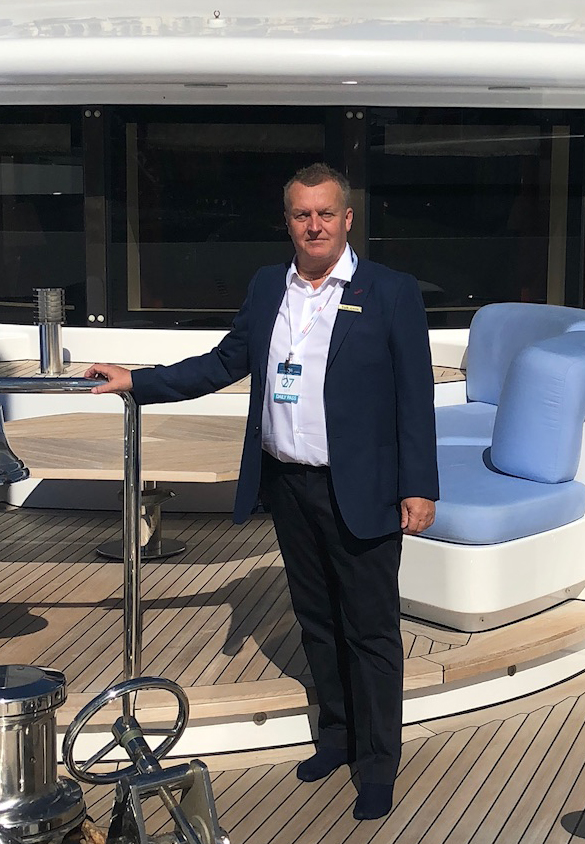
Why We Built 24Synergy — and Why the Magazines Matter

When we started developing 24Synergy, the objective was never simply to build another business directory, advertising website or collection of industry portals. There are already plenty of those, and creating another one would have achieved very little.
The question I kept coming back to was much simpler: **what should 24Synergy actually do for the businesses that use it?**
For me, the answer has always been about creating opportunity through collaboration.
We are constantly told that competition is healthy, and of course it is. Competition drives standards, innovation and better service. But I became interested in a slightly different question. What happens if competitors can also work together?
I don't mean sharing commercially sensitive information or pretending that companies aren't competing for the same customers. I mean recognising that every business already has its own clients, contacts, audience, knowledge and reach. If those individual networks can be connected intelligently, everybody potentially reaches considerably further than they could alone.
That principle became the foundation of 24Synergy.
The network is designed to grow through the businesses using it. Companies introduce their clients and contacts, other businesses do the same, and gradually those separate audiences become part of something much larger. Everybody contributes something to the network and everybody has the opportunity to benefit from the network that results.
There is also a perfectly sensible commercial reason for getting involved early. Your customers are already doing business with other companies and receiving marketing from other suppliers. It therefore makes sense to introduce them to a useful industry network yourself rather than waiting for somebody else to do it first.
That is why I think the early-adopter stage is particularly interesting. I am not going to pretend that a network during its launch period can offer the same volume of activity it should offer when thousands of companies and industry professionals are using it. Networks need people. They need participation and they need time to develop.
But eventually there is a tipping point. More companies join, more buyers arrive, more enquiries circulate, more RFQs are submitted, more people read the newsletters and magazines and more conversations take place through 24live. At that point, the companies that supported the network early aren't arriving and trying to establish themselves in an already busy marketplace. They are already there, with their accounts, listings, content, contacts and presence established.
Some of the mechanisms we have built become much more significant at that stage. Priority access to an RFQ, for example, might seem relatively unimportant when there are only a handful moving through the system. When substantial numbers of genuine opportunities are being generated, seeing something 48 hours before other users can make a considerable difference. The value of the network should therefore increase as the network itself grows.
That same thinking is ultimately what led us to create the magazines.
As 24Synergy developed, I increasingly felt that something was missing. We had created ways for businesses to list themselves, communicate, publish information, distribute newsletters, generate enquiries, respond to opportunities and reach audiences across different specialist sectors, but if we were genuinely trying to build a comprehensive marketing network, those businesses also needed somewhere to advertise.
So we built it.
The 24 Magazines aren't intended to sit separately from 24Synergy. They are another part of the same ecosystem, giving companies another route to market while giving readers useful specialist information in an accessible format. They are global publications, but with regional editions and regional editorial because the businesses and people using 24Synergy are global too.
A company shouldn't be disadvantaged because it happens to be based in Britain, France, the United States, Dubai, Singapore, Spain or somewhere else entirely. Nor should a reader have to wade through endless irrelevant information before finding something applicable to where they live, work, sail, charter, fly or conduct business.
That brings me to something else that is probably worth addressing openly.
Some readers will look through these magazines and ask: **“Have they used AI to produce some of this?”**
The answer is yes.
We have.
There are thousands of pieces of editorial involved across these publications and their regional editions, and it would be rather ridiculous for me to pretend that artificial intelligence hasn't helped us create them. AI exists, it is an extraordinarily useful tool when used properly, and I don't see any reason to hide the fact that we have used it.
What matters to me is **how** we have used it.
We haven't simply asked a machine to fill hundreds of pages with words so that the magazines look busy. We have chosen the subjects we believe are worth covering, identified the questions we think readers actually want answered and, in many cases, started the articles ourselves before using AI to help develop the research, structure and additional information around them.
The objective has always been usefulness.
If you're reading one of our sailing magazines, I want you to discover something that helps you sail, plan a passage, choose equipment, understand a destination or avoid a problem. If you're involved with private aviation, I want the information to answer questions relevant to flying, ownership, charter or operations. If you're in commercial shipping, brokerage, boat building, property, charter or another sector, the same principle applies.
I don't want pages of disposable editorial written simply because a magazine needs another article.
We have tried to identify subjects where somebody would otherwise have to spend time searching around the internet, opening numerous websites and piecing the information together themselves. We can do some of that background work instead, ask the questions and bring the useful information together in one place.
There is an environmental argument for that approach too. Endless searching, loading websites, serving adverts and repeatedly retrieving information all require digital infrastructure and energy. A magazine can be downloaded once, kept and read offline.
I wouldn't pretend that this somehow makes digital publishing impact-free, because it doesn't, but if we can save readers unnecessary searching while creating something useful enough to keep and refer back to, I think that is a better use of the technology available to us.
So yes, some of what you are reading has involved AI, and some of it has involved people. Increasingly it will involve more people as well.
As early adopters, journalists, specialists and other contributors become involved, their voices will naturally become part of these pages. We are also inviting other magazines and media organisations to contribute, which should introduce completely different editorial voices and areas of expertise. They may use AI themselves, of course, and I have no intention of telling another publisher or journalist which tools they are permitted to use.
The test is much simpler than that: **does the article give the reader something worthwhile?**
If it doesn't, it shouldn't be here.
That philosophy also explains something rather unusual we are now introducing. We are going to allow other independent magazines to promote themselves through our magazines.
At first that might sound counter-intuitive. Why would one magazine deliberately introduce its readers to another magazine?
My answer is: why wouldn't we?
If another specialist publication produces good material that our readers would appreciate, discovering it doesn't make our own magazine less useful. Quite the opposite. If we can become somewhere readers come to discover worthwhile information, including information and publications produced by other people, then I think we become more useful.
A participating publication will be able to contribute a genuine editorial article, tell readers where they can find more of its work and promote its magazine within our pages. We can potentially take that relationship considerably further as well. There may be opportunities to work with other publishers commercially, including arrangements where advertising from their own clients can reach our publications and both parties share in the resulting revenue.
Again, it comes back to the original idea behind 24Synergy. Competition doesn't have to prevent collaboration.
The scale of the network comes from the same philosophy. Historically, the industries we have worked with have never existed neatly inside individual boxes. A superyacht depends upon builders, suppliers, engineering companies, crew, brokers, charter businesses, marinas and countless specialist services. Those same owners and clients may use private aviation and own international property. Boat builders need suppliers. Charter companies need customers. Brokers need buyers and sellers. Employers need crew.
Exhibitors need boat shows, and boat shows need exhibitors and visitors.
Commercial ships and cruise ships sit alongside superyachts, motor yachts and sailing yachts. There are crew and employment services, boat and ship builders, ports, yacht services and suppliers, aviation, empty legs, property and specialist luxury markets. Each sector has its own identity, but there are countless points where they intersect.
That is why 24Synergy has become such a large collection of connected websites. It is deliberately not centred on one country or one type of business. A company with branches in several countries can bring those offices together through the same network, while a small specialist supplier can concentrate on the particular market that matters to it. Everything can still be managed centrally through the same account and dashboard.
24live takes that idea in another direction again. I sometimes describe it as sitting somewhere between the professional nature of LinkedIn and the immediacy of a social network such as Facebook, although I don't really want it to become either of those things. The purpose is business.
Members can publish their own material, interact with other users, promote their businesses and place appropriate content across relevant parts of the 24 Network. If somebody wants to be proactive, there is considerable freedom to put themselves in front of the industries they want to reach rather than simply creating a listing and waiting for somebody to find them.
That is an important distinction for me. **24Synergy isn't designed to do your marketing while you sit and watch. It is designed to give you the tools to do considerably more with your marketing yourself.**
There is another, deliberately different part of the ecosystem too.
Within the superyacht sector, 1UK.com is being developed around recognition rather than conventional paid placement. Companies cannot simply buy their way into recognition. They can request consideration, but that request can be declined. As the concept develops, I want appropriate industry leaders themselves to help determine the standards that businesses should achieve to be recognised at different levels.
That connects directly with where I would like 24Synergy itself eventually to go.
The intention is for 24Synergy to develop into a cooperative structure with industry leaders and board members helping to determine its future direction. The industry changes constantly, and the technology serving it needs to change with it. Electric propulsion is an obvious example today, but tomorrow there will be something else. The people actually working within these sectors will often identify what is needed long before a software developer sitting outside the industry ever could.
We have built the infrastructure, but I don't believe that means we should dictate indefinitely what it becomes. I would much rather create a structure where the people using the network have a meaningful voice in deciding which features should be developed next and where the network should go as their industries evolve.
There is a personal reason behind all of this as well.
I've always enjoyed helping businesses develop. I enjoy looking at a new company, understanding what it is trying to achieve and asking what could be done differently. Sometimes it is marketing, sometimes positioning, sometimes making an introduction or simply giving somebody the confidence and advice they need when they're trying to get something started.
I suppose 24Synergy is my attempt to do that on a much larger scale.
Rather than helping one company find another route to market, we have tried to build the infrastructure through which thousands of businesses can create those routes for themselves and for each other. It gives a small specialist company access to many of the same marketing mechanisms available to a much larger international organisation, while allowing a multinational business to connect offices, people and sectors through one global hub.
And that is probably the simplest answer to the question I started with: **what is 24Synergy actually for?**
It is there to create connections and opportunities that would otherwise be harder to create individually. The websites, magazines, newsletters, RFQs, publishing tools, 24live and everything else we develop are simply different ways of achieving that.
We've done the difficult part of bringing that infrastructure together. Now I want businesses to use it, challenge it and help us improve it. I want people to tell us what works, what doesn't and what their particular part of the industry needs next. As more businesses participate, the network should become more useful to everybody already inside it.
We have built 24Synergy, but I don't want it to feel as though it belongs to a small team sitting somewhere deciding what everybody else needs.
**We've built it for you. Now make use of it, make it work for your business, and help us decide what it becomes next.**
**Paul Thompson** *Editor*
Contributor: Paul Thompson / 24Synergy

Be the first reader to react to this article.

The conversation around what the autumn 2026 boat-show calendar tells buyers about when to shop has moved quickly this year, yet the practical decision is still built on fairly ordinary questions.


The conversation around what the autumn 2026 boat-show calendar tells buyers about when to shop has moved quickly this year, yet the practical decision is still built on fairly ordinary questions.
Cost also needs to be separated into purchase cost and ownership cost. The second figure is usually less visible. Consumables, routine servicing, insurance, finance, berthing or storage, professional fees, software subscriptions, inspections and eventual replacement items can materially change the economics. A useful quotation is therefore one that makes exclusions obvious.
If a supplier cannot explain what normally falls outside the quoted figure, ask for that clarification before treating two prices as comparable.
After-sales support can be more important than the original specification. A component that is excellent on paper is less attractive if parts take months to arrive or there is no competent service agent where the equipment will be used. The same applies to software-led products: ownership now includes updates, access rights, data and sometimes recurring subscriptions. Find out who supports the system, for how long, and what happens if the original supplier changes hands.
The calendar is particularly busy this quarter. Genoa opens on 1 October, with a run of European shows through October, followed by the International Charter Expo and METSTRADE in Amsterdam in November. That concentration is useful for comparison, but it also creates deadline pressure. Buyers should collect information at the show and make the final decision after the noise has died down whenever the transaction allows it.
Timing matters. Buying or commissioning under deadline pressure weakens the buyer's position because there is less time to inspect, compare and walk away. Where possible, build the timetable backwards from the date the asset or service is genuinely required. Include survey or inspection time, corrections, training, delivery and a contingency. A realistic programme often reveals that the cheapest-looking option is not the one with the lowest overall cost.
The starting point is use. In boat shows, exhibitions, launches and show-going, two apparently similar products or services can be right for completely different owners because their operating pattern is different. Frequency of use, geography, crew or staffing, storage, servicing access and the length of time you expect to keep the asset all change the answer. Before comparing brands or quotations, write down those constraints.
It sounds basic, but it prevents a specification being chosen for a lifestyle that exists only in the sales material.
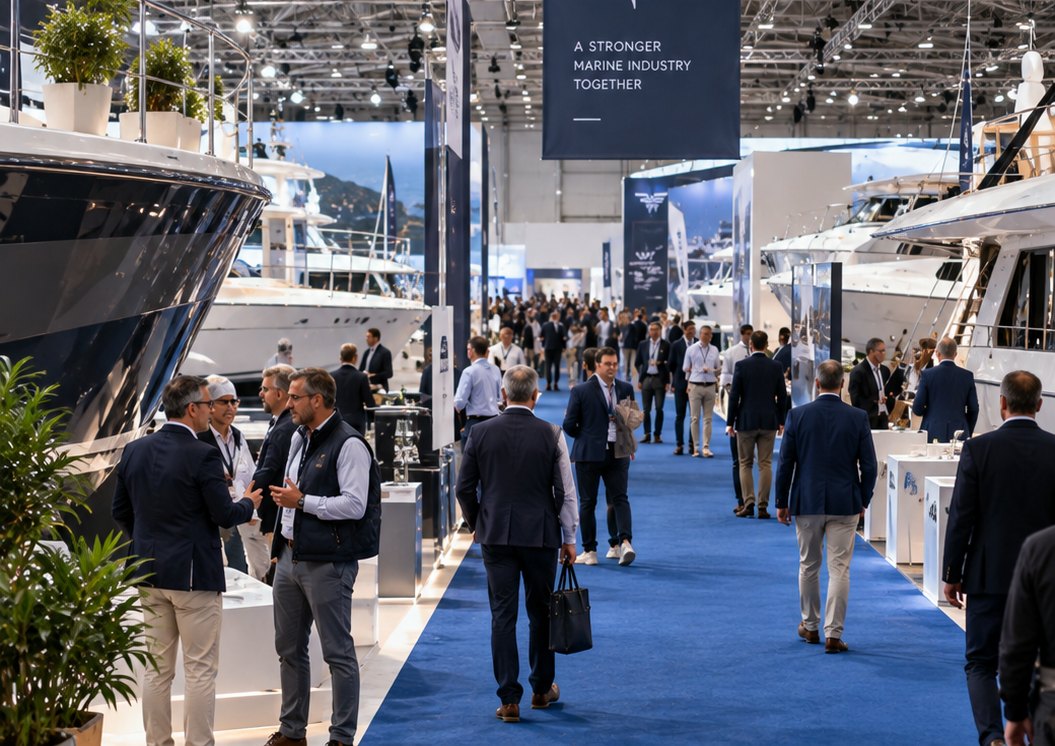
Technical claims deserve context. Range, output, capacity, speed, efficiency and performance figures are normally produced under stated conditions. Real use adds weather, load, temperature, fouling, route, operator behaviour and reserve margins. Rather than arguing over a headline number, ask what assumptions sit behind it and what happens when those assumptions change. That produces a much more useful comparison.
Sustainability claims are increasingly part of the decision as well. The useful question is not whether a product is described as green, but what has actually changed: energy use, fuel consumption, material choice, repairability, service life, emissions, waste or end-of-life handling. Improvements in one area can create compromises in another. Evidence and measured performance are more valuable than broad environmental language.
Finally, insist on a proper handover. Familiarisation, emergency procedures, maintenance intervals, passwords, spare parts, warranty contacts and operating limitations should all be understood before the supplier disappears over the horizon. A surprising number of early problems are not failures at all but gaps in handover. Thirty minutes spent recording the right information can save days later.
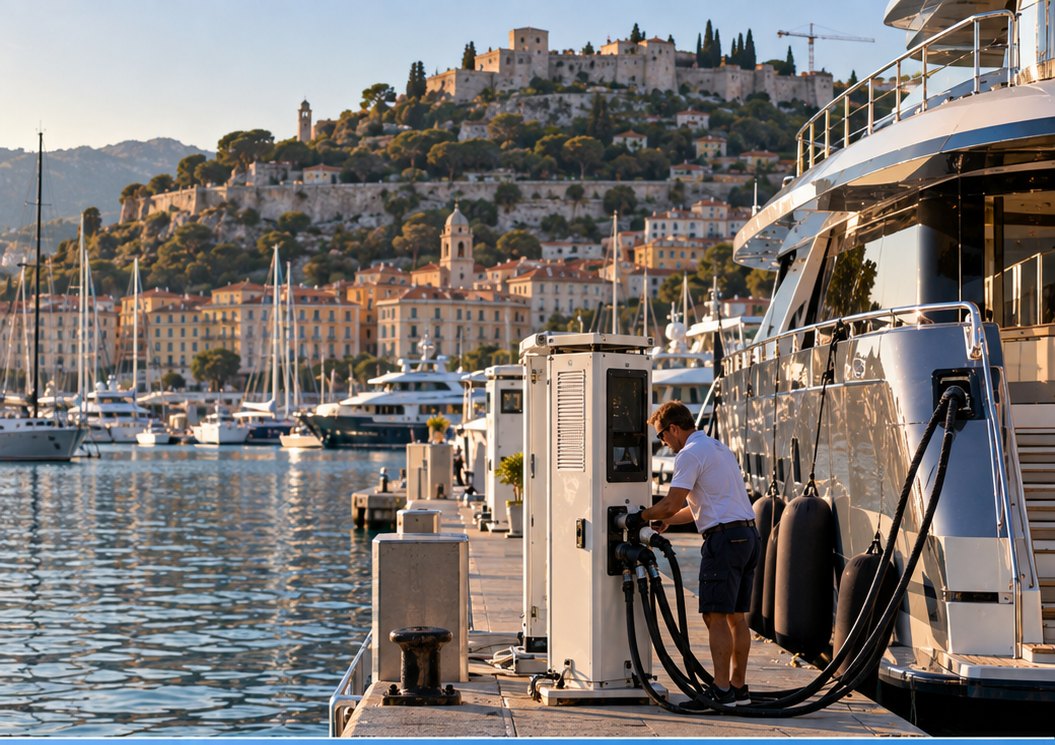
My own shorthand for what the autumn 2026 boat-show calendar tells buyers about when to shop is simple: verify the condition, verify the paperwork, understand the support network and calculate the cost on a realistic pattern of use. If any one of those four is unclear, there is still work to do before committing.
When money is about to change hands, the sequence matters. Establish identity and authority to sell, agree exactly what is included, record known defects and make any deposit terms clear. Where a survey, valuation or finance approval is part of the transaction, the contract should reflect that process rather than relying on a verbal understanding. Buyers should also know when risk and title transfer, particularly if the asset is moving between jurisdictions.
Market value is evidence, not aspiration. Advertised prices show what sellers hope to achieve; completed transactions, condition, specification, location and time on market give a better picture. A well-presented example can deserve a premium, but a premium still needs a reason. The strongest negotiating position comes from knowing which defects are merely cosmetic, which affect usability and which could lead to immediate capital expenditure.
The practical test for boat shows, exhibitions, launches and show-going is whether the decision still makes sense when circumstances are less than ideal. Weather changes, schedules move, components fail and people use equipment differently from the designer's neat assumptions. Building a little resilience into the choice usually costs less than trying to recover it afterwards.
The best outcome is not necessarily the newest or most sophisticated option. It is the one that remains practical after the first season, the first service bill and the first change of plan.
Contributor: Paul Thompson / Editorial / 24BoatShows
Be the first reader to react to this article.
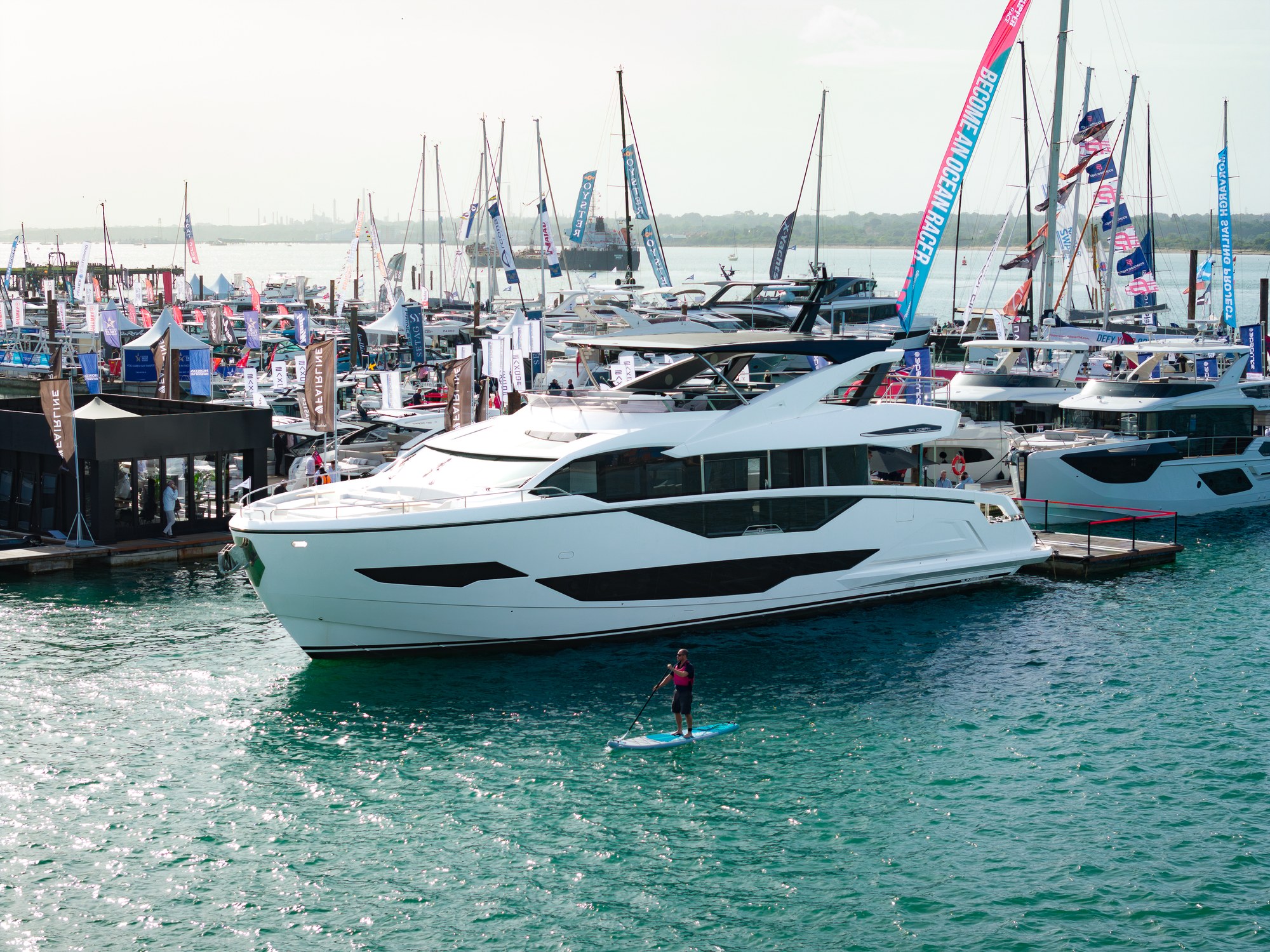
For anyone looking at how to cover a major boat show without wasting half the day, the first job is not to decide what looks best.
For anyone looking at how to cover a major boat show without wasting half the day, the first job is not to decide what looks best. It is to establish what problem actually needs solving.
Documentation is another practical test. Service records, manuals, certificates, invoices, warranties, software licences and evidence of previous work are not administrative clutter; they are part of the asset. Good records make troubleshooting easier and can support resale. Missing records do not automatically mean there is a problem, but they increase uncertainty, and uncertainty should be reflected in the questions asked, the inspection undertaken and sometimes the price.
Risk is best dealt with before commitment. That means independent inspection where appropriate, clear written scope, confirmation of insurance implications and an agreed process for defects or incomplete work. In higher-value transactions, legal, tax and regulatory advice should come from qualified advisers in the relevant jurisdiction. The purpose is not to make every transaction defensive; it is to stop assumptions becoming expensive surprises.
The calendar is particularly busy this quarter. Genoa opens on 1 October, with a run of European shows through October, followed by the International Charter Expo and METSTRADE in Amsterdam in November. That concentration is useful for comparison, but it also creates deadline pressure. Buyers should collect information at the show and make the final decision after the noise has died down whenever the transaction allows it.
Resale should be considered even by people who intend to keep something for years. Highly personal specifications can be perfectly sensible, but buyers should understand the trade-off. Widely supported equipment, sensible layouts, complete records and recognised maintenance tend to be easier for the next owner to understand. The objective is not to design everything for an unknown future buyer; it is simply to avoid destroying flexibility without a good reason.
Cost also needs to be separated into purchase cost and ownership cost. The second figure is usually less visible. Consumables, routine servicing, insurance, finance, berthing or storage, professional fees, software subscriptions, inspections and eventual replacement items can materially change the economics. A useful quotation is therefore one that makes exclusions obvious.
If a supplier cannot explain what normally falls outside the quoted figure, ask for that clarification before treating two prices as comparable.
After-sales support can be more important than the original specification. A component that is excellent on paper is less attractive if parts take months to arrive or there is no competent service agent where the equipment will be used. The same applies to software-led products: ownership now includes updates, access rights, data and sometimes recurring subscriptions. Find out who supports the system, for how long, and what happens if the original supplier changes hands.
Timing matters. Buying or commissioning under deadline pressure weakens the buyer's position because there is less time to inspect, compare and walk away. Where possible, build the timetable backwards from the date the asset or service is genuinely required. Include survey or inspection time, corrections, training, delivery and a contingency. A realistic programme often reveals that the cheapest-looking option is not the one with the lowest overall cost.
The starting point is use. In boat shows, exhibitions, launches and show-going, two apparently similar products or services can be right for completely different owners because their operating pattern is different. Frequency of use, geography, crew or staffing, storage, servicing access and the length of time you expect to keep the asset all change the answer. Before comparing brands or quotations, write down those constraints.
It sounds basic, but it prevents a specification being chosen for a lifestyle that exists only in the sales material.
Comparison becomes easier if every contender is put through the same questions. Ask for the same operating assumptions, the same delivery point, the same warranty period and the same list of included equipment or services. That turns a collection of sales conversations into something closer to a procurement exercise and exposes the areas where one quotation has quietly omitted an expensive item.
References are useful when they are relevant. A supplier's biggest or most prestigious project may tell you very little about how it handles an ordinary job in your region. Ask instead for examples with a similar scale, operating pattern and timetable. The most useful reference is often the customer who has lived with the product for two or three years and has already needed after-sales support.
The practical test for boat shows, exhibitions, launches and show-going is whether the decision still makes sense when circumstances are less than ideal. Weather changes, schedules move, components fail and people use equipment differently from the designer's neat assumptions. Building a little resilience into the choice usually costs less than trying to recover it afterwards.
For most readers, that is enough to narrow the field considerably before serious money or time is committed.
Contributor: Paul Thompson / Editorial / 24BoatShows


Be the first reader to react to this article.

I have always found that the useful part of boat shows, exhibitions, launches and show-going starts once the brochure language has been stripped away.
I have always found that the useful part of boat shows, exhibitions, launches and show-going starts once the brochure language has been stripped away.
Finally, insist on a proper handover. Familiarisation, emergency procedures, maintenance intervals, passwords, spare parts, warranty contacts and operating limitations should all be understood before the supplier disappears over the horizon. A surprising number of early problems are not failures at all but gaps in handover. Thirty minutes spent recording the right information can save days later.
Documentation is another practical test. Service records, manuals, certificates, invoices, warranties, software licences and evidence of previous work are not administrative clutter; they are part of the asset. Good records make troubleshooting easier and can support resale. Missing records do not automatically mean there is a problem, but they increase uncertainty, and uncertainty should be reflected in the questions asked, the inspection undertaken and sometimes the price.
The calendar is particularly busy this quarter. Genoa opens on 1 October, with a run of European shows through October, followed by the International Charter Expo and METSTRADE in Amsterdam in November. That concentration is useful for comparison, but it also creates deadline pressure. Buyers should collect information at the show and make the final decision after the noise has died down whenever the transaction allows it.
Risk is best dealt with before commitment. That means independent inspection where appropriate, clear written scope, confirmation of insurance implications and an agreed process for defects or incomplete work. In higher-value transactions, legal, tax and regulatory advice should come from qualified advisers in the relevant jurisdiction. The purpose is not to make every transaction defensive; it is to stop assumptions becoming expensive surprises.
Resale should be considered even by people who intend to keep something for years. Highly personal specifications can be perfectly sensible, but buyers should understand the trade-off. Widely supported equipment, sensible layouts, complete records and recognised maintenance tend to be easier for the next owner to understand. The objective is not to design everything for an unknown future buyer; it is simply to avoid destroying flexibility without a good reason.
Cost also needs to be separated into purchase cost and ownership cost. The second figure is usually less visible. Consumables, routine servicing, insurance, finance, berthing or storage, professional fees, software subscriptions, inspections and eventual replacement items can materially change the economics. A useful quotation is therefore one that makes exclusions obvious.
If a supplier cannot explain what normally falls outside the quoted figure, ask for that clarification before treating two prices as comparable.
After-sales support can be more important than the original specification. A component that is excellent on paper is less attractive if parts take months to arrive or there is no competent service agent where the equipment will be used. The same applies to software-led products: ownership now includes updates, access rights, data and sometimes recurring subscriptions. Find out who supports the system, for how long, and what happens if the original supplier changes hands.
Timing matters. Buying or commissioning under deadline pressure weakens the buyer's position because there is less time to inspect, compare and walk away. Where possible, build the timetable backwards from the date the asset or service is genuinely required. Include survey or inspection time, corrections, training, delivery and a contingency. A realistic programme often reveals that the cheapest-looking option is not the one with the lowest overall cost.
My own shorthand for preparing questions before a show: the simple way to get better answers is simple: verify the condition, verify the paperwork, understand the support network and calculate the cost on a realistic pattern of use. If any one of those four is unclear, there is still work to do before committing.
Comparison becomes easier if every contender is put through the same questions. Ask for the same operating assumptions, the same delivery point, the same warranty period and the same list of included equipment or services. That turns a collection of sales conversations into something closer to a procurement exercise and exposes the areas where one quotation has quietly omitted an expensive item.
References are useful when they are relevant. A supplier's biggest or most prestigious project may tell you very little about how it handles an ordinary job in your region. Ask instead for examples with a similar scale, operating pattern and timetable. The most useful reference is often the customer who has lived with the product for two or three years and has already needed after-sales support.
The practical test for boat shows, exhibitions, launches and show-going is whether the decision still makes sense when circumstances are less than ideal. Weather changes, schedules move, components fail and people use equipment differently from the designer's neat assumptions. Building a little resilience into the choice usually costs less than trying to recover it afterwards.
The best outcome is not necessarily the newest or most sophisticated option. It is the one that remains practical after the first season, the first service bill and the first change of plan.
Contributor: Paul Thompson / Editorial / 24BoatShows

Be the first reader to react to this article.
A good decision in boat shows, exhibitions, launches and show-going rarely comes from one impressive specification.
A good decision in boat shows, exhibitions, launches and show-going rarely comes from one impressive specification. It comes from understanding how the whole package will be used.
Technical claims deserve context. Range, output, capacity, speed, efficiency and performance figures are normally produced under stated conditions. Real use adds weather, load, temperature, fouling, route, operator behaviour and reserve margins. Rather than arguing over a headline number, ask what assumptions sit behind it and what happens when those assumptions change. That produces a much more useful comparison.
Sustainability claims are increasingly part of the decision as well. The useful question is not whether a product is described as green, but what has actually changed: energy use, fuel consumption, material choice, repairability, service life, emissions, waste or end-of-life handling. Improvements in one area can create compromises in another. Evidence and measured performance are more valuable than broad environmental language.
The calendar is particularly busy this quarter. Genoa opens on 1 October, with a run of European shows through October, followed by the International Charter Expo and METSTRADE in Amsterdam in November. That concentration is useful for comparison, but it also creates deadline pressure. Buyers should collect information at the show and make the final decision after the noise has died down whenever the transaction allows it.
Finally, insist on a proper handover. Familiarisation, emergency procedures, maintenance intervals, passwords, spare parts, warranty contacts and operating limitations should all be understood before the supplier disappears over the horizon. A surprising number of early problems are not failures at all but gaps in handover. Thirty minutes spent recording the right information can save days later.
Documentation is another practical test. Service records, manuals, certificates, invoices, warranties, software licences and evidence of previous work are not administrative clutter; they are part of the asset. Good records make troubleshooting easier and can support resale. Missing records do not automatically mean there is a problem, but they increase uncertainty, and uncertainty should be reflected in the questions asked, the inspection undertaken and sometimes the price.
Risk is best dealt with before commitment. That means independent inspection where appropriate, clear written scope, confirmation of insurance implications and an agreed process for defects or incomplete work. In higher-value transactions, legal, tax and regulatory advice should come from qualified advisers in the relevant jurisdiction. The purpose is not to make every transaction defensive; it is to stop assumptions becoming expensive surprises.
Resale should be considered even by people who intend to keep something for years. Highly personal specifications can be perfectly sensible, but buyers should understand the trade-off. Widely supported equipment, sensible layouts, complete records and recognised maintenance tend to be easier for the next owner to understand. The objective is not to design everything for an unknown future buyer; it is simply to avoid destroying flexibility without a good reason.
Cost also needs to be separated into purchase cost and ownership cost. The second figure is usually less visible. Consumables, routine servicing, insurance, finance, berthing or storage, professional fees, software subscriptions, inspections and eventual replacement items can materially change the economics. A useful quotation is therefore one that makes exclusions obvious.
If a supplier cannot explain what normally falls outside the quoted figure, ask for that clarification before treating two prices as comparable.
Comparison becomes easier if every contender is put through the same questions. Ask for the same operating assumptions, the same delivery point, the same warranty period and the same list of included equipment or services. That turns a collection of sales conversations into something closer to a procurement exercise and exposes the areas where one quotation has quietly omitted an expensive item.
References are useful when they are relevant. A supplier's biggest or most prestigious project may tell you very little about how it handles an ordinary job in your region. Ask instead for examples with a similar scale, operating pattern and timetable. The most useful reference is often the customer who has lived with the product for two or three years and has already needed after-sales support.
The practical test for boat shows, exhibitions, launches and show-going is whether the decision still makes sense when circumstances are less than ideal. Weather changes, schedules move, components fail and people use equipment differently from the designer's neat assumptions. Building a little resilience into the choice usually costs less than trying to recover it afterwards.
For most readers, that is enough to narrow the field considerably before serious money or time is committed.
Contributor: Paul Thompson / Editorial / 24BoatShows

Be the first reader to react to this article.

A good decision in boat shows, exhibitions, launches and show-going rarely comes from one impressive specification.
A good decision in boat shows, exhibitions, launches and show-going rarely comes from one impressive specification. It comes from understanding how the whole package will be used.
After-sales support can be more important than the original specification. A component that is excellent on paper is less attractive if parts take months to arrive or there is no competent service agent where the equipment will be used. The same applies to software-led products: ownership now includes updates, access rights, data and sometimes recurring subscriptions. Find out who supports the system, for how long, and what happens if the original supplier changes hands.
Timing matters. Buying or commissioning under deadline pressure weakens the buyer's position because there is less time to inspect, compare and walk away. Where possible, build the timetable backwards from the date the asset or service is genuinely required. Include survey or inspection time, corrections, training, delivery and a contingency. A realistic programme often reveals that the cheapest-looking option is not the one with the lowest overall cost.
The calendar is particularly busy this quarter. Genoa opens on 1 October, with a run of European shows through October, followed by the International Charter Expo and METSTRADE in Amsterdam in November. That concentration is useful for comparison, but it also creates deadline pressure. Buyers should collect information at the show and make the final decision after the noise has died down whenever the transaction allows it.
The starting point is use. In boat shows, exhibitions, launches and show-going, two apparently similar products or services can be right for completely different owners because their operating pattern is different. Frequency of use, geography, crew or staffing, storage, servicing access and the length of time you expect to keep the asset all change the answer. Before comparing brands or quotations, write down those constraints.
It sounds basic, but it prevents a specification being chosen for a lifestyle that exists only in the sales material.
Technical claims deserve context. Range, output, capacity, speed, efficiency and performance figures are normally produced under stated conditions. Real use adds weather, load, temperature, fouling, route, operator behaviour and reserve margins. Rather than arguing over a headline number, ask what assumptions sit behind it and what happens when those assumptions change. That produces a much more useful comparison.
Sustainability claims are increasingly part of the decision as well. The useful question is not whether a product is described as green, but what has actually changed: energy use, fuel consumption, material choice, repairability, service life, emissions, waste or end-of-life handling. Improvements in one area can create compromises in another. Evidence and measured performance are more valuable than broad environmental language.
Finally, insist on a proper handover. Familiarisation, emergency procedures, maintenance intervals, passwords, spare parts, warranty contacts and operating limitations should all be understood before the supplier disappears over the horizon. A surprising number of early problems are not failures at all but gaps in handover. Thirty minutes spent recording the right information can save days later.
Documentation is another practical test. Service records, manuals, certificates, invoices, warranties, software licences and evidence of previous work are not administrative clutter; they are part of the asset. Good records make troubleshooting easier and can support resale. Missing records do not automatically mean there is a problem, but they increase uncertainty, and uncertainty should be reflected in the questions asked, the inspection undertaken and sometimes the price.
Comparison becomes easier if every contender is put through the same questions. Ask for the same operating assumptions, the same delivery point, the same warranty period and the same list of included equipment or services. That turns a collection of sales conversations into something closer to a procurement exercise and exposes the areas where one quotation has quietly omitted an expensive item.
References are useful when they are relevant. A supplier's biggest or most prestigious project may tell you very little about how it handles an ordinary job in your region. Ask instead for examples with a similar scale, operating pattern and timetable. The most useful reference is often the customer who has lived with the product for two or three years and has already needed after-sales support.
The practical test for boat shows, exhibitions, launches and show-going is whether the decision still makes sense when circumstances are less than ideal. Weather changes, schedules move, components fail and people use equipment differently from the designer's neat assumptions. Building a little resilience into the choice usually costs less than trying to recover it afterwards.
The best outcome is not necessarily the newest or most sophisticated option. It is the one that remains practical after the first season, the first service bill and the first change of plan.
Contributor: Paul Thompson / Editorial / 24BoatShows
Be the first reader to react to this article.

This is one of those subjects where a little preparation is worth far more than a long list of features.
This is one of those subjects where a little preparation is worth far more than a long list of features.
Risk is best dealt with before commitment. That means independent inspection where appropriate, clear written scope, confirmation of insurance implications and an agreed process for defects or incomplete work. In higher-value transactions, legal, tax and regulatory advice should come from qualified advisers in the relevant jurisdiction. The purpose is not to make every transaction defensive; it is to stop assumptions becoming expensive surprises.
Resale should be considered even by people who intend to keep something for years. Highly personal specifications can be perfectly sensible, but buyers should understand the trade-off. Widely supported equipment, sensible layouts, complete records and recognised maintenance tend to be easier for the next owner to understand. The objective is not to design everything for an unknown future buyer; it is simply to avoid destroying flexibility without a good reason.
The calendar is particularly busy this quarter. Genoa opens on 1 October, with a run of European shows through October, followed by the International Charter Expo and METSTRADE in Amsterdam in November. That concentration is useful for comparison, but it also creates deadline pressure. Buyers should collect information at the show and make the final decision after the noise has died down whenever the transaction allows it.
Cost also needs to be separated into purchase cost and ownership cost. The second figure is usually less visible. Consumables, routine servicing, insurance, finance, berthing or storage, professional fees, software subscriptions, inspections and eventual replacement items can materially change the economics. A useful quotation is therefore one that makes exclusions obvious.
If a supplier cannot explain what normally falls outside the quoted figure, ask for that clarification before treating two prices as comparable.
After-sales support can be more important than the original specification. A component that is excellent on paper is less attractive if parts take months to arrive or there is no competent service agent where the equipment will be used. The same applies to software-led products: ownership now includes updates, access rights, data and sometimes recurring subscriptions. Find out who supports the system, for how long, and what happens if the original supplier changes hands.
Timing matters. Buying or commissioning under deadline pressure weakens the buyer's position because there is less time to inspect, compare and walk away. Where possible, build the timetable backwards from the date the asset or service is genuinely required. Include survey or inspection time, corrections, training, delivery and a contingency. A realistic programme often reveals that the cheapest-looking option is not the one with the lowest overall cost.
The starting point is use. In boat shows, exhibitions, launches and show-going, two apparently similar products or services can be right for completely different owners because their operating pattern is different. Frequency of use, geography, crew or staffing, storage, servicing access and the length of time you expect to keep the asset all change the answer. Before comparing brands or quotations, write down those constraints.
It sounds basic, but it prevents a specification being chosen for a lifestyle that exists only in the sales material.
Technical claims deserve context. Range, output, capacity, speed, efficiency and performance figures are normally produced under stated conditions. Real use adds weather, load, temperature, fouling, route, operator behaviour and reserve margins. Rather than arguing over a headline number, ask what assumptions sit behind it and what happens when those assumptions change. That produces a much more useful comparison.

My own shorthand for metstrade 2026: the equipment themes worth watching in amsterdam is simple: verify the condition, verify the paperwork, understand the support network and calculate the cost on a realistic pattern of use. If any one of those four is unclear, there is still work to do before committing.
Comparison becomes easier if every contender is put through the same questions. Ask for the same operating assumptions, the same delivery point, the same warranty period and the same list of included equipment or services. That turns a collection of sales conversations into something closer to a procurement exercise and exposes the areas where one quotation has quietly omitted an expensive item.
References are useful when they are relevant. A supplier's biggest or most prestigious project may tell you very little about how it handles an ordinary job in your region. Ask instead for examples with a similar scale, operating pattern and timetable. The most useful reference is often the customer who has lived with the product for two or three years and has already needed after-sales support.
The practical test for boat shows, exhibitions, launches and show-going is whether the decision still makes sense when circumstances are less than ideal. Weather changes, schedules move, components fail and people use equipment differently from the designer's neat assumptions. Building a little resilience into the choice usually costs less than trying to recover it afterwards.
For most readers, that is enough to narrow the field considerably before serious money or time is committed.
Contributor: Paul Thompson / Editorial / 24BoatShows
Be the first reader to react to this article.
A good decision in boat shows, exhibitions, launches and show-going rarely comes from one impressive specification.
A good decision in boat shows, exhibitions, launches and show-going rarely comes from one impressive specification. It comes from understanding how the whole package will be used.
Sustainability claims are increasingly part of the decision as well. The useful question is not whether a product is described as green, but what has actually changed: energy use, fuel consumption, material choice, repairability, service life, emissions, waste or end-of-life handling. Improvements in one area can create compromises in another. Evidence and measured performance are more valuable than broad environmental language.
Finally, insist on a proper handover. Familiarisation, emergency procedures, maintenance intervals, passwords, spare parts, warranty contacts and operating limitations should all be understood before the supplier disappears over the horizon. A surprising number of early problems are not failures at all but gaps in handover. Thirty minutes spent recording the right information can save days later.
The calendar is particularly busy this quarter. Genoa opens on 1 October, with a run of European shows through October, followed by the International Charter Expo and METSTRADE in Amsterdam in November. That concentration is useful for comparison, but it also creates deadline pressure. Buyers should collect information at the show and make the final decision after the noise has died down whenever the transaction allows it.
Documentation is another practical test. Service records, manuals, certificates, invoices, warranties, software licences and evidence of previous work are not administrative clutter; they are part of the asset. Good records make troubleshooting easier and can support resale. Missing records do not automatically mean there is a problem, but they increase uncertainty, and uncertainty should be reflected in the questions asked, the inspection undertaken and sometimes the price.
Risk is best dealt with before commitment. That means independent inspection where appropriate, clear written scope, confirmation of insurance implications and an agreed process for defects or incomplete work. In higher-value transactions, legal, tax and regulatory advice should come from qualified advisers in the relevant jurisdiction. The purpose is not to make every transaction defensive; it is to stop assumptions becoming expensive surprises.
Resale should be considered even by people who intend to keep something for years. Highly personal specifications can be perfectly sensible, but buyers should understand the trade-off. Widely supported equipment, sensible layouts, complete records and recognised maintenance tend to be easier for the next owner to understand. The objective is not to design everything for an unknown future buyer; it is simply to avoid destroying flexibility without a good reason.
Cost also needs to be separated into purchase cost and ownership cost. The second figure is usually less visible. Consumables, routine servicing, insurance, finance, berthing or storage, professional fees, software subscriptions, inspections and eventual replacement items can materially change the economics. A useful quotation is therefore one that makes exclusions obvious.
If a supplier cannot explain what normally falls outside the quoted figure, ask for that clarification before treating two prices as comparable.
After-sales support can be more important than the original specification. A component that is excellent on paper is less attractive if parts take months to arrive or there is no competent service agent where the equipment will be used. The same applies to software-led products: ownership now includes updates, access rights, data and sometimes recurring subscriptions. Find out who supports the system, for how long, and what happens if the original supplier changes hands.
Comparison becomes easier if every contender is put through the same questions. Ask for the same operating assumptions, the same delivery point, the same warranty period and the same list of included equipment or services. That turns a collection of sales conversations into something closer to a procurement exercise and exposes the areas where one quotation has quietly omitted an expensive item.
References are useful when they are relevant. A supplier's biggest or most prestigious project may tell you very little about how it handles an ordinary job in your region. Ask instead for examples with a similar scale, operating pattern and timetable. The most useful reference is often the customer who has lived with the product for two or three years and has already needed after-sales support.
The practical test for boat shows, exhibitions, launches and show-going is whether the decision still makes sense when circumstances are less than ideal. Weather changes, schedules move, components fail and people use equipment differently from the designer's neat assumptions. Building a little resilience into the choice usually costs less than trying to recover it afterwards.
None of this makes the decision difficult. It simply moves attention from presentation to evidence, which is usually where the better value sits.
Contributor: Paul Thompson / Editorial / 24BoatShows
Be the first reader to react to this article.

There is nothing particularly complicated about southampton 2026: what buyers can learn from comparing boats side by side, but there are several ways to make it unnecessarily expensive.
There is nothing particularly complicated about southampton 2026: what buyers can learn from comparing boats side by side, but there are several ways to make it unnecessarily expensive.
Timing matters. Buying or commissioning under deadline pressure weakens the buyer's position because there is less time to inspect, compare and walk away. Where possible, build the timetable backwards from the date the asset or service is genuinely required. Include survey or inspection time, corrections, training, delivery and a contingency. A realistic programme often reveals that the cheapest-looking option is not the one with the lowest overall cost.
The starting point is use. In boat shows, exhibitions, launches and show-going, two apparently similar products or services can be right for completely different owners because their operating pattern is different. Frequency of use, geography, crew or staffing, storage, servicing access and the length of time you expect to keep the asset all change the answer. Before comparing brands or quotations, write down those constraints.
It sounds basic, but it prevents a specification being chosen for a lifestyle that exists only in the sales material.
The calendar is particularly busy this quarter. Genoa opens on 1 October, with a run of European shows through October, followed by the International Charter Expo and METSTRADE in Amsterdam in November. That concentration is useful for comparison, but it also creates deadline pressure. Buyers should collect information at the show and make the final decision after the noise has died down whenever the transaction allows it.
Technical claims deserve context. Range, output, capacity, speed, efficiency and performance figures are normally produced under stated conditions. Real use adds weather, load, temperature, fouling, route, operator behaviour and reserve margins. Rather than arguing over a headline number, ask what assumptions sit behind it and what happens when those assumptions change. That produces a much more useful comparison.
Sustainability claims are increasingly part of the decision as well. The useful question is not whether a product is described as green, but what has actually changed: energy use, fuel consumption, material choice, repairability, service life, emissions, waste or end-of-life handling. Improvements in one area can create compromises in another. Evidence and measured performance are more valuable than broad environmental language.
Finally, insist on a proper handover. Familiarisation, emergency procedures, maintenance intervals, passwords, spare parts, warranty contacts and operating limitations should all be understood before the supplier disappears over the horizon. A surprising number of early problems are not failures at all but gaps in handover. Thirty minutes spent recording the right information can save days later.
Documentation is another practical test. Service records, manuals, certificates, invoices, warranties, software licences and evidence of previous work are not administrative clutter; they are part of the asset. Good records make troubleshooting easier and can support resale. Missing records do not automatically mean there is a problem, but they increase uncertainty, and uncertainty should be reflected in the questions asked, the inspection undertaken and sometimes the price.
Risk is best dealt with before commitment. That means independent inspection where appropriate, clear written scope, confirmation of insurance implications and an agreed process for defects or incomplete work. In higher-value transactions, legal, tax and regulatory advice should come from qualified advisers in the relevant jurisdiction. The purpose is not to make every transaction defensive; it is to stop assumptions becoming expensive surprises.
When money is about to change hands, the sequence matters. Establish identity and authority to sell, agree exactly what is included, record known defects and make any deposit terms clear. Where a survey, valuation or finance approval is part of the transaction, the contract should reflect that process rather than relying on a verbal understanding. Buyers should also know when risk and title transfer, particularly if the asset is moving between jurisdictions.
Market value is evidence, not aspiration. Advertised prices show what sellers hope to achieve; completed transactions, condition, specification, location and time on market give a better picture. A well-presented example can deserve a premium, but a premium still needs a reason. The strongest negotiating position comes from knowing which defects are merely cosmetic, which affect usability and which could lead to immediate capital expenditure.
The practical test for boat shows, exhibitions, launches and show-going is whether the decision still makes sense when circumstances are less than ideal. Weather changes, schedules move, components fail and people use equipment differently from the designer's neat assumptions. Building a little resilience into the choice usually costs less than trying to recover it afterwards.
That is the point worth carrying into the next conversation with a broker, builder, supplier or adviser: ask what the choice will be like to own and operate, not merely what it is like to buy.
Contributor: Paul Thompson / Editorial / 24BoatShows
Be the first reader to react to this article.

The market has become very good at presenting genoa 2026: why mediterranean buyers use the show differently as simple.
The market has become very good at presenting genoa 2026: why mediterranean buyers use the show differently as simple. In practice, the details still determine whether it works.
Resale should be considered even by people who intend to keep something for years. Highly personal specifications can be perfectly sensible, but buyers should understand the trade-off. Widely supported equipment, sensible layouts, complete records and recognised maintenance tend to be easier for the next owner to understand. The objective is not to design everything for an unknown future buyer; it is simply to avoid destroying flexibility without a good reason.
Cost also needs to be separated into purchase cost and ownership cost. The second figure is usually less visible. Consumables, routine servicing, insurance, finance, berthing or storage, professional fees, software subscriptions, inspections and eventual replacement items can materially change the economics. A useful quotation is therefore one that makes exclusions obvious.
If a supplier cannot explain what normally falls outside the quoted figure, ask for that clarification before treating two prices as comparable.
The calendar is particularly busy this quarter. Genoa opens on 1 October, with a run of European shows through October, followed by the International Charter Expo and METSTRADE in Amsterdam in November. That concentration is useful for comparison, but it also creates deadline pressure. Buyers should collect information at the show and make the final decision after the noise has died down whenever the transaction allows it.
After-sales support can be more important than the original specification. A component that is excellent on paper is less attractive if parts take months to arrive or there is no competent service agent where the equipment will be used. The same applies to software-led products: ownership now includes updates, access rights, data and sometimes recurring subscriptions. Find out who supports the system, for how long, and what happens if the original supplier changes hands.
Timing matters. Buying or commissioning under deadline pressure weakens the buyer's position because there is less time to inspect, compare and walk away. Where possible, build the timetable backwards from the date the asset or service is genuinely required. Include survey or inspection time, corrections, training, delivery and a contingency. A realistic programme often reveals that the cheapest-looking option is not the one with the lowest overall cost.
The starting point is use. In boat shows, exhibitions, launches and show-going, two apparently similar products or services can be right for completely different owners because their operating pattern is different. Frequency of use, geography, crew or staffing, storage, servicing access and the length of time you expect to keep the asset all change the answer. Before comparing brands or quotations, write down those constraints.
It sounds basic, but it prevents a specification being chosen for a lifestyle that exists only in the sales material.
Technical claims deserve context. Range, output, capacity, speed, efficiency and performance figures are normally produced under stated conditions. Real use adds weather, load, temperature, fouling, route, operator behaviour and reserve margins. Rather than arguing over a headline number, ask what assumptions sit behind it and what happens when those assumptions change. That produces a much more useful comparison.
Sustainability claims are increasingly part of the decision as well. The useful question is not whether a product is described as green, but what has actually changed: energy use, fuel consumption, material choice, repairability, service life, emissions, waste or end-of-life handling. Improvements in one area can create compromises in another. Evidence and measured performance are more valuable than broad environmental language.

When money is about to change hands, the sequence matters. Establish identity and authority to sell, agree exactly what is included, record known defects and make any deposit terms clear. Where a survey, valuation or finance approval is part of the transaction, the contract should reflect that process rather than relying on a verbal understanding. Buyers should also know when risk and title transfer, particularly if the asset is moving between jurisdictions.
Market value is evidence, not aspiration. Advertised prices show what sellers hope to achieve; completed transactions, condition, specification, location and time on market give a better picture. A well-presented example can deserve a premium, but a premium still needs a reason. The strongest negotiating position comes from knowing which defects are merely cosmetic, which affect usability and which could lead to immediate capital expenditure.
The practical test for boat shows, exhibitions, launches and show-going is whether the decision still makes sense when circumstances are less than ideal. Weather changes, schedules move, components fail and people use equipment differently from the designer's neat assumptions. Building a little resilience into the choice usually costs less than trying to recover it afterwards.
None of this makes the decision difficult. It simply moves attention from presentation to evidence, which is usually where the better value sits.
Contributor: Paul Thompson / Editorial / 24BoatShows
Be the first reader to react to this article.
There is nothing particularly complicated about new model launches: what 'world premiere' does and does not tell you, but there are several ways to make it unnecessarily expensive.
There is nothing particularly complicated about new model launches: what 'world premiere' does and does not tell you, but there are several ways to make it unnecessarily expensive.
The starting point is use. In boat shows, exhibitions, launches and show-going, two apparently similar products or services can be right for completely different owners because their operating pattern is different. Frequency of use, geography, crew or staffing, storage, servicing access and the length of time you expect to keep the asset all change the answer. Before comparing brands or quotations, write down those constraints.
It sounds basic, but it prevents a specification being chosen for a lifestyle that exists only in the sales material.
Technical claims deserve context. Range, output, capacity, speed, efficiency and performance figures are normally produced under stated conditions. Real use adds weather, load, temperature, fouling, route, operator behaviour and reserve margins. Rather than arguing over a headline number, ask what assumptions sit behind it and what happens when those assumptions change. That produces a much more useful comparison.
The calendar is particularly busy this quarter. Genoa opens on 1 October, with a run of European shows through October, followed by the International Charter Expo and METSTRADE in Amsterdam in November. That concentration is useful for comparison, but it also creates deadline pressure. Buyers should collect information at the show and make the final decision after the noise has died down whenever the transaction allows it.
Sustainability claims are increasingly part of the decision as well. The useful question is not whether a product is described as green, but what has actually changed: energy use, fuel consumption, material choice, repairability, service life, emissions, waste or end-of-life handling. Improvements in one area can create compromises in another. Evidence and measured performance are more valuable than broad environmental language.
Finally, insist on a proper handover. Familiarisation, emergency procedures, maintenance intervals, passwords, spare parts, warranty contacts and operating limitations should all be understood before the supplier disappears over the horizon. A surprising number of early problems are not failures at all but gaps in handover. Thirty minutes spent recording the right information can save days later.
Documentation is another practical test. Service records, manuals, certificates, invoices, warranties, software licences and evidence of previous work are not administrative clutter; they are part of the asset. Good records make troubleshooting easier and can support resale. Missing records do not automatically mean there is a problem, but they increase uncertainty, and uncertainty should be reflected in the questions asked, the inspection undertaken and sometimes the price.
Risk is best dealt with before commitment. That means independent inspection where appropriate, clear written scope, confirmation of insurance implications and an agreed process for defects or incomplete work. In higher-value transactions, legal, tax and regulatory advice should come from qualified advisers in the relevant jurisdiction. The purpose is not to make every transaction defensive; it is to stop assumptions becoming expensive surprises.
Resale should be considered even by people who intend to keep something for years. Highly personal specifications can be perfectly sensible, but buyers should understand the trade-off. Widely supported equipment, sensible layouts, complete records and recognised maintenance tend to be easier for the next owner to understand. The objective is not to design everything for an unknown future buyer; it is simply to avoid destroying flexibility without a good reason.
Comparison becomes easier if every contender is put through the same questions. Ask for the same operating assumptions, the same delivery point, the same warranty period and the same list of included equipment or services. That turns a collection of sales conversations into something closer to a procurement exercise and exposes the areas where one quotation has quietly omitted an expensive item.
References are useful when they are relevant. A supplier's biggest or most prestigious project may tell you very little about how it handles an ordinary job in your region. Ask instead for examples with a similar scale, operating pattern and timetable. The most useful reference is often the customer who has lived with the product for two or three years and has already needed after-sales support.
The practical test for boat shows, exhibitions, launches and show-going is whether the decision still makes sense when circumstances are less than ideal. Weather changes, schedules move, components fail and people use equipment differently from the designer's neat assumptions. Building a little resilience into the choice usually costs less than trying to recover it afterwards.
None of this makes the decision difficult. It simply moves attention from presentation to evidence, which is usually where the better value sits.
Contributor: Paul Thompson / Editorial / 24BoatShows
Be the first reader to react to this article.
I have always found that the useful part of boat shows, exhibitions, launches and show-going starts once the brochure language has been stripped away.
I have always found that the useful part of boat shows, exhibitions, launches and show-going starts once the brochure language has been stripped away.
Cost also needs to be separated into purchase cost and ownership cost. The second figure is usually less visible. Consumables, routine servicing, insurance, finance, berthing or storage, professional fees, software subscriptions, inspections and eventual replacement items can materially change the economics. A useful quotation is therefore one that makes exclusions obvious.
If a supplier cannot explain what normally falls outside the quoted figure, ask for that clarification before treating two prices as comparable.
After-sales support can be more important than the original specification. A component that is excellent on paper is less attractive if parts take months to arrive or there is no competent service agent where the equipment will be used. The same applies to software-led products: ownership now includes updates, access rights, data and sometimes recurring subscriptions. Find out who supports the system, for how long, and what happens if the original supplier changes hands.
The calendar is particularly busy this quarter. Genoa opens on 1 October, with a run of European shows through October, followed by the International Charter Expo and METSTRADE in Amsterdam in November. That concentration is useful for comparison, but it also creates deadline pressure. Buyers should collect information at the show and make the final decision after the noise has died down whenever the transaction allows it.
Timing matters. Buying or commissioning under deadline pressure weakens the buyer's position because there is less time to inspect, compare and walk away. Where possible, build the timetable backwards from the date the asset or service is genuinely required. Include survey or inspection time, corrections, training, delivery and a contingency. A realistic programme often reveals that the cheapest-looking option is not the one with the lowest overall cost.
The starting point is use. In boat shows, exhibitions, launches and show-going, two apparently similar products or services can be right for completely different owners because their operating pattern is different. Frequency of use, geography, crew or staffing, storage, servicing access and the length of time you expect to keep the asset all change the answer. Before comparing brands or quotations, write down those constraints.
It sounds basic, but it prevents a specification being chosen for a lifestyle that exists only in the sales material.
Technical claims deserve context. Range, output, capacity, speed, efficiency and performance figures are normally produced under stated conditions. Real use adds weather, load, temperature, fouling, route, operator behaviour and reserve margins. Rather than arguing over a headline number, ask what assumptions sit behind it and what happens when those assumptions change. That produces a much more useful comparison.
Sustainability claims are increasingly part of the decision as well. The useful question is not whether a product is described as green, but what has actually changed: energy use, fuel consumption, material choice, repairability, service life, emissions, waste or end-of-life handling. Improvements in one area can create compromises in another. Evidence and measured performance are more valuable than broad environmental language.
Finally, insist on a proper handover. Familiarisation, emergency procedures, maintenance intervals, passwords, spare parts, warranty contacts and operating limitations should all be understood before the supplier disappears over the horizon. A surprising number of early problems are not failures at all but gaps in handover. Thirty minutes spent recording the right information can save days later.

Comparison becomes easier if every contender is put through the same questions. Ask for the same operating assumptions, the same delivery point, the same warranty period and the same list of included equipment or services. That turns a collection of sales conversations into something closer to a procurement exercise and exposes the areas where one quotation has quietly omitted an expensive item.
References are useful when they are relevant. A supplier's biggest or most prestigious project may tell you very little about how it handles an ordinary job in your region. Ask instead for examples with a similar scale, operating pattern and timetable. The most useful reference is often the customer who has lived with the product for two or three years and has already needed after-sales support.
The practical test for boat shows, exhibitions, launches and show-going is whether the decision still makes sense when circumstances are less than ideal. Weather changes, schedules move, components fail and people use equipment differently from the designer's neat assumptions. Building a little resilience into the choice usually costs less than trying to recover it afterwards.
That is the point worth carrying into the next conversation with a broker, builder, supplier or adviser: ask what the choice will be like to own and operate, not merely what it is like to buy.
Contributor: Paul Thompson / Editorial / 24BoatShows
Be the first reader to react to this article.
I have always found that the useful part of boat shows, exhibitions, launches and show-going starts once the brochure language has been stripped away.
I have always found that the useful part of boat shows, exhibitions, launches and show-going starts once the brochure language has been stripped away.
Documentation is another practical test. Service records, manuals, certificates, invoices, warranties, software licences and evidence of previous work are not administrative clutter; they are part of the asset. Good records make troubleshooting easier and can support resale. Missing records do not automatically mean there is a problem, but they increase uncertainty, and uncertainty should be reflected in the questions asked, the inspection undertaken and sometimes the price.
Risk is best dealt with before commitment. That means independent inspection where appropriate, clear written scope, confirmation of insurance implications and an agreed process for defects or incomplete work. In higher-value transactions, legal, tax and regulatory advice should come from qualified advisers in the relevant jurisdiction. The purpose is not to make every transaction defensive; it is to stop assumptions becoming expensive surprises.
The calendar is particularly busy this quarter. Genoa opens on 1 October, with a run of European shows through October, followed by the International Charter Expo and METSTRADE in Amsterdam in November. That concentration is useful for comparison, but it also creates deadline pressure. Buyers should collect information at the show and make the final decision after the noise has died down whenever the transaction allows it.
Resale should be considered even by people who intend to keep something for years. Highly personal specifications can be perfectly sensible, but buyers should understand the trade-off. Widely supported equipment, sensible layouts, complete records and recognised maintenance tend to be easier for the next owner to understand. The objective is not to design everything for an unknown future buyer; it is simply to avoid destroying flexibility without a good reason.
Cost also needs to be separated into purchase cost and ownership cost. The second figure is usually less visible. Consumables, routine servicing, insurance, finance, berthing or storage, professional fees, software subscriptions, inspections and eventual replacement items can materially change the economics. A useful quotation is therefore one that makes exclusions obvious.
If a supplier cannot explain what normally falls outside the quoted figure, ask for that clarification before treating two prices as comparable.
After-sales support can be more important than the original specification. A component that is excellent on paper is less attractive if parts take months to arrive or there is no competent service agent where the equipment will be used. The same applies to software-led products: ownership now includes updates, access rights, data and sometimes recurring subscriptions. Find out who supports the system, for how long, and what happens if the original supplier changes hands.
Timing matters. Buying or commissioning under deadline pressure weakens the buyer's position because there is less time to inspect, compare and walk away. Where possible, build the timetable backwards from the date the asset or service is genuinely required. Include survey or inspection time, corrections, training, delivery and a contingency. A realistic programme often reveals that the cheapest-looking option is not the one with the lowest overall cost.
The starting point is use. In boat shows, exhibitions, launches and show-going, two apparently similar products or services can be right for completely different owners because their operating pattern is different. Frequency of use, geography, crew or staffing, storage, servicing access and the length of time you expect to keep the asset all change the answer. Before comparing brands or quotations, write down those constraints.
It sounds basic, but it prevents a specification being chosen for a lifestyle that exists only in the sales material.
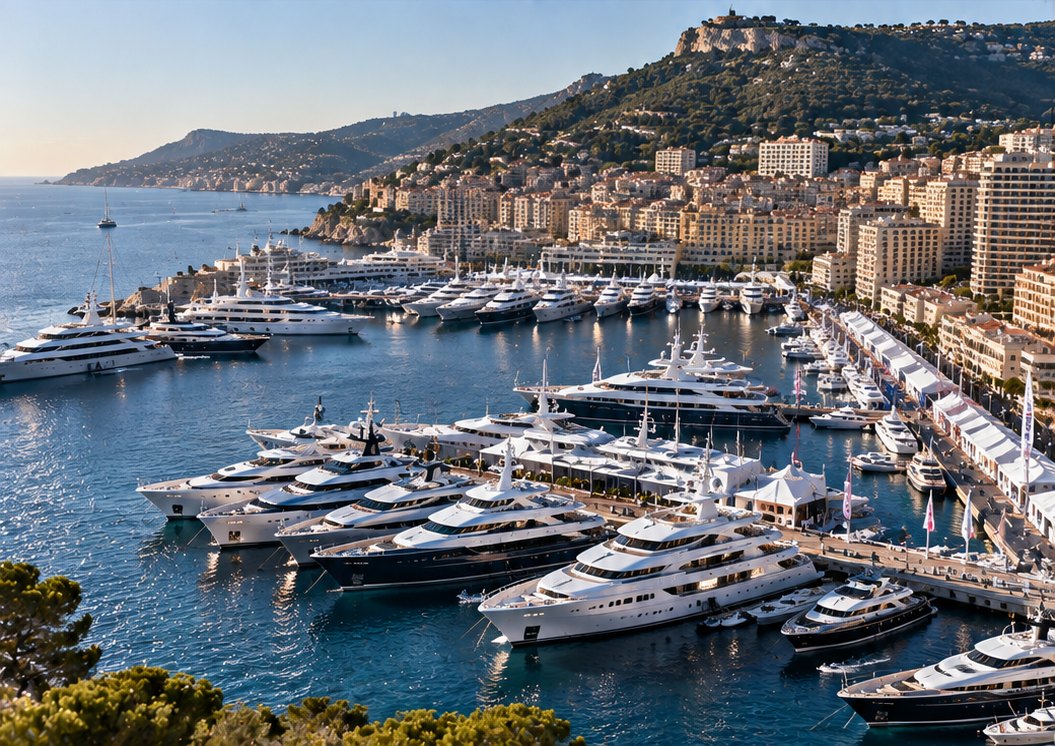
Comparison becomes easier if every contender is put through the same questions. Ask for the same operating assumptions, the same delivery point, the same warranty period and the same list of included equipment or services. That turns a collection of sales conversations into something closer to a procurement exercise and exposes the areas where one quotation has quietly omitted an expensive item.
References are useful when they are relevant. A supplier's biggest or most prestigious project may tell you very little about how it handles an ordinary job in your region. Ask instead for examples with a similar scale, operating pattern and timetable. The most useful reference is often the customer who has lived with the product for two or three years and has already needed after-sales support.
The practical test for boat shows, exhibitions, launches and show-going is whether the decision still makes sense when circumstances are less than ideal. Weather changes, schedules move, components fail and people use equipment differently from the designer's neat assumptions. Building a little resilience into the choice usually costs less than trying to recover it afterwards.
The sensible approach is therefore quite conventional: define the job, verify the evidence, price the whole commitment and keep enough margin for the things that never appear in the brochure.
Contributor: Paul Thompson / Editorial / 24BoatShows
Be the first reader to react to this article.
The market has become very good at presenting making appointments at busy shows: when it is worth doing as simple.
The market has become very good at presenting making appointments at busy shows: when it is worth doing as simple. In practice, the details still determine whether it works.
Technical claims deserve context. Range, output, capacity, speed, efficiency and performance figures are normally produced under stated conditions. Real use adds weather, load, temperature, fouling, route, operator behaviour and reserve margins. Rather than arguing over a headline number, ask what assumptions sit behind it and what happens when those assumptions change. That produces a much more useful comparison.
Sustainability claims are increasingly part of the decision as well. The useful question is not whether a product is described as green, but what has actually changed: energy use, fuel consumption, material choice, repairability, service life, emissions, waste or end-of-life handling. Improvements in one area can create compromises in another. Evidence and measured performance are more valuable than broad environmental language.
The calendar is particularly busy this quarter. Genoa opens on 1 October, with a run of European shows through October, followed by the International Charter Expo and METSTRADE in Amsterdam in November. That concentration is useful for comparison, but it also creates deadline pressure. Buyers should collect information at the show and make the final decision after the noise has died down whenever the transaction allows it.
Finally, insist on a proper handover. Familiarisation, emergency procedures, maintenance intervals, passwords, spare parts, warranty contacts and operating limitations should all be understood before the supplier disappears over the horizon. A surprising number of early problems are not failures at all but gaps in handover. Thirty minutes spent recording the right information can save days later.
Documentation is another practical test. Service records, manuals, certificates, invoices, warranties, software licences and evidence of previous work are not administrative clutter; they are part of the asset. Good records make troubleshooting easier and can support resale. Missing records do not automatically mean there is a problem, but they increase uncertainty, and uncertainty should be reflected in the questions asked, the inspection undertaken and sometimes the price.
Risk is best dealt with before commitment. That means independent inspection where appropriate, clear written scope, confirmation of insurance implications and an agreed process for defects or incomplete work. In higher-value transactions, legal, tax and regulatory advice should come from qualified advisers in the relevant jurisdiction. The purpose is not to make every transaction defensive; it is to stop assumptions becoming expensive surprises.
Resale should be considered even by people who intend to keep something for years. Highly personal specifications can be perfectly sensible, but buyers should understand the trade-off. Widely supported equipment, sensible layouts, complete records and recognised maintenance tend to be easier for the next owner to understand. The objective is not to design everything for an unknown future buyer; it is simply to avoid destroying flexibility without a good reason.
Cost also needs to be separated into purchase cost and ownership cost. The second figure is usually less visible. Consumables, routine servicing, insurance, finance, berthing or storage, professional fees, software subscriptions, inspections and eventual replacement items can materially change the economics. A useful quotation is therefore one that makes exclusions obvious.
If a supplier cannot explain what normally falls outside the quoted figure, ask for that clarification before treating two prices as comparable.
My own shorthand for making appointments at busy shows: when it is worth doing is simple: verify the condition, verify the paperwork, understand the support network and calculate the cost on a realistic pattern of use. If any one of those four is unclear, there is still work to do before committing.

Comparison becomes easier if every contender is put through the same questions. Ask for the same operating assumptions, the same delivery point, the same warranty period and the same list of included equipment or services. That turns a collection of sales conversations into something closer to a procurement exercise and exposes the areas where one quotation has quietly omitted an expensive item.
References are useful when they are relevant. A supplier's biggest or most prestigious project may tell you very little about how it handles an ordinary job in your region. Ask instead for examples with a similar scale, operating pattern and timetable. The most useful reference is often the customer who has lived with the product for two or three years and has already needed after-sales support.
The practical test for boat shows, exhibitions, launches and show-going is whether the decision still makes sense when circumstances are less than ideal. Weather changes, schedules move, components fail and people use equipment differently from the designer's neat assumptions. Building a little resilience into the choice usually costs less than trying to recover it afterwards.
None of this makes the decision difficult. It simply moves attention from presentation to evidence, which is usually where the better value sits.
Contributor: Paul Thompson / Editorial / 24BoatShows
Be the first reader to react to this article.
I have always found that the useful part of boat shows, exhibitions, launches and show-going starts once the brochure language has been stripped away.
I have always found that the useful part of boat shows, exhibitions, launches and show-going starts once the brochure language has been stripped away.
After-sales support can be more important than the original specification. A component that is excellent on paper is less attractive if parts take months to arrive or there is no competent service agent where the equipment will be used. The same applies to software-led products: ownership now includes updates, access rights, data and sometimes recurring subscriptions. Find out who supports the system, for how long, and what happens if the original supplier changes hands.
Timing matters. Buying or commissioning under deadline pressure weakens the buyer's position because there is less time to inspect, compare and walk away. Where possible, build the timetable backwards from the date the asset or service is genuinely required. Include survey or inspection time, corrections, training, delivery and a contingency. A realistic programme often reveals that the cheapest-looking option is not the one with the lowest overall cost.
The calendar is particularly busy this quarter. Genoa opens on 1 October, with a run of European shows through October, followed by the International Charter Expo and METSTRADE in Amsterdam in November. That concentration is useful for comparison, but it also creates deadline pressure. Buyers should collect information at the show and make the final decision after the noise has died down whenever the transaction allows it.
The starting point is use. In boat shows, exhibitions, launches and show-going, two apparently similar products or services can be right for completely different owners because their operating pattern is different. Frequency of use, geography, crew or staffing, storage, servicing access and the length of time you expect to keep the asset all change the answer. Before comparing brands or quotations, write down those constraints.
It sounds basic, but it prevents a specification being chosen for a lifestyle that exists only in the sales material.
Technical claims deserve context. Range, output, capacity, speed, efficiency and performance figures are normally produced under stated conditions. Real use adds weather, load, temperature, fouling, route, operator behaviour and reserve margins. Rather than arguing over a headline number, ask what assumptions sit behind it and what happens when those assumptions change. That produces a much more useful comparison.
Sustainability claims are increasingly part of the decision as well. The useful question is not whether a product is described as green, but what has actually changed: energy use, fuel consumption, material choice, repairability, service life, emissions, waste or end-of-life handling. Improvements in one area can create compromises in another. Evidence and measured performance are more valuable than broad environmental language.
Finally, insist on a proper handover. Familiarisation, emergency procedures, maintenance intervals, passwords, spare parts, warranty contacts and operating limitations should all be understood before the supplier disappears over the horizon. A surprising number of early problems are not failures at all but gaps in handover. Thirty minutes spent recording the right information can save days later.
Documentation is another practical test. Service records, manuals, certificates, invoices, warranties, software licences and evidence of previous work are not administrative clutter; they are part of the asset. Good records make troubleshooting easier and can support resale. Missing records do not automatically mean there is a problem, but they increase uncertainty, and uncertainty should be reflected in the questions asked, the inspection undertaken and sometimes the price.
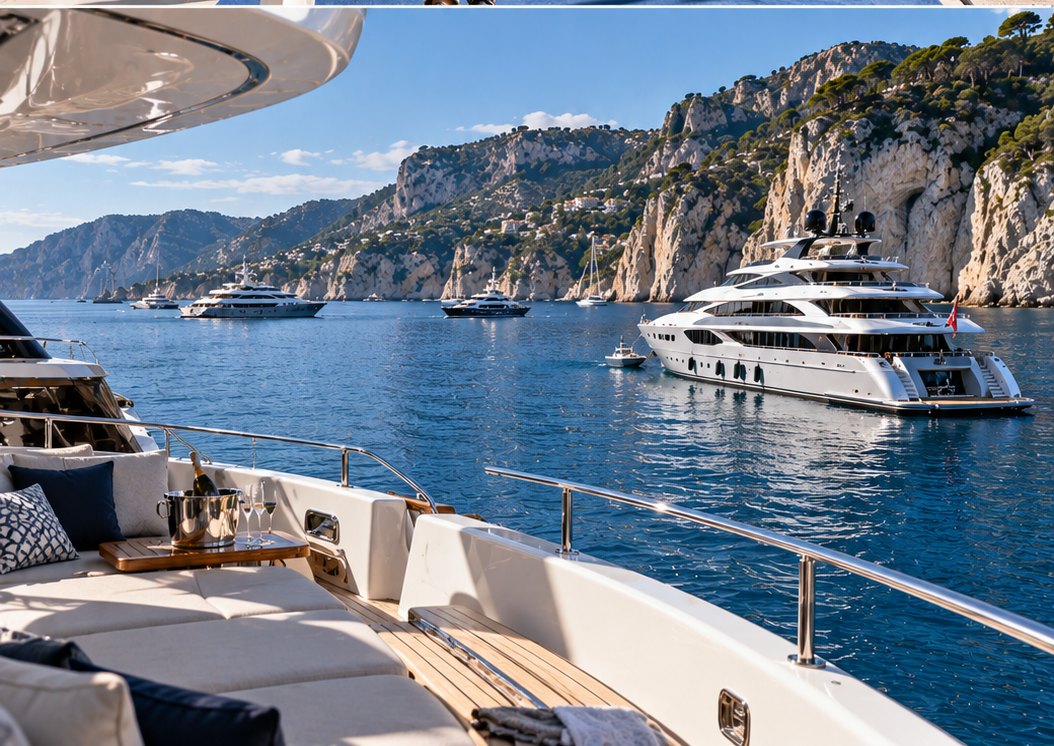
When money is about to change hands, the sequence matters. Establish identity and authority to sell, agree exactly what is included, record known defects and make any deposit terms clear. Where a survey, valuation or finance approval is part of the transaction, the contract should reflect that process rather than relying on a verbal understanding. Buyers should also know when risk and title transfer, particularly if the asset is moving between jurisdictions.
Market value is evidence, not aspiration. Advertised prices show what sellers hope to achieve; completed transactions, condition, specification, location and time on market give a better picture. A well-presented example can deserve a premium, but a premium still needs a reason. The strongest negotiating position comes from knowing which defects are merely cosmetic, which affect usability and which could lead to immediate capital expenditure.
The practical test for boat shows, exhibitions, launches and show-going is whether the decision still makes sense when circumstances are less than ideal. Weather changes, schedules move, components fail and people use equipment differently from the designer's neat assumptions. Building a little resilience into the choice usually costs less than trying to recover it afterwards.
The sensible approach is therefore quite conventional: define the job, verify the evidence, price the whole commitment and keep enough margin for the things that never appear in the brochure.
Contributor: Paul Thompson / Editorial / 24BoatShows
Be the first reader to react to this article.
This is one of those subjects where a little preparation is worth far more than a long list of features.
This is one of those subjects where a little preparation is worth far more than a long list of features.
Risk is best dealt with before commitment. That means independent inspection where appropriate, clear written scope, confirmation of insurance implications and an agreed process for defects or incomplete work. In higher-value transactions, legal, tax and regulatory advice should come from qualified advisers in the relevant jurisdiction. The purpose is not to make every transaction defensive; it is to stop assumptions becoming expensive surprises.
Resale should be considered even by people who intend to keep something for years. Highly personal specifications can be perfectly sensible, but buyers should understand the trade-off. Widely supported equipment, sensible layouts, complete records and recognised maintenance tend to be easier for the next owner to understand. The objective is not to design everything for an unknown future buyer; it is simply to avoid destroying flexibility without a good reason.
The calendar is particularly busy this quarter. Genoa opens on 1 October, with a run of European shows through October, followed by the International Charter Expo and METSTRADE in Amsterdam in November. That concentration is useful for comparison, but it also creates deadline pressure. Buyers should collect information at the show and make the final decision after the noise has died down whenever the transaction allows it.
Cost also needs to be separated into purchase cost and ownership cost. The second figure is usually less visible. Consumables, routine servicing, insurance, finance, berthing or storage, professional fees, software subscriptions, inspections and eventual replacement items can materially change the economics. A useful quotation is therefore one that makes exclusions obvious.
If a supplier cannot explain what normally falls outside the quoted figure, ask for that clarification before treating two prices as comparable.
After-sales support can be more important than the original specification. A component that is excellent on paper is less attractive if parts take months to arrive or there is no competent service agent where the equipment will be used. The same applies to software-led products: ownership now includes updates, access rights, data and sometimes recurring subscriptions. Find out who supports the system, for how long, and what happens if the original supplier changes hands.
Timing matters. Buying or commissioning under deadline pressure weakens the buyer's position because there is less time to inspect, compare and walk away. Where possible, build the timetable backwards from the date the asset or service is genuinely required. Include survey or inspection time, corrections, training, delivery and a contingency. A realistic programme often reveals that the cheapest-looking option is not the one with the lowest overall cost.
The starting point is use. In boat shows, exhibitions, launches and show-going, two apparently similar products or services can be right for completely different owners because their operating pattern is different. Frequency of use, geography, crew or staffing, storage, servicing access and the length of time you expect to keep the asset all change the answer. Before comparing brands or quotations, write down those constraints.
It sounds basic, but it prevents a specification being chosen for a lifestyle that exists only in the sales material.
Technical claims deserve context. Range, output, capacity, speed, efficiency and performance figures are normally produced under stated conditions. Real use adds weather, load, temperature, fouling, route, operator behaviour and reserve margins. Rather than arguing over a headline number, ask what assumptions sit behind it and what happens when those assumptions change. That produces a much more useful comparison.
Comparison becomes easier if every contender is put through the same questions. Ask for the same operating assumptions, the same delivery point, the same warranty period and the same list of included equipment or services. That turns a collection of sales conversations into something closer to a procurement exercise and exposes the areas where one quotation has quietly omitted an expensive item.
References are useful when they are relevant. A supplier's biggest or most prestigious project may tell you very little about how it handles an ordinary job in your region. Ask instead for examples with a similar scale, operating pattern and timetable. The most useful reference is often the customer who has lived with the product for two or three years and has already needed after-sales support.
The practical test for boat shows, exhibitions, launches and show-going is whether the decision still makes sense when circumstances are less than ideal. Weather changes, schedules move, components fail and people use equipment differently from the designer's neat assumptions. Building a little resilience into the choice usually costs less than trying to recover it afterwards.
For most readers, that is enough to narrow the field considerably before serious money or time is committed.
Contributor: Paul Thompson / Editorial / 24BoatShows
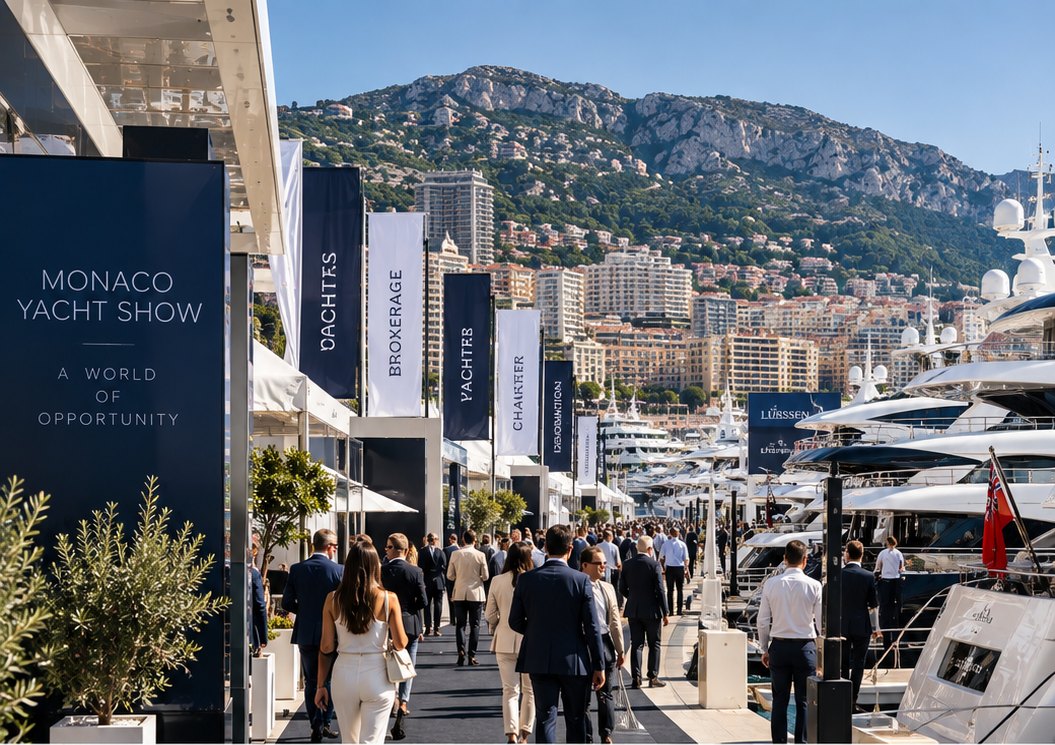
Be the first reader to react to this article.
There is nothing particularly complicated about how to compare quotations collected at a show, but there are several ways to make it unnecessarily expensive.
There is nothing particularly complicated about how to compare quotations collected at a show, but there are several ways to make it unnecessarily expensive.
Sustainability claims are increasingly part of the decision as well. The useful question is not whether a product is described as green, but what has actually changed: energy use, fuel consumption, material choice, repairability, service life, emissions, waste or end-of-life handling. Improvements in one area can create compromises in another. Evidence and measured performance are more valuable than broad environmental language.
Finally, insist on a proper handover. Familiarisation, emergency procedures, maintenance intervals, passwords, spare parts, warranty contacts and operating limitations should all be understood before the supplier disappears over the horizon. A surprising number of early problems are not failures at all but gaps in handover. Thirty minutes spent recording the right information can save days later.
The calendar is particularly busy this quarter. Genoa opens on 1 October, with a run of European shows through October, followed by the International Charter Expo and METSTRADE in Amsterdam in November. That concentration is useful for comparison, but it also creates deadline pressure. Buyers should collect information at the show and make the final decision after the noise has died down whenever the transaction allows it.
Documentation is another practical test. Service records, manuals, certificates, invoices, warranties, software licences and evidence of previous work are not administrative clutter; they are part of the asset. Good records make troubleshooting easier and can support resale. Missing records do not automatically mean there is a problem, but they increase uncertainty, and uncertainty should be reflected in the questions asked, the inspection undertaken and sometimes the price.
Risk is best dealt with before commitment. That means independent inspection where appropriate, clear written scope, confirmation of insurance implications and an agreed process for defects or incomplete work. In higher-value transactions, legal, tax and regulatory advice should come from qualified advisers in the relevant jurisdiction. The purpose is not to make every transaction defensive; it is to stop assumptions becoming expensive surprises.
Resale should be considered even by people who intend to keep something for years. Highly personal specifications can be perfectly sensible, but buyers should understand the trade-off. Widely supported equipment, sensible layouts, complete records and recognised maintenance tend to be easier for the next owner to understand. The objective is not to design everything for an unknown future buyer; it is simply to avoid destroying flexibility without a good reason.
Cost also needs to be separated into purchase cost and ownership cost. The second figure is usually less visible. Consumables, routine servicing, insurance, finance, berthing or storage, professional fees, software subscriptions, inspections and eventual replacement items can materially change the economics. A useful quotation is therefore one that makes exclusions obvious.
If a supplier cannot explain what normally falls outside the quoted figure, ask for that clarification before treating two prices as comparable.
After-sales support can be more important than the original specification. A component that is excellent on paper is less attractive if parts take months to arrive or there is no competent service agent where the equipment will be used. The same applies to software-led products: ownership now includes updates, access rights, data and sometimes recurring subscriptions. Find out who supports the system, for how long, and what happens if the original supplier changes hands.
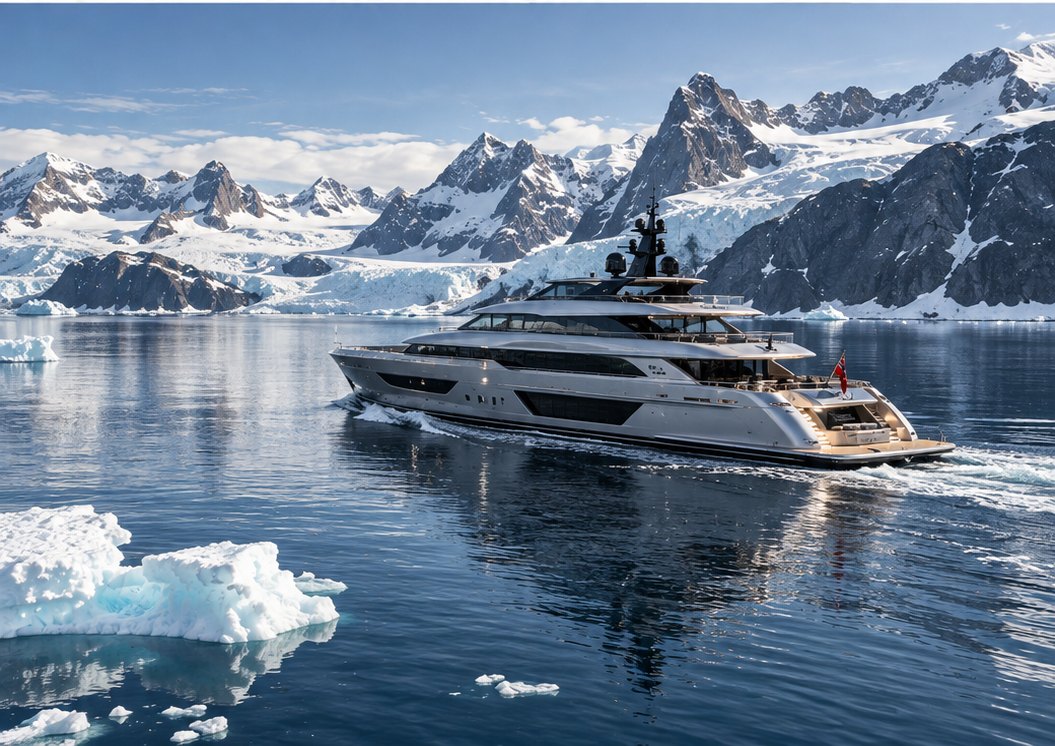
Comparison becomes easier if every contender is put through the same questions. Ask for the same operating assumptions, the same delivery point, the same warranty period and the same list of included equipment or services. That turns a collection of sales conversations into something closer to a procurement exercise and exposes the areas where one quotation has quietly omitted an expensive item.
References are useful when they are relevant. A supplier's biggest or most prestigious project may tell you very little about how it handles an ordinary job in your region. Ask instead for examples with a similar scale, operating pattern and timetable. The most useful reference is often the customer who has lived with the product for two or three years and has already needed after-sales support.
The practical test for boat shows, exhibitions, launches and show-going is whether the decision still makes sense when circumstances are less than ideal. Weather changes, schedules move, components fail and people use equipment differently from the designer's neat assumptions. Building a little resilience into the choice usually costs less than trying to recover it afterwards.
The best outcome is not necessarily the newest or most sophisticated option. It is the one that remains practical after the first season, the first service bill and the first change of plan.
Contributor: Paul Thompson / Editorial / 24BoatShows
Be the first reader to react to this article.
There is nothing particularly complicated about travel, tickets and timing: reducing the real cost of attending, but there are several ways to make it unnecessarily expensive.
There is nothing particularly complicated about travel, tickets and timing: reducing the real cost of attending, but there are several ways to make it unnecessarily expensive.
Timing matters. Buying or commissioning under deadline pressure weakens the buyer's position because there is less time to inspect, compare and walk away. Where possible, build the timetable backwards from the date the asset or service is genuinely required. Include survey or inspection time, corrections, training, delivery and a contingency. A realistic programme often reveals that the cheapest-looking option is not the one with the lowest overall cost.
The starting point is use. In boat shows, exhibitions, launches and show-going, two apparently similar products or services can be right for completely different owners because their operating pattern is different. Frequency of use, geography, crew or staffing, storage, servicing access and the length of time you expect to keep the asset all change the answer. Before comparing brands or quotations, write down those constraints.
It sounds basic, but it prevents a specification being chosen for a lifestyle that exists only in the sales material.
The calendar is particularly busy this quarter. Genoa opens on 1 October, with a run of European shows through October, followed by the International Charter Expo and METSTRADE in Amsterdam in November. That concentration is useful for comparison, but it also creates deadline pressure. Buyers should collect information at the show and make the final decision after the noise has died down whenever the transaction allows it.
Technical claims deserve context. Range, output, capacity, speed, efficiency and performance figures are normally produced under stated conditions. Real use adds weather, load, temperature, fouling, route, operator behaviour and reserve margins. Rather than arguing over a headline number, ask what assumptions sit behind it and what happens when those assumptions change. That produces a much more useful comparison.
Sustainability claims are increasingly part of the decision as well. The useful question is not whether a product is described as green, but what has actually changed: energy use, fuel consumption, material choice, repairability, service life, emissions, waste or end-of-life handling. Improvements in one area can create compromises in another. Evidence and measured performance are more valuable than broad environmental language.
Finally, insist on a proper handover. Familiarisation, emergency procedures, maintenance intervals, passwords, spare parts, warranty contacts and operating limitations should all be understood before the supplier disappears over the horizon. A surprising number of early problems are not failures at all but gaps in handover. Thirty minutes spent recording the right information can save days later.
Documentation is another practical test. Service records, manuals, certificates, invoices, warranties, software licences and evidence of previous work are not administrative clutter; they are part of the asset. Good records make troubleshooting easier and can support resale. Missing records do not automatically mean there is a problem, but they increase uncertainty, and uncertainty should be reflected in the questions asked, the inspection undertaken and sometimes the price.
Risk is best dealt with before commitment. That means independent inspection where appropriate, clear written scope, confirmation of insurance implications and an agreed process for defects or incomplete work. In higher-value transactions, legal, tax and regulatory advice should come from qualified advisers in the relevant jurisdiction. The purpose is not to make every transaction defensive; it is to stop assumptions becoming expensive surprises.
My own shorthand for travel, tickets and timing: reducing the real cost of attending is simple: verify the condition, verify the paperwork, understand the support network and calculate the cost on a realistic pattern of use. If any one of those four is unclear, there is still work to do before committing.
Comparison becomes easier if every contender is put through the same questions. Ask for the same operating assumptions, the same delivery point, the same warranty period and the same list of included equipment or services. That turns a collection of sales conversations into something closer to a procurement exercise and exposes the areas where one quotation has quietly omitted an expensive item.
References are useful when they are relevant. A supplier's biggest or most prestigious project may tell you very little about how it handles an ordinary job in your region. Ask instead for examples with a similar scale, operating pattern and timetable. The most useful reference is often the customer who has lived with the product for two or three years and has already needed after-sales support.
The practical test for boat shows, exhibitions, launches and show-going is whether the decision still makes sense when circumstances are less than ideal. Weather changes, schedules move, components fail and people use equipment differently from the designer's neat assumptions. Building a little resilience into the choice usually costs less than trying to recover it afterwards.
For most readers, that is enough to narrow the field considerably before serious money or time is committed.
Contributor: Paul Thompson / Editorial / 24BoatShows
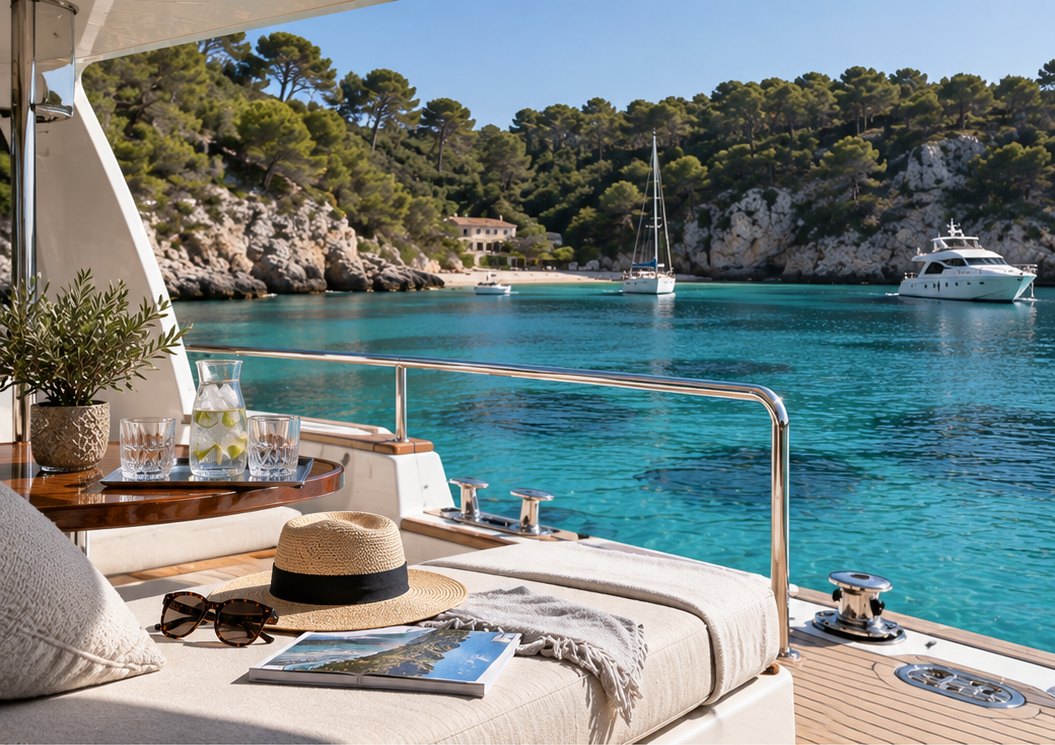
Be the first reader to react to this article.
One of the easiest mistakes in boat shows, exhibitions, launches and show-going is to concentrate on the headline and leave the awkward questions until later.
One of the easiest mistakes in boat shows, exhibitions, launches and show-going is to concentrate on the headline and leave the awkward questions until later.
Resale should be considered even by people who intend to keep something for years. Highly personal specifications can be perfectly sensible, but buyers should understand the trade-off. Widely supported equipment, sensible layouts, complete records and recognised maintenance tend to be easier for the next owner to understand. The objective is not to design everything for an unknown future buyer; it is simply to avoid destroying flexibility without a good reason.
Cost also needs to be separated into purchase cost and ownership cost. The second figure is usually less visible. Consumables, routine servicing, insurance, finance, berthing or storage, professional fees, software subscriptions, inspections and eventual replacement items can materially change the economics. A useful quotation is therefore one that makes exclusions obvious.
If a supplier cannot explain what normally falls outside the quoted figure, ask for that clarification before treating two prices as comparable.
The calendar is particularly busy this quarter. Genoa opens on 1 October, with a run of European shows through October, followed by the International Charter Expo and METSTRADE in Amsterdam in November. That concentration is useful for comparison, but it also creates deadline pressure. Buyers should collect information at the show and make the final decision after the noise has died down whenever the transaction allows it.
After-sales support can be more important than the original specification. A component that is excellent on paper is less attractive if parts take months to arrive or there is no competent service agent where the equipment will be used. The same applies to software-led products: ownership now includes updates, access rights, data and sometimes recurring subscriptions. Find out who supports the system, for how long, and what happens if the original supplier changes hands.
Timing matters. Buying or commissioning under deadline pressure weakens the buyer's position because there is less time to inspect, compare and walk away. Where possible, build the timetable backwards from the date the asset or service is genuinely required. Include survey or inspection time, corrections, training, delivery and a contingency. A realistic programme often reveals that the cheapest-looking option is not the one with the lowest overall cost.
The starting point is use. In boat shows, exhibitions, launches and show-going, two apparently similar products or services can be right for completely different owners because their operating pattern is different. Frequency of use, geography, crew or staffing, storage, servicing access and the length of time you expect to keep the asset all change the answer. Before comparing brands or quotations, write down those constraints.
It sounds basic, but it prevents a specification being chosen for a lifestyle that exists only in the sales material.
Technical claims deserve context. Range, output, capacity, speed, efficiency and performance figures are normally produced under stated conditions. Real use adds weather, load, temperature, fouling, route, operator behaviour and reserve margins. Rather than arguing over a headline number, ask what assumptions sit behind it and what happens when those assumptions change. That produces a much more useful comparison.
Sustainability claims are increasingly part of the decision as well. The useful question is not whether a product is described as green, but what has actually changed: energy use, fuel consumption, material choice, repairability, service life, emissions, waste or end-of-life handling. Improvements in one area can create compromises in another. Evidence and measured performance are more valuable than broad environmental language.
Comparison becomes easier if every contender is put through the same questions. Ask for the same operating assumptions, the same delivery point, the same warranty period and the same list of included equipment or services. That turns a collection of sales conversations into something closer to a procurement exercise and exposes the areas where one quotation has quietly omitted an expensive item.
References are useful when they are relevant. A supplier's biggest or most prestigious project may tell you very little about how it handles an ordinary job in your region. Ask instead for examples with a similar scale, operating pattern and timetable. The most useful reference is often the customer who has lived with the product for two or three years and has already needed after-sales support.
The practical test for boat shows, exhibitions, launches and show-going is whether the decision still makes sense when circumstances are less than ideal. Weather changes, schedules move, components fail and people use equipment differently from the designer's neat assumptions. Building a little resilience into the choice usually costs less than trying to recover it afterwards.
For most readers, that is enough to narrow the field considerably before serious money or time is committed.
Contributor: Paul Thompson / Editorial / 24BoatShows

Be the first reader to react to this article.
A good decision in boat shows, exhibitions, launches and show-going rarely comes from one impressive specification.
A good decision in boat shows, exhibitions, launches and show-going rarely comes from one impressive specification. It comes from understanding how the whole package will be used.
Finally, insist on a proper handover. Familiarisation, emergency procedures, maintenance intervals, passwords, spare parts, warranty contacts and operating limitations should all be understood before the supplier disappears over the horizon. A surprising number of early problems are not failures at all but gaps in handover. Thirty minutes spent recording the right information can save days later.
Documentation is another practical test. Service records, manuals, certificates, invoices, warranties, software licences and evidence of previous work are not administrative clutter; they are part of the asset. Good records make troubleshooting easier and can support resale. Missing records do not automatically mean there is a problem, but they increase uncertainty, and uncertainty should be reflected in the questions asked, the inspection undertaken and sometimes the price.
The calendar is particularly busy this quarter. Genoa opens on 1 October, with a run of European shows through October, followed by the International Charter Expo and METSTRADE in Amsterdam in November. That concentration is useful for comparison, but it also creates deadline pressure. Buyers should collect information at the show and make the final decision after the noise has died down whenever the transaction allows it.
Risk is best dealt with before commitment. That means independent inspection where appropriate, clear written scope, confirmation of insurance implications and an agreed process for defects or incomplete work. In higher-value transactions, legal, tax and regulatory advice should come from qualified advisers in the relevant jurisdiction. The purpose is not to make every transaction defensive; it is to stop assumptions becoming expensive surprises.
Resale should be considered even by people who intend to keep something for years. Highly personal specifications can be perfectly sensible, but buyers should understand the trade-off. Widely supported equipment, sensible layouts, complete records and recognised maintenance tend to be easier for the next owner to understand. The objective is not to design everything for an unknown future buyer; it is simply to avoid destroying flexibility without a good reason.
Cost also needs to be separated into purchase cost and ownership cost. The second figure is usually less visible. Consumables, routine servicing, insurance, finance, berthing or storage, professional fees, software subscriptions, inspections and eventual replacement items can materially change the economics. A useful quotation is therefore one that makes exclusions obvious.
If a supplier cannot explain what normally falls outside the quoted figure, ask for that clarification before treating two prices as comparable.
After-sales support can be more important than the original specification. A component that is excellent on paper is less attractive if parts take months to arrive or there is no competent service agent where the equipment will be used. The same applies to software-led products: ownership now includes updates, access rights, data and sometimes recurring subscriptions. Find out who supports the system, for how long, and what happens if the original supplier changes hands.
Timing matters. Buying or commissioning under deadline pressure weakens the buyer's position because there is less time to inspect, compare and walk away. Where possible, build the timetable backwards from the date the asset or service is genuinely required. Include survey or inspection time, corrections, training, delivery and a contingency. A realistic programme often reveals that the cheapest-looking option is not the one with the lowest overall cost.
Comparison becomes easier if every contender is put through the same questions. Ask for the same operating assumptions, the same delivery point, the same warranty period and the same list of included equipment or services. That turns a collection of sales conversations into something closer to a procurement exercise and exposes the areas where one quotation has quietly omitted an expensive item.
References are useful when they are relevant. A supplier's biggest or most prestigious project may tell you very little about how it handles an ordinary job in your region. Ask instead for examples with a similar scale, operating pattern and timetable. The most useful reference is often the customer who has lived with the product for two or three years and has already needed after-sales support.
The practical test for boat shows, exhibitions, launches and show-going is whether the decision still makes sense when circumstances are less than ideal. Weather changes, schedules move, components fail and people use equipment differently from the designer's neat assumptions. Building a little resilience into the choice usually costs less than trying to recover it afterwards.
The sensible approach is therefore quite conventional: define the job, verify the evidence, price the whole commitment and keep enough margin for the things that never appear in the brochure.
Contributor: Paul Thompson / Editorial / 24BoatShows
Be the first reader to react to this article.
The market has become very good at presenting 2027 planning starts now: choosing which shows are worth your time as simple.
The market has become very good at presenting 2027 planning starts now: choosing which shows are worth your time as simple. In practice, the details still determine whether it works.
The starting point is use. In boat shows, exhibitions, launches and show-going, two apparently similar products or services can be right for completely different owners because their operating pattern is different. Frequency of use, geography, crew or staffing, storage, servicing access and the length of time you expect to keep the asset all change the answer. Before comparing brands or quotations, write down those constraints.
It sounds basic, but it prevents a specification being chosen for a lifestyle that exists only in the sales material.
Technical claims deserve context. Range, output, capacity, speed, efficiency and performance figures are normally produced under stated conditions. Real use adds weather, load, temperature, fouling, route, operator behaviour and reserve margins. Rather than arguing over a headline number, ask what assumptions sit behind it and what happens when those assumptions change. That produces a much more useful comparison.
The calendar is particularly busy this quarter. Genoa opens on 1 October, with a run of European shows through October, followed by the International Charter Expo and METSTRADE in Amsterdam in November. That concentration is useful for comparison, but it also creates deadline pressure. Buyers should collect information at the show and make the final decision after the noise has died down whenever the transaction allows it.
Sustainability claims are increasingly part of the decision as well. The useful question is not whether a product is described as green, but what has actually changed: energy use, fuel consumption, material choice, repairability, service life, emissions, waste or end-of-life handling. Improvements in one area can create compromises in another. Evidence and measured performance are more valuable than broad environmental language.
Finally, insist on a proper handover. Familiarisation, emergency procedures, maintenance intervals, passwords, spare parts, warranty contacts and operating limitations should all be understood before the supplier disappears over the horizon. A surprising number of early problems are not failures at all but gaps in handover. Thirty minutes spent recording the right information can save days later.
Documentation is another practical test. Service records, manuals, certificates, invoices, warranties, software licences and evidence of previous work are not administrative clutter; they are part of the asset. Good records make troubleshooting easier and can support resale. Missing records do not automatically mean there is a problem, but they increase uncertainty, and uncertainty should be reflected in the questions asked, the inspection undertaken and sometimes the price.
Risk is best dealt with before commitment. That means independent inspection where appropriate, clear written scope, confirmation of insurance implications and an agreed process for defects or incomplete work. In higher-value transactions, legal, tax and regulatory advice should come from qualified advisers in the relevant jurisdiction. The purpose is not to make every transaction defensive; it is to stop assumptions becoming expensive surprises.
Resale should be considered even by people who intend to keep something for years. Highly personal specifications can be perfectly sensible, but buyers should understand the trade-off. Widely supported equipment, sensible layouts, complete records and recognised maintenance tend to be easier for the next owner to understand. The objective is not to design everything for an unknown future buyer; it is simply to avoid destroying flexibility without a good reason.
Comparison becomes easier if every contender is put through the same questions. Ask for the same operating assumptions, the same delivery point, the same warranty period and the same list of included equipment or services. That turns a collection of sales conversations into something closer to a procurement exercise and exposes the areas where one quotation has quietly omitted an expensive item.
References are useful when they are relevant. A supplier's biggest or most prestigious project may tell you very little about how it handles an ordinary job in your region. Ask instead for examples with a similar scale, operating pattern and timetable. The most useful reference is often the customer who has lived with the product for two or three years and has already needed after-sales support.
The practical test for boat shows, exhibitions, launches and show-going is whether the decision still makes sense when circumstances are less than ideal. Weather changes, schedules move, components fail and people use equipment differently from the designer's neat assumptions. Building a little resilience into the choice usually costs less than trying to recover it afterwards.
The best outcome is not necessarily the newest or most sophisticated option. It is the one that remains practical after the first season, the first service bill and the first change of plan.
Contributor: Paul Thompson / Editorial / 24BoatShows
Be the first reader to react to this article.
Every quarter produces plenty of announcements in boat shows, exhibitors, visitors, launches, sales activity and event operations, but the useful story is usually not the loudest one. I am more interested in the changes that alter what somebody buys, what it costs to operate, how quickly support arrives and whether the decision still makes sense several years later.
Every quarter produces plenty of announcements in boat shows, exhibitors, visitors, launches, sales activity and event operations, but the useful story is usually not the loudest one. I am more interested in the changes that alter what somebody buys, what it costs to operate, how quickly support arrives and whether the decision still makes sense several years later.
What is changing
Start by defining the job in plain language. What does the buyer, owner, operator or guest actually need to achieve, and under what conditions? That immediately makes comparison easier. A specification that is excellent for one use can be unnecessarily expensive or actively inconvenient for another. I would write down the non-negotiables, the desirable extras and the things that merely look attractive in a sales presentation.
Then verify the basics. Ask for documents, dimensions, service intervals, exclusions, lead times, warranties, references or operating data where they are relevant. If a claim materially affects the decision, it should be capable of being explained without resorting to vague phrases. This is particularly important where two offers appear similar but include different levels of preparation, support or responsibility.
Why it matters in practice
Price needs context. The cheapest quotation can become the expensive option once delivery, installation, travel, consumables, finance, insurance, maintenance, downtime or replacement are included. Equally, paying more is not evidence of quality. The useful comparison is total cost against the benefit that will actually be used.
Support deserves the same scrutiny as the initial product or service. Who answers the telephone when something goes wrong? Is technical knowledge held in-house or passed elsewhere? Are parts, people or replacements readily available? A realistic response time can be more valuable than an impressive feature that becomes unusable for weeks when a minor component fails.
There is also a human factor. Complicated systems and elaborate processes are often sold on capability, but somebody has to live with them. Training, handover, documentation and ease of use should therefore be part of the buying decision, not an afterthought.
What readers should watch next
Before committing, I would reduce the decision to a short written comparison. What problem does each option solve, what evidence supports the claims, what is excluded, what are the likely running costs, and what happens if circumstances change? That final question is important because resale, upgrade, relocation, regulation and changing patterns of use can alter the economics surprisingly quickly.
The strongest decisions in boat shows, exhibitors, visitors, launches, sales activity and event operations are rarely the ones with the longest specification or the most fashionable name attached. They are the ones where the requirement was understood at the beginning, the evidence was checked, the inconvenient questions were asked and the owner or customer knew exactly what would happen after the deal was done.
That is also the standard I would apply to this category in the magazine. It should help a reader make a better decision, not simply give another supplier somewhere to repeat a brochure.
Contributor: Paul Thompson / Editorial / 24BoatShows
Be the first reader to react to this article.
The expensive mistakes in boat shows, exhibitors, visitors, launches, sales activity and event operations are rarely caused by one spectacular failure. More often they begin with a small assumption that nobody checked. That is why I would start with the detail that sits behind the brochure, quotation or listing rather than the headline promise.
The expensive mistakes in boat shows, exhibitors, visitors, launches, sales activity and event operations are rarely caused by one spectacular failure. More often they begin with a small assumption that nobody checked. That is why I would start with the detail that sits behind the brochure, quotation or listing rather than the headline promise.
The overlooked detail
Start by defining the job in plain language. What does the buyer, owner, operator or guest actually need to achieve, and under what conditions? That immediately makes comparison easier. A specification that is excellent for one use can be unnecessarily expensive or actively inconvenient for another. I would write down the non-negotiables, the desirable extras and the things that merely look attractive in a sales presentation.
Then verify the basics. Ask for documents, dimensions, service intervals, exclusions, lead times, warranties, references or operating data where they are relevant. If a claim materially affects the decision, it should be capable of being explained without resorting to vague phrases. This is particularly important where two offers appear similar but include different levels of preparation, support or responsibility.
Where cost and risk appear
Price needs context. The cheapest quotation can become the expensive option once delivery, installation, travel, consumables, finance, insurance, maintenance, downtime or replacement are included. Equally, paying more is not evidence of quality. The useful comparison is total cost against the benefit that will actually be used.
Support deserves the same scrutiny as the initial product or service. Who answers the telephone when something goes wrong? Is technical knowledge held in-house or passed elsewhere? Are parts, people or replacements readily available? A realistic response time can be more valuable than an impressive feature that becomes unusable for weeks when a minor component fails.
There is also a human factor. Complicated systems and elaborate processes are often sold on capability, but somebody has to live with them. Training, handover, documentation and ease of use should therefore be part of the buying decision, not an afterthought.
Questions to ask before committing
Before committing, I would reduce the decision to a short written comparison. What problem does each option solve, what evidence supports the claims, what is excluded, what are the likely running costs, and what happens if circumstances change? That final question is important because resale, upgrade, relocation, regulation and changing patterns of use can alter the economics surprisingly quickly.
The strongest decisions in boat shows, exhibitors, visitors, launches, sales activity and event operations are rarely the ones with the longest specification or the most fashionable name attached. They are the ones where the requirement was understood at the beginning, the evidence was checked, the inconvenient questions were asked and the owner or customer knew exactly what would happen after the deal was done.
That is also the standard I would apply to this category in the magazine. It should help a reader make a better decision, not simply give another supplier somewhere to repeat a brochure.
Contributor: Paul Thompson / Editorial / 24BoatShows
Be the first reader to react to this article.
New does not automatically mean better. In boat shows, exhibitors, visitors, launches, sales activity and event operations, a launch is worth attention when it removes a genuine inconvenience, reduces operating burden, improves safety or gives the buyer more useful choice. Everything else can wait until the excitement has settled.
New does not automatically mean better. In boat shows, exhibitors, visitors, launches, sales activity and event operations, a launch is worth attention when it removes a genuine inconvenience, reduces operating burden, improves safety or gives the buyer more useful choice. Everything else can wait until the excitement has settled.
What is actually new
Start by defining the job in plain language. What does the buyer, owner, operator or guest actually need to achieve, and under what conditions? That immediately makes comparison easier. A specification that is excellent for one use can be unnecessarily expensive or actively inconvenient for another. I would write down the non-negotiables, the desirable extras and the things that merely look attractive in a sales presentation.
Then verify the basics. Ask for documents, dimensions, service intervals, exclusions, lead times, warranties, references or operating data where they are relevant. If a claim materially affects the decision, it should be capable of being explained without resorting to vague phrases. This is particularly important where two offers appear similar but include different levels of preparation, support or responsibility.
Separating substance from launch noise
Price needs context. The cheapest quotation can become the expensive option once delivery, installation, travel, consumables, finance, insurance, maintenance, downtime or replacement are included. Equally, paying more is not evidence of quality. The useful comparison is total cost against the benefit that will actually be used.
Support deserves the same scrutiny as the initial product or service. Who answers the telephone when something goes wrong? Is technical knowledge held in-house or passed elsewhere? Are parts, people or replacements readily available? A realistic response time can be more valuable than an impressive feature that becomes unusable for weeks when a minor component fails.
There is also a human factor. Complicated systems and elaborate processes are often sold on capability, but somebody has to live with them. Training, handover, documentation and ease of use should therefore be part of the buying decision, not an afterthought.
Where it could prove useful
Before committing, I would reduce the decision to a short written comparison. What problem does each option solve, what evidence supports the claims, what is excluded, what are the likely running costs, and what happens if circumstances change? That final question is important because resale, upgrade, relocation, regulation and changing patterns of use can alter the economics surprisingly quickly.
The strongest decisions in boat shows, exhibitors, visitors, launches, sales activity and event operations are rarely the ones with the longest specification or the most fashionable name attached. They are the ones where the requirement was understood at the beginning, the evidence was checked, the inconvenient questions were asked and the owner or customer knew exactly what would happen after the deal was done.
That is also the standard I would apply to this category in the magazine. It should help a reader make a better decision, not simply give another supplier somewhere to repeat a brochure.
Contributor: Paul Thompson / Editorial / 24BoatShows
Be the first reader to react to this article.
A useful professional contribution should leave the reader with something they can apply. For boat shows, exhibitors, visitors, launches, sales activity and event operations, that means concentrating on the requirement, the evidence and the consequences of the decision rather than turning the page into a sales pitch.
A useful professional contribution should leave the reader with something they can apply. For boat shows, exhibitors, visitors, launches, sales activity and event operations, that means concentrating on the requirement, the evidence and the consequences of the decision rather than turning the page into a sales pitch.
Start with the requirement
Start by defining the job in plain language. What does the buyer, owner, operator or guest actually need to achieve, and under what conditions? That immediately makes comparison easier. A specification that is excellent for one use can be unnecessarily expensive or actively inconvenient for another. I would write down the non-negotiables, the desirable extras and the things that merely look attractive in a sales presentation.
Then verify the basics. Ask for documents, dimensions, service intervals, exclusions, lead times, warranties, references or operating data where they are relevant. If a claim materially affects the decision, it should be capable of being explained without resorting to vague phrases. This is particularly important where two offers appear similar but include different levels of preparation, support or responsibility.
Check the evidence
Price needs context. The cheapest quotation can become the expensive option once delivery, installation, travel, consumables, finance, insurance, maintenance, downtime or replacement are included. Equally, paying more is not evidence of quality. The useful comparison is total cost against the benefit that will actually be used.
Support deserves the same scrutiny as the initial product or service. Who answers the telephone when something goes wrong? Is technical knowledge held in-house or passed elsewhere? Are parts, people or replacements readily available? A realistic response time can be more valuable than an impressive feature that becomes unusable for weeks when a minor component fails.
There is also a human factor. Complicated systems and elaborate processes are often sold on capability, but somebody has to live with them. Training, handover, documentation and ease of use should therefore be part of the buying decision, not an afterthought.
Keep the decision commercially grounded
Before committing, I would reduce the decision to a short written comparison. What problem does each option solve, what evidence supports the claims, what is excluded, what are the likely running costs, and what happens if circumstances change? That final question is important because resale, upgrade, relocation, regulation and changing patterns of use can alter the economics surprisingly quickly.
The strongest decisions in boat shows, exhibitors, visitors, launches, sales activity and event operations are rarely the ones with the longest specification or the most fashionable name attached. They are the ones where the requirement was understood at the beginning, the evidence was checked, the inconvenient questions were asked and the owner or customer knew exactly what would happen after the deal was done.
That is also the standard I would apply to this category in the magazine. It should help a reader make a better decision, not simply give another supplier somewhere to repeat a brochure.
Contributor: Editorial Desk / Guest Contributor Brief / 24BoatShows
Be the first reader to react to this article.
If I had an hour with a specialist in boat shows, exhibitors, visitors, launches, sales activity and event operations, I would spend surprisingly little of it asking what they sell. The more revealing questions concern what they refuse to recommend, what commonly goes wrong, how they deal with delays and what happens after the invoice has been paid.
If I had an hour with a specialist in boat shows, exhibitors, visitors, launches, sales activity and event operations, I would spend surprisingly little of it asking what they sell. The more revealing questions concern what they refuse to recommend, what commonly goes wrong, how they deal with delays and what happens after the invoice has been paid.
Questions about capability
Start by defining the job in plain language. What does the buyer, owner, operator or guest actually need to achieve, and under what conditions? That immediately makes comparison easier. A specification that is excellent for one use can be unnecessarily expensive or actively inconvenient for another. I would write down the non-negotiables, the desirable extras and the things that merely look attractive in a sales presentation.
Then verify the basics. Ask for documents, dimensions, service intervals, exclusions, lead times, warranties, references or operating data where they are relevant. If a claim materially affects the decision, it should be capable of being explained without resorting to vague phrases. This is particularly important where two offers appear similar but include different levels of preparation, support or responsibility.
Questions about delivery
Price needs context. The cheapest quotation can become the expensive option once delivery, installation, travel, consumables, finance, insurance, maintenance, downtime or replacement are included. Equally, paying more is not evidence of quality. The useful comparison is total cost against the benefit that will actually be used.
Support deserves the same scrutiny as the initial product or service. Who answers the telephone when something goes wrong? Is technical knowledge held in-house or passed elsewhere? Are parts, people or replacements readily available? A realistic response time can be more valuable than an impressive feature that becomes unusable for weeks when a minor component fails.
There is also a human factor. Complicated systems and elaborate processes are often sold on capability, but somebody has to live with them. Training, handover, documentation and ease of use should therefore be part of the buying decision, not an afterthought.
Questions about support after the sale
Before committing, I would reduce the decision to a short written comparison. What problem does each option solve, what evidence supports the claims, what is excluded, what are the likely running costs, and what happens if circumstances change? That final question is important because resale, upgrade, relocation, regulation and changing patterns of use can alter the economics surprisingly quickly.
The strongest decisions in boat shows, exhibitors, visitors, launches, sales activity and event operations are rarely the ones with the longest specification or the most fashionable name attached. They are the ones where the requirement was understood at the beginning, the evidence was checked, the inconvenient questions were asked and the owner or customer knew exactly what would happen after the deal was done.
That is also the standard I would apply to this category in the magazine. It should help a reader make a better decision, not simply give another supplier somewhere to repeat a brochure.
Contributor: Paul Thompson / Editorial / 24BoatShows
Be the first reader to react to this article.
There is no shortage of confident language around boat shows, exhibitors, visitors, launches, sales activity and event operations. The difficulty is that confidence is not evidence. Buyers and operators are better served by information that can be checked: specifications, service commitments, operating limits, references, documentation and a clear explanation of cost.
There is no shortage of confident language around boat shows, exhibitors, visitors, launches, sales activity and event operations. The difficulty is that confidence is not evidence. Buyers and operators are better served by information that can be checked: specifications, service commitments, operating limits, references, documentation and a clear explanation of cost.
The problem with easy claims
Start by defining the job in plain language. What does the buyer, owner, operator or guest actually need to achieve, and under what conditions? That immediately makes comparison easier. A specification that is excellent for one use can be unnecessarily expensive or actively inconvenient for another. I would write down the non-negotiables, the desirable extras and the things that merely look attractive in a sales presentation.
Then verify the basics. Ask for documents, dimensions, service intervals, exclusions, lead times, warranties, references or operating data where they are relevant. If a claim materially affects the decision, it should be capable of being explained without resorting to vague phrases. This is particularly important where two offers appear similar but include different levels of preparation, support or responsibility.
What better evidence looks like
Price needs context. The cheapest quotation can become the expensive option once delivery, installation, travel, consumables, finance, insurance, maintenance, downtime or replacement are included. Equally, paying more is not evidence of quality. The useful comparison is total cost against the benefit that will actually be used.
Support deserves the same scrutiny as the initial product or service. Who answers the telephone when something goes wrong? Is technical knowledge held in-house or passed elsewhere? Are parts, people or replacements readily available? A realistic response time can be more valuable than an impressive feature that becomes unusable for weeks when a minor component fails.
There is also a human factor. Complicated systems and elaborate processes are often sold on capability, but somebody has to live with them. Training, handover, documentation and ease of use should therefore be part of the buying decision, not an afterthought.
A more useful way to decide
Before committing, I would reduce the decision to a short written comparison. What problem does each option solve, what evidence supports the claims, what is excluded, what are the likely running costs, and what happens if circumstances change? That final question is important because resale, upgrade, relocation, regulation and changing patterns of use can alter the economics surprisingly quickly.
The strongest decisions in boat shows, exhibitors, visitors, launches, sales activity and event operations are rarely the ones with the longest specification or the most fashionable name attached. They are the ones where the requirement was understood at the beginning, the evidence was checked, the inconvenient questions were asked and the owner or customer knew exactly what would happen after the deal was done.
That is also the standard I would apply to this category in the magazine. It should help a reader make a better decision, not simply give another supplier somewhere to repeat a brochure.
Contributor: Paul Thompson / Editorial / 24BoatShows
Be the first reader to react to this article.
One recurring argument in boat shows, exhibitors, visitors, launches, sales activity and event operations is whether the safest route is a proven standard package or a solution tailored closely to the individual user. Both approaches can be right, and both can become expensive when chosen for the wrong reason.
One recurring argument in boat shows, exhibitors, visitors, launches, sales activity and event operations is whether the safest route is a proven standard package or a solution tailored closely to the individual user. Both approaches can be right, and both can become expensive when chosen for the wrong reason.
The case for standardisation
Start by defining the job in plain language. What does the buyer, owner, operator or guest actually need to achieve, and under what conditions? That immediately makes comparison easier. A specification that is excellent for one use can be unnecessarily expensive or actively inconvenient for another. I would write down the non-negotiables, the desirable extras and the things that merely look attractive in a sales presentation.
Then verify the basics. Ask for documents, dimensions, service intervals, exclusions, lead times, warranties, references or operating data where they are relevant. If a claim materially affects the decision, it should be capable of being explained without resorting to vague phrases. This is particularly important where two offers appear similar but include different levels of preparation, support or responsibility.
The case for customisation
Price needs context. The cheapest quotation can become the expensive option once delivery, installation, travel, consumables, finance, insurance, maintenance, downtime or replacement are included. Equally, paying more is not evidence of quality. The useful comparison is total cost against the benefit that will actually be used.
Support deserves the same scrutiny as the initial product or service. Who answers the telephone when something goes wrong? Is technical knowledge held in-house or passed elsewhere? Are parts, people or replacements readily available? A realistic response time can be more valuable than an impressive feature that becomes unusable for weeks when a minor component fails.
There is also a human factor. Complicated systems and elaborate processes are often sold on capability, but somebody has to live with them. Training, handover, documentation and ease of use should therefore be part of the buying decision, not an afterthought.
Where the sensible middle ground sits
Before committing, I would reduce the decision to a short written comparison. What problem does each option solve, what evidence supports the claims, what is excluded, what are the likely running costs, and what happens if circumstances change? That final question is important because resale, upgrade, relocation, regulation and changing patterns of use can alter the economics surprisingly quickly.
The strongest decisions in boat shows, exhibitors, visitors, launches, sales activity and event operations are rarely the ones with the longest specification or the most fashionable name attached. They are the ones where the requirement was understood at the beginning, the evidence was checked, the inconvenient questions were asked and the owner or customer knew exactly what would happen after the deal was done.
That is also the standard I would apply to this category in the magazine. It should help a reader make a better decision, not simply give another supplier somewhere to repeat a brochure.
Contributor: Paul Thompson / Editorial / 24BoatShows
Be the first reader to react to this article.
People who work around boat shows, exhibitors, visitors, launches, sales activity and event operations every day tend to notice different things from a first-time buyer. They look past presentation and start with the awkward details: access, records, response times, condition, exclusions, compatibility and who is actually responsible when something stops working.
People who work around boat shows, exhibitors, visitors, launches, sales activity and event operations every day tend to notice different things from a first-time buyer. They look past presentation and start with the awkward details: access, records, response times, condition, exclusions, compatibility and who is actually responsible when something stops working.
The first five minutes
Start by defining the job in plain language. What does the buyer, owner, operator or guest actually need to achieve, and under what conditions? That immediately makes comparison easier. A specification that is excellent for one use can be unnecessarily expensive or actively inconvenient for another. I would write down the non-negotiables, the desirable extras and the things that merely look attractive in a sales presentation.
Then verify the basics. Ask for documents, dimensions, service intervals, exclusions, lead times, warranties, references or operating data where they are relevant. If a claim materially affects the decision, it should be capable of being explained without resorting to vague phrases. This is particularly important where two offers appear similar but include different levels of preparation, support or responsibility.
The paperwork and detail
Price needs context. The cheapest quotation can become the expensive option once delivery, installation, travel, consumables, finance, insurance, maintenance, downtime or replacement are included. Equally, paying more is not evidence of quality. The useful comparison is total cost against the benefit that will actually be used.
Support deserves the same scrutiny as the initial product or service. Who answers the telephone when something goes wrong? Is technical knowledge held in-house or passed elsewhere? Are parts, people or replacements readily available? A realistic response time can be more valuable than an impressive feature that becomes unusable for weeks when a minor component fails.
There is also a human factor. Complicated systems and elaborate processes are often sold on capability, but somebody has to live with them. Training, handover, documentation and ease of use should therefore be part of the buying decision, not an afterthought.
The clues that justify a second look
Before committing, I would reduce the decision to a short written comparison. What problem does each option solve, what evidence supports the claims, what is excluded, what are the likely running costs, and what happens if circumstances change? That final question is important because resale, upgrade, relocation, regulation and changing patterns of use can alter the economics surprisingly quickly.
The strongest decisions in boat shows, exhibitors, visitors, launches, sales activity and event operations are rarely the ones with the longest specification or the most fashionable name attached. They are the ones where the requirement was understood at the beginning, the evidence was checked, the inconvenient questions were asked and the owner or customer knew exactly what would happen after the deal was done.
That is also the standard I would apply to this category in the magazine. It should help a reader make a better decision, not simply give another supplier somewhere to repeat a brochure.
Contributor: Paul Thompson / Editorial / 24BoatShows
Be the first reader to react to this article.
The best way to understand boat shows, exhibitors, visitors, launches, sales activity and event operations is to experience it under conditions that resemble real use. A polished demonstration can be useful, but it should not prevent straightforward questions about inconvenience, noise, waiting time, staffing, storage, maintenance or the parts of the experience that happen after the photograph.
The best way to understand boat shows, exhibitors, visitors, launches, sales activity and event operations is to experience it under conditions that resemble real use. A polished demonstration can be useful, but it should not prevent straightforward questions about inconvenience, noise, waiting time, staffing, storage, maintenance or the parts of the experience that happen after the photograph.
Before you arrive
Start by defining the job in plain language. What does the buyer, owner, operator or guest actually need to achieve, and under what conditions? That immediately makes comparison easier. A specification that is excellent for one use can be unnecessarily expensive or actively inconvenient for another. I would write down the non-negotiables, the desirable extras and the things that merely look attractive in a sales presentation.
Then verify the basics. Ask for documents, dimensions, service intervals, exclusions, lead times, warranties, references or operating data where they are relevant. If a claim materially affects the decision, it should be capable of being explained without resorting to vague phrases. This is particularly important where two offers appear similar but include different levels of preparation, support or responsibility.
During the experience
Price needs context. The cheapest quotation can become the expensive option once delivery, installation, travel, consumables, finance, insurance, maintenance, downtime or replacement are included. Equally, paying more is not evidence of quality. The useful comparison is total cost against the benefit that will actually be used.
Support deserves the same scrutiny as the initial product or service. Who answers the telephone when something goes wrong? Is technical knowledge held in-house or passed elsewhere? Are parts, people or replacements readily available? A realistic response time can be more valuable than an impressive feature that becomes unusable for weeks when a minor component fails.
There is also a human factor. Complicated systems and elaborate processes are often sold on capability, but somebody has to live with them. Training, handover, documentation and ease of use should therefore be part of the buying decision, not an afterthought.
What to assess afterwards
Before committing, I would reduce the decision to a short written comparison. What problem does each option solve, what evidence supports the claims, what is excluded, what are the likely running costs, and what happens if circumstances change? That final question is important because resale, upgrade, relocation, regulation and changing patterns of use can alter the economics surprisingly quickly.
The strongest decisions in boat shows, exhibitors, visitors, launches, sales activity and event operations are rarely the ones with the longest specification or the most fashionable name attached. They are the ones where the requirement was understood at the beginning, the evidence was checked, the inconvenient questions were asked and the owner or customer knew exactly what would happen after the deal was done.
That is also the standard I would apply to this category in the magazine. It should help a reader make a better decision, not simply give another supplier somewhere to repeat a brochure.
Contributor: Paul Thompson / Editorial / 24BoatShows
Be the first reader to react to this article.
A review of anything connected with boat shows, exhibitors, visitors, launches, sales activity and event operations should begin before the reviewer sees the product. Decide what matters first. Otherwise the most impressive feature in the room has a habit of becoming the most important feature in the review, whether it deserves to or not.
A review of anything connected with boat shows, exhibitors, visitors, launches, sales activity and event operations should begin before the reviewer sees the product. Decide what matters first. Otherwise the most impressive feature in the room has a habit of becoming the most important feature in the review, whether it deserves to or not.
Set the test before the product
Start by defining the job in plain language. What does the buyer, owner, operator or guest actually need to achieve, and under what conditions? That immediately makes comparison easier. A specification that is excellent for one use can be unnecessarily expensive or actively inconvenient for another. I would write down the non-negotiables, the desirable extras and the things that merely look attractive in a sales presentation.
Then verify the basics. Ask for documents, dimensions, service intervals, exclusions, lead times, warranties, references or operating data where they are relevant. If a claim materially affects the decision, it should be capable of being explained without resorting to vague phrases. This is particularly important where two offers appear similar but include different levels of preparation, support or responsibility.
Use realistic conditions
Price needs context. The cheapest quotation can become the expensive option once delivery, installation, travel, consumables, finance, insurance, maintenance, downtime or replacement are included. Equally, paying more is not evidence of quality. The useful comparison is total cost against the benefit that will actually be used.
Support deserves the same scrutiny as the initial product or service. Who answers the telephone when something goes wrong? Is technical knowledge held in-house or passed elsewhere? Are parts, people or replacements readily available? A realistic response time can be more valuable than an impressive feature that becomes unusable for weeks when a minor component fails.
There is also a human factor. Complicated systems and elaborate processes are often sold on capability, but somebody has to live with them. Training, handover, documentation and ease of use should therefore be part of the buying decision, not an afterthought.
Judge ownership as well as performance
Before committing, I would reduce the decision to a short written comparison. What problem does each option solve, what evidence supports the claims, what is excluded, what are the likely running costs, and what happens if circumstances change? That final question is important because resale, upgrade, relocation, regulation and changing patterns of use can alter the economics surprisingly quickly.
The strongest decisions in boat shows, exhibitors, visitors, launches, sales activity and event operations are rarely the ones with the longest specification or the most fashionable name attached. They are the ones where the requirement was understood at the beginning, the evidence was checked, the inconvenient questions were asked and the owner or customer knew exactly what would happen after the deal was done.
That is also the standard I would apply to this category in the magazine. It should help a reader make a better decision, not simply give another supplier somewhere to repeat a brochure.
Contributor: Paul Thompson / Editorial / 24BoatShows
Be the first reader to react to this article.
A classified advertisement in boat shows, exhibitors, visitors, launches, sales activity and event operations is an invitation to investigate, not proof of condition or value. Good listings make that investigation easier; weak ones often reveal themselves through what they omit.
A classified advertisement in boat shows, exhibitors, visitors, launches, sales activity and event operations is an invitation to investigate, not proof of condition or value. Good listings make that investigation easier; weak ones often reveal themselves through what they omit.
Read between the lines
Start by defining the job in plain language. What does the buyer, owner, operator or guest actually need to achieve, and under what conditions? That immediately makes comparison easier. A specification that is excellent for one use can be unnecessarily expensive or actively inconvenient for another. I would write down the non-negotiables, the desirable extras and the things that merely look attractive in a sales presentation.
Then verify the basics. Ask for documents, dimensions, service intervals, exclusions, lead times, warranties, references or operating data where they are relevant. If a claim materially affects the decision, it should be capable of being explained without resorting to vague phrases. This is particularly important where two offers appear similar but include different levels of preparation, support or responsibility.
Verify before travelling or paying
Price needs context. The cheapest quotation can become the expensive option once delivery, installation, travel, consumables, finance, insurance, maintenance, downtime or replacement are included. Equally, paying more is not evidence of quality. The useful comparison is total cost against the benefit that will actually be used.
Support deserves the same scrutiny as the initial product or service. Who answers the telephone when something goes wrong? Is technical knowledge held in-house or passed elsewhere? Are parts, people or replacements readily available? A realistic response time can be more valuable than an impressive feature that becomes unusable for weeks when a minor component fails.
There is also a human factor. Complicated systems and elaborate processes are often sold on capability, but somebody has to live with them. Training, handover, documentation and ease of use should therefore be part of the buying decision, not an afterthought.
Compare total proposition, not asking price
Before committing, I would reduce the decision to a short written comparison. What problem does each option solve, what evidence supports the claims, what is excluded, what are the likely running costs, and what happens if circumstances change? That final question is important because resale, upgrade, relocation, regulation and changing patterns of use can alter the economics surprisingly quickly.
The strongest decisions in boat shows, exhibitors, visitors, launches, sales activity and event operations are rarely the ones with the longest specification or the most fashionable name attached. They are the ones where the requirement was understood at the beginning, the evidence was checked, the inconvenient questions were asked and the owner or customer knew exactly what would happen after the deal was done.
That is also the standard I would apply to this category in the magazine. It should help a reader make a better decision, not simply give another supplier somewhere to repeat a brochure.
Contributor: Paul Thompson / Editorial / 24BoatShows
Be the first reader to react to this article.
The most useful reader questions about boat shows, exhibitors, visitors, launches, sales activity and event operations are usually practical rather than glamorous. What will it cost after purchase? Who supports it? What happens when plans change? Which claims can be verified? Those questions deserve more space than another page of adjectives.
The most useful reader questions about boat shows, exhibitors, visitors, launches, sales activity and event operations are usually practical rather than glamorous. What will it cost after purchase? Who supports it? What happens when plans change? Which claims can be verified? Those questions deserve more space than another page of adjectives.
Cost and value
Start by defining the job in plain language. What does the buyer, owner, operator or guest actually need to achieve, and under what conditions? That immediately makes comparison easier. A specification that is excellent for one use can be unnecessarily expensive or actively inconvenient for another. I would write down the non-negotiables, the desirable extras and the things that merely look attractive in a sales presentation.
Then verify the basics. Ask for documents, dimensions, service intervals, exclusions, lead times, warranties, references or operating data where they are relevant. If a claim materially affects the decision, it should be capable of being explained without resorting to vague phrases. This is particularly important where two offers appear similar but include different levels of preparation, support or responsibility.
Service and accountability
Price needs context. The cheapest quotation can become the expensive option once delivery, installation, travel, consumables, finance, insurance, maintenance, downtime or replacement are included. Equally, paying more is not evidence of quality. The useful comparison is total cost against the benefit that will actually be used.
Support deserves the same scrutiny as the initial product or service. Who answers the telephone when something goes wrong? Is technical knowledge held in-house or passed elsewhere? Are parts, people or replacements readily available? A realistic response time can be more valuable than an impressive feature that becomes unusable for weeks when a minor component fails.
There is also a human factor. Complicated systems and elaborate processes are often sold on capability, but somebody has to live with them. Training, handover, documentation and ease of use should therefore be part of the buying decision, not an afterthought.
The questions that deserve clearer answers
Before committing, I would reduce the decision to a short written comparison. What problem does each option solve, what evidence supports the claims, what is excluded, what are the likely running costs, and what happens if circumstances change? That final question is important because resale, upgrade, relocation, regulation and changing patterns of use can alter the economics surprisingly quickly.
The strongest decisions in boat shows, exhibitors, visitors, launches, sales activity and event operations are rarely the ones with the longest specification or the most fashionable name attached. They are the ones where the requirement was understood at the beginning, the evidence was checked, the inconvenient questions were asked and the owner or customer knew exactly what would happen after the deal was done.
That is also the standard I would apply to this category in the magazine. It should help a reader make a better decision, not simply give another supplier somewhere to repeat a brochure.
Contributor: Editorial Desk / Reader Questions / 24BoatShows
Be the first reader to react to this article.
Forecasting boat shows, exhibitors, visitors, launches, sales activity and event operations is easy if the aim is to sound futuristic. It is harder, and more useful, to identify changes that have a realistic route into everyday use. Cost, infrastructure, regulation, skills and customer behaviour usually decide the pace long before technology reaches its theoretical limit.
Forecasting boat shows, exhibitors, visitors, launches, sales activity and event operations is easy if the aim is to sound futuristic. It is harder, and more useful, to identify changes that have a realistic route into everyday use. Cost, infrastructure, regulation, skills and customer behaviour usually decide the pace long before technology reaches its theoretical limit.
Technology with a purpose
Start by defining the job in plain language. What does the buyer, owner, operator or guest actually need to achieve, and under what conditions? That immediately makes comparison easier. A specification that is excellent for one use can be unnecessarily expensive or actively inconvenient for another. I would write down the non-negotiables, the desirable extras and the things that merely look attractive in a sales presentation.
Then verify the basics. Ask for documents, dimensions, service intervals, exclusions, lead times, warranties, references or operating data where they are relevant. If a claim materially affects the decision, it should be capable of being explained without resorting to vague phrases. This is particularly important where two offers appear similar but include different levels of preparation, support or responsibility.
Infrastructure and skills
Price needs context. The cheapest quotation can become the expensive option once delivery, installation, travel, consumables, finance, insurance, maintenance, downtime or replacement are included. Equally, paying more is not evidence of quality. The useful comparison is total cost against the benefit that will actually be used.
Support deserves the same scrutiny as the initial product or service. Who answers the telephone when something goes wrong? Is technical knowledge held in-house or passed elsewhere? Are parts, people or replacements readily available? A realistic response time can be more valuable than an impressive feature that becomes unusable for weeks when a minor component fails.
There is also a human factor. Complicated systems and elaborate processes are often sold on capability, but somebody has to live with them. Training, handover, documentation and ease of use should therefore be part of the buying decision, not an afterthought.
What is likely to remain stubbornly familiar
Before committing, I would reduce the decision to a short written comparison. What problem does each option solve, what evidence supports the claims, what is excluded, what are the likely running costs, and what happens if circumstances change? That final question is important because resale, upgrade, relocation, regulation and changing patterns of use can alter the economics surprisingly quickly.
The strongest decisions in boat shows, exhibitors, visitors, launches, sales activity and event operations are rarely the ones with the longest specification or the most fashionable name attached. They are the ones where the requirement was understood at the beginning, the evidence was checked, the inconvenient questions were asked and the owner or customer knew exactly what would happen after the deal was done.
That is also the standard I would apply to this category in the magazine. It should help a reader make a better decision, not simply give another supplier somewhere to repeat a brochure.
Contributor: Paul Thompson / Editorial / 24BoatShows
Be the first reader to react to this article.
Some ideas in boat shows, exhibitors, visitors, launches, sales activity and event operations sound ridiculous until the problem they are trying to solve is understood. Others remain ridiculous after closer inspection. The useful exercise is working out which is which before paying to find out.
Some ideas in boat shows, exhibitors, visitors, launches, sales activity and event operations sound ridiculous until the problem they are trying to solve is understood. Others remain ridiculous after closer inspection. The useful exercise is working out which is which before paying to find out.
Why it sounds odd
Start by defining the job in plain language. What does the buyer, owner, operator or guest actually need to achieve, and under what conditions? That immediately makes comparison easier. A specification that is excellent for one use can be unnecessarily expensive or actively inconvenient for another. I would write down the non-negotiables, the desirable extras and the things that merely look attractive in a sales presentation.
Then verify the basics. Ask for documents, dimensions, service intervals, exclusions, lead times, warranties, references or operating data where they are relevant. If a claim materially affects the decision, it should be capable of being explained without resorting to vague phrases. This is particularly important where two offers appear similar but include different levels of preparation, support or responsibility.
Where it can actually work
Price needs context. The cheapest quotation can become the expensive option once delivery, installation, travel, consumables, finance, insurance, maintenance, downtime or replacement are included. Equally, paying more is not evidence of quality. The useful comparison is total cost against the benefit that will actually be used.
Support deserves the same scrutiny as the initial product or service. Who answers the telephone when something goes wrong? Is technical knowledge held in-house or passed elsewhere? Are parts, people or replacements readily available? A realistic response time can be more valuable than an impressive feature that becomes unusable for weeks when a minor component fails.
There is also a human factor. Complicated systems and elaborate processes are often sold on capability, but somebody has to live with them. Training, handover, documentation and ease of use should therefore be part of the buying decision, not an afterthought.
The limitations nobody should ignore
Before committing, I would reduce the decision to a short written comparison. What problem does each option solve, what evidence supports the claims, what is excluded, what are the likely running costs, and what happens if circumstances change? That final question is important because resale, upgrade, relocation, regulation and changing patterns of use can alter the economics surprisingly quickly.
The strongest decisions in boat shows, exhibitors, visitors, launches, sales activity and event operations are rarely the ones with the longest specification or the most fashionable name attached. They are the ones where the requirement was understood at the beginning, the evidence was checked, the inconvenient questions were asked and the owner or customer knew exactly what would happen after the deal was done.
That is also the standard I would apply to this category in the magazine. It should help a reader make a better decision, not simply give another supplier somewhere to repeat a brochure.
Contributor: Paul Thompson / Editorial / 24BoatShows
Be the first reader to react to this article.
No single supplier, adviser or operator covers every part of boat shows, exhibitors, visitors, launches, sales activity and event operations. Outcomes improve when the right specialists can be found quickly, information moves cleanly between them and everybody understands where their responsibility starts and finishes.
No single supplier, adviser or operator covers every part of boat shows, exhibitors, visitors, launches, sales activity and event operations. Outcomes improve when the right specialists can be found quickly, information moves cleanly between them and everybody understands where their responsibility starts and finishes.
The information gap
Start by defining the job in plain language. What does the buyer, owner, operator or guest actually need to achieve, and under what conditions? That immediately makes comparison easier. A specification that is excellent for one use can be unnecessarily expensive or actively inconvenient for another. I would write down the non-negotiables, the desirable extras and the things that merely look attractive in a sales presentation.
Then verify the basics. Ask for documents, dimensions, service intervals, exclusions, lead times, warranties, references or operating data where they are relevant. If a claim materially affects the decision, it should be capable of being explained without resorting to vague phrases. This is particularly important where two offers appear similar but include different levels of preparation, support or responsibility.
Why trusted specialists matter
Price needs context. The cheapest quotation can become the expensive option once delivery, installation, travel, consumables, finance, insurance, maintenance, downtime or replacement are included. Equally, paying more is not evidence of quality. The useful comparison is total cost against the benefit that will actually be used.
Support deserves the same scrutiny as the initial product or service. Who answers the telephone when something goes wrong? Is technical knowledge held in-house or passed elsewhere? Are parts, people or replacements readily available? A realistic response time can be more valuable than an impressive feature that becomes unusable for weeks when a minor component fails.
There is also a human factor. Complicated systems and elaborate processes are often sold on capability, but somebody has to live with them. Training, handover, documentation and ease of use should therefore be part of the buying decision, not an afterthought.
Turning contacts into measurable value
Before committing, I would reduce the decision to a short written comparison. What problem does each option solve, what evidence supports the claims, what is excluded, what are the likely running costs, and what happens if circumstances change? That final question is important because resale, upgrade, relocation, regulation and changing patterns of use can alter the economics surprisingly quickly.
The strongest decisions in boat shows, exhibitors, visitors, launches, sales activity and event operations are rarely the ones with the longest specification or the most fashionable name attached. They are the ones where the requirement was understood at the beginning, the evidence was checked, the inconvenient questions were asked and the owner or customer knew exactly what would happen after the deal was done.
That is also the standard I would apply to this category in the magazine. It should help a reader make a better decision, not simply give another supplier somewhere to repeat a brochure.
Contributor: Paul Thompson / Editorial / 24BoatShows
Be the first reader to react to this article.
A boat show can make the marine industry look like a procession of polished hulls and specialist jargon. Its careers evening offers a more useful view: a chance to ask how people actually get into boatbuilding, engineering, marina operations, surveying and seagoing work. The routes are varied, the training can be paid, and the job titles do not always mean what newcomers expect. Here is how to use the event to turn a promising conversation into a credible next step, from checking apprenticeship standards and pay to finding out what a working week really involves.

A boat show is an odd place to think about work. Everywhere you look, finished things gleam: varnished timber, immaculate gelcoat, instruments displaying information at a polite distance from the bilge. Yet every boat represents a chain of jobs, from design and fabrication to electrical installation, sales, maintenance and safe operation. The careers evening at Southampton is useful because it invites visitors to look behind that finish and ask how people get there.
The 2026 Southampton International Boat Show careers and apprenticeship evening was scheduled for Tuesday 22 September, from 4pm to 7pm at voco Southampton. British Marine’s event information named employers and organisations including the Royal Navy, Royal Fleet Auxiliary, UKSA, Carnival UK Maritime, Berthon Boat Company and Southampton City Council.
The show also introduced a dedicated British Marine training stand in New Wave Hall, where visitors could explore courses, qualifications, apprenticeships and career pathways. These are related but distinct opportunities: the evening is a concentrated meeting with employers and providers; the stand is a place to investigate learning options during the show.
That distinction matters. A careers event is not a job fair in the narrow sense, nor is a training stand an admissions office. The strongest outcome is not a bag of leaflets. It is clarity about which work you want to try, what proof of aptitude an employer expects, and what action you can take next week. Someone drawn to practical construction should ask different questions from someone interested in port operations or commercial skippering. “I like boats” is an honest starting point, but it is not yet a route.
Start by mapping the work rather than the prestige of the employer. Leisure marine includes small craft production, boatyards, marinas, brokerage, charter, chandlery, insurance, surveying and service businesses. The wider maritime sector adds ports, ferries, shipping, naval service and passenger operations. These worlds overlap in transferable skills, but their credentials and daily conditions can be very different.
A marine electrician fitting systems to a recreational boat is not following the same statutory pathway as an engineering officer at sea. Ask the person in front of you to describe the actual role, not simply the sector label.
For a school leaver or career changer interested in making and repairing boats, the Level 3 Boatbuilder apprenticeship is a concrete route to investigate. The government’s apprenticeship training service describes it as a 42-month course, with training delivered through a combination of employment and learning.

The occupational standard covers boats made from composites, metal and wood, reading technical drawings, making moulds and jigs, manufacturing and assembly, finishes, repair, safety, quality records and customer requirements. This is broader than “carpentry on boats”: modern builders need to understand materials, systems, tolerances and how their work connects to other trades.
Ask whether an employer has a current vacancy, which provider delivers the off-the-job training, where that learning takes place, and how the programme is assessed. The apprenticeship standard and the training provider are not the same thing. One sets the occupational expectations; the provider supplies instruction and support; the employer provides paid work and the day-to-day environment.
The government course finder lists approved training providers and allows the search to be checked against a learner’s work location. That is worth doing before committing to a long commute or assuming that a course advertised nationally is available locally.
The same care applies to engineering. British Marine lists standards and routes that include Marine Engineer, Marine Electrician, Marina and Boatyard Operative and Surface Finisher. The National Careers Service says a marine engineer may enter through a Level 3 advanced apprenticeship, with workplace training and off-site study, and notes that entry requirements commonly include GCSEs in English, maths and science or equivalent.
The exact role matters: a service engineer troubleshooting an outboard, a systems installer on a new yacht and an engineer in a commercial fleet may share foundations but have different employers, travel patterns and further qualifications.
Do not let the word “apprenticeship” do all the work in the conversation. Ask how much of the week is spent at the workplace, how much at college or with a provider, who is responsible for mentoring, and what happens if the person supervising you leaves. Find out whether travel between sites is paid, what tools or protective equipment you need, whether the employer supplies them, and how progression is reviewed. A good employer should be able to explain the training plan in plain language.
If the answer is simply “you’ll learn as you go”, ask what evidence will show that you are learning.
Money deserves direct questions. From April 2026 the statutory apprentice minimum is £8 an hour for those who qualify for the apprentice rate: workers under 19, or those aged 19 and over in the first year. After the first year, apprentices aged 19 or over are entitled to the minimum wage for their age. Those are floors, not suggested salaries, and an employer may pay more. Ask for the actual rate, the expected hours, paid holiday, overtime arrangements and whether training time is paid.
Government guidance says apprentices must be paid for time spent training or studying for their apprenticeship. A headline annual figure can obscure the hourly rate or the treatment of college days, so get the terms written down.
For younger visitors, the evening can also reveal routes that are not apprenticeships. Colleges offer technical courses, while T Levels include substantial industry placements; the government describes the placement as at least 45 days. Work experience can help test whether the environment suits you, but it is not interchangeable with a paid apprenticeship and should not quietly replace productive labour.
Ask what the placement entails, how supervision works and whether there is a path from it into a vacancy or further study.
The marine industry is full of jobs whose names conceal the amount of judgement they require. A marina operative may help with berth management, customer service, safety checks and practical yard tasks. A boatbuilder has to plan work, select materials, interpret drawings and record quality, not merely use tools. A surveyor needs technical knowledge, careful reporting and independence.
A skipper’s certificate may help demonstrate competence, but commercial work can involve additional medical, safety or coding requirements depending on vessel and operation. Get the employer to distinguish a useful qualification from a mandatory one.
The Royal Navy and Royal Fleet Auxiliary represent a different proposition from a private yard. Their engineering and operational roles can include structured training and defined progression, but involve service commitments, selection and conditions that applicants must understand before applying. Carnival UK Maritime and other passenger operators offer another perspective: hospitality, technical maintenance, marine operations and shore-side roles may sit within the same business.
A visit is an opportunity to ask which jobs involve time at sea, which remain ashore, what rosters look like and which qualifications travel with you if you later change employer.
For people already employed elsewhere, a career change need not mean starting from zero. Mechanical, electrical, fabrication, customer-service, logistics and project-management skills can transfer, though they may need marine-specific competence layered on top. Ask employers which experience they recognise and which gaps they expect a recruit to close before taking responsibility.
If you have worked with electrical systems, for instance, find out whether the work involved marine environments, corrosion protection, isolation procedures and documentation. A transferable skill is an asset; it is not automatically proof of competence in a new setting.
British Marine’s new Training Academy, formally launched at the show on 22 September, offers a useful example of the distinction between sector induction and trade qualification. Its first online course, Introduction to the Marine World, takes about two hours and is aimed at newcomers, career changers and early-career staff, including people in non-technical roles. It covers the structure of the leisure marine industry, boat types, terminology, regulation, safe working and professional behaviour.
The published price was £99 excluding VAT, with discounted rates for members. It is an introduction, not an engineering ticket or a substitute for an apprenticeship. Its value is helping someone understand the language and context before entering a role.
A careers evening is especially good at making networks visible. A small employer may not have a large recruitment department; the person explaining the business might also be the person who decides whether a candidate gets a work trial. Be prepared to speak briefly about what you can do, what you want to learn and when you are available. Bring a concise CV if appropriate, but do not open with a polished pitch and close your ears. Ask what a new starter actually does in the first month.
The answer often reveals more than a list of ideal qualities.
Useful questions are specific enough to invite evidence. “What would I be making or maintaining by the end of the first year?” “How often do apprentices work across different materials or systems?” “Who signs off competence?” “What do past apprentices do after finishing?” “What is the next qualification, and who pays for it?” “How much travel is normal?” “What are the busiest and quietest months?” “Can I speak to someone currently doing the role?” None is confrontational.
Each helps distinguish a well-structured route from a hopeful description.
Ask about the less photogenic parts of the job. Boat work can mean cold mornings, confined spaces, lifting, dust, resin or solvent controls, and deadlines governed by a customer’s launch date. Marina work may involve weekends, weather, customer emergencies and work outdoors. Seagoing roles bring time away from home and formal safety routines. These are not reasons to avoid the sector; they are reasons to test the fit before investing time.
An employer who can explain the difficult parts clearly is giving you a more useful picture than one who only describes the view from the pontoon.
A good visit should end with one or two named next steps. If a vacancy is open, record its title, closing date and application method. If it is not, ask when recruitment usually happens and whether the employer accepts speculative applications. If training is required, note the provider, entry requirements and intake date. Confirm who you should contact and what to send. Write these details down immediately; at a busy event, “I’ll remember” is a poor system.
The next day, send a short message that refers to the conversation and asks for the specific information discussed. Attach a CV only if invited or if it makes sense for an application. Keep a record of names, dates and promised follow-ups. If you are still unsure about a path, compare two roles by their daily tasks, training, pay, location and progression rather than by which sounds most glamorous. A spreadsheet may be less romantic than a marina, but it can expose the real trade-offs.
The careers evening cannot guarantee a job, and a show stand cannot tell you what every employer pays or how every workplace treats its trainees. It can, however, shorten the distance between vague interest and a practical decision. Go with a question, leave with a route to check, and judge the route by the work, the support and the progression it can actually offer. In marine careers, the most revealing thing may be the answer to a plain question about Tuesday morning.
Contributor: Paul Thompson / 24BoatShows
Be the first reader to react to this article.
A bespoke boat is often sold as a story of individual attention. The harder question is how that attention survives when orders grow, components arrive late and every customer’s specification differs. Isle of Wight builder Cheetah Marine offers a useful lens: a specialist powercat maker with a documented apprenticeship programme, a Ventnor base and a presence on Southampton’s 2026 exhibitor list. Public information can establish the shape of the business, but not its current lead times or internal production figures. Here is what a buyer can learn by tracing the decisions between design, build, delivery and support.
At a boat show, a finished hull looks inevitable. Its lines seem to have arrived fully formed; the engine is bolted on, the upholstery sits neatly, the helm instruments are awake. The work that made it possible is out of sight. To understand what a small builder is selling, it helps to follow the boat backwards: from the pontoon to the workshop, from the workshop to the drawing, and from the drawing to the customer’s actual job on the water.
Cheetah Marine is a useful Isle of Wight example. The company describes itself as a Ventnor-based builder of bespoke power catamarans, built to order for commercial, recreational, fishing and passenger-transport use. Its site says each vessel is tailored to customer requirements; Suzuki Marine’s company profile says the firm entered production in 1991 and has built more than 350 catamarans. The Southampton International Boat Show’s 2026 exhibitor listing includes Cheetah.
Those facts make it possible to examine the realities of a specialist builder without pretending that public material reveals its current order book, staffing levels or production lead times.
That boundary is worth stating. A feature about scaling up can easily drift into fictional workshop reporting: the busy production line, the supplier on the phone, the foreman measuring a mould. None of that is established by the available sources. The more useful approach is to show what a prospective buyer should trace and what a builder’s published information can tell us. The same questions apply whether the order is for a working catamaran, a new leisure boat or a refit.
The first decision is whether a standard model is a genuine starting point or only a visual reference. Cheetah publishes beam options across its range and says it will custom-build for a wide variety of operations. Suzuki’s profile describes each catamaran as a combination of customer specification and the builder’s accumulated experience. That is a sensible model for a specialist yard: repeatable hull forms and accumulated design knowledge, adapted to a defined mission.
Yet “bespoke” can mean anything from selecting electronics and seating to changing the structure, propulsion or access arrangements. A buyer needs to know which kind of change is being priced.
Begin with the work the boat must do. How many people will be aboard, and in what conditions? How often will it carry a full payload? Does it need to launch from a beach, work from a harbour, carry passengers, fish commercially or cover long distances? What does the operator value most: stability, speed, economy, deck area, range, access or ease of cleaning? A specification built around the real mission is more likely to remain useful than a list of attractive options collected from a show display.
The twin-hull format itself illustrates why application matters. Cheetah and Suzuki describe stability and performance in demanding conditions as key characteristics of the boats. Such claims are not a substitute for comparing the exact boat and its operating profile, but they point to the design question: what problem is the hull form intended to solve?
A passenger operator may prioritise a steady platform and usable deck; a fisherman may care about work space and how the boat behaves when gear is aboard; a recreational owner may be more interested in comfort, speed and access to shallow or exposed destinations. The same platform cannot be judged by a brochure adjective alone.
A boatbuilder’s workshop is a meeting point for trades. The Level 3 Boatbuilder occupational standard describes work across composite, metal and wooden construction, interpreting drawings, producing moulds and jigs, manufacturing structures and fit-out, applying finishes, testing work and keeping records. It also explicitly recognises that boatbuilders work alongside associated trades such as marine engineers.
That is an important bit of context for buyers: a boat delivered as one product may depend on separately sourced engines, controls, steering, electrical systems, electronics, glazing and upholstery. Production capacity is not simply a question of how quickly a hull can be moulded.
Ask the builder to identify which work is done in-house and which is supplied or installed by partners. This is not a challenge to quality; it is how responsibility becomes clear. If a fault appears in a propulsion system, who is the first point of contact? Who holds the warranty? If the electronics package changes before delivery, who updates the drawings and checks the installation? If an item is delayed, can another component be fitted later without compromising access or safety?
A well-run build depends on coordination as much as craftsmanship.
Component lead times are a risk that can be managed but not wished away. Engines, electronics, specialist seating, windows and bespoke deck equipment may each have separate supply chains. A build schedule should identify the items that control the sequence and the decisions the buyer must make by particular dates. A change made after a system has been wired or a panel finished may cost more than the item itself: it can require rework, retesting and a revised delivery plan.
Ask for a change-control process that records the request, price, effect on timing and any technical implications.
The public record offers one concrete view of how people and capability connect at Cheetah. In January 2026, the company reported that apprentice Tom Whittle had completed a boatbuilding course after combining on-the-job work with study and would continue as a full-time boatbuilder at its Ventnor facility. It also announced a new apprentice, Jayden Hook, working towards a boatbuilding qualification through the Isle of Wight College in partnership with CECAMM.
Those details are company-reported; they show investment in training and local employment, but they do not establish how many apprentices the firm has, how quickly it can expand or what every employee’s experience is.
That example points to a larger constraint for small yards. Experienced boatbuilders cannot be created on demand when orders rise. An apprentice needs supervision, safe tasks and time to develop. Experienced staff who mentor trainees are also part of production capacity; taking them away from work has a short-term cost that can produce a longer-term benefit.
British Marine has identified recruitment and retention challenges among smaller boatbuilding companies, which can lack the resources to expand and train new recruits. The answer is not to assume every small yard is short-handed, but to ask how it plans to maintain capability as its order book changes.
For a buyer, the useful question is not “How many people work here?” in isolation. It is “Who will own my build, and how will I know where it stands?” Ask for a named contact, the stages at which you can inspect progress, what photographs or records are supplied, and how deviations are approved. Clarify what is covered by factory quality checks and what will be demonstrated during commissioning.
A small company may offer direct access to decision-makers, but that advantage only works if communication is structured and someone is accountable.
A public example from Cheetah’s earlier work shows how a specific customer requirement can shape a build. The company’s account of the Wetwheels project, launched at Southampton in 2011, describes a 9-metre catamaran designed for wheelchair access, with a side-opening door, ramp and space for wheelchair users. Its published account attributes the brief to Geoff Holt and lists the project’s key dimensions and equipment.
It is a historical example, not evidence of current delivery times, but it demonstrates the kind of translation required between user need and boat specification. Accessibility is not an accessory to be added at the end; it affects deck plan, structure, movement and operation.
The show pontoon is a useful place to inspect a boat, but it cannot reproduce a working day. Ask which displayed features are standard, optional or specific to the exhibition boat. A boat at a show may include extra equipment, a particular engine combination or a layout developed for demonstration. Request the build specification for the boat you would buy, including the make and model of key systems.
A line reading “navigation equipment” is not enough to compare packages; screen size, sensors, network compatibility and installation scope matter.
If the builder offers a sea trial, use it to assess the boat against the job it is meant to do. A quiet harbour lap can reveal controls, visibility and basic handling, but not necessarily loaded behaviour, rough-water comfort, fuel consumption or passenger movement. Ask what conditions and loading the trial can reasonably demonstrate. For a commercial craft, consider who will operate it, what certification or coding applies to its intended use and whether the delivered configuration matches that use.
Do not assume a leisure specification automatically transfers to a commercial role.
Delivery is not the end of the production story. Commissioning should include the operation of systems, safety equipment, documentation and a handover that leaves the owner able to maintain the boat. Ask what manuals are supplied, how defects are reported, where warranty work is carried out and how the builder handles a boat that is away from the island.
For an Isle of Wight builder, travel and transport arrangements deserve practical attention: where will the boat be delivered, who arranges the movement, and what happens if a warranty issue requires work at the yard or at the customer’s base?
The builder’s relationship with suppliers also affects after-sales support. Obtain the serial numbers and warranty terms for engines and major equipment. Clarify whether a service network near your home port can handle routine work and what requires the builder’s own involvement. Ask who keeps build records and whether future owners can obtain them.
A bespoke boat can be easier to support when its differences are documented; it can become harder when a particular installation exists only in the memory of the person who fitted it.
A responsible comparison should include the cost of keeping the boat useful. A low initial price can conceal a narrow specification; a long options list can conceal work the owner expected to be included. Ask for a schedule showing the base boat, selected changes, equipment, commissioning, delivery and any training. If the boat will earn revenue, model the cost of downtime and planned maintenance.
A workboat that is unavailable in the busiest part of a season can cost far more than a line item in the purchase contract.
Growth creates a genuine tension for a small builder. More orders can support investment, retain skilled people and strengthen supplier relationships. Too much growth, too quickly, can stretch supervision, working space and the ability to resolve customer-specific problems. Standardisation can improve repeatability, but excessive standardisation may erode the reason a customer chose a bespoke builder. The question is how the company protects design and build quality while controlling variation.
Buyers can probe that by asking how often the requested configuration has been built before, what changes are new, and what testing or review follows a novel installation.
For a first conversation at Southampton, keep the brief short: purpose, operating area, payload, budget range and timing. Then let the builder explain where the brief conflicts with itself. If a boat must carry more people, travel farther, stay within a strict budget and be delivered quickly, something has to give. A useful builder will make the trade-offs visible rather than promising every outcome at once.
Ask what information the yard needs to produce a credible proposal and what remains provisional until the design is developed.
After the show, turn verbal confidence into a written trail. The proposal should show the specification, exclusions, payment milestones, target dates, assumptions and the process for changes. Ask how progress updates are handled and when a delivery date becomes firm. If a lead time is quoted, find out whether it assumes particular components are available and what happens if they are not.
Public sources do not disclose Cheetah Marine’s current production schedule; a buyer must obtain that information directly and compare like with like across builders.
A builder’s story is not just the story of a hull. It is the management of decisions, skills, suppliers, records and support over the years the boat remains in service. The Isle of Wight workshop and the Southampton pontoon are two ends of that chain. The most revealing conversation is the one that joins them: who made the boat, what they were asked to solve, how the work was checked, and who will answer when the boat needs attention again.
Contributor: Paul Thompson / 24BoatShows
Be the first reader to react to this article.
Winter berths are sold on details that rarely feature in a glossy marina brochure: crane dates, access to contractors, the price of storage ashore and whether a boat can be ready when its owner wants it back. An open day can make those choices tangible, but public evidence for a single UK marina’s booking outcomes is scarce. Rather than invent a success story, this feature examines the customer journey a well-designed event should support, using published marina and navigation-authority information to show what owners need to compare before they reserve winter space.
The first question at a marina open day should not be “What’s the winter rate?” It should be “What happens to my boat between the day I hand it over and the day I want to use it again?” A berth price is a headline. The working arrangement behind it is the product: lift-out, storage, access, maintenance, relaunch and a credible answer when weather or a contractor changes the plan.
The proposed story of an open day that fills winter berths is attractive because it has a neat ending: visitors arrive, the marina demonstrates its service, bookings follow. Publicly available sources, however, do not establish a named UK marina’s open-day conversion figures, follow-up process or interviews with returning customers for 2026. Those numbers should not be manufactured.
What can be examined is the customer journey such an event needs to make legible, and the real winter-storage choices published by marinas and navigation authorities.
The calendar makes the issue immediate. Canal & River Trust winter moorings for 2026/27 run from 1 November 2026 to 28 February 2027, with permits offered for one to four months. The Trust says prices vary by location and by factors including nearby mooring prices and available services; permits are sold first come, first served. These are temporary moorings on the Trust’s network for boaters without a permanent mooring, not the same thing as a marina’s winter storage contract.
The distinction matters: a boat kept afloat on a temporary mooring is not receiving a haul-out, hardstanding or maintenance package.
A marina open day can be effective when it turns an abstract price list into a comparison of options. Owners often arrive with several questions tangled together: stay afloat or come ashore; carry out maintenance or simply protect the boat; book a crane slot now or wait; use the marina’s contractors or arrange their own; keep access to the boat or leave it in secure storage. The event should help separate these decisions before asking for a booking.
The first practical choice is afloat versus ashore. A boat left in the water may remain accessible and avoid haul-out and relaunch costs, but it must be prepared for winter conditions and the owner has to understand the marina’s inspection and access arrangements. Ashore storage makes hull work and some maintenance easier, while adding lift, blocking, pressure-wash, storage and launch considerations.
There is no universal answer: size, hull material, local exposure, the owner’s plans and the marina’s facilities all matter. An open day should show the actual yard, not just the office and the café.
Ask to see where different sizes of boat are stored and how the yard handles the lifting sequence. What is the maximum boat length, beam, weight or draft it can accommodate? Is the lift included in the quoted storage price, or charged separately? Are cradles or supports supplied, and who is responsible for checking them? Can an owner reach the boat while it is ashore? Are there restrictions on sanding, painting, hot work, electricity or contractors? A photograph of hardstanding is not a storage plan.
Public pricing shows why line-by-line comparisons matter. Westmorland and Furness Council’s Ferry Nab Marina on Windermere lists winter boat storage from 1 November to 31 March at £52 per metre, alongside separate prices for services such as pressure washing and tractor use. It is a specific council facility, not a market average. Its value is as a reminder that the visible storage tariff may not include the work an owner expects.
Ask what the rate includes, whether VAT is included and what additional services are charged separately.
At the other end of the model, English Lakes’ published 2026/27 Low Wood Bay Marina brochure says winter storage ashore and crane fees are included with marina berth membership, with lift dates specified by the company. Again, that is one operator’s published package, not a universal practice. It demonstrates why two prices per metre may describe very different offers. One marina may bundle the lift; another may invoice it separately.
The cheaper headline can become the more expensive winter when the inclusions are not aligned.
A useful open day puts the contract beside the boat. The visitor should be able to read the terms, ask about cancellation and understand how the quoted period is measured. Is storage priced by overall length, measured length or a band? Does the figure change for beam or weight? When does the storage period begin: the haul-out date, a fixed autumn date or the date the boat reaches the yard? Is relaunch included, and how is the launch date allocated?
What fees apply if the boat cannot be launched on the scheduled day?
The customer journey should start before the event. A targeted invitation gives owners enough time to think about their boat, current berth and maintenance plans. It should state whether the day is for existing berth holders, prospective customers or both, what can be inspected, and whether booking a lift slot will be possible. A generic “open day” announcement is less useful than a clear promise: bring your boat’s dimensions, ask about winter options, meet the yard team, or see how contractors work on site.
At the event, the physical route matters. A visitor who begins at reception, sees the storage area, meets the crane or yard team, then discusses the contract has experienced the service in sequence. A conversation with the person who schedules lifts can answer questions a sales brochure cannot. Visitors should be able to distinguish staff who can explain a process from those who can confirm a price or availability.
If the event offers appointments for complicated boats, the invitation should make that option clear without turning a walk-in visit into a sales funnel.
The marina should ask for enough information to provide a real answer. Boat length, beam, weight, draft, mast or air-draft constraints, propulsion type and planned work can affect storage options. A boat that needs a mast removed, a specialist cradle or a long list of repairs requires a different conversation from a small motorboat booked for a routine haul-out. Owners should bring current dimensions and any relevant lifting points or previous yard records.
Guesswork at the booking desk becomes trouble at the travel lift.
The difficult part of winter work is sequencing. A boat may need pressure washing before inspection, then repairs, parts, paint and final checks. Weather can affect coatings and the availability of outdoor work. Contractors may be handling several boats, while some components have long lead times. If the owner wants the boat back in the water by a particular date, that target should be discussed when booking, not after winter work has started.
Ask the yard which jobs can be guaranteed, which depend on weather or parts, and how schedule changes are communicated.
An open day can show maintenance capability, but it should not imply that all jobs are done in-house. Ask which services are provided by marina staff, which by regular contractors and which need the owner to appoint a specialist. Clarify who holds insurance and responsibility when a contractor works on the boat. If the yard permits owner-arranged trades, ask about access hours, safety requirements, waste disposal and any administration charges.
A boat may be in the marina’s care while work is being done by someone else; the contract should make the boundary clear.
Owners also need to understand the difference between storage and preservation. A boat left ashore is not automatically winterised. Engines, domestic water systems, batteries, fuel, heating and ventilation may need attention according to the manufacturer and the boat’s configuration. Ask whether the marina offers winterisation, whether it is included, how completion is recorded and what the owner remains responsible for. If the owner intends to do the work, agree access and notify the marina where required.
A checklist is helpful only if someone owns each task.
Marketing follow-up is often where an open day either becomes useful or irritating. A visitor who asked for a quote should receive the promised quote, with assumptions and expiry date made clear. A berth holder who has already booked should not be treated as a fresh lead. The marina should record what the customer requested, what information is still missing and when the next contact is welcome.
A one-size-fits-all sequence of emails can turn a useful event into noise; an accurate note allows staff to follow up with the relevant lift date, access rule or contractor detail.
The owner’s side of that process can be equally disciplined. Before signing, request the written price and a schedule of inclusions. Confirm the boat’s measured dimensions, lift points and any special equipment. Photograph the boat’s condition at handover and note loose gear, keys and instructions. Agree who may access the vessel, what work may be authorised and how additional work is approved.
Give the marina current emergency contacts and confirm whether the owner is expected to visit or check the boat during storage.
Follow-up should also be measured honestly. A marina might count registrations, attendance, quote requests, deposits or confirmed bookings; those are different outcomes. A booking may be a new customer, a returning berth holder or an existing customer shifting from afloat to ashore. A high attendance number does not prove the event filled winter capacity, and a filled yard does not establish that the open day caused it.
Without a published case study and attributable figures, claims about conversion would be speculation. For operators planning an event, that is a reason to define the measure in advance and record it consistently.
The owner, meanwhile, should compare the whole journey rather than reward the most polished event. Did staff answer technical questions accurately? Could they explain the sequence from lift to relaunch? Were the terms clear? Did they distinguish what the yard controls from what depends on weather, suppliers or contractors? Was there a credible way to report a problem? Customer service is not a free coffee or an attractive display; it is whether the process still makes sense when the boat needs a repair in February.
A marina can also make the event more valuable by inviting the people whose work owners need to understand. A yard manager can explain lift limits and storage planning; a marine engineer can discuss winter service; an insurance representative may clarify notification requirements; an experienced owner can describe the difference between planned and emergency maintenance. That last perspective should be clearly identified as a personal account, not treated as evidence of what every berth holder experiences.
The event becomes more useful when it shows the connections without confusing responsibility.
Location is another winter variable. Canal & River Trust advises winter-mooring customers to check stoppages before booking, because works may prevent access to or departure from a preferred site. Marina customers face related practical questions: are there planned closures, restricted access hours, tidal or weather limitations on the approach, or transport constraints for contractors? An owner who stores a boat at a convenient distance from home may still need a plan for visits, repairs and eventual relaunch.
The right facility is the one that fits the boat and the owner’s intended use, not the one with the most persuasive event display.
There is a strong case for open days as a service rather than a stunt. Winter storage is a complex purchase with a short decision window and an expensive asset involved. Seeing the yard, meeting staff and comparing the contract with the actual facilities can reduce uncertainty. The marina benefits too: better information at the outset can reduce late changes, unsuitable bookings and disputes over what was included. But the event is only the opening of the conversation.
It cannot compensate for vague terms or a follow-up that fails to answer the question asked.
A winter berth is not simply a parking space for a boat. It is a plan for access, protection, maintenance and return to service. At an open day, look past the invitation and ask the marina to walk that plan with you, date by date and task by task. If the answers are precise, a booking can be made with confidence. If the essential details are still “we’ll sort it out later”, the owner has learned something valuable before signing.
Contributor: Paul Thompson / 24BoatShows
Be the first reader to react to this article.
At Crick, arriving by boat is part of the show plan. Visitor craft moor along the Grand Union Canal, the temporary footbridge becomes the route ashore, and the exhibition spreads between marina water and a land-based village. That changes the practical rhythm of a boat show: access depends on mooring zones, narrow paths, locks and the limits of a working waterway. The official 2026 visitor information gives unusually specific detail about those arrangements. It also reveals why a canal show is best understood as a temporary village with boats at its centre.
The first thing a boat visitor needs at Crick is not a ticket. It is a mooring plan. The show’s 2026 visitor information says reserved visitor moorings sit on the main line of the Grand Union Canal, must be booked in advance and are available from Thursday 21 May to Monday 25 May. Access to the show is by temporary footbridge. Tickets are separate from mooring fees, boats may be breasted up in most zones, and visitor boats cannot use Crick Marina’s facilities. This is a boat show whose logistics begin on the water.
That changes the shape of the day. At a seafront exhibition, a visitor can often follow the edge of a basin from one stand to another. At Crick, the route links towpath, bridge, village, marina and moored visitor boats. A narrowboat that has travelled to the event is not a static display craft; it remains part of the waterway’s traffic and its owner has to think about access, water, waste and where the boat sits in relation to other vessels. The show’s “floating village” character is not a decorative phrase.
It follows from the site.
The official exhibitor information describes boats on the water in the marina and boats on land in the Show Village, alongside chandleries, boatbuilders, marinas, brokers and food and craft stalls. The mix is familiar in broad terms, but its canal setting changes what visitors can compare. A narrowboat owner may see a hull design and then walk to a supplier selling heating, batteries or paint.
A prospective buyer can move between brokerage, boatbuilders and practical equipment without crossing a large waterfront city. The canal becomes both the venue and the operating context.
This is not just a smaller version of a large on-water show. Inland boating asks a different set of questions. A boat’s beam and air draft affect where it can travel; water depth, lock dimensions and bridge clearance impose limits; cruising range is shaped by waterway conditions and service locations. The buyer’s experience is less about comparing ocean-going speed and more about whether a boat fits a network of canals and rivers, a mooring, and the owner’s actual pattern of use.
The approach to Crick is part of that test. Visitors arriving by boat should treat the official mooring instructions as operational information, not merely event administration. The 2026 guidance describes three visitor mooring zones, with distances measured from the temporary footbridge. In Zone 1, boats are alongside a concrete or piled bank with a level towpath, and many are moored breasted up to the north and south of the bridge.
The detailed zones matter because the walk ashore and the way boats lie alongside vary. A crew carrying children, mobility equipment or show purchases will experience distance differently from a visitor travelling light.
Breasting up is one of the details that makes an inland show feel like an event built around boating rather than a marina transformed into a retail space. It means boats may be tied alongside one another, so a visitor’s route ashore can involve stepping across another boat with permission and care. The arrangement uses limited bank space efficiently but requires cooperation among crews. Ask in advance how access works in your zone, keep lines and decks clear, and follow the organiser’s instructions.
Do not assume the boat beside yours is an extension of your own gangway.
The temporary footbridge has a similar dual role. It gives the event a defined entrance across the canal and concentrates movement between the visitor moorings and the show. It is also a piece of temporary infrastructure with practical limits: visitors need to know where it is, how far it is from their mooring and whether the route suits their needs. The organiser’s information should be checked close to the event in case access arrangements change.
A bridge on a map is not a guarantee that every person can cross it comfortably.
The site’s limitations are unusually candid. Crick’s visitor boats do not have access to the marina, and the show advises boaters to fill with water and empty toilet tanks before mooring. That single instruction reveals a great deal about event planning. The mooring is for visiting boats at the show, not a temporary marina berth with the usual services. Arrive prepared, manage tank capacity and fuel, and do not assume shore-side facilities will be available to the boat just because the show is beside a marina.
For first-time canal visitors, this is a useful introduction to the difference between a visitor mooring and a marina berth. The Canal & River Trust describes short-stay moorings as places where boats can stop for a signposted time, often free of charge; long-term moorings range from serviced marinas to towpath spots and may involve contracts from months to years. Crick’s event moorings are a separate arrangement made for the show, with a booking and fee.
A boat’s ability to attend does not mean it has secured a normal marina place, and event rules take precedence over assumptions based on ordinary cruising.
The towpath is the show’s circulation space, but it is also a route used by boaters and other visitors. That makes the event’s geography intimate. You hear a working engine, see lines under tension and pass boats close enough to notice how they are equipped. The closeness is useful, but it calls for the same manners as any busy waterway. Keep access clear, move carefully around lines, respect people aboard and do not treat every moored boat as an exhibit open for inspection.
The show has official boats and stands; a private vessel remains someone’s home or property.
Demonstrations can be more informative in this environment because they take place in a landscape where the equipment will be used. A demonstration of a thruster, tiller control, heating system or line-handling practice can be considered against a narrow channel, low bridge or confined lock, rather than an imagined open sea. The official 2026 visitor pages and exhibitor listing establish the event’s physical arrangement, but a prospective visitor should consult the current programme for what is scheduled and where.
Do not assume that a demonstration shown in a previous year will recur.
The setting is especially good for understanding the difference between a boat designed for the canal and a boat that can merely fit one. Narrowboats are built around a particular envelope of beam and length, but the practical question includes turning, handling, crew capability and the waterways the owner hopes to cruise. A brokerage visit can tell you the advertised dimensions; a conversation with a builder can explain construction and systems; a canal-side viewing can help you picture how people move aboard.
None replaces a survey, a trial or checking the limits of the proposed route.
Show visitors can use the day to compare real ownership costs as well as boats. Ask whether the advertised price includes heating, batteries, domestic electrics, navigation equipment, safety gear and commissioning. On a canal craft, the engine is only one part of the systems picture. Living aboard or taking longer trips brings questions about water capacity, waste management, charging, ventilation, insulation and access to service points.
The show’s network of chandleries and service businesses offers a chance to understand what those systems require over time, not only what they cost on delivery.
Mooring logistics also influence the visit for people not arriving by boat. Check the organiser’s current travel and access guidance, allow time to move between the event’s parts, and decide whether you want to see the land displays, marina boats and visitor moorings in one circuit or several. A family may need breaks away from the towpath; someone inspecting boats may want to return to a particular craft after speaking with a builder.
The geography rewards a little planning without requiring the whole day to be scheduled to the minute.
The event operates in a working canal landscape with finite space. Locks, bridge openings, towpath width and mooring availability are not abstract inconveniences; they shape how quickly boats and people can move. Visitors navigating to the show should check the current navigation notices, stoppages and local instructions before departing. A show ticket does not confer a right to ignore waterway rules, and a booked show mooring does not remove the need to travel safely.
The event’s official access notes are a starting point, not a substitute for normal passage planning.
There is a useful tension in the phrase “floating boat show”. Crick’s show is partly afloat, but its identity is not solely about boats displayed on the water. It is the relation between the marina, visitor craft, canal towpath and village of exhibitors. A boat on land may be easier to inspect; a boat afloat reveals its boarding arrangements and relation to the water; a boat that has arrived under its own power carries the evidence of a journey.
The visitor gets three different kinds of encounter, all within the same event.
For exhibitors, that setting creates its own practical demands. A stand is reached on foot, goods must be brought to it, and visitors may arrive after a day of travel by canal. A product demonstration needs to make sense in the context of inland boating, and the supplier must be ready for questions about installation, servicing and compatibility with the boat actually owned.
The 2026 exhibitor listing includes builders, brokers, marinas and equipment sellers, a combination that gives visitors a chance to follow a question across the supply chain. A heating question, for example, may lead from appliance to installation to fuel storage and ventilation.
For a boat owner arriving by water, the event is also a small exercise in community. In a marina basin, boats can often be kept apart by finger pontoons. On an event mooring, space is shared more visibly. Lines, ladders, decks and access become part of the social arrangement. Ask before stepping aboard another boat, keep noise reasonable and remember that neighbours may have different reasons for being there: one may be exhibiting, another visiting, another simply moving through the system.
Good event logistics depend on good boating manners.
The visitor should also separate the excitement of the show from decisions that need more time. A narrowboat’s condition and fit for purpose require inspection and, for a purchase, a proper survey. A conversation with a seller can clarify ownership history and equipment, but it does not establish the state of a hull beneath the waterline. If you are considering a purchase, record the details and arrange follow-up away from the noise.
The unusual setting may make the boat easier to imagine on the canal, but it cannot answer every technical question.
Crick is compelling because it refuses to hide the practical work of getting a boat to a show. The visitor moorings are booked; services are limited; the bridge fixes a route; the towpath links the event’s parts. These constraints make the show feel less like a waterfront shopping district and more like a temporary settlement along a working navigation. They also make preparation unusually visible. Water and toilet tanks, mooring distance, access and passage conditions are part of the visit.
A canal show asks you to look at the boat and the system around it at the same time. That is its particular value. The craft on display may attract the eye, but the towpath, bridge and booked moorings explain what inland boating asks of its owners: space, patience, planning and cooperation. Arrive by water if you can, read the mooring notes if you do, and let the route from boat to village become part of what you came to learn.
Contributor: Paul Thompson / 24BoatShows
Be the first reader to react to this article.
A plug on the towpath looks simple until someone has to pay for the cable route, the bollard, the connection, metering, maintenance and the electricity itself. British inland waterways have only a small number of short-stay moorings with power, while Oxford’s Aristotle Lane shows what a targeted public project can provide: six boat connections, smart payment and capacity designed to grow. The central question is not whether shore power can help reduce generator use. It is how to build infrastructure that is affordable to install, dependable to run and fairly charged to the boater who uses it.
A shore-power bollard is a modest object: a post, a socket, a keypad. Its simplicity is deceptive. Before a boat can plug in, somebody has to secure permission to use the waterside, connect a supply with enough capacity, install equipment that can withstand weather and use, arrange payment, maintain it and decide how the cost is shared. On a canal, where bankside infrastructure is sparse and boats move between short-stay sites, the question “Who pays?” is not a footnote to electrification. It is the project.
The Canal & River Trust says electricity is generally not available at short-stay visitor moorings; only a few sites have it, supplied through smart electricity bollards. That is the basic infrastructure gap. Most inland boats use diesel engines and solid-fuel stoves for power and heat, according to the Trust’s low-carbon boating guidance. A boat without a plug may run its engine or generator to charge batteries, or burn fuel for warmth.
Shore power can offer an alternative for daily energy needs and, where the supply is suitable, help support electric propulsion. But one socket does not solve the network problem: boaters need usable points where they actually stop.
Oxford City Council and the Trust’s Aristotle Lane eco-moorings provide a specific example. The project was supported by the Government’s annual Air Quality Grant and installed three electric bollards with two sockets apiece, enough for up to six visiting boats. Most sockets are 16 amp; one bollard includes a 32-amp socket to trial present and expected demand from electric propulsion craft. The other outlets were installed with ducting and capacity for possible later upgrade to 32 amp as demand allows.
It is a useful piece of design: install for current users, but avoid making future expansion needlessly difficult.
Aristotle Lane also makes the payment model visible. The Canal & River Trust manages and maintains the equipment. Boaters may stay up to 48 hours free of charge under the existing mooring rules, but must use a Meter-Macs account to buy electricity credit. A user receives a PIN and enters it at the bollard; the cost of electricity used is charged against the account. The mooring itself does not require a boater to take power, though the Trust encourages those able to connect to do so.
This separates access to the stopping place from payment for energy and makes consumption attributable to the user.
That distinction is important for fairness. If a visitor mooring is free for a set period but electricity is metered, boaters without compatible equipment can still stop. Those who use the supply pay for what they consume. A flat charge per night would be simpler to administer but could make a short, low-energy visit subsidise a long, high-energy stay.
Metering improves the link between use and cost, though it brings its own requirements: reliable payment software, clear tariffs, functioning connectivity and support when a user cannot make the bollard work.
The first capital expense is not always the bollard. A project must establish the available grid connection, route a cable, check the capacity of the local supply, obtain permissions and provide protection against electrical hazards, water and impact. The bank may need excavation or ducting; paths may have to be reinstated; access may be constrained by trees, utilities, heritage or flood considerations. The equipment needs to be robust enough for public use and easy to isolate if a fault occurs.
An apparently inexpensive socket can become a significant civil-engineering project if the supply is far away or needs reinforcement.
This is why the Aristotle Lane design has wider relevance than its six connections. The Trust says the installation included ducting and the capability for future 32-amp upgrades at the 16-amp sockets, subject to demand. Installing that capacity at the outset can cost more than a minimal build, but reopening a towpath later may cost more still. The choice depends on expected use, power needs, available connection capacity and the cost of civil works.
A good business case should show both the first phase and the realistic cost of scaling it.
The term “shore power” can hide very different loads. A 16-amp connection can serve general electrical needs, while higher demand may be required for electric propulsion or substantial heating. A narrowboat using a modest amount of power for lights, refrigeration and battery charging has a different profile from a boat seeking to replenish a propulsion battery. The 32-amp socket at Aristotle Lane is explicitly a trial of existing and anticipated electric-propulsion demand.
Project planners should distinguish ordinary hotel loads from charging propulsion batteries rather than assume that one standard outlet works for every craft.
A boater’s equipment matters too. Before relying on a public connection, check the boat’s shore-power inlet, cable, charger, protection and earthing arrangements with a competent marine electrician. Confirm the connector type, current rating and any requirements specified by the bollard operator. Do not improvise adapters or exceed the stated rating. The source and boat must be compatible, and the boat’s onboard installation has to be safe.
Shore power is only beneficial when it does not introduce electrical risk to the vessel or waterway.
Who should fund the installation? The Aristotle Lane project combined local authority and navigation-authority involvement with a government air-quality grant. That points to a mixed model. The public benefit can include cleaner air and less noise near homes, parks and towpaths; the direct benefit includes electricity for the boat. Public grants can help pay for the infrastructure where those benefits are substantial, while the boat user pays for the energy consumed.
The land or navigation owner may contribute staff time, permissions, maintenance and the underlying waterside asset. A marina or private operator might instead recover costs through berth fees, connection charges or metered electricity.
There is no universal funding formula. A high-use urban location close to homes may justify public investment because reducing generator noise and local emissions benefits non-boaters. A private marina serving berth holders might recover its costs through annual contracts and electricity billing. A remote visitor mooring with uncertain demand could be difficult to fund from user fees alone.
The project should say whose problem it addresses and who benefits; otherwise the people asked to pay may reasonably question why costs have been assigned to them.
The Trust’s wider guidance notes that pilot schemes at inner-city moorings have been used to encourage electricity for heating as well as propulsion. This matters because the benefits are not limited to a fully electric boat. A vessel can retain its diesel propulsion while using shore power for domestic energy when moored, avoiding the need to run an engine simply to charge batteries. It can also reduce reliance on onboard solid-fuel heating in locations where air quality and noise are concerns.
Shore power is an enabling measure for a range of boats, not only a technology showcase for new electric craft.
Still, the emissions comparison depends on what the electricity replaces, how much is consumed and how it is generated. A shore connection can move combustion away from the mooring and reduce local noise there; it does not make every boat zero-emission or every electricity supply impact-free. The honest claim is narrower and more useful: in the right circumstances, a reliable electrical connection gives boaters an alternative to running an engine or generator for onboard power.
Project reporting should measure connection use and actual energy delivered, not simply count installed sockets.
Reliability can determine whether the investment changes behaviour. A bollard that is out of service, hard to activate or regularly occupied by a boat that is not using it will not displace a generator. The Aristotle Lane information explains account setup, PIN use, who manages maintenance and where to report problems. That is operational detail, not administrative clutter.
Every public power point needs an owner, inspection plan, response route and clear process for refund or support when payment succeeds but supply does not.
The tariff needs equal clarity. Users should be able to see the unit price, any connection fee, how credit is loaded, whether unused credit expires and what happens during a fault. Metering may make payment fairer, but only if the system is accessible. Visitors need to know whether they can create an account on arrival, whether the site has mobile coverage and whether there is an alternative if the app or portal fails.
A keypad and payment account can be a barrier to an occasional visitor unless instructions are legible and support is available.
Space and behaviour are part of the design. A boat connected to shore power must not obstruct the towpath with a cable or create a trip hazard. The socket location, cable reach and boat orientation affect whether a connection can be made safely. Mooring lengths and boat spacing matter. Project designers should consult boaters on the practical dimensions of common craft and specify how cables are to be routed and secured.
Installation drawings alone do not reveal where a cable lies when a boat is moored at an angle or another vessel is alongside.
The power system also needs to match the site’s pattern of use. A short-stay visitor point is different from a long-term residential mooring. At a visitor site, turnover, booking rules, charging time and demand peaks are central. A residential boat may need sustained supply for daily living. The Trust’s general mooring information explains that long-term sites range from fully serviced marinas to simple towpath moorings, while visitor moorings are generally short stay and usually free for the signposted duration.
Treating these categories as interchangeable risks designing the wrong service and the wrong billing model.
For a navigation authority or council considering a project, the first step is a demand survey rather than a procurement brochure. How many boats use the location, how long do they stay, and what are their present energy needs? How many have shore-power inlets? Are electric-propulsion boats operating nearby, or likely to do so? What generator use or air-quality concern has been observed? What nearby grid capacity exists?
Is there room to install multiple sockets, and can a later phase be added without repeating the civils? A small pilot can answer these questions, but the site and success measures should be chosen deliberately.
The business case should keep capital costs, operating costs and user tariffs separate. Capital may include design, connection, trenching, bollards, meters, commissioning and reinstatement. Operating costs include energy losses, payment-system charges, inspection, repairs and customer support. A grant may pay for installation but not guarantee long-term maintenance. If tariff revenue is expected to cover running costs, planners need an honest estimate of use and a plan for low-demand periods.
If the service is subsidised, the source and purpose of the subsidy should be stated.
Governance is a less visible obstacle. The river or canal bed, towpath, electrical network and public space may involve different owners and regulators. The Canal & River Trust notes that it owns the canal bed and that permission is needed for the exclusive right to occupy waterspace as moorings. A shore-power project may require coordination among the navigation authority, local authority, electricity network operator, landowner and contractor.
Early responsibility mapping can prevent a design from stalling after money has been found but before an easement, connection or maintenance obligation is agreed.
The boater should ask equally direct questions before relying on a shore-power location: which boats may use it, how much power is available, how is electricity charged, how long may I stay, do I need to book, and who do I contact if it fails? At Aristotle Lane, the Trust says booking is not required, the normal mooring rules apply and stays are up to 48 hours free. It also says users need a Meter-Macs account to obtain electricity.
Those specifics are useful precisely because they are local; another site may have different rules.
One of the strongest arguments for shore power is that it can improve the experience of a place even before propulsion becomes electric. Less engine and generator noise at an urban mooring can matter to residents and people using the towpath. A boat with access to metered power may charge batteries without leaving its engine running. The gain is local and practical. That does not remove the need for sound system design, but it can be a more immediate case than asking every boater to replace a working vessel.
The obstacle is scale. A few pilot sites prove that infrastructure can be installed and used; they do not create a continuous network. Boaters plan routes and cannot necessarily reach a particular mooring on a given day. To make electric propulsion practical, points must be located where boats naturally stop, with power levels appropriate to their charging needs and enough availability to avoid queues. For domestic loads, more modest connections may still be useful.
A network plan should distinguish the use cases rather than imply that one type of bollard satisfies all of them.
The answer to “who pays?” is therefore a negotiated split, not a single payer. Public money may fund public-health or air-quality benefits; navigation authorities and site owners provide land, permissions and management; operators invest where a service can support their business; boaters pay for the electricity they use and, where justified, a fair share of operating costs. The split should follow the benefits, the site’s capacity and the users’ ability to pay.
It should also be visible enough that boaters understand the tariff and the public understands why support was granted.
A shore-power bollard does not make a canal boat electric. It changes one decision at the mooring: whether the owner has to make power onboard by burning fuel, or can buy electricity from the bank. That modest choice is already useful. The hard work is making it dependable, fairly funded and available often enough to matter.
Oxford’s six connections show the design questions in miniature: who maintains the post, who pays for the energy, what current does the boat need, and how much should be built in for the next boat that arrives.
Contributor: Paul Thompson / 24BoatShows
Be the first reader to react to this article.
The February boat show at Messukeskus is staged when most Finnish boats are ashore, but its most useful conversations are about the moment they return to water. Vene 26 Båt brought together boats, equipment, fishing, sailing and cruising information in a city where winter storage has a precise calendar and spring navigation carries its own hazards. A productive visit means looking beyond the largest hulls: ask how gear copes with cold, where local service is available, and what the first weeks afloat demand. Here is a practical route through the show and the seasonal questions worth taking home.
At the Helsinki Expo and Convention Centre in February, the boating season is not approaching so much as being mentally assembled. Outside, the Gulf of Finland may still be locked into winter’s timetable. Inside, the boats are clean, warm-lit and ready for inspection. The useful tension at Vene Båt is that nearly everything on display belongs to a season that has not yet begun, while the decisions required to use it safely begin now.
That makes the Helsinki show more than a catalogue of new craft. Finland’s season is compressed by climate, and the work around it is correspondingly concentrated: a boat must come out of storage, be made operational, and be ready for a coastline where spring conditions do not politely wait for every owner to finish their checklist. For a visitor, the best question is often not “What is new?” but “What needs to happen before I can use it here?”
The 2026 edition ran from 6 to 15 February at Messukeskus. The organiser described 400 boats across ten days, with programme areas spanning boating, fishing, water activities and equipment. Its floor plan is worth studying before arrival. Boats, engines and jetties occupied halls 6 and 7; sailing and archipelago-port areas sat in hall 7; accessories, equipment and electronics were in hall 3; and fishing and water activities occupied halls 1 and 2.
That layout offers a natural sequence: start with the boat or activity you came for, then walk back through the systems and services that make it workable.
The official programme announcement listed around 500 programme items, including talks and demonstrations. The number is less important than the opportunity it signals. A show floor can answer questions that a brochure cannot, especially when the subject is use rather than appearance. A live demonstration of equipment, a discussion about routes or an explanation of seasonal maintenance can expose practical limitations early.
The visitor should check the current programme and exhibitor directory in advance, since schedules and company participation change between editions.
For a Finnish owner, winter storage is not a vague period in which a boat happens to be out of use. Helsinki’s municipal guidance defines its boat-storage season from 15 September to 10 June. It lists marked places in Rajasaari, Laivalahti, Iso-Sarvasto and Porslahti, as well as unmarked storage areas around the city. Different yards and private marinas have their own arrangements, but the city’s schedule is a useful reminder of the scale of the pause.
If you are buying a boat, ask where it will be lifted, where it will sit, and what the storage contract expects you to remove, secure or preserve.
Those are not minor ownership details. Storage changes the annual cost, the preparation workload and sometimes the choice of boat. A large boat that needs a crane, mast handling or specialised winter service can impose a different rhythm from a trailerable craft stored at home. Ask dealers what the local supply chain can support: lifting capacity, indoor space, engine servicing, battery care, antifouling, upholstery work and access to parts. Then ask the same question of a nearby yard.
A show stand can explain the product; a local service provider can tell you whether the product fits your actual winter arrangement.
Helsinki’s own winter-storage rules make the operational detail concrete. The city says its storage areas are not guarded, requires masts to be lowered in its checklist, and prohibits boats or equipment from blocking rescue corridors and green areas. These are municipal conditions, not universal rules, but they show why storage should be treated as a managed phase rather than a passive one.
Before paying a deposit on a boat, establish the dimensions of the space required, including supports and cover, and find out whether the winter yard offers power, water or security. Storage fees are only part of the calculation if you must separately arrange lifting, transport and work.
The show’s equipment halls are particularly useful for owners whose boats are already chosen. In a short season, a failed pump, tired battery or unreliable heater can consume a disproportionate part of the time afloat. Bring photographs of the installation, measurements, model numbers and, where possible, the manual. A salesperson can then discuss compatibility rather than guess. For electronics, identify the existing network and connectors.
For charging equipment, know the chemistry, capacity and age of the house battery. For safety gear, check expiry dates and applicable requirements instead of assuming that a visually sound item is still compliant.
Cold-weather claims deserve careful questioning. A product marketed as marine grade may still have limitations in low temperatures, damp storage or long periods without charging. Ask about the manufacturer’s specified operating and storage ranges, whether batteries need to be disconnected or maintained, and what inspection is required after storage. Avoid relying on generic advice where the product manual provides model-specific instructions.
If the exhibitor cannot answer, record the manufacturer and model and ask the authorised service agent before buying.
The same discipline applies to engines. A boat displayed indoors may have a new outboard or inboard package, but Finnish owners need to plan for the engine’s particular winterisation and recommissioning requirements. Ask who will carry out the work and whether the dealer has workshop capacity before launch season. Ask for the maintenance schedule in writing, including what must be done before first start.
If a package includes commissioning, clarify whether that means installation only or also fuel-system checks, cooling-system preparation, propeller selection and a water test.
Vene Båt is also a strong place to compare how different boats answer the Finnish geography. The country’s boating is not limited to open-sea passages. The archipelago, sheltered coastal water, lakes and cottage access all create distinct requirements. The organiser’s map separates boats from an “Archipelago Ports” zone, which is a clue to the visitor’s task: consider the route and the destination infrastructure alongside the vessel.
A boat that suits a fast coastal run may be less convenient for a family making frequent landings in a sheltered island harbour. A deeper keel may be an advantage under sail yet constrain access to shallow moorings. A high-sided cabin may help in cold weather but affect windage and handling around tight berths.
Ask exhibitors to describe the conditions for which a boat is designed, not just its top speed or range. What is the recommended load? How does it behave when the crew moves about? Where are the handholds? Can a passenger board from a low quay? What is the visibility from the helm in rain? How readily can the boat be secured alongside in a crosswind? These questions sound mundane until an owner tries to bring groceries aboard with one hand, or manage a line while a passenger steps across a wet deck.
Cruising information deserves the same attention as hardware. Finland’s navigable waters are charted and marked, but the transition from winter to spring is a real navigational event. Traficom’s 2026 notice to mariners warns that low temperatures, ice, snow and frost can reduce the usability of aids to navigation. Buoys may be off station, damaged or unlit; some lights may be unreliable, and inspection of spar buoys and other marks continues for weeks after winter.
The notice advises vessels to navigate with caution. The practical implication is straightforward: early-season passage planning needs current notices, a functioning chart system and a willingness to slow down or alter plans.
At the show, ask navigation suppliers how their charts and notices are updated, how offline access works and what happens if the plotter loses power. Ask whether the system shows temporary or virtual aids and how it distinguishes them. Carrying a second means of checking position remains sensible, whether that is a separate device, a paper chart for the intended passage or a well-prepared phone with offline charts.
The point is not to buy another screen by reflex; it is to understand what information is available when the primary system is unavailable or its data is stale.
Safety equipment should be considered as a set of habits, not a display of objects. Traficom’s boating pages direct users to safety and waterway information, and in February 2026 the agency joined police, the Border Guard and the Finnish Transport Infrastructure Agency in raising concerns about boating safety trends ahead of the season. A prospective owner should use the show to learn what local rules require and what sensible practice adds.
Ask about lifejackets suitable for the crew, communications coverage on the intended route, distress signalling, first aid, fire protection and man-overboard recovery. Then consider whether the crew can actually use each item. Equipment that is hard to reach or unfamiliar is a weak safeguard.
For a first-time owner, there is value in listening to the sailing and boating programme before looking at individual models. A conversation about seamanship, weather or route planning can help establish what sort of boat is appropriate. The organiser’s 2026 announcement named talks about yacht design, Atlantic passages, the Baltic Sea and diving among its subjects.
Those topics are not substitutes for training, but they help locate the show in a wider boating culture: the Finnish buyer may be considering a local day boat, a sailing boat for the archipelago or equipment for a longer coastal itinerary. Each ambition has different practical prerequisites.
A useful one-day visit can be built around three passes. First, inspect the boats that fit your likely use and budget. Take dimensions, engine options, payload, storage and maintenance questions. Do not let a long equipment discussion on the first stand consume the time reserved for comparing hulls. Second, visit the equipment and service companies with a short list of problems: cold-weather battery storage, safety kit, charting, heating or a specific repair.
Third, use the programme and local cruising material to check whether the boat’s imagined use matches real routes and facilities.
A two-day visit allows a better distinction between browsing and decision-making. Use the first day to map the field and photograph layouts, labels and controls where permitted. On the second, revisit a smaller number of stands with measurements and precise questions. If a decision concerns a major purchase, schedule a later inspection or trial outside the show. An indoor view reveals layout and finish; it cannot establish how the boat trims, steers or behaves in a chop.
Nor can a conversation on the stand establish the yard’s actual spring lead time. Ask the dealer when a demonstration or water trial is possible and whether the price includes commissioning.
The organiser’s visitor information is useful as a planning tool, but its figures should be read in context. The media card for the 2026 edition reports 54,554 visitors, 288 exhibitors and 400 boats, and gives survey results on interests and purchase intentions. Those numbers describe the event’s own reporting and visitor survey, not a forecast of what any one buyer will find. The practical point is that the show has enough breadth to reward preparation.
Its audience includes owners, sailors, cottage users, anglers and people considering boating, so the exhibitor mix is not limited to new boats.
Local cruising knowledge is one of the less conspicuous but more durable benefits of a Finnish show. Ask about harbour facilities, fuel availability, waste disposal, guest berths, water depths and seasonal opening dates. Confirm details with the port or municipality before travelling, particularly early in the season. A guide printed for a previous year can be a useful starting point but should not be treated as a live notice.
If you plan to visit islands or smaller harbours, learn how mooring works there and whether the boat’s draft, beam and anchoring arrangement suit the places you hope to use.
The same principle applies to accessories. A bow ladder, cockpit enclosure, heater or tender davit may appear to be a simple add-on, but the utility depends on how the boat is used. A cockpit cover that is awkward to stow may stay unused. A heater’s value depends on ventilation, electrical load and installation quality. A boarding solution must work for the people aboard, not just fit the transom. Ask to see how equipment folds, latches, drains or is removed for storage.
Ask what must be drilled or reinforced during installation and whether fitting affects the builder’s warranty.
In Finland, the season’s shortness can tempt owners into treating every fine day as precious and every delay as a personal failure. A better response is to prepare methodically. A full spring checklist can include hull inspection, through-hull fittings, seacocks, steering, rigging, fuel, cooling, batteries, fire extinguishers, bilge pumps, lights, safety equipment, charts and communications.
The exact work depends on the boat and its storage conditions, so the manufacturer’s manual and a qualified service professional should guide technical jobs. The show is a good place to identify the right person before the workshop diary fills.
Vene Båt’s winter setting makes that message unusually clear. A boat on a stand is a promise of summer, but the season is enabled by winter decisions: the storage berth booked, the engine serviced, the battery understood, the chart corrected and the crew prepared. The most valuable purchase may be a piece of equipment. It may also be a local service relationship or an hour spent learning which early-season marks are still being checked.
Come with a list, but leave room for the subjects you had not considered. Finland’s compact season rewards good preparation; its waters also reward a little humility. The show can help you make the first part concrete. The rest begins when the boat is launched, the notices are current and the crew is ready to go at the speed conditions allow.
Contributor: Paul Thompson / 24BoatShows
Be the first reader to react to this article.
On Saaremaa, Baltic Workboats has built a business around vessels intended to earn their keep: pilot boats, patrol craft, ferries and other specialised workboats. The company’s own history records deliveries across the Baltic and beyond, including an order for Danish pilot boats. Its aluminium hulls are part of a wider engineering proposition involving seakeeping, systems integration and support after handover. The export question is not simply whether a light hull can handle cold water. It is whether a builder can certify, test, service and adapt a working boat for a customer operating far from the yard.
A workboat is judged on the morning it has to leave the harbour, not on the afternoon its lines are admired. It may be required to put a pilot aboard in poor visibility, hold station in a cross-sea or make repeated trips through cold spray with a crew who know every sound the hull makes. This is a different market from leisure boating, even when the same material—aluminium—appears in both.
On Estonia’s Saaremaa island, Baltic Workboats has built its export proposition around that working reality. The company says it designs and delivers steel and aluminium workboats for professional users around the world. Its corporate history describes pilot boats delivered to Estonia, Latvia and Lithuania and records a programme of 11 Pilot 1500WP vessels for Denmark, alongside other deliveries and projects.
That provides a useful case study in what “Baltic builder” means: a company working in a region where weather, ice, shallow water, infrastructure and operating costs all matter, while selling into markets with their own procurement standards and service expectations.
The first thing to be clear about is what the evidence does and does not establish. A manufacturer’s website is an authoritative source for its own product history and stated design approach, but it is not an independent performance trial. A buyer should treat claims about speed, seakeeping or efficiency as a beginning for technical due diligence. The interesting story is not that aluminium is automatically superior.
It is how a yard combines material, hull form, welding, systems and customer-specific engineering into an operating vessel that can be supported over its life.
Aluminium is attractive in workboat construction for familiar reasons: it can deliver a relatively light structure, is formable into complex hulls and can be repaired by qualified welders. Lower structural weight can free design margin for payload, equipment or fuel, though the result depends on the whole vessel and its mission. Aluminium is not a maintenance-free material. Design, fabrication quality, coating choices, electrical isolation, corrosion control and inspection all matter.
In a boat with dissimilar metals, shore power, wet bilges and complex machinery, electrochemical issues require attention from the start.
That is why export confidence is built by more than a hull material. A professional operator asks how the vessel behaves in its defined operating envelope, how it is maintained and how quickly a fault can be resolved. The builder’s website describes wave-piercing technology as part of its approach to seakeeping. The claim should prompt specific questions: what conditions have been tested, at what loading, with which propulsion and by what measurement? What are the limits on speed in a given sea state?
How are slamming loads assessed? What evidence is supplied to the owner or classification body? “Designed for rough water” has little meaning without a defined operational profile.
A buyer considering a Baltic-built craft for northern service should start with the intended work. A pilot boat needs safe transfer arrangements, dependable acceleration and predictable behaviour while holding alongside. A patrol boat may need a different balance of endurance, speed, deck layout and equipment integration. A ferry has its own regulatory, passenger-handling and availability demands. The term “workboat” hides a family of very different jobs.
The builder must translate an operator’s task into a vessel specification before a hull form can be evaluated.
The Denmark order is instructive because pilot craft are not a speculative leisure product. They are commissioned for a defined service, and the operator needs a fleet that can integrate with existing procedures, training and maintenance. Baltic Workboats says its programme included 11 Pilot 1500WP boats for Denmark. That public record establishes an export project, but the company’s online summary does not publish a full contract specification, delivery schedule or independent operational assessment.
Those gaps matter to a serious buyer. The next step is to request the tender or contract particulars that can be made public, references from the operator and a documented account of the vessels’ in-service performance.
The procurement trail can tell as much about a builder as the glossy product page. In a public-sector contract, the buyer may publish requirements, award notices, technical criteria and contract value. The builder’s response can then be evaluated against a stated need rather than broad marketing language. In private commercial work, the details may be confidential, but the owner can still seek references, class documentation, acceptance-test records and a schedule of warranty obligations.
For an export order, it is useful to know whether the vessel was built to a national standard, a recognised classification society’s rules or a customer-specific technical specification.
Certification is not one universal badge. The right regime depends on vessel type, length, use, flag, passenger capacity and operating area. A pleasure craft placed on the EU market may be subject to the Recreational Craft Directive; a commercial workboat may fall under other national, European or classification requirements. Passenger vessels and government craft can bring additional rules.
An owner should ask the builder to identify the applicable legislation and standards in the contract documents, including who is responsible for obtaining approvals and paying for surveys. “Built to European standards” is too broad to settle that question.
The connection with Finland is particularly relevant to the regional industry. Baltic Workboats’ history describes a cooperation agreement with Finland’s Marine Alutech, including transfer of skills and the ambition to build steel and aluminium ships to European standards. In 2025 the companies announced a joint shipbuilding group, Nordic Yards Group. Such industrial arrangements are not merely corporate housekeeping.
They can open access to complementary production capacity, engineering experience and customer relationships. For a buyer, the question is whether the arrangement strengthens delivery and support or complicates responsibility between entities. The contract should name the legal shipbuilder, warranty provider and the party accountable for changes and spares.
A workboat’s export support chain often begins before construction. The customer needs to define the vessel’s home port, operating season, fuel, crew training, maintenance facilities and response requirements. If the builder is hundreds of miles away, the support model must be designed into the sale. What components will be stocked locally? Which service tasks can the operator perform? Which require a factory technician? How quickly can a replacement part travel?
Are diagnostic tools and software available to the local dealer? Does the warranty cover travel and logistics, or only parts and labour at the yard?
For aluminium construction, local repair capacity is a particularly important detail. A damaged plate is not a job for any general workshop with a welding set. The work may require suitable alloy, qualified welding procedures, trained personnel and inspection after repair. The builder should identify approved repairers and provide the operator with drawings, material specifications and repair instructions.
Ask whether the warranty depends on using an authorised facility, and how emergency repairs are handled when the vessel is away from its base.
The same practical questions apply to corrosion. Aluminium can serve well in marine environments, but the installation has to manage galvanic interaction with stainless steel, copper-bearing components and other metals. Electrical bonding, anodes, coatings and shore-power arrangements must be considered as a system. Ask for the builder’s corrosion-protection philosophy, inspection intervals and maintenance records.
A vessel operating in brackish Baltic water may face a different exposure from one in a fully saline port, but the operating environment does not remove the need for a deliberate design and maintenance plan.
Lightweight hulls also require a whole-vessel comparison. A lighter structure can improve acceleration and reduce fuel demand for a given duty, but propulsion, loading, speed profile, hull form and maintenance all influence actual consumption. Request trial data at representative displacements and operating speeds. Ask whether the figures come from a model test, sea trial or operational log, and what conditions applied.
If a vessel’s job is mostly low-speed harbour work, a claimed top speed may have little relevance. If it spends its life on fast transits, fuel, noise, vibration and crew fatigue deserve closer scrutiny.
Noise and vibration are not cosmetic issues in a boat that works shifts. A pilot vessel’s crew may spend long periods underway in cold weather and rough water. The design should account for seating, handholds, shock mitigation, heating, visibility and safe movement between helm, cabin and deck. A prospective buyer should look at the vessel with the crew’s routine in mind: where can equipment be stowed without obstructing escape? Can the crew see the person being transferred?
Is there a secure place for a patient or a tired crew member? How does the deck drain? Can an operator work in gloves without struggling with controls?
A manufacturer’s demonstration should reproduce the operating conditions as closely as practical. A calm-water trial can check steering, systems and basic handling; it cannot prove performance in the conditions for which a wave-piercing hull is marketed. Ask for a trial protocol, loading details, weather records and acceptance criteria. If the customer is buying a fleet, one vessel may be used for acceptance, but the build quality and configuration must be consistent across the order.
A clear inspection schedule, hold points and documentation package reduce disputes later.
For a northern customer, cold-weather testing should be explicit. Which temperatures are within the intended operating range? How are fuel, cooling, hydraulics, batteries, electronics and doors expected to behave? What provisions prevent freezing in systems that must remain active? Is the vessel intended to run through ice, or merely to operate in cold air and water? Those are different claims.
Ice strengthening, if required, needs to be specified and verified; no buyer should infer it from the location of the yard or from the phrase “Baltic conditions”.
The delivery voyage itself can be a revealing transition from builder to operator. The owner should receive a full handover: manuals, as-built drawings, certificates, software credentials, spares list, maintenance schedule, training and warranty contacts. Any outstanding defects should be written down with owners and deadlines. A commissioning period that includes the crew is more valuable than a ceremonial key handover.
The crew should practise emergency shutdowns, bilge response, fire procedures, towing arrangements and the particular transfer or recovery tasks the boat is meant to perform.
There is a wider industrial point here. Exporting a specialised vessel is an export of confidence in the yard’s processes. A buyer is effectively trusting the builder to manage design changes, suppliers, fabrication tolerances, installation, testing, documentation and after-sales support. The growth of a yard is therefore tested not only by the number of hulls it can put into production but by whether it can repeat quality across a fleet.
Baltic Workboats says it has delivered more than 200 vessels and employs a workforce of over 200 people. Such company-reported scale indicates an established operation, but procurement still depends on the team, facility and suppliers assigned to the particular contract.
A useful yard visit should include production, not just a finished boat. Look at how plates are stored and identified, how welds are inspected, how wiring is routed and labelled, and whether machinery access allows routine service. Ask to see a comparable vessel under construction. Check whether drawings on the shop floor reflect approved revisions.
For a small operator, those details are not pedantry: a well-designed service hatch can save hours every month; a badly located filter can turn a routine change into a half-day job.
The recreational market can learn from commercial specification without pretending to be the same thing. A private owner may not need a vessel certified for professional service, but should still ask what lies beneath the finished surfaces. Aluminium’s practical appeal—low weight, durability and repair potential—comes with installation and maintenance obligations. A builder that can explain its material choices, inspection regime and repair network is more persuasive than one that offers material as a slogan.
For Baltic Workboats, the export story sits between regional experience and international demands. The workboat has to make sense at home, in Nordic and Baltic weather, and in the buyer’s own port with its own rules and service network. The Danish pilot-boat order gives that story a concrete line to follow, while the public record leaves questions for any buyer to pursue directly: test conditions, approvals, in-service feedback and the details of support.
That is where an informed profile should end. Aluminium does not sail a vessel through a winter passage on its own, and a successful export contract is not proved by a photograph of a boat in national colours. The proof is in the specification, the trials, the maintenance record and the moment a local operator needs help. In workboats, the export push becomes real only when the boat is still earning its keep after the builder’s truck has left the quay.
Contributor: Paul Thompson / 24BoatShows
Be the first reader to react to this article.
An indoor premiere is a controlled first encounter: light, temperature and presentation can all be managed, and a new model can be seen long before it can be run on the water. At boot Düsseldorf 2026, organisers published a roster of motorboat premieres, including the Frauscher and Porsche collaboration, while the show’s halls put boats alongside equipment and entry-level advice. But a reveal is only the opening move in a dealer’s sales process. The useful test is what follows: how promptly interest becomes a conversation, a quotation, a properly specified trial and, finally, a decision grounded in real use.
A new boat appears beneath bright hall lighting in January. The hull is dry, the cushions immaculate and the wind is absent. The audience can inspect the joinery, step down into the cabin and photograph the helm without getting wet. It is a strong way to introduce a model. It is also a remarkably incomplete way to judge one.
That gap between reveal and use is where a dealer’s marketing process either earns trust or loses it. An indoor launch can create attention, concentrate a brand’s story and make a model accessible to people who are not ready to travel to a yard. The next job is to turn attention into an informed appointment, and an appointment into an on-water trial under conditions relevant to the customer. A polished unveil is a beginning, not proof of suitability.
At boot Düsseldorf in January 2026, the organiser published a list of motorboat premieres. It included the new collaboration between Porsche and Austrian yard Frauscher, presented as an electric boating highlight. The show’s motorboat programme covered halls 1, 3, 4, 5 and 17, while the wider event also offered equipment, destinations, sustainability and beginner-focused content.
Such scale creates a valuable first meeting between product and audience, but it also makes follow-up difficult: the visitor has seen many boats, met several dealers and returned home with a pocketful of notes.
The marketing funnel is often described as awareness, consideration, appointment, trial and purchase. The vocabulary sounds corporate, but each stage has a practical counterpart. Awareness is the online announcement. Consideration is the specification, photographs, videos and comparisons that help the buyer decide whether to visit. The appointment may be a stand meeting or a dealership visit. The trial is where performance claims can be tested.
Purchase follows only when boat, price, support and intended use line up. If the seller cannot move a prospect from one stage to the next with clear information, the reveal’s impact fades quickly.
The first test is whether the online reveal tells the reader enough to make a useful choice. Does it give dimensions, displacement, engine or motor options, battery capacity where relevant, payload, accommodation, range assumptions and expected delivery timing? Are photographs of the actual model, or of a concept rendering? Are options identified separately from standard equipment? Does the launch explain what changed from the previous model, or simply call the craft “new”?
The launch should make it easier to ask a better question at the show, not merely produce a memorable image.
The organiser’s own 2026 premiere material illustrates the format. It gives model names and descriptions, puts some technical details alongside the launch announcement and identifies the stands where visitors can find boats. That is useful orientation, but it is not an independent product review. A buyer should use such material to shortlist rather than conclude.
The exhibitor’s brochure and the dealer’s specification should then be checked for the exact hull, engine, options and delivery configuration being offered.
At the show, the buyer sees the boat in a setting designed to flatter it. That is not a criticism; exhibitions are built to present products attractively. It does mean that the visitor should inspect function as carefully as finish. Sit at the helm in the position you would actually steer. Check sightlines over the bow and to the quarters. Open lockers and assess their shape, drainage and access. Move between cockpit and cabin. Count safe handholds.
Try the companionway with the footwear and clothing likely to be used aboard. Ask the representative to demonstrate a convertible berth or table rather than rely on a diagram.
A boat show also compresses time. A representative may be speaking to a succession of visitors, and the most readily answered questions are often about headline numbers. Buyers should leave a clear record of what was shown: model year, hull identification or build specification if available, engine, options, price basis and any promised follow-up. A photograph of a display label is useful, but it should not become the only record.
Ask the dealer to email the specification and confirm whether the boat on display is representative of the offered configuration.
The conversion challenge starts as soon as the visitor leaves the stand. The follow-up email should arrive while the visit is still fresh, but speed without substance is not a measure of quality. A useful message acknowledges the model and questions raised, supplies the relevant technical material and proposes a next step. That may be a call, a dealership visit, a build-slot discussion or a trial booking.
A generic “thanks for visiting” note with no answer to the buyer’s actual questions may be quick, but it does not create confidence.
There is a simple way to assess follow-up: can the prospect see a clear path from the show boat to the trial boat? The dealer should identify where and when the trial will happen, which model and powertrain it will use, what the weather or water conditions may be, how long the session lasts, and who will be present. If the exact model is not available, the dealer should say so and explain what the substitute can and cannot demonstrate.
A different engine, load or hull length can alter the feel of a boat substantially.
A good trial has a defined purpose. The dealer should ask what the buyer wants to learn and plan a route that tests it. For a family day boat, that could mean boarding from a pontoon, low-speed manoeuvring, acceleration, visibility, noise, seating and the practical movement of passengers. For an electric model, it should include how energy use is displayed, what operating range is plausible at different speeds and how charging is handled.
A brief high-speed pass on calm water will not answer questions about range, comfort or docking.
This is particularly important for electric boats, where a reveal may foreground quiet running and clean design but leave the buyer to establish the operating envelope. The trial should identify battery state, load, water and air conditions, speed profile and reserve policy. Ask the dealer to show the energy display before and after the run. Ask how much capacity is held back for reserve, what shore-power connection is required and how long a realistic recharge takes.
A claimed range without a stated speed and load is not a route plan.
A dealer can improve trial conversion by treating the event as a technical demonstration rather than a joyride. Send the customer a short pre-trial note asking about crew, typical journeys, storage, towing and berth constraints. Offer a route that answers those needs. Keep the group small enough for meaningful questions. After the run, leave time to discuss what felt different from the indoor inspection.
A prospect who understands a limitation may still buy; a prospect who discovers it after delivery may not trust the seller again.
The show’s indoor format can be especially effective for first-stage learning. boot Düsseldorf’s 2026 visitor information highlighted a Sportfishing Centre, spaces for newcomers to boating and sailing, and sustainability programming. A prospective buyer can compare very different types of craft in a single visit and speak with equipment suppliers at the same event. This makes the show a good place to identify questions that would otherwise surface later.
It cannot replace the experience of the boat moving through water, the sound of its machinery or the logistics of its storage.
Dealers should be measured on more than the number of visitors at a launch. A useful conversion measure begins with a clearly defined denominator. How many qualified enquiries did the campaign generate? How many became stand appointments? How many attended a later trial? How many received a written quotation with the configuration discussed? How many ordered within a stated period? The figures should distinguish duplicate enquiries and casual competition entries from genuine prospects.
They should also record the follow-up window; a boat purchase may take months, and a same-week conversion metric can understate a successful campaign.
The data need context. A high number of scan-ins is not the same as qualified interest. A booking is not an attendance. A trial is not a sale. The dealer should track each stage and identify where the process loses people. If many visitors ask about price but few book a trial, the configuration or price presentation may be unclear. If trials occur but quotations do not follow promptly, the issue may be stock, financing or staff capacity.
If quotations are issued but orders stall, the buyer may lack clarity about delivery, service or resale value.
The quality of the lead matters more than the raw count. A short, respectful qualification conversation can establish whether the visitor is researching, replacing a boat or ready to order; what use they have in mind; and what practical constraint matters most. Dealers should avoid treating every visitor as a likely customer. Someone looking for a small fishing boat may have no use for a large cruiser, and vice versa.
The best conversation may be a referral to another stand or a local dealer whose range is better suited.
For the buyer, the equivalent test is whether the dealer remembers the conversation. A follow-up that answers a specific question about trailer capacity, berth width or service arrangements signals attention. A sequence of automated emails with no relation to the model or intended use signals that the contact was collected but not understood. The visitor can help by leaving a concise written summary: intended use, location, approximate timing and the points still unresolved.
That makes comparison fairer across dealers and helps prevent a call from restarting at the beginning.
An indoor launch campaign is stronger when it connects the reveal to a local service network. Who will commission the boat? Where are warranty repairs carried out? Can the dealer provide a seasonal inspection? Are parts available from a nearby distributor? If the boat is sold far from its manufacturing base, is there an authorised service partner near the owner’s home port? Those questions become increasingly important after the glamour of the launch has passed.
Dealers should provide the answers before asking for a deposit.
The same applies to delivery timing. A new model may have a limited production run, a new powertrain or a supply chain with long lead items. Buyers should ask what is already allocated, what remains to be built and which dates are contractual. If a spring trial is promised, clarify whether the model will be registered, commissioned and insured by then. If production delays move the trial, what alternative is offered? The difference between a launch date and a delivery date should be explicit.
For manufacturers, the dealer is the part of the marketing system that gives a product local meaning. A central campaign can create attention across several markets, but a local dealer knows the relevant waterways, storage yards, towing rules and service habits. The manufacturer should equip dealers with consistent product data, trial guidance and a method for logging questions that recur across the network.
If buyers repeatedly ask about range, access or engine service, the answer should be improved in the sales material rather than left to each representative’s improvisation.
There is also a risk in tying the launch too closely to the spectacle of a premiere. “World debut” can attract press and footfall, but the label does not say whether a boat is a finished production model, a first complete prototype, a concept or a regional introduction. A buyer should ask what is actually on the stand and what remains subject to change. If the production boat differs from the show example, the contract must describe the delivered configuration.
The dealer should state whether performance figures are preliminary and whether certification or testing is complete.
A useful post-show comparison should strip the decision back to use. What does the boat allow the owner to do? What does it make awkward? Can the buyer store, tow, berth and maintain it? Is the purchase price comparable on the same basis, including engine, electronics, delivery, commissioning and taxes? How will it be used in poor weather or outside the ideal holiday week? The indoor reveal can make a model feel inevitable. A little discipline restores choice.
For exhibitors, the practical sequence is clear. Publish accurate specifications before the show. Label the displayed boat precisely. Capture the questions visitors actually ask. Follow up with relevant material, not a generic sales message. Offer a trial with a stated purpose and a realistic configuration. Record what happened at each stage and learn from the gaps. For visitors, the equivalent is to ask for the next step in concrete terms and to keep a written trail of promises.
The indoor launch does something valuable: it lets a buyer meet a boat before the season permits a proper encounter. Its weakness is the same as its strength. Everything is controlled. The test begins when the boat is wet, loaded, moving and being asked to do a real job. A dealer who makes that transition easy has built more than a successful reveal. They have made the marketing accountable to the water.
Contributor: Paul Thompson / 24BoatShows
Be the first reader to react to this article.
Wind blades and boat hulls share a material language: glass fibre, resin and the stubborn durability that makes both products useful—and difficult to deal with at end of life. The Second Wind project took a blade sourced in Denmark and used its unchopped reinforcement in a custom boat hull, presenting a vivid demonstration of cross-industry reuse. The project’s Canadian builder calls it a first for this particular material route. That is not evidence of a ready-made circular supply chain. It is a useful experiment in what can be recovered, what fabrication demands, and what repair and repeat production would still have to prove.
The wind turbine blade had already done its work in the sky. Its next life began with an unusual change of scale: from a component measured in tens of metres to fibres and panels shaped into a boat. The idea is easy to grasp and hard to execute. Wind blades are built to endure cyclic loads, weather and years of operation; the same durability that makes them valuable in service complicates their reuse when the turbine comes down.
The Second Wind project set out to make that difficulty visible. Resolve Composites, a boatbuilder based in Nova Scotia, describes its project as a custom-built boat using glass fibre recovered from a wind turbine blade. The company says it travelled to Denmark to source a blade from Siemens Gamesa and that the hull used 100 per cent recycled, non-chopped unidirectional fibreglass from that blade. The project is a cross-sector demonstration, not a Danish boatbuilding programme.
Its Danish connection is the blade and the wind-energy supply chain that made the material available.
That distinction matters. The assignment sounds like a local design experiment, and it is tempting to make the geography tidier than the evidence permits. The builder is Canadian; the composite blade came from Denmark; the reuse concept links wind energy and marine construction. The available project account establishes those facts. It does not identify a Danish designer or materials specialist as a project partner, nor does it publish a full independent life-cycle assessment.
The honest story is more interesting than a forced national label: a boatbuilder tested whether a retired industrial component could become a working marine structure.
The material problem is well known in wind engineering. Blades rely on fibre-reinforced polymer composites because they are light and strong for their weight. A blade may combine glass or carbon fibres with polymer resin, core materials, adhesives, coatings and metal inserts. Its internal structure is designed for a specific aerodynamic and mechanical task. At end of life, separating those constituents without destroying the value of the reinforcement is difficult.
Cutting a blade into pieces is straightforward in principle; turning those pieces into useful, reliable feedstock is another matter.
Danish institutions have been working on the broader challenge. The DecomBlades project, a Danish industry and research collaboration, has focused on developing sustainable routes for decommissioned wind blades, including recycling methods and new business models. The Danish Technological Institute has also described research into recyclable materials for future blades, targeting the composite materials that pose a major barrier to fully recyclable turbines. These programmes address the upstream materials problem.
The boat project takes another route: reuse material already made, rather than design a future blade to be easier to recycle.
Reuse can preserve more of the original material’s value than shredding it into filler, but the route is highly dependent on the source component and the new application. A recovered blade may contain areas with different fibre orientation, thickness and condition. Its reinforcement may be continuous and valuable, but it was not laid up to suit a boat’s hull shape. The builder must identify what can be safely cut, how the laminate behaves, and what structural role it can play in the new design.
The phrase “100 per cent recycled fibre” is precise but limited. It describes the fibre used in the project as reported by its builder; it does not mean the boat is made entirely from recycled material. Resin, core, fittings, coatings, adhesives, engines, wiring and other components may be new. Nor does it by itself show that the environmental impact is lower across the whole product life cycle. The source blade had to be transported, processed and integrated.
A credible assessment would account for those steps, the boat’s lifetime and the eventual disposal or reuse of the new hull.
Even so, the central fabrication question is compelling. How do you cut a retired blade and turn its reinforcement into a hull without simply producing an expensive art object? Composite structure depends on fibre direction, continuity, resin matrix, local reinforcement and the relationship between the laminate and the hull’s geometry. A boat is not a flat panel. It sees bending, impact, vibration, pressure and local loads around the keel, transom, fittings and deck.
Reclaimed blade material needs to be mapped and tested before it can be assigned a structural job.
A project can begin with material characterisation: identify the blade’s construction, fibre architecture, resin type and any damage from service or removal. Samples can be inspected and tested for strength, stiffness, voids and degradation. The builder then needs a design method that accounts for variation between sections. If the composite is used as a source of reinforcement, it may be combined with new resin or other materials.
If parts of the blade are reused as larger structural segments, their existing curvature and lay-up become design constraints. The Second Wind description highlights the use of non-chopped unidirectional glass fibre, but the public account does not provide the complete laminate schedule or test data.
That absence is not a reason to dismiss the project. It is a reason to distinguish proof of concept from engineering qualification. A demonstration can show that material can be recovered and shaped into a hull. A commercial product must additionally demonstrate repeatable properties, predictable fabrication, inspection methods and reliable performance over time. Those are different thresholds.
A one-off craft can tolerate more bespoke engineering and hands-on attention than a production boat sold to customers who expect a service manual and warranty.
Repairability is the next test. Traditional fibreglass boats are already difficult to recycle at end of life, and a reclaimed blade laminate may add complexity if the original resin system, fibres and new materials are not compatible with ordinary repair practices. A repair yard needs to know what the structure contains, how to prepare it and which resins or reinforcement patches are approved.
If the repair method depends on proprietary knowledge held by the original project team, the craft is less practical than its recycled-material headline suggests.
A responsible design should make repair information available with the boat. That means material identification, laminate schedules, structural drawings, repair procedures and clear limits on field repairs. It also means considering access: can a damaged area be inspected from both sides? Can moisture be detected? Are critical structures hidden behind bonded liners? Does the owner know when a repair needs a qualified composite technician?
Reuse does not excuse the builder from the ordinary obligation to design a maintainable boat.
The project’s unusual material also raises questions about certification and safety. A pleasure craft placed on the EU market is subject to the applicable recreational craft requirements, but the precise route depends on the product, its intended use and the market. A demonstration boat may be built under different circumstances from a series-produced vessel.
If a blade-derived hull moved into production, the builder would need documented design calculations, material properties, construction controls, stability information and conformity assessment appropriate to the craft. The novelty of a material does not make these requirements disappear.
The same due diligence applies to environmental claims. “Recycled” describes feedstock origin, not a complete environmental outcome. Buyers and reviewers should ask how much material was diverted from disposal, how much processing energy was required, what percentage of the finished structure is recovered material by mass, and whether the boat can itself be recycled later.
A life-cycle assessment would compare the actual project route with realistic alternatives, including conventional glass-fibre construction, mechanical recycling or other blade-reuse applications. Without that comparison, claims should remain proportionate.
Transport is another detail that affects the calculation. The Second Wind project says the team went to Denmark to obtain a blade. Moving a long composite structure is not trivial. If the material is cut into sections near the wind farm or decommissioning site, logistics may be reduced, but cuts can affect the way the reinforcement can be reused. If the blade is transported whole, haulage may consume a significant share of the project’s resources.
A local supply chain could improve the economics, but only if enough blades with suitable condition and composition are available at the right time.
This availability question is more difficult than it first appears. Retired blades are not identical. They differ by manufacturer, generation, design, resin system, reinforcement and service history. A boatbuilder would need a dependable specification and supply agreement, not simply access to a convenient retired blade. Consistency is especially important in a production environment. If one hull’s recovered reinforcement behaves differently from the next, inspection and warranty costs rise.
Sorting, documentation and traceability become part of the manufacturing process.
A potential route to scale may be less ambitious than building complete hulls from blades. Recovered material could be used in non-primary structures, interior components, deck furniture, dock elements or other products where the loading and certification demands are more manageable. That does not diminish the boat demonstration. A full hull offers a powerful public proof that a major wind component can find a second use in marine manufacturing.
But commercial adoption often starts with parts whose failure carries less risk and whose dimensions fit the recovered material more readily.
Boatbuilding itself offers a useful test bed because it already understands composite lay-up, moulding, bonding, structural design and the demands of wet environments. Yet boatyards are not automatically equipped to process industrial blades. Cutting and handling require space, dust control, worker protection and suitable tools. Composite dust can be hazardous, and a blade may include coatings or materials requiring specific controls.
The work should be supported by risk assessments and material information, not treated as ordinary fibreglass offcuts.
The labour economics also deserve scrutiny. If a skilled team spends many hours extracting and sorting fibres, a high-value boat may absorb that cost. A small one-off can be justified as research, demonstration or marketing. For routine production, the reclaimed material must arrive at a predictable price and be processed with repeatable methods. It needs to compete with new reinforcement on cost, quality or environmental value—or offer a combination strong enough to justify the additional complexity.
This is where Denmark’s larger wind-sector work becomes relevant. The country is not simply a source of old blades; it is home to a mature wind industry and collaborative research into blade decommissioning. Projects such as DecomBlades explore the systems problem: how to develop viable methods and markets for material that will otherwise be difficult to recover. A boat hull is one possible outlet within a much larger portfolio of reuse and recycling.
The scale challenge is to match a stream of decommissioned material to applications that can use it safely and economically.
For a boat buyer, the practical questions are straightforward. What proportion of the hull’s structural reinforcement is recovered? What is new? How is the material identified and documented? What test evidence supports the design? Who can repair it, and with which materials? Does the warranty cover the structure on the same basis as a conventional laminate? Has the vessel been inspected and tested under the regulations applicable to its intended use?
If the answer is “this is a prototype”, ask what has been learned and what remains unproven.
For a yard considering the idea, the first step is not to find a blade and start cutting. It is to define the application, obtain reliable material information, develop a process for safe handling and test samples before committing to a structural design. Work with composite engineers, wind-energy decommissioning specialists and repair professionals from the start. Make a plan for traceability and end-of-life treatment.
A material that cannot be characterised or repaired may make an arresting stand piece, but it will struggle to become a credible product.
The Second Wind project is valuable because it makes a normally abstract circular-economy question visible. A blade’s long service life ends; the boat hull points to a second use for a fraction of its material. It does not solve the disposal of every blade, establish a repeatable Danish production line or prove that the resulting craft has a lower whole-life impact. It demonstrates a possibility and gives the industry a set of engineering questions to answer.
The most useful response is neither celebration nor cynicism. Look at the boat as a prototype of a material route. Ask how the fibre was recovered, how the laminate was designed, what evidence exists for performance and repair, and whether the supply can be repeated. If those answers improve, the experiment may move beyond a single striking hull. Until then, its strongest achievement is to force a serious conversation between two industries that share both a material and an end-of-life problem.
Contributor: Paul Thompson / 24BoatShows
Be the first reader to react to this article.
The EU Battery Regulation already covers the batteries used in boats, but its obligations arrive in stages and do not all apply to every battery in the same way. For owners, the immediate change is largely about traceability, collection and the information behind a replacement; familiar workshop questions now sit inside a broader producer-responsibility system. The headline rule requiring certain batteries to be removable and replaceable from 2027 is often misunderstood: it concerns portable and light-means-of-transport batteries, with specified exceptions, not every fixed marine house bank. Here is what owners, yards and distributors should check as the rules phase in.
A battery replacement used to be a conversation about voltage, capacity, terminals and price. It still is—but increasingly, the service desk also needs to know what kind of battery is coming out, who placed it on the market and where it will go next. The EU Battery Regulation has widened that conversation from product choice to the whole life of the battery: design, labelling, collection, recycling and, in certain categories, replacement by the user or an independent professional.
For boat owners, the first useful point is that there is no single “boat battery” rule. A small torch cell, a portable device battery, a battery in a light electric vehicle, a starter battery and a large propulsion or domestic bank can fall into different categories. The regulation applies broadly to batteries placed on the EU market, but specific requirements and dates depend on the category.
A marina workshop that treats every marine battery as interchangeable from a regulatory point of view risks confusing owners and mishandling waste.
Regulation (EU) 2023/1542 entered into force in August 2023 and applied from 18 February 2024, with requirements phased through 2031. The European Commission describes it as a life-cycle framework covering sustainability, circularity, collection and recycling. That phasing is important. Some requirements are already active; others start later, and certain dates have been amended. Owners should avoid reading a summary headline as though every rule took effect at once.
The distinction most likely to cause confusion is battery removability. Article 11 requires portable batteries incorporated into products to be removable and replaceable by the end-user from 18 February 2027, subject to exemptions and specific conditions. Where a product is designed to be used in an environment regularly exposed to splashing, water streams or immersion and intended to be washed or rinsed, the battery may be designed for removal and replacement only by independent professionals.
The regulation also contains separate provisions for light-means-of-transport batteries.
That is not a blanket instruction to make every installed boat battery owner-removable. A large fixed house bank or propulsion battery in a boat is not automatically a “portable battery” simply because it can be lifted out during a major service. Nor is a marine battery necessarily an LMT battery. The legal classification depends on definitions in the regulation, not on the owner’s everyday description.
Owners should ask the battery supplier which category applies and what obligations attach to the product, rather than assuming that the 2027 rule requires a redesign of every boat installation.
Portable batteries themselves include familiar items such as those in small equipment and consumer electronics. A marine handheld device or portable lamp may contain one; a sealed electronic unit can raise questions about how the battery is replaced and what service route applies. For products intended for wet environments, the independent-professional exception recognises the conflict between easy removal and protection against water ingress.
That exception is not a loophole for every sealed appliance: the product’s design, purpose and conditions must fit the statutory criteria.
An owner buying a replacement battery should start with identification. Record the chemistry, voltage, capacity, dimensions, terminal arrangement, intended use and manufacturer. For lithium batteries, also record the battery-management system, charging limits, compatible charger and any installation restrictions. A starter battery and a deep-cycle house battery may share a nominal voltage while being designed for very different duty cycles.
The regulation does not remove the need for technical compatibility; it adds obligations around the battery’s information, supply and end-of-life route.
Labelling is one part of the change. The regulation introduces requirements for battery information and labels, with timing varying by provision and battery category. A battery may carry information about capacity, chemistry and separate collection, and future requirements include a QR code for relevant categories. The European Commission’s implementation material and the regulation itself should be consulted for the exact scope and dates.
In the workshop, the practical result is that labels and documentation become more important at handover. Do not discard the battery’s paperwork with the packaging.
The battery passport is another concept that needs precise boundaries. From 18 February 2027, the regulation requires a battery passport for each industrial battery with a capacity greater than 2 kWh, each electric-vehicle battery and each light-means-of-transport battery. Not every battery installed on a recreational boat will therefore have a passport. A high-capacity industrial battery used in a marine application may fall within the requirement, depending on how it is classified and placed on the market.
The supplier should clarify applicability and provide the relevant digital access information.
For yards, the growing documentation burden is manageable if it is built into the job record. When a battery is installed, record manufacturer, model, chemistry, capacity, serial or batch identifier, date and charging equipment. Include the relevant manual, safety instructions and end-of-life instructions. If a battery is removed, identify it and keep it separate from ordinary scrap until the correct collection route is confirmed.
This helps with warranties, future replacement and incident response, and reduces the chance that a valuable or hazardous battery enters an unsuitable waste stream.
The change is particularly significant for lithium systems. Lithium batteries can offer high energy density and useful cycle life, but their failure modes and fire response differ from those of conventional lead-acid batteries. A damaged or swollen battery should not be handled as ordinary waste. A yard needs procedures for isolation, storage and collection, and staff should know how to recognise damage. The exact measures depend on chemistry, size and local fire-safety guidance.
The Battery Regulation is not a workshop fire manual; it operates alongside product-safety and workplace obligations.
Collection and recycling are central to the regulation. It establishes extended producer responsibility and collection obligations across categories, including portable, starter, industrial and electric-vehicle batteries. Producers or producer-responsibility organisations must arrange systems for waste batteries, while distributors and collection points have duties to take back certain batteries. For an owner, the practical question is where a specific marine battery can be delivered.
The answer may be a battery distributor, municipal collection point, authorised waste contractor or another approved scheme, depending on category and country.
A marina should not assume that a general household battery bin is suitable for a large boat battery. Size, chemistry, weight and condition all matter. Lead-acid batteries have an established recycling route in many markets, but the owner still needs to ensure the unit reaches an authorised collector. Lithium packs may require specialist handling and transport.
Ask the yard or distributor who accepts the battery, whether collection is included in the replacement quotation and whether a damaged pack needs a separate procedure.
For marine businesses, the chain of responsibility can be less visible than the product itself. A yard that buys batteries from an EU distributor may not have the same obligations as the producer placing them on the market. A business importing batteries directly from outside the EU may acquire producer responsibilities. The legal definition of producer depends on who first makes the battery available in a member state and how the commercial chain is structured.
Distributors should know who is registered and which take-back arrangement applies. Owners need not adjudicate the supply chain, but can ask the seller to identify the collection route and disposal charge.
The regulation also changes the conversation around replacement parts. Article 11 requires batteries in relevant products to be available as spare parts for a minimum period after the last unit of the product model is placed on the market, in the categories covered by that article. This provision should not be generalised to every marine battery or fixed bank.
Still, it points toward a useful purchasing question: how long will a compatible battery, cell or service component remain available, and who will support the system if the original supplier changes its range?
A complete replacement quotation should include more than the battery’s sticker price. Ask whether the old battery is collected, whether the quote includes installation and programming, whether the charger or alternator regulator is compatible, and whether cabling or fusing must change. For lithium conversions, a different charge profile may be required; the existing charger should not be assumed safe or suitable. Ask whether battery monitoring and low-voltage cut-off settings will be updated.
The owner should receive a revised diagram and operating instructions where the installation changes materially.
This is where a marine electrician’s role becomes essential. A battery bank is part of an electrical system, not a box with two terminals. Charging sources may include alternator, shore charger, solar, wind and generator. A chemistry change can affect charging voltage, current limits, temperature compensation and system protection. Poorly planned parallel connections can create uneven charging or uncontrolled fault currents.
An owner should use a qualified installer who understands the relevant battery chemistry and the vessel’s charging system, particularly for high-capacity lithium installations.
The Battery Regulation’s carbon-footprint and due-diligence provisions are also often treated as if they will appear immediately on every battery label. In fact, these obligations phase in and apply to specified categories and dates. The regulation’s due-diligence regime was amended in 2025 to defer certain operator obligations. The European Commission’s official battery page records current implementing measures and amendments.
Buyers should look for reliable product documentation as it becomes applicable, but should not expect a small starting battery to carry the same disclosure package as a large industrial battery.
Similarly, recycled-content requirements are phased. The regulation sets minimum recycled-content targets for specified materials in certain battery categories, with later implementation dates and methodological steps. It is a long-term signal to manufacturers and recyclers rather than an immediate instruction for a boat owner to calculate the recycled share of a new battery.
For yards, the practical response is to keep supplier declarations and product data organised so that procurement can respond as requirements mature.
A marina’s waste arrangements may need review before the busiest replacement season. Identify the battery types commonly removed, the approved contractor for each, storage conditions, collection frequency and procedures for damaged units. Keep batteries protected from short circuits and weather, and do not stack or mix products in ways that breach supplier or waste-contractor instructions. Ensure that collection paperwork identifies the waste stream.
Staff should know whom to call when a battery arrives without a label or with visible damage.
Small yards can begin with a simple intake record: boat, battery type, chemistry, condition, date removed, replacement model and collection destination. That record helps answer customer questions, demonstrate responsible handling and identify recurring compatibility problems. If a customer returns repeatedly with failed batteries, the cause may be a charging fault rather than a poor product. Documentation helps the technician distinguish a battery defect from an installation or usage issue.
Owners can do their part without becoming compliance specialists. Before a replacement, photograph the existing label and installation. Ask the service yard to explain the proposed equivalent and confirm the charging system is suitable. Keep the manual and proof of purchase. Do not put a marine battery in general waste or leave it beside a marina skip. Ask where the old unit is going and retain the collection receipt if available. If the battery is damaged, tell the yard before transporting it.
The regulation’s effect will be unevenly visible. A consumer may notice a clearer label or take-back option before noticing a design change. A workshop may feel the impact in documentation and waste handling before it sees new battery architecture. A manufacturer faces the more substantial task of reporting, product design, due diligence and end-of-life arrangements. The marina sits between these parties, translating rules and product instructions into everyday decisions.
That intermediary role deserves attention. When an owner asks whether a battery can be replaced, the right answer is not a general slogan about user access. It is a precise explanation of the category, applicable date, product design and safe service route. In a wet, vibration-prone environment, an independent professional may be the appropriate person to perform the work. In a different product, end-user replacement may be required. Clear distinctions protect both safety and confidence.
The next battery purchase is a good moment to improve the boat’s records. Add the battery model, chemistry, capacity, installation date and charging settings to the vessel file. Record where the removed battery was collected. Ask the supplier which provisions of the EU rules apply and what information will be available over the battery’s life. If it is an industrial pack above the relevant capacity threshold, ask about the passport requirement as the 2027 date approaches.
The Battery Regulation is not a single dramatic change at the marina gate. It is a sequence of changes that makes the battery’s identity and end-of-life route harder to ignore. For owners, the most useful immediate habits are modest: specify before replacing, check system compatibility, keep documentation and use the correct collection channel.
For yards and distributors, the work is to make those habits straightforward by identifying the battery category, maintaining records and establishing safe take-back arrangements. A battery earns its place aboard through reliable service. The rules now ask the supply chain to account for what happens before and after that service too.
Contributor: Paul Thompson / 24BoatShows
Be the first reader to react to this article.
Palma’s spring boat show sits beside a year-round service economy built around yachts that need more than a berth and a washdown. The useful question for an owner is not simply which refit companies are exhibiting, but what can be scoped, scheduled and completed around a visit to the island. The show’s Refit & Repair Zone makes the supply chain visible; STP, Astilleros de Mallorca and specialist service teams show how broad the local offer is. Yet a stand conversation is only the start. Vessel size, lift capacity, contractor access, parts and timing decide what is genuinely practical.
A yacht can arrive in Palma under sail and leave with a work list. That is the useful way to read the Palma International Boat Show: not as a static display of boats, but as an unusually compact introduction to the people and facilities that keep them in service. The spring event takes place around Moll Vell, with the Superyacht Village and its Refit & Repair Zone making that connection explicit. A visitor can move from a broker’s yacht to a shipyard or supplier conversation without leaving the waterfront.
The harder work begins after the conversation, when an owner has to turn an attractive possibility into a sequence of jobs, access arrangements and dates.
The distinction matters because Palma’s refit economy is not a single yard with a single menu. STP Shipyard Palma describes itself as an open shipyard: owners and captains choose specialist contractors, while the site concentrates facilities and services. Its published capability includes vessels up to 120 metres and 1,000 tonnes, multiple travel lifts, workshops, hardstanding and a large population of specialist companies.
Astilleros de Mallorca presents a different model, with refit, repair, management, supply and specialist services organised through its own operation. Beyond the yards, businesses based in Palma offer technical work, interior trades, electronics, coatings and maintenance at marinas around the island. The choice is not simply between competing logos; it is between project structures.
That is why the first useful question at the show is specific. A captain who asks whether a yard can “do a refit” is likely to hear yes. A captain who arrives with the yacht’s length, beam, draft, displacement, class or flag requirements, access needs and a short description of the intended work can begin to establish whether the answer is meaningful. A haul-out for inspection is not the same job as a months-long programme involving machinery removal, paint, electrical upgrades and interior work.
The right place to start is the constraint that could stop the project: lift, berth, access, contractor approval, hazardous-material handling, or a delivery date for a component that cannot be bought locally at short notice.
The show’s official site places its Refit & Repair Zone within the Superyacht Village, where shipyards and technical suppliers present maintenance, upgrade and lifecycle capabilities. That makes the area useful for discovery, but it should not be mistaken for a live project office. Exhibitor material is an invitation to scope work, not evidence that a slot, berth or team is available.
Ask who will survey the yacht, who will prepare the specification, how labour is managed, what work is done by the yard and what by a separate contractor, and how variations are approved. For a larger programme, the person selling a capability may not be the person who owns the schedule.
A sensible route through Palma starts with the boat itself. If it is already in the water, record what can be inspected afloat and what requires lifting. Photograph defects with scale where possible; note whether they are active failures or deferred cosmetic work. Bring engine and generator hours, maintenance records, equipment serial numbers, drawings and recent survey findings. If the job concerns a system, identify the make and model rather than describing it as “the electronics” or “the hydraulics”.
This modest preparation saves time because the local specialist can distinguish a repair, an upgrade and a replacement proposal before a yard visit is arranged.
The next stop is the yard conversation. STP’s published figures indicate an extensive technical footprint, with lift capacities ranging from smaller travel lifts to a 1,000-tonne unit, dry-dock pits and workshops. These are practical advantages, but a headline capacity is not a booking confirmation. The vessel must fit the lift and cradle arrangement, its weight must be documented, and the work area must suit the project.
A 1,000-tonne lift is useful only to a vessel within its limits and a schedule in which the lift is available. Smaller craft can also need careful planning: a short haul-out may be difficult to slot if a busy period is already committed to long-duration projects.
For owners of sailing yachts, rig and spar work needs its own early conversation. A mast stepped in the water can make sense for routine maintenance; a serious inspection, standing-rigging replacement or structural repair changes the logistics. Confirm where the mast will be lowered, how it will be supported and protected, who handles transport and whether the yard’s crane or a specialist rigging contractor is responsible.
Ask whether the quoted period includes unstepping, inspection, parts procurement, re-stepping and commissioning. The same principle applies to stabilisers, thrusters, generators and air-conditioning plants: the visible work may be only one phase of a job whose true duration depends on access and testing.
Palma is particularly well suited to projects that benefit from several trades working near one another. Baltic Yachts’ Palma service and refit operation, based at STP, describes work spanning hydraulics, programmable control systems, composites, woodworking and electronics. It also points to a practical division of labour: specialist workshops can build or prepare larger components away from the yacht, then bring them to Palma for fitting and finishing.
Its account of interior modules produced in Finland and installed in Mallorca illustrates why “local refit” does not mean every component is made on the quay. Palma can be the assembly and coordination point in a supply chain that reaches well beyond the island.
That broader network has an implication for owners: the less standard the work, the earlier it should be defined. A paint touch-up may be straightforward to inspect and price. A new hardtop, redesigned interior, hybrid electrical system or major composite repair can require drawings, engineering review, procurement and approvals before the yacht reaches the yard. A conversation at the show can identify candidate contractors and technical approaches.
It cannot compress the time needed to design a component, obtain a class response or ship a bespoke part. Owners who arrive with only a vague intention to “modernise the boat” should expect the show to provide contacts, not a finished plan.
The Palma route also includes afloat service providers. A yacht does not need to enter a shipyard for every job. Palma Yacht Solutions, for example, lists repairs and maintenance including marine electrical systems, electronics, pumps, air-conditioning, plumbing, metalwork, composites, teak and joinery. It describes support at marinas, ports, refit yards and shipyards throughout Mallorca. Such a network can suit work that is localised, does not require a lift and can be completed with the vessel alongside.
But afloat access brings its own limits: the contractor needs permission to work at the berth, materials need to reach the boat, and some tasks may be ruled out by noise, fumes, hot work or the marina’s operating rules.
Owners should establish those permissions before accepting a low estimate. Ask whether the contractor has access to the particular marina or yard, whether a separate permit is needed for hot work, and who supplies shore power, lifting gear and waste handling. If the boat is in a managed marina rather than a refit yard, confirm that external contractors may work aboard and whether the marina needs insurance documents in advance.
A job that is technically simple can become slow if the contractor cannot get a vehicle close to the quay, cannot store materials on site or has to wait for a berth change.
A useful way to frame the work is in three bands. First are inspections and low-disruption maintenance: diagnostics, servicing, small repairs and condition checks. These are often the easiest to arrange around a seasonal visit, though parts and access still matter. Second are jobs that require lifting or specialist equipment: hull inspection, underwater gear, propeller work, structural repairs below the waterline and some coating tasks. These need yard coordination and a defined slot.
Third are integrated refits that combine systems, interior, paint, engineering and commissioning. They need a project manager, a written scope and enough time to absorb discoveries once panels, floors or machinery are opened.
That third category is where owners most often underestimate the importance of the specification. “Replace the batteries” leaves unanswered the chemistry, capacity, charging architecture, ventilation, protection, monitoring, cabling, weight distribution and interface with existing systems. Baltic’s published refit material points to high-voltage battery conversions, hydrogeneration and air-conditioning upgrades as examples of efficiency work. Each may be attractive, but each alters systems around it.
Ask for a design that explains what remains, what changes, what has to be tested and what performance is expected. Where a proposal is described as greener or more efficient, request the baseline and the measurement method, not merely a projected saving.
A reliable quotation should separate discovery from execution. The survey, opening-up and diagnostic stage can be priced or capped separately from the repair that follows. A contractor should identify assumptions: access available, no hidden corrosion, existing wiring reusable, replacement parts obtainable by a given date. If those assumptions fail, a written variation process protects both sides.
Ask who can authorise extra work, how quickly the owner receives photographs and a revised cost, and whether work pauses pending approval. For a yacht away from its home port, daily communication has a practical value: it prevents a small defect from becoming an open-ended instruction.
The owner should also be clear about the yard’s role. In an open model, the freedom to choose contractors can bring control and specialist choice, but it places more responsibility on the captain or appointed project manager. Who coordinates lift dates, access, insurance, safety inductions and sequencing? Does the yard provide a single point of contact? Are independent contractors responsible for their own waste, tools and protection? Ask what is included in the yard bill and what is invoiced separately.
“On site” is not equivalent to “included”. A job can be competitively priced at trade level and still acquire substantial coordination costs if nobody owns the critical path.
Schedule discussion should be candid. Ask for a target start, realistic completion range, dependencies and decision deadlines. A refit that must be finished before a charter programme, regatta or owner’s holiday needs a buffer. The boat’s arrival date is not necessarily the date work can begin: berth, haul-out, survey and materials may have to be lined up first. Nor is the launch date the end of the project. Systems need commissioning, sea trials or load testing; defects found on test may need correction.
If a yard offers a completion date, ask what it means—mechanical completion, relaunch, owner handover or departure-ready condition.
Palma’s location helps, but it does not eliminate supply risk. The island has an international airport and a mature marine-service sector; specialist components may still come from elsewhere. Ask whether a part is in stock, being sourced from mainland Spain, or being manufactured to order. Confirm who will pay freight and import charges where relevant, and whether a substitute is acceptable. For high-value equipment, record model numbers and serials before removal.
Owners should keep old parts until replacement systems are tested, unless the contractor has a clear reason to dispose of them. Where an item is being repaired rather than replaced, agree how the repaired unit will be warranted and supported.
The show can also reveal what not to combine. A short stop in Palma may be ideal for a survey and list of priorities, but unsuitable for an ambitious interior rebuild if the vessel is expected to depart in weeks. A paint job may conflict with other trades that need to drill, move equipment or open panels. Battery work may be more efficient when paired with a generator or charging-system review, but adding unrelated cosmetic work can lengthen the critical path.
A contractor should explain sequencing: what must happen first, what can happen in parallel and which trades need to leave the yacht clear for another team.
For a visiting owner, there is a straightforward way to turn show contacts into a workable route. Before leaving home, decide whether the aim is a quick repair, a seasonal service package or a larger refit. At the show, meet the yard and specialist firms with the relevant records to hand. Within days, send a concise brief and request a technical visit. Ask for a written scope, assumptions, programme and named decision-maker.
Then, before the yacht sails to Mallorca, agree the berth or yard, access, lift requirements, contractor approvals, parts plan and contingency. If those details are not settled, the boat may arrive and wait while the project is still being defined.
There is value in doing some of that work in person. A show stand lets an owner see whether a supplier understands the boat’s use, whether the questions are technically literate and whether the proposed solution is proportionate. But trust should be tested against documentation. Ask for comparable project references, insurance, qualifications where relevant, warranty terms and the names of subcontractors. A polished presentation should lead to a site visit and a written proposal, not replace them.
If the supplier cannot say what information it needs to provide a firm estimate, the estimate is probably not firm.
Palma’s real advantage is concentration. Within a relatively compact harbour and city, the owner can encounter a show, a major refit yard, competing project structures, specialist workshops, marinas, brokers and technical service companies. The point is not that every yacht should refit there, or that every job can be completed on the island. It is that the first conversations can quickly expose the actual shape of the work.
Follow a yacht from the show pontoon into the service network and the sequence becomes plain: define the problem, check the facility, select the people, secure the slot, obtain the parts, then test the result. The boat is only “in refit” when those pieces are working together.
Contributor: Paul Thompson / 24BoatShows
Be the first reader to react to this article.
Electric boating in Croatia is easiest to understand at short range, where a quiet trip between a marina and a nearby bay can be more useful than a claim about all-day cruising. The available evidence points to a small but real test bed: NAS Sailing Center in Punat announced a hybrid electric sailing catamaran for its 2025 charter fleet. That is not the same as a purpose-built electric day-boat fleet, and the distinction matters. This feature examines what the Croatian example can tell operators about route choice, charging, turnaround and honest customer expectations while the infrastructure and operating record remain limited.
The first mistake in judging an electric charter boat is to begin with the range figure. A number printed beside a battery capacity can look decisive, but a charter operator sells a route, a time window and a return to base, not a laboratory calculation. In Croatia, that distinction matters particularly in island waters, where a boat can spend much of its day moving between a marina, a swimming stop and a harbour lunch. The short-hop pattern sounds tailor-made for electric propulsion.
Whether it works depends on the boat, the weather, the way guests use it and the availability of a dependable charge before the next booking.
The public evidence for a Croatian operator adopting electric propulsion is specific but modest. NAS Sailing Center in Punat announced that its 2025 charter fleet would include Independent I, a Lagoon 400 S2 sailing catamaran converted to electric-hybrid propulsion. The operator’s account promised a series explaining the conversion, technical system and operation.
That is useful evidence of an operator putting a hybrid vessel into a charter setting; it does not establish a fleet of fully electric day boats or provide a verified record of range, charging times, utilisation or financial return. A responsible profile begins by keeping that distinction intact.
It also changes the question. Rather than asking whether a Croatian charter company has “gone electric”, ask what an electric or hybrid boat is being asked to do. Independent I is a sailing catamaran, so its propulsion profile is not directly comparable with a fast motor launch that must hold speed on a fixed excursion timetable. Sail can provide the main forward drive on appropriate legs; the electric system can support manoeuvring, quiet operation and propulsion when wind or schedule makes it useful.
The same battery technology, installed in a day boat with frequent acceleration and a fixed passenger circuit, would face a different duty cycle.
Punat is an instructive setting because a charter base is an operating system. The boat has to be made ready, checked in and out, replenished, cleaned and handed over. A skipper may have a predictable route, or guests may ask for a longer detour. If a charter booking is a day rather than a week, the vessel may need to turn around quickly between customers. The electric proposition succeeds only if charging and operational routines fit this timetable.
Quiet cruising can be a welcome feature; a boat unavailable while it charges through the afternoon can undermine the very schedule the operator sells.
The practical starting point for any charter guest is the route. Ask how far the boat is expected to go under its own electric power, whether that is a manufacturer’s figure or an operator’s observed planning range, and what reserve is held for weather, currents, manoeuvring and unexpected changes. Ask whether the itinerary is designed around propulsion limits or whether the skipper can make a longer passage using a combustion engine in hybrid mode.
If the boat is sail-assisted, find out what role the sails play in the published plan. A hybrid vessel can offer electric operation for one segment and engine support for another; that is not a failure of the concept but should be described clearly.
A practical range is not a single number. Wind against the bow, chop, passenger load, hull cleanliness, repeated acceleration and the speed selected by the skipper all affect energy use. A slow, steady cruise in sheltered water is one operating condition; a fast open-water transfer with a full passenger load is another. The operator should be able to explain the assumptions behind its range figure and its procedure when conditions differ.
Guests do not need a seminar on battery chemistry, but they do deserve to know whether the advertised trip is a real route or a best-case possibility.
For the fleet manager, the first technical document should be a duty-cycle map. Record each planned trip’s distance, speed, idle time, manoeuvring time, passenger load and return-to-base margin. Keep actual state-of-charge readings before and after each run, along with wind and sea conditions. Over a season, those records show whether the vessel consistently completes its route with reserve, whether a particular itinerary drains the battery, and how charging time fits into the booking calendar.
This is more useful than a single demonstration day, because charter use is repetitive and operationally messy.
Turnaround begins at the dock. A charging connection is only useful if it is available at the right berth, works with the boat’s onboard charger, has enough capacity for the available layover and is not already committed to another vessel. The marina may provide shore power intended for onboard hotel loads rather than rapid battery replenishment. The operator should identify the connector, voltage, current limit and charging protocol, and establish who is responsible for the cable and monitoring.
A booking plan built around an assumed fast charge is fragile if the actual connection delivers less power or the battery management system limits charging near full capacity.
Punat Marina’s public information refers to electric-car charging points, including a fee after an initial free test period. That demonstrates some local familiarity with charging services, but car chargers do not prove that a marina can charge a charter yacht at the required rate. Operators should ask the marina directly about vessel charging, berth supply, metering, load limits and whether the installation is approved for the boat’s equipment.
They should also ask whether a dedicated berth is available for the charging window. Until those details are confirmed, an electric fleet plan should not count a nearby vehicle charger as marine infrastructure.
The marina conversation needs to include the electrical supply as a system, not a socket. An operator should check the maximum continuous output, the boat’s onboard charger rating, cable reach, protection and earthing arrangements, and any local rules governing connection while unattended. If several vessels charge simultaneously, does the marina’s supply support that demand? Who pays for electricity, and is it billed by energy used or incorporated into berth fees?
If a charter turnaround is shorter than the time needed to recharge, can the boat take a second trip using reserve capacity, or is there a route rotation that allows it to charge overnight?
The battery itself introduces new operating questions, though not all are unique to electric boats. Charter users need simple, consistent procedures. The crew should know which alarms require a stop, how to isolate the propulsion system, where emergency information is kept and what to do after a failed charge. The operator should record battery health and charging anomalies, schedule inspections and ensure any shore-side technicians understand the system.
A customer handover should explain what guests may and may not operate. If a charter is skippered, the skipper can manage the technical decisions; if it is bareboat, the training burden is heavier and the rental company must be confident that the customer understands the system.
The layout of a short-hop day matters as much as the battery. A good electric itinerary is not simply a conventional gasoline itinerary with the engine swapped out. It should make use of the boat’s quiet operation, keep legs within an agreed energy budget and include sensible places to wait or berth. A swim stop can be an ideal period for the boat to sit quietly, but only if hotel loads such as refrigeration, air-conditioning and lighting are included in the energy plan.
A lunch stop at a marina may offer shore power, or it may not. A route with one long open-water crossing and no alternative landing point is less forgiving than a chain of sheltered destinations.
That does not mean an electric boat must hug the marina. It means the operator should distinguish planned range from contingency range. A responsible skipper plans for a changed forecast, an injured guest, a blocked harbour or a customer who is late returning from shore. For a hybrid boat, the combustion engine may provide a backup, but the fuel supply, maintenance regime and emissions profile still form part of the operating picture.
For a fully electric craft, contingency may mean a closer alternate harbour, a support boat or a limit on where the service is sold. Those limits are commercial decisions as much as technical ones.
There is a customer-experience case that can be stronger than the carbon claim. Near a quiet anchorage, an electric boat can reduce engine noise and avoid exhaust at the point of use. That makes conversation easier, improves the feel of a swim stop and may suit wildlife watching or a harbour transfer. Operators can sell those tangible qualities without claiming that the voyage has no environmental impact.
Electricity generation, battery production, vessel construction and end-of-life treatment all belong in a full lifecycle assessment. A booking page that calls a boat “zero impact” would overstate what local electric propulsion can establish.
The commercial calculation is similarly more complicated than fuel saved. Operators should include purchase or conversion cost, battery replacement provision, charger installation, electricity tariffs, insurance, technical training, lost charter time and any maintenance savings. The cost per trip should be compared with the same route and load on a conventional boat.
If the electric boat is used mostly for low-speed harbour work, it may deliver a meaningful operating benefit even if it cannot replace every vessel in a fleet. If it is sold for the same fast, long-distance excursions as a high-powered motorboat, the business case may be much less attractive.
A charter operator considering a trial should start with one vessel and a limited set of routes. Choose a route with safe alternatives and predictable berth access. Set a minimum return reserve and a charging window. Train the whole operating team, including staff who prepare boats and handle guest questions. Keep a log of energy use, charge duration, interruptions, weather and customer feedback. Publish what the vessel can do and what it cannot.
The most valuable test is not an inaugural trip for invited guests; it is an ordinary week when the boat has to meet a booking, a weather change and a maintenance request without special treatment.
The fleet profile will determine whether an electric vessel is an exception or a practical tool. Sailing charters already rely on wind for much of their passage-making, and a hybrid system can make harbour manoeuvring or quiet motoring more appealing. Day-trip operators have predictable departures but often higher speed expectations and compressed charging windows. Water taxis may run repeatable routes between nearby destinations and have access to fixed charging at both ends.
A boat used for private day hire may have flexible routing but unpredictable customer demands. The technology needs to be matched to that use rather than to a general aspiration to electrify.
Croatia’s island geography is both an opportunity and a constraint. Short crossings between populated islands can put several destinations within modest range, and a marina network gives operators places to overnight and service. Yet islands are not interchangeable charging points. A route map can show distance; it cannot show that the visitor berth has an available, compatible supply.
Charter companies need direct agreements with marinas and local authorities, particularly if charging is to take place at a public quay. The operator should also understand how local rules treat charging cables over walkways, overnight connection and commercial use of the berth.
Maintenance must be planned around a smaller but more specialised supplier pool. A conventional engine service can draw on well-established marine workshops. Electric propulsion may require technicians trained in high-voltage systems, manufacturer diagnostics and battery-specific procedures. The operator should know where warranty work is performed, how quickly replacement components can arrive and whether the boat can be supported away from its home base.
If a motor controller or battery module fails during the season, who can diagnose it? A charter fleet that depends on one specialist travelling from another country has a different resilience profile from one with local support.
Safety deserves the same practical treatment. The operator should follow the manufacturer’s installation and emergency guidance, keep charging equipment in good condition and make sure crew know the appropriate response to electrical faults. A high-voltage system is not a reason for alarm, but it is a reason for procedures, competent maintenance and clear access to isolation points. Charter guests should not be asked to troubleshoot.
The company should confirm that its insurer understands the system and that the vessel’s documentation, safety equipment and operating permissions remain appropriate after conversion.
For buyers comparing a conventional and electric charter, ask the operator to quote the same outing on both boats. Compare what is included, route length, expected speed, time at the destination, fuel or energy charges, passenger capacity and weather policy. Ask whether the electric boat is available for the date requested or only for selected routes. If a hybrid boat is being described as electric, ask how much of the planned trip is expected to run electrically.
The answer can be perfectly reasonable; the important thing is that the language matches the use.
NAS Sailing Center’s announcement is a valuable early marker because it ties hybrid propulsion to a real charter operation in Punat rather than a show prototype. The material currently available does not establish the measured performance or charging pattern of the vessel over multiple seasons. That is precisely the evidence the industry should seek next: route-level energy logs, uptime, customer use, charging costs and maintenance experience.
Operators considering their own trial should ask the company what it has learned and what data it is prepared to share, while recognising that a public announcement alone cannot answer those questions.
The next electric charter boat in Croatia may be a day boat, a sailing catamaran or a harbour shuttle. Its success will not be settled by a range figure or a handsome rendering. It will be settled at the moment the second booking arrives, the boat returns with less charge than planned, and the crew has to decide whether the next route is still safe and saleable. Design the route, berth, charge and reserve around that ordinary moment, and electric propulsion becomes an operating choice rather than a slogan.
Skip that work, and even a technically excellent boat can spend more time waiting than carrying guests.
Contributor: Paul Thompson / 24BoatShows
Be the first reader to react to this article.
A quieter Greek island is not automatically an easier charter. Spring can bring unsettled weather and cooler water; autumn offers warmth accumulated over summer but shorter days and services already winding down. Charter companies that sell those weeks well do more than discount the same July itinerary. They explain which cruising ground suits the season, set realistic daily distances, make local experiences part of the offer and give customers confidence about what happens when the forecast changes. The marketing challenge is to convert “fewer crowds” into a plan guests can picture, compare and book.
The shoulder season is sold with a photograph of an empty quay. The booking decision is made by a customer wondering whether the restaurant will be open, whether the sea will be warm enough to swim, whether the wind will cooperate and whether the boat will make the route on the week they have off work. Greek charter companies know that a quieter island is an appealing image. Turning that image into a bookable product requires more information than a price crossed out beside a summer rate.
There is no single Greek shoulder season. The country’s charter grounds differ sharply. The Saronic Gulf can suit a short itinerary from Athens, while the Ionian is often chosen for its more sheltered island-hopping and the Cyclades for the striking open-water passages between islands. The Dodecanese offers another set of distances and exposure. A company that says “Greece in spring” without identifying the departure base, route and expected sailing day is selling a mood.
A company that explains the route’s prevailing conditions, alternatives and daily rhythm is offering a product.
The calendar itself needs care. Spring and autumn are broad labels, not guarantees of a particular temperature or wind. Late April, May and June differ; so do September and October. The sea retains summer warmth into early autumn, while spring can bring green landscapes and a feeling of renewal but cooler water. A charter business should not flatten those differences into one “best time” claim. A guest whose priority is swimming may value September more than May.
A guest interested in walking, villages and archaeological sites may prefer spring, when land temperatures are milder and the landscape is fresh.
The Greek National Tourism Organisation promotes the country across seasons, with its Visit Greece site actively presenting autumn, spring and winter travel alongside summer. That broad national message creates a useful context for charter firms, but it does not prove a rise in sailing bookings or show what converts a particular customer.
For those answers, companies need their own booking records: enquiry dates, conversion by departure month, cancellation reasons, route preferences and the questions prospects ask before paying a deposit. Marketing that is built on a genuine booking pattern will be more credible than one based on a general claim that Greece is beautiful year-round.
Athenian Yachts provides a clear example of the kind of offer that makes dates and price visible. Its published 2026 offer for the Nea Peramos base advertises access to the Saronic Gulf, a check-in arrangement across the dock from the office, an airport transfer and a “pay five, sail seven” deal for April and November. These details speak directly to friction in the booking process.
The discount catches the eye, but the base location, transfer and check-in are the product information that helps a customer imagine the first and last days of the trip.
A price promotion can prompt an enquiry; it cannot answer the operational questions. Is the offer available on all yachts or only selected boats? Does it apply to the entire month or certain weeks? Are cleaning, transit log, fuel, skipper, provisioning and marina charges included? What happens if the customer’s preferred vessel is unavailable? A booking page should state those conditions before the customer reaches a sales conversation.
Otherwise a generous headline discount can generate more unqualified leads, create avoidable disappointment and leave the sales team explaining exclusions one at a time.
The departure base is a marketing asset. A customer weighing the Saronic Gulf against the Cyclades is also weighing the first travel day, the check-in time and the distance to the first anchorage. A base close to an airport may reduce transfer complexity, while a quieter out-of-town marina may offer easier parking, a shorter walk to the yacht or a less congested start. Athenian Yachts’ Nea Peramos description puts the base’s relationship to Athens and the Saronic route at the centre of the offer.
A charter company should make that geography legible with a map, realistic transfer times and an explanation of what a guest can do if a flight arrives late.
Itinerary design is where seasonal marketing becomes seamanship. A seven-night charter does not mean seven equal days of sailing. Guests may need an arrival night in base, a first-day briefing, time to provision, and a final return that complies with the company’s check-in rules. The route should explain likely daily legs and identify optional stops. In unsettled conditions, the skipper needs room to shorten or reverse the itinerary.
A booking page that promises a fixed loop can create pressure to make distance when the prudent decision is to remain sheltered. Better marketing sells the experience and the operating flexibility, not a rigid track line.
Greek charter firms can make flexibility concrete. Describe the route as a set of decision points: a sheltered harbour for a forecast northerly, an alternative island for a stronger breeze, a shorter return if the weather changes. Show what can be reached in light conditions and what requires a confident crew or a skipper. If a bareboat customer must hold a recognised qualification and demonstrate competence, explain that early.
If the company can provide a skipper, make clear what the skipper does, who chooses the route and how guests can participate. The point is not to frighten customers with contingencies but to show that the company has thought about them.
Seasonal products also benefit from a less obvious measure: shore access. In high summer, a popular harbour may be full and a restaurant may require a reservation. In the quieter months, a favourite taverna could be closed on a weekday or a ferry connection reduced. Charter companies should maintain current local information rather than assuming every destination operates on peak-season hours.
A curated itinerary might identify a family-run winery, a guided walk, a local market day or a tavern that is open beyond August. These are not decorative extras. They give a customer a reason to choose a specific week and make an off-peak holiday feel deliberately designed.
A company can build those experiences through local partnerships, but the details need to be operational. Is the excursion available on the day the boat is likely to arrive? Does the provider accept a group of six or ten? Is transport needed from the harbour? Can a guest cancel because of weather, and who bears the cost? The offer should not imply that every activity is guaranteed if it depends on a local business or a safe landing. A good itinerary describes the opportunity and the conditions.
A weak one strings together enticing place names without explaining how guests actually get from the boat to the experience.
The vessel selection must fit the promise. A couple seeking quiet anchorages may value a small sailing yacht with low running costs and simple systems. A family that expects private cabins, air-conditioning and long periods aboard may need a different specification. A group that wants to cover more ground could choose a faster yacht but should understand fuel consumption and the route’s exposure. In spring, heating and water heating may matter more than summer photographs suggest.
In autumn, shade is less central, while wind protection and a warm cabin may be appreciated after a breezy day. Charter pages should present cabin configuration, tank capacities, engine and sail inventory, heating, generator and watermaker information where relevant—not leave customers to infer comfort from a glossy salon image.
Marketing imagery can do useful work if it is seasonally honest. A photograph of a sunlit beach taken in August can attract attention in November, but it can also create the wrong expectation about services and weather. Use images that show the actual character of a spring or autumn trip: a village walk, a sheltered harbour, a sail under a clear but cooler sky, a meal ashore. A caption can explain that weather varies and swimming conditions are not guaranteed. Specificity builds trust.
Customers are more likely to accept the natural variability of sailing when they understand it before booking.
Reviews are another conversion tool, but they need context. A five-star account of a week in July may say little about the experience in April. Charter firms should invite guests to describe the month, base, boat, crew and route. Sales staff can then answer seasonal questions with relevant examples, while avoiding the temptation to present one guest’s lucky forecast as a normal guarantee.
Customer interviews would help test which details persuade people to book, but unless a company has actually gathered them, marketing copy should not invent customer sentiment. The more useful internal method is to tag genuine enquiries: temperature, crowd levels, price, restaurant availability, sailing ability, route length and cancellation terms.
The main commercial opportunity may be yield rather than volume. A discounted week can fill an otherwise idle vessel, but the company must understand the margin after cleaning, maintenance, crew, base costs and repositioning. An off-peak price should not train customers to believe that the boat is worth less. Instead, the offer can add value around the customer’s priorities: a transfer, a flexible check-in, a local food package, a skipper for the first day or a route-planning consultation.
The operator should cost these inclusions and explain them precisely. “Special experience included” is not a product if the guest cannot tell what it means.
Timing communications matter. Spring bookings may be made months ahead by guests coordinating flights and school holidays. Autumn can attract more flexible travellers but still requires confidence about weather and services. An operator’s email sequence can answer the common questions in order: which base fits the chosen region; what the likely weather range is; what the boat includes; what extra costs apply; what happens if conditions change; and how arrival works.
A useful planning guide is better than a stream of urgency messages. A reservation is more likely to hold when the customer understands the terms and the company has a clear deposit and cancellation policy.
The policy language deserves close attention. Guests need to know when the balance is due, what happens if a flight is delayed, how the company handles a boat fault and what circumstances allow a route or vessel change. If a company sells weather flexibility, it should explain how the skipper’s safety decision interacts with the guest’s preferred itinerary. Bareboat charters also depend on licensing and experience.
Croatia’s maritime ministry publishes recognised certification information for boat operation in Croatian waters; Greece has its own requirements and local practices. A customer planning a Greek charter should receive the relevant operator guidance for that jurisdiction, rather than relying on an old forum post or an assumption that a certificate accepted elsewhere will automatically qualify.
Good product pages answer practical questions without pretending to predict the sea. State the season, base, sample itinerary, boat type, accommodation, inclusions, exclusions, skill level and realistic alternatives. Explain whether rates vary by yacht and month. Athenian Yachts’ published promotion explicitly qualifies its “up to 50 per cent” offer by yacht and month, and gives April and November as the dates for its five-for-seven arrangement.
That qualification is more useful than a bare discount headline because it alerts the customer to check the vessel and week. The company can make the page still stronger by linking each offer to the exact available boats and full terms.
The itinerary itself can become a decision tool. A map with approximate leg distances lets customers understand whether a route is relaxed or ambitious. An accompanying note should distinguish straight-line distance from navigable passage and avoid implying that a boat must visit every marked stop. A day-by-day plan can offer a primary and sheltered alternative.
Where local knowledge is an advantage, explain it: which harbour is exposed to a particular wind, which town has a market day, which island rewards an extra night. Avoid unsupported claims about guaranteed solitude or empty anchorages. Other vessels, local events and weather can change the experience.
The skipper’s role is often central to the autumn and spring proposition. An inexperienced bareboat crew may see a discount and underestimate the need to manage wind, mooring and changing conditions. A crewed charter can offer relaxation, but guests should know whether the skipper is expected to cook, arrange restaurants or act solely as a professional navigator. A skipper may be able to recommend a route but cannot promise a particular wind.
The company should explain how decisions are made and how guests can communicate preferences. Clear expectations protect the crew as well as the customer.
The boat base can make a shoulder-season week feel easier. Check-in can be slow if several crews arrive at once, paperwork is incomplete or the yacht is not ready. A published check-in window, a list of documents, a provisioning option and a contact for late arrival reduce uncertainty. The Nea Peramos offer makes a point of locating the office directly opposite the dock and describing a relaxed check-in and check-out.
Those details may look mundane beside a photograph of a blue bay, yet they respond to a real booking concern: the holiday begins with a transfer, luggage, paperwork and a boat handover. Operational clarity is persuasive marketing.
A company should be careful about what it calls a shoulder-season guarantee. The operator can promise a vessel, a base, a service level and a stated policy. It cannot guarantee sunshine, a restaurant opening or a calm passage. It can explain that the route may change for safety and provide options that make such a change feel like a considered part of the trip. If there is a weather cancellation policy or a minimum wind threshold for an activity, state it. If an excursion depends on a third party, disclose that.
A customer who knows the limits can still be enthusiastic; one who discovers them at the quay may feel misled.
For charter firms, the measurement loop is straightforward. Track visits to seasonal pages, enquiries by month, the time between enquiry and deposit, conversion by base and boat type, cancellation rates and questions asked by non-bookers. Compare promotion performance against full-rate weeks, not simply the number of bookings. Record whether guests use the included transfer or local experience. After the trip, ask which parts of the information proved useful and what surprised them.
Use those answers to revise the product page. This is the evidence needed to distinguish a charming marketing story from a profitable, repeatable offer.
For customers, the simplest test is to ask a charter company to design a week around priorities rather than a list of islands. Say whether the group wants swimming, sailing, food, history, short passages or late mornings. Ask what the operator would change if the wind arrived from the wrong direction, and what destinations are realistic from the base. Request a full cost breakdown and the actual offer terms.
If the company answers with a route and alternatives rather than a promise of perfect weather, it is probably selling the realities of Greek sailing rather than a brochure fantasy.
The shoulder season is not a consolation prize for people who missed summer. It is a different charter, with a different balance of air, water, crowds, service hours and sailing time. The operator’s job is to make that difference legible. Show the guest why the chosen base suits the week, explain which parts of the itinerary are fixed and which are flexible, and offer a local experience that makes sense in that month.
If the customer can picture the first morning, the likely day’s passage and the plan B, the booking has moved beyond an attractive price. It has become a trip they can confidently choose.
Contributor: Paul Thompson / 24BoatShows
Be the first reader to react to this article.
Venice does not need a marina backdrop added to its identity: water is already its street, its working space and part of its heritage. The Salone Nautico Venezia turns that fact into an exhibition format, using the historic Arsenale and a large basin to place boats in the water while visitors move through a city with unusually strict navigation rules. The attraction is obvious, but so are the constraints: access, mooring, transfers, wake, public safety and the lagoon’s ecological sensitivity. The event makes a useful case for afloat display precisely because it cannot be copied without adapting to place.
The oddity of a boat show in Venice is that the boats are not the unusual part. They belong in the water. What is unusual is the visitor’s route: through the historic Arsenale, beside a basin that serves as an exhibition ground, within a city whose water traffic is governed by rules as particular as its geography. At the Salone Nautico Venezia, the venue is not scenery around the product. It is part of the argument for showing boats afloat.
The seventh edition ran from 27 to 31 May 2026 at the Arsenale. The organisers described an exhibition spread across a water basin of 55,000 square metres, with hundreds of boats and exhibitors. The official report after closing said the show welcomed the customary 30,000 visitors, while the pre-event material framed the site as a broad nautical village combining yachts, shipbuilding, wooden boats, sailing, innovation and public activities.
Those figures and descriptions come from the organisers, and are best read as their account of the event’s scale. What they establish beyond doubt is that the format depends on a substantial body of water and an historic shipbuilding site rather than a conventional hall-and-marina combination.
A boat shown afloat answers questions a photograph cannot. Visitors can judge boarding, cockpit movement, sightlines, access to the water and the relationship between hull and deck. A sailing yacht’s rig is visible in full; a motorboat can be viewed at the waterline it was designed for. The setting can reveal how a vessel sits among other craft and how its scale feels from a quay. That is practical information, particularly for buyers comparing boats intended for real use.
Yet an afloat display is not automatically a sea trial. A boat may be moored, access may be managed, and the conditions of an exhibition do not reproduce a passage under power or sail.
The Arsenale makes the case persuasive. Historically a major shipbuilding and naval complex, it offers a contained setting with water and built infrastructure in close proximity. For an exhibition, that can make large craft visible without reproducing an ordinary commercial port. The official event materials emphasise the Arsenale’s historic character and the basin’s scale.
Visitors encounter not only individual boats but a working idea of maritime production: yards, materials, propulsion, design and the people who build and service craft. The venue’s architecture adds atmosphere, but its functional value is that boats can be displayed in their element while the visitor remains on a managed exhibition route.
That route needs careful organisation. A visitor does not simply wander to any boat from any landing stage. Exhibitors need berths, shore connections where required, safe access, gangways, staff and clear boundaries between public areas and working zones. If vessels are moved for installation or departure, those movements have to be coordinated with other traffic. Larger craft need turning and manoeuvring space.
Smaller craft can occupy edges and fingers of the basin, but the show still has to accommodate walkways, emergency access and crowd flow. The layout is a logistics plan before it is a visual composition.
The water is also transport infrastructure. Venice’s visitors arrive on foot, by land transport and through its boat network. During an event, the addition of exhibition traffic has to fit the ordinary movement of residents, deliveries, public transport, emergency services and commercial boats. Organisers may use dedicated transfers or clearly designated land entrances; the visitor needs to follow the event’s current access instructions rather than assume that a show berth is a public stop.
The 2026 event’s own programme and access information should be checked before travel, because routes and operational arrangements can change between editions.
The lagoon imposes a more fundamental constraint. It is a complex, shallow-water environment, and navigation is subject to rules that vary by area and vessel. Speed restrictions, channels, traffic zones, permitted landing points and limits on anchoring are not incidental details. They protect people, the lagoon and the city’s built edge from the wash and movement of boats.
A boat show cannot treat the basin as an unrestricted display surface, nor should a visitor arrive by private craft on the assumption that the event has created a general right to moor nearby. The relevant navigation rules and any temporary notices need to be checked with the competent authorities.
This is where the Venetian event differs from the standard marina show. At many waterfront exhibitions, the marina is already designed to receive leisure craft and visitors. Venice has marinas and designated landing places, but the historic centre’s water routes are also narrow, busy and highly regulated. A floating exhibition has to coexist with a functioning city, not suspend it. That makes mooring capacity and visitor transfer a public-space question as well as an exhibitor service.
It also makes the event’s boundaries important: where the exhibition begins, where a guest can land, and which areas remain off limits.
Mooring plans can be tested through a few concrete questions. How many boats are afloat and in what size ranges? Which berths are reserved for exhibitors, and are the vessels supplied with power and water? How are boats brought into the site, and when? What is the procedure for a late arrival or mechanical fault? Are visitors allowed aboard freely or only with exhibitor supervision? Where are emergency services able to reach the basin?
The answers may not all be published in public-facing material, but an organiser’s operations team and exhibitor handbook should address them. These are the mechanics that make a show appear effortless.
For a visitor, transfer is a similarly useful test of event design. If the show uses water shuttles, the schedule, departure point, capacity, accessibility and ticket arrangements determine whether those boats reduce friction or create queues. If walking is the main route, distances, shade, surface conditions and signage matter. In Venice, an exhibition visitor may already have crossed bridges and moved through crowded streets before reaching the Arsenale.
A clear route from the nearest vaporetto stop or land entrance is not a minor courtesy. It determines how much time the guest spends with the boats rather than finding the gate.
The public programme can broaden the appeal beyond people actively shopping for a yacht. The organisers’ 2026 material presented the event as a place for sailing, innovation, craftsmanship and family activities. A show in a historic shipbuilding complex can connect modern boating to the crafts and industries that made the city. Wooden craft, traditional boatbuilding and contemporary propulsion can sit in the same conversation without being reduced to nostalgia.
That mix offers visitors a way to understand Venice as a maritime city rather than simply a scenic backdrop.
Afloat display also has a commercial effect. It encourages visitors to think about how the boat behaves in the water and how it relates to a destination. A sleek boat beside a historic wall can be visually compelling, but the more useful questions remain: what is the draft, how does the vessel board, how much room does it need, and what is the operating cost? Exhibitors should make those answers easy to obtain. A boat that looks at home in a lagoon might not be suitable for the buyer’s own cruising ground.
The venue can inspire, but it should not substitute for technical comparison.
A show in a sensitive environment has to reconcile access with impact. The organisers can manage the event footprint, waste, power and vessel movement; exhibitors can reduce idling and use efficient display systems; visitors can follow access rules and avoid unnecessary private-boat traffic. Those actions do not, by themselves, establish that an event is sustainable. The environmental question includes transport to the city, temporary infrastructure, energy use, waste, water quality and pressure on local services.
Any sustainability claim should explain its boundaries and evidence. A picturesque setting does not make an exhibition low-impact by default.
There is a useful distinction between a water-based exhibition and an ecological demonstration. The former shows boats afloat. The latter demonstrates how the event has measured and managed its environmental effects. Those can overlap, but they are not interchangeable. Visitors interested in cleaner propulsion should ask whether the display includes electric or hybrid craft, what charging is available, and whether boats can actually operate there during the show.
A vessel with an electric motor on display is not proof that the exhibition’s temporary power supply is ready for a fleet of electric boats. The visitor should look for the infrastructure and operating plan as well as the product.
The Arsenale’s historic setting brings conservation into view. Temporary installations, heavy equipment, access routes and crowd management need to respect buildings and surfaces with cultural value. A large yacht cannot simply be manoeuvred to the most photogenic position if the approach risks contact with a wall or conflicts with other traffic. The event’s use of the site is a negotiation with the city’s heritage as much as with the water.
That relationship is part of the venue’s character and one reason the format cannot be transplanted wholesale to another city.
The same principle applies to visitor expectations. Venice can be crowded, and the boat show is one event among many pressures on the historic city. A visitor should plan around timed entry if required, use the official transport advice, allow for delays and avoid arriving by a private boat without a confirmed berth. Exhibitors should tell invited customers exactly where to meet and how much time to allow.
If a guest is expected to cross the lagoon or walk a distance to a particular display, a meeting point and contact number can prevent a missed appointment. Good show logistics are often invisible until they fail.
The most revealing comparison is with a conventional indoor show. Indoors, organisers control climate, lighting, floor loading and visitor circulation more easily. Afloat, the product is presented honestly in relation to water, but weather, wake, tides, access and berth capacity become part of the event. Visitors may gain a stronger sense of the boat’s proportions and practical layout, yet lose the easy side-by-side access of a hall.
The Venetian format gains authenticity and atmosphere by accepting operational complexity. Whether that trade is worthwhile depends on what the event is trying to show.
For a buyer, the best way to use the show is to make observations that carry beyond the venue. Board the boat if access is offered, and notice how the step from quay to deck works. Sit where passengers will sit, look at visibility from the helm and check whether storage is accessible. Ask where a tender is stowed and how the boat handles shore access. If the yacht is too large or the display too managed to permit a meaningful inspection, arrange a later visit or sea trial.
The water around the boat makes it easier to imagine use, but imagination is not a substitute for operating evidence.
For exhibitors, the venue changes the sales conversation. A visitor may arrive curious about Venetian boating, then discover a model suited to a different coast. The salesperson should be ready to discuss local operating restrictions without implying that a boat is approved for every waterway. A display in the lagoon can demonstrate scale and craftsmanship, but the buyer still needs to know draft, propulsion, power use, maintenance and compliance for the intended use.
A company exhibiting in Venice can treat the setting as a prompt to discuss place-specific boating rather than as a guarantee of universal suitability.
The event’s official account of its 2026 edition describes a five-day gathering at the Arsenale and confirms the next edition dates as 26–30 May 2027. That forward planning matters to exhibitors because a floating show’s berths and movements cannot be arranged at the last minute. It also gives visitors a chance to review the latest access plan and programme rather than relying on old travel advice.
A returning event can improve from edition to edition, but its core constraints remain: historic fabric, lagoon navigation, visitor flow and the finite amount of safe mooring space.
A floating show is most successful when it treats water as more than a floor. The boats are afloat because their proportions and purpose make more sense there; visitors move by routes that acknowledge the lagoon; moorings and transfers are organised around a living city. Venice shows why this approach can be compelling—and why it demands more than a scenic venue.
The case for showing boats afloat is strongest when every part of the event, from berth plan to visitor landing, respects the water that makes the exhibition possible.
Contributor: Paul Thompson / 24BoatShows
Be the first reader to react to this article.
Spain’s Real Decreto 191/2026 creates a national framework for protecting Posidonia oceanica and Cymodocea nodosa in Spanish Mediterranean waters. For skippers, the clearest operational change is that anchoring on these seagrass meadows is generally prohibited; only authorised low-impact systems, such as designated single buoys or buoy fields, are allowed there. The rules also require cartographic delimitation, monitoring, inspection and sanctions. That is a significant shift, but it does not mean every skipper can rely on one complete national map. Local restrictions and updated charts still matter, and prudent anchoring starts with checking the exact site before arrival.
The anchor is down, the boat swings gently and the crew starts lunch. In a Posidonia meadow, that familiar routine can leave a scar that persists long after the yacht has moved on. Spain’s Real Decreto 191/2026, published in March, establishes a common protection framework for Posidonia oceanica and Cymodocea nodosa in Spanish Mediterranean waters. For skippers, its central practical rule is direct: anchoring on these meadows is prohibited except through authorised low-impact mooring systems.
The challenge now is to translate that national rule into a reliable decision at the helm, where a chart, a buoy and a changing position must all be read correctly.
The new decree is not simply an awareness campaign. The legal text sets out a defined scope, general protection, anchoring regulation, authorisation for low-impact systems, management of seagrass remains, monitoring, outreach, surveillance and sanctions. It applies in the Mediterranean marine waters under Spanish sovereignty or jurisdiction.
In protected marine areas with ecological continuity to a terrestrial protected site, it acts as a minimum standard, leaving room for autonomous communities to impose more detailed rules. The result is a national floor, not a promise that local rules have disappeared.
The decree covers two marine flowering plants, Posidonia oceanica and Cymodocea nodosa. Posidonia forms extensive meadows in clear Mediterranean water; Cymodocea is another seagrass habitat protected by the same framework. For boaters, the difference between them is not a reason to take chances. The prohibition applies to anchoring over the protected meadows, and the precise boundary must be established through the applicable cartography and local information.
A patch that looks like bare sand from the cockpit may not be bare sand. A clouded seabed or a changing angle of light can make visual judgement unreliable.
The most immediate change is the distinction between dropping an ordinary anchor and using an authorised low-impact mooring. The decree states that anchoring over the meadows is permitted only with authorised low-impact systems, including individual buoys or buoy fields, subject to the relevant administrative authorisations. A buoy is not automatically an authorised mooring just because it is installed in the water.
The skipper needs to know whether it is open to the public, whether it is reserved, whether a fee or booking applies and whether the system is approved for the vessel’s size. The regulation’s environmental purpose does not remove the ordinary practical duty to use a mooring correctly.
A useful skipper’s rule follows: do not plan to anchor on seagrass and do not treat a buoy as permission until its status is clear. If the meadow boundary or buoy rules are uncertain, choose a known sandy anchorage or a marina. That conservative decision is easier before arrival, when the crew has time to consult official sources and select an alternative, than after the boat is already in a crowded cove with wind building. The decree does not make all anchoring illegal in Spain’s Mediterranean waters.
It restricts anchoring on the meadows and supports low-impact systems there; anchoring elsewhere remains subject to other laws, charts, port rules and local restrictions.
This distinction matters because headlines can overstate the decree’s reach. It applies to Spanish Mediterranean waters, not every coast of Spain, and it does not automatically govern the entire Mediterranean basin. A skipper moving between the Balearics, mainland Spain, France or Italy must track which authority and rules apply at each location. Nor does the new national framework erase autonomous-community or site-specific regulations. In protected areas, existing instruments can set more demanding conditions.
Before a cruise, check the regional authority and the local port or marine-protected-area guidance for each intended anchorage.
The law also creates an obligation around mapping. Article 3 addresses cartographic delimitation; the text requires the relevant meadow boundaries to be defined using the available scientific knowledge and updated as information improves. This is an important policy step, but it should not be read as proof that every meadow has already been mapped to the same scale, published in every chart system and kept current in every navigation app. Electronic chart layers may differ in source and date.
A skipper should check the official map or authority notice that applies to the site and should not rely solely on a third-party anchoring app.
For crews, this makes pre-arrival planning more valuable. Mark likely anchoring areas in advance and identify alternatives on sand or in a marina. When approaching a bay, reduce speed and avoid dragging an anchor while searching for a position. If the water is clear enough, use an appropriate lookout to identify vegetation and substrate, but do not treat visual observation as the only check. A protected meadow can be obscured by depth, glare, cloud, chop or boat traffic.
If the chart or local notice identifies a meadow, act on that information even if the patch is not obvious from the surface.
Anchoring technique still matters outside meadows. Choose an area with adequate swinging room, avoid laying chain across sensitive habitat and ensure the anchor is holding before leaving the helm. Do not drop in a marked channel, near cables, within a prohibited zone or where local rules exclude anchoring. The Posidonia decree adds a habitat-specific reason to plan carefully, but it sits alongside the broader seamanship obligations every skipper already has.
A well-chosen sandy patch can reduce environmental harm and improve holding; a crowded cove does not become safe just because the seabed beneath the bow appears pale.
Charter crews need a briefing that is short enough to remember and specific enough to use. Before departure, the operator should explain how to identify the applicable no-anchoring areas, where authorised buoys can be found, how to verify whether a buoy is available, and what to do if the planned spot is full. A generic instruction to “respect Posidonia” is not enough.
Guests should know who makes the anchoring decision, whether the skipper will use a buoy or marina, and whether any additional booking or fee is required. For bareboat charters, the handover should point to current official resources, not an outdated printout.
Marina and charter operators also have a practical role. They can update cruising guides, briefings and booking materials; check that digital maps correspond to official sources; and give customers realistic alternatives. If a charter company promotes a bay as an anchorage, it should confirm that anchoring is permitted there under current rules and explain the appropriate mooring option.
Marina staff can tell visiting crews whether nearby mooring fields are operating, how bookings are made and what size restrictions apply. A customer arriving after dark should not be left to discover that the planned anchorage is closed or the buoys are occupied.
Low-impact moorings are infrastructure, not a quick substitute for anchors. They need environmental assessment, authorisation, installation, inspection and maintenance. A poorly maintained buoy or an unauthorised system can create new hazards. The decree’s provision for authorisation is therefore significant: it gives administrations a means to control where such systems are installed and how they are designed.
For a skipper, this means that a mooring field is useful only if it is correctly installed, in service and suitable for the boat. Check the published capacity and operating conditions. Do not assume that a single buoy can safely hold every yacht in a crowded bay.
The rules around abandoned or damaged moorings deserve attention as well. If a buoy is broken, unmarked or appears to have failed, do not attach to it simply because it is located over a meadow. Contact the managing authority or marina and move to a permitted alternative. If an anchor accidentally catches vegetation, avoid powering ahead and dragging it free. Follow local instructions, make the safest manoeuvre available and report damage where required.
The exact recovery procedure depends on the situation and vessel, but the guiding principle is to avoid turning a snag into a wider disturbance.
The decree assigns responsibilities for surveillance, inspection and control, with sanctions under the relevant legal framework. That does not mean every cove will have an officer watching each anchor. Enforcement may depend on patrols, reports, evidence and the applicable administrative jurisdiction. Skippers should not treat low visibility of enforcement as permission. They should also retain a record of their route and any anchoring or mooring reservation where this is useful to establish compliance.
A date-stamped chart or booking confirmation can help resolve a disagreement about what information was available at the time.
The law’s mapping and communication requirements matter because no skipper can comply with a boundary they cannot reasonably find. Article 9 concerns dissemination and awareness; Article 8 establishes monitoring; Article 10 covers surveillance and inspection; Article 12 addresses sanctions. Taken together, those provisions recognise that conservation depends on both ecological information and the ability of boaters to act on it. Authorities need to make maps, notices and mooring information usable.
Operators need to pass the information to customers. Skippers need to check it before dropping the hook. Each link is necessary.
There is also a question of how digital navigation tools will update. The decree’s national framework may feed into official cartography and local notices at different rates. Skippers should check the date and source of a chart layer and compare it with information from the responsible authority. Where a local administration publishes a dedicated map, save it for offline use before leaving a harbour. In weak signal areas, a chart that cannot load is no help.
A printed extract or saved screenshot can be a useful backup, provided it is current and legible at the scale needed for the anchorage.
The Balearic Islands have long had local measures to protect Posidonia, including regulated mooring and anchoring areas. The national decree gives a wider common framework and should be read alongside those existing arrangements. A skipper approaching Mallorca, Ibiza, Menorca or Formentera should check the relevant island and port authority information, including any seasonal closures, reservations or buoy-field procedures. Local rules can be more detailed than the national minimum.
A route plan copied from a previous year may be wrong because a field has changed, a buoy is unavailable or an authority has updated its map.
For a charter business, the new framework is an opportunity to improve operational discipline. The company can build a route library with verified anchoring alternatives, mark approved mooring fields and include a briefing card with QR links to official information. A staff member should review those links before each season and after any regulatory update. During check-in, crew can practise identifying the bay and choosing a permitted position. This need not become a lecture.
A clear five-minute explanation may prevent a customer from making a poor decision after the operator is no longer aboard.
Boat owners should think about equipment and habits. A chartplotter with current official chart data helps, but it cannot make the anchoring decision on its own. Maintain an anchor windlass, chain markings and a reliable depth sounder. Carry an alternative mooring plan and enough time to use it. If a bay is full, leave rather than squeezing into an unsuitable patch. If the vessel’s draft or swinging circle makes the authorised buoys unsuitable, choose a marina or another anchorage.
The rule is easier to follow when the boat has enough fuel, battery and crew capacity to change plans.
The environmental reason is not abstract. Posidonia meadows provide habitat and contribute to water clarity, carbon storage and coastal stability. Anchors and chains can uproot plants and leave scars that persist. A patch of damaged seabed does not recover on the same timescale as a holiday. That slow recovery is why the practical inconvenience of moving to a different anchorage matters. The decree’s framework is an attempt to reduce repeated physical disturbance and support restoration where possible.
It cannot succeed if users treat the meadow as a map colour that can be ignored when a restaurant is nearby.
There is a communication risk for the boating sector. Overly vague messages can create confusion, while overstatement can alienate customers. “You can no longer anchor in Spain” is inaccurate. “There are no restrictions if you use a buoy” is also inaccurate. The better explanation is precise: the decree prohibits ordinary anchoring on protected Posidonia and Cymodocea meadows in the Spanish Mediterranean, while authorised low-impact moorings may be used under their conditions; other local rules still apply.
That sentence is less dramatic, but it gives a skipper something actionable.
The rules affect more than visiting yachts. Marina operators may need to update visitor information and coordinate with authorities on mooring capacity. Charter firms must keep guidance current. Sailing schools and cruising guides should teach habitat-aware anchoring as a standard skill. Local authorities need to communicate boundaries and maintain authorised systems. These responsibilities are not interchangeable.
A marina cannot guarantee that every meadow has a buoy, and a skipper cannot assume that the absence of a buoy means anchoring is allowed. Where there is no suitable option, the correct answer may be to choose another destination.
Before a voyage, check the current legal text, the official chart or map for the intended area, local notices and the status of any mooring field. Before approaching a bay, identify a permitted position and a second choice. On arrival, assess wind, depth, room and traffic; do not let a beautiful view override the plan. If the crew cannot verify the substrate or the mooring’s status, move. These are simple steps, but they turn the national rule into sound seamanship.
Spain’s new decree gives boaters a clearer baseline and administrations a common framework for protecting seagrass, mapping it and managing anchoring. Its real effect will depend on the quality of the maps, the availability and upkeep of low-impact moorings, and the willingness of operators to brief customers accurately. The skipper’s immediate responsibility is narrower and more practical: know what lies under the boat before lowering the anchor.
In a crowded anchorage, the best skill may be the willingness to choose another bay.
Contributor: Paul Thompson / 24BoatShows
Be the first reader to react to this article.
Annapolis has built its autumn shows around the working waterfront for more than half a century. In 2026, visitors arrive at a City Dock in transition: flood-resilience construction has changed familiar approaches, boat access and the shape of the show itself. The useful response is not to treat the works as a sideshow, but to plan around the actual routes. Here is how to arrive by car, shuttle, foot or water, what to check before setting out, and how to keep the construction from dictating the day once you reach the docks.
The first useful landmark in Annapolis this October may be a shuttle stop rather than a masthead. City Dock, the natural centre of the two fall boat shows, is in the middle of a major resilience and public-space project. The waterfront is still hosting boats; its approaches, edges and familiar paths have changed. The City’s September visitor notice describes a temporary pattern for getting into town, while its boat information page moves visiting dinghies to Shipwright Street.
A little forethought will save more time than trying to navigate by last year’s map.
The shows remain in the historic harbour. The Powerboat Show runs from 8 to 11 October, followed by the Sailboat Show from 15 to 18 October. The City says the exhibitions occupy either side of Ego Alley, with docks extending into Spa Creek. What changes is the way that footprint meets the town. City Dock construction has closed or constrained portions of the streets and public space that visitors have traditionally used as the obvious approach.
The fall event is therefore less a single waterfront gate than a set of routes converging on a busy, altered centre.
The larger work has a purpose beyond tidying up a popular public square. Annapolis’s City Dock Resiliency and Revitalization Project is intended to address flooding and sea-level rise while rebuilding the waterfront as a public place. The official project updates describe work extending through 2027, including infrastructure, a raised park, rehabilitation of historic Burtis House and a Maritime Welcome Center.
For a town whose harbour is both an attraction and a vulnerable low point, protecting the edge is part of protecting the city’s ability to use it. The boat show is taking place within that long-running civic change, not outside it.
For most visitors arriving by car, the simplest plan is to choose a garage and then use the free downtown Magenta Shuttle or walk from the parking area. The City lists Hillman, Knighton, Gotts Court and Park Place as its four garages. Hillman is the closest, while Park Place is served by the shuttle. The service is described as a ten-minute loop, and the City directs visitors to its live tracking page or the Transloc app.
That is useful information, but do check it on the day: a published loop time is not a guarantee of an identical wait when streets are crowded or the shuttle is full.
The stadium option is the more deliberate park-and-ride choice. The City says parking at Navy-Marine Corps Memorial Stadium costs $30, or $25 when booked in advance, with a free shuttle downtown; oversized vehicles are charged $45. That distance is a trade-off. It takes the pressure off hunting for one of the limited spaces closest to the historic district, but it adds a transfer and makes the shuttle timetable part of the day.
If the party includes children, mobility needs, folding pushchairs or purchases that will be awkward to carry, plan the return leg as carefully as the arrival.
The downtown garages offer a different calculation. A garage closer to the harbour means less time in transit, but proximity should not be mistaken for a guaranteed quick exit. A major show concentrates people and traffic in a small street network. The City warns of closures, detours and parking restrictions during setup, the events and move-out. Restrictions affect parts of the downtown area from 5 to 21 October, with setup beginning on 30 September and the dismantling period continuing after the second show.
People coming to the waterfront for dinner, work or a visit unrelated to the show will encounter the same constraints.
For taxis and rideshares, the City identifies a designated drop-off at 7 St Mary’s Street. Agree on that location before the car arrives; “near City Dock” is not a useful instruction when a driver is approaching a web of temporary changes. For public transport or a walk from elsewhere downtown, use current mapping for the final approach, then follow on-site wayfinding.
Construction fences can make a route that looks short on a phone impossible to walk, while apparently indirect streets may be the only clear way through.
Visitors walking from a garage should expect an urban approach, not a long promenade with uninterrupted views of the harbour. That changes how to pack. Comfortable shoes matter on historic streets as well as exhibition walkways. A light bag is easier to manage in a crowd; if there is a particular seminar, appointment or boat to reach, save the relevant show map offline or take a screenshot before leaving home.
Phone reception and battery life are easy to take for granted until the screen becomes your only map and you have spent an hour taking photographs.
The word “accessible” needs a more exact answer than a generic promise that the event is accessible. The public information available for this report confirms the shuttle and the vehicle drop-off point, but it does not establish a complete, current step-free route from each garage or stop to every show entrance and dock. Nor does a general map describe temporary slopes, surfaces, crossing points or accessible toilet locations.
Visitors who need step-free access, accessible parking, mobility assistance or a particular toilet arrangement should contact the organisers and the City before travel and ask about the route for their chosen entrance, not simply whether the show is accessible in principle. Reconfirm close to the visit: works and temporary layouts can change.
The boat shows’ official visitor pages are the best source for the exhibitor plan, ticket rules and event-specific entrance advice. The City’s construction updates and its boat-show information page serve a different purpose: they set out the changing streets, harbour closures, moorings and dinghy arrangements. Checking one cannot replace checking the other.
The event map may guide a visitor between displays; the City’s operational notice explains whether the street or landing point used to reach that map is still available.
Arrive with the show’s two different geographies in mind. One is the land exhibition, tents, streets and services; the other is the floating show, reached through gates and over docks. A visitor who is coming to compare boats should decide where the day begins: a model, a seminar, an appointment, or a first pass through the land stands. That decision becomes more valuable when the central space is constrained. If a boat is the priority, find it on the current map and note the nearest stated entrance.
If equipment is the priority, mark the relevant tent or area. Then build a route that does not require crossing the site repeatedly.
The powerboat and sailboat events take place a week apart, and their footprints are not interchangeable. The local tourism listing describes a fresh layout for the Sailboat Show, including expanded tents, reimagined spaces and new bars. The same listing says qualified buyers can book sea trials. Those details may not apply to the Powerboat Show in precisely the same way. Check the correct show page, not a saved image or post from the other weekend.
In an event that is being laid out around a construction project, a map with the wrong show title or year can be worse than no map at all.
The show is also not the only user of the water. Visiting by boat requires a separate plan from arriving by road. The City says transient moorings fill quickly and are first-come, first-served. It lists closures affecting specific moorings over defined dates, with the main Ego Alley dockage closed from 1 October until the evening of 23 October. A visiting boat should be registered with the Annapolis Harbormaster according to the City’s instructions.
The City also identifies cable crossings in Spa Creek where anchoring is prohibited; the restricted areas are marked and enforced. A show ticket does not confer a berth, and the availability of a mooring should never be inferred from a chart prepared for a previous year.
For dinghy users, the change is especially concrete. The City says the Prince George Street dinghy dock will not be open during the shows and directs boaters to a dedicated temporary landing at the end of Shipwright Street, where it says waste and recycling will be available. A person coming ashore should check that notice and the map rather than heading by habit for the old landing. Ask the Harbormaster about current mooring field conditions and local restrictions before setting out.
The show weekend brings added traffic, and a narrow water approach is not the place to improvise around a closed dock.
There is a practical distinction between getting to the event and moving through it. A visitor who reaches the perimeter on schedule can still lose time at a busy entrance, on the docks or between a boat appointment and a seminar. Give the day a margin. If travelling with someone who moves slowly, make the first meeting point explicit, choose a place that can be found from more than one direction and agree what to do if mobile calls fail.
For a group, “meet by the entrance” is ambiguous when there may be several legitimate entrances or diversions.
Likewise, build a sensible exit into the afternoon. The shuttle is free, but queues can gather when people leave at similar times. A visitor parked in a garage may prefer to walk if the route is open and manageable; someone who has been on their feet all day may not. The stadium shuttle has more of a transfer built into the plan. Before choosing a late seminar or a dinner reservation across town, allow for the time it takes to leave the site, find the stop and clear the downtown traffic.
A ticket may say when the show closes; it cannot promise when a car will be out of the garage.
Construction is visible, but it need not become the subject of every conversation. The project is a useful reminder that waterfront infrastructure has a working life beyond the few days when yachts fill it. Flood defences, utilities, pedestrian space and the city’s ability to move people through the harbour have to fit together. The boat-show organisers need an operating site; the city needs to build and maintain a public waterfront; local businesses need visitors to be able to reach them.
This year’s layout sits at that junction. It will be judged by how well it gives the show room to function while the permanent work progresses.
The strongest way to see the show is to arrive with a route, then remain willing to adjust it. Confirm the date and show map, choose the parking or drop-off plan, check shuttle information, and look at City updates again shortly before travelling. If you are arriving by water, call or consult the Harbormaster and use the current notices on dockage and anchoring. If you need an accessible route, ask a specific question about the path from your chosen transport point to the entrance and facilities.
Those small checks turn uncertainty into a manageable part of the visit.
The old instinct at Annapolis is to head for the water and let the masts guide you in. In 2026, the masts still do their work, but a well-chosen first stop matters more. Start at the right garage, shuttle stop, drop-off or dinghy dock; enter by the route the organisers currently identify; then let the boats take over. City Dock is being rebuilt for a more resilient future. For this autumn, the practical task is simply to reach it with enough time and energy left to enjoy what has come afloat.
Contributor: Paul Thompson / 24BoatShows
Be the first reader to react to this article.
In coastal Louisiana, a shallow-draft boat is a tool for reading the landscape as much as crossing it. Channels shift, marsh grass hides the edge of a cut, and a light hull may have to carry people, fuel, tackle and the day’s catch without turning every run into a compromise. The public record around Gator-Tail, a Louisiana builder of shallow-water boats, offers a useful way to examine the decisions behind that brief: hull material, running surfaces, load, propulsion and the boundary between protected marsh and open water. The result is a buyer’s guide to matching a boat to real work.
A Louisiana marsh can look like a sheet of green cut by blue lines. The blue is not all navigable water, and the green does not tell you how much lies beneath it. A route may narrow into a shallow cut, open into a broad bay, then disappear into grass and mud. A boat designed for that country must do more than float in little water. It has to get on plane with a useful load, turn predictably, carry its occupants and equipment safely, and remain competent when the run out of the marsh meets wind and chop.
That is the terrain behind the shallow-water brief. Gator-Tail, based in Louisiana, builds a range of boats intended to work with its surface-drive engines. Its own catalogue spans hunting and fishing hulls, shallow-water performance models, workboats and enforcement boats. The range is revealing: “shallow draft” is not one design, one customer or one operating condition.
A skiff for fishing a close marsh and a broad, heavily loaded work platform may share a desire to reach skinny water but make very different demands of the hull.
The company describes its approach as on-site design, fabrication and production, with boats engineered to partner with its engines. That matters because hull and propulsion cannot sensibly be specified in separate conversations. A surface-drive system changes where the propeller works and how the boat is manoeuvred in shallow water; hull shape, transom arrangement, weight and load distribution affect whether that power turns into useful performance.
A buyer who selects a hull on its advertised draft and chooses the engine later may miss the more important question: how does the complete package behave under the load and conditions it will actually see?
There is a public example of a government buyer making that brief unusually specific. A Louisiana Department of Wildlife and Fisheries procurement document describes a Gator-Tail Extreme-series boat measuring 18ft by 48in, with a four-person minimum capacity rating, an aluminium hull and a performance step design. The specification calls for 5086 H116 aluminium at least one-eighth inch thick, longitudinal runners, a drop-deck transom, a self-draining deck, under-deck storage and a rod box.
It also requires a rear deck with a fold-away centre for tiller operation. That is not a retail review or evidence that every production boat has those exact details; it is a snapshot of what one public agency chose to write into a particular purchase.
Read it as a list of operating needs rather than a list of accessories. The four-person capacity establishes a minimum rating, but it does not tell a prospective buyer how the boat will feel with four adults, fuel, batteries, tackle and an ice chest aboard. The deck layout gives a clue about work: clear footing, storage and a place to stow rods matter when the boat is being used for more than a short recreational run.
A self-draining deck is an operational feature, but the buyer should still ask how drainage works, where water goes and how the scuppers behave with the boat loaded or trimmed aft.
Even a number that sounds precise can be misunderstood. Draft figures are often quoted for a light boat or a particular configuration, while the boat’s real working draft changes with engine, fuel, people, equipment and payload. There is no universal draft number that answers whether a boat will pass through a particular marsh cut on a particular tide or water level.
Ask the builder how a claimed figure is measured, what engine and load it assumes, and how much reserve exists before the hull or running gear meets the bottom. Then be realistic about how much equipment is habitually carried.
The sidewall height and transom details in the state specification deserve the same attention. Its language sets a 21in transom and minimum interior side heights measured from the floor. Those are not interchangeable measures of seaworthiness, and they cannot be assessed from a photograph. Side height, cockpit depth, freeboard at the loaded waterline, transom height and the height of an engine’s mounting surface all affect different parts of safety and performance.
A buyer should ask for the manufacturer’s capacity plate, operating guidance, recommended horsepower and the exact configuration to which the quoted numbers apply.
The step hull and runners specified for the agency boat point to the trade between moving efficiently and handling the bottom. A stepped surface can be part of a hull designed to reduce drag and improve its run in shallow conditions, while runners protect and shape the lower surface. The procurement document explicitly links its requested performance step and sidewall crimp, or equivalent, with reducing drag for boats used in shallow marsh.
That is a design intention recorded in a tender specification, not a performance result. Buyers should ask the builder to explain the hull geometry and request a demonstration under representative load, rather than treating the word “step” as an automatic promise of speed, dryness or sharp-turn control.
The same discipline applies to materials. The document specifies a one-piece aluminium hull in a particular alloy and minimum thickness. Aluminium is widely used for practical utility hulls, but “aluminium boat” is a broad category. Alloy, thickness, welded or riveted construction, framing, transom reinforcement, floor support and the details of impact protection all matter. The state specification separately calls for marine-grade aluminium runners, a 6061T6 transom channel and stainless-steel subfloor rivets.
Each detail reflects a particular construction request; none can substitute for a conversation about how the hull is built, repaired and maintained in the buyer’s intended use.
For an angler, the marsh route often places a premium on access and quiet manoeuvring. A shallow-water boat can reach a launch or fishing area that a deeper vee hull would have to avoid, but the capacity to get there is only useful if the boat remains stable and controllable when people move about. Wide casting decks are attractive in a showroom, yet a raised deck changes the centre of gravity and can affect stability.
Ask how the deck layout relates to the hull width, how much gear can be stowed below, and what the builder recommends when two anglers are casting from one side. A hands-on inspection should include stepping aboard, moving between stations and imagining where wet gear and loose tackle will go.
The marsh also creates a temptation to equate shallow access with permission to go anywhere. A hull that can cross a skim of water still needs adequate water beneath it, a viable path back and a plan for changing conditions. Mud, submerged timber, oyster shell, floating vegetation and poorly marked channels can damage running gear or strand a boat. Local rules, private boundaries and protected areas may constrain access as much as depth does.
Check charts and current conditions, ask local authorities or experienced operators about the area, and avoid making a first visit to an unfamiliar route alone.
The customer journey in a bespoke or configurable build should begin with a map of use, not a catalogue of options. Write down the normal crew, maximum realistic load, typical distance, launch and retrieval arrangements, water depths, exposure to open bays, and the equipment that must remain aboard. Include the engine, fuel, batteries, livewell or other systems in the weight discussion. If the boat will sometimes carry a heavy work load and sometimes run light for fishing, say so.
A configuration optimised for one may not suit the other equally well.
Then ask the builder to translate that brief into a proposed configuration. What hull length and width are recommended, and why? What is the expected loaded draft? How is the boat expected to plane, and at what load? What horsepower range and engine mounting arrangement are approved? What does the stated capacity mean in practical operating terms? Which features are standard and which are options? How are wiring, fuel lines, batteries and bilge arrangements protected from spray and water?
A capable builder should be able to explain the design trade-offs without pretending that one hull can maximise every measure at once.
A sensible sea trial is not a pass down a smooth canal. It should be arranged with the builder or dealer in conditions that are safe and representative, and it should match the planned engine and a meaningful load. The buyer needs to see the boat accelerate, turn, slow, reverse, manoeuvre at low speed and recover from turns. A fishing customer should check casting positions and sightlines, not just maximum speed.
A work user should see how people and gear can be moved without creating a cluttered deck or obstructing the tiller. Where the actual marsh cannot be used for a demonstration, ask which nearby water provides a reasonable test and what the trial cannot establish.
Rough-water performance requires particular candour. A flat-bottomed or lightly deadrised hull may offer useful shallow-water behaviour, but every hull shape carries compromises. A design suited to very skinny water may be less comfortable in steep chop than a deeper vee or a heavier hull, while increased depth and weight can limit access and change the power needed. The open water at the mouth of a marsh is not the same operating environment as a protected creek.
Ask what weather and wave conditions the builder considers suitable, and treat the answer as operating guidance rather than an invitation to test the limit.
The equipment on the boat should be chosen with its failure modes in mind. A mud motor or surface drive can be a practical choice in the intended environment, but buyers should understand steering, maintenance, spare parts and emergency procedures. A tiller station needs room for the operator and a safe grip; the agency specification’s fold-away centre at the rear deck reflects a layout arranged around tiller operation.
Navigation lights, bilge pumps, flotation, communications and personal flotation devices deserve a deliberate check. The state’s purchase specification describes a particular decked vessel and does not itself certify that every recreational package is equipped for a buyer’s complete needs.
After-sales support is another part of the shallow-water equation. Boats that work around mud, vegetation and submerged hazards need routine inspection. Ask about hull and weld repairs, transom inspection, propeller or lower-unit service, corrosion prevention and the availability of replacement components. Find out what the warranty covers, who performs warranty work, and whether support is available locally.
A boatbuilder’s proximity to the marsh is valuable only if the customer can obtain practical service after delivery. Get the maintenance schedule and warranty terms in writing before comparing prices.
The test of a boat is not whether it can touch a shallow patch at the edge of a ramp. It is whether its working qualities line up with the customer’s whole day: get out of the launch, cross the route with the required load, fish or work safely, handle the return when wind has built, and come home with enough fuel and control in reserve. A low draft figure may open a door. Hull form, load discipline, propulsion, trim, crew behaviour and local knowledge determine whether the passage through it is sensible.
That is why the best question to take to a Louisiana builder is not simply, “How shallow will it run?” It is: “With this engine, this crew and this equipment, on the water I actually use, what will it do well—and where should I turn back?” The answer should be more useful than a brochure adjective. In the marsh, the right boat is not the one that claims to go everywhere. It is the one whose limits are understood before the water turns thin.
Contributor: Paul Thompson / 24BoatShows
Be the first reader to react to this article.
For a fishing-boat marque, a launch is only the visible end of a longer chain: anglers use the product under scrutiny, tournament partners give the brand a place in the conversation, and dealers turn attention into a local sales process. Yamaha and Skeeter’s renewed Bassmaster agreements offer a concrete case in how that chain is assembled, while the companies’ own rules for angler and event sponsorship show what the machinery is designed to achieve. The central question is not whether tournament exposure looks convincing. It is whether the experience produces useful evidence, qualified dealer conversations and follow-up that lasts beyond weigh-in.
A tournament boat has nowhere to hide. It is launched before dawn, run hard between fishing spots, loaded with rods and electronics, then watched by people who know what a competitive angler needs. That is part of its marketing appeal. The same conditions that make a tournament demanding can give a manufacturer a credible setting in which to demonstrate a boat’s layout, handling and fishability.
But exposure is not proof, and a logo beside a weigh-in does not tell a prospective buyer whether a campaign has helped anyone choose the right boat.
Yamaha and Skeeter provide a useful public example of a fishing-boat and engine partnership built around competition. In January 2026, Yamaha announced that the two companies had extended and expanded their sponsorship agreements with B.A.S.S. through 2028. The company described Skeeter as an official premier boat sponsor at B.A.S.S.-owned events and Yamaha as an official premier engine sponsor.
The portfolio named in the announcement spans the Bassmaster Elite Series and Classic as well as divisional, college, high-school and redfish competitions. That is a long calendar and a wide range of anglers, from aspiring competitors to established professionals.
The first marketing decision is therefore not which boat to put on a stage. It is which part of fishing culture the brand wants to reach and what evidence it wants that audience to see. A high-profile professional event can offer concentrated attention and recognisable names. College or high-school events reach participants earlier in their boating lives. Redfish competition connects the brand with a different fishing environment and user group from freshwater bass.
Sponsorship across categories can broaden the story, but it can also blur it unless every appearance relates clearly to the boat or service being promoted.
For a model launch, a tournament programme can serve several jobs. It may create a reason for a dealer to host an event, put a new boat in front of anglers who will examine it closely, create content from real use and provide a platform for product demonstrations. Those jobs should be distinguished in the campaign plan. Awareness is not the same as a dealer lead; a dealer lead is not the same as a qualified prospect; and neither is a boat sale. The visible campaign activity is only the top of the funnel.
A manufacturer serious about measuring the return needs a way to link activity to what happens next.
The mechanics of sponsorship give a clue to that commercial logic. Mercury Marine’s official competitive angling programme, for example, states that support is offered at three levels and assessed against factors including skill, success, dealer and boat-partner relationships, and potential exposure. Its application guidance requires anglers and tournaments to work with a Mercury dealer or boatbuilder and provide contact details for that relationship.
That is a first-party description of Mercury’s programme, not a statement about Yamaha’s internal criteria, but it illustrates a wider practical truth: tournament marketing works best when the event, boat, engine and local sales channel know how they fit together.
A manufacturer building a launch around anglers should begin by deciding which part of the product can credibly be demonstrated on the water. An angler can show deck movement, visibility, storage access, electronics placement and how the boat behaves at speed or at rest. They can explain why a rod locker, livewell, seat arrangement or trolling-motor setup matters in their own fishing. But their account is not an independent certification, and the test conditions may not represent the average customer’s use.
A useful campaign makes the boat visible in action while giving buyers enough technical information to judge whether that use resembles their own.
The temptation is to make the angler the whole message. A recognisable pro, a dramatic catch and an immaculate boat can produce strong images; they can also leave the actual product hidden behind the personality. The better demonstration centres on observable details. Show how a hatch opens when the deck is wet. Explain where the batteries sit and how they can be reached. Demonstrate sightlines at the helm and the route from the driver’s seat to the fishing position.
Tell viewers which items shown are standard, which are optional, and which are supplied by a partner. If the campaign uses edited footage, make the configuration clear enough that an interested buyer can reproduce it in a quote.
Tournament credibility is earned through context. If the angler is using a new model, say whether it is a production boat, a prototype or a modified setup. If the boat has a non-standard engine, propeller or electronics package, identify that. If a performance claim depends on a particular load or water condition, provide those particulars. The more the brand leans on the idea that the product has been tested in the real world, the more carefully it must explain what “real world” means.
A promotional video can be authentic and still be selective.
The campaign also needs a path from event to dealer. A customer who sees a boat at a tournament may be hundreds of miles from the event and want a local demonstration. If the brand’s website makes it difficult to locate a dealer, check stock or request a trial, the event has created attention that leaks away. A good activation gives the viewer a simple next step: identify the model and its configuration, find a nearby dealer, request a demonstration, or ask for a written quote.
For a show or event stand, staff should capture consented contact details, record what the visitor wants to know and agree a follow-up date. A bowl of business cards is not a lead system.
Dealer participation should start before the tournament weekend. Dealers need a briefing on the model’s differentiating features, available configurations, realistic delivery timing, warranty and service arrangements, and the questions most likely to arise from the event. If a pro is appearing at the booth, the dealer should know when and where. If the product is available for demonstration, the process for qualifying a buyer and booking a trial needs to be explicit.
A customer should not leave with the impression that the campaign promises a boat, price or performance result that the local dealer cannot confirm.
There is also a useful role for the dealer’s own audience. A national competition may attract broad attention, but boat ownership is local: service, storage, water access and financing are decided close to home. The dealer can translate an angler’s demonstration into local relevance. Which lakes or rivers suit the hull? What ramp conditions matter? Which engine service facilities support the package? What transport and storage arrangements will be required?
A launch that gives the dealer tools to answer those questions converts a distant image into a practical buying conversation.
The timing of follow-up matters. Tournament attention is perishable. Within a day or two, the dealer should respond to enquiries while the event is still fresh, referencing the specific model and question rather than sending an undifferentiated sales email. The next contact should add value: a trial appointment, configuration sheet, trade-in assessment or answer from a technician. If the prospect has asked only for information, a useful follow-up can still establish permission to continue.
A sequence that becomes a barrage of generic messages damages the trust the campaign sought to build.
The measurement plan ought to be agreed before the first logo is printed. Count what is countable: event attendance if reliably supplied by the organiser, booth interactions, completed demonstration bookings, opt-in contacts, dealer enquiries, trial attendance, quote requests and ultimately sales. Where the same visitor may arrive through more than one channel, identify that limitation rather than claiming each touchpoint as a separate customer.
Use a campaign code or tracked link where appropriate, but preserve privacy and follow the company’s data rules. Compare leads by quality and progression, not merely by volume.
The measures should reflect the length of a boat purchase. A visitor may see the model in October and buy in spring after checking storage, financing and family plans. A short attribution window would miss that journey; an unlimited one would credit the sponsorship for sales it did not cause. Establish a reasonable follow-up period, compare with a baseline and, if possible, use similar dealers or events that did not receive the same activation.
The point is not to manufacture a perfect experiment but to make the assumptions visible. If the campaign creates many contacts but few trials, the issue may be lead qualification or dealer response. If trials happen but quotes do not, product fit, pricing or configuration may be the obstacle.
Tournament anglers can also be a source of product learning. They may identify ergonomic problems, maintenance demands, equipment interference or layout changes that are difficult to spot in a static display. The manufacturer should create a channel for that feedback and separate it from the promotional script. Not every suggestion should become a design change; a professional’s specialised needs may not be representative.
But recurring observations from multiple users, especially when they concern safety, accessibility or serviceability, deserve structured review. A launch programme that only broadcasts outward leaves one of its most valuable inputs unused.
The same applies to criticism. A credible demonstration is not a guarantee that every comment will be favourable. The campaign team should prepare to answer questions about draft, capacity, horsepower, standard equipment, warranty, service access and delivery. Staff need to know when to answer and when to direct a technical question to engineering or the dealer. Saying “I don’t know; I’ll check” is better than improvising a specification at a noisy weigh-in.
A question log can become a useful post-event report and help the brand improve its product literature.
There is a brand-safety dimension too. Competitive fishing can involve rules, conservation practices and local conditions that vary by event. The manufacturer should understand the organiser’s regulations and the anglers’ obligations before planning a demonstration or filming. Do not imply endorsement by a tournament authority beyond the agreement actually held. Do not suggest that a product alone accounts for an angler’s result. For boat claims, use technical substantiation and make the tested configuration clear.
In a category where buyers are knowledgeable and often compare details closely, overstatement is likely to be spotted quickly.
A boat’s launch is not complete when the first video goes live. A durable campaign moves through a sequence: identify the audience, choose the event and angler, define the demonstration, support local dealers, capture permission-based enquiries, follow up with practical information and review what progressed. The tournament supplies the setting and the credibility opportunity. The boat and its evidence must do the rest.
Yamaha and Skeeter’s published extension through 2028 shows the value the companies place on a continuing presence across the B.A.S.S. calendar. A sustained relationship gives time to build recognition, but duration by itself is not a performance measure.
For a buyer, the practical lesson is to look beyond the wrapped hull and the podium photograph. Ask whether the model shown is the one available to order, what equipment is included, how the configuration compares with the demonstrator and where it can be serviced. For a manufacturer, the equivalent question is whether the visitor knows what to do after seeing the boat. A tournament can create the moment of attention.
A useful launch turns that moment into a testable product question, a dealer conversation and, eventually, an ownership decision made with eyes open.
Contributor: Paul Thompson / 24BoatShows
Be the first reader to react to this article.
The idea of a houseboat show where visitors step aboard and the exhibitors are living there has an obvious appeal: the galley is in use, the berth is made up and the marina itself becomes part of the demonstration. Yet a public 2026 event matching that exact description is difficult to verify. Rather than invent a gathering, this feature examines the real US marina rendezvous and houseboat-rental settings that make the idea plausible, then asks what organisers would have to manage before a lived-in dock could become a responsible show for prospective owners.
A conventional boat-show berth is an exhibit. A liveaboard berth is somebody’s front door. That small difference changes the character of a boat show more than any banner or ticket price. Visitors are no longer looking at a carefully staged cabin after the crew has stepped ashore. They are looking at domestic space, storage, power use, marina services and the small habits that make a vessel feel workable as a home.
The dock becomes not just a display route but a neighbourhood, and the questions become more personal.
There is an obvious case for such a show. A houseboat is difficult to understand from a rendering and easy to misunderstand from a brief walk through an empty cabin. Space that looks generous in a photograph may be awkward to use once shoes, towels, food, tools and personal possessions occupy it. Noise carries differently over water. Access to shore facilities matters. So do laundry, waste, heating, cooling, delivery arrangements, security and the terms on which a marina will permit a boat to be lived aboard.
A working community could make those realities visible in a way a polished display cannot.
But there is a reporting problem at the centre of this assignment. A search of organisers’ and marina material did not establish an officially documented 2026 US houseboat show in which exhibitors and visitors live aboard during the event. Houseboating is a significant recreation and rental activity in the United States, and marinas host owner gatherings, but those are not automatically public shows.
The distinction matters: a private rendezvous, a rental operator’s fleet and a ticketed exhibition each have different purposes, permissions and risks. Calling one a houseboat show without evidence would promise readers an event that has not been verified.
The idea can still be examined through documented examples of the underlying formats. Boatbuilder and owner organisations advertise marina rendezvous as opportunities for owners to gather, attend presentations, inspect boats and share experience. The 2026 Nordhavn Owners Rendezvous, for example, took place at Everett Marina and included arriving boats, owner events and seminars.
It is a first-party account of a brand community gathering, not a houseboat expo, and its model cannot simply be transferred to a public event. But it demonstrates how boats, community and practical information can occupy the same marina setting.
Houseboat rental operations provide another useful comparison. Operators such as Houseboating.org list vessels and booking seasons on US lakes, making clear that the houseboat can be a holiday accommodation as much as a craft. The rental experience lets a prospective customer see how a houseboat supports a temporary stay, but it does not answer every question about full-time liveaboard life. A holiday boat may be provisioned for a few days, supported by a rental base and returned to a known dock.
A year-round resident faces different questions of storage, maintenance, weather, utilities, insurance and marina permission.
That difference is a reason a liveaboard exhibition could be unusually useful. A visitor might see the awkward parts as well as the showroom strengths: where wet coats hang, how food is stored, what happens when several people need the bathroom, where the shore-power cable reaches, how rubbish is moved ashore and whether there is somewhere to work at a laptop. These are not glamorous features, but they are precisely what helps a buyer understand the consequences of choosing a floating home.
For the exhibitor, opening a lived-in space could replace abstract claims with a demonstration of routines.
The organisers would need to be careful about what is being demonstrated. A houseboat may be a recreational vessel designed for short trips, a permanently moored floating home, a cruising boat with substantial accommodation, or a structure whose regulatory status depends on how it is built and operated. “Houseboat” is a loose market term, not a universal technical or legal category.
Prospective buyers must establish how a particular vessel is registered, what rules apply to its operation, whether it is insured for intended use and whether its mooring permits residential occupancy. A show should make those distinctions legible instead of allowing the word to stand in for a promise of simple ownership.
The marina itself is part of the product. A buyer looking at a houseboat may be comparing not just hulls and cabins but monthly fees, utility arrangements, pumpout access, parking, security, maintenance support and the rules for guests. Some marinas permit liveaboards under defined conditions; others restrict or do not allow residential occupancy. A show in a real marina would need written agreement about which berths and services are available to visitors and which belong to residents.
It should not imply that a visitor can move into the same dock merely because a boat is on display there.
Temporary services become the first operational challenge. An event that brings additional people onto a marina increases demand for toilets, waste bins, parking, water and staff. If visitors are allowed aboard, the organiser must plan safe boarding routes, gangway angles, slip resistance, lighting, capacity limits and supervision. Access can differ from vessel to vessel; a narrow side deck or steep boarding ladder may not be appropriate for every visitor.
The show needs a route that is understandable and safe, plus an alternative way to learn about boats that cannot be entered.
Sanitation is especially important when people live aboard. A visitor event can create a short-term surge in toilet use and waste, while pumpout facilities may already serve resident boats. Operators should establish which toilets are available to visitors, how sewage and greywater are handled, how facilities are cleaned and who takes responsibility when they fail. A crowded marina is not a suitable place for vague instructions about where waste goes.
California’s Division of Boating and Waterways Clean Vessel Act programme, for instance, supports construction, renovation, operation and maintenance of pumpout and dump stations for recreational vessels. The programme exists because infrastructure and boater behaviour both affect water quality; an event would need to take that practical obligation seriously.
Power is another service that can be invisible until it becomes a problem. Boats may use shore power for charging, refrigeration, heating or air conditioning. A visitor-heavy event should not overload pedestals, create unsafe cable runs or assume that residents can disconnect without consequence. The organiser needs to know the capacity of each dock, what loads are being used by exhibitors, how cables cross walking routes and who responds to an electrical fault.
The boat’s domestic systems should be described honestly: shore power, generator, battery bank and solar are not interchangeable, and their operating limits matter.
Community rules must be agreed before the gates open. Residents have a reasonable expectation of privacy, quiet hours and secure access to their homes. Visitors need clear boundaries, including which vessels are open, whether photographs are permitted, whether children must be accompanied and whether anyone may enter a cabin without an exhibitor present. A liveaboard community should not become unpaid scenery for a marketing event.
Residents who participate should know what the event entails, receive a schedule and have a straightforward way to raise concerns. Non-participating residents should not be pressured to host.
For organisers, that is also a question of consent and commercial ethics. The people living on the dock may be owners, tenants, workers or guests. They may have different rights under berth agreements and different comfort levels about showing personal possessions. The show must not represent a lived-in boat as a standard product configuration if it contains substantial owner modifications.
If a resident’s story is used in marketing, permission should be explicit and the account should not be edited into an endorsement the person did not make. A more human exhibition creates more responsibility to the human beings who make it possible.
A public event would also need a plan for emergency access. Gangways and docks are narrow; people may gather at the point where a fire lane or service route needs to stay open. The marina should set limits on visitor numbers, identify evacuation points, provide staff with a way to communicate and make sure emergency responders can reach the site. On-water demonstrations require separate procedures for passengers, weather and vessel movement.
The excitement of seeing a houseboat under way should not be created by moving craft through a congested dock full of pedestrians.
What might visitors actually learn? A properly organised event could compare layouts at different lengths, show the difference between stationary and cruising designs, and let manufacturers explain weight, draft and propulsion choices. Marina operators could explain berth terms and service limits. Surveyors and marine electricians could discuss inspections, shore-power safety and maintenance. Insurers and lenders could clarify which details affect coverage or finance.
The important design principle is to keep the information tied to practical decisions: where the boat can be kept, who can use it, what upkeep it demands and what the owner will pay to live with it.
A visitor should not mistake the social atmosphere for a substitute for due diligence. A weekend among friendly boaters may make a lifestyle feel attainable; a purchase still requires a survey, clear title, a realistic operating budget and written confirmation from a marina about the intended berth and use. The boat should be inspected when empty as well as furnished. Systems need testing.
A prospect should ask whether the vessel is designed for year-round occupancy, how insulation and ventilation work, what its fuel and power use are, what maintenance is due, and whether the mooring agreement can be transferred. The owner’s account is valuable context, not a warranty.
The organiser can help by publishing a plain comparison sheet that separates vessel information from marina information. For each boat, identify its length, beam, draft, capacity, propulsion, systems, year and major refits, while noting what is fitted and what is an option. For each berth or marina, show access rules, utilities, fees and occupancy policies only where those are formally confirmed. If fees vary or a berth is not available, say so.
A clear boundary between exhibit and offer prevents visitors from confusing a boat’s appearance with the terms under which they can live aboard it.
There is room for an unusual format here because houseboats collapse categories. They are vessels, holiday accommodation, homes and neighbours’ property, sometimes all at once. A floating event could bring those realities together more effectively than a line of empty cabins ashore. Yet the same feature that would make it compelling—the fact that the boats are also people’s homes—means the event cannot be treated as a standard show with a few extra shore-power sockets.
The responsible version would begin with a marina and resident consultation, a public access plan, a services audit, safety procedures and a clear definition of what the event is and is not. It would show real boats without pretending that every visitor can live aboard one, and it would make room for questions that are less photogenic than a sunset: waste, insurance, repairs, occupancy, noise and the bill at the end of the month.
Until an organiser publishes those details for a named event, the “houseboat show” remains an attractive idea rather than a verified appointment in the calendar.
That gap is instructive in itself. A neighbourhood afloat is not just a backdrop to a display; it is the operating system of the experience. If a future show can bring visitors into that world with residents’ consent and proper marina planning, it may teach more about ownership than a row of immaculate showboats ever could. The boats would be the exhibits, certainly. But the real subject would be how a community makes them livable.
Contributor: Paul Thompson / 24BoatShows
Be the first reader to react to this article.
“Clean marina grant” sounds like one pot of money for greener docks. California’s current programmes are more specific: a pumpout grant has defined applicants, matching requirements and a live application window, while other state and regional schemes serve different needs and may not be open to a small private yard. This guide separates what a yard can apply for from what it may only support indirectly, then sets out how to turn an environmental aim into an eligible, measurable project. The first step is less glamorous than buying equipment: identify the right programme and read its rules.
A small yard hears that California is funding cleaner marinas and asks the obvious question: can it replace old lighting, add shore power, buy spill-control equipment or install a pumpout? The answer depends on which programme is meant. State funding is not a single environmental purse, and the phrase “clean marina grant” can conceal a decisive distinction between who is eligible, what work is funded and whether a grant is open now.
The most concrete current opportunity is the Division of Boating and Waterways’ fiscal 2026 pumpout and dump-station installation grant. The California Grants Portal lists it as active, with a deadline of 30 June 2027, estimated total funding of $243,000 and a 25 per cent cash or in-kind match. Public and private marina owners are included among eligible applicants. Funding comes from the federal Clean Vessel Act, is administered through California, and is reimbursed after costs are incurred.
Those conditions matter to a small operator: an eligible project still needs match capacity and the cash flow to spend before reimbursement.
The state programme has a narrow purpose. It funds construction of pumpout and dump stations on California waterways so that vessel sewage can be kept out of the water. It is not a general grant for electrification, solar panels, dock replacement or a yard’s routine equipment. The 2026 opportunity divides awards between coastal and inland regions and identifies limits on the number of awards and amounts available for each purpose.
A yard considering an application should begin by confirming the eligible project category and regional allocation in the full current guidelines, not by relying solely on the summary record.
This is the first lesson in grant hunting: define the project before searching for money, then test it against the programme’s exact purpose. “We want to be more sustainable” is a mission statement, not an application scope. “Replace a failed pumpout unit serving a defined number of slips, with a documented maintenance plan and monitoring of usage” is closer to a fundable project.
So is “install a new pumpout station at a site where existing facilities are inadequate,” if the applicant, site and design meet the current conditions. The difference is measurable need.
Private yards need to establish their status carefully. The grant portal names public and private marina owners as eligible, but a boatyard that does not own or operate a marina should not assume it qualifies just because it serves boaters. A yard may be able to partner with the marina owner, a local government or another eligible entity. The responsible agency can clarify the interpretation before substantial application work begins.
Get that answer in writing where possible, and keep the description of the applicant consistent across the application, match documentation and project agreements.
The program’s reimbursement model has practical consequences. A small business may have a strong project but limited working capital. Before applying, build a cash-flow schedule that includes design, permitting, procurement, installation, inspection and reimbursement timing. Confirm which costs are eligible, when they may be incurred and whether costs before award are excluded.
Identify the 25 per cent match in a form the programme accepts; an in-kind contribution is not automatically equivalent to cash unless the guidelines explain how it is valued and documented. A grant is not a loan, but the applicant may have to finance work temporarily.
The application itself should make the environmental result legible. What problem exists today? How often is the facility unavailable? How many vessels can use it? What is the current distance to an alternative pumpout? What wastewater risks arise from the gap? How will the proposed installation change access and reliability? The strongest evidence is specific and verifiable: maintenance records, photographs, usage logs, operator reports, site plans and a clear description of the population served.
Estimates may be necessary, but state the assumptions behind them.
A pumpout project involves more than selecting a machine. Site access, pipe runs, power supply, pump capacity, discharge arrangements, signage, hours of operation, maintenance and user instructions all affect whether the station will function. A unit installed in a place that is hard to reach or frequently out of service may satisfy a construction milestone while failing its environmental purpose. Bring the marina operator, a qualified contractor and the relevant local authorities into the planning early.
Check utility needs and permits, and make sure the equipment can be serviced locally.
For applications that include operation or maintenance, records matter. The California DBW Clean Vessel Act programme describes support for the construction, renovation, operation and maintenance of pumpout and dump stations, as well as education about proper vessel sewage disposal. Its education and outreach grant programme has its own purpose, deadline and application requirements; it should not be confused with the pumpout installation opportunity.
The state’s 2026 education and outreach cycle accepted applications through 17 August 2026, with a maximum of $720,000 statewide for two regional grants. As that deadline has passed, a yard should check for the next cycle rather than treat the 2026 call as open.
That distinction between capital works and outreach is important. A marina may want both a working pumpout and customers who know how to use it. The installation project can address equipment; the education programme supports outreach and monitoring. Different applicants, regional groupings and scoring rules may apply. A partnership can make sense where the marina can host the equipment while a public agency or nonprofit is better placed to lead education.
Each partner’s role should be clear, and the project should not double-count costs or promise results outside its control.
What if the yard wants to fund shore-power upgrades or cleaner vessel technology? California has other funding channels, but they are not necessarily grants to small recreational yards. The Bay Area Air Quality Management District’s marine vessels and equipment page, updated in September 2026, identifies the Port Emission Reduction and Electrification Pilot Program for eligible marine vessel and infrastructure projects.
Its focus is emissions and electrification, and the applicant must check the programme’s own eligibility requirements and geographic scope. A recreational boatyard should not infer that a marina electrical upgrade is eligible merely because it is “infrastructure”.
The same caution applies to abandoned vessel funding. The state’s Surrendered and Abandoned Vessel Exchange programme supports qualified local public agencies in removing, reducing and preventing abandoned recreational vessels. The 2026/27 cycle is closed, and the state says the next application will open in March 2027. A private yard may provide services or partner with a public agency, but it is not the direct applicant simply because it has storage or disposal costs.
The programme’s public purpose is vessel abatement, not routine yard waste management.
Some marine businesses may find relevant support through broader waste, energy or air-quality programmes, local utility incentives or port initiatives. Those programmes change by region and cycle. A yard should map its project against the responsible agency—State Parks DBW for recreational boating facilities and pumpouts, an air district for certain emissions work, a port for port-related infrastructure, or a utility for specified energy improvements.
The correct agency is the one whose rules describe the project, not the one with the most appealing title.
For a small yard, the application preparation can be staged. First, write a one-page project definition: site, owner, problem, proposed work, beneficiaries, estimated cost, match and outcome. Second, identify likely permits and technical decisions. Third, compare the scope to the current grant guidelines, including applicant eligibility, deadline, geography, match, reimbursement terms and evaluation criteria. Fourth, call the programme contact with concise questions.
Fifth, prepare the evidence and budget only after the fit is confirmed. That sequence limits wasted consultant fees and prevents a polished application for an ineligible idea.
The environmental case should also be proportional. If a pumpout station will serve a limited number of boats, say so and explain why the installation fills a local gap. Avoid promising that a single piece of equipment will eliminate sewage discharge across an entire harbour. Describe the use case, accessibility, operating hours and maintenance responsibilities. If the project includes monitoring, identify who will collect the data, how often, and what will happen when the unit is offline.
A modest, credible benefit is stronger than a sweeping claim the applicant cannot measure.
The budget needs the same restraint. Include construction and equipment costs supported by estimates, but also account for design, electrical work, plumbing, site restoration, permits, signage and contingency if allowed. Confirm whether administrative costs are eligible and how the match will be documented. If the applicant expects to contribute staff time or equipment, check whether those are allowable in-kind contributions and keep contemporaneous records.
Keep grant funds separate in the accounts, and preserve invoices, payment records, procurement documentation, photos and inspection reports. Reimbursement funding rewards orderly bookkeeping.
For small operators, the match may be the hardest part. It can be tempting to identify a contribution late, after the application has been drafted. Instead, establish it at the outset: cash reserve, a formal partner contribution or allowable labour and materials. The match should be real, available within the project period and documented to the grantor’s standard. If the funding is contingent on an uncertain source, disclose that risk and ask whether the application can proceed.
Do not treat a verbal promise as committed money.
Application scoring is not simply a referendum on environmental virtue. The state’s outreach guidance, for instance, sets out objectives, required components and a scoring structure. Other grants may weigh project readiness, public benefit, cost effectiveness, geographic distribution and compliance. The applicant should use the exact headings and attachments requested, answer every question directly and avoid burying the core case in a long narrative about the business.
A reviewer needs to see the need, the eligible solution, the evidence of delivery and the expected result without reconstructing the project from scattered details.
A yard should also look beyond award day. Who owns the equipment after installation? Who pays electricity and maintenance? What happens when a pump fails? Who posts operating information and tells boaters about closures? Does the marina have a replacement plan after the grant term? The project’s environmental performance depends on years of operation, not the ribbon-cutting. A sustainable funding proposal includes a maintenance plan that is credible for the business’s size and the facility’s actual staffing.
There is a useful distinction between a yard’s environmental improvement and a public facility improvement. A privately operated yard may want to reduce its own stormwater runoff, improve waste handling or electrify equipment. Those are worthwhile projects, but they may fit local, utility or air-quality incentives rather than a state pumpout grant. A marina serving recreational boats may have an eligible pumpout need. A city may lead an abandoned-vessel project.
The work can overlap in place without being interchangeable in programme terms.
The California opportunity most likely to be overlooked is not a mysterious green fund but the ordinary, specialised grant with a precise remit. The active DBW pumpout installation call offers a route for eligible public and private marina owners, with a deadline, matching requirement and reimbursement structure that can be planned around. It will not pay for every improvement a yard wants.
That specificity is useful: it allows an operator to decide quickly whether the project belongs in this application or needs another route.
A small boatyard does not need to begin with a sustainability consultant or a grand strategy. It needs a project that solves a real problem, a programme that recognises that problem, and records showing why the solution is worth public support. Start by asking who owns the site and equipment, who is eligible to apply, and what costs the current guidelines accept. Then build the environmental claim from evidence and build the budget from actual quotations.
The cleanest application is often the one that makes the scope unmistakable—and leaves no confusion about who will keep the improvement working after the grant has been spent.
Contributor: Paul Thompson / 24BoatShows
Be the first reader to react to this article.

ADIBS runs from 19 to 22 November at Marina Hall, ADNEC Centre Abu Dhabi, with fishing, engines, watersports, training and boats among its published areas. That is a promising mix for anglers and working crews, but the useful visit depends on separating a product display from a demonstration that answers a real question. The 2026 programme is still developing, so plan around confirmed information and leave room to check what is actually running on the day. A measured route can turn a broad show into a practical comparison of boats, equipment and the local skills needed to use them safely.
The best question to take to a fishing display is not “What is new?” It is “What will this let me do on the water, and what will it cost me to keep doing it?” That distinction matters at a show built to serve several audiences at once: the Abu Dhabi International Boat Show brings boats, fishing, engines and equipment, watersports, training and sea schools into the same event.
For an angler, that range is useful only if the visit follows a job to be done: choosing a hull, understanding a sounder, checking a live-bait arrangement, or finding out what training is needed before taking a boat further offshore.
The 2026 edition is listed for 19–22 November at Marina Hall, ADNEC Centre Abu Dhabi. The organiser describes four days of boating, fishing and watersports, with interactive exhibits and demonstrations, but the public-facing programme is not yet detailed enough to treat every possible demonstration as confirmed. The sensible approach is to use the category map as a planning tool, then verify the actual daily schedule closer to the event.
A demonstration title can sound comprehensive while covering only a product feature; a useful session gives visitors time to see operation, ask about limitations and understand what is required to repeat the result in their own boat.
That is why an itinerary should begin with a short list of decisions rather than a lap of every stand. Take the boat you have, or the boat you are seriously considering, as the reference point. Note its length, engine installation, usual crew, typical load, intended grounds and the sort of fishing you actually do. A family boat used for nearshore trips has different priorities from a charter craft or a small workboat that fishes regularly. Those particulars make it possible to judge whether a display is relevant.
They also prevent a visitor from being seduced by a large screen, polished console or impressive engine rating that does not address the operating problem at hand.
Start with the hull and deck arrangements. A fishing boat needs more than a rod holder in a photograph. Look at how a crew moves when the boat is under way and when it is stopped: can someone reach the transom without stepping over tackle; is there a clear route forward; where do wet lines and fish go; can the helm keep sight of the people fishing? Ask whether the livewell, fish box or storage space is part of the standard specification or an option.
Ask how much usable deck remains after a typical family or work crew is aboard. Display boats often look spacious because the sales layout is clean. The question is what the deck becomes when it carries coolers, safety gear, rods, bait and people.
A useful boat comparison should include loading, not just length. Ask for the boat’s maximum load, the weight of the engine and standard equipment, and whether advertised capacity includes fuel, water and passengers. The same hull can feel quite different when the cockpit is occupied and the tanks are full. On a centre-console craft, look at wind protection and the helm’s exposure during a long run. On a cabin boat, check whether the cabin gives genuine protection or mostly creates a place to stow bags.
On a catamaran, ask how the hull behaves at the speeds and sea states that matter locally, rather than relying on a general claim of stability. A stand demonstration cannot replace a sea trial, but it can help determine what the trial must prove.
The next stop should be engines and equipment, with the boat’s intended service written down. Match an engine conversation to the craft’s loaded displacement, propeller, cruising speed and service interval. Maximum horsepower alone says little about economical operation or safe handling. If the engine is presented as a fuel-saving upgrade, ask what it is being compared with, at what speed, load and sea condition, and whether the figures come from a controlled test or an owner’s estimate.
Gulf heat and salt exposure make the installation and maintenance details as important as the engine badge. Ask about cooling-water flow, corrosion protection, access to filters and anodes, and what the local dealer stocks.
Electronics deserve the same discipline. A chartplotter, radar or sonar is only useful when the transducer, mounting position, power supply and operator’s interpretation work together. At a display, ask the demonstrator to show the actual screen behaviour rather than play a prepared video. Can the unit distinguish bottom from bait at the intended depth? How does the image change at the boat’s likely fishing speed? Is the transducer suitable for the hull material and installation angle?
Is the chart licensed for the waters the visitor uses, and how often are updates issued? For a crew buying its first sounder, the training question is central: who will show the operator how to configure it, and what support exists after installation?
The show’s training and sea-school category is not an accessory to the equipment halls. It addresses the gap between owning a boat and being competent to use one. Ask providers what course is recognised for the intended licence or activity, what practical time is included, and what conditions students are expected to handle. Someone buying a boat for fishing may need help with more than basic steering: passage planning, VHF procedure, anchoring, man-overboard recovery and managing a crew are all relevant.
A course title is not proof of a particular regulatory status; confirm recognition with the relevant authority before paying. The UAE Ministry of Energy and Infrastructure publishes a small-boat driving-licence service, while local maritime authorities set their own registration and operating procedures.
For visitors focused on fishing, demonstrations are especially valuable when they show process. A casting or lure presentation session may be enjoyable, but an equipment demonstration becomes more useful if it answers how to rig, store, clean and maintain the gear. A bait system should be judged on circulation, drainage, access and cleaning as well as capacity. A rod holder should be assessed for placement and backing structure, not just its angle in a display.
A fishfinder presentation should explain what the screen can and cannot tell the skipper. If a demonstration is scheduled, arrive early enough to see the setup and stay long enough to ask a practical follow-up. If the event has no published slot for the subject, ask exhibitors directly whether a working display will take place during the day.
There is a local-water dimension to every purchase. Fishing grounds, weather, traffic, access and permitted activity vary. A boat that is easy to use in a sheltered marina may be a tiring platform for a longer run; a craft that excels for a small crew may become awkward when carrying family and equipment. Ask where the boat is commonly operated, what range it has at a sensible cruise, and how the dealer defines that range.
Ask about fuel reserve assumptions and whether the figure accounts for wind, current, extra load and a return leg. For any electronics purchase, confirm coverage and chart availability for the coast the owner actually intends to navigate.
Regulation should be checked as carefully as specification. Boat registration, licensing, safety equipment and operator requirements are not one universal checklist across the Emirates. Dubai Maritime Authority, for example, separates pleasure craft from commercial craft in its licensing information and describes inspection and documentation requirements. Abu Dhabi has its own competent authorities and local controls. Fishing rules may also depend on location, method and species.
The show can help a visitor identify providers and equipment, but a stand conversation is not a substitute for current official guidance. Before setting a date for a fishing trip, check local notices and the applicable authority’s requirements for that trip.
A good route through ADIBS therefore moves from intended use to hull, from hull to propulsion, and from propulsion to electronics and training. Put all the working-boat or fishing displays on the list first.
Then visit manufacturers and dealers with questions written in a form that invites evidence: “What is included in this price?” “What does this boat weigh in its displayed configuration?” “At what load was that consumption measured?” “Who carries the parts?” “Can you show a service schedule?” “What is the minimum crew and safety equipment for this activity?” Those questions help expose the difference between a feature that sounds useful and a system that is usable.
Leave time for the less glamorous parts of the display. Safety equipment is easy to overlook beside a new hull, but flotation, communications, fire protection, navigation lights and first-aid arrangements need to fit the boat and its use. Ask how often equipment must be inspected or replaced, and whether the offered kit meets the relevant local requirement. A VHF set needs correct installation and an operator who knows how to use it. An emergency beacon needs registration and battery attention.
A lifejacket that stays in its packaging because it is uncomfortable or inaccessible has not solved the practical problem.
The show’s four-day format gives visitors a choice of pace. ADNEC lists afternoon and evening opening hours, 2pm–10pm, and free visitor parking. That schedule favours a deliberate visit: arrive with enough time to see the chosen demonstrations, but do not try to cover every category in one pass. A first visit can establish a shortlist; a return visit can test unanswered questions or bring another crew member.
If the programme changes, use the organiser’s official visitor information and show channels for updates rather than relying on old listings or social posts that may refer to an earlier edition.
For a fishing crew, the most valuable part of a show may be a ten-minute exchange about an awkward operational detail. Where is the bilge pump service access? Can the battery bank support the electronics overnight? What happens when the bait tank is full and the boat is trimmed for a following sea? How difficult is it to wash down the cockpit and reach the scuppers? These questions are plain, but they connect a boat’s design to the labour of using it.
They also help exhibitors understand that the buyer is not simply collecting features.
The final test is whether a display changes what you will do next. If the demonstration makes one boat worth a trial, record the configuration and ask for a sea-trial appointment with the same engine, propeller and equipment package. If it points to a training need, take the provider’s course details and verify recognition. If an electronics system looks promising, ask the installer to inspect the boat before quoting. If a claim depends on a performance figure, request the test conditions in writing.
A show is a good place to narrow decisions and find specialists; the evidence needs to survive the journey home.
ADIBS places fishing alongside leisure boating, watersports and marine equipment rather than isolating it as a specialist corner. That can be an advantage. A crew can compare boats, talk to engine and electronics suppliers, and find instruction without treating each purchase as a separate exercise. But the visitor has to make the connections. Go with a real use case, insist on the conditions behind a claim and make the exhibition prove its relevance.
The most productive day will not be the one with the fullest bag of brochures. It will be the one that sends the crew back to the water with a better question, a shorter shortlist and a clear next step.
Contributor: Paul Thompson / 24BoatShows
Be the first reader to react to this article.
Gulf Craft’s product range runs from Silvercraft working boats and Oryx cruisers to Majesty and Nomad yachts, while the company has also described patrol craft developed from existing hull designs. That breadth creates an unusually revealing question: which parts of a boatbuilding operation can be shared between a government contract and a private owner’s purchase, and which cannot? Public material documents the product families and some administrative partnerships, but not current production schedules or complete certification files. The useful buyer’s task is to test where the common engineering ends and the vessel-specific obligations begin.
A patrol boat and a family cruiser may share an engine supplier, a moulding bay or a technician’s knowledge. They do not share a brief. One is bought to perform a defined public task, often with specified payload, endurance, communications and service requirements. The other is bought by an owner who will judge space, comfort, ease of handling and the support available after delivery.
The interesting story in a UAE yard serving both markets lies in the boundary between those demands: what can be standardised without pretending that a leisure craft is a patrol platform, or that a government vessel is a dressed-up pleasure boat?
Gulf Craft is a useful case because its public-facing range spans several categories. Its brands include Silvercraft, Oryx, Nomad and Majesty. Oryx presents itself as a sports-yacht and cruiser range for fishing, diving, cruising and family use. Gulf Craft’s own material on patrol boats describes semi-customisable craft for commercial and government entities, adapted from existing hull designs for coastal defence, ambulance and emergency response, search and rescue, fisheries patrol and other roles.
That is evidence of two related strands of work, not proof that every vessel is produced on the same line or to the same approvals.
That distinction deserves care. The assignment’s attractive shorthand, “one yard serves two very different buyers”, can suggest a seamless transfer of capability. In practice, the transition from a leisure specification to a public-service craft involves a long chain of decisions: operational profile, payload, endurance, equipment, crew ergonomics, safety case, testing, documentation, maintenance and acceptance. Some design methods travel across projects; the final vessel’s purpose controls what must be proved.
A private buyer should not assume that a patrol pedigree automatically settles a leisure boat’s suitability, just as a government purchaser would not treat a family cruiser as a validated response craft.
The common ground begins with the hull and the discipline of building it consistently. A hull needs to carry loads, withstand repeated operation and behave predictably within its design envelope. That matters to both audiences. A fishing or rescue boat may encounter impacts, spray and demanding manoeuvres; a private owner wants confidence when the weather turns or the boat is loaded for a weekend.
Materials, laminate schedule, structural reinforcement, bonding quality, access to machinery and the control of weight affect both. The question for a buyer is not whether the manufacturer uses a certain material, but how that material is specified, inspected and supported in the finished vessel.
Gulf Craft’s Oryx literature emphasises flexible layouts and several possible roles, including day boating, fishing, diving and support craft. The same model may be configured differently depending on whether its brief is social cruising, a chase-boat role or crew work. That flexibility is commercially useful, but it turns the option sheet into a technical document. A buyer should identify which changes affect weight, systems, warranty, delivery time or service access.
A second battery, a larger fuel installation or a different electronic fit may appear minor in a brochure and materially alter the vessel’s balance or operating pattern.
On a government or commercial vessel, customisation is often more explicit. The operating authority sets a task, then translates it into requirements. A fisheries patrol craft may need a different deck layout and communications fit from an ambulance boat; a harbour patrol boat will have different speed and endurance priorities from a coastal search-and-rescue craft. Gulf Craft’s 2015 account says it supplied craft based on existing hull designs with application-specific options.
That describes an approach, but does not disclose current contracts, present delivery slots or the technical requirements of any named customer. Those details must be confirmed directly for a live procurement.
The engineering overlap is strongest in the fundamentals: naval architecture, propulsion integration, systems routing, corrosion control, quality management and commissioning. Government boats and private boats alike need reliable engines, sound electrical installation and components that can be reached for service. In a hot, salty environment, material choice and maintenance access matter. A neatly concealed cable run is not a virtue if a technician must dismantle half a cabin to trace a fault.
A high-output engine is not a complete answer if the cooling system, fuel installation and propeller choice are mismatched to the hull and load.
Propulsion is a useful test of whether a specification has been properly thought through. Buyers should ask for the loading and conditions behind any speed or consumption figure. A patrol craft carrying crew, fuel, communications equipment and rescue stores will have a different operating weight from a lightly loaded leisure boat. Conversely, a private boat loaded with passengers, water toys and provisions may be far removed from the brochure’s test condition.
Ask for a sea trial on the proposed configuration, and record engine model, propeller, load, fuel and sea state. A headline top speed says little about handling at working cruise or the ability to stay on station.
The cabin and deck can reveal the different priorities with unusual clarity. A patrol crew needs safe movement, clear sightlines, secure storage and a work surface that remains useful when the vessel is moving. A leisure owner may place a higher value on shade, seating, a cabin, galley facilities or a sociable cockpit. Yet good design serves both: clear movement, non-slip surfaces, grab points and a sensible separation between machinery, passengers and wet working areas.
On either type, inspect how the crew reaches the bow, where lines are led, whether lockers drain and whether essential equipment can be reached quickly.
A government specification also reaches well beyond the boat itself. Communications, sensors, navigation, radios, lighting, search equipment, rescue gear and data interfaces may be customer-defined. Installation and integration can become a significant part of the work. A hull builder’s capacity to coordinate suppliers and deliver documentation is relevant, but the authority buying the craft will normally establish the contractual acceptance criteria.
Public sources do not disclose Gulf Craft’s current government contract procedures, production scheduling system or individual customer support arrangements. A journalist cannot responsibly fill those gaps with inference. For a prospective buyer, they are exactly the questions to put to the yard.
Certification is not one badge that transfers from one category to another. The applicable requirements depend on flag, vessel type, length, use, passenger count and operating area. UAE maritime authorities publish different processes for pleasure and commercial craft. Dubai Maritime Authority’s service information, for instance, describes pleasure craft registration and technical inspection, while its commercial categories include training, patrol and rescue, towing and pilotage and cargo transport.
It also lists additional documentation for some commercial craft, including stability, GCC code or classification material at relevant thresholds. That is Dubai’s regulatory framework, not a universal summary for every Emirate or vessel.
TASNEEF, the UAE’s national classification society, says it has authorisation to conduct statutory certification on behalf of the UAE and other administrations. That explains one route by which statutory work may be carried out; it does not establish that any particular Gulf Craft model carries a specific class or statutory certificate. Buyers and procurers should ask for the exact certificate, issuing authority, scope, validity and conditions that apply to the vessel in question.
“Built to” a standard, “designed for” a role and “certified under” a rule are different claims.
For the private buyer, the administrative chain can be as important as the build. Gulf Craft and Dubai Maritime Authority have announced a partnership intended to facilitate vessel registration through the yard’s sales outlets and the authority’s electronic system. That is a practical bridge between purchase and licensing in Dubai.
It is not a substitute for checking whether the particular vessel and owner meet current registration requirements, or whether separate permits, inspections or operator qualifications apply. A buyer should ask who prepares the application, what the quoted price covers and what must be done before the boat can lawfully be used.
Production scheduling is another point where the two markets differ. A leisure model can be built against a catalogue specification with selected options, while a government vessel may require customer approvals, integration milestones and acceptance trials. A yard serving both categories has to manage capacity, procurement lead times and specialist labour, but the available sources do not describe Gulf Craft’s current schedules or internal allocation.
The useful discussion with a sales or procurement team is specific: what is the expected build slot, what approvals are needed before work starts, which components have long lead times, and what changes would affect delivery?
The same precision should apply to after-sales support. A private owner should establish the warranty scope, exclusions, local service contacts, parts availability and response arrangements. “Dealer network” can mean anything from a trained service partner with stocked components to a sales representative who refers technical work elsewhere. Ask who performs warranty repairs, how an out-of-area fault is handled and whether software updates or specialist diagnostics require a factory visit.
For a patrol fleet, support may include crew training, spares packages, maintenance documentation and availability targets, but these depend on the procurement contract. The details are not interchangeable.
There is also a practical reason why experience in more than one market can strengthen a builder. A production boat benefits from lessons in access, durability and serviceability learned on hard-used craft. A patrol project can benefit from the yard’s understanding of ergonomics and the realities of operating a vessel in warm water. But this is a possibility, not a claim about a specific transfer of technology.
The buyer should look for evidence in the actual design: reinforcement where equipment is mounted, practical access to pumps and filters, sensible electrical segregation, and a systems plan that anticipates future maintenance.
At a boat show, the easiest way to explore this is to compare a workboat display with a leisure model and ask the same questions of both. What is the design load? What is the fuel capacity and realistic range at an operating speed? How is the structure inspected during manufacture? Which systems are standard? What can be changed without affecting warranty? Where are the service points? What happens after the first year? Then change the questions to suit the mission.
A patrol buyer should ask about payload, endurance, acceptance testing, equipment integration, crew safety and the maintenance package. A leisure owner should ask about helm visibility, shade, storage, handling, fuel burn, berth requirements and dealer support.
The answers need to be documented. A verbal assurance that a boat is “ready for patrol use” or “built for the Gulf” has little value unless the scope is clear. For a private sale, the purchase contract should specify model, options, equipment, delivery condition, warranty and any promised performance. For public procurement, the technical specification and acceptance criteria must be traceable through delivery and testing.
A buyer who cannot map a claim to a document should treat the claim as a question still to be answered.
That leads back to the central distinction. A UAE builder can serve leisure and government markets because many basic boatbuilding skills are shared. It still has to translate those skills into vessels designed, equipped, approved and supported for separate jobs. Gulf Craft’s published portfolio and patrol-boat account show the breadth of its work; they do not erase the differences between the buyers.
Those differences are where the serious questions sit: which configuration is being offered, which rule applies, what test supports the performance, and who will keep the boat operational after delivery.
For an owner, the best evidence is a properly specified boat, a relevant sea trial and a service plan that names the people responsible. For a government buyer, it is a traceable contract specification, testing against the mission and support terms that can be measured. A shared yard can bring useful depth to both conversations. The value becomes real only when the vessel in front of the buyer can show, in detail, what it was designed to do.
Contributor: Paul Thompson / 24BoatShows
Be the first reader to react to this article.
At Porto Arabia, Qatar’s Sailing Academy combines certified instruction, beginner dinghies, private coaching and boat rental in a setting open to members and non-members. That is a useful starting point for understanding how a marina can turn curiosity into confidence before anyone commits to a berth or a boat. Public material confirms the learning offer, but does not document a particular open house or publish conversion figures. The more revealing question is what a first experience needs to teach: how to handle a boat, what ownership really entails, and whether the visitor wants to return often enough to make a longer commitment worthwhile.
The first boat a prospective owner takes out may belong to somebody else. That is not a compromise; it is often the most sensible way to discover whether boating fits into a life already crowded with work, family and travel. A marina that makes room for lessons, coaching and short-term access can show newcomers the daily texture of the activity before they face the cost and responsibility of ownership.
In Qatar, the Sailing Academy at Porto Arabia provides a visible example of that ladder: instruction, beginner boats, individual coaching and boat rental are presented as connected ways to get afloat.
The academy is a joint initiative of United Development Company and Corinthia Yacht Club at The Pearl Island. Its published offer includes courses for different ages and skill levels, school programmes, holiday camps, private coaching and corporate regattas. It says its instructors are certified and that teaching combines theory with practical sailing. The service is described as open to members, non-members, schools and businesses.
Its fleet features RS Zest dinghies, which the academy presents as suitable for first steps as well as progression. The academy also lists individual coaching and boat rental, with discounted rentals for members.
That is a substantial range of entry points, but it is not evidence of a formal marina open house, a particular sales campaign or a documented pathway from rental to purchase. No public source located for this feature sets out such a conversion programme or gives figures for new residents who have become owners. The distinction matters.
The most useful account is not to invent a marketing success story, but to look at what the existing offer makes possible and what a marina would need to do if it wanted to help a renter become an owner responsibly.
A sailing lesson answers one question: can I learn to control this boat? A rental answers another: do I enjoy coming back? Ownership raises a larger set of questions. Can I use the boat often enough to justify the costs? Do I have somewhere to keep it? Can I manage routine care? Will I skipper it myself or rely on a professional? How do tides, weather, family schedules and work affect the sort of boating I can realistically do?
Good introduction programmes make those questions visible early, rather than treating a first pleasant outing as proof that a purchase is inevitable.
The distinction between a lesson and a leisure experience is especially useful. A newcomer may love a supervised sail but have no interest in taking responsibility for navigation, maintenance and safety. Another visitor may discover that the learning itself is part of the attraction. At Porto Arabia, the use of a small dinghy for initial instruction offers a chance to understand wind, balance and steering without immediately being asked to manage a larger powered craft.
It is a different path from a passenger trip: the learner has to make decisions and feel their consequences in a manageable setting.
The RS Zest is a practical teaching platform because it is a small dinghy. Its scale makes it easier to see how sail trim, crew position and steering affect the boat. The academy describes it as light, stable and responsive. Those are the provider’s characterisations, and prospective students should ask what age, weight and conditions each class is designed for. A parent considering a child’s course should ask about ratios, supervision, flotation, weather limits and what happens if a student becomes uncomfortable.
An adult beginner should ask whether the lesson is private or shared, how much time is spent actively sailing and what the next course step looks like.
The academy’s published progression language is important. It says the fleet and programme are intended to carry sailors from first steps towards more advanced sailing and competitive activity, including youth and national trophies. A progression route changes the economics of an introductory activity. A one-off taster may be an enjoyable outing; a recurring course can build competence and a social reason to return. For a marina, that regularity may be more valuable than a high footfall event.
It creates relationships with families, schools and individuals who begin to see the harbour as somewhere they use rather than merely visit.
Boat rental sits at a different point on the ladder. It lets a person experience access without buying a hull, arranging storage or assuming all the maintenance. But “rental” can mean very different things: a supervised dinghy session, a bareboat hire after qualification, or a skipper-led outing. The published academy page mentions rentals but does not give a full tariff or set out every condition.
Anyone considering it should confirm what the fee includes, whether coaching is available, the operating area, booking duration, cancellation rules and any licence or competence requirement. A low headline rate is not comparable if one offer includes instruction and another does not.
For many newcomers, the earliest barrier is not the purchase price of a boat. It is uncertainty about what kind of boating they will actually do. A trial can reveal whether they prefer sailing or power, quiet mornings or social trips, close-in waters or longer passages. It can also reveal practical friction: parking, changing, carrying equipment, getting children aboard, or finding time to reach the marina. An open day can expose those details more honestly than a glossy brochure.
The visitor can see how people move between the shore and the water, where kit is stored and how long a typical session takes.
The waterfront setting has a particular role here. Porto Arabia is a marina within a residential and leisure destination, not a remote sailing centre. That can lower the psychological barrier for a resident who has no maritime background. A lesson becomes one scheduled activity among other commitments; a family can watch from shore before deciding whether to take part. The same convenience can also hide the work involved in boating.
A prospective buyer should ask where the boat will be kept, how maintenance is arranged, whether the berth is suitable for the boat’s dimensions and draft, and what services are included in the annual cost.
A marina’s sales conversation should begin with use, not with a model. How many people usually go? Are they looking for an evening sail, fishing, swimming stops, family day trips or longer cruising? Does the owner expect to skipper? How much time is available for maintenance? The answer may point towards a small sailing dinghy, a shared membership, a rental arrangement, a small powerboat or no immediate purchase at all.
A provider that can say “keep renting while you learn” earns more trust than one that treats every lesson as a lead for a sale.
Instruction is an important part of that trust. Qatar has professional maritime training providers offering powerboat and yacht qualifications, as well as sailing instruction at Porto Arabia. The level and recognition of qualifications vary. A learner should ask which organisation issues the certificate, what vessel and operating limits it covers, whether the course includes practical assessment and whether the certificate meets the requirement for the intended use.
A sailing course on a dinghy is not automatically a powerboat licence; an international course certificate should not be assumed to satisfy every local rule. Verify requirements with the relevant Qatari authority before relying on a qualification.
The Ministry of Transport’s maritime services include vessel registration and ownership-transfer processes, while the ministry’s published services list identifies categories such as small craft and private yachts. Registration and transfer have administrative costs and requirements. Those costs are only one part of ownership.
Before buying, a first-time owner should build an annual estimate including berth, insurance, servicing, winter or summer preparation as appropriate, fuel, cleaning, safety equipment and repairs. If the boat will be used rarely, rental or a shared arrangement may be better value. A marina that gives visitors this calculation early is helping them make a sound decision, even when the answer is to delay purchase.
A practical open-house format would bring those strands together without turning instruction into a sales pitch. A visitor might begin with a short shore briefing on local procedures, safety and the kinds of craft available. A coached session could then let them handle a small boat or join a skipper for a demonstration. On returning, the marina could show a real berth, explain what services and charges cover, and introduce a maintenance professional. The key is to give each activity a defined purpose.
A trip around the harbour is pleasant, but it does not teach a visitor whether they can steer, dock, use a radio or manage a crew.
There is value in letting a newcomer see the unglamorous side. How is a boat secured after use? Where do wet sails or lifejackets go? Who checks the battery and engine? What happens when the weather is unsuitable? What does a service booking involve? An owner who knows these answers is less likely to be surprised by routine responsibilities.
A marina’s staff and boat users can explain practical realities, but formal advice about contracts, insurance and regulatory duties should come from qualified providers and current documents.
For residents who rent first, the next step is not necessarily buying. It may be a block of lessons, a membership, a regular rental slot or a shared boat. Each arrangement tests a different part of ownership. Lessons test interest and learning appetite. Rentals test frequency and planning. Shared use tests whether the household can agree on schedules and care. A berth enquiry tests location, dimensions and budget. Only after those questions have been answered does a purchase discussion become meaningful.
The marina also has to be clear about what “open” means. An event might welcome the public to watch, offer booked introductory sessions or provide access to boats for qualified visitors. The word open house should not imply that anyone can take a boat out without instruction or screening. Safe access needs capacity limits, suitable craft, instructor cover, weather criteria and a way to brief visitors before they step aboard.
A good event tells people what they can try, what they need to bring and what happens if conditions change.
There is a longer-term community benefit as well. A sailing academy can make boating visible to children and adults who may not have grown up around boats. School programmes and holiday camps can give young people first-hand familiarity with wind, teamwork and respect for the water. Corporate regattas create a different entry point for adults, while individual coaching serves people who already have experience.
A range of routes lets the marina welcome people at different stages instead of assuming a single customer profile.
The commercial logic is patient. A person who learns on a dinghy may eventually rent a larger craft, take a powerboat course or buy a boat; another may continue sailing small boats. Neither result should be treated as failure. A healthy boating market needs operators, renters, sailors, owners and trained crew. The marina benefits when people have a reason to return and a realistic understanding of what participation involves. A purchase is only one possible outcome of a good first experience.
For someone considering a first visit, ask the academy about current course dates, age ranges, equipment, instructor ratios, weather policies and whether a trial session is available. Ask the marina about access, parking, changing facilities and how rental booking works. If the goal is eventual ownership, ask whether you can observe a boat being prepared and returned, and whether there is an opportunity to speak with a maintenance provider.
These questions will produce a more informative visit than asking only which boat is most popular.
A marina can introduce ownership most persuasively by letting people experience the skills and responsibilities that surround it. Porto Arabia’s published academy offer provides several components of that process: structured learning, beginner dinghies, coaching and rental. The public evidence does not show a specific open-house sales funnel or prove that such experiences lead to purchases. It does show an approach that gives residents ways to start without buying first. That is the better proposition.
Learn, try, return, then decide whether the boat should be yours.
Contributor: Paul Thompson / 24BoatShows
Be the first reader to react to this article.
Sur’s dhow-building heritage is publicly documented in Omani government sources, and the craft of the builder remains visible in workshops and cultural displays. The harder question is how timber construction meets present-day leisure use, marina berthing and contemporary safety expectations. Available sources establish the importance of the tradition, but do not support a claim that a particular workshop is adapting a named dhow for modern recreational service. This feature follows the evidence to the workshop door and sets out what a buyer or visitor should look for: the structure, the materials, the intended use and the approvals that turn a traditional form into a usable boat.
A wooden dhow is not made traditional by its silhouette alone. The tradition lives in decisions about timber, shape, fastening, caulking, weight and the hand of the builder. Those details become more consequential when an old form is asked to do a new job. A boat intended for a harbour display or short cultural outing does not face the same demands as a craft expected to carry passengers regularly, stay berthed in a modern marina and operate under contemporary safety rules.
That gap is where Oman’s dhow heritage meets the present-day boating world.
Sur has a central place in Oman’s maritime history. The Ministry of Foreign Affairs describes the town as one of the Arab world’s historic boatbuilding centres and links dhow manufacture to Oman’s connections across the Indian and western Pacific oceans. South Al Sharqiyah Governorate describes the Sur dhow factory as a historic site where visitors can encounter sections of the craft and the history of local sailors, builders, ports and boats. These are not merely tourist references.
They point to a place where boatbuilding was part of trade, work and coastal life, rather than an ornamental craft isolated from its purpose.
The evidence available publicly is less complete on the specific modern conversion story implied by the headline. Government sources document workshops and heritage; they do not provide a technical case study of a named timber dhow being rebuilt for leisure use or a marina berth. It would be misleading to write as if a particular builder had described such a project or to invent a launch sequence.
The useful feature, then, is to examine the questions any real adaptation must answer and the details a visitor should seek out when observing a craft under construction.
The first question is what the word dhow means in the particular context. It is a broad family of traditional sailing and working vessels, with forms that varied by location, cargo and use. It does not name one fixed hull type or construction recipe. A visitor should therefore be cautious when a boat is presented as a definitive traditional design. Ask where the form comes from, what it was built to do and which parts of the present craft reproduce historic practice.
A builder who can distinguish inherited method from modern addition is giving the viewer useful information, not weakening the boat’s heritage.
In a timber workshop, the hull begins as a sequence of judgments about material. What species is available? How has it been dried? Which pieces are suited to frames, planking, keel or deck? How does the builder deal with grain, knots and natural movement? Timber is not a uniform industrial sheet; the properties of individual pieces influence how they can be shaped and where they belong. A careful builder selects and works wood with knowledge of those variations.
The visitor should look for how stock is stored, how components are marked and fitted, and whether the assembly process gives access to inspect critical joints.
Traditional methods can be robust without being frozen in time. Tools may be modern while the builder retains a learned way of reading timber and assembling a hull. Fastenings may be chosen for availability, strength, compatibility and maintenance, rather than simply copied from a museum object. Sealants and coatings may also differ from historical materials. The relevant question is not whether a boat is “pure” or “modern”, but whether each substitution is understood and appropriate to the vessel’s use.
A replacement material can solve one problem while creating another, especially where moisture, corrosion and timber movement meet.
The hull form sets the next set of compromises. A deep, narrow craft, a broader working boat and a modern harbour vessel behave differently under load and in waves. A traditional form developed around a certain crew, cargo and propulsion method cannot be assumed to perform the same way with a new engine, heavier fittings or passenger seating. Added weight changes displacement and freeboard. A new propulsion installation affects trim, structure and access. A cabin or canopy changes windage.
A builder adapting a design needs to revisit the whole boat, not bolt modern equipment onto a historic shape and call the result finished.
This is particularly relevant to recreational use. A family outing may mean more passengers, different seating, longer time aboard and people unfamiliar with the vessel. A short charter service can involve repeated boarding, a regular route and commercial inspection. A marina berth brings its own needs: fendering, mooring points, access to shore power if fitted, protection from rubbing and a hull coating appropriate to the water and maintenance cycle. Each role changes the design brief.
The term “leisure dhow” can conceal very different obligations unless the operator states what the boat is licensed and insured to do.
A workshop visit should begin with the keel and structure. Ask how the keel is formed, how frames meet it and what supports the planking. Look for consistency in the spacing and fit of frames, the way fastenings are installed and whether joints are accessible for inspection. The outside finish can be beautiful, but it hides the structural work. If a hull is already closed, ask whether construction photographs or drawings are available.
A serious builder should be able to explain the logic of the structure and identify which components carry the main loads.
Planking is a particularly telling detail. The fit between planks, the curve of the hull and the relationship between planking and frames all matter. Small irregularities may be normal in hand-built work; gaps, poor alignment or inconsistent fastening deserve explanation. Ask how seams are sealed, how the wood is allowed to move, and what maintenance the chosen finish requires. A timber boat needs a realistic care plan.
The owner should understand inspection intervals, coatings, ventilation, bilge management, fastener checks and the consequences of leaving the craft unused in a hot climate.
Oman’s coast makes maintenance a practical concern rather than a finishing detail. Sun, salt, heat and changes in humidity affect a wooden vessel and its fittings. The marina environment can also mean long periods afloat, contact with other boats and access to shore-side services. A boat designed to be hauled out regularly may need a different support arrangement from one kept afloat.
Before considering a traditional craft for modern use, establish who will inspect and maintain it, where the work can be done and whether the builder remains available for repairs.
The modern marina imposes a particular set of physical tests. A dhow’s beam, draft, mast or steering arrangement needs to fit the berth and the surrounding fairway. Mooring equipment must suit the vessel and the marina’s arrangement. Fender placement and hull finish need to withstand routine contact. If the boat carries passengers, safe boarding and clear circulation matter. A traditional high side or open deck may be attractive, yet a person stepping aboard needs secure handholds and a sensible route.
A visitor can study these practical details without reducing the boat to a checklist: they show how the craft has been translated for contemporary use.
Propulsion is another point where a heritage form can change character. A sail-powered dhow fitted with an auxiliary engine needs a structural bed, adequate ventilation, fuel storage, exhaust routing, cooling and access for service. The engine’s weight and thrust affect the hull. Steering may need to work effectively at low speed and in reverse, especially when entering a marina.
If a boat is presented as motorised, ask whether the engine installation was part of the original design or a later conversion, and whether the vessel has been trialled at realistic loads. A stationary display cannot demonstrate manoeuvring or vibration.
Electrical installations should receive the same scrutiny. Navigation lights, batteries, bilge pumps, communications and any passenger amenities bring wiring into a traditionally timber structure. Cables need protection from moisture and abrasion; connections should be accessible; batteries must be secured and ventilated as required by the installation. A modern system should be documented so future maintenance does not depend on guessing where a wire runs.
If shore power is fitted, the installation must be suitable for the boat and marina supply. These are familiar questions on any vessel, but the materials and construction method make careful routing especially important.
The regulatory path depends on the vessel’s size, use, passenger count and operating status. Private recreational use, paid passenger trips and commercial operation are not interchangeable categories. Oman’s Ministry of Transport, Communications and Information Technology publishes maritime services including vessel registration and seafarer-related procedures. A prospective owner should ask the authority or a qualified surveyor which registration, inspection and safety requirements apply to the particular craft.
A heritage label does not grant an exemption, and a cultural display is not evidence that a vessel is licensed to carry fare-paying passengers.
Survey is essential when the craft is more than a static exhibit. A marine surveyor familiar with wooden construction can assess condition, structure, moisture, fasteners, coatings, machinery and systems. A general survey may not be enough if the surveyor lacks timber-vessel experience. The buyer should ask whether the survey includes haul-out, moisture readings where appropriate, inspection of concealed areas, sea trial and review of documentation.
For a newly built vessel, the construction specification, material record, drawings, commissioning notes and warranty terms all matter. A handmade boat is still a technical product with a duty of care attached to its use.
There is also a conservation question. Keeping traditional skills alive is not achieved simply by turning a boat into a themed attraction. The builder’s knowledge has to remain economically useful, and younger craftsmen need opportunities to learn by doing. Sur’s dhow factory is presented by local government as a heritage site that helps visitors see the craft and the city’s maritime history. The Ministry of Foreign Affairs has profiled a Sur boat builder whose work carries techniques passed through generations.
Those sources establish living craft knowledge, though they do not document the scale of current commercial production. The distinction between working workshop and museum display should be clear to visitors.
An adaptation can support that continuity if it pays for skilled labour and makes the boat useful. But the market should not pressure builders into decorative shortcuts or claims that they cannot substantiate. Buyers can help by asking who designed the boat, who built each part, what materials were used, how long the work took and what maintenance is expected. If a vessel is being promoted as hand-built, ask which parts are made by hand and which are bought in. Such questions treat the craft seriously.
They also give the builder the chance to explain where expertise resides.
The process from construction to launch contains useful evidence. Before launch, inspect the hull and ask what has been completed and what remains. At launch, look for the builder’s checks: whether the hull takes water, how the bilge is monitored, how the boat sits at its intended load and whether machinery operates as expected. A launch is not a proof of seaworthiness by itself. The craft needs commissioning and trials in conditions appropriate to its intended service.
Ask who signs off the work and what records the owner receives.
For a visitor, the best questions are open but precise. What is this vessel’s working purpose? Which aspects of its form are traditional? What changed for the current use? How is the wood selected and protected? What is the expected maintenance interval? How many people may be carried, and under what licence? How does the boat manoeuvre in a tight berth? What happens if a structural repair is required?
If the answer is only a story about age or beauty, the conversation has not yet reached the vessel’s practical life.
A modern marina can be a good home for a timber craft, but the setting does not make adaptation automatic. The boat must fit its berth, its systems must suit contemporary operation and its legal status must match its use. The builder needs to explain what the craft is and what it is not. The owner needs to accept that timber rewards attention and punishes neglect. Those conditions do not diminish the appeal of a dhow; they make its continued use possible.
Sur’s boatbuilding heritage is compelling because it connects Oman to a maritime world built through skill and movement. Its future depends on more than preserving a profile for photographs. The practical bridge is a craft whose structure can be understood, maintained, surveyed and operated safely in the role chosen for it. Until a specific modern leisure build is documented, visitors should resist the temptation to assume every traditional workshop is already producing marina-ready pleasure craft.
Ask to see the details, and let the timber, the workmanship and the operating plan tell the story.
Contributor: Paul Thompson / 24BoatShows
Be the first reader to react to this article.
Dubai International Boat Show has announced a Sustainability Hub for 2026, with a proposed focus on fuel-efficient propulsion and recycled refit materials. A dedicated space can bring useful technology into view, but its label does not prove a product’s environmental benefit. The visitor’s job is to ask for comparable test conditions, whole-system performance and evidence that applies to hot, saline Gulf operation. Hybrid systems, efficiency upgrades and reused materials each solve different problems, and each carries costs and limits. The strongest conversations will put claims beside measurements, installation requirements and a credible plan for what happens after the show.
A “cleaner” yacht is a claim that needs a verb after it. Cleaner than what, under which operating pattern, measured at what point in the system? A hybrid drive may reduce fuel use at low speed yet add weight, cost and complexity. A more efficient propeller may improve performance only when matched to the hull and engine. Recycled refit material may displace virgin stock but still require energy-intensive processing or a short replacement cycle.
A sustainability hub can make these questions easier to ask; it cannot answer them on a product’s behalf.
Dubai International Boat Show’s 2026 event preview says a Sustainability Hub will be introduced, dedicated to innovations that include fuel-efficient propulsion systems and recycled refit materials. The same preview describes the show’s Innovation Zone and a wider industry discussion of sustainability. The hub is a useful reporting premise, but the available public material is a promise of a feature rather than a technical catalogue of exhibitors and tested products.
Visitors should confirm the final programme and exhibitor list with the organiser before planning around any specific technology.
There is also a timing complication for anyone using older listings. The show’s initial 2026 information advertised an April date at Dubai Harbour, while later organiser communications announced a move to 25–29 November 2026. The event’s own current news page gives the November show times. Dates, venue arrangements and programme details can change; check the organiser’s latest visitor information before travel. That is not a footnote for sustainability reporting.
It is a reminder that a show preview and a live product specification are different kinds of evidence.
The first useful question at the hub is about the baseline. An exhibitor who says a system saves fuel should identify the craft, engine, propeller, load, speed, route, sea state and measurement method used. Was the comparison made against the same boat before and after installation? Was it a manufacturer’s controlled test, a sea trial with an independent observer or an owner’s log? Were both runs made at equal displacement and comparable weather?
Fuel figures can change substantially with speed and loading; a percentage without its operating conditions is not a dependable basis for a purchase.
For a yacht owner, performance is a whole-boat result. Hull condition, fouling, propeller, engine tuning, trim, load and driving habits all affect consumption. The most effective first step may be a clean hull, correctly matched propeller or better operating speed rather than a new propulsion system. A technology supplier should be able to explain what part of the energy chain its product changes and what remains outside its control.
If a device claims to improve efficiency, ask whether the gain is measured at the engine, at the propeller shaft or across the whole vessel, including electrical loads.
Hybrid propulsion illustrates why boundaries matter. A hybrid system combines more than one source or mode of propulsion, commonly an engine with electric drive and energy storage. Its advantages depend on how the yacht is used. Repeated slow manoeuvres, hotel loads at anchor and short trips may provide opportunities to operate electrically or run engines more efficiently. Long, fast passages may rely heavily on combustion power.
The battery, inverter, motor, cooling system, controls and charging equipment all add cost and require space, weight allowance and service expertise. A hybrid label does not itself say how much fuel an owner will save over a year.
Ask for an operating profile. How many hours are spent at low speed, at cruise and at anchor? Which electrical loads are running? Is electric propulsion available for all intended manoeuvres or only at limited power and duration? How long does recharge take, and from what source? Can the system use shore power at the owner’s marina? What happens if the battery-management system reports a fault? Is there a conventional backup mode?
These questions establish whether the advertised capability fits the owner’s routine or merely appears in the specification.
The Gulf adds demanding conditions. High ambient temperatures can affect battery performance, electronics, engine-room ventilation and the cooling burden of the vessel. Seawater salinity and heat also increase the importance of corrosion protection, seals and regular inspection. A system proven in a temperate test environment may need a different cooling arrangement or service interval in the Emirates.
Ask manufacturers for the permitted ambient temperature, battery operating range, cooling-water requirements, derating behaviour and warranty conditions. “Marine grade” is not a substitute for a temperature and corrosion specification.
A hybrid installation needs a competent yard as much as a credible manufacturer. Ask who will survey the existing vessel, calculate weight and balance, design the integration, certify the installation and commission the system. A retrofit can require structural work, new cooling circuits, high-voltage cabling, fire protection, isolation procedures and crew training.
The quote should identify which work is included and who is responsible for interfaces between the engine, battery, charger, inverter and control system. If different suppliers point to one another when asked who owns a fault, the project has not been fully defined.
Energy storage claims deserve particular care. Battery capacity is usually stated in kilowatt-hours, but usable energy depends on chemistry, management limits, temperature and discharge rate. A battery bank sized for silent manoeuvring may not support hours of propulsion. Ask for usable capacity, continuous and peak power, expected cycle life under the proposed duty, charging time, thermal management and replacement cost.
Ask how the battery is protected in a machinery space and how a crew can isolate it during an emergency. The end-of-life plan matters too: who can handle, transport and recycle the pack in the region?
The same evidence standard applies to fuel-saving devices and alternative fuels. If a product alters fuel treatment, combustion, drag or electrical generation, ask for independent test data and a clear explanation of the mechanism. A before-and-after result must control for maintenance state, fuel quality, engine load and sea conditions. A claim that a product “can” reduce consumption may describe a best case rather than a typical outcome.
For alternative fuels, the owner must consider availability, storage, compatibility, safety and future supply, not only tailpipe emissions.
Recycled refit materials need a broader assessment than their source content. A panel made partly from recovered fibres or reclaimed plastics may avoid some virgin material, but its environmental value also depends on processing, resin, transport, lifespan, repairability and disposal. Ask what proportion is recycled by mass, whether the figure refers to pre-consumer or post-consumer material and whether independent certification supports it.
Ask how the material performs under ultraviolet exposure, heat, moisture, salt and cleaning chemicals. A component that must be replaced frequently may have a weaker lifecycle case than a durable conventional alternative.
Refit work has an opportunity to avoid unnecessary replacement. A sound panel can sometimes be repaired, refinished or reused. A system upgrade may make sense if it extends the useful life of a yacht and reduces ongoing fuel or energy demand, but a broad refit can also generate waste and require new materials. Before buying a recycled product, ask the yard to explain how it can be separated at end of life and whether its adhesives or coatings complicate recycling.
The label “recycled” describes an input; it does not certify the entire environmental impact.
Water and waste are also part of the refit story. Paints, solvents, antifouling coatings, oils and batteries require proper handling. A yard’s procedures for containment, storage and disposal can matter as much as the material chosen for a new interior. Ask who collects the waste, which documentation is provided and whether contractors are included in the site’s controls. A yacht owner can request this information before work begins.
A sustainability claim becomes more meaningful when the business can show how it manages the less visible parts of the project.
Dubai’s maritime infrastructure is a relevant part of the context. A technology that depends on shore charging is useful only where the berth has suitable power and the marina permits the installation. A larger electrical connection may require upgrades and approval. Ask the marina what supply is available, whether metering is separate, what connectors and safety rules apply, and whether the installation can support the expected charge rate.
A plug-in hybrid yacht tied to a berth without suitable power may spend more time running its generator than the owner anticipated.
There is a useful distinction between reducing a yacht’s operating emissions and reducing its total environmental footprint. Cleaner operation may reduce fuel consumption or local exhaust, while construction, battery manufacture, materials, maintenance and eventual disposal add other impacts. No single metric captures every effect. Buyers should ask suppliers which boundary their claim covers: propulsion use, well-to-wake fuel emissions, manufacturing, lifecycle or local air quality.
A product can improve one measure while worsening another. Honest suppliers will identify the scope and limitations of their evidence.
A robust claim should be reproducible. Ask for a technical datasheet, test report, independent verification where available, installation manual and warranty. If the product is already operating on a comparable yacht, ask for permission to speak with the owner or service provider. For a major retrofit, commission an independent naval architect or marine engineer to assess the proposal.
A show conversation can help identify candidates, but a decision involving propulsion, high-voltage systems or structural changes needs professional review of the actual vessel.
The visitor’s comparison sheet can be short: claimed benefit; baseline; test conditions; independent evidence; installation work; operating limits; maintenance; warranty; end-of-life route. If a supplier cannot answer one item on the spot, ask for it in writing. That is not hostility. New marine technology often involves several suppliers, and a responsible manufacturer should expect technical questions. A refusal to provide basic limits or test conditions is a warning that the claim may be ahead of the evidence.
The show environment can distort judgment. A cutaway component, silent demonstration or digital dashboard makes a system easy to understand in a booth, but does not show noise, vibration, heat, access or performance at sea. Ask whether the system can be demonstrated aboard a boat and whether the displayed configuration matches the offered one. A battery monitor may show state of charge without establishing real-world endurance.
A polished dashboard should be accompanied by data logs and a clear explanation of how the system is configured.
Owners can also bring their own operating records. Fuel receipts, engine hours, generator use, typical speeds and annual maintenance costs provide a baseline for assessing a proposed upgrade. Without that record, savings are hard to verify after installation. A yard can help instrument a boat before and after a retrofit. Establish the measurement method and comparison period in advance.
If the objective is lower fuel use, a trial plan should specify the route, load, weather range and speed so that the result can be interpreted fairly.
The UAE has regulatory systems for marine craft, but a technology’s presence at a show does not confirm approval for every vessel or installation. The Dubai Maritime Authority’s published registration and licensing service includes technical inspection and documentation requirements for different craft categories. Owners should check whether a change to propulsion, fuel, electrical systems or vessel use affects registration, certification or insurance.
They should also confirm that the installer and equipment meet applicable standards. The right authority depends on where the vessel is registered and operated.
There is room for optimism in a dedicated hub. Bringing propulsion makers, refit specialists, material suppliers and owners into one space can expose the connections between systems. A more efficient engine paired with a poorly matched propeller may disappoint. A recycled material that cannot be repaired locally may create a service problem. A hybrid system that works well at anchor but not on the owner’s longer runs may not deliver the expected savings.
Seeing the technologies together encourages a whole-vessel conversation, provided the visitor asks questions that cut across product categories.
The best outcome for the visitor may be a decision not to buy yet. A supplier may need to inspect the yacht, the yard may need to calculate the installation, or the marina may need to confirm shore-power capacity. A product might suit a different duty cycle. The evidence may be too limited. That is useful information. A show should help distinguish a promising technology from a ready-to-install solution and a promising claim from a measured result.
Dubai’s Sustainability Hub is an invitation to scrutinise the practical meaning of cleaner yachting. The hub’s announced themes—fuel-efficient propulsion and recycled refit materials—cover technologies with real potential and distinct trade-offs. For Gulf owners, the conditions are specific: heat, salt, long periods at anchor, marina infrastructure and the realities of local service support. Ask for numbers that match those conditions, and for evidence that survives beyond a display screen.
The claim worth keeping is the one whose limits are stated as clearly as its benefits.
Contributor: Paul Thompson / 24BoatShows
Be the first reader to react to this article.
The Singapore Yachting Festival is built around boats you can step aboard, but its 2026 programme also promised time on the water and practical demonstrations. The useful distinction for visitors is between an advertised experience and a confirmed booking: the organiser’s broad programme announcement does not, by itself, settle which sessions require registration, who can take part or what safety conditions apply. Here is how to approach the festival at ONE°15 Marina Sentosa Cove, what to verify with the organiser and brands before travelling, and how to make any trial or demonstration answer a real question about the boat or equipment.
A yacht show changes character when the boats leave their berths. From the dock, a buyer can judge access, finish, sightlines and the awkward business of moving around a boat. Under way, the questions become different: how quickly the helm answers, what the engine sounds like under load, how the boat behaves in a turn and whether its advertised use resembles the water beneath it. That is the promise behind the sea trials and water-toy demonstrations announced for the 2026 Singapore Yachting Festival.
The distinction matters because “sea trial” can describe several different things. It might mean a short ride arranged by an exhibitor for a prospective client, an escorted demonstration for a small group or a scheduled experience open to ticket-holders. A display yacht can be available to board without being available to run. A water-toy demonstration might be something to watch from the shore, with no participant places at all.
The festival’s official programme announcement says sea trials and water-toy demonstrations form part of a broader set of experiences, but that statement should be treated as a starting point, not a booking confirmation.
The festival ran from 23 to 26 April 2026 at ONE°15 Marina Sentosa Cove. The venue is at 11 Cove Drive on Sentosa. The organiser listed visitor opening hours as 3pm to 9pm from Thursday through Saturday and 3pm to 8pm on Sunday. That late-afternoon pattern rewards a little planning: a visitor who arrives just before opening can spend the first part of the day checking access and confirmed activity times, rather than discovering at the water’s edge that a session has filled or is restricted to invited guests.
A practical visit begins with the event map and the activity detail, not with a vague intention to “try something”. The organiser’s 2026 announcement grouped trials and demonstrations within an expanded festival programme that also included food, drink, family activities and a new wellness segment. The ticket information described access to the exhibition pavilion, on-water display and lifestyle stalls; it did not say that every water activity was included or that admission secured a place.
Those are different promises. If a trial matters to the visit, write to the organiser or participating brand before buying travel, and ask for the activity name, date, start time, meeting point, duration, booking route and eligibility in one reply.
For a yacht trial, the first eligibility question is not simply whether the visitor holds a boating licence. A manufacturer may conduct the vessel, and an invited guest may be a passenger rather than the person at the helm. The brand may limit outings to clients who have already discussed a particular model, or to people with a defined purchase brief. Other experiences may require no previous boating experience but have age, health, clothing or weight restrictions.
Ask the exhibitor which role the participant will have: observer, passenger, crew member or helm. Do not infer hands-on control from the phrase “sea trial”.
A serious prospective buyer should give the brand a concise account of intended use before requesting a run. Tell them how many people usually travel, whether children or older relatives will be aboard, the typical route and the conditions in which the boat will be used. A harbour outing is not a test of an offshore passage, and a short demonstration at low speed cannot establish the range, fuel consumption or seakeeping of a boat across all conditions.
The point is to make the trial relevant, then identify what it cannot answer.
Before boarding, ask what will be demonstrated and what the crew expects you to observe. On a motor yacht, that might mean helm visibility seated and standing, acceleration, turning circle, noise at cruise, vibration, wind protection and the passage from cockpit to swim platform. On a sailing yacht, sail handling, reefing arrangements and movement around the cockpit may be more revealing than a brief burst of speed.
A water-toy session has different criteria: launch and recovery, storage, controls, safety kit and how the device behaves when the water is not glassy. The operator’s demonstration is a chance to understand operation; it is not a substitute for checking manuals, certification and service support.
The marina setting brings its own constraints. Sentosa Cove is a working marina, not a closed test lake. Traffic, wake, weather and vessel movements can affect a scheduled run. The organiser’s public material reviewed for this guide does not specify a single universal route, a guaranteed duration or a standard participant limit for every trial. Those details belong to the brand or activity organiser. A session may be postponed or changed if conditions make it unsuitable.
Ask what happens if the weather turns: is there a reserve time, a refund, a different demonstration or no alternative?
Bring appropriate clothing rather than assuming that a marina-side festival means a dry, air-conditioned boat visit. For a trial, non-marking shoes, a secure hat and sun protection are sensible; the operator’s directions take precedence. If the brand asks for a lifejacket, check whether it supplies one in suitable sizes. A visitor who needs a particular fit or mobility accommodation should raise it before booking. Ask about boarding arrangements, steps, gangways, seating and toilet availability.
A boat’s access can be part of the product assessment, particularly when the intended crew includes children or anyone with limited mobility.
Water-toy demonstrations call for a sharper separation between watching and participating. The official announcement establishes that demonstrations were in the programme, but does not provide, in the material reviewed, universal booking or safety rules. Ask whether visitors ride the device or watch from a designated area, what protective equipment is provided, whether swimming ability is required, and who supervises participants.
For powered toys, ask about minimum age, passenger numbers and how the demonstration is kept clear of other marina traffic. If a child is involved, get the precise age and adult-supervision rules rather than relying on a general “family-friendly” label.
There may be practical reasons that a popular activity is not freely available to every ticket-holder. Boat movements need crew, insurance and operating windows; a manufacturer will want the right people aboard, and a demonstration has to fit the vessel’s schedule. A ticket is access to the festival as described by the ticket seller, not automatic access to a particular boat or ride.
The 2026 ticket page distinguished day access from VIP privileges, including complimentary joy rides to the Southern Islands on a first-come, first-served basis for VIP ticket-holders. That wording is worth reading closely: a ride is not necessarily a trial, and first-come-first-served is not the same as a reserved departure.
For a visitor whose main purpose is to compare boats, the best use of the day is to combine a static inspection with a specific water question. Walk through the boat first and note anything that needs testing: helm ergonomics, cockpit noise, acceleration, visibility when seated, boarding from the stern or the practical reach of controls. Then put that question to the brand.
If you are only attending for general interest, choose an activity because you want to experience it, not because a demonstration makes a boat appear suitable for a purchase it has not been tested to support.
Keep the trial small in scope. A short ride can tell you whether you like the motion, whether conversation is possible at cruising speed and whether a layout feels cramped when people move about. It cannot tell you the full ownership story: annual servicing cost, parts availability, warranty response, delivery time, resale value or performance in a different sea state. Ask the representative to identify the engine and specification of the demonstration boat, and whether those match the displayed or quoted model.
Equipment and options can alter weight, price, handling and range. Record the model designation, engine, propeller or drive arrangement where relevant, and any options that materially affect the run.
The trial should also be treated as a conversation about support. For an owner based in Singapore or elsewhere in Southeast Asia, service access may be as important as a smooth ride. Ask who handles local warranty work, where routine maintenance is carried out, which parts are held regionally and what the owner must do between services. A brand representative may not be the dealer who supports the boat after delivery, so request the local service contact. Do not accept “we have a network” as a complete answer.
Ask where the nearest authorised technician is and how a warranty claim is initiated.
If the boat is a serious contender, follow up after the festival with a longer, properly arranged sea trial. A short show outing is useful screening, not a purchase inspection. Agree the route, duration, load and weather conditions in advance. Include the people who will actually use the boat, and ask whether the dealer can demonstrate docking, low-speed manoeuvring, anchoring, systems operation and recovery.
For a used boat, commission an independent survey and verify maintenance records; a festival demonstration cannot establish the condition of a particular hull or engine.
For families, plan around energy and attention as much as boats. The opening hours are in the late afternoon and evening, so a child’s participation in a water activity should be confirmed before making it the centrepiece of a visit. Check the location of the meeting point and how early participants must report. Ask whether a parent can accompany a child, whether spectators can watch nearby and what happens if the child decides not to take part.
A festival may offer plenty to see even if the planned activity is full, but that is no comfort if travel has been organised around a single slot.
Visitors should also distinguish the festival from the Southeast Asia Yachting Conference. The conference schedule published for 21 April was a separate industry programme at the same marina, preceding the public festival dates. A conference registration or invitation does not establish access to public festival activities, nor does it tell a visitor how to book a trial. Check the relevant date and credential for each programme instead of assuming one registration covers everything.
The same discipline applies to listings and social media. A post showing a boat under way may document an exhibitor’s participation or a past demonstration; it does not establish a current public session, free access or spare places. Use the official festival visitor information for dates, venue and entry, and ask the named brand about the particular boat. When the details are not published, treat them as unconfirmed.
It is a small piece of administrative caution that can save a long journey to a pontoon and a disappointing answer at the gate.
A useful inquiry can be short: “I am attending on Saturday and am interested in the 32-foot model for family day trips. Is a trial available to visitors, and if so, what time, duration, booking method and eligibility apply? Can a guest take the helm? What should we bring, and what is the weather cancellation policy?” The reply will tell you whether the activity is real, suitable and useful. If the exhibitor cannot confirm it, plan the day around the display and ask about a later appointment.
That approach also helps the organiser and exhibitors. A visitor who arrives with a clear question is easier to place in the right session than one expecting a spontaneous ride. Brands can prepare the right crew and vessel; visitors can spend their time comparing relevant boats rather than queuing for an experience unrelated to their needs. It keeps the festival’s wider attractions in their proper place: enjoyable additions around a marine exhibition, not evidence that every visitor will get afloat.
The best show experience is not necessarily the longest ride or the most spectacular toy demonstration. It is the activity that lets a visitor learn something concrete, safely and in the time available. Confirm the booking, understand the role you will play, listen to the operator’s briefing and note the limits of what the session can prove. Then step back onto the dock and check the vessel with fresh eyes.
A short run can make the boat more legible; a careful question before it begins makes the time on board count.
Contributor: Paul Thompson / 24BoatShows
Be the first reader to react to this article.
In Indonesia, a boat may be a work vehicle, a passenger connection and the only practical link to a neighbouring island. PT Maju Bangkit, a fibreglass builder in Surabaya, lists passenger designs from a 10-metre, 14-person step-hull craft to an 18.5-metre boat rated for 80 passengers. Its catalogue is evidence of a local manufacturing offer, not proof that any one vessel is operating a particular route. That distinction opens a useful question: what does an island operator need from a builder after delivery? We look at the design and support decisions that matter when a small boat has to earn its keep far from a service yard.
On an Indonesian island route, a boat’s working day does not end at the brochure’s passenger capacity. It ends when the last passenger is off, the engine is checked, a damaged fitting can be replaced and the craft is ready to leave again. That is the useful lens through which to examine PT Maju Bangkit, a Surabaya-based fibreglass boat maker whose published product range includes several passenger-boat sizes and configurations.
The company describes itself as a fibreglass boat manufacturer serving Indonesian transport needs. Its passenger catalogue includes a 10-metre step-hull design listed for 14 people, a 12-metre design listed for 20, a catamaran of 10.5 metres and an 18.5-metre craft listed for 80 passengers. The manufacturer’s page also describes passenger craft with luggage and cargo space.
These are product claims, not an independently verified fleet register: the company pages do not identify a named operator, route, fuel consumption record or maintenance history for those particular models.
That limitation is not a reason to dismiss the builder. It is the beginning of a better question. In a dispersed island market, the exportable product is not simply a hull with a useful capacity. It is the combination of design, engine installation, safety equipment, parts support, operating guidance and service arrangements that keeps the boat earning revenue once it leaves the factory.
A vessel that is straightforward to build but awkward to repair may look competitive at delivery and expensive by the second season.
Indonesia’s geography makes the design brief unusually varied. Short crossings between sheltered islands have different demands from exposed passages; a boat carrying passengers and parcels needs different working space from a pure day-tour craft. The weather, water depth, harbour facilities and availability of a slipway differ from island to island. That means “archipelago logistics” is not a single hull category.
It is a network of operating tasks and constraints, which must be translated into a specific design brief before a builder can make meaningful promises.
Maju Bangkit’s published dimensions make a useful comparison possible without pretending to know how its boats perform. A 10-metre, 14-person step hull suggests a smaller role than an 18.5-metre vessel listed at 80 passengers. The larger craft’s capacity does not automatically make it more efficient: the operator must have enough demand, suitable landing infrastructure, and a schedule that supports a larger vessel. Nor does the smaller vessel automatically use less fuel per passenger.
The answer depends on hull form, installed power, loading, speed, route, sea state and the crew’s operating practice.
A prospective operator should therefore ask the builder for the assumptions behind every performance figure. What is the design displacement and the actual operating load? What engine and propeller were used for the claimed speed? Is the speed measured at trial, estimated by design software or drawn from a previous vessel? What is the expected consumption at the intended cruise speed, and under what loading and water conditions? A number without those details cannot be used to build a reliable fare or fuel budget.
The step-hull label is worth exploring rather than treating as a performance guarantee. Stepped hulls can be designed to reduce wetted surface at speed, but their behaviour depends on the complete hull, engine placement, loading and handling. A buyer should ask how the boat behaves at displacement speed, in a following sea, during turns and when passengers move about.
If the regular route includes low-speed approaches to jetties or crowded waterfronts, the boat’s acceleration is only one part of its working character. Manoeuvrability, visibility and control at low speed matter every day.
For passenger service, the interior arrangement is part of the transport system. How quickly can passengers board and disembark? Are handholds positioned where people actually reach for them? Can luggage be stowed without blocking escape routes? Is there a clear separation between the engine compartment, passenger area and cargo? Can a crew member move through the cabin to assist someone? These are not decorative questions.
They affect turnaround time, safety and the quality of the trip, particularly when the passenger mix includes children, older people or travellers carrying goods.
The manufacturer’s product description mentions models with passenger luggage and cargo provision. The buyer should convert that into a measured specification: usable luggage volume, permitted cargo load, how weight is distributed and whether any cargo needs to be secured separately. A boat intended for combined passenger and parcel service must be designed around how loading changes trim.
The operator should have a maximum load plan and a way to check it, not rely on the crew’s impression of whether the deck looks full.
Maintenance access is where a locally built craft can demonstrate practical value. Before signing, ask to see how the engine, fuel filters, batteries, pumps, steering components and electrical connections are reached. Can routine service be carried out without dismantling seating or removing fixed joinery? Are strainers accessible? Is there room to inspect the bilge and clean it? A mechanic sent to an island may have limited time and no appetite for a bespoke access puzzle.
The best design is not the one with the most systems; it is the one in which essential systems are easy to inspect, isolate and replace.
A builder should also provide a recommended spares list matched to the route and service interval. The operator needs to know which filters, belts, impellers, fuses, hoses and steering parts should be carried, which can be sourced locally and which must be ordered from a city. Ask the yard for part numbers, not just brand names, and for the supplier’s lead times. If the vessel uses imported engines or equipment, identify the authorised service network before delivery.
A local hull does not eliminate dependence on foreign components; it can, however, make the hull and structure more accessible to local repairers.
The construction material changes the repair conversation. Fibreglass can be shaped into varied layouts and is widely used for smaller craft, but repair quality depends on laminate schedule, resin system, workmanship and the availability of suitable materials and skilled labour. Ask for the laminate plan and construction drawings, the resin and reinforcement specifications, and the yard’s repair procedure for common damage.
A structural repair in a remote location is only practical if the crew can recognise damage, make the boat safe and reach competent repair support. A superficial patch is not a substitute for an assessment of the laminate.
The yard should explain how each hull is documented. Buyers should request drawings, weight records, systems diagrams, engine installation details, manuals and a list of installed equipment with serial numbers. They should also ask what tests are conducted before handover: leak checks, electrical tests, engine commissioning, steering checks and a loaded sea trial.
Where passenger use is intended, the owner needs to confirm applicable Indonesian rules for vessel registration, passenger limits, safety equipment and inspections with the relevant authority. A manufacturer’s capacity figure does not replace regulatory approval.
For a passenger operator, fuel consumption is a service cost, not an abstract environmental metric. The useful comparison is fuel per completed trip and per passenger carried, measured against the route’s actual demand. A boat operating half-full at high speed may spend more per passenger than a larger craft run at a sensible speed with fuller loads. Fuel logs should record litres, engine hours, distance, load and weather.
That record can show whether a propeller, engine tune or schedule change improves the service. The builder can provide a starting estimate, but the operator’s own data should eventually lead.
The route itself deserves as much attention as the hull. A short, sheltered crossing may allow a fast, compact vessel; a longer or more exposed route may put a premium on reserve buoyancy, weather tolerance, passenger shelter and range. The operator should map fuel availability, safe refuge, tide or depth constraints, seasonal conditions and the locations where the boat can be hauled out.
A buyer should ask whether the boat can be lifted or hauled at the intended home port, and what equipment is needed to remove the engine or access underwater gear. The best craft for a route is one the local network can maintain.
Maju Bangkit is not the only Indonesian yard with a passenger-craft offer. PT Marinatama Gemanusa in Batam says it builds and repairs fast passenger ferries and other vessels in fibreglass, aluminium and steel, and also operates and leases passenger ferries. CAS Shipyard on Bintan lists passenger ferries, high-speed ferries, crew boats and leisure boats among its work. Those first-party profiles indicate a broad domestic supply base, but they do not settle which builder is best for a given island route.
Buyers should compare actual references, inspection access, delivery terms and post-sale service rather than choose on catalogue breadth alone.
That comparison should include the yard’s ability to support a boat at a distance. Does it have a travelling service team? Can it train the owner’s mechanic? Are technical drawings retained for later repairs? How quickly can it answer a parts query? What warranty exclusions apply if a repair is carried out outside the yard? A warranty that requires every small issue to be returned to a distant factory may not suit a remote operator.
On the other hand, a repair network with no clear quality control can create recurring structural or systems problems. The service agreement should state who is responsible for what.
An operator can reduce uncertainty by running a pilot route with a defined set of measurements. Before commissioning a fleet, agree how many hours the boat will operate, the passenger and cargo load, the intended cruising speed and the route’s seasonal limits. Record fuel, maintenance events, cancellations, loading time and passenger feedback. The trial is not just a demonstration run; it is a way to expose mismatches between design assumptions and daily operation.
A builder that is prepared to review this evidence with the customer is more valuable than one that simply hands over the keys.
For export, the same logic applies, with more paperwork. A boat built for Indonesia may be attractive to operators in neighbouring markets that need compact passenger or service craft. But the buyer’s local standards, certification, radio equipment, safety kit, engine emissions rules and service arrangements may differ. A yard seeking export work must provide documentation in a language and format the destination authority accepts, and be clear about what is included in the quoted price.
Freight, commissioning, training, spare parts and local warranty support can change the economics substantially.
The exportable design may not be the most elaborate. A robust, well-documented boat with accessible equipment and a supportable engine package is easier to adopt than a highly customised hull with unfamiliar systems. Standardisation has value where operators have several vessels: shared filters, controls, pumps and engine parts simplify stock and training. Yet the design still needs to fit its route.
A generic passenger boat that ignores local loading, landing and weather conditions will not become a reliable transport tool merely because its systems are standard.
The next step for any Indonesian builder is therefore not only to add larger models to the catalogue. It is to make the working life of each model visible. Publish clear operating specifications, provide maintenance schedules, document real-world trials and explain how an owner can obtain parts beyond the factory’s immediate region. Where customer privacy allows, named references and verified operating histories would help prospective buyers assess reliability.
Without them, the buyer must do the diligence directly with the yard and operator.
That is particularly important when the craft is part of an essential local connection. Delays do not remain a boatyard problem when passengers depend on a crossing. The operator must have a safe fallback for maintenance downtime, a realistic spare-parts inventory and a crew trained to catch small faults before they become failures. The builder’s responsibility is to design for inspection and repair, supply reliable documentation and remain reachable after delivery.
The operator’s responsibility is to maintain the craft, report defects and avoid loading or operating beyond its limits.
Maju Bangkit’s passenger range points to a practical ambition: to supply boats in sizes that can match different passenger and cargo tasks. The decisive test is not whether a 10-metre model or an 18.5-metre model looks right in a photograph. It is whether the vessel, engine, crew, route, maintenance plan and local infrastructure form a workable service.
A buyer who starts with that system-level question will ask better things of the builder—and will be much better placed to know when the next step is an order, a revised design brief or a sea trial with the operating customer aboard.
Contributor: Paul Thompson / 24BoatShows
Be the first reader to react to this article.
The first barrier to owning a boat is often not the purchase price. It is the sequence of decisions that follows: licensing, learning to handle the boat, finding a marina, booking time afloat and knowing whom to call when something needs attention. Yamaha’s Japanese Sea-Style programme connects lessons, rental access and marina support, while its dealer guides address purchase, storage and maintenance questions in plain terms. It is a useful model for making boating feel less daunting, though it is not a single family course or a promise that every marina offers the same help. The value lies in the steps between curiosity and confident use.
A family standing beside a boat showroom can be interested and still leave without taking the next step. They may not know what licence is needed, whether a child will enjoy time aboard, where the boat can be kept, or what happens when the engine needs service. For dealers, the difficult part of introducing people to boating is often not the first conversation. It is making the second, third and fourth steps feel achievable.
Yamaha’s Japanese Sea-Style offer is one example of how those steps can be connected. The brand presents Sea-Style as a rental-boat club with home marinas around the country; its Marine Juku provides practical lessons for people who already hold a first- or second-class small-vessel operator licence. The lesson menu includes basic boat handling, berthing, anchoring and cruiser sailing, with instruction adjusted to the participant’s level.
Yamaha’s Sea-Style Light, separately, offers chartered outings with a captain to people who do not hold a licence, at a group of participating marinas.
Those are related routes into boating, not a single universal beginner programme. The distinction matters to a family because each route answers a different concern. A captain-led outing can test whether the family enjoys being on the water without asking a novice to take responsibility for the helm. A licence course gives the adult the legal qualification to operate an eligible boat. Practical training addresses the gap between passing an exam and feeling ready to handle a rented or owned vessel.
A rental club creates a way to build experience before taking on purchase and storage costs.
The official Japanese Ministry of Land, Infrastructure, Transport and Tourism explains that small-vessel licences vary by category and operating area. The main first- and second-class licences have different navigation limits; a separate special licence covers personal watercraft. Applicants can pursue the national examination directly or complete training at a registered school before the relevant completion assessments.
The ministry’s guidance makes clear that a family should choose the licence around the intended use, not simply take the shortest course advertised.
A dealer who understands the beginner’s situation should ask what kind of day the family wants to have. Is it a short coastal outing, fishing, watersports, a picnic at anchor or a longer passage? How many people will be aboard, and which adult is likely to take the helm? What is the nearest practical launch point? These answers inform the licence, boat type, capacity and training required.
They also prevent the sales discussion from starting with a model that looks attractive but does not fit the family’s use or local waters.
Yamaha’s Marine Juku is aimed at licence holders, including people who have qualified but remain uneasy about going to sea alone, want to improve a weak skill or have not operated a boat for some time. That framing recognises a familiar industry problem: a certificate is evidence of qualification, not evidence of confidence in every real-world situation. A person may pass the practical test and still feel uncertain when approaching a busy marina, reversing into a berth or judging wind on a narrow pontoon.
For a new family, a lesson in berthing can be more valuable than another walk-through of an interior. The instructor can explain how wind and current affect the boat, how to communicate between helm and crew, where a line should be prepared and why a low-speed approach gives the operator more time. Those are habits that reduce stress on the first day afloat. A family can also identify its preferred roles: one adult at the helm, another managing lines, children seated and briefed.
The arrangement should be practised, not assumed.
A rental outing is a different kind of lesson. It exposes practical preferences that are hard to resolve in a showroom: whether the family likes an open boat or cabin, how much shade they need, whether a toilet matters, and how much space is required for bags and food. It also reveals which family members are comfortable underway and which may need shorter trips or calmer conditions. The point is not to make every outing a purchase test.
It is to give the family experience before it commits to a boat whose annual costs continue whether it is used or not.
Sea-Style’s public information refers to roughly 130 home marinas for its rental club. That scale can make the system useful beyond one dealer’s local patch, but it does not mean every boat or facility is available at every marina. The member booking pages list boats and features by location, and the club points new users towards an initial-use guide, safety lectures and marina orientation material.
Prospective members should check the actual home marina, available models, booking rules, fuel arrangements, operating area and any required briefing before choosing a plan.
The importance of the marina is easy to underestimate. For a family buying its first boat, the marina is not just a place to leave the hull. It is the point where launch access, shore facilities, storage, maintenance, security and advice meet. Yamaha’s dealer guide series explicitly addresses first-time boat purchase, marina selection, licence courses, rental membership and maintenance or troubleshooting. That kind of information can bring hidden ownership tasks into the decision before the buyer is committed.
A dealer should help the family price the whole arrangement. Ask about berth fees, haul-out, winter storage, routine engine service, insurance, safety equipment, cleaning and transport to the marina. Find out whether the annual berth includes shore power or water, whether a trailer is needed and whether the boat can be left in the water year-round. The costs vary by location and vessel, so a general figure from a salesperson is not enough.
A written estimate for the specific boat and marina helps establish whether ownership is realistic.
Storage is a particularly useful conversation because it often changes the right boat choice. A trailerable boat may avoid a permanent berth but requires a suitable vehicle, a legal storage location and the time and skill to launch and recover it. A larger cabin boat may provide comfort for family use while demanding more marina infrastructure and higher ongoing costs. A rental club can let a family test the different sizes and styles before those trade-offs become fixed.
The lesson programme also points towards a more useful kind of sales follow-up. Rather than calling after a family has collected brochures, a dealer can ask whether they have chosen a licence route, taken an introductory outing or visited the marina where they expect to keep the boat. Each step reveals a practical barrier that can be addressed. If the family has not booked a licence course because its calendar is full, a rental outing with a captain may be a better next move.
If the adults have licences but are nervous about handling, a short manoeuvring lesson may be more relevant than another showroom appointment.
This is a marketing lesson in the proper sense: communication that helps a prospect make an informed decision. It works only if the information is accurate and if the dealer does not imply that a course, licence or rental booking guarantees that ownership will be effortless. Training takes time, marina places may be limited and boat availability varies by location.
The dealer should give the family enough information to decide whether the next step is worthwhile, and be clear where the dealer’s responsibility ends and the marina or training school’s begins.
The family should also look beyond the first season. Who services the engine, and where? Is there an authorised technician close to the home marina? Can routine service be booked during the period when the boat is not being used? What parts are commonly stocked, and how long might unusual parts take to arrive? Does the dealer provide an owner handover covering systems, checks and emergency procedures? A boat is easier to own when the support chain is visible before delivery.
A handover should be treated as the beginning of learning, not the final signature. The owner needs to know how to check fluids, inspect lines, test bilge pumps, use the safety equipment and recognise when an alarm requires the engine to be stopped. The family should receive manuals and a clear service schedule, plus contacts for warranty and breakdown support. For the first outing, it may be sensible to have a dealer or instructor aboard. The cost of that time is small compared with the confidence it can build.
Rules and responsibilities need to be discussed in language that does not assume prior knowledge. A family should understand who must hold the relevant licence, which safety equipment is compulsory, where the boat may be operated and what local restrictions apply. Japanese requirements can depend on vessel class, licence category and use; buyers should confirm current rules with the ministry, a registered training provider or the relevant authority.
Dealers can guide customers to the right source, but should not substitute a casual assurance for official advice.
The provision for children deserves its own discussion. A boat suitable for adults may not be comfortable for a young family. Ask about secure seating, shade, a handhold at each transition, safe movement between cockpit and cabin, and the location of lifejackets in child sizes. Consider how the family will manage heat, sun, motion sickness and toilet needs. The dealer should not present a child’s presence as a simple sales feature. It changes how the boat is selected and how the day is planned.
The adult who does not hold the helm also needs orientation. If one person is the only licensed operator, the family should know what to do if that person is incapacitated. A basic briefing on stopping the engine, calling for help and using the radio is sensible for the other adult. More broadly, a dealer can encourage both adults to learn the boat’s core systems, even if only one plans to take the licence at first. That makes the outing less dependent on a single person and helps distribute responsibility.
Rental is sometimes mistaken for a compromise on the way to “real” ownership. In practice, it can be the best ownership decision for a family that uses a boat only a few times a year. A club member can book a boat suited to a particular day, avoid the fixed costs of berth and maintenance, and decide later whether frequency of use justifies buying.
Yamaha’s programme combines access to boats with options for lessons and chartered outings, although exact benefits, fees and local availability should be checked directly. A dealer should be prepared to say when renting makes more sense than buying.
There is also value in dealer support that continues beyond the transaction. A family may need advice on the first launch, the first service, an equipment upgrade or a change in how it uses the boat. A scheduled check-in after the first outing can surface small problems before they discourage the owner. The best questions are concrete: Was boarding straightforward? Did the boat have enough shade? Was the booking process clear? Did you feel comfortable docking? What would you change about the next trip?
Those answers can inform equipment choices and training without turning every contact into a sales pitch.
The system cannot eliminate the costs or responsibilities of boating. A licence requires study and practical assessment; a boat still needs maintenance; marina access and rental availability differ by region. Nor does a programme operated by a national manufacturer mean every local dealer provides identical help. The family must check local terms and decide whether the arrangement fits its own schedule and budget.
What it does offer is a sequence. The curious family can begin with a captain-led outing, learn what it enjoys, choose an appropriate licence, practise the skills it lacks, experience different boats through rental and then evaluate purchase and storage with better information. Each step makes the next decision less speculative. A good dealer does not need to hurry that process.
The measure of success is a family that understands what it is taking on—and returns to the water because the boat and the support around it suit the life it actually leads.
Contributor: Paul Thompson / 24BoatShows
Be the first reader to react to this article.
The phrase “floating classroom” suggests a boat carrying lessons from one island community to another. The first-party material available from the Philippine Department of Education tells a more specific story: a planned facility at Dinagat Elementary School in Agusan Marsh, designed to bring schooling closer to learners in a flood-prone setting. It is described as a floating structure with classrooms, not as a mobile seamanship school. That difference matters to any account of what the project can teach. The real story is still maritime: how a school designed around water must plan safe access, power, sanitation, staffing and long-term maintenance before the first lesson can be delivered.
A floating classroom sounds like a boat with a blackboard: cast off in the morning, visit a community, teach a lesson, then move on to the next island. The project documented by the Department of Education’s Caraga regional office is not that. Its April 2026 account describes a planned floating classroom for Dinagat Elementary School in Sitio Dinagat, Barangay San Marcos, Bunawan, Agusan del Sur. The facility is intended for learners in a remote, flood-prone wetland environment.
The published description does not establish a mobile vessel, a seamanship curriculum or a journey between islands.
That distinction changes the story, but it does not make the project less worth examining. A classroom on water still has a maritime operating problem to solve. It must be reached safely, held securely at its site, supplied with water and power, protected from flood conditions and maintained by people with the right skills. Those questions determine whether floating infrastructure becomes useful education space or an impressive structure that is difficult to use once the opening photographs are taken.
The Caraga education office says the initiative was developed with UNICEF Philippines. The concept followed discussion among regional education officials and local government representatives, and its design was reviewed by UNICEF staff. The published feature says the plan expanded to accommodate three classrooms for multigrade learning. It also connects the project to the wider problem of educational access in a flood-prone community.
These are planning details, not evidence that a finished school is already operating. Any report on progress should check the current construction and opening status with DepEd and the local government.
The name can mislead readers because “floating classroom” has been used for several different kinds of project: barges fitted as schools, boats adapted to deliver lessons, or buildings constructed on floating platforms. A journalist should establish which one is being discussed before describing the students’ journey. In this case, the official account describes a floating classroom facility associated with a named elementary school.
It does not say that pupils travel aboard a boat to learn seamanship, or that the school moves between settlements. The 24BoatShows assignment’s proposed mobile-classroom framing cannot be treated as verified fact on the evidence available.
The project nevertheless sits in a region where water shapes daily access. In a wetland landscape, distance is not only measured in kilometres. It depends on water level, the condition of paths and channels, the availability of a safe landing place and whether pupils can travel in changing weather. A fixed facility may reduce the burden of reaching a conventional classroom, while leaving the transport problem of getting learners and teachers there.
That is why access planning has to be considered alongside the design of the building.
The DepEd Caraga feature says the design was prepared to meet the department’s minimum performance standards and specifications. It also records recommendations around safe docking for the barge, clean water, a separate power source, teaching equipment and provisions for a boatman. Those details show how an educational plan becomes an operating system. The room itself is only one part.
The students need a dependable way to arrive; the teachers need light, learning materials and communications; the facility needs someone to move or secure it if conditions change.
Safe access deserves to be treated as an essential part of the timetable. A school day may be planned around a lesson schedule, but water conditions can change the route to the classroom. Who decides whether the conditions are safe? How is that decision communicated to parents? What craft or landing arrangement is used, who operates it, and what safety equipment is carried? The source material raises the boatman role as a planning need but does not provide a completed transport plan.
Those questions remain for the responsible authorities and community to answer.
A boatman or transport operator is not a minor staffing detail. If the classroom depends on a vessel for access, that person becomes part of the education service. Their working hours, training, pay, relief cover and responsibilities in an emergency have to be defined. The vessel needs maintenance and fuel, and the operator needs a safe place to berth. A project cannot assume that a local person will absorb these duties without a formal arrangement.
Doing so would shift a public service responsibility onto an individual without assuring continuity.
If the facility is stationary, access still depends on a safe mooring and a structure appropriate to local conditions. A barge or floating platform must be secured against movement, protected from collision and inspected for damage. The design has to account for water-level variation and the way the structure is used by children. Handrails, non-slip surfaces, adequate lighting and controlled boarding points are basic requirements.
The official project material mentions the need for safe docking; it does not publish a full technical specification in the feature. The final design and engineering documents should be sought before making claims about resilience or safety performance.
Water supply is another operational test. A school needs clean drinking water, handwashing and sanitation. If those systems rely on delivery, storage tanks or local treatment, someone must test, clean and replenish them. The arrangement should be resilient through wet and dry periods, and should not place waste into the surrounding water. The regional DepEd report notes clean water among the planning requirements.
A completed project should be assessed on how the supply works day to day, not simply whether tanks appear in the plan.
Power has a similarly practical character. The project discussion refers to a separate power source, but the public description does not specify the installed system. A school may need lighting, fans, charging for devices, printing and communications. These loads can be modest compared with a conventional school, but they still require a safe installation, protected cables and a maintenance plan. If the design includes solar generation or batteries, a technician must be able to inspect and replace components.
If it relies on a generator, fuel storage, noise and service intervals become part of the school’s routine.
The learning environment must be designed for more than a photograph. Three classrooms for multigrade teaching require storage, writing surfaces, ventilation, acoustic separation and space for teachers to prepare materials. A floating structure adds constraints around weight, movement and equipment securing. Books and computers need dry storage. Furniture must remain safe when the structure moves slightly underfoot.
The design has to make circulation clear so that children are not bottlenecked at narrow doors or ramps. These decisions should be tested with teachers and learners before the layout is fixed.
The project’s stated ambition is broader than a single grade level. The Caraga regional office’s earlier planning report refers to expanding the floating classroom into an integrated school and incorporating the Alternative Learning System. It also lists customized classroom models, a boatman provision and an operations, maintenance and sustainability plan among action points. That record is valuable because it shows the project was understood as an ongoing service, not simply a construction exercise.
It also indicates that major elements were still being developed and endorsed, so they should not be presented as settled outcomes.
A sustainability plan must identify who owns the structure, who pays for regular work and who has the authority to arrange repairs. It should say how often the hull or platform is inspected, who checks moorings, how electrical and water systems are serviced and what happens after storm damage. It should budget for consumables as well as capital equipment. A common weakness in community infrastructure projects is that the opening budget is easier to find than the replacement budget.
A printer, pump or battery can stop being useful long before the structure itself reaches the end of its service life.
Funding also affects the educational promise. The collaboration named in the regional feature includes DepEd and UNICEF, with local government involvement in the project’s origins. The public account does not provide a complete breakdown of capital or recurrent costs. Before calling the facility self-sustaining, a reporter should establish who funds teacher posts, transport, utilities, equipment replacement and repairs.
A commitment to develop an operations and maintenance plan is an important step; it is not the same as a funded, approved plan already in force.
The choice of a floating rather than conventional structure should be judged against local alternatives. Is the existing school inaccessible during floods? Could a raised building or improved walkway meet the need at lower long-term cost? Does a floating classroom remain usable at the full range of seasonal water levels? How many days a year are ordinary routes disrupted? Answers require local records and conversations with families and teachers.
The regional feature describes the context as flood-prone and remote, but the public material does not provide a detailed attendance series or a comparison of alternative designs.
That evidence is essential because the word “innovative” can distract from the basic measure of a school: whether pupils can attend regularly and learn. Useful indicators would include attendance before and after the facility is ready, teacher presence, days of closure, access during high water, safe transport and the availability of learning materials. Those measures need to be interpreted with care.
A school building cannot by itself resolve household costs, teacher shortages, weather disruption or the need to travel from scattered homes.
The seamanship element in the assignment needs particular care. There is no verified evidence in the official material reviewed that the Dinagat project teaches seamanship or maritime skills. A floating school may make water safety and environmental learning locally relevant, but those would be sensible possibilities to ask about, not established curriculum.
The Department of Education would need to confirm the subjects taught, and any maritime skills component would need an identified instructor, learning objectives and appropriate safety arrangements. Do not turn a plausible extension into a reported fact.
If the project later adds water-safety lessons, a useful programme would be grounded in the hazards learners actually encounter. It might cover how to board safely, the use of properly fitted lifejackets, weather awareness, basic emergency communication and the limits of small craft. But a classroom lesson should not be confused with practical seamanship training. On-water instruction requires qualified supervision, suitable equipment, a safe area and clear consent arrangements for children.
It also needs to fit the ages and abilities of the pupils.
The same discipline applies to the phrase “between islands”. The Caraga source locates the planned classroom in Agusan del Sur, a wetland setting, but does not say it will travel between island communities. A reporter should use the location and project description accurately rather than borrowing a more dramatic frame. If a mobile maritime classroom exists elsewhere in the Philippines, it should be identified separately with its operator, vessel, route and educational programme.
Conflating separate projects would obscure rather than illuminate how schools adapt to water.
The concept does invite a broader discussion about learning infrastructure in communities where waterways are part of the transport network. The Philippine Ports Authority’s 2026 account of its Port Educational Tour, for example, describes students learning about real port operations through organised visits.
That is a distinct programme and not a floating school, but it demonstrates a different way of connecting education with the maritime sector: bringing students to working ports rather than taking a classroom to them. The approaches answer different needs and should not be blended into one story.
For the Dinagat project, the strongest reporting would follow progress through verifiable milestones. Has construction begun? Is the site prepared? Has the final design been approved? Are the safe docking and transport arrangements funded? Which grades will be served, and when are teachers expected to start using the facility? Who is responsible for checking water quality and maintaining power?
Answers should come from the regional DepEd office, local government, UNICEF and the school, with each source clear about its own responsibilities.
Once the facility opens, a reporter could examine a school day from the perspective of a pupil and teacher, with consent and appropriate safeguards. How do learners reach the site? What happens when water conditions change? Are classrooms comfortable in heat and rain? Can staff store books and devices securely? Does the structure remain stable during ordinary use? These observations would establish how the design performs without inventing a voyage or suggesting that the school is mobile.
The story also offers a way to discuss boat and floating-structure design beyond leisure craft. Designers working in community infrastructure must balance stability, maintenance, access, weather exposure, cost and local repair capacity. A structure that depends on a specialist contractor unavailable in the region may not be a good fit. A robust, accessible design with locally understood systems may serve longer, provided that the operating agency funds inspection and repairs.
The same principle applies to a boat used as a classroom: its educational value depends on the support around it.
The difficult work often happens after the launch. Teachers need a working environment; pupils need safe access; parents need confidence in the arrangements; and the authority responsible for the facility needs a realistic budget. If the structure is moved or towed, a maintenance and operating plan becomes more complex. If it is fixed in place, moorings and water-level changes still need attention.
Either way, the project’s success will depend on sustained local ownership and the ability to respond when equipment fails.
A floating classroom is not automatically a boat, and the project in the official record is not documented as a travelling seamanship school. It is a planned educational facility shaped by a watery, flood-prone setting. Its maritime character lies in the questions of access, docking, power, water, staffing and maintenance that must be answered before a school can operate reliably.
That is a more grounded story than an imagined voyage—and a more useful one for anyone considering how education can be built around water.
Contributor: Paul Thompson / 24BoatShows
Be the first reader to react to this article.
Australia’s electric-ferry story is often told as if a battery vessel is already doing the daily work. The current evidence is more useful when read carefully: New South Wales has contracted an Australian-built ferry for a 12-month trial from 2028, while Western Australia’s five-boat Swan River fleet is scheduled to enter service from late 2027. Those projects are not yet operating case studies, but they show what has to be built around a vessel: charging points, wharf changes, timetables and a plan for testing reliability. Recreational owners can learn from the engineering questions now, without mistaking procurement announcements for proven savings.
An electric ferry is easiest to imagine as a boat with a large battery where the diesel engine used to be. The difficult part is everything that follows from that change: how much energy the route requires, where the vessel charges, how long it has at the berth, what happens when a service runs late and whether the charging equipment is ready every day.
Australia’s current ferry projects make those questions visible, even though the most prominent new electric fleets are still being built rather than operating regular passenger service.
New South Wales provides the clearest example of a planned trial. In May 2026, the state government announced contracts for a locally designed 24-metre battery-electric ferry. The vessel is to be built by Richardson Devine Marine, with a 12-month trial expected from early 2028. Barangaroo Wharf is to receive shore charging infrastructure.
The government says the trial is intended to examine performance, reliability and charging under real operating conditions; it has not committed to more electric vessels before the results are assessed.
Western Australia’s METRONET on Swan expansion is another significant project. The state awarded a contract to Henderson-based Echo Marine Group for five electric ferries, with expanded services expected to begin in late 2027. Federal project material says the vessels are designed for up to 100 passengers, a maximum operating speed of 25 knots, low wake, external seating, bicycle storage and toilets. Infrastructure and new terminal work form part of the programme.
These are procurement and design facts, not a record of actual energy use or maintenance savings.
That distinction is essential for recreational owners reading about electric propulsion. An announced specification does not prove how the vessel performs after years of operation, and a ferry route is not equivalent to an owner’s weekend boating pattern.
It can, however, help identify the questions that determine whether electrification suits a particular boat: predictable daily distance, available charging time, access to reliable shore power, battery capacity, operating speed and reserve for weather or diversion.
A ferry operator begins with a timetable. The boat must be ready for a sequence of departures, carry a known passenger load and return to a charging point at planned intervals. That pattern can be favourable to battery operation if the distance and speed are manageable and the vessel has enough time to recharge. A private boat may have a very different profile: several hours at anchor, a high-speed passage, a long day away from shore or an unplanned detour.
The owner cannot simply borrow the ferry’s range figure without matching the duty cycle.
Duty cycle means how the boat is actually used: power demand over time, including acceleration, cruising, low-speed operation and time at rest. Higher speed usually requires much more power than gentle displacement cruising. A hull that is efficient at modest speed may consume energy rapidly if pushed towards its planing limit. The recreational owner should calculate the route in segments, using realistic speed and weather assumptions, rather than rely on a single maximum-range figure supplied for ideal conditions.
The useful calculation begins with energy, not a marketing headline. Ask the builder for usable battery capacity, not just nominal capacity; continuous and peak motor power; the expected consumption at the intended speed; and the reserve that remains at the end of the planned trip. Battery systems are not meant to be emptied on every outing. A prudent operating plan preserves reserve for detours, wind, current, changing passenger load and the possibility that the next charger is unavailable.
If the manufacturer gives a range estimate, ask what boat, load, speed, sea state and reserve it assumes.
The NSW trial is instructive because it explicitly includes the charging system in the test. The wharf charger is not an accessory that can be considered after the boat has been designed. Its power rating, connection, location, weather protection, safety controls and integration with the vessel affect the service. The trial’s planned shore infrastructure at Barangaroo is a reminder that replacing diesel propulsion with batteries requires a shore-side project as well.
A private owner needs the same joined-up thinking at a smaller scale: is there a suitable berth, does the marina permit charging, and can the electrical supply deliver the required rate?
A domestic marina socket should not be assumed to suit a large traction battery. The owner must confirm the boat’s charging specification, the available supply and the marina’s rules with qualified electrical and marine professionals. Charging may require higher power, a dedicated circuit or a change to the berth’s installation. Cable routing, connectors, isolation, protection from water and the risk of accidental disconnection all need consideration.
The installation should comply with current local standards and be approved by the responsible marina and relevant authorities.
Time is as important as power. A boat that can accept a fast charge is only useful if the berth and supply can provide it safely. A low-powered connection may be adequate for a boat that returns overnight, but not for an operator turning around several times a day. Owners should map the actual schedule: when the vessel arrives, when it must depart, what charging rate is available and whether the battery will reach the desired state of charge during that interval.
If a trip begins at short notice, the vessel may not have the same reserve as it would after a full overnight charge.
The infrastructure at public and private wharves also has to work in the real world. Is the charger available at the time it is needed? Can other users occupy the berth? Is access controlled? Who responds to a fault? Is there a backup charger or a conventional alternative if the unit fails? For an operator, the consequence of a charging outage can be a cancelled service; for a private owner, it may mean changing the plan. Neither should treat a map pin showing a charger as proof of operational availability.
Energy efficiency begins with hull design. Weight, wetted surface, drag, propeller efficiency and operating speed all affect consumption. The New South Wales vessel is modelled on the Parramatta River Class ferries and designed by Incat Crowther, according to the government announcement. That design connection does not establish the electric vessel’s final range, but it shows how naval architects can adapt a known vessel concept while reconsidering propulsion and energy storage.
An owner comparing electric boats should likewise consider the hull and intended speed before comparing battery size alone.
Weight is a particularly important trade-off. Batteries add mass, which can require a larger hull or influence payload and trim. The systems must be arranged so that weight distribution, access and cooling work throughout the boat’s service life. A larger battery can extend range, but it also raises cost, weight and charging demand. The right package is the smallest system that meets the real duty cycle with adequate reserve and acceptable charging time.
That judgement requires a proper operating profile from the owner, not a generic claim that “more capacity is better”.
Maintenance may become simpler in some areas, but it does not disappear. An electric motor has fewer routine moving parts than a combustion engine, and there is no engine oil change or exhaust system in the same form. Yet the owner still has hull, steering, propulsion, cooling, controls, electrical connections, safety equipment and corrosion protection to maintain. Battery condition, cell monitoring, thermal management and charger function need inspection.
High-voltage components demand technicians with suitable training and isolation procedures.
For a recreational owner, the service question should be asked before purchase. Who is authorised to service the motor and battery system locally? Where are replacement components held? Is diagnostic software available to the dealer? What is the warranty period and what operating conditions affect coverage? Can the battery be replaced in modules or only as a complete pack? How is end-of-life handling managed?
An attractive motor package is a poor fit if the nearest qualified technician is far away or if routine repairs require shipping the vessel to another country.
A ferry fleet can organise specialist support across multiple vessels and centralise training, spares and diagnostics. A private owner may not have that advantage. The dealer’s support network therefore matters as much as the motor specification. Ask the dealer to identify the local technician, response times, service interval, likely consumables and diagnostic process. For a boat kept in a remote marina, find out whether the technician will travel and what transport or call-out costs apply.
The availability of parts should be checked in writing.
Operating cost comparisons also need a full accounting. Electricity may cost less per unit of useful propulsion energy than marine diesel in some circumstances, but the result depends on tariffs, charging losses, vessel efficiency, battery depreciation and infrastructure. A ferry operator must include capital cost, charger installation, wharf works, maintenance, downtime and financing.
A private owner should include the boat’s purchase premium, charger or berth upgrades, battery replacement assumptions and the value of time spent charging. Claims of lower running cost are incomplete unless they explain what costs are counted and over what period.
The NSW Independent Pricing and Regulatory Tribunal has noted in its review of private ferry fares that electric vessels can have higher initial cost and lower operating costs in general, while also asking about the implications for fare regulation. That is a reminder that the economic picture changes with capital funding, fuel prices and the way infrastructure costs are allocated. A boat owner should not assume a ferry operator’s economics transfer directly to a private purchase.
Public procurement may include infrastructure investment or funding that a household must pay for itself.
The environmental comparison is similarly specific. Battery-electric propulsion has no exhaust emissions at the boat, and it can reduce noise and local air pollution. Total emissions depend on how electricity is generated, how the battery is made and how the vessel is used. For owners, the immediate benefits may include quieter operation and reduced vibration at low speed.
Those are real experiential differences, but should not be confused with a quantified lifecycle assessment unless one is available for the vessel and charging source.
Noise is more than comfort. A quieter boat changes communication on board, the experience of wildlife and the sound environment at a marina. It can also expose other sounds that the engine previously masked, such as water movement, wind and mechanical vibration. Owners should take a demonstration at the speeds they expect to use and ask how much sound comes from the propeller, cooling pumps and other auxiliary systems. A quiet motor at idle may not represent a high-power run.
Range anxiety is often discussed as a battery issue, but it is really a systems issue. A boat’s route, speed, load, reserve, charger access and weather all contribute. For an owner considering an electric launch or day boat, the best first test is to write down the actual outings from the last season: distances, time under way, typical speed, time ashore and any unplanned extensions. If most trips are predictable and return to a home berth with overnight charging, the profile may suit current technology.
If journeys are long, fast and irregular, the owner needs stronger evidence and more infrastructure.
A trial on the water should replicate that profile. Ask to run at the intended cruise speed for long enough to observe consumption, then include low-speed manoeuvring and a realistic load. Check how the boat handles with passengers aboard, how regenerative features operate if fitted, and how quickly the energy estimate responds to changes in speed. The representative should explain the display and remaining-range calculation.
Ask what reserve policy the manufacturer recommends and whether the estimate accounts for wind, current and battery ageing.
Battery ageing should be part of the purchase decision. Capacity declines over time, and performance depends on charging patterns, temperature and system design. Ask the manufacturer for expected service life under the specified duty cycle, how the battery is monitored, what constitutes a warranty claim and what replacement might cost. Avoid treating an advertised cycle count as a guarantee of years in service; daily use, depth of discharge and environmental conditions matter.
A vessel designed with accessible battery modules may be easier to maintain, but the replacement strategy needs to be documented.
The Australian public projects underline another point: the timetable is part of the technology. Western Australia’s five ferries are being planned alongside new terminals and infrastructure, with service expected from late 2027. NSW’s first electric ferry is scheduled for a trial from 2028 and may later serve a new route if the trial and subsequent decisions support that. These dates are forward-looking plans from government sources.
Owners should follow the commissioning and trial results before using them as proof that a technology has achieved a particular range, reliability or cost reduction in Australian service.
Those trials should produce evidence useful to private boaters: energy use by route and speed, charging time, charger reliability, maintenance events, battery performance and how the vessel handles service disruption. Operators should make clear the conditions behind any reported figure. A ferry that spends a day on a short, fixed route may use energy differently from a fast private boat. The value lies in the method and questions, not in copying a headline number.
For marine electricians and installers, the expansion of electric vessels creates work beyond fitting a motor. They need to understand the complete system: battery chemistry and management, high-voltage safety, shore supply, protective devices, cable routing, ventilation or thermal management, charger communications and emergency isolation. A boatyard considering electric conversions should assess whether its staff are trained and whether the vessel’s electrical system can be safely integrated.
Retrofitting is not a simple matter of removing an engine and connecting a motor to an old battery bank.
Owners should ask whether a conversion is supported by an engineered design and whether the vessel’s structure and stability have been assessed after the added battery mass. The project needs a documented electrical diagram, clear isolation points, appropriate fusing and a service plan. Insurance and survey requirements should be confirmed before work begins.
Any claimed emissions or running-cost improvement depends on the finished installation and actual operating pattern, so retain baseline fuel and maintenance records for comparison.
The practical lesson from Australia is not that every recreational boat should become electric tomorrow. It is that an electric boat can only work when vessel, route and shore infrastructure are designed together. Government projects are treating charging and terminal changes as part of the ferry investment, while explicitly waiting for operating evidence before scaling up.
Private owners can apply the same caution at home: define the duty cycle, check the berth supply, confirm local service and spares, and test the boat at the speed and load it will actually carry.
A quiet demonstration can be persuasive, but a useful purchase decision rests on more than silence. Ask for a route-specific energy estimate, a realistic reserve, a written charging plan and a credible maintenance arrangement. Then compare the full cost over the period you expect to own the boat. Australia’s electric ferry projects are still approaching their first operational proof points. Their most valuable lesson already available is that the battery is only one component of a working system.
Contributor: Paul Thompson / 24BoatShows
Be the first reader to react to this article.
A second test advert so the classified page can be checked with the standard four advert layout.
+44 0000 000000 / info@1uk.com / 24boatbuilders.gold@24group.uk

A compact test advert for yacht tenders, water toys and marina-side services.
+44 0000 000000 / info@1uk.com / 24boatbuilders.gold@24group.uk

sadfsafdsadvere ergew wergew rg
+44 0000 000000 / info@1uk.com / https://1uk.com

Test classified advert for the forthcoming issue layout. Includes image, company details and contact information.
+44 0000 000000 / info@1uk.com / https://1uk.com
Cont. Cont.
 Cont.
 Cont.
 Cont.
 Cont.
 Cont.
 Cont.
 Cont.
 Cont.
 Cont.
 Cont.
 Cont.
 Cont.
 Cont.
 Cont.
 Cont.
 Cont.
 Cont.
 Cont.
 Cont.
 Cont.
